How Dupes are Exposing Luxury (LARP economy explained)
Description
Get started with Particl for competitive intelligence and market analysis: https://www.particl.com/partners/oren Sign up for my weekly brand strategy newsletter: https://hyperstudios.us Join the next Cut30 short form bootcamp: https://cut30.co Grow your brand with our agency: https://www.darkroomagency.com/ In this video Oren talks about LARPing blowing up on social media, luxury brands, dupes, brands like Quince and Interior Icons and the value, perception and psychology between what we buy. About Me: https://orenjohn.com/ For Brand Partnerships: oren@delucamediagroup.com
Summary
Generated by gpt-5.6-solAt-a-Glance
- Verdict: Skim
- Core thesis: As high-quality dupes make luxury aesthetics cheap and ubiquitous, status signals lose credibility and create an opening for brands that deliver comparable or better quality at rational prices.
- Why it matters: The argument supplies a useful product and GTM lens for identifying categories where brand markup, opaque supply chains, and demonstrated aspirational demand leave room for a differentiated value competitor.
- Best use: Use the video as an opportunity-screening framework for products, software, or services rather than as a rigorous market study; the final playbook and factory-sourcing lessons contain most of the value.
Executive Summary
The speaker argues that post-COVID social media normalized luxury consumption among people outside the traditional luxury buyer class. Lifestyle influencers turned items such as Rimowa luggage, Goyard accessories, designer shoes, and watches into accessible-looking status markers, driving purchases that many consumers later judged to be poor value. LARP content now satirizes this behavior by showing how cheaply someone can manufacture the appearance of wealth through rented cars, replica keys, empty designer bags, and staged photographs.
High-quality duplication accelerates the collapse of these status signals. Based on the speaker's factory visits in Guangdong, some replicas use comparable production capabilities and can allegedly match or exceed the originals; lab-grown diamonds provide a parallel example of technology eroding the scarcity narrative. Once the visible result can be reproduced cheaply and ownership is no longer verifiable, consumers increasingly ask whether they are paying for the underlying experience or merely for attention.
The commercial opportunity is not to compete for the absolute lowest price, which Amazon and direct-from-China sellers have made unattractive, but to replace luxury with credible quality at a normal price. Brands such as Italic and the brand transcribed as Kintz/Kintsugi are presented as examples of building trust around direct-to-factory value, then expanding across categories to increase customer lifetime value.
The proposed playbook is to locate categories with extreme markup, verify that demand already exists, remove unnecessary supply-chain layers, improve rather than merely copy the reference product, and prove quality through comparisons, demonstrations, testimonials, and service. The analysis is strategically useful but repetitive, anecdotal, and partly sponsored, so the source is better skimmed than watched end to end.
Key Takeaways
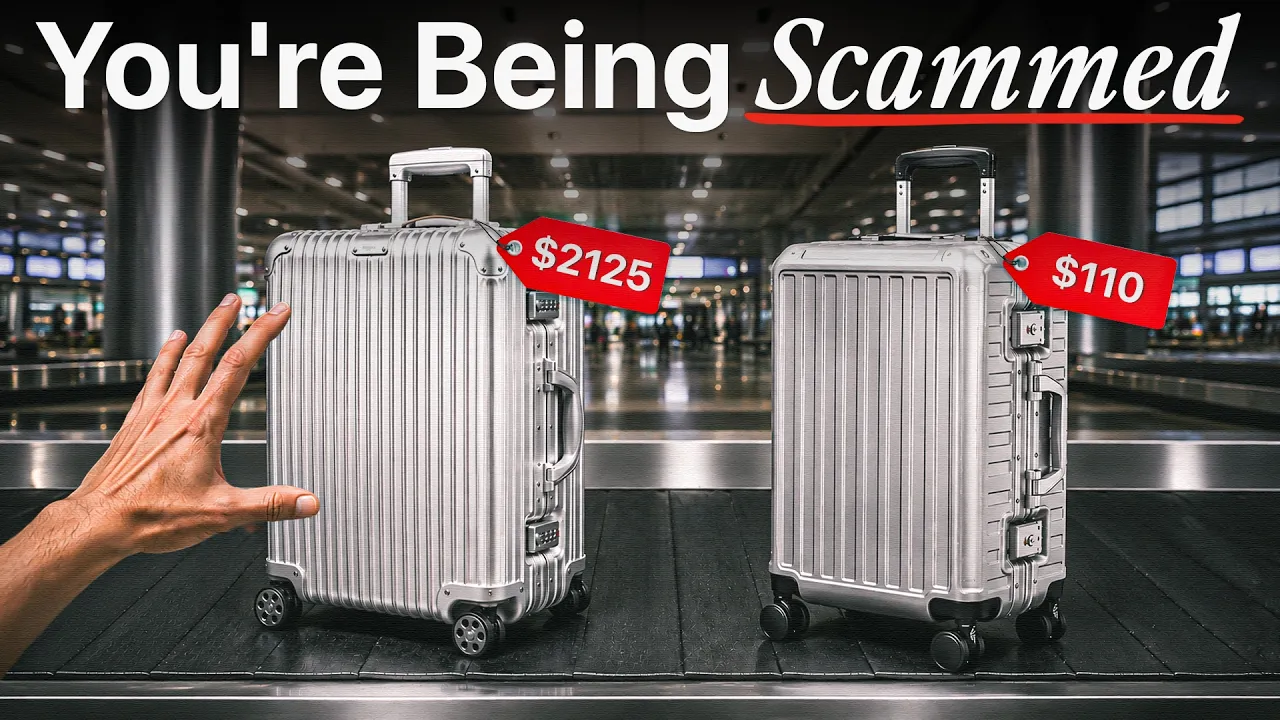
- Claim: Social media expanded luxury demand beyond the consumers for whom the purchases were economically rational, producing a subsequent wave of buyer regret and skepticism. | Evidence: The speaker cites the post-COVID popularity of Rimowa, Goyard, designer footwear, and aesthetic lifestyle influencers; Rimowa is his central example because its luggage costs more than $1,000, dents easily, and may require repeated use of its lifetime repair program. | Implication: Brands should not assume that past luxury growth reflects durable willingness to pay; consumers exposed to disappointing premium purchases may now respond better to transparent value and demonstrable performance. | Caveat: The argument is based on observation and personal anecdotes rather than consumer survey data or luxury-industry financial analysis.
- Claim: A status product loses signaling power when visually convincing substitutes become abundant and difficult to distinguish from the original. | Evidence: The speaker says a replica YSL bag inspected during a Guangdong factory trip appeared higher quality than the original, compares this dynamic with machines producing lab-grown diamonds, and argues that heavily duplicated Goyard wallets now communicate little because observers cannot know whether they are authentic. | Implication: Defensible premium positioning must rest on benefits that survive imitation—performance, service, provenance, community, scarcity, or proprietary design—not merely a recognizable appearance. | Caveat: Visual similarity does not establish identical materials, durability, warranties, labor standards, resale value, or legal status.
- Claim: Consumption-only influencer content is weakening because audiences increasingly see staged wealth as a low-cost attention tactic rather than evidence of an admirable life. | Evidence: The LARP examples include buying replica Lamborghini keys, photographing oneself at a dealership, renting a Maybach through Turo, and purchasing empty designer bags on Etsy; one referenced post format reportedly received 1.8 million likes. | Implication: Creator partnerships built only around aspirational display are increasingly fragile; useful expertise, a credible personal story, or evidence supporting the product should carry more of the campaign. | Caveat: The speaker does not provide longitudinal engagement or conversion data proving a broad decline across the influencer market.
- Claim: The strongest current value position is not lowest price but luxury-equivalent quality at a conventional price. | Evidence: The speaker argues that Amazon commoditized and degraded the lowest-price position, while Italic built its proposition around products from luxury-associated factories without 30X-40X markups; in his own sheet comparison, he preferred Italic's product to more expensive alternatives such as Frette. | Implication: A challenger should anchor against an overpriced premium reference while avoiding bargain-bin cues; the brand promise should be rational premium value, not cheapness. | Caveat: He acknowledges that quality across the broader direct-to-factory category can be hit or miss, and his product comparisons are personal rather than independently tested.
- Claim: Extreme markup creates 'price alpha' that lets a challenger undercut luxury substantially while retaining healthy unit economics. | Evidence: The speaker contrasts a $2,600 Bottega-style derby shoe with an approximately $165-$175 alternative and estimates, without documentation, that the luxury shoe could cost at most about $130 to manufacture; he argues that a challenger could still operate at a normal 4X-5X product multiple. | Implication: Opportunity analysis should focus on the spread between customer willingness to pay and the fully loaded cost of delivering comparable utility, not on copying a luxury MSRP discount mechanically. | Caveat: The estimated Bottega cost is speculative and excludes potential differences in development, marketing, retail, returns, inventory, craftsmanship, and overhead.
- Claim: The winning product should use proven demand as a starting point but add meaningful differentiation and evidence of quality. | Evidence: The speaker recommends new colors, materials, soles, or other design changes rather than producing a dead-ringer copy, then proving the result through side-by-side comparisons, influencer demonstrations, destructive teardowns, testimonials, and strong customer service. | Implication: The durable play is demand-informed innovation: borrow the validated customer problem or aesthetic direction, create a distinct solution, and reduce perceived purchase risk with verifiable proof.
- Claim: Supply-chain opacity can conceal enough cost to create a competitive advantage for operators who inspect production directly. | Evidence: At a toy company, the speaker says an in-person China visit revealed an unknown middleman marking up already marked-up invoices; visiting material suppliers also exposed a much broader selection of plastics, coatings, and other options than factories had provided remotely. | Implication: Cost discovery and product innovation may require tracing every supplier and invoice layer rather than accepting broker quotes or factory-provided option sets at face value. | Caveat: Direct sourcing introduces its own quality-control, compliance, logistics, communication, and working-capital requirements, none of which are developed in detail.
Detailed Brief
The legal and ethical spectrum of design-led value brands
- Claims: The speaker distinguishes between reproducing designs after relevant protections expire, making original products inspired by an established category, and directly copying current products.; He treats original reinterpretation as the preferable model because it captures existing demand without making the company dependent on infringement or permanent imitation.
- Evidence: The Essentials is described as selling more affordable versions of designs whose U.S. protection has expired.; Interior Icons is placed at the more aggressive end of the spectrum and is described as directly knocking off recognizable furniture while comparing its prices with luxury references.; An Interior Icons example is presented as approximately $200 versus a claimed $1,200 reference price.
- Caveats: The transcript does not verify the relevant design rights, expiration dates, comparison prices, or legality of any named company's products.; The speaker's categories are practical judgments, not legal advice.
- Implications: A value proposition based on expired or externally owned designs can still carry reputational risk even when technically permissible.; Original design capability is strategically important because it turns temporary price arbitrage into a defensible brand.
Using luxury category creation without inheriting luxury pricing
- Claims: Luxury brands can finance awareness and aesthetic education for an entire category, leaving unmet demand among consumers who like the style but reject the price.; A challenger can ride this category-level demand if it contributes a distinct creative point of view rather than simply cloning the leader.
- Evidence: Gentle Monster is praised for exceptional art direction, celebrity work, visual campaigns, and even a browser game, while its sunglasses are shown around $275-$356.; The speaker observed Gen Z shoppers lining up at Blue Elephant in Tokyo and says the brand sold roughly $70 alternatives associated with Gentle Monster's aesthetic; he also reports that Blue Elephant had been sued in Korea.
- Caveats: The account of litigation and brand positioning is presented as discovered 'lore' rather than documented legal research.; Awareness generated by a luxury incumbent does not prove that an adjacent segment is large enough or economical to acquire.
- Implications: Luxury campaign activity can serve as a category-demand signal, but challengers still need independent validation of conversion, retention, and acceptable acquisition costs.; The safest opportunity lies in serving the same unmet taste or use case with original design language.
Inventory and competitive-intelligence mechanics
- Claims: Made-to-order production can make high-ticket categories attractive when customers already tolerate long delivery windows.; Competitor-level pricing, discount, assortment, and sales signals can help validate demand before committing to a product.
- Evidence: Furniture customers are said to accept five-to-six-week waits, allowing a seller to collect the order before commissioning factory production.; The sponsored Particle demonstration claims to expose product introduction dates, estimated sales, website changes, discounts, colorway performance, and pricing history, with access through Claude or ChatGPT.
- Caveats: Particle sponsored the video, so the endorsement is commercially influenced.; Several sales and revenue figures in the transcript are malformed or ambiguous and should not be treated as reliable market sizing.
- Implications: Preorder or made-to-order models can reduce inventory exposure, but lead-time expectations and cancellation behavior must be tested explicitly.; Third-party competitive estimates are best used to generate hypotheses, then checked against primary research and supplier economics.
Notable Concepts & Terms
- LARP economy: The use of rentals, replicas, staged settings, and props to simulate an affluent influencer lifestyle, exposing how cheaply online status can be manufactured.
- Rimowa effect: The speaker's label for buying a costly status object, discovering that its practical quality does not justify the price, and feeling recurring regret when using it.
- Dupe economy: The market for lower-priced products that reproduce or reinterpret the appearance and utility of luxury goods, increasingly with credible quality.
- Price alpha: The exploitable gap between an incumbent's luxury markup and the cost of delivering comparable or better customer value at a healthy challenger margin.
- Demand-informed innovation: Using a proven premium product or category as evidence of demand, then introducing original functional or aesthetic improvements instead of making a direct copy.
- Direct-to-factory positioning: A brand promise that reduced intermediary and retail costs allow premium-quality goods to be sold at rational prices.
- Status-signal dilution: The loss of prestige that occurs when a recognizable luxury look becomes common, easily duplicated, or impossible for observers to authenticate.
- Made-to-order economics: Producing only after a high-ticket order is placed, reducing inventory and working-capital needs when customers accept long lead times.
Operator Notes / Why Ken Should Care
- Create an opportunity scorecard covering incumbent markup, validated demand, fully loaded challenger cost, IP exposure, differentiation potential, proof requirements, acquisition cost, and expected return rate.
- Require primary validation of any competitor-sales estimates before using sponsored analytics data in an investment or launch decision.
- For physical-product diligence, reconcile broker quotes against original factory invoices and map every intermediary receiving a margin.
- Commission an IP review before testing products inspired by recognizable designs, including trade dress and design-patent exposure rather than only copyright status.
- Test search campaigns against high-intent luxury comparison queries before committing inventory, but direct traffic to a clearly differentiated product rather than a replica.
- Build a proof package before launch: material specifications, comparative testing, teardown content where appropriate, warranty terms, service standards, and verified customer testimony.
- If using preorder or made-to-order production, model cancellations, refunds, defects, freight damage, and customer-support costs across the full promised lead time.
Source/Metadata
- Title: How Dupes are Exposing Luxury (LARP economy explained)
- Transcript words: 8243
- Duration seconds: 1114
- Timestamp note: No timestamps or chapters were present. The supplied transcript contains extensive duplicated passages and several malformed brand names or numerical figures.
Transcript
There's a trend going on on social media, but it's spilling over into real life too. LARPing or live action role-playing. Not the medieval cosplay or bardcore, but the act of making fun of the influencer world while also participating in it. The posts about it are massively popular. 1.8 million likes. But it ties to a bigger trend that we're seeing about all the consumption we have. The knockoff brands becoming the most popular brands. The duplicate replacing the original. The advent of luxury with this new premium boring that makes the world go round. In this video, we're going to talk about it. We're going to dive into why this LARPing trend came up. We're going to talk about why this actually happened and luxury consumption over the last few years and where it went wrong. The rise of the dupe economy. How influence around buying expensive things has shifted. And then we're going to talk about the brand recipe and brands that are executing this well. We're succeeding inside this economy where we're more price conscious and realize you can get these aspirational items for a lower cost. And I'm going to end with the playbook. If you are a marketer or are developing a brand and you're working in this niche, how do you position to actually succeed? So whether you're a consumer or a marketer, I'm just interested in how these trends are shifting the world around us. Let's lock in. So first, how do we get to this how to LARP like a pro series? How do we get to everyone saying, oh, I'm going to buy replica Lamborghini car keys online. I'm going to visit a local car dealership just to take pictures. Turo the Maybach, the course seller LARP, but now brought as an activity to show up on feeds. I do appreciate the empty designer bags from Etsy. So it started with everyone being marketed luxury, especially in COVID and after. It was the first time online there were lots of people talking about these brands. People were introduced to Rimowa suitcases. Goyard was taking off in popularity a lot because of its dupes, which we'll talk about later. People were really into lifestyle influencers. When everyone disliked their life or was in lockdown, they were looking to other more interesting lives. Social media and video, especially exposing us to rich people who'd never really been online like that before. And it was different than watching the Kardashians on TV because it seemed like people just like us. It seemed like they were just spending more on those things. And this led to a lot of consumption. Luxury brands have raised their prices and their sales have gone through the roof because it became normalized to buy these things that really only the 1% should be purchasing. There is no world in that if you are not in that bracket of consumer, you should be buying a suitcase that is over $1,000. But people do buy them. In my friend group, we refer to it affectionately as the Rimowa effect because it then had this fallout. People spent this money on these luxury items and then they realized that they weren't worth it. Rimowa is the perfect use case because anyone who's actually used those know they dent super easily. They suck. Yes, they have lifetime repairs, but you're using that lifetime repair. It simply is not worth the bulk and the quality to have for anyone that doesn't have a huge amount of expendable income where they don't even have to care. And it's a reminder every time you use it that you chose to waste that money on a status symbol. Whether it's that or another purchase, so many people had that experience. When you go to actually buy something you needed, man, I really shouldn't have gotten that $700, $900 pair of shoes or whatever it was. And while it shot up luxury brand sales as so many new people were participating and it also raised awareness that there really is no difference in those goods. And now LARPing has taken this full circle because in the LARPing world, and this happens in tons of influence online, the goal is attention, right? The goal is to get attention from whoever on social media by using expensive things to do it. One of the cheapest forms of attention, but it works. But they don't care by what means that they achieve it. This is where we enter into the dupe economy. So I remember when I was in China, in Guangdong, going through all the different cities, the quality of the dupes was incredible. We would be in factories. They were quite literally, as you see it described online, where they're making shoes for clients I have or brands like the things I operate. On one side of the warehouse, on the other side of the warehouse, they are churning out Yeezys or whatever. And then there, very easily, you can get delivered to you the highest quality of dupes. I remember we would purchase some dupes of things that we had to compare the quality because I was going to do a video on it. And we actually laughed because one of the bags' quality for a YSL bag was higher than the actual one. And you're seeing the same thing with lab diamonds, right? Where the cost, I was there in China, in the jewelry city, in front of the lab diamond machines, where this massive machine about the size of the height of this room, that just spits out a diamond. And when you put that into perspective of what that means for a cost, you begin to look at everything significantly differently, especially when they are as good as anything, quote unquote, real. And so it was different when it was a cheap duplicate. was higher than the actual one. And you're seeing the same thing with lab diamonds, right? Where the cost, I was there in China, in the jewelry city, in front of the lab diamond machines, where this massive machine about the size of the height of this room, that just spits out a diamond. And when you put that into perspective of what that means for a cost, you begin to look at everything significantly differently, especially when they are as good as anything, quote unquote, real. And so it was different when it was a cheap duplicate. When it's an equal duplicate, you begin to realize you are purely paying for the status. And when you don't get the status because so many other people have it because LARPing is taking off, that leads to a very positive consumer shift. Are you buying for the experience or for the attention? And if it's the attention, then LARPing wins because it's more effective. You can do more. The dollar goes longer. And that attention is now worth very, very little. And that is where we are at today. We are at the precipice of this. It doesn't matter if your Goyard is real or not. There are so many fake ones. That wallet is the most duplicated item with the least amount of fighting by the original brand to try to get it taken down because they like the popularity. But it has no signal. And so now people know, people don't look up to those luxury influencers the same way. So one of the big influencer shifts we've seen in just the last year is that all of the perfect aesthetic life influencers, male and female, you would see there's guys who are really stylish doing get ready with me in Dior or look at these new expensive perfumes I bought. And their entire feeds are really about consumption of expensive things. And they're showing that off in these aesthetic ways. And they're really offering you very little value beyond that. They're not being, let me explain to you my thoughts on Nietzsche or here's usually valuable tips for your life or your career. They are showcases of consumption. There's obviously whole genres of female aesthetic influencers who just showed off their beautiful, perfect lives. And that content has fallen really flat. And the last content left is people, I get sent this guy all the time. This is a poor person's version of what a rich person does every day. Yeah, I'm going to purchase this new Rolex inside my G-Wagon. Every single thing on here is an expensive purchase. Let me show you these Bottega shoes without any semblance of why they're consuming, what they're doing it for, any reasoning, any backups of life or story, any reason to connect to the person beyond the aesthetic of what they're presenting, which is the most lowbrow form of expensive consumption. All kudos to an amazing creator making videos that get consumed quite a lot, but an example of the only things that are left in that. And they're not selling to the market that can afford it or would want it. But this is the opportunity. And the opportunity for the brand spaces, now the consumer is aware that they are being taken advantage of. They've made those mistakes. And now they actually want a good thing at a good price, which is the right way to consume. And there are a lot of brands, I'm about to walk through a whole list of them, that actually do this very well. And some of them that do it a little more sketchily and will break down the difference. And that's an opportunity, whether you're consuming or whether you're building, to be able to get outsized value. And so one story I will tell about this is I was at a friend's house in Beverly Hills and they had this coffee table that I have seen online on First Dibs or whatever. And it's really expensive. And I was, where'd you get it? Original piece, whatever. And they'd gotten it from The Essentials. And The Essentials has a lot of the pieces that have hit expiry on the design in the United States so that anyone can produce it and they will make a version of it at a more affordable price. And we'll get to brands like Interior Icons who take that a little too far a little bit later, such as a good in-between. But it was funny because I had not heard of it. I ended up actually talking to the team from there relatively shortly after. But it was this idea that this is a pretty abstract item. This is why I call this one in particular is it was in a home surrounded by other interesting and expensive things. And they're, yeah, I actually can't get this other version I want. And I was able to get it here. And you were able to achieve this interesting look. But that's the business, right? The business of what are these amazing artistic things? And if you have an idea, bringing it to market in an affordable way because we now have that ability or looking at what are all these expensive things that are being produced that don't have to be expensive. We'll get to a playbook on how you do that in a moment. But Kintsugi is the ultimate example of this, right? So a little hit or miss in terms of the quality, but their entire brand exists to say that things you used to have to pay an awful lot of money for, you can now get at these lower prices. And especially for bedding, home goods, travel, and now furniture, they have options across everything. And it will showcase the price you save versus traditional retail, right? And they are just taking advantage of direct to factory. We'll get to a playbook on how you do that in a moment. But Kintz is the ultimate example of this, right? So a little hit or miss in terms of the quality, but their entire brand exists to say that things you used to have to pay an awful lot of money for, you can now get at these lower prices. And especially for bedding, home goods, travel, and now furniture, they have options across everything. And it will showcase the price you save versus traditional retail, right? And they are just taking advantage of direct to factory and they are marketing it that way. What they've done is gone wide. Once they're known for a few good things, they've said, great, we have this customer base that has in mind that we offer them a great value where they're not getting taken advantage of and they still get good quality. And we have factory relationships. It doesn't matter what we sell. Our brand isn't based around the fact we sell sheets or homes. We can really sell anything. Our goal now is to raise the LTV, lifetime value of those customers by selling them as many things as we can. Basically becomes a replacement for a traditional department store all owned by one brand, focusing on a singular value proposition. Very smart play. And probably the first to do this, I think they were significantly earlier than Kintz, but I'm not exactly a scholar of when these brands started. But Italic is another one where they I think did an incredible job. I remember them early on being like, we have the same factories as this Italian luxury. You can purchase it from us at this quality. I have some great experiences with this brand. We have, I had done in my product versus brands sheets video, we'd order tons and tons of sheets from all these different brands. And theirs ended up being the ones that I am most excited when they are on our bed. But again, the entire brand proposition is offering you these luxury experiences at a cost that doesn't have a 30X, 40X markup. And this is a new position, right? So if you look at how brands used to position in the past, you would basically have lowest price used to be a huge thing. Okay, someone's selling something. Can we go a lower price? People would just assume most things were the same and pick the lower priced option. Amazon basically killed that because now if you go lowest price, you end up with something that's really bad. And also you cannot compete with direct from China. We're selling on Amazon. We will happily do this for a couple percent. No business is going to be built off competing on that. So that basically eradicated competing at the lowest price. So now the new category is replacing luxury with something that's just as good at a typical price. That is where all the businesses are being built that we're talking about here. And it's an excellent opportunity. And then diving into the data here, I'm going to go into the actual Particle data. I'm going to show you the size of the opportunity and how it's done, right? So in the furniture business, this is Interior Icons. Interior Icons is on the sketchy scale. I put the essential on, they are working with the IP of a lot of these companies where that's expired. You're allowed to reproduce things after a certain amount of time. Then you get people like Interior Icons who just knock stuff off kind of directly. This is where this curve goes inside of this. And you can kind of decide which level you want to live on. How comfortable are you with having that in your home or purchasing that or promoting that? Some people will only want to support the thing from the original designer, whoever bought that IP. Some people will be fine with the expired thing. Some people will be fine with the super knockoff thing. The Interior Icons plays in that space and does not care what you think about it. And you'll see, as we go inside this, the data you see here in Particle, you look at their bestsellers, look at this average discount column. So they are running the very gray area. We're going to show you what the price of this would be if you bought it full price from one of these luxury providers. And we're going to show that as the sale, similar to what Kintz did there. I think they do it even more aggressively. But you'll see, this is the margins that they're being operated with. So if they were able to say, we're discounting their most popular item that they sell for $200, normally goes for $1,200. And then we can, I guarantee you in a Google search, we can find it for that. That's a 90% discount. Now they're making margin on this. Maybe it's only 25%, 30%, 50%, but there's still margin. And they are producing all of these because if you look at the quantities of sale, and this is why all the Particle data, you actually get in there and look at that data. It's like, all right, yeah, they've sold two units, but they did $16,400 in revenue, expensive cash, three units, 98 units. That means for a lot of these, besides the 98 unit, they're just producing it on demand whenever it gets sold. There's an excellent business model, especially in furniture, where because of that model, everyone's used to waiting five to six weeks for something. So you can just offer the low price, have the factory and produce it. And that's how these businesses function. And a business like this gets very aggressive on, But they did $16,4,000 in revenue, expensive cash, three units, 98 units. That means for a lot of these, besides the 98 unit, they're just producing it on demand whenever it gets sold. There's an excellent business model, especially in furniture, where because of that model, everyone's used to waiting five to six weeks for something. So you can just offer the low price, have the factory produce it. And that's how these businesses function. And a business like this gets very aggressive on, we're just going to copy anything we can. It also works for original designs, if you can get the interest, right? They capture the interest of things you've aesthetically seen already. And that's where this gets pretty interesting. So Gentle Monster, I did a full Art Direction video on them prior. They are an incredible brand. They do incredible Art Direction and campaigns. Their marketing is unparalleled. Korean brand that sells eyewear, right? And they use all these principles of Art Direction aside what they create, celebrity, just really interesting visual campaigns of all kinds. I can literally play a game here in my browser to promote whatever sunglasses this is. They do some best in class stuff. But the other end of the day of this is they also make really, really expensive, overpriced products. All right, I'm not going to play the Gentle Monster Zombie game live. This is not one of those operations. This campaign is super sick too, but I'm trying to get through here to get to where I can actually buy something. Cool, $345, $335, 356, 315, 325. They're all sold out. Those are actually some of the cheaper ones I've seen from them. 275, 305. These are expensive sunglasses. I actually remember them being even more expensive when I did this prior video on them. And so what happens is you see all this incredible marketing and people maybe buy in once, but so much fewer people buy into the brand than know about it. But they're now interested in these products and style. And that's where you end up with. I've given this anecdote before if you've watched my Tokyo video. I always look at, just as a marketer, a person interested in sociology and consumption in general, I always look at what people are buying when I travel places. And I was in Tokyo and there was kids, Gen Z age, lined up at the Blue Elephant stores all the time. And I was like, cool, what's Blue Elephant? And I basically found out the lore that they were knocking off Gentle Monster, had been sued for it in Korea, but they're selling $70 versions of the same thing. Which again, this is where those opportunities are, where when a category is created by someone with the infinite luxury budgets, but no one can actually afford that, can you provide the alternative? And obviously I will never be an advocate for just knocking off directly the products, but can you do your own spin on it? Where, hey, people do want radical avant-garde eyewear and I have my own creative vision. I can put that on it. This is the time to do it now because you can ride the tailwinds of all these luxury experiences. And even if you want to be more direct, I found this brand where I now own multiple pairs of their shoes because I was looking at the Bottega Derby shoes and I was like, I just really, I buy a lot of luxury stuff. I cannot justify $2,600 on shoes. But guess what? They make the exact, this is the exact shoe, same exact look, $175. And it's just an entry point into that brand. It's one product in their product suite that is solving a user need. I guarantee I am one of many people who've come into that brand through a Google ad looking for the Bottega shoes and being like, oh, is this brand up to any level of quality? And they're great. 165 bucks. Great cost for this. And you'll see the volumes they're doing, right? I'm in Particle, $241 this month, 146 this month. And quick shout out to Particles. They did sponsor this video and all the things you can do in here, right? You can check those prices, check those volumes, see when they introduced it, sales over time, how often they're running a sale. They just launched this, a final sale here for Memorial Day. It'll break down your their website changes, how they price, what discounts, what colorways sell. You can literally do competitive analysis. So if you were thinking of launching something in the shoe niche and you wanted to look at whether you were looking at the Bottega sales, whether you're looking at this, this is the data that allows you to make some of the decisions about if the volume is there to be able to do the things you want to do and then how they're marketed from there. It's an excellent piece of software. You can learn more about it now in the description of this video. We'll also link to your Claude or ChatGPT so you can just search or ask and it'll just bring up the data directly from in here so you don't even have to do the browsing that I'm doing as well. This is the data that allows you to make some of the decisions about if the volume is there to be able to do the things you want to do and then how they're marketed from there. It's an excellent piece of software. You can learn more about it now in the description of this video. We'll also link to your Claude or ChatGPT so you can just search or ask and it'll just bring up the data directly from in here so you don't even have to do the browsing that I'm doing as well. So that's the foundation of a playbook, right? Whether you have an existing brand or you work at a brand or you're thinking about one, now that we understand the consumer habit, where's the alpha? Find price alpha and lay into it. What I mean by price alpha: if someone is doing a 20X markup, the Bottega shoe, great example of a 20X markup, probably more. It does not cost them $2,600 to make that shoe. Maybe at an absolute maximum, it costs them $130, probably less than that. But I'm going to assume the highest qualities of leather and it was put together by a tiny Italian man who makes the maximum wage of the country. That 20X margin is your opportunity because then you can still get a normal four to five X margin and have a very healthy business. And now in something like furniture, et cetera, when you see that and you look at cool, if it has something higher ticket, you're buying a couple hundred dollar chairs, a couple thousand dollar couches, whatever it is, you may be more comfortable with a 30% margin, 20% margin, 50% margin, which is way different than a multiple because you don't have to have the cash. You can actually make it on demand. That becomes an interesting playbook. You have to find where that alpha is. We've looked at sunglasses. We've looked at shoes. We've looked at furniture. That's already been done on a lot of these. But where are you seeing things that every time you're overcharged on something and be like, man, could I solve this? Because I guarantee that trip to Guangdong, you probably can. And then the biggest secondary point is don't just dupe, do it better. That's what we see in all this economy. Some of these italic sheets we got, when I tested them versus Frette and shades of that nature, we're better at a fraction of the price. So the goal is not to duplicate something, it's to make it better. Like if I was doing that Bottega shoe, that's a dead ringer. And maybe that's a useful skew for them to bring stuff in. But I'd be just as excited to have that in a dark navy or a gray or something interesting. A couple changes, a clear sole on those, the way they did those, a Cold Wall Doc Martens. There's some ways you could actually play into that. I think it'd be really interesting. Now all of a sudden, again, your ideas start to spin. Oh, I can put my design on this. I can make this unique. I'm using this as a basis, knowing that there's a consumer group there, but I can have my own unique product. And then your goal is to prove it. If you're making something at a cheaper price that is just as good, prove it. Do comparisons. Have influencers do it. Have you do it. Cut those things open. Get testimonials from people. Come through on your customer service. Make people believe in the brand as much as you can. Don't come across just some random internet stuff. And as you begin looking for them, you will see these things come up every day. I want to shout out Jake. He's a master troll in terms of tweeting things that make angry fashion people come out. He has a good fashion newsletter. And he was saying, hey, you could buy Vans for $70. You could buy these Thoreau shoes for $990, which looks significantly better. And the alpha there is, yeah, guess what? Those are probably bang at 195 and a bunch of variations. That sole's a little too thick. I thinned that down. Okay. That's an opportunity. And if you are in the development of products you ever want to launch anything, those are the things you need to think about. Where is their demand? Where are people being overcharged? What could you do inside that same thing? And then how could you make it better? That is the formula for a wide, wide variety of product development. Same thing goes in software. Same thing goes inside of a service. It's a mentality with which you can approach the world to monetize it. And I want to call it there are so many layers of abstraction for cost too. One final anecdote. Where is their demand? Where are people being overcharged? What could you do inside that same thing? And then how could you make it better? That is the formula for a wide, wide variety of product development. Same thing goes in software. Same thing goes inside of a service. It's a mentality with which you can approach the world to monetize it. And I want to call it there are so many layers of abstraction for cost too. One final anecdote I'll leave you with is when I was working at a toy company, we had middlemen. We didn't even know until we went to the factory in China. We actually sent the team there to work through some back and forth. So some pro tips if you've ever been working with factories in China, you'll notice they're not very good at showing you the full swath of options or all the ideas. So it'd be, send me all your coolest leathers. They don't know what that means. For us, it was, send us all your coats and dipping and materials. We can make a cooler looking plastics. And we'd get a handful of stuff that wasn't really doing it justice. But then you'll send somebody there. You'll be, take me to the place that you get the leathers or take me to where the plastics are made. All of a sudden, you'll see all this amazing stuff. They just will never think to send you. But in that trip, we discovered that middlemen right now, people use brokers, help them find factories, whatever. We're actually marking up the invoices. And it was so little. We had thought we had good cogs. But in reality, it was getting double marked up by a middleman you didn't even know about. We discovered on invoices in that trip. And I basically say that entire anecdote to tell you that there are so many layers of abstraction in products that you do know of too that you may be surprised what the actual costs and margins are once you get down there and see the factories and see how things are produced and see what the materials are. And your goal is to uphold a standard of quality, not to go to the cheapest thing or the worst thing, but to look at, can I replicate this luxury end of it with innovation, with production, with understanding where cost goes and be a student of it. And that is where a lot of these businesses you see right here that I went through are making their advantage right now. If you want to talk more about this, if you have any questions about any of this in general, I'm always workshopping any of this on the community calls. We'll link that down below. You can check out Particle if you want to do research inside any of these niches and I will link them there as well. And as always, thank you all so much for watching. But that's the business, right? The business of what are these amazing artistic things? And if you have an idea, bringing it to market in an affordable way because we now have that ability or looking at what are all these expensive things that are being produced that don't have to be expensive. We'll get to a playbook on how you do that in a moment. But Kintz is the ultimate example of this, right? So a little hit or miss in terms of the quality, but their entire brand exists to say that things you used to have to pay an awful lot of money for, you can now get at these lower prices. And especially for bedding, home goods, travel, and now furniture, they have options across everything. And it will showcase the price you save versus traditional retail, right? And they are just taking advantage of direct to a factory and they are marketing it that way. What they've done is gone wide. Once they're known for a few good things, they've said, great, we have this customer base that has in mind that we offer them a great value where they're not getting taken advantage of and they still get good quality. And we have factory relationships. It doesn't matter what we sell. Our brand isn't based around the fact we sell sheets or homes. We can really sell anything. Our goal now is to raise the LTV, lifetime value of those customers by selling them as many things as we can. Basically becomes a replacement for a traditional department store all owned by one brand, focusing on a singular value proposition. Very smart play. And probably the first to do this, I think they were significantly earlier than Kintz, but I'm not exactly a scholar of when these brands started. But Italic is another one where they I think did an incredible job. I remember them early on being like, we have the same factories as this Italian luxury. You can purchase it from us at this quality. I have some great experiences with this brand. We have, I had done in my product versus brands sheets video, we'd order tons and tons of sheets from all these different brands. And theirs ended up being the ones that I am most excited when they are on our bed. But again, the entire brand proposition is offering you these luxury experiences at a cost that doesn't have a 30X, 40X marco. And this is a new position, right? So if you look at how brands used to position in the past, you would basically have lowest price used to be a huge thing. Okay, someone's selling something. Can we go a lower price? People would just assume most things were the same and pick the lower priced option. Amazon basically killed that because now if you go lowest price, you end up with something that's like really bad. And also you cannot compete with direct from China. We're selling on Amazon. We will happily do this for a couple percent. No business is gonna be built off competing off that. So that basically eradicated competing at the lowest price. So now the new category is replacing luxury with something that's just as good at a typical price. That is where all the businesses are being built that we're talking about here. And it's an excellent opportunity. And then diving into the data here. So I'm gonna go into the actual particle data. I'm gonna show you like the size of the opportunity and how it's done, right? So in the furniture business, this is interior icons. Interior icons is on like the sketchy scale. I put the essential on, they are working with the IP of a lot of these companies where that's expired. You're allowed to reproduce things after a certain amount of time. Then you get people like interior icons who just knock stuff off kind of directly. This is where this curve goes inside of this. And you can kind of decide which level you wanna live on. How comfortable are you with having that in your home or purchasing that or promoting that? Some people will only wanna support the thing from the original designer, whoever bought that IP. Some people will be fine with the expired thing. Some people will be fine with the duper knockoff thing. The interior icons plays in that space and does not give a shit what you think about it. And you'll see if as we go inside this, the data you see here in particle, you look at their bestsellers, look at this average discount column. So they are running the very gray area. We're gonna show you what the price of this would be if you bought it full price from one of these luxury providers. And we're gonna show that as the sale, similar to what Keens did there. I think they do it even more aggressively. But you'll see, this is the margins that they're being operated with. So if they were able to say, we're discounting their most popular item that they sell for $200, normally goes for $1,200. And then we can, I guarantee you in a Google search, we can find it for that. That's a 90% discount. Now they're making margin on this. Maybe it's only 25%, 30%, 50%, but there's still margin. And they are producing all of these because if you look at the quantities of sale, and this is why all the particles, you actually get in there and look at that data. It's like, all right, yeah, they've sold two units, but they did $16,4,000 in revenue, expensive cash, three units, 98 units. That means for a lot of these, besides the 98 unit, they're just producing it on demand whenever it gets sold. There's an excellent business model, especially in furniture, where because of that model, everyone's used to waiting five to six weeks for something. So you can just offer the low price, have the factory and produce it. And that's how these businesses function. And a business like this gets very aggressive on, we're just gonna copy anything we can. It also works for original designs, if you can get the interest, right? They capture the interest of things you've aesthetically seen already. And that's where this gets pretty interesting. So Gentle Monster, I did a full Art Direction video on them prior. They are an incredible brand. They do incredible Art Direction and campaigns. You know, their marketing is unparalleled. Korean brand that sells eyewear, right? And they use all these principles of Art Direction aside what they create, celebrity, just really interesting visual campaigns of all kinds. I can literally play a game here in my browser to promote whatever sunglasses this is. They do some best in class stuff. But the other end of the day of this is they also make really, really expensive, overpriced products. All right, I'm not gonna play the Gentle Monster Zombie game live. This is not one of those operations. This campaign is super sick too, but I'm trying to get through to here to get to where I can actually buy something. Cool, $345, $335, 356, 315, 325. They're all sold out. Those are actually some of the cheaper ones I've seen from them. 275, 305. These are expensive sunglasses. I actually remember them being even more expensive when I did this prior video on them. And so what happens is you see all this incredible marketing and people maybe buy in once, but so much fewer people buy into the brand than know about it. But they're now interested in these products and style. And that's where you end up with. I've given this anecdote before if you've watched my Tokyo video. I always look at, just as a marketer, a person interested in sociology and consumption in general, I always look at what people are buying when I travel places. And I was in Tokyo and there was kids, Gen Z age, lined up at the Blue Elephant stores all the time. And I was like, cool, what's Blue Elephant? And I basically found out the lore that they were knocking off Gentle Monster, had been sued for it in Korea, but they're selling $70 versions of the same thing. Which again, this is where those opportunities are, where when a category is created by someone with the infinite luxury budgets, but no one can actually afford that, can you provide the alternative? And obviously I will never be an advocate for just knocking off directly the products, but can you do your own spin on it? Where like, hey, people do want like radical avant-garde eyewear and I have my own creative vision. I can put that on it. This is the time to do it now because you can ride the tailwinds of all these luxury experiences. And even if you want to be more direct, I found this brand where I now own multiple pairs of their shoes because I was looking at the Bottega Derby shoes and I was like, you know, I just really, I buy a lot of luxury stuff. I cannot justify $2,600 on shoes. But guess what? They make the exact, this is the exact shoe, same exact look, $175. And it's just an entry point into that brand. Is one product in their product suite that is solving a user need. I guarantee I am one of many people who've come into that brand through a Google ad looking for the Bottega shoes and being like, oh, is this brand up to any level of quality? And they're great. 165 bucks. Great, great cost for this. And you'll see the volumes they're doing, right? I'm in Particle, $241 this month, 146 this month. And quick shout out to Particles. They did sponsor this video and all the things you can do in here, right? You can check those prices, check those volumes, see when they introduced it, sales over time, how often they're running a sale. Like they just launched this, like a final sale here for Memorial Day. It'll break you down your, their website changes, how they price, what discounts, what colorways sell. You can literally do kind of competitive analysis. So if you were thinking of launching something in the shoe niche and you wanted to look at whether you were looking at the Bottega sales, whether you're looking at this, this is the data that allows you to make some of the decisions about if the volume is there to be able to do the things you want to do and then how they're marketed from there. It's an excellent piece of software. You can learn more about it now in the description of this video. We'll also link to your Claude or ChatGPT so you can just search or ask and it'll just bring up the data directly from in here so you don't even have to do the browsing that I'm doing as well. So that's the foundation of a playbook, right? Whether you have an existing brand or you work at a brand or you're thinking about one, now that we understand the consumer habit, like where's the alpha? Find price alpha and lay into it. What I mean by price alpha, if someone is doing a 20X markup, the Bottega shoe, great example of a 20X markup, probably more. It does not cost them $2,600 to make that shoe. Maybe at an absolute maximum, it costs them $130, probably less than that. But I'm going to assume the highest qualities of leather and it was put together by a tiny Italian man who makes the maximum wage of the country. That 20X margin is your opportunity because then you can still get a normal four to five X margin and have a very healthy business. And now in something like furniture, et cetera, when you see that and you look at cool, if it has something higher ticket, you're buying a couple hundred dollar chairs, a couple thousand dollar couches, whatever it is, you may be more comfortable with a 30% margin, 20% margin, 50% margin, which is way different than a multiple because you don't have to have the cash. You can actually make it on demand. That becomes an interesting playbook. You have to find where that alpha is. We've looked at sunglasses. We've looked at shoes. We've looked at furniture. There's, that's already been done on a lot of these. But where are you seeing things that every time you're overcharged on something and be like, man, could I solve this? Because I guarantee that trip to Guangdong, you probably can. And then the biggest secondary point is don't just dupe, do it better. That's what we see in all this economy. Some of these italic sheets we got, when I tested them versus Frette and shades of that nature, we're better at a fraction of the price. So the goal is not to duplicate something, it's to make it better. Like if I was doing that Bottega shoe, that's a dead ringer. And maybe that's a useful skew for them to bring stuff in. But I'd be just as excited to have that like in a dark navy or a gray or something interesting. A couple changes, a clear sole on those, the way they did those, a cold wall Doc Martens. There's some ways you could actually play into that. I think it'd be really interesting. Now all of a sudden, again, your ideas start to spin. Oh, I can put my design on this. I can make this unique. I'm using this as a basis, knowing that there's a consumer group there, but I can have my own unique product. And then your goal is to prove it. If you're making something at a cheaper price that is just as good, prove it. Do comparisons. Have influencers do it. Have you do it. Cut those things open. Get testimonials from people. Come through on your customer service. Make people believe in the brand as much as you can. Don't come across just some random internet stuff. And as you begin looking for them, you will see these things come up every day. I want to shout out Jake. He's a, Jake is a master troll in terms of tweeting things that make angry fashion people come out. He has a good fashion newsletter. And he was saying, hey, you could buy Vans for $70. You could buy these Thoreau shoes for $990, which looks significantly better. And the alpha there is, yeah, guess what? Those are probably bang at 195 and a bunch of variations. That sole's a little too thick. I thinned that down. Okay. That's an opportunity. And if you are in the development of products you ever want to launch anything, those are the things you need to think about. Where is their demand? Where are people being overcharged? What could you do inside that same thing? And then how could you make it better? That is the formula for a wide, wide variety of product development. Same thing goes in software. Same thing goes inside of a service. It's a mentality with which you can approach the world to monetize it. And I want to call it there are so many layers of abstraction for cost too. One final anecdote I'll leave you with is when I was working at a toy company, we had middlemen. We didn't even know until we went to the factory in China. We actually sent the team there to work through some back and forth. So some pro tips if you've ever been working with factories in China, you'll notice they're not very good at like showing you the full swath of options or all the ideas. So it'd be like, send me all your coolest leathers. They don't know what that means. For us, it was like, send us all your coats and dipping and materials. We can make like a cooler looking plastics. And we'd get like a handful of stuff that wasn't really doing it justice. But then you'll send somebody there. You'll be like, take me to the place that you get the leathers or take me to where the plastics are made. All of a sudden, you'll see all this amazing stuff. They just will never think to send you. But in that trip, we discovered that middlemen right now, people use brokers, help them find factories, whatever. We're actually marking up the invoices. And it was so little. We had thought we had good cogs. But in reality, it was getting double marked up by a middleman you didn't even know about. We discovered like on invoices in that trip. And I basically say that entire anecdote to tell you that there are so many layers of abstraction in products that you do know of too that you may be surprised what the actual costs and margins are once you get down there and see the factories and see how things are produced and see what the materials are. And your goal is to uphold a standard of quality, not to go to the cheapest thing or the worst thing, but to look at, can I replicate this luxury end of it with innovation, with production, with understanding where cost goes and be a student of it. And that is where a lot of these businesses you see right here that I went through are making their advantage right now. If you want to talk more about this, if you have any questions about any of this in general, I'm always workshopping any of this on the community calls. We'll link that down below. You can check out Particle if you want to do research inside any of these niches and I will link them there as well. And as always, thank you all so much for watching.