How to build a marketing team in 2026 (content operations playbook)
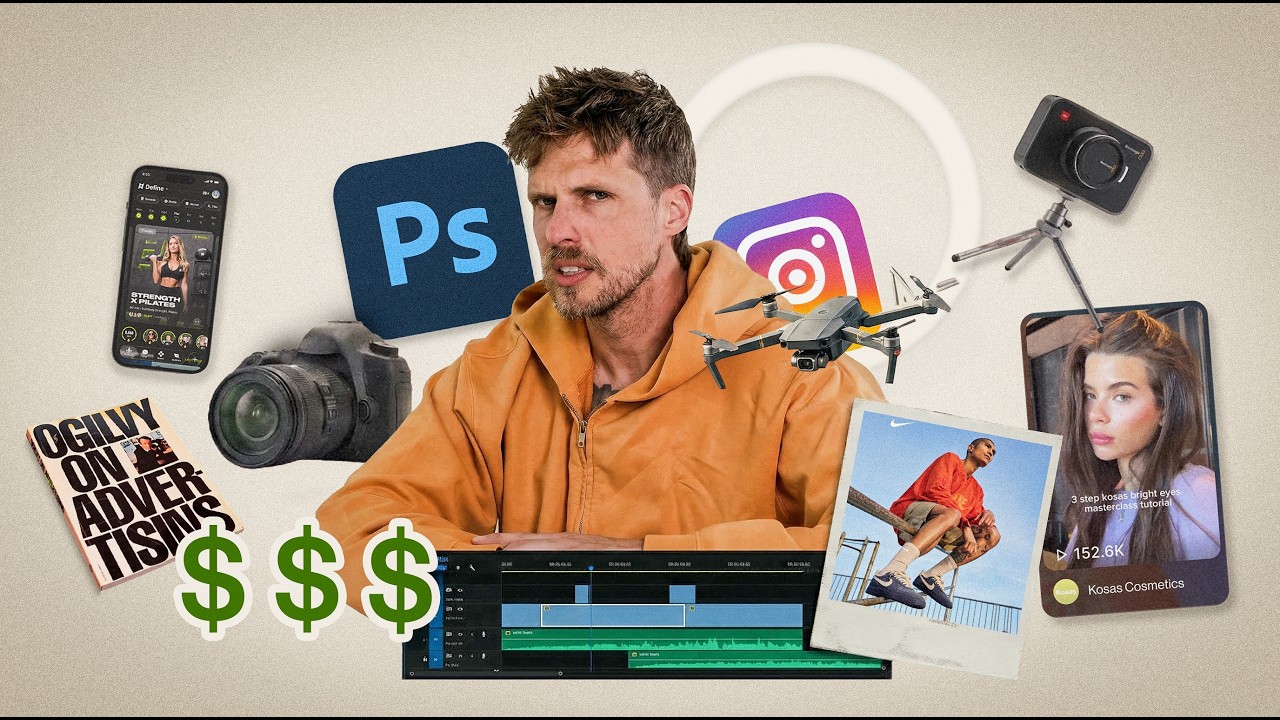
Description
Learn more about Swap for Agentic Commerce: https://www.swap-commerce.com/storefront?utm_source=Influencer%20Oren%20John&utm_medium=Youtube&utm_term=Agentic%20Commerce&utm_content=Oren%20John Sign up for the community call: https://www.creativedirector.net/creative-ops/ My friends at Darkroom: http://darkroomagency.com In this video Oren breaks down how to build a modern marketing organization and to build your brand like a media company. Join the next Cut30 short form bootcamp: cut30.co
Summary
Generated by claude-sonnet-4-5At-a-Glance
- Verdict: Watch fully
- Core thesis: Building a marketing team in 2026 requires operating as a media company first, structured around content pods (strategist + creators) that produce 10+ new assets weekly, avoiding traditional media production bloat and focusing on speed/workflow over expensive gear.
- Why it matters: This is the definitive modern marketing org structure—Ken gets exact hiring playbooks, team configurations, goals, and cost-avoidance tactics (iPhone over Reds) from someone who's built these at every scale, including recent six-figure studio buildouts where traditional media hires caused cost explosions.
- Best use: Reference for building/restructuring marketing teams, hiring content operators, setting weekly KPIs, and arguing against expensive production requests; also use examples (Represent, Ladder, Darkroom) as competitive benchmarks.
Executive Summary
The speaker—former SVP of Marketing who recently advised on in-house studio buildouts—argues that 2026 marketing must be content-first, structured around 'pods' rather than traditional roles. The core thesis: brands must operate as media companies, creating a flywheel of owned/paid/creator content that feeds ads, organic social, email, and landing pages. Traditional marketing (trade shows, banner ads, sponsorships) should be ignored until this flywheel is a 'money printing machine.' The video walks through 15+ brand examples (Red Bull to a local cheese shop) showing this works at every scale and vertical, then details exact team structure, goals, and gear budgets.
The pod system is the structural innovation: each pod pairs a social media strategist (briefs, analytics, posting, coordination) with 1+ creators (shooting, editing in CapCut) plus 3-4 external contractors (found via Meta Creator Marketplace, MiniSocial, or Outer Signal's customer-influencer discovery). A single strategist can manage up to 5 people in weekly 1:1s, creative reviews, and analytics sessions. Pods scale—one for TikTok, one for founder content, etc.—and share resources (editors, designers hired off Contra, producers). The hardest hire is the 'Head of Growth' who orchestrates this daily, supported by an agency that understands creator economics (e.g., Darkroom for paid/email).
Goals per pod: 10 unique assets/week (5 for ads, 5 for organic, with crossover), plus one repeatable signature format (social show, founder series) tested over 4-6 episodes then iterated. Anchors that amplify content: fame/celebrity, influencer partnerships, compelling story/location (Flamingo Estate's physical estate, Chunky Fit's commercial kitchen), or events (Kosas' brand trips, Merit's Vespa deliveries during Paris Fashion Week—costs under $100k). The speaker insists on lean gear: iPhones, DJI Osmo, Amaran 300 lights, maybe a Nikon Z or Sony FX3. Anything fancier (Reds, color grading, sound-specific crew >3 people) is 'going too far'—workflow and speed matter more than production value.
The video is highly tactical—Ken gets org charts, meeting cadences (weekly 1:1s, creative reviews, analytics reviews, recap to management), software recs (Notion/ClickUp/Asana for project mgmt, Outer Signal for customer-influencer mining), and strict warnings against traditional media bloat. The speaker is hosting a Jan 24 community call with Q&A and a PDF summary of all examples/tactics. This is not theory; it's a playbook from someone who lived the pain of pivoting traditional orgs and recently watched six-figure studio costs spiral when traditional media pros were hired.
Key Takeaways
- Claim: The 'pod' is the atomic unit of a modern marketing team: one social media strategist paired with 1 internal creator and 3-4 external creators, not a single 'social media manager' doing everything. | Evidence: Strategist handles briefs, shot lists, analytics, posting, coordination; creator shoots/edits in CapCut. External creators sourced via Meta Creator Marketplace, MiniSocial, or Outer Signal (software that identifies influential existing customers). Example: Morphe has thousands of creators in their brand world, Ladder has 10-20+ coaches all creating content, each managed in pods. | Caveat: Scaling requires shared resources (editors, designers off Contra, producers) and a Head of Growth to orchestrate; the speaker admits this role is 'one of the hardest to hire right now.' Maximum 5 direct reports per strategist to avoid meeting overload. | Implication: Ken should structure any marketing team build around 2-person minimum pods, not solo social managers. When hiring, look for strategist/creator pairs and plan for external contractor budgets. This also means agencies must understand creator economics, not just media buying. | Timestamp: timestamp unavailable
- Claim: 10 unique assets per week per pod (5 ads, 5 organic) is the baseline goal, plus one signature repeatable concept tested over 4-6 episodes. | Evidence: Speaker says 'a good goal for a pod even if it's two people is 10 really strong concepts a week.' Examples: Cheese Store Beverly Hills posts one story/day; Represent runs dozens of Spark Ads from small/large creators; Darkroom collaborates on carousels (Max got 600k views on one). | Caveat: Output varies wildly by brand—some do 'hundreds of ads,' some do 'a handful of really strong ones.' The speaker acknowledges this is a starting point, not a hard rule. Testing a signature format (social show, founder series) may flop before it works. | Implication: Ken can use 10/week as a north star KPI when evaluating team performance or pitching budgets. For agent/AI systems, this volume suggests automation opportunities in briefing, asset tagging, or performance analytics to support human strategists. | Timestamp: timestamp unavailable
- Claim: Traditional marketing (trade shows, banner ads, sponsorships) should be 'forgotten' until the content flywheel (owned organic + paid + creator world + email/SMS) is a 'money printing machine.' | Evidence: Speaker: 'Everything outside of that, anything else you are considering doing, trade shows, buying banner ads on whatever, sponsorships, any of this, forget any of that until this part is a money making machine. Because any industry...this is the flywheel that gets you the most results for the least dollars in a combo of organic and advertising that is extremely scalable.' | Caveat: No specific ROI numbers or attribution models given; the claim is based on 'efficacy...so much higher than basically any other media buying.' Speaker doesn't address industries where trade shows are critical (e.g., enterprise SaaS, medical devices). | Implication: For Ken's investing/GTM lens, this is a litmus test: if a portfolio company is buying billboards or big event booths before their content engine is humming, it's a red flag. Prioritize content infrastructure first, then expand channels. | Timestamp: timestamp unavailable
- Claim: Gear should max out at iPhone + DJI Osmo + Amaran 300 lights + maybe Nikon Z/Sony FX3; anything beyond (Reds, color grading, >3 crew) is 'going too far' and wastes budget. | Evidence: Speaker filmed this video on Amaran 300s, warns 'if the Aris are coming out or people want Reds, you're going too far. Stop. Use that money elsewhere.' Emphasizes 'workflow, speed, speed of in camera to usage...you're not even shooting log, you're shooting with colors, it's just going to go right to social anyway.' Mentions recent studio buildout where 'every single time they brought in a traditional media professional, the costs were going radically out of control.' | Caveat: This assumes social-first distribution (TikTok, Reels, YouTube Shorts). Brands doing high-end TV or cinema-quality brand films may have different needs, but speaker dismisses that as non-essential for modern marketing. | Implication: Ken can use this to challenge inflated production budgets or vendor pitches. For agent systems, this suggests opportunity in tooling that maximizes iPhone/consumer-grade workflows (auto-color, fast editing, metadata tagging) rather than pro-grade pipelines. | Timestamp: timestamp unavailable
- Claim: The hardest hire is the 'Head of Growth' (also called Head of Social or high-level Creative Strategist/Marketing Director) who pulls the content vision into daily execution, not a CMO. | Evidence: Speaker: 'The key person here, the most important, one of the hardest roles to hire right now is the head of growth...whose job is to pull that world described from conceptual idea into reality action by action relentlessly every single day.' Usually supplemented by an agency that 'gets it' (e.g., Darkroom) for assets the team can't make and for paid/email. | Caveat: Speaker doesn't define salary bands, seniority expectations, or how to assess candidates beyond 'they get it.' Also notes this role is 'extremely hard to find the right people for' at Creative Director level later in scaling. | Implication: For Ken's operator/investing work, this is a critical hire to validate or recruit for portfolio companies. If a brand lacks this role, the content pods will drift without strategic glue. Also a signal that executive recruiting for 'growth' now means content operations, not just performance marketing. | Timestamp: timestamp unavailable
- Claim: Anchors that amplify content include fame/celebrity, influencer partnerships, compelling story/location, or events—but events should be lean (e.g., Merit's Vespa deliveries in Paris cost 'significantly less than $100k'). | Evidence: Examples: Rafa uses retail 'clubhouses' for documentary screenings; Flamingo Estate's physical estate is the story anchor; Chunky Fit's commercial kitchen; FZonic's house/lab. Kosas does brand trips; Merit did branded Vespas during Paris Fashion Week. Speaker: 'those branded Vespas and delivery drivers is not a 100k investment, right? Significantly less than that.' | Caveat: Speaker doesn't provide exact budgets or ROI for events. Kosas/Tarte-level trips may still be expensive; the 'upstart brand' framing is vague. Also, not all brands have a physical location or founder willing to be on camera. | Implication: Ken should ask: what's the content anchor for any brand he evaluates? If it's missing, content may feel generic. For GTM, this suggests leaning into founder stories, physical spaces, or micro-events rather than big trade show booths. | Timestamp: timestamp unavailable
- Claim: Product dev and content dev must work side by side; content needs to be 'in the room' during product planning to document the process and align roadmaps. | Evidence: Speaker: 'You need product dev and content dev to work side by side. When you're coming up with product, content needs to be in the room. They need to be documenting the process as it goes along. You need to be thinking through the future of your content in the same way you're thinking through your product roadmap.' | Caveat: No specifics on how to integrate these teams operationally (shared meetings, dual OKRs, etc.). Speaker assumes product teams will welcome this, which may not be true in engineering-led orgs. | Implication: For Ken's AI/product work, this means content isn't post-launch; it's embedded in the build. For agent systems, this could mean auto-documenting dev sprints or generating content briefs from product specs in real time. | Timestamp: timestamp unavailable
Detailed Brief
Brand-as-Media-Company Examples Across Scales
- Claims: Red Bull pioneered brand-as-media (replaced Tosh 2.0/action sports TV), but this isn't new—Patagonia, Salomon, Arc'teryx did documentaries early.; Rafa (cycling) does long-form docs + artful social + carousels, uses retail 'clubhouses' for screenings to build community.; Flamingo Estate founder ran an agency during COVID, pivoted the media team to the brand; weekly 'Letter from the Garden' blends editorial and social.; Tracksmith has Meter magazine (physical), documentary films, gift guides—storytelling is core to the brand.; Cheese Store Beverly Hills: one post/day, all iPhone, employees interacting with customers—small business doing this with one weekly shoot day.; Chunky Fit Cookie: founders live/breathe content as much as recipes, document commercial kitchen, test constantly, share highs/lows in speaker's Cut30 community.; Ladder (workout app): internal social team + 10-20+ coaches creating on their own channels, all aligned on one goal; speaker spoke at their offsite to train creators.; Rarify (curated marketplace): breaks down furniture history with team, infinite product library to work from—model for any retailer (Nordstrom, 7-Eleven mentioned).; Represent (gold standard): George (founder) has his own YouTube, 24/7 athletic YouTube, core brand social (lifestyle/lookbooks), brother Michael's creative angle, plus onslaught of Spark Ads from small/large creators on TikTok.; Cluelly (software): spun out tons of accounts, episodic funny content, 'marketing goes further than their product'—now copied by 100+ software companies.; Darkroom (agency): collaborates with creators (Max, Tatum from Cut30), collab-posts carousels (600k views), builds world around creator economy niche.
- Evidence: Red Bull Instagram now hosts action sports content that used to be TV.; Rafa's clubhouses have screens for documentary debuts, participatory experiential marketing in retail.; Flamingo Estate founder's Letter from the Garden is weekly, discusses experiences/travel/curated boxes.; Tracksmith publishes Meter magazine, documents amateur running online.; Cheese Store Beverly Hills: one day/week of iPhone shoots = daily content for a year.; Chunky Fit founders discuss flops/virality in Cut30 community calls, pivot strategy publicly.; Ladder invested in outside speakers (like this creator) to educate their coach-creator network.; Rarify team documents furniture pieces in-house, leveraging existing inventory.; Represent: George's YouTube, 24/7 stream, core brand IG, Michael's creative content, Spark Ads from dozens of fit-check creators.; Cluelly has no working product (per speaker) but massive content reach; Social Growth Engineers website documents their tactics.; Darkroom designed speaker's carousels, collab-posts for mutual follower growth.
- Caveats: Speaker notes Red Bull/Patagonia had first-mover advantage when this was differentiating, not table stakes.; Flamingo Estate backstory is 'I believe' (not confirmed); speaker infers agency-to-brand transition.; Chunky Fit is just two founders—no data on revenue/scale to validate content ROI yet.; Cluelly's product is weak ('arguably a product that works, maybe they're doing okay'), so content success doesn't prove product-market fit.; No financials or attribution models for any of these brands—speaker assumes content efficacy but doesn't cite hard numbers.
- Implications: Ken can use these as competitive benchmarks: if a portfolio company isn't at least attempting a signature format (like Represent's Spark Ads or Ladder's coach network), they're behind.; The cheese shop and Chunky Fit examples prove scale isn't required—content-first works for tiny teams, so no excuses for SMBs Ken advises.; Darkroom's collab-post model is a GTM tactic: agencies/service providers can grow by partnering with creators in their niche, not just serving clients.; Cluelly's 'marketing > product' dynamic is a warning for Ken: content can mask weak product, so validate PMF separately.; Rarify/retailer angle: any business with inventory (secondhand, distribution) has infinite content raw material—huge opportunity if Ken's portfolio touches retail/logistics.
The Marketing Flywheel (Core Framework)
- Claims: Modern marketing org must own 4 layers: (1) owned organic (brand social accounts), (2) paid ads (assets created in-house), (3) organic world (founder accounts, employee creators, seeded influencers, sparked content), (4) conversion infrastructure (landing pages, email/SMS).; Content flows between these: creator pods make assets for owned organic + paid ads, pull influencer content into ad accounts, spark external creator posts with paid dollars.; All other marketing (trade shows, banner ads, sponsorships) should be ignored until this flywheel is a 'money printing machine.'; Email/SMS should be filled with the same assets/faces/characters from the content world, creating cohesive brand experience.; This flywheel has 'so much higher efficacy than basically any other media buying' and is 'extremely scalable.'
- Evidence: Example: Morphe has thousands of creators being seeded, posting organically or sparked with paid dollars, then pulling that content into ad account.; Represent: George/Michael's personal accounts are brand extensions, plus sponsored fit-checks from external creators run as Spark Ads.; Speaker worked with Morphe this year, saw firsthand how seeding + sparking + ad repurposing creates volume.; Ladder's coaches are 'interacting characters' with main account, all working toward one goal.; Speaker says 'creating a flywheel for this is the marketing' (emphasis in transcript).
- Caveats: No quantified efficacy or CAC/LTV comparisons vs. other channels; 'so much higher' is qualitative.; Speaker doesn't address industries where trade shows/events are essential (e.g., B2B SaaS selling to CTOs).; Assumes brand has product-market fit and conversion infrastructure already; if landing pages/email are broken, content won't save you.; Sparking influencer content costs money; speaker doesn't give budget ranges or failure rates for Spark Ads.
- Implications: For Ken's GTM/investing lens, this is the litmus test: does the company have these 4 layers? If not, marketing spend is likely inefficient.; Agent/AI opportunity: automate asset tagging/routing between owned, paid, and creator world; suggest which organic posts to spark or repurpose into ads based on engagement.; Email/SMS integration is often overlooked—Ken should ask: 'Are you using your best TikToks in your email flows?' If no, easy win.; If a portfolio company is buying billboards or big event booths before nailing this flywheel, it's a red flag to escalate.
Pod Structure and Team Composition
- Claims: Pod = minimum 2 people: (1) social media strategist (briefs, analytics, posting, coordination, ideation) + (1) creator (shooting, editing, ideation, sometimes on-camera).; Strategist can manage 1 internal creator + 3-4 external creators (contractors found via Meta Creator Marketplace, MiniSocial, Outer Signal).; Pods scale: one for main brand, one for TikTok, one for founder content, etc. Shared resources: editors (work across pods), designers (hired off Contra), producers (for bigger orgs).; Meeting cadence: weekly 1:1s (max 5/strategist), creative reviews (feedback on hooks before publish), analytics reviews (week-over-week, month-over-month), end-of-week recap to management.; Use project management tool (Notion, ClickUp, Monday, Asana—doesn't matter which, just pick one).; Traditional 'social media manager does everything' is dead; this is always a multi-person system.
- Evidence: Speaker trains social media strategists in 'Creative Strategy' program (like Cut30 but for brand strategy).; Gelblaster used Notion, prior org used ClickUp—'it truly does not matter, you just need to have the tool.'; Speaker says max 5 direct reports/strategist to avoid meeting overload.; Analytics must run 'something like the pillar system I've described before...absolutely crucial to success.'; Brands like Represent have multiple pods: George's content, Michael's content, core brand, athletic 24/7 stream, external Spark Ads.; Outer Signal software 'goes through your customer base...pulls all the people that are influential who are your existing customers' for recruitment.; Contra is where speaker hires designers; no affiliate/sponsorship mentioned.
- Caveats: Speaker doesn't give salary ranges, seniority levels, or how to assess strategist vs. creator skills in hiring.; External creator costs (per video or retainer) not specified; could vary wildly.; Pillar system is referenced but not explained here (presumably in other videos).; Shared resources (editors, designers) add coordination overhead; speaker doesn't address how to manage that at 3-5 pods.; Outer Signal is one tool; speaker doesn't compare alternatives or mention pricing.
- Implications: Ken should evaluate marketing teams as 'how many functional pods do they have?' not 'do they have a social media manager?'; Hiring req for Ken's portfolio: always hire strategist + creator pairs, not solos. Budget for external contractors from day one.; Agent/AI angle: automate the project mgmt tool workflows (briefs → shot lists → asset tagging → analytics recap) to free strategist time for creative decisions.; Outer Signal-style customer-influencer mining is a specific wedge—Ken could look for companies building this for other verticals (B2B, SaaS, etc.).; Meeting cadence is prescriptive—Ken can use this to audit if a team is over-meeting (slowing output) or under-analyzing (not learning from data).
Goals, Anchors, and Gear Budget Philosophy
- Claims: Goal per pod: 10 unique assets/week (5 ads, 5 organic, with crossover) + 1 signature repeatable concept tested over 4-6 episodes.; Signature concepts (social show, founder series) should be piloted like a TV show: test 4-6 episodes, iterate to improve.; Anchors that amplify content: fame/celebrity, influencer partnerships, compelling story/location (estate, kitchen, lab), or events (brand trips, activations under $100k).; Gear should max out at iPhone + DJI Osmo + Amaran 300 lights + Nikon Z or Sony FX3 if absolutely needed. Reds, color grading, >3 crew = 'going too far.'; Workflow and speed matter more than production value; emphasis on 'in camera to usage' speed, shoot with color profiles (not log), fast editing in CapCut.
- Evidence: Cheese Store Beverly Hills has 'a couple of really unique things that they show'—signature formats work.; Kosas does brand trips (not Tarte-scale, but 'an upstart brand'); Merit's Vespa deliveries 'significantly less than $100k.'; Speaker filmed this video on Amaran 300s, uses iPhone/Osmo for social shoots.; Recent studio buildout: every time traditional media pros were hired, costs 'radically out of control.'; Speaker: 'This is the social media era. The emphasis has to be on workflow, speed...you're not even shooting log.'; CapCut mentioned as editing tool for many brands ('one really savvy girl or guy who shoots...and does all the social media edits').
- Caveats: 10 assets/week is a 'good starting point,' not a hard rule; some brands do 'hundreds,' some do 'a handful of really strong ones.'; Testing 4-6 episodes of a signature format may flop before it works; no success rate given.; Anchors like 'fame' or 'amazing location' aren't available to all brands—speaker doesn't address how to compete without them.; Gear advice assumes social-first distribution; brands doing TV/cinema may need different tools (but speaker dismisses that).; No CapCut vs. Premiere vs. FCPX comparison; just assumes CapCut is table stakes.
- Implications: Ken can use 10/week as a KPI benchmark and challenge teams producing <5/week to explain why.; For investing, signature formats are a wedge: does the brand have one in testing? If not, they're in generic content hell.; Events should be ROI-positive or at least break-even on content output; Ken can ask 'how much content did your last event generate and where is it being used?'; Gear budget is a forcing function: if a vendor pitches $50k camera packages, Ken can forward this video and say 'justify why we need more than an FX3.'; Workflow tooling (fast in-camera-to-social pipelines, CapCut templates, asset libraries) is an opportunity for SaaS—Ken could scout for companies solving this.
Notable Concepts & Terms
- Pod System: Core org structure: 2+ person unit (strategist + creator + 3-4 external contractors) that produces content for one channel/brand area. Scales by adding pods, not by piling work on solo social managers.
- Head of Growth / Head of Social: Director/senior-level role (not CMO) that pulls content vision into daily execution; speaker calls this 'one of the hardest roles to hire right now.' Orchestrates pods, works with agencies.
- Spark Ads (TikTok Spark Ads): Paid promotion of organic creator posts on TikTok; Represent uses this heavily for fit-checks. Allows brands to amplify external creator content without reposting.
- Pillar System: Speaker's content strategy framework (detailed in other videos) focused on analytics-driven testing/refinement over 90 days, publishing 4-5x/week. Essential for pod success.
- Outer Signal: Software that analyzes a brand's customer base to identify influential customers who can be recruited as paid content creators (because they already 'get it').
- Contra: Platform the speaker uses to hire freelance designers/creatives for shared resources across pods; no affiliation/affiliate mentioned.
- Mini Social / Super Affiliate / Meta Creator Marketplace: Tools/platforms to find external creators for pod contractor rosters; speaker mentions these as sourcing methods for 3-4 external creators per strategist.
- Agentic Commerce / Agentic Shopping (Swap): AI-driven e-commerce layer (sponsored in video) where storefront adapts in real-time to shopper (budget, sizing, past behavior), answers questions, gives fit guidance. Swap claims 2x conversion, 3x time on site, 20% return reduction.
- Creative Strategy (program): Speaker's training program (like Cut30 but for brand strategists) teaching social media strategists to make briefs, run analytics, coordinate pods. Cut30 is the creator-side version.
- Signature Repeatable Concept: Unique content format tested like a TV pilot (4-6 episodes, then iterate): social show, founder series, etc. Goal for each pod to develop one with traction (e.g., Cheese Store's daily stories).
Operator Notes / Why Ken Should Care
- For Ken's agent/AI systems work: Automate the pod workflow (briefs → shot lists → asset tagging → analytics → recaps). The speaker's emphasis on speed/workflow over production quality means AI tooling that accelerates iPhone-to-publish pipelines (auto-metadata, thumbnail generation, performance prediction) would be highly valuable. Outer Signal's customer-influencer mining is a wedge worth exploring for B2B/SaaS.
- For content/business: If Ken advises any brand, the first question is 'how many functional pods do you have?' If the answer is 'we have a social media manager,' the team is structurally broken. Second question: 'What's your signature repeatable format?' If none, they're in generic content purgatory. Third: 'Are you using your best organic posts in your paid ads and email?' If no, easy wins.
- For investing: This is a hiring/org structure litmus test. Portfolio companies should have a Head of Growth (not just CMO), 2+ person pods, and weekly analytics reviews. If they're buying Reds or hiring traditional media crews, costs will spiral—speaker saw this firsthand. Gear budgets over $10k/pod (iPhone + Osmo + lights + maybe FX3) are suspect.
- For GTM: The flywheel (owned organic → paid ads → creator world → email/SMS) is the modern GTM motion. If a company is doing trade shows or banner ads before this flywheel is profitable, it's a strategy failure. Speaker's 'forget everything else until this is a money printing machine' is a strong forcing function for resource allocation.
- Community call (Jan 24) will have Q&A and PDF summary—Ken could attend or get notes if this is relevant to a portfolio company build. Speaker is also releasing Japan content next week (likely less relevant unless Ken's interested in creator production case studies).
Watch Map
- timestamp unavailable: Intro: Speaker's background (SVP of Marketing, advised six-figure studio buildout where traditional media hires caused cost explosions). Promises thorough tactical guide, community call Jan 24 with PDF.
- timestamp unavailable: Examples section: Red Bull, Patagonia, Salomon, Arc'teryx (historical), Rafa, Flamingo Estate, Tracksmith, Cheese Store Beverly Hills, Chunky Fit Cookie, Ladder, Rarify, Represent (gold standard), Cluelly (software), Darkroom (agency). Shows this works at every scale and vertical.
- timestamp unavailable: Marketing flywheel framework: Owned organic + paid ads + organic world (founder/employee/seeded influencers) + conversion (landing pages, email/SMS). Ignore other marketing until this is a money printer.
- timestamp unavailable: What you need: Point of view, patience (90 days to groove), editorial standards, process, characters, product dev + content dev side by side.
- timestamp unavailable: Team structure (pod system): Strategist + creator + 3-4 external contractors. Shared resources: editors, designers (Contra), producers. Meeting cadence: 1:1s, creative reviews, analytics reviews, weekly recap. Use project mgmt tool (Notion/ClickUp/Monday/Asana).
- timestamp unavailable: Goals: 10 unique assets/week (5 ads, 5 organic) + 1 signature format (test 4-6 episodes). Anchors: fame, influence, story/location, events (under $100k like Merit's Vespas).
- timestamp unavailable: Gear philosophy: iPhone + Osmo + Amaran 300 lights + maybe Nikon Z/FX3. Avoid Reds, color grading, >3 crew. Workflow/speed > production value. CapCut for editing.
- timestamp unavailable: Sponsored section: Swap (agentic commerce platform), claims 2x conversion, 3x time on site, 20% return reduction. Speaker emphasizes awareness, not hard sell.
- timestamp unavailable: Outro: Community call Jan 24 with Q&A and PDF summary. Japan content coming next week. Drop questions for webinar.
Source/Metadata
- Title: How to build a marketing team in 2026 (content operations playbook)
- Transcript words: 13238
- Duration seconds: 1523
- Timestamp note: Timestamps were not present in the transcript; watch_map is based on thematic flow from transcript structure.
Transcript
In this video, we are going to cover a full guide on how to build a content-first marketing team in 2026, no matter what the size of your org is. We are going to cover this from the smallest to the largest of companies. I'm going to go through examples, small and large, to kick this off of all kinds of brands that are going media company first. You've all heard this trend you love to talk about on LinkedIn, every marketing guru that brands are media companies now, but no one talks about how you actually execute it tactically. After those examples, I'm going to talk about how to build a marketing plan in the content world. What does your team look like? What are the goals to give that team? What are anchors? What are goals? You actually have the ability to navigate if you're pivoting to this new world, starting from scratch, or just want to understand your place in the world as a creative and a marketer in this brand as media company era. I've been involved in this on every level. I started as a content creator when I was an SVP of marketing, and I was pivoting my more traditional marketing org to have to think like this, and it was hard. Recently, I advised on the build out of an entire studio system for an existing brand that want to bring its expensive six-figure productions in-house, working through everything from their gear to the facilities to what staff would look like. And I saw that every single time they brought in a traditional media professional, the costs were going radically out of control. It was a big part of why I decided to make this video. This is going to be super thorough. I'm super excited for it. A lot of prep went into this. Let's lock in. Quick heads up. On the 24th, my next community call, we're going to go through Q&A and training just on this. So if you want to go deeper and ask questions, you can sign up at the link below. We'll also have a PDF summary of all the stuff I talk about in here that's going to be available for anyone that comes to the call. Let's kick off with examples. Because becoming a media company, building a content team, doesn't mean just posting more TikToks or asking for more from your social media manager. It means structuring your marketing team and your organization to be content first. And you'll see a lot of hot in the moment concepts. Social shows are a really hot concept right now. But most people who are doing them flop because they didn't know how to make a content first org before that. A social show won't solve all your problems if you don't know how to make great content. It's just a tool that you have once you do. And so everyone, when they think of brands that are also media companies, they start with Red Bull. Red Bull was the original masters of this. And I do want to shout out, this is not a new concept. Social media has changed it. But Red Bull did this. Patagonia's had documentaries and been ripping that forever. Solomon, the same way, early on YouTube and just dominated with it. I remember Arcteryx used to have a massive explore section of their website with all these deep dive documentaries, etc. that I would spend a lot of time on. This used to be an advantage for those brands to stand out in their niches. And now it is more of a thought of how you have to compete if you want to last in this era. So Red Bull still does this today, right? Where they basically replaced a certain type of TV that no longer really exists. The Tosh 2.0, the ridiculousness, the action sports era, now just lives out on their Instagram. And they've adapted it to be very good for social media. But I want you to think there's a lot of ways to accomplish this of all different sizes. One of my favorites is Rafa. They're a cycling brand. So they're interesting because they actually do long form cycling documentary. They do their great social media content, including really artful, well shot stuff like this, as well as more conceptual carousel based stuff like this. They really focused on documentary films and using their retail locations, calling them clubhouses, putting screens inside them and doing screenings of these documentaries and other films and participatory experiential marketing within their network of retail. So it became a hub for cycling media. And it also gave them the ability to debut the media that they were creating, this long form stuff, in a way that builds real community with their active users. That's why I want to call out that being a media company doesn't always just involve putting out tons and tons of TikToks. You can do this in more refined ways as well. One of my favorites is Flamingo Estate, where they obviously have amazing editorial content. If you go to their website any given day, you see all this beautiful photography and brand content. They really care about the editorial look and feel that they have. But they also do this, I believe weekly, Letter from the Garden from the founder, where he talks not just about the brand, but about the experiences, the places he's traveling. They curate boxes from around the world, and he'll break down the intricacies of them. It's a combination of the editorial that happens on written, as well as what happens on social media. I love to look at this brand as an example, because I believe the backstory of this was during COVID, the founder ran an agency, and they wanted to focus their efforts on a brand as work went away. And they basically turned the media that they had produced as an agency into the media team that worked on the brand. So an example of a direct transition into, hey, we have all this quality, we have this network of creatives, let's apply that to a really amazing story. And they centered it around the location. Flamingo Estate is the story of this physical estate that gives it this amazing world they can document. Tracksmiths is another one where they have stories, they have documentary films, they have Meter magazine, a physical issue that they do. They have these documents of amateur running that they've done online on social media. They'll publish everything from gift guides. It's built into their flow as a brand that's come up, their Ivy League aesthetic. And then the storytelling in the written world, in the documentary world, and in the short form world is a core part of the brand. Now in more social native, one of my favorites I've called out before this local to me is the cheese store at Beverly Hills that my friend Greg works on. I love calling this out as an example of a small business. They have a retail store that has an immaculate selection of cheese. And they literally just have their employees interacting with customers, getting a gift, recommending different cheeses for different styles, explaining what came into the store with all the characters throughout that all shot on iPhone, all straightforward in a constant stream of every single day. This is one post a day, a new story from the store in that location. They're documenting the same thing at a pop up. Why I like to highlight this is it's become a content focused org, right? You could execute something like this by spending one day a week documenting a bunch of what actually happens in the physical location with a videographer actually working through that shoot it all on iPhone, and you have a content first promotion. They just have their employees interacting with customers, getting a gift, recommending different cheeses for different styles, explaining what came into the store with all the characters throughout that all shot on iPhone, all straightforward in a constant stream of every single day. This is one post a day, a new story from the store in that location. They're documenting the same thing at a pop up. Why I like to highlight this is it's become a content focused org, right? You could execute something like this by spending one day a week documenting a bunch of what actually happens in the physical location with a videographer actually working through that shoot it all on iPhone, and you have a content first promotion machine that works on all social media. This happens for orgs without a team or a contractor to one of the recurring guests that we have on Cut 30 is Chunky Fit Cookie. So the founders have come on what I love about them is they'll have come on and given talks to the people we have inside the zooms at the high points and the low points of content. They're solving it like anybody else. But at a founder level, they're saying, "Hey, our content is flopping right now. Here's what we're about to test. Our content is at a high. We're going viral. Here's what worked." They live and breathe this as much as they live and breathe the recipes of their product. And that's the core how to start with the media team. We'll get into actual team later, but you'll see they are shooting iPhone content constantly founders are on camera. They're documenting inside the commercial kitchen that they work in. They found a couple of viral things that work for them. They're documenting the journey that they have. And you'll see a brand that starts with this at its core when it's just two employees and how that can build when you're much bigger. One of my favorite examples at scale probably heard me mentioned before is Ladder, the workout app. When I talk about team, they're going to be a perfect example of what I mean by this, where they have their own internal social media team who are creating content on main but then also they have all the coaches that work on their app. They're a fitness app. They all work with the brand. I believe there's 10 or 20 or more who create content on their own that also promotes the app and they're interacting characters with this. And this is interesting because every representative of their brand is a content creator of their own right. You have to interact with the main account and they're all working towards one goal and actually sharing advice. I spoke at one of their off sites I believe a year or two ago because they were looking to educate more of their content team about different tactics and techniques. So not only are they working together, but they're investing in bringing in outside people to actually talk to them and help. I'm going to overwhelm you with examples here because I want you to understand that every size, every industry, there is somebody doing this and it is working. Rarify, number one of my favorites, are taking all the stuff they sell. They're a curated marketplace. This is such a good strategy for anything like secondhand or anyone who runs a store distribution operation. Every big retailer, Nordstrom, Quick Trip, 7-Eleven, has the best opportunity to act on stuff like this. But Rarify will go break down the history of the different pieces of furniture that they have in-house with their team members in all of these different ways. They have an infinite library of their own products to work from. And then perhaps the best I would look at as the gold standard of this is Represent. So Represent has done this in long form and short form excellently. So not only do they have the Represent YouTube, George, the founder, has his own YouTube. They have a 24/7 YouTube for their athletic side where they've created the persona of the brand and documenting it there. They also created the persona of the founders. Then you go to their actual social media. You have the Represent core social media, very straightforward clothing brand content executed at a high level, lifestyle, lookbooks. Then you have the founder content that's a little more personable, storytelling, showing both behind the scenes and all the action that's arguably more important than the core brand account. And they're not just doing that from George and the charismatic leader angle. They're also doing it from his brother Michael and the creative angle and the design angles. You get to see all of that happen on the core account and they are the embodiment themselves of what the brand looks like. Multiplied then by all the other characters in their story, the people that they sponsor. And you'll see if you are on TikTok and you interact with Represent, you're going to hit with an onslaught of sponsored TikToks from them, of creators of all kinds, small to large, doing sponsored fit checks that they're running through Spark ads. It's a sophisticated media system operating at the highest level on short and long form on all networks, personal brands, and core brands, and what a modern media company looks like. And it takes a lot of planning and time and dedication and obsession to execute at that level. We're going to talk about events at the end of this and I'll tack on the Kosas and Merit and a few that do well there. I'm going to end with an example for software and an example in the agency world. So Cluelly changed how everyone markets software. Cluelly has done a number of different things in terms of spinning out tons of accounts. Obviously they're much talked about. They're one of the examples of someone whose marketing goes further than their product, right? They don't have a product anyone's buying, arguably a product that works. Maybe they're doing okay, but their content's incredible. They built a machine that whenever they do find that fit, they'll be able to work into. Now you see a hundred software companies who are copying this. There's a website for the social growth engineers that documents a lot of this really well. But they're going and creating episodic, funny content around the Cluelly world. And they're doing this again for software. That's why I want everyone to think there's no way this can't work for whatever program you're on, right? If you remember, I'm a recurring face on the Cash App social media. Whether you're in finance, whether you're in software, it works. And the last example I'll give before we dive into the tactics side of this is on the agency side. So many of you are familiar with Darkroom who I've interviewed their founder on this channel in my Art of Advertising video. So they have a world of creators on their account too. So you'll see Max noted Cut 30 grad is a recurring creator they have on there. 600K on this video. Tatum, another Cut 30 creator, has recurring content on there. They're collaborating with people to help them make media about the core niche. They designed my carousels and we collab post on those carousels. So basically if I do a carousel about the Art of the Marketing campaign, they're a collaborator on it. They're also gaining the followers, someone who provides a service inside this niche. So they've decided to build the world around the creator economy, which is something that they believe in as an agency. video. So they have a world of creators on their account too. So you'll see Max noted Cut30grad is a recurring creator they have on there. 600K on this video. Tatum, another Cut30 creator, has recurring content on there. They're collaborating with people to help them make media about the core niche. They designed my carousels and we collab post on those carousels. So if I do a carousel about the Art of the Marketing campaign, they're a collaborator on it. They're also gaining the followers, someone who provides a service inside this niche. So they've decided to build the world around the creator economy, which is something that they believe in as an agency. And we'll talk about this when we get to team, but finding an agency to understand something like this, the way someone like Darkroom does, that runs your paid or runs your email, that understands the creator flywheel of this, the storytelling, the media co component, and then can use those assets to make you money is a core part of understanding how this new marketing world works, not just the actual content creation. Anyway, now that we've walked through a ton of the examples, I'm going to explain the actual world of how all this marketing works and ties together. I'm going to go through what you need to do it and the team it needs to create it. And then we're going to talk about goals and anchors. First, let me explain the world. So every marketing or needs to look at what they're doing like this. You have your owned organics, your own social media organic accounts. Maybe you have one Instagram, one TikTok, maybe you have multiple, but that is the stuff that you own and control. They need to have your own paid ads that you run that you create assets for. So your content team that you have is making content for your own organic and is making content for your paid ad accounts, whether you're doing full TV ads, whether you're doing ads just on Meta or TikTok, someone needs to be creating that. And then that ideally in this generation starts in house. Maybe you have external partners. Once you have an in-house team, we'll explain that in a minute. But then you have your world, you have your organic world as people outside of that. So for instance, in the Represent example, George and Michael are extensions of the brand. They're part of the brand world. Same thing in the Darkroom example. So your organic world begins to get pretty big, pretty fast. Many of you know the brand I've worked with this last year, Morphe, they have thousands of creators. They're being seeded product all the time. There's thousands of creators participating in their brand world. They're posting organically or getting their content sparked where paid dollars are going behind it to get it more reach. And then for any brand that's smart about this, they're taking content from that world and pulling it into their ad account. There are additional assets that they're spending advertising dollars behind. If you understand that core thing, you understand how this new marketing world works. Because the efficacy of this is so much higher than any other media buying that you can do. Creating a flywheel for this is the marketing. And then you have the conversion aspect of that. What are the landing pages that people go to, whether that's the product detail pages or pages to sign for a call or get a free download, whatever it is. How good are those pages? What are its messaging? And then what is your communications, your email and your SMS that go out and how all this intertwine? You have the same assets, the same characters, the same media, the same faces. How do you fill up your email automation and your email marketing with the content that you're making inside the rest of that that I just discussed? That is your marketing world and everything outside of that, anything else you are considering doing, trade shows, buying banner ads on whatever, sponsorships, any of this, forget any of that until this part is a money making machine. Because any industry that you are in from a retail store to a fashion brand, to financial services, to legal, this is the flywheel that gets you the most results for the least dollars in a combo of organic and advertising that is extremely scalable. And once this is a money printing machine for you, you can expand outside of it. Now we're going to talk about the team and what you need to get it together. But first, if you're reading and hearing about agentic commerce, what exactly is it? And do you need to care yet? Let me explain. So right now, most e-commerce stores are a collection of static pages, product detail pages, checkout, your homepage, your cart. And the shopper does the work navigating through all of this. They read the reviews, they may even leave the site as part of the experience to find validation for what they want to buy. The journey is the same whether it's their first visit or their hundredth visit. And the data that the store captures and gives the brand owner on the back end doesn't actually inform their experience as they browse. And I want to make it very clear that this is absolutely changing. We all understand that LLMs are a component of search discovery now. So you can discover products or get to a website from Claude or ChatGPT the same way that you might from Google search. But that's not enough. The idea of agentic commerce is you're actually bringing that into your store. This near future of e-commerce, it's beginning to happen right now. What's called agentic shopping is where people are going to interact with a site that knows their budget, knows their sizing, what they've navigated on before. It's able to change in real time as they move, answer their questions and present options. Give real advice on mixing and matching what works for their skin or their body type. There's going to be a significant shift in how people shop online. So Swap, who I partnered with on this video, is leading the curve here. They're the first agentic storefront company. They've already partnered with Drake's, Percival, Frankie Shop, Retrofet, Tala, brand names you've heard me talk about on this channel, and many more to begin implementing this agentic layer in addition to your standard e-commerce store, just like a new channel. But what's most exciting is the stats of what this leads to. 2x conversion rates to the AI-guided storefront, 3x time on site with deeper customer engagement, up to 20% reduction in returns with better fit guidance. And repeat customers increasingly prefer the agentic experience. This is just the early results. There's an entire ecosystem that's coming here. For everyone watching this right now, my main focus in this video is just awareness. I want you to understand what's coming up. Go to the Swap site and visit it. Look at some of the examples, look at some of the products, some of the customer stories, and begin to think about what that could mean for your business and how you might build a strategy on it. People who make a bet on this for their career or with their brands may be able to see a radical amount of growth. And opportunities at this scale do not come around very often. You can learn more about Swap at the link in the description. prefer the agentic experience. This is just the early results. There's an entire ecosystem that's coming here. For everyone watching this right now, my main focus in this video is just awareness. I want you to understand what's coming up. Go to the swap site and visit it. Look at some of the examples, look at some of the products, some of the customer stories, and just begin to think about what that could mean for your business and how you might build a strategy on it. People who make a bet on this for their career or with their brands may be able to see a radical amount of growth. And opportunities at this scale do not come around very often. You can learn more about swap at the link in the description. All right. So now we talked about all the examples of who's running their brand like a media company. We talked through what the world of marketing looks like. Now let's get into what you need and what the team looks like. What do I mean by what you need? So to make media, you need a few things. It's actual editorial and media concepts, not just about the cameras and the shooting of it. You need a point of view. What is your content saying? Why is it different? What are you saying to your customer beyond just pushing the product? Are you selling them on a lifestyle or a function or humor or a key insight? You also need patience. Testing through this level of media isn't something where you go viral right away. It takes repetition over time. If you watch any of my videos where I talk about creating a brand social media from scratch and the pillar system and refinement, you are 90 days away from publishing four to five times a week and getting into a groove based on real metrics. You can dive into those in those videos. And you need some editorial standards. You need to be able to say this is good enough or this is not good enough and why. And then you need some process. You need the characters your brand is going to talk about. We're going to get to that in team. And you need product dev and content dev to work side by side. When you're coming up with product, content needs to be in the room. They need to be documenting the process as it goes along. You need to be thinking through the future of your content in the same way you're thinking through your product roadmap. And the best orgs are going to integrate these at the core level. They're going to be side by side throughout this process. So what does this team look like? The key person here, the most important, one of the hardest roles to hire right now is the head of growth. Some call it the head of social. Sometimes it's a really high level creative strategist, marketing director. It's basically this director senior level role. It's not a CMO, but whose job is to pull that world described from conceptual idea into reality action by action relentlessly every single day. This is usually supplemented by an agency that gets it. I brought up Darkroom before, but someone who is going to be able to make assets that your team can't, that's able to run some of the email campaigns and put together the ads, or you have some level of media buying and standard operational support in house. But then the content team itself, everyone's asking, how do I hire those? How do I structure those? So what I recommend is doing this in pods. You can't ever have one person that they have a social media manager that does. This is no longer the way this works. It's always at least a two person group inside one of these pods. So one person is always a social media manager slash strategist. This is someone whose job is to make briefs, put together shot lists, run the analytics for the accounts, do the actual posting, do coordination of when shooting is happening and communications between orgs and media buyers and doing ideation. This is what I train inside of creative strategy. The program I have that's Cut 30, but for brand strategy. And this is what the orgs need to basically be the brain of a pod. So what does the rest of the pod look like? Most often the next hire is a creator. Someone whose job is to make content. They're also working on ideation, but then they're actually recording and making content, whether they're the face or they're just shooting. And ideally they're editing it too. At the start, a lot of this is being done in CapCut. You will see brand after brand that has one really savvy girl or guy who shoots an absolute ton of content and does all the social media edits for it. When you pair them with a social media manager or a strategist and don't ask them to pull the analytics, attend a ton of meetings, have to brief all kinds of stuff, and you separate that right and left brain is where this really starts to work. Someone else is responsible for a lot of the organization. Someone's responsible for a ton of the creation and they work together. And that's the core of a pod. But what's great about the pod system is that a creative strategist can manage more than just that one creator. So typically you'll end up seeing these pods look like an internal creator, three to four external people. You can pull them for mini social or super affiliate allows you to now go into the meta creators and search through there. You're basically finding people that contribute at a cost per video or a monthly retainer basis that you're also briefing and ideating on and then using that for your either organic socials or your ads, going back to that chart I had of what your brand world looks like. Another great way to pull people from these externals is Outer Signal. If you haven't seen Outer Signal, it's a software I highly recommend. It actually goes through your customer base. And this is one of the things it does, but it actually pulls all the people that are influential who are your existing customers, who are great people to hit up and offer to pay to make content because they already get it. So that pod will usually end up being that strategist. I'll say one to five people working under there that they can actually take care of the briefing and ideation and reporting from their meeting cadence one-on-ones with the strategist and those people every single week. Maximum one-on-ones you want any one of your team members doing every week is maybe five. Creative review where everyone sits down and goes through the creative that's about to go live, feedback that works on the hooks, etc. Analytics reviews where you pull the analytics from the previous weeks and you're looking at week over week, month over month. You have to be doing this. Has to be running something like the pillar system I've described before. This is absolutely crucial to success here. And the reason that everyone that comes out of Creative Strategy knows how to win is because they're running analytics and then they're running it with their creators. People know what to improve and testing and saying yes, this worked. No, this didn't. Research. Everyone's reviewing the links and ideation and stuff that they have and use some sort of product management tool to tie this together. It doesn't matter what it is as long as you have it. I run a ton of Notion at Gelblaster. When we're running an org like this, we did it all in ClickUp. be doing this, has to be running something like the pillar system I've described before. This is absolutely crucial to success here. And the reason that everyone that comes out of creative strategy knows how to win is because they're running analytics and then they're running it with their creators. People know what to improve and testing and saying, yes, this worked. No, this didn't research. Everyone's reviewing the links and ideation and stuff that they have and use some product management tool to tie this together. It doesn't matter what it is as long as you have it. I run a ton of Notion at Gelblaster. When we're running an org like this, we did it all in ClickUp. Monday, Asana, it truly does not matter. You just need to have the tool. At the end of every week, the social media manager or the strategist goes through and they actually go through, okay, what did every creator do? What are all the assets that came out? What is on our schedule for next week? And they recap that to their team and to management. Everyone understands what's happening in the media company side of this. That's when you begin to get a machine. And what's beautiful is you then get multiple pods. You will see the smart org start to have multiple of these, where you have their strategist or their manager. You have a couple people of them creating content they're getting briefed into and reporting on. And all of a sudden you might spin a second one up for TikTok or, hey, we're going to do the founder content, right? There's a videographer that follows the founder around or someone that's helping strategize that. There's an editor that works on it. All of a sudden you're getting to put a pod together in that combination of creators, outside creators, editors, shooters, whoever can put together a particular size of media around this. And once you start to get multiple pods, you may begin to have shared resources. You can look at your marketing org as pod, pod, shared resources. Editors become a shared resource because they can work across everything that you have. Designers become a shared resource. Someone needs to brief them. You can be hiring people off Contra for this. We're hiring more designers than ever off of there. None of these mentions I have a software or affiliate or anything like that. I'm just mentioning the stuff we actually use. Production. You end up getting a producer is working on the objects and the settings and the booking of places and things. A lot of times that can simply happen at the pod level. But as you begin to become a bigger org, it may be worth having someone dedicated to that. This is what you'll see when you start getting into 20 person teams. Then you want leads. Someone leading e-com related repurposing. Hey, all these pods are making all this content. I want to make sure everything being generated and seeding and influencer and all these different other aspects of the org are all going back into content. Someone who leads channel comms. Hey, I want to make sure our marketing is supporting all of our channel partners. I'm communicating all the things our marketing is doing to those channel partners and the people we sell with. And eventually you'll end up with an actual creative director or someone who has a vision for what all this looks like, can help coach the creative strategies, can help put a comprehensive vision and standards into place, and has an extremely hard job to find the right people for. And that's what the team looks like. And it complements your traditional marketing org. You may have a media buyer. You may have an e-commerce operations person. You may have an email. You may have an influencer marketing person or any of those going out to an agency complemented by this media pod system. So what do you actually ask them to do every week? Let's get into goals. Your goal is net new creative in the ad account. You want new ads that are published every single week. I'd say a good goal for a pod even if it's two people is 10 really strong concepts a week in the ad account or on organic social. It's also worth it when you get out from beyond those first two people to have a unique concept to your team with traction. The way we saw cheese store, Beverly Hills, there's a couple of really unique things that they show. You want a unique repeatable thing. Your goal should be to get your team trying that and trying new ideas of that until they lock it in. A social show, a founder series, whatever it is. And you're going to test into something like that like a film. You try a pilot, you four to six test episodes of something, then you iterate on it to improve it. You'll see wildly different amounts of creative depending on what the brand or the org is like. Some people will be doing hundreds of ads. Some people will be doing a handful of really strong ones. But a good starting point is 10 unique assets. Let's just say five in the ad account, five that are going on organic of which some are also repurposed in the ad account is an excellent place to start. And you'll end up seeing orgs that do far more. And last, what are the anchors? How do we build the rest of our world around this? What makes this unique or what makes this work? So fame is always helpful. A celebrity, anyone you can work in on that. Influence is another one. If you'll be able to tie an influencer into this at any level, the way All Saints has done their recurring series with a really famous influencer in their niche, he anchors some of the content they have on organic. If you have an amazing story that you're able to tell, you have different production elements, the way we have a set, the spaces you have, the way Chunky Fit was filming inside of this commercial kitchen, tells a certain story for the brand. I love to call it Frsonic, where he's basically showing his house and his lab and his personal collection of fragrances is a big key part of the story of that brand on social media. And then events. A brand I love to call out is doing real great world building around events is Kosas. Kosas is a great example of this. They have their core social media. They have their influencers. Their founder has developed social media. She didn't start as an influencer and does it really well and tells a certain side of the brand in a compelling way. And then they do brand trips. They've invested fully in. We're going to get influencers out there. We're going to create this cultural moment that's unique to us. And it's not like a huge brand like Tarte doing that. It's an upstart brand that's gotten somewhere. Merit is another great example of this where they're doing these smart little activations. Like they had, they're doing editor deliveries on branded Vespas during Paris Fashion Week. An excellent example of those branded Vespas and delivery drivers is not a 100k investment, right? Significantly less than that. And they're documenting it for content and they're getting the actual use out of it. Now, I'm going to end on gear because I just went through this exercise where people are recommending buying this ridiculous equipment to do this stuff and how many people you need to have on set. And I cannot emphasize enough A huge brand like Tarte doing that. It's an upstart brand that's gotten somewhere. Merit is another great example of this where they're doing these smart little activations. They had editor deliveries on branded Vespas during Paris Fashion Week. An excellent example of those branded Vespas and delivery drivers is not a 100k investment, right? Significantly less than that. And they're documenting it for content and they're getting the actual use out of it. Now, I'm going to end on gear because I just went through this exercise where people are recommending buying this ridiculous equipment to do this stuff and how many people you need to have on set. And I cannot emphasize enough that you can do this with an iPhone and Osmo and some decent lights. Amaran 300s. I'm filming this on. If you do need something, a Nikon ZR and FX3, if the Aris are coming out or people want Reds, you're going too far. Stop. Use that money elsewhere. Give your team gear and an excuse to learn. This is the social media era. The emphasis has to be on workflow, speed, speed of in camera to usage. You can cut down editing because you're actually shooting. You're not even shooting log. You're shooting with colors. It's just going to go right to social anyway. Fast editing. Workflow is everything optimized for that. But anytime you have a sound specific person, there's more than two to three people on the shoot team. Anything with those hours doing color, you are losing. It is not that era. I cannot encourage you enough to be focusing on this in a different way. So, I mentioned, I am doing a community call where I'm going to answer all of your questions around this. You can hop on here. It is the 24th. It will be recorded. And we're going to do Q and A around building these modern teams and thinking through this world. Anyone that comes to that too, we're going to summarize all of what we have here in a PDF, all the examples, all the tactics, all the charts. You can sign up for that link below. Next week, a bunch of my Japan content is going to start coming out. So I'm super excited for that and for you to check out a bunch of what's happened there. If you have questions about this, drop them because I'm going to hit a bunch of them in the webinar. And as always, thank you so much for watching. Thank you. level. I started as a content creator when I was an SVP of marketing, and I was pivoting my more traditional marketing org to have to think like this, and it was hard. Recently, I advised on the build out of an entire studio system for an existing brand that want to bring its expensive six-figure productions in-house, working through everything from their gear to the facilities to what staff would look like. And I saw that every single time they brought in a traditional media professional, the costs were going radically out of control. It was a big part of why I decided to make this video. This is going to be super thorough. I'm super excited for it. A lot of prep went into this. Let's lock in. Quick heads up. On the 24th, my next community call, we're going to go through Q&A and training just on this. So if you want to go deeper and ask questions, you can sign up at the link below. We'll also have a PDF summary of all the stuff I talk about in here that's going to be available for anyone that comes to the call. Let's kick off with examples. Because becoming a media company, building a content team, doesn't mean just posting more TikToks or asking for more from your social media manager. It means structuring your marketing team and your organization to be content first. And you'll see a lot of hot in the moment concepts. Like social shows are a really hot concept right now. But most people who are doing them flop because they didn't know how to make a content first org before that. A social show won't solve all your problems if you don't know how to make great content. It's just a tool that you have once you do. And so everyone, when they think of brands that are also media companies, they start with Red Bull. Red Bull was the original masters of this. And I do want to shout out, this is not a new concept. Social media has changed it. But Red Bull did this. Patagonia's had documentaries and been ripping that forever. Solomon, the same way, early on YouTube and just dominated with it. I remember Arcteryx used to have a massive explore section of their website with all these deep dive documentaries, etc. that I would spend a lot of time on. This used to be an advantage for those brands to stand out in their niches. And now it is more of a thought of how you have to compete if you want to last in this era. So Red Bull still does this today, right? Where they basically replaced a certain type of TV that no longer really exists. The Tosh 2.0, the ridiculousness, the action sports era, now just lives out on their Instagram. And they've adapted it to be very good for social media. But I want you to think there's a lot of ways to accomplish this of all different sizes. One of my favorites is Rafa. They're a cycling brand. So they're interesting because they actually do long form cycling documentary. They do their great social media content, including really artful, well shot stuff like this, as well as kind of more conceptual carousel based stuff like this. They really focused on documentary films and using their retail locations, calling them clubhouses, putting screens inside them and doing screenings of these documentaries and other films and participatory experiential marketing within their network of retail. So it became a hub for cycling media. And it also gave them the ability to debut the media that they were creating, this long form stuff, in a way that builds real community with their active users. That's why I want to call out that being a media company doesn't always just involve putting out tons and tons of TikToks. You can do this in more refined ways as well. One of my favorites is Flamingo Estate, where they obviously have amazing editorial content. If you go to their website any given day, you see all this beautiful photography and brand content. They really care about the editorial look and feel that they have. But they also do this, I believe weekly, Letter from the Garden from the founder, where he talks not just about the brand, but about the experiences, the places he's traveling. They curate boxes from around the world, and he'll break down the intricacies of them. It's a combination of the editorial that happens on written, as well as what happens on social media. I love to look at this brand as an example, because I believe the backstory of this was during COVID, the founder ran an agency, and they wanted to focus their efforts on a brand as work went away. And they basically turned the media that they had produced as an agency into the media team that worked on the brand. So kind of example of a direct transition into, hey, we have all this quality, we have this network of creatives, let's apply that to a really amazing story. And they centered it around the location. Flamingo Estate is the story of this physical estate that gives it this amazing world they can document. Tracksmiths is another one where they have stories, they have documentary films, they have meter magazine, a physical issue that they do. They have these documents of this amateur running that they've done online on social media. They'll publish everything from gift guides. It's built into their flow as a brand that's come up, their Ivy League aesthetic. And then the storytelling in the written world, in the documentary world, and in the short form world is a core part of the brand. Now in more social native, one of my favorites I've called out before this local to me is the cheese store at Beverly Hills that my friend Greg works on. I love calling this out as an example of a small business. They have a retail store that has a immaculate selection of cheese. And they literally just have their employees interacting with customers, getting a gift, recommending different cheeses for different styles, explaining what came into the store with all the characters throughout that all shot on iPhone, all straightforward in a constant stream of every single day. This is one post a day, a new story from the store in that location. They're documenting the same thing at a pop up. Why I like to highlight this is it's become a content focused org, right? You could execute something like this by spending one day a week documenting a bunch of what actually happens in the physical location with a videographer actually working through that shoot it all on iPhone, and you have a content first promotion machine that works on all social media. This happens for orgs without a team or a contractor to one of the recurring guests that we have on cut 30 is chunky fit cookie. So the founders have come on what I love about them is they'll have come on and given talks to the people we have in inside the zooms at the high points and the low points of content. They're solving it like anybody else. But at a founder level, they're saying, Hey, our content is flopping right now. Here's what we're about to test. Oh, our content is at a high. We're going viral. Here's what worked. They live and breathe this as much as they live and breathe the recipes of their product. And that's the core how to start with the media team. We'll get into actual team later, but you'll see they are shooting iPhone content constantly founders are on camera. They're documenting inside the commercial kitchen that they work in. They found a couple of viral things that work for them. They're documenting the journey that they have. And you'll see a brand that starts with this at its core when it's just two employees and how that can build when you're much bigger. One of my favorite examples at scale probably heard me mentioned before is ladder the workout app. When I talk about team, they're gonna be a perfect example of what I mean by this, where they have their own internal social media team who are creating content on main but then also they have all the coaches that work on their app. They're a fitness app. They all work with the brand. I believe there's 10 or 20 or more who create content on their own that also promotes the app and they're interacting characters with this. And this is interesting because basically every representative of their brand is a content creator of their own right. You have to interact with the main account and they're all working towards one goal and actually sharing advice. I spoke at one of their off sites I believe a year or two ago because they were looking to educate more of their content team about different tactics and techniques. So not only are they working together, but they're investing in bringing in outside people to actually talk to them and help. I'm going to overwhelm you with examples here because I want you to understand that every size, every industry, there is somebody doing this and it is working. Rarify, number one of my favorites, are taking all the stuff they sell. They're a curated marketplace. This is such a good strategy for anything like secondhand or anyone who runs a store distribution operation. Every big retailer, Nordstrom, Quick Trip, 7-Eleven, like has the best opportunity to act on stuff like this. But Rarify will go break down the history of the different pieces of furniture that they have in-house with their team members in all of these different ways. They have an infinite library of their own products to work from. And then perhaps the best I would look at kind of as the gold standard of this is Represent. So Represent has done this in long form and short form excellently. So not only do they have the Represent YouTube, George, the founder, has his own YouTube. They have a 24-7 YouTube for their athletic side where they've created the persona of the brand and the documenting it there. They also created the persona of the founders. Then you go to their actual social media. You have the Represent core social media, very kind of straightforward clothing brand content executed at a high level, lifestyle, lookbooks. Then you have the founder content that's a little more personable, storytelling, showing both behind the scenes and all the action that's arguably more important than the core brand account. And they're not just doing that from George and the charismatic leader angle. They're also doing it from his brother Michael and the creative angle and the design angles. You get to see all of that happen and the core account and they are the embodiment themselves of what the brand looks like. Multiplied then by all the other characters in their story, the people that they sponsor. And you'll see if you are on TikTok and you interact with represent, you're going to hit with an onslaught of sponsored TikToks from them, of creators of all kinds, small to large, doing sponsored fit checks that they're running through Spark apps. It's a sophisticated media system operating at the highest level on short and long form on all networks, personal brands, and core brands, and what a modern media company looks like. And it takes a lot of planning and time and dedication and obsession to execute at that level. We're going to talk about events at the end of this and I'll tack on the Kosas and Merit and a few that do well there. I'm going to end with an example for software and an example in the agency world. So Cluelly changed how everyone markets software. Cluelly has done a number of different things in terms of spinning out tons of accounts. Obviously they're much talked about. They're one of the examples of someone whose marketing goes further than their product, right? They don't have a product anyone's buying, arguably a product that works. Maybe they're doing okay, but their content's incredible. They built a machine that whenever they do find that fit, they'll be able to work into. Now you see a hundred software companies who are copying this. There's a website for the social growth engineers that documents a lot of this really well. But they're going and creating episodic, funny content around the Cluelly world. And they're doing this again for software. That's why I want everyone to think there's no way this can't work for whatever program you're on, right? If you remember, I'm a recurring face on the Cash App social media. Whether you're in finance, whether you're in software, it works. And the last example I'll give before we dive into the tactics side of this is on the agency side. So many of you are familiar with Darkroom who I've interviewed their founder on this channel in my Art of Advertising video. So they have a world of creators on their account too. So you'll see Max noted Cut30grad is a recurring creator they have on there. 600K on this video. Tatum, another Cut30 creator, has recurring content on there. They're collaborating with people to help them make media about the core niche. They designed my carousels and we collab post on those carousels. So basically if I do a carousel about the Art of the Marketing campaign, they're a collaborator on it. They're also gaining the followers, someone who provides a service inside this niche. So they've decided to build the world around the creator economy, which is something that they believe in as an agency. And we'll talk about this when we get to team, but finding an agency to understand something like this, the way someone like Darkroom does, that runs your paid or runs your email, that understands the creator flywheel of this, the storytelling, the media co component, and then can use those assets to make you money is a core part of understanding how this new marketing world works, not just the actual content creation. Anyway, now that we've walked through a ton of the examples, I'm going to explain the actual world of how all this marketing works and ties together. I'm going to go through what you need to do it and the team it needs to create it. And then we're going to talk about goals and anchors. First, let me explain the world. So every marketing or needs to look at what they're doing like this. You have your owned organics, your own social media organic accounts. Maybe you have one Instagram, one tech talk, maybe you have multiple, but that is the stuff that you own and control. They need to have your own paid ads that you run that you create assets for. So your content team that you have is making content for your own organic and is making content for your paid ad accounts, whether you're doing full TV ads, whether you're doing ads just on meta or tech talk, someone needs to be be creating that. And then that ideally in this generation starts in house. Maybe you have external partners. Once you have an in-house team, we'll explain that in a minute. But then you have your world, you have your organic world as people outside of that. So for instance, in the represent example, George and Michael are extensions of the brand. They're part of the brand world. Same thing in the darkroom example. So your organic world begins to get pretty big, pretty fast. Many of you know the brand I've worked with this last year, Morphe, they have thousands of creators. They're being seeded product all the time. There's thousands of creators participating in their brand world. They're posting organically or getting their content sparked where paid dollars are going behind it to get it more reach. And then for any brand that's smart about this, they're taking content from that world and pulling it into their ad account. There are additional assets that they're spending advertising dollars behind. If you understand that core thing, you understand how this new marketing world works. Because the efficacy of this is so much higher than basically any other media buying that you can do. Creating a flywheel for this is the marketing. And then you have the conversion aspect of that. What are the landing pages that people go to, whether that's the product detail pages or pages to sign for a call or get a free download, whatever it is. How good are those pages? What are its messaging? And then what is your communications, your email and your SMS that go out and how all this intertwine? You have the same assets, the same characters, the same media, the same faces. How do you fill up your email automation and your email marketing with the content that you're making inside the rest of that that I just discussed? That is your marketing world and everything outside of that, anything else you are considering doing, trade shows, buying banner ads on whatever, sponsorships, any of this, forget any of that until this part is a money making machine. Because any industry that you are in from a retail store to a fashion brand, to financial services, to legal, this is the flywheel that gets you the most results for the least dollars in a combo of organic and advertising that is extremely scalable. And once this is a money printing machine for you, you can expand outside of it. Now we're going to talk about the team and what you need to get it together. But first, if you're like me, you keep reading and hearing about agentic commerce, but what exactly is it? And do you need to care yet? Let me explain. So right now, most e-commerce stores are a collection of static pages, product detail pages, check out your homepage, your cart. And the shopper does the work navigating through all of this. They read the reviews, they may even leave the site as part of the experience to find validation for what they want to buy. The journey is the same whether it's their first visit or their hundredth visit. And the data that the store captures and gives the brand owner on the back end doesn't actually inform their experience as they browse. And I want to make it very clear that this is absolutely changing. We all understand that LLMs are a component of search discovery now. So you can discover products or get to a website from cloud or chat GPT the same way that you might from Google search. But that's not enough. The idea of agentic commerce is you're actually bringing that into your store. This near future of e-commerce, it's beginning to happen right now. What's called agentic shopping is where people are going to interact with a site that knows their budget, knows their sizing, what they've navigated on before. It's able to change in real time as they move, answer their questions and present options. Give real advice on mixing and matching what works for their skin or their body type. There's going to be a significant shift in how people shop online. So Swap, who I partnered with on this video, is leading the curve here. They're the first agentic storefront company. They've already partnered with Drake's, Percival, Frankie Shop, Retrofet, Tala, brand names you've heard me talk about on this channel, and many more to begin implementing this agentic layer in addition to your standard e-commerce store, just like a new channel. But what's most exciting is the stats of what this leads to. 2x conversion rates to the AI-guided storefront, 3x time on site with deeper customer engagement, up to 20% reduction in returns with better fit guidance. And repeat customers increasingly prefer the agentic experience. This is just the early results. There's an entire ecosystem that's coming here. For everyone watching this right now, my main focus in this video is just awareness. I want you to understand what's coming up. Go to the swap site and visit it. Look at some of the examples, look at some of the products, some of the customer stories, and just begin to think about what that could mean for your business and how you might build a strategy on it. People who make a bet on this for their career or with their brands may be able to see a radical amount of growth. And opportunities at this scale do not come around very often. You can learn more about swap at the link in the description. All right. So now we talked about all the examples of who's running their brand like a media company. We talked a bit through what the world of marketing looks like. Now let's get into what you need and what the team looks like. What do I mean by what you need? So to make media, you need a few things. It's actual editorial and media concepts, not just about the cameras and the shooting of it. You need a point of view. What is your content saying? Why is it different? What are you saying to your customer beyond just pushing the product? Are you selling them on a lifestyle or a function or humor or a key insight? You also need patience. Testing through this level of media isn't something where you go viral right away. It takes repetition over time. If you watch any of my videos where I talk about creating a brand social media from scratch and the pillar system and refinement, you are 90 days away from publishing four to five times a week and getting into a groove based on real metrics. You can dive into those in those videos. And you need some editorial standards. You need to be able to say this is good enough or this is not good enough and why. And then you need some process. You need the characters your brand is going to talk about. We're going to get to that in team. And you need product dev and content dev to work side by side. When you're coming up with product content needs to be in the room. They need to be documenting the process as it goes along. You need to be thinking through the future of your content in the same way you're thinking through your product roadmap. And the best orgs are going to integrate these at the core level. They're going to be side by side throughout this process. So what does this team look like? So the key person here, the most important, one of the hardest roles to hire right now is the head of growth. Some call it the head of social. Sometimes it's a really high level creative strategist, marketing director. It's basically this director senior level role. It's not a CMO, but whose job is to pull that world out described from conceptual idea into reality action by action relentlessly every single day. This is usually supplemented by an agency that gets it. Like I brought up darkroom before, but someone who is going to be able to make assets that your team can't, that's able to run some of the email campaigns and put together the ads, or you have some level of media buying and standard operational support in house. But then the content teams itself, everyone's asking, how do I hire those? How do I structure those? So what I recommend is doing this in pods. You can't ever have one person that they have a social media manager that does. This is no longer the way this works. It's always at least a two person group inside one of these pods. So one person is always a social media manager slash strategist. This is someone whose job is to make briefs, put together shot lists, run the analytics for the accounts, do the actual posting, do coordination of when shooting, et cetera, is happening and communications between orgs and media buyers and doing ideation. This is what I train inside of creative strategy. The program I have that's like cut 30, but for brand strategy. And this is what the orgs need to basically be the brain of a pod. So what does the rest of the pod looks like? So most often the next hire is a creator. Someone whose job is to make content. They're also working on ideation, but then they're actually recording and making content, whether they're the face or they're just shooting. And ideally they're editing it too, at the start, a lot of this is being done in CapCut. You will see brand after brand that has one really savvy girl or guy who shoots an absolute ton of content and does all the social media edits for it. When you pair them with a social media manager or a strategist and don't ask them to pull the analytics, attend a ton of meetings, have to brief all kinds of stuff. And you separate that right and left brain is where this really starts to hammer. Someone else is responsible for a lot of the organization. Someone's responsible for a ton of the creation and they work together. And that's the core of a pod. But what's great about the pod system is that creative strategist can manage more than just that one creator. So typically you'll end up seeing these pods look like an internal creator, three to four external people. You can pull them for like mini social or super affiliate allows you to now go into the meta creators and like search through there. You're basically finding people that contribute at a cost per video or a monthly retainer basis that you're also briefing and ideating on and then using that for your either organic socials or your ads, going back to that chart I had of what your brand world looks like. Another great way to pull people from these externals is outer signal. If you haven't seen outer signal, it's a software I highly recommend. It actually goes through your customer base. And this is one of the things it does, but it actually pulls all the people that are influential who are your existing customers, who are great people to hit up and offer to pay to make content because they already get it. So that pod will usually end up being that strategist. I'll say one to five people working under there that they can actually take care of the briefing and ideation and reporting from their meeting cadence one on ones with the strategist and those people every single week. Maximum one on ones you want any one of your team members doing every week is maybe five creative review where everyone sits down and goes through the creative that's about to go live feedbacks that works on the hooks, etc. Analytics reviews where you pull the analytics in the previous weeks and you're looking at this week over week, month over month. You have to be doing this, has to be running something like the pillar system I've described before. This is absolutely crucial to success here. And the reason that everyone that comes out of creative strategy knows how to win is because they're running analytics and then they're running it with their creators. People know what to improve and saying testing and saying, yes, this worked. No, this didn't research. Everyone's reviewing the links and ideation and stuff that they have and use some sort of product management tool to tie this together. It doesn't matter what it is as long as you have it. I run a ton of notion at gelblaster. When we're running an org like this, we did it all in ClickUp. Monday, Asana, it truly does not matter. You just need to have the tool. At the end of every week, the social media manager or the strategist goes through and they actually go through, okay, what did every creator do? What are all the assets that came out? What is on our schedule for next week? And they recap that to their team and to management. Everyone understands what's happening in the media company side of this. That's when you begin to get a machine. And what's beautiful is you then get multiple pods. You will see the smart org start to have multiple of these, where you have their strategist or their manager. You have a couple people of them creating content they're getting briefed into and reporting on. And all of a sudden you might spin a second one up for TikTok or, Hey, we're going to do the founder content, right? There's a videographer that follows the founder around or someone that's helping strategize that. There's an editor that works on it. All of a sudden you're getting to put a pod together in that combination of creators, outside creators, editors, shooters, whoever can put together a particular size of media around this. And once you start to get multiple pods, you may begin to have shared resources. You can look at your marketing org as pod, pod, shared resources. Editors become a shared resource because they can work across everything that you have. Designers become a shared resource. Someone needs to brief them. You can be hiring people off Contra for this. We're hiring more designers than ever off of there. None of these mentions I have a software or affiliate or anything like that. I'm just mentioning the stuff we actually use. Production. You end up getting a producer is working on the objects and the settings and the booking of places and things. A lot of times that can simply happen at the pod level. But as you begin to become a bigger org, it may be worth having someone dedicated to that. This is what you'll see when you start getting into 20 person teams. Then you want leads. Someone leading e-com related repurposing. Hey, all these pods are making all this content. I want to make sure everything being generated and seeding and influencer and all these different other aspects of the org are all going back into content. Someone who leads channel comms. Hey, I want to make sure our marketing is supporting all of our channel partners. I'm communicating all the things our marketing is doing to those channel partners and the people we sell with. And eventually you'll end up with an actual creative director or someone who has a vision for what all this looks like, can help coach the creative strategies, can help put a comprehensive vision and standards into place, and has an extremely hard job to find the right people for. And that's what the team looks like. And it complements your traditional marketing org. You may have a media buyer. You may have an e-commerce operations person. You may have an email. You may have an influencer marketing person or any of those going out to an agency complemented by this media pod system. So what do you actually ask them to do every week? Let's get into goals. Your goal is net new creative in the ad account. You want new ads that are published every single week. I'd say a good goal for a pod even if it's two people is 10 really strong concepts a week in the ad account or on organic social. It's also worth it when you get out from beyond those first two people to have a unique concept to your team with traction. The way we saw cheese store, Beverly Hills, there's a couple of really unique things that they show. You want a unique repeatable thing. Your goal should be to get your team trying that and basically trying new ideas of that until they lock it in. A social show, a founder series, whatever it is. And you're going to test into something like that basically like a film. You try a pilot, you four to six test episodes of something, then you iterate on it to improve it. You'll see wildly different amounts of creative depending on what the brand or the org is like. Some people will be doing hundreds of ads. Some people will be doing a handful of really strong ones. But a good starting point is 10 unique assets. Let's just say five in the ad account, five that are going on organic of which some are also repurposed in the ad account is an excellent place to start. And you'll end up seeing orgs that do far more. And last, what are the anchors? How do we build the rest of our world around this? What makes this unique or what makes this work? So fame is always helpful. A celebrity, anyone you can work in on that. Influence is another one. If you'll be able to tie an influencer into this at any level, the way All Saints has done their recurring series with a really famous influencer in their niche, he anchors some of the content they have on organic. If you have an amazing story that you're able to tell, you have different production elements, the way we have a set, the spaces you have, the way Chunky Fit was filming inside of this commercial kitchen, tells a certain story for the brand. I love to call it FZonic, where he's basically showing his house and his lab and his personal collection of fragrances is a big key part of the story of that brand on social media. And then events. A brand I love to call out is doing real great world building around events is Kosas. Kosas is a great example of this. They have their core social media. They have their influencers. Their founder has developed social media. She didn't start as an influencer and does it really well and tells a certain side of the brand in a compelling way. And then they do brand trips. They've invested fully in. We're going to get influencers out there. We're going to create this cultural moment that's unique to us. And it's not like a huge brand like Tarte doing that. It's an upstart brand that's gotten somewhere. Merit is another great example of this where they're doing these like smart little activations. Like they had, they're doing editor deliveries on branded Vespas during Paris Fashion Week. An excellent example of those branded Vespas and delivery drivers is not a 100k investment, right? Significantly less than that. And they're documenting it for content and they're getting the actual use out of it. Now, I'm going to end on gear because I just went through this exercise where people are recommending like buying this ridiculous equipment to do this stuff and how many people you need to have on set. And I cannot emphasize enough that you can do this with an iPhone and Osmo and some decent lights. Amaran 300s. I'm filming this on. If you do need something, a Nikon ZR and FX3, if the Aris are coming out or people want reds, you're going too far. Stop. Use that money elsewhere. Give your team gear and an excuse to learn. This is the social media era. The emphasis has to be on workflow, speed, speed of in camera to usage. You can cut down editing because you're actually shooting. You're not even shooting log. You're shooting with colors. It's just going to go right to social anyway. Fast editing. Workflow is everything optimized for that. But anytime you have like a sound specific person, there's more than two to three people on the shoot team. Anything with those hours doing color, you are losing. It is not that era. I cannot encourage you enough to be focusing on this in a different way. So like I mentioned, I am doing a community call where I'm going to answer all of your questions around this. You can hop on here. It is the 24th. It will be recorded. And we're going to do basically Q and A around building these modern teams and thinking through this world. Anyone that comes to that too, we're going to summarize all of what we have here in a PDF, all the examples, all the tactics, all the charts. You can sign up for that link below. Next week, a bunch of my Japan content is going to start coming out. So I'm super excited for that and for you to check out a bunch of what's happened there. If you have questions about this, drop them because I'm going to hit a bunch of them in the webinar. And as always, thank you so much for watching. Thank you.