Watch Me Build a $100M Brand Right In Front of Your Eyes
Description
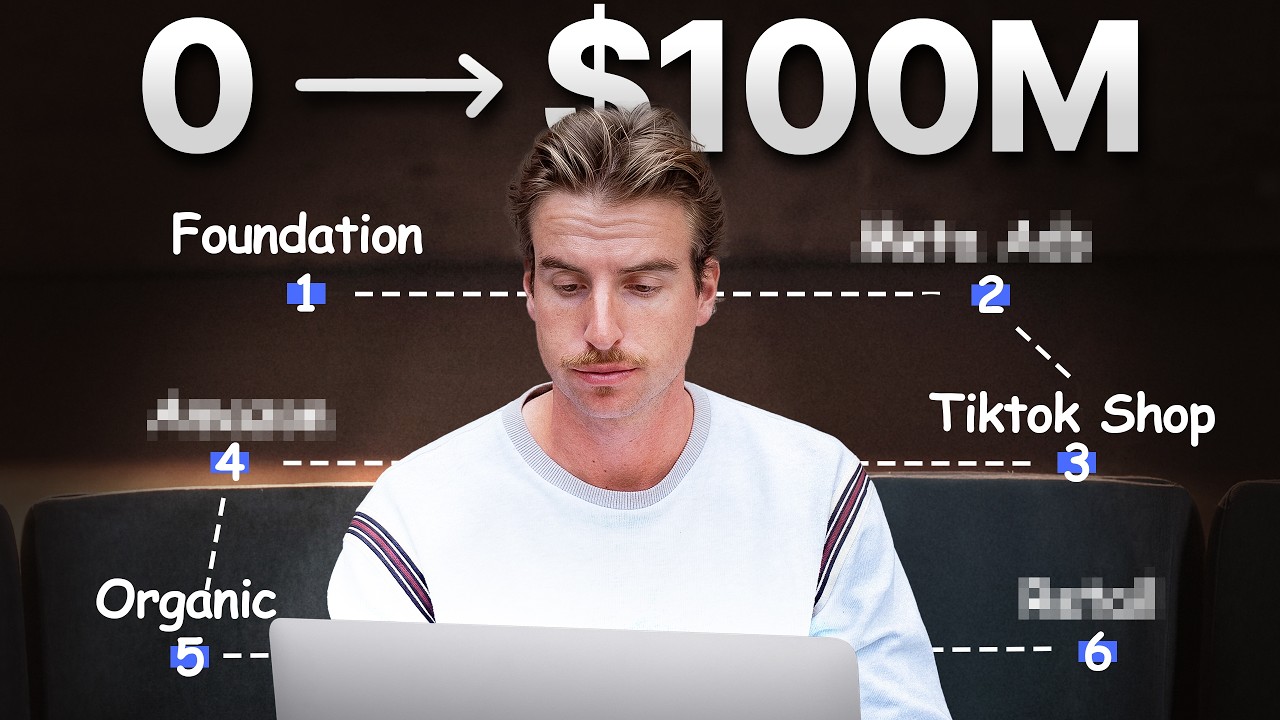
There's never been a better time to build an e-commerce brand. Brian Blum has worked with 87+ brands at his agency Nibble, and now he's doing it himself. In this episode, he shares the exact playbook he's using to launch Steady, his newest brand in the nervous system gummy industry. From Meta ads and TikTok Shop to Amazon and retail, Brian breaks down what it really takes to build a best-in-class consumer brand from scratch. If you're ready to build your own brand, this one is for you. Enjoy the episode! -------------------- Make ads that win (without getting lucky): https://motionapp.com Turn your customer support into a revenue engine: https://www.richpanel.com/ -------------------- 📱Follow Us On Social: -------------------- Instagram Alex https://www.instagram.com/alexgarcia_atx/ Brian: https://www.instagram.com/brian_blum/ Twitter www.twitter.com/@alexgarcia_atx www.twitter.com/@brian_blum1 -------------------- 🔥Want Free Game? Send us a picture of your Apple & Spotify reviews to podcast@marketingexamined.com and we'll make you a playbook in a future episode. -------------------- If you’re a creator that wants to make $10k/mo https://hitmakers.biz -------------------- 📈Growth Playbooks, Directly To Your Inbox For growth playbooks, deep dives, and marketing case studies, get subscribed at https://www.marketingexamined.com -------------------- CHAPTERS: 00:00 - Intro 00:57 - Massive Total Addressable Market 04:20 - Enemy Marketing & Routine-Building Form Factor 07:52 - Approaching Meta Ads 17:00 - Working with Creators 20:17 - P&L & Offer Construction 24:28 - TikTok Shop Strategy 28:16 - Amazon & Acquisition Funnel 34:20 - Organic Content Strategy 36:42 - Attempting to Break Into Retail
Summary
Generated by gpt-5.6-solAt-a-Glance
- Verdict: Watch fully
- Core thesis: The speaker proposes building Steady, a nervous-system gummy brand, by combining a large wellness market, habit-forming subscriptions, high-volume creator-led acquisition, TikTok-funded trial, Amazon demand capture, and a continuously improving creative intelligence system.
- Why it matters: The video provides a concrete, reusable DTC growth architecture with channel roles, creator economics, creative-production matrices, margin targets, offer design, and feedback loops that are relevant to GTM and AI-enabled operating systems.
- Best use: Use it as a hypothesis-driven operating blueprint for content-led commerce, not as proof that Steady will become a $100 million brand; the company and most assumptions have not yet been tested.
Executive Summary
The proposed brand is Steady Nervous System Gummies. The speaker selects the category by looking for a large addressable market, a recognizable enemy, a repeatable consumption routine, and a differentiated form factor. He frames phone and social-media overstimulation as the enemy, nervous-system regulation as the category, and gummies as an accessible alternative to powder-based competitor Nello. This logic comes from contrasting Grind Basketball, whose $2,000 product addressed only an estimated 300,000-500,000 plausible families, with Yuka Health, which he says reached $30 million in six months in the much larger GLP-1 market.
The acquisition engine centers on creative as targeting. Under Meta's Andromeda model, the team would combine benefit angles with specific customer avatars and 15-20 creative formats, producing 50-100 targeted assets rather than relying primarily on conventional audience settings. Creators would receive retainers plus sales commissions, with the founder actively managing relationships because the speaker believes negotiation, follow-up, briefing, and revisions remain poorly suited to full AI automation.
The economic model intentionally sacrifices first-order and channel-level profitability to drive trial. The target is 80-90% gross margin, an $80 subscription rebill after a $40 first month, inexpensive branded gifts, and expectation-setting onboarding designed to reduce churn. TikTok Shop would function as a loss-leading discovery channel supported by 1,000-2,000 creators and all available platform campaigns, while Amazon would capture convenient repeat demand without paid Amazon advertising.
The longer-term moat is intended to be an internal creative-learning system. Every outlier ad or organic post would be tagged and decomposed into hooks, formats, problems, solutions, and mechanisms, then used to inform future briefs and potentially train Claude skills or AI-generated UGC workflows. Organic education, real-world breathwork and wellness communities, and differentiated packaging would then build brand identity and help demonstrate incremental demand to retail buyers.
Key Takeaways
- Claim: Category selection should begin with a very large reachable market and a habit-forming product, because strong execution cannot overcome a narrow pool of eligible buyers or weak repeat purchasing. | Evidence: The speaker says Grind Basketball sold a well-liked $2,000 rebounding machine but had only an estimated 300,000-500,000 plausible U.S. families; by contrast, he says Yuka Health scaled to $30 million in revenue in six months within the much larger GLP-1 market. He recommends at least roughly 20 million people who could consider a product. | Implication: Ken should require market-size assumptions to reflect reachable, purchase-ready customers and repeat frequency, rather than accepting broad population-level TAM claims. | Caveat: The 20 million threshold is presented as the speaker's heuristic, not a demonstrated universal rule, and Steady's proposed market is inferred from broad smartphone-related stress rather than validated customer research.
- Claim: Meta creative should be organized as a modular matrix in which avatar, benefit angle, unique mechanism, failed solution, and format collectively perform the targeting. | Evidence: The speaker proposes approximately five avatars per angle and 15-20 formats within each branch, yielding 50-100 specific ads. Examples include a 33-year-old high-performing New York woman and a 44-year-old suburban father receiving the same 'rest and digest' angle through creators who mirror their identities. | Implication: The reusable asset is the combinatorial creative system: encode personas, pains, mechanisms, and formats as structured variables so production and performance analysis can be orchestrated rather than managed as isolated briefs. | Caveat: Several proposed mechanisms and health benefits involving cortisol, digestion, sleep, L-theanine, saffron, and magnesium are marketing hypotheses in the transcript; substantiation and regulatory review are not addressed.
- Claim: Creator operations are a relationship-intensive execution function, and incentive alignment is more important than minimizing creator payouts. | Evidence: Drawing on work with approximately 115,000 creators, the speaker says creators frequently miss briefs, deliver late, and resist revisions. His example offer is $1,500 for 15 videos plus 10% of attributable sales; he cites typical TikTok Shop retainers of $1,500-$3,000 for 15-30 videos and uses $10,000 in recent GMV as a rough quality threshold. | Implication: Ken should treat creator management as a human-in-the-loop operating system: automate sourcing, tracking, and administration, but retain human ownership of trust, negotiation, coaching, and exception handling. | Caveat: The compensation ranges are channel- and creator-specific benchmarks, while tracked sales understate the broader halo effect and therefore cannot fully measure creator contribution.
- Claim: The DTC profit engine depends on high gross margin and subscription retention, while the first purchase should be optimized aggressively for trial rather than immediate profit. | Evidence: The target is 80-90% gross margin, an $80 subscription rebill, and a 50%-discounted $40 first month. The proposed onboarding includes a roughly $0.50 Alibaba sleep mask, possible app partnerships, and day-30, day-60, and day-90 expectation setting modeled on Everyday Dose; Bloom's branded frother is cited as an example of a gift creating durable household awareness. | Implication: Offer economics should be governed by cohort contribution margin and payback period, not first-order ROAS; the onboarding experience must also be treated as part of retention infrastructure. | Caveat: The strategy deliberately loses money upfront and only works if second-order retention, rebill conversion, cash flow, and product efficacy support the projected lifetime value.
- Claim: TikTok Shop should be treated as a subsidized trial and awareness channel, while Amazon should capture branded demand and convenient repeat purchases. | Evidence: The plan is to contact and sample 1,000-2,000 TikTok creators, coach them through weekly founder-led Discord calls, participate in every available TikTok campaign, and accept price compression. The speaker expects a 30% or greater Amazon sales halo, notes Amazon's 15% platform fee, and cites SharkNinja offering a $200 vacuum for an effective $100 on TikTok through a platform coupon while maintaining higher prices elsewhere. | Implication: Channel performance should be evaluated at the portfolio level, with discovery, trial, fulfillment, and repeat purchase assigned to different channels and measured through incrementality rather than isolated channel P&Ls. | Caveat: The projected 30% Amazon halo and the claim that cross-channel price differences will not materially hurt the brand are unproven assumptions; the speaker explicitly says he may be wrong about price sensitivity.
- Claim: A structured repository of winning creative elements can become a proprietary learning loop and a practical input to AI-assisted production. | Evidence: The team plans to tag outlier ads and organic posts by hook, problem-solution structure, format, and selling mechanism, maintain an internal creative lexicon, and use it to train Claude skills or potentially AI-generated UGC systems. The speaker says a similar process supported roughly 1,000 ads per month for Yuka and $3.6 million in November revenue. | Implication: For Ken's agent systems, the strongest transferable pattern is closed-loop memory: capture structured performance data, extract reusable primitives, generate new variants, and feed outcomes back into future recommendations. | Caveat: The transcript does not provide experimental controls proving that creative volume or the internal tagging system independently caused Yuka's revenue result.
- Claim: Brand-building beyond paid acquisition should create category authority, community participation, and evidence of incremental shoppers before retail expansion. | Evidence: The proposed cadence is approximately five videos and five carousels per week covering the vagus nerve, gut-brain axis, studies, tips, founder stories, and health optimization without direct conversion pressure. Community concepts include breathwork, cold-plunge, sauna, meditation, and Wim Hof-style events; retail buyers are expected to care about incremental shoppers and packaging that stands out beside established stress products. | Implication: Content and community should be measured not only by direct sales but also by branded search, creator recruitment, category association, repeat engagement, and the incremental demand case presented to wholesale buyers. | Caveat: The connection between educational content, wellness events, and retail sell-through is strategic rather than quantified in the transcript.
Detailed Brief
Landing-page and CRO priorities
- Claims: Product-image carousels are more valuable than generic ingredient panels because shoppers often scroll images instead of reading full descriptions.; Traffic quality, product-market fit, and acquisition language usually matter more than incremental onsite conversion optimization.; Dedicated CRO work should generally become a priority around $5 million-$10 million in revenue, when small conversion gains can unlock meaningful incremental profit.
- Evidence: The recommended carousel would identify the specific branded form of an ingredient such as saffron, describe clinical testing, and connect it to the intended benefit.; The speaker estimates that dialing in top-of-funnel acquisition could take eight to twelve months.
- Caveats: He acknowledges that carousel improvements move conversion less than many operators expect unless the existing site experience is exceptionally poor.
- Implications: A weak offer or low-intent traffic should not be misdiagnosed as a page-layout problem.; Site experimentation should be sequenced after message-market fit rather than used to avoid solving acquisition fundamentals.
Brand and positioning details
- Claims: The proposed name, Steady, is intended to be abstract enough to own while communicating the customer's desired state of reduced volatility and greater consistency.; The form-factor strategy is to enter a category already educated by a competitor while differentiating the delivery mechanism and story.
- Evidence: The naming logic is attributed to David Placek of Lexicon Branding, known in the transcript for naming Swiffer.; Nello is cited as a powder-based brand that has already educated TikTok Shop and Amazon customers about ingredients such as L-theanine and magnesium; the speaker compares the proposed powder-to-gummy move with AG1 and the gummy brand rendered in the transcript as Grooms or Groon's.
- Caveats: No trademark, domain, packaging, formulation, customer-testing, or competitive-positioning validation has yet been completed.; The transcript contains inconsistent spellings for several brand and company names.
- Implications: Entering an educated market can reduce category-creation cost, but meaningful differentiation must survive beyond form factor once competitors imitate the product.
Notable Concepts & Terms
- Enemy marketing: Positioning a person, competitor, or industry-wide behavior as the force causing the customer's problem; Steady would cast phone and social-media overstimulation as the enemy.
- Routine-building form factor: A delivery format tied to a recurring behavior, such as daily gummies or electrolytes, that supports habit formation, repeat purchasing, and subscription economics.
- Andromeda creative targeting: The speaker's framing of Meta's newer system in which creative combinations increasingly determine which audiences are reached, making creative structure a targeting mechanism.
- Avatar-angle-format matrix: A combinatorial production framework that matches a recognizable customer identity with a benefit claim and multiple execution formats to create scalable creative diversity.
- Failed solution and unique mechanism: A persuasion structure that acknowledges what the customer has already tried, then explains why the new product should work differently; ProMix's baobab story is used as the example.
- Creator army: A large, continuously activated network of incentivized creators who produce paid and organic assets, generate social proof, and improve the odds of viral distribution.
- Trial channel versus demand-capture channel: The deliberate assignment of TikTok Shop to subsidized discovery and sampling while Amazon fulfills branded demand and repeat purchases.
- Creative lexicon: A structured internal memory of winning hooks, formats, mechanisms, and problem-solution patterns that can guide human teams and train AI-assisted creative workflows.
Operator Notes / Why Ken Should Care
- Convert the plan into a staged validation scorecard covering formulation, claims substantiation, trademark availability, willingness to pay, repeat intent, and channel-specific unit economics before committing to full creator scale.
- Commission legal and scientific review of every claim involving nervous-system regulation, cortisol, digestion, mood, sleep, belly fat, the vagus nerve, and ingredient efficacy before those claims enter briefs or ads.
- Build incrementality tests for the claimed TikTok-to-Amazon halo using geographic, temporal, or creator-cohort holdouts rather than relying solely on correlated sales movement.
- Model cash requirements under the combined burden of a 50% introductory discount, creator retainers, commissions, samples, TikTok campaign discounts, Amazon's 15% fee, returns, and delayed subscription payback.
- Define month-two and month-three retention gates that automatically constrain acquisition spending if rebill conversion or cohort contribution margin misses plan.
- Create a canonical creative taxonomy and event schema before launch so every asset, creator, avatar, angle, mechanism, format, spend level, and downstream outcome can be queried by humans and agents.
- Limit AI automation in creator operations to research, outreach preparation, reminders, brief generation, and performance analysis; route negotiation, revisions, relationship repair, and high-value creator development to humans.
- Run controlled tests on cross-channel pricing before assuming large TikTok discounts will not weaken perceived value, subscription conversion, or retailer relationships.
Source/Metadata
- Title: Watch Me Build a $100M Brand Right In Front of Your Eyes
- Transcript words: 15009
- Duration seconds: 2365
- Timestamp note: No timestamps or chapter markers were present. The supplied transcript also contains substantial duplicated passages and embedded sponsor segments.
Transcript
After years of slow M&A activity in the e-commerce industry, we've recently seen a slew of acquisitions, whether it's Dr. Squatch or Grooms, going for more than a billion dollars. The reason is because there's never been a better time to build an e-commerce brand. A lot of long-time listeners to Sweat Equity know Alex and I have been on the agency side of things. We've actually gotten to work with some of the best brands in the entire world, and I have taken all of these things and internalized them, and now it's time for me to launch my own brand. And I'm actually going to share with you, step-by-step, every single thing that I plan to do to grow that brand over the next two years. To be super clear, I haven't done any of this yet. I'm going to share the growth of this brand live on the Sweat Equity podcast in any partnerships that we do, but after working with 87 brands at Nibble, after studying the best of the best and creating content on Instagram and this channel on Sweat Equity, this is the step-by-step process that I think anyone should take to build a best-in-class consumer brand. All right, let's get into it. So the first thing we're going to do is we want to go after an absolutely massive, target-addressable market. This is the number one most important thing that every business that I see that is doing extremely well has, and it's that the problem that they are attempting to solve is affecting hundreds of millions of people. I used to run a company called Grind Basketball. I was the chief marketing officer for this business, and I was a co-founder. This is how I got my start. We raised $2 million of venture funds. We were on Shark Tank. We had some good motion. We had some good progress, but ultimately the product stagnated and the business stagnated because of one singular problem. The target-addressable market was too small. We were selling a $2,000 basketball rebounding machine. Sick product. It was amazing for the parents that bought it, and everyone that had it loved it. But there was probably 300,000, 500,000 families in the United States that would ever even consider buying this product. You need 20 million people to even consider your product because if there's only 500,000, 95% of those people are not going to be in the right time to buy that product when you're advertising it. So maybe their kid is just giving up basketball. Maybe their kid just graduated. There was not a big enough addressable market to build a really sizable business there. Compare and contrast that with my last startup, which was Yuka Health. It was a GLP-1 business that I separated from the partners with in February, but we were able to scale to $30 million of revenue in just six months. Why is that? Because the target-addressable market of people who are interested in a compounded GLP-1 or generally the broader peptide space was absolutely massive. And so all we had to do is come in and execute well within a huge market. If you execute well within a very small market, it doesn't really matter. You can't reach that many customers. It's not even possible to experience the level of scale. So the first thing that we want to do if we're looking at any sort of consumable product, if we're looking at any sort of apparel business, if we want to look at any sort of services business, is what is the total addressable market of the thing that we're going to do? For me, I'm looking at this category of nervous system regulation, and here's why. I think we've seen stress. I think we've seen calming products. We've seen gut health products. We've basically seen everything explode over the last few years in the health and wellness supplement space. However, I don't think anyone is specifically targeting the CNS, the central nervous system. Why would you target the central nervous system? Because this is what regulates all of the body's natural functions. So if the body needs to digest food better, that's your nervous system communicating with your gut on the gut-brain axis. If you're in a bad mood all the time, that's your nervous system's hormone production, your oxytocin, serotonin, dopamine cycle, right? Basically, all of the processes that the body needs to function properly are regulated by your nervous system. And in our world today, we have the most dysregulated nervous systems there's ever been. Your phone is literally nuking your dopamine at all times. You're getting agitated by the news, by social media. There's so much noise in your daily life. People are really not completing tasks the way that they used to. There's just infinite things that are disrupting your nervous system. And so I believe that is a huge target addressable market because it's pretty much anyone with a phone, right? One of the things we've talked about on this podcast a lot is enemy marketing. And enemy marketing can apply to three different things. It can be a specific person, it can be a competitor, or it can be an industry-wide trend or behavior, right? And I think in this case, we have a very clear industry-wide behavior, a societal level trend, which is the phone and particularly social media addiction is throwing off your central nervous system. And so that's exactly what we're going to go after. The other thing that I really believe you need to have is a routine building form factor. On this podcast a lot is enemy marketing. And enemy marketing can apply to three different things. It can be a specific person, it can be a competitor, or it can be an industry-wide trend or behavior, right? And I think in this case, we have a very clear industry-wide behavior, a societal level trend, which is the phone and particularly social media addiction is throwing off your central nervous system. And so that's exactly what we're going to go after. The other thing that I really believe you need to have is a routine building form factor. So you cannot have a business that doesn't have recurring revenue. If you're going to be in the e-commerce world, you will die, right? It's that simple. And this is why apparel businesses are so hard because if you're in an apparel business, you're constantly having to release new products, new collections to be able to extract incremental new revenue out of your existing customers. Every business is built on their returning customers. It is not new customers, it's returning customers that fuel the profit center of any e-commerce business. So apparel is naturally very hard. It's why you've seen all these electrolyte brands are doing very well is because when someone picks an electrolyte, it's a very habit forming experience. You want to take that electrolyte, I don't know, once, twice a day, and it becomes synonymous with you drinking water and hydrating. And if it tastes good, and if it delivers some of the benefits it's promoting, it's going to be really sticky. That's why we're seeing so many electrolyte businesses explode. We've obviously recently seen Create Wellness. We've seen Grooms. We've seen Ori Nutrition, one of my old clients back in the day. These gummy businesses are doing very well. And that's actually the category that I want to go into, which is nervous system regulation gummies. Now I want to talk for a second about that because the reason I'm choosing gummies instead of powders is because there is a business called Nello that has explosively grown on TikTok Shop. They've explosively grown on Amazon. Their entire strategy has been very strong. They're very modern and they're all powders. They're all powders. And so in the same way that AG1 was a powder and then Grooms was a gummy, I believe there's an opportunity, A, to go after nervous system regulation and B, to go after a different form factor than Nello because Nello has trained the consumer about L-theanine, about some of these different ingredients, magnesium. And they've trained the consumer to expect benefits from these ingredients. I think there's a different form factor opportunity and obviously different storytelling that can accompany that once you develop the product. So that's how I arrived at the idea: what's a huge TAM, what's a clear problem, what's a clear enemy, what's a differentiated form factor, and what's a unique position. Once you put those things all together, I think that's a super exciting thing to go after. The next thing that I wanted to do was find a great name. And in doing so, I looked at the My First Million podcast they did with David Placic, who is the founder of Lexicon Branding. He came up with the Swiffer, for example. He's come up with a million different great brand ideas. And he mentioned something very clearly. It's like, you want the title to feel almost abstract, but very clearly communicate what is the dream state of the product or something that is going to only be associated with that product. So for me, I think people are feeling extremely volatile. I think they feel very disrupted and nervous system dysregulation makes you naturally inconsistent. And so I want to name the product Steady. So it'll be Steady Nervous System Gummies is the end product that we're going to build today on this podcast. And so the first thing I want to talk about is how we're going to approach Meta and our organic content strategy. Meta is obviously the biggest fuel for any D2C brand to use in 2026. This is still true. It's been true. It's always going to be true. And Meta released a new update called Andromeda. So Andromeda has completely changed the way that you should be stacking your ad creative and how you're going to use creative as the targeting. So how does this work? Well, you have an audience, you have an avatar, and you have an angle, right? So an audience is the desired people that you want to reach with your ad. The avatar is your ability to create a mirror for them so that they see themselves in your ad. That's the overlap of the problem and the identity of the consumer that you're trying to reach. And the angle is the unique thing that you're saying your product does. That's the unique thing that your product is going to solve for them. Now, bonus points if you go a little deeper and granular with some of the other things we've talked about here, which is failed solution and unique mechanism. So failed solution is I've attempted this before and it didn't work. And unique mechanism is the reasoning why that failed solution didn't work and why the new product will work, right? And the angle is the unique thing that you're saying your product does. That's the unique thing that your product is going to solve for them. Now, bonus points if you go a little deeper and granular with some of the other things we've talked about here, which is failed solution and unique mechanism. So failed solution is I've attempted this before and it didn't work. And unique mechanism is the reasoning why that failed solution didn't work and why the new product will work, right? So we just had the founders of ProMix Nutrition on here. And I think their de-bloat product is a perfect example of what I'm describing. A million bloating products, bloating solutions have been attempted over the years. And for someone who's experiencing bloating, they're probably going to view those with a healthy dose of skepticism. I've tried these bloating products before. Why would I believe that yours is any different? Well, because we have this unique mechanism. For them, it's a personal story from the founder, Devin Levesque. And he went to Africa and found a fruit called the Baobab. And that fruit has been used in this local African tribe for thousands of years to improve gut health. And he discovered this miracle ingredient that was a breakthrough for them. It was a unique mechanism they were able to include in the rest of a great formulation. All of a sudden, the de-bloat product, it works very well. And that's a really great marketing angle for them. So anyways, that's a quick thing on the angle piece is unique mechanism failed solution is super, super important. But angles are always what is the core benefit of this product? And so the way that I'm going to look at this is for nervous system regulation, the nervous system plays a key role in stress, in particularly mood. And it plays a key role in gut health, right? So you can rest and digest is how the nervous system regulates the gut. Sleep, obviously, if your brain's neurochemistry is functioning properly, then your sleep will be better. Sleep has a lot of downstream impacts as well. And we've seen this from time to time, Nello actually scaled on a belly fat angle, right? So they would basically say the reason you have a bigger tummy was because you had too much cortisol. And so their product was a way to reduce cortisol. And so if you drink it over time, your cortisol reduces, it helps you get snatched, whatever. And so that's really how we're going to map this stuff out. So it's the way that Andromeda works is the combination of things that you are putting together in your creative is how you reach new audiences. And so if you combine avatar and angle, then you will reach a certain audience. So let's game this out, right? So someone who's got nervous system problems might be a 33-year-old woman in New York who is a high performer, goes to Pilates, is otherwise super healthy, but just feels a little bit off. Her gut never feels great after she eats. And she also feels like she's overwhelmed with work stuff, even though she's worked her whole life. There's not a guilt associated with it, but she's like, wow, this is what I've always wanted. I wanted to live this high-performing life. I am healthy. I work out all the time. I eat well, but why don't I feel good? Okay, now we have our avatar. The angle will be, you have a dysregulated nervous system. Your nervous system is stuck in fight or flight, and that's not allowing you to rest and digest, right? So here is the unique mechanism, which is regulating your nervous system through L-theanine, through saffron, through magnesium citrate, some of these core ingredients that we're going to include in the formulation. And that's how we're going to reach that specific audience, which is obviously a lot more of this avatar. We'll call her Sarah. And so that's one through line, but at the same time, we have another avatar. We have Pierre, who's a 44-year-old dad, and he's living a suburban lifestyle. Everything's cool. It's calm, but he's also feeling some similar challenges to Sarah, right? We're going to use the same angle. It's still rest and digest, but now we're going to find an avatar that's going to match up with Pierre. So this is going to be a male creator, right? And how are we going to find these creators? There's plenty of tools to do it. I recommend either SideShift, Tribe, or Yuka AI. Those are my primary sources. I'll also use Top Yappers, which is this tool to filter people and identify by demographic, if they're a fit view. Honestly, the Meta Partnerships Creator Portal is pretty strong at this point. You can really go in there and search for the target creator you want. We're going to send them an email and say, hey, we want to pay you $1,500 for 15 videos, but at the same time, we're going to give you a percentage of commission and we're going to put your videos into our Meta ad account, pay you 10% commission on all sales that you generate. That's possible through Tribe, which I just mentioned. is pretty strong at this point. You can really go in there and just search for the target creator you want. We're going to send them an email and say, hey, we want to pay you $1,500 for 15 videos, but at the same time, we're going to give you a percentage of commission and we're going to put your videos into our meta ad account, pay you 10% commission on all sales that you generate. That's possible through Tribe, which I just mentioned. The other way that you can recruit these people is through TikTok shop. Using a TikTok shop outreach bot is super powerful and that's how you can build your creator arm from there, but we're not necessarily talking about that piece. All right. So over the last two years of building Nibble, shipping nearly 8,000 UGC ads and getting performance data on every single one of them, it became super clear. There are two types of brands, those that understand creative volume and those that don't. The core difference was what they focused on. Brands that focused on volume plus hit rate were never complaining that meta changed the algorithm. Their stuff just worked. And anytime we did work with one of those savvy brands, it was always on the same platform, Motion. Motion is by far the best tool to optimize your creative pipeline. Provide structure, visibility, and insights that your creative team needs to make better decisions. I like to think of it as what meta would actually show you if they cared about your success. All the key metrics like three second stop rate, winning angles, formats, competitor research, it's all built into their platform so you can make quicker and better decisions. They even just launched our new AI agent, Runneth, which functions as a 24 seven creative strategist providing recommendations to your ad account. Y'all make sure to go check them out at motionapp.com. All right, let's get back to the episode. Now we have two avatars, one angle, but we're reaching two different audiences, right? You're going to continue to scale this in a modular way. So if I have a meta ad account and I'm thinking about my creative strategy, I'm thinking, how do I get five avatars for one angle? How do I get five avatars for the next angle, right? Because it's not just gut health that we're talking about, there could be better sleep. And so maybe the reason that sleep is not good is because your cortisol is spiking too late at night. And that's because you aren't using saffron or whatever it is, right? Cortisol is spiking at the wrong time. That's causing you to toss and turn and lie awake in your bed the whole night. We're going to, again, take that angle, which has a unique mechanism and a failed solution. And we're going to scale it across five different avatars. We're going to do that again for PR. We're going to do that again for Sarah, right? And this is how you're going to structure your ad account, it's pretty easy to see how you now have five different trees for each angle of going to these different avatars, which is going to unlock the new audiences. We're going to multiply this one more time. And because, again, creative diversity is the name of the game. And I think it's really intimidating for a lot of folks. They're like, how do I arrive at this? What's my process to actually get there? And the way to do it is what I'm about to describe. So we're going to go back to that example. We have our five avatars, one angle. However, how are we going to multiply that? It's through formats. So formats is the other way that we're going to arrive at creative diversity. So this is static images, right? This is TikToks, very lo-fi UGC, quick hitters. Within the lo-fi quick hitter UGC world, we have one-shots, we have narrative, we have guinea pig, we have un-gatekeeping. We're going to basically create this worksheet that you can almost fill in where, number one, we start with our avatar. Number two, we have the angle. And then we have, I don't know, 15, 20 formats that we want to produce within that same tree. You can quickly see how this is ramping up to 50 to 100 ads for this product that are all very specific to someone's identity, very specific to the problem they're experiencing and promising the solution on the other side of taking our product. So that's how we're going to structure our meta ad account. And recruiting creators and building the statics, that's a lot of the block and tackling work. But to be honest with you, I can recommend tools all you want, but there's just nothing besides execution. You're going to just have to go get the product in front of creators using the various tools available and negotiate with them over time. Something I will say is a lot of people are promising AI agents as a way to negotiate with creators. And if I've learned one thing, working with around 115,000 creators over the last two years, it's that creators are human beings. They very rarely do what you ask them to do if you just send them a message, right? They're not going to follow a brief most of the time. They're not going to do exactly what you say, no matter what. But they're very likely going to be late on content. They're very likely going to have issues if you ask for revisions. are promising AI agents as a way to negotiate with creators. And if I've learned one thing working with around 115,000 creators over the last two years, it's that creators are human beings. They very rarely do what you ask them to do if you just send them a message, right? They're not gonna follow a brief most of the time. They're not going to do exactly what you say, no matter what. But they're very likely going to be late on content. They're very likely gonna have issues if you ask for revisions. And this is something that a lot of people believe can be AI automated. And if you listen to anything I just said, none of those steps in the process are very easily handled by an AI. So you wanna have someone who's at least, and I mean, if you're the founder, I recommend this is what you do, right? This is one of the most incredible, high upside variables about your business is building your creator army and developing a relationship with these people as if they're real humans. Quick notes on deal structure. So the average TikTok shop retainer is gonna be anywhere from $1,500 to $3,000 for 15 to 30 videos. That's gonna be dependent on what's this creator's stats? How much GMV have they raised? How much GMV have they made? Generally speaking, if someone's under $10,000 in GMV, generally 30 days on TikTok shop, I'm not really counting on that to be a crazy outcome. They're putting out content, but I'm not gonna pay them a $5,000 retainer or something. You want to make sure that those people are getting anywhere from $1,500 to $3K. If it's someone that's getting above $10,000, there's actually a good chance they're a pretty good creator and you should probably try and incentivize them properly with a little more upfront cash and a higher commission rate as well. So the big name of the game in creator marketing right now is incentive alignment. You have to align incentives with the creators and the brand. This is completely new. Over the last few years, maybe you would pay $300 flat fee, $500 flat fee for a UDC video. And I've actually had a lot of brand founders ask me. They're like, well, I don't wanna pay $100,000 if one of these videos pops off to the creators. And I'm like, that's completely insane because if you're paying $100,000 to that creator for the video popping off, think about what it just made you. And not only that, but that's ignoring just the overall halo effect of a winning video, a winning ad. It's not necessarily about tracked revenue on that single asset. Maybe someone saw that and then saw another creator's video and that's what influenced them to purchase. That's not getting tracked in that one creator's incentive pool. So it's extremely important to give creators as much upside as you can. This is what you're seeing all the fastest growing brands doing right now—paying creators as much as they're available on that P&L. And then, trusting that the incentive alignment is gonna produce better outcomes. Now I wanna talk about P&L because I have this product—it's a nervous system gummy. And what gross margin am I aiming for, right? I personally believe if you don't have 80 to 90% gross margin on your products, then it's gonna be extremely hard to scale digitally because as an e-commerce brand, obviously we have customer acquisition costs. We have all these different OPEX costs. And even if you're lean and efficient, that's always gonna be really challenging. So I aim for that 80 to 90% role. However, this is where I think a lot of people may not necessarily do the right process—emphasizing subscription. And subscription is extremely important because you want to get people in the door. You want to build the habit with your products. And then from there, obviously they stick around. And where I think a lot of people are scared, but the best brands in the world—Groon's, Create Wellness, Instant Hydration, and Mars Men—are not, is a very steep intro offer. IMA does this as well. They're stacking an insane amount of value in the upfront purchase because they want to just convert you at all costs, get you into their overall customer pool, drive trial. Driving trial is one of the most important things in the consumer world that a lot of people are very scared to scale into. And that's obviously because you're losing money betting on retention, right? But for me, when I'm building this brand, I'm going to charge $80 on the rebill to a customer, but I'm going to give it to them $40 month one. 50% off your first order. Make sure that's very steep. Make sure there's layering in gifts, right? I think free gifts are also a really good way to engineer a little bit more conversion. Everyday Dose was always really good at this. They give you several different things as part of an onboarding package, right? Their unboxing experience was super powerful at expectation setting. You know, they would say, hey, this is what to expect at day 30. But I'm going to give it to them $40 month one. And 50% off your first order. Make sure that's very steep. Make sure there's layering in gifts, right? I think free gifts are also a really good way to engineer a little bit more conversion. Everyday Dose was always really good at this. They give you several different things as part of an onboarding package, right? Their unboxing experience was super powerful at expectation setting. They would say, hey, this is what to expect at day 30. This is what to expect at day 60. This is what to expect at day 90. As a customer, you're building expectations. You're saying, no, don't give up day 45. Day 60 is when you're going to get these benefits. So that unboxing experience is really important, but they would give you a whisk. It would give you a mug. It would give you all sorts of different things, little goodies that were co-branded for Everyday Dose. So you've thought about them every single time you did it. Bloom Nutrition, again, super prominent example. We had Greg on this podcast and a friend of the pod. And I know several people who have been like, wait, are those the whisks? The little frothers? That's insane, you know? Because it's probably a boyfriend that saw his girlfriend have a whisk on their countertop for years. And he used the whisk, but never used the greens powder. And that's the power of the free gift though, right? A guy who had never interacted with that product was still familiar with the word mark and remembered it. So you're layering in subscription, deep discount, intro offer. You're going to have to rebuild them on that second one. Obviously cannot have them churn. And that's really important in the email piece. But unboxing experience is going to set the tone of expectations, how long this product is going to take before it kicks in. And free gifts. So in my case, I think there's a couple of things that I'm exploring. One that I like is a sleep mask. I think just having a little sleep mask, interesting little offer. It's a dot, 50 cents on Alibaba. That's the other thing: make sure you're getting extremely cheap free gifts. Don't lose the farm on this. But I think a sleep mask is what I'm looking at aiming to sell as well as partnering with prominent apps. So the Calm app, I look at Other Ship, I look at a bunch of these different breathwork and calming apps. And I think they would love to have a CPD brand that was doing some sort of, hey, first month membership free if you sign up. And then they also can potentially capture that consumer down the road. So that's how I'm thinking about offer construction: steep intro offer, layering gifts, layering in some different things to convert people. We just went through the meta ad strategy. Now I want to talk about TikTok shop because that was my bread and butter for a while. And TikTok shop is a platform where I am exclusively looking at this as a brand marketing trial channel. I do not care about the single channel P&L. I'm anticipating a 30% boost in my Amazon sales whenever I successfully scale TikTok shop. And so I'm not worried about this channel profiting. Now, what I am going to do is steep intro offer, even steeper than my subscription offer, because I want people to try this product and then go to buy it on Amazon when they're addicted to it. I just know my personal behavior with several different things has always been: okay, you converted me on this thing, but now I'm ready to buy it on Amazon because I want it today for tomorrow. So because you drove trial, because you acquired me as a customer on a different channel, it doesn't mean I'm loyal to that channel. I'm going to go to Amazon where it's most convenient. Maybe I'm in the store. I'll go buy it in the store. We saw a tremendous benefit for retail barons from activating on TikTok shop. So my plan on TikTok shop will be mass outreach to probably a thousand to 2000 creators. I'm going to sample them and I'm going to trust. I'm going to invite them to my Discord community. I'm going to try and activate them every single week as the founder. I'm going to lead a Discord call where we're going to review top formats. We're going to review unique selling points about the products. We're going to talk about why certain videos work and we're going to gently guide the 2000 videos that we're going to get towards performance. And ideally, one of these videos goes viral. Now, you all already know we are super skeptical on this show about most AI tools promising the world. They have flashy demos, huge promises, and ultimately under deliver. But I do have to tell you about one that has blown me away and saved my team countless hours of time. And that's Rich Panel. Imagine a 24-7 customer support engine and we're going to gently guide the 2000 videos that we're going to get towards performance. And ideally, one of these videos goes viral. Now, you already know we are super skeptical on this show about most AI tools promising the world. They have flashy demos, huge promises, and ultimately under deliver. But I do have to tell you about one that has blown me away and saved my team countless hours of time. And that's Rich Panel. Imagine a 24-7 customer support engine that handles all of your tickets seamlessly, escalates anything requiring human intervention. And here's the best part, upsells your customers in the process. Their onboarding process is frankly one of the craziest things I've ever seen. You input your brand and within 15 minutes, it has full context on the latest drops, product information, and plugs into all of your apps. That's not even to mention the cost savings. They're like three times more affordable than their competitors. I couldn't recommend this enough. So if you're a brand looking to turn support into an asset, go check out richpanel.com and tell them we sent you. Another thing about TikTok Shop, you got to make sure you're participating in every single platform campaign. TikTok is always subsidizing views and impressions for products that participate in the platform-wide campaign. So if there is a new arrivals campaign, a new arrivals surge campaign, and then a new arrivals priority campaign, those might all three be stacked. And you as a brand, you might be like, I don't know, I'm only going to participate in the one. All right, I'm only going to discount down to this level, or I'm only going to commit marketing dollars to this level. I know from working directly with TikTok Shop, don't do that. They want you to participate in the campaigns and they use the algorithm to reward that. So every single campaign, every single price compression that comes with getting amplified on TikTok Shop, I'm signing up for it because reminder, I don't give a shit about the P&L of that channel. I literally don't care. We don't make money. That's great. It's the most effective way to get massive amounts of impressions and eyeballs on my product. And I'm focusing on participating on that channel in the best way I can, driving as much trial and conversion on that channel as I can and getting a massive grassroots presence of creators because it's a flywheel. More conversion feeds more creators posting about you, better creators posting about you, more amplification in the algorithm. And I'm going to take every single step to go as viral on that platform as possible because the next channel that I care about is Amazon. Amazon takes 15% of all sales. It's egregious. I cannot believe Bezos is still getting away with this. But regardless, I'm going to take that, understand it, and I'm not going to introduce ads on Amazon. Why would I pay a CAC on Amazon when most of it is demand capture? It's a demand capture vehicle. It's just the best fulfillment center. That's really what the channel's for. It's not a great discovery channel. I mean, obviously people are searching PPC-based keywords and maybe there is alpha in unlocking stress relief gummy or whatever, but those are going to be categories that I think are extremely competitive. I don't want to compete with people that are dominant on this keyword search terms for some of the benefits like gut health gummy. I want to create a lot of grassroots interest and differentiation on my product on TikTok and be viral on TikTok. And that search volume for steady gummies is going to propel me to the top of my listing in the various categories that I'm indexing for. So Amazon, I'm not spending on ads at all, but I am going to eat that 15% platform fee and I'm going to trust that TikTok shop is going to give me a 30% halo or more on that channel. And I think people are going to try the product on TikTok and then I think they're going to go over to Amazon and they're going to buy it. And I also don't think price matters. I might be totally wrong, but I've just seen so much price misalignment between the various marketplace channels and what goes on on TikTok shop. And they're still performing incredibly well. Shark Ninja is an example of this. I've talked about this on many videos. They're charging $200 for their vacuum on Amazon or Walmart.com and they're charging $100 on TikTok shop. They're doing this through a coupon, right? A platform specific coupon. They display the $200 on TikTok and then they give a coupon for $100 off. And they were named the retailer of the year at Target for this. So this is just the modern content-driven commerce playbook where it's critical mass of attention on TikTok. We will say yes to all the various trade-offs that come with that, which suck, but take a beating on that channel. But what it's going to do is get our product in hundreds of thousands of people's hands. And we're going to work on building that routine from there. It's all about retention from there. and then they give a coupon for $100 off. And they were named the retailer of the year at Target for this. So this is the modern content-driven commerce playbook where it's critical mass of attention on TikTok. We will say yes to all the various trade-offs that come with that, which suck, but take a beating on that channel. But what it's going to do is get our product in hundreds of thousands of people's hands. And we're going to work on building that routine from there. It's all about retention from there. So we're going to have best-in-class meta-CAC creative strategy, right? We just walked through that audience angle, avatar matrix with formats layered in. We have another episode where I go through formats that you should be using on your ads, on your creator briefs. So go watch that. And then once we have that solid CAC, we're pushing subscription, we're building retention, we're building month two, month three cohorts. That's going to fuel the profit center of the business. We're going to use TikTok shop as a massive viral top of funnel and allow that to spill over to Amazon. Over the course of all of this, my team is using tools to tag all the content that we're receiving. And anything that's an outlier performer, whether that's an ad, whether that is organic content, no matter what it is, we're going to take it in and dissect it. Why did it work? What was the hook? What was the problem solution? What were the different things that made this video go? And we're going to keep an internal Rolodex of this information. A couple of years ago, I wouldn't have said this, but now we're probably using that to train Claude skills and AI skills so that we can reproduce that at scale. I might even use that to train AI UDC. But generally speaking, you want to create this internal lexicon of these are all the different things that moved the needle for us at this time because I think tracking that in your creative strategy is incredibly important and shortens the amount of time for you to make great ads in the future. This is what we did at Yucca where we were producing around a thousand ads a month in-house at Nibble. Allowed us to scale Yucca. We did $3.6 million in November for reference. So this strategy does work. Now, hopefully, see if it works with the gummy business. But that's our acquisition funnel, right? It's this hybrid. You want to get this critical mass of content, some of it's ads, some of it's TikTok shop. And then we're looking at all of it and saying, okay, what is working, what's not? And making sure that all the numbers interplay properly so that we're always emphasizing subscription and LTV of our customers. As far as the landing page and stuff like that, I'm a big proponent of a product carousel that walks through infographic style. You want to do the ingredient panel, but you don't want to just say there's saffron. You're saying, this is the specific brand and ingredient of saffron, which is clinically tested, has this benefit. So layering in a little more information to your product image carousel as well. I think that's a place that's really underutilized in terms of selling. When you look at a heat map of a website, it's much more often that people are actually scrolling through the product image carousel rather than reading the description of a product. I will say, I've done a lot of conversion rate optimization in my life and this moves the needle less than you think. So I do think that traffic quality is actually much more important than your onsite conversion. If your onsite conversion is just terrible, then maybe this will be a big needle mover. But generally, CROs should come in once you're at the 5 to 10 million revenue range because you're unlocking incremental profit at that point, but you're not really solving the core problem, which is product market fit and acquisition language. That's the biggest key. Okay. So we've hopefully solved all this stuff. I think we're talking about probably an 8 to 12 month process of getting all of our top funnel acquisition dialed in. Retention wise, I think email is a key channel here. Gotta talk organic content. This is the organic content podcast. So for organic content, I'm going to structure this in a very similar way that I did my ad strategy, right? Where it's that angle audience formats, because I want to be a thought leader. of getting all of our top funnel acquisition dialed in. Retention wise, I think email is a key channel here. Gotta talk organic content. This is the organic content podcast. So for organic content, I'm going to structure this in a very similar way that I did my ad strategy, right? Where it's angle audience formats, whatever, because I want to be a thought leader in this space. As a brand, I want to be a go-to resource for people to look at in terms of vagus nerve stimulation, in terms of the gut brain axis, in terms of anything that's really adjacent to this topic of health optimization. We are going to always reshare studies. We're going to give helpful tips and tricks. We're going to make sure that everything has a really strong visual hook, that it's branded properly, that it feels very quick and aesthetically high. And allow that to be a mix of both videos and carousels. So I'd probably go like five videos a week, maybe five carousels. Some days we're double posting. With the videos, I think you want to mix in, maybe founder story, maybe it's just a simple tip and trick. But a lot of the time, I'm going to be taking top of funnel swings, right? Discovery of the vagus nerve is a video that I would probably make. It doesn't necessarily tie back into what we're talking about, but I don't think a lot of people know that story. I don't think a lot of people even know what the vagus nerve does in relation to a lot of the brain's function. And it's a really powerful aspect of human biology. And so that is a singular content pillar: vagus nerve. What is the vagus nerve? Who's the scientist that identified the vagus nerve? What are some ways that the vagus nerve can be regulated? One, two, and three. What are different ways? What does it connect to? These are all individual different content pieces that we're going to experiment with the storyboarding of. The discovery of the vagus nerve came from this ancient Greek philosopher, Galen, right? And just imagine the amount of storytelling potential that we could use. We could use AI to bring you to ancient Greece where this guy's looking at some sort of patient. In 2000 AD, he discovered this revolution. We'll use organic content as a way to just entertain and educate around our general topic. And from there, it's not even, it's just pure brand marketing, right? Zero conversion focus whatsoever. The next phase of the business will come as we try and attempt to go into retail. And retail is a very challenging environment because you are working with wholesale buyers and you're working with people who have different priorities. They want incremental new shoppers. So it's like, why carry me if Nello already has the stress niche, right? Or if Lemmy has a stress relief product, there are already things on there. I need to bring in incremental new shoppers for them to really be attracted to me. And then the other piece of that will be, what is my product? How does my product stand out on the shelf? What does the packaging look like that really catches someone's eye and makes them desperate to pull trigger and buy the product compared to something else? So we're going to keep those two things in mind and continue to invest in these brand marketing community initiatives, which I think will pay dividends substantially over time. Yes, ad creative is super important, but you also want a reason for your people to hang out. So I think nervous system regulation is a space where it's like, yeah. those two things in mind and continue to invest in these brand marketing community initiatives, which I think will pay dividends substantially over time. Ad creative is super important, but you also want a reason for your people to hang out. So I think nervous system regulation is a space where cold plunge and sauna meetups, breathwork stuff. I think breathwork is probably one of the most underrated, untapped community building exercises because it's one of those few things where if you do a Wim Hof routine, you hit full flow state trance. You feel crazy. And anytime you could do that without drugs, I think that's incredible. So we would lean heavily into the breathwork side of things. Meditation, guided, everything. So that's how we would approach community. And I think that will play a significant role in the retail expansion. So generally speaking, that's the plan: we want to lock in on our acquisition strategy. We want to make sure that we're super viral. We want to make sure we're capturing this failover on Amazon, emphasizing subscription the whole way, going after a massive TAM with a brand that people like to identify with that engages with them in real life, with a creator army that is incentivized properly to always promote it and make it viral. And that's it. So stay tuned. I think it might work out. We'll see, but I'll give you all an update here in six months when this product's actually launched on all these different things that we're doing. I think this is going to be fun because I'm just going to give you—if you listen to this pod, I'm going to give you every single thing that I did: wins, losses, you name it. So good reason to subscribe. Comment any questions that you had. If any of this didn't make sense, if you want me to expand on stuff, I can do a short form video for you from our handle on IG or TikTok or whatever. And otherwise, we'll catch you next week. And so I believe that is a huge target addressable market because it's pretty much anyone with a phone, right? Like one of the things we've talked about on this podcast a lot is enemy marketing. And enemy marketing can apply to three different things. It can be a specific person, it can be a competitor, or it can be an industry-wide trend or behavior, right? And I think in this case, we have a very clear industry-wide behavior, a societal level trend, which is the phone and particularly social media addiction is throwing off your central nervous system. And so that's exactly what we're gonna go after. The other thing that I really believe you need to have is a routine building form factor. So you cannot have a business that doesn't have recurring revenue. If you're gonna be in the e-commerce world, you will die, right? It's that simple. And this is why apparel businesses are so hard because if you're in an apparel business, you're constantly having to release new products, new collections to be able to extract incremental new revenue out of your existing customers. Every business is built on their returning customers. It is not new customers, it's returning customers that fuel the profit center of any e-commerce business. So apparel is naturally very hard. It's why you've seen all these electrolyte brands are doing very well is because when someone picks an electrolyte, it's a very habit forming experience. Like you want to take that electrolyte, I don't know, once, twice a day, like basically becomes synonymous with you drinking water and hydrating. And if it tastes good, and if it delivers some of the benefits it's promoting, it's gonna be really sticky. That's why we're seeing so many electrolyte businesses explode. We obviously recently seen Create Wellness. We've seen Grooms. We've seen Ori Nutrition, one of my old clients back in the day. Like these gummy businesses are doing very well. And that's actually the category that I wanna go into, which is nervous system regulation gummies. Now I wanna talk for a second about that because the reason I'm choosing gummies instead of powders is because there is a business called Nello that has explosively grown on TikTok shop. They've explosively grown on Amazon. Their entire strategy has been very strong. Like they're very modern and they're all powders. They're all powders. And so in the same way that AG1 was a powder and then Grooms was a gummy, I believe there's an opportunity, A, to go after nervous system regulation and B, to go after a different form factor than Nello because Nello has trained the consumer about L-theanine, about some of these different ingredients, magnesium. And they've trained the consumer to expect benefits from these ingredients. I think there's a different form factor opportunity and obviously different storytelling that can accompany that once you develop the product. So that's sort of kind of how I arrived at the idea is what's a huge TAM, what's a clear problem, what's a clear enemy, what's a differentiated form factor, and what's a unique position. Once you put those things all together, I think that's a super exciting thing to go after. The next thing that I wanted to do was find a great name. And in doing so, I looked at the My First Million podcast they did with David Placic, who is the founder of Lexicon Branding. He came up with the Swiffer, for example. He's come up with, you know, a million different great brand ideas. And he mentioned something very clearly. It's like, you want the title to feel almost abstract, but very clearly communicate, you know, what is the dream state of the product or what is, you know, something that is going to only be associated with that product. So for me, I think people are feeling extremely volatile. I think they feel very disrupted and nervous system dysregulation makes you naturally inconsistent. And so I want to name the product Steady. So it'll be Steady. Nervous System Gummies is the end product that we're going to build today on this podcast. And so the first thing I want to talk about is how we're going to approach Meta and our organic content strategy. Meta is obviously the biggest fuel for any D2C brand to use in 2026. This is still true. It's been true. It's always going to be true. And Meta released a new update called Andromeda. So Andromeda has completely changed the way that you should be stacking your ad creative and how you're going to use creative as the targeting. So how does this work? Well, basically you have an audience, you have an avatar, and you have an angle, right? So an audience is the desired people that you want to reach with your ad. The avatar is your ability to, you know, create a mirror for them so that they see themselves in your ad. That's like kind of this overlap of the problem and the identity of the consumer that you're trying to reach. And the angle is the unique thing that you're saying your product does. That's the unique thing that your product is going to solve for them. Now, bonus points if you, you know, go a little deeper and granular with some of the other things we've talked about here, which is failed solution and unique mechanism. So failed solution is I've attempted this before and it didn't work. And unique mechanism is the reasoning why that failed solution didn't work and why the new product will work, right? So we just had the founders of ProMix Nutrition on here. And I think their de-bloat product is a perfect example of what I'm describing. A million bloating products, bloating solutions have been attempted over the years. And for someone who's experiencing bloating, they're probably going to view those with a healthy dose of skepticism. I've tried these bloating products before. Why would I believe that yours is any different? Well, because we have this unique mechanism. For them, it's a personal story from the founder, Devin Levesque. And he went to Africa and found a fruit called the Baobab. And that fruit has been used in this, you know, local African tribe for like thousands of years to improve gut health. And he discovered this miracle ingredient that was a breakthrough for them. It was a unique mechanism they were able to include in the rest of a great formulation. All of a sudden, the de-bloat product, it works very well. And that's a really great marketing angle for them. So anyways, that's a quick thing on, you know, the angle piece is like unique mechanism failed solution is super, super important. But angles are always like, what is kind of the core benefit of this product? And so the way that I'm going to look at this is for nervous system regulation, like the nervous system plays a key role in stress, you know, in particularly mood. And it plays a key role in gut health, right? So you can rest and digest is how the nervous system regulates the gut. Sleep, obviously, if your brain's neurochemistry is functioning properly, then your sleep will be better. Sleep has a lot of downstream impacts as well. And we've seen this from time to time, like Nello actually scaled on a belly fat angle, right? So they would basically say like, the reason you have a, you know, a bigger tummy was because you had too much cortisol. And so their product was a way to reduce cortisol. And so if you drink it over time, your cortisol reduce, it helps you get snatched, whatever. And so that's really how we're going to map this stuff out. So it's the way that Andromeda works is the combination of things that you are putting together in your creative is how you reach new audiences. And so if you combine avatar and angle, then you will reach a certain audience. So let's, you know, game this out, right? So someone who's got nervous system problems might be a 33-year-old woman in New York who is a high performer, goes to Pilates, is otherwise super healthy, but just feels a little bit off. Her gut never feels great after she eats. And, you know, she also feels like she's overwhelmed with work stuff, even though she's worked her whole life. There's, you know, not like a guilt associated with it, but she's like, wow, this is what I've always wanted. I wanted to live this high-performing life. I am healthy. I work out all the time. I eat well, but why don't I feel good? Okay, now we have our avatar. The angle will be, you have a dysregulated nervous system. Your nervous system is stuck in fight or flight, and that's not allowing you to rest and digest, right? So here is the unique mechanism, which is regulating your nervous system through L-theanine, through saffron, through magnesium citrate, some of these core ingredients that we're going to include in the formulation. And that's how we're going to reach that specific audience, which is obviously a lot more of this avatar. We'll call her Sarah. And so that's one through line, but at the same time, we have another avatar. We have Pierre, who's 44-year-old dad, and he's living a suburban lifestyle. Everything's cool. It's calm, but he's also kind of feeling some similar challenges to Sarah, right? We're going to use the same angle. It's still rest and digest, but now we're going to find an avatar that's going to match up with Pierre. So this is going to be a male creator, right? And how are we going to find these creators? There's plenty of tools to do it. I recommend either SideShift, Tribe, or Yuka AI. Those are kind of like my primary sources. I'll also use Top Yappers, which is this tool to kind of like filter people and identify, you know, by demographic, like if they're a fit view. Honestly, like the meta partnerships creator portal is pretty strong at this point. Like you can really go in there and just search for the target creator you want. We're going to send them an email and say, hey, you know, we want to pay you $1,500 for, you know, 15 videos, but at the same time, we're going to give you a percentage of commission and we're going to put your videos into our meta ad account, pay you 10% commission on all sales that you generate. That's possible through Tribe, which I just mentioned. The other way that you can recruit these people is through TikTok shop. I think, you know, using a TikTok shop outreach bot is super powerful and that's how you can kind of build your creator arm from there, but we're not necessarily talking about that piece. All right. So over the last two years of building Nibble, shipping nearly 8,000 UGC ads and getting performance data on every single one of them, it became super clear. There are two types of brands, those that understand creative volume and those that don't. The core difference was what they focused on. Brands that focused on volume plus hit rate were never complaining that meta changed the algorithm. Their stuff just worked. And anytime we did work with one of those savvy brands, it was always on the same platform, Motion. Motion is by far the best tool to optimize your creative pipeline. Provide structure, visibility, and insights that your creative team needs to make better decisions. I like to think of it as like what meta would actually show you if they cared about your success. All the key metrics like three second stop rate, winning angles, formats, competitor research, it's all built into their platform so you can make quicker and better decisions. They even just launched our new AI agent, Runneth, which functions as a 24 seven creative strategist providing recommendations to your ad account. Y'all make sure to go check them out at motionapp.com. All right, let's get back to the episode. Now we have two avatars, one angle, but we're reaching two different audiences, right? You're gonna continue to scale this in a modular way. So if I have a meta ad account and I'm thinking about my creative strategy, I'm thinking, how do I get five avatars for one angle? How do I get five avatars for the next angle, right? Because it's not just gut health that we're talking about, there could be better sleep. And so, you know, maybe the reason that sleep is not good is because your cortisol is spiking too late at night. And that's because you aren't using, you know, saffron or whatever it is, right? Like cortisol is spiking at the wrong time. That's causing you to toss and turn and lie awake in your bed the whole night. We're gonna, again, we're gonna take that angle, which has a unique mechanism and a failed solution. And we're going to scale it across five different avatars. We're gonna do that again for PR. We're gonna do that again for Sarah, right? And this is sort of how you're gonna structure your ad account, it's pretty easy to see how you now have five different trees for each angle of going to these different avatars, which is gonna unlock the new audiences. We're gonna multiply this one more time. And because, you know, again, I think like creative diversity is sort of the name of the game. And I think it's really intimidating for a lot of folks. They're like, how do I arrive at this? What's my process to actually get there? And the way to do it is what I'm about to describe. So we're gonna go back to that example. We have our five avatars, one angle. However, how are we gonna multiply that? It's through formats. So formats is the other way that we're gonna arrive at creative diversity. So this is static images, right? This is TikToks, you know, very lo-fi UGC, quick hitters. Within the lo-fi quick hitter UGC world, we have one-shots, we have narrative, we have guinea pig, we have un-gatekeeping. We're gonna basically create this worksheet that you can almost fill in where, number one, we start with our avatar. Number two, we have the angle. And then we have, I don't know, 15, 20 formats that we wanna produce within that same tree. You can quickly see how this is ramping up to, you know, 50 to 100 ads for this product that are all very specific to someone's identity, very specific to the problem they're experiencing and promising the solution on the other side of taking our product. So that's how we're gonna structure our meta ad account. And recruiting creators and building the statics, you know, that's a lot of the block and tackling work. But to be honest with you, like I can recommend tools all you want, but there's just nothing besides execution. Like you're going to just have to go get the product in front of creators using the various tools available and negotiate with them over time. Something I will say is a lot of people are promising AI agents as a way to negotiate with creators. And if I've learned one thing, working with around 115,000 creators over the last two years, it's that creators are human beings. They very rarely do what you ask them to do if you just send them a message, right? Like they're not gonna follow a brief most of the time. Like they're not going to do exactly what you say, no matter what. But they're very likely going to be late on content. They're very likely gonna have issues if you ask for revisions. And this is something that a lot of people believe can be, you know, AI automated. And if you listen to anything I just said, none of those steps in the process are very easily handled by an AI. So you wanna have someone who's at least like, and I mean, if you're the founder, I recommend this is what you do, right? This is one of the most incredible, high upside variables about your business is building your creator army and developing a relationship with these people as if they're real humans. Quick notes on deal structure. So, you know, the average TikTok shop retainer is gonna be anywhere from like $1,500 to $3,000 for 15 to 30 videos. That's gonna be dependent on, you know, what's this creator's stats? Like how much GMV have they raised? How much GMV have they made? Generally speaking, if someone's under $10,000 in GMV, generally 30 days on TikTok shop, I'm not really counting on that to be a crazy outcome. Like they're, you know, they're putting out content, but I'm not gonna pay them like a $5,000 retainer or something like you want to make sure that those people are getting anywhere from 1,500 to 3K. If it's someone that's getting above 10, there's actually a good chance they're pretty good creator and you should probably try and incentivize them properly with a little more upfront cash and a higher commission rate as well. So the big name of the game in creator marketing right now is incentive alignment. You have to align incentives with the creators and the brand. This is completely new. Over the last few years, you know, maybe you would pay $300 flat fee, $500 flat fee for a UDC video. And I've actually had a lot of brand founders ask me. They're like, well, I don't wanna pay $100,000 if one of these videos pops off to the creators. And I'm like, that's completely insane because if you're paying $100,000 to that creator for the video popping off, think about what it just made you. And not only that, but that's ignoring just the overall halo effect of a winning video, a winning ad. It's not necessarily about like tracked revenue on that single asset. Like maybe someone saw that and then saw another creator's video and that's what influenced them to purchase. That's not getting tracked in that one creator's incentive pool. So it's extremely important to give creators as much upside as you can. This is what you're seeing all the fastest growing brands doing right now is paying creators as much as they're available on that P&L. And then, you know, trusting that the incentive alignment is gonna produce better outcomes. Now I wanna talk about P&L because I have this product, you know, it's a nervous system gummy. And like, what gross margin am I aiming for, right? Like I personally believe like if you don't have 80 to 90% gross margin on your products, then it's gonna be extremely hard to scale digitally because as a, you know, e-commerce brand, obviously we have customer acquisition costs. Like we have all these different OPEX costs. And even if you're lean and efficient, that's always gonna be really challenging. So I aim for that 80 to 90% role. However, this is where I think a lot of people, you know, may not necessarily do the right process is emphasizing subscription. And subscription is extremely important because you want to get people in the door. You want to build the habit with your products. And then from there, obviously like they stick around. And where I think a lot of people are scared by the best brands in the world, Groon's, Create Wellness, Instant Hydration, and Mars Men are not, is a very steep intro offer. IMA does this as well. They're stacking an insane amount of value in the upfront purchase because they want to just convert you at all costs, get you into their overall customer pool, their driving trial. Driving trial is one of the most important things in the consumer world that a lot of people are very scared to scale into. And that's obviously because like you're losing money betting on retention, right? But for me, when I'm building this brand, I'm going to charge $80 on the rebill to a customer, but I'm going to give it to them $40 month one. And 50% off your first order. Make sure that's very steep. Make sure there's layering in gifts, right? I think free gifts are also a really good way to engineer a little bit more conversion. Like Everyday Dose was always really good at this. They give you, you know, several different things as part of like an onboarding package, right? Their unboxing experience was super powerful at expectation setting. You know, they would say, hey, this is what to expect at day 30. This is what to expect at day 60. This is what to expect at day 90. As a customer, you're building expectations. You're saying, no, don't give up day 45. Like day 60 is when you're going to get these benefits. So that unboxing experience is really important, but they would give you a whisk. It would give you a mug. It would give you like, you know, all sorts of different things, little goodies that were co-branded for Everyday Dose. So you've thought about them every single time you did it. Bloom Nutrition, again, super prominent example. Like we had Greg on this podcast and, you know, a friend of the pod. And I know several people who have been like, wait, are those the whisks? You know, like the little frothers? I'm like, that's insane, you know? Because it's probably like a boyfriend that saw his girlfriend have a whisk on their countertop for years. And like he used the whisk, but never used the greens powder. And that's the power of the free gift though, right? Is like a guy who had never interacted with that product was still familiar with, you know, the word mark and remembered it. So you're layering in subscription, deep discount, intro offer. I mean, you're going to have to rebuild them on that second one. Obviously cannot have them churn. And that's really important in the email piece. But unboxing experience is going to set the tone of expectations, how long this product is going to take before it kicks in. And free gifts. So in my case, like, I think there's a couple of things that I'm exploring. One that I like is a sleep mask. I think like just having a little sleep mask, interesting little offer. It's like a dot, like 50 cents on Alibaba. Like that's the other thing is make sure you're getting extremely cheap free gifts. Like don't lose the farm on this. But I think a sleep mask is kind of what I'm looking at aiming to sell as well as partnering with like prominent, you know, apps. So I think like the Calm app, I look at Other Ship, I look at a bunch of these different, like, you know, breathwork slash like calming apps. And I think they would love to have a CPD brand that was doing some sort of like, hey, first month membership free if you sign up. And then they also can potentially capture that consumer down the road. So that's how I'm thinking about offer construction is steep intro offer, layering gifts, layering in some different things to convert people. We just kind of went through the meta ad strategy. Now I want to talk about TikTok shop because as you'll know, like that was kind of my bread and butter for a while. And TikTok shop is a platform where I am exclusively looking at this as a brand marketing trial channel. I do not care about the single channel P&L. I'm anticipating a 30% boost in my Amazon sales whenever I successfully scale TikTok shop. And so I'm not worried about this channel profiting. Now, what I am going to do is steep intro offer, even steeper than my subscription offer, because I want people to try this product and then go to buy it on Amazon when they're addicted to it. Like, I just know my personal behavior with several different things has always been, okay, you converted me on this thing, but now I'm ready to buy it on Amazon because I want it today for tomorrow. So because you drove trial, because you acquired me as a customer on a different channel, it doesn't mean I'm loyal to that channel. I'm going to go to Amazon where it's most convenient. Maybe I'm in the store. I'll go buy it in the store. We saw a tremendous benefit for retail barons from activating on TikTok shop. So my plan on TikTok shop will be mass outreach to probably like, you know, a thousand to 2000 creators. I'm going to sample them and I'm just going to like trust, you know, I'm going to invite them to my Discord community. I'm going to try and activate them every single week as the founder. I'm going to lead a Discord call where we're going to review top formats. We're going to review, you know, unique selling points about the products. We're going to talk about like why certain videos work and we're going to gently guide the 2000 videos that we're going to get towards performance. And ideally, one of these videos goes viral. Now, y'all already know we are super skeptical on this show about most AI tools promising the world. They have flashy demos, huge promises, and ultimately under deliver. But I do have to tell you about one that has blown me away and saved my team countless hours of time. And that's Rich Panel. Imagine a 24-7 customer support engine that handles all of your tickets seamlessly, escalates anything requiring human intervention. And here's the best part, upsells your customers in the process. Their onboarding process is frankly one of the craziest things I've ever seen. You input your brand and within 15 minutes, it has full context on the latest drops, product information, and plugs into all of your apps. That's not even to mention the cost savings. They're like three times more affordable than their competitors. I couldn't recommend this enough. So if you're a brand looking to turn support into an asset, go check out richpanel.com and tell them we sent you. Another thing about TikTok Shop, you got to make sure you're participating in every single platform campaign. TikTok is always subsidizing views and impressions for products that participate in the platform-wide campaign. So if there is a new arrivals campaign, a new arrivals surge campaign, and then a new arrivals priority campaign, those might all three be stacked. And you as a brand, you might be like, I don't know, I'm only going to participate in the one. All right, like I'm only going to discount down to this level, or I'm only going to commit marketing dollars to this level. I know from working directly with TikTok Shop, like don't do that. They want you to participate in the campaigns and they use the algorithm to reward that. So every single campaign, every single price, you know, compression that comes with, like getting amplified on TikTok Shop, like I'm signing up for it because reminder, I don't give a shit about the P&L of that channel. Like I literally don't care. We don't make money. That's great. It's the most effective way to get massive amounts of impressions and eyeballs on my product. And I'm focusing on participating on that channel in the best way I can, driving as much trial and conversion on that channel as I can and getting a massive grassroots presence of creators because it's a flywheel. More conversion feeds more creators posting about you, better creators posting about you, more amplification in the algorithm. And I'm going to take every single step to go as viral on that platform as possible because the next channel that I care about is Amazon. Amazon takes 15% of all sales. It's a gregarious. I cannot believe Bezos is still getting away with this. But regardless, I'm going to take that, understand it, and I'm not going to introduce ads on Amazon. Like why would I pay a CAC on Amazon when most of it is demand capture? It's a demand capture vehicle. It's just the best fulfillment center. That's really what the channel's for. It's not like a great discovery channel. I mean, obviously people are searching PPC-based keywords and maybe there is alpha in unlocking stress relief gummy or whatever, but those are going to be categories that I think are extremely competitive. I don't want to compete with, you know, people that are dominant on this keyword search terms for some of the benefits like gut health gummy. I want to create a lot of grassroots interest and differentiation on my product on TikTok and be viral on TikTok. And that search volume for steady gummies is going to propel me to the top of my listing in the various categories that I'm indexing for. So Amazon, I'm not spending on ads at all, but I am going to eat that 15% platform fee and I'm going to trust that TikTok shop is going to give me a 30% halo or more on that channel. And I think people are going to try the product on TikTok and then I think they're going to go over to Amazon and they're going to buy it. And I also don't think like price matters. I might be totally wrong, but I've just seen so much price misalignment between the various marketplace channels and what goes on on TikTok shop. And they're still performing incredibly well. Shark Ninja is an example of this. I've talked about this on many videos. They're charging $200 for their vacuum on Amazon or Walmart.com and they're charging $100 on a TikTok shop. They're doing this through a coupon, right? Like a platform specific coupon. Like they display the 200 on TikTok and then they give a coupon for $100 off. And like they were named the retailer of the year at Target for this. So like this is just kind of the modern content-driven commerce playbook where it's like critical mass of attention on TikTok. We will say yes to all the various trade-offs that come with that, which kind of suck, but take a beating on that channel. But what it's going to do is get our product in hundreds of thousands of people's hands. And we're going to work on building that routine from there. It's all about retention from there. So we're going to have best-in-class meta-CAC creative strategy, right? We just walked through that audience angle, avatar kind of matrix with formats layered in. We have another episode where I go through formats that you should be using on your ads, on your creator briefs. So go watch that. And then once we have that solid CAC, we're pushing subscription, we're building retention, we're building month two, month three cohorts. That's going to fuel the profit center of the business. We're going to use TikTok shop as a massive viral top of funnel and allow that to spill over to Amazon. Over the course of all of this, my team is using tools to tag all the content that we're receiving. And anything that's an outlier performer, whether that's an ad, whether that is a organic piece of content, no matter what it is, we're going to take it in and dissect it. Why did it work? What was the hook? What was the problem solution? What was the different things that kind of like made this video go? And we're going to keep an internal Rolodex of this information. I mean, a couple of years ago, I wouldn't have said this, but like now we're probably using that to train Claude skills and AI skills so that we can reproduce that at scale. I might even use that to train AI UDC. I might, you know, but generally speaking, you want to create this internal lexicon, if you will, of like, okay, these are all the different things that moved the needle for us at this time because I think tracking that in your creative strategy is incredibly important and shortens the amount of time for you to make great ads in the future. This is what we did at Yucca where we were producing around a thousand ads a month in-house at Nibble. Allowed us to scale Yucca. We did $3.6 million in November for reference. So like this strategy does work. Now, hopefully, see if it works with the gummy business. But that's our acquisition funnel, right? It's like kind of this hybrid. You want to basically get this critical mass of content, some of it's ads, some of it's TikTok shop. And then we're looking at all of it and saying, okay, what is working, what's not? And making sure that all the numbers interplay properly so that we're always emphasizing subscription and LTV of our customers. As far as like, you know, the landing page and stuff like that, I've, you know, I'm a big proponent of a product carousel that, you know, walks through like infographic style, basically like, you know, you want to do the ingredient panel, but you don't want to just say like there's saffron. You're like, this is like, you know, the specific brand and ingredient of saffron, which is clinically tested, has this benefit. So, you know, kind of layering in like a little more information to your product image carousel as well. I think that's a place that's really underutilized in terms of selling. Like when you look at a heat map of a website, it's much more often that people are actually just scrolling through the product image carousel rather than like reading the description of a product. I will say, I've done a lot of conversion rate optimization in my life and this moves the needle less than you think. So I do think that like traffic quality is actually much more important than your onsite conversion. If your onsite conversion is just terrible, then maybe this will be a big needle mover. But generally like CROs should come in once you're at like the 5 to 10 million revenue range because you're unlocking like incremental profit at that point, but you're not really solving the core problem, which is just product market fit and acquisition language. That's the biggest key. Okay. So we've hopefully solved all this stuff. I think, you know, we're talking about probably like an 8 to 12 month process of getting all of our top funnel acquisition dialed in. Retention wise, I think email is a key channel here. Gotta talk organic content. This is the organic content podcast. So for organic content, I'm going to structure this in a very similar way that I did my ad strategy, right? Where it's kind of like that angle audience formats, whatever, because I want to be a thought leader in this space. As a brand, I want to be a go-to resource for people to look at in terms of vagus nerve stimulation, in terms of the gut brain axis, in terms of anything that's really like adjacent to this topic of, you know, health optimization. Like we are going to always reshare studies. We're going to give helpful tips and tricks. We're going to make sure that everything has a really strong visual hook, that it's branded properly, that it feels very quick, you know, high and aesthetically. And allow that to be a mix of both videos and carousels. So I'd probably go like five videos a week, maybe five carousels. Some days we're double posting. With the videos, I think you want to mix in, you know, maybe found our story, maybe it's just a simple, you know, tip and trick. But a lot of the time, like I'm going to be taking top of funnel swings, right? So, you know, discovery of the vagus nerve is a video that I would probably make. It doesn't necessarily tie back into, you know, what we're talking about, but I don't think a lot of people know that story. I don't think a lot of people even know what the vagus nerve does in relation to a lot of the brain's function. And it's a really powerful aspect of human biology. And so, that is a singular content pillar, vagus nerve. What is the vagus nerve? Who's the scientist that identified the vagus nerve? Like, what are some ways that the vagus nerve can be regulated? One, two, and three. Like, what are different, like, what does it connect to? Like, these are all individual different content pieces that we're going to experiment with the storyboarding of. So, the discovery of the vagus nerve came from this ancient Greek philosopher, Galen, right? And just imagine the amount of storytelling potential that we could use. We could use AI to bring you to ancient Greece where this guy's, like, looking at some sort of patient. I mean, like, in 2000 AD, he discovered this revolution. Like, we'll basically use organic content as a way to just entertain and educate around our general topic. And from there, it's not even, it's just pure brand marketing, right? Zero conversion focus whatsoever. The next phase of the business will come as we try and attempt to go into retail. And retail is a very challenging environment because you are working with wholesale buyers. And you're working with, you know, people who have different priorities. They want incremental new shoppers. So it's like, why carry me if like Nello already has the stress niche, right? Or if Lemmy has a stress relief product, like, there are already things on there. I need to bring in incremental new shoppers for them to really be attracted to me. And then the other piece of that will be, you know, what is my product? How does my product stand out on the shelf? Like, what does the packaging look like that really catches someone's eye and makes them desperate to pull trig and buy the product compared to something else? So we're going to keep those two things in mind and continue to invest in these brand marketing community initiatives, which, you know, I think will pay dividends substantially over time. Like, yes, ad creative is super important, but you also want a reason for your people to hang out. So I think nervous system regulation is a space where it's like, yeah, cold plunge and sauna meetups, like breathwork stuff. I think breathwork is, like, probably one of the most underrated, untapped, community building exercise because it's one of those few things where if you do a Wim Hof routine, like, you hit full flow state trance. Like, you feel crazy. And anytime you could do that without drugs, like, I'm, I think that's incredible. So we would lean heavily into the breathwork side of things. Meditation, guided, you know, everything. So that's how we would kind of approach community. And I think that will play a significant, you know, role in the retail expansion. So generally speaking, that's, that's the plan is, you know, we want to lock in on our acquisition strategy. We want to make sure that we're super viral. We want to make sure we're capturing this failover on Amazon, emphasizing subscription the whole way, going after a massive TAM with a brand that people like to identify with that engages with them in real life, with a creator army that is incentivized properly to always promote it and make it viral. And that's it. So stay tuned. I mean, I think, I think it might work out. We'll see, but I'll give you all an update here in six months when this product's actually launched on all these different things that we're doing. I think this is going to be fun because, you know, I'm just going to give you, I mean, if you listen to this pod, I'm going to give you every single thing that I did. Wins, losses, you name it. So good reason to subscribe. Comment any questions that you had. If any of this didn't make sense, if you want me to expand on stuff, I can do a short form video for you from our, from our handle on IG or TikTok or whatever. And otherwise, yeah, we'll catch you on the next week.