Social Media Changed In 2026 (And 1% of Brands Realized)
Description
In this episode, Alex and Brian cover the social media defining shifts brands need to focus on now if they want to win on social in 2026. The game isn't getting easier to play, and therefore the rules of engagement are entirely different than 2025. 📱Follow Us On Social: -------------------- Instagram Alex https://www.instagram.com/alexgarcia_atx/ Brian: https://www.instagram.com/brian_blum/ Twitter www.twitter.com/@alexgarcia_atx www.twitter.com/@brian_blum1 -------------------- Want us to develop your brand's content strategy and/or social show? Apply to work with us here: https://form.typeform.com/to/ojuKXwt2 -------------------
Summary
Generated by gpt-5.6-terraAt-a-Glance
- Verdict: Skim
- Core thesis: Social media in 2026 will reward brands that treat organic content as a measurable cross-channel operating system, build repeatable audience-recognizable series, and give proven creators meaningful creative ownership rather than buying isolated influencer posts.
- Why it matters: The useful shift is from content as a low-cost awareness tactic to content as both a targeting mechanism and a source of creative intelligence for email, SMS, paid media, CRO, and brand building.
- Best use: Use this as a DTC/social-content playbook: extract its reporting, experimentation, series-design, and creator-partnership patterns rather than treating its predictions as validated market research.
Executive Summary
The speakers argue that organic social is no longer an underinvested arbitrage opportunity. As major brands put serious budgets behind it, brands need a more disciplined system: organic teams should collect structured performance data from both winners and losers, classify assets by funnel stage, product, and customer segment, then distribute the insights and adaptations to lifecycle, paid, and conversion teams.
Their central operating recommendation is analytics-led creative iteration. Rather than judging a short-form post only by early likes or total views, teams should diagnose skip rate, average watch time, and retention curves to identify whether a video needs a better opening, stronger pacing, or a revised visual/storytelling structure. Early-stage brands should publish and learn at volume; brands with proven formats should invest more heavily in making those formats exceptional and operationalizing repeatable production.
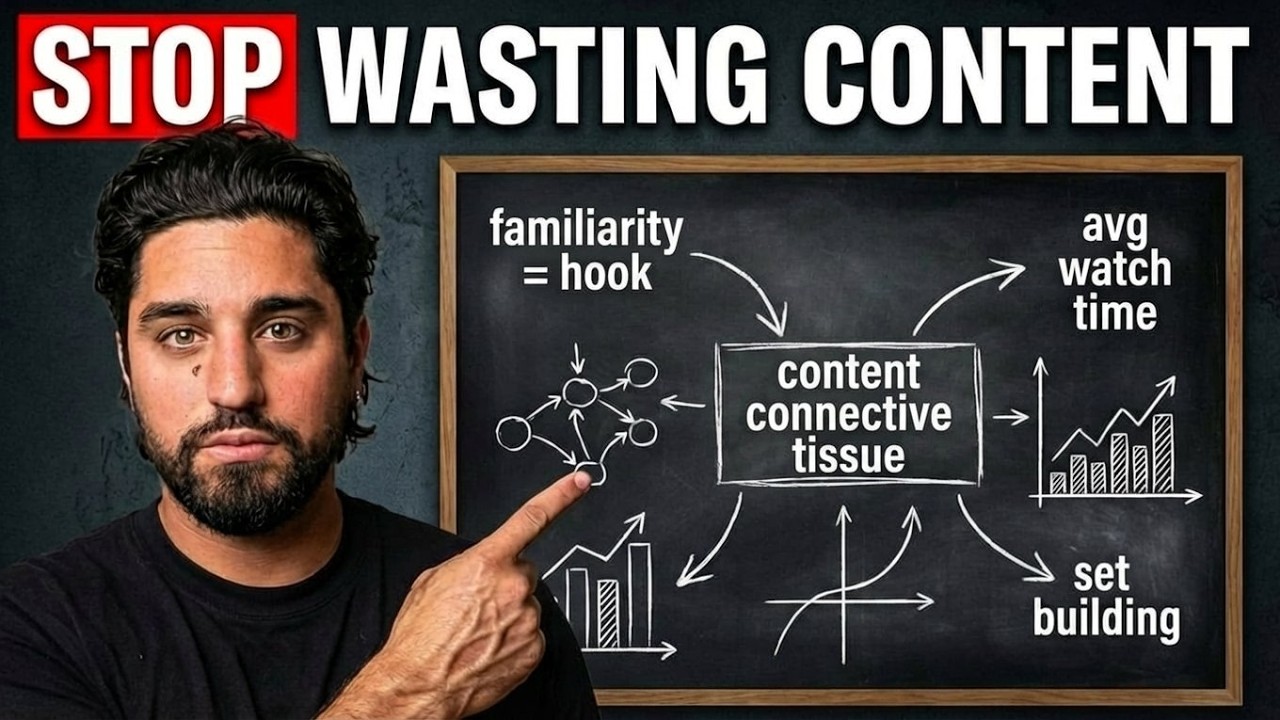
The strategic creative recommendation is to make familiarity itself a hook. Recurring visual environments, characters, framing, series titles, and audience expectations create memory, making later episodes easier to recognize and consume. They distinguish a recurring signature series on a main account, a finite multi-episode limited series, and a larger social show that can eventually warrant a dedicated account and team.
Finally, the speakers recommend treating high-performing creators as campaign-level creative directors. Instead of tightly briefing one-off product-holding posts, brands should fund creator-native concepts that fit the creator's existing audience and style while bridging that audience to the brand. The episode is practical but repetitive and anecdotal; it provides frameworks and examples rather than independent evidence that these changes are universal to 2026.
Key Takeaways
- Claim: Organic social should function as the brand's creative-data center, not as a separate publishing function or merely a testing ground for ads. | Evidence: The speakers recommend a biweekly or monthly report containing winning and losing content, tagged by top-, middle-, and bottom-funnel role, product, and customer segment; email, SMS, CRO, and performance teams should then adapt the strongest underlying ideas. | Implication: Ken should treat content performance signals as reusable inputs to the broader GTM system, with a formal handoff from organic insight to lifecycle, paid creative, and conversion work. | Caveat: The advice assumes a brand has enough content volume and sufficiently clean measurement to identify meaningful patterns; the video does not specify an attribution method or reporting schema.
- Claim: Content itself can target customer segments, so expected performance and production investment should be calibrated to the size and strategic value of each audience. | Evidence: For a health/performance brand with two audiences, the speakers use a hypothetical split of 70% Pilates consumers and 30% yoga consumers; a Pilates-specific message should have different expected reach and receive different investment than yoga content. | Implication: Build content analytics around audience, intent, and downstream value—not a single blended view metric—and deliberately create creative for narrow ICPs where relevance matters more than raw reach. | Caveat: Segment-specific content can appear to underperform if it is compared against broad-audience posts rather than evaluated against the addressable segment and the intended funnel outcome.
- Claim: The best short-form creators will be analytically fluent: use per-video diagnostics to determine what to change instead of prematurely declaring a concept dead. | Evidence: The recommended core metrics are skip rate, average watch time, and the retention graph. One speaker describes retaining a slow-starting Instagram post because its hook rate was strong; a good hook but a drop around seconds 7-15 would instead indicate a pacing, information-ordering, or open-loop problem. | Implication: Instrument the creative workflow so each test leads to a defined next iteration: opening frame/hook for skips, narrative or visual pacing for watch-time decay, and specific retention-drop points for mid-video revisions. | Caveat: The speakers cite heuristics such as getting skip rate below 50% or hook performance above 60%, but they do not establish platform-, format-, or audience-specific benchmarks.
- Claim: Use a staged quality-versus-volume model: publish and analyze aggressively while discovering formats, then concentrate resources on proven pillars and operationalize high-quality repeatable production. | Evidence: The proposed rule is 'three by three by three': take one concept, make three iterations, and publish three versions. Bad Ombres is offered as the quality-led example: roughly 160,000-170,000 followers from about 30 posts, with one video reportedly generating 50,000 followers after extensive scripting, trial-Reel testing, and review of more than 1,000 clips. | Implication: Avoid both indiscriminate volume and perfectionist paralysis: create a high-frequency experimentation lane, then allocate premium effort only to validated formats with a credible path to outsized distribution. | Caveat: The Bad Ombres case is an anecdote and may reflect unusually strong storytelling, founder fit, and platform distribution; it is not evidence that low posting frequency works broadly.
- Claim: Familiarity is a strategic hook: repeatable series elements build memory and let viewers know what they will receive before they commit to another episode. | Evidence: The video identifies recurring set design, opening frames, character roles, naming, and theme as expectation-setting devices. Its three-level taxonomy is: a signature series embedded in the main content mix; a 4-6 episode limited series; and a 'social show' scaled with a dedicated creative team and potentially a separate account. | Implication: For any recurring content program, explicitly define the invariant elements viewers should recognize, then separate those strategy-level decisions from tactical A/B tests of hooks, shots, and copy. | Caveat: Repetition only compounds after a concept has earned attention; recognizable packaging does not remove the need for a strong episode-level opening and execution.
- Claim: Brands should elevate proven creators from tightly briefed endorsers to creative directors for creator-native campaigns or episodic series. | Evidence: AllSaints is cited as giving creator Bat Malay room and budget to create 'The Gatekeepers,' a 4-5 episode limited series in his native cinematic/sketch style, rather than asking for a conventional sponsored product post. | Implication: Structure creator partnerships around concept approval, budget, brand guardrails, and collaboration mechanics—not rigid scripts—when the objective is durable affinity rather than a one-off deliverable. | Caveat: This approach costs more and requires selecting creators whose audience, creative voice, and brand fit are genuinely aligned; the video offers no governance, usage-rights, or measurement guidance.
Detailed Brief
Cross-channel repackaging and lifecycle use cases
- Claims: A successful social idea should be reformatted for the channel and funnel stage rather than copied verbatim.; Brand newsletters can create affinity when they deliver a brand-specific point of view, while some businesses should use email primarily for conversion or inventory demand.; Email effectiveness should be judged over a longer customer-value horizon when the goal is affinity, not only immediate channel revenue.
- Evidence: The speakers hypothesize that Flamingo Estate's 'Letters from the Garden' concept could span social and a founder-curated newsletter, while citing Bandit, Flamingo Estate, and BPN as brands that use more editorial brand communication.; Wander's CMO is said to use email around new villa deals, matching subscribers' transactional intent and helping book otherwise unused inventory.; For a faith-oriented 'Spiral Bible' business, they suggest faith commentary tied to current events and a Bible verse, with the product presented as a natural journaling extension.
- Caveats: The correct newsletter format depends on why a customer subscribed; editorial storytelling is not automatically appropriate for a deal-seeking or utility-oriented audience.; No actual open-rate, LTV, conversion, or inventory data is provided for the named brand examples.
- Implications: Choose lifecycle content based on customer intent and desired brand relationship, then define success metrics accordingly.; Use social engagement patterns to identify themes worth turning into lifecycle sequences, educational assets, and conversion copy.
Creative format design: brand context changes what can be tested
- Claims: Generic talking-head best practices do not directly transfer to every brand because many brand posts rely primarily on visual storytelling.; Smaller or early-stage brands can more readily combine title, verbal, and visual hooks in lower-cost phone-shot content, while luxury-positioned brands may need hooks that preserve aesthetic constraints.; A social show's defining characteristic is its scale and operating model, not merely the existence of a recurring concept.
- Evidence: The speakers contrast dialogue-heavy creator videos with visual-first luxury-brand content, using Louis Vuitton as an example of a brand they believe uses little dialogue and Jacques/Moose as an example of highly arresting visuals.; Yes Chef Supply's 'Ticket to Table' is described as a signature series because it is character-driven, unique to its restaurant context, and scalable across many menu items.; GANT's 'Postcards from Polia' and fashion lessons are described as limited series because they are released in finite 4-6 episode batches.
- Caveats: The brand examples are illustrative observations, not audited accounts or documented performance studies.; A dedicated social-show account adds operational complexity and should follow validation on the main channel rather than precede it.
- Implications: Design creative experiments around the actual expressive constraints of the brand—especially whether voice, text, faces, product visuals, or high-production aesthetics are available.; Do not label every recurring content idea a show; match the production commitment to the format's validated demand and scalability.
Notable Concepts & Terms
- Organic team as data center: The proposed operating model in which organic content results inform paid creative, lifecycle messaging, conversion work, product/customer segmentation, and broader brand decisions.
- Content is the targeting: The idea that creative framing and subject matter attract particular customer segments even before paid audience targeting is applied.
- Three by three by three: A practical experimentation rule: take one concept, create three iterations, and publish/test three versions rather than making a single pass/fail judgment.
- Trial Reels: Instagram's testing mechanism as referenced by the speakers, used to test variants before moving a selected version to the main feed.
- Familiarity is the new hook: A series strategy in which recurring visual, narrative, and structural elements create recognition and predictable audience expectations.
- Signature series: An ongoing, character-driven, scalable, brand-specific recurring format that remains part of a brand's main content account.
- Limited series: A finite 4-6 episode content arc around a specific idea, distinct from an indefinitely scaled social show.
- Creator as creative director: A partnership model where the brand funds and approves a creator-led campaign concept rather than tightly scripting a conventional sponsored asset.
Operator Notes / Why Ken Should Care
- Create a shared content-intelligence report with required tags for audience/ICP, funnel role, product, creative format, hook type, retention pattern, and downstream reuse decision; review it on a fixed cadence with growth and lifecycle owners.
- Separate the content pipeline into an experimentation lane and a proven-format production lane, with explicit promotion criteria rather than letting every post receive the same production effort.
- For each recurring program, document its immutable recognition assets: title, opening frame, setting, main character, episode promise, and production cadence; test tactical hooks without diluting those assets.
- If funding creator work, pilot one creator-led mini-campaign with clear brand guardrails, approval stage, licensing/usage terms, collab distribution plan, and measurement beyond engagement before scaling the model.
- Do not adopt the speakers' numerical hook/skip heuristics as universal KPIs; establish platform- and account-specific baselines from your own historical distribution data.
Source/Metadata
- Title: Social Media Changed In 2026 (And 1% of Brands Realized)
- Transcript words: 9712
- Duration seconds: 2324
- Timestamp note: No timestamps or chapters were present in the supplied transcript. The transcript also contains repeated passages and off-topic conversational/ad-read material.
Transcript
The next phase of social media is going to be even harder. It's more analytical and it's creatively obsessed because it's an entirely new era with a completely different playbook. The social media marketers of this generation are now becoming the CMOs. Content becomes the connective tissue for your brand. The biggest brands in the world are starting to invest tens of millions of dollars into organic social. And that shouldn't scare you. It's actually a huge opportunity. The majority of those brands are still going to be executing like it's 2024 or 2025. So now you actually have to really dial in your strategy to win, versus back in the day, when it was less competitive. It was a lot of free attention. If you watch this episode, then you're going to be ahead of all of these brands and how they execute their content strategy. Brian and I are going to walk through the key pillars you need to execute against to win on social in 2026. So in this next phase of social media in 2026, I'm looking at five things that I'm putting into playbooks that I'm going to brands and being like, hey, these are the things that we need to be shifting relevant to your content strategy because I think this next phase of social is going to be completely different than what we saw in 2025. In 2025, we saw a lot of brands starting to almost see organic as the testing grounds for their creative team. Right? In the past, they weren't pumping money into social. It's relatively new for the majority of brands. I think you felt that on the TikTok Shop side. I felt that more on the Instagram side, where brands, a lot of these nine-figure brands that you consider are the Cinderellas in the DTC world, et cetera, were only paying attention to performance, and all of their ops, all of their logistics, were only centered around getting as much creative made for performance. It was like, hey, we have to make a hundred assets a month and not 200 assets a month and then three. And now you have the new cycle and flywheel of TikTok Shop. And it's like, I heard you on a call with somebody where you were like, yeah, you need to be getting, I forgot how many videos it was, 500 to 1,000 videos a month. I think it was like 10,000. But the thing is, it's the same analogy as what you see on Twitter will be on LinkedIn three days later. Everyone is saying organic is the testing ground, which means two years ago, that was the alpha. That was actually something that people didn't believe. You were like, oh, organic social is whatever. But now I think it's common knowledge, open secret, that testing stuff organically is the best way to validate angles, messaging, hook styles, et cetera. And so it is interesting what's going to happen with that shift in investment, because it used to be that there was a lot of arbitrage there. So now you actually have to really dial in your strategy to win versus back in the day. It was like if you just did something that was good and saw it, it was less competitive. It was a lot of free attention. And so I think the bigger shift that we're going to see here, and that you need to be looking at, is that content becomes the connective tissue for your brand. I read something a long time ago that was basically that the social media marketers of this generation are now becoming the CMOs of the biggest companies because they understand culture, they understand content, they understand commerce. They understand how all three elements essentially intersect, and the best brands are built at that intersection. And so essentially, looking at the next phase, it's looking at your social team and being like, our social team is now going to be seen as the data center for all other performance channels. Meaning, organic team, which there is a separation, I'm not going to name names, but in a comment on Twitter, somebody talked about a head of creator partnerships. And they saw head of creator partnerships the same as organic. Because I commented, I was like, also you need a head of organic as a big individual hire in 2026. I'm like, no, that's the same as the creator partner. I'm like, no, no, no, no. That's wildly different. It's wildly different. Creator partnerships is not what you entirely own. You brief somebody, they publish the content, but you don't own every aspect of that content, meaning you don't own how they represent your brand to every degree. I also think it's borderline—disrespectful is the wrong word—but you're not appreciating how much work actually goes into a competent head of creator partnerships versus a competent head of organic. Yes, there should be two roles that work together, but in a world where you are leveraging creator partnerships at scale, that person should have a full plate. Their entire day should be structured around getting more quality content at scale from all the creators you're working with. And you should be having seamless processes for sending out an instant checkout form. There's this tool, Influencer Gift Form, for example, that if you send to creators, you don't have to use a spreadsheet. Nice. That's, in itself, as a Shopify app, the head of creator partnerships should be focusing on finding new processes that will work like that all the time. They should be working on having a brief that's going to get more of a hit rate from the content that you're sampling for. And then the head of organic, that person should be razor-focused on getting more attention. Yes, that individual is operating and obsessed with the things that you own, publish, how that looks, how you're perceived in the world, and so tying it all together. 100%. And so, the shift that I'm saying is, hey, if you really want to win, if you want everything to be cohesive, every touch point to be cohesive, you have to look at the organic team as the data center. And what does that actually look like? It looks like having all of your winning content, and even your losing content, put into a report. That report is then going to be able to say, hey, here's how we can package this for X channel. And I'll give examples for that as well. But essentially, putting this report, whether it's on a biweekly basis or a monthly basis, where it's a very, very good report breaking down the top content. Then it's going to be categorized by top-of-funnel, middle-funnel, bottom-of-funnel content, because those assets are going to be packaged differently for different channels. Then you're going to have it tagged for specific customers or products. If you have different customer segments and you need to have, hey, we made this content for this customer segment, content is the targeting. You and I have talked about that over and over again, where you can make a piece of content for a specific customer segment and reach that individual. And that's awesome, but you need to actually track those metrics. We have a brand that we're working with right now where they have two completely different customer segments. There is an overlap. It's in the exercise world or health and performance world. There's an overlap, but they are two different individuals. And so you can't look at customer segment A and customer segment B, publish a piece of content for customer segment B, and think it's going to perform the same as customer segment A when all you've ever done is create content for customer segment A. And re-evaluate the stakes as well. One of those segments might be a lot bigger, and so you might want a bigger outcome out of that piece of content. You also might want to produce more of that specific type of content. 100%. If 70% of your customer base is women who take Pilates and the other 30% is women who do yoga, you should probably readjust your expectations for the performance of the Pilates content. For sure. If you're a supplement brand trying to say, go the extra mile in your Pilates class, form a strength base, whatever it is, then that should hopefully perform, and you should invest in it accordingly. But content definitely does the targeting. It's kind of insane. When you make a video, we both make a brand breakdown, right? It always reaches the brand. They always see it. Every time. Even if that thing flops. Flops happen. We've discussed. They're happening. Yeah, flops. They're happening. I also think there are some shifts in the algo, but that'll derail this whole combo. women who take Pilates, and the other 30% is women who do yoga. You should probably readjust your expectations for the performance of the Pilates content. For sure. If you're a supplement brand trying to say, go the extra mile in your Pilates class, form a strength base, whatever it is, right? Then that should hopefully perform, and you should invest in it accordingly. But content definitely does the targeting. It's insane when you make a video. We both make a brand breakdown, right? It always reaches the brand. They always see it. Every time. Even if that thing flops, which flops happen. We've discussed. They're happening. Yeah, flops, flops. They're happening. I also think there's some shifts in the algo, but that'll derail this whole combo. Certainly. But yeah, get into it. So the last element of it is, what does it actually look like? What should you do? You should repackage everything properly for different channels. And so what I mean, we can look at this from a brand example where even if you have a top-of-funnel piece of content, let's take Flamingo Estate. Flamingo Estate has, or they don't have this type of content, I do think they should do it. They send out every Friday, they send out letters from the garden. It's a newsletter that's curated by the founder about everything that's happening at Flamingo Estate. Let's imagine that was a content piece. No different than Gant has postcards from Polio. Let's imagine a world where Flamingo Estate had letters from the garden. It's a series. Let's say it's their top-performing series, right, as a brand. They already do this, but they should then be packaging that into an email newsletter, right? I think email newsletters for brands are actually a huge opportunity and a huge miss for the brands that aren't doing it because it's something that consumers would want but typically don't get. Brands are always putting out, hey, there's this discount, this sale, this new product, and never really putting things out from the POV of the brand, right? Bandit does a really good job of this. Flamingo Estate does a really good job of this. BPN does a good job of this. Know your lane if you're going to do the email newsletter because friend of the pod, Wander, one thing when I was talking with their CMO, Kyle, he said, we have an incredible open rate on our newsletter because what they're always doing is saying, check out these new deals on Wander. If you're someone subscribed to their newsletter, you're very likely looking to pounce on a great opportunity to get into a villa, right? And so they understand that email is a great channel for them, and they are able to leverage that and get a lot of additional bottom-of-funnel eyeballs, and that ultimately leads to some of their unused inventory getting booked. I think about one of my clients is, well, clients is a loose term these days, but one of my clients is this guy, Spiral Bible, Alex, and he would obviously not say here's the most recent deals on my products for his email newsletter, but he's in the faith niche. And so some sort of faith-based commentary in his newsletter would be incredible, right? Using current events and tying it to a Bible verse and then looping that back to, and by the way, you could have journaled about this in your Spiral Bible. That's a great use of a newsletter that he's probably not really doing. And it's not even to say that you can't have your products in your content or in your newsletter. It's not that you can't push it. Well, evaluate the goals. 100%. Is it engagement and affinity, or is it conversion? Because pretty much every brand during the whole we're going to focus on meta ads, one-day-click ROAS era, which was probably, what, 2017 to 2024? Now everyone's waking up to brand affinity and brand building and the LTV, lifetime value, that brings you of that customer. And so, yeah, if you're going to send a bunch of email campaigns and the only metric you're judging it by is one-month revenue on your email channel, that's probably not going to be great. But if you have a holistic three-month, six-month, nine-month plan, you're like, I'm going to send this email every single Friday for nine months, and then I'm going to bet that the openers of those emails are going to have a better LTV versus non-openers, then I think that's a good goal for it. The takeaway from this is work with the organic team every single week, every other week, every month to look at all your top-performing content and then have a meeting where you work with the email team, SMS team, the CRO team, or the individuals doing those things. Most brands have probably one individual wearing multiple hats to say, hey, here's how we're going to build a funnel off of this piece of content, or here's how we're going to create multiple touch points that build off of this piece of content. Because what you will see is the content that is getting them into your funnel or aware of you is going to be your top-performing content, or sorry, top, oh yeah, even top-performing content across SMS, email, because the data is there, right? All of the data is saying, hey, this person shares this, they save this, they engage with this, they comment on this. The people that love you want more of this. So therefore, take it and now turn it into conversion-focused copy, right? The same five reasons why that works on social, maybe for Farmer's Dog, is going to be an amazing email for you to send the customer. And an amazing, I mean, dude, the tools at your disposal right now. You could use these AI video generation tools to take that email transcript, prompt Nano Banana or whatever it is to create a minute-and-a-half video demonstrating this with narration from 11 Labs. There's so many different ways to reproduce this content. But the thing that, to me, what people, have you ever used the Shop app and it recommends all the brands that you've shopped from on Shopify? It kind of keeps on accident, though. It's weird. It's only been one of those things where you shop because it's for the tracking of a product, right? But then it's like explore more or whatever. And it'll just show all the people you've ever ordered from, which almost creates this personality map, right? This is your preferences map of all the different brands that you ever shopped from before. And when I saw that the other day, all I could think about was it is interesting how these brands have created my personality and my archetype and avatar. I'm definitely a very specific combination of all of these different things, from the luggage brand, from the apparel brands, to the supplements that I'm getting off of this app. And each one of those brands has an opportunity to engage me in a different way. But I'm already opted into their overall universe. And I think that's an appreciation for where people are going in modern times. We're all shifting away from live sports, from live events. Did you even watch the Grammys last night? No. I didn't know what was going on, dude. Yeah, you only saw it because there were random clips, sponsored posts, right, the industry was putting out. And so we're shifting towards a hyper-personalized, hyper-segmented world where brands and connection with brands and the affinity of those is something that I think people really want to lean into. I want to opt into Flamingo Estate stuff. I want to connect more with the founder of that business and have him tell me what my talking points for the weekend are going to be. You know what I'm saying? I haven't formed my opinions until the All-In podcast. I need that letters from the garden so that when I'm going out, I'm like, hey, bro, did you know this is how tomatoes grow in a subtropical climate? I need that type of information from him. Those are your pickup lines. Yeah. All right, just a quick pause within this episode. So there's this sweat equity contract that, if you ever listen to any of our episodes, you kind of signed and you didn't know you signed, which basically says if you're going to watch our content, please like and subscribe. The reason for that is Brian and I have this mission of trying to hit 100,000 subs by the end of the year. We haven't decided what the consequence is yet, but it's not going to be a good one. So please, if you're listening to this, you like this, please just hit the formed my opinions until the all-in podcast. I was, I need that letters from the garden so that when I'm going out, I'm like, hey, bro, did you know this is how tomatoes grow in a subtropical climate? I need that type of information from him. Those are your pickup lines. Yeah. All right, just a quick pause within this episode. So there's this sweat equity contract that, if you ever listen to any of our episodes, you signed, and you didn't know you signed, which says if you're going to watch our content, please like and subscribe. The reason for that is Brian and I have this mission of trying to hit 100,000 subs by the end of the year. We haven't decided what the consequence is yet, but it's not going to be a good one. So please, if you're listening to this, you like this, please just hit subscribe, help us get to that number, and we'll publish more episodes. We're going to get more guests, and eventually we're going to drop merch. So please. You see Jason's getting cooked right now on Twitter. Jason who? Calcane, whatever his last name is. Oh, Calcane is? Yeah. Yeah, I mean, he's always getting cooked. No, because he's in files. Yeah, yeah, yeah. We're going to have to bleep that out because YouTube. Oh, true, true, true. Yeah. No, I mean, maybe we leave it in. And dude, Peter, it's here too. Yeah, I saw that. That one was rough. You saw the email? I saw the email. I lost it. Look, it's all good. It was objectively kind of a funny email. It's not funny. It's funny because of it's not funny. The situation's not funny. What he said is just so ridiculous. Oh, 100%. You're a grown man. It's also just the unmasking of this dude is so serious all the time, so professional. And then he's just wilding in the DMs. It's just wild. Yeah, we see if we keep that one. See if we keep that one. The number two element that you need to focus on to win on social 2026, the data analyst will become the best creator. And I don't think people ever really think about that. They think of the art side of it, right? Having the best visuals, having the best aesthetics, having the best angles and lenses and all those elements. But I truly believe that if you're going to win, especially because of, as I said in the last one, all these brands are going to be creating content. More creators are getting onto the platform. There's things like your course that you're going to launch, like Cut30, that are telling people how to win, and then they go win. It's going to get harder to win. So for you, if you want to become the 1% of the great content, you need to live and die by your analytics. I'm going to give two examples of this. The first one was Everyday Better Club. I talked about them, I think, two, three weeks ago. The reason they have videos that have million, 10 million, 20, and I think upwards of 30 million views on social is because, I got on a call with him and he was like, all I do is look at analytics. He's like, I find a format that works, and I'm typically looking at other formats from other categories. I bring them over, and then I test every aspect of them. Length, I test the text, I test the opening shot, the different types of shots I'm going to use. And so he tests all of this in trial reels, and then when he has the winners, he narrows it down, and he starts combining layers from all of the analytics of, okay, I'm looking at my skip rate, I'm looking at my average watch time, I look at my retention graph. When you came in here a second ago, you were talking about your hook rate is at 70% on this video, it's going to go viral. You're looking at all the analytics to basically say, okay, this hook is good, noted. Let me now move, I can bring that over to another one. Even more practical example of that, because I think especially in short-form content, it moves so fast. And so when you're posting organically, you're going to have a lot of tendency to want to pull back and be like, oh, this video flopped. This video didn't work. This video, this concept is dead, right? And so when you look at the analytics, it gives you the peace of mind that something might have second legs or that maybe you can diagnose what happened in the video because there were promising things somewhere in the analytics. So to your point, I had a video I posted last night. I don't know what's been going on with Instagram, but it's like the videos are having a slower takeoff time. And initially, I think it had maybe 60 likes in 50 minutes or something like that. It was at that pace. And all I was thinking about at the time was just like, damn, this is going to flop, get not a bunch of views, but I checked the analytics. The hook rate was really strong because that was the watch time. And so instead of taking it down, I just let it ride. Now it's probably going to pop off. And conversely, there could have been a situation where I looked at it and the watch time was bad, but the hook rate was good. That would have told me, well, I'm just losing people from the 7 to 15-second mark. And so maybe I need to re, maybe I do take the video down and cut something or reintroduce an open loop during that time that will keep people's attention for longer. Maybe I front-load some of the information and the value that's later in the video. So it's identifying those trigger points of what to change, and also being able to just hang in there and be like, okay, maybe this video has legs a couple weeks or not. It goes, I don't know about your experience. I'm seeing a ton of content from November randomly. You know what I mean? It seems like all the algorithms are recycling a lot of viral stuff from previous months, and that's across everything. So it's just a weird place right now, but you have to be able to be fluent in the analytics to even see that stuff and not make a lot of critical mistakes. Couldn't agree more. And so I think there's three essentially segments of every video, or sorry, metrics that people should be looking at to then change different segments within each video. So you have your skip rate, your average watch time, and then the retention graph. As a creator, as a creator within a brand, as someone heading content for a brand, doesn't matter. Those are the three things that you need to be looking at day in, day out, and then testing religiously to make adjustments to your video to make them perform better and better and better. And so I like to have that rule of it's like the three by three by three. Have one concept, test it three times, make three iterations to that piece of content, publish it three times. Essentially, every single time with that, you can make an iteration to, if my skip rate is bad, then I need to work on my hooks. What are the things that I could test for my hook? Am I changing the angle, the aesthetic, the action, what I say, the title, whatever? You can adjust those things. Okay, I got the hook rate now. It's above 60%, right? Or no, sorry, my skip rate's below 50%. Awesome. My average watch time is that it's now crashing at 12 seconds. I need to get it up to 15, 20. What do I do now? Okay, you need to work on your storytelling if it is a dialogue-heavy video. Because I wanted to have this hot take over the weekend where a lot of I hope we don't, I hope people don't see us in this, content gurus take the same best practices from talking head videos and think that they apply to brands. The majority of brands aren't making talking head videos. You can only rely on visuals, right? And so, at the same time, if, we talk about a title hook and a verbal hook, a lot of brands are only doing a visual hook because they're, like Jacques and Moose, or maybe that's not a great example, but actually it is. In some cases, they have a verbal hook. And they're extreme, right? I mean, that's another thing. Their visuals are very extreme. You don't need a title hook when you just put the most insane shit ever in front of my face. But it's like, Louis Vuitton, probably 10% of their content, and I don't, I've actually never even really paid attention to their content. probably 10% of their content has dialogue. So you have to understand, okay, and think that they apply to brands. The majority of brands aren't making talking head videos. You only can rely on visuals, right? And so, at the same time, if we talk about a title hook in a verbal hook, a lot of brands are only doing a visual hook because they're, Jacques and Moose, or maybe that's not a great example, but actually it is. In some cases, they have a verbal hook. And they're extreme, right? That's another thing. Their visuals are very extreme. You don't need a title hook when you just put the most insane shit ever in front of my face. But it's like, Louis Vuitton, probably 10% of their content, and I don't, I've actually never even really paid attention to their content. probably 10% of their content has dialogue. So you have to understand, okay, if I am going to leverage a title hook, it has to be on brand, and it's not going to be just the native in platform. So I have to, you have to be so into the analytics to, if all I have to leverage is my visuals, which is the reality for the majority of brands, then I have to look at these analytics to be able to make the adjustments. Now, when you look at smaller brands, brands kind of going zero to five, play into title hook, visual hook, verbal hook, because their budgets are smaller. You know what I'm saying? So, they're making the content that's shot on iPhone. They're not playing the same game as a luxury brand or a brand that even wants to be positioned as luxury and is publishing the higher-produced content that still gets million-plus views. Right? And so, these are the things that as a... I know you're laying. 100%. But as you're in your lane, the best way for you to own that lane and be first place in that lane is to look at all the data, to look at the things that you have to be adjusting on a daily basis. Right? And so this even bleeds into my third element, where I think in 2026, you need to focus on quality over quantity. And I'll give you one of my favorite examples: friend of the pod, Sam from Bad Ombuds. Bro, they have 160, maybe 170,000 followers, and they've published maybe 30 times. The reason for that is she's a data analyst. She is testing everything religiously in trial reels and then bringing it over, and it would sometimes take her a month or two months to make one video. She sent me screenshots earlier, maybe today or yesterday, and I'll ask if we can post them up here, but she was sending me screenshots of these videos, right? One of them got one point something, another one got maybe two or three million views. It drove 50,000 followers for them. One video. Ridiculous numbers. But you look at that, and it's like she's putting all of her time and attention into one video. And so when she's talking to me about putting together this video, she's like, I will publish it when I know it feels right. That means the script and the visuals. So before a video goes out, she has over a thousand clips that she's pulling through or combing through to then pull in the best ones. And then the script, she's like, sometimes I'm working on this for weeks, and I'm adjusting it for weeks. She's publishing a few iterations of the video on trial reels, and then she's pulling over the best one to the main feed. But she's focusing on quality over quantity, which is smart for her because they're a lean operation. I think they did a million in revenue last year, first year in business, which is amazing. But at the same time, they're like, hey, every time we publish a video or a piece of content, we need it to be the best, best piece of content. So I'm going to make it the best buy, even if it's the only piece of content I publish in the last two months. Now, the inverse of that is focus on quality over quantity until quantity and quality can be operationalized. Yeah. You can get to a point where both exist, but it's operationalized and it's dialed. We're getting to that point with the brands that we work with, where we're producing these social shows. They're performing very well, but the operations take 45 days to... That's a sprint. I think one hesitation I can almost hear the listener having right now from that Bad Hombres story is, how can I run the rest of my business if I'm religiously obsessing with this much effort into a singular video versus the spray and pray method? And more so, just the element of... Bad Hombres is very storytelling-driven, very founder-led, content-driven. They're really good at narratives. And I think I just know that people have this blocker in their head. They think content takes so long. I've got all these other things to worry about. And it's a total reframe of priorities in your business to really think this way. That's the truth of it, is you either ideologically think that content is the most important thing you can invest in, or don't, because it kind of brings me back to the Hormozy stuff. And if we're going to be talking gurus, that's guru, that's the apex guru, right? That's guru number one, two, and three over Gary Vee. He's so much bigger than Gary Vee at this point. I feel like Hormozy lapped Gary Vee. That is my take. Hot take. Just check the numbers. I feel like he's, on the content side, or I just feel like he's printing way more money than Gary Vee. I don't know what VaynerX is doing in revenue, maybe, what, 150 million? That'd be huge. No, no, no. Vayner does hundreds. Yeah. Hundreds. Hormozy did 125 in a weekend, though. One video or whatever. Yeah. So, but back to the meat of it, Hormozy has this general philosophy. He's like, look, if I just put out so much volume that I can't fail, then how can someone outcompete me? And look what it's done for him. Look at what all these brands who are content-led are doing. They're disrupting every single industry. Every single space is the number one most surefire way to get your brand in front of the right people, is to invest in content and marketing as a distribution engine, an eyeball-getting engine. And so, yeah, my argument, though, is he's operationalized it. Well, but maybe they're bogged down in product delays or shipping delays, or their P&L sucks, or whatever it is. And my argument is agreeing with you right now, that don't let that be your excuse. Operationalize the rest of the shit. You got to figure out the content engine first, because that's actually the number one most important thing. You're a brand. Your job is to get eyeballs on your product, and the only way to do that in 2026 is through content. What I should have prefaced with is, I still believe in you have to test religiously. Yeah. Right? And at a very high volume. Now what I'm saying is, when you've started to build, and I should have started with this, when you start building some kind of level of affinity or of an audience, don't continue to spray and pray. Double down on quality. Double down on saying, okay, if my series, good content versus bad content, is my thing, then how do I make it the best good content versus bad content? Is it researching and finding the things that no one else is going to see? Is it filming parts here, in office, at my house, whatever? I'm just making shit up at this point, but what are you going to do that's going to make it a 10 out of 10 piece? Because a lot of times, people will be like, just ship it, and ship the 5 out of 10 piece. But the thing that could make it 10 out of 10 could be the difference between 100,000 views and 2 million views. My concern is analysis paralysis for most people, because when I talk to I don't disagree at all. When I talk to a person who wants to get into this stuff, and they're always saying, what do I make? What do I make? What do I make? You're talking about... And that individual should be testing, is what I'm saying. Yeah, yeah. I'm talking about you, me, whoever else, or even brands that have winning pillars and have winning formats. Those people should be like, how do we make this 10 out of 10? And I totally agree with you. And my only caveat would be to the people who haven't already started this or are in the early stages, it's not necessarily spray and pray, but it is important to publish above all else. Spray and analyze, simply. Yeah. Spray and analyze. That's what you got to do. The fourth element is familiarity is the new hook, okay? And I think there's nothing more important going into 2026 other than repetition. Again, when you find something that wins, adding in these repetitive elements: the set design, the little elements that make this unique to you, the hook, how the first three seconds, the first frame, how you turn, every, all of those make what do I make you're talking about, and that individual should be testing is what I'm saying. Yeah, yeah. I'm talking about you, me, whoever else, or even brands that have winning pillars and have winning formats. Those people should be like, how do we make this 10 out of 10? And I totally agree with you. My only caveat would be, to the people who haven't already started this or are in the early stages, it's not necessarily spray and pray, but it is important to publish above all else. Spray and analyze, simply. Yeah. Spray and analyze. That's what you got to do. The fourth element is familiarity is the new hook, okay? And I think there's nothing more important going into 2026 other than repetition. Again, when you find something that wins, adding in these repetitive elements, so the set design, the little elements that make this unique to you, the hook, how the first three seconds, the first frame, how you turn, every, all of those elements, and then expectation setting, which is more relative to the theme of the content. Now I've been talking, obviously, I've been talking at a high volume about social shows, right? Have you? Yeah, someone commented on a video. I was talking so much about social shows, like, do you sell them or something? I was like, yeah bro, yes, we produce them, obviously. No, it's just my passion. I do, I love them, but at the same time, yeah. I would argue what your level of talking about social shows has probably created a situation where if other people start talking about social shows, they'd be like, they got that from Alex. Dude, you have to. Which is the goal, right? You have to. There's your continuity, there's your association example right there. There's essentially three levels to it. This I've never discussed. There is level one. Good hook. Yeah. There's level one, which is the signature series. A signature series is what Bad Omnis is doing, right? This is day one of doing x. I talk about Yes Chef Supply. They have a signature series called Ticket to Table. Someone places an order. Who's this, Yes Chef Supply? It's the Jack's Dining Room guy. He's a really famous influencer guy. Yeah bro, yeah. He owns multiple things underneath the umbrella. Yes Chef Supply is one of them. Got it. They have a series called Ticket to Table where somebody places an order at one of these restaurants. They show the entire process from this guy that's mic'd up of, again, Ticket to Table. It's very well, right? The difference between signature series and a social show is a signature series isn't something that's going to live on a separate channel. A social show is something that you're going to test on the main channel and eventually is going to live on an external channel, or, sorry, account, right? Signature series is just part of your content pillars. There's a clear differentiation between the two. And so, signature series is typically something that's character-driven, is scalable, and then is unique to you. Those are the three elements, right? Ticket to Table is unique to Yes Chef because it's around the different chefs that they have in-house, their menu, their experience, etc., right? It's character-driven because it's the chef is the one, the main character in it. It's scalable because they have hundreds of items on their menu, right? They can do it for everything that's on their menu, right? So signature series is level one. Level two is a limited series. This is the brands that are doing four to five episodes of a thing, or four to five episodes of a concept specifically, and publishing that on the account. GANT, I think, is the best at this. They have Postcards from Polia. They have their fashion lessons. They have Postcards from other areas as well, but they basically drop everything in these four to five, maybe six-episode iterations, which is so different than a social show, right? Everyone looks at that and would be like, hey, this is a social show. No, they have elements of a social show where, again, repetitive, a repetitive thing, a specific concept, the same characters, whatever, but they're doing four to five episodes around one idea, okay? And then there's the social show. That's level three. Social show is, hey, I'm going to build a creative team around this concept or this idea, and I'm going to scale this onto a different account, and I'm going to publish as many, one episode a week, two episodes a week, doesn't matter. All of those are centered around the idea of familiarity, the idea of I see the first frame, and because of the repetition of the content and the repetition of the elements within the content, I know exactly what I'm going to expect from that piece of content. I can watch one episode of Ticket to Table, see Ticket to Table episode number two, and know exactly what I'm going to get from that. I could see one episode of Postcards from Polia, see the second one show up on my feed, I know exactly what I'm going to get from that. I could see Subway Takes or Roomies pop up on my feed, watch one episode, exactly what I'm going to get from episode two. Repetition, expectation. Expectation setting creates the familiarity, and familiarity, all it is, is memory. All it is is using content to create a memory in somebody's head that then says, hey, here's what you're going to expect from me because of these elements. And so I think familiarity is the new hook. Of course, as you get to that stage, you have to get, again, meticulous about what you're making the actual hook so that you get someone and hook them in to be able to get them to consume episode number one, episode seven. Execution versus strategy. You're talking about execution would be like, okay, we're gonna A/B test a verbal hook. We're gonna A/B test an action or something like that. But the familiarity you're talking about is more of a strategy-level decision. It's a very specific association you want to create with people. You've done this with some of your sets. Everything you just mentioned, the Subway Takes thing, if Subway Takes guy did a video in Central Park or in Washington Square, it would legitimately feel like a new episode. It would feel like a whole new show. It would be weird, right? And so, that's just one element where it's like, that's a strategy-level decision for him at the concept level where he says, okay, we're gonna have a unique viewpoint rather than our standard. Now the last thing to win is, as a brand, if you have winning creators or influencers, either leverage your creative team to work with them or, basically, place the influencer or the creator as a creative director within different ideas and within your content strategy, and allow them to develop their own series, their own campaigns, etc. One of my favorite examples of this is this guy Bat Malay, and AllSaints came to him with essentially, let you do your thing. You're great at creating these skits and these concepts that feel like they exist in movies. We'll allow you to do your thing. And so he created a concept called The Gatekeepers, and he published four or five episodes of The Gatekeepers. And The Gatekeepers literally feels like it, or it's, sorry, The Gatekeepers is an episodic limited series where it's him playing four or five different roles, and they're playing a game of poker, and then they're playing xyz thing, right? But it's something that lives on his page, feels cohesive with his content, but extends and essentially builds a bridge to AllSaints. But AllSaints isn't the person. AllSaints is giving him the budget, right? AllSaints is like, go do the thing, make something that, of course, will complement our brand and who we are, what we stand for, all of those things, but at the same time, you run it, you're the creative director. And I think this is so important, to look at a creator or an influencer that you work with and be like, hey, you're very good at this thing. I'm not even going to brief you. Just bring me a concept, bring me a campaign for approval, but I'm gonna let you do your thing. I'm gonna give you your budget and build a campaign for this product, this line, this supplement, this, doesn't matter, the product. And you overall let them do their thing, and they just come to you with a concept and approve it. You're going to pay premium for it, but the brand recognition, the brand affinity that you're going to get from this is going to be 10 times what you're going to get from having somebody just create one of those videos or a photo where they're just smiling, holding your product like most brands or most influencers do. So that is my last one. If you work with creators, you work with influencers, you have to almost position them as a creative director within your brand and allow them to create these campaigns or these series on behalf of you, collab with the main account, build that bridge and affinity from them to you. Beautiful. No notes, except for I hope this reaches the right D to C darlings. A lot of the things that you're talking about, man, it's so much insane upside for these people, but it's also not always done super well. I think a lot of them think about these things but then don't put the most resources into it because, inherently, fashion is a very creative industry, and so those people are going to naturally be better at content aesthetics that capture attention, etc. But every brand has an opportunity to lean more into that. I mean, so yeah, I love it. I think this is a super helpful guide. People definitely get a lot of value out of it. testing is what I'm saying yeah yeah I'm talking about like you me whoever else or even brands that have winning pillars and have winning formats those people should be like how do we make this 10 out of 10 and I totally agree with you and my only caveat would be to the people who don't haven't already started this or are like kind of in the early stages is it's not necessarily spray and pray but like it is just important to publish above all else spray and analyze simply yeah spray and analyze that's what you got to do the fourth element is familiarity is the new hook okay and I think there's nothing more important going into 2026 other than repetition again when you find something that wins adding in these repetitive elements so the set design the little elements that make this unique to you the hook how the first three seconds the first frame how you turn every all of those elements and then expectation setting which is more so relative to the theme of the content now I've been talking obviously I've been talking you know at a high volume about social shows right have you yeah someone commented on a video I was like talking about so much about social shows like do you sell them or something I was like yeah bro yes we produce them obviously no it's just my passion I do I love them but at the same time yeah I mean I would argue what your your level of talking about social shows has probably created a situation where if other people start talking about social shows they'd be like they got that from Alex dude you have to which is kind of the goal right you have to like there's your continuity there's your you know association example right there there's essentially three levels to it this I've never discussed there is level one good hook yeah there's level one which is the signature series a signature series is what bad omnis is doing right this is day one of doing x I talk about yes chef supply they have a signature series called ticket to table so someone places an order who's this yes chef supply it's like a the jack's dining room guy he's like really famous influencer guy yeah bro yeah he owns like multiple things underneath the umbrella yes chef supplies one of them got it they have a series called ticket to table where somebody places an order at one of these restaurants they show the entire process from like this guy that's mic'd up of again ticket to table it's very well right the difference between signature series in a social show is a signature series isn't something that's going to live on a separate channel a social show is something that you're going to test on the main channel and eventually is going to live on an external channel or sorry account right signature series is just part of your content pillars there's a clear like differentiation between the two and so signature series is typically something that's character driven is scalable and then is unique to you like those are the three elements right ticket to table is unique to yes chef because it's around the different chefs that they have in house their menu their experience etc right it's character driven because it's the chef is the one where the main character in it it's scalable because they have hundreds of items on their menu right like they can they can do it for everything that's on their menu right so signature series is the is level one level two is a limited series this is the brands that are doing like four to five episodes of a thing or a you know four to five episodes of a concept specifically and publishing that on the account gantt i think is the best at this they have postcards from polia they have their their um fashion lessons they have postcards from other areas as well but they have they basically drop everything in like these four to five maybe six episode iterations which is so different than a social show right everyone look at that and be like hey this is a social show no they have elements of a social show where again repetitive a repetitive thing a specific concept the same characters whatever but they're doing four to five episodes around one idea okay and then there's the social show that's level three social show is hey i'm gonna build a creative team around this concept or this idea and i'm gonna scale this onto a different account and i'm gonna publish as many you know one episode a week what two episodes a week doesn't matter all of those are centered around the idea of familiarity the idea of i see the first frame and because of the repetition of the content and the repetition of the elements within the content i know exactly what i'm going to expect from that piece of content i can watch one episode of ticket to table see ticket to table episode number two and know exactly what i'm going to get from that i could see one episode of postcards from polia see the second one show up on my feed i know exactly what i'm gonna get from that i could see subway takes or roomies pop up on my feed watch one episode exactly what i'm gonna get from episode two repetition expectation expectation setting create the familiarity and familiarity all it is is memory you know what i'm saying all it is is using content to create a memory in somebody's head that then says hey here's what you're going to expect from me because of these elements and so i think familiarity is the new hook of course as you get to that stage you have to get again meticulous about what you're making the actual hook so that you get someone and hook them in to be able to walk get them to to consume episode number one episode seven execution versus strategy you know like you're talking about like execution would be like okay we're gonna a b test like a verbal hook we're gonna a b test a you know like action or something like that but the familiarity you're talking about is more of a strategy level decision it's like a very specific association you want to create with people like you've done this with some of your sets like everything you just mentioned the subway takes thing like if subway takes guy did a video in central park or in washington square it would legitimately feel like a like new episode you know i would feel like a whole new show it would be weird right and so you know that's just one element where it's like that's a strategy level decision for him at the concept level where he says okay we're gonna have a unique you know new viewpoint rather than like uh our art standard now the last thing to win is as a brand if you have winning creators or influencers either a leverage your creative team to work with them or b basically place the influencer or the creator as a creative director within different ideas and within your your content strategy and allow them to develop their own series their own campaigns etc one of my favorite examples of this is this guy bat malay and all saints came to him with essentially let you do your thing you're great at creating these skits and almost these these concepts that should and feel like they exist in movies will allow you to do your thing and so he created a concept called the gatekeepers and he published four or five episodes of the gatekeepers and the gatekeepers is um literally feels like it or it's it's sorry the gatekeepers is an episodic limited series where it's him playing four or five different roles and they're playing like a game of poker and then they're playing xyz thing right but it's something that lives on his page feels cohesive with his content but extends and essentially builds a bridge to all saints but all states isn't the person all saints is giving him the budget right all saints is like go do the thing make something that of course will complement our brand and who we are what we stand for all of those things but at the same time you run it you're the creative director and i think this is so important to look at a creator or an influencer that you work with and be like hey you're very good at this thing i'm not even going to brief you just you know bring me a concept bring me a campaign for approval but i'm gonna let you do your thing i'm gonna give you your budget and build a campaign for this product this line this supplement this you know doesn't matter the the product and you overall let them do their thing and they just come to you with a concept and approve it you're going to pay premium for it but the brand recognition the brand affinity and that you're going to get from this is going to be 10 times what you're going to get from having somebody just like create one of those videos or a photo where they're just smiling holding your your product like most brand or most influencers do so that is my last one if you work with creators you work with influencers you have to you have to almost like position them as a creative director within your brand and allow them to create these campaigns or these series on behalf of you collab with the main account build that bridge and affinity from them to you beautiful no notes except for I hope this reaches the right D to C darlings a lot of the things that you're talking about man it's it's so much insane upside for these people but like it's also just not always done super well you know I think a lot of them like think about these things but then necessarily don't put the most resources into it because inherently fashion is a very creative industry and so those people are going to naturally be better at content aesthetics that capture attention etc but every brand has an opportunity to you know lean more into that I mean so yeah I love it I think this is like a super helpful guide you know people definitely get a lot of value out of it you you you you