Labour, Engineering, Social Media, GrokBots, Cybercabs: 7 Predictions for How AI Changes the World
Description
Matteo Franceschetti is the Co-Founder and CEO of Eight Sleep. As the leader of one of the most cutting-edge sleep fitness companies, he holds multiple patents in tech and health and is a Member of the Forbes Technology Council. ----------------------------------------------- Timestamps: 00:00 Intro 01:34 - Why Hiring Is Back to 2021 Levels of Insanity 03:10 - Why Every Founder Should Angel Invest 04:10 - What VCs Get Wrong About Hardware 04:44 - How Eight Sleep Gets 40% of Revenue From Word of Mouth 05:12 - How Eight Sleep Finally Made TikTok Work 06:34 - Why You Cannot Trust Meta’s Attribution 08:06 - Why Founders Should Scale One Growth Channel at a Time 09:26 - Why Eight Sleep Optimizes for Profit From Day One 15:15 - How AI Runs a $100M Email Marketing Business With Zero Employees 18:17 - Eight Sleep Engineers Stopped Coding a Year Ago 19:17 - Will AI Spend Go From 5% to 50% of Engineering Budgets? 21:27 - Would You Buy Anthropic at IPO? 21:46 - Why AI Will Turn Companies Into Holding Companies 23:15 - Are Chinese Companies About to Crush European Industry? 25:10 - Why Humanoid Robots Could Be a Trillion-Dollar Market 26:45 - Are Frontier AI Models Moving Too Fast? 28:31 - What It Really Takes to Sell in China 32:19 - Why Timing Matters More Than Founders Think 35:54 - Silicon Valley Underestimates the Power of Brand 56:40 - Should Startups Match Anthropic-Level Compensation? 59:07 - Has Silicon Valley Become Too Money Obsessed? 01:02:09 - How Eight Sleep Runs With Just 160 Employees 01:02:40 - 250 Employees, $1BN Revenue 01:05:45 - Quick-fire Round ---------------------------------------------------------------------------------------------- Subscribe on Spotify: https://open.spotify.com/show/3j2KMcZTtgTNBKwtZBMHvl?si=85bc9196860e4466 Subscribe on Apple Podcasts: https://podcasts.apple.com/us/podcast/the-twenty-minute-vc-20vc-venture-capital-startup/id958230465 Follow Harry Stebbings on X: https://twitter.com/HarryStebbings Follow Matteo Franceschetti
Summary
Generated by gpt-5.6-terraAt-a-Glance
- Verdict: Watch fully
- Core thesis: 8 Sleep's CEO argues that AI agents are already allowing a 160-person hardware company to operate at the output level of far larger firms, while forcing companies to rebuild growth, engineering, discovery, and organizational design around agent-supervised workflows.
- Why it matters: This is a rare operator-level account of deploying hundreds or thousands of internal agents across growth, engineering, finance, and data-heavy decision workflows rather than merely discussing AI adoption abstractly.
- Best use: Use it as a founder/operator case study for designing small human oversight teams around reliable, data-connected agents, while treating its performance figures and broader predictions as self-reported and directional.
Executive Summary
Matteo Franceschetti presents 8 Sleep as an AI-native operating company disguised as a premium hardware brand. His central claim is that the company has replaced much routine functional execution with internal agents: email marketing is reportedly run with no dedicated human team, paid-media agents produce daily recommendations for human approval, finance runs with four people, and engineers primarily direct AI coding agents rather than write code themselves. He estimates that counting AI workers makes the company three to four times larger than its 160 human employees.
The most useful operating argument is not simply “use AI,” but that agents must be attached to trusted company data and retain human approval at consequential decision points. 8 Sleep reportedly has a dedicated internal-AI-tools team working closely with data engineering so agents can access country-level revenue, CAC, and other business data. Franceschetti frames the real implementation challenge as correctness, not merely model access. He uses Claude heavily and says AI spending is already in the millions annually, though he expects total intelligence costs to fall over time as usage grows and inference commoditizes.
On growth, he advocates strict, incrementality-based channel management. Rather than trust platform attribution, 8 Sleep uses geo holdout tests to estimate true channel CAC, adds channels sequentially, limits weekly spend to a CAC threshold, and avoids spending into weaker marginal returns just to show temporary growth. The company is also tracking “AI SEO” as AI search begins to affect Google traffic, and he expects consumer companies to need one strategy for humans and another for recommendation agents.
The remainder combines practical consumer-company lessons with speculative future views. He argues premium hardware succeeds through product quality plus aspirational brand—not feature lists alone—and says China requires commerce through super-app ecosystems rather than a conventional D2C website. His long-horizon predictions—that children born today may never need paid work, UBI will be necessary, and automakers must become humanoid-robotics companies—are provocative but not evidence-backed. The interview is lengthy and contains repeated transcript passages, but its AI operating-system discussion is high signal.
Key Takeaways
- Claim: 8 Sleep is using agents to compress functional teams dramatically, especially in growth, while retaining humans as approvers and operators. | Evidence: Franceschetti says a two-person email team became a zero-person function after his co-founder built bots in three days; the agents use historical data to recommend send timing, messages, and copy. He says email contributes close to $200 million and that digital-marketing agents send daily change recommendations that humans approve or reject. | Implication: High-value agent deployments should begin with bounded, repeatable workflows that already have historical data and clear performance metrics, then use human review for the final decision rather than attempting fully autonomous operations. | Caveat: The revenue contribution, speed of implementation, and degree of autonomy are company self-reports; the transcript does not explain the agent architecture, controls, or measurement methodology in enough detail to reproduce results directly.
- Claim: The bottleneck in operational agents is reliable integration with internal data, which warrants a centralized AI-tools capability rather than leaving each function to build disconnected automations. | Evidence: 8 Sleep created an internal AI tools team within the prior six months to build its “hundreds” or “thousands” of agents. Franceschetti says the team must work closely with data engineering because marketing agents need accurate access to revenue and CAC by country; he calls ensuring agents are “100% correct” the real challenge. | Implication: For Ken's agent systems, prioritize a governed data/control plane—canonical metrics, scoped tool access, evaluations, and review workflows—before scaling agent count. Fragmented departmental bots will not produce trustworthy cross-functional decisions. | Caveat: “100% correct” is an aspiration rather than an attainable standard for probabilistic systems; the interview does not describe permissions, audit trails, evaluation suites, or failure escalation.
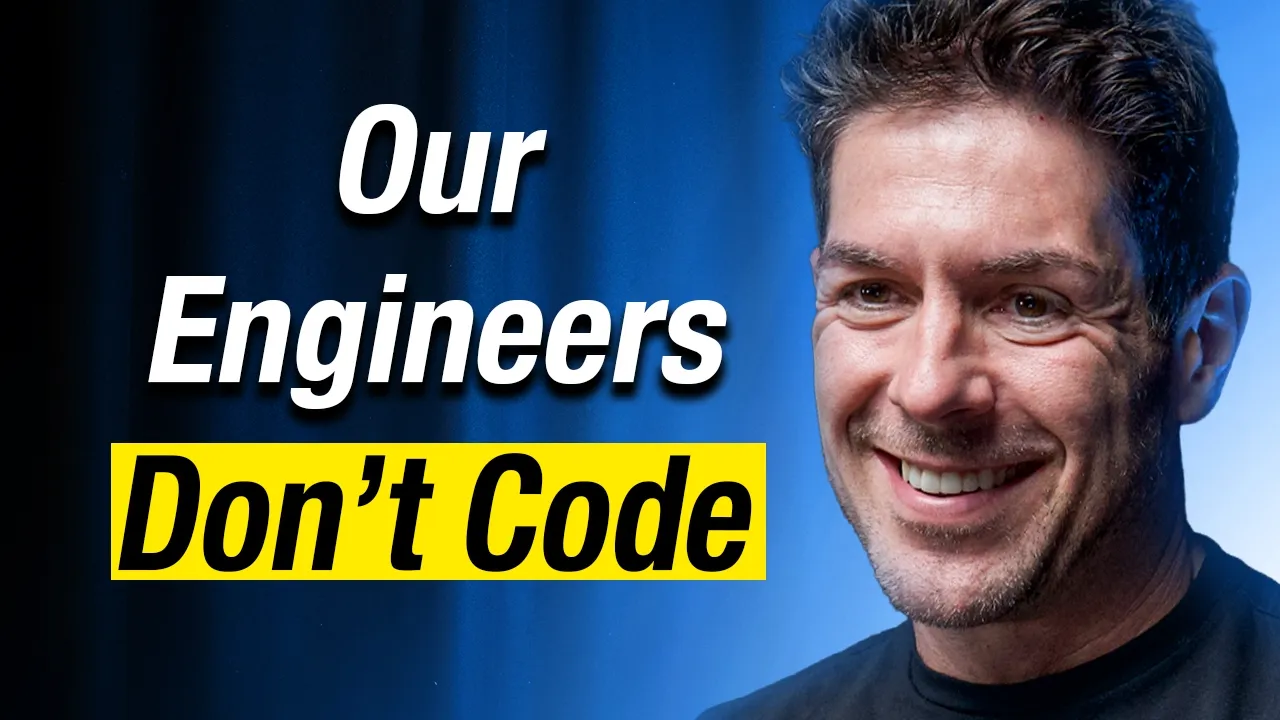
- Claim: AI is changing engineering from manual coding toward orchestration of coding agents, enabling a small team to support international complexity. | Evidence: Franceschetti says 8 Sleep engineers “stopped coding” around a year earlier and now oversee hundreds of AI engineers, mainly using Claude. He links this to operating across 35 countries, including China, the Middle East, and European regulatory environments, with a comparatively small organization. | Implication: The durable engineering role becomes architecture, specification, validation, integration, and accountability. Ken should assess AI engineering productivity through delivery quality and operational reliability, not code-generation volume. | Caveat: This is likely rhetorical shorthand: the transcript does not establish that humans no longer review, debug, architect, test, or own production code. It also provides no software-quality, security, or deployment incident data.
- Claim: Growth should be scaled one channel at a time against independently measured incremental CAC, not platform-reported attribution or headline growth. | Evidence: 8 Sleep starts a channel with a small weekly budget and a CAC cap, expanding only when performance stays within that cap. Franceschetti says Meta-reported CAC can be about 20% below true CAC, and describes geo holdout tests—turning off a channel in one comparable region—to calculate lost revenue and true incrementality. | Implication: Treat platform dashboards as directional. Build a first-party measurement layer and recurring holdout/incrementality program before increasing agent-directed media budgets, otherwise optimization agents will efficiently exploit attribution errors. | Caveat: Geo testing requires sufficiently comparable markets, enough volume, and careful control for confounders; the Texas-versus-California example is illustrative rather than a universal experimental design.
- Claim: Consumer discovery is splitting into human-facing brand distribution and agent-facing recommendation distribution. | Evidence: 8 Sleep now monitors “AI SEO” in regular reports, says traffic from AI search is growing and may already fall somewhere between 1% and 20%, and observes diminishing Google performance. Franceschetti expects personal agents to search for and recommend the best product, requiring a distinct approach from human content discovery. | Implication: Ken should track whether products and content are legible to answer engines and purchasing agents: structured product facts, credible third-party evidence, clear differentiators, and machine-readable trust signals may become as important as conventional SEO. | Caveat: He does not provide an AI-search traffic figure, ranking methodology, or a concrete agent-optimization playbook, so this is an early signal rather than proven channel doctrine.
- Claim: AI-native companies can target far higher revenue per human employee by organizing around tiny, expert oversight teams rather than eliminating functions entirely. | Evidence: 8 Sleep has about 160 employees and Franceschetti targets 250 people generating $1 billion in three years. He describes paid media as a two-person decision team overseeing hundreds of millions in spend, finance as four people where he believes a comparable company might have 20, and “teams of two” as a useful redundancy model for major functions. | Implication: Use team size as a design constraint: identify where two exceptional operators plus agents can govern a large domain, but preserve separation of duties and resilience for finance, security, and other high-risk workflows. | Caveat: The company has a high-ticket hardware product and subscription economics, which may make its revenue-per-employee comparison unsuitable for businesses with lower average order value, services-heavy delivery, or greater regulatory burden.
- Claim: In an AI-enabled consumer company, product and brand remain defensible, while superficial celebrity partnerships and price-led competition are fragile. | Evidence: Franceschetti says 8 Sleep maintains roughly 40% of revenue through word of mouth and low-single-digit annual subscription churn. He argues a “great brand with a shitty product goes nowhere,” says athlete deals require prior genuine product use and a direct founder relationship, and believes China should be entered after a brand has earned Western recognition to avoid a knockoff-driven price war. | Implication: Agent efficiency may lower execution costs for everyone, increasing the relative value of actual product quality, credible proof, trusted distribution, and brand signals that both humans and future recommendation agents can recognize. | Caveat: Claims about churn, referral share, and customer behavior are not independently substantiated in the interview.
Detailed Brief
Channel and market-entry operating details
- Claims: The company prefers immediate contribution profit on day zero, with subscription revenue as upside, rather than funding faster growth through compressed acquisition economics.; Brand awareness is treated as a gating condition for out-of-home and retail: a channel can work in a mature market yet fail in a newly entered one.; China is not approached as conventional website-led D2C; purchasing occurs through super-app ecosystems such as WeChat, Red Note, TikTok, and local marketplace equivalents.
- Evidence: Franceschetti says 8 Sleep could grow roughly 50% faster by spending more, but would damage subsequent-year growth when CAC deteriorates and spending must be pulled back.; An out-of-home campaign in the Middle East was a mistake because the brand had launched there only about a year earlier; he contrasts this with a more viable campaign in New York, where brand familiarity is higher.; A mobile demonstration truck with a bedroom installed in the back lets prospects try the product at homes and events; he says it is performing well because the product benefits from physical trial.; For TikTok, 8 Sleep only saw success after repeated iteration and building a UGC/influencer-content program over the preceding six months.
- Caveats: The interview offers no unit economics, sample sizes, holdout outcomes, or spend allocation data, so these tactics are operating heuristics rather than benchmarks.; China's commerce behavior is described broadly and may vary substantially by demographic, category, and platform.
- Implications: Channel sequencing should be treated as a maturity problem: deploy experiential, retail, and brand channels after awareness and operational readiness exist, not because a channel works elsewhere.; A product that needs trial can justify a physical acquisition surface even when the company is otherwise digitally native.
Strategic bets and social implications
- Claims: Franceschetti expects AI-enabled companies to become multi-business holdings, reusing internally built capabilities to launch adjacent businesses rather than adhering to permanent single-product focus.; He sees Chinese automotive manufacturers as a strategic threat not only because of EV quality but because their manufacturing capabilities could transition into humanoid robotics.; He predicts that people born now may not need to work for income by adulthood, making income redistribution and non-financial purpose increasingly important.
- Evidence: He cites Xiaomi's expansion across smartphones, smart-home products, cars, and other hardware, as well as BYD's component capabilities, as precedents for capability-led expansion.; He points to the rapid improvement displayed at humanoid robot competitions, including claims of robot achievements in sprinting, high jump, fighting, and tennis, as evidence of accelerating embodiment.; His personal framework for a post-work world is a hierarchy of health, relationships, and purpose; he suggests companies' improved margins may ultimately need to support universal income.
- Caveats: These are personal forecasts, not forecasts supported by formal evidence in the discussion.; The competition claims and references to frontier-model self-learning or agent “civilizations” are not specified well enough in the transcript to validate.
- Implications: Separate the near-term operating lesson—AI makes lean organizations viable—from the much less certain societal timetable.; For investment and strategy work, monitor AI-enabled manufacturing and robotics as a convergence of models, supply chains, and physical deployment rather than as separate sectors.
Notable Concepts & Terms
- AI employees: Franceschetti's internal management framing for agents that execute work alongside 160 human employees; he estimates the AI workforce makes the company effectively three to four times larger.
- Internal AI tools team: A centralized team dedicated to building internal agents and connecting them to core data systems, rather than treating AI as isolated departmental experimentation.
- Incrementality testing: Testing a channel's causal impact through controlled geo holdouts rather than accepting the platform's attributed conversions and CAC.
- Immediate payback / day-zero contribution margin: 8 Sleep's discipline of requiring profitable initial customer economics before considering subscription revenue, intended to prevent artificial growth driven by overspending.
- AI SEO: 8 Sleep's label for monitoring visibility and ranking in AI-driven search or answer interfaces, treated as an emerging acquisition and recommendation channel.
- Teams of two: A proposed organizational model in which two exceptional human owners provide redundancy and oversight for a much larger AI-enabled functional domain.
- Human-facing versus agent-facing discovery: The idea that brands must both earn human attention in an oversupplied-content environment and become the product recommendation agents select for users.
- Health, relationships, purpose pyramid: Franceschetti's framework for life in a post-work future: health is foundational, relationships follow, and purpose remains necessary even if paid labor declines.
Operator Notes / Why Ken Should Care
- Audit Ken's current agent initiatives for direct access to canonical metrics, scoped permissions, evaluation coverage, and a named human approver; do not scale autonomous recommendations without these controls.
- Pilot an agent-operated recurring workflow with strong historical data and a measurable outcome—such as content-performance analysis, CRM/email scheduling, or paid-media anomaly detection—before attempting broad multi-agent orchestration.
- Require incrementality measurement and first-party CAC/LTV models for any agent that recommends or reallocates marketing spend; platform-level attribution should not be its objective function.
- Add AI-search and agent-recommendation visibility to market intelligence: monitor answer-engine citations, product representation, third-party evidence, and structured information that purchasing agents can consume.
- Adopt a lean-team test for selected functions: define whether two accountable operators plus agent capacity could govern the domain, while explicitly excluding workflows that require strong separation of duties or high-stakes human judgment.
- Treat all 8 Sleep performance figures as a diligence prompt, not a benchmark: seek architecture specifics, model/tool stack, data access design, approval thresholds, and error rates before transferring the case study.
Source/Metadata
- Title: Labour, Engineering, Social Media, GrokBots, Cybercabs: 7 Predictions for How AI Changes the World
- Transcript words: 28513
- Duration seconds: 4912
- Timestamp note: No usable timestamps or chapters were present in the supplied transcript; substantial passages are duplicated.
Transcript
Well, our engineers stopped coding around a year ago. What they have is hundreds of AI engineers, and that is how we can achieve what we are achieving at scale. How much do you spend on crawl a month? In the hot seat today, we have Matteo Franceschetti. What a fantastic surname. The joys of doing a second show with someone is you get to ask questions that no one else can answer. That's what happened today. We have a totally off-the-cuff, very unfiltered discussion with probably one of the most impressive founders in hardware having scaled the business to multi-billion dollar valuations, single-digit churn rates, incredible global businesses now open even in China. This is one of the most unfiltered versions of Matteo and 8sleep that you have seen yet. Great brand with a shitty product goes nowhere. I'm extremely demanding. I'm a weirdo, and so I can be a husband on one side, but business-wise, no mercy. Sometimes people say, oh, I'm at the final stage with Anthropic and 8sleep. And to me, that is a really bad red flag. There is no way that these two jobs are any way similar. Our revenue per employees is way higher than Apple. Kids that are being born now will never work. At least for money. Ready to go? Matteo, it is so good to have you in the hot seat, dude. You know, last time we did this show, and you had a hiring playbook. And I remember it went insanely viral afterwards. And so many people talked to me about that ever since we did it. So I'm really excited for this as a second discussion. Thank you for doing it, dude. Yeah, thank you for having me. I think that hiring today is harder than it's ever been just because of the prizes on offer at OpenAI, Anthropic, and some of the other places. Even the shiny new hot startups. How do you think about that? Am I wrong? Has it changed in terms of talent competitiveness? We are back to 2021. And that, I think, is becoming a problem in the U.S., meaning salaries are going out of control. Competition. What makes you say that? Engineer salaries? Any salary. Even for product managers are out of control right now. They get insane offers from any company. There is a lot of money going around. And so we are focused more and more on hiring in Europe and outside the U.S. because the other problem is not even the salary and it's not even attracting them on T0, but it's retention because then they keep receiving offers. If you are a cool company with a cool brand, then they keep receiving offers over and over at a higher salary. Have you lost people to OpenAI and Anthropic? You know, I'm invested in many companies and they're just like, God, we're getting eaten alive by OpenAI, Anthropic, Cognition, you name these hot companies. Yeah. We couple. The other ones could be AI companies that are doing extremely well or they just raise money. And so it's normal competition. But sometimes the delta in salary and in comp is so big that at the point there is nothing you can do. We mentioned Cognition a couple of times. We were talking earlier about your angel investing as well. Can I ask you, how has being an angel investor changed how you think about operating? It's a game changer for me. And I think that is something it's not shared enough, particularly on X. The amount of learnings that you get from being an investor is insane because it's essentially you build your own intelligence. As you receive investor updates, you understand how the market is moving. What are the valuations? What are the multiples? What kind of profiles they're hiring? What channels might be working? And I receive this from companies that are not competitive with 8sleep. But as a founder, you just get the sense of the market. And I find that super valuable. What's been the biggest lesson from angel investing? The biggest learnings is always on fundraising, right? You see how much they're raising and what valuation, what multiples, what investors, that's one. The other biggest lesson is for other companies that are still consumers to see channels, what channels work for them. What do investors not understand about hardware that they should? You're advising me. I'm your buddy. I have a fund. I want to invest in hardware. What are you like, dude, before you do it, you should know this. That probably the founders in the first year of the company or in the first probably let's say three months, they don't fully understand what the cost of producing that device will be. They don't understand the return rate. And so everything they tell you about BOM and COGS will probably be off by at least 50%. Does CAC go down over time? It really depends. And so that is another thing you want to assess, which is word of mouth. In our case, word of mouth keeps compounding. We are around 40% of our revenue, even at our size, which starts being really big, is 40%. 40% of your revenue stays word of mouth? Yep. What's your second biggest channel? Then you start getting into paid media. Yeah. And that's just Meta? Yeah. Then it becomes Meta, Google, TikTok, and all those channels. Can I ask, how do they compare? I'm a content, hopefully specialist at this point. No one that I speak to has managed to make TikTok work. Have you? We did. Actually, this year, in the past six months. How? It's usually a matter of amount of content that you can generate with TikTok influencers. So it's about getting a UGC program in place. Yep. Is there a big budget for you tied to it? The way we usually approach these channels is we start unlocking a small budget per week. We start looking at the CAC. We've set a cap to the CAC, and then they can deploy as much as they can within that cap. But then as they prove it, they can deploy more money. So to me, they could deploy $100 million if they're within CAC, the cap of the CAC. The important thing you need to do regularly, probably every six months, is an incrementality test. And so we can, we might turn off TikTok in certain states in the US or in certain geos, and we start A-B testing what is the growth rate or the revenue rate. So we want to see how much each channel is incremental because we don't look at the CAC from the platform. We have our own models now that determine the CAC of each channel. Sorry, can you tell me about that? You have your own models to determine the CAC from each channel. Why is that? Well, because you cannot trust there will be an excess of attribution from the same platform. We do the same with Meta. If you look at the CAC on Meta, it's probably 20% lower than what the true CAC is. And the only way you can do it is by doing these incrementality tests. And so let's say you pick two geos that they deliver, they perform similarly. Let's say you pick Texas and California. That is not the right example. Dude, you're speaking to a Brit. That'll totally work for this example. And so then you turn off Texas and you start seeing what is the delta in performance of that state versus the other. So how much revenue you lose. So if one was, if they were both growing 50% year over year, you start turning off Meta in one or the other, you can immediately calculate the value of Meta for that state. Does every brand need to have their own models to accurately? Oh, 100% because otherwise they just fool themselves. When did you start? Because it's one of those ones which you can't do from day one. And you will screw up multiple times. And the point is you need to keep doing it because as you add more channels, the incrementality of each channel will not be the same. How did you think about that channel addition? Because I see so many founders try and be everywhere to everyone. Yeah. How do you think about that? I disagree with that. So you need to go one channel at a time. I was even talking to a common friend recently who was asking me about that and say, okay, can I go in all these channels? How much money should I put? Should I start putting 100K in each of them? And I say, no, no, no. You go one by one. You start with Meta. It's probably the biggest and the one that you should prove the fastest. And you start with, based on the size of the company, a certain amount per week. You set the cap to the CAC you want to achieve. And then from there you start scaling only if you are within CAC. Because otherwise you start throwing money out of the window. Your growth people, they will always want to grow faster. And so they will always want to spend more. And then you start losing control. And what happens? Then let's say by the end of the year you realize you screwed up and so you start pulling back. And then the following year you're not growing year over year because you're spending less. And so you need to be disciplined now if you want to be successful next year. Should I start putting 100K in each of them? And I say, no, no, no. You go one by one. You start with Meta. It's probably the biggest and the one that you should prove the fastest. And you start with, based on the size of the company, a certain amount per week. You set the cap to the CAC you want to achieve. And then from there you start scaling only if you are within CAC. Because otherwise you start throwing money out of the window. Your growth people, they will always want to grow faster. And so they will always want to spend more. And then you start losing control. And what happens? Then let's say by the end of the year you realize you screw up and so you start pulling back. And then the following year you're not growing year over year because you're spending less. And so you need to be disciplined now if you want to be successful next year and keep growing year over year. It's really interesting about how you kind of gamify growth numbers because you're right. You spend, you get 400% growth, you pull back hard and you get 70%. Good luck fundraising when you're going from 400 to 70%. We could be growing 50% more if we want it year over year this year just by spending more. But then next year you're in trouble because your CAC is upside down. Do we care about economics from day one? You said there about start with Meta. Do we care about economics from day one in terms of optimization? Or actually is it, hey, customers are engaging, they're liking product. If we're doing a one-to-one, for every dollar we spend, we're getting a dollar back, great, or should we be looking for optimal returns early? Well, in our case, we look at the immediate payback period. This is actually something where Keith was really pushy and he was correct since day one. So he wanted us to have an immediate payback period and then we have what we call contribution margin. So what is the margin on day zero? Then we have a subscription and the subscription will compound on top of that. But we want to have that contribution profit on day one to be really healthy. If we were compressing that, we could be growing 50% more, but then the business wouldn't be public ready or as healthy as it is today. What would you most like to do if economics were not a part of your business? It could be massively increase the quality of a certain point. It could be pouring fuel on the fire on matter like never before. Take economics aside. Well, you could reduce prices and I think we will see an acceleration or you could just deploy probably more into marketing, which is probably what I would prefer. I'm never a fan of compressing prices. You know what Andreessen says, that if you have a great product, people will pay for it. But at our stage as a company, even if we start fairly large, brand awareness is still probably the biggest bottleneck. You have a subscription business as well, which obviously really provides a lot of juice to your margins. Because you have an upfront cost in the thousands, it's a relatively expensive product for a lot of people. Do you just inherently have very low churn rates on your subscription product because you have the buy-in of multiple thousand dollars invested upfront? Yeah, it's world class. Our churn is the lowest of any company you can think of. What is the churn? It's in the single digit, low single digit yearly churn. Even if you compare to other companies that in the wearable space that are going public, we are better than them. Who could that be? I don't know. That's absolutely hilarious. But it's world class. It's unseen. Going back to the channels and I'm sorry for focusing on channels. I just, I'm a real nerd about channels. Has your Google spend changed in the wake of, bluntly, AI and AI-driven search impacting so much? Yes. And so we introduced a new channel that now we monitor that is literally what we call AI SEO. And now in the report that I receive weekly, twice a week, there is also AI SEO. And so we see how we rank in AI searches. What percent of traffic today, broad strokes, is from AI searches? I don't have a number for that. I can check, but it keeps growing. But is it 1% or 20%? Probably somewhere in the middle. But then we start seeing an impact on Google. Because it's just diminishing. Our assumption is that Google is behaving differently because of AI searches. What was your biggest channel mistake? Where did you spend money that you shouldn't have done? And you're, ah, I learned a lot of lessons from this. Out of home. And everything depends on the scale of the business in that country. So we tried to do a campaign, an out of home campaign in the Middle East. But we're not ready yet. So if we were doing an out of home campaign in New York, where we are decently known, it would perform very differently than the same campaign in the Middle East where we just launched a year ago. And those are the things I'm learning that I didn't know. When are you big enough to do out of home? Because I think one thing that we've seen in the last two years is tech companies realizing the importance of brand marketing. Out of home, football shirt sponsorships, you name it. And it supposedly performing well. How big do you have to be to do out of home? I don't think there is a hard number, but you want to be a brand that is decently well known. And so I make it up. If 100 people see that ad on the street, 5% of them knows the brand. And so that is one of the other things that we monitor that is this aided and unaided brand awareness to understand how many people know the brand. And if they know the brand, they know what the brand does. How much did you spend on out of home? Nothing now. But we created a truck now that goes around Silicon Valley. And so you can book the truck and it comes to your home and you can try the product live. So this truck has a bedroom built in the back of the truck. But now the truck also goes to specific events or to specific areas during the weekend where there are many people. And we are seeing pretty good success because there are a lot of people that wanted to try our product, but they couldn't. And now when they see the truck, they just get into the truck and try the product and bite. That's a phenomenal channel and you're going to have high conversion rate on that. Yeah. It's doing pretty well. That's fascinating. I'm also really impressed that TikTok works for you because TikTok is freaking hard. Yeah. It was not working in the past. Then we kept iterating and it just started working six months ago. How big is the marketing budget today? In the hundreds of millions. In the hundreds of millions. But the story I can tell you is, for example, before we had an email marketing team, now we have zero. Everything is done through AI and email marketing makes a very large amount for us and everything is run by AI. How? So what happened is we were forced to that, meaning the person leading, we had a team of two. Then the person leading the team was leaving. At that point, my co-founder Alexandra jumped in and said, okay, let me see how I can use AI to really make this work. Within three days, she was able to build multiple bots that now run all our email marketing. Now we have a team of zero and email marketing makes close 200 million. I just want to understand because we have an email newsletter and there's people that do it and it's still pretty average, I think. When you say bots, what do you build your own? So for us, there is a calendar of what emails need to be built and created and sent. This is based also on history, so we have historical data. And our AI suggests, okay, when to send what email with what copy. And when you say your AI, it's your models, it's using Claude, it's using... We probably, I mean, we should check, but I would imagine we are using Claude for that. And then internally, we have probably by now hundreds, if not thousands of agents that we use internally at Hitsleep. So now I started measuring what I call the human employees, but then there is also the AI employees, and probably the AI employees are, I mean, without probably, we are probably three, four X bigger if you start including all our AI employees. Where is it most significantly impacting the company? Growth. Because email is like that. Now also all our digital marketing, our team receives a report every morning from our AI agents suggesting what changes to do or not to do, and they approve or reject. And so also our marketing business is run, our growth is run by a few people right now. I worry that in a world of infinite content supply, discovery becomes impossible and we just get flooded. Do you worry We should check, but I would imagine we are using Cloud for that. And then internally, we have probably by now hundreds, if not thousands of agents that we use internally at Hitsleep. So now I started measuring what I call the human employees, but then there is also the AI employees, and probably the AI employees are without question we are probably three, four X bigger if you start including all our AI employees. Where is it most significantly impacting the company? Growth. Because email is like that. Now also all our digital marketing, our team receives a report every morning from our AI agents suggesting what changes to do or not to do, and they approve or reject. And so also our marketing business is run, our growth is run by a few people right now. I worry that in a world of infinite content supply, discovery becomes impossible and we just get flooded. Do you worry about that too? Definitely. But at the same time, I think that the personal agents will look for the best product, and so if you are the best product, you will still win. So there will be probably, for humans, the amount of content will be too much, and so we'll need to think about how we show up to humans, where humans go. That is how I think. But then you need a different strategy for the agents to make sure that their agents find you and recommend you. We said there about the amount of agents that you have. Engineering is one where consistently across the board, everyone's engineering teams are being changed unbelievably. How is AI changing your engineering team at 8Sleep? What are you using? What are you not using? How do you think about that? Well, our engineers stopped coding around a year ago, so since then they didn't code. What they have is hundreds of AI engineers that code for them, and that is how we can achieve what we are achieving at scale in 35 countries, including China, including Middle East, including Europe, where there are a lot of regulations in all of them, with a fairly tiny team. What tooling do you use? Mainly Claude. Mainly Claude. Yeah. How much do you spend on Claude a month, give or take? I don't know, it keeps growing so fast that I don't know. Is it like 5 million? No, it's lower than that, but it's still in the millions. And the thing I'm trying to understand is Mark Benioff said that they spend 300 million a year on Claude, and they have a 6 billion budget for engineering. It's 5% of engineering salaries being spent on Claude in particular. And my question as an investor is will it stay at 5% in which case we can justify the 2 trillion IPO, but it doesn't have massive expansion from there. Is it a case of the 5% is just the start, baby? We're going to go to 25% in which case, Matteo, let's load up on Anthropic IPO. Or is it the case that actually we're going to see the commoditization by open models, most of workflows are going to get taken by them, and that 5% could go down to 1% as we see efficiency. Yeah. I think there will be two vectors in the opposite direction. The usage will increase, and so the 5% will become 50%, but the cost will go down. And so net net I think it will go down. I was listening to an interview with Sam Altman recently, and he was saying that in the early days, to pay for one hour of electricity at night, you had to work five hours, just to give you a sense of how expensive electricity was in the early days. And now nobody cares about, I don't even know what's the cost of electricity at night in Miami where I live. And so I think the same thing will happen. Do you find it a bit scary that intelligence is now free? Entirely distributed? Yeah. It's something I think about, how businesses will change, how our business will change once that intelligence is semi-unlimited. I asked the AI this morning to do an in-depth analysis of three of our biggest competitors' Instagram channels because I want Instagram to be a real driver for us moving forwards. What works, what doesn't, what themes work, what hooks work, what layouts work, what doesn't, what captions work. It was incredible. And I said, can you suggest three stories every single day for me at 8am to do? First one starts tomorrow. Yeah. The amount of productivity will explode. It's probably like when we went from no computers to computers or probably even bigger industrial revolution or agricultural revolution. We are facing one of those moments. Knowing what you know now as a consumer and customer of Claude, would you buy Anthropic at the IPO? I would probably buy. I still think there is so much upside in all these companies. I'm really bullish on SpaceX personally. Why? What drives that? Well, I think, so here is another theory that I have and ours is just my opinion, but I think with AI companies will, the right companies will transform themselves into holdings. And so what it means is that whatever 8Sleep is doing today will be one of the businesses that we do. But with AI, as we build tools for ourselves, we will discover other opportunities, business opportunities. And so the 8Sleep Inc. will probably own 3, 4, 5, 10 different businesses, which if you think, and if you look at Chinese companies, it's something they have been doing forever. If you look at Xiaomi, Xiaomi does 15 different things. I just watched their latest presentation from their CEO. I look at a lot of Chinese companies because they are geniuses, they never stop themselves. So Xiaomi, instead of being just like Apple, they also do cars, for example. They do so many other things. And fridges and ovens. Literally. Anything hardware related, anything that is a smart home, but then they also get into components, like some of the components, like BYD develops certain components well outside the car and automotive. So these companies have already proven that the concept of focus is not, oh, you keep doing the same thing forever. It's just, I have certain capabilities, then how can I use this knowledge and capabilities in any form? And with AI, we will all do that. I'm loving this conversation. And the joys of doing second shows is they're much more casual, which is much better to listen to and also much more fun to do. Do you worry when you see the excellence of these Chinese manufacturers in specifically the kind of automotive industry, that it's just going to hollow out the European car market? Yeah, I think Chinese, they really nail, particularly automotive. And based on my understanding, what happened is around 10 years ago, whenever exactly that was, they understood that they didn't want to compete with European manufacturers on standard engines. And that is when they decided to double down on electrical technology. And since then, they started developing their cars. But I go to China often for work. Now we sell in China, but we also manufacture in China. And when you see the quality of their cars, because in the past, we used to think that some of these products were just cheap and ugly. Well, instead now they design cars. Xiaomi, if you go to their stores, it looks like an Apple store, but there are cars, there are no other devices for the home. These cars, they literally look like a Ferrari aesthetics, or they have these seats that turn, so you can just sit. And then I've seen the TikTok say that. It's so cool. It's incredible. Screens come down, stalls on the ceiling. Massage, everything is voice control. So they're really focused on the customer experience and it's incredible. And I think a lot of other manufacturers around the world, they don't focus enough on the user experience. I completely get you and agree with that. But as your wonderful accent denotes, you are Italian, and a huge amount of the European industrial economy is rotating, centered around cars. Do you worry about that? Well, I worry even more about another factor. I think all the Chinese manufacturers, they will become robotic companies. I think all these automakers should transform themselves and start building humanoids because the humanoid will be what cars were in the 60s. If they don't do that, they will not lose only cars, they will lose also the humanoid market, which is trillions of dollars. Are you seeing the advancement with humanoids in China in a way that you really didn't expect? Yes. I don't know if you saw the, I don't know what was the formal name, the Olympics of robots? The humanoid games. Yeah, it's insane. And the way I look at that is, okay, you look at the thing, it looks a bit funny, they look a bit clunky, but they The amount of the European industrial economy is rotating, centered around cars. Do you worry about that? Well, I worry even more about another factor. I think all the Chinese manufacturers, they will become robotic companies. I think all these automakers should transform themselves and start building humanoids because the humanoid will be what cars were in the 60s. If they don't do that, they will not lose only cars, they will lose also the humanoid market, which is trillions of dollars. Are you seeing the advancement with humanoids in China in a way that you really didn't expect? Yes. I don't know if you saw the Olympics of robots? The humanoid games. Yeah, it's insane. And the way I look at that is, you look at the thing, it looks a bit funny, they look a bit clunky, but they start doing these things. Knowing how fast AI is moving, next year, those same games will be mind blowing. That is what worries me. What I saw today, if you just look at that, you say, oh, look at the thing, these robots, they are not really good at working. Even if they did the records in the 100 meters, there was a robot that ran faster than Usain Bolt. So, they know how to do it. I did a video on this. There was a robot that beat the high jump. Yes, I saw that. And there were the fighters. Tennis. Real-time tennis. The tennis was really cool. It's insane. Yeah. But in one year from now, we will be blown away at this speed of AI. Did you see the paper last night, or essay or post last night from someone at OpenAI, Sam promoted it, that basically said, we actually need to put a slight pause on this. It is getting too far too fast. Yeah. So, I think the part that is worrying everybody is the part of self-learning from these models. And so, they are getting to the point where they train themselves. And that is when we start losing control. There is a point, even in our model. Do you not think we're already there? I think we are. Then, I think there is a big delta between what we see as users and probably what the frontier model companies have in house. And I think they have already seen it behind the scene. You have seen some of the things that are happening already in terms of cybersecurity, in these civilizations, that there were three attempts of civilization, I think, in an OpenAI model where agents were building their own group. I'm going to go there. You sell in China. You spend a lot of time in China. A lot of your investors, including Keith Raboy, who's a friend of mine, hates China. How do you reflect on that? Is it as evil and CCP-driven as it seems? Are we in a de-globalized world that should hate China? How do you think about that? Yeah. I don't have a specific opinion on that, so I cannot really comment. I can just tell you, for us, it's a key market. It's a big opportunity, and we decided to sell there, and it's doing really well for us. Is it very different selling in China? Yes, because you cannot sell on 8thsleep.com. Literally, you don't sell on a website. They don't use website. For us, it was literally learning everything from scratch. What do you mean they don't sell on a website? Chinese don't buy on websites. There is no e-commerce as we know it. They only buy on their super apps, so on WeChat, Red Note, and equivalent. We had to learn all that. Where do they land? You send a referral link to your friend? Where's the referral link from? I'm confused. Imagine that everything, the equivalent is oversimplified. It's like if you were buying everything on WhatsApp. They don't go on any website. Websites are at most just literally like if you just want to scroll and see some picture and read more about the product, but all the purchases, all their credit cards are on Red Note or the Amazon equivalent and WhatsApp equivalent or TikTok, obviously. Does that impact how you think about how we should think about security for these AI assistants? Everyone now is saying, oh, I would never put my credit card in Instinct. What if it gets hacked? I think the solution for that to me is, so for example, my Grokbot is buying things for me already, but is using Amazon on the browser. And so Amazon has my credit card. And so there I feel confident because I'm not sharing my credit card with AI yet. I think in AI where we were with credit cards on spending and buying things on the internet 20 years ago, where people, particularly European and Italian, I was still living in Italy, they literally didn't want to put their credit card on any website because they thought it was a scam. And sometimes there was a scam back then. I think we are at the same point with giving our credit card or information to these bots. It's still a bit uncomfortable. But I think in a year or two from now, our bots, particularly bots from frontier models, like from X, OpenAI and Claude, you will start trusting them soon. What seems crazy today that you think will be very common in five years? I totally remember I wasn't allowed eBay when I was young because my parents were like, no way are you putting credit card details online. I remember when it was like, you think you're going to find a partner online? These apps are ridiculous. Now 60% of relationships start online and I think we live online transaction wise. Probably your bot buying a cyber cab that will start making money for you. So you will buy a cyber cab that makes money for you with a bot and the bot runs the cyber cab. That would be pretty cool. I mean, it's not that far off happening now. And as it will be the health part. That is another area where I think I hope that cancer can be solved within 10 years. I think companies like Eight Sleep will be able to save your life, save the life of millions of people. Does the Eight Sleep product actually change that much with the greatest of respect in a completely AI driven world? 100%. We start seeing the likelihood you develop diabetes in our data, hypertension. We are becoming a medical device for sleep apnea. So your bed will become the most advanced medical platform you ever had. You said about retail earlier. I bet retail has been a question for you for years. And I bet there's been different board conversations had. How do you think about when's the right time? Because you're still not, still D2C. How do you think about when's the right time? Yeah. Well, let me step back for a second. One thing I'm learning as an entrepreneur is there is a time for things, right? Similar to what I was telling you about the out-of-home campaign. Nailing the timing of what you do, so when you do what, is actually really important for CEOs. Because it's not that it's binary that retail doesn't work or out-of-home doesn't work. No. It works, but there are some second or lower level conditions that are required to make that project work. And so I think for 8 Sleep, that is happening now. And so you should imagine retail to become a meaningful part of our channels in the next months, years. But before, it would have been too early. Same for China, right? Launching in China, one thing I spoke to a lot of Chinese founders, and what they told me is sometimes when they start their consumer products, they actually start selling outside China first. And I say, why? You have such a big market and you know the market. And they say, because the Chinese market, they love to buy products that are already well-recognized in the Western world. And so you want to build the product and the brand first in the rest of the world, and then you come back to China. Otherwise, in China, you would be one of many knockoffs, and it would just be a price war. And so I didn't know. We just decided to launch China, and so we were just doing it. But I didn't understand that for us was the right time to get into China because now we are already selling in 35 countries. We are well recognized. We sponsored Charles Leclerc, and I work with Ferrari through Charles. That is a very well-recognized brand. Many athletes use us. Elon spoke about us. Mark Zuckerberg spoke about us. Elon is really big in China, right? And so you have a level of trust where you command a certain price. But if we were doing the same thing five years ago, we would be destroyed by a knockoff that is 500 bucks cheaper. I had Hugo Barra on the show, who was a former exec from Xiaomi, and he In China, you would be one of many knockoffs, and it would just be a price war. And so I didn't know. We just decided to launch China, and so we were just doing it. But I didn't understand that for us was the right time to get into China because now we are already selling in 35 countries. We are well recognized. We sponsored Charles Leclerc, and I work with Ferrari through Charles. That is a very well-recognized brand. Many athletes use us. Elon spoke about us. Mark Zuckerberg spoke about us. Elon is really big in China, right? And so you have a level of trust where you command a certain price. But if we were doing the same thing five years ago, we would be destroyed by a knockoff that is 500 bucks cheaper. I had Hugo Barra on the show, who was a former exec from Xiaomi, and he taught me something very important, and I'm intrigued if you agree with it. He said you need to be one of two things. You either need to be price king, which is I'm the cheapest, or feature king, which is I'm the best. I agree and disagree. I agree that you can be the best price, that's not what we want to be, or I would call it the best product and brand. Not that it's so much about features, but the brand is really important. And so being a brand that is associated with the Charles Leclerc, with Elon Musk, people they really respect, they want that. And the same happens in Europe, right? I grew up and I remember when I bought my iPod. It was impossible and I was buying a second hand iPod on eBay back then, but because Americans were having this product and it was not being sold in Europe yet. There's that kind of form. I completely agree. Listen, a thousand songs in your pocket in a beautiful package. Did Samsung and all the others do a thousand songs in your device too? It was the same in many ways. 100% same. And Steve Jobs has always been a genius because he was coming with a great product after everybody else, sometimes one, two, three years later, but he was nailing the branding, the packaging and the presentation and everybody and obviously the look and everybody wanted it. What do you think people don't consider about consumer brand enough? The brand, particularly I think in Silicon Valley. I think in Silicon Valley we understand really well building the best product, but I think we underestimate the importance of brand. Then a great brand with a bad product goes nowhere. So first is product, but then you need to be able to build a brand that is aspirational and can command a certain price. Charles Leclerc is a phenomenal talent for those that don't know in the racing world, one of the best. How does that come to be? You get a DM from Charles saying I love 8Sleep, do you want to sponsor me? How does that come to be? Yeah. Well, it's pretty incredible the story. So we got connected. So Charles already had our product for two years before we met and we didn't even know. And that is the best way obviously for us to start the relationship. Then I'm an F1 and motorsport obsessed fan, obsessed. I know everything since when kids racing go karts. So I knew about Charles six, seven years before he got into F1. And three years before F1, he was racing, two years before he was racing in F2. And at the time I reached out to his team in F2 and I said, I'm a huge Charles fan. I think he will make it big. Is there any way where 8Sleep can sponsor him? But at the time 8Sleep was very tiny and so we couldn't find any real deal. But when I met Charles, I still had the email where I was going back and forth with his team and I wanted to sponsor him before he even made it to F1, not to Ferrari, before F1. And then I shared with him our vision, our medical vision. He really cares about that. And he's actually really into AI. He's incredible. Super sharp guy, super into AI. And we had dinner together. I think it was the Wednesday of the GP in Miami. And before the end of the dinner, we said we are going to work together. And the deal since then was done in a matter of days. Can I ask how much it cost? No, I can't share. What I can tell you is that Charles invested in 8Sleep. And I was honestly, first, really happy because he was one of my heroes. But second, I think that proves what I was telling you, how smart he is also as an entrepreneur and a businessman. Can I ask you, I think a lot more celebrities and athletes are obviously trying to be investors and wanting to invest today than ever before. What would be your biggest advice to other founders on how to get them and how to get the most out of them as a founder of a company? Well, we made a lot of mistakes with that too. Now it's probably four or five years that we invest in sport because obviously we have Charles but we were sponsoring the UAE team with Pogacar. Pogacar was installing our product every single night at each hotel of each stage of the Tour de France since last year. We didn't even know. He won last year and then he won this year. So they reach out after the first year and say, look, Pogacar did everything on his own. We bought the product. Now everybody in the team wants it. Can we do something together? So we sponsor the UAE team this year. And then we are in Padel with Arturo Coelho and Federico Cingotto, so number one and number three in the world. We are in tennis where we sponsor a lot of coaches including the coach of Sabalenka and many others. And there are a lot of top, top athletes that use our product. It's not public. But what would you advise founders on lessons from how to get great talent and then it can be celebrity investors too, pop stars, DJs, you name it, and how to get the most out of them? Or do they just not have value? Well, there's two conditions for any deal now. First, they need to use the product. If they already use it, they bought it on their own, perfect, now we can talk about doing a deal. If not, they need to try it and then we want to hear the feedback. They need to know the product, otherwise it's just a pure business transaction and I don't like it. Second, I want to have a direct relationship with them. Usually sometimes managers, they don't want that and they want to try to be in the middle. But if I don't have the direct relationship with the athlete, we're not going to do the deal because then it's just a financial deal and at this point we don't care. I want to be connected to the athlete. I want to know that they love our product and if they don't, it's fine, but then the relationship will never work, particularly in a product like ours where these people, the biggest value they do is just by talking to their friends about how good our product is. Right? And so they really need to be both in. If they just have a stake in our company because they put a few million dollars, you don't go anywhere. Who would you most like to have on the cap table who you don't have? Probably. Do you have Cristiano Ronaldo? No. He would be amazing. Yeah. Have you seen pictures of him training? Dude, I'm a straight man. My God, this guy's body is incredible. I looked at it and then I looked at myself and it just felt like, oh dear. I think for us there is a big difference between the athletes that we can disclose, right? And the athletes that use the product. Some of the top, top tennis players, they ping us. Then in all the Grand Slams, they sleep on our product. In F1, we have probably 80% of Formula 1 drivers sleeping on the product, including the people that are winning. But we are not allowed to share that, right? It's a private, confidential relationship. Do you have any wild stories of delivering it somewhere crazy for someone last minute because they need it before? You don't need to say the person. Yeah, I'm not sharing the name, but there is this really, really famous football player. And so he tries the product at a friend's house and then his team reaches out and says, the athlete wants the product, can you install it for him? Can you come and let him try it at home? So the team goes. But once they get there, he has this very unique, special size 300k mattress. And our product doesn't fit because we have, I don't know, the queen, the king, not the standard sizes, but this was unique and customized. And so the team is leaving, but then product, including the people that are winning. But we are not allowed to share that, right? It's a private, confidential relationship. Do you have any wild stories of delivering it somewhere crazy for someone last minute because they need it before? You don't need to say the person. Yeah, I'm not sharing the name, but there is this really famous football player. And so he tries the product at a friend's house and then his team reaches out and say, the athlete wants the product, can you install it for him? Can you come and let him try it at home? So the team goes. But once they get there, he has this very unique, special size 300k mattress. And our product doesn't fit because we have the queen, the king, not the standard sizes, but this was unique and customized. And so the team is leaving, but then the athlete says, no, no, no, no, okay, would you mind installing this in my kid's room? And they say, fine, because that was a standard size mattress, and so we install it there. A week later, the athlete calls us and say, look, I'm going to give away my 300k mattress, but I'm going to move Eight Sleep in my bedroom. I need it for my own performance. And so he threw away the 300k mattress, and now he sleeps on Eight Sleep. That was really sick. Oh, there is this other story that is really cool. So we give one of the most famous actors in the world, gets our product as a gift. And he loves it. He absolutely loves it. And then he buys 10 of our products for everybody in his family. Then I go to this dinner, and this famous actor comes in, and there is me and some top CEOs, but CEOs of 100 billion plus companies, right? And so he starts shaking hands, and he spends literally three seconds with everybody. Then he comes to me, and he realizes I'm the CEO of Eight Sleep. And at that point, we start talking together for literally five minutes, to the point where the other CEOs before, they were looking at me like, who is this guy? And after that, they were looking at me with a lot of respect. What is the most amount of Eight Sleeps one person has bought? A very famous person that everybody knows has 55 for his houses, but then there are other people that buy through embassies, and they bought in the hundreds. Someone bought 55 for their houses? Yeah. What? Yeah. Do you get a discount? No, these people don't ask for a discount. They just reach out to their team, and they just ask to help for the setup, or to place such an order. That is wild. Yeah. I love that. Okay. Great. Earlier, you said... Well, there is another story. There is a couple, and they reach out because wherever they go, if they stay in a hotel for longer than three or four nights, they buy an Eight Sleep for that, to install in that hotel. Wow. Yeah, because they can't sleep without that, and obviously they're... Do you mind that Eight Sleep is such a premium product? Would you like it to be more for everyone? We want to democratize sleep, so the way I always say is, imagine if we were Tesla, we are the Model S. There will be the Roadster, so there will be something even better, but you will also see us coming out with the Model X and Y and 3. Do you worry about income inequality? I know it's kind of a broad question. But we've talked about people just buying 55. You operate in a world where you see extreme wealth. I do as well. Do you share the concerns? I do. The way I think is, okay, how do I democratize better sleep? If our product was $100, probably by now we will have sold billions, literally, because people really like the benefits of what we do. And so it's our job as an engineering group, to make sure that we can keep reducing prices so everybody can get better sleep. You said earlier about your co-founder Alexandra. I hope it's okay. She's also your wife. Yep. How does that work most efficiently? What lessons do you have? What works? What doesn't work? Yeah. So we have two different channels. So one is Slack for work and one is WhatsApp for private communication, our life, and we never mix them. And so I might be screaming on Slack, we have to get this done by the end of the day. And let's review these at 9 p.m. And then on WhatsApp, it might be, oh, what do we have for dinner? I'm craving pizza. I don't eat carbs. We cheat on Friday. Friday night is when we have pizza. But as a joke. So that is one. Second is I could talk about work all the time, literally 24-7. I love that and it helps me, but for her, at a certain point, she really wants to operate like if she was an executive that you wouldn't bother after a certain time in the night, like at 10 p.m. Okay, if it's urgent, you can talk about that. But otherwise, if we are on the couch watching TV, don't just keep talking about work because my brain needs to digest the information from the day and that is how she performs. But then what I can do, I can Slack her. So sometimes we are on the couch watching TV, I start coming up with ideas and I start slacking her and her phone might be vibrating next to me and I know that it's me and it's completely fine and we don't talk about that even if I'm there writing a couple of messages. And that doesn't irritate you? No, because I think the way she framed it was extremely smart. And she says, if I was an executive that was not sitting next to you, would you call them for the thing at 10, 15 p.m.? Say, no. And she says, so just treat me how you would treat our VP of Ops who is in New York. Would you not? I will call people at 10 or 11 p.m. Well, it depends on if it's urgent or is a random idea or is something that we need to remember. If it's urgent, I call you midnight, 2 a.m., 3 a.m., trust me, I'm going to come to your door at 5 a.m. I'm that type of guy. But if I just have an idea that maybe for the next launch of the next product in the video we should talk about this, I can just send you a note. When was the most challenging time for the scaling of your relationship in the company? Because there's always break points, you know? In the early days, I think. Now, probably the last four or five years, I think we're really fine-tuned. Even because I'm extremely demanding, to the point where I'm a bit binary on the thing. I'm a weirdo CEO, and so I can be a husband on one side, but business-wise, no mercy. We have to do what we have to do, and I can be the CEO if I deserve to be the CEO, and she can do her job if she deserves that job. Where were you not demanding enough where you should have been more demanding? No, impossible. If anything, I do the opposite. I'm way more demanding than what I would do. What I probably had to learn on my side in the early days, right, when you're so close to a person, you might act or behave in a way where you still pretend the same things, but you're not as professional as you would be with another executive. That is, no? Yeah, and so that was one of her points where she pushed me in the early days and say, I have no problem in you being extremely demanding and pretending this by this time of the day, but the way, the words that you use and how you say it, it cannot be just like I'm your buddy. You need to treat me professionally like an executive. And that is where I had to step up. I get in trouble for treating mine like an executive. She's like, I'm not an executive. Don't treat me like one. No, for us, to the point where I think Delian and Keith, when they invested for the first year, I'm not sure that they even knew we were married. Obviously, you disclose it when you do a round, so it has been disclosed in every round, but because of the interaction in the board meetings, they didn't even realize that. You could ask Delian. My brain works like that. I'm very binary on these things. When I'm working, I'm working. And pretending this by this time of the day, but the way, the words that you use and how you say it, it cannot be just like I'm your buddy. You need to treat me professionally like an executive. And that is where I had to step up. I get in trouble for treating mine like an executive. She's like, I'm not an executive. Don't treat me like one. No, for us, to the point where I think Delian and Keith, when they invested for the first year, I'm not sure that they were not even, they didn't even know we were married. Obviously, you disclose it when you do a round, so it has been disclosed in every round, but because of the interaction in the board meetings, they didn't even realize that. You could ask Delian. My brain works like that. I'm very binary on these things. When I'm working, I'm working. I had this brilliant statement the other day, and it's vulnerability is sharing something that you're scared to admit in spite of the consequences. What do you think you're scared to admit in spite of the consequences today? Well, I think for me, a lot of things were also I moved to the U.S. coming from Italy. I graduated from law. I didn't know anything about Silicon Valley. I didn't go to Stanford. I didn't go to Harvard. We are three immigrants funding Eight Sleep. So in the early days, it was very challenging, right? Because I didn't know anything about that world. I didn't know anything about how the U.S. was working. So thinking of creating a product that consumers would buy and they would also like and love to scale, I had a lot of question marks if I could really do that. And I think it was also in the early days, this fear of can I really scale the thing? Okay, you can build a product and hundreds of your friends might buy it because they are just nice to you. And maybe you sell a thousand because it's a crowdfunding campaign, but can you really build a true business that really people buy the product because they want that product? I love it, but what are you scared of today? Today? Yeah. Do you know the story of when I had to move to China in the early days for manufacturing, or I didn't tell you? No, I didn't think you told me. So it was after the WAC demo day, right? We just raised five, six million dollars, whatever. But manufacturing was not happening, so we had all these beautiful prototypes. None of us had any experience about manufacturing, so we thought, oh, you have a prototype, and now you build it at scale, and we are done. But things were not happening. And so I go to Alex and I say, I have to go to China. And she says, why? And I say, because manufacturing is not happening. And she says, when do you go? I'm going to go tomorrow. And she says, when do you come back? And I say, once I fixed manufacturing. I came back three, four months later. And now, still today, the longest tenure employee in the company is a Chinese person that I hired during those months while I was living in China. And she just put up with that? Three to four months away? Yeah. How did you do that? How did you make that work as a couple? Well, when the relationship started, we were already, she was living in Mexico and I was living in Italy for our first year. But that was by then probably five, six years before. I don't know. It's just for us, if the business requires that, you do what you have to do. One thing that I'd be nervous of slash scared of if I was here is the ways in which you work may not be transferable to having a child, going to China for three to four months. You can do it. You're a lovely human and I really appreciate our friendship. I don't think that's the type of dad you want to be. So I'm lucky that we have some really good investors. I always make them questions. I always try to learn from these people. I don't know. I think we would figure it out. I think we would brainstorm. That is how it works at our house. We would brainstorm and if I have to come back for a weekend and go back, I do whatever it takes. I go hardcore. Whatever it takes. And then I try to do it in a smart way for whatever is possible. We said before about the travels. You can travel anywhere to any hotel. What is the favorite hotel in the best place and why? For work or outside work? You got a plane ticket to go. You can go anywhere. I love Maldives. Okay. Where do you stay? That's private. Okay. Do you not find it boring? So here we have another problem, which we call, Alexander and I, we call it the scene. And we say we have the scene. And so I never took a vacation since when Eight Sleep started. We didn't even have a honeymoon because we set the date of our wedding to be exactly one week after the end of the crowdfunding campaign. And I'm not saying this because oh, it's cool, it's the hero, whatever, right? Everybody should do what they want to do. I'm just telling you how we are and how I am. And so I get bored in any place for longer than, we calculate that, longer than two nights in a place, I start feeling bored. Let's move to the next big thing. So what do you do in the Maldives? I was literally there for a weekend because I had to be in the Middle East for work. So you did a weekend in the Maldives? Yeah, because we had to go to Middle East for work and the Friday night. But then what happened actually is that the guy who was leading hardware, he calls me that Friday night, 2am, and he's saying he's leaving. And so I spent the whole weekend trying to save him because we wanted to save him and I saved him but I spent not the whole time, I had dinner and I went snorkeling once during the weekend but dealing with the guy but then we retained him. How did you save him? Because of our culture. The company was paying him way more, giving him RSUs, so liquid stocks, plus paying him probably 3x more. But he loved so much what we do, how we work, and what we want to build that in the end decided to stay. But he literally decided five minutes before going to the conference room to tell his team he's leaving. So it was out, out, out, out, out, out, and then comes to me five minutes, I was in San Francisco, he's been in San Francisco, five minutes before going into the conference room to tell his team he's leaving, he says, I thought about that, can you do this for me in terms of offer? And we say, yeah, I'll do it, and then he stayed. Can you advise me? I'm a founder of an early stage company today, my talent is getting poached by hot companies, top labs, should I pay the same as what they're paying to keep them, if they're great, or do you just have to accept that it's out of our league? Well, I'll tell you something slightly different. I think you cannot even compare, meaning, if the people are really comparing the options between a company at a totally different scale to you, they're probably the wrong people, or it's not that they are wrong fundamentally, in our case this person was tired of not, there is pressure at Eight Sleep, and he does hardware, so he needs to go to China, Vietnam, travel all the time, and so he was becoming a personal choice, but he's a hardcore guy, and at the end of the day, he realized that this is what gives him energy, and so he didn't even want that life, and so when people, sometimes it's still happening today, that sometimes people say, oh, I'm at the final stage with Anthropic and Eight Sleep, and to me that is a really bad red flag, not even for the salary, but it means you are confused, there is no way that these two jobs are any way similar, and I'm not talking because we are hardware versus software, it's just, man, get your shit together, do you want to work at a very large company that has no certain standards and probably a certain profile, or you want to work at Eight Sleep? But here I tell you another thing that we are seeing, actually, you will love this, there is another trend in Silicon Valley where there are people that have been laid off, obviously, I don't want to generalize, but we have seen this in the data, and so what they do is they start talking to a lot of companies, and sometimes some of these, at least with us, they took one of our job offers. I'm at the final stage with Anthropic and Eight Sleep, and to me that is a really bad red flag, not even for the salary, but it means you are confused. There is no way that these two jobs are any way similar, and I'm not talking because we are hardware versus software. It's just, get your shit together. Do you want to work at a very large company that has no certain standards and probably a certain profile, or you want to work at Eight Sleep? But here I tell you another thing that we are seeing. There is another trend in Silicon Valley where there are people that have been laid off. Obviously, I don't want to generalize, but we have seen this in the data. And so what they do is they start talking to a lot of companies, and sometimes some of these, at least with us, they took one of our job offers, and then two weeks later, they switch to another company. The reason is because they didn't have probably income or salary for a few months. They want to try to get a salary or income, and then they keep a certain conversation open, and then they might take another job. Does that not look terrible, switching so quickly? Yeah, but then they don't even disclose. So they don't change that LinkedIn? Do you think the value is too money oriented? Chamath said on X recently that it's become too transactional, it's too financial. From Chamath, that really is something. Do you agree with that? Yes, but with the caveat, I think people that join a startup should be driven, and it's important that they are motivated by potential financial success. I agree, but that success will come by increasing the equity value from X to 10X. That is also why to me it's so important. You cannot really compare us to one of these big companies that are already so big, where they are way more stable, and maybe you do 2, 3X. At this leap, you should come to try to do 100 or 1,000X. But the team size, there are so many details that are totally different. And so we actually want people that are very driven and ambitious, but they need to be driven and ambitious because of the right things. Do you think people care to say more about upside in terms of 10, 100X, or actually just certainty of cash? Yes, it may be more capped, but you will get a tender next year, and that will be done, as they are every year. I think it's completely fine, but that goes back to get your shit together and understand what you need, and probably what your family needs. So another thing that I learned as a CEO is sometimes now we just promoted one of our best guys to VP of Engineering, and we were running a search for VP of Engineering, but he wanted the job. What I told him is, look, we will run the search, but you have your own shot, so prove yourself. He did insanely well for three months, and then we decided to go for him. But I think it was very good that we run an external search so we could see other people as well. I found that not the professional way to do it. But what I told him is, I'm going to give you the job, but I don't want you to answer tonight. You go and you talk to your wife, because she has seen how hard you work over the past three months. You were already working hard. The last three months you went like 130%. And so here is not just you committing to this life. If I give you the everything equal, you stay with us for the next two, three, four years. Otherwise, I'm not going to bet on you. So go and talk to your wife. She has seen how hard you work. And you guys, both of you need to commit. Because it's not just you, it's your family. I completely agree. I call it the power of pillow talk, which is why I will always spend time at a dinner party or a drinks party speaking to their partner. Because I want them to actually know at the end of the day, why I'm doing what I'm doing and how important my family is to me and what we build is together. And so when they come home and have a shit day, it's like, but I do like Matteo and I know he's a good human. Yeah, exactly. Changes everything. It's key. And everybody has a family, right? So we need to take care of them, but they also need to be bought in. Can I ask you, when we look at the team today, how big is the team? We're only 160 people. Wow, that's small. Our revenue per employees is way higher than Apple. One thing I can tell you is companies without disclosing our revenue, but other similar companies are probably in the thousand people at our revenue stage. Our output is 5x, but is average in Silicon Valley. Can I ask you, when we look then three years out, it's a reasonable time frame, it's not crazy out, but it's decent. How many people will you be then? 250 people making a billion. Which function does not exist today that will be very important, or job? Well, we saw a change in email, but what I think is, I start thinking of, in terms of teams of two. That is how I think for certain parts of the business, where I think you still want two people to have redundancy, and you want two world-class people overseeing that area, but that area could be really big, right? So right now, our paid media team makes hundreds of millions, and there are two people, like, two, three hundred million, just a group. And they decide all of your matter allocations, all of your creatives. Well, then, obviously, there is a creative team. But they decide it. Yeah. So the way I like to keep the organization is extremely small and flat, and I'm heavily involved, and that is how we can be 160 people instead of a thousand, and similar companies are in the thousands. So which function today, or which job today, will be gone in five years time, and which will be created? Again, I don't think anything will be gone. I think you can do what you're doing with way less people, or the same people be spread more horizontally to cover more areas, right? And so maybe the ISO, maybe the same person oversees this other section, and this other section, so you can be way leaner. Now I have an AI internal tools team that didn't exist until six months ago, and are the guys building these thousands of agents for internal. And you have a separate team for that? You don't expect horizontal groups to do that? No, because this team needs to be very connected to the data engineering team, because the agents need to have access to the data backend, the data pipeline of everything we do. And so I don't know, the marketing agents need to make sure they have perfect access to the revenue by country and the CAC by country. And so fine-tuning that, that is the real true challenge, because you want to make sure that the agents are 100% correct. Other than email marketing, what agent has had the most significant impact? Well, the one for paid media, right? Now we make hundreds of millions with these paid media agents. Now the other big one is in finance. Particularly in all these groups is where we save a lot of head counts compared to normal companies, right? Probably a company like ours should have, I don't know, a team of 20 people in finance. Our team is four people. I just really like to keep teams small and try to see if I can 5x the output. I really have love when I talk to investors to ask them to compare each of my teams and the quality of the output of each of my teams to other companies they have and the delta in size. You're in 35 countries? Yeah. What's the hardest country? Well, China because there is no, you don't sell on the website so we have to reinvent everything. Dude, I want to do a quick fire answer. I say a short statement and you give me your immediate thoughts. How many hours sleep do we really need today? At least seven. Biggest sleep tip for me? Consistency and amount of hours. True. If you just nailed those two things you will be good. Eating before bed, any advice? It's very personal. For certain people it makes a difference, for others no and it will change as you age. Huh. Does it make a difference for you? As I age, it does. It depends on what I eat. My heart rate, Friday night when I have pizza is my cheat day. My heart rate rest goes up 10-15% and HRV drops around 12%. Wow. What have you changed your mind on most in general in the last year? Probably in health in general, I think really 95% of the value is just to be consistent and do. Dude, I want to do a quick fire answer. I say a short statement and you give me your immediate thoughts. How many hours sleep do we really need today? At least seven. Biggest sleep tip for me? Consistency and amount of hours. True. If you just nailed those two things you will be good. Eating before bed, any advice? It's very personal. For certain people it makes a difference, for others no and it will change as you age. Huh. Does it make a difference for you? As I age, it does, it depends on what I eat. My heart rate, Friday night when I have pizza is my cheat day. My heart rate rest goes up 10-15% and HRV drops around 12%. Wow. What have you changed your mind on most in general in the last year? Probably in health in general, I think 95% of the value is just to be consistent and do the right things without going too crazy in terms of products that you can take and supplements and all that. If you just have a very balanced life in terms of eating well, training and sleeping, then the score will take care of itself. What's a kooky prediction, weird prediction you have about the future that you do stand by? That kids that are being born now will never work, at least for money, then they might do it because of their passion. Can you just explain that to me? Well, I don't think if a kid is born now, by the time they are 20 years old, they will ever work. By then, I think AI will be at a point where humans don't work. They will do activities, social activities, even to help other humans. What will we do then? That is what we need to discover. I also have this pyramid of life, the importance of life, and to me it's a pyramid. At the bottom you have health, and then you have relationship, and then you have purpose. I think this is what drives happiness. The first thing you need to nail in your life is to be healthy, because if you are unhealthy, almost nothing else matters. If you have a cancer and you risk to die in the next two or three months, you can't be happy. Once health is on track, you focus on relationship. Relationship doesn't matter what kind of relationship, it could be a partner, it could be your family, it could be your friends, but you need to have a relationship with other people. If you are extremely rich and healthy, but completely alone and nobody wants you, you can't be happy. You're just a Silicon Valley founder. And then the third is purpose. And purpose is extremely important, right? So once you're healthy, once you have great relationship, you need to have a purpose in your life. You need to work towards something. And it doesn't need to be financially related. It could be anything that you really enjoy, but you need to have a purpose. And I think that is the part that we need to pay attention to. What would you advise someone asking whether they should go to university today? No. 100% no. It's useless. Well, if you want to have social activities, there is the social part, but I'm just talking in a very pragmatic way. If they want to have a career, particularly in Silicon Valley as entrepreneurs, I think it's totally useless. Do you believe in universal basic income? I think it will have to happen, and I think probably as companies will get more efficient, and probably they will need less people working for them. Probably they will get taxed more to make sure that we can distribute universal income to everybody. Do you think Bill Gates' suggestion was right that we should tax agent usage and token usage? Well, I mean, we need to talk to real experts. I just think that the bottom line of a lot of companies will improve meaningfully over the next 3, 4, 5, 10 years, and so I just think we will need to readjust part of that bottom line to be distributed to people so everybody can have a comfortable life. Would you let your children use social media? That is a good question. I don't have an answer yet, but at some point I will have to figure it out. What do you not know yet about parenting that you are wanting to know? Well, I tell you something that I'm actually trying to do that could be slightly different. So with H-Sleep, we are lucky that we work with a lot of people that have been successful in sport, but it could be ballerinas, it could be chess players, or it could be even a great businessman. I'm trying to talk to all their dads, and I want to learn from their dads what they did, what they thought worked and didn't work in how they raised their kids, to then learn how I can be a dad one day. What did you learn? I'm starting now to do my due diligence and interviews. That would be a fascinating insight. It's amazing, right? Because nobody thinks about the, and it doesn't need to be the dad, it could be the mom, I just want to learn what do they think they did right or wrong for their kids to be successful. And to me successful could be even a doctor. I'm not talking about athletes or sports. But I want to learn from people that just went through that and I'm sure they made mistakes. You know what my mother did? She dropped an image of perfection or morality or goodness that most parents have. You know you kind of view your parents as good and always well behaved and generally. She will talk to me in depth about all of her fuck-ups and the lessons that she learned. Things that you really wouldn't talk to your child about. But in the depths of mistakes you have lessons and how do I learn from her fuck-ups? Do you know what I mean? But most would be like no that was a dark episode of my life that I'm not going back to. That I really appreciate in her. You made me think of the thing. I don't remember the exact words but I think there is Tony Robbins saying that a lot of people that are very driven, they are always trying to please someone since when they were kids. And I think it's one of their parents. He says you're always trying to please one of your parents or maybe it might be slightly different based on childhood. So that is another thing particularly when I hire chief of staffs, I always make them these questions and I say you don't have to answer to me but if you feel comfortable to think about that. Do you want to hear something even more specific that everyone gets angry at me for but honestly I don't really care anymore. It's actually much more specific than that and I've spent a huge amount of time studying it which is actually most often it is boys and it is boys relationships with their fathers and it is a broken relationship with their father where they're trying to prove to them that they can be something they're worthy and that is how it most often manifests. Very rare is it anything to do with mother. Yeah. It makes sense. Really interesting. Yeah. Do you have a relationship with your father? Yeah. He died but I had a relationship but I still think he set a bar and part of what drives me is also probably if I have to guess something that almost to meet the bar but I don't know. Did he see sleep become successful? No. It's funny because if you go back to when my dad died I was still a lawyer in Milan. No. So he wouldn't know I live in the US. He wouldn't know I'm in Silicon Valley. He wouldn't know I'm an entrepreneur. He wouldn't know I'm married to a Mexican woman. Like it's funny because if you have the cutoff day on that day my life would be so different from what happened after that. So I'm two different. I'm the same person but in two different worlds. I'm sure he'd be so proud. Yeah. The early days was hard because when I started becoming an entrepreneur my mom didn't want because my mom was a teacher in high school that you know in Italy you make a probably a thousand euros something like that. Fifteen hundred. And so she didn't have any means if I would fail as an entrepreneur. But I was doing well at the law firm and so I knew that probably my boss would take me back if I would fail as an entrepreneur at Alenovary. And so I took the risk. But I had the nightmares for many years after that that I had to go back to the law firm. What advice would you have to a young person in that career on taking risk? I was a law student too by the way. Oh really? I didn't know. Because I was told that that was a secure life. We didn't have that much money either. And it's like you know that you'll do okay as a lawyer. Exactly. What would you advise them? So we talk about this with Alex with my wife a lot because we imagine this moment where I'm working. So I come from this city called Ferrara. Ferrara is a hundred fifty thousand people city in the middle of Italy with a An entrepreneur. But I was doing well at the law firm, and so I knew that probably my boss would take me back if I would fail as an entrepreneur at Alenovary. And so I took the risk. But I had nightmares for many years after that, that I had to go back to the law firm. What advice would you have to a young person in that career on taking risk? I was a law student too, by the way. Oh really? I didn't know. Because I was told that was a secure life. We didn't have that much money either. And it's like you know that you'll do okay as a lawyer. Exactly. What would you advise them? So we talk about this with Alex, my wife, a lot because we imagine this moment where I'm working. So I come from this city called Ferrara. Ferrara is a hundred fifty thousand people city in the middle of Italy with a castle in the middle and there are walls from sixteen hundred ish all around. And so now sometimes we joke about when she comes to Ferrara and we go see my mom, she says how the hell did you go from this city to the US and Silicon Valley AI and everything you do. And so we joke about if you were meeting a kid now on the street and he would ask you how to get where you got, what would you tell them. And the funny thing is I thought about this a lot but I don't have an answer. I don't know. I just kept moving things. I saw opportunity. I went for the opportunity. I failed here but that opportunity unlocked that other opportunity on this connection. And so it's impossible to explain how you go from—I didn't even speak English until I was 24. I almost knew nothing about computers until then. And then after I graduated I saved enough money with my first tiny startup—call it startup in Italy—and then my dad took a loan to send me to San Diego to study English. And then with that loan I was able, because I graduated with honor, to get into the big law firms. But even there everything changed and I'll tell you this story because my mom one day brought back home—I was around 20, 21, right? No, I was 20. It was my first year of college in Italy—was four years. And I was not a great student. I hated school. I was terrible. And so I started university with just mid-level grades. But I didn't like the idea of becoming a lawyer, just a traditional lawyer in this small town doing tiny things. I wanted something international. And she brings this magazine that was coming with this journal called Sole 24 Ore, which is the Italian Wall Street Journal, right? And this magazine was talking about these big law firms that they were doing these international transactions, doing IPOs and securities. So I started learning about these law firms and I discovered that the only way you can get in are two conditions. You need to speak English and you need to graduate with magna cum laude. And then in my typical fashion, I said, okay, if those are the two conditions, I'll get it done. And so in Italy, the scores when you go to college are from 18 to 30. I was averaging 23. From that moment on, it was 30 with magna cum laude, almost every single exam. I graduated magna cum laude, we take the loan, I go to the bank with my dad, they give him the loan, I go to San Diego, learn English, and then I get into Freshfields, then Alan Eori and then I become an entrepreneur. But why? I can tell you, we used to go to Chelsea Football Club every week and we didn't have that much money, sat in regular seats that weren't very good. This sounds really descriptive and weird. I hated the smell of beer and it was horribly aggressive in football stadiums back in 2000. You could never pee at halftime because there were too many men trying to get in and I was five, six, seven, eight. And then one day a friend of mine who was very rich took me to their box or corporate and it was beautiful. It didn't stink of beer. It wasn't aggressive and horrible. You could pee at halftime and don't laugh. My eyes were open to, oh my God, I hated it before and life was so much better with money and it gave me drive. Yeah. Where do you pin yours to? Well, I think I always had that drive because I was doing a lot of sports before, right? So when I was a teenager I was playing tennis completely. But you've got to change your life to go from 23 to 30 and to get magna cum laude and speak English and go to San Diego. Yeah. Why? I don't know. I just clicked. And it's funny because at least in terms of anything school related, I never had that. But then I'm the type of guy that when I have a goal, then you don't stop me. I become a beast. I will outwork you. You can't stop me. And something clicked and that is what happened back then. Then the why? I don't know. I just think I didn't want to work for the tiny two people law firm of my dad doing things in Ferrara. Is that your greatest weakness? Because I too am like you. But that's why I'm having a hip operation at 30. My shoulder is fucked and my knee is unrepairable. I can't run anymore because I ran 100 mile races so often that my body is just broken. I'm a beast. I'm a broken beast. It's the scene. That's what I was telling you before. I have a scene. It's right, I can't stop. If you can put me on a boat in Sardinia, I'll—I like so much what I do that then the downside is I don't stop and I get bored after a few days and so that is why we call it the scene. I can't relax, right? Do you ever want to? Like one thing for me is I lie in bed at night and actually my mind races and it's sometimes very lonely alone in my head at night. Well, now the people I admire the most—not outside business, not people that you want to emulate—are really people that you might find in many places in the world, but call it in Italy because I'm Italian, that are on the beach, that they're just walking. Actually, there is this guy. We were having dinner last week, my wife and I, and we see this gentleman and he's having dinner in a pretty nice restaurant. We were in Milan for work and he's having dinner in this nice restaurant and he's there drinking his glass of wine and I don't drink alcohol and he's eating—I don't remember—but a beautiful meal and he's there perfectly dressed without the phone, alone, just thinking and obviously I know nothing about the guy and I don't know nothing but I just say I admire the guy so much that he was there treating himself without looking at the phone, just thinking and enjoying his meal in this apparently to me peace. That is something I admire from people because I struggle with that. Mateo, listen, I so appreciate you being so open. I love conversation. It's almost nicer the second time because you're able to have a friendliness that you don't have the first. So thank you so much for being so amazing and this has been awesome. Of course, thank you so much. Thank you. of the company, a certain amount per week. You set the cap to the CAC you want to achieve. And then from there you start scaling only if you are within CAC. Because otherwise you start throwing money out of the window. Your growth people, they will always want to grow faster. And so they will always want to spend more. And then you start losing control. And what happens? Then let's say by the end of the year you realize you screw up and so you start pulling back. And then the following year you're not growing year over year because you're spending less. And so you need to be disciplined now if you want to be successful next year and keep growing year over year. It's really interesting about how you kind of gamify growth numbers because you're right. You spend, you get 400% growth, you pull back hard and you get 70%. Good luck fundraising when you're going from 400 to 70%. We could be growing 50% more if we want it year over year this year just by spending more. But then next year you're in trouble because your CAC is upside down. Do we care about economics from day one? You said there about start with meta. Do we care about economics from day one in terms of optimization? Or actually is it like, hey, customers are engaging, they're liking product. If we're doing a one-to-one, you know, for every dollar we spend, we're getting a dollar back, great, or should we be looking for optimal returns early? Well, in our case, we look at the immediate payback period. This is actually something where Keith was really pushy and he was correct since day one. So he wanted us to have an immediate payback period and then we have what we call contribution margin. So what is the margin on day zero? Then we have a subscription and the subscription will compound on top of that. But we want to have that contribution profit on day one to be really healthy. If we were compressing that, we could be growing 50% more, but then the business wouldn't be public ready or as healthy as it is today. What would you most like to do if economics were not a part of your business? It could be like massively increase the quality of a certain point. It could be poor fuel on the fire on matter like never before. Take economics aside. Well, you could reduce prices and I think we will see an acceleration or you could just deploy probably more into marketing, which is probably what I would prefer. I'm never a fan of compressing prices. You know what Andreessen says that if you have a great product, people will pay for it. But at our stage as a company, even if we start fairly large, brand awareness is still probably the biggest bottleneck. You have a subscription business as well, which obviously really provides a lot of juice to your margins. Because you have an upfront cost in the thousands, it's a relatively expensive product for a lot of people. Do you just inherently have very low churn rates on your subscription product because you have the buy-in of multiple thousand dollars invested upfront? Yeah, it's world class. Our churn is the lowest of any company you can think of. What is the churn? is in the single digit, low single digit yearly churn. Even if you compare to other companies that in the wearable space that are going public, we are better than them. Who could that be? Who could that be? I don't know. That's absolutely hilarious. But it's world class. It's like unseen. Going back to the channels and I'm sorry for focusing on channels. I just, I'm a real nerd about channels. Has your Google spend changed in the wake of, bluntly, AI and AI-driven search impacting so much? Yes. And so we introduced a new channel that now we monitor that is literally what we call AI SEO. And now in the report that I receive weekly, twice a week, there is also AI SEO. And so we see how we rank in AI searches. What percent of traffic today, broad strokes, is from AI searches? I don't have a number for that. I can check, but it keeps growing. But is it like 1% or like 20%? Probably somewhere in the middle. But then we start seeing an impact on Google. Because it's just diminishing. Our assumption is that Google is behaving differently because of AI searches. What was your biggest channel mistake? Where did you spend money that you shouldn't have done? And you're like, ah, I learned a lot of lessons from this. Out of home. And everything depends on the scale of the business in that country. So we try to do a campaign, an out of home campaign in the Middle East. But we're not ready yet. So if we were doing an out of home campaign in New York, where we are decently known, it would perform very differently than the same campaign in the Middle East where we just launched a year ago. And so those are the things I'm learning that I didn't know. When are you big enough to do out of home? Because I think one thing that we've seen in the last two years, so to speak, is tech companies realizing the importance of brand marketing. Out of home, football shirt sponsorships, you name it. And it supposedly performing well. How big do you have to be to do out of home? I don't think there is a hard number, but you want to be a brand that is decently well known. And so I make it up. If 100 people see that ad on the street, 5% of them knows the brand. And so that is one of the other things that we monitor that is this aided and unaided brand awareness to understand how many people know the brand. And if they know the brand, they know what the brand does. How much did you spend on out of home? Nothing. Now. But we created a truck now that goes around Silicon Valley. And so you can book the truck and it comes to your home and you can try the product live. So this truck has a bedroom built in the back of the truck. But now the truck also goes to specific events or to specific areas during the weekend where there are many people. And we are seeing pretty good success because there are a lot of people that wanted to try our product, but they couldn't. And now when they see the truck, they just get into the truck and try the product and bite. That's a phenomenal channel and you're going to have high conversion rate on that. Yeah. It's doing pretty well. That's fascinating. I'm also really impressed that TikTok works for you because TikTok is freaking hard. Yeah. It was not working in the past. Then we kept iterating and it just started working six months ago. How big is the marketing budget today? In the hundreds of millions. In the hundreds of millions. But the story I can tell you is, for example, before we had an email marketing team, now we have zero. Everything is done through AI and email marketing makes a very large amount for us and everything is run by AI. How? So what happened is we were forced to that, meaning the person leading, we had a team of two, two. Then the person leading the team was leaving. At that point, my co-founder Alexandra jumped in and said, okay, let me see how I can use AI to really make this work. Within three days, she was able to build multiple bots that now run all our email marketing. Now we have a team of zero and email marketing makes close 200 million. I just want to understand because we have an email newsletter and there's people that do it and it's still pretty average, I think. When you say bots, what do you build your own? So for us, there is a calendar of what emails need to be built and created and sent. This is based also on history, so we have historical data. And our AI suggests, okay, when to send what email with what copy. And when you say your AI, it's like your models, it's using GropBod, it's using... We probably, I mean, we should check, but I would imagine we are using Cloud for that. And then internally, we have probably by now hundreds, if not thousands of agents that we use internally at Hitsleep. So now I started measuring what I call the human employees, but then there is also the AI employees, and probably the AI employees are, I mean, without probably, we are probably three, four X bigger if you start including all our AI employees. Where is it most significantly impacting the company? Growth. Because email is like that. Now also all our digital marketing, our team receives a report every morning from our AI agents suggesting what changes to do or not to do, and they approve or reject. And so also our marketing business is run, our growth is run by a few people right now. I worry that in a world of infinite content supply, discovery becomes impossible and we just get flooded. Do you worry about that too? Definitely. But at the same time, I think that the personal agents will look for the best product, and so if you are the best product, you will still win. So yeah, there will be probably, for humans, right, the amount of content will be too much, and so we'll need to think about how we show up to humans, where humans go. That is how I think. But then you need a different strategy for the agents to make sure that their agents find you and recommend you. We said there about the amount of agents that you have. Engineering is one where consistently across the board, everyone's engineering teams are being changed unbelievably. How is AI changing your engineering team a day asleep? What are you using? What are you not using? How do you think about that? Well, our engineers stopped coding around a year ago, so since then they didn't code. What they have is hundreds of AI engineers that they code for them, and that is how we can achieve what we are achieving at scale in 35 countries, including China, including Middle East, including Europe, where there are a lot of regulations in all of them, with a fairly tiny team. What tooling do you use? Mainly Claude. Mainly Claude. Yeah. How much do you spend on Claude a month, give or take? I don't know, it keeps growing so fast that I don't know. Is it like 5 million? No, it's lower than that, but it's still in the millions. And the thing I'm trying to understand is Mark Benioff said that they spend 300 million a year on Claude, and they have a 6 billion budget for engineering. It's 5% of engineering salaries being spent on Claude in particular. And my question as an investor is will it stay at 5% in which case we can justify the $2 trillion IPO, but it doesn't have massive expansion from there. Is it a case of the 5% is just the start baby? We're going to go to 25% in which case Mattio, let's load up on Anthropix IPO. Or is it the case that actually we're going to see the commoditization by open models, most of workflows are going to get taken by them, and that 5% could go down to 1% as we see efficiency. Yeah. I think there will be two vectors in the opposite direction. The usage will increase, and so the 5% will become 50%, but the cost will go down. And so net net I think it will go down. I was listening to an interview to Sam Allman recently, and he was saying that in the early days, to pay for one hour of electricity at night, you had to work five hours, just to give you a sense of how expensive electricity was in the early days. And now nobody cares about, I don't even know what's the cost of electricity at night in Miami where I live. And so I think the same thing will happen. Do you find it a bit scary that intelligence is now free? Entirely distributed? Yeah. It's something I think about, about all that, right? And how businesses will change, how our business will change once that intelligence is semi-unlimited. I asked the instinct this morning to do an in-depth analysis of three of our biggest competitors Instagram channels because I want Instagram to be a real driver for us moving forwards. What works, what doesn't, what themes work, what hooks work, what layouts work, what doesn't, what captions work. It was incredible. And I said, can you suggest three stories every single day for me at 8am to do? First one starts tomorrow. Yeah. I mean, the amount of productivity will explode. It's probably like when we went from no computers to computers or probably even bigger industrial revolution or agricultural revolution. We are facing one of those moments. Knowing what you know now as a consumer and customer of Claude, would you buy Anthropik at the IPA? I would probably buy. I still think there is so much upside in all these companies. I'm really bullish on SpaceX personally. Why? What drives that? Well, I think, so here is another theory that I have and ours is just my opinion, but I think with AI companies will, the right companies will transform themselves in holdings. And so what it means is that whatever 8Sleep is doing today will be one of the businesses that we do. But with AI, as we build tools for ourselves, we will discover other opportunities, business opportunities. And so the 8Sleep Inc. will probably own 3, 4, 5, 10 different businesses, which if you think, and if you look at Chinese companies, it's something they have been doing forever. If you look at Xiaomi, Xiaomi does 15 different things. I just, watch their latest presentation from their CMO. I look at a lot of Chinese companies because they are geniuses, right? They never stop themselves. So Xiaomi, instead of being just like Apple, they also do cars, for example, right? They do so many other things. And fridges and Allens. Literally. Anything hardware related, anything that is a smart home, but then they also get into components, like some of the components, like BYD develops certain components well outside the car and automotive. So these companies have already proven that the concept of focus is not, oh, you keep doing the same thing forever. It's just, I have certain capabilities, then how can I use this knowledge and capabilities in any form? And with AI, we will all do that. I'm loving this conversation. And the joys of like doing second shows is like, they're much more casual, which is much better to listen to and also much more fun to do. Do you worry when you see the excellence of these Chinese manufacturers in specifically the kind of automotive industry, that it's just going to hollow out the European car market? Yeah, I think Chinese, they really nail, particularly automotive. And based on my understanding, what happened is around 10 years ago, whenever exactly that was, they understood that they didn't want to compete with European manufacturers on standard engines. And that is when they decided to double down on electrical technology. And since then, they started developing their cars. But I go to China often for work. Now we sell in China, but we also manufacture in China. And when you see the quality of their cars, because in the past, we used to think that some of these products were just cheap and ugly. Well, instead now they design cars. Xiaomi, if you go to their stores, it looks like an Apple store, but there are cars, there are no other devices for the home. These cars, they literally look like a Ferrari aesthetics, or they have these seats that turn, so you can just sit. And then I've seen the TikTok say that. It's so cool. It's incredible. Screens come down, stalls on the ceiling. Massage, everything is voice control. So they're really focused on the customer experience and is incredible. And I think a lot of other manufacturers around the world, they don't focus enough on the user experience. I completely get you and agree with that. But as your wonderful accent denotes, you are Italian, and a huge amount of the European industrial economy is rotating, centered around cars. Do you worry about that? Well, I worry even more about another factor. I think all the Chinese manufacturers, they will become robotic companies. I think all these automakers should transform themselves and start building humanoids because the humanoid will be what cars were in the 60s. If they don't do that, they will not lose only cars, they will lose also the humanoid market, which is trillions of dollars. Are you seeing the advancement with humanoids in China in a way that you really didn't expect? Yes. I don't know if you saw the, I don't know what was the formal name, the Olympics of robots? The humanoid games. Yeah, it's insane. And the way I look at that is, okay, you look at the thing, it looks a bit funny, they look a bit clunky, but they start doing these things. Knowing how fast AI is moving, next year, those same games will be mind blowing. That is what worries me. What I saw today, right, if you just look at that, you say, oh, look at the thing, like these robots, they are not really good at working. Even if they did the records in the 100 meters, there was a robot that ran faster than Usain Bolt. So, they know how to do it. I did a video on this. There was a robot that beat the high jump. Yes, I saw that. And there were the fighters. Tennis. Real-time tennis. The tennis was really cool. It's insane. Yeah. But in one year from now, we will be blown away at this speed of AI. Did you see the paper last night, or essay or post last night from someone at OpenAI, Sam promoted it, that basically said, we actually need to put a slight pause on this. It is getting too far too fast. Yeah. So, I think the part that is worrying everybody is the part of self-learning from these models. And so, they are getting to the point where they train themselves. And that is when we start losing control. There is a point, even in our model. Do you not think we're already there? I think we are. Then, I think there is a big delta between what we see as users and probably what the frontier model companies have in house. And I think they have already seen it behind the scene. You have seen some of the things that are happening already in terms of cybersecurity, in these civilizations, that there were three attempts of civilization, I think, in an open AI model where agents were building their own group. I'm going to go there. You sell in China. You spend a lot of time in China. A lot of your investors, including Keith Raboy, who's a friend of mine, fucking hates China. How do you reflect on that? Is it as evil and CCP-driven as it seems? Are we in a de-globalized world that should hate China? How do you think about that? Yeah. I don't have a specific opinion on that, so I cannot really comment. I can just tell you, for us, it's a key market. It's a big opportunity, and we decided to sell there, and it's doing really well for us. Is it very different selling in China? Yes, because you cannot sell on 8thsleep.com. Literally, you don't sell on a website. They don't use website. For us, it was literally learning everything from scratch. What do you mean they don't sell on a website? Chinese don't buy on websites. There is no e-commerce as we know it. They only buy on their super apps, so on WeChat, Red Note, and Equivalent. We had to learn all that. Where do they land? You send a referral link to your friend? Where's the referral link from? I'm confused. Imagine that everything, the equivalent is oversimplified. It's like if you were buying everything on WhatsApp. They don't go on it, on any website. Websites are at the most just literally like if you just want to scroll and see some picture and read a bit more about the product, but all the purchases, all their credit cards are on Red Note or kind of Amazon equivalent and WhatsApp equivalent or TikTok, obviously. Does that impact how you think about how we should think about security for these AI assistants? Everyone now is like, oh, I would never put my credit card in instinct. What if it gets hacked? I think the solution for that to me is, so for example, my Grokbot is buying things for me already, but is using Amazon on the browser. And so Amazon has my credit card. And so there I feel confident because I'm not sharing my credit card with AI yet. I think in AI where we were with credit cards on spending and buying things on the internet 20 years ago, where people, particularly European and Italian, I was still living in Italy, they literally didn't want to put their credit card on any website because they thought it was a scam. And sometimes there was a scam back then. I think we are at the same point with giving our credit card or information to these bots. bots. It's still a bit, you know, sometimes you feel uncomfortable. But I think in a year or two from now, our bots, particularly bots from frontier models, like from X, OpenAI and Claude, you will start trusting them soon. What seems crazy today that you think will be very common in five years? I totally remember I wasn't allowed eBay when I was young because my parents were like, no way are you putting credit card details online. I remember when it was like, you think you're going to find a partner online? These apps are ridiculous. Now 60% of relationships start online and I think we live online transaction wise. Probably your bot buying a cyber cab that will start making money for you. So you will buy a cyber cab that makes money for you with a bot and the bot runs the cyber cab. That would be pretty sick. I mean, it's not that far off happening now. And as it will be the health part. That is another area where I think I hope that cancer can be solved within 10 years. I think companies like Eight Sleep will be able to save your life, save the life of millions of people. Does the Eight Sleep product actually change that much with the greatest of respect in a completely AI driven world? 100%. We start seeing the likelihood you develop diabetes in our data, hypertension. We are becoming a medical device for sleep apnea. So your bed will become the most advanced medical platform you ever had. You said about retail earlier. I bet retail has been a question for you for years. And I bet there's been different board conversations had. How do you think about when's the right time? Because you're still not, still D2C. How do you think about when's the right time? Yeah. Well, let me step back for a second. One thing I'm learning as an entrepreneur is there is a time for things, right? Similar to what I was telling you about the out-of-home campaign. Nailing the timing of what you do, so when you do what, is actually really important for CEOs. Because it's not that it's binary that, I don't know, retail doesn't work or out-of-home doesn't work. No. It works, but there are some second or lower level conditions that are required to make that project work. And so I think for 8 Sleep, that is happening now. And so you should imagine retail to become a meaningful part of our channels in the next month, years. But before, it would have been too early. Same for China, right? Launching in China, one thing I spoke to a lot of Chinese founders, and what they told me is sometimes when they start their consumer products, they actually start selling outside China first. And I say, why? You have such a big market and you know the market. And they say, because the Chinese market, they love to buy products that are already well-recognized in the Western world. And so you want to build the product and the brand first in the rest of the world, and then you come back to China. Otherwise, in China, you would be one of many knockoffs, and it would just be a price war. And so I didn't know. We just decided to launch China, and so we were just doing it. But I didn't understand that for us was the right time to get into China because now we are already selling in 35 countries. We are well recognized. We sponsored Charles Leclerc, and I work with Ferrari through Charles. That is a very well-recognized brand. Many athletes use us. Elon spoke about us. Mark Thackeberg spoke about us. Elon is really big in China, right? And so you have a level of trust where you command a certain price. But if we were doing the same thing five years ago, we would be destroyed by a knockoff that is 500 bucks cheaper. I had Hugo Barra on the show, who was a former exec from Xiaomi, and he taught me something very important in Harbour, and I'm intrigued if you agree with it. He said you need to be one of two things. You either need to be price king, which is I'm the cheapest, or feature king, which is I'm the best. I agree and disagree. I agree that you can be the best price, that's not what we want to be, or I would call it the best product and brand. Not that it's so much about features, but the brand is really important. And so being a brand that is associated with, again, the Charles Leclerc, with Elon Musk, people they really respect, they want that. And the same happens in Europe, right? I grew up and I remember when I bought my, iPod. It was impossible and I was buying a second hand iPod on eBay back then, but because Americans were having this product and it was not being sold in Europe yet. There's that kind of form. I completely agree. Listen, a thousand songs in your pocket in a beautiful poster. Did Samsung and all the others did a thousand songs in your funky device too? It was the same in many ways. 100% same. And Steve Jobs has always been a genius because he was coming with a great product after everybody else, sometimes one, two, three years later, but he was nailing the branding, the packaging and the peach and everybody and obviously the look and everybody wanted it. What do you think people don't consider about consumer brand enough? The brand, particularly I think in Silicon Valley. I think in Silicon Valley we understand really well building the best product, but I think we underestimate the importance of brand. Then a great brand with a shitty product goes nowhere. So first is product, but then you need to be able to build a brand that is aspirational and can command a certain price. Charles Leclerc is a phenomenal talent for those that don't know in the racing world, one of the best. How does that come to be? You get a DM from Charles saying I love 8Sleep, do you want to sponsor me? How does that come to be? Yeah. Well, it's pretty incredible the story. So we got connected. So Charles already had our product for two years before we met and we didn't even know. And that is the best way obviously for us to start the relationship. Then I'm an F1 and motorsport obsessed fan, like obsessed. I know everything since when kids racing go karts. So I knew about Charles six, seven years before he got into F1. And three years before F1, he was racing, two years before he was racing in F2. And at the time I reached out to his team in F2 and I say, I'm a huge Charles fan. I think he will make it big. Is there any way where 8Sleep can sponsor him? But at the time 8Sleep was very tiny and so we couldn't find any real deal. But when I met Charles, I still had the email where I was not going back and forth with his team and I wanted to sponsor him before he even made it to F1, not to Ferrari, before F1. And then I shared with him our vision, our medical vision. He really cares about that. And he's actually really into AI. He's incredible. Super sharp guy, super into AI. And we had dinner together. I think it was the Wednesday of the GP in Miami. And before the end of the dinner, we said we are going to work together. And the deal since then was done in a matter of days. Can I ask how much it cost? No, I can't share. What I can tell you is that Charles invested in eight sleep. And I was honestly, first, really happy because he was one of my heroes. But second, I think that proves what I was telling you, how smart he is also as an entrepreneur and a businessman. Can I ask you, I think a lot more celebrities and athletes are obviously trying to be investors and wanting to invest today than ever before. What would be your biggest advice to other founders on how to get them and how to get the most out of them as a founder of a company? Well, we made a lot of mistakes with that too. Now it's probably four or five years that we invest in sport because obviously we have charts but we were sponsoring the UAE team with Pogacar. Pogacar was installing our product every single night at each hotel of each stage of the Tour de France since last year. We didn't even know. He won last year and then he won this year. So they reach out after the first year and say, look, Pogacar did everything on his own. We bought the product. Now everybody in the team wants it. Can we do something together? So we sponsor the UAE team this year. And then we are in Padel with Arturo Coelho and Federico Cingotto, so number one and number three in the world. We are in tennis where we sponsor a lot of coaches including the coach of Sabalenka and many others. And there are a lot of top, top athletes that use our product. It's not public. But what would you advise founders on lessons from how to get great talent and then it can be celebrity investors too, pop stars, DJs, you name it, and how to get the most out of them? Or do they just not have value? Well, there's two conditions for any deal now. First, they need to use the product. If they already use it, they bought it on their own, perfect, now we can talk about not doing a deal. If not, they need to try it and then we want to hear the feedback. They need to know the product, otherwise it's just a pure business transaction and I don't like it. Second, I want to have a direct relationship with them. Usually sometimes managers, they don't want that and they want to try to be in the middle. But if I don't have the direct relationship with the athlete, we're not going to do the deal because then it's just a financial deal and at this point we don't care. I want to be connected to the athlete. I want to know that they love our product and if they don't, it's fine, but then the relationship will never work, particularly in a product like ours where these people, the biggest value they do is just by talking to their friends about how good our product is. Right? And so they really need to be both in. If they just have a stake in our company because they put a few million dollars, you don't go anywhere. Who would you most like to have on the cap table who you don't have? Probably. Do you have Cristiano Ronaldo? No. He would be amazing. Yeah. Have you seen pictures of him training? Dude, I'm a straight man. My God, this guy's body is incredible. I looked at it and then I looked at myself and it just felt like, oh dear, Harry. I think for us there is a big difference between the athletes that we can disclose, right? And the athletes that use the product. Some of the top, top tennis players, they ping us. Then in all the Grand Slam, they sleep on our product. In F1, we have probably 80% of Formula 1 drivers sleeping on the product, including the people that are winning. But we are not allowed to share that, right? It's a private, confidential relationship. Do you have any wild stories of delivering it somewhere crazy for someone last minute because they need it before? You don't need to say the person. Yeah, I'm not sharing the name, but there is this really, really famous football player. And so he tries the product at a friend's house and then his team reaches out and say, the athlete wants the product, can you install it for him? Can you come and let him try it at home? So the team goes. But once they get there, he has this very unique, special size 300k mattress. And our product doesn't fit because we have, I don't know, the queen, the king, not the standard sizes, but this was unique and customized. And so the team is leaving, but then the athlete says, no, no, no, no, okay, would you mind installing this in my kid's room? And they say, fine, because that was a standard size mattress, and so we install it there. A week later, the athlete calls us and say, look, I'm going to give away my 300k mattress, but I'm going to move eight slip in my bedroom. I need it for my own performance. And so he threw away the 300k mattress, and now he sleeps on eight slip. That was really sick. Oh, there is this other story that is really cool. So we give one of the most famous actors in the world, gets our product as a gift. And he loves it. He absolutely loves it. And then he buys 10 of our products for everybody in his family. Then I go to this dinner, and this famous actor comes in, and there is me and some top, top CEOs, but CEOs of 100 billion plus companies, right? And so he starts shaking hands, and he spends literally three seconds with everybody, like three seconds. Then he comes to me, and he realizes I'm the CEO of Eight Sleep. And at that point, we start talking together for like literally five minutes, to the point where the other CEOs before, they were looking at me like, who is this guy? And after that, they were looking at me with a lot of respect. What is the most amount of Eight Sleeps one person has bought? A very famous person that everybody knows has 55 for his houses, but then there are other people that buy through embassies, and they bought in the hundreds. Someone bought 55 for their houses? Yeah. What? Yeah. Do you get a discount? No, these people don't ask for a discount. They just reach out to their team, and they just ask to help for the setup, or not to place such an order. That is wild. Yeah. I love that. Okay. Great. Earlier, you said... Well, there is another story. There is a couple, and they reach out because wherever they go, if they stay in a hotel for, I believe, longer than three or four nights, they buy an Eight Sleep for that, to install in that hotel. Wow. Yeah, because they can't sleep without that, and obviously they're... Do you mind that Eight Sleep is such a premium product? Would you like it to be more for everyone? We want to democratize sleep, so the way I always say is, imagine if we were Tesla, we are the Model S. There will be the Roadster, so there will be something even better, but you will also see us coming out with the Model X and Y and three. Do you worry about income inequality? I know it's kind of a... But we've talked about people just buying 55. You operate in a world where you see extreme wealth. I do as well. Do you share the concerns? I do. The way I think is, okay, how do I democratize better sleep? If our product was $100, probably by now we will have sold billions, literally, because people really, really like the benefits of what we do. And so it's our job as a group of, you know, an engineering group, even if I'm not an engineer, to make sure that we can keep reducing prices so everybody can get better sleep. You said earlier about your co-founder Alexandra. I hope it's okay. She's also your wife. Yep. How does that work most efficiently? What lessons do you have? What works? What doesn't work? Yeah. So we have two different channels. So one is Slack for work and one is WhatsApp for private communication, so our life, and we never mix them. And so I might be screaming on Slack, we have to get this done by the end of the day. And let's review these at 9 p.m. And then on WhatsApp, it might be, oh, what do we have for dinner? I'm craving pizza. I don't eat carbs. We cheat on Friday. Friday night is when we have pizza. But as a joke. So that is one. Second is I could talk about work all the time, like literally 24-7. I love that and it helps me for her instead, like a certain point. She really wants to operate like if she was an executive that you wouldn't bother after a certain time in the night, like at 10, 10 p.m. Okay, if it's urgent, you can talk about that. But otherwise, if we are on the couch watching TV, don't just keep talking about work because my brain needs to digest the information from the day and that is how she performs. But then what I can do, I can Slack her. So sometimes we are on the couch watching TV, I start coming up with ideas and I start slacking her and her phone might be vibrating next to me and I know that it's me and it's completely fine and we don't talk about that even if I'm there writing a couple of messages. And that doesn't irritate you? No, because I think the way she framed it was extremely smart. And she says, if I was an executive that was not sitting next to you, would you call them for the thing at 10, 15 p.m.? Say, no. And she says, so just treat me how you would treat our VP of Ops who is in New York. Would you not? I will call people at 10 or 11 p.m. Well, it depends on if it's urgent or is a random idea or is something that we need to remember. If it's urgent, I call you midnight, 2 a.m., 3 a.m., like, trust me, I'm going to come to your door at 5 a.m. I'm that type of guy. But if I just have an idea that maybe for the next launch of the next product in the video we should talk about this, I can just send you a note. When was the most challenging time for the scaling of your relationship in the company? Because there's always, like, break points, you know? In the early days, I think. Now, probably the last, probably, I don't know, four or five years, I think we're really fine-tuned. Even because I'm extremely demanding, like, that it doesn't, I'm a bit binary on the thing, like, I'm a weirdo. CEO, and so I can be a husband on one side, but business-wise, like, no mercy. We have to do what we have to do, and I can be the CEO if I deserve to be the CEO, and she can do her job if she deserves to, deserve that job. Where were you not demanding enough where you should have been more demanding? No, impossible. If anything, I do the opposite. I'm way more demanding than what I would do. What I probably had to learn on my side in the early days, right, when you're so close to a person, you might act or behave in a way where you still pretend the same things, but you're not as professional as you would be with another executive. That is, no? Yeah, and so that was one of her points where she pushed me in the early days and say, I have no problem in you being extremely demanding and pretending this by this time of the day, but the way, the words that you use and how you say it, it cannot be just like I'm your buddy. You need to treat me professionally like an executive. And that is where I had to step up. I get in trouble for treating mine like an executive. She's like, I'm not an executive. Don't treat me like one. No, for us, to the point where I think Delian and Keith, when they invested for the first year, I'm not sure that they were not even, they didn't even know we were married. Obviously, you disclose it when you do a round, so it has been disclosed in every round, but because of the interaction in the board meetings, they didn't even realize that. You could ask Delian. My brain works like that. I'm very binary on these things. Like, when I'm working, I'm working. You know, I had this brilliant statement the other day, and it's vulnerability is sharing something that you're scared to admit in spite of the consequences, in spite of them. What do you think you're kind of scared to admit in spite of the consequences today? Well, I think for me, a lot of things were also, like, I moved to the U.S., coming from Italy. I graduated from, in law. I didn't know anything about Silicon Valley. I didn't go to Stanford. I didn't go to Harvard. We are three immigrants funding AIDS sleep. So, in the early days, it was very challenging, right? Because I didn't know anything about that world. I didn't know anything about how the U.S. was working. So, thinking of creating a product that consumers would buy, and they would also like and love to scale, I had a lot of question marks, if I could really do that. And I think it was also in the early days, this fear of like, can I really scale the thing? No? Okay, you can build a product and hundreds of your friends might buy it because they are just nice to you. And maybe you sell a thousand because it's a crowdfunding campaign, but can you really build a true business that really people buy the product because they want that product? I love it, but what are you scared of today? Today? Yeah. Do you know the story of when I had to move to China in the early days for manufacturing, or I didn't tell you? No, I didn't think you told me. So it was after the WAC demo day, right? We just raised five, six million dollars, whatever. But manufacturing was not happening, so we had all these beautiful prototypes. None of us had any experience about manufacturing, so we thought, oh, you have a prototype, and now you build it at scale, and we are done. But things were not happening. And so I go to Alex and I say, I have to go to China. And she says, why? And I say, because manufacturing is not happening. And she says, when do you go? I'm going to go tomorrow. And she says, when do you come back? And I say, once I fixed manufacturing. I came back three, four months later. And now, still today, the longest tenure employee in the company is a Chinese person that I hired during those months while I was living in China. And she just put up with that? Three to four months away? Yeah. How did you do that? How did you make that work as a couple? Well, when the relationship started, we were already, she was living in Mexico and I was living in Italy for our first year. But that was by then probably five, six years before. I don't know. It's just for us, if the business requires that, you do what you have to do. Like one thing that I'd be nervous of slash scared of if I was here is like, the ways in which you work may not be transferable to having a child, going to China for three to four months. You can do it. You're a lovely human and I really appreciate our friendship. I don't think that's the type of dad you want to be. So I'm lucky that we have some really good investors. So I always make them questions. I always try to learn from these people. I don't know. I think we would figure it out. I think we would brainstorm. That is how it works at our house. We would brainstorm and if I have to come back for a weekend and go back, I do whatever it takes. I go hardcore. Whatever it takes. And then I try to do it in a smart way for whatever is possible. We said before about the travels. You can travel anywhere to any hotel. What is the favorite hotel in the best place and why? For work or outside work? You got a plane ticket to go. You can go anywhere. I love Maldives. Okay. Where do you stay? That's private. Okay. Do you not find it boring? So here we have another problem, which we call, Alexander and I, we call it the scene. And we say we have the scene. And so I never took a vacation since when a sleep started. We didn't even have a honeymoon because we set the date of our wedding to be exactly one week after the end of the crowdfunding campaign. And I'm not saying this because oh, it's cool, it's the hero, whatever, right? Everybody should do what they like to do. I'm just telling you how we are and how I am. And so I get bored in any place for longer than, we calculate that, longer than two nights in a place, I start feeling like I'm bored. Let's move to the next big thing. So what do you do in the Maldives? I was literally there for a weekend because I had to be in the Middle East for work. So you did a weekend in the Maldives? Yeah, because we had to go to Middle East for work and the Friday night. But then what happened actually is that the guy who was leading hardware, he calls me that Friday night, 2am, and he's saying he's leaving. And so I spent the whole weekend trying to save him because we wanted to save him and I saved him but I spent not the whole time, I had dinner and I went snorkeling once during the weekend but dealing with the guy but then we retained him. How did you save him? Because of our culture. The company was paying him way more, giving him RSUs, so liquid stocks, plus paying him probably 3x more. But he loved so much what we do, how we work, and what we want to build that the end decided to stay. But he literally decided five minutes before going to the conference room to tell his team. he's leaving. So it was out, out, out, out, out, out, and then comes to me five minutes, I was in San Francisco, he's been in San Francisco, five minutes before going into the conference room to tell his team he's leaving, he says, I thought about that, can you do this for me in terms of offer? And we say, yeah, I'll do it, and then he stayed. Can you advise me? I'm a founder of an early stage company today, my talent is getting poached by hot companies, top labs, should I pay the same as what they're paying to keep them, if they're great, or do you just have to accept that it's out of our league? Well, I'll tell you something slightly different. I think you cannot even compare, meaning, if the people are really comparing the options between a company at a total different scale to you, they're probably the wrong people, or it's not that they are wrong fundamentally, like in our case is this person was tired of not, there is pressure at his sleep, and he does hardware, so he needs to go to China, Vietnam, travel all the time, and so he was becoming a personal choice, but he's a hardcore guy, and at the end of the day, he realized that this is what gives him energy, and so he didn't even want that life, and so when people, sometimes it's still happening today, that sometimes people say, oh, I'm at the final stage with Anthropic and Eight Sleep, and to me that is a really bad red flag, not even for the salary, but it means you are confused, there is no way that these two jobs are any way similar, and I'm not talking because we are hardware versus software, it's just, man, get your shit together, do you want to work at a very large company that has no certain standards and probably a certain profile, or you want to work at Eight Sleep? But here I tell you another thing that we are seeing, actually, you will love this, there is another trend in Silicon Valley where there are people that have been laid off, obviously, I don't want to generalize, but we have seen this in the data, and so what they do is they start talking to a lot of companies, and sometimes some of these, at least with us, they took one of our job offers, and then two weeks later, they switch to another company, and the reason is because they didn't have probably income or salary for a few months, they want to try to get a salary or income, and then they keep a certain conversation open, and then they might take another job. Does that not look terrible, switching so quickly? Yeah, but then they don't even disclose. Ah, so they don't change that LinkedIn to like, do you think the value is too money oriented? Chamath said on X recently that it's become too transactional, it's too financial. From Chamath, that really is something. Do you agree with that? So, yes, but with the caveat, I think people that join a startup, they should be driven, and it's important that they are motivated by potential financial success, and I agree, but that success will come by increasing the equity value from X to 10X. That is also why to me it's so important, right, you cannot really compare us to one of these big companies that are already so big, where they are way more stable, and maybe you do 2, 3X. At this leap, you should come to try to do 100 or 1,000 X. But the team size, there are so many details that are totally different, and so we actually want people that are very driven and ambitious, but they need to be driven and ambition because of the right things. Do you think people care to say more about upside in terms of 10, 100X, or actually just certainty of cash? Yes, it may be more capped, but you will get a tender next year, and that will be done, as they are every year. I think it's completely fine, but that goes back to get your shit together and understand what you need, and probably what your family needs. So another thing that I learned as a CEO is sometimes now we just promoted one of our best guys to VP of engineering, and we were running a search for VP of engineering, but he wanted the job, and what I told him is, look, we will run the search, but you have your own shot, so prove yourself. He did insanely well for three months, and then we decided to go for him. But I think it was very good that we run an external search so we could see other people as well. I found that not the professional way to do it. But what I told him is, I'm going to give you the job, but I don't want you to answer tonight. You go and you talk to your wife, because she has seen how hard you work over the past three months. You were already working hard. The last three months you went like 130%. And so here is not just you committing to this life. If I give you the everything equal, you stay with us for the next two, three, four years. Otherwise, I'm not going to bet on you. So go and talk to your wife. She has seen how hard you work. And you guys, both of you need to commit. Because it's not just you, it's your family. I completely agree. I call it the power of pillow talk, which is why I will always spend time at a dinner party or a drinks party speaking to their partner. Because I want them to actually know at the end of the day, why I'm doing what I'm doing and how important my family is to me and what we build is together. And so when they come home and have a shit day, it's like, but I do like Matteo and I know he's a good human. Yeah, exactly. Changes everything. It's key. And everybody has a family, right? So we need to take care of them, but they also need to be bought in. Can I ask you, when we look at the team today, how big is the team? We're only 160 people. Wow, that's small. Our revenue per employees is way higher than Apple. Like, one thing I can tell you is companies without disclosing our revenue, but other similar companies are probably in the thousand people at our revenue stage. Our output is 5x, but is average in Silicon Valley. Can I ask you, when we look then three years out, it's a reasonable time frame, it's not crazy out, but it's decent. How many people will you be then? 250 people making a billion. Which function does not exist today that will be very important, or job? Well, we saw a change in email, but what I think is, I start thinking of, in terms of teams of two, that is how I think for certain parts of the business, where I think you still want two people to have redundancy, and you want two world-class people overseeing that area, but that area could be really big, right? So, like, right now, our paid media team makes hundreds of millions, and there are two people, like, two, three hundred million, just a group. And they decide all of your matter allocations, all of your creatives. Well, then, obviously, there is a creative team. But they decide it. Yeah. So, the way I like to keep the organization is extremely small and flat, and I'm heavily involved, and that is how we can be 160 people instead of a thousand, and similar companies are in the thousands. So, which function today, or which job today, will be gone in five years time, and which will be created? Again, I don't think anything will be gone. I think you can do what you're doing with way less people, or the same people be spread more horizontally to cover more areas, right? And so, maybe the ISO, maybe the same person oversees this other section, and this other section, so you can be way leaner. now I have an AI internal tools team that didn't exist until six months ago, and are the guys building these thousands of agents for internal. And you have a separate team for that? You don't expect horizontal groups to do that? No, because this team needs to be very connected to the data engineering team, because the agents need to have access to the data backend, the data pipeline of everything we do. And so, I don't know, the marketing agents need to make sure they have perfect access to the revenue by country and the CAC by country. And so, fine-tuning that, that is the real true challenge, because you want to make sure that the agents are 100% correct. Other than email marketing, what agent has had the most significant impact? Well, the one for paid media, right? Now, we make hundreds of millions with these paid media agents. now the other big one is in finance. Particularly in all these groups is where we save a lot of head counts compared to normal companies, right? Probably a company like ours should have, I don't know, a team of 20 people in finance. Our team is four people. I just really like to keep teams small and try to see if I can 5x the output. I really have love when I talk to investors to ask them to compare each of my teams and the quality of the output of each of my teams to other companies they have and the delta in size. You're in 35 countries? Yeah. What's the hardest country? Well, China because there is no, you don't sell on the website so we have to reinvent everything. Dude, I want to do a quick fire answer. I say a short statement and you give me your immediate thoughts. How many hours sleep do we really need today? At least seven. Biggest sleep tip for me? Consistency and amount of hours. True. If you just nailed those two things you will be good. Eating before bed, any advice? It's very personal. For certain people it makes a difference, for others no and it will change as you age. Huh. Does it make a difference for you? As I age, it does, it depends on what I eat. My heart rate, Friday night when I have pizza is my cheat day. My heart rate rest goes up 10-15% and HRV drops around 12%. Wow. What have you changed your mind on most in general in the last year? Probably in health in general, I think really 95% of the value is just to be consistent and do the right things without going too crazy in terms of, I don't know, products that you can take and supplements and all that. If you just have a very balanced life in terms of eating well, training and sleeping, then the score will take care of itself. What's a kooky prediction, weird prediction you have about the future that you do stand by? That kids that are being born now will never work, at least for money, then they might do it because of their passion. Can you just explain that to me? Well, I don't think if a kid is born now, by the time they are 20 years old, they will ever work. By then, I think AI will be at a point where humans don't work. They will do activities, social activities, even to help other humans. What will we do then? That is what we need to discover. I also have this pyramid of life, the importance of life, and to me it's a pyramid. At the bottom you have health, and then you have relationship, and then you have purpose. I think this is what drives happiness. The first thing you need to nail in your life is to be healthy, because if you are unhealthy, almost nothing else matters. If you have a cancer and you risk to die in the next two or three months, you can't be happy. Once health is on track, you focus on relationship. Relationship doesn't matter what kind of relationship, it could be a partner, it could be your family, it could be your friends, but you need to have a relationship of other people. If you are extremely rich and healthy, but completely alone and nobody wants you, you can't be happy. You're just a Silicon Valley founder. And then the third is purpose. And purpose is extremely important, right? So once you're healthy, once you have great relationship, you need to have a purpose in your life. You need to work towards something. And it doesn't need to be financially related. It could be anything that you really enjoy, but you need to have a purpose. And I think that is the part that we need to pay attention to. What would you advise someone asking whether they should go to university today? No. 100% no. It's useless. Well, if you want to have social activities, there is the social part, but I'm just talking in a very pragmatic way. If they want to have a career, particularly in Silicon Valley as entrepreneurs, I think it's totally useless. Do you believe in universal basic income? I think it will have to happen, and I think probably as companies will get more efficient, and probably they will need less people working for them. Probably they will get taxed more to make sure that we can distribute universal income to everybody. Do you think Bill Gates' suggestion was right that we should tax agent usage and token usage? Well, I mean, there we need to talk to real experts. I just think that the bottom line of a lot of companies will improve meaningfully over the next 3, 4, 5, 10 years, and so I just think we will need to readjust part of that bottom line to be distributed to people so everybody can have a comfortable life. Would you let your children use social media? That is a good question. I don't have an answer yet, but at some point I will have to figure it out. What do you not know yet about parenting that you are wanting to know? well, I tell you something that I'm actually trying to do that could be slightly different. So with H-Sleep, we are lucky that we work with a lot of people that have been successful in sport, but it could be ballerinas, it could be chess players, or it could be even no great businessman. I'm trying to talk to all their dads, and I want to learn from their dads what they did, what they thought worked and didn't work in how they raised their kids, to then learn how I can be a dad one day. What did you learn? I'm starting now to do my due diligence and interviews. That would be a fascinating insight. It's amazing, right? Because nobody thinks about the, and it doesn't need to be the dad, it could be the mom, I just want to learn what do they think they did right or wrong for their kids to be successful. And to me successful could be even a doctor. I'm not talking about athletes or sports. But I want to learn from people that just went through that and I'm sure they made mistakes. You know what my mother did? She dropped an image of perfection or morality or goodness that most parents have. You know you kind of view your parents as good and always well behaved and generally. She will talk to me in depth about all of her fuck-ups and the lessons that she learned. Things that you really wouldn't talk to your child about. But in the depths of mistakes you have lessons and how do I learn from her fuck-ups? Do you know what I mean? But most would be like no that was a dark episode of my life that I'm not going back to. That I really appreciate in her. You made me think of the thing. I don't remember the exact words but I think there is Tony Robbins saying that a lot of people that are very driven, they are always trying to please someone since when they were kids. And I think it's one of their parents. He says you're always trying to please one of your parents or maybe it might be slightly different based on childhood. So that is another thing particularly when I hire chief of staffs, I always make them these questions and I say you don't have to answer to me but if you feel comfortable to think about that. Do you want to hear something even more specific that everyone gets angry at me for but honestly I don't really care anymore. It's actually much more specific than that and I've spent a huge amount of time studying it which is actually most often it is boys and it is boys relationships with their fathers and it is a broken relationship with their father where they're trying to prove to them that they can be something they're worthy and that is how it most often manifests. Very rare is it anything to do with mother. Yeah. It makes sense. Really interesting. Yeah. Do you have a relationship with your father? Yeah. He died but I had a relationship but I still think he set a bar and part of what drives me is also probably if I have to guess something that almost to meet the bar but I don't know. Did he see sleep become successful? No. It's funny because if you go back to when my dad died I was still a lawyer in Milan. No. So he wouldn't know I live in the US. He wouldn't know I'm in Silicon Valley. He wouldn't know I'm an entrepreneur. He wouldn't know I'm married to a Mexican woman. Like it's funny because if you have the cutoff day on that day my life would be so different from what happened after that. So I'm two different. I'm the same person but in two different worlds. I'm sure he'd be so proud. Yeah. The early days was hard because when I started becoming an entrepreneur my mom didn't want because my mom was a teacher in high school that you know in Italy you make a probably a thousand euros something like that. Fifteen hundred. And so she didn't have any means if I would fail as an entrepreneur. But I was doing well at the law firm and so I knew that probably my my boss would take me back if I would fail as an entrepreneur at Alenovary. And so I took the risk. But I had the nightmares for many years after that that I had to go back to the law firm. What advice would you have to a young person in that career on taking risk? I was a law student too by the way. Oh really? I didn't know. Because I was told that that was a secure life. We didn't have that much money either. And it's like you know that you'll do okay as a lawyer. Exactly. What would you advise them? So we talk about this with Alex with my wife a lot because we imagine this moment where I'm working. So I come from this city called Ferrara. Ferrara is a hundred fifty thousand people city in the middle of Italy with a castle in the middle and there are the walls from sixteen hundred ish all around. And so now sometimes we joke about when she comes to Ferrara and we go see my mom she says how the hell did you go from this city to the US and Silicon Valley AI and everything you do. And so we joke about if you were meeting a kid now on the street and he would ask you how to get where you got what would you tell them. And the funny thing is I thought about this a lot but I don't have an answer. I don't know. I just kept moving things. I saw opportunity. I went for the opportunity. I failed here but that opportunity unlocked that other opportunity on this connection. And so it's impossible to explain how you go from I didn't even speak English until when I was 24. I almost knew nothing about computers until then. And then after I graduated I saved enough money with my first tiny startup call it startup in Italy and then my dad took a loan to send me to San Diego to study English. And then with that loan I was able because I graduated with honor to get into the big law firms. But even there everything changed and I'll tell you this story because my mom one day brought back home. I was around 20, 21, right? And it was no, I was 20. It was my first year of college and Italy was four years. And I was not a great student. I hated school. I was terrible. And so I started university with just now mid-level grades. But I didn't like the idea of becoming a lawyer, just a traditional lawyer in this small town doing tiny things. I wanted something international. And she brings this magazine that was coming with this journal called Sole 24 Ore, which is the Italian Wall Street Journal, right? And this magazine was talking about these big law firms that they were doing these international transactions, doing IPOs and securities. So I started learning about these law firms and I discovered that the only way you can get in are two conditions. You need to speak English and you need to graduate with magna cum laude. And then in my typical fashion, I said, okay, if those are the two conditions, I'll get it done. And so in Italy, the scores when you go to college are from 18 to 30. I was averaging 23. From that moment on, it was 30 with magna cum laude every single, almost every single exam. I graduated magna cum laude, we take the loan, I go to the bank with my dad, they give him the loan, I go to San Diego, learn English, and then I get into Freshfields, then Alan Eori and then I become an entrepreneur. But why? Like, I can tell you, we used to go to Chelsea Football Club every week and we didn't have that much money, sat in regular seats that weren't very good. This sounds really descriptive and weird. I hated the smell of beer and it was horribly like aggressive in football stadiums back in 2000. You could never pee at halftime because there were too many men trying to get in and I was five, six, seven, eight. And then one day a friend of mine who was very rich took me to their like box or corporate and it was beautiful. It didn't stink of beer. It wasn't aggressive and horrible. You could pee at halftime and don't laugh. Like, my eyes were open to like, oh my God, I hated it before and life was so much better with money and it gave me drive. Yeah. Where do you pin yours to? Well, I think I always had that drive because I was doing a lot of sports before, right? So when I was a teenager I was playing tennis completely. But you've got to change your life to go from 23 to 30 and to get magna cum laude and speak English and go to San Diego. Yeah. Like, why? I don't know. I just clicked. And it's funny because at least in terms of anything school related, I never had that. but then I'm the type of guy that when I have a goal, then you don't stop me. Like, I become a beast. Like, I will outwork you. Like, you can't stop me. And something clicked and that is what happened back then. Then the why? I don't know. I just think I didn't want to work for the tiny two people law firm of my dad doing things in Ferrara. Is that your greatest weakness? Because I too am like you. But that's why I'm having a hip operation at 30. My shoulder is fucked and my knee is unrepairable. I can't run anymore because I ran 100 mile races so often that my body is just so broken. I'm a beast. I'm a broken beast. It's the scene. That's what I was telling you before. I have a scene. It's, right, I can't stop. If you can put me on a boat in Sardinia, I'll, I'll, I like so much what I do that then the downside is I, I don't stop and, and I get bored after a few days and so that is why we call it the scene. I, I can't relax, right? Do you ever want to? Like one thing for me is I lie in bed at night and actually like my mind races and it's kind of sometimes very lonely alone in my head at night. Well, now the people I admire the most as, no outside business, not like people that you want to emulate are really people that you might find in many places in the world, but call it in Italy because I'm Italian, that are on the beach, that they're just walking. Actually, there is this guy. We were having dinner like last week, my wife and I, and we, we, we see this, this gentleman and he's having dinner in a pretty nice restaurant. We, we were in Milan for work and he's having dinner in this nice restaurant and he's there drinking his glass of wine and I don't drink alcohol and he's eating, I don't remember, but a beautiful meal and he's there perfectly dressed without the phone alone, just thinking and obviously I know nothing about the guy and I don't know nothing but I just say I admire the guy so much that he was there treating himself without looking at the phone, just thinking and enjoying his meal in this apparently to me peace. That is something I admire from people because I struggle with that. Mateo, listen, I so appreciate you being so open. I love conversation. It's almost, it's nicer the second time because you're able to have a friendliness that you don't have the first. So thank you so much for being so amazing and this has been awesome. Of course, thank you so much. finally, finally... Thank you.