The Clothing Brand Playbook That Built Elwood to $60M/Year
Description
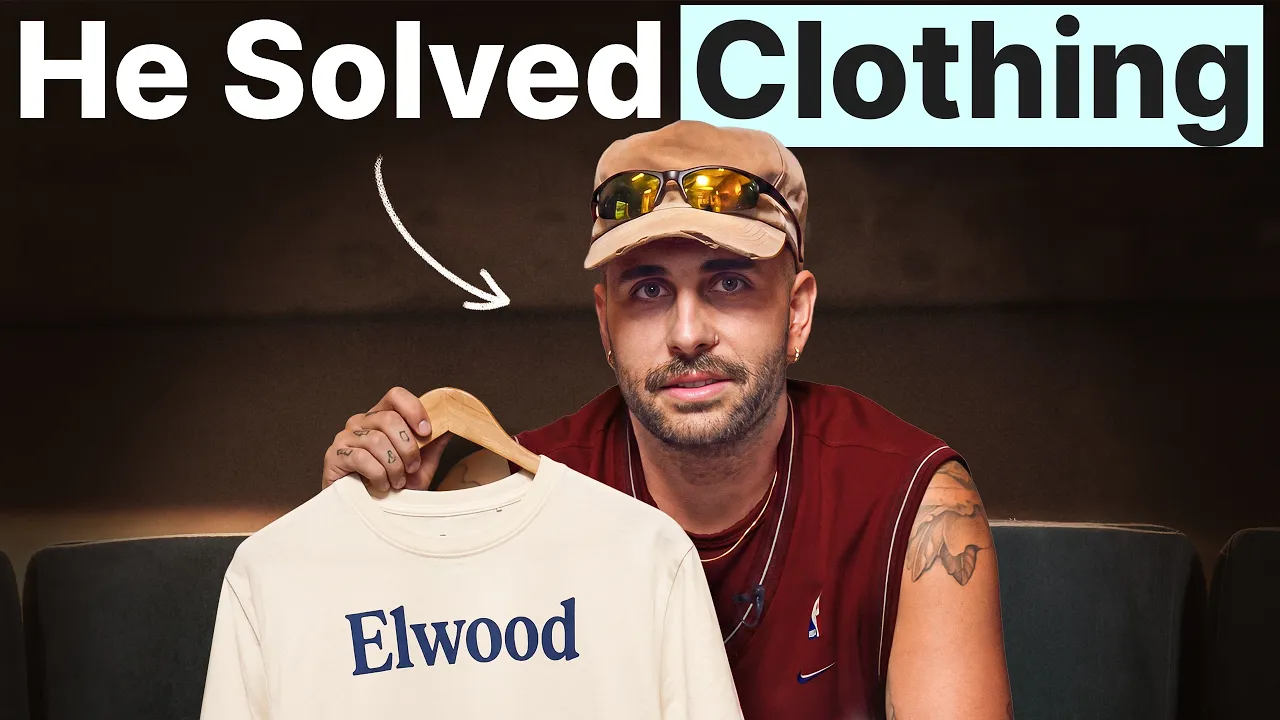
Meet the creative mind behind Elwood, one of the hottest clothing brands in LA. Justin Saul breaks down exactly how he built Elwood from the ground up and the playbook he's running for his second brand, Intra. From speaking to different audiences and building a strong brand identity, to managing the stress and anxiety that comes with it — he holds nothing back. No secrets kept. You'll learn the truth behind Elwood. Enjoy the episode! :iphone:Follow Us On Social: -------------------- Instagram Alex / alexgarcia_atx Brian: / brian_blum Twitter www.twitter.com/@alexgarcia_atx www.twitter.com/@brian_blum1 -------------------- :fire:Want Free Game? Send us a picture of your Apple & Spotify reviews to podcast@marketingexamined.com and we'll make you a playbook in a future episode. -------------------- If you’re a creator that wants to make $10k/mo https://hitmakers.biz -------------------- :chart_with_upwards_trend:Growth Playbooks, Directly To Your Inbox For growth playbooks, deep dives, and marketing case studies, get subscribed at https://www.marketingexamined.com -------------------- CHAPTERS: 00:00 - Intro 0:59 - How Elwood Became the King of Basics 08:17 - Buying a Dead Brand for Six Figures 11:39 - The Weekly Drop Strategy 16:23 - How to Plan Content for Several Drops 19:54 - TikTok vs. Instagram: Selling to Different Generations 23:40 - Brand Inspiration & Competition 32:09 - Launching Intra With Romeo Beckham 39:00 - What No One Sees: Burnout & Anxiety 47:32 - Justin Bieber, Travis Kelce & Celebrity Sightings Wearing Elwood
Summary
Generated by gpt-5.6-terraAt-a-Glance
- Verdict: Skim
- Core thesis: Elwood scaled a formerly dormant apparel IP by pairing a tightly defined, high-repeatability basics product with frequent newness, constant content distribution, accessible pricing, and a deliberately aspirational brand world.
- Why it matters: The conversation offers a transferable DTC operating model: use a durable hero SKU to create repeat purchase, maintain an always-on merchandising cadence, and match content formats to distinct acquisition and aspiration jobs.
- Best use: Use it as a consumer-brand GTM and merchandising case study, especially for how cadence, creative production, positioning, and founder-led taste can turn commodity products into a scalable system.
Executive Summary
Justin Saul says Elwood began with a simple product insight: he could not find basics that combined the exact vintage-inspired fit, fabric, price, and accessibility he wanted in one place. The original oversized faded tee was reverse-engineered from a roughly 35-year-old Harley-Davidson shirt, then turned into a repeatable core product. Elwood acquired an existing but inactive brand name and IP in 2020 for a six-figure amount, removed the prior business entirely, and rebuilt the company around that product and aesthetic.
The growth engine was not scarcity alone but high-frequency newness. Rather than relying on four to six seasonal collections, Elwood initially dropped product almost every Friday, using each release to generate a new campaign, new ads, and another reason to re-engage customers. Saul argues that a brand seeking meaningful scale cannot rely on only 10 annual drops unless each produces extraordinary revenue; Elwood has since moderated into a more sustainable hybrid of two to three monthly releases, including one larger drop and lower-production new-arrival launches.
Its content strategy deliberately spans two jobs: polished editorial world-building for aspiration and conversion among older consumers, plus lo-fi, TikTok-native formats for younger discovery. A typical shoot involves roughly 8-12 people, with different creators used for studio/editorial work versus mobile-first social content. The company segments releases into A/B/C priority tiers so not every product demands the same production investment.
Saul frames Elwood's strategic ambition less as competing with adjacent streetwear labels and more as becoming the male analogue of broad, experiential retailers such as Aritzia and Brandy Melville: a destination where a consumer can assemble a lifestyle wardrobe. His second brand, Intra, applies the lesson that a modern launch must be brand-led from day one, but positions itself as a performance-sport brand for expressive individual athletes rather than generic athleisure.
Key Takeaways
- Claim: Elwood's defensibility starts with an unusually specific core product rather than logos or fashion novelty. | Evidence: Saul modeled Elwood's foundational oversized vintage tee on his favorite approximately 35-year-old Harley-Davidson shirt, specifying its silhouette, wash, distressing, fit, and grinding with the factory. He says fit, fabric/quality, and accessible price are Elwood's three pillars. | Implication: For a crowded commodity category, the useful moat is not merely calling an item a basic; it is translating a precise, emotionally resonant reference product into consistent manufacturing and merchandising standards. | Caveat: Saul acknowledges that a new product cannot fully replicate the history and feel of a truly aged vintage garment; the operating goal is continual improvement rather than perfect reproduction.
- Claim: Frequent product and campaign cadence was Elwood's central early growth mechanism because it multiplied customer touchpoints and creative inventory. | Evidence: Elwood initially aimed to release nearly every Friday, regardless of whether a style was bought in quantities of 100 or 1,000. Each release created a fresh campaign, content assets, and ads, so customers who did not buy one week would see another offer the next. | Implication: A drop model should be designed as a demand-generation and retargeting system, not just an inventory-release ritual. Cadence must be constrained by the organization's creative-production capacity. | Caveat: The original cadence was operationally unsustainable; Saul says the team had to reduce it before people quit.
- Claim: Scaling a drops business requires an always-on catalog and smaller releases between major moments, not only a handful of large seasonal launches. | Evidence: Saul contrasts Elwood's approach with brands running five or six collections annually and argues that with only 10 drops per year, a company needs roughly $10 million per drop to scale materially. Elwood now operates a hybrid of two to three monthly releases, with one larger launch and other new arrivals simply added to the site. | Implication: Maintain hero products and adjacent buyable inventory so paid traffic arriving for a campaign can purchase beyond the featured release, while reserving high-cost creative for the highest-priority launches. | Caveat: The $10 million figure is an illustrative framing from Saul rather than a disclosed Elwood revenue requirement or financial model.
- Claim: Elwood treats premium editorial and native social content as complementary funnel layers rather than choosing one visual identity. | Evidence: Saul describes polished campaigns as serving millennial/aspirational audiences and TikTok-native or iPhone content as reaching younger consumers; he cites a sailboat campaign that created both a broader aspirational world on Instagram and multiple high-volume TikTok formats. Shoots typically have 8-12 people, and studio versus lifestyle/TikTok work may use different photographers or creators. | Implication: Creative teams should assign distinct commercial jobs to each production format, rather than forcing one asset type to do awareness, cultural relevance, and direct response equally well. | Caveat: Saul says the exact allocation remains unresolved and is continually debated internally because Elwood serves a roughly 60/40 to 70/30 older-versus-younger audience mix by his estimate.
- Claim: Elwood's category strategy is to own a male wardrobe destination, not to win a narrow streetwear peer comparison. | Evidence: Saul cites Brandy Melville's store experience and Aritzia's ability to sell clothing across social, work, and activity contexts as operating models. He says Elwood is pursuing the whitespace of a male equivalent, with retail intended to extend its brand world; the planned store includes a social waiting/lounge space modeled after Aritzia's 'boyfriend couch.' | Implication: The positioning expands Elwood's potential customer value beyond a single shirt or streetwear drop, but requires coherent merchandising, store operations, and experience design across multiple use cases. | Caveat: This is an ambition and retail thesis, not evidence that physical retail has yet proven scalable for Elwood.
- Claim: The second brand, Intra, is being built brand-first and sport-first to avoid being perceived as fashion pretending to be performance. | Evidence: Saul says Elwood was initially built product-first, whereas Intra will lead with sport, performance, technology, and marketing while using culture and fashion as supporting layers. Intra's target is the expressive individual athlete, illustrated by figures such as Shai Gilgeous-Alexander, Allen Iverson, Dennis Rodman, Ken Griffey Jr., and Anthony Edwards; its first World Cup jackets for the U.S., England, and Brazil sold out. | Implication: A challenger can differentiate against mass athletic brands by serving a high-identity segment that large companies may underserve, but it must substantiate functional performance rather than rely on cultural styling alone. | Caveat: Intra is early, and Saul explicitly says it is not for everyone yet; the performance positioning and long-term demand are still unproven in the transcript.
- Claim: Saul relies on a transparent, low-micromanagement leadership model, paired with a complementary finance-oriented partner, but his founder operating style carries material burnout risk. | Evidence: He describes himself as an open book with employees, delegates tasks rather than micromanaging, and tries to understand individual motivations. His Elwood partner handles finance and acts as a calmer counterweight. Saul also reports periods of crippling anxiety and panic attacks that take him out of the office for one to two weeks, sometimes once or twice a year. | Implication: Founder transparency can create resilience and trust, but a business dependent on one creative operator needs documented decision rights, capable leaders, and continuity mechanisms for predictable periods of founder unavailability. | Caveat: Saul presents accepting these crashes as a personal choice made with his therapist, explicitly not as a universal model; this should not be interpreted as a recommended company-building practice.
Detailed Brief
Merchandising and brand architecture details
- Claims: The original Elwood name itself was not strategically meaningful to Saul; he viewed the acquisition as a chance to prove he could build consumer resonance around a vision independent of the founder's name.; Elwood initially avoided visible branding because Saul did not assume customers cared about the word mark; branded product came later.; The brand aims to appeal to women principally through the desire to wear or buy into a boyfriend/husband-closet aesthetic, rather than through a separate women's-fashion assortment.
- Evidence: The inactive Elwood brand was owned by a garment manufacturer, had little operating momentum, and was rebuilt from scratch: prior website, products, and brand guide were removed.; Saul says the business is close to 50/50 male-to-female in customer demographics, despite retaining a men's-product orientation.; He contrasts selling an aspirationally styled male model to men with using female models in male-directed ads, which he believes generally weakens male conversion.
- Caveats: The transcript provides no disclosed revenue, profit, retention, CAC, wholesale mix, or unit economics behind the title's stated $60 million annual scale.; Several portions of the supplied transcript are duplicated, so repeated statements should not be treated as additional confirmation or emphasis.
- Implications: A purchased but dormant trademark can be a pragmatic shortcut when the brand system will be rebuilt anyway, provided the name is usable and the team can generate meaning around it.; Serving a female buyer or audience does not necessarily require broadening the product line; it may be stronger to preserve the core identity while allowing adjacent demand to participate.
Creative operations and founder taste boundaries
- Claims: Elwood uses a release-priority framework in which A, B, and C launches receive varying levels of content and production support, while D-tier products function as low-lift new arrivals.; Saul has learned that founder taste must be bounded by the brand's established world rather than letting personal life changes dictate each collection.
- Evidence: He describes a schedule involving three shoots across roughly two weeks and says the team may add an intern, employee, or more senior hire when capacity is the constraint.; A collection shot in English manor-house settings as a 'love letter' to his British fiancée was aesthetically successful, but Saul says it felt more like 'Bridgerton' than Elwood's intended beachy-street identity.
- Caveats: The A/B/C/D framework is described conceptually; there are no stated criteria, budgets, metrics, or conversion thresholds for moving a release between tiers.
- Implications: A priority-tier system is a practical way to sustain high merchandising cadence without treating every SKU as a campaign-worthy event.; Separating the founder's personal creative expression into distinct brands can protect the clarity of an established brand while creating room for experimentation elsewhere.
Notable Concepts & Terms
- Hero basic: The foundational tee and related basics function as Elwood's durable repeat-purchase base, funding and anchoring broader fashion experimentation.
- Drop cadence: Frequent releases are used as a marketing engine that continually creates new ads, campaigns, and customer re-engagement opportunities.
- Always-on catalog: Core products and lower-lift new arrivals remain available between headline drops so acquired traffic sees a broader purchase set.
- A/B/C/D launch prioritization: Elwood's internal concept for matching production and content intensity to the strategic importance of each release.
- World-building: Creating a coherent aspirational environment around the apparel—through editorial imagery, packaging, retail, and cultural cues—rather than merely displaying product.
- Sport leads street: Intra's intended positioning: establish credible athletic performance first, then use fashion and culture as amplifiers rather than leading with streetwear styling.
- Individual athlete: Intra's target identity segment: athletes who seek self-expression and visibility within sports, rather than only team belonging or mass-market uniformity.
Operator Notes / Why Ken Should Care
- For any recurring-launch business, build a tiered launch calendar that explicitly assigns each release a production budget, creative format, distribution plan, and expected business role.
- Audit whether major paid-acquisition moments land users on a broad enough buyable catalog; avoid directing traffic toward isolated campaign products with no adjacent conversion paths.
- Separate discovery creative from aspiration creative in planning and measurement: native short-form should be evaluated for attention and new-audience entry, while polished editorial should be evaluated for brand lift and conversion quality.
- If founder availability is volatile, formalize a continuity plan: designate decision owners, document creative guardrails, and establish operating routines that do not require real-time founder intervention.
- Treat the claimed $60 million annual scale as unverified from this transcript; request financial and channel-level evidence before using Elwood as a benchmark for growth economics.
Source/Metadata
- Title: The Clothing Brand Playbook That Built Elwood to $60M/Year
- Transcript words: 14896
- Duration seconds: 3091
- Timestamp note: No timestamps or chapters were present in the supplied transcript. The latter portion of the transcript substantially repeats earlier content.
Transcript
If you want to scale and you only have 10 drops a year, you got to do $10 million a drop. So we decided at the beginning it was once a week we were going to drop. And if you didn't buy something on that first drop, you were getting hit the next week. We didn't wait. We were constantly in everyone's face. Justin Saul is the creative mind behind Elwood, one of the hottest clothing brands in LA, worn by celebrities like Travis Kelsey and Justin Bieber. Today, he breaks down exactly what he learned building Elwood, the playbook he's running for his second brand, Intra, and the side of him that no one sees. What would you say was a catalyst in that early stage of growth? I would say that's how you scale. That's how you grow. But I will say, and this is just getting real, there is this thing that people don't know of. I will go dark for a week or two. And Elwood is my baby. Intra is my baby. And we talk about it all the time. It's my entire life. Justin, welcome to the pod, dude. Great to have you here. Thanks. I'm stoked. I hope you know we've had at least 20 of your pieces worn on this show before. It's not boring. I got one on right now. Yeah. Sweet. But I want to kick it off. I think you guys have done a really amazing job with your merchandising. So a lot of clothing brands do this drop-based model. And I think I would argue you guys are almost the king of basics for the cool kid. Where did you arrive at that decision? Because that was clearly deliberate in the way that you structured the brand. Yeah. The king of basics is nice. Thank you. I appreciate it. You always come on Sweat Equity. You're going to get gassed up. For sure. I think it started with creating my ideal closet. That's like where it was born. And it started with the basics. And I remember six or seven years ago, I couldn't go to one retailer or one online retailer and get exactly what I want for the fit, the fabric, and the price in one place. You could go around and get it. But you couldn't really get it, in my opinion, to what I wanted it to look like and the shape that I wanted it and the fit that I wanted it to be. That's how it started. I'm just going to create these basics, merchandise them in the way that I know I want to walk into a store or an online retailer and be able to buy. That's where it started with the merchandising side of things. And then it's obviously evolved beyond the basics. And now we're into fashion, more cut and sew in this world that we've created. But at the beginning, the basics were always the foundation. And then how we can show that to the consumer. I was always obsessed with being able to make it as accessible as possible for them through the price, then the quality, and then the fit and silhouette and shape. And those are the three pillars of Elwood of how we got to where we are today. How did you pick the right basic though? Because when I found Elwood, it was at a time where it had to fall perfectly on your shoulder. It was a little oversized, a little distressed. It was a faded tee. It almost felt like a vintage tee. This was, I don't know, 22, 23. No, it might have been earlier. 21 maybe. Yeah. You love to say he's early. Yeah. No, I was though, because it was only getting hit with the t-shirt. He's an investor. Yeah. I was only ever getting hit with the t-shirt. Yeah. It was like you had three. Sorry about that. Yeah. No, you're fine. I mean, it worked. I mean, they were printing. It worked. And I probably have 10 pairs at home legitimately because it was the only fit that I would wear. I had pairs that were for training. This is what I'm saying. Like you did nail the basic tee, but for so many dimensions where I had certain ones that I liked to wear when I was training, but then certain ones that I'd wear with trousers. You can wear them with jeans, et cetera. How did you think about twisting the basics so that it was meeting the market and culture where it's at? Because you can look at Fear of God. Fear of God was putting out basics as well, but you'd buy a medium and the medium comes to your wrist. You know what I mean? It's too much. It was too much. Yeah. That's obviously Jerry's expression of himself and how he's gotten through life and what he's worn. And I think to be honest, that first vintage tee isn't going to sound groundbreaking, but it was my favorite Harley Davidson tee. And I went over to the factory and worked with the factory. Showed him the exact silhouette, showed him the wash, showed him the fit, showed him the grinding, showed him everything. The shirt was probably 35 years old. But if you guys are into vintage, when you get a vintage piece that fits your body the way that you envision it to fit, it is this epiphany. It's this gratifying moment. And that's what I wanted to recreate with the oversized tee. How can someone see an ad, be in Nordstrom, be in our store or whatever, and get that feeling when they put that on. And nothing will ever exactly emulate a t-shirt that's 35 years old with the history behind it. When you're putting it on, you know it's been on other people's bodies. You know it's been in a million different washes and houses and areas, but we've done our best with a rigorous process to recreate that with our factories. And today, I just got off a phone call earlier today. Today, we're trying to get better at that. So to answer your question, that's how it started, where we continue to strive and go through changes with my expression of fit and how I want it to be a year ago to five months ago to two years from now. But yeah, that's where it started with the t-shirt. It was just an old Harley t-shirt. And were those the basics that were a catalyst that allowed you to go more into the collections? Because they were probably a cash cow with a really good margin, and then that took you into exploring a lot of different silhouettes and other pieces. Yeah. I think it still is. It's the foundation of our business. And I think it's the foundation of a lot of businesses. A core product for a company and then they have all their different flavors or whatever it might be. But for us, it's the foundation and still stands true. I think not changing the foundation all the time, but constantly elevating it and evolving it is very important in this day and age where every person can go and create a hoodie or a t-shirt or sweat pants or whatever. And their designs are probably getting ripped every single day. Yeah, they do. I'm not going to name these retailers, but there's a couple of big retailers, way bigger than us. Big billion-dollar companies. Zara, you want me to name it? Not Zara, but yeah. But Zara is great for what they do. But they use our same models and the same background and everything. And to be honest, I'm flattered by it. Like I've looked up to them. They, I just did a TikTok on this, talking about this brand Intra that I'm launching with my friend, but the retailers I'm talking about were retailers. Like they paved the path for me. They've looked up to them in so many ways. So for them to want to take a page out of our book, I think it's rad. And in my opinion— I know when you got them sweating in the boardroom, yeah. I mean, what's he going to do next? Yeah, exactly. What's he going to do next? They might buy it. And so, a lot of people, I think myself included before I looked into the brand, I thought you were the founder. Yeah. Right. Yeah. And you actually purchased the brand. Yep. I've looked up to them. They, I just did a TikTok on this, talking about this brand intro that I'm launching with my friend, but the retailer I'm talking about were retailers. Like they paved the path for me. I've looked up to them in so many ways. So for them to want to take a page out of our book, I think it's rad. And in my opinion, I know when you got them sweating in the boardroom. Yeah. What's he gonna do next? Yeah, exactly. They might buy it. And so a lot of people, I think myself included before I looked into the brand, I thought you were the founder. Yeah. Right. Yeah. And you actually purchased the brand. Yep. So I'd love to hear a little bit more about like, a, how that came to be. And then B, what was your vision when you bought it? Yeah. I, in 2020 it was owned by a garment manufacturer and it really had no legs. There was nothing really to it. It was just a dying brand or a dead brand that kind of just sat there from an IP perspective. Yeah. Same word mark, same. It's just a name of what I'm doing. And with my brand intro, it's a very methodical name of why we chose it. But for Elwood, it didn't really matter to me about the name. It mattered about my vision and proving to myself that no matter what this name is, if I can do what I think I'm going to be good at in life, I think people will follow and resonate with it and like it. And so that was the thought behind Elwood. There was no rhyme or reason for Elwood. I just kind of liked the name and there was an opportunity to get the IP. But the whole vision of it, no matter if it was Elwood or Justin or Club or whatever, it was going to be this kind of vision and feel of making good quality product at a great price point with high end looking content. Yeah, that was the thoughts behind buying it versus starting. And then the vision behind it all is, did you have thoughts of starting something separate before Elwood or was it? Yeah. I think it was going to be like Justin, my name or something like that. But I want it to live bigger than me. There's always a thought of if I did it under a different name, but where it's gotten today, 95% of the people in the world that know Elwood is because of what me and the team and my business partner has done. I mean, I think that's both of our scenarios. I didn't know it was acquired. No, no one does. Yeah. Everyone thinks so. We've done. Did you scrap nearly everything that was built previously? Yeah. Everything off the website, none of the product, brand guide, every, it was a brand new build. That's baby. And it started from zero pretty much. Yeah. Yeah. How, what did you buy it for? If you don't mind us asking. Like in the six figures. Yeah. Yeah. So it was a great investment. It was good. Yeah, it was a good investment. And we got a sweet little deal on it and then it was just kind of off to the races. Yeah. Yeah. That's awesome. What was the catalyst? Because those first two years probably experienced pretty explosive growth? Yeah. Dude, those teeth. I would always send, I thought you did an awesome job pulling an OG out of the ad library. Yeah. You would have a clothing rack of the collection and be like, this is our new, whatever. I feel like you're one of the first guys. I feel like we were. You did for sure. I sent that to every clothing guy ever. I was like, go swipe. Still works there. I still don't do it as much because I should. We have other people do it, but they're still working. Yeah. Probably print. Yeah. And so what would you say was a catalyst in that early stage of growth? Consistency. I would say you talked a bit about it off camera for a second, but the whole drop model. Although we're not like Supreme and have these crazy drops or whatever Stussy or whatever it might be. The drop model that works for us is the consistency of new product. Us getting in front of our consumers' faces have always worked instead of us doing a spring line, a winter line, a fall line, and a summer line. Like a lot of fashion brands, they'll have five or six big collections a year. We decided at the beginning it was once a week. We were going to drop every Friday or every other Friday, pretty close to every Friday. And no matter if we bought a hundred pieces or a thousand pieces of that style, we were constantly in front of our consumers. And I think that really helped us at the beginning to just be in our consumers' face with new product. No matter how much we bought, we had a new campaign. We had new content. We had new ads to serve them where if you didn't buy something from us on that first drop or whatever, you were getting hit the next week. We were constantly in everyone's face. Real quick, because Social Snowball is a partner of the show. And this is something I actually think about a lot. Most brands doing creator marketing have an infrastructure problem. Your customer referrals live in one tool, influencer gifting lives in another, TikTok shops off doing its own thing, and performance gets tracked through discount codes, screenshots and a spreadsheet that someone's scared to touch. So the program grows, the admin grows with it, and nobody can tell you what's actually driving revenue. Social Snowball puts all of this in one place. Referrals, affiliates, influencers, TikTok shop. You can recruit them, gift them, pay them, and see exactly what every creator drove in sales. It's what Groom's, IMA, True Classic, and Dr. Squatch, these top tier D2C brands, are running their creator program on, along with 3,500 other Shopify brands. In the last year alone, creators on Snowball drove over 265 million in revenue for brands. So if creators are a real channel for you, they probably deserve real infrastructure. I'd highly recommend checking out our friends at Social Snowball. They've been in the game for years. Make sure you go to their page. We'll link it in the description. Code SweatEquity. Get 20% off your Social Snowball. Again, we'll link that in the show notes. All right, back to the show. Yeah, I feel like that's key. When I find a brand that I love out the gate, and I love the product, the product comes and I wear it or whatnot, I want to keep buying more of it. Yeah. You know what I mean? Yeah, totally. It's almost like the same thing going back to when you find a vintage tee that fits perfectly for you. You almost go back on the hunt for another one. A hundred percent. You never find the same. Yeah, you want to find the same one. Like if I found Harley, it's like, okay, I want to get the Budweiser one, or I want to go find an old Nike retro one. Yeah. I think it's the same thing when I've found a brand that I think has now solved this was UVU. Yeah. Like they used to only do the drop method. Yep. And you would forget about that because months would go by before they would drop some running shorts. Now they've switched to, similar to what you're saying, where they're always on. Like you go on the site, they always got stuff. And now they're adding, very similar to what you're saying, where let's say two weeks from now they're doing another drop with new color ways. Yeah. But the basics or the main hero pieces. It is the way you have to do it to scale. It's very tough unless if you're doing, it depends how much you want to scale and your expectation of success. But if you want to scale, if you only have 10 drops a year, you got to do 10 million dollars a drop. Has now solved this was UVU. Yeah. They used to only do the drop method. Yep. And you would forget about that because months would go by before they would drop just some running shorts. Where now they've switched to they're always on. Like you go on the site, they always got stuff. And now they're adding very similar to what you're saying, where let's say two weeks from now they're doing another drop with like new color wigs. Yeah. But the basics or the main hero pieces. It is the way you have to do it to scale. It's very tough unless if you're doing, depends how much you want to scale and your expectation of success. But if you want to scale, you got in, you only have 10 drops a year, you got to do 10 million dollars a drop. And that's what Justin Bieber does and Hailey Bieber. Right? So it's, those are the few and far between. So they fucking smashed. I was with Cole in England a couple weeks ago and they kill it. I believe they're doing it, but they have to, that's how you scale. That's how you grow. So the numbers that your business can probably do. Yeah. One of the things we like to get really granular. Yeah. Like tactics here. So when you have 52 drops a year, how are you planning your content? Yeah. You got to have a world building campaign in February for a drop in April, but then the drop schedule is going to change probably. Is it just fly by the seat of your pants most of the time? We're still working on it. You know, team starts a team who can handle it, what leaders can handle what we want to do. And how big's the team? About 25 people now. And yeah, it starts with the team and it's not 52, but it's a lot that we do and try and put it in A, B and C. Like A gets this, B gets this, C gets this, D are just new arrivals that just go onto our website. And we put some stories up and some TikToks about it. So when ads are working and people are coming to our website and all these unique visitors, there's other things to buy rather than the drop. So we have slowly built that plan out, but to be honest, I was just on a call today. We've got to shoot tomorrow. We've got to shoot next Thursday and we've got to shoot the following Tuesday. And it's just, and each shoot I'm expecting the best. The team knows I want the best. They want the best for the brand and the business. So to be honest, it's interesting. At the beginning, it was unsustainable. We had to tailor off a little bit or people were going to quit. To be honest, it was just super gnarly, but it helped us get to where we are. And so we're now probably at two drops a month or three, but one being a big one. And then one being new arrivals where it's not even a drop. It's just put onto the website. But yeah, we found a little hybrid of it. And it's constantly just checking in with the team to make sure things are good. And if it's not good, I'm not going to make the changes, but if you come to me and say, I need this, this, and this to be able to do this, we'll hire them and we'll make it work. If that's an intern, if that's a new employee, or if that's a higher paid employee, that makes sense to come in from another business to help strategize. But it's the first time I've ever done this six years in, and I'm learning every single day about how to do it. Right. Walk me through what those productions look like now. If you have three productions of the next week, how big is the team typically when these productions are going live? Are the skill sets different based on platforms? And I bring this up because if you had a campaign go live on Instagram, it's the world building. It's beautiful on TikTok. It's very TikTok native. Yeah. Right. Those are two different skill sets. Yeah. How are you looking at a team for team and personnel in those situations? It depends. Is it in studio or is it lifestyle? Those are different photographers. Normally, are people that we bring to the shoot production stylists and everything are normally the same, but then the person that's going to shoot content in studio, maybe a different person that's going to shoot a little TikTok native content or iPhone content outside. But yeah, it's usually around eight to 10 people. I would say. We used to have an in-house photographer, but now we outsource a lot of that. So they bring their own people. So there's actually probably a couple more on set, maybe 12 or something. But yeah, it really just depends what the vision for it is. And I was just talking to my business partner about this today, when do we give the millennial cleaned up, beautiful look that I personally love? But then when do we feed the Gen Z's? Because we have a lot of those people too, where I didn't think we had as many as we do. But then there's these sick kids in Southern California in San Diego, Newport that are wearing the baggy shorts and emulating how I dress. And I'm like, damn, and you're 21 years old. So I have to feed to you too. So I have my fiancée, she's 25 and she keeps me young and she's very TikTok native. She's one of the most creative people I've ever met. So I get to learn so much from her. So that's been a huge thing where I can walk into an office as a 34 year old, but fully understand what we need to do for a 20 to a 25 year old. So to answer your question, I think it really just depends. But I would say eight to 12 people are on every shoot, depending what we're doing, what's the personnel and how we're doing it. And that's for our business right now. What do we do? We are a hybrid between it all. Our product and our pricing and everything along that. It's we are, we talked about it this little white space that we've created. Yeah. So we need to be that in the content and the marketing side where that's also tough. How much do you push the Gen Z, TikTok native, a dance or a dumb little video that gets a hundred thousand views and sells 2000 hoodies for you, or this beautiful editorial campaign that's for the millennials or my age where it's like, wow, that's stunning and beautiful. And that's going to go sell to these guys because the pants look like they need to look. Right. So it's I don't know. Every day I ask myself that. Yeah. What do you think your split is right now? Is it primarily people our age or is it the younger crowd? I would say 60, 40, our age or 70, 30, but maybe 60, 40, to be honest. Every day I see people repost us or on our tags and I love it. And it is there, they are getting younger, but we are utilizing TikTok in a way that we've never utilized TikTok. So I don't know, I love. I want a bunch of young surfer kids. I think we should dress the whole. I think Elwood should be the biggest brand in Southern California for my age and definitely skews a little bit younger. In my opinion, we should be the biggest. And I feel like both platforms play hand in hand where if they're on TikTok and they're looking more at the lo-fi content in those formats, it's the introduction to the brand. But if you're looking at where content is skewing, it's skewing aspirational where the world building, it's like, I want that. And so Elwood having entry level products that I could go buy for 39 bucks is the perfect entry point to be able to be like, I'm wearing Elwood and I'm aspiring to then go live. I think we should dress the whole. I think Elwood should be the biggest brand in Southern California for my age and definitely skews a little bit younger. In my opinion, we should be the biggest. And I feel like both platforms play hand in hand where if they're on TikTok and they're looking at lo-fi content in those formats, it's the introduction to the brand. But if you're looking at where content is skewing, it's skewing aspirational where the world building is like, I want that. And so Elwood having entry level products that I could go buy for 39 bucks is the perfect entry point to be able to say, I'm wearing Elwood and I'm aspiring to then go live. I think you all did it well with the shoot on the sailboat. That was one of the better ones where on TikTok, you all were cranking. You all had a ton of formats. You all were crushing on that side. And then you move over to Instagram and it was this whole world that you wanted to be a part of. Yeah, it was very good. Thank you. I think that's the goal. How do we create that? It's the same with the store that we're opening at the beginning of the year. How do we create a world within a store? What are some brands that inspire you? What are some other fashion brands that you take a lot from? Brandy Melville. I think the way that they have—kind of like the Brandy Melville for 30 year old dudes, that's what I say. Yeah, exactly. And I think we have the opportunity to get that 20 year old too. Yeah. I've always said if Elwood could be one thing, it would be the Brandy Melville of men with commitment issues. A hundred percent. So from a business operational and the world that they have built, I think they're so strong. You go into any Brandy Melville. There's a line around the store checking out. It's cute. It's easy. It's an experience. It's an experience. I think Aritzia. Elwood could be the Aritzia for men as well. I think you walk into Aritzia, you're greeted by great workers within the store helping you get dressed and finding things, but you can walk into Aritzia and get something to go to the club in and then get something to take a business meeting in and then get something to work out in, all of it. I think they've done unbelievable. What would be your version of the boyfriend couch? We're actually building that in the store. It's going to be in the attic, but it's going to be just a vibe up there. It's going to be sick. Do you know what I'm talking about? No. You never been to Aritzia with Vanessa? No, she was dying to come last time we were here. We didn't end up making it. It's basically when your girl is trying something on, you're sitting on the couch. Oh, waiting areas. So it's just you and other bros. Yeah. It's just a bunch of lads sitting on the sofa, just saying that looks fantastic. A hundred percent. Hopefully the guys and gals are shopping, so there's not as much, but yeah, Aritzia has definitely taken that. Yeah. I mean, your brand definitely appeals to women, obviously quite a bit. That's the goal of it, but the appeal to gals is this is my boyfriend's closet. This is my husband's closet versus I'm making a silk dress or a skater dress or a little ditzy floral thermal sweat pant just because we could sell it because we have the consumers, the customers. But what does it do for a guy? I always say when a guy sees a gal in an ad, most men will be turned off by the ad. They'll think she's hot, but they will not buy it because a gal is wearing it. Most men, right? Where if we show them what they want on a guy that they aspire to be, or think is cool or good looking or whatever it might be, that's how I think we can convert. And then the girls will buy it right off your back because they love that look. So I think we were getting a little too into making crop tops for the girl and making this for the girl because they're working and selling. But then I look at our demographics and it's almost 50-50 male to female. And it's not that I don't want to sell to the gals, but I don't want to compete with Brandy Melville. I don't want to compete with Aritzia. I don't want to compete with these other brands that is their whole world. There's no competing with those. I think it's really interesting that you don't mention people like Represent or ALD or any of those. You're actually more so going after in-store retailers who merchandise a ton of different own brands. Yeah. I think George is a friend of mine and he kills. What he has created, yeah, to Represent. Not even saying it that way, not even saying that. It's more so the business structure. I think the business structure and then the product too, right? A lot of those brands besides ALD, I think they're great. I would look up to them when it comes to their marketing and the world that they've created. It's unbelievable. I think George's brand was at the beginning really driven by the Represent logo. So for me, we barely started really putting Elwood on things. At the beginning, I didn't even want it on one thing. I didn't know if anyone cared about it. On the basic tees, it wasn't anywhere. Yeah. No, 100 percent. So I look at Road because I think they're the best world built brand of 2024, 2025 and 2026. Yeah. I think the world that she and they have all created is unbelievable. I look up to them in so many ways, not from the product perspective, but from the world that they have created. I think they're like Apple. I think they market so well. My missus, she gets their packages and she is waiting at the door for this package every time. She's a 25 year old gal that gets 700 packages a day, but waits for this. So from a product perspective, Double RL is obviously so good to look at from a product standpoint. Early Abercrombie is super rad. Early Quicksilver, early Volcom is still super fun. Go to nineties surfer. Yeah. Nineties surfer kind of thing. It's like Thrasher magazine. Yeah. But in the street wear world. Yeah. I don't know. I think everyone's great, but I wouldn't say they're inspiration for where I see Elwood going. Yeah, for sure. I mean, you're almost going cross category in a way. Yeah. You have to go after aspirational brands, not necessarily your peers. Yeah, a hundred percent. Brandy and Aritzia, okay, so tell me who the male version of that is. And I think it's Elwood or we're getting to that space, especially if retail works and we can continue to scale that side of it. Real quick, a question for anyone running affiliates. Social Snowball is a partner in the show and this one is very worth your time. Do you know where your affiliate codes end up? Because I'll tell you: coupon sites, Honey, some random Reddit thread, and how people who were going to buy anyway are getting a discount and your affiliate is getting paid commission on a sale that they didn't drive. stuff of just where I see Elwood going. Yeah, for sure. You're almost going cross category in a way. Yeah. Yeah. Yeah. You have to go after aspirational brands. Not necessarily your peers. Yeah. A hundred percent. Yeah. Brandy and Aritzia, okay, so go tell me who the male version of that is. And I think it's Elwood or we're getting to that space, especially if retail works and we can continue to scale that side of it. Real quick, a question for anyone running affiliates. Social snowball is a partner in the show and this one is very worth your time. Do you know where your affiliate codes end up? Cause I'll tell you. Coupon sites, honey, some random Reddit thread and how people who were going to buy anyway are getting a discount and your affiliate is getting paid commission on a sale that they didn't drive. Social snowball fixed this with something called safe links. Every shopper who clicks an affiliates link gets their own single use tool. It can't leak. So it can't be abused. Tumble turned it on and recovered 684,000 in revenue in five months, just from codes that were leaking. That's money you're already losing right now. So if you want to take advantage of this, stop leaking money through faulty discount codes that are on sketchy websites, wherever it may be. Go to the link in our show notes in the description for 20% off your first month of social snowball. That's right. It's 20% off. One more time. Link is in the description. Okay, guys, let's get back to the show. How has your creative direction changed in the last five, six years? Yeah, a lot. Yeah. I, again, like I stated at the beginning, it was always like, I want to create my ideal closet and my expression of self has changed. My expression of my style has changed. So Elwood has kind of been on that with me. And I will say, I don't think that was the healthiest thing for the brand of Elwood taking it along its flows. I started dating Eva, my fiancée now. And I said, I'm coming to England and I'm shooting a collection out in England. Unbelievable. Looked great. Product was great. She's British. She's British. Looked great. Went to the manor house next to her. Beautiful, estate looking thing. Stunning. Shoot was so much fun. It was great. It was my love letter to her. But the world, that's not sleazy beachy street like Elwood. That was, I was literally in Bridgerton. Right. So it's like that, that's where my mind sometimes. I've gotten so much better as I've gotten a little bit older, but staying true to what Elwood needs to be. So it has changed, but now I'm finally at a space where I can like, this is Elwood. This is what it's going to be. This is what we're going to go after. Intro will go after something else. And these other businesses, they'll go after something else. But yeah. And what about Intro because you said it was a really intentional process? Yeah. And you're running it for the second time, which is any second time founder has a lot of things that a first time founder should listen to. So like, what are those things you're thinking about with Intro? Yeah. On the second go around. Brand first, more than anything. Elwood was built on product. We had great product at the beginning and we still have great product, but it was a different world six years ago versus today. Social media has changed rapidly over the past six years, over the past year too. Right? So with AI and just everything. So focusing on brand more than anything, but sport that leads street, not streetwear that leads sport. I want us to be a sport brand. I want us to compete with the conglomerates, the Nikes, the Adidas, the Pumas, the Unders Armours, but I do want to touch on culture and fashion. My business partner, Romeo Beckham, is such a big piece of this pie with how he is tapped into culture. He's also 23, ten years younger than me. So we're able to kind of balance. David Beckham's son. Yeah. Yeah. David Beckham's son. And he's been such a great, I've learned so much from him right off the rip and how tapped in he is to culture. Also fashion is a big model now, but he's tapped into the culture. So it's like we both love sports. So how can we bridge sport to culture and fashion and kind of bring it together, but lead with sport. I think that's the big thing. I want to be what Elwood comes to Nike and says, I want to do a collab with you because you guys make the best running shoe or whatever. Like I want people to come to Intro and be like, they're the sport brand, but then we're this cool street brand that wants to do a collab. And so when you say that you're saying lead with performance, technology. Performance, technology, marketing, everything. Like we have a shoot tonight and it's shooting these things. And I train in these, I work out in these, I play football in these, soccer, football in these, but like I interest for the individual, the individual athlete, like who's made for the spotlight, essentially not to say that we don't like team sport. We do. That's what sport is about, especially in the team space, but we want those that stand out, especially this day and age to say, Shea Gildress, Alexander David Beckham, Allen Iverson wearing a shirt. He did Dennis Rodman, Ken Griffey Jr. Right? Like all of them are great team players, but they were made for the spotlight. They were the ones. And I think this day and age, these kids we're even shooting tonight, these high school phenom super sick kids, like you can tell that everyone wants to stand out. If that's through social media now, if that's through two different color shoes, hairstyles, tattoos, arm sleeves, whatever it might be, you have to stand out. We want to be the brand that says, I see you over there. We're going to want you to stand out. Cause a lot of the conglomerates, not in a bad way, their whole thing is like, you don't really stand out. We're all a part of this and we do, which is not bad, but it's safer where I think we have the opportunity to address these individuals that want to express themselves on the field or in the pool or on the court or whatever. So it's like you're building it for like the Anthony Edwards, the Anthony Edwards, the Shane Gill, the salad genre. The Melo Ball might be too extreme. Yeah. But in his way, right? Like it's just saying like, hey, we understand you and that's okay to do whatever you want to do. Cause that's how I played football. Like I was always the one with the different hairstyle or the tattoos or the different color cleats. Did you have frosty tips at some point? I had bleach blonde hair. I knew it. A hundred percent. All day long. I had every, I had my hair was blue and purple and pink and everything. And like, but that allowed me when I stepped on the pitch, like I felt that I could win. I felt better. And I just feel like a lot of kids, especially now want to feel that way. Cause that's what they're seeing more and more due to social media. But I don't think there's a brand that says, okay, we're down to make the orange arm sleeve with our Intro logo. That's in Chrome because it might stand out a little too much. And they're not going to sell that much of it. You know, most brands are built to communicate like where you're going. And it's math, right? It's for the masses. So you go to Equinox and I thought about this two days ago when I actually got my ass in the gym. Yeah. Good lad. Been rare. But I was in there and I was like, I was in black on black. I was in black shirt, black shorts. And I kind of looked around and I was like, I look like everyone here. Like, damn, everybody's black on black. It must've been at least like 80% of the gym. Yep. Was wearing Fioré, Lulu, black on black. Gymshark. Just yeah. It's what it is. And like I go in my tank top in these shorts and it, right. And again, it's not for everyone. And that's my thing with Intro. It's for the masses. So you go to Equinox and I thought about this two days ago when I actually got my ass in the gym. Yeah. Good lad. Been rare. But I was in there and I was like, I was in black on black. I was in black shirt, black shorts. And I looked around and I was like, I look like everyone here. Like, damn, everybody's black on black. It must've been at least like 80% of the gym. Yep. Was wearing Fiorucci, Lululemon, black on black. Gymshark. Just, yeah. It's what it is. And I go in my tank top in these shorts and it, right. And again, it's not for everyone. And that's my thing with Intra. I know it's not for everyone right now, but what it can be in five to eight years from now, that might be the everyone. Right. And we'll have to evolve and change. And look, these huge brands, they can't do this because they need to go sell more socks. Right. Cause that's what puts the numbers on. Is this brand live right now? Yeah. Yeah. We had our first drop right before the World Cup, we made these three World Cup jackets: USA, England, and Brazil. Oh, okay. You've probably seen it. I did see that. And it sold out and it was great and good publicity. And we have these shorts dropping soon. That's what I'm saying. These aren't live though. No, no, no. These are—I misspoke. These are soon. So yeah, it's like, I'm going to be popping out on those all fall. You know, Charles on, these are so good. Oh yeah. Wearing with some Converse or whatever, go work out in them or lift weights. You can do squats in them. And it's just like, but again, the differentiation is I'm shooting this to work out. And I wear it every day and we'll get photos of that too and post them. But like, when I say lead sport, like this whole photo shoot tonight in video is rigorous shooting practice with two kids in their coach, sweating, going around cones, running sprints. Are they hooping or are they playing soccer? Oh, nice. And it's like, but to me, that's where the culture and fashion will come into it. I'm like, damn, they look fucking sick, but they're fucking grinding with their coach. Yeah. They're getting around cones and they're coming off picks and everything like that. So again, it's like, that's just where I see it. See it. And yeah, I'm so passionate about how are you going to balance it? I don't really have an answer. My mom asked me all the time. My missus asked me all the time. I kind of just get it done. You know, my assistant Isabella, she keeps my head. She's rock solid. She's unbelievable. She's unbelievable. Shout out Isabella. My team at Elwood, then the team I'm growing at Intra and the other businesses that I have, those teams. And it's like, I kind of just make it work, you know, and hire the right people and have good business partners. But there's—I'm telling Kellan this—like, but there is no secret there. It's my entire life. And like Eva, my missus, bless you. But like, she, yeah, bro, she—it's tough. Some. Keeps it grounded. Yeah. Yeah. It's just like, she wants to do—it's my entire— Right. Like life. Yeah. And I talked to my business partner about this all the time for Elwood. He's a completely different route. He's got three kids at 34 years old. He's been married for eight years. Loves his beautiful wife and family loves Elwood. But like, that is his Elwood, right? Like me, Elwood is my baby. Intra is my baby. And we talk about it all the time of like, I don't think he could physically do what I do, but I couldn't do what he does if I wanted to do this either. So again, it's like, I think there is an opportunity cost with everything. And I chose this, he chose this, that path. And who knows one day when he's 50, he may be in this seat and I may be raising kids. Right. So again, it's like, I have been working out a lot, which is helping meditate journal. But I will say, and this is just getting real to whoever does listen to this. I do have like, I have full blown panic attacks. I'm out of the office for a week or two weeks at a time. Like my, I hit rock bottom and my world goes upside down for a little bit. And like, I went to rehab for this back in the day to try and help me. Like, I have so much, but you're always going to crash. And I have decided in my life at this point in time where I'm going to allow the crashes to come because I'm building greatness outside of it. And it's not all the time, but there is this thing that people don't know of. Like, I will go dark for a week or two and like being crazy, crippling anxiety. And like, which sounds super gnarly, but it's one of these things where it's like, I have decided with my therapist of like, look, if it's not physically hurting me and like deteriorating my health, even though it's not that good for me to be that way for a bit. We've kind of both just said, if we can continue to do this and build what we're building and know there's going to be a day. And bless my fiancée, like she's been with it through the times in my family. But like, again, it's the opportunity cost of how my mind works of like, I'm in and I'm out for a little bit, but like, and when I'm out, I'm not on the beach in Hawaii. I'm like curled up in my bed. I can't get out of my bed for quite some time. I feel like that's almost like the come down from a mountain. It is. It's like a drug. You know, like when you go on a hike and it starts to hurt, right? Like you go on a hike, it starts to hurt. You do the terrible 10 mile hike. Everything feels fine. As soon as you finish, you're like, everything starts to hurt. And you're like, I'm cooked. Yeah. I'm cooked for a while. But then you go back on the next hike. Yep. Because you know you're always going to come back. Like I, when it first started happening to me, I didn't think I would ever come back. So that's when my anxiety would really kick in. I'd be like, fuck, I'm like this forever. You thought it was over. I thought it was over. So slowly but surely doing this, I have seen that I do come back. And we call it my burnout and it happens and it's real. And I've done a lot of research on it and I thought I've had every disease in the book or something's wrong or this, that, and the other. And it's my body literally once a year, twice a year says, you're done. And that's it. Yeah. I'm done. And I don't fight it anymore. I, my team knows me now. They know when I'm done, I'm done. And I would rather risk a week of that to try and create greatness and be there as I can be. And I'm not saying this is the right way to do it. This is what works for me and my life and how my mind works. Cause I do get put in these situations where they're almost too good to say no sometimes. And I have to do it. And that's a decision I've made. Right. You know? It's like— What's your leadership style? Cause it sounds like your team knows you very well and you're fine with them knowing where some leaders can hide away. Very open. Yeah. Like my team knows everything about me. I'm an open book. Like I'm there to help when I can. They're here to help me when I can, but there's no secrets. Everyone knows who I am. I wear my heart on my sleeve. I'm so passionate about everything that I do. But I couldn't have it any other way. Cause my anxiety and stuff, I have to be in a workspace where I feel comfortable. Cause I do get put in these situations where they're almost too good to say no sometimes. And I have to do it. And that's a decision I've made. Right? It's like, what's your leadership style? Cause it sounds like your team knows you very well and you're fine with them knowing where some leaders can hide away. Very open. My team knows everything about me. I'm an open book. I'm there to help when I can. They're here to help me when I can, but there's no secrets. Everyone knows who I am. I wear my heart on my sleeve. I'm so passionate about everything that I do. But I couldn't have it any other way. Cause my anxiety and stuff, I have to be in a workspace where I feel comfortable. So for me to feel comfortable, I have to let people into my world. So they know me if I'm sat in my office or didn't come into the office that day or randomly missed a meeting. It's not because I want to not be there. It's just how I function. And everyone knows that about me in my life. And I'm not a micromanager. I give you the task. I give you the job. If it's not working out, I'm just a full person. When we have the interviews for you to get hired, I always say if it doesn't work, it probably just won't work out here. But that does not mean I don't like you as a human being. But I say that from the get go. And every person I've ever let go of besides one, it's just not working out. And normally by that time, we're both understanding of that. It's not working out, but I try and be as open as possible and honest. I'm just a good listener. And I try and know my employees outside of that door, not just inside the door. I really try and invest into them and understand how they tick and their moods and what's going on in their life. People react to different things in a completely different way. If I can understand them a little bit more or better, I'll understand how to talk to them and what they're incentivized by. So yeah, I've tried to take that extra step with most of the Elwood employees. As it's grown, it's tough to talk to some of the assistants or the others, but yeah, I want to be the best boss for them in that way. Because if I'm freaking out one day, I want them to be able to somewhat comfort me as well. That works for me. I know a lot of people that have way better businesses than me or bigger and they're tyrants and their people hate them and they hate their people, but they're killing it. So again, there's no right or wrong. It's just what makes me sleep at night and allows me to operate at my top capacity. Is your partner like, what's his kind of role? Yeah, he's the financial side. Soft spoken, nicest guy in the world. Everyone loves him. And he's just my yin and yang. He's very relaxed and calm and says okay, let's think through it and talk about it, whereas I'm on it day to day. We've refined this relationship over six years. It was not like that at the beginning. It was rocky waters for a little bit, but we've gotten into a good groove. He's soft spoken and understanding and takes it all in and thinks before he talks, whereas sometimes I just blurt out what I'm wanting to say. And Romeo's leadership style, he's never let go, right? So he's learning this and it's cool to see him excel beyond these calls and messages where I'm not the talent anymore. I am the leader. So it's cool seeing him grow in his way from his background and his life. And yeah, it's been a cool vibe. It's a lot. I love it. Yeah, definitely a lot. Are there like any sightings of the clothes on people that have been shocking? Like a Kendall Jenner wearing the tank or anything like that? Yeah, when Justin wore it, he still does wear it. It's always surreal when he wears it. It's just sick. Justin's so sick. He did the halftime show, he's a legend. So that's still super cool. I golf with Travis Kelsey and he wears it quite a bit. He loves the hats. A lot of people are wearing it now. All I hope when people wear it is do they feel better when they're wearing it? That's my big thing. I truly believe that if you wear an outfit and wake up as a six mentally, and you put on an outfit and look at yourself in the mirror, you're at a seven. And you go outside and someone comments on it, you're at an eight. I truly believe that because it's happened to me numerous times. I'm wearing Elwood a lot of the time. So I hope that when anyone gets Elwood or wears it, they just feel a little bit better about themselves and that they can express themselves through what they wear. I gave it to one of my friends who's a 42-year-old guy, unbelievable, so good looking, six foot five, great looking lad. His style was horrible. I gave him a full closet of Elwood, filled up the back of my G wagon with pounds and pounds of clothes. He moved to Miami and he said he has never gotten this many compliments in his life. He's a good looking guy, he already got compliments, but never about clothing. He said it has changed my life. So that's what I hope. Those are the coolest people. There's a lot of people that wear it, but at this point it's probably gotten harder to track. Well, dude, appreciate you coming on, man. Thanks, it's my pleasure. Yeah, this is great. We've got to golf soon. I would love that. 100%, at Wilshire. Yeah, come to Wilshire whenever you're in LA. We'll pull up. Um, tag me at Justin Saul on IG. Well, obviously tag it in the description. I don't know what my TikTok is, at Justin Saul probably. Yeah, I don't know. At Elwood, at Intra. Yeah, I'm excited to check out Intra. And what's the next drop? The Intra drop is in October. I don't know the exact date. And the next Elwood drop is every Friday pretty much. Check the website. But I appreciate you guys. Yeah, for sure. Thanks for coming. Thanks for coming. It was very good. Thank you. Yeah. I, I think that's kind of the goal. How, how do we create that? Like it's the same with the store that we're opening at the beginning of the year. Like how do we create a world within a store? What, uh, what are some brands that like inspire you? Like what are some other fashion brands that you, you know, take a lot of? Uh, Brandy Melville. I think like the way that they have. Kind of like the Brandy Melville for like, you know, like 30 old dudes. That's kind of like what I say. Yeah, exactly. And I think we have the opportunity to get that 20 year old too. Right. Yeah. Yeah. I've always said like, if I, if Elwood could be one thing, it would be the Brandy Melville of men. With like commitment issues. Yeah. Yeah. A hundred percent. A hundred percent. And like, um, so I think from like a business operational and like the world that they have built, I think they're so strong. You go into any Brandy Melville. There's a line around the, in the store checking out. It's cute. It's easy. It's an experience. It's an experience. Um, I think Aritzia like Elwood, like, could we be the Aritzia for man as well? Like, I think you walk into Aritzia, you're greeted by, um, great, uh, workers within the store helping you get dressed and finding things, but you can walk into Aritzia and go get something to go to the club in and then go get something to take a business meeting in and then go get something to work out in kind of all of it. And, and, and I think they've done unbelievable. I think. What would be your version of the boyfriend couch? Oh, oh, oh, we're actually like building that in the store. It's like going to be in the attic, but it's going to, yeah, it's going to be just like a, a vibe up there. It's going to be sick. Yeah. Yeah. Do you know what I'm talking about? No. You never been to Aritzia with, with, uh, Vanessa? No, she was dying to come last time we were here. We didn't end up making it. It's basically like when your girl is like trying something on, Oh, you're sitting on the couch. Like it's waiting areas. So it's just like you and other bro and other bro. Yeah. It's just, it's just a bunch of lads sitting on the sofa. Just the lads kind of waiting to say that looks fantastic. A hundred percent. Hopefully the, hopefully the guys and gals are shopping. So there's not as much, but yeah, Aritzia, they've, they've definitely taken that. Yeah. I mean, your brand definitely appeals to women, obviously quite a bit. That's, that's the goal of it, but it's the appeal to gals of this is my boyfriend's closet. This is my husband's closet versus I'm making a silk dress or, or a skater dress or a little ditzy floral thermal sweat pant. Just cause we could sell it. Cause we have the consumers, the customers, but then what does it do for a guy? I always say this when a guy sees a gal in an ad, most men, not me, but most men will be turned off by the ad. They'll think she's hot, but they will not buy it because a gal is wearing it. Most men, right? Where men, if we show them what they want on a guy that they aspire to be, or think is cool or good looking or whatever it might be. That's how I think we can convert. And then the girls will buy it right off your back. Cause they love that look. So I think like we were kind of getting a little too, like we're making the crop tops for the girl and we're making the, this for the girl cause they're working and selling. But then I look at our demographics and it's almost 50, 50 male to female. And again, it's not that I don't want to sell to the gals, but I don't want to compete with Brandy Melville. I don't want to compete with a Ritzia. I don't want to compete with these other brands that like that is their whole world. And there's no competing with those. I think it's really interesting that you don't mention people like a represent or ALD or any of those you're, you're actually more so going after like in-store retailers who merchandise a ton of different own brands. Yeah. I think George is a friend of mine and he kills bro. What he has created. Yeah. To represent. Not even saying like shave wise, not even saying like that. It's more so like the business structure. I think the business structure and then the product too, right? A lot of those brands besides ALD, I think they're in, they're great. I would look up to them when it comes to like, I was talking to you earlier, like I think their marketing and world that they've created is it's, it's, it's untouchable. It's unbelievable. I think George's brand was at the beginning really driven by the represent logo. So for me, we barely, we just started really putting Elwood on things like at the beginning, like I didn't even want it on one thing. I didn't know if anyone fucking cared about it. Yeah. On the basic tees, it wasn't, it wasn't anywhere we've seen. Yeah. No, 100%. So it's like, I look at road, I look at road because I think they're the best world built brand of 2024, 2025 and 2026. Yeah. I think like the world that she. You said road? Road. Oh yeah. That they have all created is, it's unbelievable. I look up to them in so many ways, not from the product perspective, but from the world that they have created. I think there are, to me, they're like Apple. I think they market so fucking well. My missus, she gets their packages and like, she is waiting at the door for this package every time. And she's a 25 year old gal that gets 700 packages a day, but waits for this. So, um, I think from like a product perspective, like double RL is like, obviously always so good to look at from like a product standpoint. Early Abercrombie is like super rad. Um, early Quicksilver, early Volcom is like still super fun. Yeah. Go to like nineties surfer. Yeah. Nineties surfer kind of thing. It's like Thrasher magazine. Yeah. But like the street wear world. Yeah. I don't know. I, I, not, I think everyone's like great, but I, I wouldn't say like they're like inspo for stuff of just where I see Elwood kind of going. Yeah, for sure. I mean, you're almost going cross category in a way. Yeah. Yeah. Yeah. You have to go after aspirational brands. Not necessarily your peers. Yeah. A hundred percent. Yeah. Brandy, uh, Brandy and Aritzia like, okay, so go tell me who the male version of that is. And I think it's Elwood or we're getting to that space, especially if retail works and we can continue to scale that side of it. Real quick, a question for anyone running affiliates. Social snowball is a partner in the show and this one is very worth your time. Do you know where your affiliate codes end up? Cause I'll tell you. Coupon sites, honey, some random Reddit thread and how people who were going to buy anyway are getting a discount and your affiliate is getting paid commission on a sale that they didn't drive. Social snowball fixed this with something called safe links. Every shopper who clicks an affiliates link gets their own single use tool. It can't leak. So it can't be abused. Tumble turned it on and recovered 684,000 in revenue in five months, just from codes that were leaking. That's money you're already losing right now. So if you want to take advantage of this, stop leaking money through faulty discount codes that are on sketchy websites, wherever it may be. Go to the link in our show notes in the description for 20% off your first month of social snowball. That's right. It's 20% off. One more time. Link is in the description. Okay, guys, let's get back to the show. How has your creative direction changed in the last five, six years? Yeah, a lot. Yeah. I, again, like I stated at the beginning, it was always like, I want to create my ideal closet and my expression of self has changed. My expression of my style has changed. So Elwood has kind of been on like that with me. And I will say, I don't think that was the healthiest thing for the brand of Elwood taking it along its flows. I started dating Eva, my fiance now. And I said, I'm coming to England and I'm shooting a collection out in England. Unbelievable. Looked great. Product was great. She's British. She's British. Looked great. Went to the manor house next to her. Beautiful, like estate looking thing. Stunning. Shoot was so much fun. It was great. It was my love letter to her. But the world like that's not sleazy beachy street like Elwood. That was, I was like literally in Bridgerton. Right. So it's like that, like that's where my mind sometimes like I've gotten so much better as I've gotten a little bit older, but like staying true to what Elwood needs, needs to be. So it has changed, but now I'm finally at a space where I can like, this is Elwood. This is what it's going to be. This is what we're going to go after. Intro will go after something else. And these other businesses, they'll go after something else. But yeah. And what talk, talk about intro because you said it was a really intentional process Yeah. And you're running it for the second time, which is any second time founder has a lot of things that a first time founder should listen to. So like, what are those things you're thinking about with intro? Yeah. On the second go around. But brand first, more than anything, Elwood was built on product. We had great product at the beginning and we still have great product, but it was a different world six years ago versus today. Social media has changed rapidly over the past six years over the past year too. Right? So with AI and just everything. So focusing on brand more than anything, but sport that leads street at times, not street wear that leads sport. I want us to be a sport brand. I want us to compete with the conglomerates, the Nike's, the Adidas, the Puma's, the everyone, the Under Armour's, but I do want like to touch on culture and fashion. My business partner, Romeo Beckham, like he is such like a big piece of this pie with how he is tapped into culture. He's also 23 is 10 years younger than me. So we're able to kind of like balance. David Beckham's son. Yeah. Yeah. David Beckham's son. And like, he, yeah, he's been like such a great, I've learned so much from him at off the, off the rip and like how tapped in he is to just culture. Also fashion is a big model now, but like he, he's tapped into like the culture. So it's like, and we both love sports. So how can we like bridge sport to culture and fashion and kind of bring it together, but lead with sport. I think that's the big thing. I want to be what L Wood comes to Nike and says, I want to do a collab with you because you guys make the best running shoe or whatever. Like I want people to come to intro of like, they're the sport brand, but then we're this cool street brand that wants to do a collab. And so when you say that you're saying lead with performance, technology, cut performance, technology, marketing, everything. Like we have a shoot tonight and it's shooting these things. And I train in these, I work out in these, I play football in these, soccer, but football in these, but like I interest for the individual, like the individual athlete, like who's made for the spotlight, essentially not to say that we, we don't like team sport. We do. That's what sport is about, especially in the team space, but we want those that stand out, especially this day and age to say, Shea Gildress, Alexander's David Beckham, Allen Iverson wearing a shirt. He did a Dennis Rodman, Ken Griffey Jr. Right? Like all of them are great team players, but they, they were made for the spotlight. They were the ones. And I think this day and age, these kids were even shooting tonight. These high school kind of phenom, super sick kids. Like you can tell that everyone wants to stand out. If that's through social media now, if that's through two different color shoes, hairstyles, tattoos, arm sleeves, whatever it might be, you have to stand out. We want to be the brand that, um, says, I see you over there. We're going to want you to stand it. Cause a lot of the conglomerates, not in a bad way. Their whole thing is like, you don't really stand out. We're all a part of this and we do, which is not bad, but it's safer where I think, I think we have the opportunity to address these individuals that want to express themselves on the field or in the pool or on the court or whatever. So it's like you're, you're building it for like the Anthony Edwards, the Anthony Edwards, the Shane Gill, the salad genre. The Melo ball might be too extreme. Yeah. But, but, but again, in his like way, right? Like it's, it's just saying like, Hey, we understand you and that's okay to do whatever you want to do. Cause that's how I played football. Like I was always the one with the different hairstyle or the tattoos or the different color cleats. Did you have frosty tips at some point? I had bleach blonde hair. I knew it. A hundred percent. All day long. I had, I had every, I had, my hair was blue and purple and pink and everything. And like, but that allowed me when I stepped on the pitch, like I felt that I could win. I felt better. And I just feel like a lot of kids, especially now want to feel that way. Cause that's what they're seeing more and more and more due to social media. But I don't think there's a brand that says, okay, we're down to make the orange arm sleeve with our intro logo. That's in Chrome because it might stand out a little too much. And they're not going to sell that much of it. You know, most brands are built to communicate like where you're going. And it's math, right? It's for the masses. So you go to Equinox and I thought about this, I thought about this, uh, two days ago when I actually got my ass in the gym. Yeah. Good lad. Been rare. But, uh, I was in there and I was like, I was in black on black. I was in black shirt, black shorts. And I kind of looked around and I was like, I look like everyone here. Like, damn, everybody's black on black. It must've been at least like 80% of the gym. Yep. Was wearing Fiore, Lulu, black on black. Gymshark. Just, yeah. It's, it's, it's what it is. And like, I, I go in my tank top in these shorts and it, right. And again, like it's, it's, it's not for everyone. And that's my thing with intro. I know it's not for everyone right now, but what it can be in five to eight years from now, that might be the everyone. Right. And, and we'll have to like evolve and change. And like, look, these huge brands, they like, can't do this because they need to go sell more socks. Right. Cause that's what puts the numbers on. Is this brand live right now? Yeah. Yeah. We had our first drop, um, right before the world cup, we made these like three world cup jackets, USA, England and Brazil. Oh, okay. You've probably seen it a little bit. I did see that. And it sold out and it was great and good publicity. And we have these shorts dropping soon. That's what I'm saying. These aren't live though. No, no, no. These are, um, I misspoke. These are soon. So yeah, it's like, I'm gonna be popping out on those all fall. You know, Charles on, these are, these are so good, Oh yeah. Wearing with some Converse or whatever, go work out in them or lift weights. You can do squats in them. And it's just like, but again, the differentiation is I'm shooting this to work out. And I wear it every day and we'll get photos of that too and post them. But like, when I say lead sport, like this whole photo shoot tonight in video is like rigorous shooting practice with two kids in their coach, sweating, going around cones, running sprints. Are they hooping or are they playing soccer? Oh, nice. And it's like, but, but to me, that's where the culture and fashion will come into it. I'm like, damn, they look fucking sick, but they're fucking grinding with their coach. Yeah. They're getting around cones and they're coming off picks and everything like that. So again, it's like, it's like, that's just where I see it. See it. And, and yeah, I'm, I'm so passionate about how are you going to balance it to? I don't really have an answer. My mom asked me all the time. My missus asked me all the time. I kind of just get it done. You know, my assistant Isabella, she keeps my head. She's rock solid. She's unbelievable. She's unbelievable. Shout out Isabella. My team at Elwood, then the team I'm growing at Intra and the other businesses that I have, those teams. And it's like, I kind of just kind of make it work, you know, and, and hire the right people and, and have good business partners. Um, but there's, that's telling Kellan this, like, but there is no like secret there. It's, it's my entire life. And like Eva, my missus, bless you. But like, she, yeah, bro, she, she, it's, it's tough. Some. Keeps it grounded. Yeah. Yeah. It's just like, she wants to do like, it's, it's my entire. Right. Like life. Yeah. And I talked to my business partner about this all the time for Elwood. He's a completely different route. He's got three kids at 34 years old. He's been married for eight years. Loves his beautiful wife and family loves Elwood. But like, that is his Elwood, right? Like me, Elwood is my baby. Intra is my baby. And we talk about it all the time of like, I don't think he could physically do what I do, but I couldn't do what he does if I wanted to do this either. So again, it's like, I think there is an opportunity cost with everything. And I chose this, he chose this, that path. And who knows one day when he's 50, he may be in this seat and I may be raising kids. Right. So again, it's like, I have been working out a lot, which is helping meditate journal. But I will say, and this is just like getting real to whoever does listen to this. I do have like, I do break down and like, I like have full blown panic attacks. I'm out of the office for a week or two weeks at a time. Like my, I hit rock bottom and my world goes upside down for a little bit. And like, I went to rehab for this, like back in the day to try and help me. Like, I have so much, but you're always going to crash. And I have decided in my life at this point in time where I'm going to allow the crashes to come because I'm building greatness outside of it. And it's not all the time, but there is this thing that people don't know of. Like, I, I will go dark for like a week or two and like being crazy, crippling anxiety. And like, which sounds like super gnarly, but it's one of these things where it's like, I have decided with my therapist of like, look, if it's not like physically hurting me and like deteriorating my health, even though it's not that good for me to be that way for a bit. We've kind of both just said, if we can kind of continue to do this and build what we're building and know there's going to be a day. And bless my fiance, like she's been with it through the times in my family. But like, again, it's the opportunity cost of how my mind works of like, I'm in and I'm fucking out for a little bit, but like, and when I'm out, I'm not on the beach in Hawaii. I'm like curled up in my bed. I can't get out of my bed for quite some time. I feel like that's almost like the come down from a, from a mountain. It is. It's like a drug. You know, like when you, when you go on a hike and it starts to hurt, right? Like you go on a hike, it starts to hurt. You do the, the, the, the, the terrible 10 mile hike. Everything feels fine. As soon as you finish, you're like, everything starts to hurt. And you're like, I'm cooked. Yeah. I'm cooked for a while. But then you go back on the next hike. Yep. Because you know, you're always going to come back. Like I, when it first started happening to me, I didn't think I would ever come back. So that's when my anxiety would really kick in. I'd be like, fuck, I'm like this forever. You thought it was over. I thought it was over. So slowly, but surely doing this, I have seen that I do come back and it's, I, we call it my burnout and it, and it happens and it's real. And I've done a lot of research on it and I've thought I've had every disease in the book or something's wrong or this, that, and the other. And it's my body literally once a year, twice a year says, you're fucking done. And that's it. Yeah. I'm done. And I don't fight it anymore. I, my team knows me now. They know when I'm done, I'm done. And I would rather risk a week of that to try and create greatness and be there as I can be. And I'm not saying this is the right way to do it. This is what works for, for, for me and my life and how my, my mind works. Cause I do get put in these situations where they're almost too good to say no sometimes. And I have to kind of do it. And that's a decision I've made. Right. You know? It's like, What's your leadership style? Cause it sounds like your team knows you very well and you're fine with them known where, where some leaders can hide away. Very open. Yeah. Like my team knows everything about me. I'm an open fucking book. Like I'm there to help when I can. They're here to help me when I can, but there's no secrets. Everyone knows who I am. I wear my heart on my sleeve. I'm so passionate about everything that I do. But I, uh, I couldn't have it any other way. Cause my anxiety and stuff, I, I have to be in a workspace where I feel comfortable. So for me to feel comfortable, I have to let people into my world. So they know me if I'm sat in my office or didn't come into the office that day or randomly missed a meeting. It's not because I want to be the, not want to be there. It's just, it's just how I function. So, and like everyone knows that about me in my, in my life. And, and I'm not a micromanager. I give you the task. I give you the job. If it's not, I'm just a full person of like, when we have the interviews, where for you to get hired. I always say, if it doesn't work, it probably just like, it won't work out here. But that does not mean I like, don't like you as a human being. But I say that from the get go. And every person I've ever let go of besides one, it, it's just like, it's not working out, you know? And normally by that time, we're both kind of understanding of that. It's not working out, but I'm just, I try and be as open as possible and honest. And I just a good listener. And yeah, I, I try and know my employees outside of that door, not just inside the door. I, I really try and invest into them and understand how they tick and their moods and not what's going on fully in their life, but just people react to different things in a completely different way. And if I can understand them a little bit more or better, I'll understand how to talk to them and what they're incentivized by. And just, so yeah, it's, I've, I've tried to take that extra step with most of the Elwood employees. As it's grown, it's tough to talk to some of the assistants or the, this or the, that, but yeah, I just, I want to, I want to be the best boss for them in that way. Because if I'm freaking out one day, I want them to be able to somewhat comfort me again. That works for me. I know a lot of people that have way better businesses than me or bigger and they're fucking tyrants and like their people hate them and they hate their people, but they're fucking killing it. So again, like there's no right or wrong. It's just what makes me sleep at night and allows me to operate at my top like capacity. Yeah. Yeah. Is your partner, what's, what's his like kind of role? Yeah. And he's like the financial kind of side, um, soft spoken, nicest guy in the world. Everyone loves them. And he's just kind of like, he's just, uh, he's, he, he's like my, we're yin and yang. He is this kind of very like relaxed and calm and okay, let's think through it and talk about it and all of this where I'm like on it day to day kind of thing. And we've, we've, we've gandered this relationship over six years. It was not like that at the beginning of time. It was, uh, it was some rocky waters for a little bit, but we've really gotten into a, into a good groove. Um, but yeah, he's just, uh, soft spoken and understanding and takes it all in and thinks before he talks and stuff where I, sometimes we'll just learn out what I'm wanting to say. But, um, and then Romeo's leadership style, he's never let, right. So he's learning this and it's so cool to see him excel in beyond these calls and messages and all of this stuff of like, I'm not the talent anymore. I am the leader. So it's cool seeing him grow and in, in his way, um, from his background and his life. And so it's, yeah, it's been cool vibe. It's a lot. I love it. Yeah. It's definitely a lot. What are, uh, are there like any sightings of the clothes on people that have been shocking? Like a Kendall Jenner wearing the tank or like anything like that? Yeah. I think like when Justin wear it, like he still does wear it. Like, it's always just so surreal when he wears it. Cause like, yeah, it's just sick. Justin's so fucking sick. Like he just like, bro, him at like the halftime show, like he just is a legend, bro. Like what he does. So that's still super cool. I golf with Travis Kelsey and he wears it quite a bit. He loves the hats and, you know, I think like, yeah, a lot, a lot of people are wearing it now. And all I hope when people wear it is, do they feel better when they're wearing it? That's like my big thing. I truly believe that if you wear an outfit, you wake up as a six mentally and you put on an outfit, you look at yourself in the mirror, you're at a seven and you go outside and someone comments on it. You're at an eight. Right. And I truly believe that cause that's happened to me in my life numerous amounts of times. And I'm wearing Elwood a lot of the time. So yeah, I, I just hope that from anyone when they do get Elwood or wear it, that they just, they feel a little bit better about themselves and like that they can express themselves through what they wear. And I, I, I gave it to one of my friends who's a 42 year old kid guy, unbelievable. So good looking six, five, just great looking lad. The style was horrible. And I gave him a full closet of Elwood actually filled up the back of my G wagon with pounds and pounds and pounds and pounds of clothes. And, uh, he moved to Miami and he said he has never, ever gotten this many compliments in his life. And he's a good looking lad. Like he already got compliments, but like never about clothing. And he's like, it has changed my life. So yeah. Um, so that's what I hope. But yeah, I think those are the people that are like the coolest. Well, I don't know. There's a lot of people that wear it, but at this point it's probably gotten, that's a harder conversation. Yeah. Conversation I have. Yeah. Yeah. Well, dude, appreciate you coming on, man. Thanks. I'm super pleasure. Yeah. This is great. We got a golf soon. I would love that. 100% at Wilshire. Yeah. Come to Wilshire. Whenever you're in LA. We'll pull up. We'll pull up. We'll pull up. Um, I mean, Tom at Justin Saul at Justin Saul on IG. Well, obviously tag it in the description. I don't know what my TikTok is at Justin Saul probably. Yeah. I don't know. At Elwood, at Intra. Yeah. I'm excited to check out Intra. And what's the next drop? Give them the next drop as well. The Intra drop, the Intra drop is in October. I don't know the exact date, so that doesn't really help. Um, and I don't know in the next Elwood drop is every fucking Friday pretty much. Check the website. Check the website. But, uh, I appreciate you guys. Yeah, for sure. Thanks for coming. Thanks for coming.