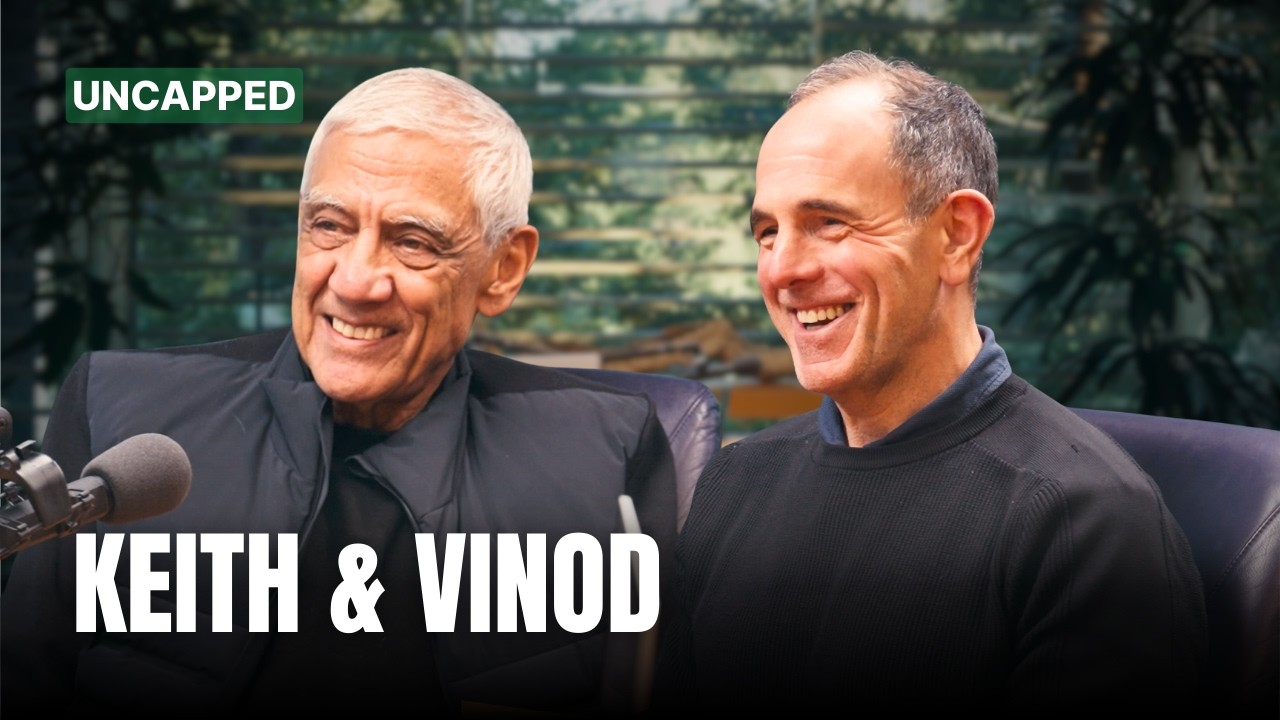
Vinod Khosla and Keith Rabois on Building and Investing in Enduring Companies | Ep. 40
Description
Vinod Khosla and Keith Rabois are Managing Directors at Khosla Ventures. Vinod is an entrepreneur, investor and technologist. In 2004, Vinod formed Khosla Ventures to focus on both for-profit and social impact investments that have included OpenAI, Stripe, DoorDash, Commonwealth Fusion Systems and many more. Vinod previously co-founded Daisy Systems, the first significant computer-aided design system for electrical engineers, which led to an IPO. He later went on to co-found Sun Microsystems in 1982, serving as its first chairman and CEO. After joining Kleiner Perkins Caulfield and Byers (KPCB), Vinod incubated the idea for Juniper Networks to take on Cisco System’s dominance of the router market. Keith is also currently the CEO of OpenStore and led the first institutional investments in DoorDash, Affirm, and Faire, invested early in Stripe, and co-founded Opendoor. While a General Partner at Founders Fund, he led investments in Ramp, Trade Republic, and Aven, and before that made early personal investments in YouTube, Airbnb, Palantir, Lyft, Udemy, and Eventbrite. Keith started his career in leadership roles at PayPal and LinkedIn before becoming COO of Square. Timestamps: (0:00) Intro (0:58) The working relationship (4:26) Pie chart on what’s discussed (7:11) Ethos of investors today vs yesterday (10:42) Comparing FF and KV (12:46) What makes a great founder (22:56) Alpha in today’s market (30:05) Themes within AI (38:23) AI companies built differently (46:23) Excitement outside of AI (53:12) Politically active on X (58:24) Evolution of political leanings More on Vinod: https://x.com/vkhosla https://www.khoslaventures.com/team/vinod-khosla More on Keith: https://x.com/rabois https://www.khoslaventures.com/team/keith-rabois More on Jack: https://www.altcap.com/ https://x.com/jaltma https://linktr.ee/uncappedpod Email: friends@uncappedpod.com
Summary
Generated by claude-haiku-4-5-20251001Summary: Vinod Khosla and Keith Rabois on Building Enduring Companies
Main Topics
- Partnership Dynamics: How two accomplished individuals work together effectively at Khosla Ventures
- Founder Assessment: Identifying and evaluating exceptional founders and their characteristics
- AI Investment Landscape: The evolution of AI companies and new investment theses beyond foundation models
- Company Building in the AI Era: How building companies has fundamentally changed with AI capabilities
- Non-AI Opportunities: Fintech, manufacturing, robotics, defense, and sustainability sectors
- Political Engagement: Why venture leaders are increasingly vocal about politics and policy
Key Points
Partnership & Working Style
- Direct Communication: Both prefer "brutal honesty over hypocritical politeness"
- Low Overhead: Spend <5% of time on firm operations; focus on investing
- Founder-Centric: Every Monday starts with current portfolio before discussing new opportunities
- Role Definition: Khosla positions himself as "venture assistant to entrepreneurs" rather than investor
- Disagreement Pattern: Very rarely diverge on founder assessments (only 2-3 examples in 8 years)
Identifying Great Founders
Khosla's Formula - Look for one of two traits:
- Exceptional in a single dimension (top 1 basis point: smartest, most tenacious, best assessor of people, most strategic)
- Rare Venn diagram overlap of traits (like Max Levchin: first-rate technologist + first-rate business mind)
Rabois' Insights:
- Grit and determination often reveal themselves through personal stories
- Learning rate matters more than current expertise
- Should test how founders respond to disagreement and ideas
- Strong founders actively seek the best feedback and know how to say "no"
Universal Requirement: Ethics
- Assess primarily through references
- Note: Disagreeable, intense founders often have stronger moral compass
Incomplete, Not B+: Pattern is "A+ incomplete" not "B+ at everything"
- Founders don't need all skills initially; venture assistance fills gaps
- Team building and recruitment ability are critical, especially for first 10 hires
AI Investment Thesis
Portfolio Approach:
- ~70% of Keith's recent investments are AI-focused
- 30+ portfolio companies building "AI workers": oncologist, therapist, chip designer, engineer, etc.
- Strategy: AI doing the work, not co-pilots assisting humans
Different Approaches Than Labs:
- Four or five different bets on non-transformer model approaches
- Investments in: category theory, interpretability, diffusion models, real-world models
- General Intuition: Building intuition from gaming data (Ukrainian soldier example)
- Focus on hallucination-free applications (banking, insurance, healthcare)
Key Observation: Consensus hot deals at seed stage don't outperform outliers
- Airbnb, OpenAI, Rocket Lab, Commonwealth Fusion—all non-consensus bets initially
- At seed level, consensus is about people, not ideas
AI Company Building Differs Fundamentally
Unprecedented Growth Rates:
- Enterprise companies going $0→$50M revenue in one year (previously thought impossible)
- "Why not" vs. "impossible" mindset required
Organizational Changes:
- Product Managers don't work—field evolving too fast for 12-month roadmaps
- Sales paired directly with research teams (OpenAI model)
- Compensation radically different (research-grade talent competition)
- Hiring philosophy: rapid learners matter more than experience
Example - Systems of Record:
- ERP space unbundling (procurement, finance, etc.)
- Success measured by people reduced, not features added
- Dual Entry/Slash example: $150M ARR company with only one accounting person (AI-enabled)
- Defense moat changes: 100 integrations feasible in one month (vs. traditional moats)
Key Insight: "Most experts are experts in the previous version of the world, not the one you're trying to create"
Non-AI Investment Areas
Financial Services (consistently excellent):
- One financial services investment returns entire fund per generation
- Square, Stripe, Affirm, Upstart, Avon (using AI extensively)
- Next wave: Ramp and Avon likely best of new breed
Manufacturing & Robotics:
- AI-driven manufacturing changes enabling onshoring
- Focus on labor cost reduction, not necessarily physical robots
- Supply chain software ripe for replacement
Defense & Geopolitics:
- Varda, Mock Technologies, Rocket Lab (early investments)
- "We are in a techno-economic battle with China"
- Critical for American economic survival over next 10-15 years
Sustainability & Energy:
- Continued bullish outlook despite cycles
On "Founder-Friendly" Marketing
The Shift: VCs increasingly marketing as "founder-friendly" rather than value-adding
- This actually hurts weak founders who need pushback
- Strong founders appreciate honest feedback like coaching (basketball analogy)
- Creating "consigliere" relationship: advisor who gives both "that's a bad idea" and "that's great"
Differentiation from Founders Fund: Similar goal (bold founders), different approach
- Khosla Ventures: proactive partnership in building company
- Founders Fund: provide capital, reactive help if requested
Founder Choice VC Survey: Top-rated among 400+ firms because:
- Founders rate head-to-head (Elo chess rating)
- Only VCs they've worked with can vote
- Avoids hypocritical "they're all great" answers
Political Engagement
Khosla's Motivation:
- Developed platform through tech success
- "I don't want to die and regret not using my audience"
- Focus on proselytizing important ideas and rebutting bad ones
Rabois' Approach:
- Spends <1 hour/week on social media
- Engages when blatant wrongness or principle violation occurs
- Started from business reason: read every Square tweet daily to find stories/complaints
- Fights convenience-based political affiliation changes
Political Evolution:
- Khosla: Lifelong Republican (fiscal) → Independent (climate issues)
- Fights against Trump principally (values, dishonesty)
- Recognizes valid evidence-based political shifts vs. opportunistic flipping
China Threat Consensus:
- Bipartisan understanding now (wasn't 5 years ago)
- AI regulation risk: too much regulation would be bad when facing China competition
- Government less likely right than wrong on emerging tech regulation
Notable Quotes
> "I prefer hypocritical brutal honesty to hypocritical politeness." — Vinod Khosla
> "Our craft is to be the partner in building the company... I look at my role as being the consigliere to the founder." — Keith Rabois
> "The company he builds, the team he builds." — Vinod (on what matters most)
> "99% of humanity is not going to change or reinvent an entire industry... so is there some probability?" — Keith (on founder potential)
> "Most experts are experts in the previous version of the world, not the one you're trying to create." — Vinod
> "There's almost no profession where the best at what they do doesn't have an advisor, coach, or mentor." — Keith
> "I'm going to combat every bad idea on the internet... there are so many dumb ideas in the world that this is the worst idea I've ever had in my life." — Keith (on Twitter engagement)
> "I don't want to die one day and regret that I didn't use my audience to proselytize about ideas and things that I find important." — Vinod (on political engagement)
Takeaways
- Founder Assessment is an Art: Exceptional traits reveal themselves quickly; look for A+ in one or more dimensions combined with learning ability and ethics
- AI Represents Paradigm Shift: Not incremental—requires rethinking hiring, compensation, organizational structure, and success metrics
- Partnership Works Through First Principles: Debate from principles, not personalities; creates psychological safety and clarity
- Consensus ≠ Quality: Non-consensus bets historically outperform; breakthrough innovations are rarely obvious initially
- Venture Assistance Over Capital: Primary value-add is hands-on partnership helping founders build, not just funding
- Geopolitical Imperative: AI leadership critical to American economic sovereignty; regulation must be balanced against China threat
- Principles Drive Long-term Success: Whether in business (founder selection) or politics (authentic positions), consistency matters more than convenience
Transcript
I've invested a lot in AI. Yeah, I love your quote about AI and how you'd have done it differently if you hadn't joined the Coastal Ventures. Before I joined KV, I joined KV literally two years ago, this week. Yeah. I had invested in zero. Rejoined. Rejoined. [SPEAKER_01] Rejoined. Rejoined. [SPEAKER_02] And literally had invested in zero AI companies before. Interesting. Since then, in the last two years, I'd say it's about 70% of my investments are AI. And had I not rejoined KV, I think I would either miss the whole wave and been completely irrelevant or been reckless. [SPEAKER_01] Keith and Vinoda, I'm incredibly excited. I got to do this with each of you individually last year. First thing I wanted to do coming into the new year was ask two of you to come on together. So thanks for doing it. [SPEAKER_02] Pleasure to be with you. Yeah. [SPEAKER_01] Obviously, I follow both of you a lot online and watching a lot of podcasts you've done and just knowing you over time. And I've never seen you together in this kind of format. And so I was really excited to set this up. One of the first things I want to get into is how the two of you work together. Because I think it's rare that you have two people who are both super individually accomplished at a venture firm working side by side. You've done it for many years now. And you're obviously very different people, but there's a lot in common. I see you as a Venn diagram with a lot in the middle, but you also have your own styles. So I guess just to start, what's the texture of your day-to-day working relationship? How do you guys operate together? How do you communicate with each other? What does it look like? [SPEAKER_02] Do you want to start? Sure. Well, we first started working together when Vinod joined the board of Square. So I learned a lot of things from- Actually, Sly. Well, we worked together Sly, but that was more intermediated through Max. And I would hear about these meetings with Vinod and all these ideas and these grand theories about how we should rewrite the business. But it wasn't hands-on. I actually worked with another one of our partners, David, at Sly very directly. He told me my first revenue model was terrible. And David's a little bit of an acquired taste. Sounds like David. Yeah. He's this revenue plan is very mediocre was the exact quote. That's great. Which turned out to be right. But in any event, while he was on the board of Square, he taught me a lot of things, including the most important precept of the team he builds, the company he built. So when I was considering being a VC is a very natural fit because a lot of the contributions that Vinod had at Square resonated with me. And I could see the style of KV and how that translated through my brain. And that I felt would be a really good pairing. [SPEAKER_01] What was it for you? So when you're starting to work with Keith, could you tell immediately that stylistically it was what you like? How did you know? [SPEAKER_00] For me, it's really one thing. It's first principles thinking. If you can do first principles thinking, it's easy to know where you agree and where you disagree. It isn't this handy thing. A, B, and C. Then we can debate those three factors. And it's worked out very smoothly. It's seldom we grossly disagree. We'll even come down to if X were true, then this is a good decision or a bad decision. [SPEAKER_02] Which is incredibly helpful. There's one specific investment I remember last summer where I couldn't actually decide what to do. It was close to the line. Wasn't quite sure. And then Vinod said the key attributes of the founder that really matter for this are one, two, three. And then our junior colleague, John Chu, and I were, well, on those three dimensions, this founder is AAA. So it made the decision really easy because he was able to isolate the key variables from that particular company. [SPEAKER_01] Yeah. Do you guys get into strong debates over ideas? Or have you mind melded so hard at this point that you don't even need to as often? Because it's hard for me to imagine either of you shying away from a very direct statement. You're obviously both going to say whatever you think all the time. I think that helps the direct style, which you've talked about for years. [SPEAKER_00] I've always said I prefer hypocritical brutal honesty to hypocritical politeness. [SPEAKER_01] I can't imagine you dancing around a topic with each other. [SPEAKER_00] No. And it doesn't matter whether it's internally in a debate or on Twitter. It doesn't matter. Being very direct saves a lot of hassle. [SPEAKER_01] Yeah. [SPEAKER_00] And once you have that culture, nobody's guessing at what you're thinking. Yeah. And that's worked really well within the partnership. Nobody's ever guessing what you think or why you think that. [SPEAKER_02] And then externally, I think one of the reasons why we pair well with really ambitious founders is they appreciate clear communication. Succinct and direct communication. They process extraordinarily well. [SPEAKER_01] On you two working together, if you had to guess, the pie chart of the time that you guys are spending talking to each other, how much of it is about existing investments, new companies, operating the firm, anything personal? [SPEAKER_00] So nobody ever discusses operating the firm very much. You don't discuss that. It's nice personal ventures. Interesting. There's almost no, I would guess it's far less than 5%. Is that because it's so clear how it works or because- [SPEAKER_01] Yeah. [SPEAKER_02] Maybe around, if you include hiring, then there's an allocation to assessing people. We'll call that separate. [SPEAKER_01] Yeah. [SPEAKER_01] Out of curiosity, is that because you think it's already so clear there's nothing left to discuss? Or is it just so much relatively less important than the work of investing itself? [SPEAKER_00] Well, first, we have a lot more fun investing than managing. [SPEAKER_00] And the firm doesn't take much management. Interesting. You know, there's almost no, I would guess it's far less than 5%. [SPEAKER_01] Is that because it's so clear how it works or because it's okay. [SPEAKER_01] Yeah. [SPEAKER_02] Maybe around, if you include hiring, then there's an allocation to assessing people. [SPEAKER_01] We'll call that separate. [SPEAKER_01] Yeah. [SPEAKER_01] Out of curiosity, is that because you think that it's already so clear there's nothing left to discuss? [SPEAKER_01] Or is it just so much relatively less important than the work of investing itself? Well, first, we have a lot more fun investing than managing. And the firm doesn't take much management. Honestly, other than comp, once a year, there really isn't a lot, and hiring that we talked about. There isn't much in terms of, I can't remember when we had a strong policy disagreement. [SPEAKER_02] It's also, at the end of the day, Minot is energized by investing in the future through technology and founders. [SPEAKER_02] And I'm energized by pairing with people who want to change the world, which is roughly similar. [SPEAKER_02] And so the management part is a distraction to some extent from those two core activities, which are exciting. So what else then? We spend almost no time with LPs. Yeah, that's nice. [SPEAKER_00] I mean... We may have to edit that. [SPEAKER_00] I'm just kidding. [SPEAKER_00] Look, I don't mind. [SPEAKER_00] I spend less time with LPs than almost any other senior partner. [SPEAKER_00] And I think that's generally true of all the senior partners at Costa. [SPEAKER_00] Well, you're a place for... [SPEAKER_01] You probably don't need to spend that much. [SPEAKER_00] And frankly, entrepreneurs are a lot of fun to work with. [SPEAKER_01] Yeah. [SPEAKER_01] So are you spending most of your time talking about new companies, existing companies? [SPEAKER_01] Is that basically all of it? Actually, both. [SPEAKER_02] I mean, we take the current portfolio very seriously. [SPEAKER_02] Every single Monday meeting starts with the current portfolio before we ever talk about a new opportunity. [SPEAKER_02] Because we're in the build-the-company business. [SPEAKER_02] That's what we focus on is we're an investor. [SPEAKER_02] We're going to be a partner for 10, 20 years. [SPEAKER_02] How do we help the company achieve its highest ambition, highest potential? [SPEAKER_02] And so we start literally intentionally that way with the portfolio before looking elsewhere. So the funny thing is, in 40 years that I've done venture capital, I've not once called myself a venture capitalist or an investor. I always say I'm a venture assistant to entrepreneurs trying to build companies. And that's what our website is focused on. And that's what we talk about mostly internally. How do we help a company change its trajectory if the potential exists to change it? [SPEAKER_01] How different do you see today the ethos of new young investors versus when you were getting started? [SPEAKER_01] Because right now it is such a thing to use. You know, young and old doesn't matter as much. What matters is, have you built companies and earned the right to advise an entrepreneur? I think most people who advise entrepreneurs haven't earned the right to advise an entrepreneur. Almost all the senior partners in our firm have earned the right by helping build a company, being inside a company, having empathy for the founder. [SPEAKER_00] So I think that's a pretty distinctive feature of how we think of our role. [SPEAKER_00] A lot of firms just want to be nice to founders, and it hurts the founder. [SPEAKER_00] Because, you know, it's saying yes to your kids all the time, no matter what they want. [SPEAKER_00] You want them to know you love them, but you're trying to get them to be the best they can be. Yeah. [SPEAKER_00] That includes pushing them to be the best they can be. And I think we both agree our business is much more about helping the entrepreneur build a successful company than about investing. [SPEAKER_01] I'm newer to this, obviously. [SPEAKER_01] But it seems like there was some moment in time where the dominant marketing strategy for VC firms flipped towards just extreme founder-friendly, whatever that means. [SPEAKER_01] I don't know if it was 10 years ago or 15, something like that. [SPEAKER_01] You guys probably experienced this going through being on one side of it and then the other. [SPEAKER_01] I kind of always lived in that world. [SPEAKER_01] But was there a moment or a period of a few years where it just became the strategy for some reason for VCs to just go full? You know, our goal has always been what's good for the company, not what sounds good or what will get us more referrals for the founder next time they need to refer. So I think this hypocritical politeness, which is pervasive in our business, is really bad for founders. And when a founder selects for that, they're generally a weak founder. Strong founders almost always select for the best feedback they can get and also know how to say, no, thank you, I disagree with you. I think that's a really important character. One of my favorites is this. Some founders, I don't know the names. Two founders did something called founderschoicevc.org or .com. A survey of founders. And what I love is they wanted to avoid the hypocritical politeness. So they said, only the VCs that you've worked with can vote on you, on the VC firm. And you can't say, we have these three investors, they're all great. They forced them to rate them head to head, a chess elo rating. [SPEAKER_00] And I'm very proud. [SPEAKER_00] We're at the top of that list, among 400. [SPEAKER_00] We see firms in hundreds of words. [SPEAKER_00] I think it's the most important survey for me to know that in retrospect, our founders prefer us. [SPEAKER_00] And we prefer backing the same founders again and again. [SPEAKER_00] Like our LP data always have a huge component of how many repeat founders have come back to us to work with us. [SPEAKER_01] Keith, I'm actually really curious because obviously, Founders Fund is an amazing firm, as well as Kosovo. [SPEAKER_01] And the ethos is the same in the sense that we want to do what's right for the company. [SPEAKER_01] But I think the pathway to get there is the opposite. Yeah, I think the goal of finding bold, ambitious founders and companies is very similar. I think the way we actually practice what we do is very different. Our craft is to be the partner in building the company. I look at my role as being the consigliere to the founder. And sometimes the consigliere tells you that's a bad idea. And sometimes they tell you that's a great idea. Then they help the principal and they're not confused about who's the CEO and who's the consigliere. [SPEAKER_01] And the ethos is the same in the sense that we want to do what's right for the company. [SPEAKER_01] But I think the pathway to get there is the opposite. [SPEAKER_02] Yeah, I think the goal of finding bold, ambitious founders and companies is very similar. [SPEAKER_02] I think the way we actually practice what we do is very different. [SPEAKER_02] Our craft is to be the partner in building the company. [SPEAKER_02] I look at my role as being the consigliere to the founder. [SPEAKER_02] And sometimes the consigliere tells you that's a bad idea. [SPEAKER_02] And sometimes they tell you that's a great idea. [SPEAKER_02] Then they help the principal and they're not confused about who's the CEO and who's the consigliere. [SPEAKER_02] That's how I think of my role. [SPEAKER_02] Founders Fund thinks their role is to provide the capital and get out of the way. [SPEAKER_02] And if you have an idea where they might be helpful, please call. Yeah. And we'll do everything we can to try to help. Right. Proactive versus reactive. [SPEAKER_02] Totally. That's exactly right. Very, very similar goals in betting on really bold ideas, whether they're popular or not. Yeah. Whether they're on trend or not. They've done an incredible job of that. And we think we do that also. [SPEAKER_01] Yeah. [SPEAKER_01] It's almost like you can imagine the conversation would play out like on one side, it's, well, we should back entrepreneurs that don't need help. [SPEAKER_01] And then the other side of the conversation would be, well, yeah, but even amazing people can still be helped. Of course. [SPEAKER_02] Even the best basketball players have, you know, they have strength coaches. They're very dedicated or fitness coaches. [SPEAKER_02] Yeah. [SPEAKER_02] There's almost no profession where the best at what they do doesn't have an advisor, coach, or mentor. [SPEAKER_02] Yes. Yeah. [SPEAKER_00] Look, take somebody, a really strong founder like Max Levchin. [SPEAKER_00] I've never been on the board. [SPEAKER_00] The company's gone public. [SPEAKER_00] We've distributed. [SPEAKER_00] Great outcome. [SPEAKER_00] We are the first investor to this day. [SPEAKER_00] Max and I do quarterly phone calls because he wants my help and advice and second opinion on something he's thinking about or always looking for areas. [SPEAKER_00] I'll prod him into thinking harder. [SPEAKER_00] You're ignoring this or that. [SPEAKER_01] I want to talk about what's clicking into the source of great founders and great companies, because obviously that's the center of the work. [SPEAKER_01] I posted that I was going to have you guys on the podcast. [SPEAKER_01] Somebody said, you know, we want to hear about this. [SPEAKER_01] But Keith, you can't say the thing about comparative advantages. [SPEAKER_01] And you're like, but it's true. [SPEAKER_01] And I think it is true. [SPEAKER_01] But I want to try to click in as closely as possible to what makes a great founder. [SPEAKER_01] And I think one of the things that stuck with me was you both said that you guys are basically always aligned on the read of the founder. [SPEAKER_01] You might disagree on a market or if there's some business you want to be in. [SPEAKER_01] But more or less, you think the same thing about if a person is a great founder. [SPEAKER_02] Very rarely is there significant divergence on the assessment of the founder. I can probably name two, three examples in eight years. [SPEAKER_02] Yeah. What specifics can you describe? Well, I'll give you my formula and feel free to edit. So mine is one of two traits. Either I meet a founder and on some dimension, they're the best I've ever met in my life. It can be different. They can be the smartest person. They can be the most tenacious person. They can be the best assessor of people. They can be the most strategic. They can be top one basis point on some dimension. And because what I'm trying to do is when we do mostly first institutional capital, we want to be as bold and as early as possible. What I'm trying to find out is, is there a non-zero chance that this person can change a vertical or the world? [SPEAKER_01] That's really it. One of those two things. [SPEAKER_01] Either the world or at least the legal industry. [SPEAKER_02] 99% of humanity is not going to change or reinvent an entire industry, let alone the world. [SPEAKER_02] So it's, is there some probability? [SPEAKER_02] Usually the people who succeeded have some trait that's just so exceptional. [SPEAKER_02] The other exception is they have a Venn diagram overlap of traits that you don't see in common. [SPEAKER_02] So, for example, Max Levchin. I've talked about this before, but literally when I met him in December 2000, Reid Hoffman came up to me and said, you're getting ready for your first meeting alone with Max. [SPEAKER_02] Max is a first rate technologist and a first rate business mind. There's less than five people in all of Silicon Valley that are that. Reid was dead on 25 years later. It's still true. [SPEAKER_02] There's less than five people and Max is one of them. And that's led to his trajectory. So if I see these traits, Jack Dorsey, who we've both worked with, is actually pretty good design mind. Yeah. Pretty good technologist and a very good business strategist. He has three, which is also why he's been very successful. [SPEAKER_01] Okay. [SPEAKER_01] So you meet somebody that you trust, refers somebody. [SPEAKER_01] Great, I'm going to meet them. [SPEAKER_01] You're in the meeting with them for an hour. [SPEAKER_01] Are you trying to pull that out in that meeting? [SPEAKER_01] Is this work happening outside the meeting? Usually, if it's so strong, it usually shows up in three minutes. Literally you meet someone who's the smartest person ever. You just feel this energy. [SPEAKER_01] Aren't there some less obvious traits than super smart though? Yes, there are. Grit or something like that? Yeah, exactly. So for example, one of my favorite gritty founders told me the story of when he was working at Uber. His team in this foreign country that he just joined, because he was a launcher, was going to run a marathon on Saturday. And this is Thursday. [SPEAKER_02] And he's, I want to be part of his team. [SPEAKER_02] I want to fit in. I'm going to do it. I haven't trained at all. Didn't own a bike. So what did he do? Yes, there are. Grit or something like that? Yeah, exactly. [SPEAKER_02] So for example, one of my favorite gritty founders told me the story of when he was working at Uber. [SPEAKER_02] His team in this foreign country that he just joined, because he was a launcher, was going to run a marathon on Saturday. [SPEAKER_02] And this is Thursday. And he's thinking, I want to be part of his team. I want to fit in. I'm going to do it. I haven't trained at all. Didn't own a bike. [SPEAKER_02] So what did he do? He rented a city bike and ran the track. He did the triathlon on a city bike. That's crazy. That's so crazy. [SPEAKER_02] That's all you need to hear. [SPEAKER_02] And then his co-founder finished second in the spelling bee when he was in high school and passed out due to stress. [SPEAKER_02] So he didn't quit his senior year. [SPEAKER_02] He went back and tried to win it. [SPEAKER_02] There's a dimension there that you don't hear very often. [SPEAKER_01] So to get some of these ones that don't show up in a live meeting, do you have certain things that you're prodding towards? [SPEAKER_01] Are you asking more about life than business? [SPEAKER_02] No, I actually don't do the Doug Leoni, Daniel Gross style thing where tell me about your history and your sibling. [SPEAKER_02] It does work for people. [SPEAKER_02] It definitely does. [SPEAKER_02] Can you try it? [SPEAKER_02] Tell me about your company and why are you doing this company? [SPEAKER_02] It just shows up somewhere. [SPEAKER_02] There's just a spark. [SPEAKER_01] They can't help themselves. [SPEAKER_01] Have you tried the Doug Leoni thing and it just didn't work for you? [SPEAKER_01] I never really tried it. [SPEAKER_02] The mechanical. [SPEAKER_02] It's when you assess people. [SPEAKER_02] The nodes interviewed executive candidates for 30, 40 years for companies. [SPEAKER_02] There's a mechanical way of assessing, doing the interview where you go experience by experience. [SPEAKER_02] Why did you leave? [SPEAKER_02] What was the biggest challenge? [SPEAKER_02] What are people going to say about you? [SPEAKER_02] And then there's different ways when you interview people that's a little bit more freeform. [SPEAKER_02] I'm definitely in the freeform version of the interview. [SPEAKER_01] Do you do a founder meeting similar to that or is it a whole different thing for a founder? You know, every situation is different. I want to add a couple of other things to what Pete said. I think the most important thing is exceptionality in some dimension, whether they're going to be a good CEO or not. But related to that is two things. In the areas where they're not good, it's perfectly fine to back a founder if they don't know an area. Often it's a professor or something. That's where venture assistance comes in that I was talking about, where we can help them be a complete founder. But also the thing I want to emphasize is to me what's key is the learning rate of the founder. How open-minded they are to new ideas and how good they are at rejecting bad ideas they solicit. Too many founders just take every idea and try to execute. If a person listens to me all the time, I'll almost never invest with them. I know they're not critically examining. I often take positions I don't believe in just to test how the founder is thinking about something. [SPEAKER_00] I have a document I put out. [SPEAKER_00] It's a public document on how to do an interview. [SPEAKER_00] It's very much preformed. But everybody knows what answers to give in an interview. So how do you get past that? I have an internal document I give to only our founders on how to interpret the answers they get. If I put them out publicly, then every candidate would understand how I'm interpreting. [SPEAKER_00] So I can't put that publicly. [SPEAKER_00] But the first half I made public: here's how I assess somebody. So I have a pretty clear style. [SPEAKER_00] And it's usually about putting people in a situation they haven't been in. [SPEAKER_00] It's not soft. [SPEAKER_00] Tell me about your life history because people know how to storytell. [SPEAKER_00] And the best storytellers may not be the best candidates. [SPEAKER_00] So you have to get past the obvious answers. [SPEAKER_00] I did this in that company or I opposed that in retrospect. [SPEAKER_00] I think it's very nuanced. [SPEAKER_00] So that's a great example and ties back to the team you build. [SPEAKER_00] There's a company you build, not the plan you make. [SPEAKER_00] Because the right team will evolve the plan to the right thing. [SPEAKER_00] And your initial plan is seldom the right plan. [SPEAKER_00] But if you can help pick the right team in a new context, which is you're trying to do something bold and different, that's a pretty critical part of it. So both part of what we can do to help a founder and why most people are not qualified to even interview candidates. I've seen such bad specs for what the company needs. Most of the time they're wrong on what a company needs to hire. [SPEAKER_02] Well, you have a great example in marketing specifically where you talk a lot about the zero to end marketing versus the end of the job. [SPEAKER_01] What is that? Yeah, I'm curious. [SPEAKER_00] For example, most startups are trying to create a brand. [SPEAKER_00] If you've been marketing at Cisco, you know nothing about creating a brand. [SPEAKER_00] You know how to incrementally sustain a brand. [SPEAKER_00] That's a very different skill set. I was going to say something even worse than that, but yeah. You know how to make this quarter's number look a certain way. [SPEAKER_00] I got in trouble for saying if you're at Cisco more than 10 years, you're not qualified for a real job in the entrepreneurial world. Yeah, we don't know. It's not Cisco specifically. [SPEAKER_01] Yeah, it's hard. [SPEAKER_01] They're just so different. [SPEAKER_01] You're trying to figure out. They have nothing to do with each other. [SPEAKER_02] What's the dimension that leads to success for what the startup needs? [SPEAKER_02] Yeah. [SPEAKER_02] And then how do you find that trait or that proven ability? [SPEAKER_02] Yeah. And make sure there's a Venn diagram overlap there, which requires diagnosis and then it's assessment. [SPEAKER_00] And this is the kind of place where venture firms are pretty different. [SPEAKER_00] We'll agree if somebody can advise somebody on marketing, but if you look at a spec a board will put out, it'll be cookie cutter. [SPEAKER_00] Then X business to get somebody from X related businesses. [SPEAKER_01] Yeah. [SPEAKER_00] It's just a terrible idea. What's the dimension that leads to success for what the startup needs? Yeah. And then how do you find that trait or that proven ability? Yeah. And make sure there's a Venn diagram overlap there, which purses diagnosis and then it's assessment. This is the kind of place where venture firms are pretty different. We'll agree if somebody can advise somebody on marketing, but if you look at a spec a board will put out, it'll be cookie cutter. Then X business to get somebody from X related businesses. [SPEAKER_01] Yeah. It's just a terrible idea. It's actually a source of a lot of management mistakes, which is it has to look good on LinkedIn for the board. And that's a disaster. [SPEAKER_02] Worst ever. [SPEAKER_01] Yeah. [SPEAKER_01] Yeah. [SPEAKER_01] And it's really hard if you're a young founder to stand up to that. Well, this is the role of a really good advisor board member. [SPEAKER_02] Sometimes just giving the founder confidence. [SPEAKER_01] Yeah. Permission to trust our own gut. [SPEAKER_02] You're not wrong. Just saying that when they're getting a lot of pressure from somewhere else, especially the first time founder, just saying no, you're probably more likely right actually. And then all their instincts kick in and they have enough confidence to just say no. Outside of this idea of exceptionalism and finding this dimension of special, what you're saying is if somebody's B plus at everything, that's not a good investment for you. It's usually an A plus and incomplete. Incomplete. [SPEAKER_01] Vinod likes to term incomplete. [SPEAKER_02] Incomplete. [SPEAKER_01] I like that better. A plus plus incomplete is a really good formulation. [SPEAKER_02] The rate of growth is hard to tell in your first meeting. [SPEAKER_02] Yeah. [SPEAKER_02] That is one of the hardest things because you have one dot, geometry is like, you can draw infinite number of lines through one dot. What do you do about that? So you need, do you try to go historically? The best is you know someone over time. Reality is. So the easiest, let me interrupt with my favorite example. For YC founders, the most important question I can ask the partner who's working with the company is how much have they learned in the last three months. Three months is enough to tell if they have a high learning rate or not. [SPEAKER_01] Totally. So in a fast moving process, all you can do is try to get a data point from the past. Yeah. And then once in a while you can try to get data points from external people, but most people have the wrong prison. [SPEAKER_02] They don't, unless you ask the question perfectly and unless you can really retrain their eyes, it doesn't help. But there's other ways. Say, imagine you were in this business that you're not familiar with. How would you go about learning X or Y? Yeah. Yeah. [SPEAKER_01] Let's see how they would start. Putting them out of context. [SPEAKER_00] Yeah. And having them think through very easy to tell. One of my favorite questions is it doesn't matter whether they're doing a startup or not. Let's say they're a candidate for a marketing job. If I gave you a seed amount of funding to investigate three ideas, which three would you pick? How would you go about evaluating them over the next six months? [SPEAKER_00] Yeah, that's good. It's a pretty simple test. You can tell a lot about a person based on how they answer that. [SPEAKER_00] Yeah, that's good. Are there any things that a founder can't be completely deficient in? [SPEAKER_00] Ethics. Ethics. No question. How do you figure that one out? Mostly through references. Even on that point, a lot of people that seem not so friendly are actually very ethical. And I've noticed that a lot of the highly disagreeable, intense founders actually have a very strong moral compass. Yes, that is absolutely true because they believe in their principles. And it is the source of both. That's interesting. Well, you've seen this in the Valley. We were talking about this earlier. People have changed their political affiliation out of whim, not stayed with what they really believe in. [SPEAKER_00] Yeah. We're definitely coming back to politics in a little bit. I have a lot there. [SPEAKER_01] Is there anything around ability to recruit, anything around- [SPEAKER_01] Ability to recruit is very important to mention. Can you envision this person that- It sounds like they got to hire a thousand people at some point. [SPEAKER_02] Yeah. [SPEAKER_02] But can they hire the first 10, the first fund rate is really critical because those people are going to replicate themselves. Patrick Halson talks about this at length, the first 10 are going to multiply by 10. Because you can imagine somebody who's really exceptional in some dimension, but you just don't think they could recruit well. Right. [SPEAKER_02] But then the question is, can they parlay whatever unique assets they have into convincing people to work with them? [SPEAKER_01] And sometimes they can actually, even if they're very uneven. It's oh my God, they can still, or you can help them. You can help them communicate. Why is this ambition worth chasing? What kind of people do you want? But their energy or their special secret sauce comes through. Let's say I set you up to interview with one of these great founders. I think you would pick up on this person's unique something. Even if you couldn't articulate the exact reason. [SPEAKER_02] Yeah. You just come out feeling that way. You come out feeling like, wow, that was interesting. [SPEAKER_01] At a minimum, that was interesting. [SPEAKER_01] Yeah. One of the things that I often think about is somebody who is good at selling anybody is on some level good at selling everybody. It's the same person who can convince candidates and investors and customers and all of it. [SPEAKER_01] It all kind of does bundle together. [SPEAKER_01] Yeah. [SPEAKER_01] You definitely have to be able to tell a story, right? At the end of the day, you have to convince people. You haven't proven almost anything usually in the beginning. Right. And you've got to convince people to come along on the journey with you. Yeah. Yeah. [SPEAKER_02] One of the things that I often think about is somebody who is good at selling is on some level good at selling everybody. It's the same person who can convince candidates and investors and customers and all of it. [SPEAKER_01] It all does bundle together. Yeah. You definitely have to be able to tell a story, right? At the end of the day, you have to convince people. [SPEAKER_02] You haven't proven almost anything usually in the beginning. Right. And you've got to convince people to come along on the journey with you. Yeah. Those are investors, early beta alpha customers, employees. You have to retain your employees in a hot market. You're doing some version of that constantly. When you look back at a bunch of the greatest investments over the last 15 years, Airbnb or whatever, there's a bunch of companies that were not hot early and everybody passed. [SPEAKER_01] Is that still the case? [SPEAKER_01] Do you think? Or has the consensus become more accurate or is it still the case that it's random signal? I don't think it's random at all. Go ahead. I mean, let's talk about Airbnb. [SPEAKER_02] To me, it was obvious three minutes into Brian's monologue. [SPEAKER_02] This is the coolest thing since YouTube. I literally told him this, told him exactly why. It was so obvious. I needed to meet him. Yeah. And I didn't the air bed and breakfast name that they were using at the time. So I kept referring the meeting, which was a very costly decision for me. Yeah. At the end of the day, if you met Brian for three minutes, there was no way of missing this. This team was very special and he was able to convey a couple three key things he said in those three minutes that I was, oh my God, this is really amazing. But you saw it, but most people didn't. Yeah, but I'm saying it's not random. Yeah. Or OpenAI, one of the companies we all know. Yeah. The key investment decision literally, if you read our memo, which he sent to the LPs because it was so much of an outlier at the time, was this outside Google and DeepMind specifically, this was the only critical density of research grade people that could possibly pull off AI. That was the investment hypothesis. Right. Given all the other stuff, it was a nonprofit. [SPEAKER_00] There was no product plan, no revenue plan, just this AI capability. [SPEAKER_00] It's the only time in the 20 year history of Coastal Ventures we sent an apology letter to our LPs when we made the investment because it was twice the largest initial investment we'd ever made. [SPEAKER_00] We sent an apology letter. [SPEAKER_00] I know it makes no sense, but we're doing it anyway, not asking for permission. That letter is now part of our fundraising deck. Wow. [SPEAKER_00] But we sent it in 2018. Yep. [SPEAKER_01] And here's a good example of Raider Grove. It did help a lot that David, me and Vinod all knew Sam for a sustained period of time. So you could see certain lines there and the critical density of talent that he had assembled plus certain traits about Sam specifically led to that investment. [SPEAKER_02] Do you think that as time has gone on and more people are in tech and there's more founders and more investors, do you think there's any increasing from people who can really see it, but from the average reception to investors? [SPEAKER_02] Do you think that the consensus hot deal is becoming any more or less likely over time? [SPEAKER_02] You know what? [SPEAKER_01] A seed? I don't think so. [SPEAKER_01] You think it's still the case that these hot seeds are no better than the non consensus seeds? [SPEAKER_01] Personal opinion? I agree totally. Because we're talking about Rocket Lab, one of the best investments anywhere. I don't think they would have raised money from anybody. [SPEAKER_02] Well, it's worth 40 billion now, but we bought a third of the company for $5 million. [SPEAKER_02] Yeah. And nobody wanted to invest in space. Or Commonwealth Fusion probably. [SPEAKER_00] Or Commonwealth Fusion for fusion or even OpenAI. [SPEAKER_01] Right. [SPEAKER_00] It wasn't, we were the only venture investor in 2018 that committed because it didn't make sense. [SPEAKER_00] I think at the seed level, consensus hot bets are generally around people, not around the idea. [SPEAKER_00] Yeah. If you have two people who left, pick your super hot current, two people leave Cursor tomorrow. [SPEAKER_00] An engineer and a designer leave Cursor tomorrow. What's that going to go at? Yeah. [SPEAKER_01] A lot. [SPEAKER_01] But a seed investment around undiscovered people. [SPEAKER_01] Yeah. [SPEAKER_01] I think the consensus ones aren't going to outperform the outliers at all. [SPEAKER_01] Maybe talk about themes that you guys are interested in. [SPEAKER_02] I know that you're mostly focused on people, but you also care a lot about markets and technologies. Maybe start with AI and then we can go outside of AI. [SPEAKER_02] Obviously AI is in the midst of playing out, I don't know what inning it's in, but it's one of the early ones probably. [SPEAKER_02] There've been a lot of changes to what the labs say they're focused on and the types of companies that are getting funded is adjusting a little bit. If you sort of track every six months or so. [SPEAKER_01] I'm curious what you guys see as the lay of the land outside the labs, where you think most of the opportunity lives, what you're most interested in, what you think is going to be a big deal in the next year or two. That's such a broad surface. [SPEAKER_01] Of course. Sorry. I think I was counting 30 some startups in our portfolio that are building an AI worker of some sort. Yeah. [SPEAKER_00] An AI oncologist, an AI mental health therapist, an AI chip designer, an AI structural engineer. As many professions as there are, there's that many opportunities. To fully do the work. [SPEAKER_00] Do the work. [SPEAKER_00] Yeah. [SPEAKER_01] I'm curious what you guys see as the lay of the land for outside the labs, where you think most of the opportunity lives, what you're most interested in, what you think is going to be a big deal in the next year or two. That's such a broad surface. [SPEAKER_01] Of course. Sorry. [SPEAKER_01] I think I was counting the 30 some startups in our portfolio that are building an AI worker or some sort. Yeah. An AI oncologist, an AI mental health therapist, an AI chip designer, an AI structural engineer, as many professions as there are, there's that many opportunities. To fully do the work. Do the work. [SPEAKER_00] Yeah. [SPEAKER_01] So one thing we decided a couple of years ago, probably three years ago, we wouldn't do a lot of co-pilots. [SPEAKER_00] Mm-hmm. [SPEAKER_01] Co-pilot had just come out and we said, co-pilots, humans get in the way, let's just do the work. So we love really people doing the work. [SPEAKER_01] Yeah. As opposed to helping a human do the work. [SPEAKER_01] Now there's exceptions to that, but mostly that's true. Mm-hmm. That's a big category. So we haven't invested in any competitor to OpenAI, obviously. And we should come back and talk about it. We are fiercely loyal to our companies. We can talk about loyalty. Well, OpenAI, I think I was the very first one when Sam got fired to come out and say, we'll fund Sam for whatever he wants to do next. [SPEAKER_00] Yeah. [SPEAKER_00] Is the loyalty stemming from a business decision or idea? Or is it stemmed from just like, this is how it ought to be? Like a more ethics kind of thing? [SPEAKER_00] I think this is how it should be. [SPEAKER_01] It's about ethics. [SPEAKER_01] Yep. [SPEAKER_01] And if I disagree with our, then my job is to sit down, tell them why and agree that we agree or disagree before taking the right position publicly. Yeah. If we believe in the principles, like for the point, if you have principles and you believe you're on the right side, then we're willing to use our brand capital audience to help. [SPEAKER_00] Yeah. [SPEAKER_00] But along those lines, the AI question you were asking, we've invested a bunch in all their other approaches than transformer models that make sense. [SPEAKER_00] And we probably have four or five different efforts that are, they don't have to replace transformer models, but they're different because I think the big labs are doing transformer models really well and then doing some other things. [SPEAKER_02] So what else do you think is promising? [SPEAKER_02] Look, it's too early to say. [SPEAKER_02] So I think any of us who pretends we know this technique or that neuro symbolic technique, we have a bet on category theory in math. We have a bet on interpretability that leads to different models. We have diffusion models. [SPEAKER_01] There's plenty of others. Do you think they're like- Very excited in real world models. Yeah. I was just going to ask you that. So I think that game hasn't played out yet. It's not clear at all who will win. Yeah. It's very clear what the major labs will do in that area. And at least the major labs all have efforts. But I think it's completely up for grabs. And you have no doubt it's going to work. It's just a matter of how and what- [SPEAKER_00] Yeah. Let me give you an example. This is a public clip we showed. [SPEAKER_01] Intuition is a very big deal. And I don't think current models embody intuition. So we have a company called General Intuition based on gaming data. And I saw a clip of this live feed of Ukrainian soldiers trying to escape Russian attackers. And then we gave the AI half the clip and said replicate the other half. It replicated the intuition of the Ukrainian soldiers trying to escape almost identically. That's intuition. There's many dimensions like that. But there's many obvious ones. You know, we all talk about the fact that frontier models hallucinate. And there's probably not a good way to avoid them. There's ways to minimize them. And the labs will do a pretty good job. But you see the hot agent startups like Sierra and Decagon. They're completely, I think, missing the point. We've focused on customer support agents that do not hallucinate. If you're a bank, if you're a Visa or MasterCard or insurance, you can't afford to hallucinate an answer, even if it's low percentage. We've heard a lot about mental health therapy where bots take people down and towards bad outcomes. Yeah. Those are all examples. So I think the winning customer support thing will be something that does not hallucinate for a class of application. Some applications, some hallucination is fine. And are you saying that you think a company can't just increment its way from hallucinating sometimes to hallucinating never? And you just need to, those companies can't just improve their way to no hallucination? You know, it's possible. [SPEAKER_00] But I think if you architect for low hallucination, know when to use no hallucination when you can afford to, giving somebody's bank balance, you'd better not ever hallucinate. [SPEAKER_00] Yeah. [SPEAKER_01] I think it's pretty important to look beyond normal. [SPEAKER_01] Lots of people will do the normal. [SPEAKER_00] Extensions of LLMs to lots of applications, massive market. Lots of people will do it. [SPEAKER_01] Every area will have 10 startups. Keith, are you interested in hard tech as much or do you invest more in B2B typically? Well, I've invested a lot in AI. So I, yeah, I love your quote about AI and how you'd have done it differently if you hadn't joined the Coastal Ventures. [SPEAKER_00] Oh, wait, I want to hear. Before I joined KB, I joined KB literally two years ago, basically this week. [SPEAKER_01] Yeah. [SPEAKER_00] I had invested in zero. [SPEAKER_00] Rejoined. Zero, rejoined. Rejoined. And literally had invested in zero AI companies before. Interesting. [SPEAKER_02] Since then, in the last two years, I'd say it's about 70% of my investments are AI. And had I not rejoined KB, I think I would either miss the whole wave and been completely irrelevant or been reckless. Neither one's good because what I was able to do when I joined is learn by osmosis. So I'd sit in partner meetings and 80% of the companies that we would discuss in the portfolio, new opportunities would be AI based. And I would listen and learn. [SPEAKER_00] Rejoined. Zero, rejoined. Rejoined. And literally had invested in zero AI companies before. Interesting. Since then, in the last two years, I'd say it's about 70% of my investments are AI. And had I not rejoined KB, I think I would either miss the whole wave and been completely irrelevant or been reckless. [SPEAKER_01] Neither one's good because what I was able to do when I joined is learn by osmosis. So I'd sit in partner meetings and 80% of the companies that we would discuss in the portfolio, new opportunities would be AI based. And I would listen and learn. And then B, as I started meeting founders who were interested in AI that fit my normal standards, I could send the deck to actually three people here, Vinod, Sven, and John Chu, and sometimes actually Kano too, get feedback. And then actually often have some combination, maybe all four, meet the team. And so when I first started making AI investments, I felt like I had this air cover of a lot. They could understand how good is the team. B, how smart is their approach? How differentiated is their approach? [SPEAKER_02] And then B, is there anything else in the landscape that's even better? [SPEAKER_02] And then that allowed me to start making new investments. [SPEAKER_02] And then you develop some taste and some ideas about what works. [SPEAKER_02] And then you join the board of the companies and you learn how these companies are built, what works, what doesn't, what are problems, what are not. [SPEAKER_02] And so now I basically do almost virtually all AI. [SPEAKER_02] Yeah. I'm actually curious on the topic of how the companies are built. [SPEAKER_02] And obviously you're super involved with company building. You've built companies yourself a bunch. And it's just something that you talk about a lot. Do you think AI companies are built in any substantially different way? [SPEAKER_01] I think fundamentally different. [SPEAKER_01] First of all, they are growing at rates that are unprecedented in the history of technology. [SPEAKER_01] And it's a little bit like running the four minute mile. [SPEAKER_01] Once you see someone run the four minute mile, then no company should have an excuse for not growing rapidly. [SPEAKER_01] It's these enterprise companies going from zero to 50 million. [SPEAKER_01] You start asking questions. [SPEAKER_01] Well, why? Why can't you? At least what are the limiting factors? And there sometimes are real reasons, but you start with the question of why not versus that's impossible. If you had said we're going to start a company and have $10 million of revenue in year one from the last year, all of us would have said 10 years ago that's impossible. Yeah, it's definitely not the right answer. Now, it doesn't mean every company should do that, but it is an open question. Then the question is, well, what do you do about that? I think the idea of PMs, borrowing from Peter Fenton here, does not make sense in a rapidly emerging technology field. What do PMs do? They go talk to customers and they create a sequential roadmap over the next four months. Well, if the field is evolving and the capabilities are evolving, literally every month, there's papers published. You probably read papers every week, let alone things that are launched live. You can't have a 12 month roadmap that makes no sense. And so you have to rethink that. Then also how does sales work with your research team? OpenAI, as far as I can tell, pairs the people doing customer acquisition with the research team. And that's a completely different model than how most technology companies were built. Yeah. Compensation, this is in the public domain. Completely different. Completely different. And people haven't even thought through the implications. Yes, there are some companies like Meta that can afford because of how they mint money or Google because of how they mint money to pay things that only professional athletes could aspire to when we were growing up. However, if you're a startup, how can you afford that level of cash comp while you're not minting money? Well, you can't, right? [SPEAKER_02] But then you still have to compete with people who can. So you have to think through. Doesn't that go to your diamonds in the rough type of idea? Either, well, that's one possible solution or you've got to hire people that don't care about short term cash comp and have a different missionary zeal or different orientation. Or you've got to take costs somewhere else, a lot of money from somewhere else that you're not paying for. [SPEAKER_02] But no one's really, very few people have thought through company building from scratch. If you need research grade talent and you have to compete with a market, how do you reorient the entire P and L of a company? Yeah. [SPEAKER_01] Do you have a preference? Well, I think it depends what you're trying to do. Depending on what market you're in and who you're competing with and how much cutting edge AI talent you have. Do you need one person? Do you need a team of 10? Yeah. [SPEAKER_01] Those are all very different financial implications. [SPEAKER_02] There's a lot of financial consequences to those. [SPEAKER_02] Yeah. [SPEAKER_02] How different do you think it is for, let's say, somebody who's building a new AI centric system of record or something like that? [SPEAKER_02] How different is the first 30 hires? What does that approximately look like? [SPEAKER_02] I think it's very different. [SPEAKER_02] Yeah. [SPEAKER_02] First, the whole idea of systems of record is going to change pretty dramatically. [SPEAKER_02] And it may be the old systems of record don't go away, but the operating substrate is wholly different. [SPEAKER_01] In fact, most likely that'll be the case. [SPEAKER_01] Take ERP, a hot area. It's really becoming unbundled. [SPEAKER_01] Yeah. So there's procurement and then there's finance and then you can go through the various modules in the ERP system. If you don't have the right substrate to have it operate under an agentic architecture, you're not going to have huge success. Used to be in an ERP system, it's what features does it have? I'm a manufacturer. [SPEAKER_00] Do I have manufacturing features? I think now it's about how do I reduce the number of people I need in accounting or supply chain or others? Yeah. So one of my favorite examples, we invest in Dual Entry. They have a client called Slash, small business lending, complex business. It's both regulatory complex in credit scoring and all our complex areas. If you don't have the right substrate to have it operate under an agentic architecture, you're not going to have huge success. Used to be in an ERP system, it's what features does it have? I'm a manufacturer. Do I have manufacturing features? I think now it's about how do I reduce the number of people I need in accounting or supply chain or others? Yeah. So one of my favorite examples, we invest in Dual Entry. They have a client called Slash, small business lending, complex business. It's both regulatory complex in credit scoring and all our complex areas. $150 million ARR company with only one person in accounting. That was my reference when we invested. [SPEAKER_01] Why? Because the architecture is right. And by the way, these aren't founders who are credentialed. I think they're from Venezuela. Really great people. Loved entrepreneurs. That was number one agreement. We loved entrepreneurs. Two, loved architecture. Three, loved the impact. The benefit is very different than a feature list. Another difference is, so for example, traditionally we built an ERP-ish system of record or whatever. You think about your defensibility would be around the number of integrations you would do. Think Rippling. We have all of these integrations and creates a big moat. With things like Cognition, Devon, doing 100 integrations is something you could actually feasibly do in a month. [SPEAKER_02] At very low marginal cost. [SPEAKER_02] A company like MuleSoft makes no sense now. Well, exactly. [SPEAKER_01] A lot of these incumbents are much more vulnerable, I suspect. So given that you've got all these different intentions for the company, the way success is measured, it's the building, the way you build a company, the old playbook—to whatever extent those ever were any good—is definitely no good now. Have you found that retraining experienced execs who came up in pre-AI ports over well? Do you have to be more cautious with that as you bring higher execs into new companies? I think it's fun and challenging. So I'll give you a good example. One of the best companies ever is going to be Ramp. [SPEAKER_01] But Ramp started in the pre-AI era and we're very AI forward. We talked about this publicly, there's stats about it. We're leaning in, we're hiring AI native people constantly. We have incredible, we have the best intern pool on the planet for the last three or four years in a row. But we actually have to rethink the company because we started in 2019. And so we have a lot of things that were based on doing the best possible version of a technology company in 2019. And that's changing. And it's an interesting board level conversation that we have of, wow, should we rip up everything we've learned or which pieces should we rip up so that we can be the best company in the next 10 years? [SPEAKER_02] Yeah. [SPEAKER_02] And if Ramp's doing that, imagine what every other company should be thinking. You know, my way of explaining this, most experts are experts in the previous version of the world, not the one you're trying to create. [SPEAKER_02] Yeah. [SPEAKER_02] And so fast learning, and I come back to that, is much more important than lots of experience in this AI world. Even how you do anything, computer architecture, system integrations, marketing, customer support, all that is so radically different. You want rapid learners, whether they're experienced or fresh. Yeah. [SPEAKER_00] Let me give you a mundane example. Think Lattice back in the Lattice days. Right now in enterprise, because of the hype of AI, top-down sales can work extremely well. The CEOs feel pressure from their board to be AI forward. Their executives feel pressure to be leaning into AI. Historically, not the best way to build a company is to depend upon top-down CEO sales. [SPEAKER_02] Yeah. [SPEAKER_02] But it actually does work in certain verticals right now extremely well. [SPEAKER_02] Yeah. So the whole go-to-market playbook, you have to rethink too. What's funny, in legal or a couple other categories, it's they just want to buy AI. Is it more than what the specific solution is? They want, they have a big budget for AI. In the short term, they have the budget. They may not care about the impact. Long term, it'll harmonize. [SPEAKER_01] Yeah. [SPEAKER_01] You have to produce results. Ultimately, we care about that. [SPEAKER_02] We evaluate. When we look at application level companies, what is the actual impact you're driving for your customers is a key, key input. But I assume if you have a founder you love and there's this crazy market pull, even if they haven't worked out all the pieces later, that's a good enough starting point to bet. If they really understand that they need to versus just chase revenue. Yeah. [SPEAKER_01] Outside of AI, are you guys—you said 70% AI. So there's other stuff you guys are interested in. I know we've talked about robotics last year. Robotics is AI. [SPEAKER_01] Yeah, of course, but pretty big on robotics. Yeah. [SPEAKER_01] Well, one thing people know less about us, but we've been consistently excellent at across the nation. The fund is in financial services. We have this point we make to LPs that in every single fund we've had, we've returned the fund solely on one financial services investment. That's crazy stuff. So we love things like Square, Stripe, Affirm, just examples in the modern stuff. We're the first investors in all of those except Stripe. We were second. We have Avon, which is a very excellent company. It'd be the next surprise, Stripe. Upstart was incredibly successful. [SPEAKER_00] We did some of the seed, led the A. [SPEAKER_00] Has finance gotten less AI-ified than other areas? People are using it. I'd say maybe not as strategically yet. You think it's because people are a little scared, or rightfully scared because I do feel that the fintech companies of the last era seem— [SPEAKER_02] We're the first investors in all of those except Stripe. [SPEAKER_02] We were second. [SPEAKER_02] We have Avon, which is a very excellent company. Yeah, it'd be the next surprise. Stripe. Upstart was incredibly successful. [SPEAKER_00] We did some of the seed led the A. [SPEAKER_00] Has finance gotten less AI-ified than other areas? People are using it. [SPEAKER_00] I'd say maybe not as strategically yet. [SPEAKER_00] You think it's because people are a little scared, or rightfully scared? Because I do feel that the fintech companies of the last era seem more insulated from the AI wave and threats. And I haven't seen as many, well, there may be some pollution. [SPEAKER_01] Good example of, well. Well, some of the hallucination concerns. Yeah. But Avon is a good example of a company that's deeply using AI in every aspect of it. [SPEAKER_01] That's why you can get a home equity line of credit and consolidate all your credit cards onto a new credit card that you get that has 10 points lower interest rate. [SPEAKER_00] And then you have a credit, then they have your credit card. [SPEAKER_00] And they issue a credit card based on your own home equity line of credit. [SPEAKER_00] They can get it done in an hour. [SPEAKER_00] Wow. [SPEAKER_00] And normally that's weeks and weeks. [SPEAKER_00] And AI is what makes it possible to go so fast, which makes it fit in the right way into the process. [SPEAKER_00] And Ramp using AI very aggressively. [SPEAKER_00] But I think it hasn't been quite as transformative across the broad set of legal or something. [SPEAKER_00] Well, the thing is, there aren't too many great fintech companies. [SPEAKER_00] I would venture to guess Ramp and Avon will end up being two of the best of the new breed, started in the last five years. Mm-hmm. Yeah, I agree with that. [SPEAKER_02] And so that may be true. [SPEAKER_00] Once every so often, there's an amazing fintech opportunity, at least in the United States. [SPEAKER_00] There's been like N26 in Germany, Trade Republic and they're awesome, Revolut. [SPEAKER_00] But in the United States, it's once every two or three years at most that you have a true iconic company. [SPEAKER_02] Yeah. [SPEAKER_02] That'll get to tens of billions or 50 billion or a hundred billion market. [SPEAKER_02] Yeah. That's not that often. And so I do think the next generation will use AI in a very significant way. Yeah. So fintech is a really interesting area. [SPEAKER_00] We still do a lot of sustainability stuff. [SPEAKER_00] Mm-hmm. [SPEAKER_00] I'm really bullish on energy. [SPEAKER_00] We are very, very bullish that that area will keep sustaining. [SPEAKER_00] Actually, so maybe this is a good moment to talk about this. By the way, manufacturing, another area we haven't talked about. Oh, yeah. [SPEAKER_00] Huge interest for us. Defense is another huge interest. What in manufacturing? [SPEAKER_01] I think applying AI to completely change the paradigm of how manufacturing is done. [SPEAKER_00] As part of that, you can onshore stuff that was offshore. [SPEAKER_00] So it's these two trends colliding. [SPEAKER_00] Is robotics part of that too? [SPEAKER_00] It is part of that. [SPEAKER_00] It's not the most essential part. [SPEAKER_00] What's essential? [SPEAKER_00] Essentially reducing labor costs in other ways. [SPEAKER_00] Not by having a robot do the job. Got it. But running a system in a way, an iPhone assembly line would have a few thousand manufacturing engineers. If you can do that function with AI, then you have a pretty large advantage manufacturing onshore. How much of the opportunity is at the points of creation of goods versus the operations and logistics around a manufacturing company? Both. Both. We are seeing both. Yeah. And then supply chain was a minor part of all ERP. [SPEAKER_01] We talked about that. [SPEAKER_00] Mm-hmm. [SPEAKER_00] There's going to be lots of opportunities to replace supply chain software with new AI software. [SPEAKER_00] Yeah. [SPEAKER_00] Yeah. And then in defense, obviously with Android, SpaceX, you know, obviously now there's huge inroads here. Is your guys' sense that there's a lot more opportunity for those flavor of companies to be built? [SPEAKER_01] Will those companies dominate in their markets? [SPEAKER_00] How do you think about what those markets will play out like? [SPEAKER_00] I think there's room for lots of new startups. [SPEAKER_01] I mean, we are big investors in Relativity. That's an important area we did a while ago. There are many other areas. Keith, you can talk about Mark and some of the others. Yeah, so we've been in that. Well, we've been concerned geopolitically about the threat posed by our adversaries, the CCP, etc. Minouche got involved in Hills and Valleys Forum before it was cool. One of the first 20 people, when, you know, setting up to alert. [SPEAKER_00] By the way, under a democratic administration. [SPEAKER_00] Yeah, under a democratic administration. [SPEAKER_00] Because it was a common concern. [SPEAKER_00] Because the country needs to take advantage of the best and brightest in technology and cutting edge technologies or we are going to sacrifice our way of living to people who do. And we have started investing in things like that ahead of the curve. There's now more interest among VCs because some companies are perceived to be doing quite well. VCs are always like a herd. [SPEAKER_02] But we invested in Varda, which has a significant defense component. Mock technologies is a very high potential. [SPEAKER_02] Rocket Lab, many years ago. [SPEAKER_02] Yeah, all of these were before it was cool. [SPEAKER_02] Now, also the country needs to take advantage of technology. [SPEAKER_02] The country has more threats and has more potential adversaries to worry about. [SPEAKER_02] It has to do more with less money. [SPEAKER_02] It has to survive or thrive with [SPEAKER_00] way of living to people who do. And we have started investing in things like that ahead of the curve. There's now more interest among VCs because some companies are perceived to be doing quite well. VCs are always like a herd. But we invested in Varda, which has a significant defense component, mock technologies is a very high potential. [SPEAKER_02] Rocket Lab, many years ago. Yeah, all of these were before space was cool. Now, also the country needs to take advantage of technology. The country has more threats and has more potential adversaries to worry about. It has to do more with less money. It has to survive or thrive with less money. Technology is a great magic wand. It has been for consumers for 40 years. It's a magic wand. You get more for less. The government needs to embrace that. And this administration is putting people like Emil in place, hopefully to catalyze a new world order where we take advantage of technology and make America better. Yeah. I guess on politics, both of you are pretty willing to get into politics stuff on Twitter and X. And you have very different politics, obviously. But I guess my first question is you both are willing to just get into—I don't want to say fights—but fights on X about politics and stuff. Clearly it comes from strongly believing in what you think. Why spend the cycles on it? I'll give you my answer. I don't actually know yours. Mine was through technology, I developed a following and I woke up one day and said, look, I don't want to die one day and regret that I didn't use my audience to proselytize about ideas and things that I find important. So if I can surface new ideas or rebut bad ideas, I want to finish my life thinking I did the best I could to have influence and I have a platform. So I started using it that way, particularly on topics related to politics. I don't want to regret having not tried to change people's opinion. Are you stressed at all when you're getting into it on X with somebody, are you feeling anything about it? Or are you just saying what you think? [SPEAKER_02] Well, there's times where you should have more time to research. If I was doing nothing else and I didn't have a day job, you know, there's times when I know how to construct an argument. I know where all the evidence is. I don't have time to go do that. My friend David Sachs back in the day hired a research assistant secretly to help him. I don't have time to do that. So there's times when I happen to know the answer. I used to be very involved in politics. I know a lot of details, but I do wish sometimes that if I wasn't doing a real job, I would be spending more care in marshalling more evidence and probably be more effective. [SPEAKER_02] Actually, one other bit that I'm curious to ask, cause I think it's funny is you're kind of harsh on Twitter, but you're really friendly in person. Is that just how you write or do you mean to? [SPEAKER_02] Well, there's this crazy idea. This is a dumb idea. A decade ago, I was like, I'm going to combat every bad idea on the internet. If someone puts a bad idea or something wrong, nobody responds. People think it's true. LLMs are going to pick it up and think it's true. I was just going to respond. So at least there's a written record. But there's so many bad ideas. There's so many dumb ideas in the world that this is the worst idea I've ever had in my life. But you get addicted to trying to fix every mistake. [SPEAKER_02] I like the ones where you don't even explain what's the problem, you just say wrong. [SPEAKER_02] Yeah. Well, that was a funny square joke. We had this critic at Square named Rakesh and he used to constantly complain about Square, saying Square was never going to be successful and needed new payments for 20 years. He's a canonical expert in payments. And so sometimes I'd engage and write back substantively, but sometimes he'd be so far off, so wrong. It became this internal Square joke to Rakesh and it became a meme. That's where it started. [SPEAKER_01] Why are you motivated to get into it online? You know, I don't spend very much time on social media. I probably spend less than an hour a week. So if I incidentally run into something that is blatantly wrong, then I'll express an opinion, but I won't even have the time to read the replies I get. So if you're fighting with somebody on X about whatever, and you're getting all these replies, are you bothered? [SPEAKER_01] I'm not bothered. But if something's an important idea or something—usually it's some principle somebody is violating. Like this weekend, I happened to run into a tweet by Bill Ackman that was sucking up to Trump on capping interest rates at 10%. He was recommending that idea and then saying, well, maybe there's a market approach. He's clearly a market person. So I replied to him pretty bluntly. I like Bill. He's a good guy. I know him. But I just couldn't let that pass of sucking up to Trump on a truly bad idea of capping interest rates, almost like Trump and Tom Harris would have the same idea. Price controls. It's like, come on, speak up. Don't be dishonest about your opinion. And he was being dishonest. So when it bothers me, I reply, but I don't spend a lot of time and I don't have a lot of time otherwise. [SPEAKER_02] I do mostly use it as a snack, like when I'm in an Uber ride. I'm not going to be able to schedule a call while I'm in an Uber ride. So I'd get on there and dunk on something. Or sometimes I don't even do it when I'm eating, which is a bad habit. I'm having breakfast on Twitter or something. But I started, you know where I started? It was actually a business reason. I was kind of famous back in the day at Square. I read every single tweet every single day about Square for years, because occasionally you'd see a change. Either a great story that could be shared or a positive experience—like you helped my life and you have this great anecdote—or you'd see a customer complaint. [SPEAKER_01] Get on there and dunk on something. Or sometimes I don't even do it when I'm eating, which is a bad habit. I'm having breakfast on Twitter or something. But I started where I actually started? It was actually a business reason. I was famous back in the day at Square. I read every single tweet, every single day about Square for years, because occasionally you'd see a change. [SPEAKER_02] Yeah. Like either a great story that could be shared or a positive experience, like you helped my life and you have this great anecdote or you'd see a customer complaint and you could route it directly to someone or you'd see a product feature. So I literally read every day, started every single day. But then that gets you in this trained habit of you have to read everything and maybe not the best. You were like 10 years ago, maybe one of the first vocal conservatives. Maybe the only one. And I think now you're maybe one of the only vocal, at least liberal leaning. Maybe that's too strong. [SPEAKER_02] I'm an independent. [SPEAKER_01] You're an independent. For the record. [SPEAKER_02] Yeah. I've never been a Democrat. So what was the political journey? I used to be a lifelong Republican over fiscal issues and switched to independent over climate issues. And I've stuck with that pretty consistently. And then principles matter a lot. So my fight against Trump is his values. He has none. We can disagree or he tries to go to extremes to get his constituency rallied around him. Either way, I don't like the idea that people don't mind lying about things. When you watch that, so it's violating your principles, you're seeing everybody around you, what's your assessment or read on the situation? Because obviously 10 years ago, this wouldn't have been the dynamic and then it all flipped. [SPEAKER_01] Clearly people have changed their affiliation to be for convenience. Doing things for convenience is a bad idea. Now I realize some CEOs have responsibilities other than themselves, but some will just change political affiliations. And if the next president is Bernie Sanders, they'll become liberal again. That I hate. So I agree, I don't like the convenience, I believe in principles. [SPEAKER_02] I think a reasonable fraction of people, that's true. And then I think there are some who watched the evidence of just a lot of things, let's say the last administration did badly and made jeopardize the country in some ways. And then some things that Trump has done have clearly worked or seem to be working at least. And some, it is fine to change your mind based upon evidence. I would say there's an element of convenience too. There's probably a mix. It's hard to sometimes know who's who and what camp and all that stuff. And then there are some who have customers and employees that they have to represent. [SPEAKER_02] Absolutely. You know, that's an important consideration. Like, for example, if you have significant government contracting revenue, you do have to think about you're fueling your families, your company, your employees' families. There are real responsibilities. [SPEAKER_02] There are responsibilities. You see them from a number of companies where they clearly fundamentally haven't changed their principles, but they have to take the responsibility of the role or get out of the role. It's also interesting because it's new for tech to even be reasonable for tech to care about politics. It just didn't matter in the past. And also it wasn't possible. Tech was much more monoculture on the left before. And also there weren't government related tech startups. [SPEAKER_01] Some of it's the government is obviously founded much more interesting what tech is much more interesting. For a variety of good and bad reasons, probably. And you could argue that the best thing ever was that tech was built mostly on the West Coast, far away from Washington, allowed tech to thrive and invent itself without a lot of scrutiny. Because generally speaking, government scrutiny early in emerging technologies is not a good thing. [SPEAKER_02] Well, this is why I'm afraid of AI regulation. What are the odds of getting it right? It just seems hard to do. [SPEAKER_02] Well, I think that's a real risk with emerging technologies. The government is less likely to be right than wrong on something that's rapidly emerging. Maybe when something stabilizes, the government might have a better predictive accuracy record or something. [SPEAKER_02] Yeah. I mean, you obviously need regulation at some point in these journeys. But then you also have to think about the rest of the world. And the node, even though it's probably a little bit more pro-regulation generally speaking than I am, has been very concerned about losing AI to China, what that would mean to this country. [SPEAKER_02] Yeah. And if you have a threat, you have to think very carefully about regulating a new technology. If you know a very serious adversary is putting the pedal down and isn't, you know, is it frustrating itself? Less regulated. They're really good at robotics. They're really good at manufacturing. They're really, really good at robotics. Look, it's very clear. Three years, four years ago at the Hill Valley Forum, I talked about we are in a techno-economic battle with China. We must do everything to win and everything we can to disadvantage them. [SPEAKER_00] It's just the truth. What does that look like? What does need to happen there? [SPEAKER_00] So, I think too much regulation in AI would be a really bad thing. State level regulation is a horrendous idea. Just generally? Because they don't understand the global implications. You know, not everybody abides by American rules. The Chinese for sure don't. So, I think we have to be realistic and pragmatic about what battle we are in. Over the next 10-15 years, economic superiority is up for grabs and we gotta win or we'll live under President Xi's rules. [SPEAKER_00] Yeah. Yeah. I mean, obviously, you've talked about this a lot, too. The China thing for- Yeah. But, you know, it's a bipartisan effort back, you know, four or five years ago. Yeah. And fortunately, it was very effective. It started changing people's mind. Like, there were a lot of people that were very naive about the threat. Yeah. Five years ago. And I think if we'd waited too long and there's still debate about, should we export this chip or that chip? What should the restrictions be on different technologies? There's a lot of nuance to this. [SPEAKER_00] Yeah. But at least the central idea that we just cannot lose this race. Yeah. For AI. I think this is part of why- It's pretty mainstream now. Yeah. It's part of why a lot of America-centric companies Yeah. And fortunately, it was very effective. It started changing people's minds. [SPEAKER_01] There was a lot of people that were very naive about the threat. Yeah. [SPEAKER_01] Five years ago. And I think if we'd waited too long and there's still debate about what should we export—this chip or that chip? Yeah. What should the restrictions be on different technologies? There's a lot of nuance to this. Yeah. But at least the central idea that we just cannot lose this race. Yeah. For AI. I think this is part of why it's pretty mainstream now. Yeah. It's part of why a lot of America-centric companies and investment firms—it's really resonant for people. People want to work at those. It's like there is a growing patriotism out of necessity, I think, probably. I have a final question for you, Vinod. Did you see the report that Keith went to Barry's 2,000 times last year? That's an exaggeration. Too many times. Yeah. Is it too much? It's only 438. Yeah, I was trying to get a hold of Keith. He's just like— [SPEAKER_00] The interesting thing about it is though, literally this morning, I went to Barry's 7, 10 AM and a founder comes up to me after class and he says, you know, I run—nice to meet you. [SPEAKER_00] And I was like, what do you do? He's like, I run an AI detecting cancer funded by A16Z. And I was like, that's cool. It's interesting. Who knows if one day we'll invest or whatever. But he said, thank you so much. I said, what are you talking about? He's like, I started getting myself in shape by going to Barry's because I read about you doing it. [SPEAKER_00] And so you change someone's life indirectly through that. That's actually really rewarding. It's a bit much, but it's good. No, it's just this morning. [SPEAKER_00] That's great. All right. You guys, thank you very much for doing this. I had a great time. Really appreciate it. Thanks a lot. and putting people like Emil in place, hopefully to catalyze a new world order where we take advantage of technology and make America better. Yeah. I guess on politics, like both of you are like pretty willing to like get into politics stuff on Twitter and stuff, X. And you have very different politics, obviously. But I guess my first question is like you both are like willing to just sort of like get into, I don't want to say fights, but like fights on X about politics and stuff like that. Clearly it comes from like strongly believing in what you think. Why spend the cycles on it? Like why do you? I'll give you my answer. I don't actually know yours. Mine was like, yeah, through technology, I developed a following and I woke up one day and said like, look, I don't want to die one day and regret that I didn't use my audience to proselytize about ideas and things that I find important. So if I can surface new ideas or rebut bad ideas, I want to, you know, finish my life thinking I did the best I could to have influence and I have a platform. So I started using it that way, particularly on like topics related to politics. And so I was just like, I don't want to regret having not tried to change people's opinion. Are you stressed at all? When like, when you're like getting into it on X with somebody, are you like feeling anything about it? Or are you just like, I'm just saying what I think, but I'm well, there's times where you should have more time to like research. Like if I was doing nothing else and I didn't have like a day job. Yeah. You know, there's times when like, I know how to construct an argument. I know where all the evidence is. I don't have time to go do that. Like my friend, David Sachs back in the day, hired a research assistant secretly before, you know, to help him. I don't, I don't have time to do that. So there's times when I happen to know the answer. I used to be very involved in politics. I know a lot of details, but I do wish sometimes that if I wasn't doing a real job, I will be spending more, more care in marshalling, more evidence and probably be more effective. Actually, one other bit that I'm now curious to ask, cause I think it's kind of funny is you're like kind of harsh on Twitter, but you're like really friendly in person. Is that just like how you write or like, do you mean to like, well, there's, I also had this crazy idea. This is a dumb idea. Like a decade ago, I was like, I'm going to combat every bad idea on the internet. Like I was like, well, if someone puts a bad idea or something wrong, nobody responds. People think it's true. Like LLMs are going to pick it up and think it's true. I was like, I'm just going to respond. So at least there's a written record, but like there's so many bad ideas. There's so many dumb ideas in the world that this is like the worst idea I've ever had in my life. But you get addicted to trying to fix every mistake. I mean, I like the ones where you don't even like explain what's the problem that you're just like wrong. Yeah. Well, that was a funny square joke. That was an old square. We had this critic at square named Rakesh and he used to just like, constantly complain about like square, square was never going to be successful and need new payments for 20 years. He's a canonical expert in payments. And so sometimes I'd engage and write back like substantively, but sometimes he'd be like so far off. I just, so wrong. So it became like this internal square joke to Rakesh and it became like a meme. That's good. That's where it started. That's good. Why are you motivated to like get into it online? You know, I don't spend very much time. All of social media, I probably spend less than an hour a week. That's good. So if I incidentally run into something that is blatantly wrong, then I'll express an opinion, but I won't even have the time to read the replies I get. So like, if you're, if you're like fighting with somebody on X about whatever, and you're getting all these replies, are you just like, I can't like, you're not like bothered. I'm not bothered. But if something's an important idea or something, you know, usually it's some principle somebody is violating. Like this weekend, I happened to run into a tweet by Bill Ackman that was sucking up to Trump on capping interest rates at 10%. You know, said, he's sort of recommending that idea and then saying, well, maybe there's a market approach. Hedging the truth is clearly a market person. So I replied to him pretty bluntly. I like Bill. He's a good guy. Know him. But I just couldn't let that pass of sucking up to Trump, which on a truly bad idea of capping interest rates, almost like Trump and Tom Harris would have the same idea. Price controls. Yeah. Right. It's like, come on, speak up. Yeah. Don't be dishonest about your opinion. And he was being dishonest. So when it bothers me, I reply, but I don't spend a lot of time and I don't have a lot of time. Otherwise, yeah. Yeah. I do mostly like, I mean, an Uber, you know, you have these moments where it's really hard to be effective. Yeah. Like, I just use it as like snack while I'm like in an Uber ride. I'm not going to be able to schedule a call while I'm in an Uber ride, you know, et cetera. So I'd kind of like get on there and dunk on something. Or sometimes like, I don't even do it when I'm eating, which is a bad habit. Like I'm having breakfast on like Twitter or something. But I started, you know where I started? It was actually a business reason. I was kind of famous back in the day at Square. I read every single tweet, every single day about Square for years, because occasionally you'd see a change. Yeah. Like either a great story that could be shared or like a positive experience, like you helped my life and you have this great anecdote or you'd see like a customer complaint and you could route it directly to someone or you'd see a product feature. So I literally read every day, started every single day. But then that gets you in this trained habit of like you have to read everything and you know, maybe not the best. You were like 10 years ago, maybe let's say you were like sort of like one of the first sort of like vocal conservatives. Maybe the only one, maybe the only. And I think now you're maybe like one of the only vocal, like at least like liberal leaning. Maybe that's like too strong. I'm an independent. You're an independent. For the record. Yeah. I've never been a Democrat. Oh yeah. So what, so what, what, what, what was the political journey? I used to be a lifelong Republican over fiscal issues and switched to independent over climate issues. And I've stuck with that pretty consistently. Um, and then principles matter a lot. So, you know, my fight against Trump is his values. He has none. Yeah. Um, we can disagree or he tries to go to extremes to get his constituency rallied around him. Either way. I don't like the idea that people don't mind lying about things. Yeah. When you watch that and like, so it's like violating your principles, you're seeing like everybody around you, like what's your, what is your like assessment or read on the situation? Cause like obviously 10 years ago, this wouldn't have been the dynamic and then it all flipped. Clearly people have changed their affiliation to be for convenience. Doing things for convenience is a bad idea. Now I realize some CEOs have responsibilities other than to others than themselves, but some are just will change political affiliations. And if the next president is Bernie Sanders, they'll become liberal again. Uh, that I hate. So I agree by the way, I don't like the convenience, I believe in principles. I think a reasonable fraction of people, I think that's true. And then I think there are some who like watched the evidence of just like, there's a lot of things, let's say the last administration did badly and made jeopardize the country in some ways. And then some things that Trump has done have clearly worked or seem to be working at least, you know, et cetera. And some, it is fine to change your mind based upon evidence. I would say there's an element of convenience too. There's probably a mix. It's hard to sometimes, you know, who's who and what camp and all that stuff. And then there are some who have customers and employees that they have to represent. Absolutely. And you know, that's an important consideration. Like, so for example, if you have a significant government contracting revenue, you know, you have, you do have to think about like you're fueling your families, your company, your employees' families. Like, yeah, you know, there are real responsibilities. There are responsibilities. You see them from a number of companies where they clearly fundamentally haven't changed their principles, but they have to take the responsibility of the role or get out of the role. It's also interesting because it's like, it's new for tech to even for, to even be reasonable for tech to care about politics. Like it just didn't matter in the past. And also it was like not possible. Like tech was much more monoculture on the left before. And then also there's just like, weren't like government related tech startups. Some of it's the government is obviously, you know, founded much more interesting what tech is much more interesting. For a variety of good and bad reasons, probably. And, you know, you could argue that it was best, best thing ever was that tech was built mostly on the West Coast, far away from Washington, allowed tech to thrive and, you know, invent itself without a lot of scrutiny. Because generally speaking, government scrutiny early in emerging technologies is not a good thing. Well, this is why I'm like afraid of like AI regulation. I'm like, what are the odds of getting it right? It just seems hard to do. Well, I think that's a real risk with emerging technologies. The government is less likely to be right than wrong on something that's rapidly emerging. Maybe when something stabilizes, the government might have a better, you know, predictive accuracy record or something. Yeah. Yeah. I mean, you obviously need regulation at some point in these journeys. But then you also have to think about the rest of the world. And, you know, the node, even though it's probably a little bit more pro-regulation, generally speaking, than I am, has been very concerned about like losing AI to China, what that would mean to this country. Yeah. And if you have a threat, you have to think very carefully about regulating a new technology. If you know a very serious adversary is putting the pedal down and doesn't, you know, is it frustrating itself? Less regulated. They're really good at robotics. They're really good at manufacturing. They're really, really good at robotics. Look, it's very clear. In three years, four years ago at the Hill Valley Forum, I talked about we are in a techno-economic battle with China. We must do everything to win and everything we can to disadvantage them. It's just the truth. What does that look like? What does need to happen there? So, I think too much regulation in AI would be a really bad thing. State level regulation is a horrendous idea. Just generally? Because they don't understand the global implications. You know, not everybody abides by American rules. The Chinese for sure don't. So, I think we have to be realistic and pragmatic about what battle we are in. Over the next 10-15 years, economic superiority is up for grabs and we gotta win or we'll live under President Xi's rules. Yeah. Yeah. I mean, obviously, you've talked about this a lot, too. The, like, China thing for- Yeah. But, you know, it's a bipartisan effort back, you know, four or five years ago. Yeah. And fortunately, it was very effective. It started changing people's mind. Mm-hmm. Like, there was a lot of people that were very naive about the threat. Yeah. Um, five years ago. And I think if we'd waited too long and there's still debate about, like, should we export this chip or that chip? Yeah. You know, what should the restrictions be on different technologies? Like, there's a lot of nuance to this. Yeah. But at least the central idea that we just cannot lose this race. Yeah. For AI. I think this is part of why- It's pretty mainstream now. Yeah. It's part of why, like, a lot of, like, America-centric companies and investment firms, like, it's really resonant for people. Like, people want to work at those, you know, like, it's like, there is a growing patriotism out of necessity, I think, probably. I have a final question for you, Vinod. Did you see the report that Keith went to Barry's 2,000 times last year? That's an exaggeration. Too many times. Yeah. Is it too much? It's only 438. Yeah, I was trying to get a hold of Keith. He's just like- The interesting thing about it is though, um, literally this morning, I went to Barry's 7, 10 AM and a founder comes up to me after class and he says, you know, I run, nice to meet you. And I was like, what do you do? He's like, I run an AI detecting cancer funded by A16Z. And I was like, that's cool. It's interesting. Who knows if, you know, who knows if one day we'll invest or whatever. But he said, thank you so much. I said, what are you talking about? He's like, I started getting myself in shape by going to Barry's because I read about you doing it. And so you change someone's life indirectly through that. Like, that's actually really rewarding. It's like a bit much, but it's good. No, it's just this morning. That's great. All right. You guys, thank you very much for doing this. I had a great time. Really appreciate it. Thanks a lot.