Inside WashU's Endowment Fund | SpaceX Made Up 20% of Out AUM | Scott Wilson
Description
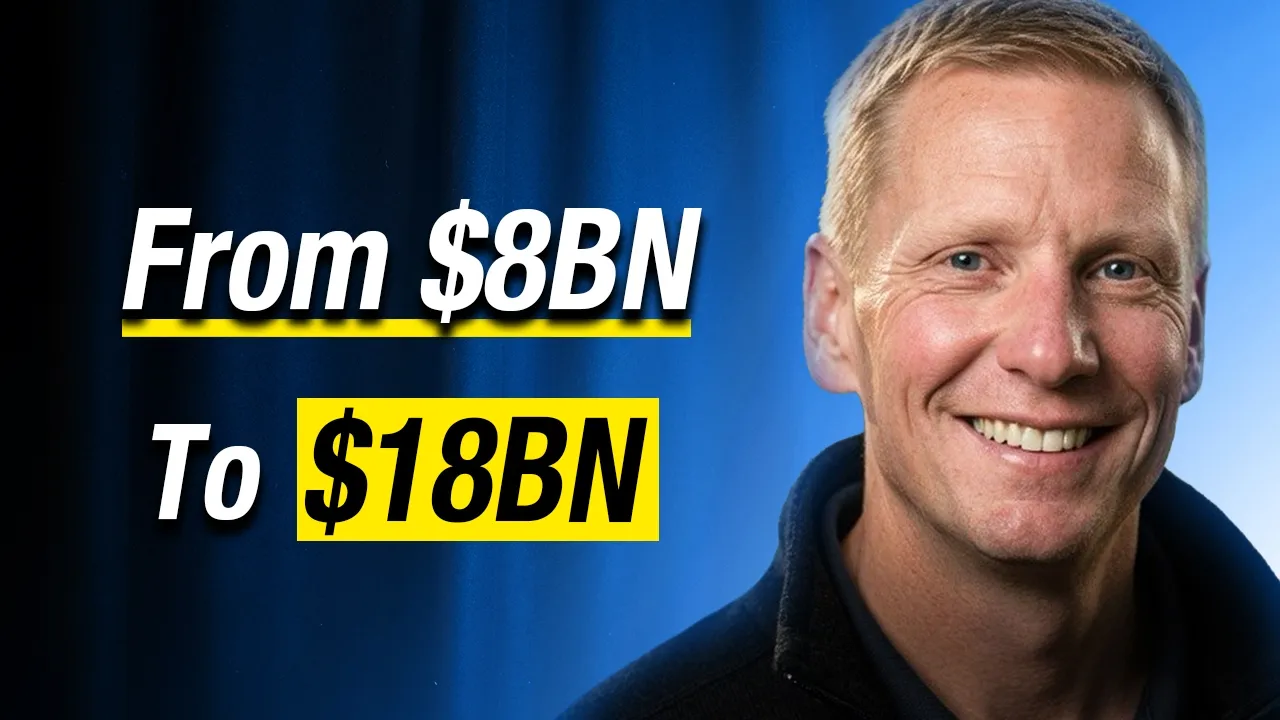
Scott Wilson is the CIO of WashU, one of the best-performing endowment funds in the world. Under his leadership, Scott has grown the endowment from $8BN to $19BN today. At one point, SpaceX was over 20% of the entire value of the endowment. ----------------------------------------------- Timestamps: 00:00 Intro 02:28 Why Scott Redeemed Over Half the Portfolio in His First Week 04:13 How WashU Grew From ~$8BN to Nearly $20BN 06:16 Why Scott Would Put 70–80% in Privates Without Payout Constraints 07:56 Why WashU Puts More Than Half Its Private Book Into Directs and Co-Invests 09:17 Why Direct Investments Have Driven WashU’s Outperformance 11:52 Why Fund Concentration Limits Hurt Venture Returns 15:00 Scott’s Biggest Investing Mistake: Not Adding Enough to Winners 19:00 Why Scott Still Avoids Mega-Funds 24:56 Why Scott Thinks Private AI Valuations Are Showing “Stupidity” 27:51 Why Scott Thinks Many AI Companies Won’t Exist in 10 Years 29:02 Why Frontier Models May Struggle to Sustain Pricing Power 32:21 Why WashU Walked Away From Sequoia’s Evergreen Structure 35:29 The #1 Reason WashU Drops a Venture Manager 40:34 Why Scott Expects an AI Shakeout 43:05 How WashU Generated ~$17BN of Profit in Nine Years 44:39 The Mistake That Cost WashU Billions 45:55 Why Scott Regrets Not Selling More in 2021 47:35 Why Scott Still Likes Investing in Europe 49:57 Why WashU Is Still Investing in China 54:09 Why Scott Thinks Lee Fixel Is One of the Best Investors He Knows ---------------------------------------------------------------------------------------------- Subscribe on Spotify: https://open.spotify.com/show/3j2KMcZTtgTNBKwtZBMHvl?si=85bc9196860e4466 Subscribe on Apple Podcasts: https://podcasts.apple.com/us/podcast/the-twenty-minute-vc-20vc-venture-capital-startup/id958230465 Follow Harry Stebbings on X: https://twitter.com/HarryStebbings Follow WashU on X: https://twitter.com/WashU Follow 20VC on Instagram: https://www.instagram.com/20vchq Follow 20VC on TikTok: https
Summary
Generated by gpt-5.6-terraAt-a-Glance
- Verdict: Watch fully
- Core thesis: WashU's exceptional endowment returns came less from broad manager diversification than from a concentrated, look-through portfolio built by proactively co-investing in its best managers' best companies, then holding and adding to long-duration winners.
- Why it matters: It is a rare, concrete account of how a sophisticated allocator turns manager relationships into an active company-level underwriting and portfolio-construction system, alongside a notably skeptical view of late-stage AI valuations and mega-fund economics.
- Best use: Use it as a reference for designing concentrated investment portfolios, manager-to-direct deal pipelines, governance for large positions, and a valuation-conscious framework for AI/private-market exposure.
Executive Summary
Scott Wilson describes transforming WashU's managed pool from just under $8 billion to nearly $20 billion through a rapid overhaul followed by a concentrated, company-centric model. On arrival, the team submitted redemption requests for more than half the portfolio, eliminated roughly 36-37 hedge funds, and ultimately turned over more than 75% of assets, including secondary sales of private holdings, over about 18 months. The central shift was away from a conventional fund-of-funds structure toward a portfolio where the team evaluates underlying companies directly and uses external managers as high-signal sourcing partners.
The operating model is deliberately proactive. Rather than wait for manager-led SPVs or syndicated co-investments, WashU asks trusted managers which five portfolio companies excite them most, meets those companies, independently verifies the thesis, and seeks ways to build direct ownership—including later financing rounds, employee tenders, and direct cap-table positions. More than half of the private portfolio is now in directs and co-investments, and Wilson says 80-90% of his team's time is spent meeting companies rather than managers. He credits this approach, rather than manager selection alone, for WashU outperforming its peers.
Wilson's portfolio philosophy is concentration at the look-through-company level, not blind concentration in funds. WashU targets roughly half of total assets in its top 50 look-through positions, has allowed positions such as SpaceX to exceed 20% of the portfolio at one point, and believes diversification benefits diminish sharply beyond roughly 20-30 underlying holdings. His major retrospective error was failing to add enough capital to high-conviction winners after their valuation or portfolio weight had risen; he says this frame-of-reference bias cost billions.
On AI, Wilson is materially more cautious than prevailing late-stage private-market sentiment. He believes there is a private-market valuation premium, sees too much capital chasing late-stage champions, and questions whether frontier-model providers will sustain deep profit pools when customers can switch among near-interchangeable models or downshift to cheaper alternatives. He does not reject AI exposure, but favors independent valuation work, hedging or trimming frothy public positions, and redeploying liquidity into public companies—particularly sectors viewed as insulated from AI—rather than treating private-market marks as inherently superior.
Key Takeaways
- Claim: WashU's performance engine is concentrated direct and co-investing sourced through trusted managers, not a broadly diversified manager roster. | Evidence: More than half of WashU's private portfolio is in direct investments and co-investments; Wilson says that without these positions, WashU would have performed around the peer-group average, whereas with them it has been at or near the top over the past decade. | Implication: An allocator seeking differentiated returns should treat top managers as a high-quality origination network, but must build company-level diligence capacity rather than merely expand manager coverage. | Caveat: WashU does not claim to source companies from scratch: it starts from a manager's conviction, then independently verifies the thesis. This requires an internal team capable of underwriting and monitoring companies.
- Claim: The team allocates time and capital at the company level, using fund commitments chiefly as a path to high-conviction look-through exposure. | Evidence: Wilson says 80-90% of team time is spent meeting individual companies, and WashU 'hardly ever' discusses fund performance; it aggregates exposures to know its dollar exposure to names such as SpaceX, Cerebras, and Anthropic. It generally does not add partners often—roughly one new fund last year and one planned for the following year. | Implication: Portfolio reporting and governance should be organized around underlying-company exposure, thesis quality, and marginal capital allocation—not only IRR, TVPI, and manager-level diversification. | Caveat: The approach does not fit companies that WashU cannot independently understand, differentiate from competitors, or monitor; Wilson says the team simply does not play in those cases.
- Claim: Concentration is intentional and should be governed by conviction, liquidity, and exposure—not arbitrary position caps. | Evidence: WashU targets half its portfolio in the top 50 look-through positions and believes the quantitative benefit of diversification falls sharply beyond 20-30 underlying names. SpaceX reached more than 20% of the total portfolio at one point; adding more than 2% of portfolio cost to a single name requires board notification, while 4% requires board approval. | Implication: If Ken has genuine differentiated conviction, the primary question is whether governance and liquidity architecture support holding it—not whether a conventional allocation limit makes the position appear uncomfortable. | Caveat: Concentrated positions can fail: Wilson cites substantial losses in automated and additive manufacturing investments, and notes that governance must permit holding winners while retaining fiduciary risk controls.
- Claim: The biggest avoidable error was failing to add to proven winners because they had already appreciated or become large positions. | Evidence: Wilson says WashU passed on opportunities to add to names that remained its highest-conviction investments because they had risen from, for example, a $2 billion to a $5 billion valuation or had already reached 1-2% of the portfolio; he estimates this cost billions of dollars. | Implication: Build an explicit follow-on decision process that separates prior entry price and current portfolio weight from forward expected value, while setting hard tests for whether the original thesis remains intact. | Caveat: This is not an argument to average up mechanically: WashU still requires that each incremental investment be the best marginal use of capital and that the team can independently underwrite it.
- Claim: Wilson favors smaller, aligned managers over mega-funds because fund-size growth usually dilutes ownership economics and reduces the likelihood that a single winner can drive returns. | Evidence: WashU is in funds above $1 billion but none above $10 billion and has a strong bias against the latter. Wilson argues that doubling fund size generally means either writing larger checks at higher valuations or making more investments; either can reduce multiple-on-invested-capital. He would rather back a $1 billion fund that returns every 18 months than a $10 billion fund returning every three years. | Implication: Assess funds through ownership, valuation, and look-through exposure per company rather than headline fund size or access prestige; use larger funds only where their scale creates a specific advantage. | Caveat: He acknowledges that trillion-dollar private outcomes can allow mega-funds to generate venture-like returns, particularly in capital-intensive AI, but questions the long-term return on the required capex.
- Claim: Late-stage private AI is likely priced ahead of public-market support, and frontier-model economics may be structurally weak under current business models. | Evidence: Wilson says late-stage private champions face a valuation premium, citing the possibility that Anthropic could have raised privately above $2 trillion while public markets might not support that value. He argues that users often cannot distinguish among leading models for most tasks, and that companies initially buy the frontier model but later shift many tasks to cheaper alternatives. He attributes weak DPI more to private valuations than to closed public markets. | Implication: Distinguish AI adoption from durable model-layer economics. Underwrite defensibility, switching costs, profit pools, and capex returns before accepting late-stage private marks as investable value. | Caveat: WashU still has meaningful Anthropic exposure through managers and retains it partly because the exposure is embedded in valuable partner funds rather than easily separable SPVs; it may hedge public exposures when valuation appears frothy.
- Claim: Selling and hedging should be valuation-led and position-specific, not governed by a fixed distribution or sell-down schedule. | Evidence: WashU has held Nubank for nearly five years after public distribution, but partially or fully hedges other positions before distribution when valuations look excessive. For very large holdings such as SpaceX, it takes some chips off the table and gradually sells over multiple years while preserving exposure to long-term upside. | Implication: For illiquid winners, predefine valuation-triggered trim and hedge decisions; avoid allowing expected near-term mark-ups or greed to override a known opportunity to de-risk. | Caveat: Wilson identifies a major failure in 2020-21: WashU delayed a large secondary sale to capture anticipated write-ups, forfeiting an opportunity to sell at roughly 80-90 cents on the dollar before venture valuations fell.
Detailed Brief
Portfolio restructuring, liquidity, and private-market allocation
- Claims: Wilson views public and private equity as economically similar assets differentiated mainly by marking frequency, but recognizes that required spending drives the practical allocation constraint.; WashU's broad target is roughly half public and half private, although it had reached close to 70% private at fiscal year-end before recent liquidity events.; Absent its approximately 5% annual payout obligation, Wilson says he would target 70-80% private assets because private investments have compounded in the low-to-mid 20% range over the past decade versus roughly 10% for public equities.
- Evidence: A 5% payout funded from a portfolio that is only 50% liquid effectively requires 10% of liquid assets annually, since private realizations cannot be relied on to arrive when needed.; After private assets became liquid, WashU began redeploying capital into public markets, especially non-AI and non-AI-infrastructure sectors it considers relatively insulated from AI.
- Caveats: The private-return comparison is historical and does not establish that current private-market vintages, especially late-stage AI, will replicate those returns.; Wilson says he would prefer smoothing the university payout over a longer period, but the endowment's mission creates an unavoidable tension between current spending and long-run compounding.
- Implications: Liquidity planning should be framed around committed institutional cash needs and timing uncertainty, not simplistic public/private labels.; A long-duration pool with minimal payout needs can rationally bear far more illiquidity, but only if it can tolerate valuation cycles and delayed distributions.
Manager selection, geography, and valuation discipline
- Claims: Wilson does not apply a fixed three-fund commitment rule: because WashU knows a small number of partners and their portfolios well, it will reassess early if its independent view materially diverges from a manager's view.; The most frequent reason to stop backing a manager is weak valuation discipline, not a single disappointing outcome or rapid capital deployment.; WashU finds opportunity in Europe and China when business quality and price diverge, rather than excluding regions because of consensus pessimism.
- Evidence: Wilson cites a manager who rarely rejected companies at 100x revenue as an example of a valuation posture WashU does not want to fund.; In Europe, he sees businesses with U.S.-like KPIs, growth, and unit economics trading at lower earnings multiples rather than high revenue multiples.; WashU maintains a Shanghai office with two local staff, has added China exposure despite geopolitical concerns, and emphasizes investing through local partners.
- Caveats: Wilson acknowledges agency issues between dollar- and RMB-denominated China vehicles, geopolitical risk, VIE structures, and the need to favor businesses that can return capital to shareholders.; A persistent regional valuation discount may reflect real structural risk; Wilson's distinction is between price and intrinsic value, not an assertion that every regional discount is mispricing.
- Implications: Manager diligence should prioritize whether the manager can decline attractive narratives at unjustified prices, even in high-momentum markets.; Geographic contrarianism only becomes investable when paired with local information, legal/structural competence, and a credible path for shareholder returns.
Notable Concepts & Terms
- Look-through exposure: WashU aggregates holdings across funds, co-investments, and direct stakes to measure its actual exposure to each underlying company; this is its core portfolio-construction lens.
- Offensive co-investment strategy: Rather than accept manager-syndicated deals, WashU proactively identifies a trusted manager's highest-conviction companies and pursues direct access before a financing or tender is offered.
- Best marginal use of capital: An investment must compete against every alternative for incremental capital, including follow-ons in existing winners; prior cost basis should not decide the outcome.
- Frame-of-reference bias: The tendency to refuse to add to a winner because its valuation or portfolio weight is higher than at initial entry; Wilson identifies this as WashU's costliest mistake.
- DPI: Distributed paid-in capital; Wilson argues weak private-market distributions are primarily caused by private valuations exceeding what public markets will bear, rather than a closed IPO market.
- Negative selection bias in inbound SPVs: Wilson believes deals offered reactively by managers or IR teams may be lower quality than a manager's best unoffered assets, making proactive outreach superior.
- Price versus value: Wilson's valuation principle: price is what an investor pays, while value is what they receive; similar business fundamentals at a lower entry multiple should improve long-term outcomes.
- VIE structure: A structure relevant to Chinese investing that can give offshore investors economic exposure to a domestic operating business; it is part of the structural complexity WashU navigates through local expertise.
Operator Notes / Why Ken Should Care
- Implement a look-through exposure dashboard across direct holdings, funds, SPVs, and public positions; set concentration limits and review triggers at the company level rather than only at the manager or asset-class level.
- Create a proactive manager-to-company pipeline: periodically request each high-trust manager's top five portfolio companies, establish direct relationships early, and track potential financing, tender, and secondary-access paths.
- Add a formal follow-on memo requirement for major winners that explicitly excludes original entry price as a decision variable and compares forward expected value against all alternative uses of capital.
- For AI investments, require an explicit assessment of model substitutability, customer switching costs, inference/capex economics, and durable profit pools before underwriting terminal-value assumptions.
- For large illiquid positions, establish valuation-based trim, hedge, and secondary-sale rules before markets become euphoric; do not defer a planned de-risking solely to capture the next expected mark-up.
- Review manager commitments for evidence of valuation discipline and look-through ownership dilution as fund size grows; avoid treating access to prestigious platforms as sufficient rationale.
Source/Metadata
- Title: Inside WashU's Endowment Fund | SpaceX Made Up 20% of Out AUM | Scott Wilson
- Transcript words: 18696
- Duration seconds: 3437
- Timestamp note: No usable timestamps or chapter markers were provided; the transcript contains substantial duplicated passages.
Transcript
We had 36, 37 hedge funds in the portfolio, and when we got rid of them all, 80, 90% of our time is just out meeting individual companies. And that's very different than probably how most of your LPs spend their time. At one point, north of 20% of the portfolio is in SpaceX. How often do you hear one of the biggest allocators in the world reveal how they make incredible investment decisions? Very rare. This CIO today has taken their institution from $8 billion to close to $20 billion today. I'm so excited to welcome an OG of the endowment fund space, Scott Wilson at WashU. Half of our portfolio is in our top 50 look-through positions. Our model doesn't really work with mega funds. They don't need our capital. We hardly ever talk about fund performance. We only really talk about the underlying exposures in the portfolio. Price is what you pay, value is what you get. Ready to go? Scott, I'm so excited for this. One of the most respected in the industry. Thank you so much for joining me today. Yeah, well, thanks for having me. Not at all, but I'd love to start with a couple of lessons from the past. You obviously had roots with Grinnell, spent several years there building out an incredible book. What are some lessons for you from Grinnell that really stuck with you and you took with you to WashU and impacted how you think about building out your book with WashU? We ran a similar strategy at Grinnell. So I was fortunate to work for this guy, David Clay, who hired me at Grinnell. And Grinnell had a long history of a mix of direct co-investments and external partners that managed the portfolio. It was a pretty concentrated portfolio. I think it was super concentrated relative to the peer group. And we do a lot of the same things, but David was a great guy to learn from because when I first landed at Grinnell, I really had no idea what an endowment actually did on a day-to-day basis. And I think our strategies evolved over time, but we still fundamentally do the exact same things we were doing at Grinnell here at WashU. Which is concentrated managers, concentrated positions in directs as well. If you really want to dumb it down, there's nothing particularly clever about it. We try and find really good external partners when they find something that we think is really unique. We try and double, triple, quadruple down on it. And then hopefully let that compound over long periods of time. That's it. If you go forward to WashU, I heard, and this was, I can't remember who told me, but they said that the first week in the job, most people have a bit of time, get used to the new environment. Nope. Scott did a fire sale, sold 75% plus of the WashU portfolio. Yeah. Can I ask that? I saw that stat. I'm not sure that it was 75%, but we put in redemptions for over half the portfolio in the first week. But I also had the portfolio for a couple months before I actually landed in the seat. So there was a lot of preliminary work that went into those decisions. It wasn't a complete, we're just fire sailing everything. Were you worried about doing too much too soon? That is a very large shift. Yeah. I mean, it was a mix. There was this obvious tension that performance hadn't been great for quite some time. And the board wanted to see results quickly. And they had given me and the team three years to really make performance, show some real performance improvements. And to do that, we had to really restructure the portfolio relatively quickly. And changing around an endowment portfolio is more like turning around an aircraft carrier than a speed boat. So we knew that was going to take a decent amount of time. And then the private side, luckily the private side was in better shape, I think, than the public side of the portfolio. We had 36, 37 hedge funds in the portfolio. And then we got rid of them all. So we certainly weren't popular in certain parts of Manhattan. Ultimately, we turned over more than 75% of the portfolio through secondary sales on the private side. That is a fire sale. That would constitute, yeah, I'll take that. Fire sale over 18 months. Fine. And just don't go to Manhattan for a while. He won't be the most popular dude on Wall Street. Okay. And the endowment then is $8 billion? Yeah, it was just under $8 billion when I started. Okay. And today is how much? The total managed pool is probably just under $20 billion today. I hope you have a 20% take rate personally. No, unfortunately, that's not the way it works. Unfortunately not. That would be a $2.4 billion take. So well done. So you have that restructuring of the portfolio and you then have the freedom to bluntly reallocate and start a little bit more afresh. How did you approach it then going, okay, this is how much I want publics, privates. What did the portfolio construction look like when you had that flexibility? I mean, I always say we're pretty much indifferent between publics and privates. And I would tell my board, you know, the only difference between those two asset classes is how often they're marked to market. So if you have a 10, 20 year timeframe, should you really care that something is marked every day or something is marked once a quarter? Within that, we have obvious liquidity constraints. So our big broad target, I would say, is half publics, half privates. We're definitely out over our skis in privates, but that's reversing quickly. With the greatest of respects, I get you on the market to markets, but the biggest difference is, as you said, liquidity, no? I mean, the extended period that funds are now in terms of being 12 to 15 year funds and the time it takes to get cash back, the fundamental difference is available liquid, no? Yeah. Yeah. I mean, we obviously have liquidity constraints and that drives that ratio between public and privates. But it's not like if Stripe goes public tomorrow, it should be in a different asset class. In terms of the capital requirements, you have net outflows a year of about 5%? Roughly 5%. It's smoothed out over kind of rolling five-year average. If you didn't have the required net outflows, would you do anything differently in terms of capital allocation? Oh, for sure. We would probably have 70%, 80% targeted privates. Wow. Can you walk me through that thinking and just say, I'm the board. Rationalize that for me, Scott. Yeah. Well, your payout is a function of your liquid assets, right? Because you can't always convert your private portfolio into liquid. The payout is not guaranteed, right? In theory, some percentage of your private portfolio should become liquid every year, but you can never count on it when you actually need it. So if you have a 5% payout and half your portfolio is liquid, that's 10% of your liquid portfolio that you're paying out every year. If you're paying out zero, well, you really don't have that constraint. And if you look at the relative performance, you know, over the last decade, we've probably compounded our privates in the low to mid-20s. And we've compounded our public equities at 10%. Did you always have this belief in privates being the value driver of a portfolio? No. But I do think the markets are less efficient. What do you mean by that? You can get access to investments that are less picked over. There's always natural buyers and sellers. And I think it's hard, much harder to create alpha in public markets than it is private markets. And I think this is well-documented over the course of time. So if we take the 70 to 80% that could be in privates, how do we think about structuring the privates book today? Obviously, privates is a very large allocation in itself. You've got directs, you've got funds, you've got credit, you've got debt. How do you think about how privates should be structured for you? The way we do it, roughly half of our private portfolio or more than half right now, is in kind of co-investments and direct investments. So we manage it the same way we manage the public portfolio. So we find good partners. And to the extent we can, when they find something that's really interesting, we try and co-invest or add capital directly to that single name. Do you have a separate direct team? No, no. Everybody on my team is a generalist. What would you advise another CIO? You know, obviously I'm a manager. I have many LPs and they all say to me, oh, we'd really like to do more directs, but we don't feel like we're equipped to do so. You've got credit, you've got debt. How do you think about how privates should be structured for you? The way we do it, so roughly half of our private portfolio, maybe more than half right now, is in co-investments and direct investments. So we manage it the same way we manage the public portfolio. So we find good partners. And to the extent we can, when they find something that's really interesting, we try to co-invest or add capital directly to that single name. Do you have a separate direct team? No, no. Everybody on my team is a generalist. What would you advise another CIO? I obviously am a manager. I have many LPs and they all say to me, oh, we'd really like to do more directs, but we don't feel like we're equipped to do so. We don't have the time to really do the work. What would you say to them? And how would you advise a CIO who doesn't really do directs today, but maybe should and could? Yeah, you have to build that muscle. You have to have that internal skill set on the team. So if you look at how my team allocates their time, we still meet with a lot of external partners, but upwards of 80, 90% of our time is just out meeting individual companies. And that's very different than probably how most of your LPs spend their time. It's very different. Most of them spend 70 to 90% of their time with managers and then 10% of their time with directs, I'd say. But if you look at our performance over the last decade, if we didn't have any direct or co-investments, we would have been right at the average of our peer group. As it is, I think we're at the top, if not the very top of our peer group over the last decade. So were you just better company pickers then? Because what you just told me is that actually you'd be average if it were just funds only. And if that were the case, you must just be better company pickers than everyone else. Yeah, it's not us, though. We're not doing what you're doing. I think you have to be humble. I think we're trying to identify what we think is a really unique thesis or a really unique company, but we're not sourcing that from scratch. And so I think we're starting on second or third base because we're already invested with Harry and we think Harry's a really smart guy and he really likes this investment. We'll do our own work to independently verify the thesis. And sometimes we don't agree with the thesis and we have certain partners that we think is high signal and lower signal. But that's where we start our process. Hey, somebody we think is really smart already thinks this is a great investment. Tell me, how much will you have in one company? We have a mutual friend in Mr. Lee Fixel who I happen to think is wonderful. Yeah. And he told me that I had to ask about concentration limits. How do you think about concentration on a per company basis? Well, I would separate cost versus NAV. And Lee and the board and Adam should get a lot of credit for the big win in SpaceX. I think that became such a large position for the portfolio. At one point north of 20% of the portfolio is in SpaceX. And at that point, it become like we had conviction as a team and we had many chances to take lots of liquidity in that name. But we advocated for holding it and letting that compound. And we did several continuation vehicles that allowed us to hold on to that stock up and through the IPO. But you can't do that without the right governance structure. So that cost, if we were going to put more than 2% of the portfolio in a single name, we would need to notify the board. I think it's 4%. We need their approval. But we have a lot of leeway to concentrate the portfolio quite a bit. You've also worked with some of the best funds and we have capital concentration limits on a per company basis. Do you think those are inhibitors of great venture returns? I do. And I think they're mostly artificial. You know, if you think over the course of like, say you're going to do five funds, that's X amount of capital and to have a 10% concentration limit in any individual fund, I don't think it makes sense. I think we have lots of funds actually where we have a mandate where it's like two or three stocks. And we certainly wouldn't have a problem with, if you think about it, if you're 1% of our portfolio or 2% of our portfolio and you have a 50% position, that's only 100 basis points for us. Have you had a position with a lot of capital concentration that hasn't worked out? Oh yeah, for sure. What did you learn from it? A lot. I mean, we were there's a couple that come to mind where we had super high conviction going in. One was an automated manufacturing company and another was an additive manufacturing company. Maybe we're just poor at underwriting manufacturing companies. Where we have substantial investments. I don't think the story's completely been written on either company, but certainly it's painful. It's painful when those don't work out. Do you think 50% of your private book being in directs is the right allocation? I would take it to 80%. You know, when we started, it was just a tiny fraction. Could you have it as 80% given that you are fed by the managers you back? Yeah, there's a natural equilibrium there. Yeah. Yeah. And that'll ebb and flow over time, as you do get some of these bigger positions become liquid. But there's no artificial limit on it. And it's somewhat of an organic process when you, if you're right on the underlying thesis and it can compound for a decade or more and it massively outperforms the rest of the portfolio, you get natural high concentration in that portfolio. I think investment decision-making processes are the product that we sell our LPs. And I'm intrigued by your investment decision-making process on the direct side. What does that look like? How do you decide on directs? We have to agree with the thesis and we also have to underwrite it. So there's a ton of stuff that people bring to us that, for whatever reason, the team is not smart enough. We just don't have the right skill set, or it's impossible for us to differentiate between this company and five of its competitors. And there, we just don't play. So we have to be able to independently verify the thesis, understand the thesis, have the ability to underwrite the company, ability to monitor it going forward. And we have to think it's our best marginal use of capital, right? So we look at a lot of potential investments and I would say we do it. It's probably more like 0.1% of those investments than 1%. Is it challenging as you've scaled? Because now you're close to $20 billion and just something that moves the needle. I mean, writing a $20 million check into a growth round at $20 to $50 billion, even if it 20Xs, it doesn't move the needle in any meaningful way. Yeah. Yeah. And I think if I look back, the biggest mistake that I've made since I've been at WashU is not adding capital to our winners just because they became a relatively sizable position early on. You know, so we had lots of opportunity to add capital to some of the names you would know that have done extremely well. And we didn't do that when we could have just because they were already north of 1% or 2% of the portfolio. But I still think our model probably scales better than the traditional fund-to-funds model because it's hard to scale with managers as well. And what you end up doing is you just have to add more managers and then each manager means less and less. So we can maintain, I think, better concentration. Now we're still probably over-diversified, but we can hopefully maintain this concentration even as we double in size from here. You say you're potentially over-diversified. What's the right amount of managers to have in a book, do you think? Well, if you think about the underlying look-through exposures, right, the quantitative benefits for diversification, you know, trail off really quickly when you get more than 20, 30 names in the portfolio. If you have 20 or 30 investments, you know, Charlie Munger would say if you have three, you're fine. There's really no quantitative benefits beyond 30 for underlying look-through exposures. And really the way And what you end up doing is you just have to add more managers and then each manager means less and less. So we can maintain, I think, better concentration. Now we're still probably over-diversified, but we can hopefully maintain this concentration even as we double in size from here. You say you're potentially over-diversified. What's the right amount of managers to have in a book, do you think? Well, if you think about the underlying look-through exposures, right, the quantitative benefits for diversification trail off really quickly when you get more than 20, 30 names in the portfolio. If you have 20 or 30 investments, Charlie Munger would say if you have three, you're fine. There's really no quantitative benefits beyond 30 for underlying look-through exposures. And really the way we think about diversification is we want the top 30 names to have a significant driver of our performance. And the way we target it, we actually target half of our portfolio is in our top 50 look-through positions. And it's taken us a long time to get there. And that's probably a good target for us, a realistic target, but it's still very diversified. I mean, if you look at a diversified hedge fund, typically they have the bulk of their capital in their top 15, 20 names. So just so I understand, we have 50% of privates in directs. In the venture funds allocation, how much do you allocate towards those 20 to 30 names? At cost, I always tell if we don't have enough conviction to do 1% of the portfolio, then we probably don't have enough conviction to do it at all. But typically, at this point, that's close to $200 million. And we just don't have capacity. So we have to continue to back the companies that we have high conviction in over time. So we might start off with a $50 million check in a co-investment and then scale that up over time. With a fund investment, will you do a $20 million fund check if it's completely irrelevant from a returns perspective? You know, it probably means it's a very small fund. And if it's a very small fund that's doing really interesting things, we would, and if we would have an opportunity to write a bigger check into one of the underlying companies, then we would do it. But we don't do many of them because it's just not scalable. You have 20 to 30 funds. How many do you add a year? I think last year we added one. We have one that we're going to add next year. But if we had one or two funds, it's one in, one out. It's not a hard line, but we don't add partners very often. Can I ask, you said before about mega funds that maybe instead of just growing, they should be more judicious about where they invest. I'm paraphrasing you. And it seems like the world has moved in favor of mega funds. Capitalism moat now for many startups. Compute and capex is a very real cost that maybe wasn't there before. Have you reflected on that and changed your mind or not? No, our model doesn't really work with mega funds. They don't need our capital and they certainly don't really need us for co-investment unless it's some massive round and some massive company that we can probably go direct in anyway. You know, I think these mega funds, it's going to be very hard. We'll see, but it's going to be very hard to generate the historic multiples of invested capital that they have on those much smaller funds. With respect, and I think this show is phenomenally successful because I do push back. So forgive me because you are an OG and I'm a podcaster. But you see Thrive absolutely crush it with OpenAI and Cursor and positions in sizes of outcomes that are just previously never seen before. And we're seeing outcome expansion so real as you've seen with SpaceX. With respect, that would suggest that you could get venture returns on mega funds if in those outcomes. Yeah, certainly when you get these trillion-dollar-plus outcomes in private markets even before the public, it's possible. You know, I think if you just think about the dynamics when you double your fund size, right, you either have to double your check size in every company at the same valuation. And we know that doesn't happen, right? They end up paying, it's a much bigger check, but it's a much higher valuation, so the multiple money is probably not going to be as good going forward as it has been historically. Or you have to do twice as many investments and your 50 bets investment is not as good as your top 10 investments. So you have to do way more investments, double your check size, and typically when they double the check size, it comes with a valuation that's commensurate. I think they would say they double their check size, but the companies need so much more capital. AI is this exhaustive capital that venture needed. Finally, we have an avenue to deploy the billions of dollars that you very kindly give us. Yeah. I mean, there's certainly massively CapEx intensive businesses, but it's not clear to me what the long-term returns on that CapEx is going to be. With respect, given the size of checks that you need to write, are you able to not be in the mega funds? Just when you think about concentration on a per fund basis, if you have to write 50 to 100 million dollars and you don't want to be more than 10% of the fund, I mean, you've got to be in billion-dollar-plus funds. Yeah, we're obviously in lots of funds that are north of a billion dollars. We're not in any that are north of 10 billion. Yeah, and we would certainly have a strong bias. I wouldn't say never, but we would have a strong bias that that's probably not the best use of work capital. And we have no problem getting concentrated positions. You know, if you look at our look-through exposures, we have lots of significant capital allocated to a small handful of names that we built up over time in really great companies. We don't need trillion-dollar outcomes to have SpaceX-like outcomes. Yeah, it's just a completely different strategy. We would rather be at somebody who's small, doing really interesting things in these companies early, and we can partner closely enough with it that we know those companies. We can develop conviction early on, and we can essentially lead some of those middle to late stage rounds. When is it interesting for you to get involved? Company valuations are soaring so far so quickly today. How do you think about when's the window in session? I mean, we come across all stages. It's more driven by our opportunity set at the time than any specific stage of company we're targeting. But I'd say we're not good super early stage investors. And that's a really tough skill set that I would say we don't have. So if we can't talk to customers, understand the product, understand what we think unit economics look like, that's something that's going to be hard for us to build conviction in. So it tends not to be a lot of C or Series A. Does it become difficult as more and more of these funds have IR teams? And so the distance between you and the manager becomes more real and your ability to get information and get deals becomes more buffered. I don't think many of our funds that we're really close to even have IR teams, but some of them have somebody that functions like one. But the way we typically do it is more, much more proactive. We're not waiting for them to bring us a deal. You know, we're going out and saying, hey, who are the five companies in your portfolio that you're most excited about? And then we'll just go out and meet those five companies. And if we find one that we think is really interesting, we'd be like, hey, we would love to get involved with this company if there's a chance for us to help lead the next round. Or we've led employee tender offers. We've gotten direct on the cap table. We've done lots of things that help us get exposure, but that is more offensive than waiting for your IR person to call us and say, hey, we're doing an SPV in this fund. And I actually think there's a huge negative selection bias if you're just waiting for someone to give you a call and say, hey, we have $500 million of OpenAI that we're syndicating out. Can I ask you, when you review the venture book... Who are the five companies in your portfolio that you're most excited about? And then we'll just go out and meet those five companies. And if we find one that we think is really interesting, we'd be like, hey, we would love to get involved with this company if there's a chance for us to help lead the next round. Or we've led employee tender offers. We've gotten direct on the cap table. We've done lots of things that help us get exposure, but that is more offensive than we're waiting for your IR person to call us and say, hey, we're doing an SPV in this fund. And I actually think there's a huge negative selection bias if you're just waiting for someone to give you a call and say, hey, we have $500 million of Open AI that we're syndicating out. Can I ask you, when you review the venture book that you've built in terms of managers, what do you know now that you wish you'd known back when you were at $8 billion when you were doing the fire sale? We've definitely learned some hard lessons. I think maybe the biggest takeaway is we've done much better on this offensive strategy than defensive strategy. So we do way fewer of inbound co-investment opportunities than we do outbound. That's probably the biggest takeaway. Can I ask, are you concerned by where we are in the cycle? You're a very realist investor that to me really likes fundamentals. And today, a lot is detached from fundamentals, it would seem, especially from the private world where you've got incredible exuberant pricing, real frothiness, juxtaposed by this very real public markets reality. How do you think about that? Markets have short memories. So if you look at the lessons from the original tech bubble in the 2000s and the GFC in 2021, from the crypto bubble, we're seeing the same kind of stupidity that we saw in all those other cycles. And every five years, particularly in private markets, where I think the investors tend to be just less sophisticated, it's clear to me that there's a valuation premium in the private markets. I don't know where Anthropic is going to go public, but it's clear to me they could have raised capital in the private markets if they stayed in the private markets at north of $2 trillion if they wanted to. I'm not convinced that the public market is going to give them that same valuation, maybe. And same with OpenAI. Aura tried to go out. Cerebras tried to go, or has traded really poorly since the IPO. SpaceX is basically back to really close to its IPO price. Probably there's just too much capital chasing these late stage champions in the private markets and the valuations are, I think that's why there's no DPI. It's not because the public markets aren't open. The public markets are pretty close to all-time highs. It's just, you can't go out public at the valuation that the private markets will give. Why would you go public? Is this a permanent transition in the financing landscape? Where, to your point there, you could raise and stay private. The Collisons have proven that staying private and having a great business is very beneficial. You're still able to do amazing tender offers to your employees. You're able to do M&A and buy OpenRouter for $8 billion. Hell, Scott, why are we going to go public? There's a lot of rationality to stay private. I think ultimately, the public markets are obviously much deeper capital markets. I think when SpaceX raised $85 billion or whatever in the IPO, that's pretty tough to do. The sovereign wealth funds and the big pension funds and SoftBank, they can only write so many of those checks. And I think most of those capital sources have been exhausted and the public markets are still multiple the size of the private markets. I think there's $14 trillion or something globally in private markets. Do you think we're seeing a massive sell-off now to make capacity for Anthropic? Could be. It would obviously be a lot of the same potential buyers. Yeah. I mean, I think that's tough to kind of beta test. You said about stupidity within private markets. Can I ask you, what did you mean by stupidity? Like, what are you pointing to? Is it valuations? Is it deployment speeds? It's just valuations. I'm sure that half of these superintelligence—that's the correct term now—but these AI-related companies, probably half of these companies don't exist 10 years from now. And it's not clear how many have a defensible mode around their business. It's not clear to me what the ultimate profit pools look like for these companies. I think it's a super strange dichotomy. If you take the top five large language models and they all had the same user interface for 99% of problems or tasks, you probably couldn't tell the difference. You wouldn't know which model you're using. I can't describe another industry like that that has a big, deep profit pool. Do you have much exposure to OpenAI or Anthropic, the model providers? We have pretty decent exposure to Anthropic through a few of our partners. With the greatest of respects, as you said, the ability and willingness to switch, the commoditization, do you ascribe little value then to that model provider layer? The way the business models are currently constructed, yeah. In the venture market, people prescribe, when there's a free alternative, customer willingness to pay drops very, very quickly. And I think everybody starts with the frontier model, and this is definitely true when I talk to our companies and our portfolio. Everybody starts with the frontier model because if you're trying to implement AI, you're starting at spending at zero and you allocate some budget to it. And so, I think everybody starts with the most expensive models. You use it, you find it useful, you ramp up spend, and at some point they say, you know what, for most of our tasks, and certainly this is true on my team, we don't really need a frontier model, we're not solving millennial price problems. Can I ask, why have you not sold then? We've had very liquid secondary markets. I completely hear and agree with you on everything, but then why hold a position that could be sold? For us, it's relationship driven. These aren't held in SPVs where we could easily sell. So it's one exposure and a fund of 40 other investments, so we wouldn't be selling just one thing in isolation. Those particular partners are great partners for us, so we're happy to hold it in. And if it goes public, we have the ability to hedge if we think the price is right. How do you think about the stock distribution lens? We've seen several managers say, actually, we think we can manage your position once public, and so we're going to create vehicles to do that. Others say, we're going to distribute straight to you in stock. How do you think about what is the right way, and then what do you do once distributed with the stock? Yeah, it depends on the situation. We have stuff that we owned as private companies, and it went public five years ago, like NewBank. It's in our 13F. We've owned that since it was a private company. It was distributed, and we still own it almost five years later. Other companies, it goes public, and we have the ability to hedge exposures, even pre-distribution. We'll do that if we think the valuation is frothy. So for us, it's valuation. We probably have some independent view on what we think the right value for the stock is, and so we'll partially hedge or fully hedge the position. So you get stock, okay? You do a scheduled selldown over an 18-month period. It's totally ad hoc, and it depends on a per-name basis. I agree. I think NewBank's amazing, and David is a rock star. I'm a holder, too. But how do you do that? For something like SpaceX, or a really big position that we think still has a ton of potential upside over the next five, ten years, we'll try and be as thoughtful as we can, and it's, I always say it's better to be not stupid than clever. So it'd be stupid to not take some chips off the table because we have a fiduciary obligation to the university and the mission of the university. So we'll take some chips, but if it were a much smaller position, we would just hold it for the next ten years. over an 18-month period. It's totally ad hoc, and it depends on a per-name basis. I agree. I think NewBank's amazing, and David is a rock star. I'm a holder, too. But how do you do that? For something like SpaceX, or a really big position that we think still has a ton of potential upside over the next five, ten years, we'll try and be as thoughtful as we can, and I always say it's better to be not stupid than clever. So it'd be stupid to not take some chips off the table because we have a fiduciary obligation to the university and the mission of the university. So we'll take some chips, but if it were a much smaller position, we would just hold it for the next ten years. So we're, to some extent, just risk managing that position. But we'll gradually sell out of it over a multi-year period. Scott, I believe you were one—well, the only allocator to suggest to Sequoia that maybe the eternal and evergreen funds were not optimal. How do you think about and reflect on that? And did you sit back and go, wow, this is a bold move as you were doing it? Well, it was controversial enough that we discussed it with the board. They're great investors, they're great people, and they've obviously made LPs a ton of money over long periods of time. It didn't fit super well into our co-investment model. So they weren't great partners for us at that point in time. And I think it was probably detrimental to some LPs when they switched that structure. And we really haven't followed the firm as closely since then, but those guys will do great over long periods of time. Scott, I'm so sorry to be so blunt. You don't turn down Sequoia. You just don't do it. I really like you because you're blunt, you're honest, you're just a good dude. But what are you doing? Even if they 1x, the point is you're close to the green leaf and goodness comes from being close. It's like the genie in the lantern, you know, in the cartoons. Maybe don't rub it. Yeah, I'm sure it was a mistake if you look at the returns that they've generated, but we've done just fine. I do love you, man. Did every LP just come to you and be like, wow, that was so bold? You know, it was funny. There was a bunch of LPs that called me on it and we expressed our view and I think everybody complained about it, but everybody did it at the end of the day. Dude, I have so many LPs that call us up because we have a lot of data on the managers that we interview and they all say, I can't believe it, and they name a big mega platform. They make me do the India fund, the China fund, the bio fund, the crypto fund, the games fund. I can't believe it. I can't believe it. And I say, so did you do them? And they go, oh yeah, of course we did it. Oh yeah. Yeah. No, we just want to do that. We'll just find some other place to put capital. Is it a big decision for you to churn? Do you agree with the three fund policy for fund commitments, which is traditional in venture, being LPs will commit to three to give managers enough time and room to prove themselves or not? Yeah, I mean, we don't have a hard commitment. Probably we're committing to more than three funds if, but we will, as soon as there's something for us to go and underwrite, and we're fortunate that we don't have that many partners. So we typically know their portfolio companies relatively well and we'll start making our own judgment calls on what we think the quality of the underlying portfolio is early on. And if we think there's a big disconnect between our view of the portfolio and the partner's view of the portfolio, then we won't stick around, but that's super rare. I mean, typically we have some view before we invest. When you review those decisions to not do a fund, what is the dominant reason? What's the number one most frequent reason why you will churn? Discipline around valuation. That's bold. It's bold because you don't know, with the greatest of respects. And so the best companies often look expensive at the time, but very cheap in hindsight. And so for you to take a snapshot decision and say that company is overpriced is bold, close to it being done. Yeah. I mean, it's typically not just one example. We had one partner that I'm not sure ever found a hundred times revenue deal that he was willing to turn down. It just didn't exist. And for something to trade at a hundred times revenue, it has to be an exciting company. I get that. But for us, that's not what we want our capital to be used for. We want discipline around valuation. And you mentioned Lee Fixel, I think he's super pragmatic. He'll obviously pay up and he's participated in some of these great companies that are huge winners, but he's also very pragmatic about when things get too frothy, stepping away. Do you think we should give managers forgiveness, patience, for deploying funds much faster than they said they would? Scott, me and you are both old enough to know that every manager says three years and every manager right now is coming back 12 to 18 months later saying, Scott, I'm so sorry, I'm so sorry, but it's the best time ever to be investing. It's the best time ever. New intelligence. Should we give them forgiveness? You know, if we think that they're deploying capital at really high returns, we have no problem with really fast deployment. And if they're deploying capital at poor returns or poor expected value, then we don't care how fast it's deployed, is what I would say. We have a bias for smaller funds. We'd much rather have someone who raises a billion dollar fund when they could raise four billion and comes back every 18 months than someone who raises ten billion and comes back every three years. We just think the ability to write a small check in a venture portfolio and have that be a super meaningful outcome for the whole portfolio, a fund returner, is much easier in a billion dollar or less fund than it is in a ten billion dollar fund. Do you look at it through the look-through perspective? Being, if I have a billion dollar fund and I get 10% in every company that I invest in and you say, well, we're a $100 million check of your billion dollar fund, our look-through, obviously I'm just explaining it for everyone listening, you've got this already, is 1% in every underlying company. Is that how you think about it? That's exactly how we think about it. To be honest, we hardly ever talk about fund performance. We only really talk about the underlying exposures in the portfolio. So we aggregate everything up and we know that we have X dollars with SpaceX or Cerebras or Anthropic in the portfolio and that's how we think about it. Can I ask you, on your Cerebras, how do you think about performance being challenged? And I'm not saying to comment on Cerebras at all, but when you have a company that is hit by bad tailwinds in the public markets, how do you think about whether they're stick and hold or actually a fiduciary duty to just cash your chips in? Yeah, I mean, Cerebras specifically, for us, that was a really big position at the IPO and so we took some chips off the table and put some hedges on even pre-distribution. But we like Andrew and the team so we'll continue to hold some of that. You know, if you look at the current KPIs of the business relative to expectations going out the next four or five years, it's tough to justify the valuation even at 25, 30 billion, wherever it's at today. Based on what they've done the last 12 months, you're betting on the come, so to speak. So that company has a lot to prove, but it's clearly a great company and we have lots of confidence in Andrew and his team to produce good results over the next decade. Scott, if you could do anything without retribution from any stakeholders, students, board, team, what would you do differently? You know, I would probably, there's this natural tension between what we're here to support the mission And so we took some chips off the table and put some hedges on even pre-distribution. But we like Andrew and the team so we'll continue to hold some of that. If you look at the current KPIs of the business relative to expectations going out the next four or five years, it's tough to justify the valuation even at 25, 30 billion, wherever it's at today. Based on what they've done the last 12 months, you're betting on the come, so to speak. So that company has a lot to prove, but it's clearly a great company and we have lots of confidence in Andrew and his team to produce good results over the next decade. Scott, if you could do anything without retribution from any stakeholders, students, board, team, what would you do differently? I would probably—there's this natural tension between what we're here to support the mission of the university and that's why we exist. But I also think a 5% payout in certain market environments is tough long-term depending on gift flow. So I've probably smoothed the payout over a longer period of time, but I understand that tension and it's great to grow the endowment and be able to see the impact on the institution. So I think that's a natural tension. I don't think there's really much at WashU that if it makes sense for the stakeholders and for the team, we've been able to accomplish everything we wanted to accomplish. Scott, you've seen many cycles now. You're a pro. Does this have a shakeout or do we keep going on the meteoric wave that is super intelligence and AI? I think there will be a shakeout. I don't know what the timeline of that is, but if you think of some of these industries that have just had massive runs, historically, they were not great businesses, and that was for three decades. They were businesses that probably barely returned their cost to capital. And at some point, they'll go back to being not great businesses, but in the short term, if you used to sell a chip or memory for $3 and now you sell it for $30 and all that excess just falls to the bottom line, I think you see that in the multiples. I think some of these industries, you buy them at very rich multiples and you sell them at low multiples because that's how companies work. But how long the cycle actually lasts, I think that's anybody's guess. Can I ask you, given what we said earlier, you mentioned NewBank, or say, an Uber or an NVIDIA of the world. These are comparatively very cheap companies based on a fundamentals basis, actually, today. And then the privates are exorbitantly priced if one looks at fundamentals. And then I look at your statement earlier of wanting to be 70% to 80% in privates and I just try and judge the— Yeah, for us, we are deploying all of this stuff that we're generating liquid back into public markets right now. So 70% or 80%, if we didn't have any liquidity constraints, I think over time, privates would grow as a percent. We're at the end of our fiscal year, we were close to 70% in privates, but a bunch of that has become liquid, so we're redeploying that. And we think the opportunities in publics, particularly non-AI, AI infrastructure-related publics, is a really good time to be investing in sectors completely that we think are relatively protected, if not immune, from AI. It's a bit of a blunt question, but you've had such a meteoric run—$11 billion is an incredible capital accrual, value appreciation for WashU, and it's an amazing journey. You could do anything now, Scott. You could have every trillionaire, billionaire in the world pay you an exorbitant amount of money to join you on their superyard and run their family office. Well, it's a lot. In the nine years I've been here, we started with roughly eight billion, we've generated $17 billion of profits on that original $8 billion, and we've paid out roughly $5 billion to the university. That's just showing off, Scott. Well, you could, and I'm sure you obviously, WashU's an incredible institution, amazing, but humans are humans. Yeah. Why do you stay in? I'm super happy here. I've got a great board, a great administration, a great team, and I make plenty—I'm well compensated. So it's a great place to be, and I obviously had opportunities to go elsewhere, but I'm very happy at WashU. If you've spent time with my board and the chancellor of the university, this is a great place to work, and I think more than half of your fulfillment and enjoyment coming to work every day is who you get to work with, and from that standpoint, I'm just super fortunate. You've spent time with my team—it's a really great team. I know. I have. They're amazing. Listen, I think before we do a quick fire, you learn from mistakes. We've talked about the amazing successes. When you reflect back on the $11 billion that we've added, what did you not do in that journey that you wish you had done? Be it renewables, be it more in private, be it anything. What did you not do that you wish you had done? I think our biggest mistake was not adding to our winners just because whether you get frame of reference bias—so we invested in this company at 2 billion and now it's 5 billion, so we didn't add to it. And obviously the position was twice the size of that point. But we had times where we could have invested in stuff that I think was still probably our highest conviction investment and we didn't do it either because it had grown in the portfolio or the price had just gone up and that was my mistake and it's cost us billions of dollars. So that's probably the biggest learning over that time frame. What did you do that you wish you hadn't done on the flip side? There's a lot of individual funds I wish we hadn't done. Obviously, we've made tons of mistakes on co-investment. You know, it's an 80-20 rule where 20% of your investments have generated 80% plus of the profits. We're not quite that bad. But we've made tons of mistakes and we've added capital to companies that probably we should have let die, but we thought there was still a chance they could recover. We've made every investing mistake you could think of. Is there one that really stands out? Yeah. I mean, our biggest mistake—we had put in mid-2020 a huge packet of LP interest into the secondary market and the markets had this huge run at the end of 2020 going into 2021 and we decided to hold off because we knew that all those companies were going to have just massive write-ups in the December quarter. So we were waiting for the first quarter to basically maximize the value on the secondary sale of those assets. And then that was a short-term bubble in venture markets. So we were essentially being greedy and we had the chance to sell it at really good prices and we didn't take it. Pretty much by I think mid-2021. And so that 2021 period, we were up I think 65% and obviously wrote a bunch of that back down over the subsequent years. But we had a chance to get out of a bunch of that stuff at really good prices and we didn't do it. So you wish you'd done it? Yeah, for sure. We were probably taking 80, 90 cents on the dollar, but we were pretty sure that the bubble wasn't going to last forever. And so we should take chips off the table. One of my dearest friends who's a very successful investor told me, you must be fearful when others are greedy and greedy when others are fearful. And it sounds so obvious, but it's actually very difficult in hindsight. I think we needed another three months or something. And it was a big secondary sale. Do you care about Europe? I had David Moorhead on from Baylor and he was, I mean, he laughed at me in all honesty when I said about Europe. Do you care? of that back down over the subsequent years. But we had a chance to get out of a bunch of that stuff at really good prices and we didn't do it. And so you wish you'd done it? Yeah, for sure. Yeah. I mean, we were probably taking 80, 90 cents on the dollar, but we were pretty sure that the bubble wasn't going to last forever. And so we should take chips off the table. One of my dearest friends who's a very successful investor told me, you must be fearful when others are greedy and greedy when others are fearful. And it sounds so obvious, but it's actually very difficult in hindsight. I think we needed another three months or something. And it was a big secondary sale. Do you care about Europe? I had David Moorhead on from Baylor and he was, I mean, he laughed at me in all honesty when I said about Europe. Do you care? Yeah, it's mostly idiosyncratic ideas, but we like Europe and we found lots of interesting stuff to do in Europe. And it's a super interesting market now, recently investing in a fintech company in Spain. Pause, Scott. Europeans don't invest in fintech companies in Spain. Yeah. What's you doing investing in a fintech company in Spain? How does that happen? We invested in another, well, I mean, it's more of a global fintech company, but based in London and Singapore. We've done it out in Europe recently. I mean, the thing is for the same quality of asset and there are good companies over there just because the market as a whole has struggled. We find that there are great companies and certainly non-tech related companies that, if they were based in the US and had the same kind of KPIs, growth, and unit economics, they would trade at huge revenue multiples. And in Europe, they trade at small earnings multiples. My question to you on some of these companies, Europe or Asia, is actually, everyone's like, oh, the Europe discount or the Asia discount. Well, if there's always a discount, it's not a discount. It's just the price. Right. Well, there's price and value. I think you got to separate the two, right? And if we think companies are like, you can buy it at a hundred, we think it's worth 300 and we think it's compounding value at a significant clip. We think that's a much better investment than buying something in the US that trades at five times in multiple that's compounding value at the same rate. Does that make sense? It does. So people understand, how do you determine the difference between price and value? Value is what it's worth and price is what someone's willing to pay? Price is what you pay, value is what you get. And it's very subjective and I think you have to be pragmatic about valuation, but for the same quality of assets and you can think same growth rate and over long periods of time, what the core KPIs of the business will drive returns more than the entry multiples. So if you get a much cheaper multiple on the entry price and you get the same growth over a decade, you're going to do a lot better. Do you have much in China? We don't have a ton in China. We have an office in Shanghai. So we cover that region really well. We have two guys there permanently and we certainly look at a lot of stuff in China. We probably have more than our peers in China and we've been active, since Jamie Dimon said China's uninvestable, we've added a decent amount of capital and I think China was one of those markets, the geopolitical risk was always there. You know, the fact that it was a little bit more visible, if you spend enough time in Asia, you want to do stuff that you think is either under the radar or supported by the broader political parties. So I think you have to be rational there, but when you can find a good company that can actually return capital to shareholders and has a pragmatic view on the world, we think China's a great place to invest. Why does everyone else not then? I, I so enjoy this show. Dude, why do people ask me, why do you love doing the show? I'm because I have conversations like this, dude. The world is saying no, run, they kill education overnight, whole sectors get taken over, you know, Xi Jinping has unlimited power and control and everyone's like, get out. Respectfully, you're not. What do you see that others don't? Well, you see that, but we've seen worse, worse behavior on very developed markets, in the UK, where there was like on the northern part of the UK, where they had the offshore oil and energy assets, and they took the tax rate from 25% to 75%. I mean, that's basically confiscating half the company. I've never seen that behavior in China. And they more or less did the same thing in Norway with certain types of assets. If they take the tax rate from 25% to 75%, that's the equivalent of confiscating half the company. Do you mind that, and I bet you weren't expecting to go here, but my knowledge of investing in Chinese funds is actually surprisingly solid. Yeah. When you invest in a Chinese fund, there's a dollar denomination and there's an RMB denomination. And now the average is $1 to 9 RMB. Do you mind that split? And if you're not allowed to invest in chips and some of the most exciting things with the dollar denominated fund, does that not take out all the alpha of investing in China? Yeah. I mean, I think there's a natural some agency problems, but I think for the most part, the entrepreneurs prefer dollar and it's a way for them to get assets offshore or if they're in the VIE structure. But so you still get access to really good companies and that's a good market. And we don't have a ton of funds in China, but we're certainly not afraid of it. And we've done more co-investments and one-off stuff in China over the last five years. But, yeah, it's a huge market is what I would say. But you have to navigate it on the ground and be realistic. Do you have to have a team on the ground to do China? I don't know if you have to have a team on the ground, but you certainly have to invest through local partners. Listen, dude, I want to do a quick fire round with you. So I say a short statement, you give me your immediate thoughts. What fund are you not in that you wish you were in? Benchmark, probably. You're not in Benchmark? We're not. No. I mean, I wish we had a bigger allocation to the early stage founders fund as well. How did you get Cerebrus through Foundation? We got Cerebrus through a fund called Eclipse. Oh, yeah. Leo. Yeah. Well done. Yeah. You can put all of your money in only one fund. Which one do you choose? Private or public. One each. I will say addition of our core partners. I think he's the best investor in our portfolio. He's just very pragmatic. I think he's disciplined around price, but will pay up for super high quality assets. And I think his underwriting process and just the way he dissects companies and business models and management teams is really impressive. And so of the people I've spent a lot of time with, I think he's probably the most talented investor in our portfolio. Are you ready for a hard one? You have an amazing board. Who would you most like to have on your board who you don't have on your board today? Probably it would be somebody with real industry expertise. Elon Musk or Thomas Reardon. Somebody who I think has real deep industry knowledge that we could use and could help us diligence a variety of investments. I mean, as it is, my board is really great at that. Which other endowment fund do you most respect? And why them? There are several. I think what Eric's accomplished in Michigan, what Robert's accomplished at Virginia, Seth at MIT, Jane, and now Josh at Brown. Those teams have just done unbelievably well over the last 20 years. Ultimately, that's what you're judged on is the multi-decade performance of the portfolio. Do you have a CIO dinner party? All get together and shoot the shit. I've been involved in various little groups over time and a couple one-off chat groups where I keep track with some of my peers. Who you don't have on your board today? Probably it would be somebody with real industry expertise. Elon Musk or Thomas Reardon. Somebody who I think has real deep industry knowledge that we could use and could help us diligence a variety of investments. My board is really great at that. Which other endowment fund do you most respect? And why them? There are several. I think what Eric's accomplished in Michigan, what Robert's accomplished at Virginia, Seth at MIT, Jane, and now Josh at Brown. Those teams have just done unbelievably well over the last 20 years. Ultimately, that's what you're judged on is the multi-decade performance of the portfolio. Do you have a CIO dinner party? All get together and shoot the shit? I've been involved in various little groups over time and a couple one-off chat groups where I keep track with some of my peers. Then my daughter goes to school in Boston, so I'll meet some of the folks in Boston when I go out there. But no, there's not an organized regular CIO dinner. I think most of us spend enough time on the road that it'd be tough to organize. You've worked with incredible managers. You've met and worked with incredible founders. Final one, when we think about the best advice that you've been given that sticks with you every day, what would the best advice you've been given be? The best advice, I tell this to kids all the time, and I think it's very true. It stems from, I don't know who first said it, but you should always try and be the best at things that require no talent. So showing up, being curious, working hard, being presentable, asking good questions, being respectful, being kind, all those things that require no talent, I think you contribute a lot to success over time. I also think it's appalling when today you are equipped with tools that allow you to be so good at those things so easily. You can go to ChatGPT before an interview with me for a job and say, give me three things about Scott that will show that I've done my work and really impress him. And it'll tell me about an incredible investment you did at Grinnell, a quote that Adam said about you and something else. And if I say those in that meeting, you'll be like, wow, Barry did his work. Yeah, no, it should be easier than ever to do those things. Scott, I do the show for shows like this. I can't thank you enough for A, agreeing to do it, but B, being so open, transparent, fantastic. Really, this has been a joy. Yeah, well, thanks for having me. It was a lot of fun. that, you know, for whatever reason, the team is not smart enough. We just don't have the right skill set, you know, or the, it's impossible for us to differentiate between this company and five of its competitors. And there, we just don't play. So we have to be able to independently verify the thesis, understand the thesis, have the ability to underwrite the company, ability to monitor it going forward. And we have to think it's our best marginal use of capital, right? So we, we look at a lot of potential investments and I would say we do. It's probably more like 0.1% of those investments than 1%. Is it challenging as you've scaled? Because now you're close to $20 billion and just something that moves the needle. I mean, writing a $20 million check into a growth round at $20 to $50 billion, even if it 20Xs, it doesn't move the needle in any meaningful way. Yeah. Yeah. And I think if I look back, the biggest mistake that I've made since I've been at WashU is not adding capital to our winners just because, you know, they became a relatively sizable position early on. You know, so we had lots of opportunity to add capital to some of the names you would know that have done extremely well. And we, we didn't do that when we could have just because they were already north of, you know, 1% or 2% of the portfolio. But I still think our model probably scales better than the traditional fund-to-funds model because it's hard to scale with managers as well. And what you end up doing is you just have to add more managers and then, you know, each manager means less and less. So we can maintain, I think, better concentration. Now we're still probably over-diversified, but we can, we can hopefully maintain this concentration even as we double in size from here. You say you're potentially over-diversified over-diversified. What's the right amount of managers to have in a book, do you think? Well, if you think about the underlying look-through exposures, right, the quantitative benefits for diversification, you know, trail off really quickly when you get more than 20, 30 names in the portfolio. If you have 20 or 30 investments, you know, Charlie Munger would say if you have three, you're fine. There's really no quantitative benefits beyond 30 for 30 under, underlying look-through exposures. And, you know, really the way we think about diversification is we want, you know, the top 30 names to have a, be a significant driver of our performance. And the way we target it, we actually target, like, I would say half of our portfolio is in our top 50 look-through positions. and it's taken us a long time to get there. And that's probably a good target for us, a realistic target, but it's still very diversified. I mean, if you look at a diversified hedge fund, typically they have the bulk of their capital in their top 15, 20 names. So just so I understand, we have 50% of privates in directs. In the venture funds allocation, how much do you allocate towards those 20 to 30 names? At cost, you know, I always tell if we don't have enough conviction to do 1% of the portfolio, then we probably don't have enough conviction to do it at all. But typically, you know, at this point, that's close to $200 million. And we just don't, we don't have capacity. So, you know, we have to continue to back the companies that we have high conviction in over time. So we might start off with a $50 million check in a co-investment and then scale that up over time. With a fund investment, will you do a $20 million fund check if it's completely irrelevant from a returns perspective? You know, it probably means it's a very small fund. And if it's a very small fund that's doing like really interesting things, we would, and we would have an opportunity to write a bigger check into one of the underlying companies, then we would do it. But we don't do many of them because it's just not scalable. You have 20 to 30 funds. How many do you add a year? I think last year we added one. You know, we have one that we're going to add. We know we're going to add next year. But if we had one or two funds, it's kind of one in, one out. It's not a hard line, but we don't add partners very often. Can I ask, you said before about mega funds that like maybe instead of just growing, they should be more judicious about where they invest. I'm kind of paraphrasing you. And it seems like the world has moved in favor of mega funds. Capitalism moat now for many startups. Compute and capex is a very real cost that maybe wasn't there before. Have you reflected on that and changed your mind or not? No, our model doesn't really work with mega funds. They don't need our capital and they certainly don't really need us for co-investment unless it's some massive round and some massive company that we can probably go direct in anyway. You know, I think these mega funds, it's going to be very hard. We'll see, but it's going to be very hard to kind of generate the historic multiples of invested capital that they have on those much smaller funds. With respect, and I think this show is phenomenally successful because I do push back. So forgive me because you are an OG and I'm a podcaster. But you know, you see Thrive absolutely crush it with OpenAI and Cursor and positions in sizes of outcomes that are just previously never seen before. And we're seeing outcome expansion so real as you've seen with SpaceX. With respect, that would suggest that you could get venture returns on mega funds if in those outcomes. Yeah, certainly when you get these trillion-dollar-plus outcomes in private markets even before the public, it's possible. You know, I think if you just think about the dynamics when you double your fund size, right, you either have to double your check size in every company at the same valuation. And we know that doesn't happen, right? They end up paying, it's a much bigger check, but it's a much higher valuation, so the multiple money is probably not going to be as good going forward as it has been historically. Or you have to do twice as many investments and, you know, your 50 bets investment is not as good as your, you know, top 10 investments. So you have to do way more investments, double your check size, and typically when they double the check size, it comes with a valuation that's commensurate. So... I think they would say they double their check size, but the companies need so much more capital. AI is this exhaustive capital that venture needed. Finally, we have an avenue to deploy the billions of dollars that you very kindly give us. Yeah. I mean, there's certainly massively CapEx intensive businesses, but it's not clear to me what the long-term returns on that CapEx is going to be. With respect, given the size of checks that you need to write, are you able to not be in the mega funds? Just when you think about concentration on a per fund basis, if you have to write 50 to 100 million dollars and you don't want to be more than 10% of the fund, I mean, you've got to be in billion-dollar-plus funds. Yeah, we're obviously in lots of funds that are north of a billion dollars. We're not in any that are north of 10 billion. Yeah, and we, you know, we would certainly have a strong bias. I wouldn't say never, but we would have a strong bias that that's probably not the best use to work capital. And we have no problem getting concentrated positions, you know, if you look at our look-through exposures, you know, we have lots of significant capital allocated to a small handful of names that we built up over time in really great companies. We don't need trillion-dollar outcomes to have, you know, SpaceX-like outcomes. Yeah, it's just a completely different strategy. We would rather be at somebody who's small, doing really interesting things in these companies early, in these companies early, and we can partner closely enough with it that we know those companies. We can develop conviction early on, and, you know, we can essentially lead some of those, you know, middle to late stage rounds. When is it interesting for you to get involved? Company valuations are soaring so far so quickly today. How do you think about, like, when's the WashU in session? I mean, we come across all stages. It's more driven by, like, our opportunity set at the time than any specific, like, strategy we're targeting in this stage of company. But I'd say we're not good super early stage investors. And that's a really tough skill set that I would say we don't have. So if we can't, you know, talk to customers, understand the product, you know, understand what we think unit economics look like, that's something that's going to be hard for us to build conviction in. So it tends not to be, you know, a lot of C or Series A. Does it become difficult as more and more of these funds have IR teams? And so the distance between you and the manager becomes more real and your ability to get information, get deals becomes more buffered. I don't think many of our funds that we're real close to, I even have IR teams, but some of them have somebody that functions like our guests. But the way we typically do it is more, much more proactive. Like, we're not waiting for them to bring us a deal. You know, we're going out and saying, Harry, like, who are the five companies in your portfolio that you're most excited about? And then we'll just go out and meet those five companies. And if, you know, if we find one that we think is really interesting, we'd be like, hey, we would love to get involved with this company if there's a chance for us to help lead the next round. Or, you know, we've led employee tender offers. We've gotten direct on the cap table. We've done lots of things that help us get exposure, but that is more offensive than we're waiting for your IR person to call us and say, hey, we're doing an SPV in this fund. And I actually think like there's a huge negative selection bias if you're just waiting for someone to give you a call and say, hey, we have, you know, $500 million of open AI that we're syndicating out. Can I ask you, when you review the venture book that you've built in terms of managers, what do you know now that you wish you'd known back when you were at $8 billion when you were doing the fire sale? You know, we've definitely learned some hard lessons. I think maybe the biggest takeaway is like, you know, we've done much better on this like offensive strategy than defensive strategy. So we do way fewer of kind of inbound co-investment opportunities than we do outbound. That's probably the biggest takeaway. Can I ask, are you concerned by where we are in the cycle? You're a very realist investor that to me really likes fundamentals. And today, a lot is detached from fundamentals, it would seem, especially from the private's world where you've got incredible exuberant pricing, real frothiness, juxtaposed by this very real public markets reality. How do you think about that? Markets have short memories. So, you know, if you look at the lessons from the original tech bubble in the 2000s and the GFC in 2021, like from the crypto bubble, like, you know, we're seeing the same kind of stupidity that we saw in all those other cycles. And it's like every five years, particularly in private markets, you know, where I think the investors tend to be just less sophisticated, but it's clear to me that like there's a valuation premium in the private markets. You know, I don't know where Anthropoc is going to go public, but it's clear to me they could have raised capital in the private markets if they stayed in the private markets at north of 2 trillion if they wanted to. I'm not convinced that the public market is going to give them that same valuation, maybe. And same with OpenAI, you know, Aura tried to go out. Cerebras tried to go, you know, or has traded really poorly since the IPO. SpaceX is basically back to really close to its IPO price. Probably there's just too much capital chasing these kind of late stage champions in the private markets and the valuations are, I think that's why there's no DPI. It's not because the public markets aren't open. The public markets are pretty close to all-time highs. It's just, you can't go out public at the valuation that the private markets will give. Why would you go public? Is this a permanent transition in the financing landscape? Where, to your point there, you could raise and stay private. The Collisons have proven that staying private and having a great business is very beneficial. You're still able to do amazing tender offers to your employees. You're able to do M&A and buy OpenRouter for $8 billion. Hell, Scott, why are we going to go public? There's a lot of rationality to stay private. I think ultimately, the public markets are obviously much deeper capital markets. I think, you know, when SpaceX raised $85 billion or whatever in the IPO, that's pretty tough to do. You know, the sovereign wealth funds and the big pension funds and SoftBank, like, they can only write so many of those checks. And, you know, I think most of those capital sources have been exhausted and the public markets are still multiple the size of the private markets. I think there's $14 trillion or something globally in private markets. Do you think we're seeing a massive sell-off now to make capacity for Anthropoc? I mean, could be. It would obviously be a lot of the same potential buyers. Yeah. I mean, I think that's tough to kind of beta test. You said about stupidity within private markets. Can I ask you, what did you mean by stupidity? Like, what are you pointing to? Is it valuations? Is it deployment speeds? it's just valuations. I'm sure that half of these kind of, I guess, superintelligence is the correct term now. But these AI-related companies, like, probably half of these companies don't exist 10 years from now. And it's not clear how many have, like, a defensible mode around their business. It's not clear to me what the ultimate profit pools look like for these companies. I think it's a super strange dichotomy. If you take the top five kind of large language models and they all had the same user interface for 99% of problems or tasks, like, you probably couldn't tell the difference. You wouldn't know which model you're using. Like, I can't describe another industry like that that has a big, kind of deep profit pool. Do you have much exposure to OpenAI or Anthropic, the model providers? We have pretty decent exposure to Anthropic through a few of our partners. With the greatest of respects, as you said, that, you know, the ability and willingness to switch, the commoditization, do you ascribe little value then to that model provider layer? The way the business models are currently constructed, yeah. In the venture market, like, people prescribe, when there's a free alternative, like, customer willingness to pay drops very, very quickly. And I think everybody starts with the frontier model, and this is definitely true when I talk to our companies and our portfolio. You know, everybody starts with the frontier model because if you're trying to implement AI, like, you know, you're starting at spending at zero and you allocate some budget to it. And so, I think everybody starts with the most expensive models. You know, they use it, they find it useful, they ramp up spend, and at some point they say, like, you know what, like, for most of our tasks, and certainly this is true on my team, like, we don't really need a frontier model, we're not solving millennial price problems. Can I ask, why have you not sold then? We've had very liquid secondary markets, I completely hear and agree with you on everything, but then why hold a position that could be sold? Yeah, for us, it's relationship driven. Like, so, these aren't held in SPVs where we could easily sell. So, it's one exposure and a fund of 40 other investments, so we wouldn't be selling just one thing in isolation. Those particular partners, like, they're great partners for us, so we're happy to hold it in. And, you know, if it goes public, we have the ability to hedge if we think the price is right. How do you think about the stock distribution lens? We've seen several managers say, actually, we think we can manage your position once public, and so we're going to create vehicles to do that. Others say, we're going to distribute straight to you in stock. How do you think about what is the right way, and then what do you do once distributed with the stock? Yeah, I mean, it depends on the situation. We have stuff that we owned as private companies, and it went public five years ago, like, NewBank, it's in our 13F. You know, we've owned that since it was a private company. It was distributed, and we still own it almost five years later. Other companies, it goes public, and we have the ability to hedge exposures, even pre-distribution. We'll do that if we think the valuation is frothy. Yeah. So, for us, it's kind of valuation. We probably have some independent view on what we think the right value for the stock is, and so we'll partially hedge or fully hedge the position. So, you get stock, okay? You do a, like, scheduled selldown over an 18-month period. It's totally ad hoc, and it depends on a per-name basis. I agree. I think NewBank's amazing, and David is a rock star. I'm a holder, too. But how do you do that? For something like SpaceX, or a really big position, that we think still has, like, a ton of potential upside over the next five, ten years, like, we'll, we'll, you know, try and be as thoughtful as we can, and it's, you know, I always say it's better to be not stupid than clever. So, it'd be stupid to, to not take some chips off the table because we have a fiduciary obligation to the university and the mission of the university. So, we'll take some chips, but, you know, if it were a much smaller position, we would just hold it for the next ten years. So, we're, you know, to some extent, just risk managing that position. But, so we'll, we'll gradually sell out at it over, you know, a multi-year period. Scott, I believe you were one, well, the only allocator to suggest to Sequoia that maybe the eternal and evergreen funds were not optimal. How do you think about and reflect on that? And did you, did you kind of sit back and go, wow, this is a bold move as you were doing it? Well, I mean, it was controversial enough that we discussed it with the board. I mean, they're great investors, they're great people, and they've obviously made LPs a ton of money over long periods of time. Like, it didn't fit super well into our kind of co-investment model. So, they weren't great partners for us at that point in time. And, and I think, you know, it was probably detrimental to some LPs when they switched that structure. And we really haven't followed the firm as closely since then, but, hey, those guys will do great over long periods of time. Scott, I'm so sorry to be so blunt. You don't freaking turn down, Sequoia. Like, you just, you just don't do it. I really like you because you're blunt, you're honest, you're just a good dude. But like, what are you doing? Even, even if they 1x, the point is you're close to the green leaf and goodness comes from being close. It's like the genie in the lantern, you know, in the cartoons. Maybe, don't rub it. Yeah, no, I'm sure it was a mistake if you look at the returns that they've generated, but we've done just fine. I do love you, man. Did every LP just come to you and be like, wow, that was so bold? You know, it was funny. There was a bunch of LPs that called me on it and we expressed our view and I think everybody complained about it, but everybody did it at the end of the day. Dude, I have so many LPs that cool us up because we have a lot of data on the managers that we interview and they all say, I can't believe it and they name a big mega platform. They make me do the India fund, the China fund, the bio fund, the crypto fund, the games fund. I can't believe it. I can't believe it. And I say, so did you do them? And they go, oh yeah, of course we did it. Oh yeah. Yeah. No, like, and we just want to do that. We'll just, we'll find some other place to put capital. Is it a big decision for you to churn? Like, do you agree with the three fund policy for fund commitments, which is traditional in venture, being LPs will commit to three to give managers enough time and room to prove themselves or not? Yeah, I mean, like we don't have a hard commitment. Like, you know, probably we're committing to more than three funds if, you know, but, but we will, as soon as like there's something for us to go and underwrite, you know, and we're fortunate that we don't have that many partners. So we typically know their portfolio companies relatively well and we'll start, you know, making our own judgment calls on what we think the quality of the underlying portfolio is early on. And if we, if we think there's a big disconnect on, you know, between our view of the portfolio and the partner's view of the portfolio, then, then, you know, we won't stick around, but that's super rare. I mean, typically we have some view before we invest. When you review those decisions to not do a fund, what is the dominant reason? What's the number one most frequent reason why you will churn? Discipline around valuation. That's bold. It's bold because you don't know with the greatest of respects. And so the best companies often look expensive at the time, but very cheap in hindsight. And so for you to take a snapshot decision and say that company is overpriced is bold close to it being done. Yeah. I mean, it's typically, it's not just one example, you know, it's, um, like we had one partner that I'm not sure he found a hundred times revenue deal that he was willing to turn down. Like it just didn't exist. And for something to trade at a hundred times revenue, it has to be, you know, an exciting company. I get that. But for us, like, that's not, that's not what we want our capital to be used for. Like we want, we want discipline around valuation. You know, and you mentioned Lee Fixel, like, you know, I think he's super pragmatic. He'll obviously, you know, pay up and he's participated in some of these great companies that are huge winners, but he's also very pragmatic about, you know, when things get too frothy, stepping away. Do you think we should give managers forgiveness, patience, for deploying funds much faster than they said they would. Scott, me and you are both old enough to know that every manager says three years and every manager right now is coming back 12 to 18 months later saying, Scott, I'm so sorry, I'm so sorry, but it's the best time ever to be investing. It's the best time ever. New intelligence, intelligence. Should we give them forgiveness? You know, if we think that they're deploying capital at really high returns, we have no problem with really fast deployment. And if we think if they're deploying capital at poor returns or poor expected value, then we don't care how fast it's deployed is what I would say. We have a bias for smaller funds. We'd much rather have someone who raises a billion dollar fund when they could raise four billion and comes back every 18 months than someone who raises 10 billion and comes back every three years. We just think the ability to write a small check in a venture portfolio and have that be a super meaningful outcome for the whole portfolio, a fund returner, is much easier in a billion dollar or less fund than it is in a $10 billion fund. Do you look at it through the look-through perspective? Being, if I have a billion dollar fund and I get 10% in every company that I invest in and you say, well, we're a $100 million check of your billion dollar fund, our look-through, obviously, I'm just explaining it for everyone listening, you've got this already, is 1% in every underlying company. Is that how you think about it? That's exactly how we think about it. To be honest, we hardly ever talk about fund performance. We only really talk about the underlying exposures in the portfolio. So we aggregate everything up and we know that we have X dollars with SpaceX or Cerebrus or Anthropic in the portfolio and that's how we think about it. Can I ask you, on your Cerebrus, how do you think about performance being challenged? And I'm not saying to comment on Cerebrus at all, but when you have a company that is hit by bad tailwinds in the public markets, how do you think about whether they're stick and hold or actually a fiduciary duty to just cash your chips in? Yeah, I mean, Cerebrus specifically, like for us, that was a really big position at the IPO and so we took some chips off the table and put some hedges on even pre-distribution. But we like Andrew and the team so we'll continue to hold some of that. You know, if you look at the current kind of KPIs of the business relative to expectations going out the next four or five years, it's tough to justify the valuation even at 25, 30 billion, wherever it's at today. Based on what they've done the last 12 months, you're betting on the come, so to speak. So that company has a lot to prove, but it's clearly a great company and we have lots of confidence in Andrew and his team to produce good results over the next decade. Scott, if you could do anything without retribution from any stakeholders, students, board, team, what would you do differently? You know, I would probably, there's this natural tension between what, like, we're here to support the mission of the university and that's why we exist. But I also think like a 5% payout in certain market environments is tough long-term depending on gift flow. So I've probably smoothed the payout over a longer period of time, but I understand that tension and, you know, it's great to grow the endowment and be able to see the impact on the institution. So I think that's a natural tension. You know, I don't think there's really much at WashU that, you know, if it makes sense for the stakeholders and for the team, like, we've been able to accomplish everything we wanted to accomplish. Scott, you've seen many cycles now. You're a pro. Does this have a shakeout or do we keep going on the meteoric wave that is super intelligence and AI? I think there will be a shakeout. I don't know what the timeline of that is, but if you think of, like, some of these industries that have just had massive runs, like, historically, they were not great businesses, you know, and that was for, like, three decades. They were businesses that probably barely returned their cost to capital. And at some point, they'll go back to being not great businesses, but in the short term, you know, if you used to sell a chip or memory for $3 and now you sell it for $30 and all that excess just falls to the bottom line, I mean, I think you see that in the multiples. Like, I think some of these industries, right, you buy them at very rich multiples and you sell them at low multiples because that's how companies work. But how long the cycle actually lasts, I think that's anybody's yes. Can I ask you, given what we said earlier, you mentioned, like, NewBank, or say, I'm just choosing, like, like an Uber or an NVIDIA of the world. These are comparatively very cheap companies based on a fundamentals basis, actually, today. And then the privates are exorbitantly priced if one looks at fundamentals. And then I look at your statement earlier of wanting to be 70% to 80% in privates and I just try and judge the... Yeah, for us, we are deploying all of this stuff that we're generating liquid back into public markets right now. So, like, 70% or 80%, like, if we didn't have any liquidity constraints, I think, over time, privates would grow as a percent. I mean, we're, you know, at the end of our fiscal year, we were close to, we were 70% in privates, but a bunch of that has become liquid, so we're redeploying that. And we think the opportunities that in publics, particularly, like, non-AI, AI infrastructure-related publics, is a really good time to be investing in sectors completely that we think are relatively protected, if not immune, from AI. It's a bit of a blunt question, but you've had such a meteorite, like, $11 billion is an incredible capital accrual, value appreciation for WashU, and it's an amazing journey. You could do anything now, Scott. You could have every trillionaire, billionaire in the world pay you an exorbitant amount of money to join you on their superyard and run their family office. Yeah. Well, it's actually, it's a lot, so, in the nine years I've been here, we started with roughly, say, eight, we've generated $17 billion of profits on that original $8 billion, and we've paid out roughly $5 billion to the university. I mean, that's just showing off, Scott, okay? Well, but you could, and I'm sure you, obviously, WashU's an incredible institution, amazing, but, like, humans are humans. Yeah. Why do you stay in? I'm super happy here. I've got a great board, a great administration, a great team, you know, and I make plenty, you know, plenty of, I'm well compensated, so it's, it's, it's a great place to be, and I, yeah, I obviously had opportunities to go elsewhere, but I'm, I'm very happy to WashU. If you've spent time with my board and, and the chancellor of the university, like, this is a great place to work, and, you know, I think, yeah, maybe more than half of your, your fulfillment and enjoyment coming to work every day is who you get to work with, and, you know, from that standpoint, I'm just super fortunate, and you've spent time with my team, like, it's a really great team. I know, I have, they're amazing. Listen, I think, before we do a quick fire, you learn from sometimes mistakes. We've talked about the amazing successes. When you reflect back on the, you know, $11 billion that we've added, what did you not do in that journey that you wish you had done? Be it renewables, be it more in private, be it, you name it. What did you not do that you wish you had done? I think our biggest mistake was not, not adding to our winners just because, you know, whether you, like, get frame of reference bias, so we invested in this company at 2 billion and now it's 5 billion. So we didn't add to it. And obviously, like, you know, the position was twice the size of that point. But, you know, we had times where we could have invested in stuff that I think was still probably our highest conviction investment and we didn't do it either because, you know, it had grown in the portfolio or the price had just gone up and that was, that was my mistake and it's cost us billions of dollars. So that's probably the biggest learning over that time frame. What did you do that you wish you hadn't done on the flip side? Oh, there's a lot of individual funds I wish we hadn't done. Obviously, we've made tons of mistakes on the co-investment. You know, it's an 80-20 rule where 20% of your investments have generated 80% plus of the profits. We're not quite that bad. But yeah, we've made tons of mistakes and, you know, we've added capital to companies that, you know, probably we should have let die, but, you know, we thought there was still a chance they could recover, you know. We've made every investing mistake you could, you can think of. Is there one that really stands out? Yeah. I mean, our biggest mistake we had put in like mid-2020, we had put a huge, a huge packet of kind of LP interest into the secondary market and the markets had this huge run at the end of 2020 going into 2021 and we decided to hold off because we knew that all those companies were going to have just massive write-ups in the December quarter. So we were waiting for the first quarter to basically, you know, maximize the value on the secondary sale of those assets. And then, you know, that was a short-term bubble in kind of venture markets. So like, we were just essentially being greedy and we had the chance to sell it at really good prices and we didn't take it, you know, pretty much by, like, I think it was probably mid-2021. And so that 2021 period, we were up, I think, 65% and obviously wrote a bunch of that back down over the subsequent years. But we had a chance to get out of a bunch of that stuff at really good prices and we didn't do it. And so you wish you'd done it? Yeah, for sure. Yeah. I mean, we were probably taking like 80, 90 cents on the dollar, but we were pretty sure that the bubble wasn't going to last forever. And so we should take chips off the table. One of my dearest friends who's a very successful investor told me, you must be fearful when others are greedy and greedy when others are fearful. And it sounds so obvious, but it's actually very difficult in hindsight. I think we needed another three months or something. And it was a big kind of secondary sale. Do you care about Europe? I had David Moorhead on from Baylor and he was, I mean, he laughed at me in all honesty when I said about Europe. Do you care? Yeah, it's mostly like idiosyncratic ideas, but we like Europe and we found lots of interesting stuff to do in Europe. And it's a super interesting market now, recently investing in a fintech company in Spain. Pause, Scott. Europeans don't invest in fintech companies in Spain. Yeah. What the, what's you doing investing in a fintech company in Spain? How does that happen? We invested, you know, in another, well, I mean, it's more of a global fintech company, but based in London and Singapore. We've done it out in Europe recently. I mean, the thing is like for the same quality of asset and there are good companies over there just because like the market as a whole has struggled. We find that there are great companies and certainly non-tech related companies that, you know, if they were based in the US and had the same kind of KPIs, growth, and unit economics, they would trade at huge revenue multiples. And in Europe, they trade at, you know, small earnings multiples. My question to you on like some of these companies, Europe or Asia, is actually, everyone's like, oh, the Europe discount or the Asia discount. Well, if there's always a discount, it's not a discount. It's just the, it's just the price. Right. Well, there's, uh, there's price and value. I think you got to separate the two, right? And if we think companies are like, you can buy it at a hundred, we think it's worth 300 and we think it's compounding value at, you know, at a significant clip. Like we think that's a much better investment than buying something in the US that trades at five times in multiple that's compounding value at the same rate. Does that make sense? It does. So people understand, how do you determine the difference between price and value? Value is what it's worth and price is what someone's willing to pay? Price is what, price is what you pay, value is what you get. Um, and it's very subjective and I think you have to be pragmatic about valuation, but for the same quality of assets and you can think same growth rate and, you know, over long periods of time, like what the core KPIs of the business will drive returns more than the, you know, Aboriginal entry multiples. So if you get a much cheaper multiple on the entry price and you get the same growth over a decade, you're going to do a lot better. Do you have much in China? We don't, we don't have a ton in China. We have an office in Shanghai. So we, we cover that region really well. Uh, we have two guys there permanently and we certainly look at a lot of stuff in China. We probably have more than our peers in China and we've been active, you know, since Jamie Dimon said China's uninvestable, you know, we've added a decent amount of capital and I think China was one of those markets, you know, the, the geopolitical risk was always there. You know, the fact that it was a little bit more visible, like, you know, if you spend enough time in Asia, you know, you want to do stuff that you think is either under the radar or supported by the broader political parties. Um, so I, I think you have to be rational there, but when you can find a good company that can actually, you know, return capital to shareholders and, and, you know, has a pragmatic view on the world, like, we, we think China's a great place to invest. Why does everyone else not then? I, I know, I, again, I, I so enjoy this show. Dude, why do people, people often ask me, like, why do you love doing the show? I'm like, because I have conversations like this, dude, the world is saying no, run, they kill education overnight, whole sectors get taken over, you know, Xi Jinping has, like, unlimited power and control and everyone's, like, get out. Respectfully, you know, you're not. What do you see that others don't? Well, you see that, but, like, we, you know, we've seen worse, you know, worse behavior on very developed markets, like, in the UK, where there was, like, like, on the northern, northern part of the UK, where they had the offshore oil and, whatever, energy assets, and they took the tax rate from 25% to 75%. I mean, that's basically confiscating half the company. I've never seen that behavior in China. And they more or less did the same thing in Norway with certain types of assets. Like, if they take the tax rate from 25% to 75%, that's the equivalent of confiscating half the company. Do you mind that, and I bet you weren't expecting to go here, but my knowledge of investing in Chinese funds is actually surprisingly solid. Yeah. When you invest in a Chinese fund, there's a dollar denomination and there's, like, an RB denomination. And now the average is $1 to 9 RB. Do you mind that split? And if you're not allowed to invest in chips and some of the most exciting things with the dollar denominated fund, does that not take out all the alpha of investing in China? Yeah. I mean, I think there's a natural, like, some agency problems, but I think, for the most part, the entrepreneurs prefer dollar and it's a way for them to get assets offshore or if they're in the VIE structure. But, so you still get access to really good companies and that's a good market. And we don't have a ton of funds in China, but we're certainly not afraid of it. And we've done more kind of co-investments and one-off stuff in China over the last five years. But, yeah, it's a huge market is what I would say. But you have to navigate it on the ground and be realistic. Do you have to have a team on the ground to do China? I don't know if you have to have a team on the ground, but you certainly have to invest through local partners. Listen, dude, I want to do a quick fire round with you. So I say a short statement, you give me your immediate thoughts. What fund are you not in that you wish you were in? Benchmark, probably. You're not in Benchmark? We're not. No. I mean, I wish we had like a bigger allocation to the early stage founders fund as well. How did you get? You got Cerebrus through Foundation? We got Cerebrus through a fund called Eclipse. Oh, yeah. Leo. Yeah. Well done. Yeah. You can put all of your money in only one fund. Which one do you choose? Private or Publix. One each. I will say addition of our core partners. I think he's the best investor in our portfolio. He's just very pragmatic. I think he's disciplined around price, but will pay up for super high quality assets. And I think his underwriting process and just the way he dissects companies and business models and management teams is really impressive. And so of the people I've spent a lot of time with, I think he's probably the most talented investor in our portfolio. Are you ready for a hard one? You have an amazing board. Who would you most like to have on your board who you don't have on your board today? Probably it would be somebody with real industry expertise. Elon Musk or Thomas Reardon. Somebody who I think has real deep industry knowledge that we could use and could help us diligence a variety of investments. I mean, as it is, my board is really great at that. Which other endowment fund do you most respect? And why them? There are several. I think what Eric's accomplished in Michigan, what Robert's accomplished at Virginia, Seth at MIT, Jane, and now Josh at Brown. Those teams have just done unbelievably well over the last 20 years. Ultimately, that's what you're judged on is the multi-decade performance of the portfolio. Do you have like a CIO dinner party? All get together and shoot the shit. I've been involved in various little groups over time and a couple one-off chat groups where I keep track with some of my peers. Then daughter goes to school in Boston, so I'll meet some of the folks in Boston when I go out there. But no, there's not like an organized like regular CIO dinner. I think most of us spend enough time on the road that it'd be tough to organize. You've worked with incredible managers. You've met and worked with incredible founders. Final one, when we think about the best advice that you've been given that sticks with you every day, what would the best advice you've been given to be? The best advice, I tell this to kids all the time, and I think it's very true. It stems from, I don't know who first said it, but you should always try and be the best at things that require no talent. So showing up, being curious, working hard, being presentable, asking good questions, being respectful, being kind, all those things that require no talent, I think you contribute a lot to success over time. Do you know, and I also think it's appalling when today you are equipped with tools that allow you to be so good at those things so easily. You can go to ChatGPT before an interview with Scott for a job and say, give me three things about Scott that will show that I've done my work and really impress him. And it'll tell me about an incredible investment you did at Grinnell, a quote that Adam said about you and something else. And if I say those in that meeting, you'll be like, wow, Barry did his work. Yeah, no, it should be easier than ever to do those things. Scott, I do the show for shows like this. I can't thank you enough for A, agreeing to do it, but B, being so open, transparent, fantastic. Really, this has been a joy. Yeah, well, thanks for having me. It was a lot of fun.