Cognition vs Factory | Anthropic Under Threat | ElevenLabs Doubles Its Valuation to $22B
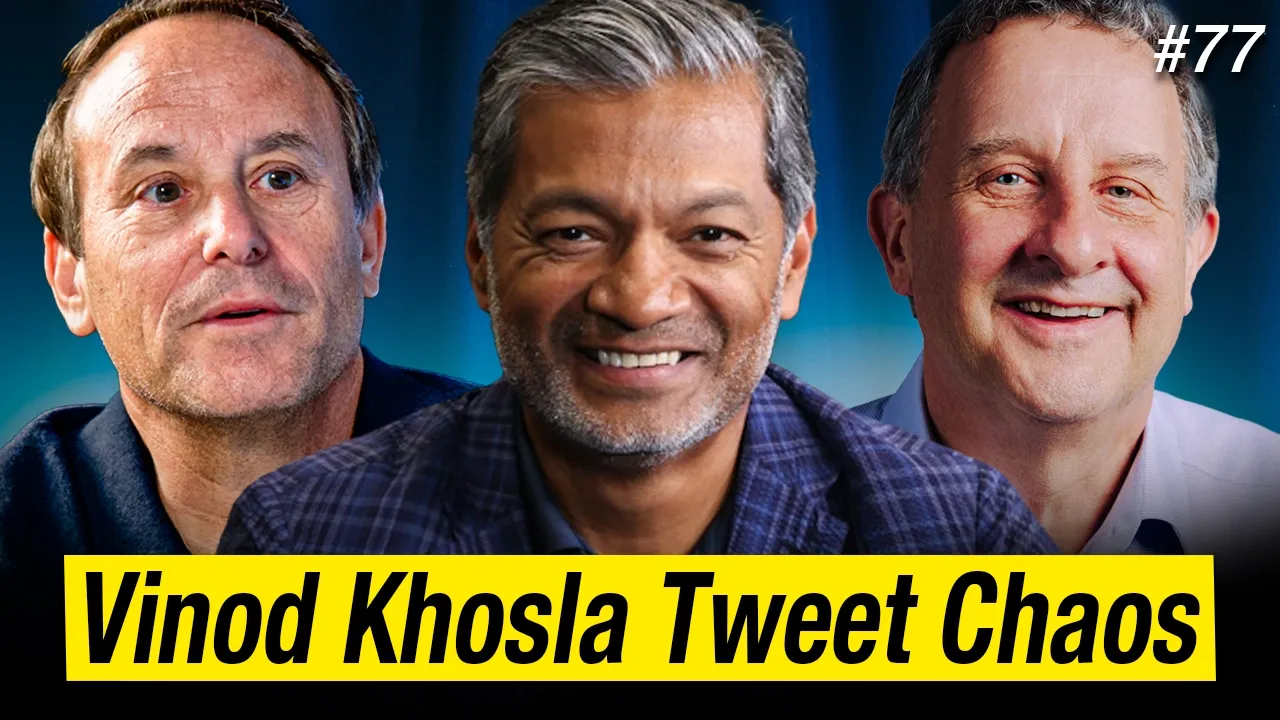
Description
Dev Ittycheria is CEO of MongoDB, where he has led the company through its IPO and transformation into one of the world’s leading developer data platforms, with a market cap that has reached tens of billions of dollars. Jason Lemkin is one of the leading SaaS investors of the last decade with a portfolio including the likes of Algolia, Talkdesk, Owner, RevenueCat, Saleloft and more. Rory O’Driscoll is a General Partner @ Scale where he has led investments in category leaders such as Bill.com (BILL), Box (BOX), DocuSign (DOCU), and WalkMe (WKME), among others. ----------------------------------------------- Timestamps: 00:00 Intro 01:17 OpenAI Nears a $70BN Run Rate 03:09 What Happens if Anthropic’s Q3 Numbers Disappoint? 05:34 OpenAI vs Anthropic: Has the Momentum Shifted? 08:27 OpenAI Raises at a $1.4TN Valuation 09:58 Factory vs Cognition: Did Chris Degnan Cross a Line? 18:19 Has Loyalty Changed in the AI Era? 22:35 The Vinod Khosla Tweet That Shocked the Panel 25:14 Reflection Launches Beam: America’s Answer to Chinese Open Models? 28:55 Why Enterprise AI Could Be Far Bigger Than Current Usage Suggests 31:43 Could US Open Models Take 50% of Open-Source Tokens? 34:49 Investment Committee: ElevenLabs at a $22BN Valuation 38:07 Salesforce Buys Listen Labs for $2BN 41:30 Is Your AI Startup a Feature or a Franchise? 45:44 Should Founders Take a $2BN Exit Early? 49:09 Vercel Hits $600M ARR as Agents Drive 50% of New Business 51:29 Why Winning AI Agents Could Become More Important Than Winning Google 55:09 How Startups Should Optimize for Agent Recommendations 59:33 Nvidia’s $17BN Licensing Deal Gets Hit With a Lawsuit 01:05:33 Meta’s Muse vs OpenAI Dots 01:10:42 Why Oura Pulling Its IPO Is Bad News for Venture ---------------------------------------------------------------------------------------------- Subscribe on Spotify: https://open.spotify.com/show/3j2KMcZ... Subscribe on Apple Podcasts: https://podcasts.apple.com/us/podcast... Follow Dev Ittycheria on X
Summary
Generated by gpt-5.6-terraAt-a-Glance
- Verdict: Watch fully
- Core thesis: The discussion argues that AI markets are expanding rather than becoming purely zero-sum, but durable advantage will increasingly come from enterprise trust, workflow-specific quality, agent discoverability, proprietary data loops, and clear governance rather than generic model capability alone.
- Why it matters: It contains directly applicable thinking on model routing, open-weight adoption, persistent coding agents, how agents select infrastructure vendors, and the operational/legal risks emerging around AI talent and acquihire-like transactions.
- Best use: Use it as an investment and operating-strategy briefing: extract the agent-distribution thesis, the enterprise model-selection criteria, and the governance questions to apply to portfolio companies and OpenClaw-style agent systems.
Executive Summary
The panel sees OpenAI's reported near-$70 billion revenue run rate and 70% quarter-on-quarter growth as evidence that it has rapidly regained competitiveness against Anthropic, particularly in coding and enterprise use cases. But they caution that developer loyalty is thin: teams will switch or multi-home when a model becomes better or cheaper. The next meaningful indicator, in their view, is whether Anthropic's reported growth remains exceptional or shows that OpenAI's resurgence is taking share.
For enterprise AI, the central purchasing criteria are not simply benchmark performance: token cost, IP/data rights, model provenance, safety, and procurement friction matter. The speakers believe a US-sourced open-weight model that is near frontier quality could be strategically attractive, particularly for regulated organizations reluctant to deploy Chinese-origin models. They frame the resulting market as large enough for frontier providers, open models, and inference platforms, while warning that public evaluations are a weak substitute for workflow-specific production testing.
The most useful operating segment concerns agents as buyers. Vercel's reported shift from 3% to 50% of new business coming from agents is used to argue that agents increasingly choose hosting, data, email, and other infrastructure based on the full context of an application's stack. Vendors must therefore become legible to agents through documentation, APIs, integrations, reliable setup paths, and accurate machine-readable information—not merely traditional SEO or brand marketing.
The conversation also distinguishes AI features from enduring companies. Listen Labs' $2 billion sale to Salesforce is presented as a successful LLM-native application in market research, but also as an example of why companies without defensible data loops may rationally sell into a larger distribution platform. Finally, the panel flags legal and employee-equity risk in license-and-hire transactions that function economically like acquisitions while allocating value unevenly across shareholders.
Key Takeaways
- Claim: OpenAI's reported reacceleration changes the competitive narrative, but the key question is whether it reflects market expansion or material share loss by Anthropic. | Evidence: The panel cites reports of OpenAI nearing a $70 billion run rate and growing roughly 70% quarter-on-quarter after an earlier reported 18% quarter-on-quarter growth period; they contrast this with Anthropic's previously much faster growth and note customer movement from Anthropic models toward Codex. | Implication: Avoid treating model-provider leadership as stable; maintain model portability and monitor real workload quality, price, and provider momentum rather than committing architecture to a single vendor. | Caveat: The revenue figures are discussed as reported rather than verified, and the panel explicitly says Anthropic's next disclosed quarter is needed to determine whether this is share rotation or both vendors growing into a larger TAM.
- Claim: Enterprise model selection will increasingly be governed by total economics, data/IP risk, provenance, and safety—not only frontier capability. | Evidence: MongoDB's CEO identifies token costs and IP rights as immediate enterprise concerns; the panel argues that a US-origin open-weight model at near-frontier quality and three-to-four-times lower cost would appeal to regulated buyers wary of Chinese-source models. | Implication: Build a production evaluation harness around specific workflows, and route work by risk, accuracy requirement, data sensitivity, latency, and cost instead of standardizing blindly on the strongest frontier model. | Caveat: Near-frontier claims require validation on actual workflows; one speaker says published evaluations are often gameable, poorly representative, or centered on abstract benchmarks rather than mission-critical work.
- Claim: Lower AI costs are likely to expand total token usage rather than simply cannibalize frontier-model revenue. | Evidence: The speakers invoke Jevons paradox: organizations report internal demand for tokens far beyond what they currently budget or operationally support, and lower cost plus growing staff familiarity should unlock more use cases. | Implication: Treat token efficiency as an enabler of new workflows, but institute spend controls, observability, and quality gates before scaling usage broadly. | Caveat: Demand may initially include inefficient or low-value usage because enterprises lack practical experience and governance mechanisms for deployment.
- Claim: Workflow-specific quality can preserve premium pricing in voice AI even if many general-purpose models become substitutable. | Evidence: In discussing ElevenLabs at a reported $22 billion valuation, the panel argues that voice agents handling real calls must respond immediately and correctly; a florist-ordering workflow fails if the system misunderstands product details, regardless of modest cost savings. They cite strong customer willingness to pay and sub-millisecond response claims. | Implication: For customer-facing agent workloads, prioritize reliability, latency, and task success rates over token-price optimization; evaluate model fungibility by modality and failure cost. | Caveat: The panel does not claim the moat is permanent; it notes that the outlook could change within 12 months as alternatives improve.
- Claim: Agents are becoming an independent distribution channel and procurement influence, making agent discoverability a strategic operating requirement. | Evidence: The speakers cite Vercel at a reported $600 million ARR with agents accounting for 50% of new business versus 3% at the start of the year. They also cite Resend growing from 106,000 to 3.3 million MCP calls from April to September and give an example of an agent recommending Render, Railway, Fly.io, AWS, and Vercel differently based on an application's requirements. | Implication: Ensure products are easy for agents to evaluate and deploy: maintain excellent docs, APIs, MCP/integration surfaces, machine-readable pricing and capabilities, dependable onboarding, and monitoring of how live agents recommend or select the product. | Caveat: The panel's examples are anecdotal and agent recommendations can be idiosyncratic to stack context; traditional answer-engine visibility and live-agent selection behavior may be related but are not identical markets.
- Claim: AI application companies need a data flywheel or another durable asset to avoid being treated as features and acquired early. | Evidence: Salesforce's reported $2 billion acquisition of Listen Labs is framed as a strong outcome in AI-native market research, where adaptive voice-based questioning improves on static surveys. Yet the panel argues that products built mainly as a clever layer on another platform may be features, whereas usage-generated proprietary data can create a defensible loop: more usage produces unique data, which improves the product and attracts more usage. | Implication: For any AI application, explicitly identify the compounding asset beyond UX—proprietary interaction data, workflow integration, distribution, trust, or switching costs—and assess whether it supports standalone scale. | Caveat: An early sale can still be rational: founders must weigh likely standalone trajectory, personal willingness to continue, and whether the business is plausibly generational rather than assume every company should remain independent.
- Claim: License-and-hire deals that transfer core IP and teams may create unresolved shareholder and employee-equity liabilities because they can be acquisitions in substance. | Evidence: The panel discusses two former Grok engineers suing over an Nvidia transaction described as an $11 billion license plus roughly $3 billion in stock for core technology and about 200 employees. The claim is that common holders were left with a hollowed-out company despite the economic substance of a sale. | Implication: Review equity-plan language, board processes, and employee communications for partial-team/IP transactions now; employees will increasingly ask what happens to their ownership if the company sells assets and selected staff rather than the whole company. | Caveat: The panel has no view on the lawsuit's merits or outcome, and notes that these structures emerged partly as a way to move faster than conventional M&A review; a settlement may be economically tolerable for a buyer even if legal theories are credible.
Detailed Brief
Talent mobility, advisor conflicts, and venture reputation
- Claims: The Factory/Cognition dispute exposes the difference between legal obligations and unstated expectations when an advisor with sensitive company context joins a competitor.; The panel disagrees on whether this is an inevitable feature of AI-era talent mobility or a reputational breach that senior leaders should avoid.; A venture firm publicly criticizing a founder at a portfolio company, especially where it also has exposure to a competitor, creates reputational ammunition for rival investors.
- Evidence: The discussion centers on former Snowflake sales leader Chris Degnan, described as a Factory board observer/advisor who then joined Cognition as CRO.; One speaker argues that a deeply embedded advisor can see board, product, financial, and competitive information beyond what a normal functional employee sees.; The panel references an investor's public description of Factory as a 'struggling second-tier competitor' and calls it damaging for both portfolio relationships and the investing firm's future deal competition.; They contrast an old informal 'rule of two'—departing leaders taking only one or two colleagues—with cases in which leaders now recruit eight to ten people immediately.
- Caveats: The speakers repeatedly state that they do not know all facts regarding the advisor's access, disclosures, contractual duties, or the specific hiring process.; Employees may lawfully leave for competitors, so governance can reduce but not eliminate information-transfer risk.
- Implications: Define advisor scope, confidentiality, conflicts, access boundaries, and notification expectations in writing rather than relying on relationship norms.; Treat executive departures as both information-security and talent-retention events; prepare manager communications for teams recruited by a departing leader.; Avoid public criticism of founders or portfolio companies where it can undermine trust in the firm's partnership behavior.
Persistent coding agents and product-focus risk
- Claims: The panel views Meta's reported Muse launch as evidence that execution and shipping can overcome skepticism about a company's AI position.; It sees OpenAI's Dots as initially confusing from a consumer-product perspective but potentially valuable as a persistent, always-on extension of Codex for development work.; Serving consumers, developers, and enterprises concurrently is structurally difficult because the products, workflows, and success criteria differ.
- Evidence: The speakers characterize Muse as well-resourced, state-of-the-art, and strongly received after Meta put meaningful execution behind it.; Dots is discussed as a 24-hour coding agent integrated with Codex; the panel compares the persistent-agent need with what Replit, Lovable, OpenClaw, Claude Code, and Codex users encounter when long-running work is difficult to maintain.; One speaker recommends waiting 30 to 90 days to judge Dots by what developers actually build rather than by a consumer-oriented demo.
- Caveats: The product assessments are early and largely based on launch reception and demos rather than broad production evidence.; Persistence alone does not guarantee adoption if the surrounding agent workflow, reliability, or developer experience is weak.
- Implications: Prioritize durable, observable, resumable agent execution for coding and operations workflows.; Judge new agent products through real task completion, persistence, and developer pull—not launch narrative.; Maintain clear product segmentation when serving distinct consumer, developer, and enterprise user groups.
Liquidity and exit discipline
- Claims: At equivalent headline valuations, liquidity deserves a premium because public markets provide more information and an exit path, while large private companies may still remain private for years.; The pulled Aura IPO is treated as a warning that even a company reportedly at $1.2 billion revenue and 74% growth may fail to clear public-market pricing expectations.; Founders should decide whether they are pursuing a generational company or accepting a strong early outcome; neither choice should be made by comparison with other founders' outcomes.
- Evidence: One speaker says they would prefer a liquid Anthropic position to an illiquid OpenAI position at the margin when information is uncertain.; The panel speculates that Aura's IPO withdrawal likely reflected a mismatch between banker expectations and investor price discovery, while acknowledging no inside information and allowing for other explanations such as pending M&A.; MongoDB CEO Dev Ittycheria recounts selling BladeLogic to BMC for about $900 million after reaching approximately $100 million in revenue, having declined or not completed earlier acquisition discussions.
- Caveats: The Aura analysis is explicitly speculative.; An early exit can sacrifice a rare compounding outcome, while holding out for one can impose years of operational and personal cost.
- Implications: For investment decisions, separate business valuation from liquidity value and underwriting horizon.; For founders, model realistic standalone paths, financing and market risk, and personal commitment before rejecting a high-quality offer.; For IPO planning, pressure-test banker valuation guidance against genuine demand rather than treating a proposed range as executable.
Notable Concepts & Terms
- Jevons paradox: The idea that lowering token cost can increase total usage by making many more AI workloads economically viable, rather than simply reducing spend.
- Open-weight models: Models whose weights are available for deployment or adaptation; the panel sees US-origin open-weight models as a potential enterprise alternative to both frontier APIs and Chinese-origin models.
- Model routing: Assigning workloads to different models according to required quality, sensitivity, latency, safety, and cost rather than using one provider for everything.
- Agent discoverability: The ability of an AI agent to find, understand, trust, recommend, and successfully use a vendor's product based on its documentation, APIs, integrations, and online information.
- MCP calls: Model Context Protocol interactions; Resend's reported jump in MCP calls is used as a signal of agent-driven product usage and selection.
- Feature versus franchise: A test for whether an AI application is a replicable feature on another platform or a durable company with proprietary data loops, workflow ownership, and defensible distribution.
- License-and-hire / acquihire-like transaction: A structure in which a buyer licenses core technology and hires key employees rather than formally acquiring the company, raising questions about whether it is an acquisition in economic substance.
- Persistent coding agent: An agent capable of continuing coding tasks over long periods rather than requiring an active user session, highlighted as a potential strategic use for Dots/Codex-style systems.
Operator Notes / Why Ken Should Care
- Create a model-routing policy for agent workflows with explicit tiers for frontier-only tasks, near-frontier/open-weight tasks, and prohibited data classes; measure task success and total cost by tier.
- Run production-grade evaluations on Ken's own workflows rather than relying on vendor benchmarks: include accuracy, tool-use reliability, recovery behavior, latency, safety, and cost.
- Audit OpenClaw and related agents for persistence, resumability, state handling, long-running-job observability, and human intervention points before increasing autonomous coding scope.
- Add an 'agent-readiness' workstream for products Ken operates or evaluates: documentation quality, machine-readable capability descriptions, API and MCP surfaces, onboarding reliability, and live-agent recommendation testing.
- For portfolio diligence, require a defensibility map that distinguishes proprietary data loops and workflow lock-in from a thin AI feature layer.
- Review advisor agreements, executive offboarding, confidentiality controls, and equity-plan treatment for asset sales or partial-team transactions; do not rely on implicit norms.
- Treat voice-agent vendors as a separate reliability class: benchmark real call completion, interrupt handling, latency, and error consequences before optimizing for price.
Source/Metadata
- Title: Cognition vs Factory | Anthropic Under Threat | ElevenLabs Doubles Its Valuation to $22B
- Transcript words: 28504
- Duration seconds: 4551
- Timestamp note: No usable timestamps or chapter markers were provided in the transcript.
Transcript
I was just slummoxed by that tweet because it handed every other firm a weapon when they're competing on a deal saying, is this the partner you want when things go bad? And we have a special guest joining us this week, Dave, the returned CEO of MongoDB. And today we discuss OpenAI. They are closing the gap on Anthropic, nearing a $70 billion run rate. Then we have the factory in the Cognition debacle. Salesforce then buys Listen Labs for $2 billion. Reflection, could they be the US's best hope for an open source model that can compete with China? This and so much more in today's show. I've never seen a CRO flip from one competitor to another. I just think in the AI age, the definition of loyalty has changed. The reputational damage that you can do in a long term is going to come back and bite you. When agents pick you, it's a force of nature right now. There's a lot that's got to happen between now and the Anthropic IPO in the middle of November. Ready to go? Boys, it is so good to be back. And we have a phenomenal guest joining us today. Dave, thank you so much for joining us, dude. Thank you, Harry. Thanks for inviting me and being part of this amazing group. Do you know what? Actually, I don't know if you guys know, but Dave gave me feedback that we needed to move on faster from just OpenAI and Anthropic. I love it. And we really took it to heart. And so taking it to heart, I thought we'd start on OpenAI. Well done. OpenAI nears a $70 billion run rate and goes for $30 billion at $1.4 trillion. But the IPO is going to wait until 2027, despite Anthropic going out in the next few weeks, it would seem. What do we think, boys? The crazy thing to me when I think about the story is, I mean, OpenAI is back, right? $70 billion in revenue. But more importantly, if you look at your portfolio companies and others, I mean, Astra, Sol, Luna are everywhere, right? Everyone's using them. Everyone is using them. And when you think where we started this year, a lot of things in B2B only worked at the end of last year. And only Anthropic could get this stuff to work. And nobody could. And even coding at the start of this year only worked on Anthropic. And then we went into the summer and it seemed like OpenAI in some ways was on the rope, right? Because consumer was the wrong path and they couldn't get back. It's only October something. I mean, the rate of change here and the rate at which the OpenAI team got back in the game and made something that is truly epically competitive to the point where people are switching out their model. For real, because it's better and cheaper. I mean, it's crazy that pace at that scale. So it's 70 billion. It says it all, right? So you counted them out three or four months ago, not literally, but figuratively. And now if they launch a truly competitive set of model LLMs, it's instantly massively competitive. It's crazy. So maybe it's Captain Obvious, but massive kudos, I think. Can I ask, what happens if Anthropic's numbers for Q3 aren't blowout? Like every team that I speak to has at least deviated some meaningful portion from Anthropic's to Codex and everyone says how amazing it is. What happens if they're not blowout numbers like the world really just assumes Anthropic's always has now? The interesting thing that we should also learn from this and having sold to developers the last 12 plus years is that there's not a lot of loyalty. And developers are very quick to switch from one tool to another or use multiple tools. And I think what we're seeing is that developers are quick to find the shiny new toy. I think the question is, what will Claude or Anthropic's come out with next? And what are the other alternatives? The other thing that's interesting also is that what OpenAI has done is shown that when you have essentially a billion people using ChatGPT a week, that's a great distribution channel, but potentially where the moat is, where the enterprise businesses, you have to sign contracts, you have to train thousands of employees, you have to build workflows and it may be hard to switch from one to the enterprise again. But that's my reaction. Yeah, I guess in that sense, OpenAI's run rate is even more impressive, right? I mean, maybe they are already embedded, maybe they're already through procurement, but that's pretty fast change in the enterprise, too, right? Yes. Yeah. Look, I mean, can I ask you a follow up question? Sorry to interrupt, Rory. What from your seat do you think is a blocker for more progress in open weights models in the enterprise? Just the ability to get through procurement, get approved or do you not? Where do I mean, obviously, the explosion this year is crazy, but it is a hurdle to get over. What are you seeing from the Mongo and Sequoia side? Well, actually, from a Mongo side, I was just talking to our CIO and we're talking about token costs, right? So cost is a big factor that I think every enterprise has to consider. No one has unlimited budgets. The second thing is IP rights. You know how we train these models, who gets the data, how proprietary is the data. And I think those two things are also pretty important points when it comes to what models you choose and who you work with. As you often do, you put a lot out there. And I think you are going back to the forget the valuation stuff, which we have in this guy that just a long number, the 70 percent Q on Q for OpenAI and Q3. And I tweeted at the end of Q2 when the OpenAI numbers came out for Q1 and Q2 and the gap revenue growth from Q1 to Q2 was 18 percent quarter on quarter. And you do that math. And it was that implied just under 100 percent year on year growth rate, which was massive deceleration at a time when Anthropic was still going 10x. So at the end of Q2, that was the state of the race. And I don't like to make this a horse race because you need to zoom out. But there's a part of it as a horse race, right? And if you noticed really early on in Q3, all the OpenAI team started tweeting, we're having a killer July. Do you remember Sarah Fryer coming on that? We're having a killer August. It was clearly that they internalized that Q2 was the first time Anthropic gap revenue was larger than them. And it just felt they were pulling away, right? Just 11 billion versus 6.8 billion growing 10x versus growing 2x. Suddenly a 70 percent number, no matter what we'll talk about Anthropic in a second, but no matter what Anthropic does, at least changes that narrative back. If it really is correct and we don't know, but if gap revenue grows 70 percent Q on Q or even 60 percent up from 18 percent Q1 to Q2, that's a massive reacceleration. And just starting with a huge win and a big sigh of relief. If, because, you know, given the OpenAI forward purchases of just about everything from compute to data centers to land in Virginia, if they didn't grow at a hyper speed, a lot of things come unstuck. So that's the first thing, which is, if true, amazing for OpenAI, right? Right. And then you're right. The second thing is, did that come, and this is where the dev comment on developer loyalty is important, is that did it all come at the expense of Anthropic? In other words, you're asking the question, is this a rotating share game? They accelerate at 70 percent and then Anthropic slowed down markedly, or did they both grow pretty well? In which case, you can lean into the TAM. And you're right. It's now, I mean, if the OpenAI growth rate was the key missing card, you know, the missing data point, now that you've allegedly seen that card, and again, we're assuming the 70 percent is correct. You're exactly right. The next shoe to drop is, okay, OpenAI, you paid your 70 percent card. Now we're going to play our still it's 10x growth card, or is it going to be the 5x growth, or is it going to be, hey, we've slowed down a lot. It will be super interesting to see where that Anthropic Q3 number comes out. And I won't say it's no accident, but it's worth noting that the timing of the IPO now is such that that number will be in the prospectus, but it will be known at the time they go public. In which case, you can lean into the TAM. And you're right. It's now, if the open AI growth rate was the key missing card, the missing data point, now that you've allegedly seen that card, and again, we're assuming the 70 percent is correct. You're exactly right. The next shoe to drop is, okay, open AI, you paid your 70 percent card. Now we're going to play our still it's 10x growth card, or is it going to be the 5x growth, or is it going to be, hey, we've slowed down a lot. It will be super interesting to see where that Anthropic Q3 number comes out. And I won't say it's no accident, but it's worth noting that the timing of the IPO now is such that that number will be in the prospectus, but it will be known at the time they go public. If we disentangle the revenue from the price in the round, then Rory, as you quite rightly illustrated, I should have done. Poor Harry. 1.4 trillion, the largest private round, 30 billion dollars more. I thought we'd dried up all private capital. Clearly there's more. How do we think about this, Rory? This would be the first ever venture round above a trillion dollars. That's pleasing. The first ever private trillion dollar. I remember in the mid 90s, I remember the first above a billion dollar round and we were like, whoa, that's crazy. Moving right along with three orders of magnitude. That's what I showed. Rory, congratulations for becoming the new head of CalPERS pension fund. And you are now in charge of directs and you have the chance to open AI at 1.4 or Anthropic as they go public at 2. What would you like to do? Oh, I think you lean to liquidity. It's a lot better to have liquidity than not have liquidity. So let's just say the two companies, I mean, so you separately have to value the two companies, which has worked more. But then separate from that, you really asked the question liquidity versus illiquidity. I would much prefer to be in the liquid stock when the amount of information is as unknown as it is. You either decide, you either want the liquid stock or you accept that you're holding for three or four years, because that's what the risk of being private is. You think it can go public next year and it should be. It's damn it, it's big enough, but you never know of the world. So I probably would lean to liquidity at the margin. We can go to Anthropic IPO or we can go to the slightly salacious one, which is Factory and Cognition. And I think we should go there. I'm going to just throw my hat in the ring there. So I'm going to provide some context. Chris Degnan, sales leader, legendary from Snowflake for many years, was an observer at Factory, spoke to Matan every day, according to the founder, and was very close to him. And whilst he was very close to him, was interviewing for a role at Cognition, according to the founder Matan, this is, and then took the role at Cognition as CRO. And that is when Matan came out and said, you're barred. You know, this is wrong. And how bad of you? Let's start on that before we discuss Vinod. That Vinod's a whole new topic. How did we analyze this? Yeah, so I just want to be clear. I know Matan personally. I'm an angel investor, Sequoia's investor in Factory as well. And MongoDB is a partner with Cognition. The fact that an advisor has access to a founder's confidential plans, you know, they should be clarity on, you know, with the founder that he's got to. They're thinking about going in a different direction, especially if that's a potentially competitive situation. But if I was a CEO, I'd be pretty annoyed to see someone who had access to my plans go to a competitor. Again, I don't know if that had happened, but that would be quite upsetting to me if it did. On the other side, as a CEO, it's going to be profoundly frustrating, right? Your advisor goes off and joins a competitor, right? It's happened to us all at some level, right? I would think 95% of the CROs we would talk to would say, this is fine, man. This is the way it works. CRO is a risky job. There's a lot of turnover. Jobs come in fast. And a lot of CROs, if it's a hot job, they move very quickly, right? And so I just think that a lot of CEOs would be frustrated. I think 95% of CROs would say, this is how I found my last job. Maybe not literally the same facts. Jason, I'm going to respectfully disagree, because remember that CROs also hired other people to work for them, selling them on the company, selling them on the vision, selling them on how they're going to make money and how it's going to be transformative for their family. If that person were to leave, they'd basically burn their reputation with everyone they recruited as well. So I've never seen a CRO flip from one competitor to another. I've seen a CRO go from one company to another company in a different space because they think that's a better opportunity. But I've never seen a CRO, at least that I can remember, that's ever flipped from one company to a direct competitor of another. No, I just don't think most CROs, if they were just an advisor, not, he's not a full time employee, he's an advisor, he's not even on the board, a board observer, and that's important, right? But there is a distinction between a board observer for a little while and a board member. A CRO, not a CTO, not a founder, not a CEO, gets some, maybe somewhat retired as far as I understand it, you know, made a lot of money at Snowflake, and that's fine. Nothing wrong with retiring, gets what seems to be the greatest job offer. It's going to happen, right? And then says to the other CEO, I got this offer, I'm going to take it. It'd be nice if there was a little more temporal separation. But I just think most CROs that find the job of a lifetime that are just an advisor to another, they wouldn't even see a conflict. The way we think about conflicts as founders, I think a lot of CROs think of it as a game. Competitors are often really friends with each other's CROs. They see it all, my job's to beat Mongo, my job at Mongo is to beat whomever, right? And so, anyhow, I just thought founder is shocking, but I don't know if the CRO is an advisor, this is seen as crossing some sort of line. So again, not knowing all the facts, what I will tell you is that different advisors have different roles. So you can call an advisor for a particular part of the business or a particular function and say, hey, I want your advice on, hey, I'm looking to hire someone in Europe. Can you vet this person or give me some ideas of who I should talk to? That's very different than someone who's inside the tent looking at your product plans, your board plans, your financial plans, and has real visibility in terms of where you're taking the business. I think it was the former. Then yes, there's no issue. Hey, this person was talking to you. You use a light relationship and they decided to move on to a competitor. Okay. It happens. You're not thrilled about it, but it happens. Again, not knowing the facts here, but if someone had real insight into the business, real insight in terms of what the product roadmap was like, real insight on how they're competing and winning and losing against the competition. And then they suddenly jumped to a competitor. That would be very, very different to me. The interesting thing is if you think about the employee relationship first and then the advisor relationship at the employee level, you know, if I have a CRO working for me, right? At any point in time, it's entirely possible that he or she can get a compelling offer from a direct competitor and go over there and literally know everything about what I was doing up until the minute he gave his notice. Right. And you might think, oh, that sucks. That was a pretty shitty thing to do because you were all in for team A and now you didn't go to another sport. You went to team B in the same damn league. It's really shitty, but it happens. Right. And, you know, the factory CEO would, you know, voice anger, but it's worth pointing out if I was a full time employee, there's no way for me to tell CEO A, hey, I'm thinking of leaving until I got the job and then I have to get my notice. There's no halfway measure. Right. At any point in time, it's entirely possible that he or she can get a compelling offer from a direct competitor and go over there and literally know everything about what I was doing up until the minute he gave his notice. Right. And you might think, oh, that sucks. That was a pretty shitty thing to do because you were all in for team A and now you didn't go to another sport. You went to team B in the same damn league. It's really shitty, but it happens. Right. And the factory CEO would voice anger, but it's worth pointing out if I was a full time employee, there's no way for me to tell CEO A, hey, I'm thinking of leaving until I got the job and then I have to get my notice. There's no halfway measure. Right. So to some extent, this is going to happen. If you have employees, they're going to know a lot about what you're doing. And at any point in time, they can go and do the same thing for a competitor. And at that point in time, it's going to suck. And right up to the minute before they sign that offer from your competitor, they know all your plans. Right. So in other words, something like this can happen. And if you could forward communicate, you could say, Matan, I've been approached by Scott and I would like to actually pursue it. And so I wanted to let you know and be upfront about that because I'm aware I have a position of sensitivity. Then he is able to know. First of all, I'm dividing a full-time employee and then we'll talk about advisor because I think one thing that is correct. There was implicit understanding. This is where you get explicit and implicit understanding. There was probably some implicit understanding about the advisor that wasn't fully fleshed out on either side. And that's where I think that was actually correct. But going back to the full-time employer, I don't think you can have it. If your number two said to you, come in and said, hey, I got an offer from Excel. I'm thinking about it. I may go. I may not. If I still want you to love me as if I'd never thought about leaving, but I may go. Right. The truth is some people, and I've done that, but it's generally in an operating role. It can at least be difficult. At least half the time. I'm with you, but that's not the case here, Rory. You're doing my own. I know. I'm talking about what I'm saying. Well, my point is merely people are saying, hey, you had a part-time advisor who left and brought all this information. Right. My point is you can lose a full-time direct report who brings exactly the same information and even more. So it can happen. It happens quite a lot in business. It's not unusual. The thing that's unfortunate here is if the person is just doing kind of part-time advising, you end up in an odd situation where you're disclosing everything. That person's not on the board. So has no fiduciary obligations. Is not employed by the company. They're probably, to that point, with some implied statement that said, hey, you shouldn't do this, but it was never made concrete. How are you shaking your head? Well, I think you're absolutely wrong. I think as an employee, you have very siloed information and you don't have a lot of privileges that a board member would do with the oversight on strategic discussion across the whole company, across all the different functions. And so it's completely different. How would you say, okay. CFO, CRO. So what do you mean? I mean, my point is you can lose, if you're the CEO, you can lose one of your top two or three direct reports. Yeah, sure. Sure. But if you're the CFO who moves on, you have no real insight into the maybe product roadmap and function. So do you think that an advisor? Okay. So you would say, okay. Yeah. So I think it's, I mean, what? How is it so different? Half of the Frontier Labs folks are rotating back and forth, right? They go in and out. They're taking tons of intellectual property and knowledge from each other. I mean, I know it's different, but I think, and Dev can challenge me here and I wish this were not true, but I just think in the AI age, the definition of loyalty has changed. I think it's changed permanently. I think culturally it's changed. I see it with some of the top executives I've learned and, just one prong. I mean, people move more quickly. People are the compensation is very different. And I think you just have to expect people will move from competitors. They will go from OpenAI to Anthropic to wherever. It's just that we've changed culturally. And if it can bother you, but you, the world changed. It's what we got. We got to accept it. Yeah. So what I would say is the following: it's very rare for me to see people go to a direct competitor. It has happened. And Jason, you're right. In this age, there seems to be more of that happening than not. But it's still quite rare. And I think you also have to understand that these people have reputations and if they're in a leadership position, they've recruited people who work for them, who believe in them, who believe the story. And then for this person to get up and leave. And obviously I dealt with this last week. It kind of leaves a bad taste in people's mouth in terms of how really committed were you to this? And did you sell me a bill of goods? And in the situation where a CRO or senior executive is leaving, the question I'd ask is like, okay, I understand there's lots of opportunities out there, but do you have to go to a direct competitor? There's no other company who wanted you? There's no other company that values your skills as much as this company? Like, I think the reputational damage that you can do in the long-term is going to come back and bite you. Do we even remember next week anymore in the age of AI? No, I think you do because I was kind of, I think you do. Actually, Jason, I would say the more things change in many ways, a lot of it stays the same around people, around relationships, how you work with them. And I think people too often use the AI era as like, oh, everything's changed. I disagree. I think how you manage people, how you recruit them, how you develop them, how you hold them accountable. In fact, a lot of these young AI founders struggle with this all the time because some of them have never hired a go to market person. They've never had a finance person. And so they're always asking for advice on what do I look for and how do I evaluate someone with skills very different than mine. And they're all the same issues I had when I started my first company in 1998. It's the same thing all over again. It's just obviously happening maybe more visibly than it ever happened before. Until recently, my experience was there was always when you went somewhere else to another company, there was always the rule of two. It's kind of like the Sith, but different, right? Wasn't the Sith like the rule of two? I don't know. You could take two people with you. So when you left Mongo to go do your own company, you could bring one and Dev would get kind of pissed. Okay. And you talk about it and then you'd ask permission for the second. And there'd be a lot of friction. But if you crossed two, the relationship was broken, right? Now I'm seeing folks take like eight or ten with them the first week. And it's not a cultural issue anymore through people that I respect and think are high ethics, right? And some of that I think is the pressure to move so quickly in the age of AI. But I do think it's related to this. I think it's a symptom of change that the rule of two seems to have died. Was that your rule with your team over the years? Did you informally enforce the rule of two? I've had people who left and then carpet bombed the rest of the organization trying to follow them. And obviously that wasn't a great feeling and stern words would follow. Would you ask an interesting question then? Would you prefer someone, a senior executive, to leave and go to a direct competitor but recruit no one? Or someone to leave and go to a totally different business, broadly in developer tools, but say and recruit four or five of his top execs? Which would you prefer to defend, the talent or the knowledge? And some of that I think is the pressure to move so quickly in the age of a year. But I do think it's related to this. I think it's a symptom of change that the rule of two seems to have died. Was that your rule with your team over the years? Did you informally enforce the rule of two? I've had people who left and then carpet bombed the rest of the organization trying to follow them. And obviously, that wasn't a great feeling and stern words. Would you ask an interesting question then? Would you prefer a senior executive to leave and go to a direct competitor but recruit no one? Or someone to leave and go to a totally different business, broadly in developer tools, but recruit four or five of his top execs? Which would you prefer to defend, the talent or the knowledge? It's a tough one. I don't know. It's a tough one. I think it depends on who that competitor was. If it was like my mortal enemy, I'd be more upset about the former. If it was another company and four or five people left, it is what it is. I'm not sure. I would love to maybe slightly move the conversation along. Because we mentioned the word loyalty and when we hear the word loyalty, I just think of Vinor Kostler, who led Factory Series. Goes on Twitter and the wording was like "struggling second tier competitor"—absolute demolition job of Matan. I don't know what to say. Was he asleep in the partnership decision? Like was he aware that he led the last round? I'm genuinely not saying that stupidly. I don't know if he was aware. I was shocked when I saw that. I was just totally flummoxed by that tweet because it basically handed a weapon to every other firm competing with Coastal Ventures. Coastal got a great team with Keith and a bunch of other people there and basically handed every other firm a weapon when they're competing on a deal, saying is this the partner you want when things go bad? I was just totally flummoxed on why he would do that publicly. Yeah, I mean there's nothing to add. Some days you just make a mistake. He will probably look back and say, gosh I wish I hadn't done that. Whatever it's like, it's a weapon in the hands of everyone who competes with them. Wish it hadn't happened. A lot of what's going on here is: what are the legal obligations versus what are the implied rules and what are the consequences of breaking the implied rules? One of the non-legal but nonetheless implied rules is it's really hard for venture firms when they do two directly competitive deals. The only way you get around it is you make all this argument about you love your children equally, you don't say anything in public about one versus the other. And then you have something like this that crashes through every wall. It just shows that those situations of two directly competitive investments are very fraught, especially if you're actively involved in the companies. It was very unhelpful. It's very unhelpful for both companies. It's like it was not venture's finest hour. Let's move on. You know, maybe it's just maybe being the Pollyanna. He meant it positively as tough love. Struggling second, you know, there's a theory like: be harsh on the struggling, the most struggling founders. He thought struggling second tier competitor would be motivating. I yield, obviously the dev and CEO manager side here, but I do vaguely remember something about praise in public and chastise in private. That seems backwards. I don't think that was the mission here. You never know. It seems baffling. Yeah, we've been talking a lot about open models over the last few weeks. We saw Reflection, Llama Beam. I thought that was a really interesting story. We also discussed Rory, one of yours, before Intercom, obviously selling to Salesforce. Well, Salesforce buying Listen Labs too for two billion dollars. Of those two, where would you rather go? I think both are worth some time. I'd love to hear your thoughts on Reflection because look, they've been frankly talking about shipping for a long time and from what we said earlier it seems to me that being an open weight U.S. sourced model is a super interesting strategic position right now. So if someone can ship something that's near frontier quality, even if it's six to twelve months off, just from the dynamics of the market, that's a nice place. So what are your thoughts, David? Yeah, I actually tweeted out this morning. I actually thought that enterprises can have their cake and eat it too. You get a U.S. open source model that's near frontier intelligence, that's three to four times more cost effective, cheaper, and that's music to the ears of any enterprise because there's obviously going to be some hesitation using Chinese open source models, especially if you're in a regulated industry or an industry that deals with sensitive information. So to me this was a very noteworthy announcement. Again, I do want to disclose Sequoia is an investor in Reflection, but I think it's great for the enterprise. I was at Dreamforce this year and got to actually have a surprisingly large number of conversations with the execs. Notwithstanding the incredible force of nature of Chinese-based open weight models, when I talked to nobody really wanted to use a Chinese source model. Right or wrong, fair or not, everybody felt like it was under duress for cost, but no one really wanted to use one. Right or wrong. So you know, if they nail this right, it could be a torrent of demand. I agree, and I think that this also reinforces the point that you don't need frontier level intelligence for every workload. If it's close to the frontier, within six months of the latest models and addresses ninety percent of your use cases, especially around reasoning use cases like coding and agentic workloads, I don't see why enterprises wouldn't want to talk to them immediately. Yeah, and it's funny because it ties back to the first topic. At one level, so far the evidence has been when you actually told it that there hasn't been a massive push because people are lazy and the bills haven't been astronomical, and therefore they've just kind of used the frontier model and maybe downgraded to the Anthropic or OpenAI less expensive model levels. But I agree, I think the interesting thing now is because the numbers are getting so huge. I mean, if Anthropic and OpenAI are each making seventy billion dollars in ARR, that's one hundred forty billion dollars. That's more than Microsoft charged for the longest time across both Windows and Office. That's a chunk of U.S. corporate profits. And at that point in time, if you're a CFO, you probably come into your CIO and say I don't care that it's easier to use Anthropic. Dude, we need to shave three million off this token bill. Start using Llama for your twenty percent of decisions and start using Reflection for your other decisions. Figure out a way how to use Anthropic for the hard decisions. I would imagine there's going to be a conversation there, and all your customers will have that too. That's why, again, these growth rates are so interesting right now for Anthropic. Can they still maintain that unparalleled growth rate in the context of this chipping away? It's like the old man in the sea. The guy's bringing back the shark and the fish, and then the other fish are gnawing at bits of the body. They're just taking away slugs of revenue from them. Well, and then you've got Llama and you've got a load of other Llama competitors attacking them in a different way. Yeah, and again the forward momentum has been such that all this is like, yeah, thanks Rory, that's super interesting, but did I mention we ten-xed last year and the year before? The other thing I think is important to understand, and Jason I'm curious what you saw at Dreamforce, but I think there's a big gap between where the capabilities are and where actual usage is in the enterprise. Yeah, I think there's a paucity of real experience skill sets inside the enterprise. And so I think we're going to see Jevons paradox kind of come into play where basically as these costs come down, people get more comfortable deploying it for more and more use cases across the enterprise. As they get more conversant and skilled around these technologies, they'll start deploying it for more use cases. I see this even at MongoDB. So I think you're going to see that. Frankly, this is a massive market and I think everyone can be successful. I mean, I won't comment on the growth rates of the frontier labs versus the open source models, but I don't see this as being a zero-sum game. To answer the captain obvious answer to what I learned at Dreamforce: everyone I talked to was just overloaded with the amount of internal demand there is for tokens. Whatever it is, it's more than they can imagine. Whether it's being used properly or whether it's being burned for nothing, they're just overwhelmed. Whatever the cap is, the demand is probably an order of magnitude more than they've figured out how to surface. That may lead to... More comfortable deploying it for more and more use cases across the enterprise as they get more conversant and skilled around these technologies, they'll start deploying it for more use cases. I see this even at MongoDB. I think you're going to see that frankly this is a massive market and I think everyone can be successful. I won't comment on the growth rates of the frontier labs versus the open source models, but I don't see this as being a zero-sum game. To answer the captain obvious answer to what I learned at Dreamforce, everyone I talked to was just overloaded with the amount of internal demand there is for tokens. Whatever it is, it's more than they can imagine. Whether it's being used properly or being burned for nothing, they're just overwhelmed. Whatever the cap is, the demand is probably an order of magnitude more than they've figured out how to surface. That may lead to using suboptimal models, it may lead to a lot of waste in some ways, but everyone's got to manage it. The fear of using China-based models, right or wrong, is just a huge opening if you can nail it. I'll just add, for fun we can move on, is personally I'm getting more and more skeptical of published evals. Of course you can make an eval look great. How fast was it? What were the real outputs? How well did it perform on a real workflow? How well did it perform on a mission critical workflow versus telling you an item was in stock when it wasn't, which is still a mission critical workflow? I found that every single eval needs like three asterisks and four daggers next to it today. I'm skeptical Beam is as great as they say it is, but I just asked while we're on, if I get on OpenRouter and check before we end the podcast, but it's not there yet. I would try, but I just think all the evals are so biased or focused on chess championships that I'm slightly skeptical. We have Nemotron, we have thinking machines, we have reflection. In 12 months time, what percentage of tokens in open source flow will go through us versus Chinese? Well, just two things. Dev made the point in the beginning, developers will change, and especially here this is a lot easier than swapping out your database. That could be done, but having recently done it, it's some work. I gotta tell you, it's not nothing even with an LLM. This is still work. You have to qualify your prompt, you have to redo your workflows. It's not nothing like the internet says, but I could see it being half in 12 months. 12 months is a lot of time. I think sovereignty plus US-based is really important. I'm not saying it will happen because I don't know. I'm skeptical the parity is really there versus pretend there, but if you're even three months to Dev's point, it could be half in a year. A year's a long time, but that gives me a lot of confidence. I'm an investor in Fireworks, as is Sequoia. I think the biggest concern I would have as a Fireworks or a Base10 or a Modal investor would be that big enterprises are concerned about Chinese models and that would prevent them from engaging with partners like Fireworks or Modal, and they then go to frontier. So the fact that you say 50 shows me that the levels of quality you think is sufficient enough that it would be right. That makes me excited. Yeah, I think the other thing that enterprises are going to care a lot about, above and beyond cost, is safety—being able to trust these systems. I think we're just getting focused on this. Obviously there's a big conference last week in Washington and I think it's clear that there's going to be some self-regulating approach to figuring out how to address safety. The challenge is how do you define safety? Because if someone knows how to define it well, I'm really curious. But it's beauty is in the eye of the beholder. We need some way or some mechanism for people to be able to determine, much like a benchmark, how safe are these models? I think the more safe these models are, with whatever mechanism is in place to prevent people from doing bad things, the more widely usable they'll become. Agreed. I wouldn't guess by the way, Harry. But I think even 10 or 20 would be extremely significant in terms of tokens because if you think about it, the foundation models on OpenRouter get 20, 30 percent of tokens and get 90 percent of the dollars. If the US open source models are even 50, 60 percent of that in terms of tokens, that's a lot of traction because it'll be, by definition, the more enterprise-centric, safety-conscious customers doing it. I think that would be a frankly a huge triumph for Reflection and as you point out a real de-risking for all the inference guys. Ding ding ding. We got investment committee. Dave, welcome to the committee by the way. We're thrilled to have you as part of the investment team. You are, sorry to see, on the new firm that is O'Driscoll, Lemkin, Stebbings. Jason, 11 Labs who doubled their valuation to 22 billion dollars—yeah, would we do 22 billion? I think at 22 billion we should consider doing up to 10 percent of the fund. Time is short. We're at an 18-month deployment cycle. One of our most esteemed partners is going back to run a public company, so we're losing some of the folks on the team. The way I see it, 11 Labs has done something quite incredible with a fair amount of intense competition. Its lead keeps widening. It is one of the 10 most important underpinnings of agentic applications in their voice applications where they're going. The rate of growth and surprisingly the margins are very impressive. This is a company that by the time we close the friends and family round, which we're hoping to do at 50 billion, this one could be approaching a billion in revenue. That's the sort of growth rate that I think it's the deal we've got to do. It's a highly differentiated. I won't say they have the highest moat out there in the world, but this isn't Jeb-level risk. 11 Labs has built an incredible team. They have sub-millisecond response rates for voice, which has become a key modal. It's tough to find a better asset today. Do I wish it was at 21 or 18? For sure. But I say we go all in. Can I ask you, Mr. Lemkin? You previously said on a show that this would be the year of substitution for voice models and that cost would drive that decision. Have you changed your mind given no? Because I think 11 Labs is for the most part, it's always a risk. For the most part, it is covered. It has multiple models. It has covered the low end and the high end. Quality here is in many ways more important than it is in your classic open weights model. We can tolerate a little bit of sloppiness in the reasoning for non-critical workflows. But when that flower dealer is picking up the phone, it has to work. It has to answer that phone in seconds and it has to be the right flowers. If it fails, if it misunderstands that, if we can't populate this, this product isn't worth it. So there's a limit to price, but I'm shocked at the deal size of 11 Labs. I'm shocked at the number of folks that are relatively modest companies paying hundreds and hundreds of thousands of dollars here happily. Our reference checks said they love it. They feel like they're getting a good deal. So I don't think all models are fungible. Despite some of the other discussions we've had at the fund, this is not a fungible use case today. 12 months, it's hard to predict. But I'm impressed with the team and I don't think anybody's going to catch them here today. It matters. This is where the LLM matters. 10 percent of the fund goes to 11 Labs. Well, I just don't want to do it over two rounds. I don't need to see it at 50 or 100. Dev knows what I mean. I don't need to see it a second time. I just want to put all the chips in now, get the ownership I can, and move on. I agree. Plenty more things and I've got a friend of mine that's a CRO. I want to put on as a board advisor. I think he'll be able to help out and give them some insight. Okay, moving from one score company to another score company—sorry, Dave, we, it's not intentional. Jason, Rory once said a quote which is like, what was the quote? Like, whatever game you're playing, just be secure. Remember the one I'm talking about? There's so many quotes. I mean, you know, look. them here today it matters this is where the LLM matters. 10 of the fund goes to 11 laps. Well, I just don't want to do it over two rounds. I don't need to see it at 50 or 100. Dev knows what I mean. Okay, I don't need to see it a second time. I just want to put all the chips in now, get the ownership I can, and move on, right? I agree. Plenty more things and I've got a friend of mine that's a CRO. I want to put on as a board advisor. I think he'll be able to help out and give some insight. Okay, moving from one score company to another score company. Sorry, Dave, we it's not intentional. Jason Rory once said a quote which is like, what was the quote? Whatever game you're playing, just be secure. Remember the one I'm talking about? There's so many quotes. I mean, look, I've been doing this 30 years and when I came in, Sequoia were top and give them huge credit. 30 years later they're still there. So yes, I gave the Gary Lineker a football quote if you recollect. So with great surprise, Sequoia made hundreds and hundreds of million dollars with Salesforce buying Listen Labs for two billion dollars. Now apparently they had offers at one and a half billion dollars, a major win for Brian Schreier at Sequoia. About 850 million dollars back to investors on 96 invested. Sequoia did the best. They led the seed, they led the A, making about a 25x. Rubik led the B, which was 4x in eight months. So well done, Mickey. What did we think of this, guys? I think it was a great outcome for a very clear category. In a sense, it's pretty obvious that mark stepping right, listen, market research is a very large, fragmented, almost pre-technical industry. There's a bunch of consulting type companies and then there's three last generation companies: Qualtrics, Medallia, and what was SurveyMonkey? All that got to kind of high single digit, low double digit billions of revenues and billions of dollars in terms of market cap outcome. So it's a really good category. It's an existing category with a big spend and LLMs just do it so much better. Because what are you doing in market research? You're asking questions of people, right, and aggregating and assimilating the answers. And the two things LLMs do well, we just talked about voice. Voice as a modality is a solved LLM problem. And then asking questions and knowing how to end—not just these canned stupid last generation surveys where no matter what you say, the survey just asks the next dumb question. You know, it's like, "Did you like your stay?" "No, I didn't even check in." And then the next question was, "Was the bed comfy?" Right? That's the last generation question. Whereas now with LLMs, you can adjust the questions based on what the respondent is saying. All that means market research can be done so much better with LLMs. And I think Listen Labs was one of the early contenders that did it well and executed brilliantly and got to real revenue. I think it's a great outcome. I mean, it's one of those when you make the list of use cases for AI and LLMs that comes out like a top five, top 10 use case, and there it is. But, you know what, I would love to get Dev's thoughts. This—I don't love it. I'm pretty much a fan of a lot of Salesforce's acquisitions and I've been a champion of anyone this one I don't really get. It's not that I think it's a bad idea, but I mean, Salesforce is coming up on 60 billion. Their target's 60 billion. They're almost at 50. I just don't know how 20 million of revenue of next generation AI survey moves the needle that this is. And I'm not saying it doesn't. I mean, MongoDB, you've got to move it. It has to tuck in or move the needle, right? Maybe you think about it differently, but to move the needle, it's got to be big and self-review. So this is the one I get the theoretical appeal, but I wonder if this one will just be forgotten in a couple years. What I will say is that I think we're going to probably see more of these deals, right? Because I think there's starting to be a difference between a feature and—are you building a feature that's masking as a company or a franchise, right? And I think a lot of AI application companies will sell because a clever product on top of someone else's platform, you know, will basically be frankly a feature. And if they can use the distribution of that larger company, they have the cash and distribution, they're going to take advantage of it. I think the companies that are more durable are the ones that are essentially creating a data loop where the usage creates data that no one else has. The data makes the product better. The product attracts more usage. And you kind of create that virtuous cycle. So if someone tries to copy you, they can copy the features, but they don't have all the interactions that you have. So the difference here is, when you look at these kind of standalone AI app companies, is it really feature masking as a company or are they really building a franchise? And I think the founders of Listen Lab decided that this was an offer that made sense for them. I mean, you'd be pretty pissed off if you're Intercom, wouldn't you? Sorry. You just like you've gone through 15 years of struggle and building this business, and then Abba's answer to Justin Bieber comes along, and three years later sells for a comparable number, and you're like "fuck." You know, so I know they all made money, but you're just like, "Oh, bugger, that was an easier route, wasn't it?" Yes, of course. You think that as a founder, I mean, there's always someone that had the easier route, and you do think about it. Yeah, of course you think. Even at MongoDB, I bet to have things about once in a while, "God, those guys..." I mean, we've done great at MongoDB, but those guys, yeah, I think they had an easier way with it. The lesson I tell my boys is comparison is the thief of joy. You start comparing everyone else and you're going to be spending very miserable for the rest of your life. Yeah, Rory. Hey, I didn't do it how. Yeah, you know, I was, yeah. Comparison's the thief of joy. Okay, that's good to know. But that's why that's why you're wrong to mention that because in the end, I think both companies made money, and to this point you step back and say both of them will go, "Yeah, I feel good about what I did." Now, you're right, it's a lot easier to do it in three years than 10 or 15. Duh, we get that, but life ain't fair and venture outcomes are very random. And more than anything, what it says is timing and the cycle is just so interesting. Because, you know, look, we put some money in Intercom recently. Intercom achieved that valuation. It could have happened for Intercom had they sold in 2018, 2019 in the SaaS boom. Just that's the way. And today's point, maybe we will look back in five years from now, maybe 10 of these apps companies will have sold early, they'll have got their 30x revenue, and the rest of them will be grinding it out for six times revenue at 300 million with 3,000 employees and their heads exploding, right? But you just, you know, that's just to some extent you can't control the outcomes. You just got to do the process right, and if you end up doing well, then you know both of them have done just fine. I will say one thing from the how old was Listen Labs? When was it founded? Three years old. I will say as a founder having been through different lengths of journeys, the earliest days are always the hardest, right? They're sort of fun because it's just you and your career. It's very creative in the way, but it's—unless you're the lucky kids these days, you almost always run out of money, you don't have enough customers. It's brutal, right? But I will say if you can exit for a good price in three to four years, I'm not saying you should financially, but man, it's easier. It's so much easier to exit no matter what struggles you go through as a team. Though you never get it because it's—I find it's five-year chunks and they take it out of you, right? And if I'm not saying it's a reason to sell, man, but if you can sell for two billion dollars in the first five years and it was my and it was—I have my, I'll tell them to take it because it's just you lose. It's not that we don't all want to build a MongoDB. We do intellectually, but man, it's just do it in the first wave. It's so much easier. I don't think anyone is sitting on the call screaming, "I can't believe you sold. Damn it, guys. Why would you only take two billion dollars?" No, no, that's not true. We've all had VC meetings where companies like this, and no one around the table says you should sell on a deal like this, right? I had one. I had one this year at about this price, and every single VC said, "Don't sell," right? In that first wave. And there's a lot of momentum in the business, but man, getting out for that first—I know you can call it the first exit—but really you can do another. I think you just have to decide if it's really you. Take it because it's just you, you just lose it. It's not that we don't all want to build a Mongo. We do intellectually, but man, it's just do it in the first wave. It's so much easier. I don't think anyone is sitting on the call screaming, "I can't believe you sold. Damn it, guys, why would you only take two billion dollars?" No, that's not true. We've all had VC meetings where companies like this, and no one around the table says you should sell on a deal like this. Right? I had one this year at about this price, and every single VC said don't sell, right? In that first wave, and there's a lot of momentum in the business, but man, getting out for that first—I know you can call it the first exit—but you really can do another. I think you just have to decide if it's really, you know, the thing is, you have to decide if it's generational. Are you building a Mongo or better? Then of course you say no, right? But if you can get out for two billion in the first five years and you're not building Mongo or better, I don't know, man. I would take it and enjoy my life at Salesforce. I mean, yes, though. It's such an old story now, but for some reason it surfaced on Twitter. The whole Zuckerberg turning down a billion from, was it Yahoo or Google? I can't remember. Right, early on without even thinking about it twice. But I think the real point, Jason, comes to your thing: what's your likely trajectory from here? And then how do you feel about running the tape? And how likely are you to get not just three times this amount but 10x this amount and more? And how do you assess that plus the personal side? I think you have to be honest. If you're trying to build a generational company, I don't think that's a catchphrase. I think it's really important because otherwise you have a terminal value, a terminal state, and if the offer is reasonable, you'll never beat the net present value of these deals. This generational stuff isn't easy. Dev's back in the seat again. Yes, this generational company stuff ain't easy. And I will tell you, the best companies always got offers to sell. Right? So I'll use my example. I wouldn't say Blade Logic was a massive outlier, but at every stage of our growth we had people who wanted to buy us. I remember sitting in John Chambers' office. We were literally sitting face to face where he wanted to buy the company, and then for some reason it just didn't work out. Then they came back again. I had EMC at the table. And you just go and go, and ultimately you sold a year after we went public. And I think to Jason's point, it's ultimately the founder who has to decide: do I feel good about continuing to build, or should I just hit the exit button? And I felt good about our decision to sell to BMC, but we came really close a number of times to sell the business earlier, and looking back it was the right decision. Obviously, the numbers were a lot smaller. How much did you sell for to BMC? We sold for about 900 million, which at that time was the highest acquisition paid in 2008. It was a killer deal. I had a small company that competed with him. He cleaned our clock. Blade Logic was the winner in that category actually, and the number two was a ref who is now at Bain Capital. He was running CenterView, CenterPoint. We had moonlight. Center, center. Yeah, center, center. And you walked all over us. Damn, you. I remember. What revenue were you doing when you sold? We're doing about 100. Well then, yeah, then the Swedes did do well, which by the way was right on the heels of the GFC, so the market was getting quite skittish in 2008. One that I am interested by is actually one that Jason suggested, which is Vercel at 600 million in ARR with agents being 50 percent of the new business, up from 3 percent at the start of the year. Jason, I always find you quite mind-expanding for me when you talk about these topics. How do you think about this? How much budget should we give to agents for 2027? What's the takeaway for us from Vercel now getting 50 percent of new business from agents, up from 3 percent? Well, look, I would say maybe two different things. One, I think there's a bunch of companies like Vercel that had the right infrastructure, the right product before AI and agents, right? Vercel founded in 2020, right? To, I mean, Guillermo did not know that in 2026 the majority of his business would be from agents, right? Spinning up applications on their own. Right? Nobody saw that. So some of the most amazing stories, even Eleven Labs, is a little bit of that. Certainly, Replit, founded in 2016, is like a big case study where you just latch on to that and it just works. And they do have the tiger by the tail, right? Versus, there's a lot of competitors, a lot of really strong competitors. But agents pick for agents pick for Vercel. It's very strong. And you know, it was interesting. I think what they say is they're going 170 at 600 million from a 20x increase in customers or something. I mean, the expansion revenue is astronomical, right? And the thing is, when agents pick you, and I'm sure Dev's thinking a lot about this right on the database side, when agents pick you, it's a force of nature right now. And agents, what I've learned from—well, you have 21 agents. We're building all day between me and me. I'm literally building eight to ten hours a day, and man, my agents have opinions and they're really hard to argue with. And if they want to use a vendor, it's a lot of energy. I know I'm anthropomorphizing it, but it's powerful when an agent decides something. And Vercel is a major beneficiary of this. Even when we started, even last year it looked great, but it never seemed it would be as important as it is today. Oh, that's just where I'm going to stick my code, right? Important, but back office infrastructure, but man, this is where so many agents and apps are running. And I would only want—I would take this one to the IC too. This is really interesting about the point that Jason made: agents are picking or making decisions, right? For the last 25 years, every marketing person, every company, has optimized how you show up on page one of Google, right? You educate human buyers. Now you have to make sure that agents can find you, understand what you sell, have current accurate information about you across the sources they read. And if you're missing from an AI-generated answer, it's like being invisible on Google. And full disclosure, Sequoia is a company called Profound that helps companies with those, helping them. But I will tell you, this is a massive problem, and it's not just in tech. If you're an e-commerce site or you're a retail, you know, a company trying to sell through e-commerce, and agents are now making the decisions, you got to figure out how to educate those agents. Otherwise, your business is going to zero. You know, when I look at this market, we too have a company, Dave Peak, and everyone's like, well, this is just like a next generation of Semrush. Is it just a next generation of kind of SEO analytics providers with your Profounds and your Peaks, or is this actually a much larger category that we're not seeing? I think the opportunity is more than just analytics, by telling you where you're missing and all that. I think the opportunity for these companies is not just tell you what you're missing, but to help shape the content and create the content to help you solve that problem. If they can close the loop, that becomes a very compelling solution versus just telling you, "You're here. You're not here. This is what the other guys are doing." I'm just looking today, for example. It's smaller, but look at Resend. For example, the first agentic purchase we made was Resend for email. Okay? When I was trying to set up a bunch of agents last year, I kept getting recommended SendGrid. But because they need the CEO to go, but founders to go back, I just couldn't get the damn SendGrid thing to work. They kind of deprecated free. I couldn't figure out the key. It kept breaking. And so I asked my agent what I should use. It said, "Use Resend." Resend April: 106,000 MCP calls. To September: 3.3 million. That's agents saying to use products. And I'm not saying Profound isn't doing that. They may well be. My limited experience is this is different. Yeah, because I would want to kind of disaggregate all this. How did your agent decide? Because I assume some part of it is the general, how I show up initially in the answer engines, you know, how I show up on OpenAI. And then what else does the agent look at? Is it just the infrastructure? It looks at your infrastructure. It looks at the application you're building. It looks at what's trusted. It looks at what it thinks the right match is. And once in a while it'll make wacky choices that are very specific to your use case. But you got to be that one. You got it. It's not ChatGPT going to give you a generic answer. Resend April 106,000 MCP calls to September 3.3 million. That's agents saying to use products and I'm not saying Profound isn't doing that, they may well be. My limited experience is this is different. Yeah, because I would want to kind of disaggregate all this. How did your agent decide? Because I assume some part of it is the general how I show up initially in the answer engines, you know, how I show up on OpenAI and then what else does your agent look at? Is it just that it looks at your infrastructure? It looks at the application you're building. It looks at what's trusted. It looks at what it thinks the right match is. And once in a while it'll make wacky choices that are very specific to your use case. But you got to be that one. You got it. It's not ChatGPT is going to give you a generic answer based on a number of facts. I'm not saying they're using the same LLMs, right? So some of that is being into it, but an agent knows your whole stack. It knows every. It knows your application. It knows what you've built on top of the system, so it will make a very specific recommendation of what to use. And this problem is even more profound—no pun intended—for early-stage companies because there's so much corpus of data for your incumbent who's been around for 10, 15 years. If you're trying to disrupt some incumbent, the agent's going to see all this data about the incumbent and very little about you. So when it makes a decision, it can very easily just pick the incumbent solution. So it's actually incumbent upon the startup to figure out how they educate agents on what they do—the documentation, the APIs, and all the infrastructure and the wrapper—so that they can then show that they are truly a first-class experience for an agent to make a decision on. And going back to, here's my, for what it's worth, here's what I tell my portfolio companies I've invested in, I say, "Find 10 folks you know that have agents in production doing different things—10 folks you trust—and ask them every two weeks what would you recommend in this category?" And see what the agents recommend. This product doesn't exist today. I think the four of us should fund it, but it doesn't. It's not the same as Profound, which is guessing what LLMs do. These are live agents in the field in different applications asking the agent what should be used, right? And what would that agent—and just let me understand, where is that agent who will answer the question? I mean, that agent presumably is doing some other job and you'll just go on and say it could be at any tech company. Any startup is going to have agents running today that's worth their salt. Yes. And you will allow your agents spew out what they're using internally? If I—yeah, like for example, you could have—you literally, I'm on the phone right now, I'm asking one of my an app I'm building, Saster Connect. It's agent, what should I do? I use for hosting? It said first use Render. Actually, honestly, I barely know Render. Okay, it says use Render. My pick, the agent said my pick number two: Railway. We know Railway, they're doing pretty well, right? Number three: Fly.io. Number four: AWS. Number five: Vercel. Not suitable for this. Oh, interesting. I would have picked Vercel, you know? For this, I don't even—you guys may know Render. I never heard of it. And you know what? Probably I would probably use Render and it literally says "my pick," and you got it. So Render just got a lead. It just got a pretty good lead from this agent, right? You got to win that war. Can we get into the last round and Render? Can we get the Sequoia price at Render? What was the Sequoia price? I don't know. I don't know. I don't think it's actually the same market as Profound and Peak. So yes, I don't. I think—okay, interesting. So yes, I actually do. I think both Profound—I know board companies actually wrote a term sheet on the Profound, which we got it. And I think naturally both those companies, when they're finished figuring out how to show up on ChatGPT for humans, are going to quickly evolve to: how do I, if agents are who I need to show up for, then by God, I need to tell my customers how to show up for agents. So I think it's a natural next product extension, right? Because I think this is—because you know, don't get caught up in the minutia of "oh, we only do it for humans." Zooming out, as Jason has convinced us, everyone—humans and agents—will make purchasing decisions and using LLMs and using information they get online. And you're going to have to make sure, as a vendor, that you show up correctly. Whatever that takes, the opportunity there is to sell a solution to the marketing person who's got to solve that problem in any company. There's some dude at MongoDB who is going to be figuring out this afternoon how we show up on agents, to make sure when Jason needs to get a database, we show up first. And if that person needs to have some way of surveying what other people are saying about them, what other agents are saying about them, that's a product that MongoDB is going to buy, right? And I think that's the Profound opportunity. Is the Peak opportunity. It's a bunch of other companies in the space. I think it's a good space. And for some, I think it's going to have more depth than the SemRush space, which ended up commodified and boring for a whole bunch of reasons. I agree. I agree. I mean, reminder, we did the Series C at HubSpot, and I say this over here: it was an SEO company to start out, but they just did a brilliant job of adding a whole bunch of other stuff on top. You solve the customer's immediate pain point. Especially these marketing platforms, you solve the customer's immediate pain point, and then they realize they have an adjacent pain point and you solve that, and then you solve the one after that. And I think every marketing person has a three-year list of pain that they have to solve in terms of how they show up in the new world of LLMs, and they want all the help they can get for that, right? If you make solutions, you can make money here. So I think it's a super good market. Okay, what topic have I missed, boys, from the list that I have to discuss? Dave? Okay, there was one I liked, but I like the one because it could change a lot of tech stuff—the engineers suing, which one was it? Which of the license deals? That was super interesting. I didn't think about that, but now it seems like an obvious claim that I lost the benefit of my consideration by doing this. I don't know where the lawyers come out on this one, but yeah, give us the background on this one. Grok's engineers sue over Nvidia's 1.7 billion dollar license and hire deal. Two former engineers sued in Delaware alleged Grok's board effectively sold its core technology and top 200 staff to Nvidia through an 11 billion license plus about 3 billion in stock, leaving common holders with a hollowed out company. The news is that they perceive that there might be a course of action because—what I mean, zooming out a million miles—corporate law tries to say everybody gets treated the same, and there's 200 years of precedent and you know exactly how it happens. All common shareholders get treated the same. Board members have a duty of care, a fiduciary duty, to all shareholders, and there's like your case law up the wazoo. This has to happen, and this stuff tears up all the case law, right? And it effectively allows the buyer to reallocate consideration in the company: "Hey, you guys are coming across and you get a lot of money. You guys again stayed behind and you get a little money." And crucially, these two employees had already left the company, and I don't know this for sure, but my guess is when the acquirer is allocating capital, they don't say, "Oh, I also want to take care of the ex-employees," because they're like, "Why would I bother?" Right? But Delaware law says everyone who owns a common share is exactly the same, and it's one of the non-negotiable principles of this stuff: that you treat everyone in the same security in the same way. So when I read that, I'm taught—um—that's interesting. That's a clever little case, right? And it will be an interesting one. It'll run a little. I wouldn't be surprised to see it settled because there's probably only a small number of people in the class. Because my guess is everyone who came across was happy. My guess is everyone who stayed and got stock is happy. So it could be a relatively small number of people who'd left already. But it's going to be an interesting case where they probably have some legal argument to make. I mean, devs—yeah, I'll connect dots, right? Remember we started this discussion about people leaving, and you know, leave very, very quickly. And here's the parallel I draw: investors long ago, and actually even more recently, have learned to protect themselves in situations. They negotiate these kind of issues up front. What happens in any kind of exit—including a weird one—employees never thought to ask about this. So if you're a founder, you're going to have employees saying, "Hold on, what happens to my equity if the company's tech and some members of the team get bought, but the company doesn't?" And I think founders need to be able to answer that question because that's a question that, if you know, as people learn about this, is going to be coming up more and more often. Especially if people switch between companies very often, and the idea of kind of corporate law— Going to be an interesting case where they probably have some legal argument to make. Devs, yeah, I'll connect dots right. Remember we started this discussion about people leaving and you leave very, very quickly. Here's the parallel I draw: investors long ago, and actually even more recently, have learned to protect themselves in situations. They negotiate these kinds of issues up front. What happens in any kind of exit, including a weird one? Employees never thought to ask about this. So if you're a founder, you're going to have employees saying hold on, what happens to my equity if the company's tech and some members of the team get bought but the company doesn't? And I think founders need to be able to answer that question because that's a question that, as people learn about this, is going to be coming up more and more often, especially if people switch between companies very often. The idea of corporate law, Delaware or even if you go to a place like Texas, you shouldn't have to think about as an employee because there's common law and you'll all be taken care of the same. But once that gets eroded, once it's up for grabs, then it's quite insidious and you're right, everyone has to think. When I join a company, I don't just have to think what my one percent is worth. I have to think, well, what could happen to my one percent if you sell the IP? What could happen to my one percent if you sell the IP and half the employees? And I think it probably makes everything harder to pull off. So it'd be interesting to see if this kind of leads to some pushback away from those kinds of structures. I mean, they're not ideal and the only reason people are doing them is because of the FTC. I mean, no one will say this because they can't, but it's because of the FTC and the fact that you can't get M&A through in any appreciable time, whereas you can get these deals done literally overnight and the employees start the next day. It's a workaround to a regulatory problem that is, no surprise, creating a bunch of second order issues and unfairness. That's awesome and something I just think is interesting because listen, this structure is fading away a little bit. Politics aside, in the current administration, it sure seems easier to get a quick deal done, a full acquisition or a listen lab pretty quickly, right? So some of these issues are fading at the margin. But man, I don't know, some of these deals sure feel like mergers in substance to me. So I think if one of these lawsuits wins, which even if one fails another may well win, right, I think this is merger in substance. I think these deals will die because they already have double taxation. They're already horrific from a double taxation perspective. Then add a whole set of risk and carve back for the employees we're leaving behind with the keys. Windsurf who will end up being the big winners and Cognition, right? But it looked like they got left with the keys and a year of cash to work it out. I think it'll end these deals if there's significant legal risk here. And it also feels to me a little like a safe note. You know, safes? They qualify for a qualified small business stock because they're stock, but they're not. They're clearly not stock and all these merger docs, all these non-merger documents say they're not mergers. There's licensing deal. I'm sure they say it about the more deals go by, the more clauses saying it's not an acquisition. But just because you say it's not a duck, it don't mean it's not a duck. I think these are some of these are ducks. Exactly. And that's exactly the case they're laying out, which is it was a de facto an acquisition and there's a whole bunch of things you have to do in an acquisition. So yeah, you're right. It's just interesting in hindsight that we didn't think about this because they may end up being like, how the hell did we think we could do these deals and just completely work around not just part of the cap table but the whole cap table? But it's forgiveness permission. I don't think we talked about it at the time. We don't like it. It feels unfair. But I think the pragmatic answer that I'm willing to bet Grok was in. Nvidia, wasn't it, right? I'm willing to bet let's say they have to settle and they have to chuck in an extra 200 million bucks. The real answer is my lawyers, my very smart lawyers, came to me and said, "I found a way that we can buy this company on a Sunday night and all the employees start on Monday morning and we have the IP versus this other way where we put in an application to the US government and close in nine months." And Jensen said, "Is there some risk?" And they said, "Yeah." He said, "I can live with it. Done. We did the deal," and then two years later you go, "Yeah, it was a little bit of risk. It turns out it's one percent extra on the price. Here's 200 million bucks." I think an additional thing that just isn't discussed enough is Muse was a phenomenal launch and has been a phenomenal reception. We should talk about that. And I respectfully think Dots has been very unimpressive. I thought that demo was incredibly poor, very tech-centric. How do I do flights? For enterprise usage for an OpenAI employee? I thought it was out of touch and I thought it was very underwhelming. Thoughts? I obviously used Muse for a while and you're right, let's do Muse. They've killed it. And you know, as someone who taught and that acquisition isn't working, it seems there's a whole bunch of gear grinding. I just gotta give the executors credit. Whatever he did, whatever between Zuckerberg and Alex Wang, they put their heads down and they ship product. And as the CEO on this call, both CEOs on this call, no better than me that cures everything. They shipped the killer product. They launched it full on. They resourced it with compute. They kicked ass, right? You know, and it's good. I mean, I'm going to New York this week. I'm paying. It's real fun. You do Instinct and Muse and you kind of check on them and see who's winning. It's kind of a bit of a geeky joy. But there you are. Absolute, let's use the word frontier, state of the art. This is as compelling as any startup you guys have. Muse nailed it, right? Anyway, conversely, I was trying to figure out Dots today. I wasn't quite sure what it is even at the end of it. I went and looked in anticipation of the program here. I went and looked at the whole online demo day thing and I'm not quite sure I got it yet. I see where Spaces is going but yeah, it's not nearly as cool. And sorry, you are a 30-year venture investor, Rory. How do we feel about America adopting this? I don't know. I'm not going to be as opinionated as that. I wouldn't. I'm not a product guru. I'd like to hear from these guys. But my point is I wanted to celebrate the good because in the past I'd been a little cynical of the Meta thing. They nailed it. I want to celebrate the good stuff. I'm all I can say on the OpenAI Dots stuff is I'm still trying to figure it out. So Jason, did you turn it on? Did you try? Listen, I don't disagree with Harry's point that the consumer PR element was definitely underwhelming considering the Muse buzz, which I modestly contributed to. But I think it's because the initial point of Dots is that it integrates with Codex and can work as a code 24-hour coding agent. And one of the annoying things, and one of the things that you know, it's underdiscussed, that actually a Replit or a Lovable did well in the early days is they could be on all the time, right? Sort of. But it's pretty annoying. You can't really keep Claude code or Codex going 24 hours. That's why OpenClaw took off and others. I'm simplifying a lot of stuff. Now everyone has a 24-hour persistent agent that can work with Codex if nothing else. So I want to give it 30 days and see what developers do for real with the persistent agent optimized around Codex before giving up on the fact that maybe they weren't as excited about booking my business class tickets to Palm Beach over the holidays as other folks were. It could end up being the bigger win and almost in a sense it's almost guaranteed to win in that sense, right? If it's the persistent extension of Codex and building on the OpenAI stack, like it almost can't lose unless they stop developing on it. But maybe it's never that consumery, right? Maybe it's just a nerdy product. And like Mongo, it's okay. Like you can make money in these nerdy products, can't you? Definitely. There's money to be made there. That's just my read. Let's view it from the developer lens and give it 90 days and see what cool stuff gets built. It points to the thing we've said before. It's just super hard to be developer-forward, enterprise-forward, and consumer-forward at the same time. You know, it's just an inch. Yeah, it's just not. Which interestingly ties back to the Mongo comment and where your former colleague went to run the enterprise side of Meta. I think that doing one thing well is hard. Doing two things well at the same time is super hard. And I think OpenAI struggles with that all the time, even. Building on the open AI stack, it almost can't lose unless they stop developing on it. But maybe it's never that consumer-focused, right? Maybe it's just a nerdy product. Like Mongo, it's okay. You can make money in these nerdy products, can't you? [SPEAKER_01]: Definitely. There's money to be made there. That's just my read. Let's view it from the developer lens and give it 90 days and see what cool stuff gets built. It points to the thing we've said before: it's just super hard to be developer-forward, enterprise-forward, and consumer-forward at the same time. It's just an inch. [SPEAKER_02]: It's just not. Which interestingly ties back to the Mongo comment and where your former colleague went to run the enterprise side at Meta. I think that doing one thing well is hard. Doing two things well at the same time is super hard. I think OpenAI struggles with that all the time, even on the product surface area. There's just a lot going on. Do you remember last week when you mocked me for my buying of stocks in the middle of a show? 26 up in a single week, Rory. Good job. What did you buy again? I bought NewBank, and I have to admit I didn't quite know the Brazilian elections were coming and they would go in my favor. I didn't know that the Monzo deal would not happen, which would also go in your back's favor. But 26 in a week. I got a lot of thank yous from people who made thousands and thousands of dollars. So let me get this straight. You bought a stock. You're a veritable Robin Hood, making all these people thousands of dollars. [SPEAKER_03]: A veritable Robin Hood. You bought a stock, and two things that you didn't expect happened, and your stock went up and you're feeling good. That's the takeaway here, right? I feel more charitable. We made money. [SPEAKER_02]: Just don't understand. No, but it is interesting that as a Brazilian-based company, stock goes up when they realize they're not investing in the third world country like the UK stock pops. Sorry, just being mean, Harry. They're walking away. Do one before we lose Dev. I guess would love to get your thoughts on. Yeah. I know we barely touched enough on it. I loved on the Aura IPO. I thought this was terrible news for venture, terrible news for venture. Because you could argue this one is overpriced, I guess, right? [SPEAKER_02]: I mean, that's an analysis. Maybe, Rory, at a point that Forerunner was selling. You know, there's a thing. I think them selling their whole stake was a large part of the IPO, which adds some element to pricing. But I just think it's a huge bummer that a company growing 1.2 billion, growing 74 percent with pretty attractive recurring revenue portion of it, the IPO got pulled. We talk about M&A and liquidity is easy and M&As everywhere, and that a thousand Frontier Labs can be bought for 7 billion. But this one kind of bumped. Honestly, it bummed me out that this deal didn't happen. I felt it was under-discussed as something that didn't happen. I don't know what you thought, Dev, on this one. [SPEAKER_03]: I think, Jason, it's like that old saying, Occam's Razor. I think we've got to figure out what the simplest answer is. To me, I think it was probably price. I can have no inside information, but I think they probably the bankers probably told management and the board that they could get this deal down at a certain price. They quickly had an "oh" moment, and rather than go through a protected problem, I don't think the optics of someone selling their entire position is great. For whatever that's worth, I think it came down to they couldn't get the price they wanted. They pulled the filing. That's purely speculative on my part. I have no inside information. But you really think they, I mean for sure, but I mean the markets are pretty good overall. It's hard to grow much faster than 74 percent at the scale if you're not an LLM. It's a function of what your multiple you think you have, right? [SPEAKER_02]: So you agree. And I totally agree. And again, disclosure, just so you know, we have a small passive piece there to an M&A situation. So I was bummed too, right? But to your point, I think the super inch. And there was a good piece in the Wall Street Journal on it, right? And one just to put out: it is possible that they pulled it because there's an M&A pending or something like that. But let's assume that's not the case. I just put it out there to outline the range of options. I think Dev raised an interesting point, and it's more interesting than just over, because it gets to banker dynamics, right? We've all seen that bankers pitching a deal want to tell you as optimistic a story as possible. This could be one of those cases where if you convince the board that you're going to get 50 bucks a share, right, when you're trying to get the business, and then when you go out to talk to the investors, you only get 40 bucks, they're only offering 40 bucks a share, this is the kind of dynamic that happens. You see that happen in IPOs, right? And it feels like a very subpar outcome. You're right there. I'd love to see what the banker books were when they pitched the IPO and what they said the price per share would be, right? And this is the problem. It's always a weird dynamic when bankers are pitching an IPO because, you know, to some extent there's always the feeling: will you just go for the person who says you're going to get the highest price? But if he's whispering in your ear and it turns out not to be true, then you end up in this far worse situation where you think you're going to get something done, you telegraph it, and then it doesn't happen. I would have hit the bid on price here, boys. Come on. You look at the consumer hardware companies that have gone before—from your Jawbones to your Pelotons. I mean, hit the bid at 13 and take it out. [SPEAKER_02]: Yeah. What you're saying is the board—and again, I don't know—should have said these guys told us 30 bucks a share, whatever it is. They didn't believe it. But we didn't believe them either, so our lives cancel each other out. We got offered 20 bucks a share. That's a good price. Hit the bid. [SPEAKER_03]: And yeah, they obviously chose not to, and that's their reasons. But yes, I think it's very hard to go this far down. I mean, I can't remember: did you guys at BLADElogic hit it the first time after you filed? Did you have an extended filing or something weird like that, or did you come straight out? No, we got straight out. It was a little wobbly. The market was a little wobbly at the time because that's when the signs of the debt markets were maybe not as solid as people thought. We went out in July of 2007, and then it progressively got worse going into 2008, but we got out. [SPEAKER_02]: Yes, got it. So you probably were one of the last out of that class. I remember we had Omniture in, I think, '06 or early '07. But yeah, you had that Vonage company and a couple others, and then it got thrashed and then it was done. [SPEAKER_03]: Yeah. Right. But yeah, Harry, to your point, I mean, playing that back: listen to what he said. The debt markets were getting a little shaky. Take a look at the Wall Street Journal now. Sometimes you're right, Harry. You should hit the bid and get it done when you get that far down, because you know there's a lot that's got to happen between now and the Anthropic IPO in the middle of November. I don't mean to be rude, but I got to go sell some software. [SPEAKER_02]: Yeah, you got to sell some software. Go, go sell some software, baby. All right. Thank you for the time. It was great. [SPEAKER_03]: Thank you for joining. It was awesome. We're done at 11:30. It's not like it's unusual. The thing that's unfortunate here is if the person is just doing kind of part-time advising, you kind of end up in an odd, you ended up in an odd situation. Where you're disclosing everything. That person's not on the board. So has no fiduciary obligations. Is not employed by the company. They're probably to death point with some implied statement that said, hey, you shouldn't do this, but it was never made concrete. How are you shaking your head? Well, I think you're, I think you're absolutely wrong. I think as an employee, you have very siloed information and you don't have a lot of privileges that a board member would do with the oversight on strategic discussion across the whole company, across all the different functions. And so it's completely different. How would you say, okay. CFO, CRO. So what do you mean? I mean, my, my point is you, you can lose, if you're the CEO, you can lose one of your top two or three direct reports. Yeah, sure. Sure. But if you're, if you're the CFO who moves on, you have no real insight into the maybe product roadmap and function. So do you think that an advice? Okay. So you would say, okay. Yeah. So I think it's, I mean, what, how is it so different? Half of the, uh, of the, uh, the frontier labs folks are rotating back and forth, right? They go in and out how they're taking tons of intellectual property and knowledge from each other. Um, I, I, I mean, I, I know it's different, but I, I think, I think, and, and, um, Dev can challenge me here and I wish this were not true, but I just think in the AI age, the definition of loyalty. Has changed. I think it's changed permanently. I think culturally it's changed. I see it with some of the top executives I've learned and, um, just one prong. I mean, people move more quickly. People are, uh, the compensation is very different. And I think you just have to expect people will move from competitors. They will go from open AI to anthropic to wherever. It's just that we've changed culturally. And if you, if it can bother you, but you, the world changed is, you know, it's, it's what we got it. We got to accept it. Yeah. So, so what I would say is the following, like, it's very rare for me to see people go to a direct competitor. It has happened. And, and, and Jason, you're right in this age, there seems to be more of that happening than not. Um, but it's still quite rare. And I think you also have to understand that these people have reputations and if they're in a leadership position, they've recruited people who work for them, who believe in them, who believe the story. And then for this to get up and leave. And obviously I dealt with this last week. It kind of leaves a bad taste in people's mouth in terms of how really committed were you to this? And did you sell me a bill of goods? And, um, in, in, in the, in the situation where a CRO or senior executive is leaving. The question I'd ask is like, okay, I understand there's lots of opportunities out there, but do you have to go to a direct competitor? There's no other company who wanted you. There's no other company that values your skills as much as this company. Like, I think the reputational damage that you can do in a long-term is going to come back and bite you. I do. Do we even remember next week anymore in the age of AI? No, I think you do. Cause I was kind of, I think you do. Actually, Jason, I would say the more things change in many ways, a lot of it stays the same around people around relationships, how you work with them. And I think people too often use the AI era as like, Oh, everything's changed. I disagree. I think how you manage people, how you recruit them, how you develop them, how you hold them accountable. In fact, a lot of these young AI founders struggle with this all the time because some of them have never hired a go to market person. They've never had a finance person. And so they're always asking for advice on what do I look for and how do I evaluate someone with skills very different than mine. And they're all the same issues I had when I started my first company in 1998. Like it's the same thing all over again. It's just obviously happening maybe more visibly than it ever happened before. Until recently, my experience was there was always when you went, went somewhere else to another company, there was always the rule of two. It's kind of like the Sith, but different, right? Wasn't the Sith like the rule of two? I don't know. You could take two people with you. So when you left Mongo to go do your own company, you could bring one and Dev would get kind of pissed. Okay. And you talk about it and then you'd ask permission for the second. And there'd be a lot of friction. But if you cross two, the relationship was broken, right? Now I'm seeing folks take like eight or ten with them the first week. And like it's not a cultural issue anymore through people that I respect and think are high ethics, right? And some of that I think is the pressure to move so quickly in the age of a year. But I do think it's, I think it's related to this. I think it's a symptom of change that the rule of two seems to have died. Was that your rule with your team over the years? Did you informally enforce the rule of two? I've had people who left and then carpet bombed the rest of the organization trying to follow them. And obviously, you know, that wasn't a great feeling and, you know, and stern words. Would you ask an interesting question then? Would you prefer someone to a senior executive to leave and go to a direct competitor but recruit no one? Or someone to leave and go to a totally different business, broadly in Dev developer tools, but say, and recruit four or five of his top execs? Which would you prefer to defend, the talent or the knowledge? It's a tough one. I don't know. It's a tough one. I think it depends on who that competitor was. And it was like my mortal enemy. I'd be more upset about the former. If it was another company and a four or five people left, it is what it is. And I'm not sure enough. I do just want to, I would just love to maybe slightly move the conversation along. Because we mentioned the word loyalty and, you know, when we hear the word loyalty, I just think of Vinor Kostler. Who led factory series? Who led factory series? Who led factory? Led the most recent round? And then goes on twitter? And the wording was like struggling second tier competitor? absolute demolition job of matan um i don't know what to say was he asleep in the partnership decision like was he aware that he led the last round i'm genuinely not saying that stupidly i don't know if he was at candily i was shocked when i saw that i was just totally flummoxed by that tweet because it basically handed a weapon to every other firm competing with coastal ventures and coastal got a great team with keith and a bunch of other people there and basically handed every other firm a weapon when they're competing on a deal saying is this the partner you want when things go bad i was just totally flummoxed on why he would do that publicly yeah i mean there's nothing to add some days you just make it was a mistake he will probably look back and say gosh i wish i hadn't done that and whatever it's like it's weapon in the hands of everyone who competes with them wish it hadn't happened a lot of what's going on here is what are the what are the legal obligations versus what are the implied rules and what are the consequences of breaking the implied rules and one of the non-legal but nonetheless implied rules it is really hard for venture firms when they do two directly competitive deals and the only way you get around it is you make all this argument about you love your children equally you don't say anything in public about one about the other and then you have something like this that crashes through every wall and you know it just shows that those situations of you know two directly competitive investments are very fraught especially if you're actively involved in the companies it was very unhelp it's very unhelpful for cars very unhelpful for both companies it's like it was not venture's finest hour let's move on you know maybe it's just maybe being the pollyanna he meant it positively as tough love struggling second you know there's a theory like be harsh on the struggling the most struggling founders he thought struggling second tier competitor would be motivating i i i i i yield obviously the dev and the ceo of man manager side here but i do vaguely remember something about praise in public and chastise yeah it seems backwards i don't think that was the mission here you never know it seems baffling yeah we've we've been talking a lot about um open models over the last few weeks we saw reflection ship beam i thought that was a really interesting story we also discussed rory one of yours before intercom obviously selling to salesforce well we had salesforce buying listen labs too for two billion dollars of those two where would you rather go i think both are worth some time i mean i'd love to hear your thoughts on reflection because look they've been frankly talking about shipping for a long time and from what we said earlier it seems to me that being an open weight us sourced model is a super interesting strategic position right now so if someone can ship something that's near near frontier quality even if it's six 12 months off just from the dynamics of the market that's a nice place so what are you guys thoughts david yeah i actually tweeted out this morning um i actually thought that uh enterprises kind of can have their cake and eat it too one you get a u.s open source model that's near frontier intelligence that's you know three to four times more cost effective i.e you know cheap cheaper and that's music to the ears of any enterprise uh because there's obviously going to be some hesitation by using chinese open source models especially if you're in a regulated industry or industry that deals a lot sensitive information so to me this is a uh you know was a very noteworthy announcement again i do want to disclose a sequoia's investor and reflection but i think it's great for the enterprise i was a dream force this year right and got to actually have a surprisingly large number of conversations with the execs um notwithstanding you know the incredible force of nature of chinese-based open weight models when i nobody i talked to really wanted to use a chinese source model right or wrong fair or not you know everybody that was they felt like it was under duress for cost but no one it really wanted to use one again right or wrong so you know if they nail this right it could be a torrent of demand i agree and i think that this also reinforces the point that you don't need the you know the frontier level intelligence for every workload if it's close to the frontier as as rory said you know within six months of the latest models and addresses 90 of your use cases like especially around you know reasoning use cases like coding and agentic workloads you know um i don't see why enterprises would would uh not kind of want to talk to them immediately yeah and it's funny it's you know because and it ties back to the first topic at one level so far the evidence has been you know when you actually told it that there hasn't been a massive push because people are lazy and the bills haven't been astronomical and therefore they've just kind of used the frontier model and maybe you're downgraded to the entropic or open ai you know less expensive model levels but i agree i think the interesting thing now is because the numbers are getting so huge i mean if if open entropic are each making 70 billion dollars in ar that's 140 billion dollars that's plus that's more than microsoft taxed for the longest time across both windows and office that's a chunk of u.s corporate profits right and at that point in time if you're a cfo you probably come into your cio and say i don't care that it's easier to jersey as entropic dude we need to shave three million off this token bill right so start using jev for your 20 of your decisions and start using reflection or something for ending this not frontier and figure out a way how to use entropic for the hard i i i would imagine there's a i would imagine dev you guys will start to have those conversations and all your customers will that's why again these growth rates are so interesting right now for entropic can they still maintain that you know you know unparalleled growth rate in the context of this kind of chipping away it's like remember the old man in the sea the guy's bringing back the shark and the the fish and then the the other fish are known at bits of the body you know they're just taking away slugs of revenue from them well and then you've got jev and you've got a load of the other jev competitors also in a different way attacking them yeah yeah and again the forward momentum has been such that all this is like yeah thanks rory that's super interesting but did i mention we 10x last year and the year before so yeah the other thing i think it's important to understand and jason i'm curious what you saw at dreamforce but i think there's a big gap between where the capabilities are and where actual usage is in the enterprise yeah i think there's a paucity of of real experience skill sets inside the enterprise and so i think we're going to see jevon's paradox kind of come into play where basically as these costs come down people get more more comfortable or deploying it for more and more use cases across the enterprise as they get more conversant and and skilled around these technologies they'll they'll start deploying it for more use cases i see this even at mongodb and so i think you're going to see that frankly this is a massive market and i think everyone can be successful i mean i won't comment on the growth rates of the frontier labs versus the open source models but i i don't see this like i don't see this as being a zero-sum game to answer this the captain obvious answer to what i learned to dreamforce everyone i talked to everyone was just overloaded with the amount of internal demand there is for for tokens and whatever it is it's more than they can imagine whether it's being used properly whether it's being burned for nothing they're just overwhelmed with whatever the cap is whatever it is the demand is probably an order of magnitude more than they have they've figured out how to surface right that may lead to using suboptimal models it may lead to a lot of a lot of waste in some ways but everyone's got got to manage it which just that and the and the fear of using china-based models again right or wrong is just a huge opening if you can nail it um i'm just the only thing i will just add just for fun we can move on is man just personally i'm getting more and more skeptical of eva published evals like of course you can make an eval look great right how fast was it what were really the outputs how well did it perform on a real workflow how well did it perform on a mission critical workflow versus telling you an item was in stock when it wasn't which is still kind of mission critical workflow i found that uh that you know every single eval needs like three asterisks and four daggers next to it today so i am i'm skeptical beam is as great as they say it is but i just asked while we're on if i get on open router and check before we end the podcast but it's not there yet but i i would try but uh i just i it's not that i don't think these are all great i just think all the evals are so biased and uh or focused on chess championships that i i just you know i'm slightly skeptical we have we have nematron we have thinking machines we have reflection in 12 months time what percentage of token in open source flow will go through us versus chinese well look just two things as dev made the point in the beginning developers will change and especially here this is this is this a lot easier than swapping out your database right uh that that could be done but i having recently done it it's some work man i gotta tell you it's not even with an llm it's this is not that i mean listen this is still work you have to qualify your prompt you have to redo your workflows it's not nothing like the internet says but i could see it being half in 12 months 12 months is a lot of time and i think every i think sovereignty plus us-based is really important i'm not saying it will happen because i don't know that again i'm skeptical of the i'm skeptical the parity is really there versus pretend there but if if you're even three three like you know x minus three months to dev's point it could be half in a year a year's a long time but that gives me a lot of confidence i i'm an investor in fireworks as is sequoia and i think the biggest concern i would have as a fireworks or a base 10 or a modal investor would do is that actually big enterprises are concerned about chinese models and that would prevent them from engaging with partners like fireworks or modal and they then go to frontier and so the fact that you say 50 shows me that the the levels or quality you think is sufficient enough that it would be that right that makes me excited yeah i think the other thing that enterprises are going to care a lot about above and beyond cost is safety like being able to trust these systems and i think we're just you know you know getting focused on this obviously there's a big conference last week in washington and i think it's clear that you know there's going to be some self-regulate regulating approach to figuring out how to address safety the challenge is how do you define safety right because if someone knows how to define it well i'm i'm really curious but it's it's beauty is in the eye of the beholder and but we need some way or some mechanism for people to be able to determine much like a benchmark and yes people can game a benchmark is like how safe are these models and i think the you know the more safe these models are uh with whatever mechanism that place to prevent people from doing bad things the more widely usable they'll become agreed and i wouldn't guess by the way 50 harry but i think even 10 or 20 would be extremely significant in terms of tokens because if you think about it the foundation models on open router i think get a you know 20 30 of tokens and get 90 of the dollars if the if the us open rate models are even 50 60 of that in terms of tokens that that's a lot of traction because it'll be by definition the more enterprise centric safety conscious customers doing it i think that would be a frankly a huge triumph for reflection and as you point out a real de-risking for all the inference guys ding ding ding we got investment committee dave welcome to the committee by the way we're thrilled to have you as part of the investment team uh you are sorry to see on the new new firm that is uh o'driscoll lemkin stebbings um jason we have 11 labs who doubled their valuation to 22 billion dollars yeah would we do 22 billion i think at 22 billion we should consider doing up to 10 percent of the fund um time is short um we're at we're at an 18-month deployment cycle um one of our most esteemed partners is going back to run a public company so we're losing some of the folks on the team the way i see it 11 labs has done something quite with with actually a fair amount of intense competition it's it's lead keeps widening um it is one of the 10 most important underpinnings of of agentic applications is their voice applications where they're going and the the rate of growth and surprisingly the margins are very impressive this is a company that that uh you know by the time we we close the friend and family's round which we're hoping to do at 50 billion right this one could be approaching a billion in revenue and that's the sort of growth rate that um i think it's the deal we've got to do and it's it's a high highly differentiated i won't say they have the highest mode out there in the world but this is no this isn't jev level risk 11 labs has built an incredible team um they have sub millisecond response rates for for for voice which has become a key modal and it's tough to find a better asset today do i wish it was at 21 or 18 for sure but i say we go all in can i ask you mr lampkin you previously said on a show that this would be the year of substitution for voice models and that cost would drive that decision have you changed your mind given no because i think 11 labs is for the most part it's always a risk for the most part it is covered it has multiple models it has covered the low end and the high end and quality here is is in many ways more important than it is in your classic open weights model we can tolerate a little bit of a little bit of blackness in the reasoning um for non-critical workflows but when you're when when that when that flower dealer is a flower uh uh dealer is is picking up the phone it has to work it has to answer that phone in seconds and it has to be the right flowers if it fails if it misunderstands that if we can't populate this this product isn't worth it so there's a limit to price but i'm shocked at the deal size of 11 labs i'm shocked at the number of folks that are that are relatively modest companies paying hundreds and hundreds of thousands of dollars here happily and our reference checks said they love it they feel like they're getting a good deal so i don't think all models are fungible it's despite some of the other discussions we've had at the fund um the fact that i did recommend putting maybe 500 million into reflection and others this is not a fungible this is not a fungible use case today 12 months it's hard to predict but i'm impressed with the team and i don't think anybody's going to catch them here today it matters this is where the llm matters 10 of the fund goes to 11 laps well i just don't want to do it over two rounds you know i don't i don't need to see it at 50 or 100. dev knows what i mean okay i don't need to see it a second time i just want to put all the chips and now get the ownership i can and move on right i agree plenty more things and i've got a friend of mine that's a cro i want to put on as a board advisor i think he'll he'll be able to help out and give him some insight okay moving from one score company to another score company sorry dave we it's not intentional um jason rory once said a quote which is like what was the quote like whatever game you're playing just be secure remember the one i'm talking about there's so many quotes i mean you know look i've been doing this 30 years and when i came in sequoia were top and give them huge credit 30 years later they're still there you know so yes i gave the gary linek a football quote if you recollect so with great with great surprise sequoia made hundreds and hundreds of million dollars uh with salesforce buying listen labs for two billion dollars now apparently they had offers at one and a half billion dollars a major win for brian schreier at sequoia uh about 850 million dollars back to investors on 96 invested sequoia did the best they led the seed they led the a making about a 25x rubit led the b uh which 4x in eight months so well done mickey um what did we think of this guys i think it was a great outcome for a very clear category in a sense of it's pretty obvious that mark stepping right listen market research is a very large fragmented almost pre-technical industry there's a bunch of consulting type companies and then there's three last generation companies qualtrics medallia and what was survey monkey all that got to kind of high single digit low double digit billions of revenues and billions of dollars in terms of market cap outcome so it's a really good category it's an existing category with a big ass spend and llms just do it so much better because you know what are you doing in market research you're kind of asking questions of people right and sim and aggregating and assimilating the answers and the two things llms do well we just talked about voice voice as a modality is a solved llm problem and then asking questions and knowing how to end not just kind of these canned stupid last generation surveys where no matter what you say the survey just asked the next dumb question you know it's like did you did you like your stay no i didn't even check in and then the next question was the bed comfy right that's the last generation question whereas now with llms you can adjust the questions based on what the respondent is saying all that means market research can be done so much better um with llms and i think listen labs was one of the early contenders that did it well and executed brilliantly and you know got to real revenue and i think so great outcome i mean it's kind of one of those when you make the list of use cases for ai and llms that comes out like a top five top 10 use case and there it is but you know what i would love to get dev's thoughts this i don't love you know i i'm pretty much a fan of a lot of salesforce's acquisitions and i've been champions of anyone this one i don't really get it's not that i think it's a bad idea but i mean salesforce is coming up on 60 billion their targets 60 billion for you know they're almost 50. i just don't i don't know how 20 million of revenue of next generation ai survey moves the needle that this is and i'm not saying it doesn't i mean mongo scale you got to move it has to tuck in or move the needle right maybe you think about it differently but to move the needle it's got to be big and self-review so this is the one i'm i get the theoretical appeal but i i wonder if this one will just be kind of forgotten in a couple years what i will say is that um i think we're going to probably see more of these deals right because i think there's starting to be a difference between a feature and are you building a feature that's masking as a company or a franchise right and i think a lot of ai application companies will sell because a clever product on top of someone else's platform you know will will basically um is frankly a feature and if they can use the distribution of that larger company they have the cash and distribution they're going to take advantage of it i think the companies that are more durable are the ones that you know essentially are creating a data loop where the you know the usage creates data that no one else has the data makes the product better the product attracts more usage and you kind of create that virtuous cycle so and so if someone tries to copy you they can copy the features but they don't have all the interactions that you have and so i think the difference here is you know when you look at these kind of standalone ai app companies is are they really uh feature masking as a company or are they really building a franchise and i think the founders listed lab decided that this was an offer that that made sense for them i mean you'd be pretty pissed off if you're intercom wouldn't you sorry you just like you've gone through like 15 years of and struggle and you know just all like building this business and then you know abba's answer to justin bieber comes along and three years later sells for a comparable number and you're like fuck you know so i know i know they all made money but you're just like oh bugger that was an easier route wasn't that yes of course you think that as a founder i mean i don't mean there's always someone that had the easier route and you do think about it yeah of course you think even at mongo i bet to have things about once in a while god those i mean we've done great amongo but those guys yeah i think they had an easier easier way with it the lesson i tell my boys is comparison is the thief of joy you start comparing everyone else and you're going to be spending be very miserable for the rest of your life yeah rory yeah hey i i didn't do it how yeah you know i was yeah comparisons the thief of joy okay god good to know how but that's why that's why you're wrong to mention that because in the end i think both companies made money and to this point you'll step back and say both of them will go yeah i feel good about what i did now you're right it's a lot easier to do it in three years than 10 or 15. duh we get that but life ain't fair and venture outcomes are very random and more than anything what it says is timing and the cycle is just so interesting because you know like look you know we put some money in intercom recently intercom achieved that valuation it could have happened for intercom had they sold in 2018 19 in the sas boom just that's the way and today's point maybe we will look back in five years from now maybe 10 of these apps companies will have sold early they'll have got their 30x revenue and the rest of them will be grinding it out for six times revenue at 300 million with you know 3 000 employees on their head exploding right but you just you know that's just to some extent you can't control the outcomes you just got to like the process right and if you end up doing well then you know both of them have done just fine i will say one thing from the how old was listen labs when was it founded three years old i will say as a founder having been through the different lengths of journeys um the earliest days are always the hardest right they're sort of fun because you know it's just you and your career it's very creative like in the way but it's you know unless unless you're the lucky kids these days you almost always run out of money you don't have enough customers it's brutal right but i will say if you can exit for a good price in three to four years i'm not saying you should financially but man it's easier it's so much easier to exit no matter what struggles you go through as a team though you never get the because it's i find it's five-year chunks and they take it out of you right and if i'm not saying it's a reason to sell man but if you can sell for it for two billion dollars in the first five years and it was my and it was i have my i'll tell them to take it because it's just you just lose it's not that we don't all want to build a mongo we do intellectually but man it's just do it in the first in the first wave it's so much easier i don't think anyone is sitting on the call screaming i can't believe you sold damn it guys why would you only take two billion dollars no no that's not true we've all we've all had vc meetings where companies like this and and no one around the table says you should sell on a deal like this right i had one i had one this year at about this price and and every single vc said don't sell right in that first wave and it's there's a lot of momentum in the business but man getting out for that first i know you can call it the first exit but uh you really can do another i think you just have to decide if it's really you know the the thing is you have to decide if it's generational are you building a mongo or better then of course you say no right but um if you can get out for two billion in the first five years and you're not building mongo or better um i don't know man i would i would i would take it and and uh enjoy enjoy my life at salesforce i mean yes though i it's such an old story now but for some reason it surfaced on twitter the whole zuckerberg turning down a billion from was it um yahoo or google i can't remember right early on without even thinking about it twice but it is i think the real point jason comes to your thing is what's what's your likely you have to be kind of cold-blooded what's the likely trajectory from here you know how and then you know how do you feel about running the tape and how likely are you to get not just three times this amount but 10x this amount and more and how do you assess that plus the personal side i think you have to be honest if you're trying to build a generational company i don't think that's a catchphrase i think it's really important because otherwise you have it you have a terminal value a terminal state and it's and if the offer is reasonable you'll never beat the net present value of these deals this generational stuff isn't easy i mean dev's back in the seat again yes the stuff ain't easy this generational company so and i will tell you the best companies always got offers to sell right so i'll use my example um and i wouldn't say like blade logic was you know a massive you know outlier but like every stage of our growth we had people who wanted to buy us i remember sitting you know i guess i can share this now i was in john chambers office we were literally sitting face to face where he wanted to buy the company and then for some reason it just didn't work out then they came back again i had emc at the table and you just go and go and ultimately you sold a year after we went public and i think to to jason's point it's ultimately the founder has to decide do i feel good about continue to build or should i just hit the exit exit button and um and i felt good about our decision to sell to bmc but we came really close uh a number of times to sell the business earlier and we and looking back it was the right decision obviously the numbers were a lot smaller than how much did you sell for to bmc we sold for about 900 million which which at that time was the highest acquisition paid in 2008. it was a killer deal i had a small company that competed with him he cleaned our clock blade logic was the winner in that category actually and the number two was a ref who is now at bain capital he was running center view center point we had moonlight center center yeah center center and you walked all over us damn you i remember what revenue were you doing when you saw we're doing uh about 100. uh well then yeah then then the swedes did do well which by the way was right on the heels of the gfc so the market was getting quite skittish in 2008. one that i am interested by is actually one that jason suggested which is vassal at 600 million in ar with agents being 50 of the new business up from three percent at the start of the year jason i always find you quite mind expanding for me when you talk about these topics how do you think about this how much budget we should give to agents for 2027 what's the takeaway for us from vassal now getting 50 of new business from agents up from three percent well look i would say maybe two different things one i i think that you know there's there's a bunch of companies like vassal that that had the right infrastructure the right product before ai and agents right so vassal founded in 2020 right um to to i mean guillermo did not know that that in 2026 the majority of his business would be from agents right spinning up applications on their own right nobody saw that so some of the some of the most amazing stories even 11 labs is a little bit of that certainly replet founded in 2016 is like a big case study where you just you just you just you you you latch on to that and it just works and they do have the tiger by the tail right verse there's a lot of competitors a lot of really strong competitors but agents pick for agents pick for sale it's very strong and you know it was interesting i think what they say they're going 170 at 600 million from 20 increase in in in customers or something i mean the the the the expansion revenue is astronomical right and it's just the thing is when agents pick you and i'm sure dev's thinking a lot about this right on the database side when agents pick you it it's a force of nature right now and agents what i've learned from well you have 21 agents we're building all day between me and me i'm literally building eight to ten hours a day and man my agents have opinions and they're really hard to argue with and if they want to use a vendor it's a lot of energy i know i'm anthropomorphizing it but it's powerful when an agent uh decides something and versell is a major beneficiary of this even even when we start even last year it looked great but it never seemed it would be as important as it is today oh that's just that's just where i'm going to stick my code right important but but but back office infrastructure but man this is where so many agents and apps are running and um i you know i i would i would only want i would i would take this one to the ic too this is really interesting about the point that jason made is that agents are picking or making decisions right for the last 25 years every marketing person every company has optimized how you show up on page one of google right yeah you educate human buyers now you have to make sure that agents can find you understand what you sell have current accurate information about you across the sources they read and if you're missing from an ai generated answer it's like being invisible on google and uh you know full disclosure sequoia is a company called profound that helps companies with those helping them but i will tell you this is a massive problem and it's not just in tech if you're an e-commerce site or you're a retail um you know a company trying to sell through e-commerce and agents are now making the decisions you got to figure out how to educate those agents otherwise your business is going to zero you know when i look at this market we too have a company dave peak and everyone's like well this is just like a next generation of semrush is it just a next generation of kind of seo analytics providers with your profounds and your peaks or is this actually a much larger category that we're not seeing i think the opportunity is more than just analytics by telling you where you're missing and all that i think the opportunity for these companies does not just tell you what you're missing but to help shape the content and create the content to help you solve that problem if they can close the loop that becomes a very compelling solution versus just telling you you're here you're not here this is what the other guys are doing i'm just looking today for example it's it's smaller but look at recent so for example the first agentic purchase we made was resend for email okay when i was trying to set up a bunch of agents last year um uh i kept getting recommended sendgrid but but because they need the ceo to go but founders to go back i just couldn't get the damn send grid thing to work they kind of deprecated free i couldn't figure out the key it kept breaking it was and so i asked my agent what i should use it said use resend resend april 106 000 mcp calls to september three three million that's agents saying to use products and i'm not saying profound isn't doing that they may well be my limited experience is this is different yeah because i i would i want to kind of disaggregate all this how did your agent decide because i i assume some part of it is the general how i show up initially in the ants in the answer engines you know how i show up on open ai and then what else does the what else does your agent look at is it just the it looks at your infrastructure it looks at the application you're building it looks what's trusted it looks what it thinks the right match is and once in a while it'll make wacky choices that are very specific to your use case um but uh you got to be that one you got it it's not a chat gpt is going to give you a generic answer based on a number of facts i'm not saying they're using the same llms right so some of that is being into it but but the an agent knows your whole stack it knows every it knows your application it knows what you've built on top of on top of the system so it will make a very specific recommendation what to use and this problem is even more profound no pun intended for early stage companies because there's so much corpus of data for your incumbent who's been around for 10 15 years if you're trying to disrupt some incumbent the agent's going to see all this data about the incumbent and very little about you so when it makes a decision it can very easy just basically pick the incumbent solution so it's actually incumbent upon the startup to figure out how they basically educate agents on what they do the documentation the apis and all the infrastructure and the wrapper so that they can then show that they are truly a first-class experience for an agent to make a decision on and going back to the here's my for what it's worth here's what i tell my portfolio companies i've invested in work with i say i say find 10 folks you know that have agents in production doing different things 10 folks you trust and ask them every two weeks what would you recommend in this category what would you recommend and see what the agents recommend this product doesn't exist today i think the four of us should fund it but it doesn't it's not the same as profound which is guessing what lms do these are live agents in the field in different applications asking the agent what what should what what should be used right and what would that agent and just let me understand where is that agent who will answer the question i mean that agent presumably is doing some other job and you'll just go on and say it could be at any any tech company any startup is going to have agents running today that's that's worth their salt yes and you you you will allow your agents spew out what they're using internally if i like yeah like for example you could have you literally i'm on the phone right now i'm asking one of my an app i'm building saster connect it's agent what should do i use for hosting it said first use render actually honestly i barely know render okay it says use render my pick the agent said my pick number two railway we know railway they're doing pretty well right number three fly io number four ados number five verse sell not suitable for this oh interesting i would have picked for sale you know for for this uh i i don't even you guys may know render i never heard of it and you know what probably i would probably use render and it literally says my pick and you got it so render just got a lead it just got a pretty good lead from this agent right you got to win that war can we get into the last round and render can we get the sequoia price at render what was the sequoia price i don't know i don't know i don't think it's actually the same market as profound and peak so so like yes i don't i i think okay interesting so so yes i i actually do i think it is because i i i think both profound i know board companies actually wrote a term sheet on the profound a which we got it and i think naturally both those companies when they're finished figuring out how to how you show up on on chat gpt for humans are going to quickly evolve to how do i if if agents are who i need to show up for then by god i need to tell my com my customers how to show up for agents so i think it's a natural next product extension right i because i think this is because you know don't get kind of caught up in the minutia of oh we only do it for humans zooming out as jason has convinced us everyone humans and agents will make purchasing decisions and using llms and using information they get online and you're going to have to make sure as a vendor that you show up correctly and whatever that takes the opportunity there is to sell a solution to the marketing person who's got to solve that problem in any company there's some dude at mongodb who is going to be figuring out this afternoon check how we show up on agents to make sure when jason needs to get a database we show up first and if that person needs to have some way of surveying what other people are saying about them what other agents are saying about them that's a product that mongodb is going to buy right and i think that's the profound opportunity is the peak opportunity it's a bunch of other companies in the space i think it's a good space and for some i think it's going to have more depth than the semrush space which ended up commodified and boring for a whole bunch of reasons i agree i agree i mean reminder we did the series i think see at hubspot and i say this over here it was an seo company to start out but they just did a brilliant job of adding a whole bunch of other stuff on top you solve the customer's immediate pain point especially these marketing platforms you solve the customer's immediate pain point and then they realize they have an adjacent pain point and you solve that and then you solve the one after that and i think every marketing person has a three-year list of pain that they have to solve in terms of how they show up in the new world of llms and they want all the help they can get for that right if you make solutions you can make money here so i think it's i think it's a super good market okay what topic have i missed boys from the list that i have to discuss dave okay there was one i liked but i i like the one because it could change a lot of tech stuff uh the engineers suing um which one was it uh which which of the license deals that was super interesting i didn't think about that but now it seems like an obvious claim that that like i lost the benefit of my consideration by doing this i don't know where the lawyers come out on this one but yeah give us the background on this one grok's engineers sue over nvidia's 17 billion dollar license and hire deal two former engineers sued in delaware alleged grok's board effectively sold its core technology and top 200 staff to nvidia through an 11 billion license plus about 3 billion in stock leaving common holders with a hollowed out company the news is that they perceive that there might be a course of action because what i mean zooming out a million miles corporate law tries to say everybody gets treated the same and there's 200 years of precedent and you know exactly how it happens all common shoulders get treated the same board members have a duty of care a fiduciary duty to all shareholders and there's like your case law up the wazoo has to happen and this stuff tears up all the case law right and it effectively allows the buyer to reallocate consideration in the company hey you guys are coming across and you get a lot of money you guys again stayed behind and you get a little money and crucially these two employees had already left the company and i don't know this for sure but my guess is when the acquirer is allocating capital they don't say oh i also want to take care of the ex-employees because they're like why would i bother right but delaware law says everyone who owns a common sharehold is exactly the same and it's one of the non-negotiable principles of this stuff that you treat everyone in the same security in the same way so when i read that i'm taught um that's interesting that's a clever little case right and it will be an inch it'll run a little i wouldn't be surprised to see it settled because there's probably only a small number of people in the class because my guess is everyone who came across was happy my guess is everyone who stayed and got stock is happy so it could be a relatively small number of people who'd left already but it's going to be an interesting case where they probably have some legal argument to make i mean devs yeah i'll connect dots right remember we started this discussion about people leaving and you know leave very very quickly and here's the parallel i draw is like investors long ago and actually even more recently have learned to protect themselves in situations they negotiate these kind of issues up front what happens any kind of exit including a weird one employees never thought to ask about this so if you're a founder you're going to have employees saying hold on what happens to my equity if the company's tech and some members of the team get bought but the company doesn't and uh um and i think founders need to be able to answer that question because that's a question if you know as people learn about this is going to be coming up more and more often especially if people you know um you know switch between companies very often and the idea of kind of corporate law delaware or even if you go to a place like texas you shouldn't have to think about as an employee because it's like dude you know there's common law and you'll all be taking care of the same but once that gets eroded as you say that once that it you know it's up for grabs then it's quite insidious and you're right everyone has to think you know when i join a company i don't just have to think what my one percent is worth i have to think well what could happen to my one percent if you sell the ip what could happen to my one percent if you sell the ip and half the employees and i think it probably makes everything harder to pull off so it'd be interesting to see if this kind of leads to some kind of pushback away away from those kind of structures i mean they're not ideal and the only the only reason people are doing them is because of the ftc i mean no one will say this because they can't but it's because of the ftc and the fact that you can't get m a through in any appreciable time whereas you can get these deals done literally overnight and the employees start next days it's a workaround a regulatory problem that is no surprise creating a bunch of second order issues and unfairness that's awesome and something i just think it's interesting because listen this structure is fading away a little bit in the politics aside in the current administration it sure seems easier to get a quick deal done a fin or a listens lab pretty quickly right so some of these issues some of the some of them are are fading at the margin um but man i don't know some of these deals sure feel like mergers and substance to me so i think i think if i think if one of these lawsuits wins which even if one fails another may well win right i think this is a mergers and substance i think these deals will die because they already have double taxation they're already horrific from a double taxation perspective then add a whole set of risk and carve back for the employees we're leaving behind with the keys at windsurf who will end up being the big winners and cognition right but it looked like they got left with the keys and a year of cash to work it out um i think it'll end these deals if there's significant legal risk here and and and it it also feels to me a little like a safe note you know safe say i know this sounds niche safes say they qualify for a qualified small business stock because they're stock but they're not they're clearly not stock and all these merger doc all these non-merger documents say they're not mergers there's licensing deal i'm sure they say it about the more deals go by the more clauses saying it's not an acquisition but just because you say it's not a duck it don't mean it's not a duck i think these are some of these are ducks exactly and that's exactly the case they're laying out which is it was a de facto an acquisition and there's a whole bunch of things you have to do in an acquisition so yeah you're right it's just it's interesting in hindsight that we didn't think about this because we they may end up being like how the hell did we think we could do these deals and just completely work around the not just part of the cap table but the whole cap table but it's it's forgiveness permission i don't we talked about at the time we don't like it it feels unfair but i think the pragmatic answer that i'm willing to bet grok was in video wasn't it right i'm willing to bet let's say they have to settle and they have to chuck in an extra 200 million bucks the real answer is my lawyers my very smart lawyers came to me and said i found a way that we can buy this company on a sunday night and all the employees start on monday morning and we have the ip versus this other way where we put in an application to the us government and close in nine months and jensen said is there some risk and they said yeah he said i can live with it done we did the deal and then two years later you go yeah it was a little bit of risk it turns out it's one percent extra on the price here's 200 million bucks i think an additional that just isn't discussed enough is muse was a phenomenal launch and has been a phenomenal reception we should talk about that and and i respectfully think dots has been very unimpressive i thought that demo was incredibly poor very tech-centric how do i do flights for enterprise usage for an open ai employee i i thought it was out of touch and i thought it was very underwhelming um thoughts i obviously used muse for a while and you're right let's do music they've killed it and you know i i as someone who taught and that acquisition isn't working it seems there's a whole bunch of gear grinding i just got to give the executors credit whatever he did whatever between zuckerberg and alex wang they put their heads down and they ship product and as the ceo on this call both ceos this call no better than me that cures everything they shipped the killer product they launched it full on they resourced it with compute they kicked ass right you know and it's good i mean i'm going to new york this week i'm paying it's real fun you do instinct and muse and you kind of check on them and see who's winning it's kind of a bit of a geeky joy but there you are there you know absolute let's use the word frontier state of the art this is as compelling as any freaking startup you guys have muse nailed it right anyway conversely i was trying to figure out dots today i wasn't quite sure what it is even at the end of it i went and looked in anticipation of the program here i went and looked at the whole online demo day thing and i'm i'm not quite sure i got it yet i see where spaces is going but yeah it's not nearly as cool and sorry you are a 30-year venture investor rory how do we feel about america adopting this i don't know i'm not going to be as opinionated as that i wouldn't i'm i'm i'm not a product guru i'd like to hear from these guys but my point is i wanted to celebrate the good because in the past i'd been a little cynical of the meta thing they nailed it i want to celebrate the good stuff i'm all i can say on the open ai dot stuff is i'm still trying to figure it out so jason did you did you turn it on did you try listen i don't i don't disagree with harry's point that like the consumer pr element was definitely underwhelming considering the the muse buzz which i modestly contributed to but i think i think it's because the the initial point of dots is that it integrates with codecs and can work as a code a 24-hour coding agent and one of the annoying things and one of the things that you know it's under discussed that actually a rep or a lovable did well in the early days is they could be on all the time right at least sort of sort of um but it's pretty annoying to you can't really keep uh cloud code or codex going 24 hours that's why open claw took off and others i'm simplifying a lot of stuff now everyone has a 24-hour persistent agent that can work with with codex if nothing else so i want to give it 30 days and see what developers do for real right with the persistent agent optimized around codex um before giving up on the fact that maybe they weren't as excited about about booking my business class tickets uh to palm beach over the holidays as uh as other folks were i it could end up being the the bigger win and almost in a sense it's almost guaranteed to win in that sense right if it if it's sort of the persistent extension of of codex and building on the open ai stack like it almost can't lose unless they stop developing on it um but maybe it's never that consumery right maybe it's just a nerdy product and like like mongo it's okay like you can make money in these nerdy products can't you def it's there's money to be made there is definitely that's just my read like let's view it from the developer lens and give it 90 days and see what cool stuff gets built it points to the thing we've said before it's just super hard to be developer forward enterprise forward and consumer forward at the same time you know it's just an inch yeah it's just not which interestingly ties back to the mongo comment and where your former colleague went to run the enterprise side of um meta i i think that doing one thing well is hard doing two two things well at the same time is super hard and i think open ai struggles with that all the time even on the kind of the product surface area there's just a lot going on do you remember last week when you mocked me for my buying of stocks in the middle of a show 26 up in a single week rory good job yeah what did you buy again what did you buy again i bought new bank and i have to admit i didn't quite know the brazilian elections were coming and they would go in my favor i didn't know that the monzo deal would not happen which would also go out in your back's favor but 26 in a week i got a lot of thank yous from people who made thousands and thousands of dollars so let me get this straight you bought a stock you're a veritable robin hood making all these people thousands of dollars a veritable robin hood you bought a stock and two things that you didn't expect happened and your stock went up and you're feeling good that's that's the takeaway here right i feel more i feel more charitable and we made money gotcha i just don't understand no but it is interesting that as a brazilian-based company says stock goes up when they realize they're not investing in the third world company like the country like the uk stock pops sorry just being mean harry they're walking away do one before we lose dev that i guess would love to get your thoughts on yeah can i know i know we barely i i added to this because i don't think we touched enough on it i loved on the aura ipo i thought this was i thought this was terrible news for venture terrible news for venture because you could argue this one is is overpriced i guess right i mean that's an analysis uh maybe rory at a point that um forerunner was selling you know there's a i think them selling their whole stake was a large part of the ipo which adds some element to pricing but i just think it's a huge bummer that a company growing 1.2 billion growing 74 percent with pretty attractive recurring revenue portion of it the ipo got pulled like we talk about em and liquidity is easy and and m a's everywhere and that the 1000 frontier labs can be bought for 7 billion but this one kind of bump but honestly it bummed me out that this deal didn't happen i felt it was under discussed as as something that didn't happen i don't know what you thought dev on this one i think jason i you know it's like that old saying occam's razor i think we've got to figure out what the simplest answer is and to me i think it was probably price i think i i can have no inside information so but i think they probably the bankers probably told management and the board that they could get this deal down at a certain price they quickly had an oh moment and rather than go through a protected problem and i i don't think the optics of someone selling their entire position is great for whatever that's worth i think it came down to they couldn't get the price they wanted to pull the pull the filing that's that's purely speculative on my part i have no inside information but you really think they i mean for sure but i mean the the markets are pretty good overall and it's hard to grow much faster than 74 percent at the scale if you're not an llm it's a function of what and what your multiple you think you have right so you agree and i i totally agree and again disclosure just as you know we have a small passive piece there to a m a right situation so i was bummed too right but to your point i i think the super inch and there was a good piece in the wall street journal on it right and one just to put out it is possible that they pulled it because there's an m a pending or something like that but let's assume that's not the case i just put it out there to outline the range of options i think dev raised an interesting point and it it's more interesting than just over because it gets to banker dynamics right we've all seen that bankers are pitching a deal they want to tell you i mean they want to tell you as optimistic a story as possible this could be one of those cases where if you convince the board that you're going to get 50 bucks a share right when you're trying to get the business and then when you go out to talk to the investors you only get 40 bucks they're only offering 40 bucks a share this is the kind of dynamic that happens and you see that happen in ipos right and it it feels a very subpar outcome and you're right there i do wonder i'd love to see what the banker books were when they pitched the ipo and what they said you know the price per share would be right and this is the problem it's always a weird dynamic when bankers are pitching an ipo because you know to some extent there's always the feeling will you just go for the person who says you're going to get the highest price but if he's whispering in your ear and it turns out not to be true then you end up in this far worse situation where you think you're going to get something done you telegraph it and then it doesn't happen i would have hit the bid on price here boys come on you look at the consumer hardware companies that have gone before from your jaw bones to your palatons to i mean hit the bid at 13 and take it out yeah great what you're saying is what you're saying is the board and again i don't boy should have said these guys told us 30 bucks a share whatever it is they didn't believe it but we didn't believe them so our lives cancel each other out we got offered 20 bucks a share that's a good price hit the bid and yeah they obviously chose not to and that's they had their reasons but yes i think it's very hard to go this far down i mean i can't remember that did you guys at blade logic did you hit it the first time after you filed did you did you have an extended filing or something weird like that or did you clean straight out no we got straight out it was a little wobbly the market was a little wobbly at the time because that's when the signs of that the debt markets were maybe not as solid as people thought we went out in july of 2007 and then i progressively got worse you know going into 2008 but we got out yeah yes got it so you probably would be one of the last out of that class i remember we had omniture in i think or six or early or seven but yeah you had that vonage company and a couple of others and then it got thrashed and then it was done yeah right but yeah harry to your point i mean playing that back listen what he said is that the the debt markets were getting a little shaky take a look at the wall street journal now sometimes you're right harry you should hit the bid and get it done when you get that far down because you know there's a lot that's got to happen between now and the i mean the anthropic ipo in the middle of november i don't mean to be rude but i got to go sell some software so yeah you got to sell some software go go sell some software baby all right thank you for the time it was great thank you for joining it was awesome we're done 11 30. we're just gonna do it we're just gonna do it we're just gonna do it we're just gonna do it we're just gonna do it we're just gonna do it we're just gonna do it we're just gonna do it we're just gonna do it we're just gonna do it we're just gonna do it we're just gonna do it we're just gonna do it we're just gonna do it we're just gonna do it we're just gonna do it we're just gonna do it we're just gonna do it we're just gonna do it we're just gonna do it we're just gonna do it we're just gonna do it we're just gonna do it we're just gonna do it we're just gonna do it Thank you.