Vercel CEO: 70% of Our Traffic Is Now AI Agents "Nobody Was Prepared" | Anthropic, OpenClaw, OpenAI
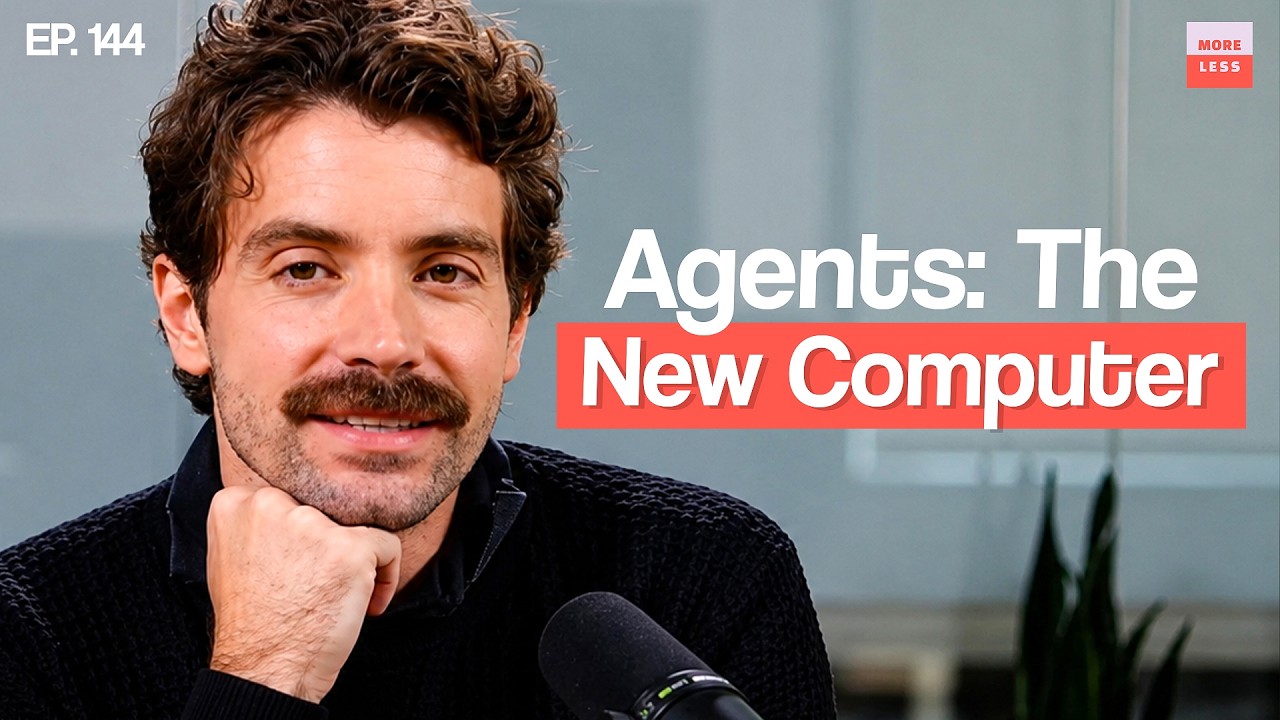
Description
Vercel CEO Guillermo Rauch breaks down the explosive rise of AI agents and what it means for the future of software infrastructure. He joins the Morins to unpack why Anthropic cut off OpenClaw users, why the SaaS subscription model is breaking down, how agents are reshaping cloud infrastructure, and why a new wave of “supergeniuses” (from neurosurgeons to 17-year-olds) are building things no one thought possible. Plus: dreams.md, the future of personal agents, and why agents are becoming the new computer. Chapters: 00:42 Intro: Guillermo Rauch, CEO and Founder of Vercel 01:48 Vercel Explodes 5X Growth and AI Traffic Surge 03:51 Why Anthropic Shut Down OpenClaw Users 04:47 Coding Agents Are the Path to AGI 07:57 70 Percent of Vercel Traffic Is Now AI 09:50 SaaS Is Dead Pay Per Token Takes Over 13:16 Anthropic vs OpenClaw Closed vs Open Agents 14:47 The Hidden Risk of AI Data and Training 16:38 Why Everyone Wants Their Own AI 18:08 The Shift to Agent Native Infrastructure 19:45 Vibe Coded Apps Are Going Viral 21:42 The AI Wars Anthropic OpenAI Elon 23:15 Dreams md Self Improving AI Agents 25:44 Memory Theory of Mind and Agent Intelligence 28:05 Your AI Should Travel With You 30:00 Enterprise AI and Domain Expert Agents 31:15 How Vercel Became an AI Native Company 33:06 Hiring in the Age of AI Agents 36:03 The Rise of Supergeniuses 38:10 Inside Slows Creator AI Hackathon 40:06 AI Agents Are the New Customers 41:18 Moving Up the Stack Again 42:05 What Happens in the Next 12 Months 43:48 AI Will Break Cloud and Security We’re also on ↓ X: https://twitter.com/moreorlesspod Instagram: https://instagram.com/moreorless Spotify: https://podcasters.spotify.com/pod/show/moreorlesspod Connect with us here: 1) Sam Lessin: https://x.com/lessin 2) Dave Morin: https://x.com/davemorin 3) Jessica Lessin: https://x.com/Jessicalessin 4) Brit Morin: https://x.com/brit
Summary
Generated by claude-haiku-4-5-20251001Video Summary: Vercel CEO on AI Agents Dominating Internet Traffic
Main Topics
- AI Agent Infrastructure Revolution: The dramatic shift from human-driven to agent-driven internet traffic
- Business Model Disruption: The collapse of ARR (Annual Recurring Revenue) in favor of consumption-based pricing
- Anthropic vs. OpenClaw: The tension between closed ecosystems and open-source agent development
- Personal Software & Agents: How agents are enabling non-technical users to create software
- Enterprise Agent Adoption: Vercel's internal use of agents for business operations
- Future of AI Infrastructure: Predictions about compute demand, geopolitical implications, and hiring transformation
Key Points
Traffic Transformation
- 70% of Vercel's documentation traffic now comes from AI coding agents (up from ~10% a year ago)
- Vercel's growth was previously capped by human developer capacity; agents have created 100x increased infrastructure demand
- Monthly signups growing 50% month-over-month
The ARR Business Model Is Dead
- Subscription models like Claude Pro/Max are unsustainable because agents use vastly more tokens than humans can
- The real business model is pay-per-compute/pay-per-token, similar to electricity consumption
- Anthropic's decision to restrict Claude Pro/Max users from accessing OpenClaw was driven by infrastructure stress from agentic workloads, not just business strategy
Coding Agents as Foundation for AGI
- Coding agents unexpectedly emerged as the path to general-purpose agents
- The iterative problem-solving loop (write code → get error → fix → repeat) is essential DNA for agent development
- Claude Code and OpenClaw validated that agents with tool access and CLI capabilities are more powerful than expected
The Agentic Internet Requires New Infrastructure
- Serverless computing with "scale to zero" properties is crucial for spontaneously-created AI apps
- Vercel's "fluid compute" infrastructure adapts to unpredictable spikes (e.g., viral apps on X that consume massive resources for days)
- Agents need more power to function intelligently—giving agents "everything they need" (like a full Mac mini) feels like AGI
The Soul.md/Memory.md/Dreams.md Framework
- OpenClaw pioneered using simple markdown files to define agent identity and self-improvement:
- soul.md: Agent's personality, values, and essence
- memory.md: Episodic memories from interactions
- dreams.md: Self-reflection and improvement insights
- This creates a "theory of mind for agents" that's portable across different model providers
- Enables agents to improve themselves without editing themselves into non-existence
Democratization of Software Creation
- Non-technical experts (radiologists, designers, creators, fishermen, pro skiers) can now build tools
- The neurosurgeon example: domain expertise + AI access = ability to solve problems that pure engineers couldn't
- Everyone at companies like Vercel is becoming an "agent steward" rather than a hands-on doer
Employment & Hiring Transformation
- The job becomes managing and improving the agent, not doing the work directly
- Hiring shifts to "roboticist" mindset: Can you build an agent to solve your role?
- New hiring model: apprenticeships > traditional interviews (need to see real work over time)
- Two-part interview process needed:
- Zero-AI interview (assess raw IQ)
- AI-agent-max interview (assess agentic capability)
OpenClaw vs. Anthropic Managed Agents
- OpenClaw philosophy: Open, portable, user-owned agents with model optionality
- Anthropic's managed agents: Verticalized ecosystem with data lock-in (store data, files, vectors, compute all with Claude)
- Vercel's approach: Neutral infrastructure providing zero data retention guarantees across all AI labs
Notable Quotes
> "70% of traffic to Vercel docs is now coming from coding agents. A year ago it was 90% humans. That's just how insanely fast it changed."
> "Agents are the new computer."
> "If now coding agents start taking that job of writing code and deploying it and testing it and submitting PRs, all of a sudden our infrastructure has a hundred times the demand."
> "It's all electricity, but on steroids."
> "OpenClaw is like Linux. When Linus Torvalds released the kernel, he said 'I have this toy kernel, totally not for production use.' That got an ecosystem of early adopters excited, and it went from toy to running every web server on the planet. I think OpenClaw has similar potential."
> "Nobody was prepared for agents."
> "Everyone at Vercel is now the steward of the agent. That's their new job expectation."
> "Agents are the new computer... the biggest problem right now is the friction that exists—we've all wired our brains to work with a different kind of computer."
Takeaways
- Business Models Are Fundamentally Changing: SaaS subscriptions are dead; consumption-based pricing wins. Prepare for token-based billing at scale.
- Coding Ability Is the Foundation: Whether you're building personal or enterprise agents, coding/tool-use capability is non-negotiable for intelligence.
- Agent Portability Matters: Use portable formats (soul.md, memory.md) to ensure agent identity survives model switching and vendor changes.
- Infrastructure Becomes Critical: Competition will increasingly be about who can reliably provide compute, not who can sell software seats.
- Domain Experts Now Win: Non-technical experts with deep knowledge in their field can now build solutions using AI—traditional engineers aren't the only builders anymore.
- Hiring Is About Roboticists, Not Doers: Evaluate candidates' ability to build and orchestrate agents, not their ability to do individual tasks.
- Prepare for Geopolitical Compute Wars: Hardware allocation (GPUs, CPUs, raw metal) will become geopolitically contested as demand explodes.
- Young People Without Legacy Thinking Will Excel: Those entering the workforce without pre-AI mental models will be "super geniuses" compared to those retraining.
- Privacy & Data Retention Guarantees Are Competitive: Vercel's zero data retention across all AI labs is becoming a key differentiator; users won't tolerate being training data.
- It's the Dawn of a New Technical Stack: "New technical" = orchestrating AI well, not low-level coding. We're moving up the abstraction ladder again (like moving from assembly to C).
Transcript
70% of traffic to Vercel docs is now coming from coding agents and only 30% of page views are coming from humans. Oh wow. What was it before? The timeline is that I think last year was like 90% humans. Like that's just how insanely fast it changed. Well, your growth rate is also crazy, right? Is this all because of the agent swarm? Yeah, it's because of that same intuition. Vercel's growth was capped by how many humans exist and how many times they deploy by submitting PRs. If now coding agents start taking that job of writing the code and deploying it and testing it and submitting PRs, all of a sudden our infrastructure has a hundred times the demand. Seems like agents are the new computer. [SPEAKER_03] Welcome back to another episode. And we're back. [SPEAKER_01] We're so back. Oh my God. You just didn't even let me do the intro. Gear out. That's how we intro. [SPEAKER_01] Okay. That's how we intro more or less. It's the most casual tech podcast out there. Definitely not TVPN that just got bought for hundreds of millions of dollars, but we're rolling with it. And we're going to get to that news today. What's going to happen with that? Well, we're going to talk about that today, but first let me introduce who you are and where the lessons are. Cause we are less lessons this week. Just Sam and Jess. [SPEAKER_03] It's spring break. [SPEAKER_03] Well, I know, but you know, we have spring break too, and we're still doing the pod. [SPEAKER_03] Just saying. Well, we're on a different side of the planet. [SPEAKER_03] Lucky for us, our friend and Japanese gallivander who we were with last week, Kierma Rausch, CEO of Vercel, one of the hottest companies on the internet right now and in AI and everything. And our favorite Argentinian executive is here with us today. And we are excited to just shoot the shit with you because so much is happening in the world of AI yet again this week. And frankly, we also just like to talk about slop cannons and Japanese culture and everything else. So how are you doing today, Kierma? Excellent. It's good to be back in SF from Japan. [SPEAKER_03] Now, I have to mention you, this is your second time on our podcast. The first time you were on, I think your company was valued at like two to three billion. Would have been a good time for anyone to invest. Now we're talking nine, 10, something like that. Yeah. We have a 5X, I guess. That's great. Great. Congratulations. [SPEAKER_03] So next time you have me, we'll 5X again. Yeah. We're only bringing you back if you raise another round. [SPEAKER_00] So done. Okay, perfect. [SPEAKER_03] Okay. So I have to kick it off because there's a lot of news that's happening. I'm going to try to do my best on the Jessica Lesson front, but we have everything from the OpenClaw and Anthropic debacle. By the way, I'm just going to list some stuff and you guys choose where to jump in. OpenClaw and Anthropic, OpenAI and Anthropic, OpenAI on steroids with the Sam Altman New Yorker article, their white paper that timely enough happened right alongside it, the industrial policy for the intelligence age. The CFO now not reporting to Sam Altman, and of course the acquisition of the tech podcast, TVPN. And then we also have more Anthropic news. They announced Project Glasswing and using Mythos, the new model for a bunch of cybersecurity safeguards. And then lastly, we also have Meta. Meta is coming in hot with both ViewSpark, the first model launched under Alexander Wang, which they paid a hefty price for. But also, I think this is interesting. It didn't get that much play yet. So I think it might be worth dabbling into Instagram plus their first subscription offering on Instagram. So where should we start, guys? Where do we want to go today? Wow. There's so much. I don't even know where to go. [SPEAKER_01] I think OpenClaw, let's start with OpenClaw because it's been so top of mind for us, especially during the Japan trip. And we were at the OpenClaw conference and meetup in Tokyo. So ClawCon. Yeah, just to back up. I mean, last week, we mentioned it on this pod, but we, Dave and I and a bunch of others, including Guillermo, were in Japan last week for kind of an annual trip we do with founders and execs across the startup scene. And we hosted ClawCon Tokyo with Peter, the OpenClaw founder himself. And days later, Anthropic announced that they are shutting off access for ClawedPro and Max users who are OpenClaw users to use their product. Dave, what's going on? I mean, that's what's going on. It's been crazy few days. We've had some long conversations with Anthropic about this. They've got an immense amount of load. I mean, Guillermo can probably talk about this, but agentic workloads are something that I think nobody was prepared to handle from an infrastructure perspective. And so Anthropic, everyone who's dealing with the traffic of our army of millions of claws is dealing with an immense infrastructure challenge. And so if anything, that's maybe the story we should talk about a little bit, because I think it's less reported on than the noise on the internet. You know, if you go on Twitter, there's a lot of people that are frustrated that they can't use their ClawedPro and Max subscriptions for OpenClaw workloads. But I think there's a deeper infrastructure story here that's not being told, which, you know, Guillermo, you might have some thoughts on. Yeah, I think agents have taken everybody by surprise. I've been sharing with people that I think even Anthropic has been surprised because I remember when one of the researchers was on a podcast, Sholto, talking about how in order to get an agent to be a very good product, you need to have this chain of events, all of which you have a high probability of success happening in a row. And agents sounded like something was far away. But then Cloud Code happened, which is a coding agent. And I think one of the key features of a coding agent is that it does a lot of problem solving, just like a human engineer does. You'd never write code that's perfect in the first try, unless you're Dave Morin. But typically you write some code, you get a syntax error, and then you have to call this tool, ah, I forgot to install this package. And you do this and you do that. Turned out that a coding agent was a necessary DNA for full personal agents and general purpose agents to grow from. And that's been the I think I'll, you know, I'll credit Pete OpenClaw with the discovery basically of like, well, [SPEAKER_03] I think one of the key features of a coding agent is that it does a lot of problem solving, just like a human engineer does. You'd never write code that's perfect in the first try, unless you're Dave Morin. But you typically write some code, you get a syntax error, and then you have to call this tool, ah, I forgot to install this package. And you do this and you do that. It turned out that a coding agent was a necessary DNA for full personal agents and general purpose agents to grow from. And I think I'll credit Pete OpenClaw with the discovery of, well, what if I just toss a coding agent into a container, and I give it access to messaging platforms, and give it a bunch of tools that are useful, like a CLI that can read your email, but it's fundamentally at heart a coding agent. And so there's been an emergence that no one expected. I've spoken with a bunch of people about this at every other lab, and they themselves have been surprised that a coding agent was the most promising path to AGI. They were like, oh yeah, it wasn't in our training set to do so much tool calling or get getting so good at calling CLIs and shells and things like that. And so that's been surprising. [SPEAKER_01] The other thing that's been surprising to us at Vercel is just by the way, it's intuitive in a sense, but it's still surprising is that the amount of compute in the world necessary for responding to human intent is predictable. You know, you're awake a certain number of hours in a day, and then you prompt and we need to do stuff based on that prompt. Agents can just do stuff in the background and they can, we talked about this in Japan at a crazy conference about artificial life, they can reproduce and call each other and fork themselves and as Pete has said, claw into other places. And so the demands of compute that an agent will put in the world is just so much greater. And maybe a data point from Vercel that I haven't shared broadly that is super interesting is an agent told me about an insight in our data that nearly 70% of traffic to Vercel docs is now coming from coding agents, 70% and only 30% of pages are coming from humans. Oh, wow. What's the timeline on that difference? Like what was it before? [SPEAKER_01] The timeline is that I think last year was like 90% humans. I can't remember exactly, but literally a year ago, 12 months ago. Yeah. That's just how insanely fast it's changed. Well, and I saw your growth rate is also crazy, right? Is this all because of the agent swarm? [SPEAKER_01] Yeah. It's because of that same intuition, right? That humans, Vercel's growth was capped by how many humans exist and how many times they deploy by submitting PRs. If now coding agents start taking that job of writing the code and deploying it and testing it and submitting PRs, you know, GitHub also published their data and it's insane. [SPEAKER_00] Now all of a sudden our infrastructure has a hundred times the demand. Our signups are growing by 50% month over month. My high school friend who's never written a line of code in their life came to our office yesterday. He's like, by the way, I've been following you obviously and what you've been doing for years. And in Argentina, there's always news and whatever, but I never understood what Vercel was, but now Claude introduced me to Vercel. And so there's this new agentic driven interaction. And I fully expect agents to be signing up for services directly, zero human intervention soon, making payments on behalf of people imminently, you know, getting credit cards and budgets and solving entire problems for people where the service provider becomes a vendor of the agent, not a vendor of the human. Yeah. I mean, it seems like that future is already here. It seems like that future is already here. I've been trying to think through what the business model looks like. Is it as simple as the application of the entire SaaS business model set to agents, or is there something more interesting here? It's really hard to tell where the business is going to emerge. I'm playing the Sam role all of a sudden on the pod. Yeah. Okay. [SPEAKER_00] It all goes to zero, Dave. It's all electricity, Dave. None of this matters. It's just AI. [SPEAKER_01] Actually, it's closer to, it's probably closer to like, it's all electricity, but on steroids, in the sense that one of the things that Vercel had embarked on that was very timely for this AI revolution is a switch to consumption-based business model. Right. I was actually sharing the story to a group of founders today that I think people underestimate how complex the problem of billing per token or billing per CPU cycle is at the scale of providers like us, and how many teams we had to devote to the problem of just counting and billing tokens. And now we're trying to share that back with the world and provide the infrastructure so that you can build agents that can charge by token and participate in this emergent economy. But the barrier to entry is the fact that agents will be very much pay per use. The SaaS business model definitely gets disrupted because it was predicated on selling seats. Yeah. I mean, I was thinking about this while we were in Japan and then doing some research on it the last few days, but the ARR business model seems to be completely out the window, right? Like I'm still seeing this in pitches from startups every week, every day. I took one this morning. ARR is no longer a viable metric when the actual business model is pay per token. And I've been saying this on the pod for a really long time that the business model of AI is not ARR. It's actually compute, right? It's more like Apple's business model where you're selling people a computer that they can use for some period of time, or they're buying their access to compute. And it's not this recurring thing necessarily. And when you look at especially this move that Anthropic just made, they're basically saying like, hey, the ARR business doesn't work for us because people are scaling up their token use dramatically. And that's putting an incredible strain on this ARR based subscription model that we have. Like we just need you to pay for your tokens, whatever level of token you want to use, go for it, but you need to pay for it. [SPEAKER_01] By the way, one prediction that I'll make is that it's going to continue to get more and more complicated for them to sustain the subscription thing, because it's almost an impossible problem. We confronted this at Vercel early on, because what customers really want is predictability and they want to know exactly how much they're paying. But I don't know exactly how much I'm paying AWS in a world that we're going in is so incredibly dynamic. So I would try to explain to e-commerce companies, look on Black Friday, you're going to [SPEAKER_01] use, go for it, but you need to pay for it, pay for your tokens. By the way, one prediction that I'll make is that it's going to continue to get more and more complicated for them to sustain the subscription thing, because it's almost an impossible problem. We confronted this at Vercel early on, because what customers really want is predictability and they want to know exactly how much they're paying. But I don't know exactly how much I'm paying AWS in the world that we're going in is so incredibly dynamic. So I would try to explain to e-commerce companies, look on Black Friday, you're going to use 10 times as much for sale. So I have to meter you on each unit of consumption of what you're producing and consuming on, because it's going to be highly fluctuating. And I think this is the problem with selling you $200 cloud code max is that they're trying to say look, most people hopefully will not use it. But the thing here, the unit of intelligence is so valuable that why wouldn't you use it? Why wouldn't you use whatever high ceiling there is, which might be like $5,000 worth of inference or whatever. You're going to want to use the 5,000. And that's what we realize is that it becomes this insane game of cat and mouse, because once people realize the value that is behind the illusion of predictability, they will try to maximize its utilization. Well, and that goes back to the electricity point, right? You're just buying what you're utilizing, right? And I'm a little confused, though. So just today, Claude also announced it has managed agents. So a new way for businesses to build and deploy AI agents, build harnesses around them, etc. So they're blocking open clause pro and max subscriptions, but they're launching managed agents. And I didn't see the business model behind this. I don't know if either of you did. Well, it's actually in my I haven't looked into it too deeply yet. But my sense is it seems like a continuation of the same strategy of can we verticalize as much as possible? Yeah, by subsidizing it, right? Like by doing these subscription predictable things, you're basically saying you're willing to subsidize using your investors capital, getting certain verticals on board, right? And ultimately, in the end, Guillermo's right, you have to meter this properly. You have to meter this at the price of supply. And it's a supply and demand pricing exercise, right? Like if you have enormous demand on whatever day for a certain type of commute, you have to price it properly. And the only way to make a subscription work is to subsidize the delta. That's it. And there's two ways that they can subsidize. One is investor money. And the other one is growing a formidable enterprise business such that you focus on the subscription for individuals and engineers that are working on their own and whatnot. But there's also another third one, which is they train on the subsidy, right? So if you agree to getting cheaper or more high rate limits or whatever, you become the product, you become the data. Funny enough, I was just joking. I was tweeting before we kicked off, we announced today on Vercel AI Gateway, zero data retention guarantees so that you can turn it on and say, Vercel has negotiated contracts with all of the AI labs on zero data retention. We will not allow a single token through these pipes that can put you at risk of being trained on because that's going to be the other encroachment is that, yeah, here's a bunch of AI playing the casino money, but I'll learn from everything you do. I'll upload your code base into my training data set, right? And on managed agents, it goes back to the way that you justify a subsidy is, can you lock the customer into your ecosystem? For example, I don't know if they've adapted yet, but Anthropic for a long time was not playing ball with agents.md. You could only call their instructions, Claude.md. To their credit, I actually pioneered a number of open spec solutions. I actually think they've been a really good actor on the open ecosystem side. There is a case to be made that their business incentive is to verticalize, only do things in the Claude ecosystem, store your data there, store your file attachments, artifacts, PDFs, store your vector DB there, run your sandbox compute there. And Vercel's answer is the exact opposite. It's like, no, no, no, no, get the tokens there, reserve the optionality of using codecs if you want, and here's all the services to build a managed agent that doesn't lock you into a particular vertical model app stack. Right. Which is what most people want. And I think that's why open claw, et cetera, has been so enormously popular. People can have their own agent, they can switch models, they can keep all their data personal, local, et cetera. There's so many people that want their own AI, right? Like they want literally an open model living in their house. And that's how they want to use their open claw. And that's why I think this solution is always going to win. Guillermo, how do you think about the transition in your business between these two new worlds? You know, you kind of pioneered this sort of edge function, Typescript world where you had a totally different server architecture that you've really pioneered. And that was extremely successful in this sort of human-driven internet. This sort of, I don't know what we're going to call it, the agentic internet wave. I like the agentic internet. It kind of requires a different type. You've got this new Vercel sandboxes. It requires a different kind of thinking. Like you're right. People do want they want a box, right? And I'm hearing a lot of people use Digital Ocean or, you know, some people that want to go through the pain of using AWS and their crazy interface. But how are you thinking about this transition in terms of the product set that you need to offer? Like, does it change the way you have to think about your strategy? [SPEAKER_00] Yes. So the agentic internet requires agentic infrastructure. That's the focus of the company right now: being the AWS of agentic infrastructure. Do you have to change the way you think about? I mean, I guess it really does change a lot of things for you, or is this sort of easy stuff for you guys to stand up entirely new architectures and things like this? [SPEAKER_00] I was going to say there is an important caveat, which is that the existing business was also at the right time and in the right place. Because when you deploy all these apps and they've, we, when we were in Japan, the previous trip, we were talking about the dream of personal software. And then we're joking. It only took a year and now we have real personal software. It's [SPEAKER_00] Do you have to change the way you think about things? It really does change a lot of things for you, or is this easy stuff for you guys to stand up entirely new architectures and things like this? [SPEAKER_00] I was going to say there is an important point, which is that the existing business was also at the right time in the right place. Because when you deploy all these apps and they've, we, when we were in Japan, the previous trip, we were talking about the dream of personal software. And then we're joking. It only took a year and now we have real personal software. It's nuts. I remember actually when I was in the plane to Okinawa, I was like, send a tweet. And I felt like every good banger, I felt a little bit of, I don't know if this is just me being high on my own supply. [SPEAKER_03] And to put this in context, that tweet was what, less than 18 months ago and remind people what the tweet was. [SPEAKER_03] Yeah. It was this idea that generating software, it was in competition now with Googling for software, but now generating software is not just in competition. It's going to win. It means that everyone can produce their own software for personal use or for enterprise use. Because why would you go through the hard work of procuring a new vendor? If you've already procured Vercel, you plug it into Codex or Cloud Code, and now you generated this software that you thought you were going to procure. Like this is literally happening as we speak. What makes Vercel really good for this hosting solution for generative software? One of the things that we bet on was serverless. Serverless has this property of scale to zero. A lot of software will be so spontaneously created and used that it might just get intense use for five minutes, for two weeks, maybe a year. Maybe it's just for me. Maybe it's for a medium-sized group. Maybe it takes off on X. Like literally every day, there is a new generative personal app that takes over the world on X. There's one called World Monitor, which is Vybecoded Palantir. It literally became one of the top 100 host names on Vercel for a week because everyone in the world was talking about it. And so, and then it died? What happened? Like it just goes away? Actually, surprisingly, it's still very high. Oh, okay. But some of these probably are blips in time. They rise, they fall. This speaks to the durability of some of the Vybecoded software. Another example is Gmail. Gmail was a group of guys saying, what if we produce a better UI to the Epstein files? Oh yeah. I love this. And lo and behold, you have a massive, it's become the Wikipedia of that whole case that everyone's talking about and whatever. So what we call our compute infrastructure is fluid compute. Fluid implies, again, it has the fluidity that CPU cycles might go down to zero or CPU cycles might go so high that you're running something that's bigger than New York Times. Maybe for a week, maybe for a year, who knows? And so we made the right investments to be very well positioned for this era. But now the agentic era also requires innovations. The sandbox is the most prescient one, which is that very fascinating thing about agents is the more power an agent has, the more intelligently it performs. And so if an agent has an entire computer, like a Mac mini, you feel like you have AGI in your hands. If your agent only, and this is the problem that people run into, is if your agent only has access to your rack database in one tool that one engineer wrote, it's like you're wasting this incredible IQ capacity that you just purchased. [SPEAKER_00] Yeah. And that was again, Pete's brilliance in that he was like, no, no, no, no, give the agent everything it needs. Yeah. And so I think what I want, what I'm helping enterprises do now is how can we get them to achieve that power, but not exfiltrate all their precious data and IP and the keys to their kingdom. And so that's the fine balance that, and again, requires innovations. Like we invented a new kind of firewall for Vercel sandbox that literally did not exist in the world and things like that. [SPEAKER_00] So what I think is so interesting about you and Vercel is you're kind of like Switzerland amongst all of these frontier labs and there's so much happening almost every day. Can you say, are there some of these companies you're more bullish on, less bullish on? Do you think that you can talk in the macro, like we're in the AI wars, there's a lot of opposition research happening this week alone. We had all the Sam Altman stuff coming out. There's like Dario launching Glasswing. Elon is suing Sam. Is this all going to play itself out? Or what do you think is the long game here? [SPEAKER_01] I'm very bullish on whoever focuses on coding, because as I mentioned, I think the foundation of a successful agent for personal use or enterprise use is the ability to code. In fact, one of the things that we learned with the agent that helps us run Vercel internally is that you still need to give feedback to the agent. So Dave and I were talking about soul.md. We're like, we're talking about a soul.md hat. No, no, you can't tell everybody about this. We're going to sell these. It's coming. It's merch. We're making soul.md hats. But now, I did this feature this. Well, dreams, Dave, you have to do dreams.md. [SPEAKER_01] I worked on this feature on OpenClaw this week called dreams.md, which is pretty fun. But yeah, another amazing emergence from agents and from OpenClaw. And by the way, this is also the sharp edges, by the way, I literally saw that tweet from Gary Tent today that said, I told my agent to improve itself. I literally knocked itself offline and I had to SSH into the machine and reboot it. [SPEAKER_01] Yeah, it does that a lot. And we're in the Apple one phase of personal agents. But this is a good problem to have because when I really think that, OpenClaw is like Linux. And I agree with Jensen Huang that when Linus Torvalds introduced Linux on the mailing list, he said, I have this toy kernel, totally not for production use. Here you guys go. And that got an entire ecosystem of early adopters excited about it. And then it went from toy to literally now every web server on the planet runs on Linux. I think OpenClaw has similar potential because it's used by early adopters, advocates, people that know that when they get yourself into a bad state, you have to reboot it and all these things. But going back to my original point, the ability for an agent to mutate itself and improve itself over time is extremely important. It doesn't know everything about how you like to work. It doesn't know everything about how to work with your data. It doesn't know everything how to [SPEAKER_01] kernel, totally not for production use. Here you guys go. And that got an entire ecosystem of early adopters excited about it. And then it went from toy to literally now every web server on the planet runs on Linux. I think OpenClaw has similar potential because it's used by early adopters, advocates, people that know that when they get yourself into a bad state, you have to reboot it and all these things. But going back to my original point, the ability for an agent to mutate itself and improve itself over time is extremely important. It doesn't know everything about how you like to work. It doesn't know everything about how to work with your data. It doesn't know everything how to work with your code base, but it can very quickly learn, especially if it knows where to put the data about how to, when you give it feedback on, does it edit, dreams.md, does it edit skills? Does it edit the system, whatever it needs to do. And so I guess the next step for us is how do we figure out how to enable that? Because if we let it edit everything about itself, it can edit itself out of existence. It's like emo, like I'm done, I'm done with this world. Or you can just get into itself into a bad state, right? That was part of the reason we worked on the dreaming feature this week. It's an old Peter, one of my favorite ideas that Peter talked about early on when I was first talking to him was this idea of what if the agents can dream? You know, I think one of the brilliant things about open claw is that beyond the technical things that we're talking about is that there are these very basic files that have very interesting names. You know, he took the idea of soul.md, which was an idea written by somebody else, but Pete was kind of, I think the first to implement it in this very beautiful root level way where this agent has a soul. You should define its soul. You should figure out how you want it to be, how you want it to show up, what its essence is. And it should be different for you. Like your agent and my agent should be very, very different. And then he also added this memory.md flat file, just like, here's the things the agent has remembered from all of its interactions with us. And the thing that we implemented this week was this idea that as time goes on, your agent, you know, you talk to your agent a lot, you have all these long session files. There's many, many, many, many memory files. There's a daily log in the open claw agent. And all of this stuff has things to learn from, like the agent should be able to improve itself. Right. And there's a lot of really complex technical ideas out there about how agents can have these really complex, interesting technical solutions around self-improvement. And our thought, my thought here was just, let's make this very simple for people and just give it a dream.md file, give it a very basic system that churns through all of these different files that the agent generates every day and ranks things from them that should be promoted into this sort of dreams file, and then makes it human readable in a way where when the human wakes up every day, you can actually just read this dream journal that helps you think about where the agent is evolving and where it's going. And it does this in a very basic and smart way so that it is self-improving, but it does it in this lightweight way that we think of and we understand from a human perspective. And so that's also one of my great interests in this, which is how do we create a theory of mind for agents that can also be transportable across intelligence? Right. Because one of the other things that we're seeing a lot of is that if Anthropic decides that they need to shift their business model or whatever intelligence you're using underneath your agent, you still want its soul and its memories and its understanding of you to come with you as these things change and are the underlying compute. And so that was a big thing that we worked on for OpenClaw this week that I'm proud of. And it seems to be something the whole industry has been interested in. This essay that I wrote went more viral than anything that I've written recently. And so I hope that people are inspired to think in this way. There's a seam between humanity and agents that I think is important as we're working through this. One of the things that I've been trying to figure out is how do I take that concept and apply it to the agent, our internal company agents? Because when people work at Vercel, I was actually literally just talking to my video team and they were saying, oh, we're using Riverside. I asked our agents, how do we use Riverside? How does Riverside use Vercel? How can they have better context going into a conversation with the Riverside team? And it's amazing because in the past questions about customers would happen through, maybe there is a Salesforce account open and the data team, the data integration. And if it's a very complex question, I have to ask a data analyst, all of that is going through an agent now. So what we're trying to figure out now is, what is the, I'll use the term enterprise ready self-improvement loop for this agent. On one hand, there is different domain experts for the different skills that the agent has. For example, the finance team is more equipped. Funny enough, I'll connect to our earlier discussion around ARR. Forecasting widely dynamic revenue for a business like Vercel requires a ton of work and expertise. And there's certain people in the finance team that can do that. And they're the ones that are most equipped to review and give feedback to the agent on the skillset around MRR or ANR annualized revenue or forecasts or definitions. Because one of the things about a data analyst agent is that it should correct you in your terminology. If a Brit comes into Vercel and says, tell me how many weekly active users we have to wait, wait, wait, wait, wait, wait, wait. At Vercel, we have weekly active developers and weekly active contributors. Who are you talking about? You actually want an agent that pushes back, right? And so all of that is rooted in expertise. That first has to continue to learn over time, but also as dedicated people that are experts in that domain. So that's one side of it. The other one is that there is a personal relationship between me and the agent that is more like the episodic memory that you're talking about. Anytime I interface with this agent, I'll actually give you a very concrete example. I have a lot of people that prefer to talk to the agent in their natural language, like in their mother tongue, because they can talk to this agent privately. So they speak to it in, I don't know, Argentinian Spanish. And by the way, do you mean by voice or by typing? [SPEAKER_01] learn over time, but also as dedicated people that are experts in that domain. So that's one side of it. [SPEAKER_01] The other one is that there is a personal relationship between me and the agent that is more like the episodic memory that you're talking about. Anytime I interface with this agent, I'll actually give you a very concrete example. I have a lot of people that prefer to talk to the agent in their natural language, like in their mother tongue, because they can talk to this agent privately. So they speak to it in, I don't know, Argentinian Spanish. And by the way, do you mean by voice or by typing? This is all right now, mostly through Slack and the web interface that we built for it. Yeah. But yeah, it should also be through voice. And when I, Roush G, interface with the agent, it should pick up in addition to all the stuff that we just talked about, it should learn about the relationship with me. And obviously there's context that's relevant because it knows about the conversations that we've had. Maybe it knows about frequent mistakes that I make. Like I keep talking about weekly active users and it's like, yeah, I know what he means. We already went through this. [SPEAKER_01] Right. And so there's levels of personalization of the memories and skills that deal with who is the user interface. This is again for multi-user agents. You guys are mostly focused on the personal one-to-one. Guillermo, have you had just, I think Vercel is probably one of the more advanced companies I'm guessing that is really using agentic software internally. Your finance team is thinking in these new ways, your video team's thinking in these new ways. Like, are you training people to do this? Are you only hiring people that think this way? Like what is the modern founder or CEO's playbook for how to cultivate a company that does think this way? [SPEAKER_00] I think because we build a lot of the AI stuff, it's been a self-fulfilling prophecy of inspiring people to think that way. I never explicitly told the video team to build their own tools to make themselves more productive, but they were literally showing me a couple of weeks ago their video generation tool that meets their exact needs and produces high quality output. And I tweeted about this and actually surprised a lot of people. I tweeted about the design team, including people that never wrote a line of code in their lives, have created design tools, automated their job, right? Like we have an agent that produces social media cards. And what's really cool is that this actually is reassuring for the future of human jobs, because the designer job at Vercel has become the steward of the agent. Of course, I don't want the tool that spits out any wildly off-brand social card with six fingers or bad typography or whatever. But I also don't want the other extreme that is at any time that I need to tweet something out, the team is bottlenecked because the creatives have not produced the asset yet. And they have a long to-do list. And so basically everyone at Vercel is now the steward of the agent. And that's their new job expectation. And now it's become part of our job screening, which actually forces the hiring manager to think about, I'm hiring a roboticist. I'm not hiring a doer of the job. And so they set up the hiring challenge. Walk me through how you would create the agent that solves the job that traditionally someone in your position would do. And so now it's become part of our hiring pipeline. [SPEAKER_00] I was also looking, I don't remember if it was also Gary Tan or somebody else on Twitter this week that was talking about how apprenticeships are going to be the new normal rather than traditional hiring because you just have to see. [SPEAKER_01] Oh, 100%. [SPEAKER_00] In what context? Like robot apprenticeship? [SPEAKER_01] No, just like you need to see how these people work and because they're going to fake their resume or put AI slop everything in the interview. And you just need to get some real reps in with people to understand. [SPEAKER_01] They're going to be an asset for your company. [SPEAKER_00] I am violently aligned. We're even evaluating a bunch of different platforms that we can use for AI-native screening because there's two sides to the job interview. By the way, I actually love your theory of mind, Dave. I'm also a hobby part-time philosopher. Nice to meet you. And my theory of mind is, you know, intelligence is three parts. There is a raw IQ part. We all have a foundation model of sorts. There's the knowledge, which is that I hire you because you've been a designer for mega zillion years. But then there's skills, which is your ability to obtain new knowledge over time and your ability to do tasks to completion, to ship things. And so you have to have all three. And so when I'm hiring, I'm trying to assess all three. And I love the AI skill set. I love the agentic skill set. If you've shown that you can use ChatGPT v0 Claude code really well, I'm happy for you. And I'm letting you finish. But I also want to see what raw materials I'm working with. And for that, we actually do a zero AI interview. And I basically need a platform for the zero AI interview with cheating detection. And then in bad faith detection. And then I need the opposite. I need the can you actually AI agent max part of the interview. And that's the secret is that you need both. [SPEAKER_01] And G, I know that you also outside of running Vercel are an investor yourself. You do a ton of angel investing and all kinds of things. What are you looking for these days? You know, again, if our friend Sam was on the pod, he would tell you, you know, software is uninvestable. There's nothing investable on the internet right now. It's, you know, other than creators. [SPEAKER_00] Yeah, Sam tells you on Riverside that through this streaming platform that software is uninvestable, I think it's about anticipating these problems that look so niche and so Silicon Valley, and are going to be everyone's problems in a few years. I've been particularly interested in everything around risk mitigation for agents, obviously for obvious reasons. I mean, we just talked about one of the topics on the laundry list was mythos. And it's a very real danger that agents can just go off the rails. [SPEAKER_01] Yeah, I one of the tweets that I got out recently, it also shocked people, was I had this escalation from a customer by the way using OpenClaw. My new customer is someone that barely knows what the cloud is, which is funny, because to today's point about AWS is hard to figure out, that was already the case. But it was a savvy customer that knew enough front-end engineering that they knew they needed infrastructure. The new job is to figure out what the agents are going to need that even the humans don't know that they're going to need. And so for agents to deploy like your son, you were telling me, they code and deploys to Vercel. And I'm hearing this story every day. And this customer [SPEAKER_01] it also shocked people was I had this escalation from a customer, by the way, using OpenClaw. [SPEAKER_01] By the way, my new customer is someone that barely knows what the cloud is, which is funny, because to today's point about AWS is hard to figure out whatever that was already the case. But it was a silly customer that knew enough front of engineering that they knew they needed infrastructure. The new job is to figure out what the agents are going to need that even the humans don't know that they're going to need. And so for agents need to deploy like your son, you were telling me they've cloud codes and deploys to Vercel. And I'm hearing this story every day. And this customer that came to me was, I'm filing a ticket with you guys. But I don't even know who you guys are, by the way. Nice to meet you. My agent got me here. By the way, one of the most inspiring things, and I know Sam hosted a while we were in Japan, they hosted a creator summit. And I got some of the reports out of it. And they brought together all of the creators in the Slow Venture Creator Fund in San Francisco. I think they had like 50 creators and they taught them a very basic stack, right? It was like, here's what cloud code is. Here's what DigitalOcean, Vercel are like, here's what, you know, here's how to think about what you can do with this. And it was amazing, the stuff that people are creating. And these are all like, you know, some of them are sophisticated creators, but some of them are fishermen or pro skiers, or, you know, whatever, their expertise is not technology, their expertise is their community, right? And or their customer. And I'm hearing this over and over again, right? I just talked to a neurosurgeon yesterday. You know how everyone wants to crack the problem of radiology with AI. And you know why we haven't cracked it yet? Because no one has the credibility to solve that problem. I don't think you can grab a random engineer off the street and say, the sufficiently motivated ones like the Elon types will, but it was amazing to hear. I was at Y Combinator, this lady who's a trained neurosurgeon has worked with radiologists during her entire career. And she's taking a stab at the problem. And she's using these tools that a year ago, to your point, she didn't know existed. She's written nary a line of code in her life. Of course, if you've been able to complete a neurosurgery degree, you have the wrong going back to my raw material, whatever, what are we working with here? She clearly has a raw material that I solve any problem in her life. And so I think there is going to be a lot of power to the people with the domain expertise. I guess her problem that she was telling me about is figuring out the integration to existing systems. But the AI part is the easy part. We can all upload a scan to NanoBanana and NanoBanana can even draw a rectangle around the tumor or whatever. Right. But the problem is the integration and the disparate systems and the regulations and the credibility and the authority. And so I'm still super bullish on those kinds of people solving massive problems for humanity. I just think this is a beautiful, the most beautiful thing going on right now. And this is something that Pete and I talk about in the context of the OpenClaw Foundation. You know, all of us talked about this a lot on the trip last week, but this idea that bringing people closer to AI and showing people that they can just talk to these things. And if you're that radiologist or you're the person with expertise in your community or your knowledge area, to your point, Guillermo, you can just talk to them and it will help you figure it out way more powerfully than I think everybody realizes. And that's actually the beautiful moment we're in. Globally, but most people just need help trying it. And then to your point, the Vercels and the people that have specialized in the infrastructure over the years have to accept this new reality. Yeah. Embrace it. You're now serving the agents that are serving the humans because the humans that are asking the agents for things know something. It's a new kind of customer. Yeah. It's it creates a huge amount of empathy too. And it's a new kind of design challenge, by the way, because at some point they'll go to your platform and they'll have questions and they'll want to review things. And their mental model was how the agent was interacting with it. So they need to be able to translate and regain that context when they interact with you directly. And they're not going to be technical, you know, they're not going to, they may not even be interested in, it's a new kind of technical or not or whatever. Yeah. It's a new technical. I really think it's the new technical is that you used AI tools so well that what people used to take pride in being technical on is now an implementation detail that is less important. Right. Everyone's an orchestrator. [SPEAKER_00] When I worked at Apple, you know, there was, I loved it. There were these guys that they literally had wizard beards and they were the guys who knew assembly. Like they were the guys that could still speak assembly and they had their whole own wing at infinite loop. And they were really interesting guys and they had been doing this for a long time, but it's not like everybody that worked at Apple understands what the compiler was turning into assembly. Right. Like most of the people at Apple, when I was there, were working in C right. And this objective version of C that was really useful for building things on top of the compiler. Right. And so we're moving up the compiler stack again, and that's cool. And there's always going to be the guys that know the next level down. Right. But to your point, there's a new technical now and that's really interesting. So I want to bring us, unfortunately, to a close because some of us have other things. We could have gone on for five hours. We could have gone on for five hours. I wish we could. That would be. Well, let's do the five hour edition. We didn't get to the laundry. We got to some of the laundry list. I'd like that. But yeah, let's do a five hour or do a long form. We should do a long form. A potathon. Yeah. If Joe Rogan can do it, we can do it. I want to end by asking you this. Yes. I will say I've had a few people in our network, you know, over the years, we've had these eras where we do these jam sessions, Gary Vee and Ashton. And a lot of us, we used to host these jam sessions at South by Southwest. And for years, this was a thing. And then it kind of died down when the five hour edition. We didn't get to the laundry. We got to some of the laundry list. I'd like that. But yeah, let's do a five hour or do a long form. We should do a long form. A potathon. Yeah. If Joe Rogan can do it, we can do it. I want to end by asking you this. Yes. I will say I've had a few people in our network over the years, we've had these eras where we do these jam sessions, Gary Vee and Ashton. And a lot of us, we used to host these jam sessions at South by Southwest. And for years, this was a thing. And then it died down when the 2010s turned into SaaS things. Let's do a jam session podcast with eight people. Yeah. Gary Vee called me yesterday and said, Dave, we need to do a multi-day jam session in San Francisco and record it. Okay. And we're recording it. Amazing. Gary Vee, we're coming for you. You last came on this pod a little over a year ago. The world was different then than it is now. What do you predict happens a year from now? The next time you come back on the pod, where are we at? To me, it seems agents are the new computer. And the biggest problem right now is that the friction that exists, we've all wired our brains to work with a different kind of computer. And my prediction is we're going to continue hearing cases where someone that came in fresh with very little context on how things worked in the past, maybe even a baby. Imagine a baby that could actually articulate thoughts. That would be the ideal environment, right? Or the ideal user of this new technology. Because funny enough today, we gave an offer or we finalized and the offer got signed by a mother. Why? Because we hired someone that's 17 years old that we went through the trouble of doing lawfully, obviously, and having his parents approve. Because this person is overwhelmingly competent. I call this the advent of the super geniuses. Our children will be born into a world of endless possibility. [SPEAKER_00] And one of the consequences is we're going to hear stories that are insane, unbelievable. Someone creating a massive company. I mean, it's a tired trope by now because it already happened and it's debatable. But a single person creating a unicorn, single person having a scientific breakthrough, startups staying 10 person companies reaching insane levels of revenue. Another thing I predict is the stress and infrastructure is going to be bewildering. Who gets allocation of hardware is going to become a big battle again. It's not just GPUs. It's also CPUs. Who gets access to raw metal to satisfy the endless thirst and appetite from these agents because we're seeing this with sandboxes, with functions. There's endless demand for infra. And so I think we are underestimating the stress that this is going to put on the system. We're seeing a lot of outages, a lot of cybersecurity attacks. Those sadly will continue. As far as the global macro and geopolitical landscape, the attacks that have happened recently, our region in Dubai got taken offline because of war. Two of our availability zones hosted by AWS were droned. So we had to reroute an entire region, which we'd never done outside of one exceptional case in 10 years. US East One had a really bad outage. And we had to reroute traffic to US East Two, Ohio, which had so much traffic we sent that it took Ohio offline. And so we had to reroute Dubai and then it happened again in Bahrain. And so hopefully I'm always an optimist for peace. But I think we're going to continue to see how our cloud infrastructure becomes a target because the most valuable thing will be the computers being online and doing number crunching and processing and disseminating intelligence. So a bag of predictions there, but it's going to be a fun year. Sounds like a lot of optimism and a lot to be a little nervous about, but we're here for it. Well, hopefully maybe we'll have you back sooner than that so that we can get some status updates. We're going to do this long pod. Yeah. Guillermo, thank you so much for being here today. And for everyone that's listening or watching, please make sure to follow where can they follow you? Like and subscribe. Okay. There you go. Well, where can they follow you? Give them your follow. Oh, Roush G on X, the X platform, the everything app. That's the main one. All right. That's R-A-U-C-H-G by the way. And you can follow, like, and subscribe the More or Less pod, wherever you are. We've gotten some great traction by the way, on YouTube lately. So go check us out there if you missed anything and hopefully the lessons will be back next week. And so we will all see you back here for another episode of More or Less very soon. Bye-bye guys. Thanks everyone. If you enjoyed this show, please leave us a virtual high five by rating it and reviewing it on Apple Podcast, Spotify, YouTube, or wherever you get your podcast. Find more information about each episode in the show notes and follow us on social media by searching for at More or Less, at Dave Morin, at Lesson, at Jay Lesson. And as for me, I'm at Brit. See you guys next time. each other and fork themselves and as Pete has said, claw into other places. And so the demands of compute that an agent will put in the world is just so much greater. And maybe a data point from Vercel that haven't shared broadly that is super interesting is we're actually an agent told me about an insight in our data that is nearly 70% of traffic to Vercel docs is now coming from coding agents, 70% and only 30% of pages are coming from humans. Oh, wow. What's the time? What's the timeline on that star difference? Like what was it before? The timeline is that I think last year was like 90% humans. I can't remember that, but like, like literally a year ago, 12 months ago. Yeah. Like that's just how insanely fast is changed. Well, and I saw like your, your growth rate is also crazy, right? Like, is this all because of the agent swarm? Yeah. It's because it's that same intuition, right? That like humans, Vercel's growth was capped by how many humans exist and how many times they deploy by submitting PRs. If now coding agents start taking that job of writing the code and deploying it and testing it and submitting PRs, you know, GitHub also published their data and it's insane. Now, all of a sudden our infrastructure has like a hundred times the demand. Our signups are growing by 50% month over month. My high school friend who's never written a line of code in their life came to our office yesterday. He's like, by the way, I I've been following you obviously and what you've been doing for years. And in Argentina, there's always news and whatever, but I never understood what Vercel was, but now Claude introduced me to Vercel. And so there's this new, like agentic driven interaction. And I fully expect agents to be signing up for services directly, zero human intervention soon, making payments on behalf of people imminently, you know, getting credit cards and budgets and solving entire problems for, for people where the service provider becomes an, a vendor of the agent, not a vendor of the human. Yeah. Yeah. I mean, it seems like that future is already here. Like, it seems like that future is already here. I've been trying to think through what is the business model look like? Is it as simple as the application of the entire SaaS business model set to agents, or is there something more interesting here? Like, it's really kind of hard to tell where the business is going to emerge. I'm like playing the Sam role all of a sudden on the pod. Yeah. Okay. It all goes to zero, Dave. It's all electricity, Dave. None of this matters. It's just AI. Actually, it's closer to, it's probably closer to like, it's all electricity, but on steroids, in the sense that one of the things that Vercel had embarked on that was very timely for this AI revolution is a switch to consumption-based business model. Right. I was actually sharing the story to a group of founders today that I think people underestimate just how complex the problem of like billing per token or billing per CPU cycle is at the scale of providers like us, and just how many teams we had to like basically devote to the problem of just counting and billing tokens. And now we're trying to like basically like share that back with the world and provide the infrastructure so that you can build agents that can charge by token and participate in this emergent economy. But the better to entry is the fact that agents will basically will be very much paper use. The SaaS business model definitely gets disrupted because it was predicated on selling seats. Yeah. I mean, I was thinking about this while we were in Japan and then doing some research on it the last few days, but the ARR business model seems to be completely out the window, right? Like people, like I'm still seeing this in pitches from startups every week, every day. I took one this morning. ARR is no longer a viable metric when the actual business model is pay per token. And I've been saying this on the pod for a really long time that the business model of AI is not ARR. It's actually computer, right? Like it's more like Apple's business model where you're selling people a computer that they can use for some period of time, or they're sort of buying their access to computer. And it's not this recurring thing necessarily. And when you look at especially this move that Anthropic just made, they're basically saying like, Hey, the ARR business doesn't work for us because people are scaling up their token use dramatically. And that's putting an incredible strain on this ARR based subscription model that we have. Like we just need you to pay for your tokens, like whatever level of token you want to use, like go for it, but you need to pay for it, pay for your tokens. By the way, one prediction that I'll, that I'll make is that it's going to continue to get more and more complicated for them to sustain the subscription thing, because it's almost an impossible problem. We confronted this at Vercel early on, because what customers really want is predictability and they want to know exactly how much they're paying. But I don't know exactly how much I'm paying AWS in the world that we're going in is so incredibly dynamic. So I would try to explain to e-commerce companies, look on Black Friday, you're going to use 10 times as much for sale. So I have to meter you on each unit of consumption of what you're producing and consuming on, because it's going to be highly fluctuating. And I think this is the problem with selling you $200 cloud code max is that they're trying to say like, look, most people hopefully will not use it. But the thing here, the unit of intelligence is so valuable that why wouldn't you use it? Why wouldn't you use whatever high ceiling there is, which might be like $5,000 worth of inference or whatever. You're going to want to use the 5,000. And that's what we realize is that it becomes this insane game of cat and mouse, because once people realize the value that is behind the illusion of predictability, they will try to maximize its utilization. Well, and that goes back to the electricity point, right? You're just buying what you're utilizing, right? And I'm a little confused, though. So just today, Claude also then announced it has managed agents. So a new way for businesses to build and deploy AI agents, build harnesses around them, etc. So they're blocking open clause pro and max subscriptions, but they're launching managed agents. And I didn't see the business model behind this. I don't know if either of you did. Well, it's actually in my I haven't looked into it too deeply yet. But my it seems like a continuation of the same strategy of can we verticalize as much as possible? Yeah, by subsidizing it, right? Like by doing these like subscription predictable things, you're basically saying like you're willing to subsidize using your investors capital, like getting certain verticals on board, right? And like, ultimately, in the end, Guillermo's right, like you have to meter this properly, like you have to meter this at the price of supply. And it's like a supply and demand pricing exercise, right? Like if you have enormous demand, like on whatever day for a certain type of commute, you have to price it properly. And the only way to make a subscription work is to subsidize the delta. That's it. And there's two ways that they can subsidize. One is investor money. And the other one is growing a formidable enterprise business such that you focus on the subscription for individuals and engineers that are working on their own and whatnot. But there's also another third one, which is they train on the subsidy, right? So like if you agree to getting cheaper or more high rate limits or whatever, they you become the product, you become the data. Funny enough, I was just joking. I was tweeting before we kicked off, we announced today on Vercel AI Gateway, zero data retention guarantees so that you can turn it on and say, Vercel has negotiated contracts with all of the AI labs on zero data retention. We will not allow a single token through these pipes that can put you at risk of being trained on because that's going to be the other encroachment is that, yeah, here's a bunch of AI playing the casino money, but I'll learn from everything you do. I'll upload your code base into my training data set, right? And on managed agents, it goes back to like the way that you justify a subsidy is, can you lock the customer into your ecosystem? For example, I don't know if they've adapted yet, but Anthropic for a long time was not playing ball with agents.md. You could only call their instructions, Claude.md. To their credit, I actually pioneered a number of open spec solutions. I actually think they've been a really good actor on the open ecosystem side. There is a case to be made that their business incentive is to verticalize, only do things in the Claude ecosystem, store your data there, store your file attachments, artifacts, PDFs, store your vector DB there, run your sandbox compute there. And Vercel's answer is the exact opposite. It's like, no, no, no, no, like get the tokens there, reserve the optionality of using codecs if you want, and here's all the services to build a managed agent that doesn't lock you into a particular vertical model app stack. Right. Which is what most people want. And I think that's why open claw, et cetera, has been so enormously popular. People can have their own agent, they can switch models, they can, they can keep all their data personal, local, et cetera. There's so many people that want their own AI, right? Like they want literally like an open model living in their house. And that's how they want to use their open claw. And so that's why this, I think this, the solution is always going to win. Guillermo, how do you think about the transition in your business between these two new worlds? You know, like you kind of pioneered this sort of edge, you know, edge function sort of typescript, you know, world where you had a totally different server architecture that you've really pioneered. And that was like extremely successful in this sort of human driven internet. The, this sort of, I don't know what we're going to call it, the agentic internet wave. I like the agentic internet. It kind of requires a different type, you know, you've got this new Vercel sandboxes, you know, it requires kind of a different kind of thinking. Like you're right. People do want, they want a box, right? And so I'm hearing a lot of people use digital ocean or, you know, some people that want to go through the pain or using AWS and their crazy interface. But like, how are you thinking about this transition in terms of the product set that you need to offer? Like, does it change the way you have to think about your strategy? Yes. So the agentic internet requires agentic infrastructure. So that's the, that's the focus of the company right now, build being the AWS of agentic infrastructure. Do you have to change the way you think about, I mean, I guess it, it really does change a lot of things for you, or is it, is this sort of easy stuff for you guys to, to stand up, you know, entirely new architectures and things like this? I was going to say there is an important, but which is that the existing business was also at the right time in the right place. Because when you deploy all these apps and they've, we, when we were in Japan, the previous trip, we were talking about the dream of personal software. And then we're joking. It only took a year and now we have real personal software. It's kind of nuts. I remember actually when I was in the plane to Okinawa, I was like, send a tweet. And I felt like every good banger, I felt a little bit of like, I don't know if this is just me being high on my own supply. And to put this in context, that tweet was what, less than 18 months ago and remind people what the tweet was. Yeah. It was this idea that generating software, it was in competition now with Googling for software, but now generating software is not just in competition. It's going to win. It means that everyone can produce their own software for personal use or for enterprise use. Because why would you go through the hard work of procuring a new vendor? If you've already procured Vercel, you plug it into Codex or Cloud Code, and now you generated this software that you thought you were going to procure. Like this is literally happening as we speak. What makes Vercel really good for this hosting solution for generative software? One of the things that we bet on was serverless. Serverless has this property of scale to zero. A lot of software will be so spontaneously created and used that it might just get intense use for five minutes, for two weeks, maybe a year. Maybe it's just for me. Maybe it's for a medium-sized group. Maybe it takes off on X. Like literally every day, there is a new, a generative personal app that takes over the world on X. There's one called World Monitor, which is Vybecoded Palantir. It literally became one of the top 100 host names on Vercel for a week because everyone in the world was talking about it. And so- And then it died? What happened? Like it just goes away? Actually, surprisingly, it's still very high. Oh, okay. But some of these probably like are blips in time. They rise, they fall. This speaks to the durability of some of the Vybecoded software. Another example is Gmail. Gmail was a group of guys saying like, oh, like what if we produce a better UI to the Epstein files? Oh yeah. I love this. And lo and behold, you have a massive, it's become the Wikipedia of that whole case that everyone's talking about and whatever. So what we call our compute infrastructure is fluid compute. Fluid implies, again, it has the fluidity that CPU cycles might go down to zero or CPU cycles might go so high that you're running something that's bigger than New York Times. Maybe for a week, maybe for a year, who knows? And so we, we made the right investments to be very well positioned for this era. But now the agentic era also requires innovations. The sandbox is the, is the most prescient one, which is that very fascinating thing about agents is the more power an agent has, the more intelligently it performs. And so if an agent has an entire computer, like a Mac mini, you feel like you have AGI in your hands. If your agent only, and this is the problem that people I think run into is if your agent only has access to your rack database in one tool that one engineer wrote, it's like, you're wasting this incredible IQ capacity that you just purchased. Yeah. And that was again, Pete's brilliance in that he was like, no, no, no, no, give the agent everything it needs. Yeah. And so I think what I want, what I'm helping enterprises do now is how can we get them to achieve that power, but not exfiltrate all their precious data and IP and the keys to their kingdom. And so that's the fine balance that, and again, requires innovations. Like we invented a new kind of firewall for Vercel sandbox that literally did not exist in the world and things like that. So what I think is so interesting about you and Vercel is you're kind of like Switzerland amongst all of these frontier labs and there's, there's so much happening almost every day. Like, can you say, like, are there some of these companies you're more bullish on, less bullish on? Do you think that you can talk in the macro, like we're in the AI wars, you know, I feel like there's like a lot of opposition research happening this week alone. You know, we had all the Sam Altman stuff coming out. There's like Dario launching Glasswing. Elon is like suing Sam. Is this, is this like all going to play itself out? Or like, what do you think is the long game here? I'm very bullish on whoever focuses on coding, because as I mentioned, I think the foundation of a successful agent for personal use or enterprise use is the ability to code. In fact, one of the things that we learned with the agent that helps us run Vercel internally is that you still need to give feedback to the agent. So Dave and I were talking about soul.md. We're like, we're talking about a soul.md hat. No, no, you can't tell everybody about this. We're going to sell these. It's coming. It's merch. We're making soul.md hats. But now, you know, I did this feature this. Well, dreams, Dave, you have to do dreams.md. I worked on this feature on OpenClaw this week called dreams.md, which is pretty fun. But yeah, another amazing emergence from agents and from OpenClaw. And by the way, this is also the sharp edges, by the way, I literally saw that tweet from Gary Tent today that said, I told my agent to improve itself. I literally knocked itself offline and I had to SSH into the machine and reboot it. Yeah, it does that a lot. And we're in the Apple one phase of personal agents. But this is a good problem to have because when I really think that, you know, OpenClaw is like Linux. And I agree with Jensen Huang that when Linus Torvalds introduced Linux on the mailing list, he said, I have this toy kernel, totally not for production use. Here you guys go. And that got an entire ecosystem of early adopters excited about it. And then it went from toy to literally now every web server on the planet runs on Linux. I think OpenClaw has similar potential because it's used by early adopters, advocates, people that know that when they get yourself into a bad state, you have to reboot it and all these things. But going back to my original point, the ability for an agent to mutate itself and improve itself over time is extremely important. It doesn't know everything about how you like to work. It doesn't know everything about how to work with your data. It doesn't know everything how to work with your code base, but it can very quickly learn, especially if it knows where to put the data about how to, when you give it feedback on, uh, does it edit, you know, dreams.md, does it edit skills? Does it edit the system, whatever it needs to do. And so I guess the next step for us is how do we figure out how to enable that? Because if we let it edit everything about itself, it can edit itself out of existence. It's like emo, like I'm done, I'm done with this world. Or you can just get into itself into a bad state, right? That was part of, you know, the reason we worked on the dreaming feature this week. It's a old Peter, one of my favorite ideas that Peter talked about early on when I was first talking to him was this idea of what if the agents can dream? You know, he, I think one of the brilliant things about open claw is that it beyond the technical things that we're talking about is that there are these like very basic files that have very interesting names. You know, he took the idea of soul.md, which was a idea written by somebody else, but Pete was kind of, I think the first to implement it in this sort of very beautiful root level way where this agent has a soul. You should define its soul. You should figure out how you want it to be, how you want it to show up, what it's, what, what its essence is. And it should be different for you. Like your, your agent and my agent should be, you know, very, very different. And then he also added this memory.md flat file, just like, here's the things the agent has remembered from all of its interactions with us. And the thing that we implemented this week was this idea that as time goes on, your agent, you know, you talk to your agent a lot, you have like all these long session files. There's many, many, many, many memory files. There's a daily log in the open claw agent. And all of this stuff has things to learn from, like the agent should be able to improve itself. Right. And there's a lot of really complex technical ideas out there about how agents can have these really complex, interesting technical solutions around self-improvement and blah, blah, blah, blah, blah. And our thought, my thought here was just, let's make this very simple for people and just give it a dream.md file, give it a very basic system that churns through all of these different files that the agent generates every day and ranks things from them that should be promoted into this sort of dreams file, and then makes it human readable in a way where when the human wakes up every day, you can actually just read this dream journal that kind of helps you think about where the agent is evolving and where it's going. And it does this in a very basic and smart way so that it is quote unquote, self-improving, but it does it in this kind of lightweight way that we think of and we understand from a human perspective. And so that's also, I guess, one of my great interests in this, which is how do we create a theory of mind for agents that can be also trans transportable across intelligence? Right. Because like one of the other things that we're seeing a lot of is that, you know, if Anthropic decides that they need to shift their business model or whatever, whatever intelligence you're using underneath your agent, you still want its soul and its memories and its understanding of you to come with you as these things change that are the underlying compute. And so that was kind of a big thing that we worked on for OpenClaw this week that I'm proud of. And it seems to be something the whole industry is, has been interested in. I, this essay that I wrote went more viral than anything that I've written recently. And so I hope that people are inspired to think in this way. There, there's sort of a, a seam between humanity and agents that I think is important as we're, as we're working through this. One of the things that I've been trying to figure out is how do I take that concept and apply it to the agent, our internal company agents? Because when people work at Vercel, I was actually literally just talking to my video team and they were saying, oh, we're using Riverside. I asked our agents, how do we use Riverside? How does Riverside use Vercel? How do, how can they have better context going into a conversation with the Riverside team? And it's amazing because like in the past questions about customers would happen through, maybe there is a Salesforce account open and the data team, the data integration. And if it's a very complex question, I have to ask a data analyst, all of that is going through an agent now. So what we're trying to figure out now is like, what is the, like, I'll use the term enterprise ready self-improvement loop for this agent. On one hand, there is different domain experts for the different skills that the agent has. For example, the finance team is more equipped. Funny enough, I'll connect to our earlier discussion around ARR. Forecasting widely dynamic revenue for a business like Vercel requires a ton of work and expertise. And there's certain people in the finance team that can do that. And they're the ones that are most equipped to review and give feedback to the agent on the skillset around MRR or ANR annualized revenue or forecasts or definitions. Because one of the things about a data analyst agent is that it should correct you in your terminology. If a Brit comes into Vercel and says, tell me how many weekly active users we have to wait, wait, wait, wait, wait, wait, wait. At Vercel, we have weekly active developers and weekly active contributors. Who are you talking about? You actually want an agent that pushes back, right? And so all of that is rooted in expertise. That is first has to continue to learn over time, but also as dedicated people that are experts in that domain. So that's one side of it. The other one is that there is a personal relationship between me and the agent that is more like the episodic memory that you're talking about. Anytime I interface with this agent, I'll actually give you a very concrete example. I have a lot of people that prefer to talk to the Asian in their natural language, like in their mother tongue, because they can talk to this Asian privately. So they speak to it in, I don't know, Argentinian Spanish. And by the way, do you mean by voice or by typing? This is all right now is mostly through Slack and the web interface that we built for it. Yeah. But yeah, it should also be through voice. And when I, Roush G, interface with the agent, it should pick up in addition to all the stuff that we just talked about, it should learn about the relationship with me. And obviously there's context that's relevant because it knows about the conversations that we've had. Maybe it knows about frequent mistakes that I make. Like I keep talking about weekly active users and it's like, yeah, I know what he means. We already went through this. Right. And so there's levels of personalization of the memories and skills that deal with who is the user interface. This is again for multi-user agents. You guys are mostly focused on like the personal one-to-one. Guillermo, have you had just, I think Vercel is probably one of the more advanced companies I'm guessing that is really using agentic software internally. Your finance team is thinking in these new ways, your video teams thinking in these new ways. Like, are you training people to do this? Are you only hiring people that think this way? Like what is the modern founder or CEO's playbook for how to cultivate a company that does think this way? I think because we build a lot of the AI stuff, it's been a self-fulfilling prophecy of inspiring people to think that way. I never explicitly told the video team to buy the code their own tools to make themselves more productive, but they were literally showing me a couple of weeks ago, their video generation tool that meets their exact needs and produces high quality output. And I tweeted about this and actually surprised a lot of people. I tweeted about the design team, including people that never wrote a line of code in their lives, have created design tools, automated their job, right? Like we have an agent that produces social media cards. And what's really cool is that this actually is reassuring for the future of human jobs, because the designer job at Vercel has become the steward of the agent. Of course, I don't want the tool that spits out any wildly off-brand social card with six fingers or bad typography or whatever. But I also don't want the other extreme that is at any time that I need to tweet something out, the team is bottlenecked because the creatives have not produced the asset yet. And they have a long to-do list. And so basically everyone at Vercel is now kind of like the steward of the agent. And that's their new job expectation. And now it's become part of our job screening, which actually forces the hiring manager to think about, I'm hiring a roboticist. I'm not hiring a doer of the job. And so they set up the hiring challenge. Walk me through how you would create the agent that solves the job that traditionally someone in your position would do. And so now it's become part of our hiring pipeline. I was also looking, I don't remember if it was also Gary Tan or somebody else on Twitter this week that was talking about how apprenticeships are going to be the new normal rather than traditional. Oh, 100%. Hiring rents because you just have to like see. In what context? Like robot apprenticeship? Oh, no, just like you need to see how these people work and like, because they're going to fake their resume or like AI slop everything in the interview. And like, you just need to get some real like reps in with people to understand. They're going to be against that for your company. I am violently aligned. We're even evaluating a bunch of different platforms that we can use for AI native screening because there's two sides to the job interview. By the way, I actually love your theory of mind, Dave. I'm also a hobby part-time philosopher. Nice to meet you. And my theory of mind is, you know, intelligence is three parts. There is a raw IQ part. We all have a foundation model of sorts. There's the knowledge, which is that I hire you because you've been a designer for mega zillion years. But then there's skills, which is your ability to obtain a new knowledge over time and your ability to do tasks to completion, to ship things. And so you have to have all three. And so when I'm hiring, I'm trying to assess all three. And I love the AI skill set. I love the agentic skill set. If you've shown that you can use chat GPT v0 cloud code really well, I'm happy for you. And I'm letting you finish. But I also want to see what raw materials I'm working with. And for that, we actually do a zero AI interview. And I basically need a platform for the zero AI interview with clearly detection. And then in North Korean, speak ill of Kim Jong ill detection. And then I need the opposite. I need the can you actually AI agent max part of the interview. And that's the secret is that you need both. And G, I know that you also outside of running Vercel are an investor yourself. You do a ton of angel investing and all kinds of things. What are you looking for these days? You know, again, if our friend Sam was on the pod, he would tell you, you know, software is uninvestable. There's nothing investable on the internet right now. It's, you know, other than creators. Yeah, Sam tells you on Riverside that through this streaming platform that suffers an investable, I think it's about anticipating these problems that look so niche and so Silicon Valley, and are going to be everyone's problems in a few years. I've been particularly interested in everything around risk mitigation for agents, obviously, for obvious reasons. I mean, we just talked about one of the topics on the laundry list was mythos. And it's a very real danger that agents can just go off the rails. Yeah, I one of the tweets that I got out recently, it also shocked people was I had this escalation from a customer, by the way, using OpenClaw. By the way, my new customer is someone that barely knows what the cloud is, which is funny, because to today's point about AWS is hard to figure out whatever that was kind of already the case. But it was a silly customer that knew enough front of engineering that they knew they needed infrastructure, the new job is to figure out what the agents are going to need that even the humans don't know that they're going to need. And so for agents need to deploy like your son, you were telling me they've cloud codes and deploys to Vercel. And I'm hearing this story every day. And like this customer that came to me was like, I'm filing a ticket with you guys. But I don't even know who you guys are, by the way. Nice to meet you. My agent got me here. By the way, one of the most inspiring things, you know, and I know, you know, Sam hosted a while we were in Japan, they hosted a creator summit. And I got some of the reports out of it. And they brought together, you know, all of the creators in the Slow Venture Creator Fund in San Francisco. I think they had like 50 creators and they taught them like a very basic stack, right? It was like, here's what cloud code is. Here's what DigitalOcean, Vercel are like, here's what, you know, here's how to think about what you can do with this. And it was amazing, the stuff that people are creating. And these are all like, you know, some of them are sophisticated creators, but some of them are fishermen or pro skiers, or, you know, whatever, their expertise is not technology, their expertise is their community, right? And or their customer. And I'm hearing this over and over again, right? I just talked to a neurosurgeon yesterday. You know how everyone wants to crack the problem of like, radiology with AI. And you know why we haven't cracked it yet? Because no one has the credibility to solve that problem. I don't think you can grab freaking, you know, random engineer off the street and say like, I mean, the sufficiently motivated ones like the Elon types will, but it was amazing to hear. I was at Y Combinator, this lady who's a trained neurosurgeon has worked with radiologists during her entire career. And she's taking a stab at the problem. And she's using these tools that a year ago, to your point, she didn't know existed. She's written nary a line of code in her life. Of course, if you've been able to complete a neurosurgery degree, you have the wrong going back to my raw material, whatever, what are we working with here? She clearly has a raw material that I solve any problem in her life. And so I think there is going to be a lot of power to the people with the domain expertise. I guess her problem that she was telling me about is figuring out the integration to existing systems. But the AI part is the easy part. We can all upload a scan to NanoBanana and NanoBanana can even like draw a rectangle around the tumor or whatever. Right. But the problem is the integration and the disparate systems and the regulations and the credibility and the authority. And so I'm still super bullish on those kinds of people solving massive problems for humanity. I just think this is a beautiful, the most beautiful thing going on right now. And this is something that Pete and I talk about in the context of the OpenClaw Foundation. You know, all of us talked about this a lot on the trip last week, but this idea that bringing people closer to AI and showing people that they can just talk to these things. And if you're that radiologist or you're the, you know, the person with expertise in your community or your knowledge area, to your point, Guillermo, you can just talk to them and it will, it will help you figure it out way more powerfully than I think everybody realizes. And that's actually the beautiful moment we're in. Globally, but most people just need help, you know, a trying it. And then to your point, the Vercels and the people that have specialized in the infrastructure over the years have to kind of accept this new reality. Yeah. Like embrace it. You're now serving the agents that are serving the humans because the humans that are asking the agents for things know something. It's a new kind of customer. Yeah. It's it's it creates a huge amount of empathy too. And it's a new kind of design challenge, by the way, because at some point they'll go to your platform and they'll have questions and they'll have re want to review things. And their, their mental model was how the agent was interacting with it. So they need to be able to translate and regain that context when they interact with you directly. And they're not going to be technical, you know, they're not going to, they may not even be interested in like, it's a new kind of technical or not or whatever. Yeah. It's like a new technical. I really think it's the new technical is the new technical is that you used AI tools so well that would be people used to take pride in being technical on is now an implementation detail that is less important. Right. Everyone's an orchestrator. When I worked at Apple, you know, there was, I loved it. There were these guys that they literally had wizard beards and they were the guys who knew assembly. Like they were the guys that could still speak assembly and they had their whole own wing at infinite loop. And they were really interesting guys and they had been doing this for a long time, but it's, it's not like everybody that worked at Apple understands what the compiler was turning into assembly. Right. Like most of the people at Apple, when I was there, were working in C right. And sort of this objective version of C that was really, really useful for building things on top of the compiler. Right. And so we're kind of like just moving up the compiler stack again, and that's like kind of cool. And there's always going to be the guys that know the next level down. Right. But to your point, like it, there's a new technical now and, um, that that's really interesting. So I want to bring us, unfortunately, to a close because some of us have, have other things. We could have gone on for five hours. We could have gone on for five hours. I wish we could. That would be. Well, let's do the five hour edition. We didn't get to the laundry. We got to some of the laundry list. I'd like that. But yeah, let's do a five hour or do a long form. We should do a long form. A potathon. Yeah. If Joe Rogan can do it, we can do it. I want to, I want to end by asking you this. Yes. I will say I've had a few people in our network, you know, over the years, we've had these eras where we do these jam sessions, Gary Vee and Ashton. And a lot of us, we used to host these jam sessions at South by Southwest. And for years, this was a thing. And then it kind of died down when the, when the sort of 2010s turned into SaaS things. Let's do a jam session podcast with like eight people. Yeah. Gary, Gary Vee called me yesterday and said, Dave, we need to do a multi-day jam session in San Francisco. And record it. Okay. And we're recording it. Amazing. Gary Vee, we're coming for you. Like, let's do it. You last came on this pod a little over a year ago. The world was different then than it is now. What do you predict happens a year from now? The next time you come back on the pod, where are we at? The next short pod. To me, it seems like agents are the new computer. And you know, the biggest problem right now is that the friction that exists that we've all wired our brains to work with a different kind of computer. And my prediction is going to be that we're going to continue hearing of this case is where someone that came in fresh with very little context on how things worked in the past. Maybe even like a baby, like imagine a baby, like if a baby could actually articulate thoughts, that would be the ideal environment, right? Or the ideal user of this new technology. Because like funny enough today, we gave an offer or we finalized and the offer got signed by a mother. Why? Because we hire someone that's 17 years old that we went through the trouble of like doing it lawfully, obviously, and having his parents approve. Because this person is so overwhelmingly competent. I call this the advent of the super geniuses. Our children will be born into a world of endless possibility. And one of the consequences that we're going to hear stories that are just insane, unbelievable, like someone creating a massive company. I mean, it's a tired trope by now because it kind of already happened and it's debatable, whatever. But like a single person creating an unicorn, single person having a scientific breakthrough, startups stay like 10 person companies reaching insane levels of revenue. The continue one thing I also predict is that the stress and infrastructure is going to be bewildering. Who gets allocation of hardware is going to become a big battle again. It's not just GPUs, by the way, it's also CPUs who gets access to raw metal to satisfy the endless thirst and appetite from these agents to have back because we're seeing this with sandboxes. We're seeing this with functions. Like there's just endless demand for infra. And so I think we are underestimating the stress that this is going to put on the system. We're seeing a lot of outages. We're seeing a lot of cybersecurity attacks. Those sadly will continue. As far as, you know, the global macro and geopolitical landscape, the attacks that have happened recently, our region in Dubai got taken offline because of war. You know, two of our availability zones hosted by AWS were droned. So we had to reroute an entire region, which we'd never done outside of one exceptional case in 10 years, which is US East one had a really, really, really bad outage. And we had to reroute traffic to US East two, Ohio, which so much traffic we sent that it took Ohio offline. And so we had to reroute Dubai and then it happened again in Bahrain. And so hopefully I'm, I'm, I'm always a root, rooter or optimist for peace. But I think we're going to continue to see how our cloud infrastructure becomes a target because the most valuable thing will be the computers being online and doing number crunching and processing and disseminating intelligence. So, I mean, bag of predictions there, but it's going to be a fun year. Sounds like a lot of optimism and a lot to be a little nervous about, but we're here for it. Well, hopefully, well, maybe we'll have you back sooner than that so that we can get some status updates. We're going to do this long pod. Yeah. Guillermo, thank you so much for being here today. And for everyone that's listening or watching, please make sure to follow, follow where, where can they follow you? Like and subscribe. Okay. There you go. Well, no, what, no, where can they follow you? Give them your, give them your follow. Oh, uh, Roush G on X, the X platform, the everything app. That's the main one. All right. That's R-A-U-C-H-G by the way. And you can follow, like, and subscribe the more or less pod, wherever you are. We've gotten some great traction by the way, on YouTube lately. So go check us out there if you missed anything and hopefully, uh, the lessons will be back next week. And so we will all see you back here for another episode of more or less very soon. Bye-bye guys. Thanks everyone. If you enjoyed this show, please leave us a virtual high five by rating it and reviewing it on Apple podcast, Spotify, YouTube, or wherever you get your podcast. Find more information about each episode in the show notes and follow us on social media by searching for at more or less at Dave Morin at lesson at Jay lesson. And as for me, I'm at Brit. See you guys next time.