Former CAA Talent Agent Turned Investor with $70B in AUM on AI and Venture Strategy | Ep. 29
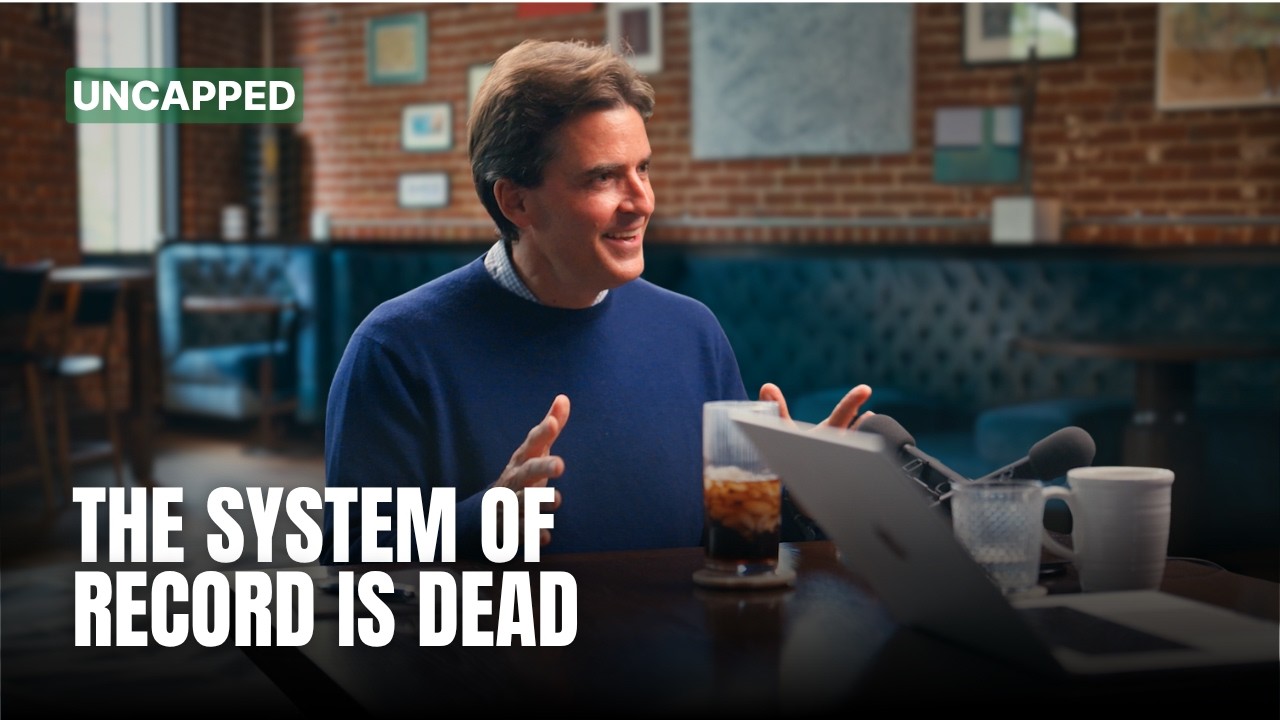
Description
Thomas Laffont is the co-founder of Coatue, one of the world’s largest technology investment platforms active in both the public and private markets. Thomas leads the firm’s private investment platforms across early-stage and growth, and oversees their software investments across private and public markets. Coatue has partnered with some of the most enduring and impactful companies of the last two decades, including Applied Intuition, Canva, Databricks, Figma and Rippling. Thomas began his career at the Creative Arts Agency, where he represented artists in film and television. A few highlights: - The system of record being over - Wanting to be a founder’s second call - Investing with a wide aperture - Tom Cruise validating star quality - Working with family Timestamps: (0:00) Intro (0:25) Making sense of the current cycle (5:31) Investing from inception through IPO (10:36) Depreciation of the system of record (14:04) Value beyond databases (18:46) Winning strategies in venture (23:43) Operating at early-stage (28:56) Navigating investing conflicts (34:29) Wide aperture lens of investing (36:45) Star quality being a reality (40:30) Firm strategy and decision making (48:25) Everything that’s great about golf (54:34) Working with family (57:20) Advice to young professionals More on Thomas: https://www.coatue.com/ https://x.com/thomas_coatue More on Jack: https://www.altcap.com/ https://x.com/jaltma https://linktr.ee/uncappedpod Email: friends@uncappedpod.com
Summary
Generated by gpt-5.6-terraAt-a-Glance
- Verdict: Watch fully
- Core thesis: Coatue's Thomas Laffont argues that AI is creating an unusually consequential investment cycle in which value will first accrue to infrastructure, power, models and interoperable data layers, while enterprise software must reinvent itself around agents rather than closed systems of record.
- Why it matters: The interview connects AI infrastructure economics, data architecture, enterprise-agent design, compliance automation, and cross-stage investment strategy in ways directly relevant to building and evaluating AI operating systems.
- Best use: Use it as a strategic framework for where AI value may concentrate, how enterprise data and agent systems could evolve, and how to design a durable research and investment process rather than as a source of tactical market calls.
Executive Summary
Thomas Laffont, Coatue co-founder, sees the AI cycle as more structurally intense than the earlier phase in which highly profitable hyperscalers simply redirected excess cash flow into compute. Oracle's recent AI-related financing and cloud expansion signal a new phase: free-cash-flow-negative companies such as OpenAI are committing enormous capital to infrastructure because winning increasingly appears existential. That increases both the opportunity and the need for vigilance, particularly as cloud competition expands beyond AWS, Microsoft and Google to Oracle and GPU-cloud specialists such as CoreWeave.
His investment framework is layered. He has highest conviction in the prerequisites for AI—semiconductors, data centers and power—then in a small group of foundation-model providers, then in the data layer. He argues that closed SaaS data silos are weakening: Workday's planned integrations with Snowflake and Databricks exemplify a shift in which software vendors compete less on imprisoning data and more on delivering validated, domain-specific agents that can reason over a broader enterprise context.
The most operationally relevant prediction is that enterprises will increasingly record interactions by default. Meetings, email, Slack, Zoom and other communications become a machine-readable enterprise memory that agents can query for coaching, sales intelligence, compliance remediation and decision support. Laffont frames this not only as a surveillance or retention risk but as a chance to detect and correct bad behavior before it becomes a major HR, legal or regulatory event; however, the interview does not resolve the governance, consent and data-retention design required to make that safe.
On venture strategy, Laffont advocates a cross-stage, public-private, globally thematic approach rather than defending a single early-stage niche. His central operating lesson is to preserve relationships after a missed round, since every one of his 10–15 largest private-market winners began with an initial mutual pass or his own rejection. He also describes a firm process based on early, broad internal input and accumulating deal momentum rather than a decisive investment-committee reveal.
Key Takeaways
- Claim: AI infrastructure is entering a more aggressive, potentially more fragile phase because investment is no longer funded only from incumbent hyperscalers' abundant cash flows. | Evidence: Laffont contrasts Meta, Google, Apple and Microsoft funding AI from high-margin cash generation with Oracle's recent announcement and OpenAI's large infrastructure commitments despite OpenAI not producing free cash flow. | Implication: For AI operators and investors, capacity availability, financing durability, cloud concentration and supplier exposure matter alongside model quality; infrastructure assumptions should be stress-tested rather than treated as a guaranteed commodity. | Caveat: He does not call the market a bubble, but explicitly says that greater competitive intensity and leverage-like capital commitments require increased vigilance.
- Claim: The highest-conviction AI investment stack is semiconductors, data centers and power, followed by foundation models and then the enterprise data layer. | Evidence: He names Nvidia and Broadcom in semiconductors; identifies power as indispensable; cites Constellation Energy's behind-the-meter agreements with Amazon and Microsoft and reactor reactivation in Pennsylvania; and notes GE Vernova's gas-generator capacity is effectively sold out for the next five years. | Implication: AI strategy should include physical constraints—energy generation, grid access, generation equipment and data-center siting—not just software, models and GPUs. | Caveat: He has not formed sufficient conviction on fusion, distinguishing current nuclear and gas generation from longer-dated fusion bets.
- Claim: Closed SaaS systems of record are being displaced by interoperable data layers and domain agents, though incumbent SaaS vendors can retain a role as validators and workflow owners. | Evidence: Laffont highlights Workday's announcement that it would connect its HR data with Snowflake and Databricks rather than keep it in a closed ecosystem; he expects Workday's future value to come from Fortune 500-grade HR and finance agents operating over wider data. | Implication: Ken should distinguish storage from control: winning enterprise-agent architectures may need open data access plus a trusted semantic, permissions, audit and validation layer rather than another isolated application database. | Caveat: He does not argue that Workday, Salesforce or ServiceNow disappear entirely: their remaining roles can include validation, coordination, security, consistency and a central operational interface.
- Claim: Default recording of enterprise interactions will create a queryable organizational memory and enable agents to intervene before compliance, conduct or performance problems escalate. | Evidence: He predicts that within three years every enterprise interaction will be recorded by default, including meetings, email, Slack, Zoom and eventually in-person interactions. His proposed compliance workflow has an agent privately coach an employee after an issue, require training on repeated violations, and escalate only later or in severe cases. | Implication: Any enterprise-memory or compliance-agent product needs explicit retention, access-control, escalation, human-review and legal-hold policies; the valuable design is not indiscriminate recording but controlled remediation with auditable boundaries. | Caveat: The head of AI for the SEC and senior compliance leaders at Coatue's AI compliance summit reacted to this prospect as a potential nightmare because transcripts and discoverable data create substantial legal and compliance exposure.
- Claim: Generative AI materially improves the usefulness of conversation data, making interaction intelligence a practical source of repeatable organizational learning. | Evidence: Coatue portfolio company Gong has re-accelerated as generative AI can analyze its sales-call corpus to identify why a representative sells effectively against a particular company or competitor; Laffont says customers are seeing materially lower sales-rep ramp times. | Implication: Agent systems should treat high-quality interaction traces as training and retrieval assets: extract playbooks, decisions, objections and successful behaviors, then feed them back into coaching and execution workflows.
- Claim: A durable venture strategy is cross-stage and relationship-persistent: missing an early round is not the same as missing the company. | Evidence: Laffont says that, without exception, the first investment opportunity in each of his 10–15 biggest private-market P&L winners was a no—either Coatue passed or the company passed on Coatue—before a later opportunity produced the investment. | Implication: Maintain structured founder and company follow-up after a pass, separate conviction in a business from the pricing and timing of one financing round, and optimize for long-term access rather than winning every initial allocation. | Caveat: This approach depends on having the flexibility and capital base to participate in later rounds; a fund restricted to a single Series A entry point has less ability to recover from an initial miss.
- Claim: Investment decisions improve when they develop through early, broad internal collaboration rather than culminating in a theatrical up-or-down investment-committee meeting. | Evidence: At Coatue, analysts and investors solicit views early from relevant public-market specialists, Philippe Laffont and others; successful ideas build internal momentum over many conversations, while weak ideas commonly lose momentum before a formal decision point. | Implication: For Ken's research and investment processes, institutionalize early adversarial/domain-expert review while preserving a mechanism for deep specialization where a new category has little precedent. | Caveat: Laffont acknowledges that wide-aperture generalism can underperform in domains requiring early deep specialization, citing Coatue's weaker position in crypto relative to specialists who went deeply down the rabbit hole early.
Detailed Brief
Coatue's operating model: broad aperture, second-call positioning and managed conflicts
- Claims: Laffont does not organize research primarily by public versus private markets; he uses both as inputs to identify large themes and companies that benefit from them.; He describes Coatue's position in venture as a mobile investor that can move across stages and sectors rather than competing for a fixed early-stage 'spot on the riverbank.'; Rather than trying to be every founder's first call—the traditional long-term lead investor role—he aims to be the second call: an investor who can provide market perspective, network access, public-market knowledge and help at inflection points.; He believes investing in adjacent or potentially competing companies can create real domain expertise and network value when conflicts are disclosed and information security is rigorously enforced.
- Evidence: He credits Yuri Milner and Tiger with helping normalize the idea that investors need not remain in a fixed stage-specific lane.; He says Coatue will not back an exact same-framework competitor when it owns 20% and holds a Series A board seat, but it can operate more broadly elsewhere.; Coatue is SEC-regulated and maintains a strict compliance culture because nonpublic information affecting public-market trading can create immediate risk.; He cites Y Combinator as evidence that an organization can invest in many competitive companies without sharing information among them.
- Caveats: A broad approach is not universally superior: Laffont says crypto rewarded investors who developed narrow, early and unusually deep specialization.; Conflict definitions can differ between founders and investors, so disclosure alone does not eliminate perceived trust risk.
- Implications: A multi-company AI portfolio or operator ecosystem needs a declared conflict taxonomy, information barriers and founder-visible disclosure practices before overlap occurs.; Cross-market research can be an advantage when private-company observations inform public-market theses and vice versa, but only if information handling is disciplined.
Founder judgment, firm design and mentorship principles
- Claims: Laffont looks for 'star quality' in founders: a strong, unmistakable personal force combined with an insightful interpretation of a real market shift.; Founder magnetism need not be universally likable; polarizing intensity can also be predictive when paired with executional dominance.; Coatue's organizational model is intentionally between a West Coast venture partnership and an East Coast investment firm: it seeks venture's long-cycle judgment with a hedge fund's competitive metabolism and meritocratic accountability.; For junior talent, focus is a luxury. Early-career contributors should use narrow responsibility to develop exceptional craft, clarity and reliability.
- Evidence: He describes Evan Spiegel's early thesis for Snapchat as a response to young users' loss of institutional trust after the Iraq War, financial crisis and later COVID: ephemeral communication and reduced data persistence reflected that worldview.; He recalls meeting Travis Kalanick at a Goldman Sachs technology conference and leaving convinced that Kalanick would dominate, despite his polarizing reputation.; At Coatue, people can gain responsibility without waiting through a traditional multiyear partnership ladder, while both underperforming junior staff and 'dead weight at the top' are expected to be addressed.; His CAA mailroom story: meticulous gift-wrapping—including personally purchased cellophane—earned visibility and a more valuable role; he translates this into an analyst standard of making every line of a model purposeful and distilling 10,000 lines into 50.
- Caveats: Charisma is presented as a judgment heuristic rather than a measurable diligence framework, so it can be vulnerable to overconfidence or founder-performance bias.; Meritocratic annual-feedback systems fit liquid markets better than venture, where outcomes can take six or seven years to become visible.
- Implications: Founder assessment should separately test force of vision, market insight, integrity and execution rather than treating polished presence as sufficient evidence.; For AI-ops teams, require concise decision artifacts that a busy executive can evaluate quickly; precision in small deliverables is a signal of operating quality.
Notable Concepts & Terms
- Behind-the-meter power deal: A direct arrangement linking a large electricity user, such as a data center operator, to a power plant; Laffont treats these deals as evidence that power access is becoming a strategic AI bottleneck.
- System of record: The traditional SaaS application that owns authoritative business data; Laffont argues its closed-storage role is weakening, while validation, workflow and trust functions may persist.
- Enterprise memory: The recorded corpus of meetings, messages and interactions that agents can search and analyze for knowledge, coaching, compliance and operations.
- Second-call investor: Laffont's preferred role: not the founder's exclusive, early lead investor, but a scalable strategic resource called after the primary investor when expertise, network or market perspective is needed.
- Wide aperture: A research posture that spans geographies, public and private markets, stages and technical layers in order to identify themes before selecting individual investments.
- Deal momentum: Coatue's collaborative decision process in which a thesis gains or loses support through repeated early conversations rather than being decided solely in a formal investment committee.
- Competitive metabolism: The higher-performance, more accountable operating cadence Laffont believes hedge-fund and founder-led models introduced into venture investing.
Operator Notes / Why Ken Should Care
- Define an enterprise-memory policy before expanding meeting or agent logging: consent, data minimization, retention windows, role-based access, escalation thresholds, legal holds and human override should be explicit product requirements.
- Architect agent systems around interoperable data access plus a separate trust layer for permissions, provenance, validation and auditability; do not assume the incumbent SaaS system of record can remain the sole control plane.
- Add power, compute availability, cloud-provider concentration and financing durability to AI vendor and deployment diligence, especially for systems whose unit economics depend on sustained inference capacity.
- Build a persistent post-pass workflow for companies, partners and strategic opportunities: record why the round was missed, what evidence would change the decision, and when to re-engage.
- Use early cross-functional review for major bets, but assign a named deep specialist when entering a technically novel category where broad pattern recognition is insufficient.
- Require concise, decision-ready internal briefs and models; use a '50 lines, not 10,000' standard for executive communication.
Source/Metadata
- Title: Former CAA Talent Agent Turned Investor with $70B in AUM on AI and Venture Strategy | Ep. 29
- Transcript words: 13620
- Duration seconds: 3764
- Timestamp note: No timestamps or chapter markers were provided. The transcript contains several repeated passages, especially in the latter lifestyle and mentorship sections.
Transcript
I looked at maybe the top 10 to 15 P&L winners that I've had over my career on the private side. Without exception, my first opportunity to invest was a no. It might have been a no from me to the company passing, or vice versa, the company passing on me. I am really excited to be here with you today, Thomas. Thanks so much for taking the time for this. Very excited. So my note to myself on this first topic is, this time it's different. And a lot of people recently, in the last few weeks, have been saying things that are implying that a bubble might be going. And it's like, there was a tweet from Brian at Sequoia that was like, this is a good time to sell your company. There have been a lot of blog posts written behind closed doors. It's a frequent topic of conversation. Valuations are expensive. We're back to 2021 multiples for a certain flavor of company. Obviously, KOTU has gone through, over its last 25 years of existence, a bunch of cycles. So you've seen this happen many times. And so I'm curious, your spot temp check, fall 2025, how do you make sense of where we are in the cycle and in capital deployment? Yeah. So I've been lucky to be doing this for a while, almost 25 years now. And there are a few seminal moments that I recall as a tech investor. The first was the iPhone and Apple and the quarterly earnings that would come out and the absolute blowout. If consensus was one, they would print three or five. You just didn't see those kinds of beats and the magnitude of the transformation that Apple was bringing into the market with the iPhone. So that was one, right? The second, I remember like it was yesterday, was NVIDIA when it guided its data center business to be up 100% year over year. No one thought that that could be possible. So that was obviously that and the chat GPT moment kind of happening at the same time, right? I do think the Oracle announcement from two weeks ago was really profound and important as well. Just a fascinating story of how long Oracle's been around and how it's been able to shed its skin and reinvent itself. What was interesting about that specific company is, if you look at the AI infrastructure build out up to this point, it had really been funded with cash flows from big companies, right? So Meta, Google, Apple, Microsoft generating incredible amounts of revenue, having very high operating margins, very high cash flow margins, and the ability to invest some of those cash flows into this AI build, right? What was different about the Oracle announcement is now you're seeing some leverage come into it, right? Where it's actually not just the free cash flow positive companies that are investing, it's actually free cash flow negative companies that are investing, right? So OpenAI is an example, right? It is making a huge bet, right? It's not producing free cash yet. But it sees a version of the future where demand for its products kind of keeps increasing. So I do think that's something that we spend a lot of time looking at and thinking about. The question now will be, does the competitive intensity between the hyperscalers really start to intensify, right? We kind of had a stayed oligopoly, I would say, where Amazon kind of started, then Microsoft, and then Google kind of crept in, and it was kind of the three of them for a bit. Boy, does that feel different today, right? You've got Oracle putting its foot into the ground, and now, I think, establishing itself as an absolutely key player. You could see them getting to maybe 15% market share of cloud in a few years from essentially zero. You have companies like CoreWeave, right? GPU-only cloud. So I do think the market competition is intensifying. There's more companies now. It's not just cash flow companies that are investing. Both OpenAI and Anthropic are making huge investments. So I do think the stakes to me feel different, right, than they were maybe two years ago. So that's one, how the environment feels a little bit different to me. It's one thing if Meta's saying, well, I'm so profitable, I have so much money, I'm just going to choose to sprinkle some of my cash flows into AI. That's one thing. We've now moved into a different phase where I think companies are saying, no, it feels more existential. I'm actually willing to invest significantly more, maybe even more than the cash flows that I'm producing in the case of some players in the ecosystem, right, to go and win this market. So I think it's a sign of multiple things, right? And to me, the biggest one is the intensity and the criticalness is increasing. And so I think our vigilance has to increase as well. The companies that you just talked about, for the most part, huge behemoth public companies. And what's interesting is, if you look back at the Zurp bubble, the private company bubble happened. But I would argue that the QQQ, the Mag7, I think it looks like they were undervalued. And they took a dip, but it's much higher now in a way that's different than what happened in private markets, in particular, early-stage private markets. Obviously, CO2 invests from inception round through IPO. And so when you're thinking about this AI transformational moment that you're talking about, that I think we kind of all agree is real, you could look at that and say, okay, I can invest in these huge public companies, I can invest in Oracle, I could invest in the labs, I could invest in growth private, I can invest in seed. You've got a big team that's capable of walking and chewing gum at the same time. To what extent do you think at a high level about the market and where should buckets of capital be deployed versus finding just individual, I like this seed and I like Oracle and I'm not thinking about the buckets, I'm just thinking about birds? Yeah. So we do tend to be very thematic, and I use this often, but having a wide aperture lens into the world of technology globally, public and private, US and kind of rest of the world. So I think about, okay, what do I know and have conviction in, right? Well, I started my career as a semiconductor analyst for CO2, partially because I was trying to find a semi-analyst and couldn't find one. And Philippe one day came into my office and dropped a universe, which was essentially all the semi names in a spreadsheet that was printed, and said, well, we can't find anybody, so you do it, right? And so I just took it upon myself to kind of learn the semi business. This was in the early 2000s. So what do I know? I know that we're not going to have AI without semis. So semis are kind of a foundational layer. So when I think about AI infrastructure, I think about we're going to need semis, we're going to need data centers, and we're going to need power. So all three of those, to me, present really interesting investing opportunities, right, across both actually public and private. So if you think about semis, obviously Nvidia. To me, maybe the other great tech story that I think very few people know about, but that might be that might be that might be that might be that might be that might be that might be that might be that might be that might be that might be that might be that might be that might be that might be that might be that might be that might be that might be that might be that might be that might be that might be that might be that might be that might be that might be that might be that might be that might be that might be that might be that might be that might be that might be. Of curiosity? Nuclear is one. Fusion or vision? I would say we don't quite have the conviction yet on fusion and whether it's going to work or not. But I do think there's two technologies today that are critical. So one is nuclear. So Constellation Energy, as an example, has now done what's called behind the meter deals with Amazon and Microsoft, where those can tie directly into some of their plants. They just did a deal with Josh Shapiro in Pennsylvania to kind of reactivate one of the reactors there. So that's one. And then G. Vernova, right, with liquid gas generators. Yep, right? So as it turns out, we have a lot of liquid gas in this country. It's clean. It's extractable. The issue is they're basically sold out of capacity for the next five years. But that's an example, right, of the trend. And I think we have a lot of belief that value is going to accrue there, and you're not going to be able to have AI without that foundational layer. So that's kind of maybe kind of layer one, right? High conviction. I think layer two now, moving up the value chain one, is we definitely think models are going to be important. It does feel like the world is kind of coalescing around a handful of companies. some of their plants. They just did a deal with Josh Shapiro in Pennsylvania to reactivate one of the reactors there. So that's one. And then G. Vernova, right, with liquid gas generators. Yep. Right. So as it turns out, we have a lot of liquid gas in this country. It's clean. It's extractable. The issue is they're sold out of capacity for the next five years. But that's an example, right, of the trend. And I think we have a lot of belief that value is going to accrue there, and you're not going to be able to have AI without that foundational layer. So that's maybe layer one, right? High conviction. I think layer two now, moving up the value chain, is we definitely think models are going to be important. It does feel like the world is coalescing around a handful of companies. I would probably put OpenAI, Anthropic. I would definitely put Google, right, in there. And maybe we'll see what Meta ends up doing. We'll see what Microsoft and Amazon end up doing. Yep. So I think the foundational models are going to be incredibly important. They're going to power transformative apps like ChatGPT, which, as you know, has completely transformed how we work and our expectations of how software is going to work. So I would say very high conviction in each of those, right? I think now, as I start to get to layer three, my lens probably gets a little bit fuzzier. Now we're talking applications. Correct. Yeah. Right. So what do I know there? Well, I do think the data layer is going to be foundational and really important. I think, curious to get your view as a SaaS founder, but my view is the era of data being locked into SaaS platforms is over. There was an underreported, but in my opinion very significant, press release put out two weeks ago by Workday, where it essentially came out and said, we're giving up on trying to keep all of our data inside of our locked SaaS ecosystem. We're going to plug into Snowflake. We're going to plug into Databricks, right? We're going to give customers the ability to merge their Workday HR data with some of their other data to power an objective future, right? To me, I think that's critical. Carl, and Carl, the CEO of Workday, was on the board of Snowflake, right? So he understands the data landscape really well. I think that's going to unlock now Workday. Its future is about building the best Fortune 500-grade agents for HR and finance, right? Not, where's my data stored? Do I even really care about that? Of course, it's got to be secure and stuff like that. But boy, I want an amazing agent and stuff like that. So I do think that data layer, Snowflake and Databricks and other companies like that, is going to be foundational. Now I get to the apps, right? And one area where I'm spending a lot of time personally is trying to think through what this means for a Workday, for the whole SaaS ecosystem as we've known it, right? Is software dead, as a lot of people have been writing about over the past 12 to 18 months? Well, a bit of what you're describing. Or does it get reinvented? It almost sounds like what you're describing is, is the system of record dead? What I'm imagining as I'm listening to what you're saying is you've got Snowflake or Databricks. There's a system of record that traditionally stores the data that then integrates with a lot of ecosystem apps. And many of those ecosystem apps today might look like companies that are agents or doing work for you. And so then the question is, what's the role of where that data is stored? Does it just go straight to the databases? So I do think the system of record is dead. I also think, by the way, another belief that I have is that every interaction within the enterprise within three years will be recorded. And I think the default is going to be record on versus ironic since we're taping right now, but right? The default is just going to be an assumption that this meeting is being recorded. So why is that? Because if you think about the intelligence of an enterprise that should get fed into a system of record, it's all coming from interactions that are in meetings, that are over email or Slack or over Zooms, right? How's my customer doing? How's my sales process doing? All of that is by and large captured. And even in-person meetings, right? I think people will start recording. So all of that can be fed in automatically. Why do I even really need to write a note on what was just discussed, right? Actually, the system is listening. It will extract all the information, right, and knowledge. And then it can just be quarried later. It's an interesting prompt about the system of record. So obviously, one of the things that a system of record does is it holds the data, which I agree with you, I don't think is that important in the future. I'm thinking through in real time right now. But other things it does are coordination between the other apps, making sure the data is consistent. Yep. It makes it tamper-proof, so security is a big deal. It gives the customer a central place so that they're not working with 9 million vendors all the time and they have some sense of how their business systems are working. Yeah. So there's some other things there. And I'm curious how that could shake out otherwise. I mean, maybe you could see a world where the Databricks, Snowflake layer becomes massive companies because they start really being the hub of all that stuff. But it does feel like there's some ecosystem. As I think about a Workday, a ServiceNow, a Salesforce, there are some functions of those products that aren't just databases. I agree. So I do think the databases of, and I think Snowflake and Databricks will be very large companies. I think the role of Workday will, A, sit on top of it as a validator of, okay, this is important data and we validate it and stand by it. But the future will be, okay, now actually think about Workday that in the past only saw its own data, right? Now Workday is going to be able to make HR and coaching decisions based on the entire data set, right? Potentially even the recorded meeting data set. Yeah. So yesterday we hosted, for one of our early-stage companies, an AI compliance summit. So we had the head of AI for the SEC and the GCs and compliance of all the major investing firms. And we had the chief compliance officer of Meta as an example. And I was discussing with him my view that meetings will be recorded, right? And his mind, as a chief compliance officer, went like, oh my God, this is a nightmare. I don't want to know. I want no transcripts. I don't want the data. And I said, okay, well, let me give you two scenarios. Scenario one is you have a bad actor in your enterprise. He's belligerent in meetings, says completely awful things. He's demeaning to other people, all the vile things that you can imagine, right? No one speaks up because they're too afraid. And it turns out six years later, one person actually speaks up. Now everybody comes out of the woodwork. Now you're on a defense. You have to go on, well, why didn't you tell me? Well, I was afraid because the boss likes him. Now you've got a whole shit show to deal with, right? So that's version one of the world. My version of the world is actually the meetings being recorded, right? And the compliance agent afterwards seeks out that individual and says, by the way, your behavior wasn't appropriate, right? And for this reason, and I'm going to suggest some coaching to you. Or it's not even necessarily an HR thing. It could be what you actually talked about is anti-competitive and is not something that we can do, right? So only the agent's reading the stuff. It's not something visible to employees. That could be step one, is the agent just goes to the actor and offers remediation, assuming it's not so egregious that it has to be. Stage two might be, I'm sorry, that's your second violation, right? Now you have to go through a mandatory three-day compliance process. And step three is actually now it's been flagged to HR, right? I'm just inventing the system, right? But you can see that now companies are going to be able to diffuse issues before the grenade's gone off, right? Yeah. I mean, definitely the trend line here is comfort with this stuff. And for this reason, I'm going to suggest some coaching to you. Or it's not even just necessarily an HR thing. It could be what you actually talked about is anti-competitive and is not something that we can do, right? So only the agent is reading the stuff. It's not something visible to employees. That could be step one, is the agent just goes to the actor and offers remediation. Assuming it's not so egregious that it has to be. Stage two might be, I'm sorry, that's your second violation, right? Now you have to go through a mandatory three-day compliance process. And step three is actually now it's been flagged to HR, right? I'm inventing the system, right? But you can see that now companies are going to be able to diffuse issues before the grenade's gone off, right? Yeah. Definitely the trend line here is comfort with this stuff. Years ago, if somebody had a recorded meeting and you didn't know about it, or somebody brought an agent into a Zoom meeting, people would be like, what are you doing? And now, even if I don't see the granola agent, I'm just like, anything I say on Zoom is recorded. And that's just the plan now. Yeah. So one of our portfolio companies, Gong, which is in sales intelligence, right, and listens to the calls of salespeople, has completely re-accelerated now because generative AI has enabled that corpus of data to be so much more powerful, right? So now if you're a great salesperson and you know exactly how to sell against company X, I can extract what makes you so good. Is it that you pitch the company this way, that you pitch the competitor that way, right? So they're seeing significant increases in lower ramp time for reps, right? So I just think we're going to start seeing that through the whole enterprise. So I'm curious, as we've been talking about public, private, early, late stage, I asked you before if you identify as a VC, you're like, no, not really an investor. That includes making investments that look like VC investments. When you look at the world around you and how VC is evolving, I'm curious your read on what's the winningest strategy or strategies in venture today. When you think about who's really doing venture in the right way, in your estimation today, how do you think about that? Who do you look towards, or what are the models that make the most sense to you now? Yeah. So look, we started, which is a couple of million under management, right? So we grew the business organically by compounding over time, right? And Philippe and I have always run the business in a way where we just try and think what's in the best long-term interests of our business, right? And don't make short-term decisions. We never had the luxury in venture of, I sometimes use this analogy of venture and investing is a river and the good investments are swimming in the river, right? And if you got there early, you got the best spot that protrudes into it, and you capture the best fish. And we didn't get there early. So I don't have the best spot on the river like some of the firms that have been doing it for a really long time, or a founder that started a generational internet company, right? So we had to just try and rub shoulders and elbow and be the seventh player on that. That wasn't interesting to me as a founder, right? I'm sure when you decided to do your podcast, well, there's a ton of podcasts out there. So I'm not going to just do what the 17 other people are doing. I'm going to try and do something different. Well, we brought the same approach, and we thought that what was uniquely suited to us, right, was, well, since I don't have the best plot of land on the riverbank, right, where maybe Benchmark and Sequoia sit, I'm actually just going to be the fisherman that travels up and down, right? I'm just going to try and find the best opportunities as I see them. And I think it's more common now. But back then it really was, no, you stay in your place. We're going to be here on our part of the river. And then there'll be another cast of characters on the other, and so forth and so on, right? And then, to their credit, players like Yuri Milner and Tiger came in and said, well, hold on. Why is that the case, right? Yep. So as it happens, it also tends to suit my personality, right, which is I don't tend to think about whether a company is private or public. I don't tend to think about whether my time is spent between public or private, right? Because some of the best research that I do for my public investing is by meeting private companies, or vice versa. Yep. Right. So sometimes investors will ask me, investors in our platform, right, they'll ask me, well, how do you spend your time? And I think from a research basis, I don't think about it that way. I really talk to companies, find big themes, find big trends, and then find companies that can benefit from them. Yeah. I think in venture, one of the things that has morphed recently that probably has moved, I would imagine, directionally more towards your way of thinking, is it's okay to scale. And there are many ways to be successful, and you don't just have to have 20x small early-stage funds. A lot of venture capitalists who I think maybe started small have gotten much bigger and are saying, we're still going to get very good returns. But it's going to look different. It's going to be a much bigger capital base, and it's okay if we didn't hit it at the seed because we can get it at the B or C or D or so on. And that's certainly my thinking. And the thing I dislike the most about venture is the zero-sum nature of the business at times, right? Where there's a round, there's only X amount of dollars, and every dollar that you take is a dollar that I don't have. Yes. Which is the source of competition between firms, obviously. Correct. And it feeds into a lot of different types of behavior and things like that. My approach as a public market investor was always like, great, if you have a great idea, let's bat it around because, guess what, we can both do it. We can both benefit. So I have built my whole life and business model against being a zero-sum thinker, right? So that's the piece that is the toughest for me, right, is when I run into, on either end, a situation where somebody has to win and somebody has to lose. Yeah. So how do you navigate that? Because I guess in your public world, maybe to some extent in your very late-stage private world, there's probably more supply, or there's probably more demand for dollars from the companies than any given firm, even as big as Code 2, is going to supply it. The early-stage round is more competitive. Obviously, VC is somewhat tribal in nature, and there are these co-opetition friend circles in venture where even people who should be economically competitive decide to play a repeated game. And so how do you operate on the early-stage side? Yeah, a couple things there. One is you're right that VC is really tribal. My view is I like to visit all the different villagers, so I'm not one of the villagers, but I'm accepted by most of them, and I come in, and I try and leave the village better than when I walked in. So I have a lot of friends at different firms, and I always try and tell them that the bar of whether we were successful or not is we had a positive contribution on the company or the board or whatever. But that tribal element is just part of it. I was seeing a tweet from Keith Rabois, who I love, his brain and how he thinks, and he had analysis of his deals that he had looked at year-to-date by geography, and it's actually something that I do as well. I look a lot at my own P&L in both public and private. But one of the elements of my private P&L that's interesting is I looked at maybe the top 10 to 15 P&L winners that I've had over my career on the private side. Without exception, my first opportunity to invest was a no. It might have been a no from me to the company, passing, or vice versa, the company passing on me. What's funny about both of those moments is you think like, wow, it's over. And in fact, what ended up happening is opportunities to invest later came around, But that tribal element is just part of it. What I was seeing, a tweet from Keith Raboy, who I love, his brain and how he thinks, and he had analysis of his deals that he had looked at year-to-date by geography, and it's actually something that I do as well. I look a lot at my own P&L in both public and private. But one of the elements of my private P&L that's interesting is I looked at maybe the top 10 to 15 P&L winners that I've had over my career on the private side. Without exception, my first opportunity to invest was a no. It might have been a no from me to the company, passing, or vice versa, the company passing on me. What's funny about both of those moments is you think, wow, it's over. And in fact, what ended up happening is opportunities to invest later came around, and as it turns out, they were very successful. So I've tried a lot to think about, well, what's my learning from that, right? And to me, the way I've thought about it is sometimes it just takes a while for an investor to understand a company and for a company to understand an investor. We know, obviously, we don't have nearly as wide an aperture of rounds, but we have a little bit. And I often will say, we didn't miss a company, we just missed a round. And if it's going to be great, hopefully there's another way. And whether you passed or they passed. Obviously, it changes the return multiple. But in many situations, it doesn't really make that much of a difference in the exit number of absolute dollars that come out. Correct. Yeah. And so to me, that mindset is one where, well, if I'm only doing Series A, then I have to think differently, right? Because almost by definition of those types of firms, I only get one shot. I get one bullet. So I got to be really careful. So that does tend to lead to a more zero-sum, like, this is my one chance to be in this company. I can't afford to lose it. I can't afford to give a single dollar to anybody else because this is my one shot. Yep. I think that's an increasingly difficult game, right? My way of doing it is, okay, well, I may never be the best at any individual point. But I do have the ability to float around and try and find the best opportunities. Have you ever looked back on the panel or geography question, have you ever looked back and just been like, ah, we've made the most money at venture stage or growth stage? Do you know where you end up doing the best? I do. Does that influence your behavior then? It changes. There was a time, as an example, where China was an incredible market for investors. And we were very successful in that market. That market is functionally not available to us anymore. So you do have to just adapt, right? There was a time where SaaS was everything, right? And the future. And now it seems like AI is. So I think you have to, I don't want to read too narrow into it because sectors change, right? Consumer internet, as an example, was foundational for us. Yeah. And it's a super lagging indicator, I guess. Yeah. And now what would we say is the greatest consumer internet franchise of the past decade? New. ChatGPT. Correct, right? So I'd throw ChatGPT in there. I might throw Robinhood in there, right? I might throw Revolut. But it's just different than when the phone came out and it was Uber and it was Airbnb and it was Spotify and it was Snapchat and it was Instagram and it was all of these apps that were coming around, explosion of internet apps, right? Consumers changed. So I don't want to anchor too much on that. So that's why I look more at round composition, patterns of meeting founders, things like that. Because you think thematically, I assume, and because you invest late stage, I would assume a lot of times you want to invest in multiple companies in a sector. And clearly, on the public side, that's totally fine. But you probably also want to do it on the private side. And you and I tried a little bit before, and a lot of the people I've spoken to on this podcast have said that in venture, conflicts are a big challenge. And particularly as venture firms scale, it's actually a really big challenge. Yeah. I remember Mark's quote on that, right? His biggest stumbling block towards scaling was that. Yeah. I said, what's your number one problem scaling? That was the one. Yeah. And I think you have a divergent view here. So I'd be interested to hear it. Yeah. Look, I do think traditional venture capitalists have set themselves up to be the entrepreneur's first call. And so think about it as a founder of my own business. Do I want to try and compete with every other person that's trying to be the person's first call? Well, no, actually, I'm trying to be your second call. So the first call, you're going to call your VC that's been with you for a long time, and then you're going to think, okay, well, what do I do about this now? And who can I turn to to help? I want to be the second call where it's like, gee, why don't we call Thomas and see if he knows somebody or has a point of view on a market or can make an introduction. It's a lot more scalable for you, a lot less phone calls. Different types of phone calls, right? Different stakes on the phone calls. I assume they're trickier phone calls. They can be. So look, I still believe that if you're a 20% owner and on a board of a Series A company, to back another company that does the exact same thing in the exact same framework, I think that's a legitimate conflict and we don't do that. But I do think that the position of conflict that I have has also a lot of benefits, right? It might mean domain expertise because I'm able to see the whole playing field, right? It might mean a very deep network in a certain industry. So I think there can be significant advantages there. Now, you have to do it the right way. And so to me, there's a couple foundational principles if I'm going to invest in conflicting companies. The first thing is I'm going to tell the entrepreneur first. So I am a big believer in disclosure, right? So if I'm in two companies that might have or might be perceived, right, because then you get into, well, is the conflict real or is it just imagined by the founder? Of course. And sometimes we might have a different view on what a conflict is, right? But I'm mostly going to disclose it, right? So that's number one. And then the second is trust and reputation, right? So the trust of making sure that information doesn't leak. We take information, actually security, really seriously. First of all, we're regulated by the SEC. So if you think about a bad piece of information that could come into the firm, if a trade happened on our public side, even if it wasn't related and it was never communicated, it could immediately implicate you in something really bad. By the way, I also think when you design for this from the beginning, you can manage it. YC invest in tons of competitive companies, but you're never going to see them share information across. It just will never happen. Yeah. So people know we have a very stubborn and intrusive compliance department. And we would have a zero-tolerance policy on anything like that. Again, if I'm in the venture business, I can afford to do things differently. And I think for that business model, it works. But again, we're trying to do something different. I always thought about rounds in venture. It's like, God, I got the best at my first round. And then the second or third, now I'm starting to get a Xerox copy of a Xerox. And by the fifth round, you can barely tell. So I'm like, well, why don't I just add a complementary point of view, a complementary business? We have the opportunity to think really long term over multiple rounds, over an IPO, over a company going public. So it's just about adding a different perspective and network to a cap table. I also think companies in their later stages really need somebody around them who understands the transition from private to public and what happens in public markets and things. It just becomes a very different set that people who traffic in Series As all day just don't spend their time on. Yeah. I also think, look, public market investors think really differently, right? They don't mind going to a company and saying, I don't understand your business or it makes no sense or why. They can be very direct. They can be very confrontational because, at the end of the day, it's a transactional kind of relationship, right? So I'm, well, why don't I just add a complimentary point of view, a complimentary business? We have the opportunity to think really long term over multiple rounds, over an IPO, over a company going public. So it's just about adding a different perspective and network to a cap table. I also think companies in their later stages really need somebody around them who understands the transition from private to public and what happens in public markets and things. It just becomes a very different set that people who traffic in Series A's all day just don't spend their time on. Yeah. I also think, look, public market investors think really differently, right? They don't mind going to a company and saying, I don't understand your business, or it makes no sense, or why, they can be very direct. They can be very confrontational because, at the end of the day, it's a transactional kind of relationship, right? Venture investors might feel really differently, right? If I've invested in your company, I really want to make sure that the next founder that I'm trying to invest in calls you, and, boy, you better say something really nice, right? So the incentives can really start to get murky. Yeah. So I've always prided myself on being direct and, at times, saying what everybody else in the room is thinking but not saying. Yeah, which I think is refreshing. You talked about the wide aperture lens of investing and what it means to have this broader mindset. I'm curious what that particular phrase means to you because, when we were catching up, you used it a couple times. I really love technology. I just have a curious mind from when I was a kid. I was the youngest in my family, and so I read a lot and played a lot of video games. So I was just really curious about the world. And I think almost every great investor I've ever met, from Stan Druckenmiller to Mark Andreessen, are just deeply curious about the world, right? And so I'm just lucky where I don't have to be bound in my curiosity. I can just go out and seek out people and information, and then I kind of figure it out later on. What does it mean, or where is it relevant? I don't have to use a filter, right, and say, well, because I can only do this, I probably have to focus. Now, that can have a downside, right? It can mean that in crypto, as an example, I think that served us poorly because I think crypto was an area where deep specialization actually, in the beginning, really helped you, right? So it's not a perfect formula, right? It's got tradeoffs, right? And I think the investors who, early on when crypto came around, and were willing to deeply go down the rabbit hole and specialize and really understand something that was brand new, right, that had no equivalent in the public market or anywhere else in the world, right, it was almost like this big bang. Yeah, I always think of Bitcoin as a big bang that just kind of happened, right? So I think those investors kind of benefited. So it's not foolproof, but I do think it's kind of how my mind has tended to work. And I've always kind of made bets on myself and on the parts of my work that I thought were the most productive. And that's one of them. We've talked so far mostly about markets and themes. Obviously, you care a lot about the founder and the person you're investing in. I'm sure this is true at all stages. I would guess even at the latest stages of private public companies, you're still thinking quite a lot about the person. What guides you on people? A lesson I learned at CAA is star quality is real. Most people don't have it. Some do. What is it? You just know it when you see it in a room. Tom Cruise is maybe my favorite actor growing up. I've seen Top Gun a zillion times. I loved Maverick. I had the opportunity to meet him one day in a very random setting. I was delivering a package to him, and he shook my hand and looked me in the eye, and we talked for three minutes. And for three minutes I thought, wow, no one cares more about me in the world right now than Tom Cruise does. Right? The way he just commands a room in his presence. But also when Colin Farrell came to us and he had never been in a movie before, and you spent 30 minutes in a room with him, he just had so much magnetism about him. The way he composed himself and talked to you and looked at you and just his general persona. So I do think that, to me, I do look for that in founders. It's the combination of a mind at work and an opportunity that they're addressing. Right? I remember when I first met Evan from Snap. He basically was making the argument that look at the generation of young people coming up with the Iraq war essentially having been, you might say, a hoax, right? The WMDs were never there. Rolling into the financial crisis. Oh, you told us we had the best economic system and then it almost collapsed, right? And then COVID, right? He built Snap as a platform, as a reflection of those trends, right? So what was it? Well, everything disappears, right? No one stores your data. You can't trust institutions to look out for you. I think it ended up being incredibly prescient of where we are today as a world, right? Where the institutional breakdown that we've seen. So I think that magnetism about a person in a room and an idea and a market that they're going after. Yeah. One of the things I often think about with the magnetism quality is there are examples of people who are pure magnets, where everybody loves them and everybody wants them to succeed. And then there are examples where people are highly polar, where half the world loves them and half the world hates them. And both of those work. But I think you got to at least have the strong pull, if not the whole thing. Well, Travis from Uber is an example, right? Polar. I think if you referenced him, to your point, half the people liked him and half hated him, right? I remember meeting him at the Goldman Sachs technology conference in Vegas. And we were in a little cubicle. We had 20 minutes, right? But, man, I walked out thinking, wow, that is someone who's going to dominate. Yeah, right? So it doesn't necessarily mean magnetism. It could just be their aura, their energy. Yeah. It doesn't have to all be positive. Yeah. Yeah. A competitiveness. But it does have to be strong, I think. Absolutely. Yeah. Yep. Yeah. When you're making these investment decisions, one of the things that is often hard is some of the great founders are not to everyone's taste. And so a lot of the best investment decisions were extremely contentious in a firm. I think this probably relates to how a firm is run overall, where you have the investment decision process, which can either be single trigger or fully unanimous or somewhere in the middle. There's how a whole firm is run, which can be a CEO hierarchical model or an equal partnership. I'm curious just to hear your reflections after being in it and around both at the decision-making level and at the firm level, especially as you think about the fact that a lot of what needs to happen is kind of counterintuitive a lot of times. I've always envied firms that had this, quote, investment committee where the wise men and women would get together and decide yes or no. And the smoke's going to go up the chimney. Exactly. We've tended not to do well in that environment. What I would say, and we do have an investment committee, but the way we've tended to work is just momentums of deals, and we're very collaborative from the very beginning. So people will come in and pitch an idea. The public market team's going to opine. Philippe's going to have a point of view. You're going to be fielding information, points of view, possible connection points. You're talking about internal momentum, like there's a groundswell inside Code too of, by the time you get to a yes, it's like, come on, we got to do this as a firm. Correct, right. So it's not any single meeting. And we do have these check-ins over time. We pitch the idea, but it's incredibly collaborative where we solicit opinion incredibly early from a wide variety of people. That's similar to how we do it, actually. I've never heard it described that way. But by the time you get there, it's like there have been so many conversations and you've worked so many kinks out that you're not debating. So people will come in and pitch an idea. The public market team's going to opine. Philippe's going to have a point of view. You're going to be fielding information, points of view, possible connection points. You're talking about internal momentum. There's a groundswell inside Code 2. By the time you get to a yes, it's like, come on, we got to do this as a firm. Correct, right. So it's not any single meeting. And we do have these check-ins over time. We pitch the idea, but it's incredibly collaborative, where we solicit opinion incredibly early from a wide variety of people. That's similar to how we do it, actually. I've never heard it described that way. But by the time you get there, there have been so many conversations and you've worked so many kinks out that you're not debating. The investment committee is more like, okay. It's been a process. Correct. Yeah. Or the opposite is that the no's tend to not necessarily happen by then. It's just an idea peters out and it loses momentum. So the way we found, more or less, it works is, and it's the number one thing I tell people when they join, is realize that when people want to come in and chime in about something or help you with something, that's not credit being taken away, or that's actually what makes us better. So, yeah, if we're pitching a software idea, the software analyst who covers our public business is going to chime in with an idea and with a point of view, right? And, in fact, if we don't, because you don't want to then be in that meeting and say, well, what does so-and-so say? Oh, well, I didn't ask him. What do you mean you didn't ask him? He's an expert in this space. He works at Code 2, and you didn't ask him what he thinks about this idea? So I solicit input really early on. I want to get that feedback, whether it's positive or negative, how to improve the idea, how to make it better. I want to iterate it in real time, right, versus just having this holy grail moment in a meeting, the perfect deck where all of the data that you need is there to make this decision, and all the Council of Popes, of Cardinals, has gone together, right? We just don't work that way. Yeah. When you think about that's at the decision-making level. When you think about at the firm level, because obviously you also need to say, hey, this year we're going to slow down our pacing, or we're going to focus more on this area, this theme, this stage. Obviously, you guys are run in not an equal partnership model. How do you think about the tradeoffs of those two? And obviously, you guys are running Code 2 a certain way and have a preference. But when you think about what's the advantage of each, what comes to mind? I think that because we can run incremental, right, you can get promoted and have an impact, I think, faster at a firm like ours. Because we don't have to say, gee, we're going to have to wait eight years for you to become a general partner. And by the way, there's these other 12 general partners around, and we're going to have to wait for them to term out of this fund. And so we don't have any of that, right? So I think we offer an opportunity for young people who want to have an impact quickly. They can probably do so at our firm. That's going to be a great opportunity for someone like that. Now, the converse is we also don't suffer dead weight, right? And by the way, by dead weight, I mean two kinds of dead weight. Younger people that come in and just aren't good. They're just not going to last long with us. On the flip side, also, we don't want a lot of dead weight at the top either. So it cuts both ways, right? The expectation has to be whether you're new, whether you're young, or whether you're old, your contributions better match the economics that you have in the business. I think from my time, I was in New York for a few years after college and spent time around a lot of people in private equity and hedge funds. Contrasting that with venture, I would say it is maybe a ruthless is a negative word. Meritocratic might be a positive word. But it is much more clinical, I would say, than the way venture firms are run. And I think that comes with both positives and negatives. But it's definitely different. Is KOTU run like a West Coast VC, an East Coast financial firm, somewhere in the middle? It's in the middle. And I will say, I think it is very difficult to run an East Coast firm and a West Coast firm because they are very different, right? Look, if you think about the hedge fund business, right? The hedge fund business is one where every single year... You know if someone did well or not. You do, and we get paid out on a yearly basis, right? Yeah. So we know at the end of the year, did we do well, did we not, and who did, and so forth and so on, right? I mean, there's so many examples of a venture firm firing a partner because they thought they were a bad investor. And then five years progressed, and that was the best investor they had. Right. And venture plays out maybe in six- or seven-year cycles. So it's just different, right? So we definitely, what I think, if I think about what the crossover funds brought, is I think we brought a competitive metabolism to the industry that I think might not have been there before, right? I think what founders like Andreessen brought is a competitive metabolism born from being an entrepreneur, right? I think both of those energies kind of collided at the same time into the venture market, right? In the, call it late aughts, right? 2000 post-financial crisis, right? Like 2009 kind of timeframe, right? So they both kind of collided into the world of venture. Yeah. And I think what we're seeing is the outcome of that, right? What I love about what Mark and Ben have built, and ironically, we shared an office building when they first started. So I just really, really like them and what they've built. And Mark's father-in-law was someone I care deeply about. But their ability to think as an entrepreneur and say, we're just going to think about this as a business and a company, ironically modeled after the company CAA, which was the only other job I've ever had, was that. We love that. So they brought that competitive metabolism from being an entrepreneur, and I think we brought it from a bit of that hedge fund culture. Yeah. Okay. Total gear change. It turned out we have some similar interests. I got into golf last year, which I'm embarrassed to admit. But here I am, started becoming an investor, and I picked up golf, and I think it's awesome. I'm still really bad. But we chatted a tiny bit before, and you were actually talking about it in a much deeper way than an excuse to just get out and have fun. What is your experience with golf been? Golf changed my life. Just point blank. Without exception, my life would be completely different if I had chosen not to play. And I think that can sound strange to maybe people that don't play or don't understand the game. Like, what do you mean? It changed your life. Well, it really has. The amount of people that I've met, mentors that I've had through the game of golf, has just been incomparable. The game is so layered, right? There's an integrity layer, which I really like, which is at the end of the day, in golf, you're responsible for your own score. There's so many opportunities to cheat in golf where no one would really know. Right? Moving your ball slightly out of a divot, right? Sometimes an inch can make a complete difference, right? So I love the continuous test of integrity and character that it shows, right? The competition, at the end of the day, you're not really competing against anyone else. You're kind of competing against yourself, right? The ball doesn't move. It's right there. You just have to decide on how to execute the shot. So there are dynamics of the game that I love. But to me, those are entirely secondary to the social element, right? And the opportunity to spend four hours with either a close friend who's having a difficult time or someone I've just met and who I don't know. And we're not looking at our phones, right? We're actually in the open air, right? Walking. Yeah. Is so rare in this world, right? Right? Moving your ball slightly out of a divot, right? Sometimes an inch can make a complete difference, right? So I love the continuous test of integrity and character that it shows, right? The competition, at the end of the day, you're not really competing against anyone else. You're competing against yourself, right? The ball doesn't move. It's right there. You just have to decide on how to execute the shot. So there's dynamics of the game that I love. But to me, those are entirely secondary to the social element, right? And the opportunity to spend four hours with either a close friend who's having a difficult time or someone I've just met and who I don't know. And we're not looking at our phones, right? We're actually in the open air, right? Walking. Yeah. It is so rare in this world, right? There's a defined end, right? So it's not like you're having a coffee with someone and someone's wondering, oh, gee, do I have to go to my next meeting? Or is it time to go? Right? So we know. We're on hole one. Yeah. We're going to go through 18. And by the way, afterwards, we're going to sit and we're going to have an iced tea or a beer, and we're going to just catch up, right? It's an incredible test of character. Oh, yeah. It's so frustrating. You have to have such control. How people respond, right, to adversity. Sometimes the inherent randomness of golf and where your ball is going to bounce. But for me, fundamentally, it's about the people. Also, just the presence to not be on your phone. It's so hard to come by. We actually talked about a couple other interests that we both like, video games. I love video games. I think partially for a similar reason. I love listening to vinyl records. I think things that force you to just be present are so valuable because we're all just addicted to our phones all the time otherwise. Yeah, absolutely. Surfing is another really important part of my life and very similar traits to golf, right? You're out in the water. You're not looking at your phone. You're in the moment. You're meeting other people in the lineup. So I always encourage people, do yourself a favor and learn how to play. You're just going to spend incredible time with the friends that you already have. And you're going to meet new friends. By the way, you're going to meet new friends of different ages because what's also unique about the sport is you can compete with anyone at any level. So if I'm an expert, I've been playing my whole life, and you're brand new and you've been playing a month, you and I can have a competitive match. Think of how many sports in the world that's actually possible to do. Tennis, UFC fighting like Zuck, or anything like that. Impossible. In golf, you can pair people through the handicap system of completely different abilities and have a good match. What does that mean? It means you can play with people that are older. It means you can play with people that are younger. It means you can play with men and women and kids. You can all be paired up, and you can all be competitive and have fun. What's funny is, when I grew up in a suburb of St. Louis, I had, I don't know why, but I grew up with an aversion to things that felt pretentious or snooty or country clubby. And I think I had golf bucketed there. And then when I learned that it is associated with some of that stuff, and that's a separate thing, but just the game itself and the experience itself is so good. Look, no question. It doesn't have to be. Yeah. Something else I get is, I got to be good. It's like, no, you don't. Yeah. You just got to understand the rules. And to me, you got to play fast. And if you're not good, you actually have to bring a stronger mentality because it's so frustrating when you're not good. Yeah. It also rewards great teachers. I've been incredibly lucky to have amazing teachers, right? There's a lot of benefits of doing well and being successful financially. For me, one of the greatest is the ability to seek out true experts in a field and learn from them. I have an amazing teacher actually based at Stanford, right? And I'm just so lucky to be able to learn from him, right? And I bring that to the different approaches that I bring, seeking out amazing people in their field and being able to learn from them, right? Golf is a game where you will get better with a good teacher. You will not get better by just going out on your own, just trying to make stuff happen. So I've been lucky to have great teachers. Another question, just about your life experiences. You've gotten to work with family. You work with your brother. I think that's a super enviable thing. Another example I think of is, at SV Angel, Ron came to work with the Conways' sons. And I think that's just special, to work with family like that. And you've done it for a long time, and you've done it in an obviously very successful and hyper-competitive together way. What does that mean for you? What does it mean for the relationship? Philippe and I talk every day. I can't even count, right? Constant. How many times, right? Yeah. I think, to me, the biggest positive by far is we don't question each other's motives. So there's no politics. Why? Because we know we're stuck with each other, right? No matter what. Even whatever happened with Code 2, we're still going to be brothers, right? So it completely eliminates a whole waste of energy around the politics and all this stuff that can happen at other firms. We just have none of that. He and I, I always laugh about this. I think we've talked about economics, i.e., what he gets and what I get, over the almost 25 years we've been working together. If you accumulated the amount of time that we've discussed that topic, right, for himself and for myself, it probably adds up to 30 minutes. And it's just because you trust that it'll be fair. Absolutely. Yeah. So I just never think about it. That's amazing. And I go to everybody else and I'm like, look, I want to keep contributing, and if I don't, then my economics have gotten diluted over time as others have come on, and I'm delighted by that. So it makes a lot of things simpler, right? So that's good. The bad is that it just, but I think that's just part of being a founder, is, yeah, it is almost all you think about all day long. Yeah. So it dominates the relationship, basically. When you're at a family dinner, when there's a problem, at the end of the day, it's upon us, right? So it can become really overwhelming, and it can be difficult to turn it off, right, when we're together because it's a lot of what we think about, right? Yeah. So we've learned to modulate that and find activities like golf and others, right, where you can turn the volume down a little bit on that. But actually, I was chatting with Jensen about this one day, and it's like, what does it matter where you work, in an office this, that way? We're working all the time, right? I mean, it's always on my mind. It's always something I'm thinking about. So that can be the downside. Yeah. Makes sense. Maybe a final question I would ask is, you spent a lot of time, you talked about the importance of mentorship for you. Obviously, you spent a lot of time mentoring people. You talked about young people coming up in CO2, elsewhere. Any sort of things you find yourself repeating often when you're speaking with younger people? First of all, I think having a mentor is a blessing. I was really fortunate where the first job I had out of college was I went to CAA, which is a talent agency in Los Angeles. I got promoted to the desk of an agent. I ended up working with him for almost three years. And to sit with someone in a room for that period of time, this is Brian Lord, who actually still runs the agency to this day, to watch the integrity with which he pursued his career, and the way he just treated me as someone who made mistakes and just said, just don't do them again. Right. And I think that's kind of helped me my whole life, right? It's something that I take a lot of pride in. Any things you find yourself repeating often when you're speaking with younger people? First of all, I think having a mentor is a blessing. I was really fortunate. The first job I had out of college was I went to CAA, which is a talent agency in Los Angeles. I got promoted to the desk of an agent. I ended up working with him for almost three years. And to sit with someone in a room for that period of time, this is Brian Lord, who actually still runs the agency to this day, to watch the integrity with which he pursued his career, and the way he treated me as someone who made mistakes and just said, "Just don't do them again." Right. And I think that's a lot of work. Right. And I think that's helped me my whole life. Right. It's something that I take a lot of pride in. And I always tell people when they think about coming to CO2 or investing in us, "Talk to everyone that's worked with me, whether they still work with me or not." I think that's how people define themselves. So, yeah, for me, it's fundamentally a core principle that I live by. You mentioned something about gift wrapping. Yeah. So, when I was at CAA, before you got to work on a desk, you had to work in the mailroom. And that's literally what it was. We would sort through mail. We would copy scripts. And I'm so grateful to have had that job because when you're starting out, I tell young people, "Focus is a luxury." Right. Think about CO2. Think about Jensen at NVIDIA today. The amount of things that he has to worry about. He's got China and what's going on there, and he's got Amazon trying to build competing chips, and he's got to run his own company, and he's got to like the government. Every day there's something new that he's got to think about. Right. And he can't afford the luxury of just thinking about one thing. Well, generally, when you start in the workforce, you have the luxury of actually focusing on one thing. So I always tell people, "That is a luxury. And enjoy it." So the example that I use is during the holidays, we would send out a lot of gifts to our clients. And so we had a gift wrapping station. And the way mostly it worked is an agent would put a gift in their outbox and say, "Gift wrap it for me." So you would take the gift, you would go down, you'd wrap it as quickly as you could, and you'd bring it back to the agent. Right. So I looked at it as an opportunity to differentiate myself. So if I saw an agent's gift, I would take it. I'd be very meticulous on how I gift wrapped it, and I started experimenting with different techniques. And one that I really liked is actually putting cellophane around the paper. And it gave it a really glossy feel, and it looked really nice. So I went, I bought the film myself, and I would make these really nice gifts. It's like Joe Dreams of Sushi. Yeah, exactly. For gift wrapping. Well, what ended up happening is that agents ended up seeing the nice gifts, and I ended up being pulled out of my regular duties and I became the gift wrapping guy. And so what was nice is I no longer had to run around everywhere. I had my own little station, and for two weeks I was just responsible. And, well, as it turns out, when a desk opens, think of an agent who's got 15 different trainees that he or she can pick from, it turns out that being known for really having attention to detail and doing something well, it turns out that that served me really well. And so I always think, when I tell an analyst and they're just starting, you might only have one or two companies. Think of that model the way I was thinking about gift wrapping. Watch over every cell, every line, the formatting, what font you use, right? Every line has to have a purpose, right? Because you might live in a world of 10,000 lines, but when you pitch the idea to Philippe, he's got 17 other things he's thinking about at that moment. So your ability to crystallize that model in a way that's simple, that shows that you understand what you're talking about, and that you can do it in 50 lines, not 10,000, is an incredible skill, right? And so a lot of how we mentor our analysts are derived from some of those principles. I love it. Thomas, this was really fun. Thanks a ton for making the time. I learned a ton. All right. Thank you. Yeah, absolutely. Surfing is another really important part of my life and very similar traits to golf, right? You're kind of out in the water. You're not looking at your phone. You're kind of in the moment. You're kind of meeting other people in the lineup. So I always encourage people, do yourself a favor and learn how to play. You're just going to spend incredible time with the friends that you already have. And you're going to meet new friends. By the way, you're going to meet new friends of different ages because what's also unique about the sport is you can compete with anyone at any level. So if I'm an expert, I've been playing my whole life and you're brand new and you've been playing a month, you and I can have a competitive match. Think of how many sports in the world that's actually possible to do. Tennis, UFC fighting like Zuck or anything like that. Impossible. In golf, you can pair people through the handicap system of completely different abilities and have a good match. What does that mean? It means you can play with people that are older. It means you can play with people that are younger. It means you can play with men and women and kids. You can all be paired up and you can all be competitive and have fun. What's funny is when I grew up in a suburb of St. Louis and I had like, I don't know why, but I grew up with sort of like an aversion to things that felt pretentious or snooty or country clubby. And I think I had golf bucketed there. And then when I learned that it's, I do think it's associated with some of that stuff and that's like a separate thing, but just the game itself and the experience itself is so good. Look, no question. It doesn't have to be. Yeah. You know, something else I get is, I got to be good. It's like, no, you don't. Yeah. You just got to understand the rules. And to me, you got to play fast. And if you're not good, you actually have to bring a stronger mentality because it's so frustrating when you're not good. Yeah. It also, it rewards great teachers. I've been incredibly lucky to have amazing teachers, right? I love, there's a lot of benefits of doing well and being successful financially. For me, one of the greatest is the ability to seek out true experts in a field and learn from them. I have an amazing teacher actually based at Stanford, right? And I'm just so lucky to be able to kind of learn from him, right? And I kind of bring that to the different approaches that I bring is seeking out amazing people in their field and be able to learn from them, right? Golf is a game where you will get better with a good teacher. You will not get better by just going out on your own, just trying to make stuff happen. So I've been lucky to have great teachers. Another question just about sort of your life experiences. You've gotten to work with family. You work with your brother. I think that's like a super enviable thing. You know, another example I think of is like, you know, at SV Angel, you know, Ron came to work with the Conway's sons. And I think like that's just like special to work with family like that. And you've done it for a long time and you've done it in a obviously very successful and sort of hyper-competitive together way. Just like what does that mean for you? Like what does it mean for the relationship? I mean, Philippe and I talk every day. I mean, I can't even count, right? Constant. How many times, right? Yeah. I think to me the biggest positive by far is we don't question each other's motives. So there's no politics. Why? Because we know we're kind of stuck with each other, right? No matter what. Even whatever happened with Code 2, we're still going to be brothers, right? So it completely eliminates a whole waste of energy around the politics and all this kind of stuff that can happen at other firms. Like we just have none of that. He and I, I always laugh about this. I think we've talked about economics, i.e. what he gets and what I get over the almost 25 years we've been working together. If you accumulated the amount of time that we've discussed that topic, right, for himself and for myself, it probably adds up to 30 minutes. And it's just because you trust that it'll be fair. Absolutely. Yeah. So we just, I just never think about it. That's amazing. And I go to everybody else and I'm like, look, I want to keep contributing and if I don't, then my economics have gone diluted over time as others have come on and I'm delighted by that. So it makes a lot of things simpler, right? So that's good. The bad is that it just, but I think that's just part of being a founder is, yeah, it is kind of almost all you think about kind of all day long. Yeah. So it dominates the relationship basically. When you're at a family dinner, you know, when there's a problem at the end of the day, it's, you know, it's kind of upon us, right? So it can become really overwhelming and it can be difficult to turn it off, right? When we're together because it's kind of a lot of what we think about, right? Yeah. So we've learned to modulate that and find actually activities like golf and others, right? Where you can kind of turn the volume down a little bit on that. But, you know, actually I was chatting with Jensen about this one day and, you know, it's like, what does it matter where you work in an office this, that way? We're kind of working all the time, right? I mean, it's always on my mind. It's always something I'm thinking about. So that can be the downside. Yeah. Makes sense. Maybe a final question I would ask is, you know, you spent a lot of time, you talked about the importance of mentorship for you. Obviously, you spent a lot of time mentoring people. You talked about sort of, you know, young people coming up in CO2, elsewhere. Any sort of things you find yourself repeating often when you're speaking with younger people? First of all, I think having a mentor is a blessing. I was really fortunate where, you know, the first job I had out of college was I went to CAA, which is a talent agency in Los Angeles. I got promoted to the desk of an agent. I ended up working with him for almost three years. And to sit with someone in a room for that period of time. This is Brian Lord, who actually still runs the agency to this day, to watch the integrity with which he pursued his career. And the way he just treated me as someone who made mistakes and just said, just don't do them again. Right. And I think that's kind of a lot of work. Right. And I think that's kind of helped me my whole life. Right. It's something that I take a lot of pride in. And I always tell people when they think about coming to CO2 or investing in us, I'm like, talk to everyone that's worked with me, whether they still work with me or not. I think that's how people kind of define themselves. So, yeah, for me, it's a fundamentally kind of a core principle that I live by. You mentioned something about gift wrapping. Yeah. So, when I was at CAA, before you got to work on a desk, you had to work in the mailroom. And that's literally what it was. We would kind of sort through mail. We would copy scripts. And I'm so grateful to have had that job because when you're starting out, I kind of tell young people, I'm like, focus is a luxury. Right. Think about the CO2. Think about Jensen at NVIDIA today. The amount of things that he has to worry about. He's got China and what's going on there. And he's got Amazon trying to build competing chips. And he's got to run his own company. And he's got to like the government. I mean, every day there's something new that he's got to think about. Right. And he can't afford the luxury of just thinking about one thing. Well, generally, when you start in the workforce, you have the luxury of actually focusing on one thing. So I always tell people, I'm like, that is a luxury. And enjoy it. So the example that I use is during the holidays, we would send out a lot of gifts to our clients. And so we kind of had a gift wrapping station. And the way mostly it worked is an agent would put a gift in their outbox and say, gift wrap it for me. So you would take the gift. You would go down. You'd kind of wrap it as quickly as you could. You know, this, that. And you'd bring it back to the agent. Right. So I looked at it as an opportunity to differentiate myself. So if I saw an agent, a gift, I would take it. I'd be very meticulous on how I gift wrapped it. And I started experimenting with different techniques. And one that I really liked is actually putting cellophane around the paper. And it just kind of gave it a really glossy feel. And it looked really nice. So I went, I bought the, you know, the film myself. And I would put it and I would kind of make these really nice gifts. It's like Joe Dreams and Sushi. Yeah, exactly. For gift wrapping. Well, what ended up happening is that agents ended up seeing like the nice gifts. And I ended up being pulled out of my regular duties and I became like the gift wrapping guy. And so what was nice is no, I no longer had to run around everywhere. I had like my own little station. And, you know, for two weeks I was just responsible. And, well, as it turns out that when a desk opens, you know, think of an agent who's got, you know, like 15 different trainees that he can, he or she can pick from, it turns out that being known for being really having attention to detail and doing something well, it turns out that that served me really well. And so I always think when I tell an analyst and they're just starting, I'm like, you might only have one or two companies. Like think of that model the way, you know, I was thinking about gift wrapping. Watch over every cell, every line, the formatting, what font you use, right? Every line has to be, have a purpose, right? Because you might live in a world of 10,000 lines, but when you pitch the idea to Philippe, he's got 17 other things. He's worth thinking about that moment. So your ability to crystallize that model in a way that's simple, that shows that you understand what you're talking about, and that you can do it in 50 lines, not 10,000, is an incredible skill, right? And so a lot of how we mentor our analysts are derived from kind of some of those principles. I love it. Thomas, this was really fun. Thanks a ton for making the time. I learned a ton. All right. Thank you.