We asked a $18.9B Investor how to survive the AI bubble
Description
*Run your life like a $100M business. Get Sam's personal system here:* https://clickhubspot.com/vcj Episode 812: Sam Parr ( https://x.com/theSamParr ) and Shaan Puri ( https://x.com/ShaanVP ) talk to Graham Weaver ( https://x.com/GrahamCWeaver ) about how which moats will win in AI and how he runs a ruthless PE strategy. — Show Notes: (0:00) Intro (7:06) The buy and build strategy (10:43) Mowing lawns (14:48) What’s the overhype with AI (23:00) Where’s the opportunity (25:17) Ruthless PE (28:17) Hero deal: $8M to $500M (31:24) White hot will to win (34:17) The blank page (44:02) Graham’s first million (46:03) the biggest wealth mistake (53:39) second-hand therapy from graham — Links: • Alpine - https://alpineinvestors.com/ — Check Out Sam's Stuff: • Hampton (joinhampton.com): My community for founders. Average member does $25m/year. Many of the guests are members. Get after it...apply: http://joinhampton.com/mfm — Check Out Shaan's Stuff: • Shaan's weekly email - https://www.shaanpuri.com • Visit https://www.somewhere.com/mfm to hire worldwide talent like Shaan and get $500 off for being an MFM listener. Hire developers, assistants, marketing pros, sales teams and more for 80% less than US equivalents. • Mercury - Need a bank for your company? Go check out Mercury (mercury.com). Shaan uses it for all of his companies! Mercury is a financial technology company, not an FDIC-insured bank. Banking services provided by Choice Financial Group, Column, N.A., and Evolve Bank & Trust, Members FDIC • I run all my newsletters on Beehiiv and you should too + we're giving away $10k to our favorite newsletter, check it out: beehiiv.com/mfm-challenge My First Million is a HubSpot Original Podcast // Brought to you by HubSpot Media // Production by Arie Desormeaux // Editing by Ezra Bakker Trupiano /
Summary
Generated by claude-haiku-4-5-20251001We Asked an $18.9B Investor How to Survive the AI Bubble
Main Topics
- Private Equity Strategy: How Alpine achieves exceptional returns (5x+ in ~6 years) through a "buy and build" model focused on prosaic industries
- The AI Bubble: Analysis of where AI hype exists versus real opportunity
- Talent-Driven Success: Why hiring exceptional people (especially military veterans) matters more than technology
- Personal Development: Internal work, mindset shifts, and meditation for sustainable success
- Financial Freedom: The true metrics of wealth and happiness beyond big liquidity events
Key Points
Alpine's Investment Strategy
- 5x returns in 6 years achieved across four consecutive funds (5x or better track record)
- Average investment holds for ~6 years
- Primarily uses "buy and build" in prosaic industries: plumbing, HVAC, pest control, property management
- Typical deal size: $30 million for companies with $15-20M revenue
The Buy-and-Build Advantage
- Key differentiation: They hire and train operators/CEOs in-house before buying businesses
- Improves on the search fund model by leveraging institutional resources
- Backs "high-attribute" people (many military veterans) who demonstrate "white hot will to win"
- Uses 3-hour behavioral interviews examining entire life trajectory for evidence of resilience
The AI Bubble: Three Layers of AI
Infrastructure layer (chips, data centers, energy): Exciting, sustainable growth
Large language models: Limited investment opportunities; valuations already assume success
App layer (venture-backed AI apps): WHERE THE HYPE IS — companies with $2M revenue valued at $500M
Use case layer (AI tools deployed in existing businesses): Real opportunity
Why Most AI Apps Will Fail
- Getting attacked from above (LLMs creating competing functionality)
- Getting attacked below (companies building their own solutions)
- Few genuine moats except proprietary datasets or deep customer relationships
- Parallel to 1990s dot-com bubble where temporary advantages got absorbed by larger players
- Technology will become commoditized; winners need operational excellence, not tech superiority
The Real AI Roll-Up Risk
- Merely "throwing AI into" service businesses without operational fundamentals won't create lasting value
- Talent, culture, training, and execution remain the primary differentiators
- AI as a tool (helps everyone) vs. AI as a moat (helps no one specifically)
- Recommended path: Buy services businesses, optimize operations, use AI as a tailwind
Graham's Personal Journey
- Started mowing lawns in Perrysburg, Ohio while listening to self-help audiobooks (Brian Tracy, Tony Robbins, Earl Nightingale)
- Two transformative concepts: get out of your own way + write down what you really want
- Alpine's first fund (2001) lost money; Fund 2 took another decade to prove viability
- Didn't have $1M in liquid cash until year 14 (age 43)
- Uses European waterfall structure (return investor capital + 8% before taking carry)
The Denominator Problem
- Biggest financial mistake: lifestyle creep that keeps pace with or exceeds income growth
- Felt wealthy early by maintaining small expenses despite having modest income
- Wife's frugality (school teacher mindset) created crucial low denominator
- Cold shower philosophy: "We're not home yet—don't get used to this"
Three Levels of Financial Security
- Peace of mind (3-6 months savings): Can handle unexpected expenses without stress
- Freedom (9-12 months savings): Can choose work you love without financial pressure
- Lifestyle independence: The diminishing returns kick in here
Wealth ≠ Happiness
- Major liquidity event at year 14 was "disappointing"
- Underlying belief ("I'm not enough") persisted despite external achievement
- Real breakthroughs came through internal work: therapy, coaching, journaling, meditation
- Most memorable success: moments with partners building something meaningful together
The Internal Work Framework
Core realization: Almost all battles are "you vs. you"
- External events matter less than the story you tell yourself about them
- Changing your interpretation is easier than changing circumstances
- You can be your own best friend or worst enemy
Meditation as practice:
- Works like gym training for mind/presence/self-awareness
- Counting breaths develops two muscles simultaneously:
- Observation muscle: Noticing thoughts without being controlled by them
- Presence muscle: Being here now instead of in your head
- Failed meditation attempts = successful muscle-building
Hiring and Behavior Change
- Can't teach: Motivation, caring, willingness to run through walls
- Can teach: Frameworks, playbooks, processes (Kaizen projects, process mapping, one-page planning)
- Screens for growth mindset and coachability
- 100% correlation between playbook adoption and company success
- Operators improve playbooks over time; they don't just follow them
The Genie Question
"What would you do if you couldn't fail?"
Why people struggle:
- 90% never ask the question at all
- Fear and limiting beliefs remain subconscious (causing paralysis)
- Solution: write down all fears/doubts to externalize them
Testing approach:
- Create list of 9 things that excite you
- Test during nights/weekends while keeping day job
- Watch for energy, not just "traction"
- Five hours/week isn't enough—you won't get real feedback
Notable Quotes
> "You go get Navy SEALs to run plumbing companies. That makes perfect sense to me. Yeah, it works pretty well."
> "I felt wealthy way before that because my denominator has always been small."
> "The biggest mistake people make is the denominator."
> "I was my own worst enemy... It was just running through life with your foot on the brakes."
> "If you want to have a great life, be present... if everyone in the world was present and here right here all the time, people would be in this great state of joy."
> "You're not going to solve an internal problem with an external outcome."
> "All the content that I try to bring to my talks... I try mine out in the real world and see what actually works."
> "Almost all your battles that you have are you against you."
> "We're going to buy a company, we're going to throw AI in it, and it's going to be awesome. Is that a good strategy?" (Rhetorical—answer is no without operational excellence)
> "The technology in many, many industries is going to be commoditized."
Takeaways
For Entrepreneurs/Investors
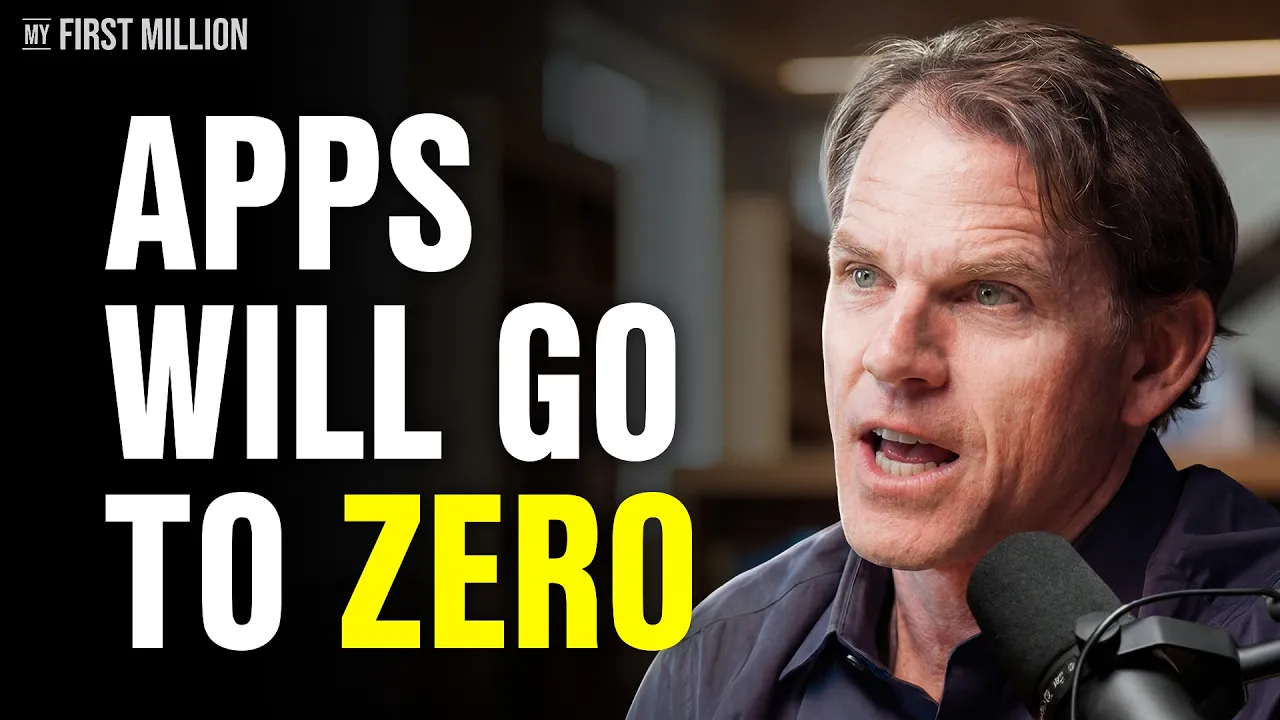
- Avoid AI app hype: Most venture-backed AI apps ($2M revenue, $500M valuation) will go to zero
- Build in prosaic, scalable industries: Plumbing, HVAC, property management have $100B+ TAM with predictable, recurring revenue
- Hire for will to win first: Talent and resilience matter infinitely more than IQ or pedigree
- Focus on operations, not technology: Make AI a tailwind by out-executing competitors on fundamentals
- Build sustainable moats: Customer relationships, culture, processes—not proprietary tech (which will commoditize)
For Personal Development
- Do the internal work first: Therapy, meditation, journaling create more happiness than external achievements
- Write down limiting beliefs: Externalize fears to convert them from paralysis into solvable problems
- Control your denominator: Lifestyle inflation is the biggest wealth-killer
- Test multiple paths simultaneously: Make a list of 9 exciting directions and test nights/weekends
- Aim for 9-12 months of savings: That's where real freedom (choosing meaningful work) begins, not $25M+
For Managers/Leaders
- Screen for resilience, not credentials: Ask for detailed life story; look for repeated comeback patterns
- Codify and share playbooks: Battle-tested frameworks (process mapping, Kaizen, planning tools) scale better than hiring
- Model what you teach: Kids/employees watch what you do far more than what you say
- Separate from limiting beliefs: Help teams externalize fears and reframe challenges as growth opportunities
- Let high-performers improve systems: They'll own playbooks more fully if they can modify them
For Career Decision-Making
- Don't chase AI hype: Commoditization happens fast; build in evergreen, relationship-driven fields
- Services roll-ups with customer moats beat tech plays: Wealth management, property management, HVAC with bundled services
- Give yourself permission to want what excites you: 99% never examine their lives; be in the 1%
- Build slowly if necessary: 14 years to first real wealth is normal; stay fired up and keep learning
Transcript
15 years ago, we set an objective to become the number one performing private equity fund in the world. Since we set that goal, the four funds we invested after that have all done 5x or better. How do you do 5x in six years? Well, you go get Navy SEALs to run plumbing companies. That makes perfect sense to me. Yeah, it works pretty well. In your world, there's a bunch of AI roll-ups. We're going to buy a company, we're going to throw AI in it, and it's going to be awesome. Is that a good strategy? These venture-backed apps, they'll have 2 million in revenue and a $500 million valuation, and they're going to go to zero. [SPEAKER_00] How do you see the world in the market? Where do you see opportunity? Where do you see destruction? And where do you see overhype? Okay, I'll start with overhype. How about that? All right, well, listen, we have Graham Weaver here today. You've seen this guy all over YouTube, TikTok, wherever you've been. And what I'm interested in is I would have always loved to go to Stanford and go to Stanford Business School. There's probably a lot of people listening to this that wonder, what would it be like? And that would be cool to be able to go learn from the best at one of the best schools. Well, we get to do that today. We have somebody who not only is out in the field, you've got a private equity fund that has almost 20 billion in assets under management, but you also teach at Stanford. And I think today it'll be fun if we get to hang out and pick your brain and be students in your class. [SPEAKER_01] I love it. [SPEAKER_01] Looking forward to it. [SPEAKER_02] You know, what's funny is I've watched your talks for a long time and they're amazing. [SPEAKER_02] How to Live an Asymmetric Life was a really good one. [SPEAKER_02] How to Live Your Full Life. [SPEAKER_02] I think that wasn't the exact title, but that was my takeaway from another talk. [SPEAKER_02] And I was doing research on you and I didn't even realize this guy had a PE fund. And I think that's great that your ideas are actually what you're known for more than your work. So besides the talks, can you explain with your fund, how successful are you beyond just the talks? [SPEAKER_01] About 15 years ago, we set an objective to become the number one performing private equity fund in the world as measured by net MOIC. [SPEAKER_01] You know, the return on capital and our last, since we set that goal, the four funds we invested after that have all done 5x or better, or the fourth one's on track to do that. [SPEAKER_01] So it's been great. [SPEAKER_01] All the content that I try to bring to my talks or to the students at Stanford, I like to think it's really based in stuff that really works. [SPEAKER_01] There's a lot of amazing people that have a lot of really good motivational content. [SPEAKER_01] I try mine out in the real world and see what actually works. [SPEAKER_01] And I think that the stuff that I try to talk about is exactly what we do at Alpine. [SPEAKER_01] But yes, we've had a really great run and I'm really proud of how we've done it. We've done it with people, treating people really well. We build our entire business around the people at Alpine and the entrepreneurs in our portfolio. And we try to be a force for good. The three goals are be the top performing fund, be a force for good and be a place where the best people want to come and work and spend their careers. And I think hopefully we've done it that way. [SPEAKER_00] So you just said you set a goal to be the number one performing private equity fund in the world. [SPEAKER_00] No big deal. [SPEAKER_00] That's right. [SPEAKER_00] So you said 5x, MOIC, which is multiple on invested capital. [SPEAKER_00] So that's over about 10 years or what's the timeframe we're talking here? [SPEAKER_00] From the day the first dollar comes in to the last dollar goes out. Yeah. Maybe it's probably easier to talk about the average, probably average is about six years of the average investments, probably about six years. [SPEAKER_00] That's pretty remarkable. [SPEAKER_00] So you normally, you know, rule of 72, you put your money in the S&P 500 in seven years, you should double your money. [SPEAKER_00] So you should get 2x if you're there and you're basically in roughly the same timeframe trying to get a 5x, right? [SPEAKER_00] So you're really trying to outperform. [SPEAKER_00] Can you in plain English, because Sam knows this, I spent the last two days having 40 private equity meetings and I'm half the time I'm just like, they're like, yeah, we're a small fund, a billion and a half under management. [SPEAKER_00] And I'm like, that was the story all day. [SPEAKER_00] I was like, how much money do you guys have? [SPEAKER_00] And what do you guys actually do? [SPEAKER_00] So can you give me the simple, what do you guys actually do? Are you guys buying HVAC companies? Are you buying software companies? [SPEAKER_01] So private equity is a very broad classification. [SPEAKER_01] There's lots of different strategies. [SPEAKER_01] So I'll tell you specifically what we do. [SPEAKER_01] There's a lot of talk around AI buy and builds if we can dive into a bit, but we do primarily buy and build. [SPEAKER_01] So we'll take a, we'll find a really amazing CEO that a lot of times has worked with us in a smaller capacity, maybe they were the CFO of a company we had, or they came through our training program and then we'll back them. We'll go find an industry that we think is really interesting. We like the prosaic industries, the ones you mentioned, plumbing, HVAC. We also do software, because there's a number of strategies where roll-ups and software can be really attractive. [SPEAKER_01] So it's a small part of what we do, smaller than the services stuff. [SPEAKER_01] bit, but we do primarily buy and build. [SPEAKER_01] So we'll find a really amazing CEO that a lot of times has worked with us in a smaller capacity, maybe they were the CFO of a company we had, or they came through our training program and then we'll back them. [SPEAKER_01] We'll go find an industry that we think is really interesting. [SPEAKER_01] We like the prosaic industries, like the ones you mentioned, plumbing HVAC. [SPEAKER_01] We also do software too, because there's a number of strategies where roll-ups and software can be really attractive. [SPEAKER_01] So it's a small part of what we do though, smaller than the services stuff. [SPEAKER_01] And a lot of these really prosaic industries are massive. [SPEAKER_01] The plumbing and HVAC industry, it's like a $170 billion industry. [SPEAKER_01] So if you get it right and you actually figure it out, you can grow almost forever because you just don't run out of TAM, which is why we like the buy and builds because we'll get it right once and then we'll stamp it out a number of times. [SPEAKER_01] The other thing that's really cool about buy and builds is it really plays to our core competence, which is talent. [SPEAKER_01] So our buy and build strategy, the way we do it really is a talent strategy. [SPEAKER_01] We're in a lot of cases putting high attribute people, like military veterans, in to go run these plumbing businesses and they're just incredible leaders. [SPEAKER_01] And our secret superpower is really training these awesome leaders and giving them an opportunity to do something they might not have had the opportunity to do otherwise. Sam, isn't that hilarious, Sam? [SPEAKER_00] You could be like, how do you do 5X in six years? [SPEAKER_00] It's like, well, you go get Navy SEALs to run plumbing companies. [SPEAKER_00] It's like, oh, that makes perfect sense to you. That's actually right. That's actually a pretty simple, simplified expression. Yeah. Yeah. Navy SEALs run plumbing companies. It works pretty well. [SPEAKER_00] Yeah. [SPEAKER_00] The deck is only one slide. [SPEAKER_00] I like it. The Navy SEAL is actually a very common background of our leaders in these businesses. And how big of companies are you buying? So the add-on acquisitions, which is primarily what we do, I think the average deal we did is like $30 million. So the company might have 15 to 20 million of revenue, something like that. [SPEAKER_02] Oh, it's pretty small. [SPEAKER_02] Do you borrow money to buy it? Yeah, we do. So once we get it going, we can usually finance all the acquisitions with cashflow and debt. So we don't have to put in any more equity. That's important. Obviously, if you're trying to have a high MOIC, the not putting money in part is a big part of that. [SPEAKER_00] The main part of your model that's differentiated is you basically start with an operator or a CEO in house, which most private equity guys don't do, right? [SPEAKER_00] They're mostly like, we buy you, we hope the management team really stays on. [SPEAKER_00] That's really important. Or we're going to later install and do a search for an executive to run the company. But what you guys are doing is you start with the person, you run a search with them. Tell me what I get wrong. Is it not a search fund? [SPEAKER_00] What's different about it than a search fund? [SPEAKER_00] They come in house basically is the difference. Sean, you nailed it. It's a search fund where we try to improve on the search fund model. If you think about a search fund, for those who may not know, you're backing a young person to go buy a business and then they're going to go run it. But the thing where it kind of falls down is the first part, which is someone has to go source and buy a business. [SPEAKER_01] They have to go build an entire private equity firm to buy one company. [SPEAKER_01] So we do all that ourselves because we are obviously doing this on a repeated basis. [SPEAKER_01] But the general part about having a really high attribute person betting their career on a business is a great formula. It's probably a lot of what you talk about on this podcast. It's the greatest formula there is. So we love that part of the DNA of a search fund model. We're hiring very similar kind of high attribute people, maybe a little bit older than the search fund, a little more experienced with bigger businesses. But generally it is what you just said, Sean, it is a super powered search fund model. [SPEAKER_03] All right. [SPEAKER_03] So this episode is all about excellence. [SPEAKER_03] A while back, I shared my personal framework for building excellence in my own life. [SPEAKER_03] And the team at HubSpot turned it into a 30 day operating system you can check out right now. [SPEAKER_03] It breaks down the systems it took me 10 years to figure out and shows how I actually use them day to day. [SPEAKER_03] These are systems that genuinely changed my life. [SPEAKER_03] So if you want to build a good life, scan the QR code or click the link in the description. [SPEAKER_03] Now let's get back to the show. [SPEAKER_00] So the simplified way of thinking about this is you find a really high attribute person. [SPEAKER_00] We'll call them the Navy SEAL for now. Just say somebody who's clearly a go getter, a winner, organized, effective individual who's willing to work really hard for five, six years to create life-changing wealth for themselves and build and own their own business without having to come up with a great idea from scratch. You go with that. You're already looking at hundreds of deals. You have thesis around stuff. You go and you buy the best deal you could find there. And then you do add-ons. So you go buy the plumbing company. It's already a good business. That person should operate it maybe to be a better business growing organically. individual who's willing to work really hard for five, six years to create life-changing wealth for themselves and built and own their own business without having to come up with a great idea from scratch. You go with that. You're already looking at whatever hundreds of deals. You have thesis around stuff. You go and you buy the best deal you could find there. And then you do add-ons. So you go buy the plumbing company. It's already a good business. That person should operate it to be a better business growing organically. And then you're going to buy maybe more tuck in plumbing businesses to grow the thing using the cashflow from the first business. Exactly. And then the other thing is once you bought 10 plumbing companies, you know what it looks like to run the best in the world. Because this one company might do really well on training. This other company does great on customer acquisition. This other company has a purchasing advantage. This other one has a training advantage. You steal the superpowers of each. Exactly. You grab and usually that's true. Usually each company has a superpower, but after, let's just say 10 deals, you've got all the superpowers, and now your next deal, your 11th deal has 10 superpowers. And then you can improve that business dramatically really fast just because you take that playbook. And the reason you can make that playbook consistent is because you're putting your own people in to run it. This took me 10 years to figure out, but we would back founders and then say, hey, we have all these great ideas. And the founders would just smile and write stuff down and never do anything. And that's not that we don't love founders, but you can't, you're not going to buy a guy who's run a plumbing company for 35 years and be, and then come in and tell them how to run this business. That doesn't work. [SPEAKER_00] So Sam, should we do Graham a favor and make him likable? Because you're too hateable. You're happy. You're good looking. You're super successful. You're this model that prints. This is amazing. And I'm going to do you a favor here because that's the end point, but I wasn't where you started. The start of your story is you're mowing lawns in Ohio, listening to self-help tapes in your earbuds while you mow lawns to try to figure out what the hell you're going to do. And then my understanding is you kind of in college bootstrapped this with credit cards and went through the financial crisis, a bunch of stuff like that. So can you bring it down a notch and go to the part that makes us root for you? What's hard about this? Yeah. Well, first of all, thanks for the kind words. I appreciate them. But I grew up in a small town in Ohio, went to a public school and it was a blue collar town outside of Toledo called Perrysburg. Nothing special about it. And I was probably just average in just about everything—athletics, school. This isn't false humility. I mean, I didn't make the basketball team. I got cut from the wrestling team. I mean, I just wasn't really, and I was okay at grades, nothing special. And just as you said, Sean, I was mowing lawns and I started the Sony Walkman came out and I started listening to tapes by guys like Brian Tracy and Tony Robbins and Earl Nightingale and guys like that. Imagine you're a 14-year-old kid and you're literally and figuratively brainwashing myself with this content because I listened to so many hours of it while walking back and forth. And the two big concepts that they said was, you're either going to be your own best friend or you're going to be your own worst enemy. So if you figure out you first, you think that the world's happening. For example, you think you got cut from the basketball team and all this stuff happened externally, but really it's you. And that was a very hard message to hear because I was, what do you mean? I had all these excuses lined up. I wasn't tall enough and I hadn't started playing early enough and my parents didn't get me in wrestling early enough and all this stuff. It's nope, you don't get to have any of that stuff. You gotta get rid of all that and just accept total accountability for your life. And that was absolutely brutal. And I realized they were talking about me and I wasn't doing that. And I was exactly who they were talking about. So if the first thing is get out of your own way, the second one was figure out what you really want. And I give Brian Tracy the most credit for this about how to set goals. And I think he maybe the best, at least back then was the best in the world at setting goals. And so I literally would write down my goals every single day, multiple times a day, in high school. And it was incredible. The combination of those two things—it's a pretty undefeated formula. Get out of your own way. Don't allow yourself to make excuses and then write down what you want. Be super clear. And then obviously you gotta go do this stuff you write down. But that formula was really powerful. And there was something in me, I guess, that wanted more than what I had. And so I just kept plowing through and then the story is definitely not even close to linear. I mean, everything you could imagine goes wrong. I mean, I wasn't great at wrestling. I cut a ton of weight in wrestling. Get out of your own way. Don't allow yourself to make excuses and then write down what you want. Be super clear. And then, obviously you gotta go do this stuff you write down. But that formula was really powerful. And there was just something in me that wanted more than what I had. And so I just kept plowing through and then the story is definitely not even close to linear. Everything you could imagine goes wrong. I wasn't great at wrestling. I cut a ton of weight in wrestling. I was 125 pounds at six feet tall. Do that math. And then with Alpine, our first fund lost money, drained my savings account. Then we started calling our way back, got smacked by the great recession, drained my savings account again. It's definitely not been a linear story at all, but I think that this story is just one of being clear about what you want. And then just this crazy amount of persistence. [SPEAKER_00] I love that. [SPEAKER_00] I wanted to switch gears and ask about AI. [SPEAKER_00] So what the hell, what are we supposed to do? [SPEAKER_00] You know, five years ago, if I was advising my cousin on what to do, I'd be like, go study computer science. [SPEAKER_00] The technology curve is only going this way, learn to code. [SPEAKER_00] You'll be set. [SPEAKER_00] Now they're graduating and they're probably hating their uncle now, because uncle Sean told them to go learn to code. [SPEAKER_00] And maybe that's irrelevant. [SPEAKER_00] Maybe it's super powerful. We can't tell either way yet. And so there's all this uncertainty. I want to hear from you how you see the world and the market. Where do you see opportunity? Where do you see destruction? And where do you see overhype? I want those three categories from you. Opportunity, destruction and overhype. Okay. I'll start with overhype. [SPEAKER_01] You know, I graduated from business school in 99, which was this exact time right now, but it was the dot-com era. [SPEAKER_01] That was the time when you had pet food.com and web van and all this nonsense. [SPEAKER_01] I think there were 400 companies that went public. [SPEAKER_01] And the only one that I'm aware of that survived was Amazon, maybe eBay. [SPEAKER_01] But it was a bloodbath. [SPEAKER_01] And people were right that the internet's going to transform the world. And look at us right now. We're on a podcast having a conversation over wifi. [SPEAKER_00] And by the way, I can order DoorDash, just Instacart, right? [SPEAKER_00] Even the ideas might not have been terrible, but the way they were burning money... You know, that wasn't it. And you think about today, I mean, your mobile phone and you think about, imagine just your wifi doesn't work for a week. Good luck. So it transformed the world more than people could even imagine back then. But there was a lot of false starts and hype that people didn't really know where to place it. And they kind of misplaced it. I think that's where we are in AI. And my example, I'll just back up. I think there's four places you could play in AI. You could be in the infrastructure layer, which is all the chips and data centers and energy. And that's a very exciting area that's going to have growth for as long as we can see. Then the next is the large language models. There's really not a lot of those. So I don't know that you can really play there unless you're a big business. Even investing in those, you're already paying a price that assumes success for those. So I don't think that's really interesting. Then there's the app layer, which is where most of the venture money is going. And then there's the use case layer, which is you're a customer, a HVAC company, and you're going to use AI. [SPEAKER_01] And that's why I think a lot of these venture firms are jumping into these AI rollups because they're realizing that the first three layers are tough and they're going to play in that fourth one. [SPEAKER_01] But where the hype is, is the third one, which is the apps. [SPEAKER_01] I'm going to be an app that I'm going to help law firms settle their cases faster. [SPEAKER_01] I'm going to make call center software that's going to allow you to not use humans, or I'm going to whatever. [SPEAKER_01] There's a million of those applications. [SPEAKER_01] I think that's where a lot of the hype is. [SPEAKER_01] We see all these companies as vendors to our businesses. [SPEAKER_01] So they're pitching us all the time, these venture backed apps. [SPEAKER_01] And they'll have 2 million of revenue and a $500 million valuation. [SPEAKER_01] And they're going to go to zero. [SPEAKER_01] They're going to be worth absolutely zero. [SPEAKER_02] But a lot of them are getting huge revenue fast. [SPEAKER_02] Are you saying that you think some of those guys are also going to go to zero? [SPEAKER_02] Is the churn going to be so high they're going to go to zero? [SPEAKER_01] I think that you have to say ultimately what's the barrier and what's the moat that they're going to be able to build. There are apps that will be successful, just there were .coms that were successful, but they're going to get attacked by above and below. They're getting attacked below from the companies that can now build their own stuff. They're going to get attacked also from the LLMs who are introducing interfaces and new products that are literally just taking the business from some of these apps. So there's going to be this constant pressure on them. I think that you have to say ultimately what's the barrier and what's the moat that they're going to be able to build. There are, there will be apps that will be successful, just like there were .coms that were successful, but they're going to get attacked by above and below. They're getting attacked below from the companies that can now build their own stuff. They're going to get attacked also from the LLMs who are introducing interfaces and new products that are literally just taking the business to some of these apps. So there's going to be this constant pressure on them. I think if you can build proprietary data sets, which is harder than it sounds, or you can build really deep interfaces with your customers, which is also harder than it sounds. Those are moats you can build. But really, I think sometimes what you're really doing is you might be six months ahead of where the LLMs are going to ultimately go. And that you can make a lot of revenue for a short period of time. Again, going back to the internet, there was a ton of businesses in the nineties where it was like, get your marriage license online. And those businesses made a fortune and they grew really fast, hundreds of percent. And they were growing at a hundred percent plus a year there until Google just absorbed all those rents. It's that. And that's a little bit the analogy of the LLMs. I think absorbing a lot of the rent. So I'm not making a blanket statement that all apps are going to fail. I just think that's where I think things are overhyped. [SPEAKER_00] And what about in your world? There's a bunch of AI roll ups. So it's like, oh, let's go buy these service businesses, smash in some AI, baby. Let's put some AI in the front door. Let's put some AI back there. Let's shove some AI under there. Right. It's like me with a Thanksgiving plate. I'm just trying to put mac and cheese everywhere. They're just like, we're going to buy a company. We're going to throw AI in it. It's going to be awesome. Is that a good strategy? I think the reason that people are approaching this strategy is because they're probably seeing a little bit of what I was describing about the app layer and saying, gosh, I'd rather be the person using the AI than someone developing it. So I think that's why they land in these AI roll ups. I think you got to be careful. I mean, we've been doing roll ups for 15 years and AI is a huge thing. It's important. Depends on the industry. Of course, some industries have AI as a much bigger factor than others, but the other basics of getting the talent right, getting the companies right, integrating, doing the transition management, having your workforce stay on, doing training, recruiting. Those are really the core elements. The technology, I mean, here's probably a hot take. I think the technology in many, many industries is going to be commoditized. I'll give you an example in property management. We happen to be in property management. I know there's been a bunch of AI native roll ups launched by venture firms in property management. What tech, what's their real advantage? Like, are they going to have technology that's better than anyone else? I would say the answer is no. So what's the moat then? Exactly. The moat in property management is all the stuff I was mentioning before, you know, hiring well, building good cultures, retaining, recruiting. But the technology, at least in that particular segment is going to come through the software companies. And so we're all going to have access. And this is my take—there can be other opinions on this—but I think ultimately most people are going to have access to the same technology. So it'll be a tool and it'll help everybody, but it's not going to be the thing. It's not going to be the real differentiator. And so I still would go back to say, if you want to win in AI roll ups, you got to win in all that other stuff I was saying. [SPEAKER_00] Yeah. That makes sense. I think what some people are doing, and which is not really the roll up part of it, but you go buy a property management company that does 6 million a year in EBITDA, and then you use AI to make the business more efficient. And now it's doing eight and a half million in EBITDA and you're priced at a 5X difference. You've created 10 million to 15 million of value just by running it more efficiently. And even though another property manager might be able to do the same exact thing, it doesn't really matter. Plus most property managers are going to be slower to adopt AI than you might be if you're really bullish on this. I think that's the thesis. What you just described is the thesis and we'll see how it plays out. We'll see. I'm sure there will be some people that execute really well and have some version of what you said. It probably won't be as dramatic. And then it's just where the rents go and how much that rent ultimately gets passed down to the consumer. I don't know that you necessarily win on technology per se. [SPEAKER_00] So you must get this all the time. If you're teaching at Stanford, I'm sure somebody is raising their hand and saying, Hey, I graduate next semester. What should I go do? Where should I go? I'm a smart, hungry person who wants to be successful. You see the landscape and you know what's going on. Where should I be going? What should I do? What's the opportunity? ultimately get passed down to the consumer. I don't know that you necessarily win on technology per se. [SPEAKER_00] So you must get this all the time. [SPEAKER_00] If you're teaching at Stanford, I'm sure somebody is raising their hand and saying, hey, I graduate next semester. [SPEAKER_00] What should I go do? [SPEAKER_00] Where should I go? [SPEAKER_00] I'm a smart, hungry person who wants to be successful. [SPEAKER_00] You see the landscape and you know what's going on. [SPEAKER_00] Where should I be going? [SPEAKER_00] What should I do? [SPEAKER_00] What's the opportunity? I would say, if I were graduating right now, knowing everything I know now, I would go do a services roll up because I know how to do that. It works really well. I think AI is a tailwind. I do that in an industry where you can build real moats and stickiness with the customers. Not all industries allow that. [SPEAKER_00] What does that mean? [SPEAKER_00] Like services, you're talking about like pest control. [SPEAKER_00] What are we talking about here? Like take wealth management, for example. If you go into that business and you're like, okay, well, I'm helping people buy stocks or whatever. But what if you were helping people buy stocks and you were doing their trust and you were doing their taxes and you were helping them with all their estate planning. And that's your moat against AI. It's old fashioned stuff. Your moat against AI is the deep, deep relationships with your customers. So I would say go into something where you can really build those kind of customer moats. And then AI is nothing but a tailwind for you because your customer doesn't care how you're doing your backend. But I would just be playing around with that. I think it's going to be a language that I would advise anyone, no matter what age you are. But it's certainly if you're a young student graduating, you want to know that language extremely well. You want to speak that language because that'll also allow you to look at an opportunity and say, okay, I know I could do this with it because I'm so facile in these tools. [SPEAKER_02] So I think Sean and I have both started companies and without sounding too grandiose, I think that sometimes we view ourselves a little bit artistic and creative more so than good or even interested in financial models and things like that. [SPEAKER_02] And because of that, I think it's partially because I was jealous and partially because it's true that I thought PE was nonsense, not in the sense that I thought it was very effective, but I thought buying a company and firing a bunch of people, that's not the only value creation. That's for the owners of the PE firm, not necessarily the betterment of the world, which there's a million examples of why that's totally wrong. [SPEAKER_02] But I think what's interesting about you is you're the antithesis of that where you're putting out this content that's quite soulful. And when I've talked to you and when I see your talks, I'm like, this guy's got it. He makes me feel good. And yet he's in the most soulless industry. [SPEAKER_02] Because you gotta be good at both, right? You must be great at the ruthless analysis of business and finding the levers, cranking out that gross margin and doing all of that stuff while still clearly not becoming what the caricature that Sam's painting. [SPEAKER_00] Yeah. [SPEAKER_00] You know, if I had to keep it really simple, I would say let's pretend for a second that I wasn't interested at all in being a force for good. And I was just interested in generating returns. I'd run my business exactly the same way. A lot of it for me is having the confidence in building something that's going to be durable and enduring. I'll use a real example. I won't use any names, but let's say I'm a software buyout firm. My strategy is I go into a business, I buy a software company, I fire people and I double price. I'll make money in the short term, but you look at a time like now where AI is coming. You really want the companies that are going to win in software to have incredible teams that are on top. They're making agentic products on top of their software. And they're going to have AI as this incredible tailwind for them. And if you just destroyed your team and your cost structure, you're going to get attacked from both sides, from your customer side and from the LLM. So we found that building things is a lot more durable than ripping things apart because you can make one and a half times your money, or maybe even two times your money ripping stuff apart if you're lucky and time the exit just right. But if you actually build something, it could be, I mean, you can make a hundred times your money. And so I do think a lot of it is time horizon. I think underneath that is even deeper. Why are you in this business in the first place? If your goal to be in the business is to make money and you want to do it as fast as possible, then maybe that behavior does flow from that. But in terms of just being good at private equity, I don't think ripping things apart, I don't think you're going to be the best in the world doing that. What's the best deal you guys have ever done? What's the hero deal? We've had a few really good ones that rhyme with what I'll describe, but you know, you pick the plumbing and HVAC example at the beginning. That's one of our best deals. We backed people that we hired right out of business school. They joined our CEO and training program. They went through that program. They became the eventually the co-CEOs of the business. We bought a small plumbing and HVAC business that had $8 million of earnings. This year that business will do $500 million of earnings. [SPEAKER_00] How long, how many years did that take? [SPEAKER_01] It took six years. Six years to $500 million. You have to break that down. How? [SPEAKER_01] $500 million of earnings, not revenue. Yeah. [SPEAKER_01] We back to people that we hired right out of a business school. They joined our CEO and training program. They went through that program. They became the eventually the co-CEOs of the business. We bought a small plumbing and HVAC business that had $8 million of earnings. This year that business will do 500 million of earnings. [SPEAKER_01] How long, how many years did that take? It took six years. [SPEAKER_01] Six years to $500 million. You have to break that down. How? [SPEAKER_01] $500 million of earnings, not earnings. [SPEAKER_01] Yeah. [SPEAKER_01] 3 billion of revenue, 500 million of earnings. And I think importantly that happened without us putting in any additional money. [SPEAKER_01] Wow. So an initial buy of what, 30 million or something like that. How much was the initial buy? [SPEAKER_01] We put in a total of 50 in the first deal. We might've put in like the first year, another maybe nine or so that first year. And then that was it. Then we never put in anymore. [SPEAKER_01] What was going on? Was it that you guys just went on an acquisition spree and picked up all the mom and pops or was it that they weren't doing any sales? They didn't know they didn't have a good website. What was missing that you guys added? [SPEAKER_01] We got fortunate that the third deal that we bought, we partnered with this guy. So the CEO is our name, AJ Brown and Will Matson. And then the third deal we did, we partnered with this guy named Ira Pruitt, who was the grizzled HVAC veteran. [SPEAKER_01] And just this wonderful guy, he had seven of his kids in the business and he gave us a lot of the playbook levers. And then the next deals after that, we were adding to that playbook. So eventually we just ended up with this amazing playbook about how to run those businesses. And then we began that talent program we were talking about earlier, where we started attracting a lot of incredible leaders, a lot of them, not all of them, but a lot of them veterans. And then that allows us to go buy businesses that other people can't buy because really the line of people that wants to go buy a $12 million revenue plumbing business in the middle of Louisiana that requires a management change is short. It's a short line. [SPEAKER_01] Wait, can you address this. So you just described one of the guys, I forget his name as a grizzled HVAC guy, which in my head, I have a picture in my head of what that is. So I Googled, I looked up the company you're talking about is called Apex Service Partners, I assume. Yeah. And I looked up Will Mattson. Sean, go ahead and look up Will Mattson. And yeah, he probably looks like the opposite of a grizzled HVAC guy. Will is a baby faced guy. [SPEAKER_02] Honestly, he looks and he might actually be 28 years old. I think he looks very young and he worked at JP Morgan and went to Wharton and worked at McKinsey. So the grizzled guy is named Ira Pruitt. And the combination of AJ, Will and Ira is amazing. So that's what I want to ask about. I want to ask about what makes this such a high functioning team to go from 8 million to 500 million in profit. Teach me what makes such a powerful team and what attributes are needed in order to grow a business that fast, because these guys look like the fairly odd couple. They are an odd couple. So the combo in this particular instance, the combo is AJ is incredibly focused on the talent and he's the one that rallies the Navy veterans and flies around and gets them excited. Will does the finance and the M&A and a lot of the hold co functions. And then Ira is the one that's like, Hey, this is how you actually run a plumbing business. Here's the playbook we got to implement. So that's how the combination works. What they all have in common. And then to answer your question, what we look for in these leaders, number one is just this white hot will to win. And that's more important for us. We found that to be way more highly correlated than any other factor IQ or background or experience, but each one of these three in some version of their life has just demonstrated this crazy will to win. We learned this from a book called Who, which was the sequel to the book called Top Grading. And it's about how to hire. And so we do a three hour interview and you start with the person literally in high school and you go through yesterday and you're just walking through their background. It's a conversation just like this. It's not super formal, but you're collecting data on this person and you're, in AJ and Will's case, or Ira, or really anyone that had gone through our program, you're just going to see example after example of, Hey, this thing went really wrong. And it was a bummer. And here's how I handled it. I got up. I plowed through. I put my boots back on and I kept marching forward. And you're going to see that again and again and again. We always say, if it'll leap out of that interview, and if it doesn't, then they probably don't have it. So speaking of deciding what to do, and in a bunch of your talks, it's basically how to live a rich life. You call it an asymmetric life. And you've done a bunch of different talks on similar topics. You have this cool thing called the genie question, which I forget exactly how you phrase it, but it's basically, what would you do if you couldn't fail? And it's an exercise to basically get people to decide truly what they want, because a lot of people listening to this, Sean and I included, are ambitious people. And sometimes we'll be, we only listen to where the money is or where can I fit into some traditional sense of success along with a lot of your Stanford guys, they all think the same thing. Where fear talks us out. Yeah. Like I can't do that. I was supposed to go to business school. I got to go to McKinsey and then I got to do this. I can't do this other thing. So you have this question of, what would I do if I couldn't fail? What would you say is the most common reason why people are really bad at answering that question? [SPEAKER_01] So there's a few things I'd say. First is I think people don't ask the question. So that's probably 90% of people. It sounds crazy, but they never ask themselves, what do I really want? [SPEAKER_01] the same thing. Where fear talks us out. Yeah. I can't do that. I was supposed to go to business school. I got to go to McKinsey and then I got to do this. I can't do this other thing. So you have this question of what would I do if I couldn't fail? What would you say is the most common reason why people are really bad at answering that question? So there's a few things I'd say. First is I think people don't ask the question. So that's probably 90% of people. It sounds crazy, but they never ask themselves, what do I really want? And they haven't given themselves the permission to even think about that. [SPEAKER_02] I think it's almost like the highest form of self love is to trust yourself enough to say, I'm going to be on the path that excites me. You're asking why people fail. I'd say people haven't given themselves the permission to even think that way. So let's assume now you have done that, but I would say for your audience, give yourself that permission. You matter. What you get excited about in this world matters. [SPEAKER_02] What are some example answers to that question? You've obviously helped a lot of people go through this process. I assume it's when you teach at Stanford. [SPEAKER_02] I'll give you a couple just from my class in the last couple of years. Last year, I had a student who's building a theme park in Dallas, Texas, literally a theme park. Let's give her a shout out. [SPEAKER_02] That was her dream. What's that called? [SPEAKER_02] Yeah. I think it's called Texas Land. I'm not sure. Maybe they haven't finalized that as the name, but that was her thing. And she's going and doing it. I have a student this year who is brilliant. He could go to any consulting or finance firm. He's going to India, where his family's from to help them build free hospitals. And that is his thing. It's super clear. That's his answer to the question. [SPEAKER_02] I give him so much credit that he has the courage and commitment to go do that. And it's going to be very hard, but that's his answer. You know what you guys are doing. You guys are building a podcast that's really helping people. And you can just tell from being on this podcast, you guys love it. You're having a blast. You're doing it right. You're doing the thing. You follow that energy and gave yourselves permission and be like, Hey, that's a good place. [SPEAKER_01] But I almost hate saying it that way because I don't want people to think that there aren't doubts yelling at us or anyone who's successful all the time, because I think in another talk, maybe the same talk, you were like, I do this exercise and Alpine is a $20 billion fund. And I think you said for the first 14 years, you thought it was going to fail, or you weren't confident that it was going to be a home run. [SPEAKER_01] Yeah. I think all of us have these crazy limiting beliefs that run through our minds all the time that are beating us up with like, I shouldn't do this. I have to do this. I should do that. I might fail. And the thing about that is that's very normal. Having that fear and those doubts is 100% normal. Everyone has it. It's just what do you do with that? And I think one of the things I try to help my students do is we have an exercise where literally we spend an entire class writing all that down. We empty your mind of all the limiting beliefs that are getting in your mind. Just let them flow out. Okay. I might fail. I might run out of money. No one might watch my podcast. Alpine might not make it. AI might not work, whatever it is, write all that stuff down. And then once it's down on paper, you've removed it. It does the most damage to you when it's in your subconscious and you don't even realize you have it. So if you're walking around with some fear and you don't even know you have that fear, it just looks like inaction and paralysis and I'm not going to go forward and I'm going to stay stuck. But once you have it down on paper, let's say one of your things is I want to start a company, but I don't know how I'd pay myself or pay my loans or whatever. Okay. So if that's in your head, you're just not going to start a company, but if you write it down, you're like, you can rephrase and say, how would I start this business in a way that I could service my business school loans and still pay my rent, and now that's a problem to be solved as opposed to a fear that is creating complete paralysis. And so I the act of just going right at your fears, doubts, and limiting beliefs. That's a great exercise. I highly recommend that. I also just think the you have the blank page and there's a lot of things you could do with the blank page. Cause I think you said it right. I think 90 is low, probably 99% of people don't really take the time to examine their life or think about what they really want and actually go answer that hard question because it's a lot easier to scroll. It's a lot easier to worry about what's going on in Iran and what's going on in the market and what's going on everywhere else besides here, because those are at arm's length away. Whereas it's very personal to be here for the person who's like, I want to build the theme park in Texas. Awesome. I want to build the hospital in India. Sounds great. I've been in that position before where it's like, I'm ready to have that answer, but I have no idea. And I'm saying one out loud. It doesn't even feel right. I'm just making it up. And I had to teach myself to basically go through this process of dabbling. Take this mentality of a dabbler. How do I go and run either lightweight experiments or brainstorm or just not feel like I needed to commit right away, but go try to see where the energy is. How do you advise people to, if they don't have the answer of, oh, this is the thing that would light me up. Maybe you don't even know, where do you go to figure that out? [SPEAKER_02] Yeah. I love that. Well, here's an idea is I'm just making it up. And I had to, I've taught myself to go through this process [SPEAKER_02] of dabbling, just take this mentality of a dabbler. How do I go and run either lightweight experiments or brainstorm or just not feel like I needed to commit right away, but go try to see where the energy is. How do you advise people to, if they don't have the answer of, oh, this is the thing that would light me up. Like maybe you don't even know, where do you go to figure that out? Yeah. I love that. Well, here's one idea is maybe don't have one thing, make a list of nine things that would light you up. Okay. I think I'd like to go to India. I also think I'd like to start a podcast. Maybe I really want to, I don't know, become a DJ, I don't know what, write down your things. And then, you know, keep your day job and devote X number of hours a week to testing those things out. Maybe you're going to do some work on it, take some classes. You're going to start hanging out with people that do it. Maybe you're going to get trained. Maybe you're going to do podcasts and nights and weekends and see if it's as fun as you thought it was. And you're not looking there for, this is what I think is really important. You gotta be careful that you're not going to get a false negative on the outcome. So a student who says, okay, I want to start a company. So I'm going to spend five hours a week this quarter. And if I get traction, I'm going to do it. No, no, no, no, no. You're going to get no traction in five hours a week. If you could build a business in five hours a week, it wouldn't be worth building. [SPEAKER_00] So it's not that you're looking for, does it light you up? It's in that five hours a week, was that the five hours you were looking forward to that all week? Or was that five hours where you were, oh man, I gotta do five hours on this thing. You know, that's what I think you're looking for in those experiments. Because by and large, if you are lit up and you, I mean, you plus being lit up plus a long timeframe, there's very few things that won't yield to that. And that was me at Alpine. You mentioned it took 14 years for us to know it was going to succeed. Yeah. But I was fired up. I was willing to do it for a long time. And I was in it, I was excited. And most things will yield to that formula with enough time. Was that right? In year 14, were you still, TBD if this is going to work? And what were the numbers? Can you say what your numbers were then? Because I would think you were financially successful at that point, no? Well, we lost money on our first fund. So fund one was 2001. We lost money. That means that. How'd you get a second fund? Yeah, exactly. When you lose money on the first. Well, we were very transparent with our investors about what was going badly, what we were fixing, what we were learning. So they were, they were like, okay, we see you're on the right trajectory. You're transparent. You know, at one point that fund was marked at 40 cents. We ended up returning 95 cents. So they appreciated that. And they gave us another shot. Thank God. But what I was going to say is, we had fund one. We had that anchor for more than a decade. These businesses, you have to go in, you buy the companies, you run the companies, you sell the companies. It takes probably 10 years and then fund two comes along. And so it was another 10 years after that, after fund two, where we actually had some success, where we could have the outcome of that fund, proving out that it was working. And so that's the 14 years I talked about. But to give you the numbers, we were 14 years in, I want to say managing maybe two or three, three or $400 million, something like that. That sounds successful, right? [SPEAKER_00] It might sound like a lot, but we're trying to run an entire team and we have all these portfolio companies. Well, let's ask the question. We called the podcast My First Million and we started, there's a tradition. We would always ask every guest when and how did you make your first million? And we all like to really put that reference. A lot of times the answer was longer than people think. You try to get, when you're 20 years old, you think it's when you're 20 and a half, you think it's right there and it takes a lot longer. It took me, I was 30 when it happened. To Sam, I think same thing, 30, 31. And so it takes a little longer. And also we talk about how did it feel like, well, what did anything change? And what changed? I love to hear that. That's such a great question. All those are such awesome questions. It's so not what I thought it was going to be. A couple of different ways to answer the question. One thing to be a millionaire on paper, it's another thing to have a million dollars in the bank. Yeah. They're different. They're different feelings as you guys probably know. Yeah. One pays the rent, one doesn't. Yeah. So I'll say a million dollars in the bank. I think that's when I actually felt like I had a million dollars. Yeah. And that was year 14. That was one week. Oh shit. That was year 14 of start. So I was 29 plus 14. So yeah, I'm in my forties when I made my, actually had a million dollars in the bank. But to put that in context, by the way, that is pretty slow for having a PE firm. Your job is to get good returns and not having that. Well, yeah, I wouldn't, I want to say what we had, what's called a European waterfall, which means we have to return all the money in the fund plus an 8% return before we take any profit. And so we had to, first of all, fund one generated no carry at all. And then fund two, we needed to sell. It was really the very last business in that fund that we sold until we got paid. So that's what I was saying. The part about paper versus in the bank, I was a millionaire on paper before that, but actually in. and to not having that. Well, yeah, I wouldn't want to say what we had was called a European waterfall, which means we have to return all the money in the fund plus an 8% return before we take any profit. And so we had to, first of all, fund one generated no carry at all. And then fund two, we needed to sell. It was really the very last business in that fund that we sold until we got paid. So that's what I was saying about paper versus in the bank. I was a millionaire on paper before that, but actually in the bank, it was 14 years. But I want to talk about wealth for just one second. The interesting thing is I felt wealthy way before that because my denominator has always been small. So there's two parts of wealth. There's the numerator, which is what you make, and your denominator is what you spend. The biggest mistake, and this is something everyone who listens to the podcast can benefit from, the biggest mistake people make is the denominator. So they go like, here's a perfect example. I really want to start a business. I'm going to go take this other job first, and then I'm going to make some money, and then I'm going to start my business. Okay, that's what they say. Never happens because they go take that job. Then they get a new house. Then they get a new car. Then they move to this other city. Then they have kids. Then they have kids' schools, then blah, blah, blah. And their denominator is keeping pace or even surpassing their numerator. And they're never actually feeling wealthy. And ironically, they're creating less freedom every year because there's fewer things they could do to maintain the lifestyle. And there's no way they could start that business. And so probably one of the most underrated things that happened in my life is my wife. I married my wife, who was an elementary school teacher and made $18,000 a year pre-tax. And our first apartment was like 900 a month. She thought it was the Taj Mahal. And we never, I never. [SPEAKER_02] Does the IRS just send you money if you're making $18,000 pre-tax? Do you actually just get a bunch of money every April? That's awesome. [SPEAKER_02] They literally should. They should. I mean, she would drive around for 30 minutes to save $2 on parking. I was like, okay, well, we got to not do that. But that, so the denominator, I felt wealthy way before that because I just had a big cushion between what I earned and my expenses. So there's this story. And I don't think at this point that this is true, but it's Ruben Carter. Have you guys heard that song? The Hurricane by Bob Dylan? [SPEAKER_02] Yeah. It's basically about a boxer who got incorrectly imprisoned for triple murder and he didn't actually do it, but it was a racist thing. And there's a story that's part of this that I, at this point, I think is fake, where he was like, I don't belong in prison and I'm going to take cold showers every day just to remind myself that this ain't home. I'm only here for a minute, but I'm going to get out eventually. And like I said, I don't think it's real anymore, but I heard about that story when I was 15 years old. And when I moved to San Francisco to start things, I remember making a little bit of money sometimes, and then I would go for long droughts where I wouldn't make any money because I was trying to start something. And I was like, when the money comes in, I still got to take cold showers because I can't get used to this. I'm not out of it yet. And so I was always reminding myself, take cold showers. We're not home yet. Do not get used to this. But I remember there was freedom in that. I love that. I love that. And the freedom part is so true, Sam. The steepest curve of utility with money was going from not having peace of mind. The first one was having peace of mind, not having to worry if I had to fix my car or whatever, some unexpected expense happened, but I've got money saved away and I don't have to stress. That was very steep because that wasn't always true for me. My car would break, I'd be like, oh no. And then the next curve that was really steep was I have enough money to do what I really want to do with my life. I mean, how magical is that? That's really where the utility is. It's flattened out after that. So that's really where the utility of money comes for me. But when you're giving advice to your students, what do you tell them that number is? For example, some people say that financial freedom is 25 times your annual spending. Some people will say, as long as you have six months of savings, you're good. Is there a threshold that you like? Yeah, there is. I would say having three to six months of savings is level one, which is peace of mind because then, you know, you have some unexpected expense and you're fine. You don't lose sleep over that. You don't have to decide if you're going to pay your rent or fix your car. That's three to six months of savings. That doesn't sound like much, but it makes a huge difference in your life. And then the next one, I think it's nine to twelve months of savings. When I say freedom, I don't mean, okay, I'm going to live off the interest of my money in treasuries, that I'm okay. Sure, that's nice if you get there, but I'm not even talking about that level. I'm talking about I'm spending, I'm still working, but I'm spending my day doing something that I enjoy. That is the job that I want to have. That's probably nine to twelve months of savings. It's not that much. So I think both of those are really within people's grasp. People who are like, oh, I really want to get to the point where I never have to work or anything, and then what? What are you going to do? And I want to go back to the other question you asked. even talking about that level. I'm talking about I'm spending, I'm still working, but I'm spending my day doing something that I enjoy. That is the job that I want to have. I think that's probably nine to 12 months of savings. It's not that. So I think both of those are really within people's grasp. People who are like, oh, I really want to get to the fuck you money where I never have to work or anything. And then what? Then what are you going to do? And I want to go back to the other question you asked, did it feel the same that you thought it was going to feel? No, it did not. So when I actually had wealth and I'd worked and I go back all the way back to the lawn mowing and the all the sacrifices I made and getting good grades and getting into the right school and then getting the job and then suffering through fun one, and then finally getting on the other side and then finally getting this big liquidity event, it was like the most disappointing thing, because I thought it was going to change everything. It didn't really change hardly anything. And what was still there was like the maybe the thing I'd been running from, which is like, I'm not enough, you know. Well, so what career milestone, since everyone listening to this is interested in business, but family is too easy to answer. But what career milestone actually did move the needle on happiness? If it wasn't a financial thing, is there anything else? Like, for example, you probably have hundreds or thousands, I don't know how many employees you have, whatever it is, you've created an institution. Has that made you feel good? What, teaching at Stanford, what career milestone have you had that a listener can be like, okay, that's a cool idea on how he actually got happy via career? Good question. There are two ways to answer it. First, one answer is you're not going to solve an internal problem with an external outcome. So if I feel like I'm not going to be enough when whatever you answer that with is going to be disappointing to you. So on that answer, you can't get there with the career and you have to, at least for me, I had to do a lot of internal work: therapy, coaching, journaling, meditation, and start to just let go of this I'm not enough part. And that probably created more happiness and peace of mind than the career. The career achievement that I remember the most, it wasn't even really an achievement. It'd be my three partners and I up in Napa, together working through something where I would just have the self-awareness to look around and just be like, wow, this is really special. These are people I really love. We're doing something we love and we created this together and so it wasn't like a big wire came through or something. It was more just these little moments. Can we get some secondhand smoke therapy from you? So you talked about doing the internal work, therapy, coaching, reflection, introspection, all that good stuff. A lot of people either haven't had the time or don't have the guts, they don't make enough time to do that sort of thing. But I think if they're listening right now, we can benefit them. I remember we had Daniel Negrano, one of the great poker players come on the pod and he told us nothing about poker. I don't remember anything about poker, but I do remember he said the most impactful thing in my life was a mentor, a lawyer guy who I really liked. I thought he lived life well. He told me I should go to this event and I went to the self-help event. I hated every minute of it, but they made us do this one exercise about total radical accountability where you write the worst thing that ever happened to you and you rewrite the story where you are the cause of all of that thing. And you own the entire thing yourself. You don't blame anybody. Rewrite the story. And he's like, that changed my life. And so I almost secondhand got the benefit of going to that seminar, just understanding that principle, then taking it and doing it myself. I'm curious, were there any breakthrough, really important realizations or exercises or questions or conversations you had anywhere along the way that we would benefit from? Yeah, a hundred percent. And I'll give you a couple things that I learned. So one is almost all your battles that you have are you against you. It seems like this whole thing is happening out there and you're winning this or you're doing this, but you remember all that stuff that happens goes through this filter, which is called the story you're writing about it. Then it goes internal and you can change it. The easiest part of changing your life is to change that filter. It's way easier than changing what's going on out there. It's a lot easier to change how you're interpreting it. And so you can either be your own worst enemy, or you can actually be your own best friend. And I can tell you that I was my own worst enemy. It almost didn't matter what was going on out there. I would look for what was wrong. I would have a bad story about it. I would beat the crap out of myself. And then I would tell myself another story, which is me beating the crap out of myself is why I'm successful. Total bullshit. It was just what made me miserable. It's running through life with your foot on the brakes. So one is just that awareness: wow, I'm having more to do with my peace of mind, meaning success, happiness than anything that's happening external. I think if you really think about it, you'll realize that's true. And then the formula for actually programming, actually changing that. I finally understood in a simple way why to meditate and how to be, how to make it work and how to actually impact your life. So you go to the gym and you work your bicep and your bicep, you break it down, it gets stronger. And then it regrows and is bigger. So meditating is very similar, except the muscle you're working is basically your mind and your self-awareness, your presence. So you pick your meditation, you're counting your breath. That's the simple one. programming, actually changing that. I finally understood in a simple way why to meditate and how to be, how to make it work and how to actually impact your life. So you go to the gym and you work your bicep and your bicep, you break it down, it gets stronger. And then it regrows and is bigger. So meditating is very similar, except the muscle you're working is your mind and your self-awareness, your presence. So you pick your meditation, you're counting your breath. That's a simple one, right? You just close your eyes, you count your breath. And then your mind starts going off and thinking about whatever—I've messed up this conversation or I should do this, or I'll get to this tomorrow, whatever. And then you notice that and you might take a while, but you notice that your mind just took off and you bring it back to your breath and you do that again. And then it happens again. You notice that you bring it back. You're basically building this muscle. You're building a muscle. The muscle is two things. One, I'm separating from my thoughts. I'm realizing those thoughts that are happening aren't me. I'm creating this muscle of observing my thoughts versus just succumbing to them. And second, and even more powerfully, I'm building the muscle of being present. Like if you want to have a great life, be present. If everyone in the world was present and here, right here all the time and not in their head, people would be in this great state of joy. So building that muscle of watching your thoughts coming back and being present is the same muscle of being your own best friend because you're seeing like, oh wait, I see that this thing happened and maybe I didn't answer this question really well, or I could let that thought go and just be here, and doing that over and over. [SPEAKER_02] Well, it's a great reframe, right? Because normally if you meditate and then you're sucking at it, your mind is drifting. You're not doing it. You're not having fun with it. You're like, I'm bad at this. This is not working. It's like going to the gym and you pick up a weight and those last three reps are hard, but you're at the gym—oh, that's great. I did exactly the thing I was supposed to do. I was building the muscle. If I just went and I did curls with a three pound dumbbell, I wasn't doing anything. I shouldn't have even been here. So reframing the failure in meditation as more of—great, I'm building this practice, this muscle. I'm getting better at doing that. And how do I get better by failing at it? [SPEAKER_02] Hey, can I ask you really quick before we wrap up about parenting? I saw that you've got three kids. You blogged about how one of your kids went to college. Do you put any of these exercises with your children? And at what age did you start doing that? Or were they like, you're my dad. I ain't listening to you no matter what? All of the above. My kids are definitely like, you're my dad. It's funny because in most circles, worlds, I'm a professor or I'm running a firm or whatever. At home I get—you know, I have teenagers, like they're ruthless, right? They make fun of everything I do. And I do it in a way that's not maybe as obvious, but I'll give you a real example. It's easier. My son was trying to decide his—he had a really tough year, his freshman year. And he was deciding if he was going to play lacrosse the next year because he had a tough season. It didn't go how we wanted it. And it was brutal. So we did an exercise with him and we said, okay, Blake, let's go through and talk about like—I want you to play out your next three years as though you didn't play lacrosse. Let's go through it. I want you to really think through, okay, we get home from school. Here's what you do. Here's lacrosse season comes along. Your friends are playing, you're doing this. Now I want you to go through and you go through the season, but it's hard. You do this. And after that, he's like, I definitely want to play lacrosse. I know for a fact that's what I want. Like by the end, when I get done with my four years, I want to have gone through that. So yes, I use these tools, but it's more letting them kind of—it's in service of their lives. And it comes up more like when they ask, almost when they ask for it versus me saying, okay, it's Tuesday, we're going to sit down and do this. Having said that, my kids also watch you know, your kids watch what you do more than they listen to what you say. So my kids have goals, they work hard, they write down their goals. They try their best. I like to think that comes from osmosis. What about your employees? Because when I listen to your stuff, I listen to your stuff because I'm looking to change my behavior. Most people don't change their behavior though. And you talked about hiring these operators, these people who have these wonderful backgrounds and who have a track record where they have this white hot will to win. Are you able to change any of their behaviors ever when you hire someone or are you looking for someone who already has it? I'm definitely not looking to teach someone how to be motivated or to care or to run through walls. I can't teach that. However, we've bought 800 companies. I've been doing this—I've been in private equity 31 years. We built some incredible businesses. So we have incredible frameworks and tools and playbooks that we use that have been battle tested. And one of the things we're screening for is, are they do they have a growth mindset? Are they open to learning? And so if you look at our companies that we have in our portfolio, there is pretty much a 100% correlation between how much of the playbooks they're running and how successful their businesses are. So they're coming into Alpine teach someone how to be motivated or to care or to run through walls. I can't teach that. However, we've bought 800 companies. I've been doing this. I've been in private equity 31 years. We built some incredible businesses. So we have incredible frameworks and tools and playbooks that we use that have been battle tested. And one of the things we're screening for is, do they have a growth mindset? Are they open to learning? And so if you look at our [SPEAKER_00] companies that we have in our portfolio, there is pretty much a 100% correlation between how much of [SPEAKER_00] the playbooks they're running and how successful their businesses are. So they're coming into Alpine [SPEAKER_00] wanting to say, hey, look, I'm 32 years old. I want to run through walls, but I don't know how to run a [SPEAKER_00] business. Can you help me do that? And that's a great partnership because we have so many great [SPEAKER_00] tools and they will take our playbooks and make them their own. So five years from now, [SPEAKER_00] they've added to it. They've changed it. They've made it better and they've made it work for them. But we're definitely providing a lot of the foundation [SPEAKER_00] of amazing tools. We have Kaizen projects we run, we have process [SPEAKER_00] mapping. We have a one page planning tool we use. Have you ever published this? And can I have [SPEAKER_00] it? Is this the Colonel Sanders chicken recipe? Yeah, I'd be happy to share with you. It's probably [SPEAKER_00] coming through in some of my materials, but yeah, we've definitely [SPEAKER_00] codified a lot of this over the years and I'm happy to share with you. [SPEAKER_00] That's awesome, man. You're wonderful. I don't want to compliment you too much [SPEAKER_00] because I don't want to make you uncomfortable, but Sean and I have this [SPEAKER_00] joke where we call it the total man. We've interviewed all these amazing people. We've interviewed people who are deca billionaires. We've interviewed people who are 19 year olds who just sold their companies, the whole spectrum. And we're always looking for someone who's this combination of a good parent, a good husband, a good business person, someone interesting. It looks like they have fun in life and are kind to one another. And I think you've checked a lot of the boxes. It's really cool talking with you because I think you're a good inspiration of what a person should aspire to be. Oh, thanks, Sam. That really means a lot. I really appreciate that. And I really admire you guys and I've really enjoyed your podcast and this has felt to me just how you said it would, which is hanging out and talking about fun stuff that we all are excited about. And I'm really grateful you had me on. Happy to come back anytime. It was really fun. Awesome. Thank you so much for doing it. Where should people follow you? YouTube is your main spot or Instagram or TikTok? Yeah, probably Instagram. And I'm on all the platforms, but I'm Graham C. Weaver. I think that's my username at all of them. I'm the same username at all of them. So yeah. Well, badass brother. We appreciate you coming on. That's it. That's the pod. And they were growing at a hundred percent plus a year there until Google just absorbed all those rents, you know, it's like that. And that's a little bit of like the analogy of the LLMs. I think absorbing a lot of the rent. So I'm not making a blanket statement that all apps are going to fail. I just think that's, you asked where I think things are overhyped. I think that's where they're overhyped. And what about in your world? There's a bunch of like AI roll up. So it's like, oh, let's go buy these service businesses, smash in some AI, baby. Let's put some AI in the front door. Is there a back, let's put some AI back there. Let's lift, shove some AI under there. Right. It's like, you know, it's like me with a Thanksgiving plate. I'm just trying to put mac and cheese everywhere. They're just like, we're going to buy a company. We're going to throw AI in it. It's going to be awesome. Is that a good strategy? I think the reason that people are approaching the strategy is because they're probably seeing a little bit of what I was describing about the app layer and saying, gosh, I'd rather be the person using the AI than someone, you know, developing it. So I think that's why they land in these AI roll ups. I think you got to be careful. I mean, we've been doing roll ups for 15 years and AI is a huge thing. It's important. Depends on the industry. Of course, some industries are AI is a much bigger factor than others, but the other basics of like getting the talent, right, getting the companies, right, integrating, doing the transition management, having your workforce stay on, you know, doing training, recruiting. Those are really the core elements. The technology, I mean, here's probably a hot take. I think the technology in many, many industries is going to be, is going to be commoditized. You know, like, like I'll give you an example. I'll give you a real example in property management. We happen to be in property management. I know there's been a bunch of AI native roll ups launched by venture firms in property management. What tech, like what's their real advantage? Like, are they going to have technology that's better than anyone else? I, I would say the answer is no. So what's the, what's the moat then? Exactly. Like the moat in property management is all the stuff I was mentioning before, you know, hiring well, building, you know, good, good cultures, retaining, recruiting, but, but the technology, at least in that particular segment is going to come through the, I think the software companies are going to, and, and so we're, we're all going to have access. And this is, this is my take, you know, this isn't, I mean, there, there can be other opinions on this, but I think ultimately I think most people are going to have access to the same technology. So it'll be a tool and it'll help everybody, but it's not going to be the thing, you know, it's not going to be like the real differentiator. And so, so like, I still would go back to say, if you want to win in AI rollups, you got to win in all that other stuff I was saying. Yeah. That makes sense. I think what some people are doing, and which is not really the rollup part of it, but you know, you go buy a property management company that does 6 million a year in EBITDA, and then you use AI to make the business more efficient. And now it's doing eight and a half million at EBITDA and you're priced at a 5X difference. You've created 10 million to 15 million of value, uh, just by like running it more efficiently. And even though another property manager might be able to do the same exact thing, doesn't really matter. Um, plus most property managers are going to be slower to adopt AI than like you might be if you're really bullish on this. I think that's the thesis. Like what you just described is the thesis and we'll, you know, we'll see how it plays out. We'll see, like, I'm sure there will be some people that execute really well and have some version of what you said. It probably won't be as dramatic. And then it's just like where the rents go and do the, you know, just how much that rents ultimately get passed down to the consumer. I don't know that you necessarily win on technology per se. So you must get this all the time. If you're teaching at Stanford, I'm sure somebody is raising their hand and saying, Hey, I graduate, you know, next semester. What should I go do? Uh, like, where should I go? I'm a smart, hungry person who wants to be successful. You see the landscape and you know what's going on. Where should I be going? What should I do? What's the opportunity? I would say, um, if I were graduating right now, I mean, knowing everything I know now, I would go do a services roll up because I know how to do that. It works really well. I think it, it, I think AI is a tailwind. I do that in an industry where you can build real moats and stickiness with the customers. Not all industries allow that. What does that mean? Like services, you're talking about like pest control. What are we talking about here? Like take wealth management, for example, you know, if you go into that business and you're like, okay, well, I'm helping people buy stocks or whatever. But what if you were helping people buy stocks and you were doing their trust and you were doing their taxes and you were helping them with all their estate planning and, and, and, and, and. And that's your, uh, mode against AI. It's old fashioned stuff. It's it's your mode against AI is like the deep, deep relationships with your customers. So I would say go into something where you can really build those kind of customer moats. And then AI is nothing but a tailwind for you because your customer doesn't care how you're doing your backend, you know, but I would just be playing around with that. I think it's like, it's going to be a language that I would advise anyone, anyone, no matter what age you are. But it's certainly if you're a young, uh, student graduating, like you want to know that language extremely well. You want to speak that language. Cause that'll also allow you to look at an opportunity and say, okay, I know I could do this with it because I'm so facile in these tools. So I think, so Sean and I have both started companies and without sounding too like grandiose, I think that sometimes we view ourselves a little bit artisty and creative more so than like good or even interested in like financial models and things like that. And, and because of that, I think it's partially because I was jealous and partially because it's true that I thought that PE was kind of nonsense, not in the, I thought it was very effective, but I thought like, well, buying a company and firing a bunch of people, that's not the only value creation is that is for like the owners of the PE firm, not necessarily like the betterment of the world, uh, which there's a million examples of why that's totally wrong. But I think what's interesting about you is you're sort of the antithesis of that where you're putting out this content that's quite soulful. And when I've talked to you and when I see your talks, I'm like, this guy's got it. He makes me feel good. And yet he's in like the most soulless industry. Cause you gotta be good at both, right? You must be great at the ruthless analysis of business and finding the levers, cranking out that gross margin and doing, doing all of that stuff while still like clearly not getting, not, not becoming what the caricature that Sam's painting. Yeah. You know, like if I had to keep it really simple, I would, I would say like, let's pretend for a second that I wasn't interested at all in being a force for good. And I was just interested in generating returns. I'd run my business exactly the same way. A lot of it is for me is like, it's, it's having the confidence in building something that's going to be durable and, and, and enduring because so like, I'll, I'll use a real example. Let's say that I have this strategy. I won't use any names, but let's say I I'm a, I'm a software buyout firm. And my strategy is I go into a business, I buy a software company, I fire people and I double price. I'll make money in the short term, but you look at a time like now where AI is coming. Like you really want the companies that are going to win in software have incredible teams that are on top. They're, they're making, you know, agentic products on top of their software. And they're going to, they're going to, they're going to have AIB this incredible tailwind for them. And you know, if you, if you just destroyed your, your, your team and your cost structure, you're going to get attacked from, from both sides, from your customer side and from, you know, the LLM. So we found that building things, it's a lot more durable than ripping things apart. Cause you can make like one and a half times your money, or maybe, maybe even two times your money, ripping stuff apart. If you're lucky, if you time the exit, just right. But if you actually build something times your friend and it could be, I mean, you can make a hundred times your money. And so like, I do think a lot of it is time horizon. I think underneath that is even deeper. Like, why are you in this business in the first place? Like if, if your goal to be in the business is to make money and you want to do it as fast as possible, then, then maybe that behavior does flow from that. But, but in terms of just being good at private equity, I don't think ripping things apart, I don't think you're going to be the best in the world, you know, doing that. What's the best deal you guys have ever done? What's the hero deal? You know, we've had, we've had a few really, really good ones that rhyme with what I'll describe, but you know, you pick the plumbing and HVAC example at the beginning. That's one of our best deals. I mean, we, we back to people that we, we hired right out of a business school. They, they joined our CEO and training program. They went through that program. They became the, eventually the co-CEOs of the business. We bought a small plumbing and HVAC business that had like $8 million of earnings. This year that business will do 500 million of earnings. How long, how many years did that take? It took six years. Six years to $500 million. You have to break that down. How? $500 million of earnings, not earnings. Yeah. 3 billion of revenue, 500 million of earnings. And, and we, I think importantly that, that happened without us putting in any additional money. Wow. So, so an initial buy of like what, 30 million or something like that. How much was the initial buy? We put in a total of 50 in the first deal. We might've put in like that first year, like another maybe nine or so that first year. And then that was it. Then we never put in anymore. What was going on? Was it that you just, you guys just went on an acquisition spree and picked up all the mom and pops or was it that they weren't doing any sale? They didn't know they didn't have a good website. Like what was, what was missing that you guys added? We got, we got fortunate that the third deal that we bought, we partnered with this guy. So the CEO is our name, uh, AJ Brown and Will Matson. And then the, the third deal we did, we partnered with this guy named Ira Pruitt, who was like the, the grizzled HVAC veteran. And just this wonderful guy, he had seven of his kids in the business and like, and he gave us a lot of the playbook levers. And then the next deals after that, we were adding to that playbook. So eventually we just ended up with this amazing playbook about how to run those businesses. And then we began that talent program we were talking about earlier, where we started attracting a lot of incredible leaders, a lot of the, not all of them, but a lot of them veterans. And, and then that allows us to go buy businesses that other people can't buy because like really the line of people that wants to go buy a $12 million revenue plumbing business in the middle of Louisiana that requires a management change is short. It's a short line. Wait, can you, you have to address this. So you just, you described one of the guys, I forget his name as a grizzled HVAC guy, which in my head, I have a, I have a picture in my head of what that is. So I Googled, so I looked up the company you're talking about is called Apex Service Partners, I assume. Yeah. And I looked up Will Mattson, Sean, go ahead and look up Will Mattson. And yeah, he probably looks like the opposite of a grizzled HVAC guy. Will is a baby faced guy. Honestly, he, he looks and he might actually be 28 years old. I think he, he looks very young and he worked at JP Morgan and went to Wharton and worked at McKinsey. So the grizzled guy is named Ira Pruitt. And, and the combination of AJ, Will and, and Ira is like amazing. So that's what I want to ask about. I want to ask about what makes this such a high functioning team to go from 8 million to 500 million in profit. Teach me what makes such a powerful team and what attributes are needed in order to grow a business that fast, because these guys look like the fairly odd couple. They are, they are an odd couple. So the combo in this T in this, in this particular instance, the combo is AJ is incredibly focused on the talent and he's the one that rallies the Navy veterans and flies around and gets them excited. Will is, does it the finance and the M&A and a lot of the hold co functions. And then Ira is the one that's like, Hey, this is, this is how you actually run a plumbing business. Here's the playbook we got to implement. So that's what, how the combination works, what they all have in common. And then to answer your question, like what we look for in these leaders, number one is just this white hot will to win. And that's more important for us. We found that to be way more highly correlated than like, you know, any other factor IQ or background or experience, but like each one of these three in some version of their life has just demonstrated this crazy will to win. We learned this from a book called who, which was the sequel to the book called top grading. And it's about basically how to hire. And so we do like a three hour interview and you start with the person in literally like in high school and you go through yesterday and you're just walking through their background. It's kind of a conversation just like this. It's not, it's not super formal, but you're, you're collecting data on this person and you're, you're in, in A.G. and Will's case, you know, you'll, or, or Ira, or really any, anyone that had gone through our program, you know, you're just going to see example after example of like, Hey, this thing went really wrong. And it was a bummer. And here's how I handled it. I got, I got up, you know, I plowed through, you know, I put my shoes, boots back on and I kept marching forward. And you're going to see that again and again and again. We always say like, if it'll leap out of that interview, like, and, and if it doesn't, then they probably don't have it. So speaking of deciding what to do, and a bunch of your talks, it's basically like, I call it my rich life. It's like how to live a rich life. You call it an asymmetric life. And you've done a bunch of different talks on similar topics. You have this cool thing called the genie question, which I forget exactly how you phrase it, but it's basically like, what would you do if you couldn't fail? And it's an exercise to basically get people to decide truly what they want, because a lot of people listening to this, Sean and I included, were ambitious people. And sometimes we'll be, we only listen to where the, where's the money or where can I fit into some traditional sense of success along with a lot of your Stanford guys, they all think the same thing. Like where fear talks us out. Yeah. Like I can't do that. Like I was supposed to like go to business school. I got to go to McKinsey and then I got to do this. I can't do this other thing. So you have this question of like, what would I do if I couldn't fail? What would you say is the most common reason why people are really bad at answering that question? So there's a few, a few things I'd say. First is I think people don't ask the question. So that's, that's probably 90% of people. It sounds crazy, but they never ask themselves, what do I really want? You know, and they haven't given themselves like the permission to even think about that. Or, or, or like, I think it's almost like the highest form of self love is to trust yourself enough to say, I'm going to be on the path that excites me. You're asking why people fail. I'd say, so I'd start with people haven't given themselves the permission to even think like that. So let's, let's assume now you have done that, but I would say for your audience, like give yourself that permission, you know, to re you, you matter, like what you, what you get excited about in this world matters. What are some example answers to that question? You've obviously helped a lot of people go through this process. I assume it's at your, when you teach at Stanford. I'll give you a couple just from my class in the last couple of years. Last year, I had a student who's building a theme park in Dallas, in Texas, like literally a theme park. Let's give him a shout out. That was her dream. Well, what's that called? Yeah. I think it's called Texas land. I'm not sure. Maybe they haven't finalized that as the name, but, but that was her thing. And she's going and doing it. I have a student this year who is, he is brilliant. He could go to any consulting or finance firm. He's going to India, where his, his family's from to help them build free hospitals. And like, that is his thing. Like, it's super clear. That's, that's his answer to the question. I give him so much credit that he has the courage and commitment to go do that. And it's going to be very hard, but that's his answer. You know what you guys are doing. I mean, you guys are building a podcast that's like really helping people. And you can just tell from being on this podcast, you guys love it. You're having a blast. Like you're doing it right. I mean, you're, you're doing the thing that you follow that energy and gave yourselves permission and be like, Hey, that's a good place. And, but I, but I almost hate saying it that way because I don't want people to think that there aren't doubts yelling at us or anyone who's successful all the time, because I think in another talk, maybe the same talk, you were like, I do this exercise and Alpine is a $20 billion fund. And I think you said for the first 14 years, you thought it was going to fail, or you weren't confident that I forget the phrasing, but you weren't confident that it was going to be a home run. Yeah. I think all of us have these like crazy, um, limiting beliefs, like that run through our minds all the time that are like beating us up with like, I shouldn't do this. I have to do this. I should do that. I might fail. Oh no. And the thing about that is that's very normal. Like having that fear and those doubts is a hundred percent normal. Everyone has it. It's just what, like, what do you do with that? And, and I think one of the things I try to help my students do is like, we have an exercise where literally we like spend an entire class writing all that down. Like we like, like empty your mind of all the limiting beliefs that are getting in your mind. Just let them flow out. Okay. I might fail. I might run out of money. This, no one might watch my podcast. You know, Alpine might not make it. AI might not work, whatever it is, write all that stuff down. And then, and then once it's down on paper, you've removed it. Like it does the most damage to you when it's in your subconscious and you don't even realize you have it. So if you're, if you're walking around with some fear and you don't even know you have that fear, it just looks like inaction and paralysis and I'm not going to go forward and I'm going to say, stay stuck. But once you have it down on paper, let's say one of your things is I want to start a company, but I don't know how I'd pay myself or pay my loans or whatever. Okay. So fine. You for, if that's in your head, you're just not going to start a company, but if you write it down, you're like, you can rephrase and say, how would I start this business in a way that I could service my business school loans and still pay my rent, you know, and now that's a problem to be solved as opposed to a fear that is creating complete paralysis. And so I like the act of just going right at your fears, doubts, and limiting beliefs. That's a, it's a great exercise. I highly recommend that. Um, I also just think like the, the, you know, you have the blank page and like, there's a lot of things you could do with the blank page. Cause I think you said it right. I think 90 is low, probably 99% of people don't really take the time to examine their life or think about what they really want and actually go answer that hard question because it's a lot easier to scroll. It's a lot, it's a lot easier to worry about what's going on in Iran and then what's going on in the market and what's going on everywhere else besides, you know, here, because those are, those are, uh, arms length away. Whereas it's very, very personal to, to be here for the person who's like, I want to build the theme park in Texas. Awesome. I want to build the hospital in India. Sounds great. I've been in that position before where it's like, I'm ready to have that answer, but I have no idea. And I'm, I'm kind of saying one out loud. It doesn't even feel right. I'm just making it up. Um, and I had to, I've taught myself to basically go through this process of sort of dabbling, like, you know, just take this mentality of a dabbler. Like, how do I go and run either lightweight experiments or brainstorm or just not feel like I needed to commit right away, but like go try to see where the energy is. How do you advise people to, if they don't have the answer of, oh, this is the thing that would light me up. Like maybe you don't even know, where do you go to figure that out? Yeah. I love that. Well, here's an, here's one idea is maybe don't have one thing, make a list of like nine things that would light you up. You know, okay. I, I, I think I'd like to go to India. I also think I'd like to start a podcast. Maybe I really want to, I don't know, become a DJ, you know, I don't know what, write down your things. And then, like you said, you know, keep your day job and devote X number of hours a week to testing those things out. Maybe you're going to do some work on it, take some classes. You're going to start hanging out with people that do it. Maybe you're going to get trained. Maybe you're going to do podcasts and nights and weekends and see if it's as fun as you thought it was. And you're not looking there for, this is what I think is really important. You gotta, you gotta be careful that you're not going to get a false negative on the outcome. So like a student who says, okay, I want to start a company. So I'm going to spend five hours a week this quarter. And if I get traction, I'm going to do it. Like, no, no, no, no, no, no. You're going to get no traction, like five hours a week. If you could build a business in five hours a week, like it wouldn't be worth billing, you know? So it's not that you're looking for like, does it light you up? It like in that five hours a week, was that the five hours you were looking forward to that all week? Or was that five hours where you were like, kind of like, oh man, I gotta do five hours on this thing. You know, like, that's what I think you're looking for in those like experiments. Because by and large, if you are lit up and you, I mean, you plus being lit up plus a long timeframe, there's very few things that won't yield to that. And that was me at Alpine. You mentioned, you know, it took 14 years for us to know it was going to succeed. Yeah. But I was fired up. I was willing to do it for a long time. And I was in it, I was excited. And like, most things will yield to that formula with enough time. Was that right? In year 14, were you still like, eh, TBD, if this is going to work? And what were the numbers? Can you say what your numbers were then? Because I would think you were financially successful at that point, no? Well, we lost money on our first fund. So fund one was 2001. We lost money. That means that. How'd you get a second fund? Yeah, exactly. When you lose money on the first. Well, we were, we were very transparent with our investors about what was going badly, what we were fixing, what we were learning. So they were very like, they were like, okay, we see you're on the right trajectory. You're transparent. You know, at one point that fund was marked at 40 cents. We ended up returning like 95 cents. So they appreciated that. And they gave us another shot. Thank God, you know? And, um, but, but what I was going to say is, so we had fund one, was it, you know, we had that anchor for more than a decade. Cause these business, you have to go in, you buy the companies, you run the companies, you sell the companies. It takes probably 10 years and then fund two comes along. And so it was kind of another 10 years after that, after fund two, where we actually had some success, you know, where, where we could have the outcome of that fund, you know, proving out that it was working. And so that that's the 14 years I talked about, but to give you the numbers, we were 14 years in, I want to say managing maybe two or three, three or $400 million, something like that. That sounds successful, right? It might sound like a lot, but we're trying to run an entire team and we have all these portfolio companies and. Well, let's ask the question. So we called the podcast, my first million and we started, there's a tradition. We would always ask every guest when and when and how did you make your first million? And we all, we like to really put that reference. Cause a lot of times the answer was longer than people think you try to get, you know, when you're 20 years old, you think it's going to be when you're 20 and a half, you know, you think it's right there and it takes a lot longer. It took me, I was 30 when it happened to Sam, I think same thing, 30, 31. And so it takes a little longer. And also we talk about how did it feel like, well, what do you know, what did anything change? And what changed? I love to hear that. I, that's such a great question. All those are such awesome questions. Cause it's so not what I thought it was going to be. So a couple of different ways to answer the question. One thing to be a millionaire on paper, it's another thing to have a million dollars in the bank. Yeah. They're different. They're different feelings as you, as you guys probably know. Yeah. One pays the rent, one doesn't. Yeah. So I'll say a million dollars in the bank. Cause I think that's the, that's when I actually felt like I had a million dollars. Yeah. And that was the, that was year 14. That was one week. Oh shit. That was year 14 of start. So I'm, I was 29 plus four. So yeah, I'm in my forties, I guess when I, when I made my, actually had a million dollars in the bank. But to put that in context, by the way, that is pretty slow love, like having a, having like a PE firm, your job is to get good returns and to not having like that. Well, yeah, I wouldn't, I want to say what we had, what's called a European waterfall, which means we have to return all the money in the fund plus an 8% return before we take any profit. And so we had, we had to, first of all, fund one generated no carry at all. And then fund two, we needed to sell. It was really the very last business in that fund that we sold until, until we got paid. So it was, that's what I was saying. Like the part about paper, on paper versus in the bank, you know, I was, I was a millionaire on paper before that, but actually in the bank, it was, it was 14 years, but I want to, I want to talk about wealth for just one second. The interesting thing is like, I felt wealthy way before that because my denominator is, has always been small. So, you know, like there's two parts of, of wealth. There's the numerator, which is what you make in your denominator and what you spend the biggest mistake. And this is something everyone who listens to the podcast can benefit from the biggest mistake people make is the denominator. And they, so they, they go like, here's a perfect example. I really want to start a business. I'm going to go take this other job first, and then I'm going to make some money. And then I'm going to, and then I'm going to start my business. Okay. That's what they say. Never happens because they go take that job. Then they get a new house. Then they get a new car. Then they move to this other city. Then they have kids. Then they have kids schools, then blah, blah, blah, blah. And their denominator is keeping pace or even surpassing their numerator. And they're never, they're never actually feeling wealthy. And ironically, they're creating less freedom every year, you know, because there's fewer, fewer things they could do to maintain the lifestyle. And there's no way they could, they could start that business. And so probably like one of the most underrated things that happened in my life is my wife. I married my wife, who was an elementary school teacher and made $18,000 a year pre-tax. And like our first apartment that I think was like 900 a month, you know, she thought it was the Taj Mahal, you know? And like, so we never, I never. Does the IRS just send you money if you're making 18,000 pre-tax? Do you actually just get a bunch of money every April? That's awesome. They literally should. They should. I mean, she would drive around for like 30 minutes to save, you know, $2 on parking. I was like, okay, well, we got to not do that. But, but, but that, so they, the denominator, I, so I felt wealthy way before that because I, I just had a big cushion between my, uh, what I earned in my expenses. So there's this story. Uh, and I don't think at this point that this is true, but it's Reuben Carter. Have you guys heard that song? Uh, the hurricane by Bob Dylan. Yeah. It's basically about a boxer who, um, Great movie too. Yeah. It's a, basically a black boxer who is in, uh, incorrectly, uh, imprisoned for triple murder and he didn't actually do it, but it was like a racist thing. And, um, there's a story that's part of this that I, at this point, I think it's fake where he was like, I don't belong in prison and I'm going to take cold showers every day just to remind myself that this ain't home. I'm only here for a minute, but I'm going to get out eventually. And like I said, I don't think it's real anymore, but I heard about that story when I was like 15 years old. And so when I moved to San Francisco to like start things and like, I remember making a little bit of money sometimes, and then I would go for long droughts where I wouldn't make any money because I was trying to start something. And I was like, when I, when the money comes in, I still got to take cold showers because I can't get used to this. I'm not out of it yet. And so I was always reminding myself, like take cold showers. We're not home yet. Do not get used to this. But I remember there was freedom in that. I love that. I love that. And the freedom part is so true, Sam, you know, like the steepest curve of utility with money was going from like, the first one was having peace of mind of like, not having to worry if I had to fix my car or whatever, you know, some, some unexpected expense happened, but I've got money saved away and I don't have to stress. That was, that was actually very steep. Cause that wasn't always true for me. You know, like my car would break. I'd be like, oh no, you know, and, and, and then the next, the next curve that was really steep was I have enough money to do what I really want to do with my life. I mean, how magical is that? Like, that's really where the utility it's flattened out after that, you know? So that's really where the utility of money comes for me. But when you're giving advice to your students, what do you tell them that number is? For example, some people say that like financial freedom is 25 times your annual spending. Some people have like, some people will say like, as long as you have six months of savings, like that you're good. Like, is there like a, like a threshold that you like? Yeah, there is. I would say having three to six months of savings is level one, which is like the peace of mind because then, you know, like I said, you have some unexpected expense and you're, you're fine. You don't, you don't lose sleep over that. You know, you don't have to decide if you're going to pay your rent or fix your car. That's like three to six months of savings. That doesn't sound like much. It's dramatic. It makes a huge, huge difference in your life. And then the next one, I think it's lower than that. Like when I say freedom, I don't mean like the, like, okay, I'm going to live off the interest of my money. I have in treasuries, you know, that, that I'm okay. Sure. That that's nice if you get there, but, but I'm not even talking about that level. I'm talking about I'm spending, I'm still working, but I'm spending my day doing something that I enjoy. That is the job that I want to have. I think that's probably nine to 12 months of savings. It's not, it's not that. So I, I think both of those are really within people's grasp. People who are like, oh, I really want to get to the like you money where I never have to work or anything. And then what, you know, like, then what are you going to like, then what are you going to do? And, and I want to go back to the other question you asked, did it feel the same that you thought it was going to feel? No, it did not. So when I actually had wealth and I'd worked and I go back all the way back to the lawn mowing and the, all the sacrifices I made and getting good grades and getting into the right school and then getting the job and then suffering through fun one, and then finally getting on the other side and then finally getting this big liquidity event, it was, it was like the most disappointing and like it, it, it, cause, cause I thought it was going to change everything. It didn't really change hardly anything. And, and like, what was still there was like the, maybe the thing I'd been running from, which is like, I'm not enough, you know, like, well, so what, what, like, what career milestone, since everyone listening to this is interested in business, but it could, and family is too easy to answer. Uh, but like what career milestone actually did move the needle on happiness? If it wasn't like a financial thing, is there anything else? Like, for example, you probably have hundreds or thousands. I don't know how many employees you have, whatever it is, like you've created like an institution. Has that made you feel good? What, what, what teaching at Stanford, what career milestone have you had that a listener can like be like, okay, that's like a cool idea on how he actually got happy via career. Good question. There are two ways to answer it. First is you could, one answer is you're not going to solve an internal problem with the external outcome. So like, if, if I feel like I'm, I'm going to be enough when like whatever you answer that with is going to be disappointing to you. You know, so that on, on that answer, it's, you can't kind of get there with the career and, and you, you have to, at least for me, I had to do a lot of internal work, therapy, coaching, journaling, um, meditation, and, and start to just like, let go of this, you know, I'm not enough part. And that, that's, that's probably created more happiness and peace of mind than the, than the career, the, probably the career achievement that I remember the most, it wasn't even really an achievement. It'd be like my three partners and I up in Napa, you know, together working through something where I would just have the self-awareness to look around and just be like, wow, this is, this is really special. You know, these are people I really love. We're doing something we love and we created this together and it, so it wasn't like a big wire came through or something. It was more just like these little moments. Can we get some, um, secondhand smoke therapy from you? So, you know, uh, you talked about like doing the work kind of like internal work, uh, therapy, coaching, reflection, introspection, all that good stuff. You know, a lot of people either haven't had the time or don't have the sort of guts, they don't make enough time to do that sort of thing. But I think, you know, if they're listening right now, we can kind of benefit them. I remember we had Daniel Negrano, one of the great poker players come on the pod and he told us nothing about poker. I don't remember anything about poker, but I do remember he said the most impactful thing in my life was a mentor, a lawyer guy who I really liked. I thought he lived life well. He told me I should go to this event and I went to the self-help event. I hated every minute of it, but they made us do this one exercise about like total radical accountability where you write the worst thing that ever happened to you and you rewrite the story where you are the cause of all of that thing. And you own the, the, the entire thing yourself. You don't blame anybody. Rewrite the story. And he's like, that changed my life. And so like, you know, I almost secondhand got the benefit of going to that seminar, just understanding that principle, then, you know, then taking it and doing it myself. I'm curious, were there any kind of breakthrough, really important kind of realizations or exercises or questions or conversations you had anywhere along the way that we would benefit from? Yeah, a hundred percent. And I'll give you a couple things that I learned. Um, so one is almost all your battles that you have are you against you. Well, I think it's true. It seems like this whole thing is happening out there and you're, you know, you're winning this or you're doing this and like, but you're remember all that stuff that happens goes through this filter, which is called like the story you're writing about it. Then it goes internal and like, you can, you can change it. The easiest part of changing your life is to change that filter. You know, it's, it's way easier than changing what's going on out there. It's a lot easier to change how you're interpreting it. And so you can either be your own worst enemy, or you can actually be your own best friend. And I can tell you that I was my own worst enemy. Like it did, it almost didn't matter what was going on out there. I would look for what was wrong. I would have a bad story about it. I would beat the crap out of myself. And then I would tell myself another story, which is me beating the crap out of myself is why I'm successful. Total bullshit. Um, it was just what made me miserable. It's like running through life with your foot on the brakes. So one is just that awareness, like that. Wow. I'm, I'm having more to do with my peace of mind, meaning success, uh, happiness than anything that's happening external. I think if you really think about it, you'll realize that's true. And then the, and then the formula for like actually programming, actually changing that. I finally understood like in a simple way, why to meditate and, and how to be, how to be, um, how to make it work and how to, how to actually impact your life. So you go to the gym and you work your bicep and your bicep, you break it down, it gets stronger. And then, you know, it regrows and is bigger. So meditating is very similar, except the muscle you're working is your, basically your mind and your, your self-awareness, your presence. So you pick your meditation, you're counting your breath. You know, that's simple one, right? You just close your eyes, you count your breath. And then your mind starts going off and talking about thinking about whatever, you know, I've messed up this conversation or I should do this, or I'll get tomorrow, get to this, whatever. And then you notice that and you, it might take you a while, but you, you notice that your mind just took off and you bring it back to your breath and you do that again. And then it happens again. You notice that you bring it back. You're basically building this muscle. You're building a muscle. The muscle is like, I'm going to two things. One, I'm separating from my thoughts. I'm realizing those thoughts that are happening, aren't me. I'm creating this muscle of observing my thoughts versus just, you know, succumbing to them. And second, and even more powerfully, I'm building the muscle of being present. Like if you want to have a great life, like be present. Like if, if, if everyone in the world was present and here, right here all the time and not in their head, like people would be like in this great state of joy. Like, and so building that muscle of, of watching your thoughts coming back and being present, um, is the same muscle of being your own best friend because you're, because you, you're, you're, you're seeing like, oh wait, I see that this thing happened and I, you know, maybe I didn't answer this question really well, or I could let that thought go and just be here, you know, and like doing that over and over. Well, it's a great reframe, right? Because normally if you meditate and then you're, you're sucking at it, you know, your mind is drifting. You're not doing it. You're not having fun with it. You're like, I'm, I'm bad at this. This is not working. It's like going to the gym and, uh, you know, you pick up a weight that those last three reps are hard, but you're at the gym, you know, oh, that's great. I did exactly the thing I was supposed to do. I was building the muscle. If I, if I just went and I did curls with a three pound dumbbell, like I wasn't doing anything then I shouldn't have even been here. And so reframing the meditation, the failure in meditation as more of great. I'm building them. I'm building this practice, this muscle. I'm getting better at doing that. And how do I get better by failing at it? Hey, can I ask you really quick before we wrap up about parenting? I saw that you've got, uh, three kids. You blogged about how one of your kids went to college. Do you put, do any of these exercises with your children? And at what age did you start doing that? Or were they like, you're my dad. I ain't listening to you no matter what? All of the above. My kids are definitely like, you're my dad. You know, it's funny because in most circle, like worlds, I'm, I'm, you know, I'm a professor or I'm running a firm or whatever at home. I'm, I get, you know, I have teenagers, like they're ruthless, right? They make fun of everything I do. Um, and, uh, I, I do it in a, in a way that's not maybe as obvious, but you know, I'll give you a real example. It's easier. You know, my son was like trying to decide his, he had a really tough year, his freshman year. And he was deciding if he was going to play lacrosse the next year, cause he had a tough season. It didn't go how we wanted it. And it was brutal. And so, you know, we, I did a exercise with him and we said, like I said, okay, Blake, like, let's go through and talk about like, I want you to play out your next three years as though you didn't play lacrosse. Like, let's go through it. Like, I want you to really like think through, okay, we get home from school. Here's what you do. You know, here, here's lacrosse season comes along. Your friends are playing, you're doing this. Now I want you to go through and you go through the season, but it's hard. You do this. And after that, he's like, I, I definitely want to play lacrosse. Like, I know for a fact, that's what I want. Like by the end, you know, when I get done with my, my four years, like I want to have gone through that. And so yes, I use these tools, but it's, it's more letting them kind of, it's in service of their, their lives. And, and it comes up more like as when they ask, almost when they ask for it versus me saying, okay, it's Tuesday, we're going to sit down and do this. Having said that, my kids also watch, you know, your kids watch what you do more than they listen to what you say. And so, you know, my kids have goals, they work hard, they write down their goals. They, um, they try their best. I like to think, but I think a lot of that just comes from osmosis. What, what about your employees? Because when I listen to your stuff, I listen to your stuff because I'm looking to change my behavior. Most people don't change their behavior though. And you talked about hiring these, um, these operators, these like people who have these wonderful backgrounds and who, um, have a track record to where they have this will white hot will to win. Are you able to change any of their behaviors ever when you hire someone or are you looking for someone who already has, uh, it? So I'm definitely not looking to teach someone how to be motivated or to care or to run through walls. Like I can't teach that. However, um, we've bought 800 companies I've been doing, I've been in private equity 31 years. We built some incredible businesses. So we have incredible frameworks and tools and playbooks that we use that have been battle tested. And there, if one of the things we're screening for is, are they, uh, do they have a growth mindset? Are they open to learning? And so are, if, if you look at our companies that we have in our portfolio, there is a pretty much a 100% correlation between how much of the playbooks they're running and how successful their businesses are. So they're coming into Alpine wanting to say, Hey, look, I'm 32 years old. I want to run through walls, but I don't know how to run a business. Can you help me do that? And, and that's a great partnership because we have so many great tools and that now they will take our playbooks and they'll make them their own. So five years from now, they've added to it. They've, they've, you know, changed it. They've, they've, they've made them better and they've made them work for them. But, but we're definitely providing a lot of the foundation of like, here's some amazing tools. You know, like we have Kaizen projects we run, we have process mapping. We have a one page planning planning tool we use. Have you ever published this? And can I have it? Is this like Colonel Sanders chicken recipe? Yeah. I'd be happy to share with you. It's probably come through in some of my materials, but, um, but yeah, we've, I mean, we've, we've, we've definitely codified a lot of this and over the years and yeah, I'm happy to, happy to share with you. That's awesome, man. You're, you're, you're wonderful. You know, I don't want to compliment you too much because I've, I've, I don't want to make you uncomfortable, but, uh, Sean and I have this, we have this joke where we, we call it the total man. We're like, you know, we interviewed all these amazing people. We've interviewed people who are deca billionaires. We've interviewed people who whatever. And like, we're always 19 year old who just sold his company, you know, the whole spectrum, the whole spectrum. And we're always looking for someone who's like this combination of a good parent, a good husband, a good business person is interesting. It looks like, seems like they have fun in life and is kind to one another. And, um, I think you've checked a lot of the boxes. Um, and, uh, it's really cool talking with you because you, you, I think you're a good inspiration of what like a person should aspire to be. Oh, thanks, Sam. That, that really means a lot. I, I really appreciate that. And, um, I really admire you guys a lot and I've, I really enjoy your podcast and, and this has felt to me, just how you said it would, which is just hanging out and talking about fun stuff that we all really are excited about. And I'm really grateful you had me on, happy to come back anytime. It was really fun. Awesome. Thank you so much for doing it. Where, where should people, where do you want people to follow us? YouTube kind of your main spot or Instagram or TikTok? Um, yeah, probably, uh, probably Instagram. Uh, and I mean, I'm on, I'm all, all the platforms, but, um, I'm Graham C. Weaver, uh, at, I think that's my, that's all of them. I think I'm the same, same username at all of them. So yeah. Well, badass brother. We appreciate you coming on. That's it. That's the pod.