Ben Horowitz on How a16z Built a Venture Machine | Ep. 38
Description
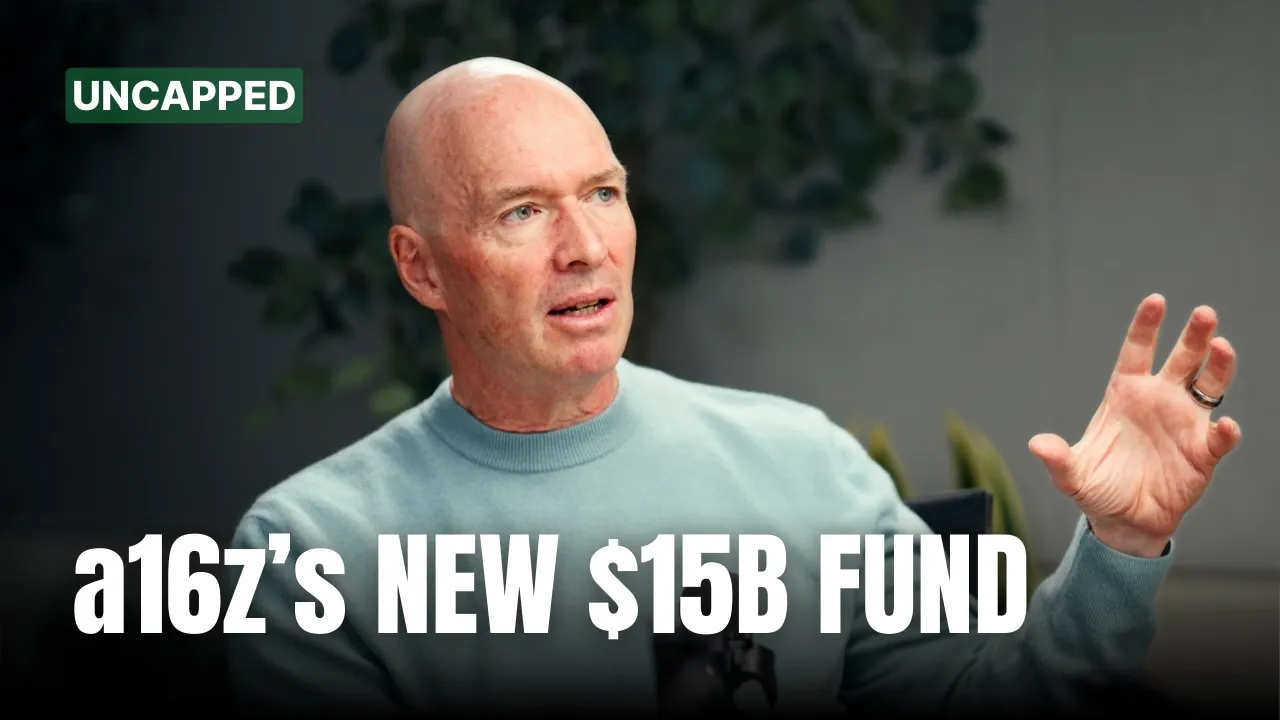
Ben Horowitz is a cofounder and general partner at the venture capital firm Andreessen Horowitz, a venture capital firm that manages $60 billion in assets under management. He is also the author of the New York Times bestsellers, The Hard Thing About Hard Things and What You Do Is Who You Are. Prior to a16z, Ben was cofounder and CEO of Opsware (formerly Loudcloud), which was acquired by Hewlett-Packard for $1.6 billion in 2007. Earlier, he was vice president and general manager of America Online’s E-commerce Platform division, where he oversaw development of the company’s flagship Shop@AOL service. Ben also ran several product divisions at Netscape. Ben serves on the board of Anyscale, Databricks, Mayvenn, NationBuilder, Navan, and UnitedMasters. We covered: - Marc and Ben’s relationship as co-founders - Operating a venture firm like a CEO of a company - Why scale is important and not for everyone - The evolution of media Timestamps: (0:00) Intro (0:30) Marc and Ben’s relationship (6:10) Structuring the firm to attract great talent (10:28) Difference between execs and GPs (14:51) Firm-wide guiding principles (16:43) Scaling GPs vs small teams who concentrate (20:11) Why scale is so important in venture (23:45) What platform services work and don’t work (26:58) Ben’s view on board seats (34:56) The evolution of media (44:44) Laws of physics for fund sizes (48:28) Winning is more impactful than picking (52:15) Defending why venture doesn’t scale (55:00) Hiring ex founders and CEOs More on Ben: https://a16z.com/ https://a16z.simplecast.com/ https://x.com/bhorowitz More on Jack: https://www.altcap.com/ https://x.com/jaltma https://linktr.ee/uncappedpod Email: friends@uncappedpod.com
Summary
Generated by claude-haiku-4-5-20251001Ben Horowitz on How a16z Built a Venture Machine
Main Topics
- Partnership with Marc Andreessen: The dynamics of running Andreessen Horowitz together
- Scaling Venture Capital: Why big venture firms can be more effective than small ones
- Building a16z's Platform: Services and support beyond capital for portfolio companies
- Venture Capital Strategy: Deal selection, winning deals, and investment philosophy
- Managing High-Caliber Investors: Leading disagreeable, brilliant GPs effectively
- Media and Brand Evolution: How venture marketing has transformed in the direct-to-audience era
- Organizational Structure: How a16z maintains quality while scaling to 600+ people
Key Points
Partnership Philosophy
- Michael Jackson & Quincy Jones Model: Ben sees himself as Quincy Jones to Mark's Michael Jackson—complementary rather than competitive
- 30-year working relationship built on being "enough the same and enough different"
- Mark is the idea generator; Ben is more decisive and editorial
- They argue about direction and timeframe but it strengthens decision-making
Why Venture Capital Needed to Scale
- Traditional VC wisdom (circa 2011): Only ~15 companies per year reach $100M+ revenue
- a16z's bet: With "Software Eating the World," there would be 150-200 viable companies annually
- This prediction proved correct, justifying larger fund sizes and team structure
The a16z Product Offering
Core value proposition shifted from "smart advice" to comprehensive platform support:
- Access to networks: CEOs, major customers, government officials
- Recruiting assistance: Critical for early-stage hiring (first 3-5 people)
- Industry expertise: Particularly effective in specialized domains (AI/crypto vs. general advice)
- Brand lending: Founders can leverage a16z's reputation to gain credibility
- Regulatory/policy support: Navigating complex regulatory environments
Key Finding: One-size-fits-all platform services don't work; specialization by domain is essential
Investment Thesis: Ability to Win > Picking
> "Winning the deal is a much bigger percentage of that equation than people in the VC world like to give credit for... Being able to win automatically gets you to the top tier of returns. Then picking moves you up that list."
- A randomly picking but dominant investor beats a brilliant but unsuccessful one
- Best investors want to work at firms that can actually win deals they identify
- Creates a self-reinforcing flywheel: winning attracts top talent
Managing Disagreeable, Brilliant GPs
- Best VCs are "super high IQ disagreeable people"
- Key to firm success: Minimize conflict through organizational design
- Conflicts in VC are worse than in operating companies because investors can undermine each other's work
- Rule: "The deeper you bury them, the hotter they get"—conflicts must be resolved immediately
Structure Solution: Each fund operates like a "little VC" with 5 GPs or fewer to maintain conversation quality
Investment Principles (Core Guidance)
- Invest in world-class ability: Focus on what entrepreneurs are genuinely great at
- Don't rule out on weaknesses: Always a mistake to reject truly world-class operators for lacking go-to-market knowledge or accounting expertise
- Avoid the inverse mistake: Don't invest in people without world-class strengths just because they have no obvious weaknesses
- Focus on magnitude: Is this person literally the best in the world at their skill?
Scale Limitations
- Market constraint (primary): Not enough great entrepreneurs to deploy $100B+ profitably
- Organizational constraint: Shared control structures can't reorganize effectively to scale
- Team conversation constraint: If 20+ people on investing team, true deliberation becomes impossible
Board Membership Philosophy
- Boards provide legal protection (fiduciary duty defense) and organizational discipline
- Most valuable in critical moments: crisis funding rounds, M&A decisions
- Daily engagement with board members can be counterproductive to CEO development
- CEO needs to develop independent judgment—board should be advisory, not directional
Key Quote: "You don't want the CEO looking to somebody from the outside to make a decision like that... a person from the outside does not have the correct context required to make such an important decision."
Media & Brand Evolution
Then (2009): VCs didn't market themselves; a16z broke this taboo through blogs and press
Now: Direct-to-audience world with different physics
- Unlimited channels vs. fixed press gatekeepers
- Personal brands (Elon, Jensen, Alex Karp) matter more than company brands
- Content can be any length, any format
- Authenticity beats polish: "There are no talking points in this world"
> "The ethos of it is very culturally different... You're no longer thinking about what you shouldn't say."
Cultural Fit as Scaling Challenge
- a16z has struggled recruiting experienced VCs from other firms despite their success
- Cultural differences are insurmountable without assimilation
- Can't "import" outsiders—they either adapt or leave
- Firm coherence depends on shared underlying philosophy, not just replicating behaviors
Notable Quotes
On venture capital's original promise:
> "Venture capital was disappointing as a product for an entrepreneur... a much better product would be to give me the network to be confident and the advice I need to run this thing."
On investment philosophy:
> "It's always a mistake to rule out somebody who's truly world-class on a weakness. And then it's always a mistake to invest in somebody who's not truly world-class on a lack of weakness."
On organizational conflict:
> "Good VCs are massive idea generators. They don't necessarily like rules... you've got to minimize conflict or it's going to be complete chaos... In VC, you can tolerate much less of that."
On media transformation:
> "Everything is different because the laws of physics are different. So you have to build a whole new system."
On journalistic crisis:
> "They set themselves a very high standard, then all of a sudden they're in an existential financial crisis, and now they're going, 'I'm just going to market to people who are on the left. Now I got to be an activist.'"
On CEO independence:
> "You get advice, you get friends, you have people, but you have to have such high conviction in your own opinion to make these very, very difficult decisions."
Takeaways
- Scale is a strategic advantage in venture if executed with proper organizational structure and operational leadership—but only with non-shared control
- Winning deals matters more than picking them—build brand, platform, and networks to increase success rate
- Platform services must be specialized, not generalized; domain expertise (AI/crypto) > broad services
- Organizational design is critical to managing brilliant, disagreeable people—structure must naturally minimize conflict, not rely on culture alone
- Board membership value is episodic, not continuous—most value in critical moments, not daily coaching
- Authentic, direct communication via podcasts and social media now outperforms traditional PR; full transparency beats talking points
- Cultural coherence prevents scaling—better to maintain tight culture than compromise it for external hires
- The venture market is much larger than previously assumed, validating the bet on scale, but still has absolute limits based on available entrepreneurs
Transcript
When we started the firm, a big idea that we had was that venture capital was disappointing as a product for an entrepreneur. We always thought, a much better product would be give me the network to be confident in the advice I need to run this thing. Ben, I'm really happy to be back here doing this. I got to be in the same room with Mark earlier in the year, and I'm really happy that you're doing this with me. Right now, I'm glad to be here. It should be some fun. Can we start with your relationship with Mark? Because I think it's a super unique thing where you guys obviously work together, running companies. You built this firm together. You have a really unique relationship. I can't think of that many examples where I feel like I've seen it in that equal way for so long. Can you talk about it a little bit? We've been working together 30 years, and I would say we're both different and the same, and so not too complimentary. So that helps. He's more like we're relatives than anything else at this point. Working together 30 years and so forth. Yeah. Are you friends outside of the work context or what's the interaction like in a non-work situation? [SPEAKER_01] Yeah, we're friends, but not drinking buddies or something. Right? We both work so much. We mostly talk about work anyway, and then because we're working together, we're talking about work, but the way I would describe it—and I want to say this without sounding like I'm making a level comparison—the relationship comparison that I think is most similar that I know about is the Michael Jackson and Quincy Jones relationship. If you think about that. Mark's more Michael Jackson. He's a star of talents that nobody else has. Yeah. Nobody else has maybe ever had, right? You've talked to Mark to the point where as a firm, we can just put him out there and it's a magic trick. He's like bang, right? And for me, my relationship with him is Quincy Jones. I'm certainly not Michael Jackson, but I know enough. Quincy Jones knew so much about music and how you get the most out of somebody that talented, that makes it work together. So I can surround Mark with the kinds of people, with the kinds of ideas and so forth that maximize him. And he makes me much, much better because he's Michael Jackson and you're never going to make Thriller if you don't have Michael Jackson and all the great albums Quincy Jones made. Nothing was his biggest Thriller because you need that. So that's the kind of relationship. We're very complimentary. We're in the same field. I'm an investor. He's an investor. We built the companies together, all that kind of thing. I'm an engineer. He's an engineer by training, but he's different than me. Very different. [SPEAKER_00] Still. Yeah. And I'm different than him. That's what makes it work. [SPEAKER_01] We're enough the same and enough different, but I'm not saying that I'm Quincy Jones, the great Quincy Jones rest in peace. I love him. [SPEAKER_00] I want people mad at me. [SPEAKER_00] Do you think about the firm similarly? [SPEAKER_00] Are you on different sides of certain ideas about the firm and that's what has led to it working the way it has? [SPEAKER_00] Or is it that you believe the same things about what it's going to take to win and then you just have a different sort of daily skillset and set of work? [SPEAKER_01] We've had a lot of arguments both on which direction it should go in and what kind of timeframe. [SPEAKER_01] He has more ideas about things we should do than I do. In running it, I try and keep it a little more contained. [SPEAKER_01] Although sometimes I'll push us in a direction that he wouldn't have normally gone. [SPEAKER_01] And otherwise some of the international things we're doing and so forth. [SPEAKER_00] So it's more common that he's generating and you're editing. Yeah, more common. Although I definitely generate some ideas and he definitely will edit some of them. We talk so much and by the time we get to the idea, we work through it, but it's a good back and forth. [SPEAKER_01] I would say I'm more decisive as a personality type than him. He's more open ended because he's more of an idea generator. So that helps where I can go, okay, we're committing the flag here, but not there. [SPEAKER_00] It's kind of rare in venture that there's a—I know a lot of firms have the CEO model, but to have somebody who's operating as a CEO is kind of rare. [SPEAKER_00] At this point, obviously Andreessen's big, it's five or 600 people, right? 600 people. Yeah. Yeah. And your day is management to some extent. 600 is relatively small on the scale of things that I run. Yeah. [SPEAKER_01] I have 25 one-on-ones with entrepreneurs every month in various parts of the portfolio, helping them with CEO stuff and then helping win deals and then doing our international stuff and work with investors. [SPEAKER_01] Maybe management's a third of my time, but that's probably more than most VCs put on it. [SPEAKER_00] I guess doing that stuff probably is important for you to run the firm anyway, too. [SPEAKER_00] As much as generating returns, which I'm sure also happens, you probably also need to do the deals in order to stay close to the work and know what's happening. [SPEAKER_00] A hundred percent. [SPEAKER_00] Right. [SPEAKER_01] Yeah. [SPEAKER_01] I think you don't really understand the VC business if you're not involved in making investments and understanding, because hiring changes. [SPEAKER_01] Hiring has changed a lot in the last five years, just because the offers didn't used to be like this. I guess doing that stuff probably is important for you to be able to run the firm anyway, too. [SPEAKER_00] As much as generating returns, which I'm sure also happens, you probably also need to do the deals in order to stay close to the work and know what's happening. [SPEAKER_00] A hundred percent. [SPEAKER_00] Right. Yeah. I think that you don't really understand the VC business if you're not on board to make investments and understanding, you know, because hiring changes. Hiring has changed a lot in the last five years, just because the offers didn't used to be like this. And how do you defend against that? And how do you do all these things? And so if you're running a venture capital firm and you're like, how in tarnation did they get that many, you know, that many RSUs? [SPEAKER_00] Yeah. [SPEAKER_01] And it's like, when I was a boy, you'd only get four. [SPEAKER_00] Yeah. Well, you get out of it super fast. Yeah. [SPEAKER_01] You can get out of the loop really, really fast. [SPEAKER_00] When you think about the way that you've decided to structure the company, the firm, you've basically, and I got to speak with Martine, who's amazing and could obviously run and lead his own firm. [SPEAKER_00] Yeah. You've structured this in some way where you can have a certain caliber of GP. [SPEAKER_01] Mm-hmm. How have you thought about what's the narrative in your head as you've been thinking about, okay, this is what needs to be true to have people like Martine and Chris Dixon and so forth at the company. You know, it's funny, Mike Moritz had this great quote years ago where he said the key to running a venture capital firm is to keep the principals from killing each other. [SPEAKER_01] Right. And that, you know, there's a lot of truth to that because you have very, very high powered, super high IQ disagreeable people who are the best VCs. I mean, you can find a VC who you don't like, you can find a great VC who, you know, maybe is a dick or whatever, but it's pretty hard to find one who you go, that guy's not smart. [SPEAKER_00] Can you be a good agreeable VC? You know, I don't know many. So I think some are more agreeable than others. So I do think there is a kind. [SPEAKER_01] So to be a long term, all time great VC, I think most of those end up being disagreeable because you really have to think about everything for yourself and you can't, you know, wanting to be liked can be a problem. However, there's a phase of VC that's this kind of heat seeking phase. [SPEAKER_00] Yeah. [SPEAKER_00] You could be a good agreeable heat seeker. [SPEAKER_01] Yeah. In fact, it probably helps because you just want to be liked by all your peers. I think the best heat seekers probably are agreeable. You're right. For sure. Friends with everybody, when everybody thinks they're smart all the time. Yeah. [SPEAKER_01] Yeah. But the truffle hunters, they're all disagreeable. [SPEAKER_00] Have you ever seen a very good set of results from somebody who was just doing heat seeking work? In a period. [SPEAKER_01] Yeah. And usually what happens is they show up during a boom and then they go away after the boom is over. And, you know, because partly they weren't that interested in the chase more than the actual, here's the best, here's a breakthrough new technology and, you know, whatever cryptocurrency and the decentralized network. And they're using all these amazing techniques. They don't care about that. I mean, if you're the true heat seekers, they don't care about that at all. Yeah. They're just, bro, that's hot. I'm going to go see if I can get that deal. [SPEAKER_00] Yeah. I know everybody wants that deal. And then that's a real thing. Mm-hmm. And it's a real thing in VC. And I think we came out of that period. We may be going into that period again. [SPEAKER_00] There's a good version of this that I know some people who are framed as heat seekers, but it's a little bit different where they can tell that it's going to be hot. They don't know if it's going to be a good long-term business, but they're like, this is going to be hot by the next round. I can just see the setup. Yeah. [SPEAKER_00] And I think there's something interesting there. I've seen seed investors who just seem to have a nose for, this is going to get a hot series A. Yeah. [SPEAKER_00] And who knows what will happen after that. Yeah. You know, that's a real thing. I mean, I agree with you. I think that's a real thing. It's not so much our business, but God bless them. [SPEAKER_00] Yeah. [SPEAKER_00] I talked with Mark about how there's this issue once you're really big, which is you actually have to be really careful with those because of conflicts. And so it's actually not worth it. And if you're able to win stuff later, there becomes this sort of prisoner's dilemma where you should basically wait for the earliest round where you're sure it's the winner in a category or something like that. Yeah. [SPEAKER_01] I mean, I think there's some of that in the calculus. And then, you know, I think for us, we have to believe in it technologically, believe in the entrepreneur and so forth. It's just kind of we view ourselves as more mission oriented. [SPEAKER_01] So our mission isn't to get higher returns than the S and P 500, although that's a good side effect or whatever. Our mission is much more to help the best entrepreneurs build the best companies and kind of make the country and the West strong technologically. [SPEAKER_01] And so when we think about it through that lens, we actually care much more about what it is than what the next round might think. Although, of course it's a consideration. Will anybody fund these guys after us or do we have to fund every round? [SPEAKER_00] Going back to the type of VCs that you think can be good. And you're obviously one of the things you do is you're managing these really good investors. [SPEAKER_01] Our mission is to help the best entrepreneurs build the best companies and make the country and the West strong technologically. And so when we think about it through that lens, we care much more about what it is than what the next round might think. Although, of course it's a consideration. Will anybody fund these guys after us or do we have to fund every round? Going back to the type of VCs that you think can be good. And you're obviously one of the things you do is you're managing these really good investors. Can you talk about the difference between managing these very accomplished GPs versus managing execs in an operating company? [SPEAKER_01] Yeah, it's quite different in that good execs understand one, the importance of chain of command. They're managers. A lot of them may be execution people, process people, as opposed to people generating a lot of ideas. Whereas every good investor is a massive idea generator. They don't necessarily like rules or be willing to follow them. And so the burden on everything making sense, every step of the way, is much higher. And then also from an organizational design standpoint, you've got to minimize conflict or it's going to be a problem. It's going to be complete chaos. So in a company there's always going to be some cross-functional dependency and you have to live with it. And then through some combination of rules, process, and telling people, shut the fuck up. We're just going to do it this way. You get there. In a VC firm, you can tolerate much less of that. If the org doesn't solve the conflict issue, the ability to solve major conflicts will cause a lot of issues. You're saying interpersonal conflict is worse in a venture firm? Yeah. Much worse in that both because of the personality types and then you can really wreck each other's businesses. Or each other's work. Let's say I'm a great expert, I'm Martine and I know everything about AI and foundation models. I've gone through every single video model there is, and I understand all the nuances and the strengths and the weaknesses. And then me over here, who hasn't done any of that work, but found an entrepreneur that I like who's doing something, and I go invest in that model that conflicts Martine out. He's going to be beyond mad. He's going to want to murder the person. That's such a bad problem to have conflict like that in a venture capital firm. And you just have to have respect for the work that people are doing and design the firm in a way that all that hard work gets them to the end that they expected. And that their own people don't undermine them. So the conflicts are extremely intense in that way. [SPEAKER_00] When you see a real one, are you like, I'm gonna let them figure it out? Or are you like, I'm gonna mediate this? My biggest thing is sometimes they're too respectful of me on that. But I'll just resolve it. I need to resolve it. [SPEAKER_00] What do you mean they're too respectful? Like the worst conflicts we've had are ones that nobody brings to me. And it'll be something very stupid and trivial, but they get so hot. In VC. Is this between GPs that you worry about? Or are you going inside team lead sort of org and working out their conflicts for them? Or are you like, you need to run your own division or whatever? [SPEAKER_01] Sometimes there's something inside a fund, but those are pretty cohesive. We design them so every fund we have runs like what somebody might consider a little VC. There's not more than five GPs. It's pretty cohesive. So there's not that much contention. You get the contention when things scale and everybody's not talking to each other every day. Then that becomes a problem. So mostly it's cross funds or cross functionally or something like that. But it's very important to squash them. They're all kimchi problems. The deeper you bury them, the hotter they get. There is no problem that gets better over time in terms of conflict in VC. It always gets worse. What are the things that you need to give guidance on, like you and Mark at a firm-wide level? Is it about overall deployment pace? Is it about structure? Is it about approach to the market? What is this broad intersection point across all the different funds? [SPEAKER_01] Some of it is general principles, things we believe in. One, we have to make sure we're taking enough risk. And that usually comes in the form of evaluating the entrepreneur and the company on the magnitude of their strength. How good are they at what they're good at? Are they super world-class? Are they literally the best person in the world at doing this thing? Not on, the monetization model doesn't make sense or they don't know anything about go to market or they don't actually understand accounting. That's not ARR. What the fuck are they talking about? Those things, you can always rule out a deal on weaknesses. And I think it's always a mistake to rule out somebody who's truly world-class on a weakness. And then it's always a mistake to invest in somebody who's not truly world-class on a lack of weakness. So a lot of the guidance is around ideas like that. Things that we believe, where we're always like, okay, what can they do? Not on, the monetization model doesn't make sense or they don't know anything about go to market or they don't actually understand accounting. That's not ARR, what are they talking about? Those things like you can always rule out a deal on weaknesses. And I think it's always a mistake to rule out somebody who's truly world-class on a weakness. And then it's always a mistake to invest in somebody who's not truly world-class on a lack of weakness. And so a lot of the guidance is around ideas like that. Things that we believe where we're always like, okay, what can they do? Let's focus on what they can do, not what they can't do and see if that's worth investing in. And it's an important psychological thing because we have so many brilliantly analytical people who can find what's wrong with anybody. And I always remind them there's something wrong with everybody. [SPEAKER_00] Yeah. You just may not have been able to find it yet. [SPEAKER_00] When you think about how you're deploying capital, it seems to me like you and Sequoia in one shape, which is like there are many deals and you've scaled up the number of great companies. It's basically a game of how many GPs can you scale? Because a GP can only do so many deals and how big can you make the teams? And your answer to that has been like many funds and then you can keep it together. And that's one way to scale broadly. I'm sure you can adjust what I said. And then there's another version, which is way fewer people with way more concentration. And let's call that Thrive and Founders Fund and maybe Green Oaks or something like that. Maybe you would say that's not quite right, but the direction you kind of know what I'm getting at. Yeah. I mean, I think they do some of both and we do some of both, but yes, directionally. I think that for us and what we want to accomplish as a firm, which is making America the strongest country in the world technologically. The concept of a concentrated approach just doesn't quite work with that mission. [SPEAKER_00] And why is that? Because we just need more shots to build these companies. Well, I mean, if you look at Founders Fund or Thrive, we're both great firms. There are whole sectors that they're not really in. There are entrepreneurs who could build something great that they're happy to miss because as long as they get the very biggest ones and so forth. And that's not really what we're about. If crypto is going to be important to the financial success of the United States or the way AI interacts with the economy and so forth, then we need to help that succeed. And it turns out in a sector like that, it's not just funding entrepreneurs. It's helping change the law and get the right policies in the country and these kinds of things. And so our model won't let us ignore something that important. But if what you're trying to do is say, okay, of the five best companies of the decade, do I have big positions in enough of them? Yeah. That's a good financial strategy. There's nothing wrong with that. Go get them. I mean, it's good. It's good that they're doing what they do. We work with them on a lot of deals together, but it's just not who we are. Like you have to be who you are. [SPEAKER_00] Is it the kind of thing where over time there's no reason for somebody who's doing the broad base of lots of Series A's and B's, that work. Is it just rational to, if you can raise the money, do billion dollar checks into those companies when they're really running far? [SPEAKER_01] If you look at it historically, depending on the vintage, sometimes that strategy of waiting for things to get to the billion dollar valuation is definitely the best strategy. But in other eras, that set of companies just all suck. Mm-hmm. [SPEAKER_01] And the actual good investments are in the A and the seed round because something new is happening. The world is changing. And the big SaaS companies, if you piled all your money into Tiger Global like it did in 2021, it didn't work out that well. You were at the end of the cycle. That may work better now. We'll see. [SPEAKER_00] Yeah. TBD. Obviously you were raising big funds and you've also made it work. On some level, when you start any company or maybe any venture firm too, you sort of need to have something that you believe that not everybody believes and that needs to be right. And I would say there's probably multiple, but clearly one of yours that you got to early was venture is going to scale. Yeah. [SPEAKER_00] And it looks like that's worked really well so far. Can you talk about the thinking behind why scale is so important and why you and Mark have believed that it's the dominant strategy? Yeah. So there are a couple of different dimensions to it. One is what is the market of technology companies? And I think that's really important. And Mark wrote a piece in 2011 called Software is Eating the World. The conventional wisdom in VC at the time was there are 15 companies in any given year that ever get to a hundred million in revenue. And the whole game is getting into as many of those 15 as you can. And why have a big firm if there's only 15 companies to invest in? That doesn't make any sense. You're just going to chase a lot of bad stuff. But what he thought then and the bet that we made was, well, if software eats the world, it's not going to be 15. It's going to be 150 or 200. And that's what it's become. And so to get into that many great companies every year, you clearly need to be of a bigger size. There's just no way to address the market if you're five guys. That's not possible. And so why have a big firm if there's only 15 companies to invest in, right? That doesn't make any sense. You're just going to chase a lot of bad stuff. But what he thought then and the bet that we made was, well, if software eats the world, it's not going to be 15. It's going to be 150 or 200. And that's what it's become. And so to get into that many great companies every year, you clearly need to be of a bigger size. There's just no way to address the market. [SPEAKER_01] If you're five guys, that's not possible. I think the more important part of it, which is a big rationale for starting the firm was if you're an entrepreneur, what do you need? And you need to be important in the world, which means, okay, how do I talk to big time CEOs? [SPEAKER_01] How do I get in front of big customers? How do I go international? How do I deal with the U.S. government? If I'm an AI or crypto, which is everybody now, how do I do all that? [SPEAKER_00] How do you have employees take you seriously? Yeah. How do I have employees take me seriously? How do I find all these employees, all these kinds of things? There's a lot of capability that you need. And if we can just bring that, that's a much better product than I'm a smart guy. I'll take you to coffee. I can give you some ideas about your product for two months until I'm irrelevant on that because you've heard all my ideas. [SPEAKER_01] And so I think that the product of a VC that has a platform and capabilities and so forth is so much better. Speaking as a former entrepreneur, I needed all that. [SPEAKER_01] And to me, that's a more important part. [SPEAKER_01] And we see that every day. So that part of the idea was really good. Now there is a challenge on mechanically, how do you do that? How do you build a big VC that's still very, very good at every part of it. [SPEAKER_00] I want to pull open a couple of those. So one, obviously that seems like a no brainer is the big brand and this idea that you give the company your brand or you lend it to them until they're big enough. And then they get bigger and that accrues back to the firm. [SPEAKER_00] And it's this positive flywheel. [SPEAKER_00] That seems like a big one. [SPEAKER_00] These relationships, I think, are very hard to get. If you're a first time founder, you don't have the relationships with the government, whatever. [SPEAKER_01] Hey, I just started a company. I've got regulatory issues. [SPEAKER_00] Jamie Dimon. [SPEAKER_00] Can you have lunch with me? [SPEAKER_00] Good luck. [SPEAKER_00] So that's a big one. Yeah. [SPEAKER_00] One of the ones that I don't feel strongly about, but I'm less sure on is the platform stuff. [SPEAKER_00] And I'm curious to pull that open a little bit. [SPEAKER_00] What are the platform services that you're most confident work? [SPEAKER_00] And then what are the ones that you're least confident work? I actually think they all work because we've moved away from the ones that didn't work. [SPEAKER_00] Can you talk about some of the ones that didn't work? Yeah. I mean, so we did some things early where we were publishing general research ideas for the entire startup community. [SPEAKER_01] But it turns out that works really well if you do it for crypto or if you do it for AI. [SPEAKER_01] We try out all the models and so forth, and we talk to the companies all the time about which models are best at what. [SPEAKER_01] And then we post models and we try stuff out on them. [SPEAKER_01] So from a tool evaluation standpoint, we can just accelerate you and tell you exactly what's what. [SPEAKER_01] Doing that in general, a lot of things that we tried to do across domains ended up being not as interesting. Yeah. And that's getting true for talent as well. [SPEAKER_00] So a CFO is a CFO for the most part, the hardware CFO different than a software CFO, that kind of thing. But that's easy, but an AI researcher. [SPEAKER_00] Yeah. Is pretty different than a full stack engineer. That's a different talent pool. They run in different circles. [SPEAKER_01] Their comp structures are totally different. And so you have to specialize. [SPEAKER_00] I mean, the recruiting stuff is probably at this point for me, talking to mostly Series A companies. [SPEAKER_00] I think recruiting is the number one thing that was, help me recruit. Yeah. Yeah. [SPEAKER_00] Have you found that you can effectively aim recruiting teams at companies for specific periods of time? And yeah, I think it helps to get the seed corn. A lot of what you're trying to do is, can you get the first three to five people in who are stellar and then have networks where you want to draw from? [SPEAKER_01] Who your VC is actually matters a lot on that. An engineer cares about, okay, is this person going away or is there more money behind this? [SPEAKER_01] Have I heard of them? [SPEAKER_01] That kind of thing. [SPEAKER_01] So that's an important feature. [SPEAKER_01] I think every company has to ultimately get hyper proficient at recruiting, closing, interviewing, onboarding, training, or they're never going to be a good company. You're saying there's some degree where you can't do it all for them or they'll never build the muscle. [SPEAKER_01] Yeah. [SPEAKER_01] At some point, you'll end up retarding their growth if you put in their entire team. [SPEAKER_01] Now we've probably helped through our network, Databricks hire over a hundred people for sure over time. But it's they clearly have their own muscle. But not in the beginning, but they're really good at recruiting. So now it's just, okay, people from our talent network are interested in working there. But that's different than that first few people that you hire. Yeah. At some point, you'll end up retarding their growth if you put in their entire team. [SPEAKER_01] Now we've put it through our network, we probably helped Databricks hire over a hundred people for sure over time. [SPEAKER_00] But they clearly have their own muscle. But not in the beginning, but they're really good at recruiting and so forth. So now it's just okay, people from our talent network are interested in working there. Yeah. But that's different than the first few people that you hire. Those are relationships that we have that will introduce you to somebody and maybe they'll fit, maybe they won't and so forth. But that's a very specific thing. [SPEAKER_00] How about your view on board seats and board membership and how important that is and maybe to put bookends on what people out there will believe. [SPEAKER_00] Yeah. [SPEAKER_00] You've got some that are like, our selling point is we don't take a board seat. [SPEAKER_00] We'll leave you alone. [SPEAKER_00] We don't, we're not going to do anything. [SPEAKER_00] Yeah. [SPEAKER_00] You've got some that are talking about this spiritual connection between the board member and the founder. [SPEAKER_00] And there's a lot there. [SPEAKER_00] Where do you fall in this? [SPEAKER_00] How do you think about what the board member should be? Well, I probably don't believe in the spiritual connection. [SPEAKER_01] I was maybe embellishing a little bit, but you know what I'm talking about. [SPEAKER_01] So first of all, boards are important for founders. The idea that you're going to run without a board after you've given equity to employees and sold equity to people who are not you is the most dangerous idea in the world. Because if you know anything about securities laws, the only protection you have as a CEO from going to jail or getting personally sued is that you run material ideas through the board. [SPEAKER_01] That's massive protection. If I go, well, I want to give a 2% grant to this person in the company. [SPEAKER_01] You have to realize your fiduciary duty to the rest of the company that you're diluting is in question right there. If you run that by the board, it's all good. You're completely protected. No problem. If you just make that on your own, somebody wants to sue you. They're going to win. You really have very little defense at that point. So the idea that you're not going to have a board is a bad idea. [SPEAKER_01] I think once you start, not only doing that, but I think that's a good idea. If you're owning the company 100%, you got to have a board. That's just how it goes. [SPEAKER_01] We went back and forth on this. [SPEAKER_01] Okay, how much does the board actually help the company? [SPEAKER_01] And I would say, there's a couple of interesting things. [SPEAKER_01] The Y Combinator people actually said it must have been around 2015, 2016. They came to us and they were like, we did an analysis of all our companies who had boards and didn't. [SPEAKER_01] The ones that didn't have boards all failed. [SPEAKER_01] They didn't do well. As a cohort, the ones with boards did much better. Now, there are confounding factors, right? But in their view, the other thing was just observing the companies, the rhythm of having to tell somebody outside of the company what you're doing every three months or every two months. [SPEAKER_00] Creates internal pressure. It's very valuable. It's a good organizing principle to keep yourself on track. So I believe in that. And I do think certain kinds of board members can be very, very impactful at different points in the company. Just with myself, right now, if Ali kicked me off the board at Databricks, I'm not sure that they would do much worse. I honestly don't. However, there were times, for example, the Series C. I led the Series A, NEA led the Series B. Nobody would do the Series C of that company. Pete Sonsini and I led that one. NEA and us led the C in addition to the B and the A. If I'm not on the board, I don't think there's any way that's happening. That's an existential issue. Second thing, they had an offer to buy the company for, I think it would have netted out to about $4 billion in 2018, 2019, something like that. And had I not been on board, I think they would have sold. [SPEAKER_00] That's a big deal. And I think Ali would say they would have sold. And so they're worth, they're raising now over a hundred billion dollars. That's a real value. And so to say that oh, we're going to do you a favor and not be on your board. When you're in a company, all you think about all day is the company. [SPEAKER_01] Yeah. You don't have perspective. So if there's somebody who can help you think through things and has perspective, that can be worth the whole thing, right? So it's not nothing. I've seen board members that had no value the whole time they're on the board. That happens all the time for sure. [SPEAKER_00] Yeah. So I don't want to overstate it. [SPEAKER_00] Well, there's also two types of ways to be impactful. [SPEAKER_00] There's these high value moments that are discrete, crisp situations where you can say X was going to happen and I made Y happen and Y was better or whatever. [SPEAKER_00] And then there's the daily engagement type of board member who's talking all the time and interviewing candidates, the CEO is upset about something, it's somebody to talk to, et cetera. [SPEAKER_00] Yeah. [SPEAKER_00] Do you think that kind is actually less valuable in some ways, or do you think about those similarly or differently? So there's the board and the work of the board, which is governance, number one, as I kind of alluded to in the beginning. And then there's certain points and certain things where board members can really matter. [SPEAKER_01] I think most of the work that I do is, yeah, I'll have a monthly call with a CEO just to talk through the things that they get stuck on. It's somebody to talk to, et cetera. Yeah. Do you think that that kind is actually less valuable in some ways, or do you think that they're like, do you think about those similarly differently? [SPEAKER_01] So there's the board and the work of the board, which is governance number one, as I alluded to in the beginning. [SPEAKER_01] And then there's certain points and certain things where board members can really matter. [SPEAKER_01] I think most of the work that I do is I'll have a monthly call with a CEO just to talk through the things that they get stuck on. [SPEAKER_01] Like the things that are causing you to hesitate. [SPEAKER_00] Does this work only at this point or earlier in your career, did you need to do more of the daily higher engagement model stuff and only now can you do this version? No, I think that part of what I'm getting at actually is I think there's this idea in venture that you can only be on eight boards before you collapse. And then I was talking to Martine who's on all these incredible companies, the founders say he's awesome and he's on way more than eight or ten boards or whatever. [SPEAKER_01] Yeah. And so I'm like, how do we—so, okay. [SPEAKER_01] So I think that if you're the board member and you don't have a platform and you're the investor, then eight is probably right. Yeah. But if you have a platform, then when they go, "Hey, I need to meet a customer. I need to help with recruiting. I need to deal with this policy issue. I need to talk to Gavin Newsom. I need to deal with—" Then Martin can scale. [SPEAKER_01] Then Martin's not doing that. [SPEAKER_01] Right. [SPEAKER_01] We have a whole platform that does that. And so he can scale and just do the thing he does and do it very effectively. [SPEAKER_01] And then he works extremely hard and all that. So I think it's different depending on if you have a platform or if you don't, because if it's on you to do—to be the BD guy, the recruiting guy, the policy guy, the governance guy— [SPEAKER_00] And so forth. Yeah. Those guys are special. God bless those VCs. But yeah, we don't ask you to do that on our thing. And I don't think it's necessary. And look, I think for the work I do, which is helping people think through how they run the company, how they think about a business deal or this and that, the other—like that daily frequency, I think can be destructive to the development of the CEO. The CEO ends up having to stand alone because ultimately they're going to stand alone. You get advice, you get friends, you have people, but you have to have such high conviction in your own opinion to make these very, very difficult decisions. Like we got to do a layoff or we're going to do this, or we're going to change the direction of the company—you don't want the CEO looking to somebody from the outside to make a decision like that. A person from the outside does not have the correct context, the amount of knowledge required to make such an important decision. And so you want the person from the outside to really be advice. Like, let me tilt this way so you can look at it from that angle and this and that and the third. But not like, what should we do? [SPEAKER_01] "How should I think about this?" is a much better question. [SPEAKER_00] The last question on this. I just want to hear how your thinking has evolved. You guys came out early, I guess 2009, with this idea that media and brand are a big deal. [SPEAKER_00] And I think in many ways, I don't know exactly because I didn't graduate until 2011, but it seems to me like in those years, this was not what was happening versus now, obviously everybody knows it. Yeah. [SPEAKER_00] Have you evolved your thinking from 2009 to now? [SPEAKER_00] Do you think it basically played out just like you thought? [SPEAKER_00] Do you think it's even more important? Have you changed your idea of what type of brand and media and so on matters? [SPEAKER_01] Yeah. Yeah. Yeah. [SPEAKER_01] So the original idea was very simple, which is VCs didn't market themselves. It was some kind of code in VC land and we were like, well, since we're new and nobody knows who we are, and that's what we know how to do where people build companies—well, we're going to market it. And we did, and we did a good job of it. And that got us ahead. The world has changed. The world of media is completely different than when we started. When we started, there were blogs and we had blogs, but the primary way people got information was through the press. And the rules of the press, the laws of physics of the indirect channel going through the press are completely different than the direct channel—a very fixed number of channels that matter, a very fixed format where you can have a quote or a short five-minute interview segment where they're hitting you with questions that you don't want to answer. And then the brands were all companies—GM, this, that. The direct world is completely upside down from there. There's unlimited channels, unlimited formats. You can tell the longest or shortest story you want. It's no problem. And then the brands are mostly people, right? Is it Palantir? Is it Alex Karp? Is it Elon or is it X? Is it Jensen or is it Nvidia? You can't really have a brand that's completely independent of the people behind the brand. And so I think the way that we're approaching the market now is this is why we brought on Eric Thornberg and what he's building is a completely new marketing model for us. [SPEAKER_01] Everything is different because the laws of physics are different. So you have to build a whole new system. And I think that what's happened with the other VCs is because they were late to copy us, they're still in the old world by and large. Is it Jensen or is it Nvidia? [SPEAKER_01] Yeah. So you can't really have a brand that's completely independent of the people behind the brand. And so I think the way that we're approaching the market now is, this is why we brought on Eric Thornberg and what he's building is a completely new marketing model for us. We're not everything is there because the laws of physics are different. So you have to build a whole new system. I think that what's happened with the other VCs is because they were late to copy us. They're still in the old world by and large. [SPEAKER_01] And they have some light shots at the new world, but they're going to have to do a lot of changing. It's also the kind of thing I think where if you don't internally get what it's all about, you can't just replicate people's activities. I feel like this is one of those things where you have to understand the underlying physics. Of how it's working. [SPEAKER_01] No, that's exactly right. [SPEAKER_01] The ethos of it, it's very culturally different. Yeah. [SPEAKER_01] Like you're no longer thinking about what you shouldn't say, right? [SPEAKER_01] So much of the old world was what can I not say? [SPEAKER_01] Yeah. How do I avoid answering that question? How do I give the talking point? [SPEAKER_00] Totally. There are no talking points in this world. Totally. I'm just talking and that's better. [SPEAKER_00] And if you offend someone a little bit, it's, so be it. [SPEAKER_00] Yeah. Yeah. Just get on the air tomorrow, the next minute. It's flood the zone. That's the answer to a gaffe: flood the zone. Not don't make the gaffe. [SPEAKER_00] Yeah, exactly. [SPEAKER_00] Never apologize. [SPEAKER_00] Flood the zone. Yeah. Does anything land as well as podcasts right now? [SPEAKER_00] I feel like you guys have had an amazing growth in your podcasting, obviously. [SPEAKER_00] And it seems to me like there is something going on where people have lost their attention and ability to read. [SPEAKER_00] And so we've all just decided, well, we'll just put out videos and stuff. Yeah. I think podcasts are definitely working the best right now. [SPEAKER_00] Do people read blogs anymore? People do read blogs. If you have one that really hits. We just came out with a couple of really great ones. One was, there is no God video model, and Justine wrote that. Yeah. [SPEAKER_00] Yeah. [SPEAKER_00] The good ones are good. [SPEAKER_00] I feel like the long tail slop ones are not worth doing really. Yeah. The right blog every day. I don't think that works anymore. [SPEAKER_00] Where it used to, I think just having more content and surface area probably did work like 15 years ago. Yeah. It was the daily habit, but I think that now people would rather, it's, oh, I can listen to a podcast and exercise, and that kind of thing, which is a big advantage. [SPEAKER_00] Yeah. [SPEAKER_00] It's a big advantage. With 11 labs reader, you can just throw it into the 11 labs reader. And it can. [SPEAKER_01] What works besides podcasts? Well, I actually think blogs and social media work pretty well. I think that with podcasts, you have to be state of the art in how you think about clips and all those kinds of things as well. The podcast has to be very interesting to the targeted audience, which is, I think one of the things that has been best for me as an audience member is, if you watch the news, it's almost impossible, right? Without throwing a chair at it, no matter who you are. Because it's, what the fuck level are they trying to reach a human being? Like they really think they're going to trick me with that? Like fake positioning on, oh, I asked them the question this way. So now everybody's going to hate Trump or everybody's going to like Trump. It's especially, whereas a podcast, if I'm listening to the podcaster that's marketing to my level of understanding of the world, then I'm going to enjoy the whole thing, which is such a breakthrough in media to me. [SPEAKER_00] For me, at least to enjoy a conversation I'm watching, I need to trust both the asker and the answerer or it just doesn't feel quite right. [SPEAKER_00] Right. It drives me nuts on the news when you know something about it too. [SPEAKER_00] And you know it's just wrong. Yeah. And then they're going off and everyone's posting about it. Makes me crazy. [SPEAKER_01] It's so bananas. [SPEAKER_01] Yeah. Yeah. Well, I mean, and particularly everything in the regular media on AI is so whack, bro. [SPEAKER_01] So you're talking about these threats that are imaginary, and then you are just ignoring the fact that on current course and speed, we're going to have 10 million Chinese robots in the US with back doors to China. That's going to be an actual real problem. [SPEAKER_00] Yeah. [SPEAKER_00] Yeah. [SPEAKER_01] Just in terms of leveraging the next trade negotiation. Yeah. It's tough because a lot, I mean, in many ways structurally, I think traditional media gets a lot wrong. [SPEAKER_00] I do think there's a lot of very good journalists at these publications who like see truth and want to be right and get it correct and all of that stuff. So I think a year ago, I found myself just so frustrated with traditional media. in the US with back doors to China. [SPEAKER_01] That's going to be an actual real problem. [SPEAKER_00] Yeah. [SPEAKER_00] Yeah. Just in terms of leveraging the next trade negotiation. [SPEAKER_00] Yeah. [SPEAKER_00] It's tough because a lot, in many ways structurally, I think traditional media gets a lot off. I do think there's a lot of very good journalists at these publications who see truth and want to be right and get it correct and all of that stuff. [SPEAKER_00] So I think a year ago, I found myself just so frustrated with traditional media. [SPEAKER_00] And then over the last year, I think I've engaged with a bunch of very honest, good journalists. [SPEAKER_00] Yeah, there are definitely there. There are definitely real journalists out there, even at publications who we in tech really don't like. And I think there's a role for it. [SPEAKER_00] There is a role for the New York Times, Wall Street Journal that are not attached to a firm, even though I think both are good. [SPEAKER_00] It's just, I still think it hasn't found its way yet. The whole thing. Yeah. And we did it to them to some extent, right? So when tech broke the media monopolies, they are coming from the standpoint of we don't even care about the economics of it because the economics are going to be there. And so we're going to create these ideals around journalism and around truth and all the news that's fit to print and democracy dies in the darkness or whatever the taglines they have are. And so they set themselves as a very high standard. And then all of a sudden they're in an existential financial crisis, and they have to get to an audience. And now they're going, well, going to a broad audience is just way too hard and way too expensive. So I'm just going to market to people who are on the left. Yeah. And so then I got to be an activist. And so then all this stuff that I said before is all bullshit. Now that's a hard puzzle. And I think that a lot of the best journalists predate that change. And grew up with those ethics that oh no, I've got to be objective. [SPEAKER_01] I have to find the real story. [SPEAKER_01] I have to tell the real story, but that's not the business model anymore. [SPEAKER_01] So how do you reconcile that? [SPEAKER_01] I think right now people are coming out of the fever of that change and going, okay, are we going to be an activist or are we going to be a journalist? [SPEAKER_01] And we'll see how it plays out, but it's going to be interesting. It's kind of interesting. [SPEAKER_00] I think Eric's amazing. You guys are now growing to a place where you have the resources to bring people like Eric on to build a big thing. Yeah. At some point as your firm grows even more, you're going to have the resources to really, you know, you're going to have more resources than the New York Times at some point. It'll just be an interesting thing to watch. [SPEAKER_00] Yeah. [SPEAKER_00] Yeah. Yeah. [SPEAKER_00] No, it's shout out to Eric hiring a thousand people. [SPEAKER_00] This would be great. Yeah. No, he is, he's hiring a lot of people, but the thing about Eric's team that's so amazing is it's a combination of people who lived in the old world. [SPEAKER_00] Yeah. And then very young people who only have lived in the new world. [SPEAKER_00] Well, I imagine a lot of people who might've otherwise wanted to work at the Wall Street Journal or something like that, who might give Eric a call. No, definitely. I mean, I think they think in a way he's got more access to work with some more interesting people. And certainly the audience is building. [SPEAKER_00] So that could be thinking about your firm's growth. [SPEAKER_00] Um, I want to ask you a question both on the strongest version of let's call it good venture. [SPEAKER_00] I know it's not quite the right thing, but whatever. Good venture. [SPEAKER_00] Good venture. [SPEAKER_00] Yeah. [SPEAKER_00] So actually let's start there. [SPEAKER_00] Obviously you've raised a big new fund. [SPEAKER_00] Um, I think your view is over time this could grow much more. [SPEAKER_00] What are the laws of physics on the size of how big venture firms can get and still be productive? The biggest limit is the market. So how many great new technology entrepreneurs are there to fund? There's already more money in the venture capital market than there are great entrepreneurs with great ideas. But if you're number one, then that's fine. We'll just get the deals anyway. It's no problem. If you ask me why don't we raise a hundred billion dollars? [SPEAKER_01] That's the main limit. [SPEAKER_01] Because it would be hard to generate a return on a hundred billion in venture capital, probably, given the size of the market. In 2020, basically you're saying the companies won't be big enough. [SPEAKER_01] Well, I think there just won't be enough of them. I think that's the most likely scale challenge for us. When we look at the markets that we're in, it's hard to see our way to an order of magnitude more money, but that could change. That's the current number one limiter. I think the limiter on most funds or most firms is not the limiter that we have. [SPEAKER_01] For most firms, the limiter is they can't have that many effective partners cooperating. Yeah. Cooperating. I think that's the most likely scale challenge for us. At least with the team that we've built, when we look at the markets that we're in, it's hard to see our way to an order of magnitude more money, but that could change. That's the current number one limiter. I think the limiter on most funds or most firms is not the limiter that we have. So for most firms, the limiter is they can't have that many effective partners cooperating. There's two fundamental reasons for that. One is structure. Most venture capital firms are shared economics, shared control structures. And if you have shared control, you very likely can't reorganize effectively. So in order to scale, you have to be able to change the org structure. It's fundamental to scale. [SPEAKER_00] You're saying you need to periodically update, like every few years you might need to do a reorg. [SPEAKER_01] Yeah. If you double in size, anybody who runs a company, you double in size, you have to look at the org structure and see if it still works. If the communication paths are still right. If there's too much conflict, all that kind of thing. The side effect of reorganizing is you redistribute power. People who had power lose power and people who didn't have power get power. And if you're voting on that, the chance of you getting that right is zero because having done many reorgs in my career, when a reorganization happens, people always do everybody does a local optimization other than the CEO. And so if the CEO gives into the needs of the people and makes it democratic, then you're done. That's never going to work. So I think it's very hard. I don't know how you could ever get to our size with shared control. It'd be very tough. The other thing you need is you do need a leader who can deal with that kind of scale in terms of making those decisions and running the firm. And most VCs don't have people of that kind of operational caliber. Some do, but it's pretty rare. And if they do, they're often not in charge. So we have those two advantages that have led us. We're only now 16 years old. Most of the firms we compete with are much older than that, but those issues have enabled us to get bigger. [SPEAKER_00] And your view is being big in venture makes everything better because you can scale people like Martine and Chris. You can have more access to more power. You have a bigger brand. You can lend to founders and your view is the bigger you get, it's possible the better per dollar that you might be able to do. [SPEAKER_01] I think so. We've got a 16 year track record. We just raised $15 billion. I think the product to investors speaks for itself. But in venture capital, generally there's two parts to getting good returns: picking the right deal and winning it. Mm-hmm. I think it turns out that winning it is a much bigger percentage of that equation than people in the VC world like to give credit for it. They like to think of themselves as such super genius. "Oh, I saw Facebook early." That's a real thing. But if you can't win it, then you're still never going to have good returns. So being able to win automatically gets you to the top tier of returns. And then picking moves you up that list. [SPEAKER_00] You're saying you could be a roughly random picker or an average picker and a great winner. And that's going to get better returns than the inverse. Yes, for sure. At all stages. [SPEAKER_00] At all stages. I think at all stages. And it also kind of self-fulfilling in that if you can win, then the best pickers want to join you. As an investor, why does Martine work here? Why does Chris Dixon work here? [SPEAKER_00] Cause it makes it easier to win. [SPEAKER_01] Yeah. They want their best ideas. They want to actually be in the deals they want to be in. Yeah. [SPEAKER_01] If you're an investor and you go, "Hey, I think that's the future. I think that's the greatest entrepreneur I've met," and you can't invest in it, that's very frustrating. So you end up with the winners getting the best investors over time. I think it's an interesting thing because I was talking to somebody recently that it's actually really rare for a venture firm to have two what you would consider generationally good investors. It almost never happens. And then it's ridiculously rare to have three. And if you have three, then you're Sequoia and Dresen basically. Why is it so hard to get many at one place? It just seems so uncommon. Is that a function of winning ability or is that a function of picking ability? What is it that makes it so hard? [SPEAKER_01] Well, I think there just aren't that many generationally good, right? By definition, if you're generational, then there's only one of you or two of you. Okay. Why is it so hard to get many at one place? It just seems so uncommon. And it seems like, I don't know, is that a function of winning ability or is that a function of picking ability? What is it that makes it so hard? [SPEAKER_00] Yeah. [SPEAKER_00] Why don't you and Sequoia just end up with everybody? [SPEAKER_01] Well, I think that there just aren't that many generationally good, right? By definition, right? [SPEAKER_00] If you're generational, then there's only one or two of you. [SPEAKER_00] Okay. [SPEAKER_00] But let's say top 50 or something. [SPEAKER_00] Yeah. Whatever. Yeah. [SPEAKER_01] Yeah. [SPEAKER_01] No, look, I think one thing is historical, right? Once you get into VC economically, if you run one, carry vests. Yeah. And so if you made a bunch of good investments somewhere early in your career, you generally want to stay. I'd say the other thing, at least for us, is there's a lot of great investors that we could probably recruit from other firms, but we're so different culturally than the rest of the VC world that we've had a lot of trouble getting people to stick here who have worked at other firms. [SPEAKER_01] It's just the mentality is so different. And not to say that their way is wrong or our way is wrong, but it's different enough that we can't import them. That makes sense. They're not willing to assimilate. Yeah. [SPEAKER_01] We're not willing to change. [SPEAKER_01] It's that kind of thing. Yeah. [SPEAKER_00] Could you give your best articulation or best steel man of the counter to this idea of venture scaling? [SPEAKER_00] If you had to defend the view of, say, Peter at Benchmark or Josh at First Round, to some extent Sequoia, you know, has said there's limitations. [SPEAKER_00] What is in your mind, if you had to give the best version of the argument for why venture doesn't scale or why small is better in any way, could you give that narration? Yeah. I mean, I think there are configurations where that is true, right? So if you have shared control, you just can't get past a certain size before it becomes chaotic, crazy democracy, which democracies are great if you've got 350 million people, but they're not good if you're a venture capital firm. It's just not good. At least in terms of scale, it's not going to work. It's fine if you don't scale. The second thing is if you have 20 people on an investing team, I don't think that works because I don't think that's a conversation anymore. And so much of investing is about finding the truth, right? You're working every day, having these conversations and you're talking to entrepreneurs and all the references and customers and understanding the technology. And you're having this long, long running conversation about what is true? Is there going to be a God model or can I take a little model and post-train it with my own data and beat the piss out of OpenAI? What's the answer to that question long-term? What's the answer to that question today? We've got to get to that. How do you have that conversation with 20 people? It's very hard. [SPEAKER_01] So I think if you're configured in that way, then being large is dangerous. [SPEAKER_01] Very dangerous. [SPEAKER_01] So there are reasons if you don't have the ability to scale in a way that makes your investing teams all look like small VCs. [SPEAKER_01] So Martine's team or Chris's team or Alex's team, they all look like a little VC. Right. [SPEAKER_01] So in some ways I'm all for that model. [SPEAKER_01] I'm just doing it in a context where you have a platform and a brand that can be helpful to entrepreneurs more so than just having a person. [SPEAKER_01] Yeah. Makes sense. [SPEAKER_00] I guess maybe to wrap, I think one of the other tenets, at least when you got started, which I think is still roughly a tenet today that I think is core, was you really believed in hiring ex-founders, CEOs. [SPEAKER_00] I'm sure you've hired some people who are not, but for the most part, it seems like you're highly concentrated at least. It seems like a lot of the DNA is rooted in that. Yeah. [SPEAKER_00] Why has that been important to you? Yeah. So when we started the firm, a big idea that we had, and I would say this idea mostly came from me, was that venture capital was disappointing as a product for an entrepreneur. I know we had a very hard time building CloudOps or, although it ended reasonably well, it's just very, very difficult to build a company, excruciatingly difficult. And there's all these components to it and all these things you have to learn. And then things go wrong that are completely out of your control, like the .com crash. Venture capital firms kind of give you the money and then put a very smart person on your board and give you some advice and that was it. [SPEAKER_01] And so we always thought a much better product would be to give me the network to be confident and the advice I need to run this thing really early on. The way we thought about that was okay, some experience required to be on your board. [SPEAKER_01] You have to have done this thing before to advise me. Don't send me somebody who doesn't know how to do that. [SPEAKER_01] So that was the original idea. That idea turned out to be somewhat right, but not entirely right. [SPEAKER_01] So the problem with the way we did it is some founder CEOs are good at being founder CEOs. [SPEAKER_01] And so we always thought, wow, a much better product would be to give me the network to be confident and the advice I need to run this thing really early on. The way we thought about that was okay, some experience required to be on your board. You have to have done this thing before to advise me. Don't just send me somebody who doesn't know how to do that. So that was the original idea. That idea turned out to be somewhat right, but not entirely right. The problem with the way we did it is some founder CEOs are good at being founder CEOs but not good at explaining what the hell it was they did. And then they may also not be that interested in investing like they were at running something, right? There's a feeling you have if you have a thousand people working for you or whatever that you're never going to achieve as an investor. That's just not that. Yeah, it's a different thing. [SPEAKER_01] We made the adjustment. We're like, okay, advice on how to run the company is important. But that's when I was like, okay, so some books that explain it. And then you can talk to me who knows how to explain that, but we're not going to require everybody in the firm to have to be that. That was a very important adjustment for us. Would you write another book? [SPEAKER_01] Well, if I have another thing that I think I understand that people don't understand, I wouldn't do it to be popular or make money. You don't want to write a book to make some more money? [SPEAKER_01] No. Although that book does well. [SPEAKER_00] I'm sure. The thing about hard things is very good selling. I gave away all the money for it, but it does well. [SPEAKER_00] Yeah. Cool. All right, Ben, I'm going to let you go. Thanks a bunch for doing this. This was great. [SPEAKER_01] Awesome. Awesome. know, are not attached to like a, a firm, even though I think both are good. It's just like, I still think it hasn't found its way yet. The whole thing. Yeah. And we did it to them to some extent, right? Like, so when tech broke the media monopolies, so they are coming from the standpoint of, you know, we're, we don't even care about the economics of it because the economics are going to be there. And so we're going to have these, we're going to create these ideals around journalism and around truth and all the news that's fit to print and, you know, like democracy dies in the darkness or whatever the crazy, you know, taglines they have are. And so they set themselves as standard, very high standard. And then all of a sudden they're in a, like an existential financial crisis, uh, and they have to get to an audience. And now they're going, well, going to a broad audience is just way too hard and way too expensive. So I'm just going to market to people who are on the left. Yeah. And so then I got to be an activist. And so then all this stuff that I said before is all bullshit. Now that's a hard puzzle. And I think that a lot of the best journalists kind of predated that change. Um, and kind of grew up with, you know, in that, with those ethics that like, oh no, I've got to be objective. I have to find the real story. I have to tell the real story, but that's not the business model anymore. So how do you reconcile that? I think like right now people are kind of coming out of the fever of that change and going, okay, are we going to be an activist or are we going to be a journalist? And, um, we'll see how it plays out, but it's going to be interesting. It's kind of interesting. Cause like, I think Eric's amazing. You guys are now growing to a place where you have the resources to like bring people like Eric on to build like a big thing. Yeah. At some point as your firm grows even more, you're going to have the resources to like really, you know, you're going to have more resources than the New York times at some point. It'll just be an interesting thing to watch. Yeah. Yeah. Yeah. No, it's, it's, uh, shout out to Eric hiring like a thousand people. This would be great. Yeah. No, he is, uh, he's, he's, he's hiring a lot of people, but they're, you know, like the thing about Eric's team that's so amazing is it's a combination of people who lived in the old world. Yeah. Um, and then very young people who only have lived in the new world. Well, I imagine a lot of people who might've otherwise wanted to work at like the wall street journal or something like that, who might like give Eric a call. No, definitely. I mean, I think that they think in a way he's got more access to work. Some more interesting people. Um, and, uh, and certainly the audience is building. So that could be thinking about your sort of firm's growth. Um, I want to ask you sort of a question both on like, um, the strongest version of let's call it big venture. I know it's not quite the right thing. Cause I think it's a very negative sounding word, but whatever. Um, good venture. Good, good venture. Yeah. Instead of big, good venture. So actually let's start there. Obviously you're you've raised like, you know, a big new fund. Um, I think, you know, I'm guessing your view is over time. This could grow much more. What are the laws of physics on the size of how big venture firms can get and still be productive? The biggest limit is the market. So how many great new technology entrepreneurs are there? Um, to fund like there's already more money in the venture capital market than there are kind of great entrepreneurs with great ideas. But if you're number one, then that's fine. Like, cause like, we'll just get the deals anyway. And it's no problem. If you ask me, well, why don't we raise a hundred billion dollars? Like that's the main limit. Um, because it would be hard to generate a return on a hundred billion in venture capital, probably, uh, given the size of the market, like in 2020, basically you're saying the companies won't be big enough. Well, I think there just won't be enough of them. Um, I think that's the most likely would be the most likely scale challenge for us that like, you know, at least with the team that we've built, when we look at the markets that we're in, it's hard to see our way to like an order of magnitude more money, but you know, that could change, but that's the, I would say that's the current kind of number one limiter. I think the limiter on most funds or most firms is not the limiter that we have. Uh, so for most firms, the limiter is they can't kind of have that many effective partners. Cooperating. Yeah. Cooperating. There's two fundamental reasons for that. One is structure. So most venture capital firms are, uh, shared economics, shared control structures. And if you have shared control, you very likely can't reorganize effectively. So, uh, in order to scale, you have to be able to change the org structure. Like it's just kind of fundamental to scale. You're saying you need to periodically update, like every few years you might need to do a reorg. Yeah. Yeah. Um, just, you know, like if you double in size, anybody who runs a company, you double in size, like you have to look at the org structure and see if it still works. If the communication paths are still right. If there's too much conflict, all that kind of thing. The side effect of reorganizing is you redistribute power. And so people who had power, lose power and people who didn't have power get power. Like it's just that that's what it is. And if you're voting on that, the chance of you getting that right is zero because having done many reorgs in my career, when a reorganization happens, people always do, everybody does a local optimization other than the CEO. Mm-hmm . And so if the CEO gives into the needs of the people, um, and makes it democratic, uh, then you're done like that, that's never gonna work. So I think it's very hard. I don't know how I, you could ever get to like our size with, you know, shared control. It'd be very tough. Yeah. The other thing you need, uh, is you do need a leader who's can deal with that kind of scale, um, in terms of making those decisions and, and running the firm. And most VCs don't have people of that kind of operational caliber, like some do, but like, it's pretty rare. And if they do, they're often not in charge. Yeah. Um, so, so we have like, those are the two advantages that have led us. I mean, we're only now 16 years old. Like most of the firms we compete with are much older than that, but that those, those issues have enabled us to get bigger. Yeah. Is basically the, the situation. And basically your view is being big in venture makes everything better because you can scale people like Martine and Chris. You can have more access to more power. You have a bigger brand. You can lend to founders and basically your view, I am assuming from everything you've shared and just how you're running the firm is the bigger you get, actually it's possible the better per dollar that you might be able to do. I think so. I mean, I think that it's kind of, I mean, like, you know, we've got a 16 year track record. We just raised $15 billion. Like I think the product to investors is kind of speaks for itself, but like I think in venture capital, just generally the way you, there's kind of two parts to getting good returns, like picking the right deal and winning it. Mm-hmm . I think it turns out that winning it, uh, is a much bigger percentage of that equation than people like in VC world like to give credit for it. Cause they like to think of themselves as such super genius. Oh, I saw, I saw Facebook early. That that's a real thing. Um, but you know, if you can't win it, then you're still never going to have good returns. And so being able to win kind of automatically, I would say gets you to the top tier of returns. And then, you know, picking kind of moves you up that list. You're saying you could be a roughly random picker or an average picker, let's say, and a great winner. And that's going to get better returns than the inverse. Yes, for sure. At all stages. Yeah. I, I think at all stages. And it also kind of, they kind of, it's a little self fulfilling in that, um, if you can win, then the best pickers want to join you. Cause like, as an investor, like why does Martine work here? You know, why does Chris Dixon work here? Cause it makes it easier to win. Yeah. Cause like they want their best ideas. They want to actually be in the deals they want to be in. Yeah. Right. Like if you're an investor and you go, Hey, I think that's the future. I think that's a greatest entrepreneur I've met and you can't invest in it. Like that's very frustrating. Yeah. Uh, so then you end up the, the bet, the winners get the best investors over time. I think it's an interesting thing because, um, I was talking to somebody recently that it's actually really rare for a venture firm to have two, what you would consider like generationally good investors, like almost never happens. Yeah. And then it's like ridiculously rare to have three. And like, if you have three, then you're like, you know, Sequoia and Dreson basically. Why is it so hard to get many at one place? Like, it just seems so uncommon. And it seems like, I don't know, is that a function of winning ability or is that a function of picking ability? Like, what is it that makes it so hard? Yeah. Like, why don't you and Sequoia just end up with like everybody? Well, I think that there just aren't that many generationally good, right? By definition, right? Like if you're generational, then there's only like one of you or two of you. Okay. But let's say like top 50 or something. Yeah. Whatever. Yeah. Yeah. No, look, I think that one, I mean, like some of it's historical, right? Like once you get the nice thing about VC economically, if you run one is carry vests. Yeah. And so like, if you made a bunch of good investments somewhere, like you start your career, you generally want to stay. I'd say the other thing, at least for us is there's a lot of, or there's great investors that we could probably recruit from other firms, but we're so different culturally than the rest of the VC world that we've had a lot of trouble getting people to stick here who have worked at other firms. It's just the mentality is so different. And not to say that their way is wrong or our way is wrong, but it's different enough that like we can't import them. That makes sense. You know, they're not willing to assimilate. Yeah. We're not willing to change. It's that kind of thing. Yeah. Could you give your best articulation or best steel man of like the counter to this idea of venture scaling? Like if you had to defend the view of like a, you know, I've had Peter at benchmark or Josh at first round, to some extent, you know, Sequoia, you know, has said there's limitations. What is sort of in your mind, if you had to give the best version of the argument for like why a venture doesn't scale or why small is better in any way, like, could you give that narration? Yeah. I mean, I think that there are kind of configurations where that is true, right? Like, so, you know, as I said, like, if you have shared control, you just can't get past a certain size before it becomes some chaotic, crazy democracy, which like democracies are great for like, if you've got 350 million people, but like they're not good. If you're a venture capital firm, it's just not good. At least in terms of scale, it's not going to work. It's fine if you don't scale. The second thing is if you have like 20 people on an investing team, I don't think that works because I don't think that's a conversation anymore. And so, so much of investing is about like, you're trying to find the truth, right? Like you're, you're working every day, you know, these conversations and you're talking to entrepreneurs and you're talking to all the references and you're talking to customers and you're understanding the technology and this and that. And you're having this long, long running conversation about like, okay, what is true? Like, is there going to be a God model or does like, can I like take a little model and post-strain it with my own data and beat the piss out of open AI? Like, what's the answer to that question long-term? What's the answer to that question today? Like, we've got to get it to that. How do you have that conversation with 20 people? Like it's, it's very hard. So I think that if you're configured, um, in that kind of way, then, then being large is dangerous. I think very dangerous. So, you know, there are reasons, um, if you don't, if you don't have the ability to scale in a way that makes you like our investing teams all look like small VCs. I mean, like, so Martine's team or Chris's team or Alex's team, they all look like a little VC. Right. So, so in some ways I'm all for that model. Um, I'm just doing it in a context where you have a platform and a brand that can be helpful to entrepreneurs more so than, you know, just, you know, having a person. Yeah. Makes sense. I guess maybe to wrap, I think one of the other tenants, at least when you got started, which I think is still roughly a tenant today that I think is like core was you really believed in hiring ex-founders, CEOs. I'm sure you've hired some people who are not, but for the most part, it seems like you're highly, yeah, very concentrated at least, you know, it seems like a lot of the DNA is rooted in that at least. Yeah. Why has that been like important to you? Yeah. So, you know, when we started the firm, like a big idea that we had, um, and, and I would say this idea mostly came from me was that venture capital was disappointing as a product for an entrepreneur, the reason like, I know we had a very hard time building like loud, cloud ops or, um, although it ended reasonably well, it's just like a very, very difficult to build a company, like excruciatingly difficult. And there's all these components to it and all these things you have to learn. And then things go wrong that are completely out of your control. Like the.com crash or, you know, that kind of thing. Venture capital firms kind of give you the money and then put a very smart person on your board, um, and give you some advice and that was like it. And so we always thought, wow, a much better product would be give me like the network to be confident and the advice I need to run this fucking thing really early on the way we thought about that. It was okay. Some experience required to be on your board. You have to have like done this thing before to advise me. Don't just like send me, you know, somebody who doesn't know how to do that. So that was the original idea that idea turned out to be somewhat right, but not entirely right. So the problem with the way we did it is some founder CEOs are good at being founder CEOs, but not good at explaining what the hell it was they did. And then they may also not be that interested in investing like they were at running something, right? Like it's a little bit of a few. There's a feeling you have if you have a thousand people working for you or whatever. That you're never going to achieve as an investor. Like that's just like that. That's not that. Yeah. It's a different thing. You know, we made kind of the adjustment. We're like, okay, like, yes, advice on how to run the company is important. But like, you know, and that's when I was like, okay, so all right. Some books that explain it. And then you can talk to me who knows how to explain that, but we're not going to, everybody in the firm is not going to have to be that. That was, I think a very important adjustment for us. Would you write another book? Well, if I have another thing that I think I understand that people don't understand, like I wouldn't do it to be like popular or make money. You don't want to write a book to make some more money? No. Although that book does well. I'm sure. The thing about hard things is very good selling. I gave away all the money for it, but it does well. Yeah. Cool. All right, Ben, I'm gonna let you go. Thanks a bunch for doing this. This was great. Awesome. Awesome. Awesome. Awesome. Awesome. Awesome. Awesome. Awesome. Awesome. Awesome. Awesome. Awesome. you