Boy Internet vs Girl Internet (algorithms explained)
Description
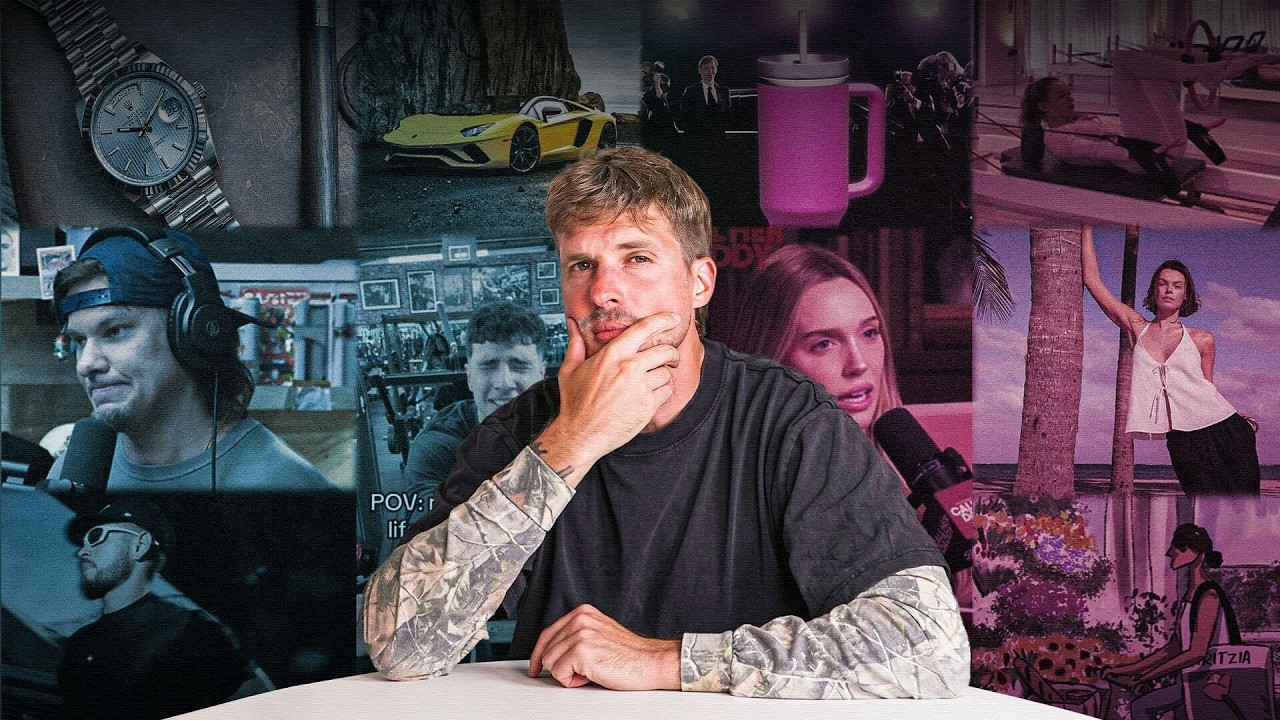
Learn about Hubspot AEO https://clickhubspot.com/7263a7 Join the June 10th Speedrun to learn creative direction for personal brands in a 1 week spring: https://orenmeetsworld.com/june In this video, I tackle how our algorithms are heavily splintered by gender, and how marketing takes advantage of this type of consumption, sometimes good, sometimes bad. I am well aware there are many nuances, different experiences for different backgrounds and lifestyle choices, but the mass habits of consumption are very important to understand, as they define broader trends in society. I am exploring a limited version of this here from the lens of how products are marketed. Sign up for my weekly brand strategy newsletter: hyperstudios.us
Summary
Generated by gpt-5.6-terraAt-a-Glance
- Verdict: Skim
- Core thesis: Social algorithms have replaced mass-media marketing with highly segmented, gender-skewed feeds that shape identity, purchasing, and social attitudes, so marketers must study customers' actual feeds rather than project their own preferences onto them.
- Why it matters: The useful argument is operational: algorithm-specific cultural research can produce sharper creative, while the broader claims about "men" and "women" are provocative hypotheses rather than rigorously substantiated findings.
- Best use: Use it as a prompt for customer-feed research and creative-testing design, not as a reliable sociological model of gender behavior.
Executive Summary
The speaker frames marketing as having moved through four eras: broad emotional brand marketing, search-driven commodity competition, TikTok-era algorithmic monoculture, and the current era of highly tailored algorithms. In the current environment, brands can target narrow demographic and cultural segments with content designed for the exact worldview, problem, and status signals present in a user's feed. The speaker's central professional recommendation is to stop designing from the marketer's own tastes and instead reconstruct what the target customer actually sees online.
Her practical research process includes building burner social accounts that follow target customers' creators, using persona tools to locate representative consumers, auditing who those consumers follow, and—in one project—paying customers to let the team observe their scrolling. She says this revealed a meaningful gap between the internal team's assumed customer media diet and the customer's actual feed. Insights are then turned into creative hypotheses and tested through ads, content, and response data rather than treated as settled truths.
The video's controversial layer is a broad contrast between a supposedly supportive, validation-oriented "women's algorithm" and a competitive, inadequacy-inducing "men's algorithm." She argues that women's feeds often make niche experiences feel recognized and create problem-solution purchase opportunities, while men's feeds repeatedly quantify social and economic status gaps and sell remedies such as supplements, courses, investments, and AI tools. These are presented mainly as observed patterns from marketing work, with little independent evidence in the transcript.
She closes with a consumer-psychology lens: many purchases are driven by loneliness and belonging, status signaling and FOMO, or legitimate problem solving. The practical distinction is useful for both marketers and buyers: brands should be clear about which motive they are activating, while consumers should question whether an item solves a real problem or merely signals group membership.
Key Takeaways
- Claim: Marketing has shifted from broad brand campaigns and search visibility toward algorithm-specific creative designed for tightly defined audiences. | Evidence: The speaker describes a progression from Abercrombie-style mass appeal and television-era brand campaigns, to Amazon/Google search competition, to pandemic TikTok monoculture, and now campaigns aimed at niches such as regional mothers segmented further by race and gender. | Implication: Ken should treat audience segmentation as a creative and distribution problem, not merely a media-buying parameter: each segment may require different language, proof, creators, and problem framing. | Caveat: This is a practitioner narrative rather than a measured market-history analysis; the eras overlap, and broad brand building remains relevant.
- Claim: The highest-value marketing insight is often hidden in customers' real feeds, not in internal personas or marketers' assumptions. | Evidence: For beauty work, the speaker created burner accounts modeled on target customers by finding representative people, reviewing their social links and follows, and recreating their feeds. In another project, she paid customers to let the team watch them scroll and says this disproved the team's assumptions about what the customer consumed. | Implication: Build an ethical customer-media-diet research loop: recruit real users, map creators and recurring formats, compare that map with internal assumptions, and refresh it because recommendation systems change quickly. | Caveat: Observed scrolling behavior is sensitive and can be distorted by a small or nonrepresentative sample; it should complement, not replace, broader qualitative and performance data.
- Claim: Cultural insights should be treated as testable theses tied to commercial outcomes, not as static trend reports. | Evidence: The speaker gives example hypotheses such as "lonely men buy sneakers" and "lonely women buy water bottles," validates them through conversations and short-form responses, and then tests creative based on them in ad accounts. She also references an internal "Video Database" tracking creators and adjacent niches to identify changing formats and engagement patterns. | Implication: For each audience, maintain a hypothesis backlog with explicit predicted behavior, creative expression, test design, success metric, and decision rule rather than collecting trends without an activation path. | Caveat: High engagement with a cultural observation does not establish causality or purchase intent; only controlled creative and conversion testing can determine whether an insight is commercially useful.
- Claim: The speaker believes women's recommendation feeds are especially receptive to specific recognition and problem-solution messaging. | Evidence: She characterizes women's feeds as serving content that makes users feel seen around relationship situations, skin types, locations, health experiences, and identity-linked concerns. Her example marketing prompts include insufficient greens, makeup that does not suit a skin type, discomfort with plastic leggings, and health-insurance worries. | Implication: The reusable lesson is not a gender stereotype but message specificity: ads tend to work better when they articulate a recognizable lived problem, demonstrate fit, and offer a credible resolution. | Caveat: The gendered framing is highly generalized and unsupported by systematic evidence in the transcript; it should never be used as a universal rule for women customers.
- Claim: The speaker sees many male-targeted feeds as monetizing perceived inadequacy through aspirational self-improvement products and systems. | Evidence: She cites recurring feed categories including wealth flexing, fitness comparison, dating-status comparison, creatine and peptide offers, trading and high-ticket-closing courses, business acquisition/investment checklists, and AI/automation promises. She calls the pattern the "quantified man," meaning continual comparison to men who appear richer, fitter, more technically capable, or more successful. | Implication: For products sold into achievement-oriented audiences, avoid dark urgency and shame-based acquisition loops; require clear outcomes, transparent subscriptions, and evidence that the offer produces value beyond aspirational consumption. | Caveat: The speaker explicitly gives the example that men under six feet face "four times" more rejection only illustratively, not as an actual statistic. More broadly, the entire model is observational and risks overstating both gender differences and the harm caused by any one feed.
- Claim: Most consumer buying in the speaker's framework falls into belonging, signaling/FOMO, or real problem solving—and marketers and buyers should distinguish among them. | Evidence: She describes sneakers as a route into a recognizable group, Stanley water bottles as an identity signal, Rimowa luggage as largely signaling without proportional functional value, and her washable canvas shoe bags as a straightforward solution to putting dirty shoes in luggage. | Implication: Audit products and campaigns by primary purchase driver. Strong long-term positioning should favor real utility or genuine community value over manufactured scarcity, exclusion, and FOMO. | Caveat: Her statement that these motives explain "90% of sales" is not supported with data, and many purchases combine utility, emotion, identity, and habit.
Detailed Brief
Fragmentation replaces a shared cultural reference point
- Claims: The speaker argues that TikTok briefly created a new mass monoculture during the pandemic, producing creators with broad celebrity reach and helping newer brands take share from department stores and legacy athletic brands.; She argues that the present environment is more fragmented: people increasingly receive same-interest and often same-gendered voices, with little meaningful crossover except toxic viral content.; Her social concern is that heavier online consumption intensifies the separation because users receive repeated confirmation of their own worldview rather than exposure to other perspectives.
- Evidence: She names Lululemon and On as brands that benefited from serving social-media-savvy customers, even without necessarily executing exceptional social-media strategy themselves.; She contrasts male-oriented media communities such as Barstool Sports and How Long Gone with female-oriented examples such as Unwell and Hot Smart Rich.; She argues that recommendations from creators, newsletters, writers, and Substack communities can feel organic because they emerge from a highly specific shared worldview.
- Caveats: The claim that there is no meaningful monoculture is overstated; major entertainment, news events, sports, and platform-level trends still create shared reference points.; The podcast and creator examples are illustrative, not evidence that audiences are exclusively gender-segregated or that these media necessarily damage cross-gender understanding.
- Implications: A brand cannot assume one cultural reference, creator set, or social proof mechanism transfers cleanly across its audience.; Cross-segment campaigns may need an intentional unifying idea; algorithmic distribution alone will otherwise reinforce fragmentation.
Search is becoming answer-engine visibility
- Claims: The sponsor segment identifies a distribution shift from website clicks toward AI-generated answers and recommendations.; The speaker presents answer engine optimization as a way to monitor whether ChatGPT, Gemini, and Perplexity mention a brand in category-recommendation responses and to identify content gaps.
- Evidence: She states that 60% of searches end without a click because users receive Google Gemini answers directly in results.; Using her shoe-bag product as an example, she says HubSpot AEO reported 0% visibility and suggested actions including Reddit and social posts. The offer cited is a 28-day free trial followed by $50 per month.
- Caveats: This is sponsored product messaging, and the transcript does not independently validate the 60% figure, the tool's measurement methodology, or whether suggested actions improve answer-engine citations.; AI answer visibility is volatile: outputs can vary by prompt, user context, geography, model version, and time.
- Implications: Treat answer-engine presence as an emerging measurement category to test, not as a substitute for owned search, content, reputation, and conversion measurement.; If monitoring this channel, standardize a prompt set and track changes over time rather than relying on a single visibility score.
Notable Concepts & Terms
- Tailored algorithm era: The speaker's label for the current stage of marketing, where feeds and ads can be aimed at highly specific demographic, identity, and interest segments.
- Cultural insight bank: A working repository of observations about a target audience's media, language, tensions, and purchase motives that can be converted into creative hypotheses.
- Burner-account research: Creating social accounts that follow a target audience's creators and interests to approximate the content their recommendation feed may contain.
- Quantified man: The speaker's theory that male-focused feeds repeatedly expose men to numerical or visible comparisons in dating, money, physique, status, and technical achievement, then sell remedies.
- Trad-to-woke, sweet-to-scandalous cycle: The speaker's informal map of ideological and sexual-tone poles she believes organize portions of women's social content.
- Problem-solution marketing: Messaging that names a concrete, nuanced customer problem and presents a product as its direct resolution; the speaker treats this as more durable than pure status signaling.
- Answer engine optimization (AEO): Efforts to influence and measure how AI answer products cite or recommend a brand when users ask category questions.
Operator Notes / Why Ken Should Care
- Commission a small, consent-based media-diet study with current customers: collect creator follows, recurring formats, language, purchase triggers, and screenshots or guided feed walkthroughs; compare findings against existing personas.
- Create a cultural-insight experiment board that forces every proposed insight to specify audience, predicted behavior, creative asset, conversion metric, and disconfirmation condition.
- Review acquisition creative for shame, false scarcity, hidden subscription mechanics, and exaggerated self-improvement claims—especially in supplements, education, finance, and AI/productivity offers.
- Segment messaging by demonstrated needs and media behavior rather than using the video's gender categories as targeting assumptions.
- Run a controlled audit of brand mentions across a fixed prompt set in major answer engines, but validate any AEO vendor claims against referral, branded-search, and conversion data.
Source/Metadata
- Title: Boy Internet vs Girl Internet (algorithms explained)
- Transcript words: 5946
- Duration seconds: 1465
- Timestamp note: No timestamps or chapters were present in the supplied transcript.
Transcript
In this video, we are going to talk about boy internet versus girl internet, man internet versus woman internet. Thank you to HubSpot for sponsoring this video. This is an oddball, relatively controversial topic, but one that I think is an important one. If you work in brand like I do, and you do consumer research, particularly around the consumption habits of your customer and the ads that appeal to them, who they follow, you've probably noticed something. Your male and your female customers live on almost completely different internets, in particular on social media. First, there's the networks they interact with. Then there's the podcasters and YouTubers that they listen to. And then there's the algorithmic content they see, which is more and more tailored toward them specifically. And I started to look at this as part of my marketing work, right? How do I make better ads? How do I make better content? How do I think better through target audiences who aren't me, right? That is the hardest thing for most people to do in marketing: take themselves out of the equation. You need to not care about you, where you're at in your life, and your background, but care instead about your customer. Look at things through their eyes. But then it blossomed into something bigger as I began to think about this from a sociology standpoint, because the interactions between people online and in real life are changing because of these behaviors, how we interact together as people in different communities, as members of the opposite sex, as people in society. And so in this video, we're going to dive through all of this. We're going to look at it from the marketing perspective, and we're going to look at it from the consumer perspective. So you start to think about what you view and why, what you buy and why. And if you are in business, you begin to think about how your target consumer sees the world. I'm going to give an intro, and we're going to talk through the phases of marketing, how this is really different than the last 20 years. We went from big brand marketing, emotion-based marketing, to the search era of marketing, to the big algorithm era, to the tailored algorithm era now. Then I'm going to talk about developing a bank of cultural insights. If you work in brand or creative or make content, how that works and why you do it and how I do that. And then I'm going to break down, from what I've been working on on brand projects, what I know about the women's algorithm and the men's algorithms and how they are different, how these two internets exist at the same time. And so you can get a look into how that content is different and what that actually means for how we consume and how we act with each other, especially as more and more people become quote unquote terminally online. Now I'm going to end with some core thoughts about why we buy things in the modern era. They're important to dig through. I think this is an important video because the world is changing around us. There are not really people involved in documenting it. Journalists do not understand the world that they are covering. And I'm obsessed with it and happy to share. And I want it to be a conversation. You're not going to agree with everything I say. I don't say anything in here to be controversial. I say it because I'm watching it happen. I would love for you to comment, share your opinions, what you see, because this only gets better as a conversation. If you want to discuss it live, there'll be a link to the next community call down there where I'll be rolling through with hundreds of you, as we do every month. Let's lock in. So first, now we're in the time where it seems almost awkward to talk about the past. How things were marketed to us, even when I was younger, in high school and college, are just not the same. In fact, it wouldn't be kosher to market that way now. And so I grew up in the impress the opposite sex era. It was also the sex sells era. To give some context, I used to work at Abercrombie and Fitch. They sold to male and female customers alike. A huge marketing portion of that brand was that they had hot guys on the bags and that they would have good-looking people in the stores. An entire genre of advertising that basically would feel really out of place and antiquated now. And also, a lot of the purchases you make, if you were going to go get a new cologne, you were thinking about what does this say to girls or whatever you want to attract? Obviously, remember alternative lifestyles out there. You're beginning to think of that inside this human nature ideal of attracting a partner. And so much of marketing, from beer ads to fast food to clothing to fragrance to luxury, was built around those traditional social dynamics. And there was this big monoculture. Nike wasn't the dumpster fire it is today, this weirdly regarded mid brand, right? It was the brand. Everyone loved it. You had these big universal brand experiences that sold to men and women right next to each other that took over the culture. And they did this through all this traditional media, through television advertising, magazine campaigns, big sponsorships, celebrity deals. It was a monoculture era, and the internet was just starting and beginning to show more subcultures. But it was very nascent. This is the late 2000s, early 2010s. And then we have what I'll call the search-based revolution. Amazon and Google made it so showing up in a search result, whether on Amazon or whether you're Googling it, with a competitively priced product, meant brand didn't matter. People just wanted to buy tissues, shoe inserts, sneakers, whatever it was, you were searching for it. And you could position basically in a math game. You could buy a product at a certain price, offer it at a certain price, a handful of features, and you could basically build a successful product without having to care about brand. And so all these companies came in. People were ordering a lot more from China. This was the early era of Alibaba. And basically, these generic things began to take over in our lives. And as that became more competitive, the quality of that dropped to where you get now, you're looking at all these weird Amazon brand names, you don't know what you're going to get, some off-brand, you don't ever know if anything's real. It became this weird math competition that we're almost over at this point. You almost want to see so you know you're not getting some Timu trash. Then TikTok brought on big monoculture right around the pandemic. Everyone became flocking on short-form video, this new algorithmic content, and you got huge creators, creators with big mass appeal, real basically celebrity being born of influence in that era. And you also had a new generation of brands that were taking the market share from basically the department stores, Sears, the Macy's, the big, like the J.Crew, L.L. Bean, all that, as well as the Nikes and the Adidas. People began to chip away at that market share. Lululemon came out of nowhere. On, big brands with universal appeal, using a new playbook, So you're not getting some Timu trash. Then TikTok brought on big monoculture, right around the pandemic. Everyone became flocking on short-form video, this new algorithmic content, and you got huge creators, creators with big mass appeal, real celebrity being born of influence in that era. And you also had a new generation of brands that were taking the market share from the department stores, Sears, the Macy's, the big, the J.Crew, L.L. Bean, all that, as well as the Nikes and the Adidas. People began to chip away at that market share. Lululemon came out of nowhere. On, big brands with universal appeal, using a new playbook, and sometimes they didn't even have to run the playbook. Lululemon and On weren't incredible at social media, but they were selling to a social media-savvy customer that did a lot of the dissemination of their marketing for them. And so all of a sudden, by playing in this new media ecosystem, whether you did it strategically or whether your customer base happened to be involved with it, it was taking market share from these antiquated brands and building hundreds of smaller new brands we've seen over the last five years, thousands, tens of thousands of those brands. But now it is about algorithm mastery. Brands zone in on a target demographic. Moms in the Midwest, they'll zone in by race and gender, something different for Asian moms versus African-American moms versus Latin moms. Everything gets boiled down to the fact that we can be reached with content meant exactly for us. And then this plays into societal rewards that come from being online. You post the thing that shows you're in the know. You perpetuate a cycle of what you engage with, giving you more things like that. That's how YouTube, TikTok, Instagram, X, Facebook, all social media is interest-based social media that's very good at showing you more of what you interact with and like, and targeting you. So that's where we were in the world. Next, we're going to talk about how you develop a bank, how you start thinking about insights within that, how you use that to make decisions about what you consume or what you sell or how you market or how you create content. But first, something I want to bring up before we keep going is it directly relates to standout marketing. Because many of you are watching this thing about how do you get your brand or product discovered. And for you, it's that in Google rankings, backlinking, the whole SEO game. But the way buyers research is also shifting fast. 60% of searches now end without a click. They get the answer displayed to them by the Google Gemini automatic answer. People are asking ChatGPT, Perplexity, and Gemini and getting answers back that skip websites entirely. The answer engines pick who they recommend. And most brands have zero visibility on whether they're even in that conversation. So that's what HubSpot AEO is built to solve. AEO, or answer engine optimization, is about how you show up when someone asks AI for a brand recommendation in your category. And HubSpot's AEO tool gives you exact visibility into just that. It shows you how your brand appears across those three platforms, gives you a visibility score, shows where your competitors are getting cited and where you're not. And it tells you specifically what to write, what to fix, and what to post to improve that. You don't need a developer or an agency. You need a plain-English plan. And HubSpot AEO gives that to you. So let me show you how this works. I actually put in my shoe bags. That's something that I sell currently. I've done no-timer prep into AEO. And Miski told me that. So I have 0% visibility. But then it gave me an exact plan. I should get a post like this up on Reddit. I should have posts like these up on social media to begin showing up for it. And so I have that by ChatGPT, Gemini, Perplexity. Here's what's being said already. And here's what to fix to improve it. You can try HubSpot AEO free for 28 days. And it's $50 a month after that. If you've never seen how AI describes your brand or the brand you work for, when someone asks about your category, it's worth the 28 days just for that. The link is in the description. And thank you to HubSpot for sponsoring this video. Let's talk about cultural insights. How did I even get to this boy, internet girl, internet thing? So for those of you that don't know my background, I've been in marketing for a long time. I started marketing in the outdoors industry. I sold high-end B2C and B2B. I was in marketing in the surf industry for a while, working on both high-end actual surf gear and the e-foil electric surfboard, selling to really high-net-worth customers. I did marketing in toys. I did marketing in consumer packaged goods. A lot of this sold through big retail. I sold consumer electronics in Best Buy. I sold in Walmart, sold in Target, and built out big D2C programs. And then this last year, I was really ultra-focused on beauty. I was a creative director at a private equity firm that specialized in that. And so in all of these, a lot of what my job would look like as a marketing leader is what are the insights about our consumer that we are going to take into our campaigns? We're going to bring into our ads. And especially this last year in beauty, everything is about that now. In the creative strategy era, it is what are the things that appeal to our customer? We can put in more Meta ads. We're putting hundreds of Meta ads in the account every month, dozens of emails, multiple social posts a day. So just constant briefs. And every brief, every great brief, starts with some kind of insight, something that's popular right now with your target demographic, something they're seeing on their feed. And as I mentioned at the beginning, your job as a marketer is to be good at doing that for consumers other than yourself. So in beauty, for instance, I am not that consumer whatsoever. And so when I started working on those projects, I set up burner accounts where I would follow the same people that our customers followed. We'll find our target customer. We'll use stuff like Outer Signal and go through and look at their personas, find exact people, find their social media, click their links. Who do they follow? What do they look at? Recreate their feeds, recreate what their algorithms look like. In another recent project that sparked this video, we actually paid for our customers to let us watch them scroll. And we did this mainly at my behest. I half-funded this. Eventually the company came in because I wanted to prove a point, because I thought what the marketing team inside the company thought our consumer was scrolling, what they were actually scrolling were completely different. And I was right. Because look, that's one of the most sacred things we have, right? When we scroll, it's very personal. What's been served to us and why? And it changes. But you need to understand that in a world where one of the most primary methods by which we learn about or consume anything is through what happens on social media. But I've done this paid for our customers to let us watch them scroll. And we did this mainly at my behest. I half funded this. Eventually the company came in because I wanted to prove a point, because I thought what the marketing team inside the company thought our consumer was scrolling and what they were actually scrolling were completely different. And I was right. Because, look, that's one of the most sacred things we have, right? When we scroll, it's very personal. What's been served to us and why? And it changes. But you need to understand that in a world where one of the most primary methods by which we learn about or consume anything is through what happens on social media. But I've done this before the social media era and to now. Had to think about this from magazines and experiences and retail and how all this plays together. So I am constantly thinking about cultural observations and algorithmic observations for the target users that I will be working with. So what does that mean? It means I'm constantly thinking up thesis that I want to defend. And you'll see this is what a lot of my short-form content has turned into. And I'm lonely men buy sneakers, lonely women buy water bottles. Blank isn't a status symbol. People are ordering in their food more now. In LA, lunch has replaced dinner. There's a lot of these. I will constantly be coming up with these ideas I see in the world around me. And I'll be having conversations with people to validate them. Or I'll be putting them in the ad account with a creative around one of the brands I work with to validate if people respond to the idea. This is how you become a good marketer. You think of those ideas. You develop a platform around why it should work. You test it, stress test it back and forth with people. I get the benefit of being able to do that with millions of people online and watch my videos. And you put it into play. You see what actually brings dollars back to you. And I've multiplied this by Cut30. We have a database called Video Database where we have every Cut30 person tracked. And then we have all these people in all their related niches tracked. So we can see what's happening on the internet, what formats are changing, what consumption habits, what's getting liked more or not, or rankings and ratings videos working, etc. And we can break that down by category, real estate, gender. We have all this really comprehensive tool that we built internally. And so now I'm able to add these up to these real consumer insights. And this brings us to the women's algo and the men's algo and how different they are. And I'm going to call out both these. I'm going to walk through both of these. You may not love some of the things that I mentioned. And that's okay. I am sharing observations. My thoughts on both are relatively critical. I don't think it's healthy what's happening inside both of these algorithms. But it's also what's happening. It's accurate. So first, the women's algorithm, the ads that they are shown and the content they are served. One of the biggest trends is that it is helping women feel seen. What do I mean by that? I mean, if you have a specific scenario you're in, a relationship scenario, a particular skin type, a background, where you live, a medical issue you've had, content is being served that shows you that other people are going through the same thing. This is a major part of content that people see. And this is a good thing in general, when you come from a background of women's problems not being as acknowledged as much as men's are, not being taken as seriously in the medical community. There's long story history around this, that this is a better solution then. And then we have what we would refer to at work as the trad-to-woke, sweet-to-scandalous cycle of content, where there are leanings, where you'll have very traditional conservative leaning, you'll have very woke leaning, and then you'll have very innocent content all the way to scandalous content. It pushes those opinions one way or the other. And people tend to fall somewhere in the four square on how they consume. And then there's an entire separate algorithm cut out. It's the literary art quirky algorithm that's more quasi-intellectual or actually fully intellectual that is very woman-to-woman and operates outside of that other four square. And so you will see this is actually a very supportive algorithm, as when we get to men later, which is not like this, where people can find their tribe and find people like them very easily and then develop these parasocial relationships with creators and with influencers in a really interesting way. And this happens on Substack, it happens with writers, happens with newsletters. People find a worldview that's similar to theirs and they latch onto it. And when you think about how this affects consumption, the recommendations that come out of those algorithms feel so organic and they feel like there makes sense because they're speaking to specific problems. That's a completely different consumption cycle than anything aspirational, how we've been marketed to for a decade. And so what comes with this? The negative that comes with this is that when you feel seen for everything, you get justification for everything. So one of the things we found looking at this content is that any opinion that you have in the women's algorithm gets very justified. You're mad at politics, you're mad at men, you're mad at other women, you have generational opinions. It supports it specifically on women's content relentlessly. You see your worldview. And so effective marketing in there commiserates with that problem and presents a solution. Classic problem-solution marketing is an amazing time to say, hey, you're not getting enough greens, or does this makeup not work with your skin type? Or do you not like wearing plastic leggings when you work out? Or are you worried about your health insurance plan? Whatever it is, if you put that content, whether that's a creator, an influencer, or an ad, into that algorithm, it works and it prints money on the other side. And it is a machine. Then we have the men's algorithm. I am looking at this objectively from data of working and marketing in this. But I know everyone's algorithm experience is different. And we're gonna learn way more about it if we actually talk about what people see. So if you have a very different experience, and I'd love to hear in the comments, there's a scenario that I've been talking about a lot called the quantified man. This is a theory that men are quantified in a negative way way more than ever before. They're shown their own faults with numbers every single day as soon as they log on or open their phone. It starts with dating apps, right? But men are rejected on dating apps constantly. And they accept a lot where they put out a lot more than they get back, especially if you fall underneath certain filters. You're under six feet, guess what? Your rejection is four times as high. Not an actual stat, but you get the point I'm trying to make. So number one, you are just getting destroyed by dating apps every single day. And then you're also logging in, you're seeing, God, all these guys are richer than me quantified in a negative way, way more than ever before. They're shown their own faults with numbers every single day as soon as they log on or open their phone. It starts with dating apps, right? But men are rejected on dating apps constantly. And they accept a lot where they put out a lot more than they get back, especially if you fall underneath certain filters. You're under six feet, guess what? Your rejection is four times as high. Not an actual stat, but you get the point I'm trying to make. So, number one, you are just getting destroyed by dating apps every single day. And then you're also logging in, you're seeing, God, all these guys are richer than me because guys are flexing their wealth online more than ever before. All their parlays hit, they've got these Mac minis, they're running automation, AI, I can't even understand. So they're constantly being hit by guys who are more ripped than them, guys who have more money than them, who seem to be luckier than them, who are able to date better than them, who are running technology better than them. So that algorithm versus the more commiserate, you feel- seen algorithm over here is, hey, you suck. The algorithm right there is being pointed towards the majority of men every single day. And it may not be direct, may not be telling them, but that's a subconscious message that comes from so much of this being shown to them. And so then they are being sold replacements for that. Supplements. You need creatine. Creatine is what you've been mistaking. Oh, but you didn't realize when you click that create button, you're actually getting a subscription. Now you're on Klarna. Oh, you don't want a subscription to creatine? Are you a weak man? That is what those gummy companies are selling in dark e-commerce cycles. Peptides will solve all your problems. That will make everything better. Everyone else is cheating. That's why they're in shape. Courses. Oh, everyone else is richer than you because they're cheating. They took a trading course, right? That's being thrown at men constantly. You could be a high-ticket closer. You could be a trader. You could be the, everyone else just followed this method that you're afraid to invest in. Men are being hit with that. And they're being hit with that, you know, that's the college, early twenties level. That's the same thing moving up. Oh, you don't want to buy and sell a business in your thirties. You don't know about this investment where you get this seven-point checklist. It's happening all the way up to scale. You're behind for where you should be at 45. And then AI, AI is the best one. AI is so you escape the permanent underclass. This new model is what's going to get you ahead. You need to make sure that you're secure in your career. You use this AI tool. You're automating things with cloud code. You bought these two Mac minis. And guess what? The result of 99.9% of that is guys just wasting time buying into stuff that has not actually helped them, but feels like it's helping. And this is a complicated algorithm to interact with, right? And you add on top of that, guys get shit on a lot on the women's algorithm. There's a lot of anti-men content. And look, that's probably totally justified. I'm not going to get into that here. Marketing channel on interpersonal relationships channel yet. But then what happens is they console themselves with things to impress other men. If you go all the way back to the beginning, when I talked about how we used to buy things to impress the opposite sex, or at least be marketed to do things to impress them or a potential partner. Again, not trying to exclude anybody here, but now women buy things to impress other women. Men buy things to impress other men. That is markedly different. And in particular, right now, men are marketed things to impress other men. Sneakers, almost all male fashion, overlifting. It's a huge one. And all the things that come of that, from workout routines, to supplements, to the influencers they follow. That Ramoah suitcase, that Rolex, whatever, it's going to impress another man to make up for the fact, the quantified fact you have. Golf, mentorships. And you'll notice that all of these things that I'm calling out, which are all categories this is exactly happening in, are designed to bring a man away from self-awareness, from participating in combos that might make them enlightened enough to appeal to a potential spouse. And this leads to the factor for both of these algorithms that the more online you are, the worse it is. And you're consuming from mostly same-gendered voices. Guys have Barstool Sports. They have How Long Gone. They have all their male industrial complex podcasts, right? Women, it's the same thing. You will get Unwell. You will get Hot Smart Rich. You will get all these, not all of it's bad content, plenty of it's good content, but you're hearing it from these communities. There's extremely little crossover. There's extremely little men and women talking through it in any way that's not ridiculously toxic, viral clickbait. It will be all in, right? No person watching the All-In Podcast is building any trait that is going to lead to a conversation that's positive with the opposite sex, right? It's slop. And this kind of cuts both ways, but really cuts from there's not other perspectives. There is no monoculture to connect these. And the more online you are, the worse it is. And this ties to other factors, right? I don't know if you've ever had a phone in your dreams. This is always an interesting litmus test. I've been talking to my friend group a lot about because now people are starting to see they'll have phones in their dreams. It used to be we would never have electronics and stuff like inside our dreams. But when they do show it, there was a study recently. It was women are 40% more likely to have the phone in their dreams than men. And still not a huge percentage of people report it, but are the ones that do. And you look at, okay, where is phone addiction in terms of, and where's internet addiction in between the genders? But this is the world we're operating in. And so I want to end this out with three key reasons why we buy. You should be thinking about it. I would ask yourself, especially if anything I've said here has made you be a little triggered. I want you to think about why you buy when you buy something. One of the core goals of my content, think about why you're consuming. And if you're a marketer and brander, think about how am I presenting things when I'm selling them? Then how do I put the most positive spin on them? So the three key ones I want to talk about first is loneliness. These algorithms facilitate loneliness. Dating apps facilitate loneliness. Being online more in general facilitates loneliness. And we are sold that being lonely and alone are two different things, but humans are social creatures. We are being sold cope by marketing if we want to think that being alone is something that Triggered. I want you to think about why you buy when you buy something. One of the core goals of my content: think about why you're consuming. And if you're a marketer and brander, think about how am I presenting things when I'm selling them? Then how do I put the most positive spin on them? So the three key ones I want to talk about first are loneliness. These algorithms facilitate loneliness. Dating apps facilitate loneliness. Being online more in general facilitates loneliness. And we are sold that being lonely and alone are two different things, but humans are social creatures. We are being sold cope by marketing if we want to think that being alone is something that makes us happy. Guys will buy sneakers because it is an investment to immediately be in a group that will acknowledge you purely by your purchase, right? Travis Scott, Jordan, Nike. Nike put the gas pedal on that, right? The most money, the most exclusivity. And if you had it, you were immediately part of a group of other people that care about it. Same thing with minor things like, okay, I'm going to choose this water bottle. Why were people buying Stanley water bottles off the crushing aisles at Target? Not because it's a great water bottle, because it's a signaler that you're this type of mom or this type of person. They had to ban these at schools near me because the girls basically wouldn't sit with girls who didn't have the same water bottle, and it became a problem. So loneliness is a huge reason why people buy. And I don't say that to say that's bad. In fact, an investment that helps you make friends or helps social interaction become easier, helps you find your tribe, is honestly a great investment because that is harder than ever in the internet world. And friends matter more than ever. The key to everything is having a group. And so if it's easy to signal that or a purchase helps with that, I don't think that's a bad thing necessarily. It's just worth calling out as one of these reasons. The second issue, the worst one of these, is signaling and FOMO, buying something purely to signal something to a group. It does not necessarily involve you having their friendship. You're signaling online or something like that. And FOMO, if you're missing out, you're buying because of the waitlist or it's going to go or some kind of dark tactic or it's exclusive or it's hot right now. It's a little boo-boo. Signaling and FOMO purchases are a lot of how marketing works, a lot of dark tactics. And it's worth always thinking about. I always try to call out with people if they're looking at, oh, I buy all this stuff or I'm overconsuming. It's like, what are you buying because it's a signal or because it's FOMO, right? Remova, only a signal, has no other value. Most people should never in their lives be making enough money, unless you are in the 1%, to justify spending that much on luggage. It has a signal FOMO purchase. And the difference between that luggage and luggage that is just as good, that is $1,000 cheaper, is $1,000 that you could have to improve your life in any other way. And the last reason we buy is problem solving, right? Back to the fundamentals of the women's algorithm, but this works for everybody, is you are now presented: hey, do you have this issue? We built this thing to solve that. And those issues are more and more nuanced and more and more particular. And brands are better and better at articulating that value proposition now. It's a huge part of marketing today, doing that with creators, influencers, ads for all these kinds of micro problems we damn near didn't even know we had. And that tends to be a great reason to buy something if that's a real problem you exist with and you want to validate that this is a solution. I mentioned my shoe bags earlier in the AEO section. That's a product that I sell that has a value prop. It's a simple prop, but it's like, hey, there's a washable, reusable canvas shoe bag. If you are a dude and you just put your shoes in your suitcase or in your bag, it's gross. Let me just solve that for you in a fashionable way. You can also carry it. You can easily wash it. And our ads are basically that, solving a problem for somebody. And so those three reasons, those are three of the 90% of sales are coming through one of those three reasons for a lot of these consumer products that are out there. And I'll get into dopamine and buying things to buy things in another video, but that's the world that we exist in. And one of my next videos is going to be the A to Z of the creator economy, creator marketing,