What working in marketing is ACTUALLY like in 2026
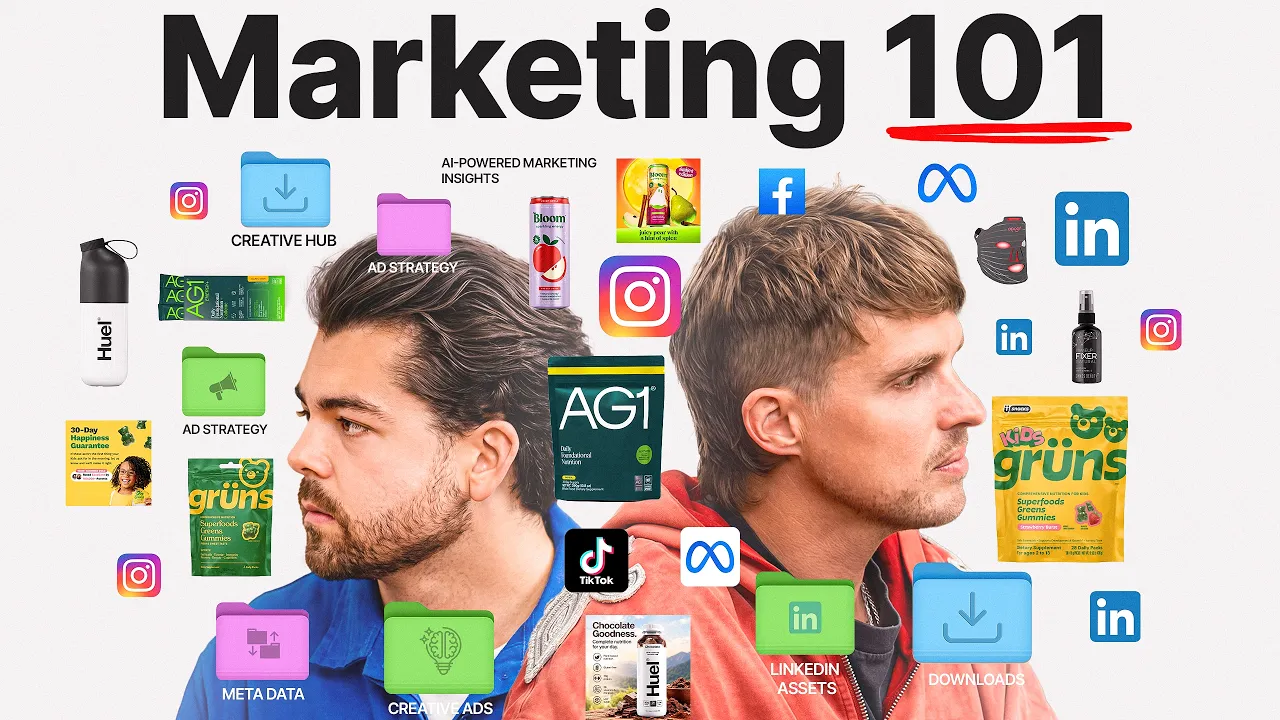
Description
Learn more about Lovable: https://link.lovable.dev/QwxjLNR In this video Oren and guest creative strategist Drew Barrett go through marketing tactics working right now, from street interviews and UGC to collabs and experientiall About Drew: https://www.instagram.com/drewbarrettt/ Join the next community call: https://www.creativedirector.net/webinar-luxury Sign up for my weekly brand strategy newsletter: https://hyperstudios.us Join the next Cut30 short form bootcamp: https://cut30.co Grow your brand with our agency: https://www.darkroomagency.com/oren About Me: https://orenjohn.com/ For Brand Partnerships: oren@delucamediagroup.com 00:00 Intro 00:52 Street interviews 04:05 Why brands are opening coffee shops 06:08 Social shows 10:28 Employee-generated content 13:11 Internal tools for marketing teams 14:42 Trybe and UGC ads 18:25 TikTok Live shopping 19:50 Creators signing long-term deals 23:17 Scaling content production 25:13 “Dark marketing” 27:17 Astra: editing videos 28:40 Creator clothing brands 29:49 Larry June × Adidas 32:03 Apple’s iPhone rollout 34:06 Cadence: athlete partnerships 37:39 Becoming a creator and a strategist
Summary
Generated by gpt-5.6-terraAt-a-Glance
- Verdict: Skim
- Core thesis: Marketing in 2026 is shifting toward high-volume, creator-native production systems in which brands win by operationalizing employee content, commission-aligned UGC, AI-assisted editing, live commerce, and culturally credible partnerships rather than relying on isolated polished campaigns.
- Why it matters: The useful signal is not the trend list but the operating model: creative supply, creator incentives, lightweight testing, and rapid iteration are becoming material advantages over slower traditional brand workflows.
- Best use: Use this as a field guide for pressure-testing a content-production and creator-management system; skip the repeated campaign commentary and focus on the sections covering employee advocacy, Tribe-style performance UGC, live feedback loops, and AI production tooling.
Executive Summary
The speakers argue that effective modern marketing increasingly begins with formats that have already earned organic attention—street interviews, scripted social skits, storytime slideshows, and creator-led live streams—then adapts them for a specific audience and conversion objective. Their practical qualification is that copying a format is insufficient: brands need a defined ICP, preplanned hooks and questions, a clear production/editing plan, and talent suited to the format.
Their strongest operating argument is for creative volume paired with fast learning. Tribe is presented as a Meta-focused, commission-based UGC marketplace where creators can earn a percentage of attributable sales rather than a fixed upfront fee. This aligns the incentives of brands and creators, but only if brands provide effective briefs, current inventory information, tested angles, and a creative strategist who turns performance signals into reusable toolkits rather than asking creators to guess.
AI editing and templating tools are framed as changing the economics of content, not merely making existing production cheaper. Examples including TriRoll, Realfarm, and an AI-assisted DaVinci/Astra workflow suggest that teams can generate large numbers of variants and make previously uneconomic casual content. The implication is that a premium, low-volume asset strategy is increasingly exposed to competitors using rapid, lower-cost experimentation.
The video also identifies a broader organizational shift: employees and external creators are becoming distribution channels and semi-embedded brand talent. Employee-posting programs, long-term creator retainers, live hosts who become recurring brand characters, and creator acquihires all point toward new compensation, rights, HR, and retention questions. The more speculative campaign examples—Apple, Cadence, Adidas, and fashion collaborations—mainly reinforce the value of positioning and cultural association rather than provide proven playbooks.
Key Takeaways
- Claim: Organic-native formats should be adapted into brand content only after disciplined pre-production, not improvised on the street or copied wholesale. | Evidence: For Seventh Earth Studios' Venice Beach street-interview content, the speakers emphasize defining the luxury-blank buyer, controlling variables, preparing hooks, angles, and questions, using a charismatic host who can handle rejection, and editing only a small number of questions into a coherent story. They stress that interview subjects must either look visually interesting or deliver an immediately strong answer. | Implication: Treat social-native ad formats as structured experiments: specify audience, hook, host, product role, and editing outcome before production, rather than measuring success by raw footage volume. | Caveat: The approach is most naturally suited to products that can be sampled or made central to an accessible public interaction; it is less directly applicable to complex or high-consideration offerings.
- Claim: Brands should validate social-show potential with low-risk episodic tests before committing to an expensive recurring series. | Evidence: The speakers cite Brooklyn Coffee Shop's consistent scripted setup and Othership's sauna-counter skits as formats that work because viewers know what experience to expect. But they say social shows require charismatic on-camera talent, genuinely funny/culturally literate writing, production infrastructure, a long-term through line, and economic scalability. Their proposed test is a carousel of several 5-to-15-second mini-film vignettes. | Implication: Before funding a branded show, run vignette/carousel prototypes and assess repeat viewing, sharing, production repeatability, and whether the format fits a durable brand world. | Caveat: A social show is not inherently a brand strategy; without distinct internal creative talent and a sustained funding/ROI model, imitation is likely to fail.
- Claim: Employee-generated content is becoming a near-term distribution advantage, but it will become saturated as more companies formalize employee posting. | Evidence: The video describes a maturity path from a few active founders or social-team members, to broad employee participation, to employees becoming characters in episodic social content. Buffer is cited as having 65 active LinkedIn posters out of 80 employees, while another example reportedly offered 20 team members a $20,000 monthly bounty to post daily on X and generated leads. | Implication: If employee advocacy is relevant, establish the program now with clear incentives, content boundaries, disclosure rules, and measurement before it becomes an undifferentiated table-stakes practice. | Caveat: The lead-generation examples are speaker anecdotes rather than independently verified results, and incentives can create governance, authenticity, and employee-relations issues.
- Claim: Commission-based UGC platforms can solve creative-volume constraints by aligning creator compensation directly with attributable ad performance. | Evidence: Tribe is characterized as a Meta-ad-focused marketplace in which creators submit assets into a brand's ad account and receive a percentage of sales. The speakers give an illustrative model: if an ad scales into six figures and a creator receives 10%, one winning asset could yield about $10,000, making a portfolio where only one of 20 assets succeeds viable for the creator. | Implication: For directly attributable offers, test performance-linked UGC as a creative-supply channel, but build the attribution, commission terms, usage rights, inventory synchronization, and creator enablement layer before scaling spend. | Caveat: The model is presented as best suited to products or software that can be bought directly from a Meta ad and reliably attributed to a sale; it is less suitable for services and high-ticket or long-cycle purchases. The six-figure and 10% figures are illustrative, not universal benchmarks.
- Claim: Creative volume only compounds when a strategist converts performance data into brand-specific creator toolkits rather than encouraging superficial copying. | Evidence: The speakers warn against reproducing a successful creator's exact hook because each brand's ICP and buyer context differ. They recommend testing hooks, environments, props, and styles while coordinating with the people managing Discord/community channels and current stock; promoting a sold-out T-shirt through batch-edited ads is cited as wasted work. The desired strategist provides examples such as green-screen or unboxing formats, key talking points, and latitude for creators to add their own spin. | Implication: Create a closed-loop briefing system that joins ad results, customer objections, inventory status, creator feedback, and tested format libraries into weekly creator briefs. | Caveat: More assets are not automatically better: unmanaged volume can amplify irrelevant concepts, inventory errors, creator burnout, and unproductive media spend.
- Claim: Live commerce should function as both a conversion surface and a continuous source of product and creative intelligence. | Evidence: The speakers describe a 10,000-square-foot LA TikTok Live studio venture called Live, where brands pay a retainer for sets and hosts. They argue that likable hosts can drive purchases through parasocial support, can answer practical fit questions live, and should appear on the main feed as recurring brand characters. Viewer questions, funny moments, and engagement spikes are proposed as inputs for future briefs. | Implication: If testing live commerce, instrument it as a research-and-content engine: tag recurring questions and high-engagement moments, then translate them into FAQ updates, ad hooks, product-page improvements, and creator briefs. | Caveat: The claimed commercial effect is anecdotal, and live commerce requires credible hosts, product availability, operational responsiveness, and mechanisms to capture and analyze the audience signal.
- Claim: AI-assisted editing and templated generation alter the viable content mix by making high-frequency variants and casual formats inexpensive enough to test. | Evidence: TriRoll is described as selecting a viral template and automatically using footage from a user's camera roll; Realfarm is said to generate images and TikTok slideshow variants from story prompts. The host says an AI-assisted DaVinci/Astra workflow turned an unboxing into a few chat iterations and made six UGC variations require only additional recording time. One speaker reports working on roughly 60 videos in a week, while the host contrasts his 20-30 assets with an agency touching hundreds of briefs. | Implication: Separate content types by economic threshold: reserve high-touch production for durable brand assets, while using AI-enabled production to test hooks, versions, low-stakes explainers, and casual formats at scale under human QA. | Caveat: The discussion assumes quality and brand safety can be maintained through these tools; it does not address review workflows, IP provenance, platform-policy risk, or whether generated volume produces incremental business results.
Detailed Brief
Creator relationships are shifting from one-off sponsorships toward embedded talent models
- Claims: Brands are increasingly competing to retain high-performing creators through recurring series, fixed monthly retainers, quasi-employee arrangements, and potentially equity-like upside rather than one-off deliverables.; The speakers argue that brands should connect paid creator work, organic social posts, and live hosts into a coherent recurring cast rather than treat each channel as separate.
- Evidence: The video refers to Google/Gemini reportedly signing MrBeast to a multi-year partnership, though the speakers explicitly state they are unsure whether the cited $20 million to $25 million figure is public or exact.; It cites creator Kovacut moving from sponsored AI content to an in-house role at OpenAI.; A speaker reports hearing of 'smart retainers' of roughly $5,000 to $10,000 per month being used to recruit creators away from competitors.
- Caveats: The deal sizes and specific partnership details are not verified in the transcript.; Embedded-creator arrangements create unresolved questions around exclusivity, compensation, personal-brand ownership, content rights, conflicts, and HR policy.
- Implications: A creator program should have explicit tiers: transactional performance creators, recurring franchise talent, and strategically embedded talent with retention packages.; Companies with employees who build meaningful personal brands need policy and compensation structures before conflicts emerge.
Brand building: lower-friction entry points, counter-positioning, and borrowed cultural association
- Claims: Physical retail is increasingly paired with low-price hospitality offerings such as coffee or dessert to create a regular traffic source and a low-friction entry point into premium brands.; Counter-positioning can be positive differentiation, not just antagonistic or countercultural branding.; Challenger brands can compress legacy-building timelines by associating with credible emerging talent and strategically borrowing status from adjacent institutions.
- Evidence: Clientele New York reportedly attracted a customer for coffee who did not initially realize it was also a clothing store; Kith Treats is cited as an accessible $5-to-$10 entry point into a higher-priced clothing brand.; The Larry June x Adidas 'Watermelon Smoothie' sneaker is used as an example of a collaboration grounded in the artist's existing health, fruit, and quiet-luxury persona rather than generic rap imagery.; Cadence's LA Performance Center and relationship with Olympians Hunter and Tara Woodhall are positioned around the 2028 Los Angeles Olympics; the speakers note the athletes' Nike affiliation creates visible Nike x Cadence association.
- Caveats: The claim that emerging brands can reach Gatorade-scale consideration in under five years is aspirational commentary, not substantiated market analysis.; Borrowed association can create legal, contractual, or reputational exposure if partner rights and brand boundaries are unclear.
- Implications: Look for a low-commitment product, venue, or content experience that lets non-core customers enter a premium brand world.; Evaluate collaborations by whether the partner already lives the positioning; authenticity should be observable before the campaign, not manufactured in the campaign.
Notable Concepts & Terms
- Creative volume: The operating assumption that paid social performance increasingly requires many assets and variations, making production throughput and learning speed strategic.
- Tribe: Described as a Meta-focused, commission-based UGC marketplace intended to connect creators' compensation to attributable ad revenue.
- Creative strategist: The role that translates ad results, inventory, audience knowledge, and format trends into actionable creator briefs and reusable toolkits.
- Employee-generated content: A progression from a few active employee accounts to broad employee advocacy and ultimately episodic social content featuring internal staff.
- Social show: A repeatable, scripted or semi-scripted branded entertainment format with recognizable characters, setting, and audience expectations.
- Carousel vignette: A low-risk test format of multiple short, visually compelling mini-films placed in a social carousel before investing in a full social series.
- Smart retainers: The speakers' label for fixed monthly agreements intended to keep valuable creators from moving to the highest bidder.
- Parasite marketing: Using association with a more established brand or cultural signal—such as an athlete visibly connected to both Nike and Cadence—to elevate a newer brand.
Operator Notes / Why Ken Should Care
- Run a 30-day content-supply audit: asset volume by channel, cost per usable variation, time from insight to published test, approval bottlenecks, and the percentage of briefs tied to actual performance signals.
- Pilot a creator briefing control plane that combines winning hooks, audience objections, inventory status, rights/usage terms, creator performance, and next-test recommendations in one workflow.
- Define a creator-talent policy before offering retainers or embedding creators: exclusivity, pay structure, performance attribution, content ownership, disclosure, termination, and personal-brand conflict rules.
- Create a live-commerce instrumentation template that captures questions, conversion moments, product objections, host performance, and reusable clips; require a post-live brief refresh from that data.
- Establish human review and provenance controls before scaling AI-generated edits or imagery, particularly for claims, IP, visual accuracy, brand tone, and platform compliance.
- Use small vignette tests to determine whether the organization has the writing, on-camera, and production capability for an ongoing social show; do not fund the series based on format envy.
Source/Metadata
- Title: What working in marketing is ACTUALLY like in 2026
- Transcript words: 19962
- Duration seconds: 2398
- Timestamp note: No timestamps or chapter markers were provided. The supplied transcript contains substantial duplicated passages in its latter portion.
Transcript
It's impossible to keep up with everything that's happening in the marketing and social media landscape. But at the same time, everything is moving so quickly. Tactics are changing, new software, new systems. Things get antiquated faster than ever. So in this video, I'm going to sit down with my friend Drew, who's a creative strategist for a number of brands. And we're going to talk about exactly what's happening. And not just, hey, this person did this, but the actual tactics. Because you'll see he is actually in the trenches. He's making content, he's doing creative strategy for individual brands, he's working on social media, he's working on launch videos, and all these categories. And I'm working at it on the agency side where I'm briefing creative strategies. We're working at a macro level brand planning. So we have two different interesting perspectives for all these things that are going on from social shows to UGC, to influence, to brand collaborations. We're going to go through the list, talk about all these, break down actual tactics you can use to help in your marketing or social media career. And I think it's going to be an ultra valuable video. Let's lock in. Lock in. All right. So I want to start here by talking about street interviews. You guys have probably all seen these on TikTok where people are just out there on the streets of San Diego, the streets of wherever interviewing somebody. But you've actually been working on turning this into an ad format as well. And you've actually been in the street. Want to talk to us a bit about that? Yes. It's an interesting type of format, also known as man on the streets. Yeah. Street interviews, man on the streets. And it's one of those things that's easily scalable with a low budget. How much can you give away without it actually costing a lot for you? But more often than not, when a brand has a protein bar or blanks, it's a lot easier to give out at scale. And yeah, it's a simple way. Yeah. I think what I liked about this is that great ad content or great brand content often comes from good organic content, right? And street interviews dominate. People are drawn to it. It's easy, casual content. You see an interesting person or a funny person or a place, and you're like, hey, this is in a—like our friend Kevin does this in San Diego. If you're from San Diego and you see it, you're like, oh, that's my area. That's my spot. But then for brands to co-opt that, it's like, okay, how can you kind of put yourself in the middle of it? How can you make the product center of attention? So yeah, what are some strategies for that? Product sampling obviously, but I know you mentioned blanks. You did this with clothing, right? Yes. I did this with a clothing brand named Seventh Earth Studios. It's a luxury blank company. And the biggest thing is, okay, they want to introduce a new format and way. They're like, okay, we have a budget. This is our budget. And we have blanks. The thing is with blanks, you can hand out a lot of it, right? They control everything from the yarn to the final execution. So it's a lot easier for them to go out, for example, in Venice Beach. You're watching these videos. It's like, oh, that's in my backyard. Oh, that's really cool. Oh, that's Muscle Beach. Thinking about any kind of organic content, you need a plan, right? Like at the end of the day, what probably both of us do the most of is brief actual things that people are going to go do when they actually execute an ad or a piece of content. What's involved in a plan? What's an example of the plan of what you guys did for Seventh Earth? So for Seventh Earth, it was more pre-production than anything. A lot of people just kind of wing it and they go on the streets. It's like, okay, let's just record. But that's probably the worst thing you could possibly do because you want an ideal, like who you want to speak to. ICPs and demographics are very important when it comes to your brand. And so when you have luxury product blanks, who are you going to be catering towards? But more often than not, when you're actually in the streets, it's like, how can you control the variables as much as you can? And so what I mean by that is you're going to have all the pre-production. You're going to be like, all right, these are the hooks and the angles and the questions that we want to ask people. Also, the host has to be on point too. He has to be charismatic. He has to be able to handle rejection, right? Then you go into this and kind of ask basic questions because people try to overcomplicate by asking too many questions. Then I go into the editing side. It's like, okay, how can I actually stitch all this together and actually tell a story and make sense to the ICP or the demographic or the goal based on what we're trying to achieve? Yeah. I feel like every time we've done this for ads, we've been really focused on, okay, you need interesting people, right? That's number one. Everyone's like, oh, we're going to interview as many people as possible. It's like, okay, well, they either need to look interesting or be interesting to be part of that hook. So either their initial look is a hook or their actual answer is immediately a good part of the content. And then it's like, all right, what's that first question and you maybe one to two follow-ups. Even if you ask ten, what's going to make it in the video is two or three. So having that concrete plan really works. But I do feel like this is something every brand should probably get into. If you have a consumable product or something conceptual, like mental health, getting it into ads is because it's such a familiar format that the thumb stop is going to be really high. Speaking of real life experiences and things we've been to, you were in New York the other week and we were talking about the idea that everything has a coffee shop now, right? Where'd you go? What'd you see? So I just went to New York City for a little fun trip. And I was really curious to stop in Supreme. Everyone knows Supreme and I wanted to watch people and how they're buying, just from a consumer aspect. And I asked them a question. I was like, did Supreme fall off? And they're like, no, obviously traffic is low. They're like, you should go ask the store next door, which was Clientele New York City. They recently just opened. It's more of a third-party resale aspect. And they're working on their own apparel right now. So I walked in there and I noticed the coffee shop right away. And funny enough, I saw someone buying the coffee and they had no idea that the store was even a store for clothes. So I was talking to this guy and he was like, yeah, I'm here for the coffee. I thought it was just a coffee shop called Clientele, but sure enough, I saw him walking out with a bunch of clothes and shoes. So I guess when you see this now, like New York, every streetwear store right? ALD has the coffee shop. You go like Bandier has Rhythm Zero inside of it. Like all of these, it's this cohabitation. I think we see this a lot with physical space in general, because you need two things to survive. Any amount of money you can bring in, if you're only selling so many four-hundred-dollar hoodies or whatever it is, is like, okay, is there some regular flow that we can have? And also there's that experiential aspect, right? Where it's an entry point to the brand. I think Kith is the perfect example of this, right? Where a lot of people who don't even know Kith sells expensive clothes know the ice cream or brought their kids there, or begun to engage with the brand in a completely other way. And it's a much easier price point. I'm going to go get a ten-dollar dessert or a five-dollar coffee and get introduced. It makes it accessible. It makes you feel like you can browse in a way where I feel like you'd almost be awkward if you're in there and you're not going to buy. And especially with Gen Z, I feel they're a little more awkward about that than previous generations. They're just not as used to shopping. It seems like a very different dynamic. Everyone's doing coffee. So it was a really interesting way to obviously tap into sneaker culture by Treats. It obviously became a huge business model for him and collaborations, and Kith Treats has who don't even know Kith sells expensive clothes, know the ice cream or brought their kids there, or begun to engage with the brand in this completely other way. And it's a much easier price point. I'm going to go get a $10 dessert or a $5 coffee and get introduced makes it accessible. It makes you feel like you can browse in a way where I feel like you'd almost be awkward if you're in there and you're not going to buy. And especially with kind of, I feel like Gen Z is a little more awkward about that than previous generations. It's just not as used to shopping. Seems like a very different dynamic. Everyone's doing coffee. So it was a really interesting way to obviously tap into sneaker culture by Treats. It's obviously become a huge business model for him and collaborations and Kith Treats has actually grown significantly. It's as interesting or as compelling and as culturally relevant in the business as the clothing line is over time. One thing we talk about all the time, we're actually just talking about even with the people in the studio here is this idea of social series, the social shows, like who can pull them off. And I want to bring it up because I saw Away do one, the Away Luggage the other week. And they had one where it was basically a relationship kind of playing out in real time. And I always look at what brands do in the summertime where people aren't buying a lot like people aren't going and making their luggage purchases like after their Euro summer trip, right? So it's like, okay, a lot of the actual brand campaigns come out then where they're trying new stuff. They're trying to build top of funnel awareness, like going into fall in the big buying season. And they did a great job with this where they kind of basically had these people having these awkward breakup and social scenarios live in the train station or the airport. Yeah, I'm just curious what social shows you've liked? What do you think of this as a strategy? I think it's a really interesting strategy when you get it right. I really like Brooklyn Coffee Shop because they've really kept the same angles. And when you watch them, you know what you're getting. And I think that's very compelling. Like when you're watching reality TV show, you know, there's going to be drama, you know, there's going to be an interesting character. And so being able to see Brooklyn Coffee Shop bring in really interesting characters, nonetheless, actors, movie stars, it really keeps you on your toes. So I feel like the brands that do it correctly and well and scalable, is it scalability? Like, can you actually scale the format? And is it bringing an ROI? And more often than not, when it leaves a huge remarkable impact on you, you want to binge more, more often than not, it's going to be successful. It is funny. I pulled up the first Brooklyn Coffee Shop video I pulled up here is a Samsung paid partnership. So good for them for securing the pay. But it was interesting because that started this concept for those who haven't seen it, it's a social show where people come in, they come into the coffee shop, they have a conversational, but it was a skit, right? These are comedians. It wasn't like promoting a coffee shop. A lot of people assumed it was real, but it was purely just an invention of the internet. It's more of a show, but brands have co-opted it, right? And this kind of goes back to the original thing we talked about that things that do well in organic are quickly co-opted by brands and they should be, whether that's for their organic strategy or in the ad account. But now you've seen other people do it too. So I bring up this example of other ship. So they are a sauna company in New York and they're doing the exact same format, right? Two people behind the counter, someone walks in, it's a scenario, a skit based scenario, but they play really well into the health, wellness, interpersonal dynamics. Like the one I just pulled up here is the group chat all said they were going to go and only one guy showed up and he's like, Hey, I have a reservation for seven, but it's just me, which is a very, which, you know, it's very shareable, plays in that whole idea of the group chat. It's positioned in a way that is inherently social. And so it's interesting to see that continue to work. And even in this kind of same exact style, but I also see a lot of them flop. I mean, it takes so much to actually produce a show. You need charismatic talent that are on camera. You need someone who writes, who's genuinely funny and culturally relevant, understands it. And you need the production environment. I think a lot of brands consider, oh, we should do this, but probably aren't cut out for it. Curious what you think. I think it's really important to be able to have the foundation to be able to empower these social shows. I feel like people just see something and they just want to recreate it right up there. But they don't have a long-term goal to why they should actually be doing it. And so I would say just reverse backwards. A lot of brands don't really think about the idea of okay, where do we want to go? How can we actually fund this? And what makes sense for right now that we can work towards this goal? And more often than not, when people are disorganized and not really sure of the through line of what they have, it kind of falls apart. It's like, okay, well, who is your one of one creative talent? I feel like every brand needs to be like, who is, what do we have? Any person that's just better than other people at one core thing, creative direction, writing, social strategy. You need one person who's a standout and then lean into their strengths. And if that happens to be someone who's funny enough to write that or someone who's charismatic enough to lead, be a front person on social, he's really just leaning into who that talent is. But my recommendation, Claude did this, a series of vignettes. I think the vignette format where it's basically just a carousel and they're a couple five to 15 second little mini films on all the slides on the carousel is a great way for brands to test the waters of this. So it's like, okay, you have this opportunity to shoot a couple shots. Each one that tells a story inside a place or with people or with characters. And then be like, is this compelling enough that our audience cares? And it's a low risk format, right? It doesn't have to have some crazy through line. It doesn't have to have an amazing plot. It just needs to be visually interesting and is it cool enough to share and get engagement with? I'm always like, just validate with that carousel vignette format first, before you're diving into something like a social show. Yeah, super high production and actually invest a lot of capital into it. Yeah. And look, and this all ties to this bigger theme that everyone's talking about around, which is employee generated content, right? So okay, you could go hire a bunch of actors and amazing talent to actually be the ones on camera. But a lot of this is either hybrid, like we see In Style has done a hybrid where it's real people that work at In Style, and they bring in actual talent from, you know, whether it's influencers or celebrities come in. And then you just have this idea of just, hey, all of our employees are posting on social media, the expectation now for a lot of companies that social media is employee first. You know, curious what you're seeing out there. I'm not sure if you guys are relevant of the Starbucks cup that went viral because a girl simply just said, Hey, come spend a day with me with this viral cup that sold out. And it's just a really interesting opportunity because even Fortune 500 brands, brands are super high legacy or even startups can do it. There's no in between, everyone can do it. It's an easy way to obviously capitalize what's already there. For example, it could be like behind the scenes of the creative director, how he thinks about this shoot and how he's going to go about obviously presenting it to the world. There's so many ways to go about it like literally a day in a life to behind the scenes vignettes, right? There's no right or wrong answer. Yeah. I think if I was to break down the levels of it, like, okay, what are the levels of employee generated content that makes sense? Like level one is there's a couple people Starbucks cup that went viral because a girl simply said, "Hey, come spend a day with me" with this viral cup that sold out. And it's just a really interesting opportunity because even Fortune 500 brands, brands with super high legacy or even startups can do it. There's no in between. Everyone can do it. It's an easy way to capitalize on what's already there. For example, it could be behind the scenes of the creative director, how he thinks about this shoot and how he's going to present it to the world. There's so many ways to go about it, literally a day in a life or behind the scenes vignettes. There's no right or wrong answer. I think if I was to break down the levels of it, okay, what are the levels of employee-generated content that makes sense? Level one is there's a couple people at our company that are just very active, whether that's the founder or one of the leaders, and two of the social media people are both active on the main account and they're active on their individual socials. The second level, I think what we're seeing a lot more now is you're recruiting a good chunk of the team. I always bring up Buffer as an example of this. Buffer, the scheduling software, because they have on LinkedIn, they have 80 employees and 65 are active, they're posting all the time, and they incentivize it. They generated a lot of impressions for a pretty antiquated social scheduling platform by just having that number of people be active, sharing company updates across LinkedIn. They're not even on these other social media platforms. But I think that's level two now, where we have a lot of employees who, especially when you're in a company that has to be somewhat socially relevant, that are engaged. And then all the way to okay, now we're making something episodic, we have a world and an arc where these characters play these roles, we're on multiple social networks, all the way up to we have a social show incorporating those people. And it's interesting, I feel we are at the point where in about 18 months, it's a super saturated strategy. All these companies are incentivizing everyone to post. I have something on screen here from Matt from X who incentivized 20 people on their team to post on X every single day. They put a 20k bounty on it every month. So they're paying people to do it. And it was a huge lead driver for them. But this is going to become saturated. Everyone recognizes this is valuable enough. I think if you act on this right now, probably anytime between now and the end of the year, you can get a real program running, and then we're going to hit diminishing returns. So if you are considering this, the brand should really look at acting on that now. Since I know a lot of you are working on marketing teams or in your own agencies, I want to highlight a tool that's been really useful for multiple teams I work with on the back end. That is Lovable. What do I mean? Right now I know a lot of you are cobbling together feedback portals, asset request intake, campaign dashboards and tools for your field teams, all these combinations of spreadsheets and random pieces of software. What more and more smart teams are doing is building simple internal tools to work exactly how they want. Here's an example in Lovable. If you want to build an asset request form that you or your clients or your internal team can give to each other and actually tracks timing and output, you could just go into Lovable chat and say, "Hey, I'd like to make a form where people request an asset type. They can choose between photo and video, they can put in their date, they can attach any reference assets. I want to have a back end view of this where I can add team members and I can assign things to those team members that actually just sends them a Slack message. We can have a dashboard view of what's pending and unassigned, what items are in work, and I can have a report at the end of every week on what assets actually got done by which team members and how much time they took from request to finish." So in chat, I can request a tool, monitor all the things that are being asked for, assigned, and actually created by my team. I can prompt all this in a chat and it's actually going to build that with Lovable. It will prompt me to fully integrate Slack. I don't need to do anything technical. I can just type in the initial names of my team members to add. I now have a fully functioning system built exactly how my business works. I would highly recommend if you have a social team, if you're trying to manage influencers, et cetera, if you have any part of that process that is manual today, using Lovable to fix that process for you is an easy win that you can put on the board. They handle hosting, app connection, and security. It can work on mobile and desktop and even integrate payments. I think you'll be shocked at what's possible just through chat. You can learn more about Lovable in the description and thanks so much to them for sponsoring this video. You and I are both using this platform Tribe all the time. I want to talk about that for anyone that hasn't heard of it. I want to give a quick breakdown of what that is. So essentially it's a UGC format for Meta ads. Like you have TikTok Shop, but essentially think about it, it's for Meta ads specifically. And so basically you get all these creators that are on this platform who can put assets out there. They get paid a percentage, they would on Shop, to be able to put ads into your Meta ads account and creators are making a lot. We all talk about all this creator marketing, right? Every brand needs to have creators. You need to have more ads in the ad account. This idea of creative volume where people are really pushing hundreds of ads in Meta every month. But everyone has a really hard time actually filling that up. And so I think what Tribe did really well is they basically said, we're going to bring all these creators onto this platform. If you want to scale that up, you want more ads, you can do it. And you don't have to pay out of pocket. You're not going and saying, "Hey, I need to drop another 15k on creative this month." Instead, people are going to do it on commission, which means now a lot of these creators are incentivized. You're saying, "Oh, if an ad does well, a good scaling ad for any of the brands that Darkroom works, it's going to get into six figures." And so if you're getting 10% commission on that, "Hey, I'm making 10K off that one asset." Now say you made 20 assets and only one of them got there. That math is still great compared to a lot of the other social UGC work that you can get. And also it incentivizes you to make better videos. You want to go in there and make a winner, so that winner gets some scale. And then brands want to try it and want to work with more creators because they're making money on the other end. It's really tied the economics of the UGC industry together. And this is another one where we were talking about Tribe maybe a couple months ago. It was early, it was okay, a bunch of these brands around here are all trying it. Now it's everyone's onboarding. And so it's one of those where, okay, if you want to do this in Q4, it's going to be absolutely massive on Tribe. And it's going to make or break brands, which means that right now we're recording this on September 18th. It's probably coming out end of the month. You've got to do it if you want to do it. Any tips? I know you've been in the trenches on there of how to make the most of it. A lot of it is actually looking at what's winning, then taking inspiration from that. A lot of people try to copy, say from Haas from 7th or Studios live reaction, and they do the one, not two, not three, not four, but more often than not, different brands have different ICPs and who's actually watching and who's buying the products. A lot of different angles are just going to resonate. So you're just going to have to test and volume. It's a volume game. So shots on goal, but obviously being able to introduce interesting angles, but also work with the CEOs or whoever is obviously managing these Discords to actually learn about what they're pushing. Any tips? I know you've been in the trenches on there of how to make the most of it. A lot of it is actually looking at what's winning, then taking inspiration from that. A lot of people try to copy, let's say from Haas from 7th or studios live reaction. And they do the one, not two, not three, not four, but more often than not, different brands have different ICPs and who's actually watching and who's buying the products, right? A lot of different angles are just going to resonate. So you're just going to have to test and volume. It's a volume game. So shots on goal, but obviously being able to introduce interesting angles, but also work with the CEOs or whoever is managing these discords to actually learn about what they're pushing and what they actually have in stock. Because you can make a video, let's say about a t-shirt and it's about a sellout. And if you constantly scale and make batch editing for that, you're just wasting your time. Yeah. And so for creators, it's always a studying game. What's working right now? How do I test new hooks? How do I test new environments? Can I use props? Can I try different styles? And basically having to weigh that against how much time you have and how much work you want to do. And then for brands, it's this creative strategist idea, right? This is a new role. We're hyper familiar with it, but a lot of brands are brand new to it. And that's really this idea that who is the person on the team that's bringing ideas and toolkits to these creators to be like, let me make this easy for you. Here's this green screen format that's working really well. Here's this way we've done unboxings that also happens to hook really well. Put your spin on it, but here's those couple ideas. Here's a couple of points to hit. Here's how we can enable you. And this is so important because there's economics to it, right? If it works, it's going to spend more. It's going to make more money. Everyone wins. And you continue this cycle. And we just haven't had a bunch of that in marketing, right? You kind of put your money into the meta black void. You would do TikTok shop. And this was similar, but the margins are so razor thin because of all the ways the TikTok shop works, it was hard. And this is one of those where there's actual money there for these brands to make. I like to call it too. We talk a lot about product brands. We work on product brands. It's just as much for software or anything else. It's anything that can be bought through an ad directly to a commission, less for services or higher ticket stuff. But anything you're doing that you can tie and directly attribute to a sale from Meta, you could run through this. Yes. And so I'm curious, you were talking too about the transition from this type of UGC to what's happening in live. And even I think some of the Tribe guys are involved. What's going on there? So the co-founder Haas, actually Troy, one of my good friends, he started a new venture called Live. So it's a studio with 10,000 square feet in LA. And essentially he's introducing or giving brands opportunity to go live in those basically sets. And that's live on TikTok or? Live on TikTok. Yes. Being able to obviously build sets. So they hire the host, they do everything. So the brands just sign up and pay retainer. That's it. Yeah. So it's interesting enough, a lot of people come on the lives just to talk to the host and they're like, you know what? I like you. I'm going to support you. I'm going to buy three tanks from you right now. It's really interesting. That's why they should tie the creators on the account. This is one thing I noticed in one brand I was talking to where they had a great live creator, but that's all she was doing for them. I was like, get her on the main feed. Everyone loves her. She should be a consistent character for the brand. And it's tie all those pieces together, some of the foundations of decent brand world building. And then, yeah, it's also give people that chance for the Q&A, right? Everyone's so tired of going in and typing into the AI chatbot their question about whatever the hoodie is, it's going to spit out an answer that may or may not be right. It's giving the opportunity to be like, oh yeah, how does this look on someone who's 6'3"? It's like, oh, let me call Brett over inside the room and he's going to put it on. And that helps convert in an interesting way. And it also gives you that feedback loop. I know we're always in the quest for what can we hook with? What can we make content about? The questions that come up on live or the moments that were funny or they got a bunch of roses—that's the stuff you should clue in on to write new briefs. And this is interesting because now these creators, we talk about the careers on Tribe are making more and more money. People who are making content inside companies are getting paid separately for that or have bounties being put on that. We're also getting this aqua hire creator world. So Gemini, so Google's AI, basically signed MrBeast to a $25 million or $20 million deal, something like that. I'm not sure if those numbers are exact or public, but it's a multi-year partnership promoting that. So basically a huge creator signed to an AI company. At the same time, I saw another creator, Kovacut, who's in a similar vein with her—we also make content for similar sponsored brands—she basically went to work for OpenAI. And so I know she's done videos for Lovable, for Cursor, for all the gamut of AI and then now works in-house specifically. This idea of creators signing to brands is a really interesting shift. So have you seen any of the MrBeast content with this or any of that or? Yeah, actually, I watched the video that he made. The first video, matter of fact, how he used it was really interesting because he used it. "Hey Google, how do I do this river wrap to get across the river?" And it was just seamlessly plotted in. And I had no idea consciously that they even signed before. And I was like, is this new? And so it was a really interesting way. And I think a lot of brands or creators at his level are definitely going to implement it. I think that's interesting. I liked the MrBeast for Gemini specifically, because Gemini is ubiquitous. It's one of those AIs where everyone uses Gemini because it's the initial result of every Google search now. And so their TAM and their audience, they have more of an explanation problem. People don't even know that they're using that. And so you're going for a big mainstream thing like MrBeast. I feel that ties into that well versus it feels like the other is trying to make it look like it's a battle when OpenAI is so much bigger than them. It's comical. And yeah, so they have different goals. And so it's interesting how they position with creators around that. But I think I see this in my group chat with my friends as well. The conversation is like, okay, is there a brand or two where you're doing those big recurring series? My friend Jordan's now doing a whole series with Vice Sports. He's becoming a Vice creator, right? And you begin to see, okay, this person's going to do the year with Polymarket, whatever that looks like. I think that's one way to get ahead of a bunch of these, especially when we start talking about social shows. You start looking at your best creators who make those ads. It's like, how do you lock that down? Because what we all see from stuff like Tribe or TikTok Shop is once creators start really making money, they're going to the highest bidder. And someone can outbid you and it's like, okay, well, what are the other things you can offer? # Cleaned Transcript A brand or two where you're doing those big recurring series, like my friend Jordan's now. He's doing a whole series with Vice Sports. He's becoming a Vice creator, right? And you begin to see, okay, this person's going to do the year with Polymarket, whatever that looks like. I think that's one way to get ahead of a bunch of these, especially when we start talking about social shows. You start looking at your best creators who make those ads. How do you lock that down? Because what we all see from stuff like Tribe or TikTok Shop is once creators start making money, they're going to the highest bidder. And someone can outbid you. It's, okay, what are the other things you can offer? How can it be a long term relationship? What are these quasi employee things is something I think we're really going to see. Interestingly enough, I actually did hear about that firsthand when I was talking to Troy. He was like, dude, these people are paying art creators $10,000 a month, $5,000, whatever the fixed retainer is—smart retainers, what they called it. They're just stealing from each other. They're just stealing creators. So where's the loyalty? And so it would be interesting. You want that the other way too, because it's always, oh, you're just going to take my—you're going to pay me for one ad and you're going to run that forever. I'm never going to hear from you again. To see both sides, you really have to incentivize these creators. And obviously if they're 3X in your company, maybe some equity deals, I don't know. But that is the conversation now. And I think it's interesting just because the nature of work for everybody. When 40% of your company has a personal brand or whatever that looks like, how does that change the fiscal relationships or their work balance or all the things that come with that? We are not—HR organizations are not prepared with toolkits to work through those kinds of things. And this is something that's happening increasingly in companies that are fast growing. It's a bias towards frontier companies. So that's an interesting note. Nonetheless, I want to talk about UGC and creator. I want to talk about editing and some formats too. I saw this tweet that was, Figma has finally hired a Gen Z content editor or something of that nature. It's honestly one of these punched-out, well-produced, fast edits. It wasn't even anything insane. But you had brought up too—you'd seen some actual apps that have done stuff like this. Yes. So there's actually a popular creator, Alfie, and I'm going to give him his flowers because he's found a way to allow people's content or their processing to make more content scale a lot easier. And so there's a platform called TriRoll he created. It's really interesting because you can basically have every video, everything in your arsenal and your camera roll into a template video done in two seconds. How does that work? What's the workflow there? So the workflow is basically when you're scrolling on Instagram Reels, you have templates, right? And you can easily represent, or CapCut has templates too, where you can easily plug in a video. It says 0.8 of a second and you grab a clip and you put it into that. Essentially it's text overlay one shot or 10 shot. So essentially TriRoll, you scroll—it's a feed and you see a viral template and you click on it. Next thing you know, it just automatically through AI uses your camera roll to make a video. Man, it is so quick. I have to try it. I'm very curious. One thing we've been texting about a lot recently is we were both doing the DaVinci ChatGPT Astra editing, right? I think what people have to realize, especially if you're from more traditional marketing, is how many assets are made? How many videos have you worked on this week? I'd say 60. Yeah, exactly. So that's what a good creative strategist, a good person in the trenches doing this is doing. I'd say it's similar—for me and my team and the things I'm working with and ads I'm making, I'd say probably 20 to 30. But then for Dark Room, it's hundreds. We're touching hundreds of briefs. So there's so much volume happening. Any of these tools that are actually decent are 100% worth trying because it's become such a game. Another one I've noticed we've been experimenting with and I'm experimenting with slightly for some of my own content is this slideshow, what I will call dark marketing content. I brought up this example here. You see these one shot videos. This is one of a girl doing a vignette piece, which is a one shot where they have a story happening behind it and she's telling some story. And then they literally mention an app midway. It's always a promo in the middle of there, but because the story has some tea or some drama, people stick with it. And they publish hundreds of those. That's very similar to what you could easily make. TriRoll is trying to take that to a level up in terms of what the editing production looks like. But the other thing people are doing is these mass slideshows, right? So this one here is the Coffee Meets Bagel app, a dating app. And they have all of these creators running storytime slideshows, lessons from dating apps, date story slideshows on TikTok, putting up mass views. It's a volume game, right? They'll have 40 carousels up. Two of them will have 100K, 500K. The rest will all have 10 to 30K. But they're shooting for viral hits. You go into these—these are all AI generated, right? This is all being done in this app called Realfarm, similar to TriRoll, where it will generate the background images. You kind of type in your stories, it will help with that. And it will actually make you all of these TikTok variations. I call this out because this is what you're competing with, right? If you are a legacy brand or a mainstream brand or you're still spending $40K per asset or whatever it is, there are companies like, cool, we're going to spin this up. We're going to get these views. We're going to do it by using these modern methods. And you have to be on the fringe of these apps and on X and noting where that is. So many people aren't. That's interesting. How'd you find out about TriRoll? So I was scrolling one day. I was following the creator at the time and I'm always trying to optimize and streamline outcomes, depending on what brand I'm doing or helping out with. And so I was curious. I was scrolling on my main feed and I saw the announcement post and I was like, I'm genuinely curious. I'm going to try it. You want to be able to use the right tools to help streamline your process. Why wouldn't you want to use it to your advantage? It's there. If other people are doing it and posting 10 videos and TriRoll every day, might as well just leverage and test to see if it actually works for you. I want to ask you, what'd you think about being able to use Astra for editing? Because you tried it. Oh yeah. I mean, it's incredible, right? It now enables me to make videos I wouldn't make. I made an unboxing of some Kaisenat new brand stuff, which I would never make. I would never make an unboxing video because it would take me either an hour to edit it myself or 40 minutes, or I'd have to spend 30 minutes briefing an editor to do it. Your process. Why wouldn't you want to use your advantage? It's going to be there. If other people are doing it and posting 10 videos and trial rules every day, you might as well just leverage and test and see if it actually works for you. I want to ask you, what do you think about being able to use Astra for editing? Because you tried it. Oh yeah. It's incredible, right? It now enables me to make videos I wouldn't make. I made an unboxing of some Kaisenat new brand stuff, which I would never make an unboxing video. Because it would take me either an hour to edit it myself or 40 minutes, or I'd have to spend 30 minutes briefing an editor to do it. And I'm just like, that's just not worth it for that kind of content for me. But when I can just be like Astra, cut this entire timeline down, put my normal color on it, find images for any of the sections where it gets dull and make no mistakes. And then chat back and forth. I shared my chat on X and I sent like three chats and the entire video was done. That changes the game for how much content I'll make. And we were talking about variants for ads. I do UGC for Roku and Perplexity and stuff like that. It's like, cool, you want six variations? Great. That now is no additional work for me beyond sitting and talking for five more minutes. So we'll see more unboxings from you. Yeah. You will see way more casual content, right? I want to make more casual content, but the time to value has always been the key thing. Even if I'm getting the same amount of views from casual content versus produced content, the brand equity for me is higher. But even when we're talking about YouTube, the ability to produce more is fascinating. And now it's like, okay, what can we do that we wouldn't normally do? Can we upgrade our sound effects when we upgrade our animation? What are things that are prohibited for our team from a time or talent perspective that now we can do significantly more of? So I want to ask you as someone who's been in the industry, you've obviously made clothes yourself. What do you think about that? Is that something a lot of people are going to start doing? It's so easy to do now, and you have to do fashion. You kind of have to love it. As many YouTubers say, okay, you're going to make 20K a month, you're going to do whatever. You're not. It's a brutal, horrible game where you make very little money, has less clout than ever, and it's ultra saturated. So I don't think it's a good look for many folks. That means if you do it, you have to really love it. What I felt as I watched this entire brand unfold is it doesn't seem like he really loves it. It seems like he's doing it as something to do. And then you can tell by the clothes, which were a lot of really easy derivative knockoffs. If you can't tell some interesting, really compelling story, there's people who love and hate to represent guys. They obviously love what they're doing. They love the clothes themselves, the lifestyle, the art, the illustration, building the team, the ethos of the brand. It bleeds through in every piece of content. Marshall Cruz has his brand, and he obviously loves everything about the lifestyle that he's putting together. If you feel that from a person or a creator, that energy is going to go somewhere really well. Do I feel that from what we're getting around Vivette? Absolutely not. So transitioning from Kaisenat not feeling authentic to something that I think we both feel does feel pretty authentic is the Larry June Adidas campaign. I want you to break that down for me. Yeah. So it was very remarkable because I actually went in person and I got to meet him. I got to talk to him and I got to see the environment. What was really cool is the counter positioning. A lot of people are talking about drugs, sex, rock and roll. He's talking about quiet luxury and fruit. That's so different. On a subconscious level, they're more likely going to go for the jog like he's saying. So I think it's very remarkable to have someone like Larry June make a sneaker called Watermelon Smoothie based off his lifestyle that he's already living. I think this is very important. It reminds us that no matter who you are, you can still counter position against something and stand out. Yeah. Everyone always looks at these big positioning concepts. They're really important for any brand or campaign. It's like, okay, who's your target market? How are they being talked to today? How can you talk differently? But counter positioning is for personal brands too, for musical artists too. I think he's a good example of, especially in what do you hear about mostly in rap and then him presenting that differently in the way his audience goes through. It's something everyone should be thinking about in terms of personal brand. Counter positioning doesn't have to be Liquid Death or counterculture. It just means what is the consumer normally seeing? How can you give them something that feels familiar but actually appeals to a different lifestyle or makes it so a more positive person might be like, I don't want to hear about negativity all day, or I want to hear about hustle culture all day. I want to hear about things that are resonant to me and lean in. I liked that campaign a lot. But Adidas taking a chance on it too. Yeah, absolutely. Adidas is a big legacy brand. Being able to take a chance on a guy like Larry June, there are many rappers, there are many athletes and people that do collaborations, but it's really remarkable. It just shows that if you stand for something, if he definitely stands for something, you'll like it. And he has this furniture collaboration too, which is kind of outrageous. I like that we're in the Larry June collab era. That's interesting. He's doing numbers. He owns a dune sofa. Does he make a knockoff dune sofa? It's interesting to see where the products go, but those do feel more authentic to me than what we saw above. All right, two more topics we're going to hit here before we wrap this up. The first is the iPhone duo and talk about that rollout. Are you going to buy the foldout iPhone? No, I'm not going to buy it. I think it's just a waste of space. My initial reaction seeing it is that this is excellent marketing, right? What they're announcing is the iPhone 18 Pro or whatever. Everyone's going to get it. It's incrementally better, but that is just no longer exciting enough. It's the 18th variation of it. They had to have a marquee product that's literally just a shiny object. I didn't think they expect a lot of people to buy it. They just get enough attention to go on this one. We saw that with who they rolled out to, right? Speed is at the Apple rollout. You did a backflip like, with the owner next to the owner. Can I hold it? It was, and I remember like I was at WWDC last year, so I was one of the influencer team and it was not like this, right? It was like myself, Rachel Carton from— But that is just no longer exciting enough. It's the 18th variation of it that they had to have a marquee product. That's literally just a shiny object. I didn't think they expect a lot of people to buy it to then just get enough attention to go on this one. So we saw that with who they rolled out too, right? Speed is at the Apple rollout. Yeah, you did a backflip with the owner next to the owner, can I hold it? It was just, and I remember I was at WWDC last year. So I was one of the influencer team and it was not like this, right? It was myself. It was Rachel Carton from Lincoln bio. It was Emily Sundberg. And it was all the people you'd expect, iJustine, MK, EHD, but it was not Speed and Kid Cudi and whatever. It was obviously there was a different set of priorities. And so this year they went so much bigger with that, but I think it's cause it's, again, it's marketing. It's like, all right, we're launching this product and it's about highlighting Apple in general. It's basically the shiny object to sell this thing below. And I think they did a good job with that. I also like to call out there's one of the things I talk about a lot inside the content on this channel is using tactics that people use in more info product businesses or online using them in real businesses. And one of those I haven't talked about is the webinar, the idea of getting people on a call and selling to them or explaining things. And this is Apple. I always like to call out Apple is just a webinar. They are doing a once a year high production clippable webinar where they invite you on, they're going to sell you their products and you're going to get a bunch of side moments that come out of that. I just want to remind people when you think about how do you push more sales for your business? How do you think about marketing? These marquee things and these concepts you might look down on, why would we do a webinar in 2026? That's actually what Apple's doing. They're just doing it in a modern way. They have a streamer there. They have the equivalent of, yeah, and there's equivalents for whatever industry you're in, whatever size you are, they're probably really resonant. All right. Last topic we have here. I want to talk about the Cadence LA Performance Center. And you know something about this, right? Yes. So I was very fortunate enough to work with the Woodhalls. The Woodhalls are a couple, they're actually a gold Olympic couple, as a matter of fact. Hunter is an amputee with no legs and he does a hundred millimeters and Tara is a gold medalist long jumper. So they're quite the power couple. And so being able to associate and be involved in the brand like Cadence, that's up and coming. I think it was such a power play for them. Because I remember vividly that Ross was saying, hey, I want to be associated with these, not necessarily the Woodhalls, but I want to be associated with athletes, real athletes. And so what better way to obviously grow with the right athletes that are doing things at a high level. And then they've put this whole LA Performance Center together. And what's interesting to me about that is all these brands are trying to say, hey, we want to become a third place. We want to add in this experiential part of our brand. But they did it in LA in a performance center that I feel really has the eye on the ball for coming exactly what you're talking about here. How do you compete with a legacy brand? What are we going to see in LA in 2028? The Olympics. Yeah. I think the power association is still there. So being able to have someone at their gold caliber level and association, for example, Gatorade could assign them, but they chose Cadence because they believe in the mission. Ross did a really good job to be able to nurture this third place and build it and push for the hub for the 2028 games. Yeah. I also think it's uncool to sign to a legacy brand. We saw this with Kylian Mbappe this morning, signed to On, right? A major shift from Nike and people are like, oh, why would they do this? I'm like, is it really cool for someone in the newer generation? If you're choosing, do I want to sign to the same thing everyone else has done forever? Is Gatorade still exciting to anybody? No. Is anyone really knocking down a bunch of Gatorades? No, they're drinking Cadence, especially out here. It's inescapable. And so it's like, okay, you have to look at the association matters for people that are thinking about their narrative arc. I feel the Nikes and the Gatorades have lost that. I feel what people like Ross are doing so smartly is they're basically speed running building a legacy brand. It's no longer like I have to do this over a 20 year time horizon. You're like, I'm when did Cadence start? Like two years ago? Yeah. Even it's they go, okay, we can. We know what we're doing. We can come in from the start. We can poach really high profile athletes or people out of the spotlight and make them representative of our brand and give them a wider audience. You used to have to buy with television ads, social media and documentaries and YouTubes and then do these really smart plays where it's like, okay, how do you put the dollars you have work to maximum value? I think Bandit Running was really the people who really were thinking about this in an elevated way to start where they did that unsponsored project where they got a lot of attention in the Olympics. Then they had, I think it was the Grenadines or one of those they sponsored for the Olympics. They were saying, hey, how can we take these bets to act on a world stage while supporting really smaller, lesser known people and say the upside is going to be worth it. And now I think that cycle is you can be Cadence can be in a conversation with a Gatorade in a sub five years. And that's a really interesting thing to think about. I think it should be terrifying for those luxury brands. I think it's really interesting too, because back to association, the Woodhalls are signed to Nike, they're permanently signed to Nike or like not permanently, but their deal, obviously. Yeah. It's Nike times Cadence in their bio. Exactly. So exactly. So being able to see Nike and X Cadence is the power of the association. Yeah. That's crazy. You know what I mean? They did a photo shoot with Cadence and Nike on their shirts and a lookbook and game day photos. We call that parasite marketing. I always feed it back in the day where it'd be like, cool, we're going to show off this skirt, but she's been wearing Gucci tights or whatever. And it's like, yeah, this is the elevated version of that. Yeah. So I think it's a really cool opportunity for people to start connecting the dots. That's all about it. That's all it is. How can you connect the dots to how you want to be associated with whatever brand? Absolutely. So what are you working on next? What are you excited about coming up? I'm working on a lot of UGC right now. I'm actually for your own content too, right? You're the UGC creator. Yeah. So I'm working as of right now a lot of things, but what I'm most excited for is the uncapped potential for UGC. And so me being a producer and having the experience to edit it at volume, I'm like, huh, imagine if I put this instead of doing all these trial runs for my clients, imagine if I put it to myself and get the ROI right away. So that's something I'm messing around with. It's been a month and I'm ready at 80 videos. So we'll see. I'll probably update in probably two months and see. Associated to whatever brand? Absolutely. So what are you working on next? What are you excited about coming up? I'm working on a lot of UGC right now. I'm actually. For your own content too, right? You're the UGC creator. Yeah. So I'm working as of right now, I'm working on honestly a lot of things, but what I'm most excited for is the uncapped potential for UGC. And so me being a producer and having the experience to edit it at volume, I'm thinking, imagine if I put this instead of doing all these trial runs for my clients, imagine if I put it to myself and get the ROI right away. So that's something I'm messing around with. It's been a month and I'm ready at 80 videos. So we'll see, I'll probably update in probably two months and see. It is funny. It's funny how many people, like I have a very similar, I don't know, villain origin story arc where I was like, we're paying these influencers how much? And I was like, I could do this. Yeah. And then fast forward a couple of years. And so, but I do think that there is that kind of hybrid now where like anyone who's good at this creative is like, cool, I should be on both sides of it. It used to be awkward. It's like, oh, I'm either the talent or the creative director or whatever. Now I do think we're in this kind of amorphous world where you can do any of these things and you kind of want to, because it means you're going to be a better strategist, a better operator because you're in the trenches of, oh, that's why this video didn't work. Well that too. But I think it's a really crucial, important understanding. If you're also in the trenches doing the work, you can actually talk to these creators and they'll look up to you. And so something like you've mentioned in the past, like I wanted to make content, organic content, because I wanted to be able to brief it better. Absolutely. That's exactly where I'm at on the UGC on the paid side. So when I do these calls with these brands that I'm internal with, I'd be like, here's what I'm testing and here's how I was able to make 20 different variations from this batch so I don't burn out. And so that's the biggest thing too. A lot of people don't understand, like they burn out easily and they give up before they actually strike gold. And so I've been helping a lot of brands and a lot of creators how to stay consistent but also stay motivated because everyone's motivated by money. But it's like, how can you get them to stay consistent but also make quality ads? Absolutely. I really appreciate you coming on. I think it's valuable for people to actually see what operators are doing and working on, like what we think about and how we feel about these campaigns and how do people think strategically about marketing. So I think it's really cool to get a glimpse of that. I'll put your links down below so people can find you for whatever reason if they want to. We are doing another community call coming up. If you have any questions about anything like this, we can hit on the side, do a live FAQ on that. I'll have that link down below as well. Thank you all so much for watching. Everyone's doing coffee. So it was a really interesting way to obviously tap into sneaker culture by Treats. It's obviously became a huge business model for him and collaborations and Kip Treats has actually grown significantly. It's as interesting or as compelling and as culturally relevant in the business as the clothing line is like over time. One thing we talk about all the time, we're actually just talking about even with the people in the studio here is this idea of like social series, the social shows, like who can pull them off. And I want to bring it up because I saw Away do one, the Away Luggage the other week. And they had one where it was basically like a, it's like a relationship kind of playing out in real time. And I always look at what brands like brands do in the summertime where people aren't buying a lot like people aren't going and making their luggage purchases like after like their Euro summer trip, right? So it's like, okay, a lot of the actual brand campaigns come out then where they're trying new stuff. They're trying to build top of funnel awareness, like going into fall in the big buying season. And they did a great job with this where they kind of basically had these people having these like awkward breakup and social scenarios like live in the train station or the airport. Yeah, I'm just curious what social shows you've liked? What do you think of this as a strategy? I think it's a really interesting strategy when you get it right. I really like Brooklyn Coffee Shop because they've really kept the same angles. And when you watch them, you know what you're getting. And I think that's very compelling. Like when you're watching reality TV show, like, you know, like there's going to be drama, you know, there's going to be an interesting character. And so being able to see Brooklyn Coffee Shop bring in really interesting characters, nonetheless, actors, you know, movie stars, it really keeps you on your toes. So I feel like the brands that do it correctly and well and scalable, like, you know, is it scalability? Like, can you actually scale the format? And is it, you know, bring an ROI? And more out than not, when it, you know, leaves a huge remarkable impact on you, like you want to binge more, more out than not, it's going to be successful. It is funny. I pulled up the first, the first Brooklyn Coffee Shop video I pulled up here is a Samsung paid partnership. So good for them for securing the pay. But it was interesting because that started this, this idea, this concept for those who haven't seen it, it's a social show where people come in, they come into the coffee shop, they have a conversational, but it was a skit, right? These are comedians. It wasn't like promoting a coffee shop. A lot of people assumed it was real, but it was purely just like, it's an invention of the internet. It's more of a show, but brands have co-opted it, right? And this kind of goes back to the original thing we talked about that like things that do well in organic are quickly co-opted by brands and they should be, whether that's for their organic strategy or kind of in the ad account. But now you've seen other people do it too. So I bring up this example of other ship. So they are, they're like a sauna company in New York and they're doing the exact same format, right? Two people behind the counter, someone walks in, it's a scenario, like it's a skit based scenario, but they play really well into like the health, wellness, interpersonal dynamics. Like the one I just pulled up here is the group chat all said they were going to go and like only one guy showed up and he's like, Hey, I have reservation for seven, but it's like, it's just me, which is a very, which, you know, it's very shareable, plays in that whole idea of like the group chat. It's, it's positioned in a way that like is inherently social. And so it's interesting to see that like continue to work. And even in this kind of same exact style, but I also see a lot of them flop. I mean, it takes so much to actually produce a show. You need sort of like charismatic talent that are on camera. You need someone who writes, who's like genuinely funny and culturally relevant, understands it. And you need the production environment. I think a lot of brands consider, Oh, we should do this, but probably aren't cut out for it. Curious what you think. I think it's really important to be able to have the foundation to be able to empower these social shows. Um, I feel like people are just like, they see something and they just want to be like, let's recreate it right up there. And then, but they don't have like a long-term goal to why it actually, they should be doing it. And so I would say just reverse backwards. A lot of brands don't really think about the idea of like, okay, where do we want to go? How can we actually fund this? And what makes sense for like right now that we can work towards this goal? And more than not, when people are kind of disorganized and not really sure like the through line of what they have, it kind of falls apart. It's like, okay, well, who is your one of one creative talent? I feel like every brand needs to be like, who is, what do we have? Like any person that's just better than other people at one core thing, creative direction, writing, social strategy. Like you need one person who's like a standout and then lean into their strengths. And if that happens to be someone who's like funny enough to write that or someone who's charismatic enough to like lead, you know, be a front person on social, like he's really just leaning into who that, that talent is. But recommendation I have, like Claude did this, um, series of vignettes. I think the vignette format where it's basically just a carousel and they're, you know, a couple five to 15 second little mini films, like in all the slides on the carousel is a great way for brands to basically like test the waters of this. So it's like, okay, you have this opportunity to shoot a couple shots. Each one that tells a story inside a place or with people or with characters. And then be like, is this compelling enough that our audience cares? And it's a low risk format, right? It doesn't have to have some crazy through line. It doesn't have to have an amazing plot. It just needs to be visually interesting. And like, you know, is it cool enough to like share and get engagement with? I'm always like, just validate with that, like carousel vignette format first, before you're diving into something like a social show. Yeah. Super high production and actually invest in a lot of capital into it. Yeah. And look, and this all ties to this bigger theme that everyone's talking about around, which is employee generated content, right? So like, okay, you could go hire a bunch of actors and amazing talent to actually like be the ones on camera. But a lot of this is either hybrid, like we see in style has done like a hybrid where it's like real people that work at in style, and they bring in like actual talent from, you know, whether it's influencers or celebrities like come in. And then you just have this idea of just, hey, all of our employees are posting on social media, the expectation now for a lot of companies that social media is like employee first, you know, curious what you're seeing out there. I'm not sure if you guys are relevant of the Starbucks cup that went viral because a girl simply just said, Hey, come spend a day with me with this viral cup that sold out. And it's just a really interesting opportunity because even fortune 500 brands, like brands are a super high legacy or even startups can do it. There's no in between, like everyone can do it. It's an easy way to obviously capitalize what's already there. For example, it could be like behind the scenes of the creative director, how he thinks about this shoot and how he's going to go about obviously presenting it to the world. Like there's so many ways to go about it like literally a day in a live to like behind the scenes vignettes, right? There's no right or wrong answer. Yeah. I think if I was to break down the levels of it, like, okay, what are the levels of employee generated content that makes sense? Like level one is like, okay, there's a couple people at our company that are just very active, right? It's like, Hey, whether that's the founder or like one of the leaders and two of the social media people are both active on the main account and they're active like on their individual socials. And the second level, I think what we're seeing a lot more now is you're recruiting a good chunk of the team, right? I always bring up buffer as an example of this buffer, like the scheduling software, because they have on LinkedIn, they have like 80 employees and like 65 are active, they're posting all the time, and they incentivize it. And they generated a lot of impressions for like a pretty, you know, kind of an antiquated social scheduling platform by just having that number of people be active, just like sharing company updates, you're doing the whole like LinkedIn piece, they're not even on these other social media. But I think that's kind of like your level two now, where it's like, we have a lot of employees who especially when you're in a company that has to be somewhat socially relevant, that are like engaged, and then all the way to okay, now we're making something episodic, we have like a kind of a world and an arc where these characters play these roles, we're on multiple social networks, all the way up to like, wait, now we have a social show, like incorporating those people. And it's interesting, I feel like we are, this is happening right now. And we probably are at the point where we about 18 months, where it's like a super saturated strategy, all these companies are like incentivizing everyone to post like we had a I have something on screen here from from Matt, I know, I know from x who, look, they incentivize 20 people on their team to post on x every single day, they put like a 20k bounty on it every month or something like that. So they're paying people to do it. And it was a huge lead driver for them, right. But this is going to become everyone recognizes this is valuable enough, it's going to become saturated, I think like you could act on this right now, probably anytime between now and the end of the year, they get a real program running, and then we're going to hit like diminishing returns. So I think it'd be if you are considering that the brand should really look at acting on that now. Since I know a lot of you are working on marketing teams or in your own agencies, I want to highlight a tool that's been really useful for multiple teams I work with on the back end. And that is lovable. What do I mean? Right now I know a lot of you are cobbling together feedback portals, asset request intake, campaign dashboards and tools for your field teams, all these combinations of spreadsheets and random pieces of software, what more and more smart teams are doing are building simple internal tools to work exactly like they want to. Here's an example in lovable. If you want to build an asset request form that you or your clients, your internal team can give to each other and actually tracks timing and output, you could just go into lovable chat and say, hey, I'd like to make a form where people request an asset type. They can choose between photo and video, they can put in their date, they can attach any reference assets. I want to have a back end view of this where I can add team members and I can assign things to those team members that actually just sends them a Slack message. We can have a dashboard view of what's pending and unassigned, what items are in work, and I can have a report at the end of every week on what assets actually got done by which team members and how much time they took from request to finish. So in chat, I can actually request a tool, monitor all the things that are being asked for, assigned, and actually created by my team. I can prompt all this in a chat and it's actually going to build that with lovable. It will prompt me to fully integrate Slack. I don't need to do anything technical. I can just type in the initial names of my team members to add. I now have a fully functioning system built exactly how my business works. I would highly recommend if you have a social team, if you're trying to manage influence, et cetera, you have any part of that process that is manual today, using lovable to fix that process for you is an easy win that you can put on the board. They handle hosting, app connection, and security. It can work on mobile and desktop and even integrate payments. I think you'll be shocked at what's possible just through chat. You can learn more about lovable in the description and thanks so much to them for sponsoring this video. You and I are both using this platform tribe all the time. I want to talk about that for anyone that hasn't heard of it. I want to give a quick breakdown of what that is. So essentially it's a UGC format for meta ads. Like you have TikTok shop, but essentially think about it, it's for meta ads specifically. And so basically you get all these creators that are on this platform, right? Who are, they can put assets out there. They get paid a percentage like they would on shop to be able to put ads, you know, into your meta ads account and creators are making a lot. We all talk about all this creator marketing, right? So every brand needs to have creators. You need to have more ads in the ad account. This idea of creative volume where people are really pushing hundreds of ads in meta every month, but everyone has a really hard time actually filling that up. And so I think what tribe did really well is they basically said, we're going to bring all these creators onto this platform. If you want to scale that up, you want more ads, you can do it. And you don't have to basically pay out of pocket. You're not going and saying, Hey, I need to drop another 15k on creative this month. Instead, people are going to do it on commission, which means, and now a lot of these creators are incentivized. You're saying, Oh, if an ad does well, right. A good scaling ad for any of the brands that darkroom works, right? Right. It's like going to get into six figures. And so if you're getting 10% commission on that, like, Hey, I'm making 10 K off that one asset. Now say you made 20 assets and only one of them got there. Okay. That math is still great compared to a lot of the other like social UGC work that you can get. And also incentivizes you to make better videos. You want to go in there and make a winner. So that winner gets some scale. And then brands want to try it and want to work with more creators because they're making money on the other end. It's really tied the economics of the UGC industry together. And this is another one where like, we were talking about tribe, maybe, you know, a couple months ago, it was early. It was like, okay, a bunch of these brands around here. We're all thirsty. Now it's like, everyone's onboarding. And so it's one of those where like, okay, if you want to do this, like this Q4, it's going to be absolutely massive on tribe. And it's going to like make or break brands, which means that right now we're recording this is September 18th. It's probably come out end of the month. Like you've got to do it. If you want to do it. Any tips? I know you've been in the trenches on there of like how to make the most of it. A lot of it is actually looking at what's winning, then taking inspiration from that. A lot of people try to copy, let's say from Haas from 7th or studios live reaction. And they do the one, not two, not three, not four, but more often than not, like different brands have different ICPs and like, who's actually like watching and like, who's buying the products, right? Like a lot of different angles are just going to resonate. So you're just going to have to test and volume. It's a volume game. So shots on goal, but obviously being able to introduce interesting angles, but also work with the CEOs or whoever is obviously managing these discords to actually learn about what they're pushing and what actually they have in stock. Cause you can make a video, let's say about a t-shirt and it's about a sellout. And if you constantly scale and make batch editing for that, it's like, you're just, you're just wasting your time. Yeah. And so for creators, it's like always like a studying game. Like what's working right now? How do I test new hooks? How do I test new environments? Can I use, you know, kind of use props? Can I try different styles? And basically having to weight that against how much time you have and how much work do you want to do. And then for brands, it's this creative strategist idea, right? This is a new role. We're, we're hyper familiar with it, but a lot of brands are brand new to it. And that's really this idea that who is the person on the team that's bringing ideas and toolkits to these creators to be like, let me make this easy for you. Like here's this green screen format. That's working really well. Here's this like way we've done unboxings. It also that that happens to hook really well, like put your spin on it, but here's those couple ideas. Here's a couple of points to hit. Here's how we can enable you. And this is so important because it's like, there's economics to it, right? If it works, it's going to spend more. It's going to make more money. Everyone wins. And you kind of continue this, this cycle. And we just haven't had a bunch of that in marketing, right? It's like you kind of put your money into the meta black, black void. You would do tick tock shop. And this was similar, but it was so like, the margins are so razor thin because like all the ways the tick tock shop works, it was hard. And this is one of those where like, okay, there's like actual money there for these brands to make. I like to call it too. We talk a lot about product brands. We work on product brands. It's just as much for software or anything else. It's like anything that can be bought, like through an ad directly to a commission, like less for services, whatever, or like kind of higher ticket stuff. But like anything you're doing that you can tie and directly attribute to a sale from meta, like you could run through this. Yes. And so I'm curious, you were talking too about the transition from like this type of UGC to what's happening in live. And even I think some of the tribe guys are involved. What's going on there? So the co-founder Haas, actually, Troy, one of my good friends, he actually started a new venture called Live. So it's a studio with 10,000 square foot in LA. And essentially he's introducing or giving brands opportunity to go live in those like basically sets. And that's live on TikTok or? Live on TikTok. Yes. Yes. Being able to obviously build sets. So they hire the host, they do everything. So the brands just sign up and pay retainer. That's it. Yeah. So it's interesting enough, like a lot of people come on the lives just to talk to the host and they're like, you know what? I like you. I'm going to support you. I'm going to buy three tanks from you right now. It's really interesting. That's why they should tie the creators on the account. This is one thing I noticed in one brand I was talking to where they had a great live creator, but that's all she was doing for them. I was like, get her on the main feed. Everyone loves her. It's like, she should be like a consistent character for the brand. And you know, it's like tie all those pieces together is like some of the foundations of like decent brand world building. And then, yeah, it's also like give people that chance for the Q&A, right? Everyone's so tired of going in and typing into the AI chatbot, their question about whatever the hoodie is, it's going to spit out and answer the may or may not be right. It's like giving the opportunity to be like, oh yeah, like how does this look on someone who's 6'3"? It's like, oh, let me call Brett over inside the room and he's going to put it on. And like that helps, I think helps convert in an interesting way. And it also gives you that feedback loop. Like I know we're always in the quest for like, what can we hook with? What can we make content about? It's like the questions that come up on live or the moments that were funny or they got a bunch of like roses and whatever is like, that's the stuff you should like clue in on to like to write new briefs. And this it's interesting because now these creators, like we talk about the careers on tribe are making more and more money. People who are making content inside companies are getting like paid separately for that or have like bounties being put on that. We're also getting this like aqua hire creator world. So, so, so Gemini, so Google's AI just basically signed Mr. Beast to like a 25 million or $20 million deal, something like that. I'm not sure if the numbers are like, if I'm making those numbers up, those numbers are public, but it's a multi-year partnership promoting that. So basically a huge creator signed to an AI company. At the same time, I saw another creator, um, Kovacut, who's like another, uh, she, I'm like in a similar vein with her. We also, I make like content for similar sponsored brands. She basically went to work for open AI. And so I know she's done videos for lovable for cursor for like all the, you know, running through the gambit of AI and then now works in-house specifically at these, this idea of like creators signing to brands is like a really interesting shift. So have you seen any of the Mr. Beast content with this or any of that or? Yeah, actually, I actually watched the video that he actually, the first video, matter of fact, how he used it was really interesting because he used it. Hey Google, how do I do this river wrap to get across the river? And it was just like seamlessly plotted in. And I had no idea consciously that they even signed before. And I was like, is this new? And so it was a really interesting way. And I think a lot of brands or a lot of people, a lot of creators at his level are definitely going to implement it. I think that's interesting. I liked the Mr. Beast for Gemini specifically, because Gemini is like ubiquitous. It's one of those AI is like, who uses Gemini? It's like, everyone uses Gemini because it's the initial result of every Google search now. And so their TAM and they're like, their audience, they have more of an explanation problem. People don't even know that they're using that. And so you're going for a big mainstream thing like Mr. Beast, I feel ties into that well versus it feels the other, you know, cloud just trying to make it look like it's a battle when in fact, open AI is so much bigger than them. It's like comical. And yeah, so they, everyone has their different goals. And so it's interesting how they position with creators around that. But I think like, I see this in my group chat. So my friends now as well as like, this is the conversation is like, okay, are there is there a brand or two where you're doing those big recurring series, like my friend Jordan's now he's doing a whole series with vice sports, he's like a big he's becoming like a vice creator, right? And you begin to see, you know, okay, this person's like, they're going to do the year with polymarket, whatever that looks like. I think that's one way to get ahead of a bunch of these, especially when we start talking about social shows, you start looking at your best creators who make those ads. It's like, how do you lock that down? Because what we all see from stuff like tribe or TikTok shop is once careers start really making money, they're going to like the highest bidder of that. And someone can outbid you and it's like, okay, well, what are the other things you can offer? How can it be a long term relationship? What are these quasi employee things is something I think we're really going to see. You know, interesting enough, I actually did hear about that in first person when I was talking to Troy, when I was with him. He was like, dude, like these people are just paying the art creators $10,000 a month, 5,000, whatever the fixed retainer is smart retainers, what they called it's, they're just stealing from each other. They're just stealing creators. So like, where's the loyalty? And so it would be interesting. You want that the other way too, because it's always like, oh, you're just going to take my, you're going to pay me for one ad and you're going to run that forever. I'm never going to hear from you again to see both sides. So you really have to incentivize these creators. And obviously if they're 3X in your company, maybe some equity deals, I don't know. But that is the conversation now. And I think it's interesting just because the nature of the nature of work for everybody. When 40% of your company has a personal brand or whatever that looks like, how does that change the fiscal relationships or their work balance or all the things that come with that we are not like HR organizations are not prepared with toolkits to work through those kinds of things. And this is a, something that's happening increasingly in companies that are fast growing, right? Especially it's, it's a bias towards like frontier companies. So that's an interesting, interesting note. Nonetheless, I want to, we've talked a lot about UGC and creator. I want to talk about editing and some formats and stuff too. And I saw this, I saw this tweet that was like, Figma has finally hired like a Gen Z content editor or like something of that nature. And it's, and it's honestly, it's just like kind of like one of these like punch out, just like well-produced, like fast edits. It wasn't even like anything, anything that insane. But you had had brought up too, you'd seen some like some actual apps that have done stuff like this. Yes. So there's actually a popular creator in Alfie and I'm going to give him his flowers because he's found a way to obviously allow people's content or their processing to make more content scale a lot easier. And so there's a platform called TriRoll he created. And it's really interesting because you can basically have every video, everything, and basically in your arsenal and your camera roll into like a template video done in like two seconds. So how's that, so what does that work? What's the workflow there? So the workflow is like basically when you're scrolling on Instagram reels, you have templates, right? And you can easily represent, or like CapCut has templates too, that you can easily plug in a video. Like it says 0.8 of a second and you grab a clip and you put it into that. And basically it's like text overlay one shot or 10 shot. And so essentially TriRoll, you scroll, like it's a feed and you see a viral template and you click on it. And next thing you know, it just automatically through AI uses your camera roll to make a video. Man, it is so quick. I have to try it. I'm very curious. One thing we've been texting about a lot recently is we were both doing the DaVinci chat GPT Astra editing, right? Like I was, I think what people have to realize is, especially if you're from more traditional marketing is how many assets are made? Like how many videos have you worked on this week? I want to say like 60. Yeah, exactly. So like, that's, that's kind of what, uh, like a good creative strategist, like a good person in the trenches on that is, is doing this. So I'd say it's like a, I'd say it's a similar, like for me and my team and the things I'm working with and ads I'm making, I'd say probably 2030, but then for dark room, it's like hundreds, like we're touching hundreds of briefs, you know? And so it's like, there's so much volume happening to any of these tools that are actually decent are like a hundred percent worth trying because it's become so much of a, of a game like that. Another one that I've noticed we've been experimenting with and I'm experimenting with slightly for some of my own content is this like this slideshow, like kind of, I will call it like dark marketing content. So I brought up this example here. Uh, you see these one shot videos. This is one of a girl who's, she's doing like a vignette piece, which is like a one shot where they have like, she's just talking or she's on camera and it has like a story happening behind it and she's telling some story. And then they literally mentioned an app like midway, like it's always a promo like in the middle of there, but because the story has some tea or some drama or whatever people, people stick with it. And they publish like hundreds of those. That's very similar to what, like you could do it. You could easily make those. I think the tri rolls like trying to take that like a level up in terms of what the editing production looks like. But the other thing people are doing is these like mass slideshows, right? So, um, so this one here is a, this is the coffee meets bagel apps, like a dating app. And they are have all of these creators like who are running, just running storytime slideshows, like lessons from dating apps, slideshows, like date story slideshows on Tik TOK, putting up mass views. Like you can tell it's a volume game, right? Well, they'll have like 40 carousels up. Two of them will have a hundred K 500 K the rest of all have like 10 to 30. Um, but they're just like shooting for viral hits, but you go into, these are all AI generated, right? This is all being done in this app called real farm, similar to try roll, where it will be like, it will generate the background images. You kind of type in your stories will help with that. And it will actually make you all of these tick tock variations. I like to call this out. Cause it's like, this is what you're competing with, right? If you are a legacy brand or a mainstream brand, or you're still spending, you know, 40 K asset or whatever it is, like there are companies being like, cool, we're going to spin this up. We're going to get these views. We're going to do it by using these modern methods. And you kind of have to be on the fringe of these apps and like be on X and like noting where that is. And so many people aren't, um, that's interesting. How'd you find out about try roll? So I was just scrolling one day. I mean, I was following the creator at the time and I'm always trying to optimize the streamline, you know, outcomes and obviously more assets, depending on what brand I'm doing or helping out with. And so I just, I was just curious. I was just scrolling on my main feed and I saw the announcement post and I was like, I'm genuinely curious. I'm going to try it. You know, cause you want to be able to use the right tools to help streamline your process. I mean, like, why wouldn't you want to use in your vantage? It's going to, it's there. If other people are doing it and posting 10 videos and trial rules every day, like might as well just leverage and just test and see if it actually works for you. I want to ask you, like, what'd you think about being able to use Astra for editing? Cause you tried it. Oh yeah. I mean, it's incredible, right? Uh, I, I, it now enables me to make videos. I wouldn't make like I made it, I unboxed, um, some like the Kaisenat new brand stuff, which, um, I would never, like I would never make an unboxing video. Cause it would take me either. It would take me either an hour to edit it myself or 40 minutes, or I'd have to spend 30 minutes briefing and editor to do it. And I'm just like, that's just not worth it for that kind of content for me. But when I can just be like Astra cut this entire timeline down, put my normal color on it, find images for any of the sections where it gets dull and you're like, make no mistakes. Right. And like, and then chat back and forth. Like I, I shared my chat on, on X and it was like, I sent like three chats and the entire video was done. I'm like, Oh, that changes the game for how much content I'll make. And then like, come on. We were talking about like for variants for ads. Like I do UGC for like Roku and perplexity and stuff like that. It's like, cool. You want six variations. Great. That now is no additional work for me beyond sitting and talking for five more minutes. So we'll see a more unboxings from you. Yeah. You will see way more casual content, right? Like I want to make more casual content, but it's just like the time to value has always been the keyest thing where it's like, even if I'm getting the same amount of views from casual content versus produced content, like the brand equity for me is, is, is higher. But even when we're talking about on YouTube, right? Like the ability to just, just produce more is, is kind of fascinating. And now it's like, okay, well, what can we do? We wouldn't normally, right? Like, can we upgrade our sound effects when we upgrade our animation? Can we, what are things that are prohibited for our team from a time or talent perspective that now we can do significantly more of? And so I just want to ask you as someone who's been in the industry, you've obviously made clothes yourself. What do you think about that? Is that something that's a lot of people are going to start doing? It's so easy to do now that, and you have to do fashion. You kind of have to love it. As many YouTubers say like, okay, you're going to make 20K a month. You're going to do whatever. You're not. It's a brutal, horrible game where you make very little money, has less clout than ever and is, and it's like ultra saturated. So I just don't think it's like a good look for many folks. And so that means if you do it, you have to really love it. And what I felt like as I watched this entire brand unfold is it doesn't seem like he really loves it. It seems like he's doing it as something to do. And then you can tell by the clothes, which were a lot of like really easy derivative knockoffs, et cetera. And I'm like, if you can't tell some interesting, really compelling story, like, look, there's people who love and hate to represent guys. They obviously love what they're doing. They love the clothes themselves, the lifestyle, the art, the illustration, building the team, the ethos of the brand. It bleeds through in every piece of content. It's like, if that's you, like even, even Marshall Cruz, who has his brand, like he obviously loves everything about the lifestyle that he's putting together in that. And if you feel that from a person or a creator, like, I feel like that energy is going to, is going to go somewhere like really well. Do I feel that from what we're getting around like Vivette? Like, absolutely not. So transitioning from the Kaisenat not feeling as, you know, I guess it does not feel as authentic to something that I think we both feel does feel pretty authentic is the Larry June Adidas campaign. I want to break that one down for me. Yeah. So it was very remarkable because I actually went in person, tried to pump up and I got to meet him. I got to talk to him and I got to see the environment. What was really cool is the counter positioning. A lot of people are talking about, you know, drugs, sex, rock and roll. He's talking about quiet luxury and fruit. That's so different. And so if someone's listening to this on the subconscious level, they're more likely going to go for the jog like he's saying. And so I think it's very remarkable for have someone like Larry June make a sneaker called watermelon smoothie based off his lifestyle that he's already living. I think this is very important. It reminds us that like no matter who you are, you can still counter position against something and stand out and et cetera. Yeah. Everyone always looks at like, okay, we talk about these big positioning concepts. They're really important for any brand or any campaign. It's like, okay, like who's your target market? How are they being talked to today? How can you talk differently? But counter positioning is for personal brands too, for musical artists too. And like, I think he's a good example of, especially in like the quote, unquote, like, what do you hear about mostly in rap and then him presenting that differently in the way his audience goes through. It's like, I think that's a really, it's just something everyone should be thinking about in terms of like personal brand where it's like encounter position doesn't have to be. Everyone also assumes counter positioning means like liquid death or counterculture. And it's like, Hey, it actually just means what is the consumer normally seeing? How can you give them something that feels familiar like that, but actually just appeals to like a different lifestyle or makes it so a more positive person might be like, Hey, I don't want to hear about like negativity all day, or I want to hear about like hustle culture all day. I want to hear about things that are like resonant to me as a, you know, someone who's a piece of myself or whatever and leans in. I liked that campaign a lot. But that too, but also like Adidas taking a chance on it too. Yeah, absolutely. Adidas is a big legacy brand. And so being able to take a chance on a guy, let's say Larry June, I'm saying guy, cause he obviously it's a rapper. There's many rappers, there's many athletes and people that do collaborations, but then in a day, like it's really remarkable. And just, it just shows the show like, Hey, if you stand for something, he's definitely stand for something. You'll like it. And he has this furniture collaboration too, that was just pulling up, which is kind of outrageous. I like that. We're in like the Larry June collab era. That's interesting. He's doing like, he's doing numbers as he says, he owns a dune sofa. I was like, does he make a knockoff dune sofa? No, yeah, it's, it's, it's interesting to see where the products goes, but those do feel more authentic to me than what we saw above. All right, two, two more topics that we're going to hit here. Before we wrap this up on the first of the iPhone duo and talk about that rollout. Are you, going to buy the fold out iPhone? No, no, I'm not going to buy it. I think it's just a waste of space. I was, yeah, well, my initial reaction seeing it is that this is, it's excellent marketing, right? I feel like they're really, what they're announcing is the iPhone 18 pro, whatever that like everyone's going to get, it's gonna be the default phone. It's incrementally better, but that is just no longer exciting enough. It's like the 18th variation of it that they had to have like a marquee product. That's literally just a shiny object. I didn't think they expect a lot of people to buy it to then just get enough attention to go on this one. So we saw that with who they rolled out too, right? Like, uh, speed is at, it's like at the apple rollout. Yeah, you did a backflip, like, you know, with the owner next to the owner, can I hold it? You know what I mean? Like, it's just, it was, and I remember like, I was at WWDC last year. So I was like one of the influencer team and it was not like this, right? It was like myself. It was, uh, Rachel Carton from, um, Lincoln bio. It was Emily Sundberg. And it was like, yeah, all the people you'd expect, iJustine, MK, EHD, but it was not like speed and like Kid Cudi and whatever. It was like, obviously there was like a different set of priorities. And so like this year they went so much bigger with that, but I think it's cause it's, again, it's marketing. It's like, all right, we're launching this product and it's, it's about the, like, we need to highlight Apple in general. It's basically the shiny object to sell this thing below. And I think they did a good job with that. I also like to call out, there's, there's this, um, one of the things I talk about a lot inside the content on this channel is using tactics that like people use in more like, oh, like info product businesses or online using them in real businesses. And one of those we've, I haven't talked about is like the webinar, like the idea of like, get people on like a call and like sell to them or explain things. And this is Apple. I always like to call out Apple is just a webinar. Like they are doing a once a year high production clippable, you know, basically a webinar where they invite you on, they're going to sell you their products and you're going to get a bunch of side moments that come out of that. I just want to like remind people when you think about like, how do you push more sales for your business? How do you think about marketing? Like those marquee things like in all, and these concepts you might like look down on, like, why would we do a webinar in 2026? Like that's actually what Apple's doing. They're just doing it in a modern way. They have a streamer there. They have the equivalent of like, yeah, and there's equivalents for whatever industry you're in, whatever size you are, they're probably really resonant. All right. Last topic we have here. I want to talk about the Cadence LA Performance Center. And you know something, you know something about this, right? Yes. So I was very fortunate enough to work with the Woodhalls. So the Woodhalls, they're a couple, they're actually a gold Olympic couple, matter of fact. So Hunter is an amputee with no legs and he does a hundred millimeters and Tara is a gold medalist long jumper. So they're quite the power couple, that's for sure. And so being able to associate and be involved in the brand like Cadence, that's up and coming. I think it was such a power play for them. Because I remember vividly that Ross was saying like, Hey, I want to be associated and with these, not necessarily the Woodhalls, but I want to be associated with athletes, like real athletes. And so what better way to obviously grow with the right athletes that are doing things at a high level. And then they've put this whole LA Performance Center together. And so, and that's like, what's interesting to me about that is all these brands are trying to, Hey, we want to become a third place. We want to add in this experiential part of our brand. But they did it in LA in a performance center that I feel like really has the eye on the ball for coming exactly what you're talking about here. How do you compete with a legacy brand? Right? Because what are we going to see in LA in 2028? The Olympics Olympics. Yeah. I think the power association is still there. So being able to have someone at their gold caliber level and association, like for example, the Gatorade could assign them, but they chose with Cadence because they believe in the mission. Let's say Ross did a really good job to be able to kind of nurture this third place and build it and push for the hub for the 2028 games. Yeah. I also think it's kind of uncool to sign to a legacy brand. We saw this with Killian Mbappe this morning, signed to on, right? Where it's a major shift from Nike and people are like, Oh, why would they do this? Why would they do that? I'm like, is it really, is it cool for someone in the new, newer generation? Like if you're choosing, do I want to sign to the same thing everyone else has done forever? Is Gatorade still exciting to anybody? Like, no, is anyone, you know, really knocking down a bunch of Gatorades? Like, no, they're drinking Cadence, especially out here. It's inescapable. And so it's like, okay, you have to look at the association matters for people that are thinking about their narrative arc. I feel like the Nikes and the Gatorades have lost that. I feel like what people like Ross are doing so smartly is they're basically speed running, building a legacy brand. It's no longer like I have to do this over a 20 year time horizon. You're like, I'm when did Cadence start like two years ago? Yeah. Like even like, it's like, they go, okay, we can, we know what we're doing. We can come in from the start. We can poach like really high profile, like athletes or people like out of the spotlight and make them representative of our brand and give them a wider audience. You used to have to buy with television ads by social media and like the documentary and YouTubes and then do these like really kind of smart plays where it's like, okay, how do you, how do you put the dollars you have work to maximum value? I think Bandit running was really the people who really were thinking about this in an elevated way to start where they did that unsponsored project where they got a lot of attention in the Olympics. Then they had, I think it was like the Grenadines or one of those they sponsored for the Olympics. They were like saying, Hey, how can we take these bets to act on a world stage while supporting really like smaller, lesser known people and just like say the upside is going to be worth it. And now I think that that cycle is you can be, you know, Cadence can be in a conversation with a Gatorade in a sub five years. And that's a really interesting thing to think about. I think it should be terrifying for those luxury brands. I think it's really interesting too, because back to association, like the Woodhalls are signed to Nike, like they're, they're permanently signed to Nike or like not permanently, but their deal, obviously. Yeah. It's Nike times Cadence in their bio. Exactly. Yeah. So exactly. So like being able to see Nike and X Cadence is the power of the association. Yeah. That's crazy. You know what I mean? They did a photo shoot with Cadence and Nike on their, their shirts and stuff like a, you know, like a lookbook and whatever game day photos, I would say, you know what I mean? We call that parasite marketing. I always feed it back in the day where it'd be like, cool, we're going to show off this skirt, but she's the girl's been wearing Gucci tights or whatever. And it's like, yeah, this is, this is the elevated version of that. Yeah. So I think it's a really cool opportunity to people start connecting the dots. Really. That's all about, that's all it is. Like how can you connect the dots to like how you want to be associated to whatever brand? Absolutely. So what are you working on next? What are you excited about coming up? I'm working on a lot of UGC right now. I'm actually. For your own content too, right? You're the UGC creator. Yeah. So I'm working as of right now, I'm working honestly a lot of things, but what I'm most excited for is like the uncapped potential for UGC. And so me being a producer and having the experience to edit it at volume, I'm like, huh, imagine if I put this, like, you know, instead of doing all these trial rules for my clients, I imagine if I put it to myself and get the ROI right away. So that's something I'm messing around with. That's just like, it's been a month and I'm ready at like 80 videos. So we'll see, like, I'll probably update it probably in two months and see. It is funny. It's funny how many people, like I have like a very similar, I don't know, like villain origin story arc where I was like, we're paying these influencers how much? And I was like, I could do this. Yeah. And then like, yeah. And then fast forward a couple of years. Uh, and so, but I do think that there is that, that kind of hybrid now where like anyone who's good at this creative is like, cool, I should be on both sides of it. It was almost used to be awkward. It's like, oh, I'm either the talent or the creative director or whatever. Now I do think we're in this kind of amorphous world where you can do any of these things and, and you kind of want to, you want it. Cause it means like, you're going to be a better strategist, a better like operator because you're like in the trenches of like, oh, that's why this video didn't work. Well that too. But I think it's a really crucial, important, like understanding if you're also in the trenches doing the work, you can actually talk to these creators and they'll look up to you. And so something like you've mentioned in the past, like I wanted to make content, organic content, because I wanted to be able to brief it better. Absolutely. That's exactly where I'm at on the UGC on the paid side. So when I do these calls with these brands that I'm internal with, I'd be like, here's what I'm testing. And here's how I was able to make 20 different variations from this batch. So I don't burn out. And so that's the biggest thing too. A lot of people don't understand, like they burn out easily and they give up before they actually strike gold. And so I've been helping a lot of like brands and like a lot of creators, like how to stay consistent, but also stay motivated because everyone's motivated by money. But it's like, how can you get them to stay consistent, but also make quality ads? Absolutely. I really appreciate you coming on. I think it's valuable for people to like actually see what operators are doing and working on them, like what we think about and how we feel about these campaigns and like how do people think strategically about marketing. So I think really cool to get a glimpse of that. I'll put your links down below so people can hunt you down for whatever reason, if they want to. We are doing another community call coming up. If you have any questions about anything like this, we can hit on side, do like a live FAQ on that. I'll have that link down below as well. Thank y'all so much for watching.