What Everyone Is Getting Wrong About AI And Jobs
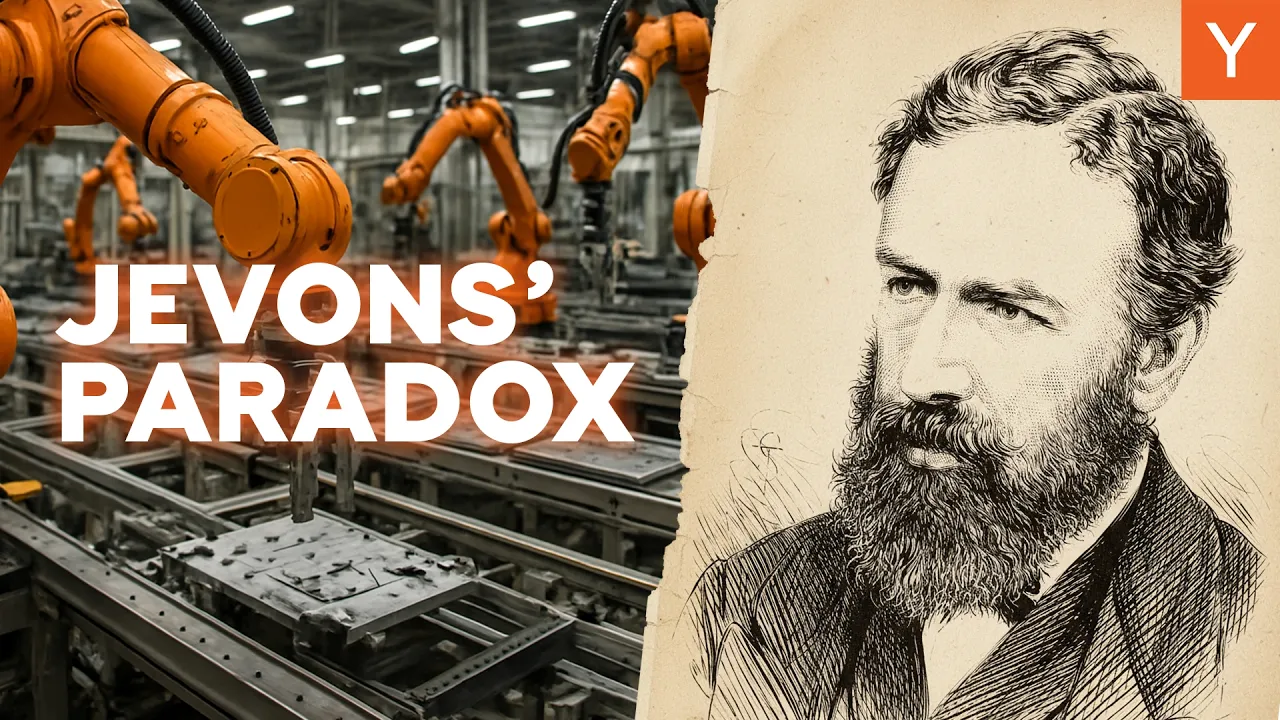
Description
For years, we've heard two major narratives about AI. One predicting the end of human work, the other dismissing it as hype. The truth is more nuanced, and more hopeful. From radiology to software engineering, the pattern repeats: as technology makes tasks cheaper and faster, demand for human creativity and judgment grows. YC's Garry Tan explores what history, economics, and real companies show us— that technology doesn't replace people, it redefines what we can do.
Summary
Generated by claude-haiku-4-5-20251001What Everyone Is Getting Wrong About AI And Jobs
Main Topics
- The AI Jobs Debate: Contrasting extreme perspectives on AI's economic impact
- Jevons Paradox: Historical economic principle explaining how efficiency increases demand rather than reducing it
- Job Transformation vs. Elimination: How AI will reshape rather than destroy work
- Entrepreneurial Opportunity: The emerging landscape for AI-driven business ventures
Key Points
The False Binary
- Doomers' perspective: AI will cause mass unemployment (10-20% spike) within 5 years
- Skeptics' perspective: AI is overhyped and won't fundamentally transform the economy
- Reality: Both are wrong; AI will transform the economy without destroying it
The Radiologist Case Study
- In 2016, AI pioneer Jeffrey Hinton predicted radiologists would be obsolete within 5 years
- Despite dozens of superior AI diagnostic tools, demand for radiologists is at an all-time high
- Why? Cheaper scans increased overall demand for imaging and complex diagnoses from human experts
Jevons Paradox
- Definition: Technological efficiency improvements increase consumption of resources rather than decrease it
- Historical examples:
- Containerization (1960s): Made shipping 90% cheaper → global trade exploded → new logistics industry created
- Cloud computing (2010s): Made infrastructure 10x cheaper → IT jobs transformed (server admins became DevOps engineers)
- AI inference improvements → GPU demand skyrocketed (NVIDIA at all-time highs)
Job Evolution, Not Elimination
- Rote jobs requiring little context will be transformed first (customer service, data entry)
- Most jobs will be refactored, not eliminated—shifting from manual work to supervisory/management roles
- Real-world examples:
- Avoca (AI sales agent): Freed customer service agents for higher-value work
- Tenor (healthcare automation): Transformed data entry roles into patient care coordination and complex case management
Nature of Work Changes
- Unenjoyable tasks (dealing with impatient customers, filling forms) will be automated
- New roles managing "armies of AI agents" will be more engaging and meaningful
- Pattern mirrors internet era: jobs changed, but more interesting ones emerged
Notable Quotes
> "When we use technology to push down the cost of using a resource, in this case MRIs and other imaging techniques, demand for this resource and the services associated with it skyrocketed."
> "As AI makes it cheaper, faster, and easier to do things like analyze MRIs, draft legal documents, and write code, we should expect that the demand for radiologists' treatment plans, lawyers' counsel, and engineers' expertise will broadly increase, not decrease."
> "The future that you're going to build isn't waiting for a permission slip to start. It's being built right now by people who see things that other people don't."
Takeaways
- Don't underestimate AI's impact, but don't catastrophize either—it will be transformative but not economy-destroying
- Expect increased demand for services, not decreased, as AI lowers costs (Jevons Paradox is real)
- Jobs will transform, not disappear—roles will shift from rote execution to management and oversight of AI agents
- The shift will likely improve work quality—automation of boring tasks creates opportunities for more engaging, higher-value work
- Entrepreneurial opportunity is now—AI transformation is happening in real-time, and founders willing to take conviction-based risks will shape the future
- Historical precedent matters—the internet didn't destroy work; it created entirely new categories of employment and value
Transcript
Is AI going to make human labor obsolete? Right now, the loudest voices on both sides of the AI jobs debate are in hysterics. On the one hand, you've got doomers who are convinced we're a couple of years away from near-universal unemployment. [SPEAKER_00] Over a five-year period, it could wipe out half of white-collar entry-level jobs. Unemployment could spike to 10% to 20% in the next five years. [SPEAKER_02] So we're looking at a world where we have levels of unemployment we've never seen before. [SPEAKER_04] On the other hand, you've got people who think AI is an overblown hype that won't fundamentally transform the economy. [SPEAKER_03] Sam has been telling us we know how to build AGI for years. [SPEAKER_03] This just isn't AGI. We're not going to get to AGI next year. Probably not going to save as much money for various workplaces as we thought. [SPEAKER_04] The truth is, both perspectives are flawed. [SPEAKER_04] All the best indicators we have from history, industry, and common sense suggest AI is going to transform the economy, but not destroy it. Let me explain why. I want to begin by telling you the strange story of radiologists. Back in 2016, Jeffrey Hinton, a Turing Award winner and one of the godfathers of AI, declared that people should stop training radiologists now. [SPEAKER_01] It's just completely obvious that within five years, deep learning is going to do better than radiologists. [SPEAKER_01] It's going to be able to get a lot more experience. Hinton is one of the pioneers of neural nets, someone who understood better than almost anyone else what the emerging technology was capable of. But he was wrong. [SPEAKER_04] Almost 10 years later, demand for radiologists hasn't gone to zero. [SPEAKER_04] It's actually at an all-time high. [SPEAKER_04] This is despite the launch of dozens of new state-of-the-art AI products that can detect and classify hundreds of diseases faster and more accurately than humans. What explains that? Well, there are a few reasons that are specific to the medical industry, like malpractice concerns and insurance regulation that requires humans in the loop. But more fundamentally, it turns out that when we gave radiologists the tools that sped up one aspect of their job, demand for their services actually exploded. Cheaper scans means more scans. And more scans means more demand for complex diagnoses and treatment planning from radiologists. In other words, when we use technology to push down the cost of using a resource, in this case, MRIs and other imaging techniques, demand for this resource and the services associated with it skyrocketed. This is what economists call Jevons Paradox. Jevons Paradox was first proposed in England in the mid-19th century. When the economist William Stanley Jevons observed that technological improvements that increase the efficiency of using coal increased coal consumption across many industries. This ran contrary to the assumption of many at the time, that increased efficiency would lower consumption. In fact, what Jevons showed was it can just as often reveal latent demand. And this new demand, in turn, can create entirely new categories of work. There are lots of historical examples of this. When containerization made shipping 90% cheaper in the 1960s, some dock workers were initially laid off. But global trade exploded, and this led to the rise of billion-dollar empires in freight forwarding, logistics, and warehouse distribution. Similarly, when cloud computing made infrastructure 10x cheaper in the 2010s, traditional IT roles transformed. Server admins became DevOps engineers and cloud architects, managing infrastructure at scales that previously would have seemed impossible. And most recently, as algorithmic improvements have pushed down the cost of inference, demand for GPUs has skyrocketed, not cratered. NVIDIA stock recently hit an all-time high. So what does this mean for how we should think about how AI will affect our labor economy? Well, as Aaron Levy, the CEO and co-founder of Box recently wrote, we should expect that efficiency increases will actually mean more, not less, demand for services in a bunch of fields. As Aaron writes, when the cost of doing work goes down, the demand for it goes up. And usually, there's a far more pent-up demand than we realize. In other words, as AI makes it cheaper, faster, and easier to do things like analyze MRIs, draft legal documents, and write code, we should expect that the demand for radiologists' treatment plans, lawyers' counsel, and engineers' expertise will broadly increase, not decrease. This doesn't mean jobs aren't going to change and in some cases disappear. In the future, many roles that might have previously involved manual human involvement will probably look more like supervising teams of agents. Humans will still be in the loop. Andre Karpathy, one of the co-founders of OpenAI, had a similar take. Karpathy argues that AI will first transform jobs that are rote, require little context, and are forgiving of mistakes. Things like customer service agents and data entry. But even then, he thinks many of these jobs will be refactored into manager or supervisor roles rather than disappearing entirely. We're already seeing this in our companies at YC. Avoca, which is an AI-powered sales agent for service-based industries like plumbing and HVAC, is freeing up customer service agents to do higher value work. Tenor, which is automating the flow of paperwork between healthcare providers, is transforming admin roles from data entry to patient care coordination and complex case management. Often these are horribly boring, rote jobs that suddenly can be a lot more interesting when you're managing an army of AI agents. Lots of the tasks AI is automating for these employees, like dealing with impatient customers or filling out routine forms, are unenjoyable. And though some of these jobs will disappear, as with the internet, we can expect generally more engaging ones will take their place. So if you're thinking about starting a startup with AI, what should your takeaway from all of this be? First, the AI transformation is absolutely real and advancing as we speak. Don't be like Paul Krugman, who compared the impact of the internet to a fax machine in 1998. Don't underestimate that change. Second, this isn't the time to indulge in fantasies about fully automated luxury communism or the imminent collapse of the entire human economy. Don't just sit on your couch waiting for a UBI check. AI is the next thing, as big as, if not bigger, than the internet itself. The future that you're going to build isn't waiting for a permission slip to start. It's being built right now by people who see things that other people don't, just like you. Every great company starts with a founder who decides to take that leap and bet on their conviction. The only real question is whether you'll be one of them. Thanks for watching, and we'll see you next time. In other words, as AI makes it cheaper, faster, and easier to do things like analyze MRIs, draft legal documents, and write code, we should expect that the demand for radiologists' treatment plans, lawyers' counsel, and engineers' expertise will broadly increase, not decrease. This doesn't mean jobs aren't going to change and in some cases disappear. In the future, many roles that might have previously involved manual human involvement will probably look more like supervising teams of agents. Humans will still be in the loop. Andre Karpathy, one of the co-founders of OpenAI, had a similar take. Karpathy argues that AI will first transform jobs that are rote, require little context, and are forgiving of mistakes. Things like customer service agents and data entry. But even then, he thinks many of these jobs will be refactored into manager or supervisor roles rather than disappearing entirely. We're already seeing this in our companies at YC. Avoca, which is an AI-powered sales agent for service-based industries like plumbing and HVAC, is freeing up customer service agents to do higher value work. Tenor, which is automating the flow of paperwork between healthcare providers, is transforming admin roles from data entry to patient care coordination and complex case management. Often these are horribly boring, rote jobs that suddenly can be a lot more interesting when you're manning an army of AI agents. Lots of the tasks AI is automating for these employees, like dealing with inpatient customers or filling out routine forms, are unenjoyable. And though some of these jobs will disappear, as with the internet, we can expect generally more engaging ones will take their place. So if you're thinking about starting a startup with AI, what should your takeaway from all of this be? First, the AI transformation is absolutely real and advancing as we speak. Don't be like Paul Krugman, who compared the impact of the internet to a fax machine in 1998. Don't underestimate that change. Second, this isn't the time to indulge in fantasies about fully automated luxury communism or the imminent collapse of the entire human economy. Don't just sit on your couch waiting for a UBI check. AI is the next thing, as big as, if not bigger, than the internet itself. The future that you're going to build isn't waiting for a permission slip to start. It's being built right now by people who see things that other people don't, just like you. Every great company starts with a founder who decides to take that leap and bet on their conviction. The only real question is whether you'll be one of them. Thanks for watching, and we'll see you next time. Thank you.