If You Don't Understand Luxury, You Don't Understand Business
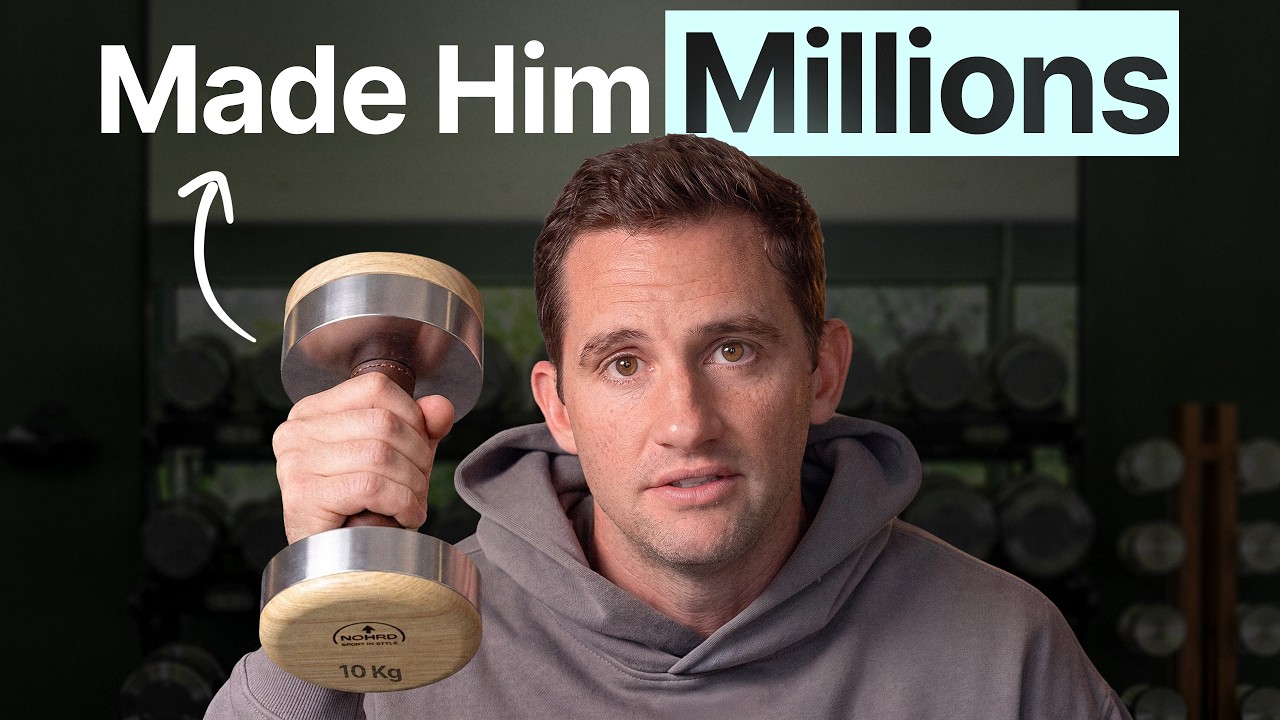
Description
What does it actually take to win luxury clients? Chris Howell, CEO of SPX Gym Design, has designed gyms for some of the wealthiest hotels in the world. In this episode, he breaks down the art of world building, what luxury clients are really craving in hospitality, and why a great gym can be the reason someone books a hotel and keeps coming back. The hospitality business is moving toward tailored experiences. You're not serving every guest, you're serving the right one. If you're building in the luxury space, this one is for you. Enjoy the episode! -------------------- Make ads that win (without getting lucky): http://motionapp.com Turn your customer support into a revenue engine: http://richpanel.com -------------------- 📱Follow Us On Social: -------------------- Instagram Alex https://www.instagram.com/alexgarcia_atx/ Brian: https://www.instagram.com/brian_blum/ Twitter www.twitter.com/@alexgarcia_atx www.twitter.com/@brian_blum1 -------------------- 🔥Want Free Game? Send us a picture of your Apple & Spotify reviews to podcast@marketingexamined.com and we'll make you a playbook in a future episode. -------------------- If you’re a creator that wants to make $10k/mo https://hitmakers.biz -------------------- 📈Growth Playbooks, Directly To Your Inbox For growth playbooks, deep dives, and marketing case studies, get subscribed at https://www.marketingexamined.com -------------------- CHAPTERS: 00:00 - Intro 00:45 - Chris Howell's Approach to World Building & Designing Experiences 06:46 - What Are Luxury Clients Craving in Hospitality? 11:30 - Hotel Gyms as a Revenue & Retention Strategy 18:40 - Constraints in the Hospitality Business 20:25 - The Moodboard Process: Where Inspiration Comes From 27:25 - Niching Into Luxury & the Opportunities 32:50 - The Rise of Membership Clubs & Country Clubs 37:21 - Keeping Guests on Property: The F&B Play 40:10 - Working With Complex Clients & Stakeholders 45:40 - What Gyms Will Look Like in 2035 #growthmindset #grow
Summary
Generated by gpt-5.6-terraAt-a-Glance
- Verdict: Skim
- Core thesis: Luxury wins when a business designs a complete, operationally reliable experience for a narrowly defined customer—not merely an expensive product or amenity—and then makes the differentiated payoff visible and memorable.
- Why it matters: The interview contains reusable lessons on premium positioning, experience design, stakeholder-aware enterprise selling, and using high-quality amenities as retention and asset-value levers rather than treating them as cost centers.
- Best use: Use it as a source of strategic analogies for narrowing OpenClaw or AI-ops positioning, designing premium user journeys with low friction, and packaging proposals for multi-stakeholder buyers; do not watch for technical fitness or hospitality detail.
Executive Summary
Chris Howell, CEO of luxury gym designer SPX, argues that luxury is fundamentally a hospitality discipline: start with the guest’s expected essentials, eliminate the predictable disappointments, then create one or two highly distinctive moments that make the property identifiable, shareable, and worth returning to. A luxury gym is not valuable because it has costly equipment; it is valuable when it fulfills the brand promise of the hotel, residence, club, or property around it.
His commercial case is that amenities such as high-quality gyms are retention and pricing tools. They can keep guests on-property, justify a higher nightly rate, differentiate otherwise similar hotels, and potentially create recurring membership revenue. He cites luxury hotel buildouts in roughly the $200K–$550K range, with larger projects exceeding $1M, but frames the decision as return on asset appreciation and guest lifetime value rather than as an equipment budget.
The strongest operating lesson is focus. SPX spent roughly six years at $100K–$300K revenue with little profit; after Howell committed to serving luxury clients only, the business exceeded $1M and scaled. He attributes the unlock to becoming unusually specific about the customer, standards, and category rather than accepting adjacent work that would dilute expertise.
The latter portion offers two broader patterns. First, enterprise proposals should let every internal reviewer advocate for the supplier: visually orient the owner, provide operational detail for staff, and show budget, cash-flow timing, and ROI for finance and development. Second, premium experiences should be technologically capable but interactionally quiet: users reject login screens and cumbersome UX, while invisible access, personalization, and data capture can improve service without turning a restorative physical space into another screen.
Key Takeaways
- Claim: Premium experience design should begin with non-negotiable functional basics, then add a small number of brand-specific “hero” moments rather than substituting novelty for competence. | Evidence: For the Santa Monica Proper gym, SPX first corrected common hotel-gym failures—such as limited or mismatched dumbbells—by providing repeated 5–100 lb sets, then added unusual equipment such as a belt squat and Kaiser machine that guests recognize as distinctive. | Implication: For any premium product or workflow, remove baseline friction and failure modes before investing in memorable differentiation; a flashy feature cannot compensate for a broken core promise. | Caveat: The speaker does not provide controlled evidence that any particular equipment item drives bookings; the argument is based on operator experience and customer anecdotes.
- Claim: Luxury customers value speed, convenience, privacy, optionality, and a credible “wow” factor they can share with peers. | Evidence: Howell describes a high-end guest who values an uncrowded, private gym with everything needed on-site; he says Alex Hormozi reportedly stays at the Santa Monica Proper specifically because of its gym, rather than using a conventional nearby gym. | Implication: A premium offering should earn its gatekeeping and price through a materially better outcome after access—not merely through scarcity, exclusivity language, or an elevated price point.
- Claim: Wellness amenities can be rational investments when treated as property-level retention, rate, and recurring-revenue infrastructure rather than isolated capital expenditure. | Evidence: Howell estimates smaller luxury hotel gym buildouts at approximately $200K–$300K, member-club projects around $300K–$550K, and some projects above $1M. He argues that a better gym can support higher room rates, make guests choose one comparable hotel over another, and enable hotel membership programs. | Implication: When selling an operational improvement into a premium business, tie the proposal to retention, pricing power, property value, dwell time, and recurring revenue—not just feature quality or implementation cost. | Caveat: The cited “3X” asset multiple/payback analogy is illustrative, not a documented benchmark or underwriting model.
- Claim: Extreme niche focus can be a growth unlock because it concentrates standards, reputation, social proof, and execution learning in one buyer category. | Evidence: Howell says SPX remained around $100K, $200K, and $300K in annual revenue for six years while making no money; after deciding it would only serve luxury, the company broke $1M and subsequently scaled. He now generally declines projects below a minimum unless they are unusually strategic or personally compelling. | Implication: Ken should prefer a sharply legible wedge over broad “AI for everyone” positioning: specialization compounds authority and can make selective refusal a demand signal rather than lost opportunity. | Caveat: This is a founder-specific retrospective; niche selection alone does not establish causality absent market demand and strong delivery capability.
- Claim: Original premium design comes from translating signals from adjacent categories, then pushing creative concepts through manufacturing and operational constraints. | Evidence: Howell looks to Porsche, classic Ford, textiles, restaurants, and hospitality interiors rather than copying gyms. His team starts at “100%–150% creativity,” then expects engineering and manufacturing realities to reduce the concept to roughly 70%—still far above a market operating at a “10” creativity level. | Implication: Look outside the immediate agent/AI-ops category for interaction, service, and brand patterns, then translate them into the native workflow rather than importing surface aesthetics. | Caveat: Cross-category borrowing only works if it remains coherent with the target user and can be executed reliably; visual inspiration cannot override structural, acoustic, or operational requirements.
- Claim: Enterprise sales collateral should be designed for the buyer’s entire internal decision chain and should make champions able to repeat the seller’s case accurately. | Evidence: SPX aims to send a proposal shortly after a discovery call and structures it for an owner who wants visuals, a chief of staff who will read details, and a development/finance leader who needs budget, ROI, cash-flow timing, and transaction liability clarity. | Implication: For multi-stakeholder AI or services sales, prepare a modular, highly visual proposal with separate executive narrative, implementation plan, financial case, dependencies, and procurement-risk answers; do not force a junior evaluator to recreate the pitch internally.
- Claim: The winning future of premium fitness technology is likely invisible or near-frictionless: preserve analog calm while embedding useful automation, identity, and data collection. | Evidence: Howell criticizes fitness systems that require multiple screens or logins before “quick start,” compares adoption resistance to Ritz-Carlton’s initial move from physical keys to key cards, and suggests Apple Wallet-style identity, access management, computer vision, and equipment sensors as less intrusive alternatives. He cites Voltra as a compact digital-resistance device that can vary resistance and reportedly make workouts more time-efficient. | Implication: For high-trust or premium AI systems, make the automation disappear into the flow: minimize explicit setup, avoid unnecessary dashboards and logins, and treat permissions, observability, and privacy as part of the experience design. | Caveat: Computer vision and sensor-based tracking raise privacy, consent, and data-governance issues that the conversation acknowledges only indirectly.
Detailed Brief
Design and operational constraints that determine whether the promise survives execution
- Claims: Structural capacity, acoustics, and ceiling height must be resolved before visual ambition; these are hard constraints rather than design details.; A gym placed above guest rooms can create noise problems that an acoustic consultant cannot fully solve, while ceilings near eight feet compromise pull-ups, overhead work, and equipment selection.; When budgets are constrained, SPX protects the few high-use, high-visibility elements—racks, benches, dumbbells, and the hero image—even if it compromises elsewhere.
- Evidence: Howell calls out seventh-floor gym concepts where the floor cannot support the intended equipment and notes that SPX’s lowest-ceiling project was roughly 8.2 feet, requiring customized uprights.; At Gurney’s, SPX worked under a narrow budget by prioritizing the most impactful pieces and visual signature rather than spreading spend evenly.; The Gurney’s concept used a Bentley-style stitch, stainless-steel dumbbells, and a driftwood theme to connect the facility to the property identity.
- Caveats: Howell says he became overly committed to the Gurney’s pitch and the project generated little direct profit, even though it may have created later halo effects.; A portfolio project can justify below-market economics only if its downstream reputation value is explicit and bounded; otherwise it becomes unprofitable vanity work.
- Implications: Separate immutable delivery constraints from adjustable creative choices early in an initiative.; For showcase projects, define in advance the maximum acceptable sacrifice in margin, the intended proof asset, and the mechanism for converting attention into subsequent sales.
Membership clubs, on-property dwell time, and the limit of category expansion
- Claims: Howell believes membership clubs are becoming overbuilt and warns that calling something a club does not justify premium pricing.; The better strategic question is whether the operator can serve a specific audience with operational excellence, not whether it can add every fashionable revenue stream.; Country clubs are a notable white-space opportunity because they have affluent customers, attractive real estate, and often underdeveloped fitness/wellness facilities.
- Evidence: He points to Soho House’s wellness investment as a model: keeping members on property from early in the day increases opportunities for incremental spend and member lifetime value.; He argues that many hospitality operators should avoid building a spin studio simply because one is fashionable when SoulCycle may already exist nearby; a run club followed by coffee and a croissant better leverages hospitality and food-and-beverage strengths.; He characterizes wellness F&B, such as smoothies, as potentially low-margin but useful as a post-workout reward and experiential upsell.
- Caveats: The interview offers directional operator logic rather than financial data on country-club demand, club failure rates, or F&B unit economics.; Large chains face a distinct challenge: scaling a custom experience across thousands of locations requires changing brand standards, contracts, and approvals rather than executing a single bespoke build.
- Implications: Avoid adjacent-market expansion merely because the category is popular; only add layers that reinforce existing operational strengths.; Treat “keep users in the ecosystem” as a measurable strategic mechanism, but distinguish between retention-driving services and costly feature sprawl.
Notable Concepts & Terms
- Hospitality-first design: The operating premise that a gym or amenity must be designed around guest experience, service, and emotional payoff—not equipment procurement alone.
- Hero image / wild moment: A visually recognizable, unusual feature that gives guests a reason to remember, share, and choose a property again.
- Expectation-to-payoff alignment: The requirement that a premium hook, price, or access barrier be matched by a genuinely superior experience; otherwise the customer experiences misalignment.
- Operations, design, execution: SPX’s three-part process: practitioners ensure usability, designers contribute cross-category taste, and execution translates the concept into a buildable facility.
- Dwell time: Time a guest or member remains on property; Howell treats it as a driver of incremental spending and lifetime value.
- Pin-loaded / selectorized equipment: Weight-stack machines adjusted via a pin; used in the discussion as an analogy for familiar, low-friction interaction versus more complicated digital equipment.
- Voltra: A compact digital-resistance training device cited as an example of technology that can deliver differentiated workout performance without conventional large weight stacks.
- Stakeholder-mapped proposal: A sales document intentionally built for the owner, operational reviewer, and finance/development approver, enabling each to find and relay the case relevant to them.
Operator Notes / Why Ken Should Care
- Audit the OpenClaw/AI-ops product journey for “hotel gym” failures: baseline promises that users reasonably expect but that currently fail, create friction, or require workarounds before adding novel capabilities.
- Define one narrow, premium ICP where Ken can credibly become the category authority; identify adjacent opportunities to decline unless they directly compound that authority or create a deliberately bounded showcase asset.
- Build a reusable champion-enablement proposal template: a one-page visual outcome, stakeholder-specific sections, ROI logic, implementation dependencies, security/authentication answers, and commercial timing.
- Adopt a friction budget for agent workflows: remove nonessential logins, configuration screens, and context-switching; prioritize persistent identity, permission-aware access, and invisible automation.
- Before deploying computer vision, behavioral analytics, or passive telemetry in any premium environment, establish explicit consent, retention rules, data ownership, and a clear user-value exchange.
- For any premium service layer, measure whether it increases retained usage, repeat purchase, or ecosystem dwell time; do not rely on aesthetic appeal or engagement anecdotes as the investment case.
Source/Metadata
- Title: If You Don't Understand Luxury, You Don't Understand Business
- Transcript words: 18194
- Duration seconds: 3347
- Timestamp note: No usable timestamps or chapter markers were present in the supplied transcript; substantial portions of the transcript are duplicated.
Transcript
The moment I said, "We're only doing luxury," we broke a million dollars, then we were scaling from there. If I could go more niche, I will. Chris Howell is the CEO of SPX. They've designed gyms for some of the wealthiest clientele in the world. Today, he reveals what it actually takes to win luxury clients. Alex Ramosi is really into gym equipment. He stays at the Santa Monica Proper Hotel because he loves the gym. I go, "Alex, we did that gym." He goes, "It's the only hotel I stay at when I'm in LA, and it's because of the gym." You go to a hotel, it could be aces, and then you go to the gym, and it's just, what happened? You have a sick hook, and then the payoff is not what you promised. Chris, welcome to The Pot. Thanks, man. Super excited to have you, man. So I wanted to get right into your approach to world building because some of these gyms that you have built for the highest-end clients in the world look like a dream. Every single one of them seems like someone's end game, right? You made it, and then this is the place you're going to work out. So I want to talk about what is your approach to world building, where do you start, and how do you arrive at that finished project? Well, thank you for saying that. That's pretty cool. I think it really comes back down to where we started a little bit, which was everything's rooted in hospitality and the guest and member experience. One of the things that, when I was younger, me and my brother would always fight over was who's going to key card into the hotel on a vacation. Because you know there's a bed, you know there's a TV, but what is that missing factor that you think is going to be really interesting? That's what we try to drive through the gyms. You know there's going to be, well, you hope that, especially in a hotel experience, you know there's going to be a certain level of dumbbells, there might be a leg machine, but what are the novel pieces that you're like, "Dude, this is sick?" So, it really is fusing the hospitality, the design, and the gym world. That's how we try to think about it. Yeah, but, I mean, so a client, I come to you and I'm the Proper Hotel in Santa Monica, and I say, "I want a gym that stands out." What is your process for arriving at that next step? Yeah, so we take a general first principles approach. So it's like, how would a Proper Santa Monica guest, or when they roll out their membership, how would they define a gym? What needs to be here? And what are the things that typically let these folks down, right? So in hotels, it's usually dumbbell ranges of, "Oh, they only have five through 50," or they're mismatching, or they're not the same. Yeah. So it's like, all right, cool, we're going to do five to 100. We're not going to mess around, and there's going to be multiple, you're never going to run out of dumbbells. There's dumbbells all over this place at this hotel. And then it was, how do we drive the brand, the property's brand, through it? So, when we think about it, it's like, what's going to be in the gym is we're going to have upper body pieces, we're going to have lower body pieces, we're going to have things like that. But for there, we had a belt squat, we had a Kaiser machine, things that people would be like, "I've only seen this on TV, on Netflix, on Full Swing." Yes. And that's the novelty where people come back and say, "When I'm in LA, I'm only going to stay at this hotel." That's always our goal with hotels. Or if someone sees a photo of it, I know exactly where that is. So that's our process from, "Hey, we want to do a gym, we need a gym that's going to be amazing." We're going to start at the essentials. What is the essentials package? And then once we check those boxes, then it's like, how do we introduce those wild moments? Yeah, yeah, yeah. It's all about hooks. I was going to say, it's very... no matter what it is, you got to give them that one singular thing to remember about the experience. And I really like what you just said about this could only be here. This is a very recognizable image. But my question would be, how do you design that image, right? Because we live in the taste economy. I think we're increasingly drifting towards everything feels slop or incredible. And that divergence is going to define a lot of what's to come. But you're finding a lot of success in that, this is a very unique, eye-catching space. How do you design those experiences? How do you find that? Is it texture? Is it a feng shui, right? How do you design those? Where is the inspiration coming from, I guess, right? Yeah, or the process. I think one thing our audience loves hearing about is the artist's process. What is a process they can maybe learn from to design similar cool things? Yeah. Well, I look outside of our industry. I don't look at, it's exhausting. If I'm looking at gyms, early on I'd be like, "Oh, this gym did that." It's hard to get an original take, I guess. So, I look a lot in automotive. What is Porsche coming out with? What are they doing? And how does that customer react? So, I see what's important to that customer, and are there through lines? Something about the details or how shifting more analog versus digital. For gyms, there's an audience that just likes the sound of something more analog versus, "I have to log in and then..." It doesn't matter what the technology is. They just prefer the analog experience, or lose the TVs. So I think it's important to develop a take when we're talking to our clients or understanding what do you see? What is your vision here? And then we take that vision and be like, all right, how do we get them there and pass that? So we take a look externally within automotive. Honestly, textiles are huge too. So I'll go deep on that stuff, and then I'll go back to different manufacturers and I'll push them hard. And I'll be like, "Hey, here's a render of something. Can this be done?" So I come up, start out 100%, 150 creativity, and I get manufacturing, engineering, reality, drive it down to 70%. But if the market's operating on a creativity level of 10, the gap is going to be still significant. Yeah, it's interesting. I feel like Austin has had a lot of these insane futuristic renders. We'll have the Waterline, this new building in Austin, tallest building in Texas, and there's this park that is just built outside of it, and it was this massive civil infrastructure project. Dude, the renders on this thing looked like utopia, right? You're just like, "Oh my gosh, if this is actually going to come to be." I checked it out, it's solid. So that 70% rule, I think, is something that developers, commercial real estate people are definitely using as a marketing tactic very effectively. But the gyms that you're building, I think, probably get closer to 90%. So you're obviously very tapped into the luxury consumer. What would you say those luxury consumers are craving right now in hospitality experiences? I would say speed and convenience and options. So, at the high level, what those folks want is they want the ability to come in and just be catered to. You were telling me a little bit off camera about an experience you had where someone walks out. What you were talking about had nothing to do with the gym. Right. if this is actually going to come to be, I checked it out, it's solid. Like, so that 70% rule, I think, is something that developers, commercial real estate people are definitely using as a marketing tactic very effectively. But the gyms that you're building, I think, probably get closer to 90%. So what, you're obviously very tapped into the luxury consumer. And what would you say those luxury consumers are craving right now in hospitality experiences? I would say speed and convenience and options. So at the high level, what those folks want is they want the ability to come in and just be catered to. You were telling me a little bit about, off camera, about an experience you had where someone walks out. What you were talking about had nothing to do with the gym. Right. It was all about the hospitality. Yeah, the experience. And so when people walk in, they want to feel like they're being catered to, and they want to have, okay, cool. I've seen this stuff before. It's great. And then they want the wow factor. And then what's even better is that they can go tell their friends, be like, the club I belong to, the hotel I stay at, they have this. Let me show you. That's a really powerful thing. And same thing as marketing. It's like when you share something, there's that innate thing. It's like, I'm sharing something no one's seen before, and they associate it with that person. And so it's the same thing that happens at the highest end of luxury. It's like, oh, have you stayed at, this $4,000 in a hotel? There's a barrier of entry. You have to be in that demographic, the psychographic, and then what is there? And if there's even a further filter of, you have to be a member there, you have to own real estate, you have to pay an insane fee, you have to put something on the other side of that that's super valuable that people are like, look at this. Right. It's like, once you gatekeep it, once you limit the supply, you actually have to deliver on the other side of that experience. Otherwise, it's misalignment, which is what our premise of our company is. You go to a hotel, could be aces, and then you go to the gym and it's just, what happened? Yeah, totally. That misalignment happens in our space, happens, again, you have a sick hook and then the payoff is not what you promised. And one thing that I'm curious about is because when I go, so I stay at the Santa Monica Proper every time I go to LA. Yeah. And, not a flex. And I honestly never really used the gym, though. I, for whatever reason, go to the Equinox Santa Monica or the one in Manhattan Beach when I'm going down south. And what are some ways that these hotels are looking at that dynamic? Because I think there's twofold, right? The Proper launched a membership to their wellness stuff, right? That's an insane product to actually try and take to market. And they must have a lot of conviction that people are going to pay for it versus how are they stealing people away from their traditional routine, like an Equinox or a Lifetime Fitness or a Crunch Fitness down the road? Yeah. It's usually solving a large pain point. So, from the operator side, creating the gyms or an amenity is just a sunk cost on that. But adding a membership, it rationalizes the capital expenditure to create something memorable or interesting. So now you have a revenue-generating line that otherwise wouldn't be there, and it's recurring. So usually, the pain point that something like that is solving is crowding, right? Crowding at Equinox and Lifetime and Crunch is a huge pain point, especially for that customer that has an average daily rate of $700 or something per night. Yeah. Right? Not to further your flex. Yeah. But... 1,200 in peak. Yeah. Right? So one is, okay, let me go check out the hotel gym. There's four people in here. That's interesting. And it has everything you want and more, maybe. And it's private. Yeah. It's a tailored experience. And that's where I think overall hospitality is moving, that it kind of feels customized in a way where you're not trying to serve every guest. You're trying to serve a certain guest that would stay here. And so I think that's what Santa Monica does really well. Alex Ramosi is really into gym equipment. And he's telling me about how he stays at the Santa Monica Proper Hotel because he loves the gym. I go, Alex, you know, we did that gym. He goes, you're kidding. He goes, it's the only hotel I stay at when I'm in LA. And it's because of the gym. Now, that's a different thing. You're quite popular, but he can't go to an Equinox. It would be insane. So after he told me that, I said, hey, can you say that one more time for the camera? Right, right. Give me that snippet, please. Yeah, because that's something he would say. But I think one thing is, in that use case, is privacy, and the general concept would be just, it's tailoring for the guests that they're trying to attract. Yeah, yeah. That makes a lot of sense. And I think it's fascinating because we're entering this K-shaped economy where there's either the luxury consumer or there's the mass market consumer. And gyms seem to be a major selling point for different properties. Do they view that as an incremental foot traffic driver? Do they think, I'm going, do they think there's a lot of whore-mosis out there who are saying, nah, I'm literally going to go to the Proper because of the gym? And is that something you're experiencing across the entire industry? I think one is retention, yes. So more of a retention rather than acquisition plan? Yes. Yeah. Because, one, they'll be able to charge more per room per night, right, if they have a stronger thing and it's sought after. And if you think about comps, if there's a hotel that is similar pricing, similar amenities, and it's right next door to another one, and you're into health and wellness, that would be a separate thing. But most people now are interested in some form or fashion of it. It's a huge, huge market share. And the gym, it's just lights out, right? And you're like, I'm just going to stay here. And then the consumer surplus on that is, if it's $25 more, $50 more per night, and there's still value there, you still will pay the premium. So once you go, and then it's the retention. It's so much easier if you have a hotel that you have a great experience at, and you're just like, I'm going to go to Austin, I'm just going to stay at that hotel. Right. And you're like, 100%. You've already done the research, the diligence, you know it's a good product. It's like when someone's like, I really like Four Seasons, I'm going to just go, is there that Four Seasons entered the city. Yeah. And you're trusting the brand to do that. So I think the gym is a good, for a lot of people it could be, but it's a strong value prop to be like, I'm going to go there and just, I know the product. Yeah. I mean, it's a huge profit center as an investment because if you're driving more retention, that's obviously the key to anything. But at the same time, I think what you mentioned there is that competitor situation where if it's the Proper versus the Chateau Marmont or whatever it is, one of those is a disruptor that's health and wellness-focused, is generally going to attract a better crowd. Now all of a sudden, because of that gym investment, they're winning a lot of their target demo in that if then. Yeah. And if you think about if the gym costs 200K or 300K, but the multiple on the asset is 3X, it's, it's, it's, it's like the paid ad, the economy, it's like, all right, I paid $1, get three back. as an investment because if you're driving more retention, that's obviously the key to anything, but at the same time, I think what you mentioned there is that competitor situation where if it's the proper, versus the Chateau Marmont or whatever it is, one of those is a disruptor that's health and wellness focused, is generally going to attract a better crowd. Now all of a sudden, because of that gym investment, they're winning a lot of their target demo in that if then. Yeah. And if you think about if the gym costs 200K or 300K, but the multiple on the asset is 3X, it's, it's, it's, it's, it's like the paid ad economy. It's like, all right, I paid $1, get three back. Is that an average ticket price for a gym buildout? Like a super luxury gym buildout? Yeah, somewhere around very smaller size things, 200K and then 300K, lower end 300K for hotels and things like that. And that would be a higher-end component. And then members clubs, where they have more square footage, say 4,000, it can get up to the 300K to 550K range. And then there was, there's a couple other, yeah, there was, I was going to name it. I was like, I don't know if they'd be comfortable with me naming it, the actual price, but there's projects that we're working that could get up to a million plus. What's the most expensive residential gym you've built? Private? Yeah. There's one in Austin, Texas that was a private residence. Oh, I know, I know. Yeah, I know. That one. Friend of the pod. Yeah, friend of the pod. We don't need it out of, yeah. No, but the thing is that it's important to him. He anchors, he recently, I mean, talk about an ROI. They got, everyone knows that setting. It's a part of the character. And so, I think it's actually, that's a huge bull case for investing in something, a space like that. Yes. And he's not, it's a set. He's not the only one. He's not the only one. There's plenty of our private residential clients that spend six figures, between 100, 150K on homes, on their home gym setup. Yeah. And they are the titans of the universe. Those are the people at the top. And it's just, it's not shocking when I'm like, oh, that person runs this thing and he wants to do it right. He starts every single day in there. Yeah. So those are, we usually price anchor people like that, but like, hey, for homes, our clients, they usually are spending 100K plus on this. Yeah. Yeah. Yeah. What's the most outrageous request you've ever gotten for a gym? I mean, hyperbaric chambers right now are pretty insane, but they're coming from Croatia or just crazy places, and they come in like submarines. So you have to stop the building of your house to move it into the room, and it's never coming out. Wow. Yeah. They're insane. But yeah, hyperbarics are pretty wild because of the logistics of it. And this is our hospital, medical, they're at hospitals. And so they're now in your house. That's crazy. It's pretty insane. And those run at, there's ones that are a little scammy. But when you get into the real atmospheric pressure, those are going to cost like 80 minimum. And then the really nice ones with, Emirates business class seats in them, they're going to be close to 150 grand. That's insane. They'll have TVs and stuff. Yeah. Yeah. Yeah. They're getting really popular in professional settings, like pro teams and things like that. Right. Right. Right. Wow. That's 150 bands on one piece of equipment. And you're spending 40 minutes or an hour in it per day. So you got to use it. Yeah. There's even pet hyperbaric chambers right now too. No way. You got the luxury dog hyperbaric chamber. That's when you know, man, we might need a revolution. So people, between that and the Monaco yacht picture, I think we're reaching new levels here. All right. So over the last two years of building Nibble, shipping nearly 8,000 UGC ads and getting performance data on every single one of them, it became super clear there are two types of brands: those that understand creative volume and those that don't. The core difference was what they focused on. Brands that focused on volume plus hit rate were never complaining that Meta changed the algorithm. Their stuff just worked. And anytime we did work with one of those savvy brands, it was always on the same platform: Motion. Motion is by far the best tool to optimize your creative pipeline, provide structure, visibility, and insights that your creative team needs to make better decisions. I like to think of it as what Meta would actually show you if they cared about your success. All the key metrics like three-second stop rate, winning angles, formats, competitor research, it's all built into their platform so you can make quicker and better decisions. They even just launched our new AI agent, Runneth, which functions as a 24/7 creative strategist, providing recommendations to your ad account. Y'all make sure to go check them out at motionapp.com. All right, let's get back to the episode. So one of the things we talk about a lot on the pod is constraint forces clarity. And if you set constraints, then you will become more clear in what you're communicating, what you're working on, whatever. How do constraints play a role in your gym design? Yeah. There's basically three things that we look at. You have to tackle this before we even talk through how amazing and how you want it to end up. It's basically the structural limitation of the building. If you want it on the seventh floor, but the floor can't, the building can't support it, you have a bigger problem. So then you're limited to, it's got to be on the ground floor. So what are you going to move and shake? And what are the concessions and trade-offs you're going to make? The second is the acoustics. And people probably have experienced this, that people will put the gym, say, on the seventh floor, and you ask, hey, what's on the sixth floor? Guest rooms. Yeah, there's no acoustic consultant out there that can solve that. Right. It's impossible. Even in a soundproof room like this, it's very hard. And then the last: ceiling height. I'm sure there's a lot of people that have all this cool gym, but eight-foot ceilings, that's a problem for you. Yeah. I'm cooked. Yeah. Anything overhead, pull-ups, things like that. Anything sub, believe it or not, people try to build a gym in eight feet. It's very challenging with eight feet. Yeah. 8.2, I think, was the lowest one that we've ever done. Oh my gosh. And we had to customize uprights, like straight hobbits. That's crazy. Yeah. Okay, interesting. And then, is there creative constraints that you establish in that creative process? Like, okay, this gym is going to be, because you have gyms in Gurney's in Montauk, but you also have gyms in alpine environments. Are there kind of creative constraints that you'll set in the process of design? It's really the limitation on that is more like budget and then how creative, like how risk, the appetite. Yeah, exactly. Sometimes we'll propose something and they'll be like, I don't know. But then internally we're like, dude, if they do this, this is going to rip. So there's that, and then the budget component. And we had to customize uprights, like straight hobbits. That’s crazy. Yeah. Okay. Interesting. And then, is there creative constraints? Do you establish, in that creative process, okay, this gym is going to be, because you have gyms in Gurney’s in Montauk, but you also have gyms in alpine environments. Are there creative constraints that you’ll set in the process of design? It’s really the limitation on that is more of budget, and then how creative the appetite for risk is. Yeah, exactly. Sometimes we’ll propose something and they’ll be like, I don’t know. But then internally we’re like, dude, if they do this, this is going to rip. So there’s that, and then the budget component. But I think Gurney’s is a good example. That was hard because we had a very thin line of a budget, and so we had to shake and move in order to make that work. And what we did was, we just looked at it, zoomed out, and were like, okay, what are the most impactful pieces here? People are going to be using the benches, the racks, the dumbbells. And what is this hero image that, again, gets people to be like, dude, I have to go see this place? Right? Right. And that’s how we made that budget work. So we actually took some hits on a couple of pieces to make that work. Interesting. Yeah. And do you view that, I mean, one thing when I was building my agency, I took deals that were way under my market value because I knew if I put that logo on my website, it’s going to have, I mean, it’s an investment, just like we’ve been talking about other things. And I’m sure that’s something that you’ve probably had to do along the way with some of these gym builds. You’re like, I might not make a ton of money here, but this singular image on my website will bring in 25 new clients, so it’s worth it. Yeah. I think, or I would say early on, but not really early on. It’s like five years into it. I started to really niche down into this luxury hospitality and high-end multifamily customer. And so I knew I needed more authority and social proof, I guess, so that people would be like, oh, I know that brand, whether they’ve gone there or not, but it’s associated. I’m going to go stay at a Four Seasons. There’s some level of quality there. Yeah. So I knew I needed some more of those. And so, yeah, as we’re also trying to find price equilibrium within the marketplace at that given time, I was like, all right, climbing price, but then I would take a hit. But now we kind of have a project minimum where we won’t take on a project. It would have to be hyper-unique or something that would be more intimate to me and be like, ah, I really, really, really want to work on this, or this is a dream project. I would like to do that. Yeah. But Gurney’s is a good example. It was like, I wanted that one to work so bad for them. There’s only one Gurney’s. That’s a situation where there’s only one venue. Yeah. You’re the name behind the design. Which is funny, as we’re talking about it, I was like, we barely made any money on the project. Yeah. Now directly, indirectly, we probably had some halo effect that happened from that. But that was one I learned from. I fell so in love with what I was pitching. I love Mad Men. There’s nothing that gets me more hyped than doing a pitch like that. Yeah, yeah. And we did a pitch like that, and I was just like, we have to do this. I have to find a way to do this. What was the pitch? It was just me. I wanted to drive a through line of what the Gurney’s member and customer and guest want. And it was like, how does the gym feel like a Gurney’s gym? And at that point, again, I think it was 2019 or something like that, and we were introducing this Bentley stitch and the stainless steel dumbbells, and there was this driftwood theme that we were trying to run through the gym. And I just was like, we have to do this. Nobody’s doing this. Yeah, yeah. That’s funny. I just immediately, you know, the Don Draper line, “Love was made up by guys like you and me.” I make you like Heinz because it’s a family thing. I don’t know if you had that singular one-liner. Oh no, no. I’ve got to get better at that, but maybe that’s where I’ve got to work on viral phrase. So how do you mood board? I’m super curious on some of the sources for imagery, where you kind of do take, because you mentioned Porsche or whatever, but there’s got to be an intimate design process here where you arrive at the mood board of what you’re trying to build for people. Yeah, and basically we have a three-phase approach within our process, which is operations, design, execution. The operations is we have guys on the team from Equinox or Lifetime or a boutique, and they just know how to operate a gym or an experience. That’s their goal. And then we have interior designers on our team. These people, I take them, they’re raw. They come from hospitality, and I’m like, this is a dumbbell. Yeah. You know what I mean? But I don’t need more people that know gym equipment, same to what I said earlier. I want people from different perspectives to be like, oh, in this environment, in this restaurant, we did this. And I’m like, dude, genius. Right, right. So I basically, in these interiors, I don’t formally train them, but over time, as they get more exposure, they’re like, oh, okay, cool. And I learn so much from them as well. Yeah. What you’re saying is, I’m like, here’s my version of mood boarding, and I’m like, oh, there’s levels. Okay. So, I mean, we would go, similar to what other people and designers do, to Pinterest and try to find a color palette, especially in early concept where there’s no definitive brand. You’re just hearing, hey, this is our target demo, this is what we want, and here’s some things screenshotted. Right. And you’re like, okay, how do we create something out of this? So we’ll do a lot of the Pinterest stuff. And again, we’ll use other gyms as a base, but I will bring in more of that lifestyle stuff as well and be like, hey, we could do this, but with dumbbells. We can do this within a half rack. But now with AI and faster rendering times and stuff, we can actually 3D render components within those things and be like, hey, here’s where we’re getting this from. Here’s how this can translate into your brand as well. You said you really liked classic Ford. Here’s a way that we can draw that parallel. And then that might be where the manufacturers will get pissed at me. It reminds me a lot of what we talk about in branding, and the consumer world particularly, is basically, say you’re this brand, Arrae. I think they’ve done such an amazing job because their singular thought was, what if supplements looked good on the beauty aisle, right? And the ability to port things from other industries or adjacent industries really is how you create something unique and differentiated. we can actually just 3D render components within those things. Be like, Hey, here's where we're getting this from. Here's how this can translate into your brand as well. You said you really liked classic Ford, here's a way that we can draw that parallel. And then that might be, that's where the manufacturers will get pissed at me. It reminds me a lot of what we talk about in branding and the consumer world particularly is, say you're this brand, An array. I think they've done such an amazing job because their singular thought was, what if supplements looked good on the beauty aisle, right? And the ability to port things from other industries or adjacent industries really is how you create something unique and differentiated. There's so much opportunity to do that in the CBG world, but it sounds like that's also a very powerful thing you can do in hospitality. Yes. It's all, the opportunities are always adjacent. I always feel like, yeah, yeah. I, you said something earlier about, okay, so I was designing gyms and then I really niched into the luxury residential space. Talk a little bit about finding that niche and how you've been able to stay focused. Because I think it's really powerful. Yeah. You had Albert and Devin on from Promix, right? Yep. Me and Albert really subscribed to this because I worked on Wall Street as a trader and hated it. Hated it so much that I was like, I have to leave. I told my boss, I was like, yeah, I got an offer. And he goes, awesome, you're fired. And I was like, I didn't have an offer. I was just trying to get a raise. It was just not, it was quite unhappy. No way. Yeah. It wasn't good. Okay. And so I'm hanging out outside of a Barclays investment bank over in Midtown here and have my bag, and I'm like, what am I going to do here? So I go, personally, I played college lacrosse. And so I had a formal exposure to higher-end strength conditioning, right? And so I was like, all right, I'll try to become a personal trainer and then I'll do cold-calling sales. So I did that and that was challenging, but. How old were you? I was 24, 25, something like that. Yeah. And looking back on, I was telling Albert, and I was like, I didn't love what I was doing. I hated it, but that was such a stronger fuel force for me to find what I was not passionate about. Because I realized I was searching for passion, but I wasn't good at anything. So I was like, I can't be passionate. I had to start with what are the curios or interest about? I liked fitness. I liked business. I didn't know how to make them work together. So when I was talking with Albert about it, and he's like, he really relates to that. He likes when people are like, yeah, I really hate where I'm at in life because it's just such a strong motivator, right? Because love is intrinsic of comfort. Hate is constant discomfort. And if you're ambitious, you will seek every single day to relieve that pressure. So it took me about two and a half years to figure out what did I want to build for myself. And so when I started, I had an opportunity at So House and they wanted to do this, this was like SoulCycle, Rumble, Barrys. Everyone was paying like 40, $50 a clip to go to a class, plus the upsell of the smoothie at Barrys, right? And so So House was like, hey, we want to do a global concept, roll it out to all the houses, group fitness, Barry style or whatever style it was. And so I was like, all right, cool. I get a call from an architect over in the UK. He's like, hey, mate, I heard you're the fitness guy. I was like, yeah. He's like, what's it, what are the best treadmills? I was like, hey, all right, can I get back to you tomorrow? I go home and I made this 50-page deck of treadmills. And the next day I went in the Peloton store. I was measuring the decibels of it. And so I send this, because I knew how to make a deck from Wall Street, right? And so I sent it to him. He goes, dude, this was amazing. Can you do the same with dumbbells? I started working with this guy for three and a half years, and all we did were the gyms and the wellness for So House. And so I had such great exposure to architecture and design, and then how So House designers and how So House operators thought about hospitality and the guest and member experience. That changed my life. So that's when I left that and I was like, I'm going to do gym design. Very quickly, I was like, I really don't, the standard that was implanted in me was at the highest end. So when I felt substandard, I was like, what am I, I don't want to talk to these people. I know the people I want to talk to. And so that's why I niched into that higher-end experience, because I knew what the expectations were and the standards. But is there ever a temptation, right? Because maybe it's a college athletic facility or maybe it's a Lifetime Fitness that is like the South Lamar one in Austin, which is much more high-end, high-end, I guess. It's hard to say no to those opportunities. And I'm curious if those have come in and is it difficult, or are you so focused on your niche that it doesn't even, you got the blinders on. That question, I feel like, terminates entrepreneurs. A hundred percent. And the focus was the actual unlock of my business. There's a graph I show my team, and for six years, a hundred K, two under K, three under K revenue, making zero money. And then the moment I said, we're only doing luxury, we broke a million dollars. And then we were scaling from there. And so that focus, once I saw that materialize, I was like, I'm never going out of the, if I could go more niche, I will. Yeah. There's always temptation, of course. If University Alabama called and was like, hey, can we do the thing? Yeah, I would love to work on that, but would that be my best work? I don't think so. I think there's other groups that would do well. And when you say that to a person, they're like, why won't you work with us? So they want to. Yeah. Yeah. Now they really want to get higher. Yeah, yeah. But yeah. So I think the focus of the niche is everything. There's temptation, but I think experiencing that was such an eye-opener for me that I was like, I'm only going to focus on this and just spend all my time in being the, how do I become the best in the world at this? I can't do that if I'm splicing my time. What, all right, speaking of the University of Alabama, it seems like we're headed towards this membership club world where everyone's trying to build a third space. Health and wellness is a big component of that. Are there any cool concepts that you've heard about, besides what is out there right now, that are emerging or excited about? I think the membership club world is outrageous right now. Everything is membership club. I don't know what's a bigger bubble, membership clubs or AI. I guess we'll see. Yeah, we will see. I feeling it's going to be the membership club. Yeah, yeah. I think there's a couple of things. The membership club is, you can't charge a premium just cause you're calling a membership club. And I think there's the, you know, it seems we're headed towards this membership club world where everyone's trying to build a third space. Health and wellness is a big component of that. Are there any cool concepts that you've heard about? Besides what is out there right now, that are emerging or excited about? I think the membership club world is outrageous right now. Everything is membership club. I don't know what's a bigger bubble, membership clubs or AI. I guess we'll see. Yeah, we will see. And I have a feeling it's going to be the membership club. Yeah. Yeah. I think there's a couple of things. The membership club is, you can't charge a premium just because you're calling it a membership club. And I think we're sitting at Moss right now, which is a developer with a great operator. That partnership is very powerful, just resource-wise. It's hard to compete. So I think people going into the membership club world have to define who their audience is and what it is. And it doesn't have to be a membership club. It can just be a gym. There's also, why does it have to be this higher-end experience? If this is your gym, and you have no experience in hospitality and operations, just focus on running the gym. There's too many people out there that are like, we're going to have F and B. We're going to do... not like how hard that is. Yeah. It's a completely new layer. Yeah. It's hard enough. It's a very hard business. Now y'all already know we are super skeptical on this show about most AI tools promising the world. They have flashy demos, huge promises, and ultimately underdeliver. But I do have to tell you about one that has blown me away and saved my team countless hours of time, and that's Richpanel. Imagine a 24/7 customer support engine that handles all of your tickets seamlessly, escalates anything requiring human intervention, and here's the best part, upsells your customers in the process. Their onboarding process is frankly one of the craziest things I've ever seen. You input your brand, and within 15 minutes, it has full context on the latest drops, product information, and plugs into all of your apps. That's not even to mention the cost savings. They're like three times more affordable than their competitors. I couldn't recommend this enough. So if you're a brand looking to turn support into an asset, go check out richpanel.com and tell them we sent you. The membership club, I think what I'm excited for, segment-wise, is country clubs. I think they have a lot of white space, similar to hotels and apartment gyms, and then country clubs. I made a post and I got torched because it had so much contrast in it that people totally missed it. I think the substance of it was, yeah, do the golf course. Awesome. But why does the gym have to stink? Right? And I think there are so many country clubs, and they look intra-segment to see what they're all doing. But if they looked outside, there would be awesome low-hanging fruit there. Yeah. Yeah. Yeah. I mean, the country club thing feels extremely natural. That's the best real estate, the best customers. Yes. Are they innovating? This is how I saw the hotel. The one thing that I think I have a good sense on is pattern recognition, whether it's taste or understanding where a segment is iterating or innovating. Hotels, you had the top, you had Soho House, 1 Hotels. Proper came along later, but I'm talking pretty early. Soho House was like, we're going to do health and wellness. And Martin Kuczmerski, the COO over there, and Nick Jones over there, if you look at these guys, they're not fitness folks, but they understand. Yeah. And the British, I feel like the Brits just don't work out. No, no, but Martin, he's a friend of mine. He's a mentor, and I have immense respect for him, a real operator and real hospitality guy. And these guys, they don't work out, but they understood that dwell time, you have to stay on property if you're going to drive incremental spend. If you can start your day earlier, the average lifetime, the LTV of that member or that customer or whatever, is going to be higher than someone that's drunk, sleeping in. They go off property to Barry's Bootcamp, and then they have all these temptations. They're never coming back. It's hard. They understood that. They're like, we have to just have everything in-house. And so they started that, and that was awesome. And so country clubs, we're kind of seeing the same. The highest-end guys are like, yeah, sure, if your husband or someone is on the course, what does the rest of your family do? We want them to be excited to be on property or be at the club. So we're seeing that pattern arise again. Do you, F and B, it seems like you don't do F and B, right? But it's probably a huge part of your negotiation with these different properties, it sounds like. Is that a profit center for them? Incremental spend is obviously super important. Yeah. But. As far as, for example, the wellness take on F and B is hard margins. It seems like it. Because it's like, what are you going to charge me, like $14 for that smoothie? And the cost of it is what, like 10? And then you're throwing it out at the end of the day for freshness or whatever it is. Barry's had everyone, a lot of people want to copy the Barry's milk because people talk about the smoothies and all this stuff. Yeah. But it's a pure upsell, and it's a dopamine hit when your endorphins are ripping. You're like, dude, I'm going to go get this. Yeah. I deserve the smoothie that wipes out my entire workout. Yeah. I would be shocked if they're like, dude, our F and B business crushes. It's just part of the experience, and it gets people like, well, I'll do the hard workout for the reward. Right. Right. Yeah. It's part of the experience. Uh-huh. And it's the hospitality. I think the reset for hospitality is like, hey, we're going to do a spin studio. It's like, why? There's SoulCycle down the street. Why are you going to really do this? It goes back to the focus. What does hospitality do really well? They do service. They do F and B. So it's like, okay, just do the run club. And then at the end of the run club, bring them to the club and be like, hey, you get a free coffee and a croissant or something. Right. Right. It's like, that's what you guys do well. There's something you're already a part of. No, I think it's really funny what you just said, because I stayed at The Edition in Miami Beach, and they have an amazing gym. That's not you, right? No, no. We didn't do that. They had an amazing gym. It was such a wow factor because there wasn't an Equinox close, and I was trying to work out, and I'm expecting this shitty, cramped hotel gym. I go in there, I'm like, yo, this is incredible. I got this great workout in, and you're so right how it kept me on property because then I'm feeding for protein afterwards. So yeah, it's super interesting. The fact is that sometimes you read these reviews and stuff, and it's like, you didn't mention anything about the room or the service or anything. You were like, dude, The Edition in Miami, the gym was sick. People will leave a review. That's it. Yeah. It's like the gym and the pool were sick, and the lobby was sick. It's actually a really good point. A lot of the non-room-based experience was incredible. The room was fine. It was a hotel room, right? It checks all the boxes. It's a place to stay, and I had storage for my stuff. Right. I got this great workout in, and you're so right how it kept me on property because then I'm feeding for protein afterwards. So I went and go, so, yeah, it's super interesting. The fact is that sometimes you read these reviews and stuff, and it's like, you didn't mention anything about the room or the surface or anything. You were like, dude, dish in Miami, the gym was sick. People will leave a review. That's it. Yeah. It's like the gym and the pool were sick, and the lobby was sick, and it's actually a really good point. A lot of the non-room-based experience was incredible. The room was fine. It was a hotel room, right? It's what you had every, it checks all the boxes. It's a place to stay, and I had storage for my stuff, right? But that wasn't the real core experience. And this is probably a huge opportunity for disruption in these emerging hotel brands. Because I would imagine there's certain legacy folks, Hyatt, Marriott, whoever, who are only introducing this at their higher-end properties. Is there a dinosaur of the hospitality industry that you think is a sleeping giant here? I think the ones that you just hit, like the Marriotts, and it's hard to roll out thousands of properties. A gym that people are like, why can't you be like, so house? It's like, it's like, it's like you're asking. The Best Western doesn't have a, yeah, it's extremely hard. Yeah. Even if focusing on the luxury level, there's so much scale to that that it's more of redefining brand standards versus custom one-off property solutions. So they have a harder job as far as a portfolio of 10 hotels versus thousands, is that you have to get all that. It's a very corporate situation, which, we love all of our clients. Sometimes there are harder ones than, and I think they would be the first, those larger groups would be the first set too, is they know it's hard to get the ball rolling downhill when you have so many stakeholders that have to approve things. And because it's not a one-solution, it's a brand standard. It's like, how do you roll? Which was, I learned a ton from that experience. You can't just be like, oh, let's roll these dumbbells. I was like, dude, we have these contracts, they have political, they have all these things going on. Yeah. Talk about selling into a difficult environment like that, because I think you've probably had a lot of experience selling to large corporations, large groups, having to get proposals through. What have you learned in that process? I went so deep into sales a long time ago to go through this because I think what people expect with proposals is inherently like, oh, let me go work on a proposal. It's like a week. And people think as names, well, what if you can get a proposal to somebody in 20 minutes after a call? Yeah. That's what I aspire to. It's like, all right, how do we get a proposal quickly over to the SEM? Massive comprehension. It's like, cool, the call, we want 100% comprehension. We want the proposal to match what we just said, but in finer detail. So if someone wanted to look at it and be like, here's what I'm getting. What I believe in is you want a visual process because you don't know who's reviewing this, right? So you want to be able to speak to the owner who's like, I'm not reading this. And then you need to speak to the chief of staff who's going to read it. And then you're going to need the VP of development to be like, well, what's the budget? This isn't the budget. So you need to have a proposal that addresses all these people. Yeah. So you map out the stakeholders and understand the personalities of who are going to read this thing. So you have to have a headline. You have to have a visual kind of situation of what's happening, what they're paying for. And then you need to break out and intrude, like, here's your return, return, return, return, and then map out the cash flow, how they're going to spend their money, when they need to spend their money. Because construction is like, it's either debt or they're raising out of pocket, or they're using debt. So they need to understand when are they going to pay you and at what point. And maybe they transact, maybe they sell the hotel to somebody else. Are they on the hook to pay you? So that all has to be played out for them. And so we spent a significant amount of time to develop that process where we can just send a proposal very quickly once we understand the square footage of what we're working with and the vision. And then, yeah, we go through that process. Sometimes we have to sell or go through the process in person and sell them in person. I enjoy that. But yeah, it's the same thing, whether it's virtual or in person, we do that same process. Totally mirrors exactly what I learned selling into large brands. So it would be that the CMO or the CEO sees a TikTok and he's like, holy shit, why are we not doing this? He goes to the CMO, and CMO is like, well, we could do it. And then that person goes to the head of growth, and they're like, go find an agency. And then head of growth is like, hey, marketing associate, go pull 15 agencies. And so how you show up to the marketing associate is how they're going to communicate to the head of growth. And then in the sales process, you got to be like, hey man, this is why your boss is not going to be pissed that you hired us, right? This is exactly how we're going to make you look good rather than, like you said, the owner. When you're just dealing with a guy one-to-one or a girl, it's so much easier to have a free-flowing conversation. The ROI is already kind of baked in versus, hey, this is your channel dependencies that we're going to need to loop in other teams for, and map out your sampling costs and your ad costs, whatever. You didn't want anyone doing your sales pitch for you. And so you nailed it as, how do you make this person excited to communicate your ideas, to be like, dude, I found these guys. Yeah. We, you know, start with pain points, right? We shouldn't be thinking about this as equipment budget. We should think about it as ROI on asset appreciation. Yeah. Here's why I think this. And you're like, you tell the guy, dude, don't even tell, this is your idea. Go tell him this. Yeah. It's like understand how they're going to have to pitch their boss, and that is intimately your sales pitch, right? It's not necessarily like, this is going to be so great, this is so cool. It's more like, here's these tangible, specific things that I know your business really wants. Yes. And then, by the way, we address every single one of them, right? And since they're not the decision-maker, you have to have a different sales pitch ready to go for those people. Yeah. Totally. Switching gears a little bit, what do you think gyms look like in 2035? What's going to be different? I think the digital fitness thing, it's been like, there's been, it's just been met with friction. I'm sure maybe you see in a hotel and it's a screen and there's arms. You're like, I don't know if I'm going to use this, especially if you click it and it says log in. Oh, I'm out. Awful. I literally do this every day at Equinox. They have their precision run on their treadmill, and I'm like, dude, why am I clicking through four different screens to get to quick start, to be able to just select my workout? Like the UX is actually so atrocious. It's Yeah. Totally. Switching gears a little bit, what do you think gyms look like in 2035? What's going to be different? I think the digital fitness thing, it's been met with friction. I'm sure maybe you see in a hotel and it's a screen and there's arms. You're like, I don't know if I'm going to use this, especially if you click it and it says log in. Oh, oh, I'm out. Awful. I literally do this every day at Equinox. They have their precision run on their treadmill. And I'm like, dude, why am I clicking through four different screens to get to quick start, to be able to just select my workout? The UX is actually so atrocious. It's insane. It's insulting. It really is. Because you're just like, why does this suck? The incentives are there for this to actually be great. And then if you're Equinox, you're collecting so much proprietary data on me. That login thing is a really good insight. What's the solve? It sounds like there's something you're seeing. Yeah. You have to back out into being like, how are people experiencing the gym today? One of the things that I look at a lot, it's just like, Horst Schultz. He was the CEO of Ritz Carlton. He talks about going from a physical key to the scanning key. And the adoption was like, you're giving me this piece of plastic? I'm paying this money. And then they went back to the physical key, and then it took hold. Then he had to change all of them. And the standard is, if something is like the physical key, people liked having it, they were used to it. Same thing in the gym: you go to a pin-loaded machine to start and go on that thing. It's like driving automatic: turn the car on, go. The moment there's friction or abrasion or, like, I don't know how to key into my room, this is not working, the frustration comes out. And if your brand says X, Y, Z on the top, that sucks. Yeah. It takes half a second to make that decision. I don't use it. And then you need an overwhelming amount of a friend to be like, no, you should try it. No, no, no, it's great. Not great. So you have to meet these people where they are. It doesn't matter how good your product is if you put some login or there's some friction there, because their experience is like, why should I take someone off a pin-loaded chest press or pin-loaded row and use my machine? That's where they're at. So if you throw a login on there, half a second, I don't understand it, I'm out. And it's just sitting there. Right. So there needs to be some, why is it not in an Apple Wallet? What's that? Why? You know how you get into a Soho House with your Apple Wallet? Yeah. Ding. Yeah. Why can I not have a signature thing that allows me to get into a Peloton, and I just boom, log in? Peloton is interesting, because that is the only product that people seem to have patience for. Right. And I think they have like 5 million subscribers. It's one of the largest things. So people have a login and they want to keep tracking their data. Yeah. Right. So if they're at a Hilton property and get on and they walk, they have the patience to log in. But when you go into these other products, it falls off quickly. So I think the one thing is, you want to be able to get and go, and people understand what to do with it. That's one of the main things. But if we're talking 2035, we're not even talking about the same pain points and problems right now. We're talking about the pin-loaded chest press, for example. When you say pin-loaded. Yeah. Selectorized. So you take the pin and you move it on the stack and then you're good to go, versus taking a plate and putting it on and then go. Yeah. For more of the higher-end properties, there's an inversion to plate-loaded. And so there's a whole callout there that is like, dude, pin-loaded, it stinks, like this and that. But I get that. It's less aesthetically cool at the end of the day. Yeah. And there's people like, it's better. And then you hear some of the higher-end people are like, oh, there's nothing worse than taking a plate and putting it on the machine. I'm like, David, you're working out. That's crazy. But imagine that the stack doesn't even exist anymore. It's just digital resistance. That's, yeah. Like a Tonal. Yeah. A Tonal inside of the chest press machine, or the machine is able, you have a pod of a machine, and it is able to transform and morph to what your workout is. And it shows you on the screen, if there is a screen, here's what you're going to do, how you're doing, it's counting it, it's showing you to move slower, right? There are formats that kind of exist like that, but we're talking about the actual weights just not existing anymore. That'll change everything. It'll change how equipment is delivered, manufactured, the cost of shipping of a 400-pound, 600-pound machine versus 200 is massive. It feels like a design question, though. Right? Because my personal opinion would be, I want that proper gym to be as analog as possible. I actually don't want a single ounce of technology in there. So whoever can nail that doesn't mean technology shouldn't be in there. Right. That's a design problem. It shouldn't feel like I'm getting tech or screen overload because my personal observations are people are so tired of social media. They hate their phones, but they're addicted. And at some point that will break. Something has to give. We cannot keep going into this AI dystopian, screen-addicted future. At least for high-end clientele, I think there will be a status signal of, I have less screen time. I don't really interact with the digital world that much. And nailing that while still being tech-enabled and providing a better experience will be really interesting. No, I think you're not alone, by the way, with that. There are so many people that are just like, don't even put a screen in here, or on the treadmills, take the screen off. Yeah. Is there an option to take the screen off? Yeah. And yeah, I do think it's sad, but this could be one place besides going into a sauna where your phone just turns off. Totally. Which is cool. Yeah. It's awesome. Yeah. Right. And we have these gym and wellness areas where you're like, these could be areas that just remain phone-less, or there's a downscale of digital exposure, which I think people want. But I think going back to automotive, for example, the resurgence of a classic Ford Bronco or a Defender, and there are these niches that restore all of that, and they bring it to this year, but they have their own design. It's still analog, but it can get you from A to B. Right. Without the worst part of it being like, this thing won't drive. Yeah. Right. Yeah. So there are probably some borrowings that we could take from that for this 2035 example. You could still get all the analog, and then maybe there are just internal components or something that is happening. Because the one thing with digital component resistance, besides all the economic upsides of it, is that you actually can get a better workout in less time. Yeah. It's there. Yeah. There's a product that's called Voltra. Yeah. Yeah. I showed it to Greg. Isn't that Hormozi's thing that he's freaking out about? He loves it. There are a lot of people in the industry that really love this. It's like this big and you can put it anywhere, 15 pounds. And it basically can double the weight on the way back, and you have to work harder. Yeah. And so it's wild. It's crazy. So I think that's where that can work, because once that exposure happens, the internal components or something that is happening there, because the one thing with digital component resistance is that, besides all the economic upsides of it, you actually can get a better workout, in less time. Yeah. It's, it's, it's there. Yeah. There's some, there's a product that's called Voltra. Yeah. Yeah. That is. I showed it to Greg. That's, isn't that Hormozzi's thing that he's freaking out about? He loves, there's a lot of people in the industry that will really love this, this big, and you can put it anywhere, anywhere, 15 pounds. And it, it can double the weight on the way back and it, you have to work harder. Yeah. And so it's wild. It's crazy. So I think that's where that can work because once that exposure happens, it's, it's hard to go back to regular weights. You're like, ah, I just want to get back on that thing. Interesting. Yeah. Yeah. Yeah. Do you think it'll be a computer vision play? Computer vision play. I go into that proper analog gym and my workout is tracked because there's a camera, a 360 camera on the ceiling, and you just port the data into my Whoop. And it's actually a time where I can stay away from my phone. And it's happening right now. People are trying to go put into their IT closets and they'll rope in a different provider that overlaps onto their security, and they'll see what utilization of equipment is. Interesting. Yeah. And then they'll have sensors on the piece of equipment. So they'll be able to see, how many, weight was selected. How many, it feels like a great business. Oh yeah. I think that data on behavior. Yeah. Yeah. Security camera. Yes. Because the security camera is allowed in there. That's such an interesting dynamic. As a luxury consumer, I'm down for the security camera. I'm not down for you to videotape me. I don't really know why those diverge, like I'm down. If I get robbed, I want to see the footage, but otherwise, don't look at me. Don't film me. It's probably because it's coming top down. Yeah. I don't know, but that access management is big too. Like how you said you scan into. So awesome. It's like, you just walk in. Yeah. And you're just clocked. It's amazing. And, like even here, they do a good job. Like I walked in here, they have a, they have, they have a CRM. I can't remember the name, but they, Hey Chris, how's it going? Yeah. So just that alone is cool. It makes me feel good, but if I'm registered and then it brings it up on the thing and it says, Chris, it's his birthday today. Yeah, come on. Totally. Yeah. For sure. Ties back into that hospitality principles. Exactly. So access management is big in gyms as well. Because 24 seven unmanned staff, all that stuff is, yeah, is trending a bit too. Yeah, for sure. Well, dude, this was super fun. Yeah. Thanks for coming on. Where, where can they, where can the audience find your work, support you? Yeah. That thing, man, do my content push. If you want to follow me on Instagram at Chris Howell, 16 or spxgymdesign.com. Yeah, those are probably the two best ways to see what we're doing and see what we worked on and what we're doing. Yeah. We'll leave the links in the description as well, but yeah, otherwise that was great. Thank you. Yeah, and, and, and, and, and, and, and, ! like, you know, one liner. Oh no, no. I got to get better at that, but maybe that's where I got to work on viral phrase. Um, so how do you mood board? Like, I'm super curious on, you know, some of the sources for imagery, like where you kind of do take, cause you mentioned like obviously Porsche or whatever, but, um, you know, there's gotta be like an intimate design process here where you arrive at sort of like the mood board of what you're trying to build for people. Yeah. And, and basically we have like a three kind of phase approach within our process, which is like operations, design, execution, the operations is we have guys on a team from like an Equinox or Lifetime or a boutique, and they just know how to operate a gym or an experience. That's their goal. And then we have interior designers on our team. These people are like, I take them, they're raw. Like they come from hospitality and I'm like, this is a dumbbell. Yeah. You know what I mean? But like, I don't need more people that need gym equipment. Same to like what I said earlier. I want people from different perspectives to be like, oh, in this environment, in this restaurant, we did this. And I'm like, dude, genius. Right. Right. So, um, I basically kind of, in these interiors, like I don't formally train them, but they like, over time, as they get more exposure, they're like, oh, okay, cool. And I learned so much from them as well. Yeah. Like what you're saying is like, I'm like, here's my version of mood boarding. And I'm like, oh, there's levels. Okay. So, I mean, like we would go like, you know, similar to what other people and designers do is they go to Pinterest and they try to like, you know, find a color palette and especially like early concept where they're like, there's no like definitive brand. You're just hearing like, Hey, this is our target demo. This is what we want. And here's like some, you know, things like screenshotted. Right. And you're like, okay, how do we create something out of this? So we'll do like a lot of the Pinterest stuff. And again, I won't, we'll still, we'll use other gyms as like a, just a base, but I will bring in like more, um, that lifestyle stuff as well. And be like, Hey, like we, and I voice over it. It'd be like, Hey, we could do this, but like with dumbbells, we can do this within a half rack, but now with AI and, and faster rendering times and stuff, we can actually like just 3d render a components within those things. Be like, Hey, here's where we're getting this from. Here's how this can translate into your brand as well. You said you really liked, you know, um, you know, classic Ford, like here's a way that we can draw that parallel. And then that might be, that's where like the manufacturers will get like pissed at me. It's, uh, it reminds me a lot of like, you know, what we talk about in branding and the consumer world particularly is, you know, basically, uh, say you're this brand, an array. I, you know, I think they've done such an amazing job because their singular thought was, what if supplements looked good on the beauty aisle, right? And the ability to port things from other industries or, you know, adjacent industries really is how you kind of create something unique and differentiated. There's so much opportunity to do that in the CBG world, but it sounds like that's also a very powerful thing you can do in hospitality. Yes. I mean, it's, it's all, the opportunities are always adjacent. I always feel like, yeah, yeah. Um, I, you said something earlier about like, you know, okay, so I was designing gyms and then I really niched into the luxury, uh, residential space. Like talk a little bit about finding that niche and how you've been able to stay focused. Cause I think it's really, you know, powerful. Yeah. You had, uh, Albert and Devin on from promix, right? Yep. me and Albert really subscribed to this because, uh, I used, I worked on wall street as a trader and hated it. Hated it so much that I was like, I, I got a, I have to leave. I told my boss, I was like, yeah, I got an offer. And he goes, awesome. You're fired. Like, and I was like, I didn't have an offer. I was like, just trying to get a raise. It was just not, it was quite unhappy. No way. Yeah. It wasn't good. Okay. And so, so I'm basically like, I'm, I'm hanging out outside of a Barclays investment bank over in, um, midtown here and have my bag and I'm like, what am I going to do here? So I go, you know, personally, I, I, I played college, uh, lacrosse. And so I kind of like, I had a formal kind of exposure to like higher end, like strength conditioning. Right. And so I was like, all right, I'll just, I'll try to become a personal trainer and then I'll do like cold calling sales. So I did that and that was challenging, but. How old were you? I was 24, 25, something like that. Yeah. And, um, looking back on, I was telling Albert and I was like, I had, I didn't love what I was doing. I hated it, but that was such a, um, stronger fuel force for me to find what I was not passionate about. Cause I realized I was searching for passion, but I wasn't good at anything. So I was like, I can't be passionate. I have to, I had to start with like, what are the curious or interest about? I liked fitness. I liked business. I didn't know how to make them work together. So when I was talking with Albert about it and he's like, he really relates to that. He like likes when people are like, yeah, I really hate where I'm at in life because it's just such a strong motivator. Right. Because love is intrinsic of like comfort. Hate is constant discomfort. And if you're ambitious, you like will seek every single day to relieve that pressure. So, um, it, it took me about like two and a half years to like figure out like, what did I want to like build for myself? And so when I started, I had an opportunity at So House and they wanted to do this, like, this was like soul cycle, rumble, berries. Everyone was paying like 40, $50 a clip to go to a class. Plus the upsell of like the smoothie at berries. Right. And you know, so, so house was like, Hey, we want to do a global concept, roll it out to all the houses, group fitness, berry style or whatever style it was. And so I was like, all right, cool. I get like a call from an architect over in the UK. He's like, Hey, mate, I heard you're the fitness guy. I was like, yeah. He's like, uh, what's it? What are the best treadmills? I was like, Hey, uh, all right, let me, can I get back to you tomorrow? I go home and I was like, made this like 50 page deck of like treadmills. And like, and like the next day I went in like the Peloton store. I was like, um, measuring the decibels of it. And so I like send this, cause I knew how to make a deck from wall street. Right. And so I sent it to him. He goes, dude, this was amazing. Can you do the same with dumbbells? I started working with this guy for three and a half years. And, and we, we, we, all we did were the gyms and the wellness for so house. And so I had such great exposure to architecture and design. And then how so house designers and how so house operators thought about hospitality and the guest and member experience. That was, that changed my life. So that's when I, I left that. And I was like, I'm going to do gym design. It was very quickly. I was like, I really don't, the standard that was implanted in me was at the highest end. So when I felt, felt substandard, I was like, what am I, I don't want to talk to these people. I'm not talking to, I know the people I want to talk to. And so that's why I was kind of niched into that higher end experience. Cause I knew what the expectations were in the standards. But is there ever like a temptation, right? Because, you know, maybe it's like a college athletic facility or maybe it's a lifetime fitness that is like the South Lamar one in Austin, which is like much more high end, high end, I guess. Um, like it's hard to say no to those opportunities. And I'm curious if those have come in and like, is it, is it difficult or do you just, you're so focused on your niche that it, it doesn't even, you got the blinders on. That question, I feel like terminates entrepreneurs. A hundred percent. And the focus was the actual unlock of my business. Six, there's, there's a graph I show my team. Um, and for like six years, a hundred K, two under K, three under K revenue, making zero money. And then the moment I said, we're only doing luxury, we broke a million dollars. And then, then we were scaling from there. And so that focus, once I saw that materialize, I was like, I'm never going out of the, if I could go more niche, I will. Yeah. Um, there's always temptation, of course, like if university Alabama called was like, Hey, we can do the thing. Yeah. I would love to work on that, but would that be my best work? I don't, I don't think so. I think there's other groups that would do well. And, and when you say that to a person, they're like, why won't you work with us? Um, so they want to, yeah. Yeah. Now they really want to get higher. Yeah. Yeah. But yeah. So I think, I think the focus of the niche is, is everything there's temptation, but I think experiencing that was such an eyeopening for me that I was like, I'm only going to focus on this and just spend all my time and being the, the, how do I become the best in the world at this? I can't do that. Um, if I'm kind of splicing my time. What, all right, speaking of the university of Alabama, it seems like we're headed towards this membership club world where everyone's trying to build a third space. Health and wellness is a big component of that. Are there any cool like concepts that you've heard about? Like besides kind of what is out there right now, um, that are emerging or excited about? Um, I think like the, the member, I mean, the membership club world is, is outrageous right now. Like everything is membership club. I don't know what's a bigger bubble, membership clubs or AI. I guess we'll see. I, yeah, we will see. And I feeling it's going to be the membership club. Yeah. Yeah. I think, uh, there's a couple of things. The membership club is, uh, uh, you can't, you can't charge a premium just cause you're calling a membership club. And, um, um, I think there's the, you know, we're sitting at Moss right now, which is like a developer with a great operator. Like that partnership is, is very powerful. Just resource wise. It's hard to compete. So I think people going into the membership club world is like, you have to define like who your audience is and what it is. And it doesn't have to be a membership club. It can just be a gym. There's also like, why, why do we, why does it have to be this like higher end experience? If you've like, this is your gym. You have no experience in hospitality and operations. Just focus on running the gym. There's too many people out there that are like, we're going to have F and B. We're going to do not like how hard that is. Yeah. It's a completely new layer. Yeah. It's hard enough. It's very hard business. Now y'all already know we are super skeptical on this show about most AI tools promising the world. They have flashy demos, huge promises, and ultimately under deliver. But I do have to tell you about one that has blown me away and saved my team countless hours of time. And that's rich panel. Imagine a 24 seven customer support engine that handles all of your tickets seamlessly, escalates anything requiring human intervention. And here's the best part, upsells your customers in the process. Their onboarding process is frankly, one of the craziest things I've ever seen. You input your brand in within 15 minutes. It has full context on the latest drops, product information, and plugs into all of your apps. That's not even to mention the cost savings. They're like three times more affordable than their competitors. I couldn't recommend this enough. So if you're a brand looking to turn support into an asset, go check out richpanel.com and tell them we sent you. The membership club, you know, I think what I'm excited for, like segment wise, is I think like, country clubs, I think have a real, like a lot of white space, similar to like hotels and apartment gyms, and then country clubs. I made a post and I got torched because it had so much contrast in it, that people were just like, totally missed the, I think that the substance of it was like, yeah, do the golf course. Awesome. But why does the gym have to stink? Right. And I think there's so many country clubs and they look intra segment to see what they're all doing. But if they look outside, there would be awesome low hanging fruit there. Yeah. Yeah. Yeah. I mean, the country club thing feels extremely natural. That's like the best real estate, the best customers. Yes. Are they, are they innovating or? The, the, the, this is how I saw the hotel. The, the one thing that I think I have a good sense on is pattern recognition of whether it's taste or understanding like where a segment is iterating or innovating hotels. You had the top, you had, so a house, one hotels, um, you know, proper came along later, but like, I'm talking like pretty early. So house was like, we're going to do health and wellness. And like Martin Kuzmerski, the COO over there and Nick Jones over there. If you look at these guys, like they're not fitness folks, but they understand. Yeah. And, and, and the British, you know, I feel like the Brits, you guys just don't work out. No, no, but, but, but Martin is, he's a, he's a friend of mine. He's a pretty, a mentor and immense respect for him, like real operator and real hospitality guy. And these guys, they don't work out. They know, but they understood that they dwell time. You have to stay on property. If you're going to incremental spend, if you can start your day earlier, the average lifetime of that LTV of that member of that customer or whatever is going to be higher than someone that's like drunk, sleeping in, they go off, off property to Barry's bootcamp. And then they have all these temptations. They're never coming back. It's hard. They understood that. They're like, we have to just have everything in house. And so they started that and that was awesome. And so country clubs, we're kind of seeing the same, that the highest end guys that are like, yeah, sure. If your husband or someone's on the course, what does the rest of your family do? We want them to be excited to be on property or be at the club. So we're seeing kind of that pattern arise again. Do you, F and B like, seems like you don't do F and B, right? But it's probably a huge part of your negotiation with these different properties. It sounds like, is it, is that a profit, is that a profit center for them? Like, I mean, incremental spend is obviously super important. Yeah. But. As far as like, um, like for example, like the wellness take on F and B is, is, is, is hard margins. It, it seems like it. Cause it's like, what are you going to charge me? Like $14 for that smoothie. And the cost of it is what, like 10. And then you're throwing it out at the end of the day for freshness or whatever it is. berries had everyone, a lot of people want to copy the berries milk. Cause like people talk about the smoothies and all this stuff. Yeah. But it's, it's a pure upsell and it's like a dopamine hit when you're, or endorphins are ripping. You're like, dude, I'm going to go get this. Yeah. I deserve the smoothie that wipes out my entire workout. Yeah. I would be shocked if they're like, dude, our F and B business crushes. It's just part of the experience. And, um, and it, it gets people like, well, I'll do the hard workout for the reward. Right. Right. Yeah. It's part of the experience. Uh huh. And, um, it's the hospitality. It's, they try to do, I think the, the reset for hospitality is like, Hey, we're going to do a spin studio. It's like, why there's soul cycle down the street. Why you're going to really do this goes back to the focus. What does hospitality do really well? They do service. They do F and B they do. So it's like, okay, just do the run club. And then at the end of the run club, bring them to the club and be like, Hey, you get a free coffee and a croissant or something. Right. Right. It's like, that's what you guys do. Well, there's something you're already a proud, a part of. Um, no, I think, uh, it's, it's really funny what you just said. Cause I, I stayed at the addition in Miami beach and they have an amazing gym. That's was that, that's not you, right? No, no, We didn't do that. Um, they had an amazing gym. It was such a wow factor, you know, because there wasn't like an equinox close and I was trying to work out and I'm expecting this shitty, you know, cramped hotel gym. I go in there. I'm like, yo, this is incredible. You know, I got this great workout in and you're so right how it kept me on property because then like, I'm kind of like feeding for protein afterwards. So I like went and go like, so, um, yeah, it's super interesting. The fact is that you, sometimes you read these reviews and stuff and it's like, you didn't mention anything about the room or the surface or anything. You were like, dude, dish in Miami, the gym was sick. People will leave a review. That's it. Yeah. It's like the gym and the pool were sick. And like, it was, um, the lobby was sick and it's actually a really good point. A lot of the non room based experience was incredible. The room was fine. It was a hotel room, right? It's what you had every, it checks all the boxes. It's a place to stay and I had storage for my stuff. Right. But that wasn't the real core experience. Um, and this is probably, you know, a huge opportunity for disruption in these emerging hotel brands. Cause like, I would imagine there's certain legacy folks. I mean, Hyatt, Marriott, whoever, who they're only introducing this at their higher end properties. Um, is there like a dinosaur of the hospitality industry that you think is like sleeping giant here? I, I think, I think the ones that you just hit, like the Marriott's and you know, it's, it's hard to roll out thousands of properties. Um, a gym that people are like, why can't you be like, um, so house? It's like, it's like, it's like, you're asking. The best Western doesn't have a, yeah, it's extremely hard. Yeah. Even if focusing on the luxury level, there's so much scale to that, that, um, it's more of like redefining brand standards versus custom one-off, um, property, um, solutions. So they have a harder job as far as like, you know, a portfolio of like 10 hotels versus thousands is that you have to get all that. It's a, it's a very corporate, um, situation, which, you know, I, we love, we love all of our clients. There's sometimes there's harder ones than, and I think they would be the first, you know, those, those larger groups would be the first set too, is they know it's hard to get the ball rolling downhill when you have so many stakeholders that have to prove things. Um, and because it's not a one solution, it's a brand standard. It's like, how do you roll? Which was, I learned a ton from that experience is like, you can't just be like, oh, let's roll these dumbbells. I was like, dude, you gotta, we have these contracts, they have political, they have all these things going on. Yeah. Talk about, uh, talk about selling into a difficult environment like that, because I think you've probably had a lot of experience selling to large corporations, large groups, having to get proposals through, like, what have you learned in that process? I went through so deep. I went so deep into sales a long, uh, no, a long time ago, um, to go through this because I think the, what people expect with proposals is just inherently is like, oh, let me go work on a proposal. It's like a week. And like, people think as names, well, what if you can get a proposal to somebody in like 20 minutes after a call? Yeah. That's what I like aspire to is like, all right, how do we get like a proposal quickly over to the SEM? Massive comprehension. It's like, cool. The call, we want a hundred percent comprehension. We want the proposal to match what we just said, but in finer detail. So if someone wanted to look at and like, here's what I'm getting that, um, and it, like you want what I, what I, uh, believe in is like, you want a visual process. Cause you don't know who's reviewing this. Right. So you want to be able to speak to like the owner who's like, I'm not reading this. And then you need to speak to the chief of staff who's going to read it. And then you're going to need the VP of development to be like, well, what's the budget? This isn't the budget. So you need to have a proposal that addresses all these people. Yeah. So like you kind of map out the stakeholders and understand the personalities of who are going to read this thing. So you have to have like a headline. You have to have a visual kind of situation of what's happening, what they're paying for. And then you need to break out and like kind of intrude, like, here's your return, return, return, return, and then map out the cashflow, how they're going to spend their money when they need to spend their money. Cause like construction is like, it's either debt or they're, they're raising out of pocket or they're using debt. So they need to understand like, when are they going to pay you? And at what point, and maybe they transact, maybe they sell the hotel, somebody else, are they on the hook to pay you? So you got, that all has to be like played out for them. And so I, we like spent a, we spent a significant amount of time to like develop that process. Where we can just send a proposal very quickly. And, um, once we understand like the square footage of what we're working with and the kind of the vision. And, um, and then, yeah, we, we, we go through that process. Sometimes we have to sell, um, or like go through the process in person and sell them in person. Uh, I, I enjoy that. Um, and, um, but yeah, it's, it's the same thing, whether it's virtual or in person, we do the, that same process. Totally mirrors exactly what I learned selling into large brands. So basically it would be that, you know, the CMO or the CEO sees a TikTok and he's like, he's like, holy shit, why are we not doing this? He goes to the CMO and CMO is like, well, we could do it. And then that person goes to the head of growth and they're like, go find an agency. And then head of growth is like, Hey, marketing associate go pull 15 agencies. And so how you show up to the marketing associate is how they're going to communicate to the head of growth. And then in the sales process, you got to basically be like, Hey man, this is why your boss is not going to be pissed that you hired us. Right? Like, this is exactly how we're going to make you look good rather than like you said, the owner, when you're just dealing with a guy one-to-one or a girl, like it's so much easier to have a free flowing conversation. Like the ROI is like kind of already baked in, versus like, Hey, this is your channel dependencies that we're going to need to like loop in other teams for, and like, you know, map out your sampling costs and like your ad costs, whatever. You didn't want anyone selling, doing your sales pitch for you. And so you nailed it as like, how do you make this person excited to communicate your ideas to be like, dude, I found these guys. Yeah. That we, you know, starts with pain points, right? We shouldn't be thinking about this as equipment budget. We should think about as ROI on asset appreciation. Yeah. Here's why I think this. And you're like, you tell the guy, dude, don't even tell, this is your idea. Go tell him this. Yeah. It's like, it's like understand how they're going to have to pitch their boss. And like, that is intimately your sales pitch, right? It's not necessarily like, this is going to be so great. This is so cool. It's more so like, here's these tangible, specific things that I know your business really wants. Yes. And then by the way, we address every single one of them. Right. You know, and since they're not the decision maker, you like have to have a different sales pitch ready to go for those people. Yeah. Totally. Switching gears a little bit, like what do you think gyms look like in 2035? Like what's going to be different? I think the digital fitness thing, it's been like, there's been like, um, it's just, it's been met with like friction. I'm sure like maybe you see in a hotel and it's a screen and there's arms. You're like, I don't know if I'm going to use this, especially if you click it and it says log in. Oh, Oh, I'm out. Awful. I literally do this every day at Equinox. They have their like precision run on their treadmill. And I'm like, dude, why am I clicking through four different screens to get to quick start, to be able to just select my workout? Like the UX is actually so atrocious. It's, it's kind of insane. It's insulting. It really is. Cause you're just like, why does this suck? You know, like the incentives are there for this to actually be great. And then if you're Equinox, like you're collecting so much proprietary data on me, that's the login thing is a really good insight. What's the solve? Like, it sounds like there's something you're seeing. Yeah. You have to back out into being like, how are people experiencing the gym today? Um, one of the things that, you know, I look at a lot, it's just like a, um, horse Schultz. He was the CEO of Ritz Carlton. Basically like he, he went, talks about going from a physical key to the, um, scanning key. And it, the adoption was like, you're giving me this piece of plastic. I'm paying this money. And then, you know, then they went back to the physical key and then it, then it took hold. Then he had to change all of them. And it's the standard of is if something is like the physical key, people liked having it, they do it, they were used to it. Same thing in the gym is like, you go to a pin loaded machine to start and go on that thing is like driving automatic, turn the car on, go. The moment there's like friction or abrasion or like, I don't know how to key into my room. This is, it's not working. Um, the frustration out. And if your brand is says X, Y, Z on the top, that sucks. Yeah. It takes half a second to make that decision. I don't use it. And then you need overwhelming of a friend to be like, no, you should try it. No, no, no, it's great. Not great. So you have to meet these people where they are. It doesn't matter how good your product is. If you put like some login or there's some friction there, because they're experiencing is like, why should I take someone off a pin loaded chest press or pin loaded row and use my machine? That's where they're at. So if you throw a login on there, half a second, I don't understand it. I'm out. And it's just sitting there. Right. So there needs to be some like, um, why is it not in an Apple wallet? What's that? Why? Like, you know how you get into a Soho house with your Apple wallet? Yeah. Ding. Yeah. Like, why can I not have a signature thing that like allows me to get into like a pet, a Peloton. And I just like, boom, log in. Peloton is interesting. Cause that's, that is the only product that people seem to have patience for. Right. Um, and I think they have like 5 million subscribers. Like it's one of the largest things. So people have a login and they want to keep tracking their data. Yeah. Right. So if they're at a Hilton property and get on and they walk, they have the patience to log in. But when you go into these other products, falls off quickly. So I think the, the one thing is a lot, you just want to be able to get and go and people understand what to do with it is like one of the main things. But if we're talking 2035, we're not even talking about the same pain points and problems right now. We're talking about the pin loaded chest press, for example. When you say pin loaded. Yeah. Selectorized. So like you take the pin and you move it on the stack and then you're good to go versus taking a plate. Right. And putting it on and then go. Yeah. For more of like the higher end properties, there's an inversion to plate loaded. And so there's a whole like call out there that is like, dude, pin loaded. It stinks. Like this and that. But I get that. It's less aesthetically cool. It's at the end of the day. Yeah. And there's people like it's better. But if, and then, you know, you hear some of the, the higher end people are like, oh, there's nothing worse than taking a plate and putting it on the machine. I'm like, David, you're working out. That's crazy. Um, but imagine that the stack doesn't even exist anymore. It's just digital resistance. That's yeah. Like a tonal. Yeah. A tonal inside of the chest press machine or the machine just is able, just, you have a pod of a machine and it just is able to transform and morph to what your workout is. And it like shows you on the screen. If there is screen for you to like, here's what you're going to do. How's you're doing. It's counting it. It's showing you to move slower, right? There's formats that kind of exist like that, but we're talking about the actual weights, just not existing anymore. That'll change everything. It'll change how equipment is delivered, manufactured the cost of shipping of a 400 pound, 600 pound machine versus like 200 is massive. It feels like a design question though. Right. Because I look, my personal opinion would be I want that proper gem to be as analog as possible. Like I want it. I don't, I actually don't want a single ounce of technology in there. And so whoever can nail that doesn't mean technology shouldn't be in there. Right. That's a design problem. It's like, it shouldn't feel like I'm getting design like, you know, tech or screen or overload because I mean, just my personal observations, like people are so tired of social media. They hate their phones, but they're addicted. And at some point that will break, like something has to give. We cannot keep going into this like AI dystopian screen addicted future, at least for high-end clientele. I think there will be a status signal of, I have less screen time. I don't really interact with the digital world that much. And nailing that while still being tech enabled and providing a better experience, it will be really interesting. No, I think you're not alone by the way, with that is like, there's so many people that are just like, don't even put a screen in here or the treadmills take the screen off. Yeah. Is there an option to take the screen off? Yeah. And yeah, I do think it's sad, but like, yeah, you're like, this could be one besides like going into a sauna where you're like, it's your phone just turns off. Totally. Which is cool. Yeah. It's awesome. Yeah. Right. And we have these gym and the wellness areas where you're like, these could be areas that just remain phone-less or like, there's a, a downscale of digital exposure, which I think people want. But I think going back to even like automotive, for example, right? Like the resurgence of like a classic Ford Bronco or a defender. And there's these niches that restore all of that. And they, they bring it to this year, but they have their own design. It's still analog, but it can get you from a to B. Right. Without like the worst part of it is like this thing won't drive. Yeah. Right. Yeah. So there is like probably some borrowings that we could take from that for this 2035 example. It's like, you could still get all the analog. And then maybe there's just the, the internal components or something that is happening that, because the one thing with digital component resistance is that besides all the economics upsides of it is that you actually can get a better workout, like in less time. Yeah. It's, it's, it's, uh, there. Yeah. There's some, there's a product that's called Voltra. Yeah. Yeah. That is. I showed it to Greg. That's, isn't that Hormozzi's thing that he's like freaking out about? He loves, there's a lot of people in the industry that will really love this, like this big and you can put it anywhere, anywhere, 15 pounds. And it basically, um, like it can double the weight on the way back and it, you have to work harder. Yeah. And so it's wild. It's crazy. So I think that's like where that can work because once that exposure happens, it's, it's hard to go back to regular weights. You're like, ah, I just want to get back on that thing. Interesting. Yeah. Yeah. Yeah. Do you think it'll be a computer vision play? Computer vision play. You know, I, I, I go into that proper analog, gym and my workout is tracked because there's just a camera, a 360 camera on the ceiling and you just like port the data into my whoop. And like, it's actually a time where I can stay away from my phone. And it's kind of happening. Like right now, people are like trying to go put into their IT closets and like they'll rope in a different, um, provider that overlaps onto their security and they'll see like what utilization of equipment is. Interesting. Yeah. Um, and then they'll have sensors on the piece of equipment. So they'll be able to see like, feel like how many, how, uh, weight was selected. Um, how many, it feels like a great business. Oh yeah. I think that data on behavior. Yeah. Yeah. Security camera. Yes. Cause the security camera is allowed in there. That's such a interesting dynamic as a luxury consumer. I'm down for the security camera. I'm not down for you to like videotape me. I don't really know why those diverge, you know, like I'm down. Like if I get robbed, like I want to see the footage, but otherwise like, don't look at me. Don't film me. It's probably cause it's coming top down. Yeah. I don't know, but that, that in a access management is big too. Like how you said you scan into. So awesome. It's like, you just walk in. Yeah. And you're just like clocked. It's amazing. And, and, um, like even here, they do a good job. Like I walked in here, they have a, they have, um, they have a CRM. I can't remember the name, but, um, you know, they, you know, Hey Chris, how's it going? Yeah. So just that alone is cool. It makes me feel good, but if I'm registered and then it brings it up on the thing and it says, Chris, it's his birthday today. I mean, yeah, come on. Totally. Yeah. For sure. Kind of ties back into that hospitality principles. Exactly. So access management is big in gyms as well. Cause 24 seven unmanned staff, like all that stuff is, yeah, is trending a bit too. Yeah, for sure. Well, dude, this was super fun. Yeah. thanks for coming on where, uh, where can they, where can the audience kind of find your work, support you? Yeah. That sort of thing, man, do my content push. If you want to follow me on Instagram at Chris Howell, 16 or, um, spxgymdesign.com. Um, yeah, though, those are probably the two best ways to see what we're doing and see what we worked on and what we're doing. Yeah. We'll leave the links in the description as well, but, uh, yeah, otherwise that was great. Thank you. Yeah, and, and, and, and, and, and, and, !