Why every company now needs to think and operate like a lab team | Josh Woodward (VP Google Labs)
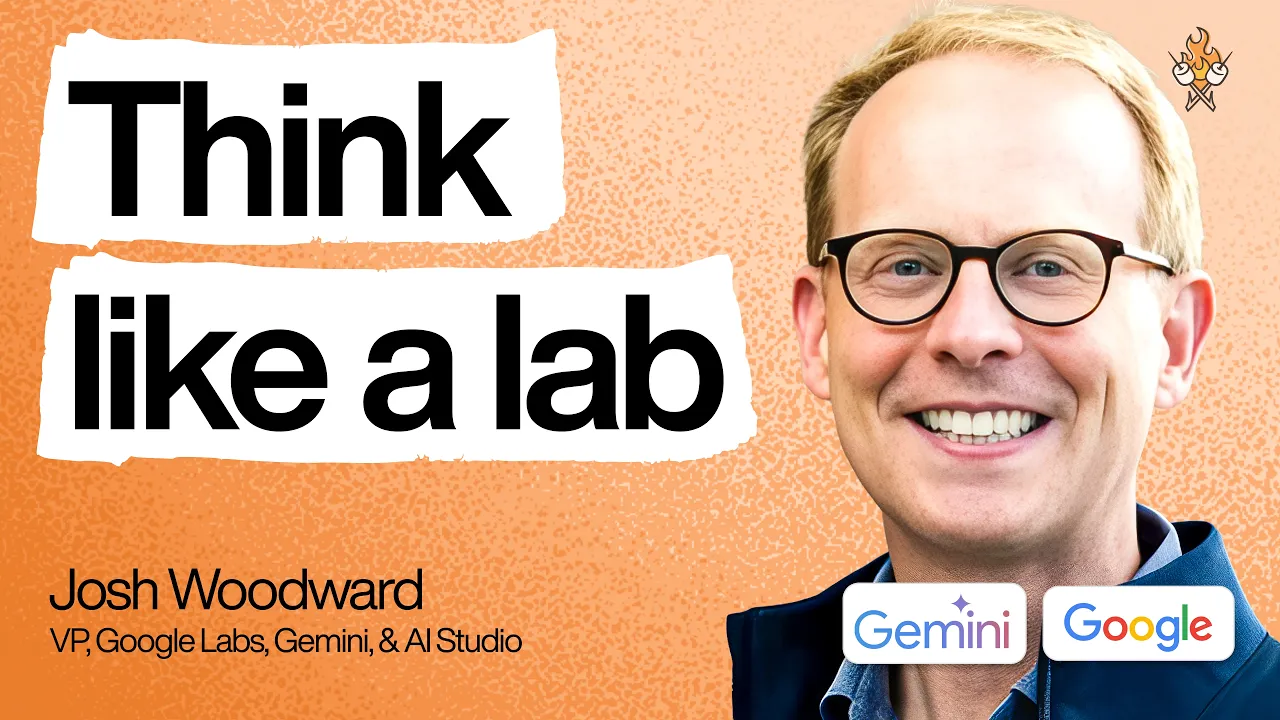
Description
Josh Woodward is the head of Google Labs, the Gemini app, and AI Studio. He has spent over 17 years at Google and oversees its longest-running and largest labs team, whose products include NotebookLM (now Gemini Notebook), Project Genie, and Flow. His job is to find, experiment with, and scale new AI products, and he has built one of the most distinctive product cultures in the industry for generating ideas, running experiments, and, even more importantly, knowing when to quit. *In our in-depth conversation, we discuss:* 1. Why every company now needs to think and operate like a labs team 2. Where the best ideas really come from 3. The “almost possible” framework 4. How to recognize genuine product-market fit early 5. When to kill an idea 6. What skills are rising in value in the AI era 7. Why roles are not actually blurring into one universal builder role 8. How to set up your internal labs team *Brought to you by:* WorkOS—Make your app enterprise-ready, with SSO, SCIM, RBAC, and more: https://workos.com/lenny DX—Engineering intelligence for the AI era: https://getdx.com/?utm_source=lenny&utm_medium=sponsorship&utm_campaign=q42026 *Episode transcript:* https://www.lennysnewsletter.com/p/why-every-company-now-needs-to-think *Archive of all Lenny's Podcast transcripts:* https://www.dropbox.com/scl/fo/yxi4s2w998p1gvtpu4193/AMdNPR8AOw0lMklwtnC0TrQ?rlkey=j06x0nipoti519e0xgm23zsn9&st=ahz0fj11&dl=0 *Highlights:* https://lennyspodcast.com/mostreplayedmoments *Where to find Josh Woodward:* • X: https://x.com/joshwoodward • LinkedIn: https://www.linkedin.com/in/joshwoodward *Where to find Lenny:* • Newsletter: https://www.lennysnewsletter.com • X: https://twitter.com/lennysan • LinkedIn: https://www.linkedin.com/in/lennyrachitsky/ *In this episode, we cover:* (00:00) Introduction (02:53) Why every company now needs to think like a labs team (05:43) Where great ideas come from (07:43) The “almost possible” framework (11:52) Finding product-market fit (16:09) Falling in
Summary
Generated by gpt-5.6-terraAt-a-Glance
- Verdict: Watch fully
- Core thesis: Every company needs an independent frontier team that continuously tests newly possible AI capabilities, converts the best ones into user-value products, and bridges those experiments back into the core business.
- Why it matters: AI model progress is changing product feasibility faster than normal planning cycles can accommodate; companies that do not systematically detect and exploit these capability shifts risk being leapfrogged by startups or faster incumbents.
- Best use: Use this as an operating-model guide for creating or upgrading an AI labs/frontier function: its mandate, staffing, cadence, signals, graduation paths, and failure modes.
Executive Summary
Josh Woodward argues that large companies need to behave more like labs without turning the entire company into an experiment. The practical answer is a dedicated frontier team whose job is to live at the edge of models, tools, user behavior, and emerging product patterns, while the rest of the organization continues executing its core work. This team should track what is “almost possible,” identify the moment a capability crosses into usable territory, and rapidly assemble small teams around promising user problems.
He rejects conventional ideation rituals as the primary source of breakthrough products. Strong ideas tend to emerge from curious builders pursuing side projects, repeatedly playing with frontier technology, and sharing unexpectedly compelling prototypes. The relevant test is not whether a demo is technically impressive or scores well on model benchmarks; it is whether users visibly lean in, become excited, and indicate they cannot live without the result.
Woodward frames early product work as conviction- and observation-heavy, rather than KPI-heavy. Teams should love the problem rather than the first implementation because it may require several pivots. Conversely, an initiative should be stopped when the team’s energy has gone, repeated approaches fail to produce user pull, and the people closest to the work say it is not working. Leaders must explicitly reward that candor rather than wait to make every kill decision themselves.
The organizational challenge is not merely establishing an R&D group. Most corporate labs either fizzle out within roughly three to four years or fail to commercialize what they invent. To avoid this, a lab needs meaningful independence, a clear definition of whether it graduates features into existing products or creates new categories, and deliberate bridges to the parent organization. It should also act as a controlled environment for testing new roles, operating practices, and organizational assumptions—not only new products.
Key Takeaways
- Claim: Run a persistent frontier-discovery process centered on capabilities that are nearly viable, not on periodic brainstorming or design-sprint ideation. | Evidence: Google Labs keeps a list of what is “almost possible” and watches for a phase shift when a model reaches needed latency, modalities, languages, or quality. Woodward says ideas such as NotebookLM, Flow, AI Studio, Google Beam, and Whisk began with small, obsessed groups exploring something rather than formal idea-generation sessions. | Implication: Maintain an explicit capability radar with hypotheses about thresholds that would unlock products; assign people to test those thresholds continuously instead of waiting for annual strategy cycles. | Caveat: Technical possibility alone is insufficient; the capability must connect to a meaningful user problem and, ideally, a population willing to pay for the resulting value.
- Claim: Early product-market-fit evaluation is primarily qualitative: observe whether a prototype visibly creates desire before relying on standard growth metrics. | Evidence: Woodward says the early metric is users’ eyes: whether they light up or lean in when shown a prototype, rather than DAU/MAU, D7 retention, or other scaled-product measures. He recalls hearing the first NotebookLM AI-host podcast, based on British parliamentary debates, and immediately recognizing it as unusually compelling. | Implication: Put prototypes in front of real prospective users quickly and train teams to capture behavioral reactions and unsolicited pull, not just survey approval or benchmark results. | Caveat: This is an early-stage signal, not a substitute for later retention, conversion, and scaling economics once a product has progressed beyond initial discovery.
- Claim: Make teams responsible for recognizing when to stop or pivot; the people closest to the product usually know failure before leadership does. | Evidence: Woodward describes a Gemini feature that was planned for launch but whose early data and in-person reactions were weak; the PM recommended not launching it, and he publicly praised that decision. His indicators are declining team passion and the sense that the team has exhausted reasonable approaches without finding pull. | Implication: Create an explicit no-launch/pivot mechanism and celebrate evidence-based cancellation so staff do not equate killing weak work with personal failure. | Caveat: A team needs psychological safety to surface negative evidence; otherwise it may continue an initiative to satisfy perceived leadership expectations.
- Claim: A corporate lab must be independent enough to protect unconventional work but connected enough to influence and commercialize through the core company. | Evidence: Woodward says large-company labs commonly become ineffective and fizzle after three to four years, or remain active but cannot commercialize their inventions. He argues a lab cannot simply be nested under an existing business unit; in some companies it may need enough distance to report to the CEO. Google Labs uses a “users first, Google second, Labs third” orientation to avoid optimizing for the lab’s own survival. | Implication: Give the frontier group a separate mandate and protected operating space, while assigning clear executive sponsors and defined routes for adoption, graduation, or category creation. | Caveat: Independence without an explicit bridge creates a toy factory; integration without independence causes the core business to suppress frontier work.
- Claim: Operate AI product development on rolling, short horizons: a multi-year vision, approximately six months of concrete planning, and meaningful milestones every 50 to 100 days. | Evidence: Woodward says Labs plans around a rolling six-month window because pre-training models meaningfully advance multiple times yearly. Its strongest teams move from idea to a meaningful milestone in 50–100 days, and a capability spotted two days earlier may become a project within 48 hours. | Implication: Replace detailed two-year product roadmaps for frontier work with directional long-term bets, rolling six-month plans, and fast learning milestones tied to expected model advances. | Caveat: Short planning horizons require leaders to actively remove blockers; speed is not achieved merely by demanding faster execution.
- Claim: AI changes team composition and collaboration, but does not eliminate functional specialties; the most effective teams are small cross-functional builder units with retained domain depth. | Evidence: Labs MVP teams have shifted from roughly five to seven people to two to four people. PMs may adapt quickly because of their horizontal role, but Woodward sees strong builders coming from engineering, design, strategy and operations, business development, and marketing. He warns against the claim that everyone has simply become one generic “builder” role, using the metaphor that people should retain their professional major while gaining a builder minor. | Implication: Build small teams around complementary specialties, improve every role’s prototyping fluency, and evaluate candidates both for cross-functional range and for a distinct domain of excellence. | Caveat: Reducing teams too aggressively can discard the specialized expertise required to make products robust, usable, and commercially viable.
- Claim: Prioritize unlearning, sustainable intensity, and trust-building over static expertise as AI work accelerates. | Evidence: Woodward looks for “unlearning rate”—how quickly someone can abandon a previous belief after testing it—alongside “explosive endurance,” a Roger Federer-derived idea of working intensely without burning out. Labs manages this through seasons: explicit high-intensity periods around model launches or Google I/O followed by hacking and rediscovery periods that seed the next cycle. | Implication: Name intensity modes in advance, let people opt into defined pushes, follow launches with deliberate exploration/recovery windows, and hire for people who create trust across both humans and agent-driven workflows. | Caveat: Constant urgency is counterproductive; Woodward explicitly warns that teams cannot empty the tank for nine months and remain effective over years.
Detailed Brief
Designing the lab portfolio and its relationship to scale
- Claims: A lab needs distinct operating logic at different maturity stages; one undifferentiated innovation organization risks allowing scaled successes to crowd out zero-to-one exploration.; Google Labs internally distinguishes 0-to-1, 1-to-10, and 10-to-100 work, retaining an innovative culture while changing the metrics and management questions by stage.; At the earliest stage, multiple small independent shots at an opportunity can be more useful than prematurely consolidating them into one thematic team.
- Evidence: Woodward says larger Labs-originated products such as NotebookLM, Flow, and AI Studio can unintentionally crowd out early experimentation.; For 0-to-1 work, Labs emphasizes the qualitative “eyes” signal; for later-stage work it considers conversion mechanics such as funnels, CPAs, and movement to product magic moments.; He gives interactive entertainment as an example where the organization must decide whether one group should own the space or whether several people should make separate bets.
- Caveats: Allowing messiness is not an excuse for permanent ambiguity; leaders still need to reorganize once evidence identifies the stronger direction.; Headcount growth can be a vanity metric: Woodward recalls reaching 30 engineers on an earlier project despite having no product-market fit.
- Implications: Protect a fixed portion of frontier capacity for new bets even after a lab produces successful products that demand operational attention.; Set stage-specific criteria and leadership expectations rather than applying scaling metrics to discovery work or discovery behavior to mature products.
Product philosophy, UX direction, and open questions
- Claims: Woodward believes the AI industry overemphasizes model benchmarks relative to the usefulness and values encoded in actual products.; He expects AI assistants to move away from separate modes and toggles toward a single prompt interface that can act across a user’s personal context.; Consumer disruption remains open in entertainment, messaging, and products addressing scarce resources such as time, money, and shared real-world experiences.; A major unsolved opportunity is using AI to turn scattered feedback into the kind of user insight associated with exceptional product managers.
- Evidence: He argues most users will never care about ELO ratings, even if benchmarks remain useful proxies for capability.; Google’s framing for a more context-connected Gemini is “personal intelligence”: personal, proactive, and powerful. He notes existing Gemini connections are available in some contexts, but signals more work is coming.; He describes agents that can run overnight to summarize feedback, while asking whether AI-human collaboration can make insights flow more naturally.
- Caveats: Woodward’s product and Gemini roadmap comments are directional rather than a committed feature timeline.; The future may consolidate into super-app-like experiences or fragment into many bespoke agent experiences; he presents this as an active internal debate rather than a forecast.
- Implications: Judge AI investments through concrete user outcomes and desired societal/product principles, not through raw model comparisons alone.; Treat feedback synthesis and insight generation as a strategic AI workflow opportunity, but retain human judgment on what feedback means and what to build next.
Cultural mechanisms that reinforce lab behavior
- Claims: Visible rituals can encode the operational values that matter for AI products, including efficiency, polish, frontier experimentation, and appreciation.; Recognition should reward work that may otherwise be invisible because it is not a headline feature launch.
- Evidence: The “TPU harvester” award gives a miniature rake and cash award to people who reclaim/optimize TPU capacity, tying infrastructure efficiency directly to product growth.; A golden band-aid recognizes people who fix product paper cuts; the “LM whisperer” recognition, including oversized ears and a mechanical keyboard, celebrates people who find surprising ways to push models.; A surprise leadership meeting serves as a structured appreciation ritual: leaders explain why a high-value contributor matters to the team.
- Caveats: Symbols and awards only work when they correspond to genuinely resourced priorities; celebrating efficiency while rewarding only feature velocity would create conflicting incentives.
- Implications: Create lightweight recognition systems for reliability, cost discipline, user-experience polish, and exploratory breakthroughs—not only output volume or launch visibility.
Notable Concepts & Terms
- Almost possible: A maintained list of capabilities that are close to practical viability; when a model crosses the needed threshold, it becomes a prompt for immediate product exploration.
- Eyes as the metric: An early-PMF heuristic: observe whether prospective users visibly lean in or light up when experiencing a prototype, before scaled metrics are meaningful.
- Unlearning rate: The speed at which someone updates or abandons prior assumptions after encountering new evidence; Woodward treats it as a key hiring signal in a fast-changing AI environment.
- Explosive endurance: The capacity to sustain repeated periods of high-intensity work without burnout, managed through explicit team seasons rather than permanent sprinting.
- 0-to-1 / 1-to-10 / 10-to-100 Labs: Google Labs’ internal distinction between discovery, early traction, and scaling stages, each requiring different team design and success measures.
- Users first, Google second, Labs third: A mandate intended to prevent the lab from becoming self-serving; its role is to create user and company value, including through graduation into other products.
- Good trouble: Using a lab not only to create products but to safely challenge organizational assumptions, such as piloting new builder career ladders and operating models.
- Personal intelligence: Google’s directional framing for a Gemini that is personal, proactive, and powerful through access to a user’s relevant context and ability to act.
Operator Notes / Why Ken Should Care
- Create a small, protected frontier cell with a written mandate: monitor models and tools daily, maintain an “almost possible” backlog, and deliver a capability-to-use-case briefing on a fixed cadence.
- Define a 50–100 day milestone template for frontier bets: target user/problem, newly unlocked capability, prototype test plan, observable pull signal, and explicit kill/pivot criteria.
- Separate the frontier portfolio by maturity—discovery, validation, and scaling—so successful initiatives do not consume all exploratory capacity.
- Require an executive bridge owner for every lab bet that reaches user pull; their job is to secure adoption, distribution, or a route to a new product line before the work becomes isolated R&D.
- Add a recurring stop-review in which the delivery team, not only senior leadership, can recommend cancellation; publicly reward the first well-supported no-launch decision.
- Audit hiring and team formation for three traits: demonstrated self-directed building, rapid belief revision, and ability to build trust across small human-plus-agent teams.
- Adopt explicit intensity seasons around launches or strategic events, followed by unstructured exploration time; monitor burnout risk and avoid treating continuous urgency as the default.
Source/Metadata
- Title: Why every company now needs to think and operate like a lab team | Josh Woodward (VP Google Labs)
- Transcript words: 19940
- Duration seconds: 3731
- Timestamp note: No usable timestamps or chapter markers were present in the supplied transcript; the transcript also contains substantial repeated segments.
Transcript
My thesis is that every company needs to start thinking and operating like a labs team. Every company definitely needs a set of people, a team. Their job is to be at the frontier. They're the people who have eight, $200 a month subscriptions on everything. Everyone has to get really good at trying a bunch of stuff with the latest models, figuring out what is now possible before your competition does, before a startup comes and eats your lunch. You've got to try to create a space where weird things can grow. If you look at the history of a large company who starts a lab, the lab is usually ineffective and fizzles out after about three to four years. You can't just nestle this under an existing business unit. It has to have its own kind of independence. You've seen more ideas thrown at the wall and tried and prototyped than maybe anyone else. What are some patterns of where the best ideas come from? They very rarely come from design sprints. They don't come in conventional places. You can't microwave good ideas. What skills are you finding or trending up in value? I'm actually looking a lot right now for people. What's their unlearning rate? How fast can they learn something and then walk away from it? What's something that might surprise people about what product market fit looks like? When you're showing people early prototypes, you're looking at people's eyes. That is the metric. What are signs that it's time to kill an idea? The team usually knows before the leader knows. Today, my guest is Josh Woodward. Josh is head of Google Labs, the Gemini app, and AI Studio. He's been at Google for over 16 years, and his job is to experiment with and scale new AI products. My premise for this conversation and why I believe it is so valuable is that every company is being forced to think and operate like a labs team. Because what is now possible is changing so quickly, you have to get very good at playing with the latest technologies, running tons of experiments, and uncovering new opportunities before your competition or startups do. Josh runs the longest lasting and biggest labs team in the world. And he shares a ton of very specific lessons about where the best ideas come from, how to know when to quit an idea, what it looks like when you have product market fit, what skills are becoming more valuable in today's era, why roles aren't actually blurring into one builder role, and so much more, including some spicy stuff. A huge thank you to Steven Johnson, Sophie Miller, Jeff Huang, and Logan Kilpatrick for suggesting topics and questions for this conversation. Before we get into it, I've noticed a lot of people don't finish the episodes, which is totally fine, but you end up missing the best stuff. So to help you, I've created a new Lenny's Most Replayed Moments YouTube channel that is exactly that, the most rewatched and shared segments from our long-form episodes. Check it out and subscribe at lennyspodcast.com slash mostreplayedmoments. There's also a link in the description. With that, I bring you Josh Woodward. Josh, thank you so much for being here. Welcome to the podcast. Thank you. So great to be here. It's even better to have you here. I want to first lay out the premise for this conversation, and I want to get your take if you agree with this worldview. Yeah, sounds good. So my thesis is that every company needs to start thinking and operating like a labs team because the underlying tech that we're all building on is changing so fast, which means what we can do is changing so fast. Which means that now everyone has to get really good at trying a bunch of stuff with the latest models and figuring out what is now possible before your competition does, before a startup comes and eats your lunch. And so it feels like the skills that will matter more and more now are things that you all have gotten really good at, which is finding great ideas, figuring out how to run a ton of experiments, figuring out what to double down on, building teams that can operate this way. At the same time, not distracting the rest of the company from all the shiny stuff and letting them focus. So broadly, how do you, does that resonate? Yeah, I think your premise is spot on. I think the devil's in the details, all those things you just said. So I think what's easy for, in some ways, every startup is a lab. And the real question is like, how do you bring some of that same methodology, ideas, energy, excitement into bigger teams or even medium sized teams? But I absolutely think it's needed. And then the question is, yeah, how do you build that environment and nurture and cultivate that kind of both ideas, but also the people that can really thrive there? Awesome. Okay. That's exactly what we're going to talk about. This episode is brought to you by our season's presenting sponsor, WorkOS. What do OpenAI, Anthropic, Cursor, Replit, Sierra, Clay, and hundreds of other winning companies all have in common? They are all powered by WorkOS. If you're building a product for the enterprise, you've felt the pain of integrating single sign-on, SCIM, RBAC, audit logs, and other features required by large companies. WorkOS turns those deal blockers into drop-in APIs with a modern developer platform built specifically for B2B SaaS. Literally every startup that I'm an investor in that starts to expand upmarket ends up working with WorkOS. And that's because they are the best. Whether you are a seed-stage startup trying to land your first enterprise customer or a unicorn expanding globally, WorkOS is the fastest path to becoming enterprise-ready and unblocking growth. It's essentially Stripe for enterprise features. Visit WorkOS.com to get started or just hit up their Slack where they have actual engineers waiting to answer your questions. WorkOS allows you to build faster with delightful APIs, comprehensive docs, and a smooth developer experience. Go to WorkOS.com to make your app enterprise-ready today. So I'm going to start with coming up with ideas, finding great ideas. If you were to reflect back on the best ideas that emerged out of labs and even in Google in general, what are some patterns of where the best ideas come from? Yeah, it's interesting because a lot of them, I wish there was an answer in the back of the book where there was one thing. Maybe one observation, Lenny, is they come from a variety of places. So one lesson I've always felt is like you always have to be watching for something that catches your eye. Maybe we come back to that in a second. They very rarely, at least in my experience, have come from design sprints or times where you set aside on a calendar. Okay, this is we're going to come up with our next idea. They usually come when people are swimming in the hallway, maybe on a weekend, often over a break. A lot of our labs teams will be hacking and building on stuff and they just can't help themselves. And they'll come back and they'll share a video and be like, look at this amazing thing. So I think one lesson is always on alert. Second lesson is they don't come in conventional places. You can't microwave good ideas. And maybe that leads to a third thing I've seen is sometimes it's less about the idea and who are the interesting people. And more importantly, what are their interesting little side projects and passion things and creating the chemistry around that. Because usually what we found, at least in labs over the last four or five years, is that all these ideas, whether they're Notebook or Flow or AI Studio or Google Beam or any of this stuff, they get started like very small groups of people who are just obsessed and usually very curious about something. And they just won't stop. And so you're kind of like, how do you kind of create a space where that can happen and then kind of be on alert to catch it and try to funnel it forward. So what I'm hearing here is interestingly, not design sprints. I didn't hear brainstorm meetings in there as a place good ideas come from. Yeah. Is there an example maybe because, you know, someone listening to this, I'm trying to think about what can they take from this to find, to help them find great ideas, say their startup founder or at a big company playing with the latest models. What are some of the conditions that you find most help? Yes. I mean, one thing we try to do a lot, and I think this would apply in any of those situations is like, how do you get yourself to the frontier? And that can be both with playing with the models, but also just watching what are the types of experiences that have just become possible? Where we have a phrase on the team, we talk about what's almost possible. And we just have a list actually, where we're trying to track those things. And when one crosses over, it's almost like a phase shift when something goes from solid to gas or liquid to gas or something, you're like, ooh, that just became possible. I saw one of these two days ago and I can't stop thinking about it. Are you able to tell us or it's a... Maybe soon. What are some of the conditions that you find most help? Yes. Yes. One thing we try to do a lot, and I think this would apply in any of those situations, is how do you get yourself to the frontier? And that can be both with playing with the models, but also just watching what are the types of experiences that have just become possible? We have a phrase on the team where we talk about what's almost possible. And we just have a list actually, where we're trying to track those things. And when one crosses over, it's almost like a phase shift when something goes from solid to gas or liquid to gas or something, you're like, ooh, that just became possible. I saw one of these two days ago and I can't stop thinking about it. Are you able to tell us or it's a... Maybe soon. But it's like you kind of, if you're at the frontier playing with the models, watching what's happening and you kind of have this list, then when you see something, whether it's on X or wherever, then you're like, okay, that just now has become possible. And then we try to think about how do we get a team around that and just go. And so that may be as you're kind of in startup land, if you're thinking, or maybe you're starting to pitch ideas to VCs or whatever, that's kind of how I'd be trying to think about it. And then of course, tech alone isn't enough. You've got to match that to an interesting user problem. And ideally, if you can put those together in a way that's so good, people will pay for it. That's kind of the combination of things we start looking for pretty early. So that's an interesting tactic there is make a list of what is almost possible and then watch for, okay, wow, this is now possible. Let's explore this now. Yeah, that's right. Is there anything on that list you can share of things that are not yet possible, but almost possible that you're waiting for or watching for? Well, maybe I can share a few areas because I think how we think about it in labs is we have kind of a thought experiment we go through where we're like, what is the future of a certain thing going to look like? So the future of software design and development or the future of creativity, the future of work or knowledge. One area we're watching very close right now is just like, what is the future of entertainment going to look like? And this whole idea around immersive entertainment is super interesting, just at a technical level for many reasons. But also you think about the user behaviors and like, what does entertainment look like last year, this year versus next year, maybe in three years. And so that's one where we've got a whole list underneath that where we're like, ooh, okay, well, if a model can get to this latency and this amount of languages and this amount of modality, you can start to think through what would be interesting from the tech side. And then we do a lot of work in labs around where are behaviors and trends going? And for that, some of it, of course, you can study in the Bay Area. But for a lot of our teams, I'm always thinking about how do we get way outside the Bay Area and thinking about where are the other cities, the classrooms, the other places to mine for ideas and these behavioral changes. So an interesting takeaway here is this, you're not just waiting for inspiration to strike. You're doing a lot of pre-work to think about here's what is almost working, here's where we think the future might be going. Yes. Areas that are going to be right for disruption. That's right. Yeah. In this doc I talked about, we have 82 predictions that all begin with, we believe the future is, or we predict. This is dangerous ever to make one prediction, let alone 82. But I think you have to almost have a point of view about the future, knowing that nine out of 10 or maybe 9.9 out of 10, you're going to be wrong. But I think that's one of the things we really try to cultivate in the team is how do we chase the future? That's one of the values and trying to chase it. You almost have to throw yourself out there and try to live in it a little bit. What are signs to you that an idea is worth pursuing when you're in the shower and you have this idea? What's the sign that, okay, that's worth betting on, at least to start with? And what's often just a false signal, like, okay, no, that's actually not going to work? Yeah. I think one thing for me, especially when you've got these lists going and you're thinking about the future, when you see something that surprises you, or maybe that's very interesting to you in a certain way. And if you can describe it to yourself, like this thing I saw about 48 hours ago, I left that demo and I thought, this is so exciting. And I think that's maybe a signal I use a little bit is trying to be at the frontier and then what makes me interested or excited. And then feeding off that with the team together. I feel like that's too low of a bar these days because everything is so magical, or it's the opposite. Now everything, okay, great. This thing is doing my taxes for me. Of course that's the way to. Yeah. It's interesting. Well, I think this is one of the things, obviously that excitement is a tech thing and yes, there are dazzling demos every other day or every other hour right now. But then I think trying to think through where's the user behavior, maybe that is universal, or maybe there is some shift on that side. And then the way we think about monetization too, is like, can you get to a group of people that are just going to like, can't live without it? Like they literally will pay you because it's so valuable to them and then how you can put those pieces together. But yes, sometimes it's got to come from one of those areas. I would say. Is there a great example or story of a product that emerged in this way? Yeah. I mean, I remember still the first time I heard the first Notebook LM podcast exactly where I was standing. It was right outside this room. And it was probably at 6:30 PM on a Tuesday or something. And there were two people on the team who came over and were like, you got to listen to this. And it was the proceedings of the British parliament debates, not known for its riveting material. But these two AI hosts were talking about it in a way that was literally interesting. And that was one where we're like, we got to do something with this. And that was one. I remember the first time when I saw something come out of Google Imagen, we had a project before that called Whisk, where you could whisk together multiple images and then start to animate them. And it was a level of control and creative channeling that had never been possible that I made accessible. So maybe those are two examples. We also have other examples where we get excited. We try to build some product. It's just not good. So you know, that's the other thing is a little bit of a game of numbers in this as well. Let's talk about product market fit and signs that something is actually working. I feel like you've seen more ideas thrown at the wall and tried and prototyped than maybe anyone else. I don't know if that's true, but it feels true. What are signs to you that this is something we need to double down on? And what's something that might surprise people about what product market fit looks like? Yeah, I think one of the maybe trickiest parts of it is it is way more art than science. I wish it was science. We know how to run science experiments, make data driven decisions, set OKRs, all this process that helps. But sometimes in the early days, Lenny, it's literally a couple of people on the team who might just have conviction. And they're just like, I think the future is going to look like this and I can't explain it. That's what's hard. Just that advice is just not that useful or helpful. But I would say that's some of it. I think maybe a little more useful. We talk a lot about how do we get outside the building and just show people prototypes. And when you're showing people early prototypes, what I'm always doing in those is looking at people's eyes. And that is the metric. It's not a DAU. It's not a DAU over a MAU. It's not a D7. It's none of that. It's literally like, hey, Lenny, did you see this? What do you think about this? And if your eyes kind of light up, if you lean in, these are the kind of signals you're looking for in the early days. And they're just like, I think the future is going to look like this and I don't think I can explain it. That's what's hard. Just like that advice is just not that useful or helpful. But I would say that's some of it. I think maybe a little more useful. We talk a lot about how do we get outside the building and just show people prototypes. And when you're showing people early prototypes, what I'm always doing in those is you're looking at people's eyes. And that is the metric. It's not a DAU. It's not a DAU over a MAU. It's not a D7. It's none of that. It's literally like, hey, Lenny, did you see this? What do you think about this? And if your eyes kind of light up, if you lean in, these are the kind of signals you're looking for in the early days. Maybe the third thing I would say, and this one's also maybe on the flip side of your question, is the people who get excited about things. Usually we try to kind of think about what's the problem we're falling in love with, not the product. Because what I found is it takes three, four, five pivots before you either have something or you're just like, that's it. Didn't work. So I think when people fall in love with an actual product solution first, it's going to, at least in my experience, lead to a bad time. So that's the other thing I think we try to think a lot about. And usually people talk about PMF. If you sort of know it when you have it, I think that's true. And the last year or so when Nana banana went viral on Gemini, when the Notebook LM podcasts have gone, when stuff's happened on Flow or Stitcher or other kinds of projects that have kind of had these mini moments, you're literally just swarming it and holding on for dear life. And it is both exhausting and so fun. But you almost have to take a lot of shots. I would say. And in the early days, again, it feels a little more art passion driven than science. Unfortunately. Those are actually very concrete, specific things to look for. The eyes, did it have you eyes light up? I've heard someone else describe this as their pupils dilate. Yes. Yeah. That's right. And you know, too, right. When you're talking to someone, if they're having a good time, if they're into it, or if they're just bored out of their mind and you're showing them some dumb product. Yeah. So it's really like, can you hit a nerve with a pain point in their life where they're just like, I want that. And that's what makes this job so fun is trying to figure out how many of those nerves you can hit. So having that context of it's clear when things are product market fit and their eyes are lighting up. What are signs that it's time to kill an idea? Yeah. One of the things on this one, and I talked a lot to the team about this too, is sometimes a team is looking for the leader to make the decision. And that's kind of where it comes from. What I found is the opposite. The team usually knows before the leader knows. And the signs are like, does the passion start to run out? Have you tried everything you can think of and it's just not working? Like, people know when a project's not working or a relationship's not working, that's something that people see. And so I think what, as a leader, what I try to do in labs or even some of our features in Gemini is like, how do you create an environment where people can ask those uncomfortable questions and be able to say like, Hey, I don't think this is working. And yesterday, just as an example, we had a feature we were really excited about in Gemini, we were going to launch. And we got some of the early data back. People went out, looked in the eyes and it just wasn't there. And so I was so proud of the PM on the team because she was like, I don't think we should launch this. It's not good. And so I replied all, I was like, this is great. Thank you for doing this. And so it's like, how do you create a culture where the team can call out both good things and bad things? And I guess in that way, as a leader, in my case, I trust the team a lot because they're the ones every day trying to make this thing go. And I think if they're like, Hey, it's not going. Then it's like, all right, that's okay. Let's pivot. Let's do something different. I have to ask you this question. I was going to ask it later, but I'm so curious. It's so interesting that you oversee labs, which is zero to one experiments, try stuff that's totally new. And then the Gemini app, which is one of the most popular apps in the world with probably a billion users. How did that come to be? Why is that the structure under your team? Yeah, well, I guess in some ways they are very different ends of the scale. You're right. Gemini over a billion users. It's global. Labs is one heartbeat all over it. And so I think part of it is the type of builder, the type of person you're attracting, these blurring lines between what it takes. We're all AI kind of nuts and maniacs. We love this stuff. We can't get enough of it. We're building all the time. The third one, though, I would say is a little bit of everyone on the team. We talk a little bit about the order of how we think about our priorities. And we like the mantra on the team is users first, Google second. And our product third. And so labs or Gemini third. And I think that unites us too. And that's like, we don't try to do things for our own team. We're very much part of team Google, but ultimately it's like, is someone loving this on the other end of this product? And so that does kind of tie it all together, but they are on different ends of the spectrum for sure. In terms of size, conventional numbers. Yeah, it's quite confusing as an outsider, but I get it. Is everything you're doing in labs now AI based? Is there anything non-AI driven in labs now? Yeah, it's all AI driven right now for sure. When we started, four or five years ago, we had a few other areas we were exploring. And we kind of made the call, at least for the foreseeable future, go all in on AI. We don't just do software stuff though. I mean, Google Beam is one of the projects we're working on. It's this incredible kind of magic mirror that can create a 3D version. We should get you one. I'll take it. Where you're going to kind of talk to someone almost like they're a hologram on the other side. Yeah. So we are exploring kind of other adjacent things to AI. Like, you could consider that almost like AI hardware in a way. I will take it. Thank you. I'll send you my address. So it feels like consumer right now is in a really fun place where there's always been the sense of consumers are dead. There's nothing that you can do. Facebook got it. Google, you know, like there's no way to compete against these juggernauts that have taken the consumer world, but AI feels like it's unlocking a lot of opportunity in consumer. I'm curious what your hypothesis is for where a major breakthrough might happen in a consumer app. Yeah. I feel like consumer is one of the most exciting, competitive things happening right now. So it feels completely opposite to me from that kind of view. A couple of areas I think that are interesting. I mean, one, I think there's a big question. We talked a little bit earlier of just where's entertainment going to go? Are we going to be looking at different types of feeds forever? Or are there ways that this technology can bring us maybe closer together in the real world or do things with other people? I mean, there's different views on where that could go. Is it more around bots or more around people? And so I think that's a very interesting space. I think we're watching right before us now the entire kind of messaging chat space felt like that was sort of maybe solved. There's lots of different experiments happening on that right now, both inside Google and outside. So that feels like a whole other area that maybe is no longer as fixed as it once felt. And then maybe the third one I would throw out is I still feel like going back again to the problems. One, I think there's a big question. We talked a little bit earlier about where's entertainment going to go? Are we going to be looking at different types of feeds forever? Or are there ways that this technology can bring us maybe closer together in the real world or do things with other people? There's different views on where that could go. Is it more around bots or more around people? And so I think that's a very interesting space. I think we're watching right before us now the entire messaging chat space felt like it was maybe solved. There's lots of different experiments happening on that right now, both inside Google and outside. So that feels like a whole other area that maybe is no longer as fixed as it once felt. And then maybe the third one I would throw out is I still feel like going back again to the problems. What are some of the big problems people face in the world? I think about what are things that are super scarce—time on earth, how much money people have and how they can save money. These kinds of memories and experiences that people can have IRL together and that kind of thing. So I do feel like there's maybe new consumer products to be built that can go after a lot of that stuff, whether it takes the form factor of a chat bot or a personal agent or whatever that's going to look like, I think it's kind of yet to be invented in a lot of ways. Okay. Let me ask you a spicy question along these lines. I'm so curious to get your take. It feels like every AI assistant app that's launching these days basically sucks in Gmail and Google Calendar and Docs, all the Google data, all this juicy Google stuff, connects and does all these magical things with it within Google. I cannot do any of these things. It's so hard to build anything. There's, first of all, you may be working on AI assistant, but there's nothing there yet as far as I can see. And then just generally it feels like everyone's just taking all this juicy data and doing magical things with it. And Google hasn't. What's kept you guys from doing something like that? Is it privacy concerns? Is it bureaucracy stuff? Is it coming? What can you say? Yeah. So there's parts of it out there today. Like if you're in Gemini and Gemini Spark, you can actually connect all that stuff. And it's quite powerful. I think where we're iterating on that though is we've been in a world where even if you look at some of the other competitors, they're different modes almost that you go into. And I think the lesson, even from the last couple of weeks, is forget the modes and toggles. Just one prompt box. Tell it what you want. And it just does stuff for you. So that's definitely where we're headed, where others are headed. I think that's a broader UX simplification happening across the industry. On the data bits there, it's interesting because actually one of the main things people will ping me about or others is like, oh man, Google, I've got all my stuff with you. Just make the thing work. And there's a lot of reluctance actually to be connecting it to a lot of other competitor products. So watch this space. We hear you loud and clear. There's a lot of work. If you go online and just look under personal intelligence, that's sort of the way we think about this stuff. You want a Gemini that is personal, proactive, powerful that works for you. And so that's been the vision for the last year or so that we're headed towards. And there's a lot of stuff we're playing with right now that'll be out soon. All right. I'm excited. It just feels like, yeah, I have so many little schedules and things running within my email. I'm just like, why didn't Google just do this? It does feel like the advantage you all have is distribution. So once something happens similar to Muse recently, it's going to be very easy to grow it and convince people to use it, similar to within AI mode. So anyway, okay. I'm excited. Things are happening. Things are definitely happening. What do you think? So going in a different direction, what do you think's under hyped in AI right now? And what do you think is overhyped, if anything is overhyped? Oh yeah. You know, under hyped. I was thinking a lot about this over the summer. I ended up writing a doc internally around Labs principles. How and why are we building what we build? And so maybe the under hype thing is more of a discussion around principles, values. I believe very strongly, whether you're at Google or a startup founder or anywhere in between, you speak through your products and your products actually represent and encode those principles. And so I wish there was a lot more discussion in the industry happening around that. What kinds of things do we want to build? What kind of future do we want? So anyway, that would be my under hyped one. I think the overhyped one—I've been saying this maybe for a year now, but I still think it's overhyped: model benchmarks. A lot of friends at a lot of labs and everyone's still looking at the same set of benchmarks for the most part. Where I'm from and how I think about product development is like most people in the world are never, ever, ever going to care about an ELO rating. They may not even know how to pronounce ELO. It just doesn't matter. And so that's where I kind of get back to a lot of the talk in AI right now is about speeds and feeds and benchmarks. These are proxies, obviously, for where things are and capabilities. But I still feel like sometimes as an industry it can over-rotate to that and lose sight of why is this useful to someone? And what's the product or feature that's going to deliver real value to help people? So anyway, those would be my over-unders. Yeah. And it's also hard to know what is better. Like, how do you know what's going on? You have this new model. It's the best model ever. In practice, it's not that much different than the previous model that everyone also thought was the best model ever. We have AGI every time there's a model launch. So the benchmarks are trying to show you here's where it's better. But if you didn't, you're just sitting there—okay, this is better. I like what it's doing here. Yeah. I think this is also where I feel like a lot of folks that follow you and listen to you say: please, please, please think of amazing products. Because ultimately all these model capabilities and benchmarks and all the intelligence gets translated into just can you build something people want? And so to me it's like what a time to be alive as a product person. You have this huge menu of things that were almost impossible that are now possible more and more with each passing week. The first point you made there was something that came up recently in a conversation with Tara from OpenAI about how now that we could just build everything in AI, so many opinions about where to go. What you said is exactly right, which is what do we want the world to look like? What do we want? What is the vision of the future we want? Not okay, we can do all these things. That's great. Let's maybe we don't need to do all these things. Right? So I think that's a really important point there. Yeah. Definitely. This season's supporting sponsor is DX. Now that everybody at your company is finally using AI, the question that engineering leaders face is no longer, are we using AI, but is it paying off? With DX, you can measure and benchmark the impact of AI adoption across your full product lifecycle. DX shows you where AI is helping developers and where it's creating new bottlenecks. About how now that we could just build everything with AI, so many opinions about where to go. What you said is exactly the right thing, which is what do we want the world to look like? What do we want? What is the vision of the future we want? Not okay, we can do all these things. That's great. Let's maybe we don't need to do all these things. Right. So I think that's a really important point there. Yeah, definitely. Definitely. This season's supporting sponsor is DX. Now that everybody at your company is finally using AI, the question that engineering leaders face is no longer, are we using AI, but is it paying off? With DX, you can measure and benchmark the impact of AI adoption across your full product lifecycle. DX shows you where AI is helping developers and where it's creating new bottlenecks. You can also use it to evaluate AI vendors, monitor costs and licenses, and see exactly what's limiting your agents. That's why hundreds of enterprises, including Snowflake, Sony, and BNY, use the DX platform to measure AI's impact on developer productivity. Visit getdx.com slash Lenny to get a demo of DX. That's getdx.com slash Lenny. What skills are you finding are trending up in value in the people that you're working with? And what do you feel are trending down when you look at people who are doing really well now? What are the kind of attributes and skills of those people versus things that are maybe less important now? Yeah, I feel there's a lot out there on taste and judgment and vibe coding and all of that. I guess the things I'm looking for, I'm always trying to find what are the mispriced signals? And so one I think is how you will hear sometimes people talk about someone's learning rate. Like do they have a growth mindset? What's their learning rate? I'm actually looking a lot right now for people. What's their unlearning rate? Like how fast can they learn something and then walk away from it based on maybe what they're seeing when they test their product or something? So unlearning rate is one. Another one I'm interested in, I read a book a year or so ago about Roger Federer, the amazing tennis player. And there was this phrase in there about Federer had explosive endurance. It's just this beautiful turn of phrase with the alliteration and everything, but it's like there's something around how are people taking care of themselves and the people around them where they can go really hard. And that's the explosive part, but they can do it over a while and they find ways to pace themselves. And at labs, we have seasons of labs where we talk about this. So I think that explosive endurance and unlearning rate are two. And then maybe another one I would say is as much as coding and other things are becoming maybe trending towards you being able to direct lots of agents and not having to work with as many people, I still feel collaboration and how you work with people matters even more now. And one of the things we look a lot for is can someone blend and bridge these worlds where they're an incredible collaborator with an agent or a swarm of agents, but also with people. And I guess what we believe on the labs team and on the Gemini team is that there's still so much joy in working with people. And it's how do you find the right chemistry? And so maybe one thing I'd say there is people that can build trust, that can scale trust, that underpins any kind of great collaboration. And so that's another signal I'm always looking for is how fast can this person build trust with people and create that kind of environment? Yeah. These are so interesting. On that last one, is that a more growing, emerging, even more important skill with the rise of AI? And I'm curious why. I think so for a couple of reasons. I mean, one maybe is uniquely Google, it's a larger organization. So you've got to be able to do that. But the ones that don't feel uniquely Google, one, it feels like as the execution costs of making products goes down, we'll be able to make more products. Which you may make the same products with the same people, but I think there's a lot more. You probably see this too. It's just people will team up with different people to make stuff. And so it's very interesting when we're thinking about fielding a new team for a labs project. We used to say it's about five to seven people. Now it's about two to three people, maybe four. But it's like those people just almost, you can almost imagine super talented musicians who team up with different people and then they play different songs together. The songs are the products. But it's like those are the MVPs in labs where you can be like, hey, drop this PM. But they can also code and design because all the roles are blurring with other people and kind of see how they jam on stuff together. So I think that's where my prediction is that skill will almost increase in importance because there will be more products. And because there'll be more of this free agents kind of jamming on stuff together. Along those lines, I imagine you have been pulling designers, engineers, and PMs into labs, and they all work together and sometimes different functions take leads. Has there been a shift in who you find is most impactful and successful in leading product ideas, labs teams in terms of the ratio of PM versus design versus eng? For example, are PMs becoming more valuable or eng becoming more valuable? Yeah, it's interesting. We've been studying this a lot and actually testing a lot of this too. I would say in general PM happens to be the function maybe by nature, because it's a bit more horizontal, that feels like it's maybe been able to adapt to some of the other functions faster. And we see this when we'll run little builder pilots across the company, what comes back is like, oh yeah, that's like maybe I don't want to say it's easier, but PMs are more accustomed to like, all right, I've been in this meeting, I got to simulate something as a lawyer or as a BD person or as a sales person. So in some way, maybe there's some inherentness in who selects into that. So that definitely is true. But I would say our best people can come from any function. And I would also even widen it, Lenny. We're seeing strategy and ops people and BD people and marketing people kind of be builders in labs and they are really good. And I think what, maybe this is another overhyped underhyped thing, I think right now people are maybe overhyping like everybody's a builder and it's just this new job function and everything's kind of the same. I actually feel like, well, at least what we're seeing is that people still have their specialty. It's like their major or minor in college or something. And I feel like there's a risk if everybody comes a builder that you lose a lot of respect and appreciation and obviously the expertise that comes from those specialties. And so when we set up teams, even though we may be like this is more of a builder crew, we're still thinking about where are the specialties? And that ends up being super important as well. I completely agree. I like that metaphor of the major and the minor. That's a really fun way to think about it. Like you can be better at building, but you're still like your PM skills are still the primary thing you're amazing at. Definitely. And I think that's the advice we give, especially to a lot of new PMs on the teams, APMs or people earlier in their career, is it's great you're vibe coding and you're making all these prototypes, but do that in service of becoming an exceptional, extraordinary PM. And don't lose that major. That's what you need to hone, especially when you're early on. I love the way you described it where PMs are really good at simulating other functions. Yeah, such as an AI way of thinking about collaborating. And this idea of explosive endurance. Someone tweeted this recently. They're like, what's it called when it's both a marathon and a sprint? It's that. Yeah, it was like, talk to Roger Federer. Yeah. And I feel like everyone's in that right now. And that's just a constant theme and trend on this podcast and just in tech right now. It's just everyone's in this marathon plus sprint mode. Yes, yeah. You're vibe coding and you're making all these prototypes, but do that in service of becoming an exceptional, extraordinary PM. And don't lose that major. That's what you need to hone, especially when you're early on. I love the way you described it where PMs are really good at simulating other functions. Such as an AI way of thinking about collaborating. And this idea of explosive endurance. Someone tweeted this recently. They're like, what's it called when it's both a marathon and a sprint? It's that. Yeah, it was like, talk to Roger Federer. Yeah. And I feel like everyone's in that right now. And that's just a constant theme and trend on this podcast. And just in tech right now, it's just everyone's in this marathon plus sprint mode. Yes. Yeah. Oh man, I guess is there anything that you do to help people deal with that? Because it feels like it's nonstop. Yeah. I mean, one of the things we try to do, I mentioned a little bit earlier, but I can unpack it some is we think of kind of seasons in labs and can we think about, you know, at any given point, there's 20 or 30 experiments running simultaneously. But for each individual little team, trying to kind of create a little bit of milestones or a rhythm to the work. And there's sometimes it is just flat out full on. And we try to maybe the best lesson I've learned as a leader is to name that, declare that, you know, people opt in or opt out of that. But also be very clear when a team is not in that mode. And I think is how do you try to architect a rhythm to the year where it's like, hey, we've got a big model coming. These five products are super important to showcase this model. We think this model will propel them. Like you five is explosive time. Do you know what I mean? And so it's trying to create a common language around that, which is sometimes a lot of ways PMs can be very effective if they can come up with what is the shorthand or the common language. And so we actually put a lot of thought into that too, of like, all right, you all are on right now. Whereas after they go through that, we may be like, say after Google IO, a lot of labs teams will sprint. After IO June is like, hey, just go hack. Go rediscover what's new. Go build. Do you like have fun? And then it's so interesting Lenny, because the instinct or the temptation is like, oh man, it's June. It's unproductive. We're not shipping. And it was like, no, actually those are where all the new seeds are coming from for the next season. Do you know what I mean? And so it's trying to think through the rhythm of that is one way we try to do it. I don't think we always get it right though, by the way, I think. And I think one of the things we're talking a lot on the team is, I guess in the past, people would talk about work-life balance and there were other ways this conversation got framed. I think what we're, why things like explosive endurance or concepts like that is we want to be doing this as a team for many, many years. And so it's you can't just empty the tank in nine months and kill yourself. Right. So it's you have to have a view towards the long-term, but also recognize the moment you're in is fast. I love the tactic of just naming it, having a lot of power and just making it clear. This is the mode we're in now. It won't be forever. Right. Right. And something I've found is the opposite also is dangerous when you have too little to do and too little stress and too little pedal on the metal. People get bored and start looking for other jobs. They're just like, well, it sucks. Yeah. Yeah. Yeah. I think there's always something there though. You're right. Of we talk on the team a little bit of never waste an event or a date, or you can think of even as a startup, where's that moment you want to intersect with something in the world. And whether that for us is a Google IO or a model release or whatever, I think that's always healthy to be thinking about. I got a question the other day on Gemini. They were like, what's our two year roadmap? And I was like, we have a six month roadmap on this team. Like we have a multi-year vision, but I think the world has changed so much too. Some of it is the thing I saw two days ago is now a project that happened in 48 hours. You can't plan for that in a way. And so that's the other element you almost have to recognize in the moment. Yeah. So along those lines, how has planning changed in the past couple of years? Like you guys are different from the rest of Google because everything is new, but just what have you seen in terms of timelines and timeframes shift in planning with the rise of AI? Yeah. We usually are thinking somewhere on the order of about six months. And usually I say that because that's that almost possible window where you assume every lab is cranking out some new pre-training model a couple of times a year. There's individual points in between. So you kind of have an overall cadence of where the models are. And then I think we're almost imagining in about a hundred days, usually we always think about where can you move your product meaningfully forward? Our best labs team, they all do that. They'll go from idea to some meaningful milestone in like 50 to a hundred days. And part of that is how do you design a culture and an environment where you unblock a lot of stuff so you can just let people cook. And so that's the other part of it is creating that environment, but that we think about planning. Planning is kind of almost like rolling six months maybe is to answer your question. So I had this Lenny and friends summit. It was last week of the day we're recording this and Dan Shipper gave this really interesting talk about how to build where the tech is just constantly changing underneath you. And his advice is to have a frontier team that's dedicated to testing out the new stuff. And basically it's their job, trial the new stuff, report on what we need to pay attention to so that the rest of the company can not have to be distracted and focus on the task at hand. How do you feel about that as a model for companies? I think every company definitely needs a set of people, a team, however you want to manifest it. That is their job is to be at the frontier. And they're almost like if they haven't heard about the latest hot thing viral on X in the last 24 hours, what are you doing at your job? You know what I mean? So I think there's definitely an element of you want people plugged in to how people are building and thinking in all the model releases. They're the people who have eight $200 a month subscriptions on everything. Do you know what I mean? So you have to kind of architect the organization where that can exist. I think the second thing though, that's just as important is the environment in which those people can build. And so that's the other part of that. And then I think the third part, which is honestly where if you look at the history, and I've read a bunch of books on this because most, if you just look at the data, a large company who starts a lab, the lab is usually ineffective and fizzles out after about three to four years. Or they have duration, but the company can never commercialize the things coming out of the lab. And so you get things like someone comes by and sees the future and then they do it as a separate company or whatever. Right. And there's famous examples throughout history of that. And so I think there is this interesting balance of can you have a team of people who live at the frontier, like Dan says, who are building frontier things. But can somehow bridge or connect across the bigger company in a way that it's not, oh, that's just some weird R&D group always coming up with gimmicks and toys. Do you know what I mean? And so I think it takes a certain person or a certain set of people who can actually be like, hey, that thing looks like a toy right now. That's going to be essential to our future in five years. And that's actually where, at least studying history, where sometimes these frontier ideas fall short. And so you get things like someone comes by and sees the future and then they do it as a separate company or whatever. Right. And there's like famous examples throughout history of that. And so I think there is this interesting balance of like, can you have a team of people who live at the frontier? Like Dan says, who are building frontier things. But can somehow bridge or connect across the bigger company in a way that it's not, oh, that's just some weird R and D group always coming up with gimmicks and toys. Do you know what I mean? And so I think it takes a certain person or a certain set of people who can actually be like, hey, that thing looks like a toy right now. That's going to be essential to our future in five years. And that's actually where, at least studying history, where sometimes these frontier ideas fall short. You can get the first two things right. And then fail on the third one. And then the whole thing really doesn't matter. Do you know what I mean? Yeah. It's interesting. I was just thinking, even Anthropic has a labs team. Like the most cutting edge company, you know, just at the frontier already. They're like, okay, but we also need a labs team to actually watch the frontier frontier. Yeah, that's right. Well, one thing we joke about too, as labs has grown now, and we've got a few projects that have hit and are, you know, lots of users now and growing. We've actually internally come to this point of like common language. What we started to find was bigger projects like Notebook in terms of users or flow or AI Studio, or these things that have really kind of grown out of labs. They were in some ways there's a risk. They crowd out the zero to one stuff. And so the terms we've started using is like, there's zero to one labs. There's one to 10 labs and there's 10 to a hundred. And these may not mean anything to your audience, but to us, we actually have encoded, like these are different stages of the labs life cycle. And we want all of these products to have this innovative energy that's common. But inside each of those stages, there's very different challenges and very different things you're optimizing for. And in zero to one, you're looking at eyeballs, as we talked about, and in 10 to a hundred you're looking at like waterfalls and CPAs and thinking about how are we actually converting people to these magic moments in the product? And it's a scaling game in a lot of ways. So someone listening is convinced they should set up a frontier team, a labs team. And it feels like labs teams have evolved a little bit. It used to be like build the next big business unit is the idea here. It's like, okay, what's a new technology that is unlocking something in our core business. I wonder if that's true, but that's what it feels to me. Yeah. But I guess with that in mind, what are maybe three tips for someone that wants to set up a labs team internally? Yeah. I think one, you've got to try to create a space where weird things can grow. And you can't just nestle this under an existing business unit. It has to have its own kind of independence is one. And that in some companies, that means it needs to report to the CEO, where it needs to report enough of a distance in a way. And we can go into that if you want, but that's super important. I think the second thing is a set of people. And in the case of us, this was this users first, Google second, labs third thinking, where the job of the lab is to make users successful and make Google successful. It's not to make itself successful. And so there's a bit of a maybe a humility or a collaboration or this mindset of like, what does success look like? And I think for us, how we've broken that down and how I would encourage companies to think about it is like, is your goal of this labs to graduate things to existing products? Or is your goal to invent new product lines and categories? And in our case, we started and it was a graduation lab and it's expanded over time as we've started to realize AI really transforms and blurs a lot of categories. But being very clear about what game you're playing and what is winning or losing look like would be the second thing. So isolated in some way, but also part of the same team. And I think the third thing, and we talk about this a little on labs is, and I could imagine for maybe CEOs listening or other C-suite people, use your lab not just for product development or technology exploration, but even for challenging how the company works and almost the way things happen. And that's actually the phrase we use on the team is labs sometimes creates good trouble at Google. So there's bad trouble you don't want to create, but good trouble. Give you an example. We were one of the first teams that were seeing the job roles blur. We have to have a builder job ladder and we need to think about it differently. And we should use labs as the place to pilot it before we roll it out across Google. And so that's another way you can think of the multi-dimensionality of a lab in a way. You think about the processes and ways of working, not just products necessarily. That's really interesting. Yeah. Yeah. What about the type of people that you would put on this lab scene? You mentioned this unlearning rate is a really interesting way to think about what else, what do you look for? And what's a person you want to avoid on the lab scene? Yeah. Yeah. Great. We are obsessed about finding people who just can't stop themselves from building. I mentioned that earlier. We have a whole doc on the team, labs in a nutshell. We have one on Gemini too, Gemini in a nutshell. The first week someone joins the team, I email it to them. And most of them have seen it before as part of our hiring screening too. They build all the time. They're intellectually curious. They're reading, they're on X, they're listening to podcasts. They are obsessed about solving people's problems. Not about their own ego or glory. They are the people when you're around them, they add energy. You leave a conversation. You're like, I want to be with that person. I'll run through a wall with that person. Do you know what I mean? We've got like 17 or 18 of them. Maybe I can send some of them to you after if you want, if you want to include in the show notes. I'd love that. Yeah, but it's such an important part. And that third thing I talked about as a tip for setting up a lab, it's not just about job ladders and stuff. It's literally about who are the people of the future that you are trying to bring in that are going to think different and challenge things different. And it is a different type. And what we've also found is these products have grown. The zero to one people are different a little bit than the one to 10 and the 10 to a hundred too. So it's like, how do you create some commonality? But I do think when you're talking to someone, you're looking at in an interview, if I'm talking to someone, they're like, hey, let me show you this thing I just built, instant credibility. Or if they're like, I'll ask them questions about unknown, unstructured, dark caves, these events and where they're like, don't know which way is forward. How do they figure it out? People that are energized by that huge credibility boost. So there's definitely a certain type that you're looking for. In terms of the org structure, what's the biggest mistake people make? Yeah, I think, you know, it's actually, I'll give you a live one we're talking about right now. It's like, we're trying to figure out how much you isolate different sub teams going after things versus try to create groupings of thematic things. But for example, we've talked about interactive entertainment as an area or a pond we're interested in fishing in. And it's like, how does that work, do you do that as one set of people doing that or five people just take five shots at it. So that's a mistake sometimes I think is people maybe rush to a group and maybe the bias is towards like, consolidate, make it clean. And I think what I've learned maybe the hard way over the years is like, actually, sometimes you kind of have to live in the messiness a little bit and almost see what emerges, but still be willing to make those kinds of changes. Those are really org design team kind of things. We're trying to figure out how much you isolate different sub teams going after things versus try to create groupings of thematic things. But for example, we've talked about interactive entertainment as an area or a pond we're interested in fishing in. And it's, how does that work? Do you do that as one set of people doing that, or do five people just take five shots at it? I think a mistake sometimes is people rush to a group and maybe the bias is towards consolidate, make it clean. What I've learned over the years is actually, sometimes you have to live in the messiness a little bit and see what emerges, but still be willing to make those kinds of changes. Those are really org design team kind of things. The other thing I'd say is a common mistake is hiring too many people too fast. This happens at big companies and startups too. It can be so addicting to look at how our team doubled or tripled in the last quarter or six months. These are vanity metrics that are really bad most of the time. I remember I was on a project years ago and we got to 30 engineers and I was so happy and we had zero product market fit, but a very inspiring vision. You probably know where the outcome of how that ended. In our last few minutes, I'm going to ask you a question Logan Killpatrick suggested. Logan's out of AI Studio. He's great, former podcast guest. This question is: in five years, do you think Google is going to have 10,000 products or five? Yes, okay. This is a long-running debate Logan and I have on the team. It's funny—I keep switching my answer, so maybe I'm a bad forecaster. Right now I'm more in the camp of I don't know if we're even going to think of products the same way. One framing is 10,000 products from Google—that's 10,000 surfaces that have their own brands. I'm not sure that'll be possible. You can have a product factory turning out these products, but I'm more and more thinking about whether there are experiences or things that are going to be more bespoke that the models might make. That might mean labs teams behind it making the agent that does this thing that you experience maybe in a common surface. I'm not sure. We have a couple of experiments in labs going on right now. Maybe that's why Logan threw it in—we take both sides of it and say, okay, if this thing really consolidates down and there's a super app or a set of super apps, what's that world going to look like? And if this thing super fragments, what's that world going to look like? Right now I'm probably more in the camp of super apps. They've worked in some use cases in some parts of the world extremely well, but I think for a lot of people using them, they can be very complex and it's very hard to actually drive the behavior that adds value because there's so much complexity. This also assumes humans are going to be the ones tapping most of these experiences. This is a fun one to debate. One of Logan and I's favorite ones we chat about a lot. I love that it's unclear where we're going. It just shows we're all trying to figure this out. Yeah, that's right. That's such a good example of that. Before we get to our lightning round, Josh, is there anything else you wanted to share? Anything else you want to leave listeners with? Yeah, I mean one thing I'd think about is there's a lot of space right now on how to get feedback about the products and experiences you're building, whether it's in Google Labs or as a startup founder. That feels like another area of how do you listen and aggregate, collect, get inside inspiration from feedback loops. I feel like there's a lot of interesting stuff happening with AI applied to that right now. Agents running overnight summarizing everything that's happening, but I feel like there's an interesting question: what makes a PM great? A great PM has insight about a certain type of people and the types of things that are going to delight them or solve their problem. How do you crack that feedback loop with AI and these new types of products we're building? That's something in the back of my mind. So the question there is how do you get AI to be as good as an amazing top percentile PM at identifying opportunities and insights? Yeah, I think that's one branch of it. I think the other one is, is there a world where there are some people in your life, just like in my life, when you're around them, insights seem to flow pretty naturally and you get to a lot of interesting perspectives? Is there a collaboration model with people and AI that enables more of that? I think that's an interesting prompt. That sounds like we're getting into B2B SaaS over here at Google Labs. I'd love it. Okay, I'm going to skip to one lightning round question. I heard you give these hilarious awards to teammates. My favorite is the TPU harvester, but there are others. Share these awards you give and what they mean. Yeah, so the TPU harvester—we just need more and more TPUs as our products are growing. A few of us wanted to figure out a way to reward people who do the grungy work of efficiency and reclaiming TPUs, harvesting TPUs so we can build the next features and fuel our growth. We give out a rake to these people and a cash award. An actual rake, like a little miniature rake we made on Etsy. That one is really fun and it's turned into this big celebration. This is people that save TPUs, that optimize, that don't use the most tokens. Then we have another one where people go in and fix paper cuts—these little things that add up in a product that annoy people. We made a golden band-aid and we give them that. They put it on their desk as a golden band-aid for fixing paper cuts. We have a thing in labs where we're really interested in people who can push the model to these frontier ways in surprising kinds of ways. We have this thing called the LM whisper. They're able to whisper to the model. They get a giant set of ears because they can hear things from the model that others can't. They get a really nice mechanical keyboard. There are more of these too, but we're trying to find ways to encode the value in these dorky symbols that mean something. Becoming more efficient with our TPUs enables us to grow and reach more people. Paper cuts—these are what make the product delightful and excellent. The whisper with the ears leads to breakthroughs and new products. We're always coming up with weird stuff like this. I love that these traditions are the best. I heard there's also a big thank you one where you get to talk to leadership or something like that? Yeah, this one is a little bit of a secret society in a way. We'll basically put an invite on someone's calendar. It looks scary because there are four or five leaders on the team, there's no agenda, and they show up. We take turns going around the circle and just tell them why we appreciate them so much for being on the team. It's pretty fun and totally surprises people. I always start the meeting with, "This is not a bad meeting. This is a good meeting. Your mind may assume the worst, but we're actually doing the opposite." These are some of the most valuable people. That is awesome. Josh, how can listeners be useful to you? Send us feedback. Many of you do already. Talk to leadership or something like that. Yeah, this one is a little bit of a secret society in a way where we'll put an invite on someone's calendar and it looks kind of scary because there's four or five leaders on the team, there's no agenda, and then they show up and we take turns going around the circle and we just tell them why we appreciate them so much for being on the team. It's pretty fun and it totally surprises people and I always start the meeting with, "This is not a bad meeting. This is a good meeting. You usually, you know, your mind may assume the worst, but we're actually doing the opposite. These are some of the most valuable people." Wow, that is awesome. I love all of these. Josh, how can listeners be useful to you? Oh, please send us feedback. So many of you do already. I would say we get a lot of joy and we're very grateful for all the people who use this stuff we're trying to build. And if we can be helpful on the lab side or the Gemini side too, please let's make it two-way. And thanks again, Lenny, for having me. It's been great to spend some time with you. I think we're going to have a lot of people figure out how to build and stay at the edge. I really appreciate you being here, Josh. Thank you so much. Yeah, thank you. Have a great day. Bye everyone. Thank you so much for listening. If you found this valuable, you can subscribe to the show on Apple Podcasts, Spotify, or your favorite podcast app. Also, please consider giving us a rating or leaving a review as that really helps other listeners find the podcast. You can find all past episodes or learn more about the show at lenny's podcast dot com. See you in the next episode. And it's quite powerful. I think where we're iterating on that though, is we've been in a world where even if you look at some of the other competitors, they're different modes almost that you go into. And I think the lesson, even from the last couple of weeks is forget the modes and toggles, just like one prompt box, tell it what you want. And it just does stuff for you. So that that's definitely where not only where we're headed, where others are or headed. I think that's kind of a broader, almost like UX simplification happening across the industry. Um, on the, the data bits there, um, it's interesting because actually one of the main things, uh, people will ping me about or others is like, oh man, Google, I've got all my stuff with you. Just make the thing work. Um, and there's a lot of reluctance actually to be connecting it to a lot of other sort of competitor products. So watch this space. We hear you loud and clear. Um, there's a lot of work. If you go online and just look under kind of personal intelligence is sort of the way we think about this stuff is like, you want a Gemini that is personal, proactive, powerful, um, that sort of works for you. And so that that's been the vision, uh, for the last kind of year or so, uh, that we're, we're headed towards. And there's a lot of stuff we're playing with right now. That'll be, we'll be out soon. All right. I'm excited. It just feels like, yeah, like I have so many little schedules and things running. Within my email. I'm just like, man, why, why didn't Google just doing this? Uh, it does, it does feel that the advantage you all have is distribution. So once something happens similar to Muse recently, it's going to be very easy to grow it and convince people to use it similar, uh, to, you know, within like AI mode. So anyway, okay. I'm excited. Things are happening. Things are definitely happening. What do you think? So kind of going in a different direction. What do you think's, uh, under hyped in AI right now? And what do you think is overhyped? If anything is overhyped. Oh yeah. Yeah. Um, you know, under hyped. I, I was thinking a lot about this over the summer. I ended up writing kind of a doc internally just around like. Labs principles. Of like how, and almost like, why are we building what we build? And so maybe the under hype thing is more of a discussion around principles, values, sort of, I, I believe very strongly, whether you're at Google or a startup founder or anywhere in between you, you speak through your products and your products actually represent and almost encode those principles. And so I wish there was a lot more discussion in the industry happening around that. Um, and sort of what, what kinds of things do we want to build? What kind of future do we want? Uh, so anyway, that would be my under hyped one. Um, cause I think, uh, yeah, there could be more of that. I think the overhyped one, um, I think I've been saying this maybe for a year now, but I still think it's overhyped model benchmarks. Um, and I still, uh, you know, a lot of friends at a lot of labs and everyone's still looking at the same set of benchmarks for the most part. Um, but I think, um, you know, where I'm grew up and where I'm from, and I guess how I think about product development is like. Most people in the world are never, ever, ever going to care about an ELO rating. They may not even know how to pronounce ELO. It's like, you know, it's like, it just doesn't matter. And so that's where I kind of get back to kind of like a lot of, I feel like the talk in AI right now is about speeds and feeds and benchmarks. And these are proxies, obviously for kind of where things are and capabilities. And, but I still feel like sometimes as an industry, it can kind of over, over rotate to that and kind of lose sight of like, why is this useful to someone? And what's like the product or the feature that's going to deliver like real value to like help people. So anyway, those would be my over unders. Yeah. And it's also along those lines, it's always, it's also hard to know what, what, what is better? Like, how do you know what's going on? Like you have this new model. It's the best model ever. It's like in practice, it's not that much different than the previous model that also everyone thought was the best model ever. We have AGI every, every time there's a model launch, we have AGI now. And so like the benchmarks, like are trying to show you here's where it's better. But, but if you didn't, like you're just sitting there, okay, this is okay. This is better. I like what it's doing here. Yeah. I think this is also the, where, um, I feel like a lot of folks that like follow you and listen to you is like, please, please, please think of amazing products. Like, cause ultimately all these model capabilities and benchmarks and all the intelligence gets translated into just like, can you build something people want? And so to me is like, what a time to be alive as a product person. Um, because you have kind of this like huge menu of things that were almost possible that are now possible more and more with each passing week. The first point you made there was, um, something that came up recently with, uh, in a conversation with Tara from open AI. About how now that we could just build everything and AI so many opinions about where to go. What you said is exactly the right, which is what do we want the world to look like? What do we want? What is the vision of the future we want? Not okay. We can do all these things. That's great. Let's maybe we don't need to do all these things. Right. So I think that's a really important point there. Yeah, definitely. Definitely. This season's supporting sponsor is DX. Now that everybody at your company is finally using AI, the question that engineering leaders face is no longer, are we using AI, but is it paying off? With DX, you can measure and benchmark the impact of AI adoption across your full product lifecycle. DX shows you where AI is helping developers and where it's creating new bottlenecks. You can also use it to evaluate AI vendors, monitor costs and licenses, and see exactly what's limiting your agents. That's why hundreds of enterprises, including Snowflake, Sony, and BNY, use the DX platform to measure AI's impact on developer productivity. Visit getdx.com slash Lenny to get a demo of DX. That's getdx.com slash Lenny. What skills are you finding are trending up in value in the people that you're working with? And what do you feel are trending down when you look at people are doing really well now? What are the kind of attributes and skills of those people versus things that are maybe less important now? Yeah, I feel like there's a whole lot out there on taste and judgment and vibe coding and all of that. I guess the things I'm looking for, I'm always trying to find like what are the mispriced signals? And so like one I think is how you will hear sometimes people talk about like what someone's like learning rate. Like do they have a growth mindset? What's their learning rate? I'm actually looking a lot right now for people. What's their unlearning rate? Like how fast can they learn something and then walk away from it based on maybe what they're seeing when they test their product or something? So unlearning rate is one. Another one I'm interested in, I read a book a year or so ago about Roger Federer, the amazing tennis player. And there was this phrase in there about Federer had explosive endurance. It's just this beautiful turn of phrase and with the alliteration and everything, but it's like there's something around like how are people taking care of themselves and the people around them where they can go really hard. And that's the like explosive part, but they can do it over a while and they find ways to kind of pace themselves. And labs, we have kind of, you know, we have like seasons of labs where we talk about this. So I think that explosive endurance is unlearning rate. Um, and then maybe another one I would say is like. As much as, you know, coding and other things are becoming maybe trending towards like you being able to direct lots of agents and not having to work with as many people. I still feel like collaboration and like how you work with people matters even more now. And, um, one of the things we look a lot for is like, can someone kind of blend and bridge these worlds where they're like incredible collaborator with an agent or a swarm of agents, but also with people. And I guess what we believe on the labs team and on the Gemini team is that like, there's still just so much joy in working with people. And so like, but it's like, how do you find the right chemistry? And so maybe one thing I'd say there is like people that can build trust that can scale trust that that underpins any kind of great collaboration. And so that's another maybe signal I'm always looking for is like, how fast can this person kind of build trust with people? Uh, and sort of create that kind of environment, if that makes sense. Yeah. These are so interesting on that last one. Is that, is that kind of a more growing, emerging, even more important skill if you're finding with the rise of AI? And I'm curious why. I think so for a couple of reasons. I mean, I would say one maybe is like uniquely Google, it's a larger organization. So you've got to be able to kind of do that. But the ones that don't feel uniquely Google, um, one, it feels like as the execution costs of making products goes down, we'll be able to make more products. Which you may make the same products with the same people, but I think there's a lot more. You probably see this too. It's just like, uh, people will team up with different people to make stuff. And so it's very interesting when we're thinking about like, almost like fielding a new team for a labs project. We used to say like, it's about five to seven people. Now it's about two to three people, uh, maybe four. Uh, but it's kind of like. Those people just kind of almost, you can almost imagine like super talented musicians who team up with different people and then they play different songs together. The songs are the products. But it's like, that is like, those are the MVPs and labs where you can be like, Hey, drop this sort of PM. Um, but they can also code and design because all the roles are blurring with kind of other people and kind of see how they jam on stuff together. So I think that's where my prediction is that skill will almost increase in importance, uh, because there will be more products. And because there'll be more of this kind of like free agents kind of jamming on stuff together. Along those lines, I imagine you have been pulling designers, engineers, and PMs into labs, and they kind of all kind of work together and sometimes different functions take leads. Is there, has there been a shift in who you find is most, uh, impactful and successful in leading product ideas, labs teams in terms of the ratio of PM versus design for eng? For example, like our PMs becoming more valuable or eng becoming more valuable, something like that. Yeah. It's interesting. We've been studying this a lot and actually testing a lot of this too. Um, I would say in general PM happens to be the function maybe by nature, cause it's a bit more horizontal. That feels like it's maybe been able to adapt to some of the other functions faster. Uh, and we see this when we'll run little builder pilots across the company, um, that comes back is like, Oh yeah, that that's like. Maybe I don't want to say it's easier, but maybe it's PMs are more accustomed to like, all right, I've been in this meeting. I got to simulate something as a lawyer or as a BD person or as a sales, you know what I mean? So like, I think in some way, maybe there's some inherentness and like who selects into that. So that definitely is true. But I would say, um, our best people can kind of come from any function. And though I would also even widen it Lenny. We're seeing like strategy and ops people and BD people and marketing people, you know, kind of be like builders and labs and they are really good. And, um, I think what, maybe this is another overhyped under hype thing. I think right now, um, people are maybe over hyping. Like everybody's a builder and it's just this new job function and everything's kind of the same. I actually feel like, well, at least what we're seeing is that people still have their specialty. It's like their major or minor in college or something. And I feel like there's a risk if everybody comes a builder that you lose a lot of respect and appreciation and obviously the expertise that comes from those specialties. And so I think when we set up teams, even though we may be like, this is more of like a builder crew, we're still thinking about like, where are the specialties? And that ends up being super important as well. I completely agree. You know, like, yeah, I like that. I like this metaphor of the major and the minor. That's a really fun way to think about it. Like you can be better at building, but you're still, you're like, your PM skills are still like the primary thing you're amazing at. Definitely. And I think that's the advice we give, especially to a lot of new PMs on the teams, like APMs or people earlier in their career is it's great. You're vibe coding and you're making all these prototypes, but do that in service of becoming an exceptional, extraordinary PM. And like, don't lose that major. Like that's what you need to hone, especially when you're early on. I love the way you described it where PMs are really good at simulating other functions. Yeah. Such as like an AI way of thinking about collaborating. And this idea of explosive endurance. Someone tweeted this recently. They're like, what's, what's the called when it's both a marathon and a sprint? It's that. Yeah. It was like, talk to Roger Federer. Yeah. Yeah. And I feel like everyone's in that right now. And that's just like a constant theme and trend on this podcast. And just in tech right now, it's just, everyone's in this marathon plus sprint mode. Yes. Yeah. Oh man, I guess, is there anything that you do to help people deal with that? Cause it feels like it's nonstop. Yeah. I mean, one of the things we try to do, I mentioned a little bit earlier, but I can unpack it some is like, we think of kind of like seasons in labs and like, can we think about, you know, at any given point, there's 20 or 30 experiment, you know, running simultaneously. But for each individual little team. Trying to kind of create a little bit of like milestones or like a rhythm to the work. And there's sometimes like, it is just flat out full on. And we try to maybe the best lesson I've learned as a leader is almost to sort of name that, declare that, you know, people opt in or opt out of that. But also be very clear when a team is not in that mode. And I think is like, how do you try to architect almost like a rhythm to the year where it's like, Hey, we've got a big model coming. These five products are super important to showcase this model. We think this model will propel them. Like you five is like, it is explosive time. Do you know what I mean? And so it's like trying to create a common language around that, which is sometimes in a lot of ways, like PMs sometimes can be very effective. If they can come up with like, what is the sort of shorthand or the common language? And so we, we actually put a lot of thought into that too, of like, all right, you all are on right now. Whereas after they go through that, we may be like, say after like a Google IO, a lot of labs teams will sprint. After IO June is like, Hey, just go hack. Go rediscover what's new. Go, just go build. Do you like have fun? And then it's so interesting Lenny, because the instinct or the like temptation is like, oh man, it's June. It's like unproductive. We're not shipping. And it was like, no, actually those are where all the new seeds are coming from for like the next season. Do you know what I mean? And so it's like trying to think through the rhythm of that is, is one way we try to do it. I don't think we always get it right though, by the way, I think. And I think one of the things we're talking a lot on the team is, I guess in the past, people would talk about like work-life balance and there were other ways this conversation got framed. I think what we're, why like things like explosive endurance or concepts like that is like, we want to be doing this as a team for many, many years. And so it was like, you can't just like empty the tank in nine months and just like kill yourself. Right. So it's like, you have to, you have to have a view towards the long-term, but also recognize the moment you're in is, is fast. I love the tactic of just naming it, having a lot of power and just making it clear. This is the mode we're in now. It won't be forever. Right. Right. And something I've found is the opposite also is too, is dangerous when you have too little to do and too little stress and too little pedal on the metal. People get bored and start looking for other jobs. They're just like, well, it sucks. Yeah. Yeah. Yeah. I think it's, there's always something there though. You're right. Of like, we, we talk on the team a little bit of like, never waste an event or like a date, or you can think of even as a startup, like where's that moment you want to intersect with something in the world. And, you know, whether that for us is a Google IO or a model release or whatever, I think that's always healthy to be thinking about. I got a question the other day on Gemini. They were like, what, what's our two year roadmap? And I was like, uh, we have a six month roadmap on this team. Like we have a multi-year vision, but I think the, the, the world has changed so much too. Some of it is like the thing I saw two days ago is now a project that happened in 48 hours. You, you can't plan for that in a way. And so that's the other element you almost have to recognize in the moment. Yeah. So along those lines, how has planning changed in the past couple of years? Like you guys are different from the rest of Google because everything is new and, but just what have you seen in terms of timelines and timeframes shift in planning with the rise of AI? Yeah. We usually are thinking, you know, somewhere on the order of about six months. And usually I say that because that's that almost possible window where, you know, you assume every lab is cranking out some new pre-training model a couple of times a year. There's like individual points in between. So you kind of have an overall cadence of like where the models are. And then I think we're almost imagining in about a hundred days, usually we always think about where can you move your product like meaningfully forward? Our best labs team all, they all do that. They'll go from like idea to some meaningful milestone in like 50 to a hundred days. And part of that is also like, how do you design a culture and an environment where you unblock a lot of stuff so you can just let people cook. And so that's the, that's the other part of it is like kind of creating that environment, but that we think about planning. Planning is kind of almost like rolling six months maybe is to answer your question. So I had this Lenny and friends summit. It was last week of the day we're recording this and Dan Shipper gave this really interesting talk about how to build where the tech is just constantly changing underneath you. And his advice is to have a frontier team that's dedicated to testing out the new stuff. And basically it's their job, trial the new stuff, report on what we need to pay attention to so that the rest of the company can not have to be distracted and focus on, on, you know, the task at hand. How do you feel about that as a model for companies? I think every company definitely needs a set of people, a team, however you want to manifest it. That is their job is to be at the frontier. And they're almost like if they haven't heard about the latest hot thing viral on X in the last 24 hours is like, what are you doing at your job? You know what I mean? So I think there's definitely an element of like, you want people plugged in to like the hive mind of kind of how people are building and thinking in all the model releases. They're the people who have like eight, $200 a month subscriptions on everything. Do you know what I mean? So like, you know, you have to. Kind of architects, the organization where that can exist. I think the second thing though, that's just as important is the environment of which those people can build. And so that's like the other, maybe like part of that. And then I think the third part, which is honestly where if you look at the history and I've, I've read a bunch of books on this because. Most like, if you just look at the data, a large company who starts a lab, the lab is usually ineffective and fizzles out after about three to four years. Or, and they have duration, but the company can never commercialize the things coming out of the lab. And so you get things like someone comes by and sees the future and then they do it as a separate company or whatever. Right. And there's like famous examples throughout history of that. And so I think there is this interesting balance of like, can you have a team of people who live at the frontier? Like Dan says, who are building frontier things. But can somehow bridge or connect across the bigger company in a way that it's not, oh, that's just some weird R and D group. Always coming up with like gimmicks and toys. Do you know what I mean? And so I think it takes a certain. Person or a certain set of people who can actually be like, hey, that thing looks like a toy right now. That's going to be essential to our future in five years. And that's actually where at least studying history. Where sometimes these frontier ideas fall short. You can get the first two things right. And then fail on the third one. And then the whole thing really doesn't matter. Do you know what I mean? Yeah. It's interesting. I was just like, even Anthropic has a lapsed team. Like the most cutting edge company there, you know, just like at the frontier already. They're like, okay, but we also need a lapsed team to actually watch the frontier frontier. Yeah, that's right. Well, one thing we joke about too, insight as labs has grown now, and we've got a few projects that have kind of hit and are, you know, lots of users now and growing. We've actually internally to this point of like common language. What we started to find was a bigger project like notebook in terms of users or flow or AI studio, or these things that have really kind of grown out of labs. They were in some ways, there's a risk. They crowd out the zero to one stuff. And so the terms we've started using is like, there's zero to one laps. There's one to 10 labs and there's like 10 to a hundred. And these may not be like mean anything to your audience, but to us, we actually have kind of encoded, like these are different stages of like the labs life cycle. And we want all of these products to have this like innovative energy that's common. But inside each of those stages, there's very different challenges and very different things you're optimizing for. And in zero to one, you're looking at eyeballs, like we talked about, and it may be 10 to a hundred. You're looking at like waterfalls and CPAs and thinking about like, how are we actually converting people to like these like magic moments in the product? And it's a scaling game in a lot of way. So someone listening is convinced they should set up a frontier team, a labs team. And it feels like labs teams have evolved a little bit. And it used to be like build the next big business unit is like the idea here. It's like, okay, what's like a new technology that is unlocking something, our core business. Like, I wonder if that's true, but that's what it feels like to me. Yeah. But I guess just with that in mind, what are maybe three tips for someone that's wants to set up a labs team internally? Yeah. I think one, you've got to try to create a space where weird things can grow. And you can't just nestle this like under an existing business unit. It has to have its own kind of independence is one. And that in some companies, that means it needs to report to the CEO, where it needs to report enough of a distance in a way. Um, and we can go into that if you want, but that's super important. I think the second thing is, is a set of people. And in the case of us, this was this users first, Google second, labs third thinking, where the job of the lab is to make users successful and make Google successful. It's not to make itself successful. Um, and so there's a bit of a, maybe a humility or a collaboration or kind of this mindset of like, what does success look like? And I think for us, how we've broken that down and how I would encourage companies to think about it is like, is your goal of this labs to graduate things to existing products? Or is your goal to go invent new product lines and categories? And in our case, we started and it was a graduation lab and it's expanded over time as we've started to realize AI really transforms and blurs a lot of categories. But being very clear about like what game you're playing and what is winning or losing look like would be the second thing. So isolated in some way, but also part of the same team. Um, and I think the third thing, and we talk about this a little bit on labs is, and I could imagine for maybe CEOs listening or other kind of C-suite people use your lab, not just for product development or technology exploration, but even for challenging how the company works and almost like the way things happen. Um, and that's actually the phrase we use on the team is lab sometimes creates good trouble at Google. So there's like bad trouble you don't want to create, but good trouble. Give you an example. We were one of the first teams that were like, we're seeing the job roles blur. We have to have a builder job ladder and we need to think about it differently. And we should use labs as the place to pilot it before we roll it out across Google. And so that's another way you can think of like the multi-dimensionality of a lab in a way. You just like think about the processes and ways of working, not just products necessarily. That's really interesting. Yeah. Yeah. What about the type of people that you would put on this lab scene? You mentioned this unlearning rate is a really interesting way to think about what else, what do you look for? And what's like a person you want to kind of avoid on the lab scene? Yeah. Yeah. Great. Um, man, we are, we are obsessed about finding people who just like, can't stop themselves from building. I mentioned that earlier. We have a whole doc on the team, the labs in a nutshell. Uh, we have one on Gemini too, Gemini in a nutshell. The first week someone joins the team, I email it to them. And most of them have seen it before as part of some of our hiring screening too. They build all the time. They're intellectually curious. They're reading, they're on X, they're listening to podcasts. They are obsessed about solving people's problems. Not about their own ego or glory. They are the people when you're around them, they add energy. You leave a conversation. You're like, I want to be with that person. Uh, like I'll run through a wall with that person. Do you know what I mean? Um, we've got like 17 or 18 of them. Maybe I can send some of them to you after if you want, if you want to include in the show notes. I'd love that. Uh, yeah, but it's, it's, um, it's such an important part. And that third thing I talked about as like a tip for setting up a lab, it's not just about job ladders and stuff. It's literally about who are the people of the future that you are trying to bring in that are going to think different and challenge things different. And it is, it's a different type. And what we've also found is these products have grown. The zero to one people are different a little bit than the one, the 10 and the 10 to a hundred too. So it's like, how do you kind of create some commonality? But I do think like, you know, you're talking to someone, you're looking at like in an interview, if I'm talking to someone, they're like, Hey, let me show you this thing. I just built instant credibility. Or if they're like, I'll ask them questions about, you know, unknown, unstructured, dark caves, you know, these events and like where they're like, don't know what's like, which way is forward. How do they figure it out? People that are energized by that huge credibility boost. So yeah, there's definitely a certain type that you're looking for. In terms of the org structure, what's the biggest mistake people make? Yeah, I think, you know, it's actually, I'll give you a live one we're talking about right now. It's like, we're trying to figure out how much you kind of isolate different sub teams and going after things versus try to create groupings of like thematic things. But for example, we've talked about like interactive entertainment as like an area or like a pond we're interested in fishing in. And it's like, how does that, do you do that as one set of people doing that is like five people just take like five shots at it. So that like a mistake sometimes I think is people maybe rush to a group and maybe the bias is towards like, consolidate, make it clean. And I think what I've learned maybe the hard way over the years is like, actually, sometimes you kind of have to live in the messiness a little bit and almost like see what emerges, but still be willing to kind of make those kinds of changes. Those are really like org design team kind of things. The other chain, or the other thing I'd say sometimes is a common mistake and you hire too many people too fast. This happens at big companies, it happens at startups too. And it's like, it can be so addicting to like, sometimes look at like, oh, our team doubled or tripled in the last quarter or six months or whatever. And these are just vanity metrics that are really bad most of the time. Because so I think that's the other thing is like a common mistake. I remember I was on a project years ago and we got to like 30 engineers and i was so happy and we had zero product market fit but a very inspiring vision and you probably know where the outcome of how that ended basically uh i'm gonna uh in our last few minutes i'm gonna ask you a question logan logan killpatrick suggested to ask you yeah yeah i think he's out of ai studio right yeah yeah yeah he's great former podcast guest yeah i don't know exactly where this question is coming from but i'm so curious uh this question is in five years do you think google is gonna have 10 000 products or five oh yes okay this is a long-running debate logan and i have on the team um but it's funny at least to me i keep switching my answer so maybe i'm a bad right now i'm more in the camp of like i don't know if we're even going to think of products the same way so i think one framing of it is 10 000 products from google that's like 10 000 surfaces that have their own brands and it's all complex and everything um i'm not sure that'll be possible to your earlier point what's possible or what should we do um because you can have a product factory that's just going to turn out these products so that's like one one thing you could think about um i'm more and more thinking about like are there almost like experiences or things that are going to be more bespoke that the models might make and that might mean there's labs teams behind it making the agent that does this thing that you experience maybe in a common surface i'm not sure um but i also am not we have a couple of experiments in labs going on this right now of like can we prove both sides of this debate and maybe that's why he threw it in just like we and sometimes that's what we'll do is we'll kind of take both sides of it and say like okay if this thing really consolidates down and there's a super app or a set of super apps what's that world going to look like like and maybe if this thing super fragments what's that world going to look like and so right now i'm probably more on the camp of like i think super apps have worked in some use cases in some parts of the world obviously extremely well but i think for a lot of people using them they can be very complex and it's very hard to actually drive kind of the behavior that adds value because there's so much complexity but this is also assuming humans are going to be the ones tapping most of these experiences as well and so anyway this is a fun one to debate and uh yeah one of logan and i's favorite kind of we'll chat on this one a lot i love that it's just unclear where we're going like it's just it just shows where we're just we're all just trying to figure this out that's right that's such a good uh example of that okay well before we get to our very exciting lightning round josh is there anything else you wanted to share anything else you want to leave listeners with anything you want to double down on yeah i mean i guess one thing i'd think about is like um and i i'm always trying to think of this too and if people have ideas please just like let me know on x or whatever it's like i still think there's a lot of space right now on how to get feedback about the products and experiences you're building whether it's in google labs or as a startup founder or whatever and so that feels like another area of like how do you listen and sort of aggregate collect get inside inspiration from feedback loops um that i feel like there's a lot of interesting stuff happening with ai applied to that right now um and i'm sure all you probably do too lenny on your stuff and my stuff you know agents running overnight summarizing everything that's happening but i feel like there's an interesting like what makes a pm great a great pm has insight about a certain type of people and the types of things that are going to delight them or solve their problem and i feel like that's an interesting like how do you crack that feedback loop with ai and these new types of products we're building so anyway that's something also in the back of my mind right now yeah like so the idea the question there is just how do you get ai to be as good as an amazing top percentile pm at identifying opportunities and insights yeah i think that's one branch of it and i think the other one is like is there a world where i don't know there's probably some people in your life just like there in my life when you're around them insights seem to flow pretty naturally and you kind of get to a lot of interesting perspectives and like is there a collaboration model with people and ai that enables more of that i think is kind of an interesting prompt baby sounds like we're getting into b2b s offer over here at google labs i'd love it i'd buy that okay uh i know you have to run soon so i'm gonna skip to just one lightning round question i heard you give these hilarious awards to teammates uh my favorite is the tpu harvester but there are others uh share share these awards you give and what they mean what they're oh yeah yeah um so the tpu harvester um we just need more and more tpus as our products are growing and i a few of us and i just wanted to figure out a way to reward people who do the grungy work of efficiency and reclaiming tpus harvesting tpus so we can build the next features and fuel our growth so we give out a rake to these people uh and a cash award an actual rake like a little miniature rake we made on etsy and uh that one is really fun and as we've kind of turned into this big celebration so this is people that save tpus that optimize make people that optimize not use the most tokens that's right that's right yeah yeah then we talk to them separately uh but uh you're i think that's one it's like uh be like a rake another one people that go in fix paper cuts these little things that add up in a product that annoy people we made like a golden band-aid and we give people to that it's like they put it on their desk as a golden band-aid for fixing paper cuts um we have a thing in labs we're really interested of like people who can push the model to these like frontier ways that like in surprising kind of ways um we have this thing called the lm whisper like they're able to kind of whisper to the model uh they get a giant set of ears um like because they can hear things from the model that others can't uh and like a really nice mechanical keyboard um there's more of these things too but we're trying to find like ways to kind of like i don't know encode the value in these like dorky symbols but that that means something like becoming more efficient with our tpus enables us to grow and reach more people paper cuts these are what make the product delightful and like excellent uh and then obviously like the whisper the with the ears is like these would lead to kind of breakthroughs and new products so yeah we're always coming up with weird stuff like this i love this this kind of traditions are the best i heard there's also like a big thank you one where you get like talk to leadership or something like that yeah this one is a little bit of kind of like a secret society in a way where we'll basically like put a put an invite on someone's calendar and we'll just you know it looks kind of scary because there's like four or five leaders on the team there's no agenda uh and then they show up and we take turns we go around the circle and we just tell them why we appreciate them so much for being on the team um it's pretty fun and it totally surprises people and i always start the meeting with like this is not a bad meeting this is a good meeting you know you usually you know your mind may assume the worst but we're actually doing the opposite these are some of the most most valuable people wow that is awesome i love all of these uh josh how can listeners be useful to you oh miss send us feedback so many of you do already i would say we get a lot of um a lot of joy and we're very grateful for all the people who use this stuff we're trying to build and um if if we can be helpful on the lab side or the gemini side too please let's make it two-way uh and thanks again lenny for having me it's been great great to spend some time with you i think we uh i think we're gonna have a lot of people figure out how to build stay stay at the edge uh i really appreciate you being here josh thank you so much yeah thank you have a great day bye everyone thank you so much for listening if you found this valuable you can subscribe to the show on apple podcasts spotify or your favorite podcast app also please consider giving us a rating or leaving a review as that really helps other listeners find the podcast you can find all past episodes or learn more about the show at lenny's podcast dot com see you in the next episode you