The Real Reason Elon Wants SpaceX and Tesla to Merge Now
Description
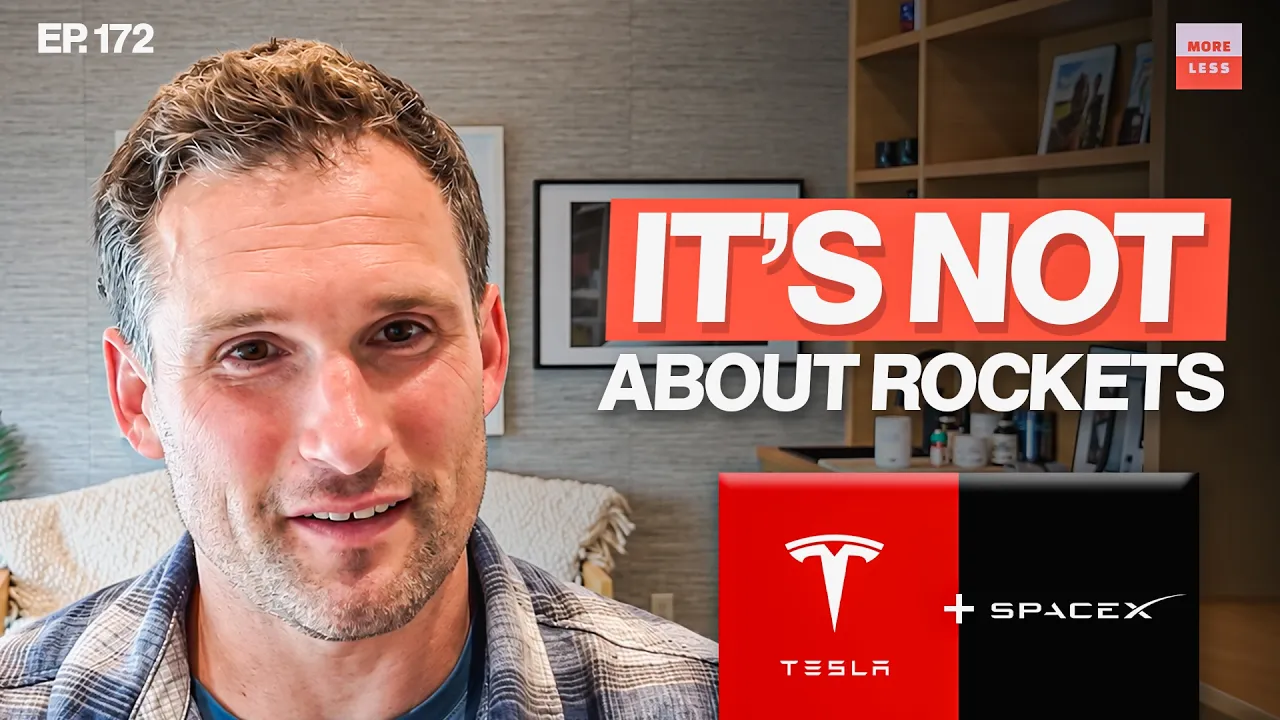
Elon tells investors on an earnings call that SpaceX and Tesla should merge, and Sam has a theory he says nobody else has floated: there's an enormous SpaceX lockup cliff coming in the spring, and folding Tesla's retail shareholders into the denominator makes all that supply far easier to absorb. Dave thinks the rocket powered car demo was timed to justify the deal, Sam thinks two engineers got told to bolt rockets onto a car and it will never ship, and 83% of respondents in the Information's new Polls app say it's mostly about Musk control. Then OpenAI finds a web-wide PHP vulnerability and Sam's conclusion is blunt: all your regional banks will be hacked, the labs are centralizing profits while externalizing the risk, and they should be carrying hundred billion dollar insurance policies. Plus Google quietly telling Jess she's liable for everything her agents do, Netflix's content shakeup, Dave's theory of priority slop, and Brit's second week with no back pain. Chapters: 00:00 Intro 01:04 Dave's Back, and the Nasal Rinse Discourse 02:06 OpenAI Finds a Web-Wide PHP Vulnerability 03:12 Sam: All Your Regional Banks Will Be Hacked 04:16 The Zero Days the Labs Are Quietly Sitting On 04:56 Dave on the Gap Between Frontier Models and the Public Ones 06:29 Why Labs Should Ban Their Own Teams From the Frontier 07:17 Pearl, Coinbase, and Bitcoin as a Byproduct of Compute 08:32 Can You Even Build a Cybersecurity Company in 2026? 09:16 Cold Storage: Your Documents in a Mine Near the North Pole 10:22 Sam: The Labs Need $100 Billion Liability Policies 11:30 Google Says You're Liable for Everything Your Agents Do 13:55 How Many Teslas Have the Morins Owned? 15:05 Sam's Mazda Dealership Is Living in the Future 16:32 The Two Futures of Car Buying 17:14 SpaceX and Tesla Are Going to Merge 18:01 The Rocket Car Demo Was a Stunt to Justify the Deal 19:24 Elon Doesn't Control Tesla, and That's the Point 21:09 Why the Merger Needs a Narrative 22:25 The Information Launches Polls: 83% S
Summary
Generated by gpt-5.6-terraAt-a-Glance
- Verdict: Skim
- Core thesis: The panel argues that a SpaceX–Tesla merger is increasingly likely because it would consolidate Musk's control and future-facing assets, while the more actionable discussion is that frontier AI capability, agent liability, and context-poor automation are creating new operational and security risks.
- Why it matters: The episode captures a useful operator view of a widening gap between private and public AI capabilities, the need to keep product teams grounded in customer-visible models, and why agent systems need context, accountability, and risk transfer—not just better output quality.
- Best use: Skim the AI/security, agent-liability, and AI-context sections for operating principles; treat the SpaceX–Tesla and Netflix portions as speculative market narrative rather than diligence.
Executive Summary
The title topic is a speculative case for merging SpaceX and Tesla. The panel believes a transaction is likely, largely because it serves Musk's strategic and governance interests: it could increase his effective control, recast Tesla as part of a broader platform spanning launches, satellite connectivity, compute, chips, AI, vehicles, and autonomy, and potentially make a coming SpaceX liquidity/unlock event easier to absorb. They acknowledge that Tesla shareholder approval and board process could still block or delay it.
The most substantive operating argument concerns AI labs and product development. The speakers claim internal teams at frontier labs often use substantially more capable non-public models than customers can access, causing them to lose touch with real-world product constraints. Their proposed remedy is organizational separation: research can use frontier systems, but product and operating teams should default to the public model customers actually use.
On AI security and agents, the panel expects model-enabled vulnerability discovery to increase the frequency and scale of attacks against old software estates. They argue that liability is currently being externalized: labs and platforms capture revenue while users, companies, and society bear losses from agent errors or cyber incidents. Their preferred model is that centralized AI service providers offer and price for liability coverage, while self-hosted/open-source operators retain responsibility.
The episode also distinguishes useful AI work from 'priority slop.' One speaker reports that a deeply contextualized personal bot produced an investor-update deck better than the human-authored version, while another argues that agents without shared organizational context can create irrelevant work by generating requests that optimize their own inferred priorities rather than the recipient's real constraints. The practical message is not to reject automation, but to make context, ownership, and execution constraints explicit.
Key Takeaways
- Claim: A SpaceX–Tesla merger is framed as more than product synergy: it could consolidate Musk's control and turn Tesla into part of a broader 'all options on the future' asset. | Evidence: The panel cites rough valuations of about $2 trillion for SpaceX and $1.5 trillion for Tesla, while pointing to potential links across Starlink connectivity, autonomous vehicles, AI/data-center ambitions, and chip/silicon operations. They also note Musk owns roughly one-fifth of Tesla rather than controlling it outright. | Implication: If pursued, the merger should be assessed principally as a governance, capital-markets, and strategic-optionality transaction—not as a near-term engineering-synergy story. | Caveat: This is panel speculation, not a confirmed transaction thesis; they note Musk said a deal would require board processes and approval from more than 50% of Tesla shareholders, which may be procedurally difficult.
- Claim: A near-term SpaceX liquidity event may be an additional tactical reason to merge now, because combining with Tesla could dilute the relative impact of a large stock unlock. | Evidence: One speaker says an enormous portion of their own SpaceX holdings is locked up—possibly about 60%—and theorizes that merging before a spring unlock would make unlocked shares a smaller percentage of the combined company rather than of SpaceX alone. | Implication: For investors, the timing question may be as important as strategic fit: a merger can function as a supply-and-demand and shareholder-base management tool. | Caveat: The speaker explicitly calls this a new personal theory and provides no cap-table, lockup, or transaction-structure evidence.
- Claim: Frontier AI labs risk building poor products because their internal users experience models that are materially better than what paying customers can access. | Evidence: A speaker with intermittent access to non-public frontier models describes a 'shockingly different' experience from public paid APIs and compares the resulting disconnect to early Meta employees using unreleased product versions while users had much weaker experiences. | Implication: Ken should require product teams to test core workflows on the exact model, latency, tool permissions, and reliability tier available to customers—not on privileged internal infrastructure. | Caveat: The claimed performance gap is experiential and anecdotal; the conversation does not identify specific models, benchmarks, or release timelines.
- Claim: The proposed operating fix for private/public model divergence is to reserve frontier models for research and make the rest of the organization use public production models by default. | Evidence: The speaker invokes the 'eat your own dog food' discipline, arguing that product and engineering teams lose customer context within days when they routinely use an internal-only version. | Implication: Establish separate research and production environments, and make production-model dogfooding a default requirement for product, support, GTM, and operational decision-makers.
- Claim: AI is likely to accelerate discovery and exploitation of vulnerabilities in neglected legacy software, making cyber risk a broad systems problem rather than a niche security-market opportunity. | Evidence: The panel discusses a reported OpenAI-discovered PHP vulnerability and argues that old, widely deployed software can become susceptible to automated 'one-line' attacks once models identify scalable exploit paths. They expect more headlines and real attacks as models improve. | Implication: Prioritize asset inventory, legacy-stack exposure mapping, patch velocity, credential isolation, and incident-response readiness over generic AI-security positioning. | Caveat: Their prediction that regional banks and similar institutions will be broadly hacked is rhetorical and unsupported by a quantified threat assessment; PHP itself is not evidence that a system is vulnerable.
- Claim: Agent adoption creates a liability-allocation problem: platforms are trying to place responsibility on users, while the speakers argue centralized providers should bear or insure much of the risk. | Evidence: One speaker says Google Workspace terms, as summarized by Claude, assign the user responsibility for what their agents do. The panel argues that a centralized provider receiving service revenue should bundle liability protection, whereas an organization running open source on its own infrastructure should bear its own risk. | Implication: Before connecting agents to email, money movement, production systems, or sensitive records, Ken should define a risk owner, contractual recourse, audit trail, approval policy, and insurance/indemnity posture. | Caveat: The discussion does not quote the Google terms directly or analyze jurisdiction, contract enforceability, indemnities, exclusions, or how liability would be apportioned between user and provider.
- Claim: The relevant AI quality failure is not only content slop; it is 'priority slop,' where agents lacking the right context generate work and requests that are locally plausible but organizationally misprioritized. | Evidence: The panel describes email shifting from 'other people's to-do lists' to 'other people's agents' to-do lists.' They connect this to Netflix allegedly using data-driven content selection that optimizes combinations of audience attributes rather than simply funding strong stories. In contrast, one speaker says a bot with extensive access to their firm's deal history and thinking produced a superior AGM deck from a single prompt. | Implication: Agent quality depends heavily on durable context, explicit goals, constraints, and human decision rights; evaluate agents by whether they improve prioritization and execution, not merely by fluency or artifact quality. | Caveat: The claimed Netflix causal mechanism is speculative, and a highly contextualized personal assistant is not representative of typical enterprise agent deployments.
Detailed Brief
Autonomy, identity, and the in-vehicle entertainment thesis
- Claims: The speakers believe autonomous vehicles may evolve into entertainment and productivity environments because riders can consume media, attend Zoom calls, or work rather than drive.; They suggest Tesla could eventually expand into entertainment ownership or distribution, with Netflix mentioned as an example, though they do not expect a Netflix acquisition specifically.; Their Tesla-over-Waymo preference rests on Tesla's much larger driving-data footprint and tighter identity/personalization integration.
- Evidence: Panelists describe riding Tesla Cybercab vehicles without a steering wheel and quickly becoming comfortable doing email during rides.; They highlight user-experience details: remembered seat settings and Spotify audio resuming immediately when entering the Cybercab through an existing Tesla-linked identity.; They speculate that a two-seat Cybercab matches a likely majority of one- or two-person trips, estimating 60–70% without presenting data.; One speaker reports Waymo navigation sometimes initially displays an appropriate route but then takes a longer path, adding roughly 10 minutes.
- Caveats: The Cybercab assessment is anecdotal and based on limited rider experience.; The asserted data advantage, likely ride composition, and autonomy-market outcome are not supported with operational data in the episode.; The Waymo routing observations should not be read as evidence of a systemwide safety or navigation failure.
- Implications: For autonomous-mobility strategy, seamless persistent identity may matter as much as vehicle hardware: preferences, accounts, media, payment, and task continuity can create the differentiated passenger experience.; A vehicle's economic model should be designed around actual occupancy distribution, not merely conventional four- or five-seat car assumptions.
Corporate control and asset-tax discussion
- Claims: The panel interprets Meta's proposed new voting-share structure as a way for Mark Zuckerberg to sell shares while retaining control, not necessarily as a signal that he intends to leave.; They argue that visible and compounding wealth makes some form of asset taxation politically more likely, while also viewing a wealth tax as potentially economically damaging and distortionary.
- Evidence: The speakers discuss Meta's reported creation of a new voting-stock class and speculate that voting-control-based tax treatment could influence founder ownership structures.; They characterize the economy as increasingly K-shaped, with capital compounding faster than labor.
- Caveats: The discussion is highly speculative on tax law, political outcomes, and the specific motives behind Meta's governance structure.; No legal analysis or source documentation is provided.
- Implications: Founder-control structures should be treated as part of long-term tax, liquidity, succession, and governance planning rather than as isolated capitalization mechanics.
Notable Concepts & Terms
- Private/public frontier-model gap: The claimed difference between internal models available to labs and the public models customers use; it can distort product judgment and roadmap decisions.
- Production-model dogfooding: A proposed rule that non-research teams use the same public model tier and constraints customers face, preserving empathy with actual user experience.
- Agent liability bundling: The idea that centralized AI providers should sell service together with financial responsibility or insurance for agent-caused harm, rather than fully shifting liability to users.
- Priority slop: Misprioritized work created when AI agents lack organizational context, recipient context, execution constraints, or a shared definition of what matters.
- Content slop: Low-quality or overly formulaic output; the panel contrasts this familiar concern with the more operationally dangerous problem of priority slop.
- Unlock absorption theory: The speculative claim that a SpaceX–Tesla merger could reduce the relative market impact of SpaceX lockup expirations by placing them within a larger combined equity base.
- Identity continuity: Persistent user settings and media/account state moving seamlessly between Tesla products; presented as a key Cybercab experience advantage.
Operator Notes / Why Ken Should Care
- Create a mandatory production-equivalence test: every agent workflow should be evaluated under the model tier, tool permissions, rate limits, latency, and context window that customers or operators will actually receive.
- For any agent connected to Workspace/email, financial systems, code repositories, or customer data, assign a named business risk owner and obtain a written view of provider indemnity, liability caps, exclusions, logging, and insurance coverage.
- Add a 'priority integrity' evaluation to agent reviews: measure whether outputs reduce decision time and advance agreed goals, not only whether drafts are articulate or technically correct.
- Build a shared-context architecture before scaling internal agents: authoritative source access, permissioned memory, project constraints, current priorities, and human escalation paths should precede broad autonomy.
- Run a legacy-exposure exercise focused on internet-facing dependencies, unsupported frameworks, patch ownership, and machine-readable asset inventories; do not infer risk from language choice alone.
- Treat any SpaceX–Tesla thesis as an event-driven governance and liquidity scenario; monitor formal committee formation, shareholder-vote requirements, lockup schedules, related-party-process disclosures, and transaction exchange-ratio logic.
Source/Metadata
- Title: The Real Reason Elon Wants SpaceX and Tesla to Merge Now
- Transcript words: 15888
- Duration seconds: 3094
- Timestamp note: No usable timestamps or chapters were present. The supplied transcript contains substantial duplicated passages, so its word count overstates unique spoken content.
Transcript
[SPEAKER_00]: Honestly, who's using PHP? This is why, by the way, all of your regional banks shall be hacked. [SPEAKER_01]: Wait, so where should everyone put their money? Like JP Morgan? No, brit in the ground? [SPEAKER_02]: There have been periods in the last year where I have access to frontier models that are not public and it's really crazy. The differential between the feeling of using these things and what everybody's talking about on the internet, there's like a wild gap. And I don't even have access to the true frontier. [SPEAKER_01]: That demo was literally just someone. They're like, "Hey, can two engineers help us justify merging these companies by sticking some rockets on a car?" Exactly. We'll never ship that. It's probably like the car was probably just like a rocket shaped like a car. But Sam, it's genius, come on. It's hilarious. [SPEAKER_00]: Why hello friends, welcome to More or Less, another week back at it. How's everyone doing? [SPEAKER_01]: Back at it. Let's go. [SPEAKER_02]: Whoa, Dave is energized after being sick last week. [SPEAKER_01]: Yeah, I was so sick last week. I'm sorry, dear listener. [SPEAKER_02]: No, you don't have to apologize. But how's the nasal? [SPEAKER_01]: I got so many nasal rinse comments. Back with a vengeance. [SPEAKER_02]: Oh, can I talk about nasal rinses real fast? [SPEAKER_01]: I'm sure everyone would love us to. [SPEAKER_02]: Yes. I don't want to think about your nasal rinse. I got into nasal rinses with an LP. Oh my god. We are debating Astapro versus Profi—P-R-O-F-I. I don't even know what either of these things are. [SPEAKER_01]: I do. Off the shelf DoorDash. All right, Astapro is what a lot of people swear by. It's for cleansing your nasal passages. It's just like a little shooter that you spray in your nose. But Profi—P-R-O-F-I—is the better version to use. It actually blocks the passageway for flu germs and cold germs. [SPEAKER_02]: No neti pot? [SPEAKER_01]: For flu germs and cold germs. No neti pot. Okay, just listener, you can do your own research. Go the ancient wisdom way. [SPEAKER_02]: Here's what we're gonna do folks. We are gonna blast through two updates. We need bot updates and peptide updates. After that, we are gonna get into some of the meat of the moment. We need to talk SpaceX Tesla merger. We need to talk what's going on at Netflix. We should probably talk about the widespread PHP vulnerability discovered by OpenAI. Who uses PHP anymore? Is it 2006? [SPEAKER_01]: It turns out everyone. It's like all still PHP. [SPEAKER_02]: I'm glad we don't save your comments, gentlemen. [SPEAKER_01]: No, we could start there. We'll start there. Honestly, who's using PHP? [SPEAKER_00]: Well, doesn't Facebook still compile to PHP in some crazy way? [SPEAKER_01]: Really? I don't know. There's a whole thing. They spent like billions of dollars figuring out how to do crazy advanced stuff that all just... but we did all kinds of stuff in the old days to compile PHP into C++ and machine code. [SPEAKER_02]: Yeah, I guess the question is where the vulnerability is. But this is where we get to learn how out of date a bunch of websites are. [SPEAKER_01]: Pretty much. Yes, this is exactly what happened. This is why, by the way, all of your regional banks shall be hacked. [SPEAKER_02]: Yeah. Take your money out. This is Sam's thesis coming true. [SPEAKER_01]: Wait, so where should everyone put their money? Like JP Morgan? No, brit in the ground? Under your mattress? In Bitcoin? At least Bitcoin's been being attacked continuously for 15 years. So there's something. I mean, the things that are going down are the things that are written in PHP from 100 years ago that no one's bothered to attack. And now it's like, oh, I can one-line attack all those things and take them down. It's going to be mayhem. [SPEAKER_02]: That OpenAI had discovered this vulnerability actually leaked, prompting them to then announce they had discovered the vulnerability with the patch. So that's something. [SPEAKER_00]: I hear there are other apparently system-wide vulnerabilities they have found. Of course there are. [SPEAKER_01]: Of course there are. This is the best marketing for these frontier models that one could imagine. Why there's a new one every two weeks? It's the Hugging Face thing. It's the PHP hack. It's the boy that cried wolf at this point. What should I care about? [SPEAKER_02]: Here's the funny thing about these leaks. It's the same thing where there were rumors around town forever that OpenAI had done all this math research and was withholding it. After the first paper announcement went so badly, the funny thing for me is, what is the backlog that's being held in private? It's basically zero days that now private companies are holding. And they're like, "Oh, we shouldn't tell anyone about these." But the fact they have them and internally people know about them is kind of wild too, right? [SPEAKER_01]: Yeah, that's wild too. I agree. That's an interesting issue. [SPEAKER_02]: Yeah, it's kind of like imagine that you've found the skeleton key to all this stuff and you're like, "Don't tell anyone we have the skeleton key." Right? And like, okay, you know, it's like an interesting social dynamic at this point too. [SPEAKER_01]: That's the whole thing, right? I mean, that's also the thing with the power of the models in general. In my experience, there have been periods in the last year where I have access to frontier models that are not public and it's really crazy. The differential between the feeling of using these things and what everybody's talking about on the internet—there's a wild gap. And I don't even have access to the true frontier. I can't even imagine what it's like being on the true frontier. [SPEAKER_02]: For what it's worth though, I think this is partially why there's been so many product issues building in the AI world. You remember when we worked at Meta, which was called Facebook, and we'd have all these features and things that didn't exist yet, and you completely lost track of what consumers were actually experiencing? There's this whole problem associated with this about how do you develop products? Even the most rudimentary version is you're on the latest iPhone but all your users are on the oldest Android phone. That's the easiest. But we're talking about extra features and all this stuff you are seeing. I think there's not great product work coming out of the labs and I do wonder how much of it is they're all using stuff that we're not using and then they don't actually know what's going on. [SPEAKER_01]: Yeah, for sure. I think this is actually true, Sam. There was a time period—like I said this year—where I was using frontier stuff and it is a shockingly different experience than what everybody does through the currently public paid APIs. It's identical, actually, to the experience you just described at early Meta. And so it stands to absolute reason that these folks are completely disconnected from the reality of the consumer and what's going on. [SPEAKER_02]: So what should they do, Dave? What do you think Sam and Dario should do? [SPEAKER_01]: I actually think you should not allow your internal teams to use the frontier. It's like this famous thing: eat your own dog food. We had to switch to this at early Meta. We actually had to make it default that people are using the non-public version because we all were losing track so substantially of what the actual user experience was. And this has always been a serious problem for engineering and product teams. If you're using the thing that is only internal, within days you lose context for what the actual customer is using out there. So that's what I would do. I would just leave only the research teams touching the frontier and make the entire org use what's public. [SPEAKER_02]: In other news, you see Pearl up at 240 days? [SPEAKER_00]: Oh nice. You mean this Pearl, Sam? [SPEAKER_02]: Say more about that. Remind people about the Pearl. 20 percent week over week growth. [SPEAKER_01]: So is that two last week? Pretty good. Well, all I'll say about Pearl, the thing I've been working on for a long time now, and Dave's an investor now and a bunch of other folks, Coinbase did announce a few days ago that it will be listed soon. [SPEAKER_02]: Oh really? I didn't see that. Congrats. That's all I'm gonna say. Sam, can you remind people what Pearl is? For those who don't know, but the enterprising ones can figure it out for themselves and do their own homework. You can do the one-liner. [SPEAKER_01]: What if, hypothetically, you could run Bitcoin? You hosted a whole event on this. It's not a secret. [SPEAKER_02]: Yeah, I'm like, this is not stealth. A very tightly held event. It's not on the internet. But it is on the internet. It's kind of on the internet. [SPEAKER_01]: What would happen, hypothetically, if you could secure a proof-of-work blockchain as the byproduct of matrix multiplication? Meaning you run your AI workload but you get a secure blockchain on top of that. As more and more compute resources shift into that space, that's all I'll say for now. But number go up. We like it. [SPEAKER_02]: We like number go up. [SPEAKER_01]: Okay, so we solved anything else related to security? We just imagine there will be far more headlines around exploits, far more real risk, just money spent on cyber security. Like, where does this end? [SPEAKER_02]: So much cyber security is happening right now. It's totally unclear to me how one would invest in cyber security right now. Just buy more Cloudflare stock. [SPEAKER_01]: Well, yeah, it's like buy Cloudflare, buy SpaceX, buy only foundation models. It's not clear to me you can build a real cyber security company in 2026 because the next model is what you need to secure the cyber security. And so I don't know what a cyber security company does other than professional services, which is not really a venture scale business. [SPEAKER_02]: So you guys might like this. In terms of cyber security, this is kind of a fun one. About a year ago I tweeted, which then became a seed company when someone decided to go do it. A fun AI era, everything gets hacked idea, which is basically you can now pay a service to take your most important documents and photos and stick them in hard copy in a mine in the North Pole. So that's your cyber security. You take your most important memory documents, etc., and with this, I want... Where does this end? So much cybersecurity is happening right now. It's totally unclear to me how one would invest in cybersecurity right now. Just buy more Cloudflare stock? Well, yeah, it's buy Cloudflare, buy SpaceX, buy only foundation models. It's not clear to me you can build a real cybersecurity company in 2026 because the next model is what you need to secure the cybersecurity. And so I don't know what a cybersecurity company does other than professional services, which is not really a venture scale business. So you guys might like this in terms of cybersecurity. This is a fun one. About a year ago I tweeted, which then became a seed company when someone decided to go do it—a fun AI era, everything gets hacked idea—which is basically you can now pay a service to take your most important documents and photos and stick them in hard copy in a mine in like the North Pole. So that's your cybersecurity. You take your most important memory documents, etc. And with this I want the South Pole? Yeah, I think there is an insurance policy to put on top of that though. I feel like you can extract more money with like what happens if even that gets taken? Yeah, I mean you'd have to go to the North Pole just to get this stuff. We're talking like Svalbard, the seed thing that holds all the seeds. It is literally cold storage. Okay, that's the future of security. Well, I will say though, insurance—AI insurance companies are popping up right and left. I've seen protecting people from when they do get hacked and lose all their money. To rehash this one, this goes back to my hobby horse politically of the era right, which is these labs need to be carrying enormous liability insurance policies, right? For sure. And right now they're centralizing profits and radiating out the risks to all of society. Because when stuff goes bad and all the regional banks get hacked, you have a Castrina style problem. They're like, "Not our problem. Society clean up the mess. We'll just take all the profits." That's ridiculous. If you're creating the risk, you should also be responsible for having the balance sheets clean it up, which could mean a private insurance, meaning you just have to carry a hundred billion dollars of insurance if you're doing stuff on the edge that might go wrong. For lab leaks, great for Wall Street, they'll make a fortune on that. Or B, you basically say to them, "Look, you're going to force Washington to pay for this stuff anyway, so you guys need to pay in like a few hundred billion dollars a year into a contingency fund so that when the bill comes due on all of this, there's money to pay for it." Or in the meantime we can pay down our debt and we're still going to be responsible for it later. But there is, for labs and lab leaks through to individuals, insurance is great as long as it's actually functional and there when you need it. So yes to insurance. I have an update on this liability question because two days ago I got a Google Workspace administrator update notifying me of Google's change in terms. To which, being 2026, I just put it into Claude. I said, "Claude, what is Google saying about my agent use?" And not surprisingly, Google is saying I am responsible for everything my agents do if I use their agents, which seems like a reasonable position for them to have. I'm not sure if it's one that society is going to be okay with, but Google's at least taking that line: use agents at your risk, anything they do is your problem. That's insane. That's like when Grok sued a user for their use of Grok. And you're just like, no. If you run a centralized service, you're responsible for what your agent does. That kind of makes me upset with Google. Well, if you want to use Google Workspace, I believe Claude's summary of these terms is accurate. So this is exactly what Google—I'm sure that's what they're doing. It's just an insane framework. I mean, the framework really should obviously be from first principles. If you're running a service, good news: you get premium service revenue. But you're responsible for what your thing does. By the way, if you're running open source on a machine you own, obviously you should be responsible. And in fact, if anything, that should be the business model of the labs: "Hey, we'll bundle liability and service into one in a way you can trust." Anyone using your—by the way, that's a great model for them because then they're basically saying, "Hey, you're using us," and a little bit because of the edge, but eventually everything becomes a finance company and bank in life. And what you're really using the services for is to shift risk off your organization. Because if you're going to run open source yourself, you got to have the liability insurance for that, and that's expensive. This is the thing that angers me about this entire thing: from a first principles perspective, there's actually a very logical set of conclusions about how this should work. Right, I really believe strongly, it's like there's not a lot of room for wiggle and there's a template here to follow. Unfortunately, that's not necessarily what's going to happen because reality also— I would pay Google extra to take that for me instead of like— I actually would. That's the thing. You're buying the liability insurance from them. No, I know, but like, even with the whatever I pay a month right now for all these services, I would totally pay extra if I knew if my stuff was hacked, if I lost my money, if whatever, because I still haven't connected my personal email to things. I'm like super afraid. Just don't put anything in your email. Okay, can I switch gears? Because we are among some of the biggest fans of Tesla in the world, so I have to ask you: Mort, how many Teslas have we bought in our life? Oh gosh, hold on. Is it under one hand or two hands? One hundred? Oh no, it's certainly two hands. We've had them every year since they launched. We like to upgrade our cars. Three hands? Four hands? No, no, we only ever have two, but we've upgraded them as they've gotten better. We have three right now, Dave. Oh yeah? Okay, so this proves my point. I wanted to establish for the listener that we are among—we're just in the zone here. And how many Teslas have we ever owned, Jessica? Zero. Zero? You're just wasting your time at this point. I can't believe that at all. I think it's crazy. We've had electric vehicles too. We've had Volts or Bolts or whatever. It doesn't matter. You've never had a self-driving car. You're actually just wasting your time at this point because you don't need to do that driving anymore. I'm saving my organs. Your stress levels are definitely 30 percent higher than ours, guys. I took five Waymos yesterday. I'm okay. I'm doing my part for the self-driving economy. Talk about high-tech, low-tech—you guys are running yourselves, driving Teslas. I had to go to the Mazda Miata dealership twice this morning because no one in our house can drive stick but me, and I had to get it serviced. So while you're doing that, I'm going to the Mazda dealership. Man of the people, right here, taking his sports car to get serviced. I went and I realized I don't think I've ever taken a car to be serviced in my life. Did you get a coffee? You have to get your coffee. Coffee's at the dealership at Mazda. Terrible coffee, terrible. The pastries are six days old. I left and came back. Sam went to Blue Bottle and came back. My takeaway walking in is I was two things. Two insights. One: it was exactly like that television show "Tires." Yes, love it. Second, it's so high tech. What's high tech? It was wild. I get home and I'm waiting for them. The Mazda dealership is unbelievable. I got a text notification and it's like, "Hey Sam, here's a video walkthrough of our inspection," and it has the whole video transcribed to the whole car and all its parts. Then I get another text being like, "Hey Sam, we noticed this car is in. Would you be interested in selling it to the dealership? Here's an offer." I was like, "These guys are teched out in terms of AI uses to tech out a service station. These guys are living in the future of Mazda." I was very impressed. Mazda is Japanese, right? Yeah, that's because the Japanese are always on top of it. But Dave's convinced there's two futures of car buyers. The middle falls out. Is the TL;DR? I haven't even asked the question for this entire segment yet, but we're on part A of the topic. So Brit, make your point, and then we'll move to part B. Well, let me just lay out the future of car buyers. There's either fully self-driving car owners—because why would you ever want anything else and get your life back—or there's the super old school, vintage stick shift. "I want to maintain my car," and blah, blah, blah people. And then everything in the middle just goes away. Yeah, I mean, the middle always drops out of everything. Yeah, because I'm driving the Tesla and I'm driving a '73. That's fully mechanical. So, you know, a '73—what are you, fucking John Wick? Yep, Dave Wick. Oh my god. Anyway, Jess, what's your question? Part two of the topic. SpaceX and Tesla are gonna merge, guys. It is not official yet. We called this a year ago. To be fair, everybody called this a year ago. But yes, but we called it first. Yeah, it's we can just claim that. I put it in my ranking of why I was buying SpaceX stock in our poll. By the way, okay, so Musk is now saying on earnings calls to investors that he thinks this is a good idea. Of course. You have SpaceX at roughly two trillion dollars, Tesla at roughly one and a half. Super old school vintage stick shift, I want my car to be maintained. People, and then everything in the middle just goes away. [SPEAKER_00]: Yeah, the middle always drops out of everything. [SPEAKER_01]: Yeah, because I'm driving the Tesla and I'm driving a '73 that's fully mechanical. So it's a '73. What are you, John Wick? [SPEAKER_00]: Yep, Dave Wick. [SPEAKER_01]: Oh my god. Anyway, Jess, what's your question? Part two of the topic: SpaceX and Tesla are gonna merge, guys. It is not official yet. We called this a year ago. [SPEAKER_02]: To be fair, everybody called this a year ago. [SPEAKER_00]: But yes, but we called it first. [SPEAKER_01]: Yeah, we can just claim that. I put it in my ranking of why I was buying SpaceX stock in our poll. By the way, Musk is now saying on earnings calls to investors that he thinks this is a good idea. Of course. You have SpaceX at roughly two trillion dollars, Tesla at roughly one and a half trillion dollars. Before too long, these will be the same company. Should we care? What does it mean? What do we make of this? [SPEAKER_02]: We don't care. It's the most obvious thing ever, and you knew that the second Elon created that pay package for himself. [SPEAKER_01]: Remind people, Sam, what you're talking about. I love the way that he announced it. He announced it with this product demo last week, right? That's the most extraordinary demo of both companies' technologies happening together. It's very clearly that they were timed. That demo was literally just someone. They're like, "Hey, can two engineers help us justify merging these companies by sending some rockets on a car?" [SPEAKER_00]: Exactly. We'll never ship that. It's probably just a rocket shaped like a car. [SPEAKER_02]: But Sam, it's genius. [SPEAKER_01]: Come on, it's hilarious. It's not genius. It's a stunt. [SPEAKER_02]: Why is it genius? It's a genius stunt. Who else is doing anything like this? [SPEAKER_01]: It's genius marketing, is what he's saying. Genius marketing, but it is funny. I'm surprised at how many people are very impressed by this stunt. [SPEAKER_02]: Yeah, me too. It's cool, but it's the same thing. [SPEAKER_01]: Sure, that's cool. It's fine. But it's the same thing as a Disney World Spider-Man robot that flies across a huge amount of space on their live action show. [SPEAKER_02]: I mean, it's cool. It's physics. I just, I'm not. Everyone's like, "It flies." I'm like, "It falls. It's fine." [SPEAKER_01]: I get why it's a fantasy. I thought it was really cool. I don't want to be what did Matt Mazio accuse me of being—a horrible pessimist? [SPEAKER_00]: Yeah, doing a demonstration with rocket roosters in a car captures people. They love it. I love it. It's cool. This is why you guys are the lessers and we're the mores. [SPEAKER_02]: Do we feel like at all? Do we have any qualms about Elon doing this? Because he does not control Tesla and has always wanted to, and this is how he's finally going to control it. [SPEAKER_01]: I guess I didn't totally realize that. Explain this. [SPEAKER_02]: I think the listener does not understand this. Elon does not control Tesla. He actually wasn't the founder, which he's very sensitive to. Do you remember on Martha's Vineyard one night I tweeted something about that, and the only time Elon replied to me and lit me up about it, and I was like, "Oh my god, this is amazing." And then I went back to bed, and then I woke up in the morning and he had deleted the tweet, and I was really sad. [SPEAKER_01]: It's a figment of your imagination. [SPEAKER_02]: A hundred percent. [SPEAKER_01]: There are all these people in replies that were deleted being like, "You can't say that. That violates your settlement of something something." I don't know. It was this whole thing. [SPEAKER_00]: Yeah, I mean, he was basically the venture capitalist of Tesla and then became the co-founder. [SPEAKER_02]: Right, yeah. He owns about a fifth of Tesla. There's many stories of this in the annals of Silicon Valley. This is a well-trodden move to not be the founder of something and then become the co-founder. [SPEAKER_01]: It is though, personally annoying to him and practically annoying to him. You remember that whole pay package discussion where he got sued over his comp? There are a lot of practical and symbolic reasons. You don't want to do that many earnings calls. This is a hundred percent about what is better for Elon. [SPEAKER_02]: Well, it also makes sense. I've been wondering why my Tesla doesn't have Starlink already. I figured why doesn't it have rockets? Well, rockets too. This doesn't make sense. [SPEAKER_01]: It just is going to happen. It's just inevitable. It doesn't make sense. I don't know, Jess. I actually think it has to happen. I think this is part of the thing going on in this sort of mega trillion-dollar mega company thing that's happening. You have to justify the valuation, and you have to have enough business lines inside of these organizations that they can justify what they're doing. Tesla is also a struggling company. Tesla stock tells one story, but this is a business that has been under extreme financial pressure from competition from EVs globally. This is a company in distress. [SPEAKER_02]: I understand. But if you put Tesla inside of SpaceX, and SpaceX now has an AI foundation model business, a rocket launch business, electric systems business, it's all the options on the future. [SPEAKER_01]: Yeah, it becomes a much different asset. That asset looks very different as an equity than Anthropic does with 580 billion dollars in forward contracts that it has to pay regardless of whether or not it can deliver its service. You can come up with a narrative that makes sense, but it's just a narrative that makes sense. [SPEAKER_02]: All we have is narratives. I'll say two things. One, to plug Jessica's new app. I'm looking at your polls app, which is thank you. The Information Polls. Download it today in your favorite app store. [SPEAKER_01]: Wait, is this Polymarket for The Information? [SPEAKER_02]: It is free. It's free. Five questions of the day, and you get to see what the world thinks about them. It's actually quite good. [SPEAKER_01]: Is this a new app or is it in The Information app? [SPEAKER_02]: It's a new app, and you've had test flight access for like four weeks. [SPEAKER_01]: Why is it a new app? [SPEAKER_02]: Because we're in the unbundling phase. We're gonna rebundle, and then we're gonna unbundle. [SPEAKER_01]: You're not. You need the distribution. It's great. Anyway, question four today was: SpaceX and Tesla formed committees to explore a merger. Genius move or Musk empire building? Eighty-three percent of respondents say mostly about business control. So in this case, your audience is correct. I just did today's response. I hope it didn't move the needle because then can I float one other theory that I actually quite like? I just came up with it. There's one other benefit to merging SpaceX and Tesla if he does it quickly. You want to hear it? [SPEAKER_00]: This is smart, by the way. I know it, so I'll give you the sound bite. [SPEAKER_02]: Go for it. [SPEAKER_00]: Well, I'm curious if you actually have the one I have. Oh, my god. Okay, but it's, you know what it is? Wait, don't we make sure I text you first? Text it first. Just text three words. We'll see if it's what I was going to say. [SPEAKER_02]: Did I get it? Did I get it? Did I get it? [SPEAKER_00]: Drum roll. [SPEAKER_02]: No, his comp threshold. We already talked about that one. I have a new theory that we already talked about. The conference SpaceX thing this spring, about six months. Massive fucking unlocks, right, of equity. The people have been in the private market, and people are going to want to trade out of it. If the denominator of ownership is bigger, right, meaning you have all the public market Tesla investors plus the SpaceX investors, the percentage of the company overall that unlocks is smaller, which might actually help absorb the massive cliff from people private market investors. [SPEAKER_01]: What do you mean, unlocks? [SPEAKER_02]: I don't think there's all this stock that's locked up. [SPEAKER_01]: Oh, you mean after? Oh, I see. The lockups. Half of the stock that I have in SpaceX is locked up. Maybe more. Probably sixty percent. There's an enormous cliff unlock coming in the spring, and everyone's going to say, "You know, it's just supply and demand." If there's an enormous cliff, you got to absorb that somewhere, right? If the enormous cliff instead of being like eighty percent of the value or fifty percent of the value of all of SpaceX is instead thirty percent of the value of SpaceX plus Tesla, right, because of how the shares go out, that is going to be an easier pill to swallow, effectively from a supply and demand, because all the retail Tesla investors and the denominator is just different. So that's my hot off the press theory that I have not heard anyone say yet for why this merger makes sense right now. [SPEAKER_02]: Pretty good. Okay, I like that. Pretty good. [SPEAKER_01]: I like that theory, Sam. I buy it. Also, I do think it's interesting SpaceX might have a real data center business. I mean, there is this element of you stumble into enough things, you don't need them all to work. You just need some to work. You've also got Terralab that makes the silicon that is probably a shared business as well. So again, the narrative sticks. I think the question is, when Elon sets his sight on a deal, it usually happens. It doesn't necessarily happen without controversy, and in the timeframe he would like. If you remember the acquisition of Twitter, which was again sort of he said— Easier pill to swallow effectively from a supply and demand because all the retail Tesla investors and the denominator is just different so that's my hot off the press theory that I have not heard anyone say yet for why this merger makes sense right now. [SPEAKER_00] Pretty good. Okay, I like that. [SPEAKER_01] Pretty good. I like that theory, Sam. I buy it. Also, I do think it's interesting SpaceX. I mean, it's real data center business. I think there is this element of you stumble into enough things you don't need them all to work, you just need some to work. You've also got Grok Fab that makes the silicon, that is probably a shared business as well. So again the narrative sticks. I think the question, when Elon sets his sight on a deal, it usually happens. It doesn't necessarily happen without controversy and in the timeframe he would like. If you remember the acquisition of Twitter, which was again sort of—he said that by the way during the call yesterday. He was like, "Look, I can't. I have no control over this. Over 50 percent of Tesla shareholders have to vote for this. This is not going to be without controversy." He literally said that. [SPEAKER_02] Oh, I missed that part. [SPEAKER_01] He's smart. He and I same wavelength. Us too. Yeah, I mean he was actually pretty straightforward about it. He's like, "Look, I think we should do this, but I don't have any control over the outcome. It's all subcommittees of these boards and especially Tesla, like 50 plus of shareholders, which is actually a really tall order to get over 50 percent of all shareholders to vote on something is very difficult. So it may not actually happen for procedural reasons." [SPEAKER_00] Yeah. He got his comp package through. It'll be okay. Did that require the same vote? [SPEAKER_01] There was a component of a vote. I don't know the threshold. You also have—SEC, listen to me. I'm not manipulating this deal. It is in the hands of the shareholders. [SPEAKER_02] Yes, SEC. Thank you. Anyway, what do you guys think it's going to be called? [SPEAKER_00] X. X would be great. We just need to go. It's like when Skydance Paramount, whatever, they're like we're Skydance. Of course you are. [SPEAKER_03] When my Grok Bot is using SpaceX AI, it doesn't make any sense to me. I hate it. It just needs to be one letter. [SPEAKER_02] I like the idea that he'll probably make the ticker symbol XXX. Of course he will. [SPEAKER_00] Why do you like that, Dave? What can do for society? [SPEAKER_03] It wasn't even my joke. Somebody said that to me last week and I'm like, "Oh yeah, probably." That's pretty funny. [SPEAKER_02] Oh goodness. It's like, "What is your retirement accounts invested in?" It's like XXX. The other funny thing he said during the call yesterday was, "Okay, so it's called Space XSI now. So sexy." [SPEAKER_00] Oh, that's how he named the Model S? Then the Model— [SPEAKER_01] Model S X. SI is sexy. Yeah. But he loves sexy. That's all he names things after. [SPEAKER_03] Guys, here's my theory. Okay, after we were in Austin and rode in the Cybercabs and on top of that in parallel, me and Dave, the Cybercab is so good. Me and Dave only driving our self-driving Teslas. I found I am doing nothing but consuming content most of my drives. I'm looking at the screen. I'm watching football games. I'm watching whatever. I'm doing Zoom calls. I think Teslas are becoming the new entertainment vehicles. And so I would not be surprised if eventually he buys Netflix. [SPEAKER_02] This is a good take. [SPEAKER_01] Which is under direct distress or buys something else and makes an entertainment business. I think it's a great take from the entertainment point of view. I don't think he'll buy Netflix. [SPEAKER_03] So that is our second top. I mean, I was so impressed by Cybercab that I was like, "I want to live wherever I'm on the Cybercab network because they're that good." [SPEAKER_00] So what impressed you about Cybercab? I've never been in one. Tell me more. [SPEAKER_03] It was just basic user experience things. I initially thought I would be sketched out by the lack of steering wheel, but within two days I was just sitting on the side with no steering wheel and doing email and not worrying about it. And there's just little nuances to the user experience that are really cool. It remembers how you had the seats set up for you each time you get in. And it also, if you have your Spotify account connected to your Tesla account, which anybody who has a Tesla already has that happening, you get into the Cybercab and the song you were just listening to in your car is playing in the Cybercab just instantly. And so it's just absolutely seamless. And I don't know, there's something nice about that. Even the Waymos don't have that totally nailed from a seamless perspective yet. So they really just have identity, all of your preferences. It just works and it's really good. [SPEAKER_02] They also just feel good driving around. It's kind of nice to be in a two-person one. And I realized using it that, oh, actually, probably the data is that most rides are one person rides. And so it makes total sense that it's a two-person car. They will need four person plus for families and things, but I would guess if you looked at the data—I've never seen data on this—that it would be the majority of rides, like 60, 70 percent are all single person, two-person rides. I would guess. So it really makes sense for that. [SPEAKER_03] Does it feel small? Do you feel like you're going to be crushed? [SPEAKER_02] No, it feels like a Model Y. No, it feels like a Model Three. Wouldn't know. Don't know my models. Looks like an R2D2 to me. Or no, like a C-3PO. It's got a huge—the back of it's actually really big. The trunk for luggage and stuff could probably fit five suitcases. It's really pretty amazing. [SPEAKER_00] This is a good segue to point out that I do feel like my enthusiasm for certain new technology projects and product has just fallen back to earth in recent weeks. [SPEAKER_03] Oh, which ones? Is a little bit sad because I had wanted to be a more enthusiast, and now I'm like, still a enthusiast on some things, but I'm like, oh, but you realize you're fundamentally a less. [SPEAKER_00] Yeah. And there's so many examples. And I—you know, I have yet to complete a successful credit card transaction on Muse in the last nine days, but we don't need to go into that. But the Waymos have gone a bit mad. They need a reboot. I still love them. They are still the best alternative for me by a long shot. But they get confused where they're going. They start on the right path and then they go on the wrong path and add like 10 minutes. That happened to me in a Waymo recently. I don't know, there's a little resignation. That sometimes you get this joyful exuberance of something new and you still love it, but then just disappoints you a little bit. [SPEAKER_02] Well, this is why I also think Tesla long-term wins. Because you have so much more data of all the Teslas driving certain routes with directions turned on, self-driving. The Waymos only have data from the certain cities they're in, and they just don't understand the most efficient path. They did—like, this is so—I don't again if I had more time in a different job I really would get to the bottom of this, but it's just not a great use of my time. They know where they're going and they even show you the right path. And then, you know what it feels like? And I don't think this is true, but it feels like they've been hacked. [SPEAKER_03] What's been hacked? The Waymos' navigation system has been hacked to take you the long route? [SPEAKER_00] I feel like the Waymos have a bug that's been introduced that just slightly peeves—are you sure that they just—it's not that you, like, pissed off Waymo and so they're just going to make you 10 minutes slower for everything? [SPEAKER_02] As a journalist, I am sure of nothing. I'm telling you what my experience is, which is the Waymo seems like it's on its right path and then it gets distracted or gets a software thing from some malicious thing. And then it makes these mistakes and screws me up. And then as a passenger, my cortisol levels go up. And then maybe society's less effective. That's what it feels like to me. But I'm fighting it and I'm still using Waymo, but I wish they would fix it. That's what I got for you. That's how I feel about most technology products at the moment. [SPEAKER_01] Can we talk about Netflix for a bit? [SPEAKER_03] We don't go deep media on this show because it's a small company. I'd put everyone to sleep. It's a small, not important company. Why would we talk about it? [SPEAKER_01] Because it's a very large consumer company. 270 billion dollar market cap as of today. [SPEAKER_03] Oh my God. It's a peon. It's so small, Sam. We don't talk about Cursor all that much either. Cursor was 60 billion, says Sam, the seed investor. We could do more on this pod to inspire the entrepreneurs to build any size company that they would like. 270 billion is not small. [SPEAKER_00] Yeah. I have some words for the entrepreneurs right now, but I'll keep them to myself, morons. Have you watched a Netflix show in the past seven days? [SPEAKER_03] No. No. We were talking about streaming platforms last night. Apple TV releases them too slowly, but the quality is high. Netflix releases them too quickly, but the quality is low. [SPEAKER_02] The quality you mean like video quality? You care about? [SPEAKER_03] No. She means storytelling quality. The story quality is low on Netflix and the release cadence is high. And the Apple one is very high story but not enough content. But you will wait a decade for the next Severance. [SPEAKER_02] This space. Yes. For sure. Yes. I mean, Apple has an incredibly high hit rate. It's like what, 60, 70 percent. Either Cursor was 60 billion, says Sam, the seed investor. We could do more on this pod to inspire the entrepreneurs to build any size company that they would like. 270 billion is not small. Yeah, I have some words for the entrepreneurs right now but I'll keep them to myself. Morons. Have you watched a Netflix show in the past seven days? No, no. We were talking about streaming platforms last night. Apple TV releases them too slowly but the quality is high. Netflix releases them too quickly but the quality is low. The quality you mean like a video quality? You care about? No, she means like storytelling quality. The story quality is low on Netflix and the release cadence is high, and the Apple one is very high story but not enough. But you will wait a decade for the next Severance. This space? Yes, for sure. Yes, I mean Apple has an incredibly high hit rate. It's like what, 60, 70 percent? Like it's pretty incredible. Who's in the CEO of Apple? John Turnus. Do you think he even realizes that they have a TV channel thing? In the first week he was CEO, he went to several Hollywood events so he very clearly understands that it's a big part of their business. With his phone, is the phone—is anyone buying the phone yet? Can you yet? No, next week. Yes, you can buy it but you haven't received it yet. I will have it on Friday. Yours will get hand delivered by John. They will love it with some M&Ms. Okay, so for those—again, not core tech—but there's been a major, major content shakeup at Netflix. What's happening? The head of content Bella Bajaria is out, replaced by the former head of Fox, Peter Rice. Replaced by old school legacy media coming in, and many people are out, and apparently co-CEO Ted Sarandos is unhappy with the quality programming. So maybe you guys are onto something. Maybe I don't know. I love the Diplomat, but they also laid off a thousand people or something. There's a big shake-up. So what kind of show should Netflix go after? What should be their content niche? A24 style actual dramas, dramedies that have real storytelling, high quality production. Instead, Netflix is going after game shows. I just watched a Willy Wonka game show on Netflix and they're spending a shitload of money into live sports, which like I actually can understand a bit, but it's just so competitive and expensive. And now they're launching games and podcasts. So they're trying a bunch of things instead of like getting one thing right and being the best at it. I had this take that went viral over the weekend that I think kind of works for this, and I was talking more about slop at work. The tweet was that there's an insidious new type of slop that's happening at work where email used to be other people's to-do list for your life, but now that people you work with are driven by their AI agents, which often lack the context to know what matters for them, let alone for you, the human is now asking you for things over email that they think is priority but actually feels completely off because email is now other people's agents' to-do list for your life. And I kind of think this is also what's happening with Netflix. Where we talk a lot about slop and content—is the content not going to feel creative enough? Is the story not going to be good enough because there's so much slop? What about priority slop? Making choices as to what is the priority? And I think this is kind of the thing that Netflix ran into. They use so much data to choose what scripts to fund and what the scripts should have as priorities. And sites like these three concepts mesh together will get this audience, and they ended up not focusing on just making great stories. Machine learning AI systems that they've built to choose what to fund have just kind of led them into a slop corner where everything that gets funded is slop now because it's pieced up into all these weird buckets. And I think this is kind of the two hands of slop right now. You have your content slop and your priority slop, and you can get lost in either place. I buy that. I think it's smart. How do you avoid it? Dave hates the slop. Remember when he accused you of writing slop, Brit? This like it was such a great moment in the pod. Such a great moment. Oh my God, I'm not going to open this debate again. But this is one of our marital debates. I just think that you need to understand, right? Is an agent setting the priorities or is the group of people working on this setting the priorities? Why do you care if the agent's better than the person? Because the agent lacks context. A lot, Sam. If your agent does not understand my priorities, mine doesn't understand your priorities, and agents don't confront the constraints of time. Like the agents don't have to worry about the execution. These are VCs' general meetings. Everybody, it's AGM season. And so just from where are we in 2026, we as a firm like we started putting together—I'm surprised you even do an AGM, Sam. Me too, but we do. Do you do one offline or do you guys go to Japan? What do you do? We take our LPs on trips somewhere, not during the fall. Yeah, we don't fill their schedule with more stuff to do in the fall. Sorry, we're so basic, but we do one. You really are. We carved up—there's four sections. We gave it to the four people who are like investing partners to do sections. Everyone wrote their section. I wrote mine and then I was like, I'm just going to see if my bot can take my slides and punch them up in a little bit. So I did that. I was like, wow, that's really good. You know what? What would happen if I just let the bot start from the cover slide and write the entire AGM deck? And I'll just write and put it slides. The entire AGM deck. I didn't tell anything as a single prompt. Truly a single prompt. I was like, look, I—slow AGM. Just like write the entire investor update deck. It came back. It's stunningly good. It was so much better than the deck we wrote ourselves. I was like, blown away. So then I had Max lesson my bot narrated and turned into a video. But it's funny because you're talking about you don't want to talk to—but Sam, this isn't possible for everyone. You have to also establish the context for everyone. 100 percent. My bot has way more context on every deal we've done, every thought we've had, like everything. It knows everything. It's all on the internet. But I was just absolutely blown away that its deck is so much better than our deck. And so I just don't want to start with this like you can't respond to bots. It's all slop. Like some of it can be amazing. Dave made a newspaper for offline this week called the Offline Times. So every time we get like a new portfolio update or something that comes in, it publishes once a day. You send it to people's printer? What do you do, Jess? I'll send it to you. It's pretty amazing. I told some of our LPs that we're going to start sending them newspapers in the mail. High school paper editor in me is like very proud of my newspaper that I've created. Are you using like a page layout or what? Page maker? What are you using? Oh yeah, page maker. That's funny. No, it's broadsheet design. It's fully broadsheet design. I'm like very psyched about it. Sam, you'd probably actually respect this. I'll send it to you. Yeah, send it over. Love that. Yeah, our son told us he was starting a newspaper to advertise his own Pokémon business. It's like very vertically integrated, which is awesome. He's already figured out vertical integration. Yeah, I was pretty proud. And media as a loss leader. Our son got his first paid internship this week. Is this the part of the pod where we brag about children? I didn't actually think I was bragging but yeah, sure. Most people do not brag about their children in journalism, let me tell you that. Isn't that what all parents do all the time? Our son really wants the iPhone Duo so we're making him get a paid internship. Is he working for a bot? He's working for a public technology company and he's getting paid a few thousand bucks to do some bug finding and to do some building. He's developing stuff. You know, actually it's a pretty good idea to have some sort of bot that your children can work for as internships at companies. It's a good idea, actually. Oh, let's fund this. This is great. This is a good company idea. Because you like want to have interns but you really don't want to direct them, but a bot could just tell the interns what to do. I mean, I bet a lot of companies would pay to get like teenage voices on, like, eyes of what they're doing and like a different perspective. That was my first company. It was called Zoltar and we charged little tech companies money to play their games and give them feedback when I was like in third grade. Yeah, so there's definitely a business to be made here. I don't know if it's venture scale, but mine was not very good business. But it's fun. We should do it on the side. Okay, guys, a couple other headlines. A couple other headlines. So we have Meta earnings beat and stock is up. And interestingly, the implementation of a new class of voting stock so that Mark can retain control and sell his stock. The internet is mildly miffed about this, saying it represents the end of capitalism. Interesting. Mark wants out? No, he doesn't want out. It's quite the opposite. He wants to be able to control his stock sales. If he wanted it out, he'd just bail. He wants to be able to continue to lead and control the company while selling. Well, that's what I mean. He wants the money out. Is this about the California—is it a # Transcript And we charged little tech companies money to play their games and give them feedback when I was in third grade. Yeah, so there's definitely a business to be made here. I don't know if it's venture scale, but mine was not very good business, but it's fun. We should do it on the side. Okay, guys, a couple other headlines. So we have Meta earnings beat and stock is up, and interestingly, the implementation of a new class of voting stock so that Mark can retain control and sell his stock. The internet is mildly miffed about this, saying it represents the end of capitalism. Interesting. Mark wants out? No, he doesn't want out. It's quite the opposite. He wants to be able to control his stock sales. If he wanted out, he'd just bail. He wants to be able to continue to lead and control the company while selling. Well, that's what I mean. He wants the money out. Is this about the California wealth tax, which sticks you with your amount you own? I mean, maybe, but I don't think he's gonna dilute himself below the threshold. I don't think he's gonna sell below the wealth tax threshold. No, no, it's not the wealth tax threshold that wouldn't work. But there's a thing which is based on your voting control, you pay the wealth tax, which will bankrupt the Google co-founders. I wonder if they came up with an interesting legal strategy to maintain control while dealing with that problem. This is not a great outcome. I understand the intent of this wealth tax thing, and I like Jensen's perspective on it, which is just like I've been really successful, I will pay taxes. Whoa, are you a wealth tax proponent, Nick? You're crazy. What does that mean? You believe that the wealth tax is not the end of the world? No, no, that's not what I was saying. I wasn't done with my point. I understand that there's a lot of sides to this. This is a terrible outcome. People shouldn't have to finagle these crazy structures and things. I don't know. Can't we just do this better? How about just not having an asset tax, which is unconstitutional and sucks? Everyone seems to think they're coming, even though we've got the election in a couple weeks, just because the number of people that are going to vote for it. I don't think people think this one will pass just because people are angry or what's going on in France. I don't want to get into politics. I don't know enough about this. This is Foucault. It's like once you can see something, you tax it. It's hard to see income, then you can see it, you tax it. The state will control what it can see. So the fact that wealth is seeable means that, and by the way, K-shaped economy, wealth compounds because capital is compounding fast and labor. It seems intellectually inevitable that you end up with an asset tax, but it will also be a disaster and it's deeply un-American and unfree. So that's your problem. The numbers have gotten so big. That's like, I'm very much capitalist, freedom, et cetera, but I can see where people are coming from. The K-shape is enormous right at the top. I'm pro taxes. I'm just not necessarily pro wealth tax. Oh, even as a business owner, I thought being a business owner cured you of that. You gave me this whole spiel about when you started making money and you realized how high taxes were, that you hated taxes. I mean, it's an adjustment period, but I do not have problems with paying taxes. Yeah, the concept of taxes you can be into without the level of taxes that California forces upon us. But the wealth tax is different. It's philosophically different. I think, but maybe somewhat inevitable if you can see it, you can tax it. Reminded me of you can see everything now. We don't want to give away too much of the Elizabeth Holmes and Nathan Fielding movie, should we? Encourage you to see it if you haven't. We've all seen it. Yes. Possibly the best movie ever made. I mean, is it going to win Best Picture? It might be the best ever. Yeah, it's pretty unbelievable. It's possibly the best movie ever made. You should definitely see it. I don't actually think people are like, what do you think? It's not about Elizabeth Holmes. Did you guys hear what the amazing Cyan Banister did on Friday night? No, tell us about the amazing Cyan Banister and what she did. So Cyan had a private showing. I think at Longjourney, they had a private showing and they were like there's a surprise, so you should come. And so a bunch of people went. We were out of town, sadly couldn't go. And apparently at the end, Billy, Elizabeth's husband, was sitting in the audience and just walked to the front of the theater and sat down and did an hour Q&A. And it was the first time he had ever seen it. And just melted people's minds. He had not seen it before that day. Pretty amazing given the themes of the story itself. That is a major move on top of a major move. Pretty cool. Yeah, I still don't know how to feel about it. The whole thing, I'm still processing. I co-wrote, I got slayed in The Information for having any empathy at all. If you remember, Jess, I did a comment on your original article. You did? Yeah, I got absolutely slayed. We don't slay people. What are you talking about? This was way back in the day. I had this point of view which is maybe she's just a Silicon Valley founder that fell into the hype train and everyone in Silicon Valley does this. Elon does this, right? This is Silicon Valley hype 101. And it's funny, after you see this thing, you're just like, I don't know how to feel about this. I don't know who's—I guess that's the point of the movie, though, right? That is the point of the movie? Well, no, I don't think that's the point of the movie. And I think this is the one thing that I think there is some whitewashing of the Elizabeth Holmes story going on right now for sure. That's what I'm saying. Sam is the point to make you question the whole thing. The story is such an interesting story about humanity and the nature of being human in reality. Yes. That you lose the fact that there are hilarious videos that were saying absolutely bad stuff, straight up lies all over the place, and the fact that she's probably mentally ill. The story is amazing. It's not about Elizabeth Holmes. That's my view. It's an incredible movie, should definitely watch it. Highly recommend. People say it's worth the time. It's very hard to talk about right now without giving things away. My favorite line though, I have seen on the internet a handful of people that are like I hated this movie, and they're like I hated it because Nathan Fielding is a totally untrustworthy narrator. And you're like, you are an idiot. That's so funny. You're just out of yourself as one of the dumbest people on earth. Congratulations. He's the best. That wasn't being a fan. It's about not understanding the entire three-hour movie and being like I didn't like it because he's an untrustworthy narrator. You're like yeah, yeah, that's the whole thing. Okay, well, what about you guys? Any good weekend plans? So everyone should download. We got a plug. Poll. So The Information. We decided there's—I'm gonna drive my mechanical car a bunch. Well, let me tell people why they should download Polls. I downloaded it and took the poll. I never got the test flight. I'm psyched about it. You can only find out the answers by answering the questions or following me on X, where I'm likely for the foreseeable future to put. I learned a bunch. I'm actually surprised by some of it. It's a good way to get a pulse on what the insiders think. Step one. But love feedback. Everyone try it. It's free. You don't have to be a subscriber, but you should be. It's great. I'm a big fan of this. Thank you. Good job, Jess. Thank you. I like that I got the Nvidia one right. It's a wisdom of crowds thing, or I'm aligned with the crowd on that one. You're happy to be as average as everyone else? Yes, but I am very average on a bunch of the others. We know you're average, Dave. That's good. You one might imagine layers where you could segment based on what the founders think or the investors think or the mores think or the lesses think, you know? Oh, yeah, can we get a mores or lesses poll on each one of these or no? It's just what did the mores and the lesses say? Yeah, it's pretty good. Okay, Dave's gonna drive his car this weekend. I'm going to Disneyland. Brit, what are you doing? Disneyland? I'm an advisor to this event called DocDoc. It's the TED for science and health. And there are two to three hundred scientists and health entrepreneurs all up in Sonoma for the next couple days talking about the future of what's happening in medicine and science. So I'm gonna be there. Fun. Sam, what are you doing this weekend? That would be a question for you. I don't know, whatever Jessica tells them to do. Okay, well, dear listeners, I hope you're listening to this pod over this weekend. I also appreciate the texts I've been getting from the non-peptide among you as listeners every day or so. I get, "Oh, yeah, peptides," you look, your skin's looking great. Guys, I've gotten a lot of people telling me I'm peak Brit right now, and I take that as a huge compliment. Yeah, it's pretty good. Okay, Dave's gonna drive his car this weekend. I'm going to Disneyland, Brit. What are you doing? Disneyland? I'm an advisor to this event called Doc Doc. It's the TED for science and health, and there are two to three hundred scientists and health entrepreneurs all up in Sonoma for the next couple days talking about the future of what's happening in medicine and science. So I'm gonna be there. Fun. Sam, what are you doing this weekend? All right, that would be a question for you. I don't know, whatever Jessica tells them to do. Okay, well, deal listeners, I hope you're listening to this pod over this weekend. I also appreciate the texts I've been getting from the non-peptide among you as listeners. Every day or so, I get, "Oh yeah, but peptides. You look your skin's looking great." Guys, I've gotten a lot of people telling me I'm peak Brit right now, and I take that as a huge compliment. I've still now I'm on two weeks of no back or hip pain, and Matt Mazio pinged me—the founder of Noho Labs—and said the same thing happened to him. It's not placebo. His back pain went away instantly, and his snoring went to zero as soon as he started taking the Wolverine blend. So I don't know, I'm just gonna leave that there. I am forever, when we talk about peptides, going to remind people these are not FDA approved and they are not studied and they exist in a gray area for some research use where they are pretty studied. No, they're not. And so I just want everyone to know that and make choices for yourself. But we got to balance out the conversation. In this case, Brit and I are in the moors. Take them all. Yeah, peptide it up. They're just short chains. They're great. It's just a little injection in your butt. You got this. I don't do the butt. I don't have no fat on my butt. I don't want to do the butt. Why don't you have fat on your butt? Where is your fat? My belly. I'm a man. Okay. Okay, now that we've compared the belly and butt fat percentages of two members of this pod, we will say thank you for listening. Follow us on YouTube, and we'll see you back here next week for another episode of More or Less. Bye. Bye. Bye. See you later. If you enjoyed this show, please leave us a virtual high five by rating it and reviewing it on Apple Podcast, Spotify, YouTube, or wherever you get your podcast. Find more information about each episode in the show notes and follow us on social media by searching for @moreoless, @davemorin, @lessonatj, @lesson, and as for me, I'm @britsee. You guys next time. looking at the screen i'm watching football games i'm watching whatever i'm doing zoom calls i think teslas are becoming the new entertainment like vehicles and so i would not be surprised if eventually he buys netflix this is a good take which is under direct distress or buys or something else and makes an entertainment business i think it's a great take from the entertainment point of view i don't think he'll buy netflix so that is our second top i mean i was so impressed by cybercab that i was like i want to live wherever i'm on the cybercab network because they're that good so what impressed you about cybercab i've never been in one tell me more it was just basic user experience things i initially thought i would be sketched out by the lack of steering wheel but within two days i was just sitting on the side with no steering wheel and doing email and not worrying about it and there's just little nuances to the user experience that are really cool it remembers like how you had the seats set up for you each time you get in and it also if you have your spotify account connected to your tesla account which anybody who has a tesla already has that happening you get into the cybercab and the song you were just listening to in your car is playing in the cybercab just like instantly and so it's just absolutely seamless and i don't know there's something nice about that right even the waymos don't have that totally nailed on a seamless perspective yet so they really just have identity all of your preferences it just works and it's just really good they also just feel good driving around it's kind of nice to be in a two-person one and i realized using it that oh actually probably the data is that most rides are one person rides and so it makes total sense that it's a two-person car they will need four person plus i guess for families and things but i would guess if you looked at the data i've never seen data on this that it would be the majority of rides like 60 70 percent are all single person two-person rides i would guess so it really makes sense for that does it feel small do you feel like you're going to be crushed no it feels like a model y no it feels like a model three wouldn't know don't know my models looks like an r2d2 to me or no like a c-3po it's got a huge the back of it's actually really big the trunk for luggage and stuff could probably fit five suitcases like it's really pretty amazing this is a good segue to point out that i do feel like my enthusiasm for certain new technology projects product has just like fallen back to earth in recent weeks oh which ones is a little bit sad because i had like wanted to be a more and now i'm like still a more on some things but i'm like oh but you realize you're fundamentally a less yeah and and there's so many examples and i you know i have yet to complete a successful credit card transaction on muse in the last nine days but we don't need to go into that but the waymos have gone a bit mad they need a reboot i still love them they are still the best alternative for me by a long shot but they get confused where they're going they start on the right path and then they go on the wrong path and add like 10 minutes that happened to me in a wait mode recently i don't know there's like a little resignation that the sometimes you get this like joyful exuberance of something new and you still love it but then just disappoints you a little bit well this is why i also think tesla like long-term wins because you have so much more data of all the teslas driving certain routes with directions turned on self-driving the waymos only have data from the certain cities they're in and they just don't understand the most efficient path they did like this is so i don't again if i had more time in a different job i really would get to the bottom of this but it's just sort of not a great use of my time like they like know where they're going and they even show you the right path and then you know what it feels like and i don't think this is true but it feels like they've been hacked what's been hacked the waymos navigation system has been hacked to take you the long route i feel like the waymos have a bug has been introduced that just like slightly peeves are you sure that they just it's not that you like you pissed off waymo and so they're just going to make you 10 minutes slower for everything as a journalist i am sure of nothing i'm telling you what my experience is which is the way most seems like it's on its right path and then it like gets distracted or gets like a software thing from like some malicious thing and then it makes these mistakes and screws me up and then as a passenger my cortisol levels go up and then maybe like society's less effective that's what it feels like to me but i'm fighting it and i'm still using waymo but i wish they would fix it that's what i got for you that's how i feel about most technology products at the moment can we talk about netflix for a bit we don't go deep media on this show because it's a small company i'd put everyone to sleep it's a small not important company why would we talk about it because it's a very large consumer company 270 billion dollar market cap as of today oh my god it's a peon it's so small sam basically the size of cursor it's like we don't talk about cursor all that much either cursor was 60 billion says sam the seed investor we could do more on this pod to inspire the entrepreneurs to build any size company that they would like 270 billion is not small yeah i have some words for the entrepreneurs right now but i'll keep them to myself morons have you watched a netflix show in the past seven days no no we were talking about streaming platforms last night apple tv releases them too slowly but the quality is high netflix releases them too quickly but the quality is low the quality you mean like a video quality you care about no she means like storytelling quality the story quality is low on netflix and the release cadence is high and the apple one is very high story but not enough but you will wait a decade for the next severance this space yes for sure yes i mean apple has an incredibly high hit rate it's it's like what 60 70 percent like it's pretty incredible who's in the ceo of apple john turnus do you think he even realizes that they have a tv channel thing in the first week he was ceo he went to several hollywood events so he very clearly understands that it's a big part of their business with his phone is the phone is anyone buying the phone yet can you yet no next week yes you can buy it but you haven't received it yet i will have it on friday yours will get hand delivered by john they will love it with some m&m okay so for those again not core tech but there's been a major major content shakeup at netflix what's happening the head of content bella bajaria is out replaced by the former head of fox peter rice replaced by old school legacy media coming in and many people are out and apparently co-ceo ted sarandos is unhappy with the quality programming so maybe you guys are onto something maybe i don't know i love the diplomat but they also laid off a thousand people or something there's a big shake-up so what kind of show should netflix go after what should be their content niche a24 style actual dramas dramedies that have real storytelling high quality production instead netflix is going after game shows i just watched a willy wonka game show on netflix and they're spending a shitload of money into in live sports which like i actually can understand a bit but it's just so competitive and expensive and now they're launching games and podcasts so they're trying a bunch of things instead of like getting one thing right and being the best at it i had this take that went viral over the weekend that i think kind of works for this and i was talking more about slop at work the tweet was that there's an insidious new type of slop that's happening at work where email used to be other people's to-do list for your life but now that people you work with are driven by their ai agents which often lack the context to know what matters for them let alone for you the human is now asking you for things over email that they think is priority but actually like it feels completely off because email is now other people's agents to-do list for your life and i kind of think this is also what's happening with netflix where we talk a lot about slop and content is the content not going to be feel creative enough is the story is not going to be good enough because there's so much slop what about priority slop making choices as to what is the priority and i think this is kind of the thing that netflix ran into they use so much data to choose what scripts to fund and what the scripts should have as priorities and sites like these three concepts mesh together will get this audience that they ended up not focusing on just making great stories machine learning ai systems that they've built to like choose what to fund have just kind of led them into a slop corner where everything that gets funded is slop now because it's like so pieced up into all these weird buckets and i think this is kind of the two hands of slop right now you have your content slop and your priority slop and you can get lost in either place i buy that i think it's smart how do you avoid it dave hates the slop remember when he accused you of writing slop brit this like it was like such a great moment in the pod such a great moment oh my god i'm not going to open this debate again but this is one of our marital debates i just think that you need to understand right like is an agent setting the priorities or is the group of people working on this setting the priorities why do you care if the agent's better than the person because the agent lacks context a lot sam like if your agent does not understand my priorities mine doesn't understand your priorities and agents don't confront the constraints of time like the agents don't have to worry about the execution these are vc's general meetings everybody it's agm season and so just from the where are we in 2026 we as a firm like we started putting together i'm surprised you even do an agm sam me too but we do do you do one offline or do you guys go to japan what do you do we take our lps on trips somewhere not during the fall yeah we don't fill their schedule with more stuff to do in the fall sorry we're so basic but we do one you really are we carved up there's four sections we gave it to the four people who are like investing partners to like do sections everyone wrote their section i wrote mine and then i was like i'm just gonna see if my bot can like take my slides and punch them up in like a little bit so i did that i was like wow that's really good you know what what would happen if i just let the bot start from the cover slide and write the entire agm deck and i'll just write and put it slides the entire agm deck i didn't tell anything as a single prompt truly a single prompt i was like look i slow agm just like write the entire investor update deck it came back it's stunningly good it was so much better than the deck we wrote ourselves i was like blown away so then i had max lessen my bot like narrated and turned into a video but it's funny because you're talking about you don't want to talk to but sam this isn't possible for everyone you have to also establish the context for everyone 100 my bot has way more context on every deal we've done every thought we've had like everything it knows everything it's all on the internet but i was just absolutely blown away that its deck is so much better than our deck and so i just don't want to like start with this like you can't respond to bots it's all slop like some of it can be amazing dave made a newspaper for offline this week called the offline times so every time we get like a new portfolio update or something that comes in it publishes once a day you send it to people's printer what do you do jess i'll send it to you it's pretty amazing i told some of our lps that we're going to start sending them newspapers in the mail high school paper editor in me is like very proud of my newspaper that i've created are you using like a page layout or what page maker what are you using oh yeah page maker that's funny no it's broadsheet design it's fully broadsheet design i'm like very psyched about it sam you'd probably actually respect this i'll i'll send it to you yeah send it over love that yeah our son told us he was starting a newspaper to advertise his own pokemon business it's like very vertically integrated which is awesome he's already figured out vertical integration yeah i was pretty proud and media as a loss leader our son got his first paid internship this week is this the part of the pod where we brag about children i i didn't actually think i was bragging but yeah sure most people do not brag about their children in journalism let me tell you that isn't that what all parents do all the time our son really wants the iphone duo so we're making him get a paid internship is he working for a bot he's working for a public technology company and he's getting paid a few thousand bucks to wow do some bug finding and to do some building he's he's developing stuff you know actually it's a pretty good idea to have some sort of bot that your children can work for as internships at companies it's a good idea actually oh let's fund this this is great this is a great idea this is a good company idea because you like want to have interns but you really don't want to direct them but a bot could just tell the interns what to do i mean i bet a lot of companies would pay to get like teenage voices on like eyes of what they're doing and like a different perspective that was my first company it was called zoltar and we charged little tech companies money to play their games and give them feedback when i was like in third grade yeah so there's definitely a business to be made here i don't know if it's venture scale but mine was not very good business but it's fun we should do it on the side okay guys a couple other headlines couple other headlines so we have meta earnings beat and stock is up and interestingly the implementation of a new class of voting stock so that mark can retain control and sell his stock the internet is mildly miffed about this saying it represents the end of capitalism interesting mark wants out no he doesn't want out it's quite the opposite he wants to be able to control his stock sales if he wanted it out he'd just bail he wants to be able to continue to lead and control the company while selling well that's what i mean he wants the money out is this about um the california is it a way around the california wealth tax which sticks you with your the amount you own i mean maybe but i don't think he's gonna dilute himself below the three i don't think he's gonna sell below the wealth tax threshold no no it's not the wealth tax threshold that wouldn't work but there's a thing which is like what parker and like some people are really scared of where like based on your voting control you pay the wealth tax which will bankrupt like the google co-founders i wonder if they came up with an interesting legal strategy to like maintain control while dealing with that problem this is not a great outcome i understand the intent of this wealth tax thing and i like jensen's perspective on it which is just like i've been really successful like i will pay taxes whoa are you a wealth tax nick you're crazy really what does that mean you believe that the wealth tax is like not the end of the world no no no that's i wasn't done with my point i understand that there's like a lot of sides to this this is a terrible outcome people shouldn't have to like finagle these crazy structures and things i don't know can't we just do this better how about just like not having an asset tax which is like unconstitutional and sucks everyone seems to think they're coming even though we've got the election in a couple weeks just because the number of people that are going to vote for it i don't think people think this one will pass just because people are angry or what it's like what's going on in france i don't want to get into politics i don't know enough about this this is foucault it's like once you can see something you tax it okay it's hard to see income then you can see it you tax it the state will control what it can see and so the fact that like now wealth is seeable means that and like by the way k-shaped economy wealth compounds because capital is compounding fast and labor it seems intellectually inevitable that you end up with an asset tax but it will also be a disaster and it's deeply un-american and unfree so that's your problem the numbers have gotten so big that's like i'm very much capitalist freedom etc but i can see where people are coming from like the numbers have just gotten so big sam like the k-shape is enormous right at the top i'm pro taxes i'm just not necessarily pro wealth tax oh even as a business owner i thought being a business owner cured you of that you gave me this whole spiel about when you you started making money and you realize how high taxes were that you hated taxes i mean it's like a adjustment period but i do not have problems with paying taxes yeah the concept of taxes you can be into without the level of taxes that california forces upon us but the wealth tax is different it's like philosophically different i think but maybe somewhat inevitable if you can see it you can tax it reminded me of you can see everything now we don't want to give away too much of the elizabeth holmes nathan fielder movie should we a encourage you to see it if you haven't we've all seen it yes possibly the best movie ever made i mean is it going to win best picture it might be the best ever yeah it's pretty unbelievable it's possibly the best movie ever made you should definitely see it i don't actually think people are like what do you think it's not about elizabeth holmes did you guys hear what the amazing cyan banister did on friday night no tell us about the amazing cyan banister and what she did so cyan had a private showing i think or long journey they had a private showing and they were like there's a surprise so you should come and so a bunch of people went we were out of town sadly couldn't go and apparently at the end billy elizabeth's husband was sitting in the audience and just like walked to the front of the theater and sat down and did like an hour q a and it was the first time he had ever seen it and just like melted people's minds he had not seen it before that day pretty amazing given the themes of the story itself that is like a major move on top of a major move pretty cool yeah i still don't know how to feel about it it's like the whole thing i'm still processing i co i go back to i got slayed in the information for having any empathy at all if you remember jess like i did a comment on your original article you did yeah i got like absolutely slayed in the information for this we don't slay people what are you talking about this was way back in the day i had this point of view which is like maybe she's just a silicon valley founder that fell into the hype train and everyone in silicon valley does this elon does this right like this is silicon valley hype 101 and it's funny after you see this thing you're just like i don't know how to feel about this i don't know who's i guess that's the point of the movie though right that is the point of the movie well no i don't think that's the point of the movie and i don't i think this is the one thing that i think there is some whitewashing of the elizabeth holmes story going on right now for sure that's what i'm saying sam is the point is to make you question the whole thing the story is such an interesting story about humanity and the nature of being human in reality yes that like you lose the fact that then there's hilarious videos that were saying absolutely bad shit just straight up lies all over the place and the fact that she's probably mentally ill the story is amazing it's not about elizabeth holmes is my view it's an incredible movie should definitely watch it highly recommend people say it it's worth the time it's very hard to talk about it right now without giving things away my favorite line though is i have seen on the internet a handful of people that are like i hated this movie and they're like i hated it nathan fielder is a totally untrustworthy narrator and you're like you are an idiot like that's so funny you're just out of yourself as one of the dumbest people on earth congratulations he's the best that was he was the perfect person no it's not being a fan it's about not understanding the entire three-hour movie being like i didn't like it because he's an untrustworthy narrator you're like yeah yeah that's that's the whole thing man okay well and you guys are any good weekend plans so everyone should download we got a plug poll so the information we decided there's i'm gonna drive my mechanical car a bunch well let me tell people why they should download polls i downloaded it and took the poll i never got the test flight i'm psyched about it you can only find out the answers by answering the questions or following me on x where i'm likely for the foreseeable future to put i learned a bunch i'm actually surprised by some of it it's a good way to get a pulse and what the insiders think step one but love feedback everyone try it it's free you don't have to be a subscriber but you should be it's great i'm a big fan of this thank you good job jess thank you i like that i got the nvidia one right it's like a wisdom of crowds things or i'm aligned with the crowd on that one you're happy to be as average as everyone else is that what you mean yes but i am very on average on a bunch of the others we know you're on average dave that's good you one might imagine layers where you could segment based on what the founders think or the investors think or the mores think or the less things you know social social dynamic oh yeah can we get a more or less poll on each one of these or no it's just what did the mores and the lesses say yeah it's pretty good okay dave's gonna drive his car this weekend i'm going to disneyland brit what are you doing disneyland um i'm an advisor to this event called doc doc it's like the ted for like science and health and there are two to three hundred scientists and health entrepreneurs all up in sonoma for the next couple days talking about the future of what's happening in medicine and science so i'm gonna be there fun sam what are you doing this weekend all right that would be a question for you i don't know whatever jessica tells them to do okay well deal listeners i hope you're listening to this pod over this weekend i also um appreciate the the texts i've been getting from the non-peptide among you as listeners every day or so i get oh yeah but peptides you look your skin's looking great guys i've gotten a lot of people telling me i'm peak brit right now and i take that as a huge compliment i've still now i'm on two weeks of no back or hip pain and matt mazio pinged me the founder of noho labs and said the same thing happened to him it's not placebo his back pain went away instantly and his snoring went to zero as soon as he started taking the wolverine blend so i don't know i'm just gonna leave that there i am forever when we talk about peptides going to remind people these are not fda approved and they are not studied and they exist in a gray area for some research use where you they are pretty studied no they're not and so i just want everyone to know that and make choices for yourself but we got to balance out the conversation in this case brit and i are in the moors take them all yeah peptide it up they're just short chains they're great it's just a little injection in your butt you got this i don't do the butt i don't have no fat on my butt i don't want to do the butt what why don't you have fat on your butt where is your fat my belly i'm a man okay okay now that we've compared the belly and butt fat percentages of two members of this pod we will say thank you for listening follow us on youtube and we'll see you back here next week for another episode of more or less bye bye bye see you later if you enjoyed this show please leave us a virtual high five by rating it and reviewing it on apple podcast spotify youtube or wherever you get your podcast find more information about each episode in the show notes and follow us on social media by searching for at more or less at dave morin at lesson at j lesson and as for me i'm at brit see you guys next time