The AI Boom Will Create Enormous Roadkill: Who Wins & Loses? | David Frankel
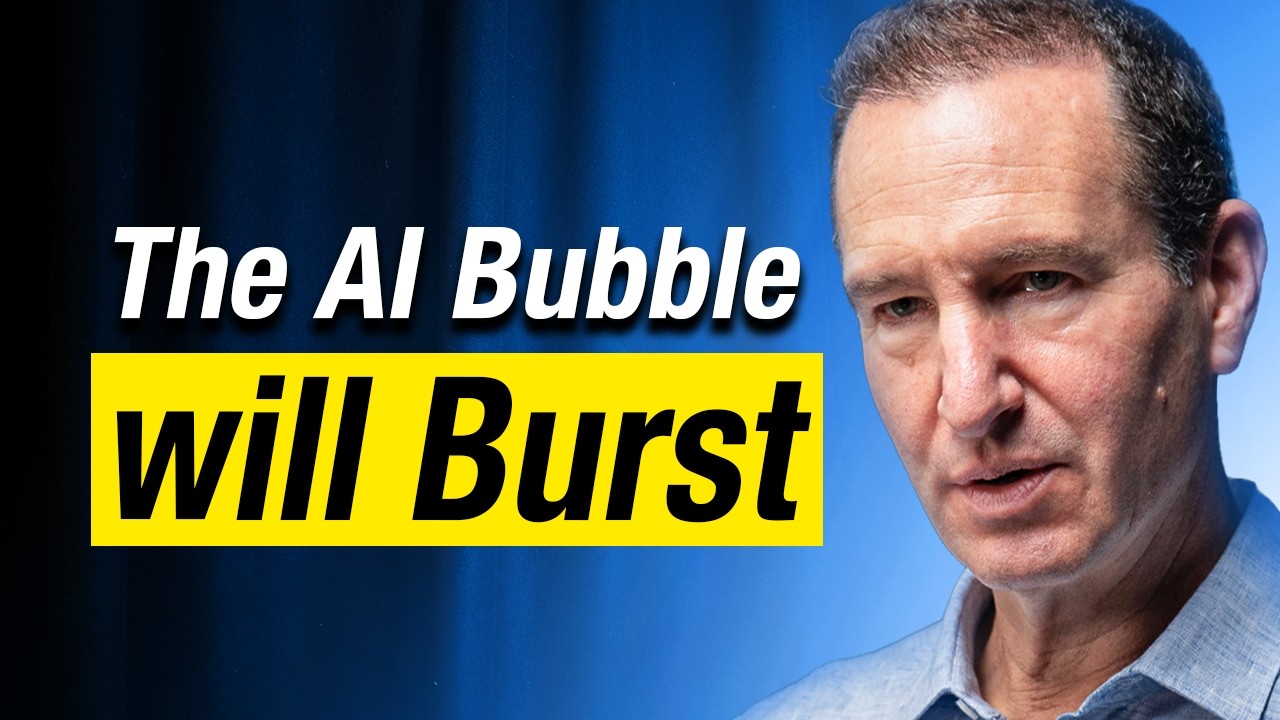
Description
David Frankel is one of the great seed investors of our time. As the CoFounder of Founder Collective he has backed the likes of Uber, Coupang, Suno, PillPack, Airtable, Whoop, Shield Al and many more. In a world of expanding fund sizes, David and Founder Collective are one of the only successful franchises to truly stick to small, boutique funds. ----------------------------------------------- Timestamps: 00:00 Intro 02:03 The $50-$100M Seed Fund Trap 06:14 Price Matters Less Than Ever 10:24 Has the Normalization of Startup Founding Killed What It Actually Takes? 11:12 CEO vs CTO: The Journey Diverges 12:55 Will David Invest If the CEO Is Great But the CTO Isn't? 14:26 Has the Type of Founder David Wants Changed in the AI Era? 16:22 Is 1.5M to 5M ARR Still a Venture-Scale Path? 32:26 Why David Is a Contrarian on Large Platform Funds Returning Venture Economics 38:01 Physical AI Was the Unloved Theme 10 Years Ago 40:31 How Concentrated Are Founder Collective's Returns? 44:15 Are Deeply Embedded SaaS Companies Being Oversold in the Correction? 45:08 The "I Love It Because…" Framework 47:16 Why David Hunts for "Nepo Babies" 01:14:15 China Rising: Two Superpowers, AI & Why Defense Matters More Than Ever 01:15:49 Photonic Computing — The Next Nvidia Disruptor Nobody Talks About 01:18:41 What Would Make David Raise a Bigger Fund? 01:21:49 Quick-Fire Round ---------------------------------------------------------------------------------------------- Subscribe on Spotify: https://open.spotify.com/show/3j2KMcZTtgTNBKwtZBMHvl?si=85bc9196860e4466 Subscribe on Apple Podcasts: https://podcasts.apple.com/us/podcast/the-twenty-minute-vc-20vc-venture-capital-startup/id958230465 Follow Harry Stebbings on X: https://twitter.com/HarryStebbings Follow David Frankel on X: https://twitter.com/dafrankel Follow 20VC on Instagram: https://www.instagram.com/20vchq Follow 20VC on TikTok: https://www.tiktok.com/@20vc_tok Visit our Website: https://www.20vc.com Subscribe to our Newsl
Summary
Generated by gpt-5.6-terraAt-a-Glance
- Verdict: Skim
- Core thesis: AI is a genuine platform shift that will create extraordinary winners, but capital is overconcentrating into momentum names and most AI startups will become roadkill; enduring returns still come from early conviction in exceptional founders with non-obvious domain edge.
- Why it matters: The interview offers a useful counterweight to AI-era valuation and growth mania: it distinguishes durable product, founder, and distribution advantages from merely having access to abundant capital or an AI label.
- Best use: Use it as an investing and company-building lens for identifying applied-AI opportunities, avoiding financing dependence, and separating operational traction from momentum-driven paper value.
Executive Summary
David Frankel argues that AI is the defining technology wave of the current era, comparable to or larger than internet, SaaS, and mobile. He expects OpenAI, Anthropic, and similar companies to create vast wealth and spill capital into venture, angel investing, luxury assets, and San Francisco. But he is equally categorical that a dot-com-style correction will occur; the uncertainty is timing, not whether it happens.
His central seed-investing argument is that seed is neither dead nor easy. It is crowded, increasingly commoditized, and distorted by large funds treating seed checks as call options. Yet a small fund can still return itself by owning meaningful stakes in comparatively modest outcomes: he cites a median $2.6 billion valuation for the top 500 companies formed in the last 25 years, where 5% ownership can return a fund. The edge is patient, founder-led selection before themes become consensus, rather than chasing the currently hottest AI rounds.
Frankel repeatedly prioritizes founder quality, founder-pair chemistry, and vertical insight over valuation models or rigid ownership targets. His preferred early pair is a technically magical CTO plus a CEO who can recruit, sell, learn quickly, and scale the organization. He values founders with unusual lived exposure to a vertical—his idiosyncratic use of “nepo babies”—because they see workflow pain and distribution advantages outsiders miss.
For AI operators, his more practical message is that AI is rapidly shrinking the team required to build meaningful products, but the immediate gains are uneven. He sees strong progress in models and voice interfaces, while believing consumer AI remains underdeveloped. Defensibility will depend less on simply using AI and more on becoming deeply embedded in mission-critical workflows, retaining valuable context and data, and delivering a user experience that can swap underlying models without users caring.
Key Takeaways
- Claim: The AI boom will produce a small number of generational companies and a far larger population of failures, so participation in the theme is not itself an investment thesis. | Evidence: Frankel cites fewer than 100 sustainably $10 billion-plus companies created over the prior 25 years and says that, like Hollywood, roughly 95% of current AI ventures will not endure. He expects OpenAI, Anthropic, and SpaceX-scale winners but says another dot-com-style crash is definite, with timing unknowable. | Implication: Ken should treat AI exposure as a portfolio-construction and product-selection problem: identify specific durable wedges, rather than relying on broad AI momentum or current financing availability. | Caveat: His percentage framing is directional rather than a formal forecast, and he acknowledges that no one can reliably time the correction.
- Claim: Seed can still generate exceptional returns despite inflated valuations because fund-returning outcomes do not need to be trillion-dollar companies. | Evidence: Founder Collective's analysis found the median valuation among the top 500 companies created in the last 25 years was $2.6 billion; Frankel says a 5% stake in one such company can return a seed fund. He also describes $500 million exits as still excellent seed outcomes. | Implication: For early agent or AI infrastructure bets, optimize for a credible path to meaningful ownership in a durable business, not only for access to the few headline AI companies. | Caveat: This only works with meaningful early ownership and selection discipline; uncapped seed notes and very high entry prices can erase the economics.
- Claim: Large multi-stage funds can create hidden financing risk for startups because their initial seed check may be an option rather than a lasting commitment. | Evidence: Frankel says founders increasingly include Founder Collective as an “insurance policy” alongside larger funds: if the junior investor who championed the deal leaves, the company can be orphaned and the large platform may focus on its few multi-billion-dollar winners. He estimates that for most companies, follow-on mandate can effectively disappear once they miss the fund's top tier. | Implication: When choosing investors or strategic capital, assess who owns follow-on decisions, whether the individual champion has durable internal authority, and whether there is support if growth temporarily falls below a mega-fund's attention threshold. | Caveat: He explicitly says this is not universal; well-performing companies can benefit from big-fund capital and network effects.
- Claim: The most investable AI companies are often domain-specific applications built by founders with native workflow insight, not generic companies that merely market themselves as AI. | Evidence: He describes an SAP-domain entrepreneur who used Claude Code to rebuild a painful workflow and raised on a $20 million cap, and Rebar founder Evan, who understood HVAC estimating through his uncle's business and found no existing AI solution. Frankel's thesis is that such founders possess edge accumulated through years of direct vertical exposure. | Implication: Ken should favor agent systems anchored in a specific, repeated, expensive operational workflow with proprietary context, clear buyers, and founders or operators who already understand failure modes and adoption barriers. | Caveat: Domain insight alone is insufficient: the founder still needs the intensity, recruiting ability, and adaptability to undertake the CEO learning curve.
- Claim: AI will compress company headcount and eliminate substantial grunt work, but human expertise remains valuable where trust, accountability, and high-stakes judgment matter. | Evidence: Frankel sees sub-10-person companies accomplishing far more than before and expects major productivity gains rather than inevitable mass unemployment. His examples include litigation involving $100 million, where clients will still want an experienced human accountable for the decision, and service businesses where customers want a knowledgeable professional interface. | Implication: Build AI operations around human accountability at consequential decision points, while aggressively automating preparation, analysis, documentation, and administrative throughput behind that interface. | Caveat: He flags a meaningful retraining gap: younger workers experimenting with AI tools may adapt more readily than established workers whose roles are disrupted.
- Claim: In AI software, defensibility comes from embeddedness, workflow context, and experience—not necessarily from owning a proprietary model. | Evidence: Frankel argues that the SaaS selloff may overstate risk for deeply embedded systems such as platforms handling real-time orders or mission-critical biotech research, while less embedded products are easier to replace with Claude-like tools. Suno CTO Martin Camacho reportedly said he would immediately use a better external model if one became available, because users care about the consumer experience, not the underlying model. | Implication: For OpenClaw and agent products, maintain model portability and focus differentiation on orchestration, integrations, persistent context, reliability, controls, and user workflow adoption rather than model identity. | Caveat: Deep embedding is not immunity; incumbents still face disruption if an AI-native alternative delivers materially better outcomes and migration costs become tolerable.
- Claim: Momentum investing and fundamental early-stage investing are distinct games, and mixing them without an explicit framework produces poor capital allocation. | Evidence: Frankel declines the idea that a $1 billion valuation is simply the new Series A; he sees that as a momentum business requiring the ability to exit quickly. Founder Collective uses valuation ceilings and avoids leading subsequent rounds, although he concedes rigid frameworks caused misses such as Klaviyo and that following every up round in Uber, Coupang, and Shield AI may have improved absolute returns. | Implication: Ken should explicitly separate long-duration conviction positions from liquid or momentum-driven bets, define sell/downsize conditions in advance, and allow exceptional-founder overrides rather than applying ownership or price rules mechanically. | Caveat: He acknowledges the current environment has made disciplined early exits look premature in hindsight and that a framework should not become a substitute for recognizing extraordinary founders.
Detailed Brief
Capital markets, liquidity, and fund construction
- Claims: The venture market is becoming pyramidal: access to the few giant winners is increasingly necessary for large managers to market their funds, while smaller managers need a different, ownership-driven return model.; Frankel believes GPs should be aligned through meaningful personal capital in their own funds; Founder Collective's GPs are the largest LPs in its recent vehicles and explicitly prioritize returns and DPI over management-fee growth.; Secondary markets are unusually liquid for top private-company names, making partial sales a more practical tool for converting paper gains into DPI.
- Evidence: He says the fund's strategy is not to own every future $1 trillion company; its historic winners include Uber, Coupang, Trade Desk, Shield AI, Whoop, PillPack, SeatGeek, and Vokada.; He suggests taking 20% off a mature winner when it can return roughly 25% of a newer fund, while retaining 80% upside, may be rational even if the company later doubles again.; He notes that some secondaries in the top 50-100 private companies clear at the last-round price or premium, partly because large investors were unable to receive pro rata allocations.
- Caveats: Secondary liquidity is concentrated in elite names; it is not evidence that ordinary venture-backed companies have dependable exit optionality.; TVPI can impress LPs, but Frankel views DPI as the more real measure of realized performance.
- Implications: Treat markups, access, and later-round demand as distinct from realizable value, especially when assessing private AI company valuations.; For concentrated positions, predefine partial-liquidity policies that protect fund or balance-sheet durability without forcing full exits.
Technology disruption beyond the current model race
- Claims: Frankel expects OpenAI and Anthropic themselves to be disrupted eventually; no platform remains permanent.; Chinese open-source models are a serious competitive force because China's regulatory environment can enable faster grassroots experimentation and deployment.; Photonic computing may become a major future challenge to NVIDIA and alleviate some data-center energy constraints.
- Evidence: He frames the current environment as a competition between two AI superpowers, the United States and China, and specifically worries about the capability of Chinese open models.; He argues that data-center connectivity has largely moved to optical fiber, while optical chips remain the major frontier; these could reduce energy use relative to electrical computation.; He also points to defense as a strategic AI application, drawing on Founder Collective's first institutional check into Shield AI.
- Caveats: The photonic-computing thesis is a forward-looking personal view, not supported in the discussion by deployment timelines or commercial adoption data.; Building computing, energy, and other deep-tech infrastructure is much more capital-intensive than conventional software.
- Implications: Monitor open-model capability, compute economics, and China-origin tooling as first-order factors in AI platform strategy rather than assuming current U.S. model leaders are permanent dependencies.; Avoid hard-coding product strategy to any single model vendor; preserve the technical and contractual ability to route to superior models as they emerge.
Founder assessment and operating signals
- Claims: Frankel distinguishes abundant 'founders' from scarcer true entrepreneurs: the latter sustain the steep learning, sales, and organizational demands after the initial product phase.; The CEO trajectory matters especially because scaling leaders must increasingly recruit and fill roles; the CTO can become more fungible as a company grows, though early founder chemistry remains a critical signal.; Revenue growth should not be the sole measure of a company's quality; retention, account expansion, and active usage can reveal traction before headline ARR catches up.
- Evidence: Suno CEO Mikey Shulman reportedly spends 30-40% of his time recruiting; Frankel recalls Jeff Bezos saying he spent 50% of his time on 'bums on seats.'; Frankel looks for a CEO/CTO pairing with complementary strengths, mutual trust, and alignment rather than identical backgrounds or personalities.; He owns every SeatGeek share since investing in 2010 and cites Olo and SeatGeek as examples of businesses whose journey took much longer than contemporary venture expectations reward.
- Caveats: He admits Founder Collective has sometimes rejected companies because a co-founder seemed weak and regrets some of those decisions; early team evaluation is highly judgment-based.; Long-duration outcomes can create meaningful absolute value but weak IRR relative to shorter, more liquid opportunities.
- Implications: Assess early AI teams not only on technical demos but on recruiting capacity, willingness to confront bad news, complementary co-founder dynamics, retention, expansion, and organizational learning rate.; Do not reject a slow-starting but deeply sticky workflow company solely because it fails a fashionable ARR-growth template.
Notable Concepts & Terms
- Roadkill: Frankel's description of the large share of AI-backed companies likely to fail despite a real platform shift and massive aggregate value creation.
- Insurance policy investor: A patient, credible early investor included alongside a mega-fund so founders retain support if the large fund's internal champion leaves or follow-on attention disappears.
- Off-piste investing: Finding exceptional founders and overlooked applications outside the obvious, heavily financed consensus category.
- Applied AI / physical AI: Using AI around real-world products, workflows, hardware, or domain operations; Frankel views this as more durable than treating AI as a standalone label.
- Founder alchemy: The rare complementary CEO-CTO relationship marked by alignment, trust in one another's competence, and differentiated strengths.
- DPI versus TVPI: DPI is realized cash returned to LPs; TVPI includes unrealized marked value. Frankel favors DPI as the truer test, particularly in an environment of inflated paper valuations.
- Pro rata as a call option: Frankel's view that investor pro rata rights can constrain founders by giving existing investors privileged future-allocation rights without requiring them to fund every round.
- Photonic computing: Computing using photons rather than electrical signals; Frankel identifies optical chips as a possible longer-term disruption to NVIDIA and a path to lower-energy compute.
Operator Notes / Why Ken Should Care
- Audit AI product architecture for model portability: make it feasible to replace or route among model providers without rewriting the customer experience or core workflow.
- Prioritize agent opportunities where the system can become operationally embedded through integrations, persistent context, auditability, and high switching costs—not merely through an AI-generated output.
- For any external financing or strategic partnership, diligence champion durability, follow-on ownership, and support in a downshift scenario; do not equate a large initial check with committed long-term backing.
- Use a two-track investment/partnership rubric: one track for durable workflow value and long-duration ownership, another for explicitly time-bounded momentum or liquidity opportunities.
- Track Chinese open-model quality, pricing, hosting constraints, and regulatory exposure as a potential source of both superior infrastructure and strategic dependency risk.
- Evaluate smaller AI teams on recruiting throughput, retention and expansion behavior, and human-in-the-loop accountability design—not just ARR growth or model sophistication.
Source/Metadata
- Title: The AI Boom Will Create Enormous Roadkill: Who Wins & Loses? | David Frankel
- Transcript words: 19767
- Duration seconds: 5448
- Timestamp note: No timestamps or chapters were present in the supplied transcript; the transcript also contains substantial duplicated passages near the end.
Transcript
You've got this narrowing out in venture where the bigger you get, it becomes a pyramid. If you miss the $3 trillion companies, you're much harder to sell. This may just be another Uber, another Suno, another Shield AI. David Frankel is one of the best from Founder Collective. He's in Uber, he's in PillPack and SeatGeek and many great names. It's incredibly hard to move to a second wave, the wave of AI. The dude is in the seeds for Shield AI, for Suno, which now are five billion dollars. He has moved so seamlessly from a pre- to a post-AI world in a way that very few seed ambassadors have been able to. This was an incredible discussion with one of the true craftsmen of seed investing today. Are we headed for another dot-com crash? Definitely. If is not a question. When, nobody knows. Ready to go? David, last night you sent me an email, a forwarded email, and it was my first ever email to you 11 years ago. It was 11 years. I can't believe that. Do you know what I found so funny? I just had dinner last night with Mamoon, and I look at the people who've been kindest to me, which is you, Mamoon, Josh Kushner, Neil Mater, and it's fascinating that the people who were there when there was nothing are also the greats. And it's maybe that's what made them great, that they give time to people where they just believe with no reason to. Does that make sense? I'm honored to be included in that list. But maybe some of the thing is they're intoxicated and you are intoxicating, in my view. You were 19 years old, but you were full-on focus energy. You just brought it. Right. And I think maybe part of the job and part of the fun of the job is recognizing that it's not all it takes, but you had it, you have it. It's super kind of you to say. In terms of having it, obviously we both play at the early stages. And I've said before on social media and on X that the hardest part of the market is seed in many ways. And the worst performing funds will be the 50- to a hundred-million-dollar funds. I say this to explain because you're too big to be collaborative, to write those 100 to 250K checks and be a friend, but you're too small to lead an eight- to $10 million seed round. Why am I wrong? And why will this vintage be great for those funds? Okay. There is so much to unpack here. Look, you've got this narrowing out in venture where the bigger you get, it almost becomes a pyramid. I think there is the business of venture, which is asset management and this channel, right? So you've got the Cambridge Associates and you've got the fund of funds, and all they're doing is selling access, and they're fine with it. And if the top 10, top five names are not in X, Y, Z, great, great company. And I would say at this point, if you're not in the top five, if you missed the, at a certain level, if you missed the $3 trillion companies, you're much harder to sell, right? And so it's not trillion-dollar or bust, but if you look at the numbers over the last 25 years of how many companies were created that are over a hundred billion dollars, and the numbers on there were less than a hundred companies over the last 25 years, less than a hundred that are sustainably over $10 billion companies. So at that top end, you've got to be in that. The median company, we've done a lot of work on this very recently, but the median of the top 500 companies created in the last 25 years, the median is 2.6 billion. Now, if you own 5% of one of those companies, you return the fund each time. And I would say what's gone on in seed is there are a whole bunch of unreasonable bets being taken with loads of funds and loads of money. And it's quick, right? Because you've got to get the check in because you've got to get to the next fund. So it's incredibly tough at seed. What makes this still a great business is a little bit of what I said about you, is you can wait and wait and wait and wait if you're patient, and then you just see someone, right? You see a founder or you see a team, and you just go, I have to be there, right? And to me, that's code for this may just be another Uber, another Suno, another Shield AI. And I think a little bit, I'm answering this personally, a little bit of this is a drug, right? Finding Harry, finding that is a bit of a drug. So addicted, if that's the case. And I think that if you're in early, you still have a chance of returning a fund. I think it's a totally different business. And by the way, do you have to be the full 8 million? Definitely not. We can't be. Can you write a $3 million check? Can you write a half-a-million-dollar check? Now, valuations, uncapped notes, that's changing the business. But you don't just have to do that. So if you're on piste, and I would say if you're on piste for the last, I've been doing this for 18 years nearly, it was always expensive. It was always tough. But you find some of the best people off piste, always. Can I ask you, on those rounds, when you look at the 8-10 million rounds or the large seeds that we see today, are you able to participate, though, with the 2-3 million when you have the multi-stage products provide such an efficient seed product that actually you might get 100K, but being a 3 million check is much harder? Are you able to even do that strategy? I hesitate to say this, Harry, but I think we're being seen, and I could be over-extrapolating the last 20 deals that we've been involved in, almost as an insurance policy, where we're side by side, we're putting in 500K or a million, there's been eight, nine million dollars going in. And from smart entrepreneurs, there's almost this knowledge of, they may abandon me, and then having FC in my back pocket could be useful. Sure. And I'll use their brand, right? I'll use their distribution network to go out and say, they actually don't suck, right? We're not doing 10 million ARR yet, but they're more patient, and be patient, and we're the testimonial sales person. So I think there's some recognition of, wow, for 500 million dollars, not bad insurance policy. Totally get that. So that's the 8 million round, and that's at 40, if we assume— By the way, no, we're not doing that many 8 million dollar rounds. We're still finding three, four million dollar rounds. Are you? Yeah. Yeah. The valuations there move a lot, right? They change a lot. By the way, the other thing is there's very little evidence yet that these hot, hot AI companies that are raising huge amounts of money are capital efficient, right? They're anything but capital efficient. The jury's out on whether that's going to work still. Totally get you. Just before we move away, you said it's not in the hot, hot, hot. You often don't get paid for being a value investor, and you can sometimes be criticized for being smarter than the market, or whatever contrarian you want to say. My question is, we do think about, is this an asset that will get financed in future funding rounds? And if it's not in AI, and it's a traditional enterprise HR company, dude, I can't get that funded for a good A. Does that impede your thinking on whether you'll do the seed? Well, look, everybody's AI, right? It's almost like saying that you're not AI today is, I'm not using the internet, right? Why wouldn't you use the most contemporary tools? So everyone's AI. You've just got different approaches where you've got a second-time entrepreneur that goes, I know this domain really well. I've been doing SAP consulting for 10 years or 20 years, SAP, and I've built a platform, but this part still sucks. And I was playing around with Claude Code. This is a real situation. I was playing around with Claude Code. My CTO is playing around, is unbelievable. We're now putting four or five together. Will you be involved? And it's a 20 million cap. Sure. dude, I can't get that funded for a good A. Does that impede your thinking on whether you'll do the seat? Well, look, everybody's AI, right? It's almost like saying that you're not AI today is, I'm not using the internet, right? It's like, why wouldn't you use the most contemporary tools? So everyone's AI. You've just got different approaches where you've got a second-time entrepreneur that goes, I know this domain really well. I've been doing SAP consulting for 10 years or 20 years, SAP, and I've built a platform, but this part still sucks. And I was playing around with Claude Code. This is a real situation. I was playing around with Claude Code. My CTO is playing around, is unbelievable. We're now putting four or five together. Will you be involved? And it's a 20 million cap. Sure. Right. We see loads of that. So the concept of it's only a 20-something, I'm not saying we don't do that. You know very well we do that all day long. But we also see other startups in places that feel off-piste. And then you look at it and it's worth tens of billions of dollars this time. The statement that is said to me more than ever is price matters less than ever because the only thing that matters is that you're in the true winners of the day. How do you feel when you hear that? I mean, the scale of how much you have to win, right, is different based on your price. It's pure math. So uncapped notes suck at the seed stage. I'm not saying we've never written one. Unfortunately, I've written one, and I think the founders are exceptional. I think they'll do great. Do you regret it? I don't regret it at all because I love the relationship. But financially, will we do as well there? That's going to be a hundred to $300 million price when it happens. Now you're in a year in advance and you take that price. From a venture perspective, it doesn't make much sense. And access is being sold, right? The IVs, Stanford's done this forever, but MIT and Harvard doing the same thing. It's like, you just want to be there, right? Sometimes you really have to think that through. And we've said no plenty. But we'll probably regret the ones that we said no to. We see YC really professionalized startup founding in a way that it turns it into almost a norm for people leaving some colleges in particular and some programs at certain colleges in particular. Do you worry about how almost easy it is to be a startup founder today in terms of that normalization of it and what that means for what we do? I do. I think there are so many founders, right? It's like du jour. I think there are fewer entrepreneurs. And when the tide goes out, everybody goes, I knew I told you so. And nobody knows when the tide goes out. But what it takes to be an entrepreneur is just very different in terms of fortitude, in terms of the ability to energize, the ability to go up that learning curve. The number of times I've seen the difference in the trajectory between the CEO and the CTO. The CTO, at some point, up to 50 people, you're golden. And then at some point you go, actually, we could bring in better technical skills. And if you've got a good co-founding CTO, that person becomes like a Swiss army knife and is deployed in different ways. The CEO goes on this serious journey, right, where the learning curve is steep and they've got to learn to manage and they've got to learn to put bums on seats. And I think of people like TJ at Pill Pack or Jack at SeatGeek, and they're changed individuals. I had a coffee a week ago. We had an hour, Mikey Shulman from Suno. And I said, what are you doing? And he said, I'm 30, 40% of my time, I'm just recruiting. I had lunch years ago, decades ago, with Jeff Bezos. I was invited to a lunch and someone smarter than me said, what do you spend your time doing? And he said, 50% of my time is bums on seats. That's never left me. That's the CEO journey. That's the entrepreneur's journey. And there are many founders that don't cut that. I think one of the biggest mistakes that I see investors make, though, is when they turn down a company because they don't like the other co-founder. And the truth is the other co-founder is most often not there in three years. You don't like them because you don't think they're good enough and not as good as the CEO. Will you invest if you think the CEO is amazing, but you don't think the CTO is up to scratch? Or the head of sales, who's also the co-founder, isn't as good? What are your lessons on that? Rarely. We do that less. And I think your logic is correct. But so early on, we're looking for this package. I'm looking for this CEO, CTO kind of magic. And in some ways, I literally use that word. I'm looking for the CTO to be a bit of a magician and the CEO to be a good salesperson. That's my favorite combo. And I agree with you, the CEO being a good salesperson and being a real entrepreneur is actually more important because the CTO role can be fungible depending on how complicated it is. But I have said no more times than yes in those situations. And I regret some of them. But the dynamic between those founders matters. Early on, to me, I look at the dynamic. And in some ways, I think I want to replicate the partnerships that I've loved and go, I'm looking for some kind of alchemy here. You don't have to be identical. You don't have to finish each other's sentences. In fact, I prefer that you were different. But how aligned are you? And how much do you trust each other's competence and go? In a career, I've seen alchemy maybe one hand, like five times, four or five times. But when that alchemy happens, it's because of that interplay between those two people. So I'm watching that pretty carefully. Has the type of founder that you like changed, especially in the last few years? I think our team has definitely oriented much more towards deeply engineering-specific people who come out of DeepMind, who come out of Gemini. Has that changed? Less than you'd think. So I would say the youth, the energy, the focus, the smarts, you put that package together and it's an intoxicating package. I look at experience and I go, what are we going to need to package with that experience? There are certain situations, SaaS and enterprise SaaS certainly looked like that, where you'd learned the lessons, you understood the market, you understood who the buyers were, although that's very fluid too. But did you have the focus and the energy? And I see these 20-somethings, and it's a psychographic in a way. So I'm not saying that, I don't want to sound ageist. The psychographic of that focus and intensity can last for decades, but there's something about it at that early stage that is just, wow, I want to be part of that. And that still turns me on a lot. Now, the theory of the relationships, et cetera, go one more time is great in theory, but man, you need to go this journey. You need so much energy. When we look at the scaling journey, and we said about how founders have changed, that, in terms of what we look for, or not changed for you. One thing for me that's changed, and I get in so much trouble for this, and VC Brags, this Twitter account, killed me for it the other day. I very candidly said, I turned down a company the other day that went from one and a half and they were going to go to five and then they were going to go from five to 15. And it's just not enough anymore. It's just not interesting. I'm sorry, for venture, we have an opportunity cost of capital where we can deploy, and that's not fast enough. Has triple, triple, double, double, double gone? Is that still a venture path in today's landscape? One and a half to five billion? One and a half to five million in ARR. Yeah. And then five to 15. And so you're looking at this company going, okay, you're going to be one and a half to five, five to 15, 15 to 30. David, four, five years down, we might be at 70. I mean, is that still a venture pathway? These 10-year funds are taking 18 years. The one thing you learn is loads of patience. There's no, to me, it's such an opportunity when people go, it has to be one and a half to 10 to 15, and then reality sets in. And sometimes it's twice as expensive and opportunity cost of capital where we can deploy, and that's not fast enough. Has triple, triple, double, double, double gone? Is that still a venture path in today's landscape? One and a half to five billion? One and a half to five million in ARR. Yeah. And then five to 15. And so you're looking at this company going, okay, you're going to be one and a half to five, five to 15, 15 to 30. David, four, five years down, we might be at 70. Is that still a venture pathway? These 10-year funds are taking 18 years. The one thing you learn is loads of patience. To me, it's such an opportunity when people go, it has to be one and a half to 10 to 15, and then reality sets in. And sometimes it's twice as expensive and it takes twice as long. Harry, we still own every last share in SeatGeek. That was an investment I made in 2010. It's become, it's in the top three ticketing businesses in the world. It just takes a really, really long time. Some of our greatest companies, they were showing tremendous promise. But that one and a half to 10 to 20, I just think, are they executing? And the other side is, is revenue the only metric, right? Sometimes there is traction on dimensions that the market is not necessarily recognizing, but you're an insider. So that account, the retention in that account is really good. And that one account's now spending 4x what they spent a year ago. And there are more DAUs. And so there's got to be traction. And frankly, a lot of what we do to try to tell an entrepreneurial story to get more funding is the different dimensions of traction. But I think there's go, go, go overnight or you're bust. I think there's a lot of orphans out there for that. And sometimes, frankly, I look at those funding rounds and they're called seed plus or seed extensions, and I go, that may be the opportune moment. When they're being abandoned and they can't get the capital because the bigger funds have moved on, maybe that's the opportunity. It's not what we really do, but I can see it as a capital markets opportunity. Do you remember Bullpen, where it was their business to do exactly those rounds? I thought that was an interesting business. I don't know how they've done, but they priced those rounds. They priced them for bigger, bigger players. I think the thing is you're so paid for the risk that you're taking. They really were aggressive in terms of ownership that you need. I think they did Ipsy, which was a big business. And so you have one and it pays for the rest. Can I ask, when you look at this, David, you've been doing this for 18 years. And you hear people like me say, oh, one to five, triple, triple, double, double's dead. Is it really a home run if it's, we need a billion dollars in revenue? Jason Lemkin says on our show, billion valuation. Come on, that's not venture anymore. Is this peak bubble when you review the 18-year journey that you've had? The historical or anachronistic view on this would be the bubbles get bigger. This is the wave of our lives. I feel that way, by the way. If I look at internet, SaaS, mobile, AI, nothing looks the same. And will there be roadkill from this wave? Oh my God, there's going to be a lot. Again, you look at those stats of 500 companies, less than 100 over 10 billion in the last 25 years. How many times, Harry, over the last 11 years, have you heard this is different? This is different. It doesn't mean that there aren't survivors and companies that are going to change the trajectory of technology forever. And I think in OpenAI and Anthropic and SpaceX, we're seeing that already. These are the Metas and the Googles of our era, highly likely. But wow, it's Hollywood, man. Like 95% are not going to be there. And it goes back to why is seed interesting? I don't have to be in the one, right? If there were five companies that are worth $5 trillion, literally you go SpaceX. I'm not even including, I'm saying with exits, so if you look at SpaceX, Tesla, Meta, there's trillions of dollars already. You take then Nvidia, I think Nvidia started pre-25 years ago. But even if you look at the last 25 years, you can add Palantir to that, Palo Alto Networks, that's about $5 trillion of market cap. And then the other 495, right, at a 2.6 billion average. And some of those are, we hope everything looks like Shield AI, Suno. But if you have 5% of a $2.6 billion outcome, you've returned your fund. If you have a $500 million outcome, it's incredible still. And that's why I think seed isn't dead. I think seed is crowded and, to some degree, very commoditized. I feel commoditized. I've said this many times. I feel like brand and, in some regard, distribution, as in your portfolio and people saying nice things about you, get you to the table. But if it's commoditized, does price not just become the separator? And if price is a separator, the mega platforms win? Well, the problem is the mega platforms are taking call options. So is this good for the mega platforms? Is this good for the LPs or is this good for the entrepreneurs? Well, probably for 95% of the entrepreneurs, it's not good. Why? You get more, I agree with you, but I'm just playing devil's advocate. You get more money at a higher price with mostly a more junior VC who will let you do your work and not get in the way. Isn't that what all entrepreneurs want? Sounds amazing, right? Doesn't it? Yeah. The more junior entrepreneur moves on, right? You're orphaned. And it's like— In venture investor, you mean? Yeah. Yeah, sorry. And the more junior, the principal at that big fund moves on. They start their own fund, they move to another fund, happens all the time, right? So the person who invested doesn't have mandate. They can sit around with the partnership and say, look, let's just put another five to 10, let's turn over another card, because your champion's gone. But I'm being contrarian here. This does not always happen this way. I'm just giving you the other side to this. And then you haven't made the kind of one, five, 10, 15 ARR, whatever you want to call it. You just haven't made that. So it's like you're overlooked because it's like, let's focus on our real winners and that thing's worth $2 or $3 billion. So 95% is mandate for further funding is dead, is gone. Now, this is the beautiful thing about most entrepreneurs, is they just don't think about themselves in that category. I'm the 5%. I'm the 2%, right? And that's why we love entrepreneurs. But the stats are so far against you. It goes back to, I hate to think of ourselves as their insurance policy, but I think a few entrepreneurs have thought about that. And I think there's a little bit out in the zeitgeist going, FC is a great insurance policy. You want them in the round, and it costs very little to have Harry or David in for 500K or a million. Are you really not tempted to raise more? Every single constrained fund, including Benchmark, historically the central figure in discipline in venture, has raised a billion-and-a-half growth fund. I was with another great growth fund that is very disciplined as well, but we're raising billions too. Everyone who was, it's like, no, we realized the game on the field is you need money. Are you really not raising more? It would be disingenuous to say to you that we don't have the discussion, that it isn't attention, that we go back to it. It's hard to be contrarian when there's so much money going around. It's hard to say no. And then here's how we come out, is the GP has been the biggest LP, and we're greedy for returns, not management fees. What percent of the fund are you now? We're certainly, in the last few funds, the largest LP. Wow. So, there's no LP that is bigger than the GP. We're seriously aligned with our LPs, but what are we seeking? And this is the answer to your question. It may be wrong, right? Literally, if you do the analysis, you may go, that was crazy. You left so much on the table. We've been very disciplined about strategy and very disciplined about DPI. So, but if I just look the discussion, that it isn't attention, that we go back to it. It's hard to be contrarian when there's so much money going around. It's hard to say no. And then here's how we come out is the GP has been the biggest LP, and we're greedy for returns, not management fees. What percent of the fund are you now? We're certainly, in the last few funds, the largest LP. Wow. So there's no LP that is bigger than the GP. We're seriously aligned with our LPs, but what are we seeking? And this is the answer to your question. It may be wrong, right? Literally, if you do the analysis, you may go, like, that was crazy. You left so much on the table. We've been very disciplined about strategy and very disciplined about DPI. So, but if I just look at you, I'm sorry, I'm playing devil's advocate again. I'm just like, dude, you had Coupang, you had Uber, you had Trade Desk, you've got Shield, you've got Suno. Just tack on another three to $500 million vehicle and keep going. I'm sure you knew Mikey was amazing. I'm sure you knew TJ was great. I'm sure you knew that these were great on. Surely that is a conversation that has rationality. Because it's a rational conversation, it comes up. Yeah. And then you come back to saying, okay, who wants to do this? You're on an offsite with a partnership and says, who wants to do this? And I go, oh my, I love the early stage, right? I may do it, right? And by the way, I am an opportunist as well. I think of myself as some kind of value investor. So the interesting times for that, for me, have been when nobody's funding Y, and I think that person's great. Or it's a consumer play. And I know consumer multiples are lower, but this is an internet acquisition device, and these founders are better at acquisition. And that's where I sometimes go. So it's not in the hype, hype, hype, go, go, go. I'm immune to that. I'm in pain. I love you so much because you're so much short of me, but I'm just like, the market can stay irrational longer than you can stay solvent. And when I look at a Wix today, trading at 2.1 billion on 2.1 billion of revenue, it's a great example where there's obviously irrationality at play, but it doesn't matter. The market's the market. And if consumer is getting the pricing that it's getting, I can't change that no matter how good the acquisition machine is. And so I don't fight the tide that's against you, is my thesis or ethos. It's fucking swim in the swim lane that's swimming in your favor. Am I wrong? And I'm just missing a contrarian beat? No, there's so many ways to do this. And people have done so well. There are big funds that have returned very well. You've got to be in the right vintage. But if you look at Thrive or A16Z, they've had some big funds that have returned very, very well. A little less since 2020. If you look at the DPI analysis, the jury's out from 2020 onwards. Now, of course, if you're in, if you're like Josh and you're in SpaceX and OpenAI, that's going to be the most ridiculous fund. But wow, you are in the most rare air. And then there's just something that's competitive and unique. And it is economically irrational, potentially. But is I was in that company. I was first, I wrote the biggest check. Somehow, for me being competitive with me, that is the biggest thrill. I was with that founder from the beginning, and we literally reversed the truck and gave them everything they wanted. And by the way, does that mean that we're not writing three, $4 million checks now? We are, right? Because if you want to get a percentage ownership in something that you think is extraordinary, you're writing much bigger checks than we wrote before. So the fund is going faster than it used to. What is your average ownership now? And has it gone down over time? I look at ours, and our biggest mistake, and I can look at Deal, Eleven Labs, I can look at Granola, and StarCloud, Fractile, could have done them all, but would have had one to 2%. And all of them we turned down purely for ownership. And that is hundreds and hundreds of millions of lost returns for ownership. I've never thought about that. All things being equal, right? I'm a capitalist, right? So all things being equal, I'd love to own more upfront than less. But it wouldn't be the reason you turned it down. I've never turned it down. Never. And Mikey, I wanted to give him every last cent, right? And reached a point where he said, look, that is the dilution I'm willing to take. I'm not willing to take another iota of dilution. And we gave him what we gave him, which was literally every single cent in his first round. We showed it to other people, by the way. I mean, I showed it to you. Thanks, David. We weren't going to bring it up. And then when Matrix led, which was not, it wasn't a popular round. Lots of people said no in that round. We asked every last cent. But would I have said no to Mikey because of percentage ownership? When you meet the right people and you're all in, it's like you get what you get. And so you will do the one to two percent and you'll take it, even though you can't size up in next rounds. Well, again, I think pro rata is almost like the original sin. But if others have it, I don't think that we should be excluded if others have that pro rata. We're seeing rounds now where there isn't pro rata for anyone but the lead, but the most major share. So it's not a pro rata for all major shareholders. It's for the lead shareholder. I'm not sure I agree with that either in this environment. I think that there should be a universal approach to treat your investors equally. But I think pro rata is generally not great for entrepreneurs. It's a call option against you. So we feel like we've had to work every time to put in a bit more money. We've never, ever led another round. So we have this view of, it would be negative correlation bias. It would be unfair to everybody if we didn't be somewhat uniform. Do you think it's harder than ever to accurately concentrate dollars effectively, given the rise of such preemptive rounds? We've had them where we haven't even wired the money and there's a new term sheet. At different valuations. Yeah. And that happens quite often now. Is it harder than ever to concentrate effectively when it's just so fast? Some kind of framework is really, really necessary. And I credit my partners over the years with that, of saying we may be writing bigger checks, but above that post-money valuation, it's really not our opportunity anymore. And you can look in the rearview mirror and say, man, I should have done Uber. I should have done Shield. I should have. And huge kudos and power to the people who did. But a framework lets you act very quickly. And I would say credit to Eric Paley in this case, is he always created some kind of discipline. So the post-money went up and up as rounds and the momentum and the size of money and the environment changed. It didn't, we would do, but we would never lead another round. We've never done that in our entire history. So we haven't been preemptive and we haven't been like, we'll lead your series A and we like you more than others. But our ability to participate has always been there. Totally get that. Can I ask you, Peter Thiel said before that if he'd just done every round that anyone else had done at an up round and it was a good brand, he would have done much better, was the ethos. Have you found that to be true? Given the era, this has been the golden, golden era. It's probably, from a data-driven approach, it's probably true. If we'd followed on in Uber, Coupang, Shield, you name it, if we just followed on, probably the data would show that we've done pretty well, right? Our view would be we'd had, we would have had to have followed on in everything. And I think that the absolute return would be better. I don't think that the multiple would necessarily be better on the fund. I'm not being rude. A framework's not the enemy of this venture Totally get that. Can I ask you, Peter Thiel said before that if he'd just done every round that anyone else had done at an up round and it was a good brand, he would have done much better, was the ethos. Have you found that to be true? Given the era, this has been the golden, golden era. It's probably true from a data-driven approach. If we'd followed on in Uber, Coupang, Shield, you name it, if we just followed on, probably the data would show that we've done pretty well, right? If we follow, our view would be we'd have had to have followed on in everything. And I think that the absolute return would be better. I don't think that the multiple would necessarily be better on the fund. I'm not being rude. A framework's not the enemy of this venture cycle. I think it's so easy to be rigid in your mentality around, oh, we won't do anything over a billion. I get you, but I know you're going to absolutely wince at me here. So are you ready for a real sugar? Go. I think a billion-dollar valuation is the new series A. And you're like, whoa, Harry, whoa, whoa, kiddo, calm down, listen to the facts. We used to do a 50 million post and hope it would become a billion, 20x without dilution, blunt. Now you enter at a billion and you hope it becomes 20. We have McCore at 20, we have Cognition at 26, Cursor gets sold for 60, sold. This is liquid. Well, maybe a billion is the new series A, no? I think you may be looking at the top two or 300 companies. Is that not our business? I don't think so. I think that's the momentum business. And I think knowing how and when to get out quickly with some of those really, really matters. And that's not really my business. So my business is value, is getting involved early and trying to find value opportunities. And there are times, again, where it's an intoxicating founder and being on that journey together. But I'm not sure that those are your fund returners. The difficulty with some of those momentum assets is what we were talking about earlier, is you've got to be able to run for the exits when you can. Oh yeah. It's exactly what you were saying. You didn't think that founder was all that great, right? Or you thought that the valuation was so far ahead of the reality of the business. But you're asking a question, you're asking a momentum question, right? And is it all momentum? I've got to be careful not to be too anachronistic in this because we have invested in momentum. It would be so disingenuous for me to say that we haven't. When you say that, what do you mean, we have invested in momentum? Our knee joke tends to be when this has gotten across a certain point, we're out of here, and credit to Eric at a point for going, we've captured 80% of the value. We could capture another 20% if we did Uber at series A or if we did Suno at series A. And by the way, it's not just on paper. I think there would be buyers for that position. In hindsight, I look at that and I go, were you anachronistic? By the way, we didn't even seek to participate in that round. We kind of go, we built our ownership position and we're done. This is not the kind of investors we are. We're looking for the next seed-stage round. And I think, Harry, what we've done is we've drunk the Kool-Aid to such a logic extent now. You and I are so different that you're going, this is hot. Let me go, go, go. I'm going, I've got a smaller fund. Where else can I really X my ownership versus getting a, I don't know, 5x or 10x? But of course, the environment makes you look quite silly in retrospect. The question is, how long does this environment go on for? And it's also about how, and this is the, you have unbelievable returns and you've made a phenomenal amount of money for your investors, but the quantum of cash that you move matters. And Josh and Elad and the multi-stage funds moving hundreds of millions and billions, you make a larger quantum of cash. And so I get you in terms of your multiple goes down when you lead the series A. Look, there are so many different ways to play this. And I think when you talk about Josh and a handful, they've killed it. They've absolutely killed it. A lot of LPs, very wrongly, I think, don't like the large platforms and always just come back to this very basic, rudimentary thought that as you scale fund size, returns always get worse. Always. Whenever someone says always, be careful. But I think with the outcome expansion that we've seen, Cursor at $60 billion, trillion-dollar companies in a matter of years with OpenA and Anthropic, you will see venture returns with mega platform sizes. Do you agree? Largely, no. So largely, I would say, who are their LPs? Who are they working for? And in some of these cases, not even endowments anymore, right? It's sovereign welfare. No, no, it's definitely not endowments. And sovereign wealth funds and public investment corporations are looking for IRR. They're not measuring this in how many times do you X the fund. Doesn't mean that A16Z and Thrive haven't Xed a few of their funds really, really nicely. Again, subsequent to 2020, the TVPI is there and in some cases they're on steroids. The DPI is less there if you look at the actual stats. But they're working for these sovereign wealth funds and they're giving great IRR. And some of the endowments, some of the biggest endowments, are like rounding errors now. Yeah. The question is, who are you working for? Right? And I, again, obsess with this alignment with the entrepreneur. And we're working for ourselves as well. Right? And we're working for DPI. And the bigger we make the fund, the tougher it is on the DPI. What am I doing this for? Fund after fund after fund. Fund. And I can't give you the numbers, but fund one, fund two. By the way, there's this wave AI theme. If we look back on fund two, it's all about applied AI. I mean, that's really what the fund, if you look at the winners in fund two, it's Shield AI, which by the way, in 2016 was called Shield AI. It's Vokada, right? It's Whoop. Now, all of these things are commoditized. All of the hardware is commoditized. Video cameras are commoditized. Drones, I mean, you can buy a drone for, forget DJI, you can buy a drone for $20 now, right? $50. It's about putting AI around these completely commoditized platforms. It was 10 years ago, but it wasn't the theme. So the one thing that you're talking about is momentum around a theme. And I'm going, in 10 years' time or in five years' time, there will be a new theme. The job will have been to get into that theme ahead. I don't even know what it is. I hope I've got some on goal. And those weren't the expensive ones. Those were not, they never are. So using AI is really important. I guarantee you all of these things are called applied AI businesses today, or physical AI, physical AI is all. The job is to be in there five years or 10 years ahead. And it's not where the momentum is. It never is. When you look at, you said that kind of fund two, and you said a couple of names there with Vokadas and your Whoops and your Shields. How concentrated are the returns in your funds? I spent time with Honam from Altos, and he's spoken about the return concentration with Roblox. And it was mind-blowing to me. How concentrated are yours, and what lessons do you have from that? The amazing thing is they've been way less concentrated than you would expect. So look at fund two. Forget fund one now. Fund two, Vokada, Shield, Whoop, PillPack. In and for the most part, one of or the single largest investor in the first institutional round. It's not concentrated. If you look at fund one, we always talk about the Trade Desks and the Ubers and the Coupangs. Fund one still has Airtable, in at the very beginning, challenges in the SaaS environment. But Simply, Simply is the biggest piano teaching and music instrument teaching company in the world. of names there with Vokada and your Whoops and your Shields. How concentrated are the returns in your funds? I spent time with Honam from Altos, and he's spoken about the return concentration with Roblox. And it was mind-blowing to me. How concentrated are yours, and what lessons do you have from that? The amazing thing is they've been way less concentrated than you would expect. So look at fund two, forget fund one now. Fund two, Vokada, Shield, Whoop, PillPack. In and for the most part, one of or the single largest investor in the first institutional round. It's not concentrated. If you look at fund one, we always talk about the Trade Desks and the Ubers and the coupons, fund one still has Airtable, in at the very beginning, challenges in the SaaS environment. But Simply, Simply is the biggest piano teaching and music instrument teaching company in the world. SeatGeek. Haven't sold a single share in SeatGeek. That's still in fund one. Why haven't you sold a share in SeatGeek? I think it's spiritual at this point. It's a religion. I'm wearing Jack's t-shirt beneath this. Beneath the shirt, you've got Jack's face, right? That would be epic. I did that. I did that at my LP meeting. That would be very funny. Before Jack, Jack and Mikey both presented. And I literally said to them, get me t-shirts, right? And I had ripped open my shirt. But I'm actually worried about this, which is, and I'm not positioning this at Airtable at all. I think Howie's wonderful and brilliant and a brilliant product team. But you're seeing the cannibalization of leaders in a space like Airtable, respectfully, and Sneak, the cybersecurity company, which in a similar vein is going through challenging times too in terms of growth rates and everything involved. Well, there hasn't been a liquidity event, but the cannibalization has already started. It's like the innovation cycle's taken steroids and gone too quickly to allow liquidity events to even happen. Does that worry you too? Look, by now, Harry, it's very hard to play around with Claude or something like it and not have the revelation that we've all had. But then you look at some of these SaaS companies and you look at the SaaSpocalypse. When we were on the Olo board, when it was listed, we'd look at companies like Viva, right? Which is, I think, at a $30 billion market cap now. It's come down, I don't know how, at least 50% or more. And we'd go, this is the most perfect, we want to be this company. It's hard not to look at some of that market cap erosion and go, is the baby being thrown out with the bathwater? And it's about the last 5%, I think. It's about the last. And I would say, if your Airtable and Viva or Olo look very different, the more embedded you are, the more difficult you are to dispense because real-time thousands, billions of orders are being run in your system or mission-critical biotech research is being run in your system. The more embedded you are, I think the more overdone that SaaSpocalypse may be. The less embedded, clearly, right? The easier you are to turf out and play around with Claude, you name it. But I think we're underestimating that last 5%. The contrarian in me, this is not what I do, would say buy a basket of the top SaaS stocks that have all lost huge market cap. You're going to do okay. You are, and Rory O'Driscoll, who we do the show with every week, has done that. And I put my money into Palantir and said, I'm a momentum surfer. I did better. And that's the hard point, which is the opportunity cost of cash is so real. Yeah. That you can be in one and try and be smart, but you're probably right long-term, or you can just be a momentum trader, and you'll be right actually in the short term. And if you can time it well, it makes a difference. You said there about- The difference, in a way, between our styles is every single company I invest in, and it comes back to concentration, every company I invest in, I invest in with the hope that it could be another Suno or Uber. I literally do. I don't invest in companies and go, I'm investing in you, Harry, because I think you can be a 10x outcome. I don't do that. You don't? No. Wow. Yes, we are different. So every company we're investing in, we think, wow, this could be ginormous. This could be ginormous. Do you know what I- I'll give you Jason Lampkin, sorry, and then do you want- He just told me a very simple one. He's like, I'm not smart enough to predict the future. What I look for is, can I get a 3x on my next funding round? And if I can get a 3x on my next funding round, and I really believe in a great entrepreneur, CEO, and a great CTO, I'm in. So we use the same logic, but it's always been 10x. I will not invest in this if I don't think, if I'm not sure that there's a 10x. We have at our team meeting, I love it because, dot, dot, dot. If you can't complete that sentence, you can't invest. That's how we start the team meeting. That's how we start talking about a portfolio company. What's your greatest ever answer to that? When you look back on that, what's your- So, in more recent times, I've gone, I love it because I'm obsessed with Harry, right? I just think that every question I ask, I get a better answer than I expected. Every time I press, there's no evasion of the facts. He never says to me, oh, we're the only one in this business. He always says, it's so much harder than you think it's going to be. It's so much tougher. And this person's leaving me. And I love it because they're obsessive. They're all over it. They're so deep in this. And I just can't get this out of my- I will not say I love it because of valuation. By the way, we've always come to valuation last. We've always gone opportunity, market, founders, founders first and foremost. It's in our name. And we come to valuation last. And I cannot say that every single time we've invested, we've gone, this is a perfect valuation. In fact- Rarely is. No, it rarely is. The best deal, both sides feel uncomfortable, I find. Of course. Of course. Exactly right. By the way, you can go, I love it because of insight into the vertical. I love it because of an edge that nobody else can match in a commoditized business. I love it because I'm writing this piece on Nepo babies. And I'm going, I love to fund Nepo babies. So- What? I'm writing this piece right now. Why do you love to fund Nepo babies? So I go, TJ Parker, right? Working in his dad's pharmacy when he was 15, 14, 16. He has got more edge in that vertical than he knows. Mikey comes to AI, to voice AI, to music, to audio, right? They've come out of Kensho. That's all they did at Kensho. So you take Mikey and Georg and Martin Camacho. That's all they did. Martin was the CTO of Kensho. They're not the Nepo baby, but Evan at Rebar. So Evan at Rebar is HVAC preparation and HVAC quoting. There are over 100,000 mechanical engineers in the US that are making 100K each, at least, when they graduate. And all they're doing is sitting with this blueprint process so that they can quote a new commercial. And Evan's sitting there. And by the way, he did work for his uncle's company. That was rolled up in a P10 of these things. And they said, go out and find the AI for this. And Evan goes out and goes, there's no AI for this. And he goes, I'm starting Rebar. And I go, there are folks who have been in these verticals since they were kids. He watched his uncle in this vertical. It's like there was nothing else he was going to do. And I go, they have more edge than they know what to do with. I get you. Sorry. Just to be clear for you, Nepo baby, where I'm from, is trust fund baby who has billions of dollars. I was like, dude, I do not want to be funding the kid who's at Scorpios in Mykonos spraying dad's money. We're using Nepo babies with different definitions. Very different definitions. And by the way, he did work for his uncle's company. That was rolled up in a P10 of these things. And they said, go out and find the AI for this. And Evan goes out and goes, there's no AI for this. And he goes, I'm starting Rebar. And I go, there are folks who have been in these verticals since they were kids. He watched his uncle in this vertical. There was nothing else he was going to do. And I go, they have more edge and they know what to do with. I get you. Sorry. Just to be clear for you. Nepo baby, where I'm from, is trust fund baby who has billions of dollars. I was like, dude, I do not want to be funding the kid who's at Scorpios in Mykonos spraying dad's money. We're using Nepo babies with different definitions. Very different definitions. I'm talking about folks who've been in a vertical and have lots of edge in that vertical. That I totally get. You said you haven't sold a share of SeatGeek. The timing of when you get out matters a lot. Do you have any lessons on when to get out? Given I think this generation of seed managers will be defined by their ability to access and navigate secondary markets effectively. So it's interesting. You're asking this at a time where I have never seen secondary markets as liquid. It's probably not that surprising, given fewer IPOs, fewer M&A up till the moment here. An IPO market that will probably be open for the remainder of this year. And then these IPO markets always close. So in the top 100 names, wow, the secondary liquidity is incredible. And you can price your position, I would say, reasonably efficiently. You can look at a round and go, okay, the secondary markets offering me a 25% discount is probably worth seven and a half, not 10. And then you can look at a number in the top 50, at least, where you're being offered at least the price per share of the last round. 100%. Because loads of folks, loads of big folks, Blackstone, didn't get their pro rata, and then they're sucking it up. Most I'm seeing do not have a discount, for sure. Yeah. We've seen a premium, right, where insiders know there's another round. Talking to your point about momentum, right? You were talking about momentum in the early stage. We've seen situations in our multi-billion-dollar names where the round goes down in December and the boards are already talking about the March round. And we see it sometimes when we're not on the board, but we just see it in the momentum in the secondary market. Now, Harry, you're in very rare air there. And let me just say, I don't want to in any way make it sound like we're in that with all of our companies. We're in that with, at any one point, a handful of companies. But in those situations, I think the difference in fund management is when you take secondary and the ability to give DPI. Even in your top names, sometimes taking 20% off the table, if you can return 25% of the fund, particularly if it's a newish fund. So if it's a 2024 fund and you can give back 25%, why wouldn't you do that? And you're still long. You still own 80% of that company. I just think we don't think about the velocity of cash enough. And what I mean by that is, yes, there might be another double, but if I have to wait five years and then the IPO and then an 18-month lockup, Jesus, give me 50% of that now. And I'll way rather have the certainty and the DPI now than there may be a double from here with six and a half years. Yeah. This is not a precise science. It's not. I've looked back in every direction and we've gone, by the way, the best is you sell 20% and you were wrong. Awesome. Did you do a good job of sell down on Uber? You know, in retrospect, we probably sold a little too early. So this was early on. This is a business that's getting close to $10 billion in valuation, and there's an opportunity to take some off the table. And you're very new. Also, at the time, I'm so sorry, it sounds awful. And again, you chastise me. $10 billion at that time was so much more than it is today. Yeah. Yeah. Yeah. Did you sell all at $10 billion? No, definitely not. No, no. No, we were net long at the IPO. No. One thing that's very sad or challenging is when an exit event happens and then you look at a number that comes back to you and you're like, what? Where did it go? And I think you're having this normalization of incredible levels of dilution today more than ever before. Well... Do you see that and worry about that? Look, dilution, it's interesting. I look at Whoop versus Suno. We're so proud to be in both. But Suno has been a very quick journey. So if you look at how much lower the dilution is, part of it is just how quick the momentum of that has been versus a Whoop, which is hardware, took a long time, raised a lot of money along the way. Unbelievably proud of this company. Some of these companies, it's incredible how little dilution there is because the pre just goes through the roof. We're also seeing a lot of very low dilution but large rounds. You're ramp raising, you're 500 million at a 40 billion price, and actually, seemingly, 50 million rounds at a billion-dollar price. How do you think about and reflect on those? Just a brilliant product for founders that they should absolutely take advantage of? A normalization of continuous funding because they do more frequently? How do you think about those? And this goes in every single direction. You've got to be producing and you've got to get into the rarest of air there. And probably there's a secondary opportunity in that kind of situation for us. So we look at that. And again, we're in so early that at those kind of numbers, that kind of momentum, we're trying to sell a little bit of our position. Do you find LPs have changed? And what I mean by that is, I speak to a lot of LPs now. Do you know what? Honestly, we can say what we want. They've gone back to wanting TVPI. They've gone back to wanting big numbers. And yes, they want DPI. Of course, they always want DPI. But they are still very impressed by TVPI. And they're very impressed by, oh wow, you're in this glossy name. Lovable, Lagora, Macaw. There's still that. Do you find they've changed, or are they still the same animal? There's lots of change because of who was doing this 15 years ago and who's doing it now. You have to have some allocation. And the big funds provide these containers for the large endowments and the large public investment corporations. If I think of the same LPs that have been with us for a long time, a lot of them have minimum-size checks now. So we're too small for quite a few of them. It's like, if I can't put $50 million to it. And I think it just reflects the inflation of the entire environment. And there are a bunch that really do need the TVPI, particularly the fund of funds because of who they're selling to. By the way, we've seen fund of funds do secondaries of their entire fund. So we go, oh my God, you're in fund two or you're in fund four. You should never sell, right? This is what's... And it's like, it's not about you. You're a rounding error in this fund, and it's got three or four good names. And I think what they're trying to do is give liquidity to their LPs for the next fund. So when I talk to you about secondaries in a particular name, we've seen an entire fund, a billion-dollar fund easily, just sell the whole fund or sell a vertical slice of the fund. What's going on here is the finance around VC has become so much more sophisticated. I don't know if this is good for the entrepreneurs. It could be because it just means there's way more liquidity in every direction. And I think if you're a winner, it's great because you can manage the secondary to some degree. And if you're not on the winning side in terms of the entire ecosystem, it can be very tricky. By the way, Harry, I talked to you about this on this podcast. We spend, other than thinking about some secondary in our very mature portfolio, very little time on this. The beauty of this is I am not a financial animal. Ultimately, I'm much more of an entrepreneurial, curious animal. I'm looking again for these wizards. These. I don't know. What's going on here is the finance around VC has become so much more sophisticated. I don't know if this is good for the entrepreneurs. It could be because it just means there's way more liquidity in every direction. And I think if you're a winner, it's great because you can manage the secondary to some degree. And if you're not on the winning side in terms of the entire ecosystem, it can be very tricky. By the way, Harry, I talked to you about this on this podcast. We spend, other than thinking about some secondary in our very mature portfolio, very little time on this. The beauty of this is I am not a financial animal. Right. Ultimately, I'm much more of an entrepreneurial, curious animal. Right. I'm looking again for these wizards. Right. These, I don't know, wayfinders. I'm looking again. And this is the problem for me, in a way, or the blessing, is I'm looking to repeat a success. I'm looking for the next high. I'm looking for a Noah Glass. I'm looking for someone who is that focused and has a vision and will not take no for an answer. That's how I'm spending 90% of my time. I'm not spending much time even on LP management. Do you think we have less loyalty than ever? You said focus there on the founder side. You see founders have angel investment portfolios that are as big as our fund portfolios. You have them doing side funds. You have them doing two companies at once. You have them leaving very quickly, often in 6, 12, 18 months. Is there less focus slash loyalty than ever? We've definitely seen evidence of that. We've also seen people who stick it out way beyond what is rational just because they're obsessed. So I think, on the margin, you see some of these actors. And we've seen founders, so-called founders, and they were kind of the founder, but they got a CEO involved and then they became exec chairman and they used their brand power. And I think shame on us, and we did get involved in some of these situations where we were dazzled. And it was like, second time around, is that person going to stick around? And some of it is just didn't get big enough fast enough. So there's some abandonment. And I still see that the vast minority of the time. I think it's easy to extrapolate and go, that's a trend. And I could be very Pollyannish about this. But for the most part, I see founders wanting to make it work. Second-time founders is a little bit embedded in that question. And the question is, if you've done really well, what does it take to move the needle? And I think, overall, we've done a little better on second-time founders who didn't do that great up front. They did okay, right? It's life-changing. The first million dollars is so life-changing. But they're really hungry. They've learned some lessons. They've got one or two people that will join them on the next journey. They've learned some lessons, and they are hungry. They're in a hurry as well. We've done better there than generally with folks who had great outcomes and kind of said, let's go again. Because those are the folks who got bored and went, not big enough, not fast enough. What does no one know? You've been very successful. What does no one know about making money that you wish you had been told earlier? Yeah. One weird one for me is, far more successful than me, but I'm much less patient now than I was. I got used to a higher standard of service, food, quality of everything. When something's bad now, it frustrates me a lot more than it did when I didn't get used to it. I don't like that in myself, actually. I'm less patient. Patience is probably my biggest vice, lack of patience. If you ask people about me, I'd say they generally say, he's great, he's kind, and he lacks patience. I'd say my kids say that of me. I think it's the yin and the yang. I think it comes with entrepreneurship to some degree. When you're that immersed in this environment, I think you can get fed up quite quickly. The more virtuous answer to you, which I prefer, is you start to go, the stuff that really matters is kindness and how we interact with each other and how I left you, how you made me feel. And all the rest is fluff. At some level or another, our phones have become these remote controls for our lives. Actually, the entry price to get what you want, when you want, if you want a vehicle there, if you want your food there, if you want to book a flight or a train ride. Earlier last week, the plane is delayed, literally on the Amtrak app. Two seconds later, ask the Uber to go to Amtrak, go to Penn Station instead. The degree to which we can get what we want, when we want, at any level, you don't have to be that wealthy to get it, is insane. Right? So what's happened is our level of expectations has just gone up through the roof. I don't think that's just about you and me. I think that that's the perennial equation of satisfaction equals perception minus expectation. So it's just much easier to not be satisfied anymore because our expectations are so high. So our perception, it's one thing when you go into a five-star hotel, you have this huge expectation. You walk into a three-star hotel, you have a much lower expectation. Well, extrapolate that equation for life now. So it's easy to get pissed off. And the antidote to that is stopping for a second and saying, how would Harry feel when I left him today? Did he feel like I gave him a real hug and I was kind? And I think that's what's going on in my 50s now, is how do I leave people? How do I leave the world? How do I leave the entrepreneur? Was it like we squabbled over the last percentage point, or it's like this journey has been awesome? I always think there's energy drains and energy gains. And how you leave someone is how you're remembered. Just going back before we do a quick fire, I do have to ask, how does this landscape change with OpenAI and Anthropic? They are so seismic in terms of just sheer size. Both will be trillion-dollar-plus, potentially close to two trillion. How does that change the landscape, do you think? For the better. I remember the Microsoft-Google case going on forever and Gates going, we are disruptable. And at the time going, who could disrupt Microsoft? And turns out Google was Google. And then you go, who can possibly disrupt Google? And then you look at OpenAI and Anthropic and you go, wow. If nothing else, and there's so much else, if you look at the top of the funnel in terms of where you start your search. When did you last start a search on Google? Right. It's just mind-blowing, that displacement. And the good news in this environment and this ecosystem is that they will too be displaced. And so the platform has changed tremendously. Are they going to be disrupted? No. I think Google's a net winner. Yeah. I actually think Google's done a... Do you think Microsoft's been displaced? I think Google's... Google is actually, if anything, in pole position because they come from that environment, and the ability to search with context, the ability to apply AI with context, is just incredible. But they're having to fight like crazy for it. But Microsoft, it's not clear to me that they can get back because their AI feels second-rate compared to the top three or four. But I think... So there's a platform change. There's always been a platform. You could argue that radio, television, internet was a platform. Can you do well in that platform? Oh, hell yes. Do you think it will lead to a ton more venture money coming in, with a huge amount of money going back to LPs from the returns that are generated? They'll plow those back into venture? So the returns at the top are going to be incredible. They have to be now. And I think that capital is going to spill over into venture and all sorts of investing. You alluded to earlier, angel. I think luxury, right? I think if you own a luxury property, I think... San Francisco property prices. Oh my God. San Francisco is Rome. I was there six weeks ago. San Francisco and the Bay Area is like... And it's more San Francisco than the Bay Area, is back on steroids, right? It's like going to Rome, right? When people write off the United States, which is to me still the greatest country in the world for venture capital, I go, when were you last in San Francisco or the Bay Area? Because it is insane at the moment. What's going to happen is there's always boom and bust. So a lot's going to come out of the system at some point. Are we headed for another dot-com crash? Definitely. And I think that capital is going to spill over into venture and all sorts of investing. You alluded to earlier, Angel. I think luxury, right? I think if you own a luxury property, I think... San Francisco property prices. Oh my God. San Francisco is Rome. I was there six weeks ago. San Francisco and the Bay Area is... And it's more San Francisco than the Bay Area, is back on steroids, right? It's like going to Rome, right? When people write off the United States, which is, to me, still the greatest country in the world for venture capital, I go, when were you last in San Francisco or the Bay Area? Because it is insane at the moment. What's going to happen is there's always boom and bust. So a lot's going to come out of the system at some point. Are we headed for another dot-com crash? Definitely. If is not a question. When? Nobody knows, right? But is there a lot of capital, a lot of gain coming out of the system, and that will be reinvested in venture? And it may not be in classic structural venture. It may just be in angels putting money all over the place. And some of those angels are going to know people that worked with them or for them. And they're going to, I think you can bypass traditional venture to a great extent. And that's the challenge for us. That's the challenge of how do you stay relevant in this environment when there are so many alternatives? I completely agree with you. Final one before we do a quick fight. Do you buy the commonly stated concern about smaller teams, job displacement, and a concerning future for human participation in labor forces? And the pins to endeavor are getting better and better and better. I remember when we went from servers to cloud, and that was like, wow, I get all of this for free, right? I don't have to do any of that, right? Security and servers, and I forget that. I just do cloud, right? If you look at where AI and where this foundational platform layer kicks you off, it is incredible what you can do with very few people. And we are looking at certainly sub-10-people companies achieve a lot. Do I think that we're going to have mass unemployment because of AI? And you're seeing a lot of leadership now agree with the viewers. No, I think we're going to see tremendous productivity gains. I think every wave, there are the haves and the have-nots. And if you're not training and playing, it's a little bit why youth has an advantage because out of college and that, if you're tinkering and playing, right, you are familiar with the tools. You can use the tools. And it used to be the haves and the have-nots were like have data. I talked about this with Noah Glass and Olo all day long, going, the value of having data and using that data. And by the way, it's yours to lose if you don't enrich that data. Now the value of having these tools, it's becoming more and more binary. But I do believe you'll see swaths of people retrained on this. And I think you're seeing it globally. I think you're seeing it as an opportunity in low-cost environments, in places that are not Europe, not the US, not the North, where you can skill people up and you can provide these skills to the rest of the world at tremendous cost advantage. My worry is it's much easier to train than it is retrain. And actually the 22-year-olds coming out of university who are tinkering in dorm rooms with Claude, and they're not super AI-pilled, but they're mentally plastic to it. And they're going to be pretty good. Yeah. Versus Simon or Claire, who are 45. They've always done their job in accounting, and they just are not so mentally plastic. So the only advantage that Simon and Claire have is they are very vertically knowledgeable and relevant. So sometimes in terms of sales, if you're selling to yourself, there will actually be very good salespeople. This is a theme that I'm interested in, services business, where you won't buy that from you. You want to see your auditor at some point. You're prepared to say, I know AI will do an amazing job, but at some point you want me to come see you and just go, I haven't left this whole thing to AI, right? I actually know what I'm doing. So I think there'll be people who are vertically relevant to be able to sell. And there are many industries where the relationship still matters. At a certain point, if you've got litigation and $100 million, you can get AI to write that little contract for you where it's $1,000 on the line, but you've got $100 million litigation. You want to look at me and say, Dave, your 10 years of experience, I need it right now. So I think there are times where knowing a vertical, being relevant in that place, and in the service industries, I think it's good for the UK, by the way. I think there'll be a ton of people who are still needed for the human interface. That's not going away. I think that a lot of the work that was grunt work and human work behind it is going away. On the service side, I think it's just a town expansion play, which is like so much of the things that you couldn't afford a lawyer for, you'll use and you'll get great benefits from. And that is just a town expansion play. I think insurance, lots of admin, lots of life insurance. There's been a lot of direct life insurance sales anyway. But I think that in bigger-ticket items, having a human who gets it as the interface, there's still a place for that. Totally agree with that. There was something interesting. I had this incredible founder, June, who's the founder of a company called Simily, which does simulation markets. And he was like, we will have companies spend 100 to 200 million on one model result because that model result is so important. Like the output of one query. And I was like, wow, that's a really interesting world where you will spend 100 million on Anthropoc telling you the answer to one question. Nuts. What's the size of that organization that would spend that kind of money? Oh, P&G, Coca-Cola, NVIDIA, Visa, you name it. Is it worth us sponsoring the World Cup for a 10-year exclusivity period, Visa? Right. I think that governments and defense organizations, some kind of speculation with data of the future, I think that's a very interesting play. Do you worry that Trump's been good for business but bad for everything else? Is that a hard balance to hold in your head? I ask as an outsider, genuinely curious. I think you have to hold many truths at one point in time. And the question is, did Trump create this environment or is he presiding over this environment and getting credit for it? I think with all presidents, they arrive and they get credit for the environment as it is. And yet it was created many years ago. And letting AI thrive in the US has generally been a good thing for the tech industry in the US. The level or lack of safeguards on that could well be problematic. But net-net, if it's good for business, it's good for the US. I think Roosevelt said that. I think that's what these administrations have said. And by the way, I think that a lot of the tech backlash around Biden was for this reason, whether it was true or not. A lot of insiders say to me, it was BS, right? That for the most part, Biden was super pro-business. And if you look at the subsidies for energy, if you look at a Tesla today, this is the thing that I don't really get about Elon, is the non-dilutive government funding that Musk got for Tesla from the Biden administration was huge. So without being political, I think that net-net, government in the US has been pro-business for a long time. And I think that the country is really reaping the rewards of that. There are two AI superpowers in the world. By the way, what's so fascinating is in the 1820s, China was the economic superpower of the world. I don't know if you knew that. No, I didn't. Yeah. So Great Britain displaced China. A lot of it was industrial revolution, and then the US displaced Great Britain. In The Economist, there was a chart on this. But in the 1820s, 25% of the world's global output, economic output, was from China. It was the biggest economic machine in the world. And really what you're seeing is two superpowers emerge for sure. And I think a lot of this is going to be about AI. AI flows into not just industry, but in terms of what's going on in defense, having been very, very early, the first check in Shield AI and watching how that's played out. The US needs it. Our enemies have access to all of that on steroids. I'm terrified about China right now, to be honest. I don't know if you knew that. No, I didn't. Yeah. So Great Britain displaced China. A lot of it was the Industrial Revolution, and then the US displaced Great Britain. In The Economist, there was a chart on this. But in the 1820s, 25% of the world's global output, economic output, was from China. It was the biggest economic machine in the world. And really what you're seeing is two superpowers emerge, for sure. And I think a lot of this is going to be about AI. AI flows into not just industry, but in terms of what's going on in defense, having been very, very early, the first check in Shield AI and watching how that's played out. The US needs it. Our enemies have access to all of that on steroids. I'm terrified about China right now, to be honest. When you look at the power and strength of their open models. But that goes back to thinking about Microsoft and Google being disrupted. What could possibly... You know that Anthropic and OpenAI are going to be disrupted. It's unequivocal. Our whole careers are about disruption. Those platforms never, ever stay forever. Where is it going to come from? Excellent chance it comes from China. It's coming. 100%. God, we haven't had enough time for them to establish their incumbency yet before they're already being taken down by Chinese open-source models. It goes to the point on the speed of innovation cycles. Yeah. Yeah. By the way, we haven't even touched on underlying computing. So if you look at photonic computing, if you look at what's coming down the line now. So you looked at Intel at a point when that could never be disrupted. And then NVIDIA, it's just mind-blowing. What's coming to get NVIDIA? The photonic computing plays right now, where it's not electrical anymore. It's photons. So if you look at the data centers, where everything that can be optic fiber now is. So every single connectivity piece of hardware is fiber. The only thing that has not been nailed is the chip, right? You're going to see optic chips, which are very, very energy compliant. So when people talk about the data centers and the energy sucks, that's going to change. In my view, if you say in 10 years' time, and I am not a thematic investor, but I am such a deep believer in the status quo being changed always. And nothing stays the same. I think photonic computing is coming down the line. And I think that's going to be the NVIDIA disruptor. Or NVIDIA is going to buy those companies. Okay. And the capital intensity required to build a photon company, I think, or an energy company as we're in some. It's just dramatically more capital intense than prior technology. Again, going back to my point, you need more money. This is where the US could be deficient. If you look at the amount of money that's being spent in China on energy efficiency and energy research now, I don't think we're spending enough. And by the way, that's a negative of the Trump administration, is we need much more money being spent on R&D. And I think there was a view that the universities are squandering it. To a large extent, I agree with that. But I think that we tapped off a lot of DARPA R&D that finds its way into every nook and cranny of the economy. And we need more of that R&D. We see some of it. I live in Cambridge, Massachusetts. We have some of the best R&D organizations on the planet. If you look at MIT, Harvard, Northeastern, BU, BC, what's going on there? And cutting that spend, which goes back into society, I think is problematic. Totally get that. Another one, though, that is more challenging, I think, is just policy and regulation. Chinese approach to policy and regulation is almost none. It's none. And it means that you can bluntly build and deploy so much faster. I mean, Europe's the worst. The US is tough, too. I'm not in biotech. But when I talk to friends who are in biotech venture investing, they're all flying to China all the time. Because they're going, look, in terms of R&D, in terms of licensing, in terms of anything goes. And in fairness, it's not a totally anything-goes environment. But there's so much more grassroots activity. And a lot of it has to do with regulatory environment. Totally get that. What would cause you, final one, what would cause you to increase fund size? Anything. Oh, I would say, so if I am honest about what we did early on is, as an angel, I had said the risk premium for the seed stage was way overstated. So the premium for experience, right? I couldn't get that. A lot of the folks that I got involved with very early were graduating. There were Noah Glass, Jack, you name it, Eric and Micah. And there was a dislocation between the perception of value later versus earlier. And that has been largely narrowed and crowded out. So if there was some kind of, Harry, we didn't come at this going, I'm obsessed with economic arbitrage. We came at this going, I'm obsessed with great founders and I want to vicariously be on that journey. But if you had to look at this retrospectively and say, what did we do in economic terms? There was an arbitrage. There was a real arbitrage because the risk premium at the seed stage was way overstated. That has changed completely. What would cause me to raise a bigger fund? If I looked at Series A or Series B or Series C and went, there is such a value opportunity because everybody's abandoning this. I don't think it's true at the moment. I think just capital and money find their way to everything. But if you went, so many Series A companies are orphaned and there's amazing value. There hasn't been one to 10 to 20 in ARR increase in one year, but wow, they're on track. And that looks like, it smells like Olo. It looks like SeatGeek. I think that would cause me to say, we should be investing $10 million at that stage. So it's not momentum. It's a sense of, wow, I can't believe that others, and I have been very tempted there. I've been very tempted to say, this company is doing incredibly well on the revenue side and it's being undervalued. Final, final one. I promise you all the quick fact. You say that about Olo. I love Noah. I think Noah's one of the greatest, awesome human. Dude, it's a 17-year journey to a $1.6, $1.7 billion exit. $2 billion exit. $2 billion exit. I love Noah. I love Olo. It's an amazing business. It's an amazing journey. But when you think about utilization of cash most optimally, 17 or 18 years, $2 billion exit, the IRR is not amazing. How do you reflect on that and justifying that versus maybe hotter rounds? Yeah. I mean, the outcome was, it's publicly known, eventually Thoma Bravo, we took the company private for about a $2 billion valuation. So not bad for a few years of work. And if you take it on an IRR basis, you're probably right. The journey and the fun of it was just enormous. So being involved with Noah, where it was Noah, a few other founders, and me from the beginning. And being on the board until that sale was just the ride of a lifetime. So first, what have you changed your mind on in the last 12 months? What's been surprising, and what I've changed my mind on a little, is where AI should have impacted like crazy. And I've seen lesser impact so far. With all the hype, with all the momentum, AI changes so much in terms of software and enterprise and SMB. Other than the models themselves and some good stuff around human interface. So a lot of stuff around the voice has gotten a lot better. I don't know about you, but I would have expected much more around consumer AI. So I've seen Suno. I've seen... But in terms of changing how I do stuff, I type much less. I speak much more in terms of communication. I would say there are so many consumer areas that I feel are not yet played out at all. When you were doing Suno at 5 billion, what are you underwriting it to? I think that the folks investing at that level are going, this is a Spotify disruptor. That this is... That Spotify and Apple Music, it's a big bet that. Because... You've got to go from creation tool to consumption tool. Oh, totally. Totally. Totally. That's why Jack from Snap was brought in. Interestingly, I was at a conference with Martin. Martin was on a... Martin Camacho, who's the CTO of Suno. And on the panel, he was asked a question. If a large language model could do what you do better than you do it, would you slot that in? And you're talking to the CTO, the guy who's built the whole model. The entire Suno model is from the ground up. And without missing a beat, Martin goes, wouldn't think twice about it. When you were doing Suno at 5 billion, what are you underwriting it to? I think that the folks investing at that level are going, this is a Spotify disruptor. That this is... That Spotify and Apple Music, it's a big bet that. Because... You've got to go from creation tool to consumption tool. Oh, totally. Totally. Totally. That's why Jack from Snap was brought in. Interestingly, I was at a conference with Martin. Martin was on a... Martin Camacho, who's the CTO of Suno. And on the panel, he was asked a question. If a large language model could do what you do better than you do it, would you slot that in? And you're talking to the CTO, the guy who's built the whole model. The entire Suno model is from the ground up. And without missing a beat, Martin goes, wouldn't think twice about it. It goes to your point of, this is a consumer product. The experience, the interface. Think Spotify. That's what we offer. How we get there is obfuscated from the user. The user couldn't care less. Whatever gets you there. Did you ever predict the speed of that? No. Yeah. No. Definitely not. Because do you remember the days when Slack, one to 10 in 18 months, was the gold standard? It's multiple hundreds of millions. Half a billion or whatever it is now. It's nuts. No. No. It goes back to Uber. When Eric's asked, how did you know? How did you know? And Eric goes, I didn't. He said, the company I saw before, the company I saw afterwards, we underwrote those in the exact same way. And I think when you go, anyone in my seat who says, I knew, is just full of shit. I absolutely love that. What's been the most controversial deal that you've done internally? What can become controversial is the what or the where. So certainly, Kupong was like, got back. I said to Eric, Korea. And he said, do you even know if it's North or South? But the magic there is, I am based in Harvard Square. So people go, how do you get to Korea? Right? How do you get to all sorts of places? And the answer is Harvard Square. So, Bomb drops out of HBS after his first year and comes to see me. And another controversial company was probably Shield in terms of what it does. So I would say the whole partnership didn't necessarily love defense drones. And early on, it was like, is this only defense? So I love it because it's certainly taken us to some very controversial GOs and controversial whats. Are prediction marketplaces just legitimized gambling? It has to be, right? If you look at Kelsey and Polly Market, what's the difference there between DraftKings and Betway? And they seem very similar to me. But by the way, this will be controversial. TVPI versus DPI. The one looks like a prediction market, right? And the one's real. I could say the same, TVPI looks like a prediction market, right? But candidly, when they're doing $2 billion in ARR, who gives a shit? The one thing that you worry about is a Trump change in administration and what that does to regulation around them. Yeah. That's a different game. Yeah. What do you know now that you wish you'd known when you started Founder Collective? So for the most part, frameworks have saved us. It's also the place where, if I look at some of the deals that we didn't do, and we just went, we used valuation as shorthand to say no, terrible mistakes. So Klaviyo, loved Andrew, loved Ed, came to me first, came through Hugo van Furen, who also sent us Suno, and didn't do it because of the framework. And the framework allowed me to easily say no. So we'll miss a lot. We'll make plenty of mistakes. I think I freed myself, like you, a little more in that area and just go, they're extraordinary. But the frameworks have saved us as well. Penultimate one, biggest advice on a happy marriage and relationship? Kindness and being present. Being present with each other. And I think of this at dinner time, no phones are allowed anywhere near the dining room table. And I don't take my phone to my bedroom. My phone is never alongside my bed. Here's the rub. I don't need my phone to be distracted. Here distracts me perfectly. How to be present and involved and look you in the eye and make you feel with my body language that I'm hearing you, that I'm invested in you. I think the same thing that we think of in founders, happy life. Your kids, your wife, your siblings, your parents. This is the lifelong goal. I have not got this nailed. But how do you show them you're present, you're there? They matter to you. And that's the quest. Final one. What are you most excited for in the next 10 years? I look at me. My mother and I walk marathons. She's got MS. I think there'll be amazing discoveries for chronic conditions, which we always just assumed would be forever. And that could change millions of lives. I think that's super exciting. What are you most excited for? You're leading the witness in a few ways here. But I would say that each wave brings things that we couldn't imagine. And I look back to driverless cars. And there was a promise that that was five years away. And it turns out 20 years from now, I saw Waymo driving around London. I think it's coming here soon. We're not quite there. And yet we're back in the, it's slow, slow, slow, and then it feels like overnight. And, of course, if you were involved, and this is, again, the intoxicating part of what we do, is, before the world knows or the world cares, you know that it took a long time. And yet, I think we're on the threshold of a lot of really interesting stuff. I think that you and I could be buying the very last driven cars. I think that in five to 10 years' time, our kids will not need to drive. And I think with AI, we're on the threshold of a lot of that. And there's a lot of doom saying, there always is. But in terms of discovery, in terms of what we know about the world, in terms of health, right? In terms of, you look at chemo and the number of friends of mine who have been treated or have passed away. And you look at chemo and you go, that is prehistoric. And I think that we are, with AI, with the amount of compute going on in healthcare and other realms, there are solutions coming through. Not fast enough. But I think it's so exciting what we're involved in. It's very exciting for me, too, to hear you say that because I don't actually have a driver's license. And so you could assuage me or relieve that necessity. David, thank you so much. Harry, you live in the most walkable, in summer, the most walkable, wonderful city. You don't need a driver's license. Oh, my God, dude. I never, ever need to drive. Thank you so much for doing this. Thank you so much for 11 years of friendship. Honestly, it means so much to me. And you've always been so kind to me. Harry, you've gone from strength to strength. And that's my wish for you. Keep going from strength to strength. You've been a great, great voice in this environment, a great voice in the world. Thank you so much. Thank you. Thank you. Nuts. What's the size of that organization that would spend that kind of money? Oh, P&G, Coca-Cola, NVIDIA, Visa, you name it. Is it worth us sponsoring the World Cup for a 10-year exclusivity period visa? Right. I think that governments and defense organizations, some kind of speculation with data of the future. I think that's a very interesting play. Do you worry that Trump's been good for business but bad for everything else? Is that a hard balance to hold in your head? I ask as an outsider, genuinely curious. I think you have to hold many truths at one point in time. And the question is, did Trump create this environment or is he presiding over this environment and getting credit for it? I think with all presidents, they arrive and they get credit for the environment as it is. And yet it was created many years ago. And letting AI thrive in the US has generally been a good thing for the tech industry in the US. The level or lack of safeguards on that could well be problematic. But net-net, like if it's good for business, it's good for the US. I think Roosevelt said that. I think that's what these administrations have said. And by the way, I think that a lot of the tech backlash around Biden was for this reason, whether it was true or not. A lot of insiders say to me, it was BS, right? That like for the most part, Biden was super pro-business. And if you look at the subsidies for energy, if you look at a Tesla today, this is the thing that kind of I don't really get about Elon is the non-dilutive government funding that Musk got for Tesla from the Biden administration was huge. So without being political, I think that net-net, like government in the US has been pro-business for a long time. And I think that the country is really reaping the rewards of that. There are two AI superpowers in the world. By the way, what's so fascinating is in the 1820s, China was the economic superpower of the world. I don't know if you knew that. No, I didn't. Yeah. So Great Britain displaced China. A lot of it was industrial revolution and then the US displaced Great Britain. In The Economist, there was a chart on this. But in the 1820s, 25% of the world's global output, economic output was from China. It was the biggest economic machine in the world. And really what you're seeing is two superpowers emerge for sure. And I think a lot of this is going to be about AI. AI flows into not just industry, but in terms of what's going on in defense, having been very, very early, the first check in Shield AI and watching how that's played out. The US needs it. Like our enemies have access to all of that on steroids. I'm terrified about China right now, to be honest. When you look at the power and strength of their open models. But that goes back to thinking about Microsoft and Google being disrupted. What could possibly... You know that Anthropic and OpenAI are going to be disrupted. It's like unequivocal. Like our whole careers are about disruption. Those platforms never, ever stay forever. Where is it going to come from? Excellent chance it comes from China. It's coming. 100%. God, we haven't had enough time for them to establish their incumbency yet before they're already being taken down by Chinese open source models. It goes to the point on the speed of innovation cycles. Yeah. Yeah. By the way, we haven't even touched on underlying computing. So if you look at photonic computing, if you look at what's coming down the line now. So you looked at Intel at a point when like that could never be disrupted. And then NVIDIA, it's just like mind blowing. What's coming to get NVIDIA? Like the photonic computing plays right now where it's not electrical anymore. It's photons. So if you look at the data centers where everything that can be optic fiber now is. So every single connectivity piece of hardware is fiber. The only thing that has not been nailed is the chip, right? You're going to see optic chips which are very, very energy compliant. So when people talk about the data centers and the energy sucks, that's going to change. In my view, if you say in 10 years time, and I am not a thematic investor, but I am such a deep believer in the status quo being changed always. And nothing stays the same. I think photonic computing is coming down the line. And I think that's going to be the NVIDIA disruptor. Or NVIDIA is going to buy those companies. Okay. And the capital intensity required to build a photon company, I think, or an energy company as we're in some. It's just dramatically more capital intense than prior technology. Again, going back to my point, you need more money. This is where the US could be deficient. If you look at the amount of money that's being spent in China on energy efficiency and energy research now, I don't think we're spending enough. And by the way, that's a negative of the Trump administration is we need much more money being spent on R&D. And I think there was a view that the universities are squandering it. To a large extent, I agree with that. But I think that we tapped off a lot of DARPA, R&D, that finds its way into every nook and cranny of the economy. And we need more of that R&D. We see some of it. I live in Cambridge, Massachusetts. We have some of the best R&D organizations on the planet. If you look at MIT, Harvard, Northeastern, BU, BC, what's going on there? And cutting that spend, which goes back into society, I think is problematic. Totally get that. Another one, though, that is more challenging, I think, is just policy and regulation. Chinese approach to policy and regulation is almost none. It's none. And it means that you can bluntly build and deploy so much faster. I mean, Europe's the worst. The US is tough, too. I'm not in biotech. But when I talk to friends who are in biotech venture investing, they're all flying to China all the time. Because they're going, look, in terms of R&D, in terms of licensing, in terms of anything goes. And in fairness, it's not a totally anything goes environment. But there's so much more grassroots activity. And a lot of it has to do with regulatory environment. Totally get that. What would cause you, final one, what would cause you to increase fund size? Anything. Oh, I would say, so if I am honest about what we did early on is as an angel, I had said the risk premium for the seed stage was way overstated. So the premium for experience, right? Like I couldn't get that. A lot of the folks that I got involved with very early were graduating. There were Noah Glass, Jack, you name it, Eric and Micah. And there was a dislocation between the perception of value later versus earlier. And that has been largely narrowed and crowded out. So if there was some kind of, Harry, we didn't come at this going, I'm obsessed with economic arbitrage. We came at this going, I'm obsessed with great founders and I want to vicariously be on that journey. But if you had to look at this retrospectively and say, what did we do in economic terms? There was an arbitrage. There was a real arbitrage because the risk premium at the seed stage was way overstated. That has changed completely. What would cause me to raise a bigger fund? If I looked at series A or series B or series C and went like, there is such a value opportunity because everybody's abandoning this. I don't think it's true at the moment. I think just capital and money finds its way to everything. But if you went, so many series A companies are orphaned and there's amazing value. There hasn't been one to 10 to 20 and ARR increase in one year, but wow, they're on track. And that looks like, it smells like Olo. It looks like SeatGeek. I think that would cause me to say, we should be investing $10 million at that stage. So it's not momentum. It's a sense of, wow, like I can't believe that others, and I have been very tempted there. I've been very tempted to say, this company is doing incredibly well on the revenue side and it's being undervalued. Final, final one. I promise you all the quick fact. You say that about Olo. I love Noah. I think Noah's one of the greatest, awesome human. Dude, it's a 17-year journey to a $1.6, $1.7 billion exit. $2 billion exit. $2 billion exit. I love Noah. I love Olo. It's an amazing business. It's an amazing journey. But when you think about utilization of cash most optimally, 17 or 18 years, $2 billion exit, the IRR is not amazing. How do you reflect on that and justifying that versus maybe hotter rounds? Yeah. I mean, the outcome was it's publicly known. Eventually, Tomo Bravo, we took the company private for about a $2 billion valuation. So not bad for a few years of work. And if you take it on an IRR basis, you're probably right. The journey and the fun of it was just enormous. So being involved with Noah, where it was Noah, a few other founders, and me from the beginning. And being on the board until that sale was just the ride of a lifetime. So first, what have you changed your mind on in the last 12 months? What's been surprising and what I've changed my mind on a little is where AI should have impacted like crazy. And I've seen lesser impact so far. With all the hype, with all the momentum, AI changes so much in terms of software and enterprise and SMB. Other than the models themselves and some good stuff around human interface. So a lot of stuff around the voice has gotten a lot better. I don't know about you, but I would have expected much more around consumer AI. So I've seen Suno. I've seen... But in terms of changing how I do stuff, I type much less. I speak much more in terms of communication. Like, I would say there are so many kind of consumer areas that I feel are not yet played out at all. When you were doing Suno at 5 billion, what are you underwriting it to? I think that the folks investing at that level are going, this is a Spotify disruptor. That this is... That Spotify and Apple Music, it's a big bet that. Because... You've got to go from creation tool to consumption tool. Oh, totally. Totally. Totally. That's why Jack from Snap was brought in. Interestingly, I was at a conference with Martin. Martin was on a... Martin Camacho, who's the CTO of Suno. And the panel, he was asked a question. If a large language model could do what you do better than you do it, like, would you slot that in? And you're talking to the CTO, the guy who's built the whole model. The entire Suno model is from the ground up. And without missing a beat, Martin goes, wouldn't think twice about it. It goes to your point of, this is a consumer product. The experience, the interface. Think Spotify. That's what we offer. How we get there is obfuscated from the user. The user couldn't care less. Like, whatever gets you there. Did you ever predict the speed of that? I mean, no. Yeah. No. Definitely not. Because do you remember the days when Slack, one to 10 in 18 months, was like the gold standard? I mean, so, you know, it's multiple hundreds of millions. I mean, half a billion or whatever it is now. I mean, it's nuts. No. No. It goes back to Uber. You know, when Eric's asked, how did you know? How did you know? And Eric goes, I didn't. He said, the company I saw before, the company I saw afterwards, like we underwrote those in the exact same way. And I think when you go, anyone in my seat who says, I knew, is just full of shit. I absolutely love that. What's been the most controversial deal that you've done internally? What can become controversial is the what or the where. So certainly, Kupong was like, got back. I said to Eric, Korea. And he said, you know, do you even know if it's North or South? But the magic there is, I am based in Harvard Square. So people go, how do you get to Korea? Right? Like, how do you get to all sorts of places? And the answer is Harvard Square. So, you know, Bomb drops out of HBS after his first year and comes to see me. And another controversial company was probably Shield in terms of the what it does. So I would say the whole partnership didn't necessarily love, you know, defense drones. And early on, it was like, is this only defense? So I love it because it's certainly taken us to some very controversial GOs and controversial what's. Are prediction marketplaces just legitimize gambling? It has to be, right? Like, I mean, if you look at like Kelsey and Polly market, what's the difference there between DraftKings and Betway? And they seem very similar to me. But by the way, this will be controversial. TVPI versus DPI. The one looks like a prediction market, right? And the one's real. Like, I could say the same, you know, TVPI looks like a prediction market, right? But I mean, candidly, when they're doing $2 billion in ARR, who gives a shit? The one thing that you worry about is a Trump change in administration and what that does to regulation around them. Yeah. That's a different game. Yeah. What do you know now that you wish you'd known when you started Founder Collective? So for the most part, frameworks have saved us. It's also the place where if I look at some of the deals that we didn't do and we just went, we used valuation as shorthand to say no, terrible mistakes. So Klaviyo loved Andrew, loved Ed, came to me first, came through Hugo van Furen, who also sent us Suno, and didn't do it because of the framework. And the framework allowed me to easily say no. So we'll miss a lot. We'll make plenty of mistakes. I think I freed myself like you a little more in that area and just go, they're extraordinary. But the frameworks have saved us as well. Penultimate one, biggest advice on a happy marriage and relationship? Kindness and being present. Being present with each other. And I think of this at dinner time, no phones are allowed anywhere near the dining room table. And I don't take my phone to my bedroom. Like my phone is never alongside my bed. Here's the rub. I don't need my phone to be distracted. Like here distracts me perfectly. How to be present and involved and look you in the eye and kind of make you feel with my body language that I'm hearing you, that I'm invested in you. I think the same thing that we think of in founders, like happy life. Your kids, your wife, your siblings, your parents. This is the lifelong goal. Like I have not got this nailed. But how do you show them you're present, you're there. Like they matter to you. And that's the quest. Final one. What are you most excited for in the next 10 years? I look at me. You know, my mother and I walk marathons. She's got MS. I think there'll be amazing discoveries for chronic conditions, which we always just assumed would be forever. And that could change millions of lives. I think that's super exciting. What are you most excited for? I mean, you're leading the witness in a few ways here. But I would say that each wave brings things that we couldn't imagine. And I look back to driverless cars. And there was a promise that that was like five years away. And it turns out like 20 years from now, I saw Waymo driving around London. I think it's coming here soon. We're not quite there. And yet we're back in the, it's slow, slow, slow. And then it feels like overnight. And of course, if you were involved, if you were involved, and this is, again, the intoxicating part of what we do is, you know, before the world knows or the world cares, but you know that it took a long time. And yet, I think we're on the threshold of a lot of really interesting stuff. Like, I think that you and I could be buying the very last drive driven cars. Like, I think that in five to 10 years time, like our kids will not need to drive. And I think with AI, we're on the threshold of a lot of that. And there's a lot of doom saying there always is. But in terms of discovery, in terms of what we know about the world, in terms of health, right? In terms of, you know, you look at chemo and the number of friends of mine who have been treated or have passed away. And you look at chemo and you go, that is like prehistoric. And I think that we are with AI, with the amount of compute going on in healthcare and other realms, like there are solutions coming through. Not fast enough. But I think it's so exciting what we're involved in. It's very exciting for me, too, to hear you say that because I don't actually have a driver's license. And so you could assuade me or relieve that necessity. David, thank you so much. Harry, you live in the most walkable, in summer, the most walkable, wonderful city. You don't need a driver's license. Oh, my God, dude. I never, ever need to drive. Thank you so much for doing this. Thank you so much for 11 years of friendship. Honestly, it means so much to me. And you've always been so kind to me. Harry, you've gone from strength to strength. And that's my wish for you. Keep going from strength to strength. You've been a great, great voice in this environment, a great voice in the world. Thank you so much. Thank you. Thank you.