CASE STUDY: How Jacques Marie Mage Justifies Charging $2,000 For Sunglasses
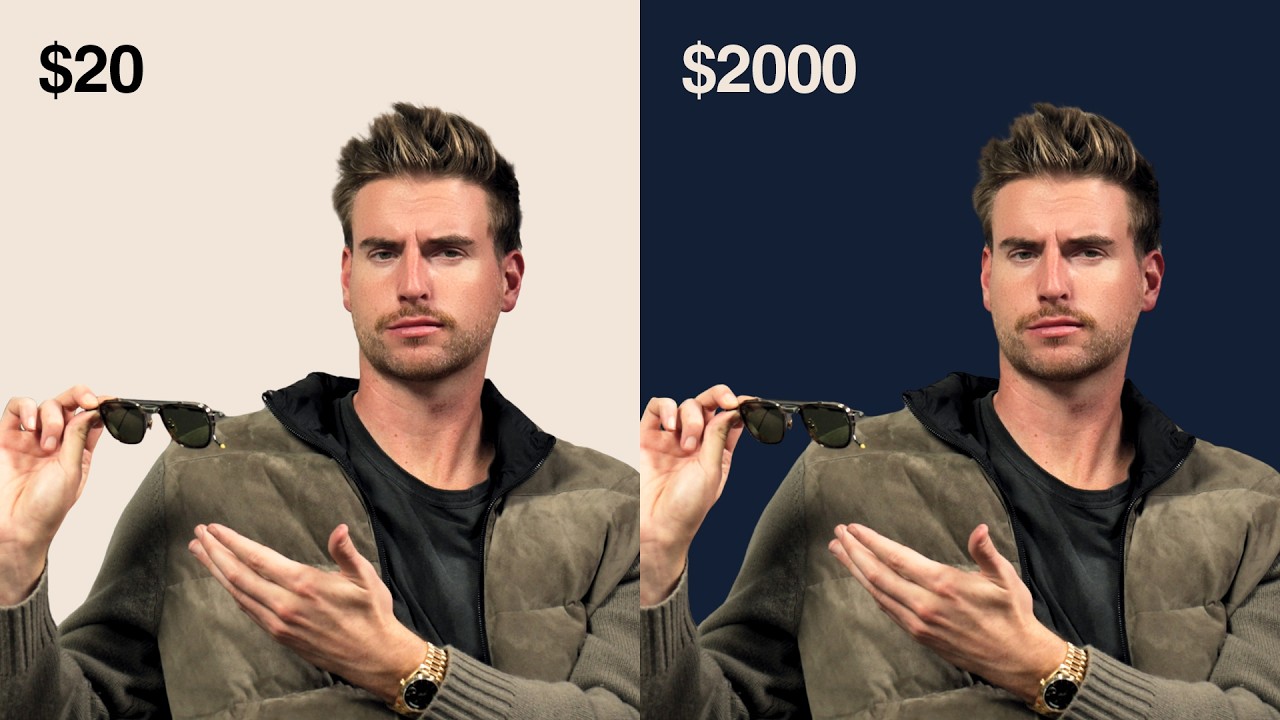
Description
In today's episode, Brian & Alex dive into the luxury pricing strategy of Jacques Marie Mage. Topics covered include what stories to tell about your products, which tactics to use to influence buying psychology and why most high priced items practice the art of delayed gratification. You'll want to bust out the notepad for this one. Enjoy! 📱Follow Us On Social: -------------------- Instagram Alex https://www.instagram.com/alexgarcia_atx/ Brian: https://www.instagram.com/brian_blum/ Twitter www.twitter.com/@alexgarcia_atx www.twitter.com/@brian_blum1 -------------------- 🔥Want Free Game? Send us a picture of your Apple & Spotify reviews to podcast@marketingexamined.com and we'll make you a playbook in a future episode. -------------------- 🎥Checkout Brians Content Agency https://www.nibble.studio -------------------- 📈Growth Playbooks, Directly To Your Inbox For growth playbooks, deep dives, and marketing case studies, get subscribed at https://www.marketingexamined.com -------------------- CHAPTERS: 00:00 - Intro 01:37 - Storytelling 03:54 - Scarcity 07:50 - Blending Identities 13:10 - Content 17:18 - Product View & Positioning 22:23 - Recap
Summary
Generated by gpt-5.6-terraAt-a-Glance
- Verdict: Skim
- Core thesis: Jacques Marie Mage can charge $1,400-$2,000 for sunglasses because it sells a coherent luxury identity—built from product-origin stories, limited production, status signals, and a high-touch retail experience—rather than frames alone.
- Why it matters: The case is a usable positioning lesson: when product parity makes mid-market offerings vulnerable, brands can either win on low-price/volume economics or create enough meaning and exclusivity to support premium margins.
- Best use: Use this as a concise checklist for packaging a premium offer or repositioning an existing product around provenance, craft, finite supply, and a consistent customer experience.
Executive Summary
The speakers use Jacques Marie Mage (JMM) as a luxury-marketing case study. Their central argument is that the brand does not justify high sunglasses prices primarily through functional superiority; it turns product attributes into an identity-rich story. A particular frame is linked to Ayrton Senna, its silhouette and materials are explained through that inspiration, and the buyer is invited to associate themselves with the traits the reference represents—tenacity, style, and status.
The commercial system combines that storytelling with engineered scarcity. JMM produces explicitly limited quantities, such as one of 500 frames or city-specific runs of 25, and serializes the product. This makes the object feel collectible, creates fear of missing out, and gives retail staff a credible urgency narrative. Boutique details—whiskey, gallery-like presentation, guided explanation of materials, and celebrity/customer references—make buying feel closer to jewelry purchasing than ordinary eyewear retail.
The speakers argue that the broader opportunity is not restricted to luxury accessories. Brands should explain why a specific design, ingredient, formulation, manufacturing method, or material was chosen; then distribute those stories consistently across product pages, social video, email, and physical touchpoints. They criticize JMM's own social execution as underdeveloped, especially its lack of video and artisan/process content, suggesting that strong brand mythology can exist despite weak content distribution.
Their strategic conclusion is deliberately polarizing: avoid undifferentiated middle pricing where a $90-$140 hoodie is easily compared with a competent $45 alternative. In their view, businesses should choose either a value/volume position or a defensible premium/status position. That assertion is directional rather than rigorously evidenced, but it clarifies the operating question: can the brand earn a meaningful price premium through distinct meaning, not just better copy?
Key Takeaways
- Claim: Premium pricing becomes more believable when every concrete product decision carries a specific origin story rather than a generic claim of quality. | Evidence: The speakers describe JMM frames as inspired by Ayrton Senna, with the aviator silhouette, materials, and design choices linked back to that reference; they contrast this with simply telling a shopper that the sunglasses are expensive. | Implication: For any premium offer, document the reason behind named features—why this material, formulation, silhouette, process, or supplier was selected—and make those reasons customer-facing. | Caveat: A story cannot compensate indefinitely for weak product quality or incoherent execution; the video assumes the physical product and materials are credible enough to support the narrative.
- Claim: Scarcity works best when it is tangible, visible, and paired with a credible consequence for waiting. | Evidence: JMM uses numbered limited runs, including a frame described as one of 500 with an inscribed serial number and an Austin-specific edition of 25; sales staff reinforce that an item may not be available if the customer returns later. | Implication: If supply is genuinely constrained or intentionally limited, make the edition size, item identity, and availability window explicit rather than using vague 'limited edition' language. | Caveat: Artificial scarcity can damage trust if it is transparently manufactured without product desirability or if the brand repeatedly restocks supposedly finite editions.
- Claim: Luxury is delivered through the full purchase environment, not just the product page or price tag. | Evidence: At JMM's Austin boutique, the speaker describes a gallery-like environment, whiskey service, staff-led product explanations, and social proof through references to buyers such as Matthew McConaughey and Steve Sarkisian. | Implication: Map the premium narrative across each touchpoint—store, sales conversation, packaging, site, email, and post-purchase—not only in advertising. | Caveat: Celebrity association is only persuasive when it fits the desired customer identity; indiscriminate name-dropping can feel performative.
- Claim: A brand can construct a richer identity by combining compatible cultural references rather than relying on a single generic heritage claim. | Evidence: The speakers say JMM blends American-West frontier imagery, French imperial ambition and opulence, and Japanese precision in titanium and acetate craftsmanship. | Implication: Define the few identities your brand legitimately combines, then use them to guide naming, imagery, materials, retail design, and editorial content. | Caveat: Cross-cultural references need a coherent connection to the product; otherwise they become decorative brand theater rather than credible positioning.
- Claim: JMM's brand story is stronger than its social distribution, leaving a clear content opportunity around makers, process, and product lore. | Evidence: The speakers call its social strategy 'massively underwhelming,' noting little to no YouTube or Instagram Reels; they suggest filming Japanese artisans and adapting its product-story carousels into episodic video. | Implication: Premium brands do not need high-volume trend content, but they can use cinematic, process-led education to expand discovery without abandoning exclusivity. | Caveat: The speakers also acknowledge that JMM may intentionally prefer an 'if you know, you know' word-of-mouth posture, so broader reach could dilute a deliberately quiet luxury signal.
- Claim: The speakers see the most exposed position as an undifferentiated middle-market product: too expensive to compete on utility and not meaningful enough to command status pricing. | Evidence: They compare a $120-$140 hoodie with Comfort's roughly $45 hoodies, argue that cheaper Amazon/Chinese goods increasingly offer acceptable functional quality, and cite luxury brands such as Aimé Leon Dore and Duke + Dexter as products buyers treat differently from workout clothing. | Implication: Pressure-test whether your current price tier has a genuine moat. If it does not, choose a clearer value proposition, a sharper premium identity, or a category-specific performance advantage. | Caveat: This is a strategic opinion, not a demonstrated market-wide result; middle-market brands can still win through distribution, community, product performance, or operational advantages.
Detailed Brief
A practical premium-positioning sequence
- Claims: The proposed sequence is story first, then proof of quality, then finite availability, then a consistent luxury experience.; Storytelling should explain not only founder history but also technical choices: sourcing, quality assurance, manufacturing location, process differences, and why an ingredient or material is superior.; The framework applies beyond fashion: a probiotic chocolate can explain why it chose a particular probiotic, and an electrolyte product can explain its formulation choices.
- Evidence: The speaker uses acetate in eyewear as the example: acetate varies in quality, so explaining the process behind higher-quality acetate creates authority for the material choice.; The transcript references 'Dirty Gut Dan,' a probiotic-chocolate founder said to have reached roughly 38,000 followers from nine pieces of content by documenting founder life and talking about the chocolate industry.
- Caveats: The Dirty Gut Dan follower/content figure is presented conversationally and without independent validation in the transcript.; The framework requires operational facts worth telling; superficial origin stories are unlikely to create durable willingness to pay.
- Implications: Build a product-proof library before producing campaigns: supplier facts, formulation decisions, manufacturing footage, named inspirations, comparative process explanations, and customer identity cues.; Turn each proof point into multiple formats rather than treating product storytelling as one brand-film project.
Content and category whitespace
- Claims: The speakers frame storytelling as a disruption opportunity in established premium categories whose product experience is strong but whose social narrative is thin.; They cite Restoration Hardware as a business with strong physical world-building—large stores and luxury restaurants—but insufficient short-form content explaining the stories behind individual products or seasonal collections.
- Evidence: They propose that JMM could create a recurring serialized format comparable to the 16-17 episode 'Hot Bear's Dirt' series, focused on the people or histories behind its pieces.; They identify a potential viral hook in the distinction between career artisans and anonymous sweatshop production.
- Caveats: The transcript does not establish whether JMM or Restoration Hardware lacks content because of strategic intent, resource constraints, or performance data.; More visibility is not automatically beneficial for a luxury brand whose appeal partly rests on controlled access.
- Implications: Look for competitors that have product substance and offline prestige but have not translated either into native video; that gap can be an acquisition advantage for a challenger.
Notable Concepts & Terms
- Storytelling-led willingness to pay: The video treats product narrative as the mechanism that makes buyers care about otherwise technical details and accept a much higher price.
- Serial-numbered scarcity: A visible edition number, such as one of 500, turns limited inventory into ownership proof and collector appeal.
- Urgency through finite supply: Once buyers believe inventory is genuinely limited, the risk of losing access motivates immediate purchase.
- Identity blending: JMM's use of American West, French imperial, and Japanese craft references shows how several compatible cultural signals can create a distinctive brand world.
- Silent status symbol: The brand's appeal includes recognition by insiders rather than overt logos; owners receive status from being legible to the right audience.
- Middle-market squeeze: The speakers' thesis that products with neither cost leadership nor premium symbolic value face increased pressure from cheaper, adequate substitutes.
- Artisan-versus-assembly-line narrative: Showing skilled makers as career craftspeople is positioned as evidence of quality and a source of emotional differentiation.
Operator Notes / Why Ken Should Care
- Audit one current offer for undocumented but real product decisions—materials, sourcing, workflow, design constraints, expert judgment—and convert them into a provenance brief that sales and marketing can use.
- Decide explicitly whether each offer is pursuing value/volume, premium/status, or a defensible performance niche; flag offers whose price point is not supported by any of the three.
- For premium launches, require a scarcity policy before using scarcity language: edition quantity, serialization approach, restock rules, and a rationale that can survive customer scrutiny.
- Test a short episodic content format built around process or maker stories rather than generic brand lifestyle footage; measure whether it raises qualified demand and price acceptance, not merely reach.
- Review whether premium promises remain consistent from ad through checkout and fulfillment; remove touchpoints that make the experience feel commodity-grade.
Source/Metadata
- Title: CASE STUDY: How Jacques Marie Mage Justifies Charging $2,000 For Sunglasses
- Transcript words: 6058
- Duration seconds: 1460
- Timestamp note: No timestamps or chapters were present. The supplied transcript contains substantial repeated passages near the end.
Transcript
Today's episode is focused entirely on how to use marketing to charge absurd amounts for your product or service. And we're going to be focusing on a case study from a red-hot brand called Jacques Marie Mage. Let's dive in. What's the most expensive thing you bought recently? It's tough. I've been good. I've been shopping at Splash, but I bought turf for the Alka, which is two grand. The biggest splurge I would say I've done this year was Paris. We were all in the air for my wedding and whatnot. I went to Paris. It was like 10, 15K. Do you ever think about why, what motivated you to do that? I'll tell you what motivated me in Paris. You walk around in Paris with what you packed in your suitcase, and you feel like I have to change my entire motion in the next hour. You're walking and you don't see anybody in that fissure. You don't see anybody in anything casual, like cultural stuff. 100%. A reason I ask is because there's this new brand, Jacques Marie Mage. They're actually not new, but they're starting to really pop up. And I think the fundamental principles that they use in their marketing and their positioning are a great lesson for people who want to charge more for their products. So these shades I'm rocking right now, these were 1400, which is by far the most ridiculous amount I've ever spent on shades. It's ridiculous. It's absurd. They don't even record. I don't even know. They definitely don't record. These things are all manual cut. You could have these in 1910. Right. And so what's insane is how they are able to justify it. And there are several different principles about luxury that are present throughout their market. The first thing that they do that is really, really excellent is storytelling. No surprise, people that can tell better stories are going to be able to charge more for their products. And the way that they tell their stories to every single piece is inherently inspired by something. I had a buddy. He runs a brand called College Co., and he actually came to me recently and he was like, yo, what kind of content should I have them do with all that stuff? Because I'm making all this viral kind of super top-of-funnel content. It's like top five cars billionaires drive. Really interesting. Not really tied to his products, but in his broader category of luxury. And what Jacques Marie Mage does such an excellent job with in their marketing is all of the products have story behind them. So these are inspired by this guy Senna, who was an F1 driver in the end of the 1990s. Right. And they've got this aviator sort of silhouette. There's a lot of different stuff with the materials that they mention. All of the design principles have an underlying story. When you use storytelling in that way, all of a sudden you're building a relationship with somebody and that product. If you just came up to me and said, hey, these are expensive shades, I wouldn't really think about it. But I kind of want to embody the same principles of this inspiration that they have, this Senna guy. He was really cool. He had a lot of tenacity to him. He always had swag. It's kind of like a Mamba Mentality type of people, but in the nineties for an F1 driver. And what you also are getting from storytelling is buy-in. And that's really the opportunity to tell people more things. So once you get that buy-in through the storytelling, now you can talk about the materials. These are only made from the finest materials. Why would I care? Because I want them to last forever. I want this to be something that is not cheap. So by telling me the story of the underlying inspiration, I'm like, oh, tell me more. Now they're saying, oh, these are made in Japan. They're not made in a sweatshop. There is a real career for people who are making these with their hands, materialistically, quality-based, and based on durability, et cetera. So that's kind of the storytelling piece. And when you introduce that story, there's got to be other buying psychology principles to tie with it. And so these are scarcity. What's really unique and kind of viral about this brand is that every single silhouette that they make only has a set amount. So this is one of 500. And so I have a serial number, which is number 75. And they actually inscribed it on the underlying lens. And as dumb as that may sound, it'll differ. When you're in the luxury market, you want stuff that other people don't have. That is always going to be something that ties into exclusivity. A lot of influencers call these the Birkin of sunglasses, which was kind of funny. But the scarcity aspect is really, really interesting because when you have 500 of something, you can also only make 25 of something. You can make a very, very limited run of something and actually make it more of a collector's item rather than just something scarce at the same time. Again, the experience when you go into the galleries, so the store, the sales guy is always going to walk you through all these things. But if you buy in-store, where was this? They opened up a new boutique in Austin. First of all, really, really, really sick. It feels good. They pour you some whiskey if you want. They kind of recreated that jeweler experience, but just for shades, and leather goods. I see here, we're in LA. I didn't know they were at this spot here. Yep. So they're in LA. And through that scarcity, number one, we had storytelling. Number two, we have scarcity. That scarcity creates urgency. So when I went into the boutique, they said that this whole episode was just going to be how to get finessed. And Monique's probably still like, yo, this dude's an idiot. But I promise you this shit's working. Through the scarcity, it creates urgency. Because if there are only 25, like there's this Austin edition calfskin whatever great silhouette, and they have this Austin edition pair of shades. There are only 25 of these. All of a sudden, you kind of start thinking. Again, what you're just getting from that, I'm finessing myself at this point. It's like, I don't want it to be like, damn, okay, is this going to be me? Are those the only guys in Austin who are going to have these shades? You can kind of, there's a lot of, the trick is out with that one. And it just creates the demand, though. It's artificial demand. Because there are only so few of these things, they kind of say, yo, look, you can not buy it, but just don't come back next week expecting it to be here. And so you want storytelling, scarcity, urgency. With the storytelling, you want to talk about the underlying process, the materials. That's going to get you to buy in, to then say, well, guess what? We only made a few of these, and it's probably going to be gone by next week. We just had Steve Sarkisian in there. He loved the shades. That type of shit, where they're like, oh, Sarkisian might just... Did they actually tell you some of the other people that have bought theirs? Yeah. They did. Who? They flashed some McConaughey thing, and McConaughey has those? He doesn't have these, but he has one of the one of 25. Yeah. He did? I mean, so how much were the one of 25? Yeah, like 1700. Did you buy? Yeah. I did. I did. in there. He, you love the shades, that type of shit, right? Where they're like, oh, Sarkisian might just, I'm walking. Did they actually tell you some of the other people that have bought out of theirs? Yeah. They did. Yeah. Who? I mean, they, of course, they flashed some Conaghy thing, and Conaghy has those, or he doesn't have these, but he has one of the one of 25. Yeah. He did it in the sort. I mean, how much were the one of 25? Yeah. Million. How myself? No, 17, so did you buy? Yeah. Hi, I did. I did. Hey, I've gotten four compliments, so I'm 3,200 on shades. I got roughly a 325 for a compliment right now, so I got to get my price for a compliment. It's substantially a major word. Yeah. Thanks, man. Anyway, another cool thing that I think they do really well is they blend identities. So when you're talking about storytelling, you're creating a new idea. Yeah. So how do you create a new idea for your brand? You want to take things from different cultures or different backgrounds. What they do is they use the crossover of the American West. So they say that we're inspired by the frontiersmanship that defined our early history and create an association with their products as a pioneering identity, right? You're aligned with the cowboys and invention and all that different stuff, but they also tie it back to their French origins. So the ambition of Napoleon's empire, right, is another place where they say, we took a lot of inspiration from them, the opulence of the French empire back in the day before the French Revolution, and body by the phrase impossible is not a word in French. Pretty sick. Then they tie it back to Japanese precision and attention to detail. So it's a very precise, very focused process to actually get the titanium and the acetate that comprise the products. And this gives you the reassurance that nothing is getting overlooked in the process. So, okay, storytelling right there. The salesperson is giving you that experience in store. They all have a very rehearsed et cetera, but you can also dive deeper onto their website, and they have all sorts of cool materials there. So that's the playbook that these guys have used, right? They really lean into storytelling behind the principles, behind the silhouette, behind the actual design, and they make it interesting by using very specific things, being very, very clear about where that all came from. So tying back to the clothing example earlier, he has a line of blazers and a line of collar shirts, right? And he'll call something the Bellagio Merino Lowell pull up. And it's like, where did you get the name Bellagio from? Talk about why this was inspired from that region of Italy. In 1942, this tailor invented the no-button sweater fallout because he was annoyed with having a button and shit. Mussolini told it, you gotta look fresh. Who knows? It doesn't matter. The point is, you want to attach a story to these designs, to these clear product choices, these decisions you're making in manufacturing and stuff, because it's going to get more buy-in for people and allow you to ultimately charge more. A good product doesn't fix a bad story by any means. Okay. I had mentioned this on the pod before, but there was a study that went on where it was like, if I went to a garage sale and I bought this dresser from somebody, and then they give me the entire story, the back history of that dresser, I'm going to cherish that dresser to a different degree because I'm like, oh, I understand that it came from her great grandpa, has been passed down into her family. Right now she just needs to, which can also backfire in the garage store example, because you're like, what's happened on that bed? Yeah. What does this say? What does that say? Yeah. But it's like, you now feel some kind of emotion and an attachment to that, to the degree that you're going to take care of it and value it more than if I went to Ikea, if I went to, what's another good furniture store? I guess, man, nice one. Yeah. I like Restoration Hard West Down or something. Yeah. If I went to one of those places and I bought something beautiful, even if it costs more, the value that I associate with it, there's no story attached to it other than I want it, right? Absolutely. It's the same shit with the reason somebody would like a classic car and feel so attached to a classic car is because of the story that was attached to the classic car of that time versus I buy a car now that's a newer car, within six months I'm like, ah. It's like, you don't feel the same way. Yeah. If I had a 9-11, like an 88 9-11 or something like that, or some 9-11, all right, I would feel so differently about it because there's also a story about the type of, like the Buck Mason guy who drives the 9-11. Yeah. Right. Those stories are attached to it. Yeah. Yeah. And people need to really be conscious of how do you create those associations? Yeah. That is such a powerful thing because if, of course, this is an extreme example, but you want to be a guy who, court Porsche gives that sort of James Bond feel, right? You're kind of the man, whatever. I think it's more for a divorce dad, so I hope you don't get one, but even the 9-11, the old ones, now the old ones, as long as you rest or that thing, it's fire. I was looking at them today. Yeah. Yeah. But no, it is a thing. And I think what this also is is a playbook for how to disrupt, right? Because what you just described, I think, is an opportunity. Like you mentioned, what's a furniture store that does this? Restoration Hardware is obviously the preeminent luxury furniture brand, and they create really good experiences and do really excellent world-building with their kind of RH restaurant stuff. I don't know if you've been to some of those, but they have one in Paris, they have one in New York, and the V-Pavik industry. It's like a luxury restaurant inside of their massive store. It's pretty cool. And what they don't do, though, I don't think they do an excellent job with content, right? I don't really know the story behind my best friend, right? I think they kind of have good copy on the website, but they don't emphasize it through short form. They don't have any sort of content cycle or flywheel to do this for their new draft suit as they kind of emphasize seasonality with their catalog. It's like, why should I care? It'd be cool if they really leaned into that. But it is Josh Murray Mirage. It is actually kind of startling how bad their content is. They don't do anything. The funny thing is, as you brought them up, I thought you were going to talk about how amazing their content was. And so I'm sitting here in my head trying to almost convince myself of reasons to back you and say how good their content was. You know what I'm saying? I thought that's the angle you were going to take. No, no. Versus like, it is no word that they told you. It's a massive, massively underwhelming social strategy, and there's no YouTube. There's no nothing. The only thing I was like, oh, they do well is the contrast. Right. Yeah. And I do think the sequence in which they sometimes do their carousels where they show the products and then they're like, this was named after X, Y, Z thing. I think that's smart, but I don't think they're doing it in the way that they need to do it on social. No, definitely not. almost convince myself of reasons to back you and say how good their content was. Yeah. What I'm saying? I thought that's the angle you were going to take. No, no. Versus, it is no word that they told you. It's massively underwhelming. It's about social strategy, and there's no YouTube. There's nothing. The only thing I was like, oh, they do well is the contrast. Right. Yeah. And I do think the sequence in which they sometimes do their carousels where it's like, they show the products and then they're like, this was named after X, Y, Z thing. Yeah. I think that's smart, but I don't think they're doing it in the way that they need to do it on social. No, definitely not. They're using no video. Yeah. If you scroll over as a real sub, there's virtually no IG reels. It's crazy. Because I think if they turn any of those carousels into a reel, it's probably could fly, right? With the right post at the right table set. So I just look at Hot Bear, right? And I'm like, Hot Bear's Dirt. Yeah. The series that they do, they've done 16, 17 episodes by now. If they had something similar to that about these individuals or the stories attached to any of these pieces, I think it'd fly. Well, you have a really inherently viral opportunity with this "we're not a sweatshop" effect. Yeah. In my opinion, they really emphasize that this is a career for their artisans that make the products, not necessarily just an assembly line of slop. And to me, that's an excellent storytelling opportunity. You gotta go film in Japan, obviously, translate that stuff. But as you should, yeah. Right. It would be really powerful and enhance more discovery of the brand. Now, maybe they don't want to be loud. I think they like the word-of-mouth connotation, like if you know, you know, type thing. They emphasize that at the store. They're like, people recognize, our customers recognize these things. One of those silent symbols. Again, they got the ass. Yeah, bro. They're just fooling you. I'm selling the Kool-Aid. This is a cult thing. This is like, yeah, this is what Chris will typically say: boy, stop with that boo-boo Cornelius. That's what you would say right now. Boo-boo Cornelius. Yeah. I don't know. I'm gonna let it slide, because I've been wilding on this stuff. Yeah, no, it's just like it again, but unless it's just not an ambitious founder, think about the people that they're selling to, right? These are a lot of people with the buying psychology that I'm talking about. I'm not nearly in that economic category, but I'm talking about people who, but it makes you feel like you are. Yeah. A little bit, or maybe that's more aspirational as well, right? You want to have something to talk about. I like when I have something to talk about. Half the people at ALD don't buy a damn thing. ALD is about going into ALD or post center in your IG story. Exactly. Yeah. It's a post a basketball wall. It's a post a Porsche. Yeah. And then you go and buy coffee, and then you check out for 7.99 for a lot of that. Exactly. But there's the association all of a sudden to, like, I'm in New York, I'm shopping at AL. Right. And there's that layer of association. I'm sure there's people that go to this store and do that similar thing. I pulled up in a golf polo. I thought they were going to kick me out, straight up. I came straight from the course, and I could tell they didn't take me seriously. They're like, no, this boy, he's not buying. A card about to decline. You about to take a picture walk. Yeah. Shot a 92, by the way. So I think this is a playbook that pretty much any brand can replicate. As long as you follow these underlying things. But the biggest piece is viewing your products as interesting, what people are curious to hear more from you about very often, like your product. This has been so effective in the supplements game, and it's founder storytelling in CPG, right? Like this kid, Dirty Gut Dan. You seen Dirty Gut? No. So he's trying to do a new probiotic chocolate, I guess. And he is doing founder life. How was it? Dirty Gut Dan. Careful. If you misspell one word in that, you're going to end up on an adult website. But no, he's talking about the chocolate industry, and he uses a lot of the Hershey's, the slate labor, kind of similar Midday Square stuff, but any of the marketing, et cetera. And he's kind of an example of storytelling allowing him to get his word out there. But he's popping the off of nine pieces of content, 38,000 followers. I know. That's great. That's impressive. There's really good conversion rate. Yeah. But there's storytelling right there. So I think this is kind of where we're going with things too. I'm really bearish on middle-class products. No shade to middle-class individuals. I'm only talking about positioning of your brand where, at this point, you think about a $120 hoodie. Where's the place for that? When Comfort, Charles Watson, legend, crushing it this year. He's selling his hoodies for 45 bucks. Just as nice as your $140. But I guess my take is not necessarily what's working right now, but I'm talking about how you're positioning yourself for 26, 27, 48, where things are going to rapidly continue to all. There's not really a bullish case where people have bigger wallets now. Not to get for him, but it does seem like wages are pretty stagnant. It does seem like people are spending a lot of money on crypto, gambling, et cetera. And so that's why the rise of cheap Amazon products and Chinese goods as what the market is. That stuff is just as good as everybody, it just doesn't have ALD, the brand, on it. And instead of being $120, I can always try and sell that for $280 and try and go more high status because they store color wrap that product. It's going to have a lot more upside and market. I couldn't agree more because there are brands like Elwood, to me, that I find knowing I'm going to work out in it. So I bought, let's say, a $50 shirt and it's a good material. I'm like, oh, this is the perfect shirt to lift in. Yeah. No, Missing Hood or shirt. I thought, this is the perfect hoodie for me to lift in. Yeah. I'll wear it today on the pod because it's the first time I'm wearing it. So I'm like, okay, it's fall. Right now I wear ALD or I buy LD. I buy Duke and Dexter. I buy whoever, these more luxury brands that have positioned themselves through their story as much more luxury. And I will not beat those into simple clothing. Methodist test: you take it to the dry cleaner. You throw it in the washing machine. That's how you know if something is prioritized, like you're not as fair. My next episode of the thing I'm going to hit is taking what you said and going deep on it. Yeah. I pause action. I'm busy. Yeah. But going very deep on how to do it, and then examples of brands doing it at very high levels, but budget-friendly levels as well. Yeah. We also get a lot of sometimes where we'll talk about luxury brands and then not say, okay, luxury brand is doing this. How is a brand that wants to be luxury but has a finite budget supposed to do what that brand is doing? Yeah. If you're a And I will not, I will not do those. I will not eat those since simple clothing. Methodist test. You take it to the dry cleaner. You throw it in the washing machine. That's, that's how you know if something is that's her prioritize it is you're not as fair. I, my next episode of the thing I'm going to hit is taking what you said and going fucking deep on off. Yeah. I pause action. I'm busy. Yeah. Yeah. But going very deep on how to do it. And then examples of brains do it at very high levels, but budget-friendly levels as well. Yeah. We also get a lot of sometimes for all we'll talk about luxury brands and then not saying, okay, luxury brain is doing this. How is great. I want to be luxury, but has a finite budget do what friend is do. Yeah. If you're a listener right now, I'd also just ask yourself, which one do you want to be? Because you have to sell such an insane amount of volume at the lower price points. And a lot of people are really scared to charge the front of money. That's the other thing I get that for you at Bligh is don't even want to understand where you don't want to buy at that price. And it does take some upfront work. Yeah. I'm sure you're going to walk through that. Yeah. But you want to be one of the two. I really think selling at the $90 Cody these days, except where you go to die, was it just going to be like, well, what's your medic cap? Right. I guess. Yeah. Can you, can you go acquire that Elsener for $35 playing on? I don't be so. So, and so otherwise you have to get people to put the, I've all my hair to get their attention. Sure. Do more. All right. So the recap, we're going to focus on storytelling, particularly storytelling behind the materials in the design of your class. So if this is not necessarily applicable to just clothing or accessories, the design of your products can be the formulation. If you have a chocolate product, why did you choose this specific probiotic that you included in that to make your probiotic chocolate? This applies to electrolytes, whatever video. Step one, introduce storytelling in all of the marketing. Make sure that that is followed and accompanied with storytelling on social, so on video, for yourselves on forum, et cetera, get the background behind the products. Tell people where the idea came from. What was the inspiration for it? Talk about the quality assurance, right? What are the materials coming from? Where are they made? Why are they made this way? How is that different from previous bill solutions? So oftentimes there is acetate as an ingredient in this product is shades, but acetate has varying levels of quality. If you're going to talk about the actual process to get good acetate, it's going to build more authority behind that material. Why do you try for it? Next, you're going to interview scarcity. So scarcity is going to be a finite amount of things, right? You can only get certain things for a limited time. That's going to introduce urgency thereafter because we will want to buy because they're not sure if what they're looking to get will be there later. And last, meaning to the experience, make sure that these things are very clear across all of the different cost points. It should be clear on your socialists. That should be clear on the left side, clear in the in-person stores, et cetera. And that's how you're going to evoke luxury and be able to charge a certain amount for your product. If you got value from that episode, please like, subscribe, tell us some brands that we missed. We're always trying to explore better examples for y'all. And otherwise, we'll see you next week. Peace. take me seriously. They're like, no, this boy, he's not buying a card about to decline. You about to take a picture walk. Yeah. Uh, shot a 92 by the way. So, uh, I think this is a playbook that pretty much any brand can, you know, replicate your, like, if you, as long as you follow these underlying things, but the biggest piece is viewing your products as interesting, you know, like what people are curious to hear more from you very often about your product. Like, and this has been so effective in the supplements game and it's founder storytelling in CPG, right? Like song of this kid, uh, dirty gut, Dan, you seen dirty gut? No. So he's trying to doing like a new probiotic chocolate, I guess. And, uh, he is doing founder life, how was it? Dirty gut, Dan. Careful. If you misspell one word in that, you're going to end up playing on the adult website. Uh, but, uh, no, I mean, he, he's like, you know, talking about the chocolate industry and he uses a lot of like the Hershey's, the slate labor, right? Like kind of similar midday swear stuff, but you know, any of the marketing, et cetera. And he's kind of an example of storytelling, allowing him to get his word out there. But like, I mean, he's popping the off of nine pieces, nine, uh, pieces of content, 38,000 followers. I know that's great. That's impressive. There's really good all our conversion rate. Yeah. Um, but you know, there's story telling right there. So I think like, this is kind of where we're going to things too. I, I, I'm really, really bearish on middle-class products, like no shades of like middle-class individuals. I'm only talking about positioning of your brand where, you know, at this point, like you think about $120 hoodie, like that's not, what, where does the place for that arc like when comfort, you know, Charles Watson, like legend crushing it this year. Like he's selling his hoodies for like 45 bucks. I mean, just as nice as your $140. But I guess my take is not necessarily like what's working right now, but I'm talking about how you're positioning yourself for 26, 27, 48, where things are going to rapidly continue to all. Like there's not really a bullish case where people to have like figure wallets now, like not to get for him, but like, it does seem like wages are pretty stagnant. It does seem like people are spending a lot of money on crypto gambling, et cetera. And so that's why the rise of cheap Amazon products and you know, Chinese goods as what the market is that stuff is just as good as everybody just doesn't have L of the brand on it. And instead of being $120, I can always try and sell that for $280 and try and go more high status because they're going to make it to this new price. But because they store a color wrap that product, it's going to have a lot more, uh, upside and market. I can agree more because there's, I hope they don't listen. There's brands like Elwood to me that I find knowing I'm going to work out of it. So like I bought, let's say, you know, 50 dollar shirt and it's a good material. I'm like, Oh, this is the perfect shirt to lift it. Yeah. No missing hood or shirt. I thought this is the perfect hoodie for me to lift it. Like, yeah, I'll wear it like today on the pod because it's the first time I'm wearing it. So I'm like, okay, it's fall. Right now I wear ALD or I buy LD. I buy Duke and Dexter. I bought whoever like these more luxury brands that have positioned themselves through their story and as much more luxury. And I will not, I will not do those. I will not eat those since simple clothing. Methodist test. You take it to the dry cleaner. You throw it in the washing machine. You know, that's, that's how you know if something is that's her prioritize it is like you're not as fair. Um, I, my next episode of the thing I'm going to hit is like taking what you said basically and going fucking deep on off. Yeah. I pause action. I'm busy. Yeah. Yeah. But going very deep on how to do it. And then examples of brains do it at very high levels, but budget friendly levels as well. Yeah. We also get a lot of sometimes for all we'll talk about luxury brands and then not saying, okay, luxury brain is doing this. How is great. I want to be luxury, but has a finite budget do what friend is do. Yeah. If you're a listener right now, I'd also just ask yourself like, which one do you want to be? Because you have to sell such an insane amount of volume at the lower price points. And a lot of people are really scared to charge the front of money. That's the other thing I get that for you at Bligh is like, don't even want to understand like where you don't want to buy at that price. And it does take some upfront work. Yeah. I'm sure you're going to kind of walk through that. Yeah. Um, but you want to be one of the two. I really think like, you know, selling at the $90 Cody these days, except where you go to die, was it just going to be like, well, what's your medic cap? Right. Like, I guess. Yeah. Can you, can you go acquire that Elsener for $35 playing on? I don't be so. So, you know, and so otherwise you have to get people to put the, I've all my hair to get their attention. Sure. Do more. All right. So the recap, we're going to focus on storytelling, particularly storytelling behind the materials in the design of your class. So if this is, you know, not necessarily applicable to just clothing or accessories, like the design of your products can be the formulation. I, if you have a chocolate product, like, why did you choose this specific probiotic that you included in that to make your probiotic chocolate? You know, this applies to electrolytes, whatever video. Um, so step one, introduce storytelling and all of the marketing, make sure that that is followed and accompanied with storytelling on social, so on video, for yourselves on forum, et cetera, uh, get the background behind the products. Tell people where the idea came from, what was the inspiration for it? Talk about the, you know, quality assurance, right? Like what are the materials coming from? Where are they made? Why are they made this way? How is that different from previous bill solutions? So oftentimes like there is acetate is an ingredient in this, uh, product is shades, but as I say, has varying levels of quality. If you're going to talk about the actual process to get good acetate, it's going to build more authority behind that material. Why do you try for it? Next, you're going to interview scarcity. So scarcity is going to be a finite amount of things, right? You can only get certain things for a limited time. That's going to introduce urgency thereafter because we will want to buy because they're not sure if what they're looking to get will be there later. And last meaning to the experience, make sure that these things are very clear across all of the different cost points should be clear on your socialists. That should be clear on the left side, clear in the in-person stores, et cetera. Uh, and that's how you're going to evoke luxury and be able to charge in certain amount for your product. If you got value from that episode, please like, subscribe, tell us some brands that we missed. Uh, you know, we're always trying to explore better examples for y'all. Um, and otherwise we'll see you next week. Peace.