Can You Still Win in Venture Without a $1BN Fund? Menlo’s Venky Ganesan on the New Rules of VC
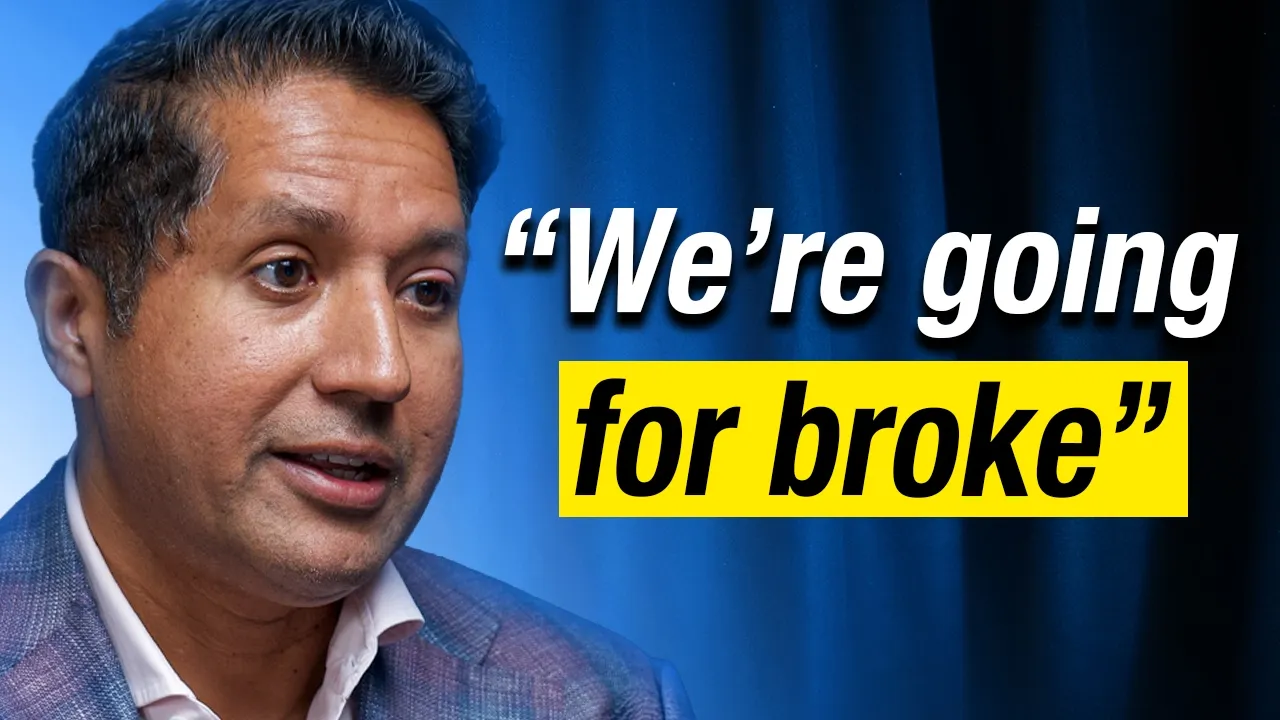
Description
Venky Ganesan is a Partner at Menlo Ventures, whose portfolio includes Anthropic, Lovable, Legora and Higgsfield, alongside earlier hits Uber and Roku. Venky's own investment track record includes Palo Alto Networks, Upwork, Poshmark and Rover. He is a three-time Forbes Midas List investor and former Chair of the National Venture Capital Association. ----------------------------------------------- Timestamps: 00:00 Intro 1:15 - Venky’s 90% Loss That Changed His Investing 4:21 - Venky On Whether Venture Capital Is Broken 5:28 - Should You Keep Playing When The Market Is Crazy? 6:59 - The New Rules Of Venture Investing 7:55 - Is Seed Investing Still Possible? 9:19 - Can AI Revenue Metrics Be Trusted? 11:20 - Does “King Making” Really Work? 12:47 - What Could Finally Crack The Market? 14:11 - Innovators, Imitators And Idiots 19:17 - Venky On When It’s Worth Paying Up 20:24 - Venky’s Most Expensive Missed Investment 23:13 - What Makes A Great Founding Team? 25:09 - Venky On Whether Ownership Still Matters 28:25 - When Should You Size Up An Investment? 29:57 - The Problem With Only Betting On Home Runs 33:21 - Is “Downside Protection” A Dangerous Mindset? 35:41 - Are Investors Facing A New Era Of Dilution? 38:39 - Why IRR Matters More Than Ever 41:58 - Are Faster Investment Cycles A Warning Sign? 48:24 - Venky On When To Take Chips Off The Table 51:41 - Are We About To See A Wave Of M&A? 54:11 - The Most Important Skill For Founders At Scale 55:24 - Does Money Change People? 56:34 - Why Are Bay Area Housing Costs So High? 59:40 - Does Being Rich Make You A Better Investor? 1:02:43 - Is Private Equity Facing An AI Reckoning? 1:06:44 - Venky’s Advice To Venture LPs ---------------------------------------------------------------------------------------------- Subscribe on Spotify: https://open.spotify.com/show/3j2KMcZTtgTNBKwtZBMHvl?si=85bc9196860e4466 Subscribe on Apple Podcasts: https://podcasts.apple.com/us/podcast/the-twenty-minute-vc-20vc-venture-capital-startup/
Summary
Generated by gpt-5.6-terraAt-a-Glance
- Verdict: Watch fully
- Core thesis: AI-era venture remains investable without simply timing the market or maximizing headline ownership, but winning requires enough early option bets, aggressive evidence-based follow-ons into genuine outliers, disciplined underwriting of real business quality, and an IRR/DPI standard that beats public-market AI exposure.
- Why it matters: The conversation offers a concrete operating model for investing and company-building amid inflated AI rounds, opaque revenue metrics, compressed fund deployment, compute-intensive growth, and increasing dependence on hyperscalers and foundation-model providers.
- Best use: Use this as a framework for evaluating AI-company fundraising, follow-on concentration, dilution, exit timing, and whether apparent growth reflects durable terminal value rather than financing reflexivity.
Executive Summary
Venky Ganesan argues that the current AI venture market is genuinely disorienting, but investors should not build a permanent strategy from a temporary market snapshot. Large AI rounds, fast valuation markups, and massive capital requirements make it dangerous to sit out entirely, since professional investors cannot reliably time the end of a cycle. Instead, they should remain active while changing how they play: establish enough early positions to gain exposure and information, then concentrate capital only as quantifiable evidence establishes an outlier.
His central portfolio distinction is between the early ownership game and the later money-movement game. At seed, ownership and a seat at the table matter because the eventual winner is unknown. Once a company is visibly exceptional, access becomes broadly competitive and the job becomes sizing the position correctly. Menlo is willing to own under 2% in Anthropic and has put as much as 20% of a fund into it, but emphasizes that such concentration should be laddered over time as evidence accumulates, not committed before the data exists.
The interview repeatedly warns against mistaking financial momentum for business quality. Contracted or extrapolated AI revenue, quick multi-tranche rounds, and assumed strategic-acquisition downside can all be gamed or rationalized. Ganesan's test is whether founders and investors are building terminal value rather than optimizing for markups. He expects cycle breaks to emerge through leverage and debt stress rather than ordinary equity repricing, and cites the dot-com period as a warning that apparent acqui-hire or strategic-buyer downside can disappear abruptly.
For funds and LPs, the standard has risen: private venture must generate materially superior IRR because AI companies effectively pay economic rents to Nvidia, hyperscalers, and model providers that are accessible in public markets. Ganesan argues that DPI is now decisive with LPs, that investment velocity must be balanced against vintage diversification, and that small emerging funds are in a difficult competitive position unless they have exceptional access, hustle, and a check-size strategy that fits crowded rounds.
Key Takeaways
- Claim: Do not try to sit out an overheated market; stay active but use selectivity, portfolio construction, and position sizing to manage cycle risk. | Evidence: Ganesan recounts that venture firms which stepped away from the dot-com boom in 1996-97 missed 1997-99, disappointed LPs, and re-entered near the 2000 peak. Menlo's own unsuccessful Menlo 8 fund was deployed over roughly 10 months between 2000 and 2001. | Implication: Maintain exposure to AI opportunity, but avoid making a single-vintage, fully deployed bet based on the belief that present market conditions will persist. | Caveat: He does not endorse indiscriminate deployment: vintage diversification matters, and LPs should ask managers how rapid deployment is being managed if a fund is spent in about 18 months.
- Claim: Treat seed investments as options and reserve major concentration for companies that demonstrate measurable outlier evidence. | Evidence: Ganesan describes each seed check as an option to discover an outlier, then says sizing should increase after revenue or other quantifiable proof emerges. Menlo reportedly reached a 20% fund concentration in Anthropic, but characterizes the decision as laddering up on new data rather than making one early all-in bet. | Implication: For AI investments and strategic partnerships, separate discovery capital from conviction capital; define explicit evidence thresholds that trigger follow-on concentration. | Caveat: A small initial check can buy information and access, but it does not eliminate the need for meaningful ownership; once an outlier is obvious, selection alpha declines and access becomes the issue.
- Claim: Headline AI revenue and fast markups should be treated as underwriting risks, not proof of durable value. | Evidence: The discussion flags contracted annual revenue that is not live, annual run rates extrapolated from a peak day, and SaaS-era manipulation of net revenue retention through sequencing purchase orders. Ganesan says any investor-weighted metric will be gamed. | Implication: Underwrite live usage, retention, unit economics, customer behavior, and the cost of sustaining growth rather than accepting ARR labels, valuation momentum, or investor demand at face value. | Caveat: Fast growth can be real; the relevant distinction is whether the underlying business and revenue are genuinely building, rather than whether a company has raised successive rounds.
- Claim: High prices can be rational when an investor sees a materially larger market, but using a presumed strategic acquisition as downside protection is dangerous. | Evidence: Ganesan distinguishes paying up because one sees a larger TAM from simply being a price taker to win a deal. He compares current confidence in multi-billion-dollar strategic exits with dot-com acquisitions such as Nortel's $3.5 billion purchase of Qtera and Lucent's $4.5 billion purchase of Chromatis, warning that the logic did not survive the post-March-2000 downturn. | Implication: Model a deal to standalone economics and durable strategic value; do not justify an entry price with an assumed acqui-hire, talent purchase, or incumbent rescue outcome. | Caveat: He believes AI-related M&A may increase due to competitive pressure, a more permissive regulatory environment, and large acquirer market capitalizations, but treats those as point-in-time conditions rather than permanent exit support.
- Claim: Ownership still matters, but it must be evaluated against outcome size, time to exit, and likely dilution rather than as a fixed target. | Evidence: Menlo owns less than 2% of Anthropic, illustrating that a small stake can matter in an enormous outcome, while Ganesan also cites a Menlo investment in Higgsfield at 15% for a $5 million check. He says Menlo models a 10% seed stake falling to roughly 3.5-4% by exit, or about 60% dilution, from financings and option-pool expansion. | Implication: Forecast ownership at exit, not at entry, and make business velocity a first-class investment variable—especially for capital-intensive AI companies. | Caveat: Very fast value creation can reduce dilution by shortening the financing horizon and enabling more efficient equity compensation, whereas slower companies take both an IRR hit and a dilution hit.
- Claim: Private venture must now clear a higher return bar because the Mag 7 captures much of AI's economics and offers public-market alternatives. | Evidence: Ganesan says AI companies effectively pay a 'tax' to Nvidia, hyperscalers, and often foundation-model providers. Since those beneficiaries are publicly investable, he argues a private venture fund must outperform a low-fee, no-carry index alternative by roughly 1,000 basis points to justify the allocation. | Implication: Measure private AI opportunities against realistic public comparables and prioritize both DPI and speed of value realization, rather than relying on paper TVPI. | Caveat: This is an investing-standard argument, not a claim that every AI company is structurally unattractive; the case for private exposure is strongest where a manager can identify and finance the exceptional outliers.
- Claim: Fund size is not the sole determinant of success, but $30-100 million venture funds face an especially difficult competitive position in today's rounds. | Evidence: Ganesan says such funds are often too large to behave like angels writing $100,000-$200,000 checks yet too small to deploy the $1 million-$3 million checks that are useful in highly contested rounds. He cites exceptional counterexamples such as Sarah Guo and BoxGroup's David Tisch, but calls them non-generalizable. | Implication: An emerging manager needs a deliberately differentiated access model, check-size strategy, and pace of work—not generic claims of being more founder-friendly or more concentrated. | Caveat: His diagnosis is explicitly tied to the current market snapshot; he acknowledges that cycle conditions can change and that exceptional managers can still overcome structural disadvantages.
Detailed Brief
Founder and syndicate underwriting: prioritize self-awareness, commitment, and terminal-value orientation
- Claims: The origin story of a founding team is a useful proxy for company DNA because it reveals why the people believe they should build together, how they understand each other's strengths and weaknesses, and how they may make later hiring and operating decisions.; Self-awareness is more useful than an absence of weaknesses; unmanaged blind spots are the larger concern.; Menlo's preference for major investments and board seats is a two-way commitment to one founder/company rather than holding multiple competing positions in the same category.
- Evidence: Ganesan asks founders to imagine their five best friends describing them in three words, then compares that answer against reference checks.; He cites Doug Leone's question, 'What's your worst reference?', and Mike Moritz's question about what a person would change in their life.; Menlo says it chose to stay committed to Anthropic rather than invest in OpenAI, while acknowledging other firms may legitimately use a different multi-company strategy.
- Caveats: The commitment model is presented as Menlo's cultural preference, not a universal rule; small passive seed checks create a different conflict and commitment profile from a large board-level investment.
- Implications: Build founder diligence around behavioral evidence, reference consistency, and decision-making dynamics rather than charisma or market momentum alone.; Define conflict and competitive-investment policy before entering strategic company relationships so that expectations are credible to founders.
Liquidity, exits, and portfolio survival
- Claims: Partial liquidity should be considered when an investment reaches a 30x-50x return, particularly when founders are also taking some money off the table.; Small secondaries can improve the ability of both founders and investors to remain committed for the long term.; A departing founder is not automatically a zero-value signal; assess whether the replacement operates in 'founder mode' and can allocate capital effectively.
- Evidence: Ganesan's personal Avonex position rose from a $5,000 investment to about $200,000 before declining roughly 90%, leading him to sell for around $8,000-$9,000.; He argues that selling 10-15% of highly appreciated SaaS holdings in 2021 could have locked in gains while preserving upside.; He cites operators such as Nikesh Arora, Jeetu Patel, and Frank Slootman as examples of executives capable of founder-like leadership after a founder transition.
- Caveats: He generally does not want to sell down a position while maintaining a close founder relationship, except in the context of a company sale or where that relationship is absent.
- Implications: Create a pre-agreed secondary-sale framework for extreme markups, including thresholds, founder alignment, tax/legal constraints, and the minimum residual ownership needed to preserve upside.; Evaluate CEO succession based on operating behavior and capital allocation ability, not simply founder status.
LP underwriting and the AI capital cycle
- Claims: LPs currently want DPI rather than more TVPI and must evaluate managers on forward access and reputation, not historical performance alone.; LPs have an incentive to retain AI exposure because their private-equity portfolios are often substantially larger than venture allocations and heavily exposed to legacy software that AI may disrupt.; Rapid fund deployment reflects real AI compute and scaling needs, but managers still carry a fiduciary responsibility to explain concentration and vintage risks transparently.
- Evidence: Ganesan says performance is a five-to-seven-year lagging indicator and advises LPs to call successful AI founders—including founders who did not take a manager's money—to learn which individual partners they respect.; He states that many LPs have private-equity exposure roughly three to four times their venture exposure.; Menlo's longstanding anchor relationship with the Washington State Investment Board is presented as an example of alignment with public-pension capital.
- Caveats: AI exposure is framed as a hedge against disruption in existing software portfolios, not an argument to suspend underwriting standards or fund-vintage diversification.
- Implications: For allocation decisions, combine realized-distribution history with direct market-reference work on a manager's present sourcing and founder credibility.; Require managers raising or recycling capital quickly to provide clear scenario analysis on deployment pacing, reserves, and portfolio construction.
Notable Concepts & Terms
- Option-bet seed investing: A seed check primarily buys exposure, learning, and a possible right to concentrate later; it should not be confused with final conviction in an unproven company.
- Ownership game vs. money-movement game: Before outlier status is proven, ownership and access matter because selection remains uncertain; after it is obvious, returns depend more on securing and sizing capital.
- Terminal value vs. markups: The core diligence distinction: durable business value and eventual cash outcomes versus valuation increases driven by financing momentum.
- Reflexivity: Ganesan uses George Soros's concept to describe how genuine growth can attract capital, talent, and attention that reinforce growth—until imitators and financing behavior detach from underlying quality.
- Bezzle: A boom-period concept Ganesan invokes to describe increased scope for accounting creativity and metric manipulation that is often only exposed when cycles turn.
- DPI: Distributed paid-in capital; the cash returned to LPs, which Ganesan identifies as a current fundraising and credibility differentiator versus unrealized TVPI.
- Vintage diversification: Spreading capital deployment across time rather than concentrating a fund in one hot period, reducing exposure to a single market regime.
- Founder mode: An operating posture of decisive ownership and high accountability that can be displayed by a successor executive, not solely by an original founder.
Operator Notes / Why Ken Should Care
- Adopt a two-stage capital framework for AI opportunities: a small discovery position with explicit information rights and a separate follow-on reserve governed by live traction, retention, cost-to-serve, and customer concentration thresholds.
- Standardize a revenue-quality diligence checklist that separates signed contracts, activated customers, realized consumption, recurring retention, gross margin after model/compute costs, and growth acquired through incentives.
- For any major AI investment or partnership, run downside cases that assume no strategic acquisition, slower growth, full expected dilution, and a materially less favorable capital market.
- Track the portion of company economics flowing to model providers, hyperscalers, and GPU infrastructure; compare expected private returns with available public-market exposure to those beneficiaries.
- Set a secondary-liquidity policy before holdings reach extreme markups, including when to sell 10-15%, how to coordinate with founders, and what evidence justifies continuing to hold the remainder.
- When evaluating external managers or strategic investors, conduct founder-reference diligence on individual partners rather than relying primarily on trailing fund marks or firm brand.
Source/Metadata
- Title: Can You Still Win in Venture Without a $1BN Fund? Menlo’s Venky Ganesan on the New Rules of VC
- Transcript words: 23100
- Duration seconds: 4274
- Timestamp note: No timestamps or chapters were present. The supplied transcript contains substantial repeated passages, so the brief consolidates duplicate material rather than treating repetition as additional evidence.
Transcript
At this point in Menlo's history, right, we are going for broke. We are going for the Grand Slam home run. We want to see everything. We want to win everything. Full stop. In this discussion with Venki, we discuss the craziness that's happening in venture. Pricing, when to pay up, when not to. How to think about market sizing. How to think about when to sell. How to think about being collaborative in rounds. This and so much more in a true nerd venture fest that is this episode. It is a very disorienting, confusing time. Each seed investment is an option bet. You're buying an option to see if it's an outlier. If there's an opportunity to make money on investment, we should do it. The rest of this is all noise. There is no way for venture to be successful in today's era without the Max 7 participating in everything you're doing. There's no limit to what a person can do as long as you don't care who gets the credit. --- I want to use this as a real learning discussion for me because I want to build a firm like Menlo and I want to learn from the wisdom that you've had now seeing multiple different cycles. You just told me a story that I loved and it was from two decades ago holding a certain stock. Can you tell me that story and your takeaway? Yeah, so a little bit of background. I was at a firm called Globespan Capital Partners and we happened to be investors in a company called Avonex, which nobody knows about this company, AVNX. I remember the stock symbol even now because I was an associate, did not have carry in the fund. Avonex was a big winner, goes public. They gave the associates a chance to own shares of the IPO. So I bought some shares of the IPO. I remember putting the princely sum of $5,000. And at one point, Avonex got up to $200,000. It was such a big portion of my portfolio. And my wife was much smarter than me. She was my fiancée then. We were getting married. She said, "Hey, why don't you sell some so that we can have something for a down payment for the house?" And I was like, no, no, no. Avonex is going to go up. Optical components are a critical part of the internet bubble. We're going to make a million dollars on it. And you know how the story ends, right? It drops 90%. And I think I sell it for around $8,000 to $9,000. So I call it the most important lesson I learned from a 90% loss, which is at some point, you should take some chips off the table. I'm not sure what to take from that. Because I know, I remember having Jake Saper on from Emergence. And when he broke down Emergence's returns, basically, you just saw this one meteoric outlier that returned 90 to 90. Viva? Well, Viva, yes, but it was actually Salesforce. Wow. And if they had held it longer and longer, obviously, it would have been even more meteoric. And so I guess my question is, what should we take from that? Because we also see the dangers of selling too early. Agreed. I think a lot of this advice depends on the context of who you are as a person and what your balance sheet is. At this point in Menlo's history, we are going for broke. We are going for the Grand Slam home run. Because we have had home runs before, we have a history of putting it on the table. As a 24-year-old with very little in your bank account, when you have that kind of, for me, Avonex game-changing money, it just makes economic sense to take some off the table. And so I do think the advice is there's no one-size-fits-all for these things. Did you say you're going for broke? I love that. All hands to the pump, we are going for this. Does anything change with that mindset internally? Is it more aggression? Is it more willingness to pay up? Is it more willingness to have less ownership? What changes with that? We mean as we are going to fight and try to be in the defining AI companies of our era. We want to see everything. We want to win everything. Full stop. So I want to start with a concern, which is I don't know what business we're in anymore. Venture is not venture anymore. I had my team come to me and say, "Hey, we can't find anything under 100 million." And I said, "Wow, that's a lot of, that's a high price for a pre-seed or a seed round." And they said, "No, no, no, Harry, that's the size of the round." This is not venture. What am I to do in this world? And can you invest without a billion dollar fund? Venture has changed. But I also think that you can't take a snapshot in time and draw a dot that's not a line. And right now you're right. Every AI company wants to raise hundreds of millions of dollars. And I'm surprised they only said 100 million because there's some ones who, there's some new labs who want to raise billions of dollars, right? Yeah. They all have arguments for it. And it is a very disorienting, confusing time. I will admit that. But I also think these things change quickly. So you don't want to necessarily draw your long-term strategy with a snapshot in time. These things change quickly. So do you play the game on the field as Bill Gurley says, or do you call time out and say, you know what? I learned from 2021. You know what I wish I'd done in 2021? Less. This is a really hard conundrum for professional investors. You know, you're referring to my tweets, right? The check prints code is when the music is playing, you got to dance. And as a professional investor, the danger of not dancing is that you do not know when this ends. I'll give you a story. There were a bunch of really smart venture firms doing the dot com boom that got in in 93, 94, made money and decided to step out of the game in 96, 97. And when they stepped out of the game, they missed out on 97, 98, 99. And the LPs were like, what happened? We asked you, we invested in you because you're going to be at the cutting edge. You stepped out and they stepped back in 2000 on the peak, right? So timing markets is really, really hard. So I think you have to play the game, but I think you can play the game differently. You can choose to be more selective and you can hopefully think about portfolio composition and position sizing as a way of mitigating what happens when the cycle turns. Portfolio composition and position sizing. What do we do with both of those in a market then like this? How do we change them? I think you have to think about the venture portfolio as a bunch of options, right? Each seed investment is an option bet. You're buying an option to see if it's an outlier. And so you want to have enough of those so you can make sure you have an outlier. And then when there are true quantitative evidence based on revenue on quantifiable metrics that there's going to be an outlier, then you position size up. So to me, you have to think about, okay, what is my fund size? How do I have enough at-bats, to use a baseball analogy, and make sure that you have enough at-bats and then you only position size up on the things that are already proven? Totally get that. Do you think seed still really exists today? If you want to go into the core AI world with the neolabs, I think seed is hard. But even AI application-like companies, they're raising 10 to 20. The old three to five, which were still quite large seeds, and that's gone. Honestly, I think there are two things that impact seed investing today. One is the size of the round. And then you have this other externality, which is these large funds, maybe including us, somewhat being indifferent to seed valuations because they're using that as an option check. Because you are, aren't you? I didn't mean that to put you on the spot, but... Yes. I mean, we are trying to buy ourselves a seat at the table. And the cost of buying that seat at the table, we are somewhat indifferent to at the seed stage because our real goal is to size up and invest in them if they become outliers. Totally get that. Thank you for making my life harder in that respect. You should just invest in our funds. Then you'll be fine. which were still quite large seeds, and that's gone. Prof. Honestly, I think there are two things that impact seed investing today. One is the size of the round. And then you have this other externality, which is these large funds, maybe including us, somewhat being indifferent to seed valuations because they're using that as an option check. Prof. Because you are, aren't you? I didn't mean that to put you on the spot, but... Prof. Yes. I mean, we are trying to buy ourselves a seat at the table. Prof. And the cost of buying that seat at the table, we are somewhat indifferent to at the seed stage because our real goal is to size up and invest in them if they become outliers. Prof. Totally get that. Thank you for making my life harder in that respect. Prof. You should just invest in our funds. Prof. Then you'll be fine. Prof. That's very funny. Nicely transitioned there. I give you credit for that one. You said so you place these bets, so to speak, completely agree. And then when you see discernible traction or revenue numbers, usage, whatever that is, then you can double down. Completely agree with that logic. We're seeing strange numbers, contracted annual revenue that's not actually annual revenue and it's not live. You're seeing revenue run rate that's extrapolated out from the best day in history and then we times that by 365 days. There's murkiness to this revenue that we've never seen before that makes me feel quite icky in a lot of cases. Do you share that? And how would you advise me and what do internal discussions look like around that? Prof. If any metric is measured by an investor and they put a lot of weight on it, it's going to be gamed. And that's just the nature. Maybe they should coin a law for it. And there are two elements that are going on. One, I'm blanking, I don't know if it's Keynes or another famous economist who's calling the term bezel. When there's a boom, the bezel is high, which means it's a notion that the embezzlement of things will be. So not just people are going to pick metrics, people are also going to have some interesting accounting techniques, which by the way, will happen every cycle. Prof. And it's probably happening at this cycle. So we're going to find out in the next few years exactly the accounting creativity of some of our founders and the metrics being gamed by some other people. One good example of it during the SaaS wave was a lot of investors put a lot of weight on net revenue retention. And so one of the ways to game net revenue retention is that you could get a $100 PO, but better get a $10 PO and get a $50 PO a week later, because your net revenue retention, you just got a $100 PO was 100%. But if you got $10 PO and $50 PO, it's now 500%. And the net revenue retention looks much better. So once a metric is measured, it can be gamed. And that happens. And so to me, a lot of this comes down to, are the founders really focused on building a business? Are they focused on terminal value? Or are they focused on markups? And I think you want to find founders and investors who are focused on terminal value. Do you believe in kingmaking? I know that sounds like a strange question. Kingmaking, the theory that multiple successive and quick rounds led by strong investors can really help increase the chances of a company being successful. See, to me, that is a great example of Soros' reflexivity. What I mean by that is you have a company that does well, and because it does well and the revenue is growing really fast, it has a quick markup. And because of that quick markup, it gets more capital. It gets to come on Harry's show, and then it gets more notoriety that allows you to get more human capital along with the financial capital. It grows faster, and it's another markup. Now, these are good things as long as the revenue is happening and the core business is building. But someone, a copycat can look at that and say, oh, the secret is to have a markup. And a copycat investor might look at it and say, if it's marked up, it's going to be marked up again. And then reflexivity kicks in. And then everybody starts acting that way. And this explains how market cycles work until it stops. And one thing we know from Soros is that all reflexivity will eventually stop. We just don't know how and when. But until it stops, a lot of people can look very smart playing it. We don't know how and when, but we can play the game of predicting how and when. If you were to predict how, what are the first signs of this cracking? I think usually the first sign comes with some major debt default. And generally, equity is never the reason why these things crack. Because equity, you write it down, you just take the loss. Debt, on the other hand, people have this expectation they're going to get paid back. And so most of the cycles I know, it breaks because people lever themselves. And so if you see what happened with Leeson, an incredible investor, right? But when you're Forex leverage, it doesn't matter if you're right, you have to also get the timing correct. I missed his risk management class at high school, didn't he? How? Poor old Leeson. When the music's going. So yes, I completely get you there. How do you feel about the multiple tranche rounds so quickly? I'm meeting founders very often where they're saying, oh, we're doing a round this week at 100, but then we'll be opening up the second turn of it later next week at 200, because we've got so much demand. And this just gives me shivers and I feel like we buy any gold or we buy any car. I feel like in every cycle, you get the innovators, then you get the imitators, and then you eventually get the idiots. And I think the innovation of the tranche financing was the notion that I can get build with me money, where these investors are going to come build with me. And then you said build with me money at a lower valuation to get just money at higher valuation. And then eventually transition to just pure dumb money. And I think that's the logic of this, right? And so I don't need money, all money is not the same. I will bring in some investors who are going to actually build a company with me. And then I will bring in some capital along. And then eventually, I'll bring in some very low cost of capital. And I think that was the intention. But again, the same as everything else, now people, everyone's doing it. And it's not tied to the quality of the company anymore. It's just become another technique for people to do. So I find these things start initially with some good core idea. Okay, I want to actually raise capital, but I want to distinguish between capital that adds value and capital that doesn't add value. Will you do it as a firm if you're coming in the latter tranche? Absolutely. It depends on the situation. We have been on both sides of this situation. And I think if the company is interesting, the founders are special, absolutely. Really? Yeah. I mean, at the end of the day, I never care about what other people invest, what they do. I'm looking at this round and say-- Are you not hurt by the fact that they are saying you're legitimately less valuable than Peter Fenton, who we're letting in at half the price? Peter is amazing. I think the biggest thing I've learned over time is you never want to let your ego come in the way. My only ego is to make money for my investors. So if I can make money for my investors, who the hell cares? Have you let your ego ever get in the way? I have done. 100%. What happened? I think you get caught in ways around negotiating for valuation or being in a syndicate, or sometimes you're offered the opportunity where you think you're offered a small piece and you're like, well, I'm too big for that piece. I think in this business, you have to have a high degree of humility because every week I get hit, I get punched in my face by things I don't know. I think the biggest mistakes are when we get too caught in our ego. Look, the reality is simple. We raise money from institutional investors with one goal, which is to return more of it back. If there's an opportunity to make money on investment, we should do it. The rest of this is all noise. I think too often because venture capital tends to be dominated by personalities, people get caught in this. You probably don't know a lot of people at Goldman, right? Everybody can say David Solomon, who's the CEO. But the idea is Goldman makes a ton of money and those people just go do their job. I think too often venture capital, we end up because there's so many personalities and have a high degree of humility because every week I get hit, I get punched in my face by things I don't know. I think the biggest mistakes are when we get too caught in our ego. Look, the reality is simple. We raise money from institutional investors with one and only one goal, which is to return more of it back. If there's an opportunity to make money on investment, we should do it. The rest of this is all noise. I think too often because venture capital tends to be dominated by personalities, people get caught in this. You probably don't know a lot of people at Goldman, right? Everybody can say David Solomon, who's the CEO. But the idea is Goldman makes a ton of money and those people just go do their job. I think too often venture capital, we end up because there's so many personalities and people, it becomes more about who and our ego as opposed to just doing the job. I think that's forced by the fact that we are fighting for constrained supply though. If you're looking at say Goldman's public team, you can buy Nvidia, I can buy Nvidia, they can buy Nvidia. It is a free market. Here, we are both competing for Max at Lagora and our check. If he takes yours, he won't take mine because there's one lead check. And so we have to have personality. We have to sell ourselves because there is a constrained supply. No? Yes. What you say is absolutely true, which is that you have to have these two dualities and manage them. One is you have to have a personality. You have to be able to project a sense of differentiation, right? Because why does someone choose Harry and not me? It's because they like Harry. My good looks and charm. Clearly. I see that in person, even more so. But I think if you get caught in that and you get so immersed in it, then you lose the sense of what the core purpose is, right? The core purpose of having that personality and charm is to make money for your investors. That's why it is, right? And if there's a time for you to make money for your investors where you have to let your ego take a backseat, you should do it. And that's the right thing to do. Now, I'm not saying it's easy to do. I'm not saying I've done it, but it's the right thing to do. It's like, I know I got to eat, ride and exercise. I know that. I don't do it often, but I know it's the right thing to do. Yeah, but Jim Khan is so good. Some things in life are worth it, like butter chicken. I'm a Dishoum. Oh, you are? Well done. Don't worry. I like a Dishoum too. It's fine. We said about price, hey, we're a little bit less focused on it when it's early. There comes a time when it does matter with the greatest of respects. Men are paying up. And for all you entrepreneurs out there, we definitely pay up. So definitely call us. Yeah, you do. And every time I'm like, men are paying up. And you prove me right. You're right. And I'm proved wrong when I'm like, God, they're not disciplined on price. And so I guess I'm questioning, do we just need to completely reshape how we think about terms and market sizing? Let's think about when people pay up. People just sometimes pay up to be able to win the deal. But I think sometimes people pay up because they're able to see a bigger TAM than the other investor. And I think in those cases, you're not actually paying a higher market price. You're able to see that the opportunity is bigger. And therefore, you're willing to see that possibility. Now, sometimes you're going to be right. Sometimes you're going to be wrong. So to me, I don't necessarily think it's just price. Now, sometimes you don't see the TAM. You're just trying to win the deal. And that's what the price it takes. And you're just a clear price taker. And that happens too. The problem is venture is an asymmetric game. You can lose the dollars you invest, but you can make 10x if you're right. And that asymmetry means that the sense of omissions are way higher than the sense of commissions. What do I mean by this? You only see the deals we do, right? You don't see the deals we pass. But the most expensive mistakes venture capitalists make are the deals they passed, not the deals they did. When you say that, what's the most memorable pass that haunts you? What is it? My most memorable pass was that I was a young board member in a company called Plaxo, which had an incredible board. Mike Moritz, Ram Sriram, Tim Kugel from Yahoo, and little unknown me, and Sean Parker, a founder and Todd Masonis, a founder and Cameron Wren. Sean had some challenges on that board and was asked to leave that board. And because I was the only person within 10 years of his age in that group, he was telling me he was going to Boston and he's going to work with this college dropout. And he's like, you should get involved. And I'm like, Sean, you just got booted out of this board. And I have no idea what I'm doing. And I didn't even take that meeting. And I probably had the opportunity to write a $50,000 check. And those seed rounds were different. They were million-dollar seed rounds. That's a tough one. What was Sean like back then? The way he described Plaxo, his vision actually worked out. He understood virality, network effects, in a way, his thought process around what happened at Napster. So my rule of thumb is I'm always looking for people who are incredibly good at communicating very complex concepts in a simple manner, and just have insight. And Sean just had insight around human behavior and complex concepts and could boil it down in a simple way. He was a very good communicator. What a character. He gets to have Justin Timberlake play him. I mean, it's a pretty cool one. Drop the the. Love it. We actually did that. We were the 20-minute VC. Oh, there you go. Yeah, yeah. Thanks, dude. I was talking to Amy beforehand, speaking of the founders you back there. Amazing partner of mine. Amazing partner of yours. And she said that you care a lot about understanding what brought founders together. Hearing about, you're talking about Sean there, made me think of this. Why do you care about what brings founders together? And are there any patterns or signals that excite you? The company you build is a team you build, right? And so much of the DNA of a company is set by its founding team. And so, what brought them together? Why they thought in a world of six billion people, they should be the people to do this? How they think about each of the strengths and weaknesses? I think these things all tell you around how they're going to make decisions, how they're going to build the rest of their team. So, I think it gives you a clue about who are these people. And ultimately, I think the company's culture and DNA are going to be shaped by the founders. If you can ask one question that you find most revealing of a founder quality, Doug Leone is to me the one I remember most. And he always says, what's your worst reference? So, that's a great question. I generally ask your five best friends, right? And imagine they're in a room. And if I had to ask them three words to describe you, what would that be? That's a question I normally ask people, right? I'll tell you, I listened to Mike Moritz on the interview and he asked a question and his favorite question is, if you could go back in your life and change one thing, what would that be? I think that's a pretty interesting question. The reason why I like to ask how your friends describe you is I think you're more likely, if I were to ask you, what do you think about yourself? It's harder, but when you think about your friends, you can externalize it. And then that gives you a clue about how the people around you think about you. And it also tells you your self-awareness. Because usually, after I do that, I also do references and I'm trying to see if the references match someone's self-awareness, right? It's actually okay to have weaknesses. If you know your weaknesses, then you have a much better chance of managing them. It's the people who are blind to their weaknesses that usually have challenges. Don't mind, my weaknesses are revealed in the comments section of every interview. So I see them glaringly. You know, one thing that's been uniform across the industry is we've seen ownership go down. Even the heralded Benchmark now takes less than 10%. I thought they said 20% are bust. Maybe that's stick to that message. I love the It. And then that gives you a clue about how the people around you think about you. And it also tells you your self-awareness. Because usually, after I do that, I also do references and I'm trying to see if the references match someone's self-awareness, right? It's actually okay to have... If you know your weaknesses, then you have a much better chance of managing them. It's the people who are blind to their weaknesses that usually have challenges. Don't mind, my weaknesses are revealed in the comments section of every interview. So I see them glaringly. You know, one thing that's been, I think, uniform across the industry is we've seen ownerships go down. Even the hailed benchmark now take less than 10%. I thought they said 20% are bust. Maybe that's stick to that message. I love the benchmark guys. So absolutely. But does ownership matter as much anymore? Of course it does. Ownership always matters. But I think you have to think of that relative to the opportunity, right? What I mean by that is, yeah, would I love to have 20% of a company? Sure. But I'd rather take 2% of a trillion dollar company than 20% of a hundred million dollar company, right? So you'll do deals now for 2%, 3%? Oh, we did. Anthropic, we own less than 2%. So my point is that I think when you think about ownership, you can't think of that in isolation. But I think you're either in the ownership game or you're in the money movement game. I disagree a little bit. I think when you're getting your option bet, you want to have ownership because then it's not clear. So let's say you know it's an outlier. If it's an outlier company, then you are in the capital invested game. Prior to it being an outlier company, you have to be in the ownership game. Your best situation is you're in the ownership game, an outlier company, and then you go into the money movement game. You know what I'm saying? So the ownership doesn't matter pre it being an outlier because you're there for the information. When it does become known, it becomes a money concentration game. You want to have enough ownership though. I mean, you look at Hicksfield, my partner, Amy, she killed it. She got 15% of the company for a $5 million check. You had Alex on your podcast, incredible entrepreneur, incredible business, right? So in that case, we got the ownership. And then we also have the opportunity to then size up. Did you? Yeah, we've invested. Do you get my rationale though for actually it doesn't matter if you have ownership in the first base, what you're buying is the information to size up? I get that. And if you're asking me, is it better to be in the company, regardless of ownership or not be in the company? Yeah, it's better to be in the company. But it's even better to be in the company with ownership because now you actually have gotten your ownership that's going to drive real returns. Because the problem is once there's an outlier, everybody knows about it. It's no longer a selection game. It's just, okay, can you get access? And it's a position sizing game. There's no alpha there. And then that's the true. In the AI greatest hits, everybody knows these companies. How much of your fund will you put in a single company? I don't think we would put more than 20% of it. Have you gone up to 20% before? We have hit 20% on one company. Whoa. What company? Anthropic. I mean, yeah. It's gotta be an exception, right? Yeah. That was a hard conversation. We 10x this year. We 10x last year. Okay, thank you. Let's do it. But I do feel that you have to think about the question of ownership and concentration as when. What I mean is that where was the company? What information do you have? How much conviction can you have as an outlier company? Because the thing about position sizing is you want to position size when the data is there. And if you position size ahead of the data, then you're taking a lot more risk. So the question is not, did you put 20% of the fund of the company in one check at the beginning of the fund? Or did you ladder up to 20% on the basis of new data? Obviously, it's much better to ladder up on the basis of new data. And I think in an era where venture capitalists are going to have ownership come down, right? I mean, I wish we could get 10%. Even 10% is hard, right? Now your way you're going to win is you're going to establish a position and then size up as a company does well, so that you have sized it, commensurate to the outlier opportunity. Totally get you and get that. And everyone says, but ownership doesn't matter so much because outcome sizes are so much larger than they've ever been. And they are. That is a valid answer. My question is, are they on the whole? Do we just have a breadth of companies that will be much larger? Or is it really just a handful of Anthropics and SpaceX and Cursor on the small land at 60 billion, which is still enormous and amazing? But is that a good enough justification for ownership going down? I think the problem comes down to your portfolio composition, right? If you are in one of those outliers, I think you can survive with low ownership. But what happens if you are not in these big outliers? Because essentially, you're playing a game, to use baseball analogies, you're playing a game where there's only Grand Slam home runs or strikeouts. There's no singles, doubles, or triples, right? And in cricket terms is like, you're only scoring sixes and not having ones and twos. And the problem with that is that if you don't score the six and you don't have the ones and twos, that's going to be a tough fund. And so part of getting ownership is giving some insurance for you that if you missed out on the outlier, the mid-sized outcomes can still move the needle for you. But will you do singles and doubles? No. The goal is always to score home runs, right? But sometimes you strike out. And so if you strike out all the time, that's going to be a tough fund. So the idea is that you want to at least say, okay, I went for the home run and I got a triple. But I just don't think founders are aware, and I say this, and people always get at me, and I think they kind of miss the point. Because I say it lovingly for awareness of founders, that the game has changed. And that, you know, going from one to four million, and then four to eight million, and then eight to 16, and then banking in five years time, we're going to hit 30. That's an amazing achievement. But it is just not enough to get venture excited today. Do you agree with that? Yes, I agree with that. Again, snapshot in time, because you're seeing companies like... But do you think venture will ever go back to being excited about that? Well, if you're not, they're not excited about it today, because they're seeing companies go from one to 10 to 50 to 100. So you're getting to 100 in three years, or in some cases, they're going from zero to 1 billion in 18 months, right? So when you see those kind of companies, of course, you want to do those, not the ones. But that's because we are a moment in time where there's certain trends allowing you to do it. I don't think this continues forever. And so I think this is where I think you have to take the long horizon look at this, right? There were companies who grew... They grow fast, but there's a combination of things that make these companies grow fast today that may or may not continue. Totally get that. When they grow as fast as they are, the rounds come thick and fast, and the prices are high. Yeah. I mean, you look at Instruct. God bless. I wish we were... I don't know. They've gone from, I don't know, 250 million to 10 billion in 10 weeks. Would you have done that round at 10 billion? Smart people have done it. We are in town, which we love, and we think very highly of, and we're excited about that. I think that there's something going on there. There's a true phenomenon. What I don't know is to understand their data and what it costs for them to keep growing their user base and how does the Muse launch affect their growth? Can I ask you, everyone kind of goes into investing now with the idea that there's downside protection. I mean, NOAA is incredible. It's in a very strategic space for the incumbents. Worst case, one and a half billion LIC PREF. It's a no brainer for Microsoft to do it as an addendum to co-pilot or Apple to do it. Jesus, I don't know. They've gone from 250 million to 10 billion in 10 weeks. Would you have done that round at 10 billion? Smart people have done it. We are in town, which we love, and we think very highly of, and we're excited about that. I think there's something going on there. There's a true phenomenon. What I don't know is how to understand their data and what it costs for them to keep growing their user base and how does the MUSE launch affect their growth? Can I ask you, everyone goes into a lot of investing now with the idea that there's downside protection. NOAA is incredible. It's in a very strategic space for the incumbents. Worst case, one and a half billion LIC PREF. It's a no brainer for Microsoft to do it as an addendum to co-pilot or Apple to do it. Jesus, Apple, please do it. Do us all a favor and save us from Siri. Do you think that downside protection—the incumbents will buy it—is okay to have or quite a dangerous mindset to have? I think you can easily rationalize a lot of things if you take that mindset. And the problem is that throughout this billion and a half number, actually, because we are in this environment where AMD is buying a company for eight and a half billion, Nvidia bought Hugging Face for 14 billion, Stripe bought Open Router, allegedly for around eight billion. Allegedly. And I think we have to go and say, these are point in time where companies are doing it. It may not be that way. And so today it feels like a billion and a half is no big deal. If I'm right, it's going to be worth 100, 200 billion. If I'm wrong, someone will get to pick it up for three, four billion. By the way, that's what you're referring to in my tweets. I wrote this thing about if you go back and look at the dot com era, Nortel bought Kairos for three and a half billion. Lucent bought Chromatis for four and a half billion. These were companies with no product, no revenue, just teams. And they bought it with their stock. And so it felt very similar. In fact, I believe Jeff Yang from Redpoint, legendary investor, had this code in the internet standard, which is a magazine that exists. He said, there's no risk in venture capital. The company's successful will be sold for billions. If not, it'll be bought for the proof stack. And it didn't quite work out that way on the other end of the cycle after March 2000. So I go with trepidation, but I just wouldn't take the mindset, "some large strategy is going to buy my company for the professional stack." Because they don't care about the investors, right? They care about the founders. Why would they do that? Why wouldn't they just hire the founders for the same package? In a lot of cases, they kind of are in these structured deals, to be honest. And screwing the investors. So you've seen that. And you can't take that. There's no reason for them to take care of the captive. Do you think about the dilutive nature of businesses today? And what I mean by that is we are suffering more and more dilution as an investor class than ever before. And it's a better time than ever to be an employee, given the levels of stock-based compensation, SBC for people. Do you worry about that? Think about that? Should I worry about that and think about that? For sure. I mean, we look at whatever we invest in at the seed round, and we assume by the time we sell or exit the company, if we own 10%, we would have 3.5% to 4%. We expect 60% dilution from the point of our first check. And that's a combination of dilution from financing, but it's dilution from option pool expansions. And so you have to really think of yourself as whatever ownership you bought in your first check, it'll only be 50% by the end. The interesting thing is that it's very common in a lot of companies we're seeing today. And then the other interesting thing is companies are sometimes scaling so fast, a la OpenRouter. Alex, a friend of both of us, where they actually don't take that much dilution, because they scale so fast, so quickly, and so efficiently, where actually you suffer almost much less dilution. So it's almost a tale of two dilution worlds. Do you know what I mean? Yeah, it's a function of time. So the way to think about it is that, and I don't think we spend enough time in venture capital thinking about it, we should say, what is the time horizon you're going to hold the company? Because the time horizon will determine your dilution, right? So part of the reason when you are in a situation where your dilution is less, is they have quick exits. They grew their value fast, they have quick exits. And that's a double win. When your time horizon is long, there are two hits. Your IRR gets hit, and your dilution—you're going to have meaningful dilution. Did you think of that when investing, which is, what really is the ramp? There's businesses in the ERP space where they're like, "The revenue is such high quality, Harry." I get you, it's not as fast as your Higgs Field or your Lagora, but it's so high quality. And I'm like, "Yeah, yeah, it's slow." Am I wrong to think that? No. I think the velocity of the business is very important for venture capitalists, right? And the velocity will determine a bunch of things, right? Because the other reason why your dilution goes down is if you have a fast uptick in valuation, the amount of ownership you've got to give for your next set of recruiter, next set of human capital is a lot lower, right? So you are a $200 million company and you're giving 2% of the company to hire a senior exec, right? That's pretty meaningful. You quickly become a $2 billion company. You don't need to get—you're going to give RSUs and you give the same person $20 million, right? Which is 0.1%. What was 1%? DPI or IRR? Both. I mean, you can. I do think actually that you can't have IRR without DPI. I think the question you're trying to ask is, "Hey, will you settle for a larger DPI over longer horizon, or do you want quicker DPI with a faster IRR?" I think the reality of venture when I joined—this is now dating myself 28 years ago—people didn't focus on IRR. People were like, "Focus on cash on cash return because IRR took care of itself." I think in today's venture, the game has changed. You have to focus on IRR. You know why? Because there's no way for venture to be successful in today's era without the Mag 7 participating in everything you're doing. Every venture company is writing attacks to Nvidia in some way, shape, or form, writing attacks to a hyperscaler in some way, shape, or form, and possibly writing attacks to the foundational model in some way, type, or form. So if you're going to be successful, right, you're going to be writing attacks to all of them. All of them are available in the public markets, or they will be soon in the public markets, for someone to invest in a no fee, no carry index fund. And so you have to think about your IRR as, "I've got to beat that with 1000 basis points to justify anyone giving you capital in the private markets." You mentioned Town. I had JD on the show. Really like him. I've known him since the plant days. I'm pissed off about that one because he started the company when he left. I remember talking to him about it when he started, and he was doing something in some terrible space, no offense. He'll agree with me. And then he obviously pivoted. They attacked. They were doing something in half of him. Thank you. I'm too old for this shit. You're a spring chicken. And for anyone watching, I'll see that you look much younger than me. But my question to you is, we obviously know what happened with the Town Round in terms of competitive nature and dynamics there. I don't want to go into that. What I want to go into is actually, does competition matter for VCs to invest against now? It seems like Andreessen has three companies all doing the same thing, and many big platforms do. Does it matter being in many players in the same space anymore? I mean, this is a personal preference. I think culturally for Matt, Sean, and I, we like to be committed to the entrepreneur. The situation has got to be so big. Look, if we take a board seat and we write a big check, then we want to be. If you're investing the seed... They attacked. They were doing something in half of him. Thank you. I'm too old for this shit. You're a spring chicken. And for anyone watching, I'll see that you look much younger than me. But my question to you is, we obviously know what happened with the Town Round in terms of competitive nature and dynamics there. I don't want to go into that. What I want to go into is actually, does competition matter for VCs to invest against now? It seems like Andreessen has three companies all doing the same thing, and many big platforms do. Does it matter being in many players in the same space anymore? I mean, this is a personal preference. I think culturally for Matt, Sean, and I, we like to be committed to the entrepreneur. The situation has got to be so big. Look, if we take a board seat and we write a big check, then we want to be. If you're investing the seed round and you have a small check, you're a passive investor, that's a different issue. Right? But when we make a commitment to the entrepreneur, we want that to feel like a two-way commitment. Right? We expect them to put the interest of their shareholders and commit to it. And we, as shareholders, need to commit to them. And that's why we didn't invest in OpenAI. We only stayed with Anthropik. There's no shade. Again, venture is changing in a way that multiple people are doing different things. I think you just have to figure out what is authentic to us and our values and live by those. And I think for us, when we make a big commitment to the founder, we think of as a two-way street. They commit to us, we commit to them. One thing that we see a lot today is the compression and deployment timelines. In other words, people investing much faster. All the LPs that I speak to, I just think, everyone is coming back to market so much quicker, they're bigger. Is that okay? Or is that a sign of peak bubble? Yeah. It's very interesting. LPs want smaller funds. And then they want you to not come back quicker. The problem is, one of those can't be true. If the opportunity we have is real, and this AI is the biggest economic platform in our lifetime, and you want smaller funds, they're going to come back quicker. Now, there are also large funds that are coming back quicker. So that's a different issue. But I think that in the time we are in, there's one in which you're seeing companies grow so fast, and they need capital to grow. This is not a situation where you can grow without capital. This is not Google. Google, we go back, probably raised less than 50 million in the private markets. You can't do that today in AI. You need compute, you need to scale. So to me, because you're seeing them grow so fast, their capital needs are growing. And if a venture firm doesn't provide it, they're going to get it from their competitor. So actually, if managers are deploying a fund in 18 months, LPs should forgive them? I think the LPs should ask questions and say, have you thought about it? How are you managing it? What's going to happen if things go? Vintage diversification does matter, right? It does matter. And people have to be conscious about that. I mean, when I look at Menlo's history, the one fund that wasn't successful at Menlo's history, 50-year history, we only had one fund that's not returned capital, which is Menlo 8, which was invested in a 10-month period between 2000 and 2001. Yeah, that was not quite the outcome we wanted. Menlo 8. Menlo 8. Menlo 8. But I bring that up because I do think time diversification matters. Menlo 7 was one of the best funds in Menlo history. And yeah, but do you remember Excel 2005, just pre the Facebook fund? Right. And they had massive LP churn because they went and did a load of clean tech and bio, and it was not good. And then Facebook fund. So to me, I just bring that up as like, look, as GPs, you've got to take the fiduciary duty you have to your LP very seriously. And you've got to balance that decision. What I do know is that you can't have it, it's not like you can't just have dogmatic rules, you have to play the game on the field. And then you have to communicate what you're doing in a transparent way to your LPs and tell them what's happening. And some LPs are going to be like, okay, I agree with you. I want to play it. Some people are not, and you've got to respect that. But the point is that you might have no choice to play the game this way. Did you ever scale out of an LP class? And what I mean by that is, you know, the funds now are reasonably sized. They're not egregiously sized. You're not David George asking for the US treasury, but you're $3 billion. It's a lot of money. For some LPs, they're like, a lot. Was there a time when you scaled out of endowments, say, and suddenly you had to be pension fund invested? We've historically, our anchor tenant has historically been the Washington State Investment Board, which is the public sector pension fund of the state of Washington. From RSLP, by the way. I highly recommend them to anybody. They've been our anchor tenants since 1981. So we have never had a reason to scale out because public sector pension funds have been a part. It's a little bit of a cultural dynamic. I think the founders of Menlo came from very humble beginnings. Du Bois grew up in a house with no running water or toilets. I think John was orphaned very early. He was a scholarship student at MIT. And so they love the idea of working for public sector employees, because that felt like working for their parents and less. These people look more like their parents and their children. So there wasn't a fund where LPs went, oh, Venki, you're getting pretty big now. I think you're just scaling out of our sweet spot. No, that wasn't the case. But we had, we raised that first billion dollar fund in venture capital. Menlo raised, Menlo nine, which was raised in 2001, was a $1.5 billion fund. And Menlo 10, which was raised in 2004, was a $1.2 billion fund. Those funds did not perform as well as we would have liked. And many LPs did leave us. You manage a lot of the LP conversations today, correct? Matt and I do a lot of them, yes. Matt and I do a lot of them. What do you hear from them? As I said, I hear deployment time is down in terms of how people are investing much faster and the funds are just getting bigger. And then I also just see mimicry, which is like, I'm calling this out because it's a compliment to her. And I never shit down on people. Matt and I agree. Matt and I agree. Matt and I agree. Matt and I agree. Matt and I agree. Sarah is incredible and you should want her fund. Great. But just this complete herd mentality. And Sarah and Mike are amazing. Amazing. No question about that. You know, I spend a lot of time with them, with LPs. And I think first of all, a lot of them have two complaints. One, they're like, enough TV over PI. I need to get some DPI. So I think if you deliver DPI, I think you're already in the right side of the table. And I think it's easier to come back to them to ask for more capital when you deliver DPI. So that's one. Second, I don't think people can afford not to be in the AI economy. And I'll tell you why. Most of them have much bigger private equity portfolios than they have venture portfolios. Like in many cases, three to four X exposure to private equity. A lot of private equity over the last few years have been software. And those positions are directly impacted by AI. So if you want to hedge a change to your private equity portfolio, you've got to be in the AI economy. And so that's the piece that forces them to come back. So if you are someone who has given people DPI, and you can credibly make the case that you are going to be a player in the AI economy, I think you can raise money from LPs. You've got to have given DPI. We see companies scale faster than ever. As we said, we see prices that are very high. How do you think about the internal conversation of, whoa, X company is now valued at 10 billion. Can we take some chips off the table? What does that discussion look like? And any lessons on how to sell successfully? I think you have to step back and look at any situation in which you have a 30, 40, 50 X return on your dollar and ask yourself, should I take some off the table? And I think the right time to do that And so that's the piece that forces them to come back. So if you are someone who has given people DPI, and you can credibly make the case that you are going to be a player in the AI economy, I think you can raise money from LPs. You've got to have given DPI. We see companies scale faster than ever. As we said, we see prices that are very high. How do you think about the internal conversation of, whoa, X company is now valued at 10 billion. Can we take some chips off the table? What does that discussion look like? And any lessons on how to sell successfully? I think you have to step back and look at any situation in which you have a 30, 40, 50 X return on your dollar and ask yourself, should I take some off the table? And I think the right time to do that is when the entrepreneur is thinking about taking some right off the table. And I think if you were to work in conjunction with them— What if it's not material? I'm using this as a consulting lesson. You can invoice me later. I have a company where we are like 40 X up. And you're like, wow, wow, fantastic. You've got 100K in there. Return 4 million back to a $100 million fund that it's in. I don't think it's a size issue. It's just to me, look, lock in the gains. You're like, oh, I'm going to take a look at the sales. If you go back to the SaaS portfolio in 2021, there were valuations done at pretty high prices. If people had taken 10, 15% off the table, even if it's small, it locks in and allows you to go long. The other thing I tell entrepreneurs is that just when you take some chips off the table, you're more likely to go long. So are we, right? Because we can now afford to go long with you. And so it aligns. And so to me— Will you ever settle with your position? I generally, no. Not unless the company is being sold. Not interested. I think that's a different situation. I mean, the only time I think it's like if you do not have a relationship with the founder, and that's different. But as long as you are and you're in, you're going to ride and die with our founders. Jason Lemkin says on the show, whenever a founder leaves, I ride it to zero. When a founder's gone, it's zero, zero, zero. Do you find it to be the same when the founder leaves? You're supportive, of course, and we're still here. But mentally, you're that's a zero. My friend and your friend, Nikesh Arora would disagree with you and say he goes on founder mode. I mean, look, there are people like Nikesh Jitu Patel at Cisco. They go on founder mode as an exec. And I think it's an insult to people like that when you say, the founder leaves. Look at the situation. Who replaced them? Founder mode is a mode of working. It's not tied to anyone personally. I think anyone can be a founder in terms of working in a founder mode. And I think some people do. And I mean, Frank Slootman, look at Frank joined Data Domain, Snowflake, ServiceNow. In each of those places, he acted a founder. He didn't act an exec. Frank Slootman, by the way, Nikesh, please don't kill me. I love you more than ever. And I've always loved you. And it was Vanky that said it. It wasn't me that said it. I'll give you Vanky's address later. I'm going to get a break through my lead. You're definitely in a notification. I'm terrified of Nikesh. Are you kidding me? So, yes. That's very funny. Can I ask you then, we see so many sales now. It's Faith Ad sells for 8.2 billion. It's amazing, a phenomenal exit. Well done to everyone involved. Yesterday's news. I mean, open routers, yesterday's news, we've all forgotten about it. And I don't mean this glibly or any, I know that sounds so child of this ecosystem, which I'm not. Are we just going to see a load more exits now? Yeah, I think you're going to see, because I think there's comparative pressure. There is also this notion that we have a regulatory regime that will let you do M&As, right? There's been a backlog of M&As that was supposed to happen. It didn't happen because we had a different regulatory regime. There's this notion that this may not continue forever. So one, you have a window of time. You also have comparative pressures, right? When AMD buys a real-world model, does Nvidia need to do something? Do other people need to react? And so I think every acquisition forces a bunch of competitive dynamics we have to consider. And then people have equity prices, right? AMD is now a trillion-dollar company. Eight and a half billion dollars is still, I think, less than 0.1% of the company. So you can do stuff because of this combination of things. And then the notion that anything that lets you catch up in the AI wave is very high. Did Meta do a good job paying up for scale? I think they would say, yeah. If you look at the market cap add of Muse to Meta, maybe that 15 billion seems cheap now. I'm mostly happy for Zuck. It feels like he's kind of almost got a co-founder in Alex Wang who he can delegate some of the shit to. Do you know what I mean? I mean, Zuck is a great capital allocator. You go back and look at the history of his capital allocation has been phenomenal. Best of CEOs. He bought Instagram for a billion dollars, right? He has executed. And I would say he bought Narvo for 400 million, which allowed him to see everything that worked. So smart. So to me, if you look at the history of, I think they're incredible technologists, but I think there are very few people I think who are incredible technologists and good capital allocators. Zuck is right up there. If you could choose one skill for a founder at scale between capital allocation or product visionary, what would you choose? At scale? I would choose capital allocation. Because by the way, capital allocation by itself also captures product visionary because you're allocating the capital to the things that matter. So in some ways, you know, it's part of the dynamics of deciding on capital allocation is which product direction you need to go. But the other way is not true. There are some people who can be great product visionaries, but who might not think about what is going to be the return on that. Avett Snap. Love the dude. Yeah. Love the dude. I mean, free candy every year, SBC through the roof. You a shareholder of Snap? We are not a shareholder of Snap, but look, Avett is a product genius. There's no question about that. Genius. Right? And his vision for Snapchat and what it executed. Stories. But I think it'd be fair to say, you have not been rewarded being a shareholder of Snap, at least for the last seven, eight years. Not been rewarded. I was trying to be polite here. That's like giving Titanic an eight out of 10 in the holiday review book. That's incredible. Not been rewarded. Not been rewarded. Yeah. No, that's a good way to put it. Okay. That's really interesting. Are you worried by how much money is being made by people? I'm seeing sales reps at OpenAI walk out with 30, 40 million bucks. You know, here's the thing. I always believe this. Money doesn't change people, but it reveals them. So what do I mean by that? Is money and power, people think changes people? No, it only reveals them. What it means, if you're an asshole before, when you have money and power, you reveal that. And so what I have found is that the people who are really motivated, they're going to be motivated, even if they have lots of money. And the people who are not motivated, who are acting it, when the money shows up, they will opt out. And so to me, it won't change for the A players, because for the A players, money is just a way of keeping score, but what they love is the game. So you're not worried about house prices in the Bay and the inflation that we're going to see with IPOs from SpaceX, Anthropic, OpenAI. That worries you? Of course it does. I mean, it changes the character of the place. But the real issue we have, and this is the issue in California, hopefully not in London, is a question of supply. It's not a question of demand. At the end of the day, we have tremendously increased the cost of and the process of building And so what I have found is that the people who are really motivated, they're going to be motivated, even if they have lots of money. And the people who are not motivated, who are acting it, when the money shows up, they will opt out. And so to me, it won't change for the A players, because for the A players, money is just a way of keeping score, but what they love is the game. So you're not worried about house prices in the Bay and the inflation that we're going to see with IPOs from SpaceX, Anthropic, OpenAI. That worries you? Of course it does. I mean, it changes the character of the place. But the real issue we have, and this is the issue in California, hopefully not in London, is a question of supply. It's not a question of demand. At the end of the day, we have tremendously increased the cost and the process of building a house. There's no supply coming in. So any uptick in demand results in prices going up. The way to address that is not to worry about the demand, but to increase the supply of housing stock. And we just do not have the collective willpower in this. For a progressive state, there's more nimbyism in California than I expected. And the nimbyism prevents you from building more housing stock. I saw a tweet where you said something. You responded to Brian Armstrong. I do my work. Okay. All right. That's dangerous. Yeah, it is dangerous, but I'm joining you on this side if this is where you're going. And you said, I appreciate your leadership through the woke times. I mean, I think what I particularly appreciated about Brian is that he laid out his principles of what he believed, and he told people, "Hey, if you really want to engage in political activism, then Coinbase is not the place for you because we do not want to have political dialogue here. And if that's important for you, you should go and find a place in which you can do it." I think that takes courage to say, but it's being true to what he wanted to do. And to me, I think that's the most important. You try to be authentic to who you are. And I think I appreciated him being authentic when I think it came at a cost, right? Definitely, he was castigated in the press and maybe on Twitter. And he had people leave. But I think he ultimately said, we want people who are authentic to Coinbase values articulated by me, the founder. Have you ever been inauthentic to who you are? I think there are times when you say certain things to founders because you want them to like you, or you want to win a deal that I think may not be truly authentic. What I'll tell you is that I have dealt with my own insecurities and feeling like an imposter. And I've gotten more comfortable in my skin now where I just feel like I just don't do it. And if it means I have to say something inauthentic to me to win the deal, I'd rather not win it. But that's easy to say because I'm at the point in my life where that win doesn't matter. Of course, I like to win, but it's not going to change my life. So I always say it's very different when you're a 25-year-old and you're trying to build your career. You do whatever it takes to win. And so in some way, morality is a privilege of the people who already succeeded. It's easy to be moral now when you already have the things you have. The question is, will I be a moral person if I were to go back 20 years ago and start there? That's the real test. And I don't think I lived to that test as much as I would like. Are you a better investor now you're richer? Yes. You're not afraid as much. You're not afraid of failure. You're willing to go all in and go to the hilt. And so I just think you can go for broke more easily. It's sort of like, think about it on a poker table. The guy with the big amount of chips has so much leverage to win. They see more cards. And so ironically, this is why I think the way our capitalism system is set up, the rich are going to get richer because they just have more opportunities to be the bully in the poker table. Does that mean that emerging managers are just at an odd stack to get in some game? I don't see—and forgive me for this, Ben—I don't like binaries, but you kind of have to do binaries. It depends. Thirty to $100 million funds are just the worst place to be. Yes, they are today. Again, snapshot in time today, that's a tough place to be because you're playing in a poker table where people have such high chip stacks. I think they were five years ago, dude. I think what happens is if you are lucky enough, right? And I don't know if this is true, but I'm sure if you were to go and look at the cap table, there was some small investor who wrote a check. Anjay wrote a check into Anthropic. Now, maybe he didn't have a fund then, but you wrote a check. You were a $30 to $50 million check. You wrote a check into the Anthropic round, not the $4 billion round we did, but much earlier. You're doing fine. Yeah, but he was an angel not competing for rounds. And so what I'm saying is the $30 to $100 million funds where they need to move $1 million, $2 million, $3 million, it's kind of a pain to fit them into rounds. No, I'm actually putting in $100K or $200K. I mean, I would... Yes, I'm just trying to think about counting. I try to be intellectually honest, right? Think about conviction. How did Sarah and... How big was Sarah's fund? I want to say $200. The first fund was... Yeah. So $200 million fund, and she found a way to be in some of the most interesting companies only. So it can be done. And then you've got Dave Tisch, I think it'd be a really good example, actually, as well, with Box Group. It goes against the portfolio construction that all LPs love, which is high ownership, concentrated portfolio. And so I think there are people who figure out how to play agency odds, right? And so... But they are the best of the best. And so you don't want to extrapolate. But in general, those are tough places to be unless you're exceptional. And I think I was reading a tweet between Sarah and Patrick Grady, and Patrick Grady, she was like... Sarah was telling LPs, "My strategy is just going to work harder." And that's probably the truth, right? The truth is, everybody wants to have some magic strategy that you're going to do that nobody else is going to do. There's no magic strategy. Everybody in the venture industry is smart. You have to out-hustle and have grit to make through, and Sarah definitely has to. Final one before we do a quickfire. We mentioned PE being challenged in a lot of ways by a lot of AI companies. We're seeing the keys being handed back at companies like Medallia. You're seeing plenty of struggling companies in a lot of these PE providers' books. Is PE pretty structurally fucked? Look, they're smart guys, and they know how to figure out and operate these companies, right? They also have majority control. I think in some ways, I would say the venture-backed companies, SaaS companies where people paid high multiples, the ad tables and mirrors, I think they got spooned, as I say. And I think those are in a tougher situation, right? I think PE is a challenge too. But the reason why I say the venture-backed companies are even tougher situations is at least at PE, you have a majority owner who controls the company, who can do things. You have a lot of zombie SaaS companies where nobody owns enough to be able to do anything. Nobody cares. And so how do you actually land that ship? At least at PE, they can do some stuff to it. Now, landing that ship is going to be hard for everybody. But I think in that class of 2021 SaaS companies, the best outcome is getting spooned, which really means getting your capital back. And the worst outcome is going to be zero. Good old Bending Spoons. European. Just going to put it out there. So the quickfire is a combination of mine and Jeff on your team. Jeff. Yeah, yeah. He came back with some bangers. Why do you love pocket squares? When I was growing up, I didn't care about how I dressed. And I did not take any effort into it. Until I had this one conversation with my dad when he said, "Listen, when you dress, you're not dressing for yourself, you're dressing for others. You're showing them stuff to it. Now, landing that ship is going to be hard for everybody. But I think in that class of 2021 SaaS companies, the best outcome is getting spooned, which really means getting your capital back. And the worst outcome is going to be zero. Good old Bending Spoons. European. Just going to put it out there. So the Queefire is a combination of mine and Joff on your team. Joff. Yeah, yeah. He came back with some bangers. My partners are. Why do you love pocket squares? When I was growing up, I didn't care about how I dressed. I did not take any effort into it until I had this one conversation with my dad when he said, listen, when you dress, you're not dressing for yourself, you're dressing for others. You're showing them that this is an important meeting, that you're expressing the importance of what you're doing to them. And so to me, I know my partners make fun of this. I dress up for partner meetings because it's a self message to me about the people I'm meeting are very important. And what I'm going to do is important. I need to take that very seriously. Now I feel guilty. Christ. Wait a minute. Joff teed me up for that one, didn't he? God. I like that. It's really nice. Yeah. Yeah. Good. Well done. I should probably think about that more. You can invest in one seed fund and one growth fund. It's not Manly. That's good. Which fund do you invest in? I have tremendous respect for the Bessemer folks. I was a co-founder with Byron and I've known David Kahn and I think they are super disciplined. So if I could invest outside of Menlo, I would invest in Bessemer. That's for the growth fund. What about the seed fund? I'm looking for people who are going to be interesting AI companies. There's this group of guys called E14 out of MIT. And I find them to be interesting AI companies and they seem to really understand the MIT ecosystem. So. Who, when you hear you're competing against them, are you like, oh. I think of more people than firms, but I would say Benchmark, super hard to beat. A Benchmark harder to beat than Sequoia? I think so. I mean, obviously they're both great firms, but Benchmark, I think is super hard to beat. And whatever they do, combination of Eric, Chaitan and Everett and Jack, they are just a beast. What would be your single biggest piece of advice to an LP allocating into venture in this time? Look at the windshield, not the rear view mirror. The results and financial performance are rear view mirror calculations, and they're good about telling you what they did in the past. They don't tell you how some of the firm's going to do. The things like performance is a lagging indicator, and it's actually a five to seven year lagging indicator. So my advice would be call a bunch of entrepreneurs or successful AI companies and ask them who are the partners they respect. And my aim is they didn't take the money. And if the firm you're talking to doesn't have a few of those partners in the mix, then that's your windshield. How do you stop your team getting arrogant? You guys have got the winning hand. You're only as good as your last investment. And so to me, you have to go into the mindset. I always say you don't care if you're the lion or the antelope in the savannah. You wake up in the morning, if you're the lion, if you don't run, you don't eat. If you're the antelope, you don't run, you don't live. So you just have to run. And I feel like you have to think about the most important meeting is the next one. The most important investment is the next one. The most important board meeting is the next one. And if you don't spend time in the present thinking about it, I think you lose the scheme. What's the secret to marriage when you scale wealth over time together? Oh, wow. Well, you got to marry someone better than you, which I did. Thank you. Thank you. That's thanks. And you got to convince her to stay with you or whatever your preference might be. Finding a life partner who inspires you to be the best version of yourself and supports you to be that is, I think, critical. And if you can do that for each other, I think that'll be because I think at the core of long term marriages, I think, real respect, right? It's love and real respect. But I think respect is super important. And that comes from inspiring each other to be the best version of what you can be. What's the best advice you've ever been given? You mentioned Mr. Steve Sloan and his father-in-law. His father-in-law is one of my closest friends. And he once said to me, you're never wrong to do the right thing. But the right thing is very often the hard thing. Yeah. I think the best advice I've gotten have really centered around being around people. I think that Ronald Reagan has a quote that Tom Riley was a CEO of Trigo told me once he did that. There's no limit to what a person can do as long as you don't care who gets the credit. And I have felt when I was early in my career, I was very focused on getting credit. I really, am I going to get credit? And then I have let go of that and focused on just doing what's right and not worrying about if I'm going to get credit. That's actually been pretty freeing. And I think that's made me a better teammate. I love that. I don't think there's a better way to end than on that. Your humility is astonishing. And so it's really just one, you're very calming. I almost feel like you should be on Headspace or Calm, one. And two, it's just a wonderful humility that I rarely see in a venture investor. But thank you so much for doing this. You have too many successful people on your show. I'm trying to lower the bar for you. I've so enjoyed this. Thank you for doing it. And you see shows like this, why it's so much better in person? You can't have this virtue. So thank you for doing it. Thank you, Harry. And thank you for, and look, I have to say, my colleague Claire was coming with me and she said, I watch Harry all the time. He has become my favorite show, especially the one you do with Rory and Jason. And this is, and she said, oh, this is Trump, the All In podcast as my number one show. So I have to say, you're getting fans all over the place. I'm not saying I've done it, but it's the right thing to do. It's kind of like, I know I got to eat, ride and exercise. I know that. I don't do it often, but I know it's the right thing to do. Yeah, but Jim Khan is so good. Some things in life are worth it, like butter chicken. I'm a Dishoum. Oh, you are? Well done. Don't worry. I like a Dishoum too. It's fine. We said about price, kind of, hey, we're a little bit less focused on it when it's early. There comes a time when it does matter with the greatest of respects. Men are kind of pay up. And for all you entrepreneurs out there, we definitely pay up. So definitely call us. Yeah, you do. And every time I'm like, men are paying up. And you prove me right. You're right. And I'm proved wrong when I'm like, God, they're not disciplined on price. And so I guess I'm questioning, do we just need to completely reshape how we think about terms and market sizing? Let's think about when people pay up. People just sometimes pay up to be able to win the deal. But I think sometimes people pay up because they're able to see a bigger TAM than the other investor. And I think in those cases, you're not actually paying a higher market price. You're able to see that the opportunity is bigger. And therefore, you're willing to see that possibility. Now, sometimes you're going to be right. Sometimes you're going to be wrong. So to me, I don't necessarily think it's just price. Now, sometimes you don't see the TAM. You're just trying to win the deal. And that's what the price it takes. And you're just a clear price taker. And that happens too. The problem is venture is an asymmetric game. You can lose the dollars you invest, but you can make 10x if you're right. And that asymmetry means that the sense of omissions are way higher than the sense of commissions. What do I mean by this? You only see the deals we do, right? You don't see the deals we pass. But the most expensive mistakes venture capitalists make are the deals they passed, not the deals they did. When you say that, what's the most memorable past that haunts you? What is it? My most memorable past was that I was a young board member in a company called Plaxo, which had an incredible board. Mike Moritz, Ram Sriram, Tim Kugel from Yahoo, and Little Unknown Me, and Sean Parker, a founder and Todd Masonis, and was a founder and Cameron Wren. Sean had some challenges on that board and was asked to leave that board. And he was going, because I was the only person within 10 years of his age in that group, he was telling me he was going to Boston and he's going to work with this college dropout. And he's like, you should get involved. And I'm like, Sean, you just got booted out of this board. And I have no idea what I'm doing. And I didn't even take that meeting. And I probably had the opportunity to write a $50,000 check. And those seed rounds were different. They were million-dollar seed rounds. That's a tough one. What was Sean like back then? The way he described Plaxo, his vision actually worked out. He understood virality, network effects, in a way, his thought process around what happened at Napster. So my rule of thumb is I'm always looking for people who are incredibly good at communicating very complex concepts in a simple manner, and just have insight. And Sean just had insight around human behavior and complex concepts and could boil it down in a simple way. He was a very good communicator. What a character. He gets to have Justin Timberlake play him. I mean, it's a pretty cool one. Drop the, the. Love it. We actually did that. We were the 20-minute VC. Oh, there you go. Yeah, yeah. Thanks, dude. I was talking to Amy beforehand, speaking of kind of the founders you back there. Amazing partner of mine. Amazing partner of yours. And she said that you care a lot about understanding what brought founders together. Hearing about, you're talking about Sean there, made me think of this. Why do you care about what brings founders together? And are there any patterns or signals that excite you? The company you build is a team you build, right? And so, so much of the DNA of a company is set by its founding team. And so, what brought them together? Why they thought in a world of six billion people, they should be the people to do this? How they think about each of the strengths and weaknesses? I think these things all sort of like minority report, they're like a precog that tells you around how they're going to make decisions, how they're going to build the rest of their team. So, I think it gives you a clue about who are these people. And ultimately, I think the company's culture and DNA are going to be shaped by the founders. You can ask one question that you find most revealing of a founder quality. Doug Leone is to me, was the one I remember most. And he always says, what's your worst reference? So, you know, that's a great question. I generally ask your five best friends, right? And imagine they're in a room. And if I had to ask them three words to describe you, what would they, what would that be? That's a question I normally ask people, right? I'll tell you, I listened to Mike Moritz on the interview and he asked a question and his favorite question is, if you could go back in your life and change one thing, what would that be? I think that's a pretty interesting question. The reason why I like to ask how your friends describe you is I think you're more likely, if I were to ask you, what do you think about yourself? It's harder, but when you think about your friends, you can sort of externalize it. And then that gives you a clue about how the people around you think about you. And it also tells you your self-awareness. Because usually, after I do that, I also do references and I'm trying to see if the references match someone's self-awareness, right? It's actually okay to have... If you know your weaknesses, then you have a much better chance of managing them. It's the people who are blind to their weaknesses that usually have challenges. Don't mind, my weaknesses are revealed in the comments section of every interview. So I see them glaringly. You know, one thing that's been, I think, uniform across the industry is we've seen ownerships go down. Even the hailed benchmark now take less than 10%. I thought they said 20% are bust. Maybe that's sick to that message. I love the benchmark guys. So absolutely. But does ownership matter as much anymore? Of course it does. Ownership always matters. But I think you have to think of that relative to the opportunity, right? What I mean by that is, yeah, would I love to have 20% of a company? Sure. But I'd rather take 2% of a trillion dollar company than 20% of a hundred million dollar company, right? So you'll do deals now for 2%, 3%? Oh, we did. Anthropic, we own less than 2%. So my point is that I think when you think about ownership, you can't think of that in isolation. But I think you're either in the ownership game or you're in the money movement game. I disagree a little bit. I think when you're getting your option bet, you want to have ownership because then it's not clear. So let's say you know it's an outlier. If it's an outlier company, then you are in the capital invested game. Prior to it being an outlier company, you have to be in the ownership game. Your best situation is you're in the ownership game, an outlier company, and then you go into the money movement game. You know what I mean saying? So the ownership doesn't matter pre it being an outlier because you're there for the information. When it does become known, it becomes a money concentration game. You want to have enough ownership though. I mean, you look at Hicksfield, my partner, Amy, she killed it. She got 15% of the company for a $5 million check. You had Alex on your podcast, incredible entrepreneur, incredible business, right? So in that case, we got the ownership. And then we also have the opportunity to then size up. Did you? Yeah, we've invested. Do you get my rationale though for actually it doesn't matter if you have ownership in the first base, what you're buying is the information to size up? I get that. And if you're asking me, is it better to be in the company, regardless of ownership or not be in the company? Yeah, it's better to be in the company. But it's even better to be in the company with ownership because now you actually have gotten your ownership that's going to drive real returns. Because the problem is once there's an outlier, everybody knows about it. It's no longer a selection game. It's just, okay, can you get access? And it's a position sizing game. There's no alpha there. And then that's the true. In the AI greatest hits, everybody knows these companies. How much of your fund will you put in a single company? I don't think we would put more than 20% of it. Have you gone up to 20% before? We have hit 20% on one company. Whoa. What company? Anthropik. I mean, yeah. It's gotta be an exception, right? Yeah. That was a hard conversation. We 10x this year. We 10x last year. Okay, thank you. Let's do it. But I do feel that you have to think about the question of ownership and concentration as when. What I mean is that where was the company? What information do you have? How much conviction can you have as an outlier company? Because the thing about position sizing is you want to position sizes when the data is there. And if you position size it ahead of the data, then you're taking a lot more risk. So the question is not, did you put 20% of the fund of the company in one check at the beginning of the fund? Or did you ladder up to 20% on the basis of new data? Obviously, it's much better to ladder up on the basis of new data. And I think in an era where venture capitalists are going to have ownership come down, right? I mean, I wish we could get 10%. Even 10% is hard, right? Now your way you're going to win is you're going to establish a position and then size up as a company does well, so that you have sized it, commensurate to the outlier opportunity. Totally get you and get that. And everyone says, but ownership doesn't matter so much because outcome sizes are so much larger than they've ever been. And they are. That is a valid answer. My question is, are they on the whole? Do we just have a breadth of companies that will be much larger? Or is it really just a handful of Anthropics and SpaceX and cursor on the small land at 60 billion, which is still enormous and amazing? But is that a good enough justification for ownership going down? I think the problem comes down to your portfolio composition, right? If you are in one of those outliers, I think you can survive with low ownership. But what happens if you are not in these big outliers? Because essentially, you're playing a game, to use baseball analogies, you're playing a game where there's only Grand Slam home runs or strikeouts. There's no singles, doubles, or triples, right? And cricket terms is like, you're only scoring sixes and not having ones and twos. And the problem with that is that if you don't score the six and you don't have the ones and twos, that's going to be a tough fund. And so part of getting ownership is giving some insurance for you that if you missed out on the outlier, the sort of mid-sized outcomes can still move the needle for you. But will you do singles and doubles? No. The goal is always to score home runs, right? But sometimes you strike out. And so if you strike out all the time, that's going to be a tough fund. So the idea is that you want to at least say, okay, I went for the home run and I got a triple. But I just don't think founders are aware, and I say this, and people always get at me, and I think they kind of miss the point. Because I say it lovingly for awareness of founders, that the game has changed. And that, you know, going from one to four million, and then four to eight million, and then eight to 16, and then banking in five years time, we're going to hit 30. That's an amazing achievement. But it is just not enough to get venture excited today. Do you agree with that? Yes, I agree with that. Again, snapshot in time, because you're seeing companies like... But do you think venture will ever go back to being excited about that? Well, if you're not, they're not excited about it today, because they're seeing companies go from one to 10 to 50 to 100. So you're getting to 100 in three years, or in some cases, they're going from zero to 1 billion in 18 months, right? So when you see those kind of companies, of course, you want to do those, not the ones. But that's because we are a moment in time where there's certain trends allowing you to do it. I don't think this continues forever. And so I think this is where I think you have to take the long horizon look at this, right? There were companies who grew... They grow fast, but there's a combination of things that make these companies grow fast today that may or may not continue. Totally get that. When they grow as fast as they are, the rounds come thick and fast, and the prices are high. Yeah. I mean, you look at instinct. God bless. I wish we were... I don't know. They've gone from, I don't know, 250 million to 10 billion in 10 weeks. Would you have done that round at 10 billion? Smart people have done it. We are in town, which we love, and we think very highly of, and we're excited about that. I think that there's something going on there. There's a true phenomenon. What I don't know is to understand their data and what it costs for them to keep growing their user base and how does the MUSE launch affect their growth? Can I ask you, everyone kind of goes into a lot of investing now with the idea that there's downside protection. I mean, NOAA is incredible. It's in a very strategic space for the incumbents. Worst case, one and a half billion LIC PREF. It's a no brainer for Microsoft to do it as an addendum to co-pilot or Apple to do it. Jesus, Apple, please do it. Do us all a favor and save us from Siri. Do you think that downside protection, ah, don't worry, the incumbents will buy it, is okay to have or quite a dangerous mindset to have? I think you can easily rationalize a lot of things if you take that mindset. And the problem is that throughout this billion and a half number, actually, because we are in this environment where AMD is buying a company for eight and a half billion, Nvidia bought Hugging Face for 14 billion, Stripe bought Open Router, allegedly for around eight billion. Allegedly. Allegedly. Allegedly. Allegedly. And I think we have to go and say, these are as point in time where companies are doing it, it may not be that way. And so today, it feels like a billion and a half is, oh, no big deal. If I'm right, it's going to be worth 100, 200 billion. If I'm wrong, someone will get to pick it up for three, four billion. By the way, that's what you're referring to my tweets. I wrote this thing about if you go back and look at doing the dot com era, you know, Nortel bought Kairos for three and a half billion. Lucent bought Chromatis for four and a half billion. These were companies with no product, no revenue, just teams. And they bought it with their stock. And so it felt very similar. In fact, I believe Jeff Yang from Redpoint, legendary investor, had this code in the internet standard, which is a magazine that's in existence in my way. He said, there's no risk in venture capital. The company's successful will be sold for billions. If not, it'll be bought for the proof stack. And it didn't quite work out that way on the other end of the cycle after March 2000. So I go with trepidation, but I just wouldn't take the mindset, oh, some large strategy is going to buy my company for the professional stack. Because they don't care about the investors, right? They care about the founders. Why would they do that? Why wouldn't they just hire the founders for the same package? In a lot of cases, they kind of are in these structured deals, to be honest. And screwing the investors. So you've seen that. And you can't take that. There's no reason for them to take care of the captive. Do you think about the dilutive nature of businesses today? And what I mean by that is just like, we are suffering more and more dilution as an investor class than ever before. And it's a better time than ever to be an employee, given the levels of stock-based compensation, SBC for people. Do you worry about that? Think about that? Should I worry about that and think about that? For sure. I mean, we look at whatever we invest in at the seed round, and we assume by the time we sell or exit the company, if we own 10%, we would have 3.5% to 4%. We expect 60% dilution from the point of our first check, right? And that's a combination of dilution from financing, but it's a dilution from option pool expansions. And so you have to really think of yourself as whatever ownership you bought in your first check, it'll only be 50% by then at the end. The interesting thing is that it's very common in a lot of companies we're seeing today. And then the other interesting thing is companies are sometimes scaling so fast, a la OpenRouter. Alex, a friend of both of us, where they actually don't take that much dilution, because they scale so fast, so quickly, and so efficiently, where actually you suffer almost much less dilution. So it's almost a tale of two dilution worlds. Do you know what I mean? Yeah, it's a function of time. So the way to think about it is that, and I don't think we spend enough time in venture capital thinking about it, we should say, what is the time horizon you're going to hold the company? Because the time horizon will determine your dilution, right? So part of the reason when you are in a situation where your dilution is less, is they have quick exits. They grew their value fastly, they have quick exits. And that's a double win. When your time horizon is long, there are two hits. Your IRR gets hit, and your dilution, you're going to have meaningful dilution. Did you think of that when investing, which is just like, what really is the ramp? There's businesses in the ERP space, where they're like, ah, but the revenue is such high quality, Harry. I get you, it's not as fast as your Higgs Field or your Lagora, but it's so high quality. And I'm like, yeah, yeah, it's slow. Am I wrong to think that? No. I think the velocity of the business is very important for venture capitalists, right? And the velocity will determine a bunch of things, right? Because the other reason why your dilution goes down is like, if you have a fast uptick in valuation, the amount of ownership you got to give for your next set of recruiter, next set of human capital is a lot lower, right? So you are a $200 million company, and you're giving 2% of the company to hire a senior exec, right? That's pretty meaningful. You quickly become a $2 billion company. You don't need to get, you're going to give RSUs and you give the same person $20 million, right? Which is 0.1%. What was 1%? DPI or IRR? Both. I mean, you can. I do think actually that you can't have IRR without DPI. I think the question you're trying to ask is, hey, will you settle for a larger DPI over longer horizon, or do you want quicker DPI with a faster IRR? I think the reality of venture when I joined, this is now dating myself 28 years ago, people didn't focus on IRR. People were like, focus on cash on cash return because IRR took care of itself. I think in today's venture, the game has changed. You have to focus on IRR. You know why? Because there's no way for venture to be successful in today's era without the Mag 7 participating in everything you're doing. Every venture company is writing attacks to Nvidia in some way, shape, or form, writing the attacks to a hyperscaler in some way, shape, or form, and possibly writing attacks to the foundational model in some way, type, or form. So if you're going to be successful, right, you're going to be writing attacks to all of them. All of them are available in the public markets, or they will be soon in the public markets, for someone to invest in a no fee, no carry index fund. And so you have to think about your IRR as I've got to beat that with 1000 basis points to justify anyone giving you capital in the private markets. You mentioned Town. I had JD on the show. Really like him. I've known him since the plant days. I'm pissed off about that one because he started the company when he left. I remember talking to him about it when he started, and he was doing something in some terrible space, no offense. He'll agree with me. And then he obviously pivoted. They attacked. They were doing something in half of him. Thank you. I'm too old for this shit. You're a spring chicken. And for anyone watching, I'll see that you look much younger than me. But my question to you is, we obviously know what happened with the Town Round in terms of competitive nature and dynamics there. I don't want to go into that. What I want to go into is actually, does competition matter for VCs to invest against now? It seems like Andreessen has three companies all doing the same thing, and many big platforms do. Does it matter being in many players in the same space anymore? I mean, this is a personal preference. I think culturally for Matt, Sean, and I, we like to be committed to the entrepreneur. The situation has got to be so big. Look, if we take a board seat and we write a big check, then we want to be. If you're investing the seed round and you have a small check, you're a passive investor, that's a different issue. Right? But when we make a commitment to the entrepreneur, we want that to feel like a two-way commitment. Right? We expect them to put the interest of their shareholders and commit to it. And we, as shareholders, need to commit to them. And that's why we didn't invest in OpenAI. We only stayed with Anthropik. There's no shade. Again, venture is changing in a way that multiple people are doing different things. I think you just have to figure out what is authentic to us and our values and live by those. And I think for us, when we make a big commitment to the founder, we think of as a two-way street. They commit to us, we commit to them. One thing that we see a lot today is the compression and deployment timelines. In other words, people investing much faster. All the LPs that I speak to, I just think, God, Harry, Jesus, everyone is coming back to market so much quicker, they're bigger. Is that okay? Or is that a sign of peak bubble? Yeah. It's very interesting. LPs want smaller funds. And then they want you to not come back quicker. The problem is, like one of those can't be true. If the opportunity we have is real, and this AI is the biggest economic platform in our lifetime, and you want smaller funds, they're going to come back quicker. Now, there are also large funds that are coming back quicker. So that's a different issue. But I think that in the time we are in, there's one in which you're seeing companies grow so fast, fast, and they need capital to grow. This is not a situation where you can grow without capital. This is not Google. Google, we go back, probably raised less than 50 million in the private markets. You can't do that today in AI. You need compute, you need to scale. So to me, because you're seeing them grow so fast, their capital needs are growing. And if a venture firm doesn't provide it, they're going to get it from their competitor. So actually, if managers are deploying a fund in 18 months, LPs should forgive them? I think the LPs should ask questions and say, have you thought about it? How are you managing it? What's going to happen if things go? Vintage diversification does matter, right? It does matter. And people have to be conscious about that. I mean, when I look at Menlo's history, the one fund that wasn't successful at Menlo's history, 50-year history, we only had one fund that's not returned capital, which is Menlo 8, which was invested in a 10-month period between 2000 and 2001. Yeah, that was not quite the outcome we wanted. Menlo 8. Menlo 8. Menlo 8. But I bring that up because I do think time diversification matters. Menlo 7 was one of the best funds in Menlo history. And- Yeah, but do you remember Excel 2005, just pre the Facebook fund? Right. And they had massive LP chain because they went and did a load of clean tech and bio, and it was not good. And then Facebook fund. So to me, I just bring that up as like, look, as GPs, you've got to take the fiduciary duty you have to your LP very seriously. And you've got to balance that decision. What I do know is that you can't have like, it's not like you can't just have dogmatic rules, you have to play the game on the field. And then you have to communicate what you're doing in a transparent way to your LPs and tell them what's happening. And some LPs are going to be like, okay, I agree with you. I want to play it. Some people are not, and you've got to respect that. But the point is that you might have no choice to play the game this way. Did you ever scale out of an LP class? And what I mean by that is, you know, the funds now are reasonably sized. They're not egregiously sized. You're not David George asking for the US treasury, but you're $3 billion. It's a lot of money. For some LPs, they're like, a lot. Was there a time when you scaled out of endowments, say, and suddenly you had to be pension fund invested? We've historically, our anchor tenant has historically been the Washington State Investment Board, which is the public sector pension fund of the state of Washington. From RSLP, by the way. I highly recommend them to anybody. They've been our anchor tenants since 1981. So we have never had a reason to scale out because public sector pension funds have been a part. It's a little bit of a cultural dynamic. I think the founders of Menlo came from very humble beginnings. Du Bois grew up in a house with no running water or toilets. I think John was orphaned very early. He was a scholarship student at MIT. And so they love the idea of working for public sector employees, because that felt like working for their parents and less. These people look more like their parents and their children. So there wasn't a fund where LPs went, oh, Venki, you're getting pretty big now. I think you're just scaling out of our sweet spot. No, that wasn't the case. But we had, we raised that first billion dollar fund in venture capital. Menlo raised, Menlo nine, which was raised in 2001, was a $1.5 billion fund. And Menlo 10, which was raised in 2004, was a $1.2 billion fund. Those funds did not perform as well as we would have liked. And many LPs did leave us. You manage a lot of the LP conversations today, correct? Matt and I do a lot of them, yes. Matt and I do a lot of them. What do you hear from them? As I said, I hear deployment time is down in terms of how people are investing much faster and the funds are just getting bigger. And then I also just see mimicry, which is like, I'm calling this out because it's a compliment to her. And I never shit down on people, other than your piece. Matt and I agree. Matt and I agree. Matt and I agree. Matt and I agree. Matt and I agree. Sarah is incredible and you should want her fund. Great. But just this complete herd mentality. And Sarah and Mike are amazing. Amazing. No question about that. You know, I spend a lot of time with them, with LPs. And I think first of all, a lot of them have two complaints. One, they're like, enough TV over PI. I need to get some DPI. So I think if you deliver DPI, I think you're already in the right side of the table. And I think it's easier to come back to them to ask for more capital when you deliver DPI. So that's one. Second, I don't think people can afford not to be in the AI economy. And I'll tell you why. Most of them have much bigger private equity portfolios than they have venture portfolios. Like in many cases, three to four X exposure to private equity. A lot of private equity over the last few years have been software. And those positions are directly impacted by AI. So if you want to hedge a change to your private equity portfolio, you've got to be in the AI economy. And so that's the piece that forces them to come back. So if you are someone who has given people DPI, and you can credibly make the case that you are going to be a player in the AI economy, I think you can raise money from LPs. You've got to have given DPI. We see companies scale faster than ever. As we said, we see prices that are very high. How do you think about the internal conversation of, whoa, X company is now valued at 10 billion. Can we take some chips off the table? What does that discussion look like? And any lessons on how to sell successfully? I think you have to step back and look at any situation in which you have a 30, 40, 50 X return on your dollar and ask yourself, should I take some off the table? And I think the right time to do that is when the entrepreneur is thinking about taking some right off the table. And I think if you were to work in conjunction with them- What if it's not material? I'm using this as a consulting lesson. You can invoice me later. I have a company where we are like 40 X up. And you're like, wow, wow, fantastic. You've got 100K in there. Return 4 million back to a $100 million fund that it's in. I don't think it's a size issue. It's just to me, look, lock in the gains. You're like, oh, I'm going to take a look at the sales. If you go back to the SaaS portfolio in 2021, there were valuations done at pretty high prices. If people had taken 10, 15% off the table, even if it's small, it locks in and allows you to go long. The other thing I tell entrepreneurs is that just like when you take some chips off the table, you're more likely to go long. So are we, right? Because we can now afford to go long with you. And so it aligns. And so to me- Will you ever settle with your position? I generally, no. Not unless the company is being sold. Not interested. I think that's a different situation. I mean, the only time I think it's like if you do not have a relationship with the founder, and that's different. But as long as you are and you're in, you're going to ride and die with our founders. Jason Lemkin says on the show, whenever a founder leaves, I ride it to zero. When a founder's gone, it's zero, zero, zero. Do you find it to be the same when the founder leaves? You're like, we're supportive, of course, and we're still here. But like mentally, you're like, that's a zero. My friend and your friend, Nikesh Arora would disagree with you and say he goes on founder mode. I mean, look, there are people like Nikesh Jitu Patel at Cisco. They go on founder mode as an exec. And I think it's sort of an insult to people like that when you say, oh, the founder leaves. Look at the situation. Who replaced them? Founder mode is a mode of working. It's not tied to anyone personally. I think anyone can be a founder in terms of working in a founder mode. And I think some people do. And I mean, Frank Slootman, look at Frank joined Data Domain, Snowflake, ServiceNow. In each of those places, he acted like a founder. He didn't act like an exec. Frank Slootman, by the way, Nikesh, please don't kill me. I love you more than ever. And I've always loved you. And it was Vanky that said it. It wasn't me that said it. I'll give you Vanky's address later. I'm going to get a break through my lead. You're definitely in a notification. I'm terrified of Nikesh. Are you kidding me? Frank Slootman, Ph.D.: So, yes. That's very funny. Can I ask you then, we see so many sales now. It's like, you know, Faith Ad sells for 8.2 billion. It's like, it's amazing, a phenomenal exit. Well done to everyone involved. Yesterday's news. I mean, open routers, so yesterday's news, we've all forgotten about it. And I don't mean this glibly or any, I know that sounds so child of this ecosystem, which I'm not, sadly. Are we just going to see a load more exits now? Frank Slootman, Ph.D.: Yeah, I think you're going to see, because I think there's comparative pressure. There is also this notion that we have a regulatory regime that will let you do M&As, right? There's been a backlog of M&As that was supposed to happen. It didn't happen because we had a different regulatory regime. There's this notion that this may not continue forever. So one, you have a window of time. You also have comparative pressures, right? When AMD buys a real-world model, does Nvidia need to do something? Do other people need to react? And so I think every acquisition forces a bunch of competitive dynamics we have to consider. And then people have equity prices, right? AMD is now a trillion-dollar company. Eight and a half billion dollars is still, I think, less than 0.1% of the company. So you can do stuff because of this combination of things. And then the notion that anything that lets you catch up in the AI wave is very high. Did Meta do a good job paying up for scale? I think they would say, yeah. If you look at the market cap ad of Muse to Meta, maybe that 15 billion seems cheap now. I'm mostly so happy for Zuck. It feels like he's kind of almost got like a co-founder in Alex Wang who he can delegate some of the shit to. Do you know what I mean? I mean, Zuck is a great capital allocator. You go back and look at the history of his capital allocation has been phenomenal. Best of CEOs. He bought Instagram for a billion dollars, right? He has executed. And I would say like- He bought a Narvo for 400 million, which allowed him to see everything that worked. So smart. So to me, if you look at the history of, I think they're incredible technologists, but I think there are very few people I think who are incredible technologists and good capital allocators. Zuck is right up there. If you could choose one skill for a founder at scale between capital allocation or product visionary, what would you choose? At scale? I would choose capital allocation. Because by the way, capital allocation by itself also captures product visionary because you're allocating the capital to the things that matter. So in some ways, you know, you, it's part of the dynamics of deciding on capital allocation is which product direction you need to go. But the other way is not true. There are some people who can be great product visionaries, but who might not think about where, what is going to be the return on that- Avett Snap. Love the dude. Yeah. Love the dude. I mean, like free candy every year, SBC through the roof. You a shareholder of Snap? We are not a shareholder of Snap, but look, Avett is a product genius. There's no question about that. Genius. Right? And his vision for Snapchat and what it executed. Stories. But I think it'd be fair to say, you have not been rewarded being a shareholder of Snap, at least for the last seven, eight years. Not been rewarded. I was trying to be polite here. That's like giving Titanic an eight out of 10 in the holiday review book. That's incredible. Not been rewarded. Not been rewarded. I blowhard. Yeah. No, that's a good way to put it. Okay. That's really interesting. Are you worried by how much money is being made by people? I'm seeing sales reps at OpenAI walk out with 30, 40 million bucks. You know, here's the thing. I always believe this. Money doesn't change people, but it reveals them. So what do I mean by that? Is money and power, people think changes people? No, it only reveals them. What it means, like, if you're an asshole before, when you have money and power, you reveal that. And so what I have found is that the people who are really motivated, they're going to be motivated, even if they have lots of money. And the people who are not motivated, who are acting it, when the money shows up, they will opt out. And so to me, it won't change for the A players, because for the A players, money is just a way of keeping score, but what they love is the game. So you're not worried about house prices in the Bay and the inflation that we're going to see with IPOs from SpaceX, Anthropic, OpenAI. That worries you? Of course it does. I mean, it changes the character of the place. But the real issue we have, and this is the issue in California, hopefully not in London, is a question of supply. It's not a question of demand. Like, at the end of the day, we have tremendously increased the cost of, and the process of building a house. There's no supply coming in. So any uptick in demand results in prices going up. The way to address that is not to worry about the demand, but to increase the supply of housing stock. And we just do not have the collective willpower in this. For a progressive state, there's more nimbyism in California than I expected. And the nimbyism prevents you from building more housing stock. I saw a tweet where you said something. You responded to Brian Armstrong. I do my work. Okay. All right. That's dangerous. Yeah, it is dangerous, but I'm joining you on this side if this is where you're going. And you said, I appreciate your leadership through the woke times. I mean, I think what I particularly appreciated about Brian is that he laid out his principles of what he believed, and he told people, hey, if you really want to engage in political activism, then Coinbase is not the place for you because we do not want to have political dialogue here. And if that's important for you, you should go and find a place in which you can do it. I think that takes courage to say, but it's being true to what he wanted to do. And to me, I think that's the most important. You try to be authentic to who you are. And I think I appreciated him being authentic when I think it came at a cost, right? Definitely, he was castigated in the press and maybe on Twitter. And he had people leave. But I think he ultimately said, we want people who are authentic to Coinbase values articulated by me, the founder. Have you ever been inauthentic to who you are? I think there are times when you say certain things to founders because you want them to like you, or you want to win a deal that I think may not be truly authentic. What I'll tell you is that I have dealt with my own insecurities and feeling like an imposter. And I've gotten more comfortable in my skin now where I just feel like I just don't do it. And if it means I have to say something inauthentic to me to win the deal, I'd rather not win it. But that's easy to say because I'm sort of at the point in my life where like, you know, that win doesn't matter. Of course, I like to win, but it's not going to change my life. So I always say it's very different when you're a 25 year old and you're trying to build your career. You do whatever it takes to win. And so in some way, morality is sort of a privilege of the people who already succeeded. It's easy to be moral now when you already have the things you have. The question is, will I be a moral person if I were to go back 20 years ago and start there? That's the real test. And I don't think I lived to that test as much as I would like. Are you a better investor? Now you're richer. Yes. You're not afraid as much. You're not afraid of failure. You're willing to go all in and go to the hilt. And so I just think you can go for broke more easily. It's sort of like, think about it on a poker table. The guy with the big amount of chips has so much leverage to win. They see more cards. And so ironically, this is why I think the way our capitalism system is set up, the rich are going to get richer because they just have more opportunities to be the bully in the poker table. Does that mean that emerging market, not emerging market, but emerging managers are just in the odd stack to get in some game? I don't see, and forgive me for this, Ben, I don't like binaries, but fuck your own media. So you kind of have to do binaries. It depends, doesn't sell. 30 to $100 million funds are just the worst place to be. Yes, they are today. Again, snapshot in time today, that's a tough place to be because you're playing in a poker table where people have such high chip stacks. I think they were five years ago, dude. I think what happens is if you are lucky enough, right? And I don't know if this is true, but I'm sure if you were to go and look at the cap table, there was some small investor who wrote a check. Oh, Anjane wrote a check into Anthropic. Now, maybe he didn't have a fund then, but you wrote a check. You were a 30 to $50 million check. You wrote a check into the Anthropic round, not the $4 billion round we did, but much earlier. You're doing fine. Yeah, but he was an angel not competing for rounds. And so what I'm saying is the 30 to $100 million funds where they need to move like a million, 2 million, 3 million, it's kind of a pain to fit them into rounds. No. I'm actually putting in 100K or 200K. I mean, I would... Yes, I'm just... Your principle is right, but I'm just trying to think about counting. I try to be intellectually honest, right? Think about conviction. How did Sarah and... How big was Sarah's fund? I want to say 200. The first fund was... Yeah. So $200 million fund, and she found a way to be in some of the most interesting companies only. So, you know, can be done. And then you've got Dave Tish, I think it'd be a really good example, actually, as well, with Box Group. Yeah. Like, it goes against the portfolio construction that all LPs love, which is high ownership, concentrated portfolio. And so I think there are... There's always people who figure out how to play agency odds, right? And so... But they are the best of the best. And so you don't want to extrapolate. But in general, those are tough places to be unless you're exceptional. And I think like I was reading a tweet between Sarah and Patrick Grady, and Patrick Grady, like she was like... Sarah was telling LPs, like, my strategies are just going to work harder. And that's probably the truth, right? The truth is, everybody wants to have some magic strategy that you're going to do that nobody else is going to do. There's no magic strategy. Everybody in the venture industry is smart. You have to out hustle and have grit to make through, and Sarah definitely has to. Final one before we do a quick fire. We mentioned PE being challenged in a lot of ways by a lot of AI companies. We're seeing the keys being handed back at companies like Medallia. You're seeing plenty of struggling companies in a lot of these PE providers' books. Is PE pretty structurally fucked? Look, they're smart guys, and they know how to figure out and operate these companies, right? They also have majority control. I think in some ways, I would say the venture-backed companies, that SaaS companies where people paid high multiples, the ad tables and mirrors, I think, and they got spooned, as I say. And I think those are in a tougher situation, right? I think don't even know, I think PE is a challenge too. But the reason why I say the venture-backed companies are even tougher situations, at least at PE, you have a majority owner who controls the company, who can do things. You have a lot of zombie SaaS companies where nobody owns enough to be able to do anything. Nobody cares. And so how do you actually land that ship? At least at PE, they can do some stuff to it. Now, landing that ship is going to be hard for everybody. But I think in that class of 2021 SaaS companies, the best outcome is getting spooned, which really means getting your capital back. And the worst outcome is going to be zero. Good old bending spoons. European. Just going to put it out there. So the Queefire is a combination of mine and Joff on your team. Joff. Yeah, yeah. He came back with some bangers. My partners are. Why do you love pocket squares? When I was growing up, I didn't care about how I dressed. And I did not take any effort into it. Until I had this one conversation with my dad when he said, listen, when you dress, you're not dressing for yourself, you're dressing for others. You're showing them that this is an important meeting, that you're expressing the importance of what you're doing to them. And so to me, I know my partners make fun of this. I dress up for partner meetings because it's like, it's a self message to me about the people I'm meeting are very important. And what I'm going to do is important. I need to take that very seriously. Now I feel guilty. Christ. Wait a minute. Joff teed me up for that one, didn't he? God. I like that. It's really nice. Yeah. Yeah. Fuck. Good. Well done. I should probably think about that more. You can invest in one seed fund and one growth fund. It's not Manly. That's good. Which fund do you invest in? I have tremendous respect for the Bessemer folks. I was a co-founder with Byron and I've known David Kahn and I think they are super disciplined. So if I could invest outside of Menlo, I would invest in Bessemer. That's for the growth fund. What about the seed fund? I'm looking for people who are going to be interesting AI companies. There's this group of guys called E14 out of MIT. And I find them to be interesting AI companies and they seem to really understand the MIT ecosystem. So. Who, when you hear you're competing against them, are you like, oh, fuck. I think of more people than firms, but I would say benchmark, super hard to beat. A benchmark harder to beat than Sequoia? I think so. I mean, obviously they're both great firms, but like benchmark, I think is super hard to beat. And whatever they do, combination of Eric, Chaitan and Everett and Jack, they are just, they're just a beast. What would be your single biggest piece of advice to an LP allocating into venture in this time? Look at the windshield, not the rear view mirror. The results and financial performance are rear view mirror calculations, and they're good about telling you what they did in the past. They don't tell you how some of the firm's going to do. The things like performance is a lagging indicator, and it's actually a five to seven year lagging indicator. So my advice would be call a bunch of entrepreneurs or successful AI companies and ask them who are the partners they respect. And my aim is they didn't take the money. And if the firm you're talking to doesn't have a few of those partners in the mix, then that's your, that's your windshield. How do you stop your team getting arrogant? You guys have got the winning hand. You're only as good as your last investment. And so to me, like you have to go into the mindset. I always say like, it doesn't matter if you're the lion or the antelope in the savannah. You wake up in the morning, if you're the lion, if you don't run, you don't eat. If you're the antelope, you don't run, you don't live. So you just have to run. And I feel like you have to think about the most important meeting is the next one. The most important investment is the next one. The most important board meeting is the next one. And if you don't spend time in the present thinking about it, I think you lose the scheme. What's the secret to marriage when you scale wealth over time together? Oh, wow. Well, you got to marry someone better than you, which I did. Thank you. Thank you. That's thanks. And you got to convince her to stay with you or whatever your preference might be. Finding a life partner who inspires you to be the best version of yourself and supports you to be that is, I think, critical. And if you can do that for each other, I think that'll be because I think at the core of long term marriages, I think, real respect, right? It's love and real respect. But I think respect is super important. And that comes from inspiring each other to be the best version of what you can be. What's the best advice you've ever been given? You mentioned Mr. Steve Sloan and his father-in-law. His father-in-law is one of my closest friends. And he once said to me, you're never wrong to do the right thing. But the right thing is very often the hard thing. Yeah. I think the best advice I've gotten have really centered around sort of being around people. Like I think that Ronald Reagan has a quote that Tom Riley was a CEO of Trigo told me once he did that. There's no limit to what a person can do as long as you don't care who gets the credit. And I have felt when I was early in my career, I was very focused on getting credit. I really like, am I going to get credit? And then I have let go of that and focused on just doing what's right and not worrying about if I'm going to get credit. That's actually been pretty freeing. And I think that's made me a better teammate. I love that. I don't think there's a better way to end than on that. Your humility is astonishing. And so it's really just like, one, you're very calming. I almost feel like you should be like on Headspace or Calm, one. And two, it's just a wonderful humility that I rarely see in a venture investor. But thank you so much for doing this. You have too many successful people on your show. I'm trying to lower the bar for you. I've so enjoyed this. Thank you for doing it. And you see shows like this, why it's so much better in person? You can't have this virtue. So thank you for doing it. Thank you, Harry. And thank you for, and look, I have to say, my colleague Claire was coming with me and she said, I watch Harry all the time. He has become my favorite show, especially the one you do with Rory and Jason. And this is, and she said, oh, this is Trump, the All In podcast as my number one show. So I have to say, you're getting fans all over the place.