Brutal startup advice from a $2,000,000,000 founder (ft. Allison Ellsworth, Poppi)
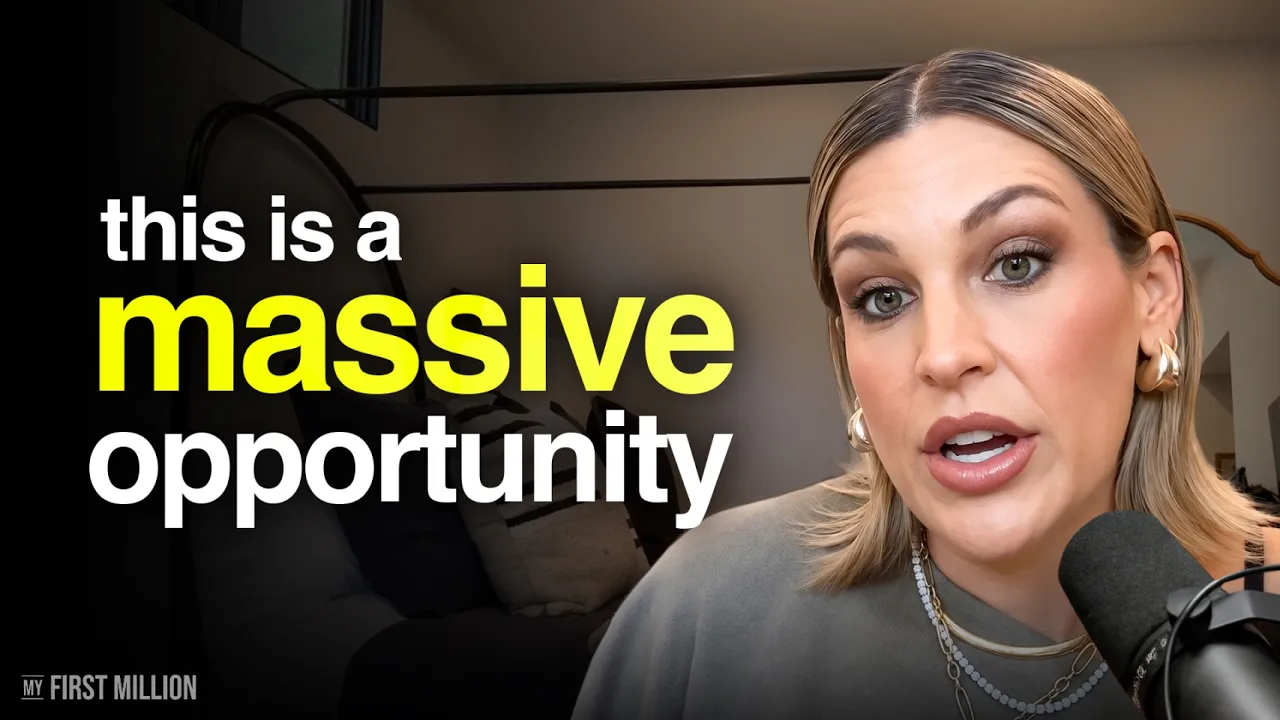
Description
*Sam's database on how long it takes to become a millionaire:* https://clickhubspot.com/rx72 Episode 855: Sam Parr ( https://x.com/theSamParr ) and Shaan Puri ( https://x.com/ShaanVP ) talk to Allison Ellsworth, the founder of Poppi. — Show Notes: (0:00) Poppi, brand glow up of the century (2:25) failing into confidence (8:00) behind the scenes of Shark Tank (10:22) Investing $70M in branding (12:05) the genius of Rohan Oza (14:24) the economics of super bowl commercials (18:26) Brand Positioning Masterclass (25:09) hiring gen z (26:38) IDEA: Protein anything (31:19) IDEA: lymphatic massage (38:09) IDEA: Sleep health powder (43:20) What’s it like to be rich? (49:19) Inside selling to Pepsi (57:34) dealing with post-exit depression (1:08:37) $1M vacation — Links: • Poppi - https://drinkpoppi.com/ • Josie Rushing - https://josiesrushing.com/ • Orion - https://orionsleep.com/ • Nello - https://drinknello.com/ • Preston Lane - https://www.onprestonlane.com/ • Blue Land - https://www.blueland.com/ — Check Out Sam's Stuff: • Hampton (joinhampton.com): My community for founders. Average member does $25m/year. Many of the guests are members. Get after it...apply: http://joinhampton.com/mfm — Check Out Shaan's Stuff: • Shaan's weekly email - https://www.shaanpuri.com • Visit https://www.somewhere.com/mfm to hire worldwide talent like Shaan and get $500 off for being an MFM listener. Hire developers, assistants, marketing pros, sales teams and more for 80% less than US equivalents. • Mercury - Shaan uses Mercury across all of his companies. you can too: http://mercury.com/ Mercury is a fintech company, not an FDIC-insured bank. Banking services provided by Choice Financial Group, Column, N.A., Members FDIC • I run all my newsletters on Beehiiv and you should too + we're giving away $10k to our favorite newsletter, check it out: beehiiv.com/mfm-challenge My First Million is a HubSpot Original Podcast // Brought to you by HubSpot Media // Production by Arie De
Summary
Generated by gpt-5.6-terraAt-a-Glance
- Verdict: Skim
- Core thesis: Poppi's $1.95 billion Pepsi exit came from pairing a mass-market, emotionally resonant product position with digital-first distribution, relentless brand investment, and deliberate timing around the constraints of beverage distribution and M&A.
- Why it matters: It is a strong case study in how positioning, cultural fluency, founder-led content, distribution strategy, and capitalization can compound into an unusually fast consumer-brand outcome.
- Best use: Use it as a consumer-GTM and exit-strategy case study; focus on the positioning, TikTok, capital allocation, distribution, and sale-process segments rather than the lifestyle and wellness discussion.
Executive Summary
Allison Ellsworth describes turning Mother Beverage, an apple-cider-vinegar drink sold at farmers' markets, into Poppi: a broadly positioned “better soda” brand that Pepsi acquired for $1.95 billion. The company launched its rebrand on March 3, 2020, then reportedly grew from roughly $3 million in first-year revenue to $22 million, $50 million, $200 million, and ultimately more than $500 million in roughly four and a half years.
Her central operating argument is that brands should not lead with functional ingredients or niche health claims if consumers actually want a familiar mass-market experience. Poppi began by emphasizing gut health and prebiotics, but it won when consumer behavior showed it was being consumed as soda. The team changed packaging and messaging from “be gut happy/be gut healthy” to “soda’s back better than ever,” preserving the product benefit while making soda—not wellness—the entry point.
The growth playbook combined an unusually early founder-led TikTok strategy, a digital-first orientation that created demand beyond coastal health hubs, and a willingness to spend aggressively on brand awareness rather than optimize short-term profitability. Poppi was intentionally unprofitable until near its sale, raised roughly $70 million, and treated Amazon primarily as a household-reach and awareness channel rather than a margin engine.
The exit discussion is especially useful for category-specific strategic planning. Ellsworth argues that beverage companies eventually need access to a major distributor’s route-to-market and contract network; Poppi had 180 distributors before Pepsi and could not access many venues controlled by Coke or Pepsi contracts. At more than $500 million in revenue, the founders re-opened buyer conversations before becoming too large for the limited buyer pool, ultimately accepting Pepsi’s full-company acquisition rather than a staged minority-to-majority deal.
Key Takeaways
- Claim: The decisive move was repositioning an ingredient-led health beverage as a better version of conventional soda for a mass audience. | Evidence: Poppi began as Mother Beverage, focused on apple cider vinegar, prebiotics, and gut health. The company learned that customers used it in soda occasions, changed its front-of-pack message from “be gut happy/be gut healthy” to “soda’s back better than ever,” and built around familiar cola, root beer, and cream-soda flavors. | Implication: For mass-market offerings, lead with the established consumer job and emotional association; put differentiated functional benefits later in the discovery journey unless the benefit itself is the primary buying trigger. | Caveat: The speaker frames this as a CPG and food-and-beverage lesson; it does not automatically translate to categories where buyers need technical proof before emotional affinity.
- Claim: Founder-led, experimental TikTok created a demand-generation advantage before it became standard CPG practice. | Evidence: Ellsworth spent nights and weekends making dances, recipes, transitions, and other native TikTok content until Poppi went viral. She says the brand reached markets such as Fargo, Cincinnati, Houston, and other non-coastal cities earlier than a typical better-for-you brand that would expand inward from Los Angeles, New York, and Miami. | Implication: Early adoption of an underpriced attention channel can reshape geographic rollout; treat founder content as market sensing and demand creation, not merely a social-media add-on. | Caveat: This was partly a timing advantage from using TikTok during its “wild, wild west” period; the platform is now more crowded and the tactic alone is less differentiated.
- Claim: Poppi chose brand awareness over near-term profitability and deployed capital accordingly. | Evidence: Ellsworth says Poppi was not profitable until shortly before its sale, by design. It raised closer to $70 million, reinvested it into Super Bowl ads, TV, creators, events including a 50 Cent pop-up, and other awareness-building activities; Amazon was intentionally used as a marketing and household-reach channel despite weak beverage economics. | Implication: If building a category-defining consumer brand, explicitly decide whether capital is for profitability or share-of-mind, then align financing, metrics, and governance with that choice. | Caveat: This approach required a fundable growth profile, board alignment, and a category where distribution and awareness can convert into durable retail velocity; it is not a general justification for undisciplined cash burn.
- Claim: Large brand moments work only when positioning, distribution, and post-event repetition are already in place. | Evidence: A 30- or 60-second Super Bowl media buy was described as roughly $6 million to $11 million before production and follow-on media. Poppi bought its first Super Bowl slot just five days before the game through a remnant-market opportunity, but had already reached nearly every U.S. grocery store. The campaign said “soda” 17 times and reportedly tripled brand awareness overnight. | Implication: Do not evaluate top-of-funnel campaigns by immediate direct-response metrics alone; use them when supply, retail presence, message clarity, and retargeting capacity can capture the awareness shock. | Caveat: Ellsworth did not provide a complete all-in cost or attributable sales analysis, and the first campaign had limited time for retail and creator activation.
- Claim: Strong brands maintain a stable North Star while continuously updating expression based on consumer behavior and culture. | Evidence: Poppi’s enduring aim was to “revolutionize soda for the next generation” and let people enjoy soda “without all the baggage,” but packaging, language, products, and campaigns were repeatedly adjusted based on use occasions, social feedback, and cultural moments. When consumers criticized a root beer flavor, the company reformulated it, changed the packaging, and publicly acknowledged the feedback. | Implication: Maintain a living positioning document: protect the core category thesis while treating messages, creative, and even product details as hypotheses to be revised from real usage signals. | Caveat: Customer feedback should inform iteration, but the transcript does not explain Poppi’s formal research methods or how it separated vocal online feedback from representative demand.
- Claim: In beverage, exit planning is inseparable from distribution strategy, and the optimal sale window may come before maximum standalone revenue. | Evidence: Before Pepsi, Poppi used a direct-store-distribution model with about 180 separate distributors. Ellsworth says major beverage buyers—Keurig Dr Pepper, Pepsi, and Coke—provide unified truck networks and access to venues and accounts unavailable to independents, including stadiums, major restaurant chains, hotels, and international markets. Poppi re-engaged buyers after surpassing $500 million in revenue because a $500 million company was easier to acquire than a $1 billion company. | Implication: Map strategic buyers and ecosystem bottlenecks early. A founder should assess not just valuation upside from further growth, but whether scale narrows the buyer universe or forces an undesirable independent path such as an IPO. | Caveat: The “three plausible buyers” logic is specific to the U.S. beverage category and its concentrated distribution architecture.
- Claim: Founders should de-risk personal finances before an exit and evaluate deal structure beyond headline valuation. | Evidence: Ellsworth recommends founders begin estate, trust, and gifting planning around $5 million to $20 million in company revenue. Poppi’s founders sold some secondary shares before the exit, which provided a safety net and funded lifestyle improvements. Pepsi’s offer to acquire 100%—rather than first buying 30% with future performance conditions—and to employ willing Poppi staff were decisive considerations; 99.9% of employees reportedly had equity. | Implication: Treat liquidity planning, employee outcomes, acquirer fit, and contingent-payment risk as core deal variables rather than subordinate details behind enterprise value. | Caveat: Tax, trust, secondary-sale, and estate decisions are highly jurisdiction- and cap-table-specific and require qualified legal and tax advice.
Detailed Brief
How Poppi built a culturally fluent brand organization
- Claims: Ellsworth sees brand as an operating discipline, not a visual layer: even Costco variety-pack flavor selection was evaluated partly by whether the package colors created enough shelf impact.; She argues that brands should move at the speed of culture by tracking meme language, social conversation, calendar tentpoles such as Coachella and the Grammys, and geographic cultural hotspots.; The company intentionally hired young Gen Z employees and trusted them to interpret live culture rather than treating them as execution-only staff.; Her practical theory of confidence is exposure-based: repeated public embarrassment and failure make future founder visibility easier.
- Evidence: The original Mother Beverage brand and Shark Tank appearance are presented as visibly less polished than the later Poppi identity, reinforcing the claim that the team learned through public iteration.; Ellsworth says Poppi made native TikTok content that could initially look foolish, including dances and transition videos, because the potential learning from virality outweighed embarrassment.; When the root beer flavor received negative feedback, Poppi changed both the product and packaging and converted criticism into public content rather than hiding it.
- Caveats: Culture-led decision-making can become trend chasing if it is not anchored to the product’s durable category role and consumer need.; The transcript offers founder intuition and anecdotes rather than a replicable measurement system for deciding which cultural signals matter.
- Implications: A brand team needs a deliberate cultural-intelligence loop: collect emerging language and behavior, make fast creative and product decisions, then test whether those changes improve real consumer adoption.; Founder willingness to be visibly wrong can accelerate learning when paired with an organization capable of turning feedback into revisions.
Second-act and founder operating lessons
- Claims: Ellsworth believes the strongest company ideas usually begin with a personal need but must expand into a mass use case; she contrasts narrow apple-cider-vinegar demand with the much broader soda occasion.; Her CPG heuristic is that an offering can win by being 10% to 15% better than the established norm, not necessarily 10x better, when it preserves a familiar emotional ritual.; She warns that entering a trend late is possible but harder: a later entrant must be materially smarter or different. She cites Grüns’ gummy format as an example of innovating after the Athletic Greens-style greens-powder boom.; After an exit, the loss of a decade-long mission can be real even when financial outcomes are positive; Ellsworth rebuilt meaning through family, friends, wellness, and eventually a new company.
- Evidence: She identifies protein and creatine as crowded current trends and says first- or second-to-market entrants generally have an easier path.; Her next company is undisclosed, but she says it arises from a personal need, will aim at a mass audience, and is informed by her experience losing 60 pounds on GLP-1 medications.; She and the hosts describe the exit itself as more relieving than instantly transformative, since daily life and work obligations continue after funds arrive.
- Caveats: Her wellness discussion, including GLP-1 use, lymphatic massage, supplements, and sleep products, is personal experience rather than medical or scientific guidance.; The 10% to 15% heuristic is explicitly offered for hard CPG categories such as food, beverage, and beauty, not software or infrastructure products.
- Implications: For consumer-product ideation, prioritize a broad existing ritual with an emotional attachment, then identify a credible improvement rather than inventing a niche behavior from scratch.; Post-exit planning should include a purpose and lifestyle design process, not solely wealth-management mechanics.
Advice on accessing experienced operators
- Claims: Ellsworth’s blunt advice is that founders should not ask accomplished operators to “pick your brain”; they should arrive with a precise decision, constraint, or question.; She distinguishes giving useful advice from doing someone else’s work, and says she allocates time and investment attention selectively because time, not money, is her scarce resource.
- Evidence: The host recounts emailing former Y Combinator president Michael Seibel for a vague meeting and receiving the immediate reply: “What’s the question?” He realized he wanted reassurance and association more than a specific answer.; Ellsworth says that when she replies asking for the actual question, many people never respond.
- Caveats: A narrow question improves advice quality but does not substitute for relationship building where a longer-term advisor, investor, or operating partner is genuinely needed.
- Implications: Before requesting senior attention, write the decision context, what has been tried, the exact question, and the form of answer needed; this makes an asynchronous reply possible and demonstrates seriousness.
Notable Concepts & Terms
- Digital-first CPG: Poppi used online attention and demand creation—especially TikTok—to expand nationally before relying solely on a conventional regional retail rollout.
- Brand awareness as the primary KPI: The company prioritized becoming mentally available and culturally recognizable over immediate conversion efficiency or short-term profit.
- Living positioning document: A stable brand North Star paired with continuous revision of messaging, packaging, and creative as culture and actual use occasions evolve.
- DSD (Direct Store Distribution): Poppi’s pre-acquisition model of using roughly 180 regional distributors to get product onto retail shelves, creating complexity and limiting access versus a major beverage network.
- The red, blue, or purple truck: Industry shorthand for gaining distribution through Coke, Pepsi, or Keurig Dr Pepper; access to one of these systems can unlock retail, foodservice, venue, and international reach.
- Two-step acquisition: A buyer initially purchases a minority stake, with later ownership dependent on milestones; Ellsworth preferred Pepsi’s full 100% acquisition because it avoided future performance contingencies.
- Secondary liquidity: Founders sold some shares before the final exit to reduce all-or-nothing personal financial exposure and gain more freedom to take long-term business risks.
- Serious person: The hosts’ informal description for someone whose commitment and persistence are evident even before their strategy or starting point is correct.
Operator Notes / Why Ken Should Care
- For any consumer-facing product, audit whether the homepage, packaging, and sales narrative lead with a niche mechanism or the broad existing job customers already associate with the product.
- Build a recurring positioning-review process that combines behavioral data, support and social feedback, cultural signals, and a decision log of what messages or product elements changed and why.
- If considering a large awareness campaign, require a pre-launch checklist covering distribution availability, category-language clarity, retail/partner activation, follow-on media, and a measurement plan beyond last-click conversion.
- For businesses with concentrated strategic buyer ecosystems, maintain an early buyer map and identify the revenue/scale range at which an acquisition becomes harder rather than assuming larger is always safer.
- Review founder financial-risk planning before a liquidity event: secondary policy, estate/tax structure, employee equity participation, and deal terms involving earn-outs or staged ownership.
- Standardize outbound requests to advisors, investors, and senior operators around a one-paragraph context, explicit decision, specific question, and requested response format.
Source/Metadata
- Title: Brutal startup advice from a $2,000,000,000 founder
- Transcript words: 22003
- Duration seconds: 4460
- Timestamp note: No reliable timestamps or chapter markers were present in the supplied transcript; the transcript also contains substantial duplicated passages near the end.
Transcript
First time we did a Super Bowl, let me lay this down for you. We bought the Super Bowl five days before the Super Bowl. Literally. Sam, you want to do an intro real quick? Yeah, so you and your husband are one of the fathers of Poppy, which he sold for $2 billion. And I would have to say you probably win the award for brand glow up. Because one of my favorite things to watch is this old Shark Tank video of you guys. So good. And the way that it started and where you are now, that gap is huge. Yeah, what was it called originally? Mothers or something? Oh, so embarrassing. You had to say it out loud. Mother Beverage. And yes, I think it was a glow up of this century, the best of all time. What was the story? It was just one of those beautiful entrepreneurial American dream stories where you start in your kitchen because of a personal problem. I had tummy problems with drinking apple cider vinegar, hated the taste. I was like, I have an idea. I can make this taste better. Little did I know how intense beverage is. Looking back, I don't think if I knew what I knew now, I would have done it. And not knowing is just such a beautiful thing. But you were selling something at a farmer's market that was curing your own problem. And I think you did that for more than a couple of years. And then you hooked up with the guy who was like, hey, this is amazing, but why don't we tinker with the packaging a little bit? And then you raised a little bit of money, and it was off to the races. It was zero to 20 million to 60 million to 120 or something crazy like that. Was that even crazier? I have to ground you in timeline. So we did do two years at the farmer's market and then went on to Shark Tank, got a deal on Shark Tank, and went through a whole rebrand. And then we decided to launch Poppy March 3, 2020, the first week of COVID. And it was the first time everyone was thinking about their health and wellness. It's the first time people were looking at labels and wanting to understand what they're putting into your body and how can I boost my immune system and all of these things of the conversation. And so that first year, I think we did about 3 million in revenue. And then the next year is $22,50. And then the big jump was from 50 to 200 million and then 500 plus to then be sold. So it's like four and a half years to almost $550 million, which is crazy growth. Did you ever feel imposter syndrome doing that? Because whenever I have a little bit of success, I'm like, oh man, is this real? This is wild. But our success was a lot slower than yours. We were just going so quick. It was hard to even sit back and realize or fathom what was happening because it was so not normal. People don't understand what we had and what growth we had is not normal. It was truly lightning in a bottle. And so I don't know if there's imposter syndrome because I'm very confident. We were confident in what we were building, but it wasn't a guarantee, right? And so it's this thing of, do I celebrate? Well, it's too soon to celebrate. So when we finally sold, it definitely was like, wait, what just happened? That was four and a half years, five years of this crazy growth. And I don't think I ever stopped and smelled the roses. Did you, when there's a movie and they always have act one of the movie as the main character and they're stumbling and fumbling and struggling, and then they finally start to figure something out? Act two is always the montage where things start happening fast and furious. And that's the growth phase that you're describing. But they usually figure one or two things out, right? One or two things start to really work. And then they lean in and double down into those. And it's the thing that makes all the other dominoes fall. So for you guys, you're saying timing was obviously beneficial, but what were you guys doing as entrepreneurs or founders? What were the key dominoes that started to fall? Yes. We were one of the first founder-led brands to really lean into TikTok. And back then it was the wild, wild west. And you were doing dances. You were doing recipe videos. You're literally doing all these fun transition videos, almost making a fool of yourself to try to go viral. Because I had this personal obsession with TikTok. And it's funny, I know you guys have had Rohan on, and I remember him being like, Alison, that's for young kids and dancers, and don't try. And he wasn't against it by any means, but no one really got that platform. And so I was like, okay, I'll spend my nights and weekends and I'll play around on it until we finally went viral. And we had a lot of success on the platform, and I think it was a really big key driver in why we grew so fast. Because typically, if you're a better-for-you brand, you blow up in LA, New York, Miami, these major hubs, and then you grow inwardly. But when you grow up with a digital-first mindset within the business from core day one, we had people like, I think at one point one of our top targets was Fargo, North Dakota, and all of these, like Cincinnati, Ohio, Houston, Texas. And so when you're a true digital-first brand, you can really break through and go to more places quicker. It's a modern field day marketing type tactic, right? Do you want to stand in a Whole Foods and give away 30 samples? Or do you want to do something and educate and put paid behind it and push your ads out organically to the FYP page and get 300,000 people to see it? And so I think that was a really big thing that made us different than other brands. Now everyone's doing it, right? It's part of everyone's marketing mix. But I think another really big one is we were brand first. So our number one KPI was brand awareness. How do we truly build a long-lasting generational brand with every ounce of every decision that we did? Down to if we were like, what should be our variety pack at Costco? And the data was saying it should be root beer, this cream soda, and cola. And I'd be like, well, those colors don't look good together. And our buyers would be like, wait, what? And I'm like, no, no, no. It has to be vibrant on the shelf. It has to jump. Every decision that we had was brand first, digital first. And it's easier said than done. I say this like it's common sense, but a lot of people still don't do these things. You have this energy that I've seen with a lot of my very successful friends, particularly the women, where they basically are like a bull in a china shop, which both men and women are. But you've wrapped it in a much more appealing package. A lot of my friends who are bulls in the china shop, I look at them and I'm like, you're kind of a wreck, but you're probably going to figure it out. But when I watch your stuff on Instagram, you're very relatable, even though you're crazy successful, and yet you still have this attribute where it's like A is here, B is here, the straight line, and just go and run as fast as you can. Yeah, well, I think it's confidence. So people ask me all the time, Alison, how are you so confident? I'm confident because I failed and made a total fool of myself for so many years to figure out what works and how to be confident. For example, everyone sees this $1.95 billion exit, but they don't see or remember me standing at a farmer's market at a folding table saying, try this apple cider vinegar drink. That's so embarrassing. And so it's this ability of, I have lived the American dream as raised by a single mother, kids myself. At the end of the day, even post-exit, I still have soccer practice tonight I have to go to, and we're in Texas and it's 100-degree weather. I'm just living life. And I think within it, it was relatable with people online because they saw themselves in me. And then that confidence piece is, I wasn't always that confident, but I think I've just allowed myself to share so openly and authentically the entire journey. And so people have seen the journey of me becoming confident as well. How'd you get on Shark Tank? For example, everyone sees this $1.95 billion exit, but they don't see or remember me standing at a farmer's market at a folding table saying, try this apple cider vinegar drink. That's so embarrassing. And so it's this ability of, I have lived the American dream as raised by a single mother, kids myself, end of the day, even post-exit. I still have soccer practice tonight. I have to go to, and we're in Texas, and it's 100-degree weather. I'm just living life. And I think within it, it was relatable with people online because they saw themselves in me. And then that confidence piece is, I wasn't always that confident, but I think that I've just allowed myself to share so openly and authentically the entire journey. And so people have seen the journey of me becoming confident as well. How'd you get on Shark Tank? What was the story? I think the best way to become successful is to see how other people did it, whether you're going to copy them or just use it as inspiration, because then now you know what's possible. So starting at the age of 24, I did this relentlessly, and I was very methodical about it. And I created a spreadsheet where I tracked roughly 50 people who were uber-successful. And I looked at the year that they were born, the year that they started their apprenticeship, and then the year that they started the first thing that made them successful, finally, the year that they broke through. And I aggregated all this data along with the stories of what they did to be an apprentice and what they did to finally break through. And I put it together in a database. And HubSpot went and found this thing that I frankly even forgot about, but it did change my life. And they resurfaced it. They made it even better. And they put it into a thing that you can download for free right now. So if you click the link in the description or click the QR code right here, you can see this database that I made when I was 24, and it changed my life. And so if you're looking to become successful or you're already successful and just want some more inspiration, check it out. Shark Tank. We love Shark Tank. It's just such a beautiful, literally, because I've also been on the show, but I've also been a judge on it and seen both sides of the show. And they absolutely want people to get deals. They want people to be successful, and they have such good intention. And so the whole process of it is, if you have a good idea and you actually have some kind of proof of concept, you will probably have quite a bit of success on the show. And so for us, it was one of those things that we'd been doing it for a bit. Mother Beverage, at the time, we had done about 500,000 in revenue. And it was that point of, if we don't get investment, we can't sustain this, right? We were working 80 hours a week. We had a kid, a kid on the way. Steven was working a second job just to pay our mortgage. And you can only be in that rat race for so long. And so Shark Tank was just this beautiful opportunity. So we stood in line, poured our hearts out, and the producers fell in love with us. And then going on, we were so blessed to have gotten a deal with someone that's so good in beverage, right? The things that have happened to us over the years, these doors that have opened, it's just kind of crazy. So we got a deal with Brohanoza. He had a great history in beverage. And so working with him and building it, but Shark Tank, I don't think any other shark would have given us a deal. What was the, Sean's in the e-commerce space. We've had a bunch of people in e-commerce. I've not been in it personally, but I've been able to live voyeuristically through these folks. And what it seems is the faster you grow, the more cash flow sucks in terms of inventory management. And there's a lot of issues where the top-line number is amazing, but some of the other stuff is kind of breaking. Were you cash-flow positive the entire time? And what was that like? I don't think we were profitable until right before we sold, but it was intentional. I think we could have starved the business and really focused on conversion and how do we really be profitable. But if you're brand building, it's expensive. It's expensive to do a beverage. So every step of the way with the board, the senior leadership, the founders, we were intentionally reinvesting back in the brand and raising the entire time, right? Was it 40 total? I think it was closer to in the seventies. And do you, you spent all of it? Yeah, absolutely. We bought multiple Super Bowl ads. We're running TV. We are marketing with creators. We are doing pop-ups with 50 Cent, right? All of these big brand-building activities are so different. We aren't a traditional D to C company. We're actually not a D to C company. We were 100% on Amazon from day one, which was a decision we made as a board to do that. And it was such a good decision, but you don't make a lot of money on Amazon as a beverage. And so we saw it as a great marketing tactic for awareness because it's in so many households across America. So all of these decisions were intentional. And I think people don't get, if you want to be successful, you have to put your money where your mouth is. You mentioned Rohan. He came on the pod. I was kind of blown away. I think that guy's awesome. I've heard about him from a few other people that he's invested with. And I think he's kind of a bit of a savant with marketing or beverage. I don't know what, I don't know the way to describe it, but this is just me from the outside. I'm curious, from the inside, what was something very useful or insightful that he did or taught you guys about or helped guide you guys towards? I think it's in different stages of the business. In the early days, it was the money and the connections, right? I think that if you are taking on capital or any kind of investment and you can't get that network, that's actually meaningful network, it's pointless. Because now you have all this money and you spend it, and you don't have, what am I doing here? So he helped us get our first five hires within his network that were incredible and with us to help the exit, right? That was a huge impact on the business. On top of it, he has this woman, Stevie, he's worked with for 15 years. And he might've mentioned her on the podcast, but she is just brilliant in brand positioning and messaging. And she's the one that did all the rebrand with us from Mother to Poppy. So being able to bring that to life really early on allowed us to then focus on the brand. So what I mean is, when we're in Mother, we were so focused on putting caps on bottles, I couldn't even have thought about what the marketing strategy was. But when we got a deal on Shark Tank, we took nine months off, we went through, we did a rebrand, and we asked ourselves, who is this product for? Who is our consumer? We stepped back, what are we doing here? Then we went out and started selling. So then when we were selling, we knew who we were. A lot of brands don't do that work. They're just constantly concerned with, how do I get the next sale? How do I get the next account? Not, why am I here? Why am I doing this? What is my cam? They're not asking these questions. And so I think we allowed ourselves to have time with this. And then I think as the stage of the business grew, Rohan then started really trusting the team. We brought in incredible senior leadership. So it moved over to more of a board-like role. He was always heavily involved throughout, great in the brainstorming conversations and all. But as the business grew, we hired really smart people, people smarter than me, to come in and really advise. Hey, what's the economics of a Super Bowl commercial? You guys did, did you guys do two or one? We've done a few too. What people don't realize about a Super Bowl commercial is, sure, there's the media buy, but then there's the production buy. And then there's the sustaining after the Super Bowl. It depends on if you do a 30 or 60. They're anywhere from six to $11 million. It's the standard price for everybody. But what is the cost if you're going to hire a director, a film crew? And then how do you sustain that after? So you hit people at the Super Bowl with a Super Bowl ad. You got to hit them about seven more times with more linear ads, right? And so that you have to also invest in. So I think you also have to have distribution. in and really advise. Hey, what's the economics of a Super Bowl commercial? You guys did, did you guys do two or one? We've done a few too. What people don't realize about a Super Bowl commercial is, sure, there's the media buy, but then there's the production buy. And then there's the sustaining after the Super Bowl. It depends on if you do a 30 or 60. They're anywhere from six to $11 million. It's the standard price for everybody. But what is the cost if you're going to hire a director, a film crew? And then how do you sustain that after? So you hit people at the Super Bowl with a Super Bowl ad. You got to hit them about seven more times with more linear ads, right? And so that you have to also invest in. So I think you also have to have distribution. It's pointless to do it if you're in five stores. At the time that we did our first Super Bowl ad, we were finally in almost every grocery store in the nation. We were really focused on our awareness goals and how do we up the awareness with Super Bowl. I remember we did it, and the day after, we tripled our awareness overnight, and no one had really seen us as a soda. They were like, oh, there's sparkling water or better-for-you this. After the Super Bowl, we said we were soda 17 times in that Super Bowl ad. Afterwards, everyone thought it was a soda. So there was a lot of intentional motion behind why we did that. And it was breakthrough for us. Well, do you remember the all-in costs? And then was there analytics live and looking at your website traffic? What was that like? First time we did Super Bowl, let me lay this down for you. We bought the Super Bowl five days before the Super Bowl. Literally. That must have been stressful. So that's not normal. Most people buy it a year ahead of time. And so what happened is we'd done a bunch of brain work. We put together a creative campaign on how we're the future of soda, or future of soda is now, and called Poppy. And we brought this creative to life, and we saw it, and it was just going to be an evergreen brand campaign that we were going to run across all of our linear media channels and streaming. And we saw this piece of content. It was very anthemic. It was beautiful. It just told the story of soda and the evolution of it. And we're like, wait, this is a Super Bowl ad. We went to go buy one. You can't just buy a Super Bowl ad right before. But what big companies do is they'll buy a bunch of Super Bowl ads, say for a bunch of their brands, and sometimes they end up not using them at the end. And they'll go on the market for secondary buy on the remnant market. And we found one. I was at a dinner with someone at a TikTok event, and they're like, I think one of my brands has one. And I was like, oh my gosh, can I get him on with our CMO? And our CMO at the time, Andy Judd, went back and forth with them, and we bought it. And we're like, okay, now how do we activate? Because we can't activate in store. So it's really hard to talk about the all-in cost because typically there's store activation, there's creator activation, there's the media of it all. There's website, there's production. We didn't get to do any of that, honestly, with our first Super Bowl. And then the second time around, we did it with Charlie XCX. And it was one of these moments where we wanted to just have a fun time with it. So it was all about the vibes within it. It was just vibes. And early she said that was the tagline. There was just Poppy vibes. And so we're just different. We're not super concerned with all of those little aspects that you're asking. And I honestly don't even know the full number. I'm sure if I asked our CMO, he would. Sean, how does that make you feel? Because a bunch of our friends who are in e-commerce, and probably many of the ones that are significantly less successful than the greats, are so CAC-driven and so metrics-driven. And she's saying the exact opposite. Well, look, that's why we do the podcast, because there's a thousand different ways to win. And so we like inviting people on to understand how did you win? What did you do? How does your brain work? That's part of the beauty of it. But also they're not in e-commerce. They're CPG. They're in retail. And so I was just looking at the Super Bowl ad, the first one you were talking about. And it starts with, you're a human on earth, and in all of human existence, things have been done a certain way. And soda has been done a certain way. This is Poppy. Poppy looks like soda. It tastes like soda, but then it has the differentiator at the end of it. And so I dig that. I think positioning is super underrated. I don't think most founders know how to do positioning at all. I think they jump straight into trying to go sell, sell, sell, but they haven't done the upfront work of figuring out, well, how is this going to live in someone's mind? And why would anybody want to buy this? Because they don't care about you. And you have to fit into their worldview in some unique way to break through, to make all the selling more effective. And so what I really like is the name, the brand, the packaging, the positioning. You guys did a masterclass on that. And I think that's a pretty underrated founder skill. I don't think many people do that well. Who do you, do you think people do that well? Or do you think people screw that up? When you walk through the stores, are you just like, oh God, that's wrong, wrong, wrong, wrong? Most people do it wrong. Unfortunately, I teach masterclasses and I go all over and I speak on brand and how you can break through on TikTok and all of these things that are inherently so first experience for me, just second nature. And it's blowing their minds, and then they'll go in and their mind is blown, and they're still not doing it. And I just actually don't get it. So when it comes to brand positioning, it is so core to what we've always done that it is actually always an ever-breathing document. So we knew we were revolutionizing soda for the next generation. We knew we were giving everyone the freedom to love soda at its best without all the baggage. Cool. North star. That is never going to change. But what does change is how culture changes. But can I pause you real quick? Because you're saying we knew we were going to revolutionize soda, but the Shark Tank thing is a really interesting thing because you were on there with a brand that was not that great. Packaging that was not that great. Not talking about soda. So something happened in that nine months after the Shark Tank deal where you guys had some sort of rebirth and some conversation in a meeting room somewhere where somebody asked some good questions and somebody had some good answers. So can you describe what was happening in those meetings or what was the useful either question or exercise or consultant or whatever you did that helped you get that level of clarity? And I think it's this ever-breathing document. So when we first launched, it was apple cider vinegar, prebiotics, super simple gut health. We knew we were going after soda. It goes back to nobody believed us. We didn't even know, but hey, we're going to try. This is a huge category. And kombucha was on the decline. Sparkling water wasn't giving everyone that full flavor, soda feeling that they wanted. So we knew all of those things are the facts that we know. And what we knew is once we launched, people were starting to have this use occasion where they were drinking Poppy in the same occasion as soda. And so it was, we got more data points along the way. So I sit here and joke with, we're brand-forward. We were actually incredibly sophisticated in our platforms and our processes as well, which made us, I think, such a strong company. But I do think then we learned, oh, wait, this occasion. Okay. So on the front of our packaging, our tagline used to be, be gut happy, be gut healthy. We're like, wait, people don't really care about that that much. We changed it to soda's better than ever. We were constantly tweaking and changing as the consumer was changing in the use occasion of what people were saying about us online, what we were listening to from our consumers. And that's what I mean within building a good brand, is focusing on what you know, what's your North Star, but then you can change, you can change. And so it was, we got more data points along the way. So I sit here and joke with, we're brand forward. We were actually incredibly sophisticated in our platforms and our processes as well, which made us, I think, such a strong company. But I do think then we learned, oh, wait, this occasion. Okay. So on the front of our packaging, our tagline used to be, be gut happy, be gut healthy. We're like, wait, people don't really care about that that much. We changed it to soda's back better than ever. We were constantly tweaking and changing as the consumer was changing and the use occasion of what people were saying about us online, what we were listening to from our consumers. So, and that's what I mean within building a good brand, is focusing on what's your North Star, but then you can change, you can change. And it's really hard for entrepreneurs to change, by the way. Well, what I've noticed is that, have you read Peter Thiel's Zero to One? Okay. So he has this whole chapter or chapters on moats, and he's like, one moat is, I forget what he says, network effects, this or that. And then he gets to the last chapter and he's like, there is one more moat. It's called brand. I know it's important. And I also know I don't know much about it, so I'm not going to write about it, but if you can figure it out, you're going to be amazing. And it's kind of funny because it's a stereotypical Silicon Valley thing where it's like tech and product is number one and all the other stuff, like brand, is number two. And Sean has talked, Sean loves comedians and the creative process. And we talk about this idea of being sensitive and how you have to be sensitive in order to find good stories. You have to be sensitive when you see what resonates. And something that I've learned about branding, and I'm not good at it, I'm trying to learn, is that you do have to be very sensitive. And so you're talking about these things I've noticed, and you're making very small observations, or they feel small. You're talking to maybe, let's say, 50 people over the course of a day at a farmer's market or whatever. And you're noticing, actually, people care about X, Y, and Z. And those small changes appear to have, in some way, created this massive outcome along with a bunch of other stuff. And I think that's what's interesting. Is there an 80-20 rule where it's like if you focus on these handful of things, it will make a meaningful difference? I think it goes back to, I've said this before, but it's this ability or this thing around embarrassment. I think embarrassment is the most underexplored emotion when it comes to being successful in life. I think a lot of people say to themselves, oh, I want to go pitch this idea in a meeting. But what if I sound stupid? Or I want to start a business, but what if no one cares? Or I want to make a TikTok, but maybe I'll look ridiculous and people will think weird of me. But I think, to your point, with all of these little moments, I hear, what if I am successful? What if I am viral? What can I learn about my product? And then, okay, you hate it. Tell me why you hate it. Okay, well, for example, we had a flavor, root beer, that we launched. And packaging we never really loved because we were a really bright company across the rainbow effect of all these colors. And we had root beer, and it was brown. And I was like, ugh, but such a core soda flavor. And so I was like, okay, we got to figure out how to do this. And our consumer was telling us it tasted horrible. And we were like, maybe we should listen to them. And we changed the packaging. We changed the entire flavor. And then we put out online all the bad comments and confronted it. And we're like, hey, you guys made us do this because we listened. And I think a lot of people just aren't willing to do that or put the feels out there or acknowledge when they were wrong. And it's hard because entrepreneurs, we have egos. You don't want to do those things. Was there any book or resource that you read that changed your perspective when it came to branding? No. So, fun fact, help me. I'm severely dyslexic. You could not pay me to read a book. I'll listen to a book. I'll listen to a podcast. I'm obsessed with doing that. But I think it's so funny. I think there's this theory that you have to read all these self-help books. And you have to be on this train of meditation, all these things. I think all that is bullshit. That's not how I live my life. I wake up as my child's hitting me in the head asking for his iPad code and me being like, you. I took iPads away. And I'm trying to get coffee and my kids out the door. I don't have time for that stuff. Because what I do know is I listen to culture. And I was saying that we moved at the speed of culture. What is culturally relevant in society, from social speak to not only social speak, but what are people talking about? Meme culture to tentpoles within society that are culturally relevant. So you look at the calendar. Coachella's a tentpole. Grammys. How do you break through? Hamptons is a hotspot, right? The people that are there during the summer. So for me, with brand, it's so tied to culture. And that was my obsession and my team's obsession. We hire people really young. We love to hire Gen Z smart people that are living the moment within culture. And we trust them, which is also hard for, I think, some people to do. You sent us a list of ideas because one thing we like to do is we like to brainstorm with other founders. And how lucky are we that we get to sit with somebody who's built a multibillion dollar CPG brand and be like, hey, what else is interesting? Maybe you guys are doing a new thing now, but something you won't do, something you don't plan to do, but you think, hey, there's an opportunity there. Because once you start to win, you see all kinds of opportunities in adjacent spaces that you're never going to have the time or energy to go do. What's on your mind? What do you see as opportunities, white spaces, things that you think somebody like you could go, the younger version of you could go, and attack? You know, I always love this type of question of what could you do or what do you want to do next or what's the hottest thing. The beauty of Poppy is we figured it out before everybody else. So, for example, protein is so hot right now. Everyone's trying to figure out how to put protein in, from ice cream to drinks to, you see what David is doing with the protein bar and all of this. And it is really hot. But for me, I'm like, okay, cool. I think it's hot. I'm not going to now go create it. Someone is already first to market on that. And usually winners are the first to second to market. It's really hard for even a third to market to be successful unless you do it different. So you take the AG1 craze, the green craze, right? I don't know if you guys remember, maybe it was like six years ago, we were getting hit with like 300 AG1 ads. You know what I'm talking about? Podcasting was just one long continuous AG1 ad for a while. Yeah, it started with me undies and then it went to Athletic Greens. Athletic Greens. Yeah, and you're just like, oh my gosh, it's everywhere. But I actually feel like they failed to innovate. Then Grüns comes along and does it in gummies and they exit. AG is still not exited. So I'm not here to say you can't be late to the game and still win. It's just way harder. And you almost have to do it better, smarter, and different if you want to be successful. So for me, I think protein's hot. Good luck breaking through the market. It's very crowded right now. I think everyone is also trying to figure out the creatine craze, the gummies. Do you put it in a powder or do it to go? And how do we get women on it, right? Everyone's talking about these things, but it's almost like you need to have been the first creatine gummy. So I'm not here to say, I don't even know what's next other than I am starting another company, and I can't tell you guys what it is. And I do think it's what's next. AG is still not exited. So I'm not here to say you can't be late to the game and still win. It's just way harder. And you almost have to do it better, smarter, and different if you want to be successful. So for me, I think protein's hot. Good luck breaking through the market. It's very crowded right now. I think everyone is also trying to figure out the creatine craze, the gummies. Do you put it in a powder or do it to-go? And how do we get women on it, right? Everyone's talking about these things, but it's almost like you need to have been the first creatine gummy. So I'm not here to say, I don't even know what's next other than I am starting another company, and I can't tell you guys what it is. And I do think it's what's next. So it's hard for me to speak to it. Well, maybe a different question on that. Okay, we can keep it a mystery, but tell us your mindset on it. So are you like, I want to run it back. I know so much. I'm going to go same genre of business. Or, sometimes people are like, oh my God, so much scar tissue from that. Now I want to go do real estate. I want to go do something so different over here. How are you thinking about it? Because I think every entrepreneur, on their second act, their third act, they get to decide. So what's crazy is obviously we exited the company, and then Pepsi gave everybody jobs that were Poppy employees, but you don't sell your company and then they're like, hey, here's your employee badge. So me and Steven stayed on as advisors. But as an advisor, you have to take a step back from the day-to-day of the business. And I still adore Poppy, and I'm just so happy for everything that's happening there. But I have a lot more time on my hands. And I'm just really intense. I'm really hyper. I love chaos. And we went six months. I played golf and we went on vacation. I hung out with my kids. Ugh. And it was just this whole thing where you're just like, oh wait, I miss the team. I miss the build. So we always knew we had something else in us. But I do think, to your point, it's very important to, whatever we do next, I want it to be successful and it to be something I do because I love it. And it's a good idea, not just to do it again. So with it, we came up with a really good idea. It was another personal need, where I think a lot of good ideas come from personal needs, right? That passion within versus I read the data and there's a gap in the market and the white space is this. And you're like, ugh, boring. So for me, it was very personal. And it's also mass. So I think a lot of people, with starting a company, they try to get a little bit too niche. And apple cider vinegar mother beverage was really niche. That's a great example. It was for people that, my grandma told me I should drink that, or, yeah, that does help my tummy. But the second we switched this exact same liquid over, we changed positioning and the need state and the occasion to soda, it blew up. And so I think that whatever we do will be mass and really catered to all demographics while honing in on a particular creative demographic. What's, okay, so we asked you for some, we asked you about this topic in advance, and you wrote down a word that I keep seeing. I don't entirely know what it means, but you said lymphatic massage. I follow a guy on Instagram, and every morning at 4:30, he posts these videos of him doing lymphatic jumping. You follow a guy. I'm doing this. I'm laying there with my legs on the wall. Yeah. I'm massaging my lymph nodes. I'm like, I don't know if this does anything. Somebody told me. Lymphatic is the word. I keep seeing. They go, you might feel a little sick at first. That's how you know it's working, which is the ultimate marketing sales pitch. It's like you're trying to get healthier. You might feel sick at first. That's how powerful this is. And I've never been sick from it, but what happened is, I worked for 10 years at Poppy. I think I went to the doctor once, you're just on this build mode. But I was like, oh wait, okay, I need to get my life together on the wellness front. And I started doing all sorts of things, doing longevity doctors and getting all the function health and then you get all this data and you're like, well, what do I do with this? And so for me, I just recently had a surgery with the whole mommy makeover. I had a tummy tuck, and I'm living my best life. And the doctor's like, the number one thing you can do is lymphatic massage. I started doing it after surgery three times a week. I still do it twice a week. But what's lymph? Is that a body, I don't even know. It's the system that helps flush out all the toxins and get everything out of your system. And so the idea behind lymphatic massage is you are slowly working those fluids to your lymphatic system for detox and flush you. So you feel lighter, you feel not as bloated, more energy. You're just getting all of that bad stuff out of your system. But on a scale, woo-woo to proven, with woo-woo being totally fine, that's not an insult, where does it rank? Where's it on that spectrum? I don't think that it's something that there's a lot of science behind by any means. For me personally, I always think personal recommendations are always better. It's been life-changing for me. I mean, there's, you say you're running a marathon, running the New York City Marathon, and he's been having knee pain. I was like, oh, get lymphatic massage. And he was like, for three weeks, he was like, oh my gosh, my pain is gone. And so it just helps the soreness, just all that stuff built up in your body. It gets it out. So I challenge you to go do it. And one of the best people in the space, it really comes from Brazilian lymphatic massage. So this is really big in Brazil. Her name is Josie. And she lives here in Austin. And she does all the stars from Miley Cyrus to Katy Perry to all these people. So test it out, might not work for you. Sam, just go to the spa and ask for a Brazilian and see what happens. I think that'll work. Yeah, I don't know about that. So you talked about you can't announce your company, but can we guess? Can we just take five blind guesses, and in a year we just come back and see if we had it right? Sure. I mean, I won't say anything. You don't have to confirm or deny. You could just say that's interesting. I'm just thinking where you go into. Let me ask you one question. We had Eric Ryan come on. He created Olly gummies and Method soap and a bunch of Welly Band-Aids. And he had this great line where he goes, I walk through the aisles and I look for a sea of sameness. So basically, I'm looking for these sleepy categories where everything looks the same in the aisle. And I want to come and be different. And he said even with the gummy brand, he was like, all of the vitamins look the same. They were all round jars. He's like, so I just knew right away, first note, okay, we're doing a rectangular jar. He's like, is it better? No, but it's completely different. So it's better, therefore. Do you have a similar approach? Do you walk looking for sleepy aisles or a sea of sameness? Is that a heuristic for you, or no, you think about other things? No, for me, it's personal need. So it's like, I think there's this whole new wave of this GLP-1 era that people are sleeping on and not catering to and thinking that it's going to go away. And so I lost 60 pounds on GLP-1s. It's absolutely changed my life. And there was a personal need there. And I think that people, it's not that deep either. I think you make the best brands and the best businesses are 10 to 15% better than the established norm. It's not the niche products, like I said. Can you explain that? Because what I hear all the time in San Francisco is, you got to be 10 times better is the thing. And who can argue with that? Hell, might as well say 100 times better, right? Is that a heuristic for you or no? You think about other things? No, for me, it's a personal need. So it's like, I think there's this whole new wave of this GLP-1 era that people are sleeping on and not catering to, and thinking that it's going to go away. And so I lost 60 pounds on GLP-1s. It's absolutely changed my life. And there was just a personal need there. And I think that people, it's not that deep either. I think that you make the best brands and the best businesses are 10 to 15% better than the established norm. It's not the niche products, like I said. Can you explain that? Because what I hear all the time in San Francisco is the, you got to be 10 times better is the kind of thing. And who can argue with that? Hell, might as well say 100 times better, right? Who doesn't want that? But you're saying something a little bit different. You're saying actually a small angle difference, 10 to 15%, can be enough. Can you explain that? I think with food and beverage in particular, or beauty products, hardcore CPG, I can only speak to that because that's what I know. And I think it's true in that space in the way of, you take soda, for example, everyone grew up on soda. And usually when you say the word soda, you have a memory like movies, late night with family, a burger and a soda. It invokes emotion because there's that long-ingrained nostalgia, something you grew up with. So every marketer's goal, how do you get to the consumer and move the buying power from the head to the heart? They're emotionally connected with your brand. That's what you're always wanting to do with brand building. How do you get someone who's obsessed? So you tap into emotion and you make something that they grew up with just a little bit better, right? That's what we did at Poppy. We have cola, we have root beer, we have cream soda, we have all of these flavors that people grew up with, and we're better, right? And so instead of being like, hey, we're Poppy, we also have ashwagandha and lion's mane and we have 38 other ingredients that nobody actually cares about, versus, hey, we're going to make this 89% less sugar. You're going to get all the same flavors you grew up with, and we're really good. Yeah, sure, we have prebiotics. We're not going to talk about it that much. And that's what I mean, that 10 to 15% better. By the way, I started drinking Poppy so much more when the prebiotic or probiotic messaging was a little bit different. Before, when I used to see it at a Royal Blue grocery store, I was like, is this supposed to be a health drink? I was like, what is this? And there was an evolution of that. Be that happy, but get healthy to soda. We found people didn't care. And that's a perfect example. And we got that from the consumer. And so we just started leaning into our consumer journey, which was we wanted someone to pick up the can and say, this is so cute. We wanted them to drink and be like, holy crap, this tastes amazing. And then to flip it over and be like, wait, this is so good for me too. And it was intentional. And it's an easier journey in versus that niche health consumer. What's this thing that you listed called Nello? Oh, Nello. They're so good. So magnesium. Anything around sleep health is really important as well. I always say, if you're stressed or having a bad day or you want to blow up on an employee or your friend or your coworker and you're just like, nothing a good night's sleep can't cure. But what is Nello? Nello is a powder within the calming space. So it's magnesium, and there's a lot of studies around magnesium and helping you sleep. I'm also obsessed with my Oura sleep system. I don't know if you've seen these, but regular temperature at night, and so my side of the bed is different than Steven's side of the bed. And you can sleep, and then it auto-changes throughout the night and tracks your temperature so that, you know, those nights where you wake up and you're sweating or you're freezing, it tracks that before it happens. So it keeps you in REM. It keeps you in your deep sleep state. And so it's all of these things that I feel like, these calming powders, all of these things to bring you more sleep, have been a game changer for me personally. And they're blowing up. They're everywhere. They're killing it. What are some other little gadgets or drinks like that that you're playing around with or nerding out on, even as a health consumer or a businesswoman who cares about seeing the latest and greatest? I think another big movement that I purchased for my household is called Preston Lane cleaning products. And it's clean. The ingredients are clean. So you're spraying it on your table where your kids are, and you have all these other ones with all these harsh chemicals in it. And so it's like, oh, I'm not. Well, I switched my whole household over to Preston Lane. And not only does it smell amazing, the ingredients are safe, but they also make candles and they make dish soaps. And so it all also looks really aesthetically pleasing in your house. And it matches, versus you have that also, like, Clorox bottle, right? You're like, oh, how do I hide all this, or the Dawn soap? How do I hide all this under the cabinet? And they've done a really good job also with the spray. It's a scent, so your house smells good at the same time versus that Lemon Pledge. Doesn't that go against one of the points you made about how protein is played out? And so it's going to be a lot more challenging, because when I thought about clean, better-for-you soaps or Clorox or whatever, I would have thought that there's one called Blue, Blue, I forget what it's called. Blue something. Blueland. Yeah. And then there's, we just talked about Eric Ryan. His whole thing was how do I create a bottle so cool or pretty that you'd keep it on your countertop instead of hiding it away. But it seems like there are still some pretty cool emerging brands that are popping up because of that. Yeah, I think Blueland is an incredible brand. It's more around how do they reduce plastic and their refillable tablets putting in. So they're taking on the oceans, and they're killing it. So that's a whole other use occasion where it's like, I want clean ingredients that make my house smell good, that look cute on my counter. Sure, you could argue maybe Method, but I still don't think they're that cute. They're not high-end, Florin, Tom Ford-type look, whereas I think Preston Lane is. And it's an affordable price. And they're definitely not anymore. I remember when it came out originally, it was awesome. Now it's old now. It's probably like 20 years old. It is. And so I think that there's still innovation within categories, and they're doing it just 10 to 15% better, right? And if you really look at it, no one else is really doing it in this space right now. And they're pretty new. That's kind of a good guess, Sean, for what she's going to do now. Yes, I think cleaning supplies is somewhat interesting. Cleaning is one guess. I think something like toothpaste, oral care, stuff like that. I mean, she kind of said the GLP-1 thing. Maybe she kind of gave us the hint there of there's a whole ecosystem of, hey, if 100 million Americans are going to be taking GLP-1s and they go to the store and there's a product they can buy to support, boost, or minimize downsides, obviously that's a mega, mega market that's getting created that today the incumbent products just don't speak to. Even if they could help, they're not positioned to be that assistant, the wingman for you if you're on GLP-1. So I've definitely thought about that. It sounds like she's thinking about that. I think that's a huge category. All these things are great, and I can't wait for you guys to find out in the fall, but you haven't guessed it yet. So stay tuned. Okay. The thrilling podcast where we simply guess things that the guest can't answer. I know, right? Really? I don't know. Obviously, that's a mega, mega market that's getting created that today, the incumbent products just don't speak to. Even if they could help, they're not positioned to be that assistant, the wingman for you if you're on GOP One. So I've definitely thought about that. It sounds like she's thinking about that. I think that's a huge category. All these things are great, and I can't wait for you guys to find out in the fall, but you haven't guessed it yet. So stay tuned. Okay. The thrilling podcast where we simply guess things that the guest can't answer. I know, right? Really? I don't know. Well, tell us about making money because one thing I like about you is you're not one of these people who, at least you don't come across this way, pretend that you didn't care about money when you became a business person. This is a really weird taboo that a lot of business people who obviously care about succeeding and want to be wealthy, want to be financially successful, but then they kind of have to pretend they feel like they have to pretend that they're not. And our podcast is called My First Million. We're pretty blunt about, hey, look, one of the main reasons we got into entrepreneurship. Yeah, we like the creativity. We like the autonomy, the independence. But the prize is also really fun. And you guys did fantastically well. Can you tell us what it was like to get rich? Yeah. And I think the number one thing with entrepreneurs, if you can get to that 20 million mark within your business, you should be having this conversation. Maybe even at the 5 million, you probably need to start getting some financial advice. You need to start thinking through your estate planning, your gifting exemptions, and having these conversations really earlier. Because the earlier you do it and you move your shares into trusts and all this, it's just better in the long run for you. So just putting that out there, if you're anywhere between the 5 to 20 million range of revenue for your company, you should be having these conversations. And I think for us, we were blessed to have really good advice early on. And so when you're having these conversations year after year, waiting for this one moment, this exit that may never happen, it's a tough place to be. So for me, I'm like, okay, great, we're there. But I can't think about that. But to your point, absolutely. We wanted to exit. I love that I can have generational wealth for me and my family. It was always the goal, right? And so I think that we also, halfway in, took some chips off the table where we sold some of our shares so that we could upgrade our lifestyle a little bit before and also have a nest egg just in case we don't sell. And I know a lot of founders that haven't done that, and I implore them to do it because I've also heard of people going out of business and they're left with nothing. Well, would you say it kind of works better both ways, right? So there's one side as insurance in case it all fell over, you have the safety net. But the other side, maybe you experienced this, I did for sure, which was you take a little bit off the table, you sort of satisfy that first level, and then you're almost free to swing bigger because you're not all or nothing now. Did you feel that way when you guys did it? I did. And our financial advisor at the time told us, you're never going to regret living the life that you want earlier. Say, I don't know, make a number, it's worth $5 million, and in five years it's going to be worth $20 million. You're never going to regret buying the nicer house, going on the extra vacation with your kids, getting the upgraded car, having the nicer phone. You're never going to regret having those experiences. And I agree, and I wholeheartedly agree with that. That allowed us to then sit back and work harder for, wait, I want more of this, and to dig your heels in and be like, this upgrade in lifestyle is everything. So for us, it was really important. And then the day you actually get the money, you realize your life doesn't change overnight. I think that's another thing that happens, is the money hits the bank account. I'll never forget it because Stephen has his shares, I have mine, and we were like, refresh, refresh, day of. And then my half hit at like 10, and it was still like 2, and his hadn't hit. And I was like, oh, hi, I'm rich without you. And then I finally went to the account, and then we were like, hey, let's go celebrate. Let's go to lunch or go to dinner. I forgot what it was, but we had calls and it was this whole thing. We ended up doing nothing. I sat on Zoom calls the rest of the day, and the next day woke up and we still had to be on Zoom calls. So it was this thing of my life didn't change overnight. Where it does change is where you're spending a year actually making real change within your life. How do I make my life easier? How do I get more time with my kids? What a rich person usually does is hire a housekeeper and have maybe a chef once or twice a week so you're not cooking. Or how do you get help on an executive level, or a nanny? We never got a nanny before, right, before we sold. So it was a lot of these things of this upgraded lifestyle, but knowing I don't want my kids to be spoiled kids. So it's a balance within the lifestyle, and we're still kind of figuring it out. It's still pretty new. Yeah. What type of conversations? I think you said your oldest was 14. Oh, he's 9. So sorry, 9. Four, eight, nine. Yeah. It's crazy. Okay. Well, 9 is just getting to the age where you can start having some observations and questioning certain things. Do you have regular conversations with them? The thing is, they are still little, but the difference is our exit was very public. So we're in every headline, every single one of his teachers, friends, our friends, everybody knows that it was 2 billion. And everyone obviously thinks we took all the 2 billion, which is not true. I remember one time, I think it was like two days after the exit, and once again, I'm dropping my kids off at school in Crocs and socks and my hair in a ponytail. My life hasn't, you know, you're just living life. And a little girl, she was in kindergarten, walked out and she was like, are you a billionaire? And I'm like, oh, we got to have some conversations with our kids. I didn't realize how big it was. So we sat them down and we were basically like, hey, it's ours, not yours. Our lives aren't going to change. We're going to continue to be good people. We're going to continue to be kind and give back and do all that, and not shy away from it. So we got them all Fidelity investment accounts and put a little bit of money in so that they can start learning how to invest. So they have quarterly meetings with our financial advisors, and we're continually having these conversations because we're not naive enough to think that they don't know. What are they investing in? Are they like Micron stock right now? What are they doing? They're like Tesla. I think at the time they were like, we're going to do Tesla, OpenAI, and Apple, Nike. They even wanted Pepsi because they wanted Poppy, all this stuff. And those all sound like great buys. They were great, but we have $5,000 to invest, and you come back and some were down, some were up, depending on what they were doing. It's just more of a learning thing for them, to work for it versus going really big, which I love. He's going to have QSBS at his 15th birthday. Okay, so you do all that. Tell us about the sale because I feel like the M&A process is one of the most important parts of any company. You, as a founder, might do many businesses. You might work on a business for years, but you really only do M&A like 1% of your entrepreneurial journey. So you don't get a lot of reps at it, but it's super important. The value can swing 30%, 50%, based on how you approach that, when you go to market, how you go to market, how you do all that. Was it an easy process? Was it a super stressful process? Were there any great moments in the high-stakes negotiations going on? It's just more of a learning thing for them to work for it versus going really big, which I love. He's going to have QSBS at his 15th birthday. There's a, okay. So you do all that. Tell us about the sale because I feel like the M&A process is one of the most important parts of any company. You, as a founder, might do many businesses. You might work on business for years, but you really only do M&A 1% of your entrepreneurial journey. So you don't get a lot of reps at it, but it's super important. The value can swing 30%, 50%, based on how you approach that, when you go to market, how you go to market, how you do all that. Was it an easy process? Was it a super stressful process? Were there any great moments in the high-stakes negotiations going on? What can you tell us about the story? So there's that fine line, especially within beverage, because once again, my experience in it is you can get too big to be bought, and then you're forced to go IPO. And within beverage, that's not great because then you don't have a distribution partner. And so you're looking at who can be a great distribution partner. There's only three people that can buy you, which is Keurig Dr Pepper, Pepsi, and Coke. And so you're kind of okay, yeah, sure, you could do what Celsius did, and they were able to go public, but Pepsi distributes them and has a small stake in the company. So there are other ways around it, but traditionally that's how it works. Can you explain the distributor part? You need the actual retail entry. You need a manufacturing plant. What do you mean by you need a distribution partner? Because you're obviously doing so well. What is it that they bring at that point that you need? Yeah. So for us, we were a direct distribution model where it's called DSD. We had 180 different distributors pieced together across the US, basically putting us on their truck and putting us on the shelf. So all of that would move over to one person doing it. So we call it the red or the blue truck, right, or the purple truck. So you have purple, which is Keurig Dr Pepper, blue is Pepsi, or red truck. And so our goal is like, oh, great, we can now be on this blue truck. It's one person you're talking to versus the 180 or whatever the number was. And now we have access to so many more things than we did before. For example, we were the official soda of the Lakers and could not be sold in the stadium because it was a Coke contract. We can't be at Madison Square Garden. We can't be at Taco Bell, Subway. You can't be at any of these places. So if you really want to grow, you have to have that distribution arm because of all of those contracts. Think the Marriotts of the world, the international of it all, right? We'd have to build out different international teams. So if you really want to have growth, you need a partner to do this. And so for us, we talked to all three. It depends on timing, what their priorities are within. And the beauty with Pepsi, they're really prioritizing better for you. They're taking their dyes out of a lot of their chips. They were having the conversation and just seeing what's happening with Gatorade. They're taking stuff out of the ingredients of that. So I think that they saw the vision, they saw the data, and they saw a great story and a great team and a great brand. And so they approached us one year earlier before we sold. We were in talks with them, and they gave us a little bit of an offer. It was like, hey, no, I think we can keep going. So we completely stopped talking to them. Didn't talk to them, not even an email, for over a year. And then we opened up the conversations where we hit about 500,000 in revenue. And we're like, okay, if we keep going, this is going to get rough. 500 million? Mm-hmm. Yeah. We had just surpassed the 500 million mark. And we're like, okay, if we keep going like this, say we double the business and we keep going, we should probably reignite some of these conversations because it's a lot easier to buy a 500 million dollar company than a billion dollar company. And there's less buyers, and it's the whole thing. And look, we're having these conversations, and it's always about timing. And Pepsi came to us, and they're like, hey, we see what's happening here. This is incredible. I know we haven't talked in a year, but we want to re-engage the conversation. And after that, it just was really simple because they offered to buy 100% of the company. A lot of times they'll do a two-step deal where you buy 30% and you have to hit certain markers, and then they'll buy 100%. And it's a tougher thing to work through from a founder because you're like, okay, well, I'm back and forth, and if I don't hit this, then you can't sell it. But they offered 100% of the company. So it was a great deal. They offered to give all of the Poppi people that want a job, a job. So we knew that that was going to be incredible for the workforce. 99.9% of every employee had equity. So it could be generational money for a lot of these families that had worked so hard with us. And they gave us a great offer and a great multiple. And so once we said yes, we worked through DD in about six weeks. And then there's this wait period where they have to get approval with FCC to make sure a soda company is buying a soda company and there's no monopoly there. And we passed the 30-day mark, and we signed the paperwork. So it was actually a shorter process than most people go through. When Rohan was on, is it Rohan or Rohan? Rohan, yeah. Rohan, sorry. When he was on, he told some crazy stories because I think he's now an industry veteran, but he came up, I believe, under Smartwater or Vitaminwater. Maybe that's the same guy. And he told the story when they were wanting to sell, where he was like, my mentor, the guy who actually ran the company, had some swagger where they made offers that he just said no to. And he stood up and walked out of the room, and they grabbed him and said, all right, come here, come here. We'll renegotiate. He had some crazy energy. Were there any stories like that when you were negotiating because you were with him on it? Did you learn anything about negotiating? We were happy with the Pepsi situation, and we didn't have to do any of that dramatic stuff. At one point, there was a company trying to buy us, and Rohan, they offered us 1.6. He wanted two, and he threatened to get up in the room, and it blew up the whole thing. But it was kind of like we were in talks with Pepsi at the time, so it was like there's no harm, no foul. I would say it was weirdly easy. Not to say to sell the company, but the negotiations, Pepsi just got it. I don't know how to explain it. And they still are doing such a good job because I think that even post-exit, it's the scariest thing in the world to hand off your baby and hope they don't mess it up. And I'm seeing all the cool stuff that they're still doing. So it hasn't happened yet. I'm still watching. I have faith. Right before I had sold my last company, I used whichever, I forget which personal finance app I was using, but you can track all of your bank accounts or whatever. And you can manually enter a bank account if you own something that can't be linked. And I remember I put in my dream number 12 months before I sold. Did you do anything crazy like that leading up to it where you were laying in bed trying to manifest $2 billion? Or did you have a number in your head where you were like, one day I think we can become this, and it became true? Or were you just along for the ride? I remember when we first started, really, if we could just sell for $500 million, wow. And I think Vital Proteins had just sold. It was any, I forget what the numbers are, from 500 up to a billion, I don't know. And I was like, whoa, what if we went for 800 million? And then every year in the business, you're like, oh, well, that number seems so small. We did that in revenue. And I remember I put in my dream number 12 months before I sold. Did you do anything crazy like that leading up to it where you were laying in bed, trying to manifest $2 billion? Or did you have a number in your head where you were like, one day, I think we can become this, and it became true? Or were you just along for the ride? I remember when we first started, really, if we could just sell for $500 million, wow. And I think Vital Proteins had just sold. It was, I forget what the numbers are, from 500 up to a billion. I don't know. And I was like, whoa, what if we went for 800 million? And then every year in the business, you're like, oh, well, that number seems so small. We did that in revenue. What is happening? So you had big aspirations early on. I mean, yeah, 500 million is a very big number. Well, you look at beverage historically, it's a big exit, and there are very few that do it. If you can get to that 100 million to 100 million mark in revenue, you're in this playing field that only 15 other brands have been at. And so it's just one of those things that when we started hitting these thresholds, it was really easy to start believing in that dream. And as an entrepreneur, the sky's the limit, the way you think. And you guys know, it's this thing of the ceiling. You know you can be there. Why can't I do it? We're fearless within it. And so I think for me, it was more that you get there at the exit, and then it's the life change afterward. I don't know. Did you guys have the post-exit blues, or were you just like, nope, so glad, done, bye? Yes. Yeah. I had heard a lot about that, and I was like, oh, I wonder. Nope. I felt amazing. And I was like, wow, this is actually underrated. Most people don't. Well, I will say one thing. I felt relieved more than I felt excited when it happened because M&A is pretty grueling, and you don't know. It could always die. The deal could always die until everything is in the bank. In fact, I just sold a company recently, and five days after we closed, there was an announcement by a law change that probably wouldn't have affected us that much, but it definitely would have spooked a buyer to say, well, let's just think about it a little bit more. And thank God, just five days. And you never even know. That's not something we were thinking about necessarily, but we just knew there are a million possibilities of how this could fall apart. We don't even know which one. So I'd say I definitely felt relief more than excitement, which was surprising. Then I felt a little clueless, like, great, so now I'm gonna... It's like, well, I'm already living pretty well. Don't really need any... You can upgrade certain things, but it's surprising how little your day-to-day will actually change. That was also a little bit of a surprise. But I didn't feel the blues in terms of, I think people feel a sense of loss of purpose, or they go from high action with a team and an office to a lot of silence and a lot of nothing going on each day. For me, that wasn't so big of a change. But the thing I do feel is, if you spend so much of your life wired to chase one thing, once you get it, you do have to redefine, what am I doing this for? What do I want now? And I think that I do feel that. I think picking a new mountain to climb that has some meaning behind it takes some work versus just doing this. Because it was very obvious at the beginning. It's like, I got nothing. I want something. That was very clear. I didn't really have to think about it too much, but now I find myself thinking about it a lot more. And also, have you guys heard the phrase they refer to with boxers when they get successful? They say, it's a lot harder to wake up at 4 a.m. to go for a run when you're getting out of bed in silk sheets. And it's basically like, it's hard to go and get punched in the face, figuratively or physically, when you don't particularly have to. I've noticed post-exit, on one side, you definitely do think grander, and you do have more resources to turn ideas into reality, but it could go either way. It could be like, because I have resources or because I have time, I can be starting 10 different things at once, which typically does not end well. That lack of focus doesn't do good. Or you just don't grind as hard. And I always have that fear. I'm like, oh, am I just soft now? Alison, does any of what we just said resonate with you? Or are you like, no, I don't get that. I'm the opposite of that. Yeah, I think the purpose-driven piece is huge. I think purpose is more important than money, but I think if you have purpose, money will come. And for me, I had a 10-year purpose. And then overnight it was gone. It was a lot of loss for me, for sure, like what you're speaking to. But I think that's normal. You look at these Olympic athletes that retire, and then they're like, wait, now what? I think a lot of people deal with it in different ways throughout their life. And for us, it was just like, whoa, this is over. And it was really hard. But then once I worked through that and found out, wait, there's more purpose to life than working and this, right? I have an incredible friend group. My wellness is a huge piece of purpose for me now. And so it changed a little bit. And I think that's been really nice for me. And I feel like I'm the happiest I've ever been in my life personally, with me, because of that. But I am excited to build again, and I am excited. I miss the chaos. I miss the team. I miss the drive. So I think both could probably be true. But what about with kids? I sold my company before I had a kid. Now that I've got two kids, Sean's got kids, you guys each have three. I definitely want to be home by a certain time, whereas before I didn't have that. But you have an interesting perspective. Your come-up was with babies. It's all I know. And it's something I want them to see, us to continue to work hard. I think through the example of us doing it again, even though we have to, I love that they can see that. But I agree with you. This time I think it'll be easier, and having more help, they're older. I can take them with me to New York if I'm doing a trip for a press tour or something like that. Then it just allows for more experiences. Hey, can I ask you, you probably get 10 times more of this than we do, but you're at an event, you're speaking somewhere, people come up to you and they're like, oh, hey, I have this idea. Or I'd love to tell you about my thing. And you want to be nice, and you want to be helpful, but also the reality of the world is that 99 out of a hundred of those people are not serious enough to actually do the thing. And I often have this urge, which is just like, I feel like I wish I could just shake them and give them some real talk. And I don't even know if they would want it or they would like it or they would listen to it. But there's this deep sense in me that I really... there's some real talk I wish I could just give to more people so that maybe that 99 out of a hundred would change to 84 out of a hundred only would not actually make it happen. But now 16 of the hundred would make it happen. And so I wonder what that is for you. What do you think is the real talk that people need? When people come up to you after an event, what do you wish they actually... if only you knew, if only you understood what this is actually going to... what you actually need to do, or what this is actually going to take, what would you say to that person? But there's this deep sense in me that I really, there's some real talk. I wish I could just give to more people so that maybe that 99 out of a hundred would change to 84 out of a hundred only would not actually make it happen. But now 16, now 16 of the hundred would make it happen. And so I wonder what that is for you. What do you think is the real talk that people need when people come up to you after an event? What do you wish they actually, if only you knew, if only you understood what this is actually going to, what you actually need to do or what this is actually going to take? What would you say to that person? So my biggest piece of advice, if you're lucky enough to be in a room with someone like you or me or anyone that can give actual advice, listen. Most people come up to you and they want to tell you everything about their business. And they never ask a question. There's validation. I don't know what it is. They're like, I'm studying this and we've done this and we have this manufacturer and we launched at Target and this is positioning and this is what I'm thinking there. And I'm like, okay, I don't know what to tell you because you haven't asked a question. And so I'm always willing to give advice. I'm not willing to do the work for you. And I think that's another thing, that people get the line blurred. Hey, you've done this before. Can I get 10 minutes of your time? Well, what are you doing? Well, I want to be an entrepreneur. I think this space could be interesting. Do not come to me with that. Figure it out. Come to me with real questions that I can add value and give back and actually move the needle for your life and your business. And that's, I think, my biggest asset. I don't think a lot of people realize if you're lucky enough to run into a Mark Cuban or a Rohan or me, ask real questions. And I think if people can actually hear that, it would be actually helpful to them. Yeah, I feel that. I feel that for sure. I have this slightly different take on it, which is I think you're right that you got to ask a real question, or most people just want to be validated. It's the end of the event and they have their parking ticket and they just want you to validate it for them so they get free parking. Get out of here. It's like, I have this idea of a lot, and I just kind of want you to say yes so that I feel good. And it's like, do you want to feel good or did you want to actually move the ball forward here by maybe unblocking something that was blocked? But I would say even more than that is most people just are decidedly unserious about the things that they're doing in life. And the problem is not their strategy. It's not their circumstances. It's that they are just not serious enough to make it happen. And you know when you meet somebody who's serious because they don't have it all figured out, but you can feel in somebody when they're very serious. You just kind of know this person seems like they have this energy that they're going to make this happen, even if they know nothing right now, even if they're actively on the wrong track and they've got Mother's Beverage and it's apple cider vinegar and they're selling it at farmers market. But you can tell, well, I don't care where you start, the slope of that line is going to be crazy if the person is actually what I call a serious person. And I just think most people are not serious people about even the things that they say they want to do. Yeah, and I think that they also, everyone asks for my time and my money. They want investment or 10 to 15 minutes to jump on it. I just don't have that time. Time is a luxury now. And so to your point, I want to spend more time with my kids. I want to be present with my friends and live my best life. I can't be on Zooms for 40 hours a week giving you guys advice when, to your point, you just want the affirmation versus really getting down and understanding how I can help them. So I choose who I invest in and who I spend my time with very wisely. And I hope that doesn't hurt people's feelings because people gave me advice and time over the years in building Poppy and Mother, but it's just this reality that we're in as well. But I think if I can, you can just frame the moment at the right thing, you ask the right question, I will help you. I'm not mean. I want to give back and do all these things. But it's just a tough position that people are put in. I have an embarrassing story of myself doing it wrong. I emailed the head of YC. So YC is kind of our Mecca. It's our church here in Silicon Valley. It's like, okay, they're the best at incubating companies. The president of YC, I got his email. I emailed, Hey, Michael. It's Michael Seibel at the time. And I was like, Michael, I would love to add, you know, you could do this live streaming thing. I'm doing this live streaming thing. Would love to just kind of, oh no, pick your brain. I said it. I would love to pick your brain. Yeah, I wanted to take him out to lunch as if he can't afford lunch, and I'm asking him for his time. And then he just replied five seconds later. He goes, what's the question? Like, okay, just ask your question right here. If you want, if you're asking me for advice or for help, just ask it right here, and maybe I could do it even faster for you. And I realized in that moment, hey, I didn't actually have a crisp question. I think I just generally wanted a good feeling and to feel like I wasn't a loser who was off in the wrong direction. Secondly, I wanted his time more than I actually wanted the help because what he was saying was true. He's like, if you want the help, I could give it to you right now, or we could try to schedule something four weeks from now. And so I remember realizing that, and I kind of never did that again. I took that whipping once and I was like, cool, if I'm ever going to ask somebody for their time, let me just ask them the question straight away. Let's see if that solves the problem. Because, yeah, I would love to feel like I met you and I'm associated with you, but that's for me. That's not going to help my business, nor is it going to help that person on the other side of it either. Oh my gosh. The amount of times I've responded back, like, okay, what's the question? And then they never. Then there's nothing. Silence. Nothing. I think I saw that. I think I saw somewhere, maybe in the Wall Street Journal, you did, did you say you do a million-dollar vacation post-exit? Is that right? Yes. It was a long one. What was the vacation? So I took 20 of my family members and, you know, for my mom and dad and my sister and their kids and my dad and Stephen's parents and sisters. So it was a lot of people, and we went to four different places over a period of over a month. And it was just our one big FU trip post-exit. And I think a lot of people are like, what items did you buy? I still don't even have a Birkin. They're like, what piece of this did you buy? I'm like, I want experiences. I want memories. I want all these things. And so have we done that since? No. Are we going to do that every year? No. Was it even fun or was that like planning a wedding? Yeah. Twenty people. I would enjoy that stuff. I have PTSD on it, but I don't want to sound ungrateful. But yes, because then we're on there and it's so new within it, so you're still a little uncomfortable spending money too. And so you haven't worked through those emotions. And then you're like, okay, I'm going to the spa, and then seven people raise their hands. They want to go. Then I want to call making seven people's spa appointments. So yes, it was. And then you're like, the reservations and the food and the travel of it all. So yeah, I would not recommend it, even though it was a once-in-a-lifetime thing. And it was marvelous and very blessed. Where'd you go? We went to Tuscany, Lake Como, Montenegro, and Scotland. There you go. Well, you actually, this sounds almost a little silly, but you're, you're a very, you I have PTSD on it, but I don't want to sound ungrateful. But yes, because then we're on there and you don't have, it's so new within it. So you're still a little uncomfortable spending money too. And so you haven't worked through those emotions. And then you're like, okay, I'm going to the spa. And then seven people raise their hands. They want to go. Then I want to call, making seven people's spa appointments. So yes, it was. And then you're like, the reservations and the food and the travel of it all. So yeah, I would not recommend it, even though it was a once-in-lifetime thing. And it was marvelous and very blessed. Where'd you go? We went to Tuscany, Lake Como, Montenegro, and Scotland. There you go. Well, you actually, this sounds almost a little silly, but you're a very, you and Steven are both very fun follows on Instagram. You guys have a lot of fun. Do you have, this is the silly part, but how do you think about having fun? Do you have a framework for your fun? Well, let me explain why. My wife and I just started doing a very simple date night, but it's on the calendar, and I'm like, oh, we had to schedule this. I didn't think, I thought we could be impromptu, but we couldn't. We had to schedule this, but you've amped it up. You guys look like you have a ton of fun. Tell me, it sounds like Sean was making fun of me, but you actually might have that. So I think somewhere along the way, we were taught that being serious equals being successful. And then we were kind of taught that fun is a distraction. And that if you're serious, you should look serious and act serious and all of these things. And I'm so here to throw that theory out the window. And I think it isn't a distraction. I think it's fuel. I think it's fuel for not burning out in life. I think it's the ability to, you should be having fun at work, should be having fun in your life, and it actually fuels that success. And so that's actually been something Stephen and I talk about all the time, is the second we're not having fun, whether you're working hard, you shouldn't be doing that. So it's like all these people talk about hating their jobs and stuff, like, oh, that's such a toxic environment. I think it's how we operated even at Poppy. It was fun. The ability to put myself out there fully, awkwardly, authentically, online and crazy dances, it was the culture within Poppy too. We were having fun. And so the other day someone was like, why do you talk like that? And your voice is annoying, and you are doing fit checks and all this stuff. And I was like, because I want to, and I'm a confident queen and I'm obsessed. And why does it bother you? You're not having fun. And so I think it's this ability to live life, not take it so seriously. I don't know. Don't you guys feel that too? Preach. Yeah. Well, the part that I, I don't know if Sean struggles with this, the part that I got sucked into was to be successful, you have to be serious. And so I just started doing Instagram as well, and I feel it's very uncomfortable. I'm not used to, this motion I don't love still. And it definitely is rooted in don't want to look too silly. But also in terms of non-social media, just running a business, there is a be serious, be successful type of energy. And I think the bigger you get, the more, if you look at what Sean and I used to say six years ago when no one watched this thing, it was a little bit different than now. And I think that you do fall into the trap of you have to be more serious as you get bigger. And you get more confident the more you do it. You don't just become confident at the start. You start, and confidence catches up later. And so I think that it's funny, I pushed Steven to be online when we were post-exit. I think he had like a thousand followers. And I was like, you got to get out there. People need to hear from you. He is so smart. We did very different things at Poppy. I ran our creative brand, all the fun stuff that you get to see. And yet he ran our entire innovation team and supply chain and all of this stuff. And the hardcore business side is why we make such a good partnership. And I was like, your stories are so different than mine, and entrepreneurs need to hear them. And I hired him a social team to run them and help him get up and running and to take that lift off, so that all you do is sit down and talk to the camera. And at first he hated it. Now he's honestly better at making the time for it than me, if anything. So you just got to start. Well, we appreciate you doing this. You're awesome. Thanks for coming on. Fun story: we've been buying your product for years, and it's nice to have you as a friend now. We'll have you come back when you launch your new thing, and we'll see if our predictions were close, even blown away. You're like, oh my goodness. Why has no one done it and done it like this? Well, now I must know. Interesting. Yes. Well, now. All right. We appreciate you. All right. That's it. That's the pod. We'll see you next time. Bye. Bye. Bye. Bye. Bye. Bye. AI and like Apple, Nike. They even wanted Pepsi because they wanted Poppy, like all this stuff. And those all sound like great buys. They were great, but we have $5,000 to invest, you know, and you come back and some were down, some were up, depending on what they were doing. It's just more of a learning thing for them to like work for it versus like going really big, which I love. He's going to have like QSBS at his 15th birthday. There's a, okay. So you do all that. Tell us about the sale because I feel like the M&A process is one of the most important parts of any company. You, as a founder, you get, you might do many businesses. You might work on business for years, but you really only do M&A like 1% of your entrepreneurial journey. So you don't get a lot of reps at it, but it's super important. Like the value can swing 30%, 50% to based on how you approach that, when you go to market, how you go to market, how you do all that. Was it a easy process? Was it a super stressful process? Was there any great moments in the high stakes negotiations going on? Like what can you tell us about the story? So there's that fine line within, especially beverage, because once again, it's like my experience in it is you can get too big to be bought and then you're forced to go IPO and within a beverage that's not great because then you don't have a distribution partner. And so you're looking at who can be a great distribution partner. There's only three people that can buy you, which is Keurig, Dr. Pepper, Pepsi and Coke. And so you're, you're, you're, you're kind of like, okay, yeah, sure you could do what Celsius did and they were able to go public, but Pepsi distributes them. And has a small stake in the company. So there are other ways around it, but traditionally that's how it works. Can you explain the distributor part? It's you need the actual retail entry. You need a manufacturing plant. What do you mean by you need a distribution partner? Cause you're obviously doing so well. What is it that they bring at that point that you need? Yeah. So for us, we were a direct distribution model where it's called DSD. We had 180 different distributors pieced together across the US, get putting, basically putting us on our truck and putting us on the shelf. You know, so all of that would move over to one person doing it. So we call it the red or the blue truck, right? Or the purple truck. So you have purple, which is Keurig, Dr. Pepper, blue is Pepsi or red truck. And so our goal is like, oh, great. We can now be on this blue truck. It's one person you're talking to versus the 180 or whatever the number was. And now we have access to so many more things than we did before. For example, we were the official Soda of the Lakers and could not be sold in the stadium because it was a coat contract. We can't be at Madison Square Garden. We can't be at Taco Bell, Subway. You can't be at any of these places. So if you really want to grow, you have to have that distribution arm because of all of those contracts. Think the Marriott's of the world, the international of it all, right? We'd have to build out different international teams. So if you really want to have growth, you need a partner to do this. And so for us, we talked to all three. It depends on timing, what their priorities are within. And the beauty with Pepsi, they're really prioritizing better for you. They're taking their dyes out of like a lot of their chips. They were having the conversation and just seeing what's happening with Gatorade. They're taking stuff out of the ingredients out of that. So I think that they saw the vision, they saw the data, and they saw a great story and a great team and a great brand. And so they approached us one year earlier before we sold. Kind of we were in talks with them. And they kind of gave us a little bit of an offer was like, hey, no, I think we can keep going. So we completely stopped talking to them. Didn't talk to them, not even an email for like over a year. And then we kind of opened up the conversations where we hit about 500,000 in revenue. And we're like, okay, if we keep going, this is going to get rough. 500 million? Mm-hmm. Yeah. We had just surpassed the 500 million mark. And we're like, okay, if we keep going like this, say we double the business and we keep going, we should probably reignite some of these conversations because it's a lot easier to buy a 500 million dollar company than a billion dollar company. And there's less buyers and it's the whole thing. And look, we're having these conversations and it's always about timing. And Pepsi came to us and they're like, hey, we see what's happening here. This is incredible. I know we haven't talked in a year, but we want to re-engage the conversation. And after that, it just was really simple because they offered to buy a hundred percent of the company. A lot of times they'll do a two step deal where you buy 30% and you have to hit certain markers and then they'll buy a hundred percent. And it's just, it's a tougher thing to work through from a founder. Cause you're like, okay, well, I'm back and forth. And like, if I don't hit this, then you can't sell it. But they offered a hundred percent of the company. So it was a great deal. They offered to give all of the popular people that want a job's job. So we knew that that was going to be incredible for the workforce. 99.9% of every employee had equity. So it could be generational money for a lot of these families had worked so hard with us. And they gave us a great offer and a great multiple. And so once we said, yes, we worked through DD in about six weeks. And then there's this wait period where the, you know, they have to get approval with FCC to make sure like a soda company is by a soda company and there's no monopoly there. And we passed the 30 day mark and we signed the paperwork. So it was actually a shorter process than most people go through. When Rohan was on, is it Rohan or Rohan? Rohan, yeah. Rohan, sorry. When he was on, he told some crazy stories because I think, you know, he's now an industry veteran, but he kind of came up, I believe it was under Smart Water or Vitamin Water. Maybe that's the same guy. And he like told the story when they were wanting to sell, where he was like my mentor, you know, the guy who actually ran the company. He had some like, swagger where like they made offers that he just like said no. And he stood up and he just walked out the room and they like grabbed him and they said, all right, come here, come here. We'll renegotiate. Like, like he had some crazy energy. Was there any stories like that when you were negotiating because you were with him on like, did you learn anything about negotiating? You know, we were happy with the Pepsi situation and we didn't have to do any of that dramatic stuff. At one point, there was a company trying to buy us and Rohan, like they offered us 1.6. He wanted two and he would like threatened to get up in the room and it like blew up the whole thing. But it was kind of like we were in talks with Pepsi at the time. So it was like, there's like no harm, no foul. I would say it was, it was weirdly easy. I, not to say like to sell the company, but like the negotiations, like Pepsi just got it. I don't know how to explain it. And they still are doing such a good job. Cause I think that even post exit, it's like the scariest thing in the world is to like hand off your baby and hope they don't mess it up. And it's like, I'm seeing all the cool stuff that they're still doing. So it's not happened yet. I'm still watching. I have faith. Right before I had sold my last company, I used whichever, I forget which personal finance app I was using, but like you can track all of your bank accounts or whatever. And you can manually enter a, like a bank account if you own something that can't be linked. And I remember I put in like my dream number, like 12 months before I sold. Did you do anything crazy like that leading up to it where you were like laying in bed, like trying to manifest like $2 billion? Or did you have a number in your head where you were like one day, I think we can become the this and it became true. Or were you just along for the ride? I remember when we first started really, if we could just sell for $500 million, like, wow. And I think vital proteins had just sold. It was any, I forget what the numbers are from 500 up to a billion. I don't know. And I was like, whoa, I mean, what if we went for 800 million? And it was just, and then every year in the business, you're like, oh, well that number seems so small. Like we did that in revenue. Like what is happening? So you had big aspirations early on. I mean, yeah, I mean, 500 million is a very big number. Well, you look at beverage historically, like it's a big exit and there's very few that do it. If you can get to that 100 million to 100 million mark in revenue, you're in this like playing field that only like 15 other brands have been at. And so it's just one of those things that like when we started hitting these thresholds is really easy to start believing in that dream. And as an entrepreneur, the sky's the limit the way you think. And you guys know, like you're, it's this thing of like, you know, the ceiling, you know, you can be there. Why can't I do it? It's like, we're fearless within it. And so I think for me, it was more that, you know, you get there at the exit and then it's the life change afterwards. I don't know. Did you guys have the post exit blues or like, were you just like, nope, so glad done. Bye. Yes. Yeah. I had heard a lot about that and I was like, oh, I wonder. Nope. I felt amazing. And I was like, wow, this is actually underrated. Most people don't. Well, I will say one thing. I felt relieved more than I felt excited when it happened because M&A is like pretty grueling and you don't know. And it could like, it could always die. The deal could always die until anything can happen in the bank. In fact, I just sold a company recently and five days after we closed, like there was like an announcement by, you know, a law change that would have like, probably wouldn't have affected us that much, but it definitely would have spooked a buyer to say like, well, let's just like think about it a little bit more. And like, thank God, you know, just like five days. And you never even know. That's not something we were thinking about necessarily, but like, we just knew there's a million possibilities of how like this could fall apart. We don't even know which one. So I'd say definitely felt relief more than excitement, which was surprising. Then felt a little clueless on like, great. So now I'm gonna, it's like, well, I don't really kind of already living pretty well. Don't really need any, you know, like you can upgrade certain things, but it's surprising how little your day to day will actually change. That was also a little bit of a surprise, but I didn't feel the blues in terms of, I think people feel a sense of loss of purpose or like they go from high action with a team and an office. To like a lot of, like a lot of silence and a lot of nothing going on each day. For me, that wasn't so big of a, of a change. But the thing I do feel is like, you know, if you, if you spend so much of your life wired to chase one thing, once you get it, you do have to sort of redefine, like, what am I doing this for? What do I want now? And I think that I do feel that, like, I think picking a new mountain to climb that has some meaning behind it is take some work versus just doing this. Like, you know, cause it was very obvious at the beginning. It's like, I got nothing. I want something that was very clear. I didn't really have to think about it too much, but now I find myself thinking about it a lot more. But, and also have you guys heard the phrase they referred to boxers when they get successful? They say, it's a lot harder to wake up at 4am to go for a run when you're getting out of bed in silk sheets. And it's basically like, you know, it's hard to like go and get punched in the face figuratively or physically when you don't particularly have to. I've noticed post exit on one, on one side, you definitely do think grander and you do have more resources to turn ideas into reality, but it could go either way. It could be like, well, because I have resources or because I have time, I can be starting 10 different things at once with tip, which typically does not end well. That use that lack of focus doesn't do good, or you just don't grind as hard. And, and I, I always have that fear. I'm like, oh, am I just soft now? Alison, do, does any of what we just said resonate with you? Or are you like, no, I don't get that. I'm the opposite of that. Yeah, I think it's, I think the purpose driven piece is huge. You know, you, I think purpose is more important than money, but I think if you have purpose, money will come. And for me, I had a 10 year purpose. And then overnight it was gone. It was a lot of loss for me for sure. Like what you're speaking to. But I think that that's normal. You look at these like Olympic athletes that retire. And then they're like, wait, now what? Like, I think a lot of people deal with it in different ways throughout their life. And for, for us, it was just like, whoa, this is over. And it was really hard. But then once I worked through that and found out like, wait, there's more purpose to life than working. And like this, right. I have an incredible, you know, friend group. I'm, my wellness is a huge piece of purpose for me now. And it's like, so it changed a little bit. And I think that, um, that's been really nice for me. And I feel like I'm the happiest I've ever been in my life personally with me because of that. But I am excited to build again. And I am excited. I miss the chaos. I miss the team. I miss the drive. So I think both could probably be true. But what about with kids? Um, I sold my company before I had a kid. Now that I've got, I've got two kids, Sean's got kids. Uh, you guys each have three. I definitely like, I want to be home by a certain time. Whereas before I didn't have that. But you have an interesting perspective. Your come up was with babies. It's like all I know. And it's something I want them to see us to continue to work hard. I think through example of us doing it again, even though we have to, I love that they can see that. But I agree with you this time. I think it'll be easier and having more help. They're older. I can take them with me to New York. If I'm doing a trip for a press tour or something like that, then it just allows for more experiences. Hey, can I ask you, you probably get 10 times more of this than we do, but, um, you know, you're at an event, you're speaking somewhere, people come up to you and they're like, Oh, Hey, I have this idea. Or like, I'd love to tell you about my thing and you want to be nice and you want to be helpful. But also the reality of the world is that 99 out of a hundred of those people are not serious enough to actually do the thing. And I often have this urge, which is just like, I feel like I wish I could just shake them and just give them some real talk. And I don't even know if they would want it or they would like it or they would listen to it. But there's this deep like sense in me that like, I really, there's some real talk. I wish I could just give to more people so that maybe that 99 out of a hundred would change to 84 out of a hundred only would not actually, you know, make it happen. But now 16, now 16 of the hundred would make it happen. And so I wonder what that is for you. Like, what do you think is the real talk that people need when, you know, when people come up to you after an event, what do you wish they actually like, if only you knew, if only you understood what this is actually going to, what you actually need to do or what this is actually going to take, what would you say to that person? So my biggest piece of advice, if you're lucky enough to be in a room with someone like you or me or anyone that can give actual advice, listen, most people come up to you and they want to tell you everything about their business. And they never ask a question. There's one validation. I don't know what it is. They're like, I'm studying this and we've done this and we have this manufacturer and we launched a target and this is positioning and this is what I'm thinking there. And I'm like, okay, like, I don't know what to, I don't know what to tell you because you haven't asked a question. And so I'm always willing to give advice. I'm not willing to do the work for you. And I think that's another thing that people get the line blurred. Hey, you've done this before. Can I get 10 minutes of your time? Well, what are you doing? Well, I want to be an entrepreneur. I think this space could be interesting. Do not come to me with that. Figure it out. Come to me with real questions that I can add value and give back and actually move the needle for your life and your business. And that's, I think, my biggest asset. I don't think a lot of people realize if you're lucky enough to run into a Mark Cuban or a Rohan or me, ask real questions. And I think like if people can actually hear that, it would be actually helpful to them. Yeah, I feel that. I feel that for sure. I have this slightly different take on it, which is I think you're right that like you got to ask a real question or most people just want to be validated. Like it's the end of the event and they have their parking ticket and they just want you to validate it for them. So they get free parking, get out of here. It's like I have this idea of a lot. And I just kind of want you to like say yes so that I feel good. And it's like, do you want to feel good or did you want to actually move the ball forward here by like kind of maybe unblocking something that was blocked? But I would say even more than that is most people just are decidedly unserious about the things that they're doing in life. And it's the problem is not their strategy. It's not their circumstances. It's that they are just not serious enough to like make it happen. And you know when you meet somebody who's serious because they don't they don't have it all figured out. But you can feel in somebody when they're very serious about like you just kind of know this person seems like they have this energy that they're going to make this happen even if they know nothing right now. Even if they're on the wrong actively on the wrong track and they've got mother's beverage and it's apple cider vinegar and they're selling it at farmers market. But you can tell well I don't care where you start the slope of that line is going to be crazy if the person is actually like what I call a serious person. And I just think there's most people are not serious people about the things that they're even the things that they say they want to do. Yeah, and I think that they also everyone asked for my time and my money. They want investment or 10 to 15 minutes to jump on it. I just I don't have that time. Time is a luxury now. And so to your point, I want to spend more time with my kids. I want to like be present with my friends and live my best life. I can't be on zooms for 40 hours a week giving you guys advice with you to point you just want the affirmation versus really getting down and like understanding how I can help them. So I choose who I invest in and who I spend my time with very wisely. And I hope that doesn't hurt people's feelings because people give me advice and time over the years and building Poppy and Mother but it's just it's just this reality that we're in as well. But I think if I can't you can just frame the moment at the right thing you asked the right question like I will help you. I'm not mean. It's like, you know, I want to give back and do all these things. But it's just it's a tough position that that people are put in. I have an embarrassing story of myself doing it wrong. I emailed the head of YC. So YC is like kind of like our Mecca. It's our church here in Silicon Valley. It's like, okay, they're the best at incubating companies. The president of YC. I got his email. I emailed. Hey, Michael. It's Michael Seibel at the time. And I was like, Michael, I would love to add, you know, you could do this live streaming thing. I'm doing this live streaming thing. Would love to just kind of. Oh, no. Pick your brain. I said it. I would love to pick your brain. Yeah, I wanted to take him out to lunch as if he can't afford lunch. And I'm asking him for his time. And then he just replied like five seconds later. He goes, what's the question? Like, you know, okay, just ask your question right here. If you want the if you're asking me for advice or for help, like just ask it right here. And maybe I could do it even faster for you. And I realized in that moment, hey, I didn't actually have a crisp question. I think I just generally wanted like a good feeling and to feel like I wasn't like a loser who was off in the wrong direction. Secondly, like I wanted his time more than I actually wanted the help because what he was saying was true. He's like, if you want the help, I could give it to you right now or we could try to schedule something four weeks from now. And so I remember realizing that and I kind of never did that again. Like I took that whipping once and I was like, cool, if I'm ever going to ask somebody for their time, let me just ask them the question straight away. Let's see if that solves the problem. Because, yeah, I would love to feel like I met you and I'm associated with you. But that's for me. That's not going to help my business, nor is it going to help that person on the other side of it either. Oh, my gosh. The amount of times I've responded back, like, OK, what's the question? And then they never. Then there's nothing. Silence. Nothing. I think I saw that. I think I saw somewhere maybe his Wall Street Journal. You did. Did you say you do a million dollar vacation post exit? Is that right? Yes. It was a long one. What was the vacation? So I took like 20 of my family members and, you know, for my mom and dad and my sister and their kids and my dad and Stephen's parents and sisters. So like it was a lot of people and we went to four different places over a period of over a month. And it was just like our one big like FU trip post exit. And I think a lot of people are like, what items you buy? Like, I still don't even have a Birkin. Like, they're like, what piece of this did you buy? You know, I'm like, I want experiences. I want memories. I want all these things. And so have we done that since? No. Are we going to do that every year? No. Was it even fun or was that like planning a wedding? You know. Yeah. 20 people. I would enjoy that stuff. I have PTSD on it, but I don't want to sound like ungrateful. But yes, because then we're on there and you don't have like, it's so new within it. So you're still a little uncomfortable spending money too. And so you haven't worked through those emotions. And then you're like, okay, I'm going to the spa. And then seven people raise their hands. They want to go. Then I want to call making seven people's spa appointments. So yes, it was. And then you're like the reservations and the food and the travel of it all. So yeah, I would not recommend it, even though it was a once in lifetime thing. And it was marvelous and very blessed. Where'd you go? We went to Tuscany, Lake Como, Montenegro in Scotland. There you go. Well, you actually, this sounds almost a little like silly, but you're, you're a very, you and Steven are both very fun follows on Instagram. You guys have a lot of fun. Do you have, this is the silly part, but how do you think about like having fun? Like, do you have a framework for your fun? Well, let me explain why. Like my, my wife and I just started doing like a, a very simple date night, but it's like on the calendar and I'm like, oh, we had to schedule this. I didn't think, I thought we could be impromptu, but we couldn't, we had to schedule this, but you've, you've amped it up. Like you guys look like you have a ton of fun. Tell me, it sounds like Sean was making fun of me, but you actually might have that. So I think somewhere along the way, we were taught that being serious equals being successful. And then we've, we were kind of taught that like fun is a distraction. And that if you're serious, you should look serious and act serious and all of these things. And I'm so here to like throw that theory out the window. And I think it isn't a distraction. I think it's fuel. I think it's fuel for like not burning out in life. I think it's the ability to like, you should be having fun at work, should be having fun in your life and it actually fuels that success. And so like, that's actually been something like me and Stephen talk about all the time is like the second we're not having fun, whether you're working hard, you shouldn't be doing that. So it's like all these people talk about hating their jobs and stuff like, oh, that's such a toxic environment. I think it's like how we operated even at Poppy was it was fun. You know, the, the ability to put myself out there fully, awkwardly, authentically, like online and crazy dances. Like it was the culture within Poppy too. We were having fun. And so, you know, the other day someone was like, why do you talk like that? And your voice is annoying. And like, you are doing fit checks and like all stuff. And I was like, because I want to, and I'm a confident queen and I'm obsessed. And like, why does it bother you? Like you're not having fun. And so I think it's this ability to live life, not take it so serious. That's like, I don't know. Don't you guys feel that too? Preach. Yeah. Well, the, the part that I, I don't know if Sean struggles with this. The part that I got sucked into was like, to be successful, you have to be serious. And so like, I, I just started doing Instagram as well. And I feel it's very uncomfortable. I'm not used to have, I'm not this, this motion I don't love still. And it definitely is rooted in like, don't want to look too silly. Uh, but also in terms of non-social media, just running a business, there is like a be serious, be successful type of energy. And I think the bigger you get, the more, like, if you look at what Sean and I used to say, like six years ago, when no one watched this thing, it was a little bit different than now. And I think that like there, you do fall in the trap of like, you have to be more serious as you get bigger. And you get more confident the more you do it. You know, you don't just become confident at the start you start and confident catches up later. And so I think that it's funny, I pushed Steven to be online when we were post exit, I think he had like a thousand followers. And I was like, you got to get out there. People need to hear from you. He is so smart. We, we did very different things at Poffe. I ran our creative brand, like all the fun stuff that you get to see. And yet he ran our entire innovation team and supply chain and all of this stuff. And like the hardcore business side is why we make so many, such a good partnership. And I was like, your stories are so different than mine and entrepreneurs need to hear them. And I hired him a social team to run them and like help him get up and running and to take that lift off. So that all you do is sit down and talk to the camera. And at first he hated it. Now it's, he's honestly, he's better at making the time for it than me, if anything. So you just got to start. Well, we appreciate you doing this. You're awesome. Thanks for coming on. Fun story. We've, we've been buying your product for years and it's nice to have you as a friend now. We'll have you come back when you launch your new thing and we'll see if our predictions were, uh, we're close even blown away. You're like, Oh my goodness. Why has no one done it and done it like this? Well, now I must know. Interesting. Yes. Well, now. All right. We appreciate you. All right. That's it. That's the pod. We'll see you next time. Bye. Bye. Bye. Bye. Bye. Bye.