Give me 54 minutes and I'll make you disgustingly good at talking to people
Description
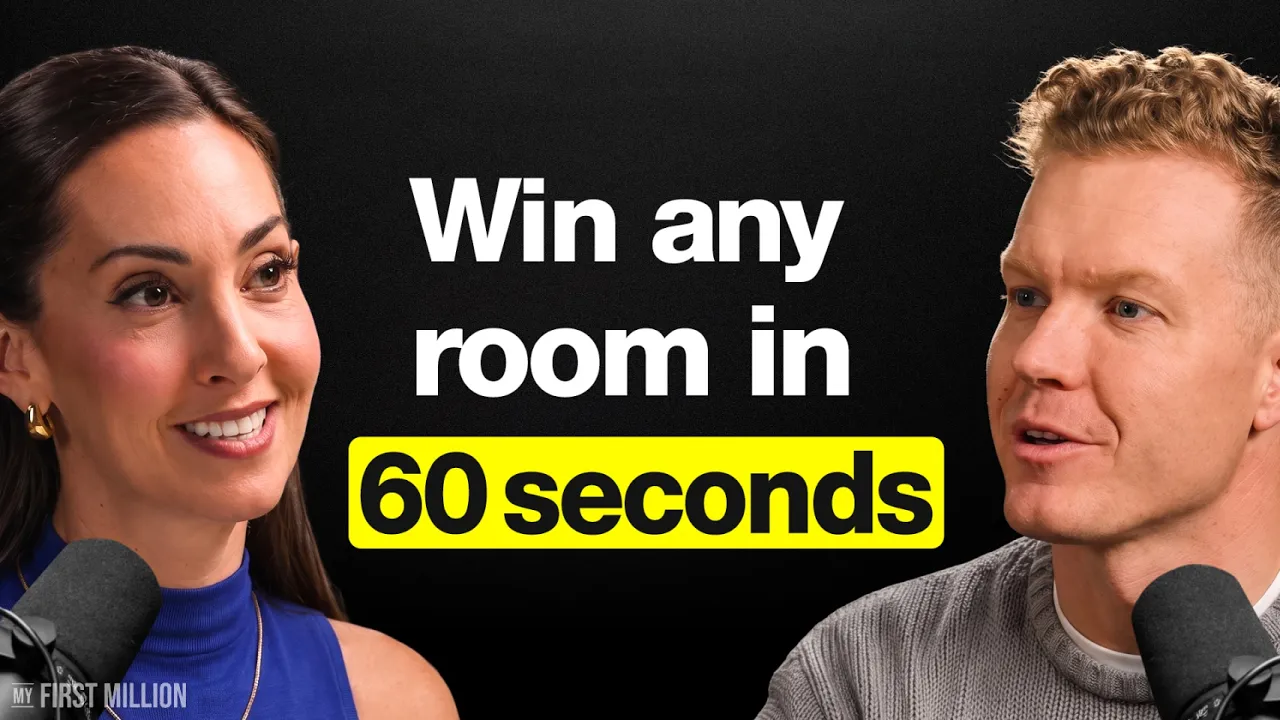
*Vanessa's Playbook to Use Charisma as Your Unfair Advantage:* https://clickhubspot.com/0o1z Episode 884: Sam Parr ( https://x.com/theSamParr ) gets coached by Vanessa Van Edwards on how to be more charismatic. — Show Notes: (0:00) Sam performs a magic trick (1:00) The most charismatic people are learned (2:45) Competence w/o warmth = suspicion (4:30) A war against authenticity (5:55) What is being likeable? (6:15) Oxytocin (9:00) First impressions matter more than you think (10:00) Dopamine (11:40) Case study: Howard Stern (13:30) Biggest conversation mistakes (15:55) Entertainers vs. appreciators (18:10) What do I say next? (20:45) Jake's dog (23:30) Be chalant (24:50) Physical appearance bias (27:30) Trigger words (30:30) Contagious competence (31:20) Biggest leader mistakes (41:55) Small talk 101 (45:30) How to hire better (49:20) Who to study (51:00) How to flirt (52:30) Verbal, vocal, and physical mirroring (54:15) The business of being Vanessa Van Edwards Links: • Conversation by Vanessa Van Edwards – https://www.scienceofpeople.com/books/ • Cues by Vanessa Van Edwards – https://www.scienceofpeople.com/cues/ • How to Win Friends and Influence People by Dale Carnegie – https://www.goodreads.com/book/show/4865 • Vanessa Van Edwards' People School – https://www.scienceofpeople.com/training/ • Science of People – https://www.scienceofpeople.com/ — Check Out Sam's Stuff: • Hampton (joinhampton.com): My community for founders. Average member does $25m/year. Many of the guests are members. Get after it...apply: http://joinhampton.com/mfm — Check Out Shaan's Stuff: • Shaan's weekly email - https://www.shaanpuri.com • Visit https://www.somewhere.com/mfm to hire worldwide talent like Shaan and get $500 off for being an MFM listener. Hire developers, assistants, marketing pros, sales teams and more for 80% less than US equivalents. • Mercury - Shaan uses Mercury across all of his companies. you can too: http://mercury.com/ Mercury is a fintech company, not
Summary
Generated by gpt-5.6-terraAt-a-Glance
- Verdict: Watch fully
- Core thesis: Charisma is a learnable system for signaling warmth, confidence, and purposeful energy—not a fixed personality trait—and it improves persuasion by making competence easier for others to trust and absorb.
- Why it matters: The episode translates social-science claims into reusable operating tactics for investor conversations, sales, hiring, leadership meetings, podcasts, and relationship-building, with unusually concrete guidance on vocal delivery, language, and conversational flow.
- Best use: Use it as communication coaching: audit the opening of important meetings and pitches, redesign recurring conversation questions, and turn its hiring and leadership-language frameworks into team practices.
Executive Summary
Vanessa Van Edwards frames likability as a practical multiplier on competence rather than a popularity contest. Her central model is that people rapidly assess warmth and competence, and that highly competent people often over-signal expertise while under-signaling warmth—creating suspicion rather than trust. Her version of warmth is not forced smiling or bubbly extroversion; it can appear as vulnerability, humor, visible humanity, and attention to the other person.
Her tactical advice centers on managing the emotional and informational experience of an interaction. At the start of a meeting, use direct eye contact, visible hands, and, where contextually appropriate, a handshake or other consensual touch to establish connection. During conversation, create curiosity through “information gaps,” break rote social scripts with more interesting answers, and introduce playful wordplay rather than trying to impress people with credentials.
For leadership and commercial settings, the most operationally useful material concerns voice and language. Van Edwards argues that uptalk—turning statements into questions—can signal nervousness and make listeners scrutinize rather than trust a speaker, especially when stating prices, fundraising numbers, or opening a meeting. She recommends rehearsing the first 30 seconds and the highest-anxiety portions of a presentation, speaking on the exhale, and using a relaxed lower portion of one’s natural vocal range rather than artificially deepening the voice.
The episode also provides frameworks for deeper conversations and talent assessment. Move from factual small talk to goals, motivations, worries, and learning; distinguish people who want to entertain from those who prefer to be engaged by others; use recent-hurdle and scenario questions in interviews; and listen for whether candidates see themselves as agents in their own story. The transcript is repetitive because substantial segments are duplicated, but the underlying material is sufficiently practical to justify a full watch if Ken is sharpening executive communication, hiring, or relationship-driven GTM.
Key Takeaways
- Claim: Warmth must accompany competence because competence alone can make people suspicious rather than persuaded. | Evidence: Van Edwards cites research claiming warmth and competence account for 82% of impressions and quotes literature stating that “competence without warmth is likely to leave us feeling suspicious.” She says over-indexing on data, credentials, and intelligence can hurt negotiations and closing. | Implication: In pitches, negotiations, and executive settings, lead with signals that make people comfortable before making the strongest competence claim; otherwise the audience may interrogate the claim instead of receiving it. | Caveat: Her examples of Elon Musk and Mark Zuckerberg classify visible imperfection or emotional reserve as warmth; that interpretation is subjective and should not be treated as a universal reputation assessment.
- Claim: The first seconds of an interaction disproportionately shape trust, so enter meetings deliberately rather than distracted. | Evidence: She recommends three to five seconds of direct approach eye contact, visible hands or an open-palm greeting, and physical contact when appropriate; she argues that walking in while checking email wastes the most consequential connection window. | Implication: Create a pre-meeting arrival rule for high-stakes calls and rooms: devices away, camera-ready posture, hands visible, eyes on participants, and an intentional greeting before discussing business. | Caveat: Physical touch is context-dependent and should be avoided where it is culturally inappropriate, unwanted, or incompatible with professional norms.
- Claim: Conversations need to compete with the novelty and reward of people’s feeds, so use curiosity hooks and energized topics rather than generic openings. | Evidence: She calls dopamine the motivational payoff of conversation and recommends “information gaps” such as “Want to hear the worst business advice I ever got?” She identifies Howard Stern as especially skilled at creating these hooks and advises using one every minute or two in speaking contexts. | Implication: For talks, podcasts, sales calls, and internal updates, structure key points around open loops, unexpected observations, and concrete stories rather than delivering information in a flat sequence. | Caveat: Overusing hooks or manufacturing suspense can make an interaction feel performative; the material following the hook must justify the attention it requests.
- Claim: Trying to be impressive is often counterproductive in ordinary conversation; the better objective is to be easy and rewarding to engage with. | Evidence: At a high-status Austin gathering, Van Edwards introduced herself as a “recovering awkward person” who helps smart, awkward people communicate, rather than matching others’ achievement-heavy introductions; she says more people approached her afterward. She distinguishes “entertainers,” who enjoy attention and questions, from “appreciators,” including many VIPs who spend all day talking and may prefer to hear useful stories or opinions. | Implication: Before a high-value interaction, diagnose the counterpart’s preferred conversational lane. Do not automatically use the Dale Carnegie-style strategy of asking endless follow-up questions; offer useful opinions, stories, and play when the person is an appreciator. | Caveat: Credentials and achievement framing still matter in contexts explicitly designed for proof of authority, such as formal keynotes, media appearances, or investor diligence.
- Claim: Vocal confidence is a commercial and leadership variable: accidental question inflection can undercut credibility, particularly around numbers. | Evidence: Van Edwards says salespeople who render a price as a question—for example, “the cost is $10,000?”—invite negotiation and signal uncertainty. She claims listeners exposed to question-like inflection shift from listening to scrutinizing, and recommends reviewing recorded Zoom calls for the first seconds and the most anxiety-provoking slides. | Implication: Audit fundraising, sales, board, and all-hands recordings. Rehearse declarative openings, price statements, asks, and financial slides; breathe before the first sentence and speak from a relaxed, natural resonance point rather than forcing an artificially low voice. | Caveat: The speaker presents strong causal interpretations of vocal and fMRI research without discussing study design, effect sizes, or replication; treat the mechanism as a useful coaching heuristic rather than settled neuroscience.
- Claim: Leaders should select language based on the mechanism required to win, because words cue different team behaviors. | Evidence: She cites a Prisoner’s Dilemma-style experiment in which participants told they were playing the “Wall Street game” shared about one-third of profits, while those told it was the “community game” shared about two-thirds. She recommends achievement words—“win,” “succeed,” “master,” “advance”—when performance and urgency are required, and collaboration/creativity language when idea generation is the objective. | Implication: Treat meeting openings, project names, OKR language, and written briefs as behavioral design. Explicitly decide whether the immediate objective is speed, execution, ownership, collaboration, creativity, or trust, then align the vocabulary and incentives. | Caveat: Language alone cannot overcome misaligned incentives, poor operating design, or weak leadership; framing should reinforce, not substitute for, the actual system.
- Claim: Deeper connection and better hiring come from surfacing goals, learning, agency, and self-narrative—not merely collecting biographical facts. | Evidence: Using Dan McAdams’s three levels of connection, she describes general traits, personal concerns, and self-narrative. Her preferred transition from small talk is “Working on anything exciting these days?” followed by questions about goals and learning. For hiring, she prefers asking about the most recent hurdle rather than a rehearsed adversity story, and using practical hypotheticals; she also asks whether someone feels lucky and which fictional character resembles them in values and choices. | Implication: Build interview scorecards around current examples and job-realistic scenarios. Use personal questions as qualitative prompts to explore agency and narrative, but anchor final hiring decisions in demonstrated capability, references, and work samples. | Caveat: Questions about luck and fictional self-comparison can reveal self-perception, but they are not validated standalone hiring screens and can produce false confidence or cultural bias.
Detailed Brief
Conversation design: move through connection levels without getting trapped in small talk
- Claims: Small talk is not something to skip; it is the necessary first layer of social orientation, but it should be upgraded from status-checking facts to more revealing prompts.; The fastest route to useful connection is from general facts to personal concerns: goals, motivations, worries, values, personality, and what someone is learning.; Playfulness can make a person more engaging without requiring extroverted volume or exaggerated body language.
- Evidence: Instead of “What do you do?”, Van Edwards suggests “Working on anything exciting these days?” because people can answer with work they love or another topic they value.; She uses time-boxed moments—quarters, birthdays, anniversaries, New Year’s—as natural ways to ask about goals, then follows an exciting project with “What’s the big goal with that?”; Her examples of low-stakes play include guessing a child’s name or someone’s vacation destination, which interrupts predictable question-and-answer patterns.
- Caveats: Do not jump directly into highly personal questions such as fears or dreams before basic rapport; the speaker argues people need the factual orientation layer first.; Teasing and joking require calibrated rapport. Her example involving a fake association between a baby name and a serial killer is high-risk and unsuitable for many professional relationships.
- Implications: Create a compact set of goal, learning, and current-project prompts for events, customer calls, recruiting, and podcast preparation.; Train hosts and customer-facing operators to listen for “trigger words”—topics that either party genuinely finds energizing—and pursue those paths rather than relying on a fixed question list.
Adaptation without imitation: finding a usable charisma style
- Claims: Charisma should be adapted to one’s natural delivery style rather than copied from a famous charismatic figure.; Mirroring can communicate respect and reduce social distance when used lightly across vocabulary, vocal tempo, volume, pauses, and animation.; Van Edwards draws the ethical boundary at intention: using social signals to connect and communicate useful ideas is distinct from using them to deceive, harm, or exploit.
- Evidence: She recommends sampling 10 to 20 top TED Talks and identifying whose delivery feels naturally compelling, noting that Simon Sinek, Ken Robinson, and Brené Brown use very different styles.; Her mirroring example is to say “clients” rather than “customers” if that is the other party’s vocabulary, and to slow down for a measured speaker rather than maintaining one’s habitual fast pace.
- Caveats: Over-mirroring can be conspicuous and unsettling, and using jargon one does not understand will reduce rather than build credibility.; The transcript repeatedly labels certain techniques as science-based, but it does not provide enough primary-source detail to evaluate the strength of every research claim.
- Implications: For key relationship owners, add communication-style notes to account and stakeholder preparation: speed, formality, preferred terminology, appetite for stories versus questions, and likely decision concerns.; Use rehearsal to increase intentionality, not to manufacture a persona; credibility depends on a delivery style that can be sustained under pressure.
Van Edwards’s business model and strategic ambition
- Claims: Her company monetizes a personal-expertise brand through corporate speaking and consulting, courses, books and licensing-like educational products, social sponsorships, and a growing certification layer.; The strategic shift is from selling her own time to certifying internal communication coaches at client organizations.; She sees organizational communication as increasingly valuable in an AI-heavy environment and wants a Chief Communication Officer or Chief Conversation Officer function in companies.
- Evidence: She says speaking is the largest revenue source, followed by a flagship course called People School, smaller courses, book royalties, LinkedIn Learning, MasterClass, Harvard teaching, and sponsors.; She reports a 10-person team, roughly 300 million views in the prior year, weekly YouTube publishing since 2007, and a plan to let companies certify HR or technical employees to teach the curriculum internally.
- Caveats: All audience, business, and growth figures are self-reported in a promotional interview and are not independently substantiated in the transcript.
- Implications: The certification strategy is a useful pattern for any expertise-led business: codify methods, create internal champions, and shift from founder-delivered services to distributed implementation.
Notable Concepts & Terms
- Warmth and competence: The speaker’s core impression model: competence needs warmth to avoid triggering suspicion and to make expertise persuasive.
- Oxytocin, dopamine, and serotonin framing: Van Edwards uses neurochemical language to explain connection, motivation/novelty, and status-related social effects; operationally, it motivates eye contact, curiosity, and purposeful energy.
- Information gap: A curiosity device that opens an unanswered loop before a story or insight, making the listener lean in.
- Entertainers vs. appreciators: A conversational diagnostic: some high-status people want attention and questions, while others are tired of talking and would rather receive stories, ideas, or opinions.
- Maximum resonance point: The relaxed lower portion of a person’s natural vocal range, presented as the target for calm and confident speech—not the artificially deepest possible voice.
- Signal amplification bias: The idea that people assume their availability, enthusiasm, and intentions are evident when others may not perceive them; visible signaling is therefore necessary.
- Three levels of connection: General traits, personal concerns, and self-narrative; a framework for moving from facts toward the motivations and identity that drive decisions.
- Map their lexicon: Mirror a counterpart’s legitimate vocabulary—such as “clients” versus “customers”—to demonstrate alignment and reduce conversational friction.
Operator Notes / Why Ken Should Care
- Run a communication audit on the next five high-stakes recordings: score the first 30 seconds for eye contact/camera presence, declarative versus questioning intonation, pace, and clarity of the ask.
- Create two standard opening scripts for team meetings: one optimized for execution and accountability, another optimized for exploration and dissent; ensure the language matches the desired mode.
- Add a stakeholder-prep field for conversational style: entertainer versus appreciator, pace, preferred terms, current goals, and known learning interests.
- Replace generic networking and discovery questions in playbooks with goal-oriented prompts, then train a follow-up sequence from project to goal to constraint.
- Revise interview loops to include a recent unprepared hurdle and one role-specific disruption scenario; do not use “luck” or fictional-character questions as pass/fail signals.
- For pricing, fundraising, and negotiation training, mandate practice stating the number as a declarative sentence and review recordings of the exact money moment.
- If pursuing an expertise-led education product, study her certification model: turn founder knowledge into curriculum, credential internal champions, and sell organizational deployment rather than only individual access.
Source/Metadata
- Title: Charisma expert tells me everything I should do (and avoid) to be likable
- Transcript words: 19498
- Duration seconds: 3472
- Timestamp note: No usable timestamps or chapters were present. The supplied transcript contains extensive duplicated passages, especially in the latter half.
Transcript
[SPEAKER_00] Talking to you is intimidating because I feel like I'm being analyzed constantly. [SPEAKER_01] You are. [SPEAKER_00] It's like I'm around a pickpocket all the time and I'm constantly having my hands in my pocket to make sure that nothing's going to happen. [SPEAKER_01] I have a report afterwards. [SPEAKER_00] I'm like, so Sam, in the pockets are all the things you did poorly. Do you want to see a magic trick that I got for my daughter? [SPEAKER_00] Yeah. [SPEAKER_01] You see this quarter? [SPEAKER_00] I do. [SPEAKER_01] Can you see it? [SPEAKER_00] I do. Yes. [SPEAKER_01] All right. Ready? [SPEAKER_00] Yeah. [SPEAKER_01] All right. Let's see if my teeth can do it. Ready? [SPEAKER_00] Now watch it. Keep watching really closely. Ready? [SPEAKER_00] Yeah. [SPEAKER_01] Okay. [SPEAKER_00] That is very cool. Is that a secret quarter? What is going on? [SPEAKER_01] This is a new career. That's the promo for this video right there. Listen, the whole reason I learned magic as a little kid was to meet girls. [SPEAKER_00] That story does not surprise me at all. At all. I feel like every magician started for that reason. [SPEAKER_01] There is nothing better than seeing someone be wowed by you. [SPEAKER_00] Well, that's what I wanted to talk to you about today. Everything that you're going to talk about today, can I improve on? [SPEAKER_01] Yeah. I mean, the most charismatic people I know are learned. When you watch politicians or anyone who's considered very charismatic, are you noticing that what they're doing is learned or natural? Can you tell the difference? [SPEAKER_00] I don't think you can tell if someone is learned or natural. After I talk to them, you can usually get a hint that they've honed their flavor. At first, when you're first seeing someone, especially if they're authentically charismatic, and I think fake charisma is different. I think fake charisma you can sniff out. Now, once you start talking to them and you see their flavor of conversation, how they approach ideas, that's when I think you can see, oh, yeah, you've developed your humor or you've learned to add hand gestures. So I think over time you can see it. [SPEAKER_01] I know that a big thing for your book, which I've read, by the way. Here it is. I know a big thing is asking people differently what they do or at least answering the question differently and how that's a boring question. But you give a tip on how to have a good answer. What's your answer? How can we tell the listener what you do? [SPEAKER_00] I am a recovering awkward person, and I help awkward, smart people learn how to communicate well. That's my shtick. And I do it through videos and books and courses and sometimes corporate keynotes. And what data do you have to show me or stories that you could tell me about why I should even care about this? [SPEAKER_01] Yeah, so we know that warmth and competence makes up 82% of our impressions of people. And here's the problem: smart people typically over-index on showcasing their competence. But we know that if we don't do that, people don't believe our competence. And the direct quote from the literature is, competence without warmth is likely to leave us feeling suspicious. Not unlikable, suspicious. Very smart people. They know their data. They know their numbers. They go into the room, and they push their competence, and people are like, I don't know about this guy. I don't believe that number. People who are just competent have more difficult negotiations, more difficulty closing, and that's because they're missing that warmth piece. Warmth comes first. It's like a lubricant. If you want people to believe you're smart, you have to lubricate it with warmth. And that's 82% of our impressions. So for leaving that on the table, it's leaving half of our first impression at home. [SPEAKER_00] But if I were to say, Mark Zuckerberg and Elon Musk are very successful. They don't appear to be particularly likable when they talk. In fact, a lot of people dislike them. [SPEAKER_01] Okay, so let's dive into this. Warmth is not the stereotypical bubbly extrovert. I actually would argue that Elon Musk has great warmth, and it shows up as vulnerability, as not being perfect, right? Like when you see him speak or if you interact with him, he's not polished. And that is an aspect of warmth. There is a mistaken belief that charisma has to look like this perfect life of the party. But actually, warmth comes up as humor, as sarcasm, as vulnerability, as even making mistakes or bumbling or stumbling with your words. Mark Zuckerberg has his own kind of warmth where he doesn't show as many of his emotions, and that gives him this feeling of he's an everyday guy who's just had a really good idea. That is also warmth. Warmth is not smiling all the time and lots of jazzy hand gestures. It's not that. [SPEAKER_00] I think when a lot of people hear what you're describing as warmth, they use the word authenticity. And I frankly hate that. [SPEAKER_01] Yeah. [SPEAKER_00] The reason I hate that is because when I was younger and trying to meet girls, everyone would say, just be yourself. No, horrible. And I remember thinking, myself sucks. [SPEAKER_01] Yeah. [SPEAKER_00] I don't want to be myself. I need to change. [SPEAKER_01] Yeah, I had the same feeling, Sam. When people told me to be myself, I'd be like, but what if I don't like myself? That advice is BS. I don't like it. I also hate the advice, just smile more. That is not warmth. Fake smiling is actually the fastest way to get people to think that you're manipulative and weird. Like Elizabeth Holmes, right? Like she was given all this advice to be more likable and it just backfired on her because it's not real. So I agree with you. I think we should throw out the authenticity word. [SPEAKER_00] Great. Well, then I want to ask you a bunch of tips on how to be more charismatic. I want to be a better conversationalist because I do it for a job. And frankly, I think I'm fine, but I want to be better. And I think that we have a large audience of mostly young men who are probably pretty smart, probably fairly awkward. We used to call our audience Neckbeard Nation. But they want to get better. They listen to this podcast because they want to improve. And I think that it's going to blow their mind that being charismatic, just like with any other skill set or talent, some people are born very talented. But just like anything else, you can achieve your potential. [SPEAKER_01] I also think that what we have to talk about, and I love your audience. They're my people. I love a high achieving, super smart learner. It's like, let's get into the science behind what's happening. So being likable is actually that someone is giving you or gifting you the chemicals that you want to operate at your best. So that means that when I'm with you, Sam, and you do this very well in conversation, you're trying to really peak three different chemicals in somebody. The very first one you actually want to trigger is a little bit of oxytocin. So oxytocin does a lot of things in our body. But for our purposes, it's the chemical of connection. It's literally that feeling of, oh, I really like this person. That's the feeling, that vibe that we get. That's oxytocin. We do it through eye contact. We do it through touch. We also do it through mutual moments of meaning. So when I agree with you on something, we're probably getting a burst of oxytocin. But that's happening non-verbally through our social signals, as well as the conversation we have. We need this to build trust. We need it to open up in conversation. They've even found that giving people nasal sprays of oxytocin makes them give away more money. I think you've talked about this on the show. I think you guys played a really interesting clip about giving married couples oxytocin. [SPEAKER_00] Okay. Yeah. Oxytocin for marriage counseling. [SPEAKER_01] What I wanted to add to that conversation briefly is, why not just work on the natural ways to get it up first? And what's oxytocin? That makes me feel good. Am I bonding with you? [SPEAKER_00] It's a chemical that releases in the brain that makes me bond with you. It's bonding, not feel good. It can be feel good, but it's that warm and fuzzy. It's when you have a vibe with someone that you want to get to know them more, you want to tell them things, that's oxytocin. So it's bonding. It's specifically that comfort and bonding. [SPEAKER_01] Okay. So you want to have this right away. Again, eye contact. Your approach eye contact when you're walking into a meeting. The worst thing you can be doing walking into a meeting is checking off emails when you walk into a meeting. Because those first few seconds of eye contact with your team, with your negotiating partner, with your investor, those first three to five seconds of eye contact—forget once you've started. That actually matters more than your first minute. That makes me feel good. Am I—it's a chemical that releases in the brain that makes me bond with you? It's bonding, not feel good. It can be feel good, but it's that warm and fuzzy. It's like when you have a vibe with someone that you want to get to know them more, you want to tell them things, that's actually oxytocin. So it's bonding. It's specifically that comfort and bonding. Okay. So you want to have this right away. Again, eye contact, your approach eye contact when you're walking into a meeting. The worst thing you can be doing walking into a meeting is checking off a couple of emails when you walk into a meeting. Because those first few seconds of eye contact with your team, with your negotiating partner, with your investor, those first three to five seconds of eye contact—forget once you've started. That actually is your first minute matters more. You're both getting that burst of oxytocin. Some studies, and this is really hard to measure exactly, but they think that when you shake hands with someone, you produce about three hours worth of eye contact oxytocin. Meaning that physical touch, that high five, that fist bump, that cheek kiss, if you can do that physical touch, it just gives you that boost faster. It's why we cuddle so much. It just floods our brain with that connection chemical. Our first impression is important. Hey everyone, really quick. This is me from the future. I actually just finished this episode with Vanessa, and I know it was a good episode because I just got done taking tons of notes because she had so many amazing quotes and tactics on how to have good conversations. And at the end of this, we thought, let's put everything that we just learned, all of my notes, all of Ari's notes into a document that's easy to read, something that you can just listen to the rest of this podcast and not worry about taking notes, and just download the thing that we made because it's probably better because we're going to spend a lot of time on it. So if you want that, just click the link below and enjoy the rest of the episode. Extremely important. They are important. Oh, and almost irreversible. Your first minute matters more than your first thirty minutes. No way. Really? Yeah, because think about our lizard brain, right? So back in the day, we're approached by a stranger caveman. We have to very quickly assess: are they friend or foe? And then do we like you, right? So it's actually both. So we're looking at social signals. We're sending hundreds of social signals every few minutes, depending on what kind of mode we're in. And so we're looking at eye contact—is this person avoiding me or are they trying to assess me? We're looking at visible hands. So having your hands visible in those first few seconds—I always start every video call with a palm open high. It's a way to disarm your brain. It's like, I'm not hiding a rock or a spear. It's a very leftover part of our brain. When I walk into a room, I make sure that I am hands first. And then usually that goes into a handshake or some kind of physical touch if you're comfortable with it. That all produces oxytocin, which is going to help you feel connected. That's the first thing we're trying to produce. The second thing we're trying to produce, and this is getting a little harder here, is dopamine. So dopamine, again, does a lot of things in our body. But this is the chemical—this is the feel-good chemical. This is the chemical that makes us feel pleasure. But more importantly, it's the chemical of motivation. And why do you want someone to feel motivated when they're talking to you? That's going to get them to answer more quickly. That's going to get them to want to reply to your emails. That's going to get them to want to answer the phone. That's going to get them feeling like, wow, this was worth the time. And in this busy age where everyone is busy, you need to be worth it. You need to be able to produce the chemical that makes them feel good, that gives them energy, that makes them actually feel energized when they leave with you. And this is the hard part. This is the new part of this. I think every conversation is competing with a feed, right? I know you're on your phone on your feed right before talking to you, right after. I have to be more dopamine-worthy than Matt. And how do you do that? Yeah. That did something magical in my brain. First of all, I haven't heard that ever. No one's ever said that to me. So my brain is like, no, no, no. Right? Our brain is like, yay. Second is you created an information gap, which is I'm going to show you something or tell you something that you've never seen, that you don't know what's going to happen. Which immediately I want to know what's going to happen. So that gives me motivation to lean in. I am listening. I am watching. One person, in the research for my book, I studied thousands of hours of successful conversation. You know who does that really well all the time in conversation? Howard Stern. Howard Stern is excellent at creating information gaps. So even in his questions, he'll be like, want to hear the weirdest thing that ever happened to me? You know the craziest thing that happened to me yesterday? You know the worst piece of advice I've ever gotten? So when I'm coaching people for speaking, I tell them to use information hooks every minute or two. If you're about to tell them an interesting story, before you tell them the interesting story, tell them, do you want to hear the most interesting thing that ever happened to me? Want to hear the worst business advice I ever got? Right? It just creates dopamine in the brain to be like, ooh, what is it? So you're spitting a lot of great information. And I want to bring it back. So the point of all of this is to get someone to like me. And you didn't say this, but to get them to like me, I want them to do what I want them to do or for them to follow what I say. What's the root cause of why I want someone to like me? Okay, so I wouldn't say those things. I would actually say it's lubricant for your ideas. I'm assuming everyone on this podcast is about to go into a meeting or a call or a date, right? So this business of breaking the script and creating oxytocin, it's going to make your answers that are coming, your pitch that is coming, smoother to take. So likability is lubricant. It makes your intelligence easier to digest. It makes you easier to work with, which makes you easier to invest in, makes it easier to buy from, makes it easier to marry. So I would say that likability is a lubricant for your smarts. That's what I would say. Yeah, and a lot of it ties back to Dale Carnegie's How to Win Friends and Influence People. You know, most people, it's how to lose friends and make them hate you. And then you read that book and you're, oh, there's actually things that you could do. One of the best things from that book where he talks about asking lots of questions when you're having a conversation with someone. An issue that I tend to have, and I think a lot of people tend to have when they have conversations with someone, is thinking about what to say next. Yeah. And B, they want—I want to impress you, particularly if I want something from you. Yeah. So can you help me fight those two things? Totally. So I can tell a story about this. Actually, I think you'll resonate with it. It's an afterwards. I can tell you who it was. I was at a party in Austin because I used to live in Austin. And I was invited to a very big mansion of a muckety-muck person in Austin, a very important person. And I had imposter syndrome about being there, but that's fine. So I get there and the very first thing they do is have everyone stand in a circle, which is one of my least favorite things. And they're like, everyone introduce yourselves. And we start going around the circle. And the first person is like, I invented the internet and I'm a billionaire. And goes on to explain the most impressive things you've ever heard. Super impressed. We're all super impressed. The next person is like, I cured cancer, something crazy impressive. Right. And it just goes around the circle like this. And it finally gets to me. And I was like, I'm not even going to try to be impressive. Right. I would rather be easier to talk to because I would not approach any of those people. Important person. And I was having imposter syndrome about being there, but that's fine. So I get there and the very first thing they do is have everyone stand in a circle, which is one of my least favorite things. And they're like, everyone introduce yourselves. And we start going around the circle. And the first person is like, I invented the internet and I'm a billionaire. And goes on to explain the most impressive things you've ever heard. Super impressed. We're all super impressed. The next person is like, I cured cancer, something incredibly impressive. Right. And it just goes around the circle like this. And it finally gets to me. And I was like, I'm not even going to try to be impressive. Right. I would rather be easier to talk to because I would not approach any of those people. One, I didn't really like them. I was just impressed by them, but I had no desire to go up and talk to them. What would I even say? So I was like, I'm a recovering awkward person. I have no idea why I was invited. And everyone laughed because I think most people in the circle felt the same way. And I was like, I help smart, awkward people communicate. At the end of that circle, most people came up to me. And I don't say that because I was trying to get everyone's card. It just—being impressive does not actually help you. Being impressive will help you in a few situations like traditional media. Sure, you want to be impressive. On a book tour. Sure. Yes. On stage, you're being paid a lot for a keynote. Okay. But in everyday conversation, the more impressive you are, the more you're making someone their worst self, making them have cold feet and making them doubt what they're saying. Okay. So the impressing thing—do you treat them mean to keep them keen? Do you purposely not try to? No, no, no, no, no. Actually, okay, let's make it really actionable. First of all, what was that phrase? Keep them what does it mean to keep them keen? Oh, that's terrible. Treat them mean, keep them keen. Terrible. Terrible. That's not terrible. It's terrible. It's terrible. It's terrible. First of all, I also want to pick a bone with Dale Carnegie. And I know Dale Carnegie has passed, so it's hard to fight in this way. But he gives us advice to ask lots of follow-up questions. And I think you're right—that for me, I'm a social overthinker. I don't know if you are, but that can make me ask so many questions that I'm not even getting anywhere. It also makes me feel like I can't talk. That also—I think there are two different types of people, especially VIPs. There are entertainers and there are appreciators. Entertainers are the typical VIP you think of. They love to be the center of attention. They love to be asked questions. They love to be the center of the group with an amazing story making everyone laugh. That is one type of person. But actually, I think most VIPs are appreciators. They spend their entire day talking. The last thing they want to do is be asked a bunch of questions. And so I've seen that approach backfire in front of my eyes. In green rooms, in conference rooms, board rooms, especially with important investors, they want to be entertained. Well, I was telling a story recently. I went out to dinner with this guy and he might've been worth $30 billion, something astronomical. He controls the world a little bit. But I didn't know this until 60 minutes in and he was asking me my opinion on AI and how I'm using it. And I told him the most rinky dink ways. Like, oh, it helps me figure out what size shirts to buy on the internet. And he helped invent it. Okay. And he showed so much—like, oh, that's how you use it? Wow, that's really impressive. That's amazing. And I was like, at the end of it, I started asking him questions and I'm like, wait a minute, you're this guy, aren't you? And I was like, you had me talking the whole time when you invented this. He's like, well, I'm interested in what you have to say. And I was like, oh my God. But I bet you he liked that dinner because he probably is so tired of being asked questions himself that he actually wants to hear from you. I just shared this because I think that actually being impressive doesn't really even work. I think that it turns off ability. It's like it sets you up for failure. What is better is to try to figure out which one they are. So are they an entertainer? Do they want to be asked a lot of questions? Great. Are they an appreciator where they want to hear your stories, your tips, your advice, and they want to be able to ask you questions? Those are totally different conversational lanes. And it is incredibly important you pick the right one. That is impressive. What about figuring out what to ask next or what to talk about next? So you have two choices. One is you can try to find the topic that lights them up. Or two, you can talk about the type of topic that lights you up. And the reason why the second one is overlooked is because our confidence, our excitement is quite contagious. We don't realize how contagious our emotions are. And there's a study that changed my mind about this. They brought people into their lab. They split them up into two different groups. The first group was told to wear a sweatsuit where they catch your sweat. And they ran on the treadmill. So they got really sweaty on the treadmill. They wore this sweatsuit. The second group, they put them in sweatsuits and had them skydive for the first time. So they were really sweaty, but it was fear sweat. And they took these sweat samples and put participants into fMRI machines. They scanned their brains and asked them to smell the sweat samples. First they smelled the non-fear sweat and then the fear sweat. Everyone who smelled the fear sweat caught the fear. Their amygdala began to process and light up. Meaning that we can sort of smell fear. So I share this because it's the first, I think, of more studies in this area. There's also something going on where if someone is afraid of us or nervous around us or trying to impress us, I think we pick up on that. And it actually makes us nervous. So instead, I think a better option is how can you get yourself into a very excited, positive, motivated state of mind authentically? And I hate that word, but you yourself actually feel it. Forget them for a second. Because I think there is something to that. It changes your face. It changes your voice. It changes how you smell somehow. It changes the kinds of words you use. So one option—what to talk about. Do you have a crazy thing that happened? A weird thing that happened? The best thing that happened? Something you learned? We love phrases like in conversation. You know, yesterday, the most amazing thing happened. Or they ask, how are you? How's it going? Been busy? And you break the script with an answer. You know, last week, we finally hit a major goal. I couldn't believe it. We did this big thing. We were working on it. We have just not only broken a social script, but you are talking about something that gets you going, that excites you. And that's going to have a ripple effect for the entire conversation. That's my preferred kind of mode and also puts us in the driver's seat for conversation. Can I tell you probably the most effective thing I've ever read about leadership that is totally off the beaten path? Yes, tell me. Okay. I did that on purpose, by the way. I loved it. When I was 21 years old, I knew this guy named Jake. And Jake got arrested and he got sent to prison. And everyone was like, Jake has a dog. Who can watch Jake's dog? And I was like, well, I got a backyard. I was the only one in college that had a backyard. They're like, can you take this dog? Well, Jake didn't get out of prison for a very long time. So this dog became mine. And he was an 80 pound pit bull. And when I got him, he was horrible. He was not well behaved. He wasn't trained. I mean, he was an 80 pound all white pit bull. He was gorgeous, but he looked very scary. He wasn't well behaved. I read so many books on how to train a dog. And I hired a trainer that basically taught me how to train my dog. I loved it. When I was 21 years old, I knew this guy named Jake. And Jake got arrested and he got sent to prison. And everyone was like, Jake has a dog. Who can watch Jake's dog? And I was like, well, shit, I got a backyard. I was the only one in college that had a backyard. They're like, can you take this dog? Well, Jake didn't get out of prison for a very long time. So this dog became mine. And he was an 80 pound pit bull. And when I got him, he was horrible. He was not well behaved. He wasn't trained. He was an 80 pound all white pit bull. He was gorgeous, but he looked very scary. He wasn't well behaved. I read so many books on how to train a dog. And I hired a trainer that taught me how to train my dog. I learned more about leadership from that book and all those books than I did from any books on how to have human to human interactions. Because dogs are very aware of body language. And when you walk a dog, a lot of dogs pull. And the goal is to have the leash look like a J, meaning there's enough slack in there that he's not pulling. And there are ways to do that. For example, when you're out walking your dog and you see another dog coming and your dog is not good with other dogs, if you react first and get fearful, the dog replicates your body language immediately. And there's a thing called calm assertive. And you want to be calm assertive. You don't want to be high energy assertive. Because when you're high energy assertive, like when your dog's being bad and you say, hey, hey, stop it, stop it. It just amps up that dog. Instead, you have to barely say anything. You just pinch his butt really quick and just look at it. There are ways to reprimand. Pinch his butt? Really? Well, that's how you have to break their attention. Got it. So you have to do something that is subtle, but firm. That's calm. So I would sometimes not even say anything. If he would focus on something else, I would just give him a little pinch right in the butt. So he would know to look back up at me, not at the other stuff, because I'm the boss. And so what you're saying rings true about the fear and excitement and sweat. And I don't think human beings realize that we're just animals and that all this primitive stuff is true. And it's happening at every moment. I think sometimes we forget that we're animals with these instincts and we only think about it for the high stakes moments. But I think that a lot of those small interactions that happen in your office or in your boardroom, people are deciding in their brain. Do I want to do business with you? Do I want to spend time with you? And so walking into rooms as emotionally positively contagious, I wouldn't even say positive. I'll say purposeful, right? Like sometimes as a leader, your energy needs to be get it done. Like it's productive energy that you need to inspire. That is all dopamine. That's let's go. Let's push harder. If you're in a push stage, you're sprinting. That's an energy you have to walk into the office and you have to get everyone out of their burnout. You have to get everyone's energy up. That is pure dopamine. That's less about connection, less about collaboration. I think purposeful is the key. I call it being shallot. I did this whole talk on why saying nonchalant is dumb and that enthusiasm is contagious. And I define enthusiasm as just the physical display of passion and how that's attractive to everyone. It's also a signal. It fights a signal amplification bias. So there's a bias that all of us have as humans, which is we think that our signals are obvious, yet other people don't pick up on them. It's in a romantic setting, certainly. But I think it's also in business settings where if you are an easy person to talk to, if you are radiating like come on over. I'm available to you. That actually makes you attractive as a partner, as a friend, as a colleague, as a coworker. What about in a business or professional setting, what I wear or what I look like in terms of ugly versus handsome, but then the things I can control, like the clothes I have on, if I'm well-groomed or not. Does that matter? Unfortunately, it matters. Attractiveness matters. We like to look and hear from attractive people. That's very true. Height, unfortunately, they're still finding matters. And I actually think there's a biological reason for this. When you were a child, you looked up at the people who took care of you, right? You were always looking up at people. So when you looked at people, they were providing your food. They were teaching you things. They were giving you knowledge. They were your parents and your teachers. So for some reason, this still holds true even as adults. If we're looking up at someone, it kind of puts us in that mindset of like, they're going to teach me something. They're going to help me. I need to be nice to them because they're going to provide sustenance for me. So I think it's very much just that it's ingrained in us. So I think that's why height still matters. I would say that those things are nice to have. I don't think they're need to have, right? I think that you can be very successful and very charismatic without those things. So in terms of attractiveness and height. What you wear should match the kinds of cues you want to send. So I am a big fan of purposeful cues. Meaning, let's talk about dating just because it's really easy to split it up. Whenever you have a dating profile, the biggest mistake that you can make is an information gap. The biggest mistake you can make in your dating profile is trying to appeal to as many people as possible. That's the worst way to do it. Instead, I actually think you should create allergies. You should create allergies for the people who would be allergic to you because why waste your time? So for example, there are neural maps that are created for everything that you wear. Context cues are things you wear. So if you're in a ski outfit on the top of a mountain in your profile picture, everyone who loves skiing is going to have a neural map of good, fun, dopamine, family, vacations. Everyone who hates skiing is going to have a neural map of adrenaline, fear, cold, frostbite, hungry, whatever you think, right? Like whatever you don't like. Great. The faster you create that allergy, the better. I think it's the same thing with what we wear, what we carry, what's behind us in our profile. You want to create allergies for the people who are not your people. And you want to create attractors for the people who are your people. And that's clarity of signal. There's no wrong or right cue. There's no wrong or right color to wear. But the right ones are going to attract the right people. What do you tell people for professional stuff, like short, ugly dudes? What's your checklist on, hey, if you do these five things, you're going to be more attractive, which is not just for attracting women, but for attracting all humans. Well, it would be the same actually for tall, handsome dudes. It would actually be the same exact advice. Creating conversational hooks. And this is a skill, but it is a really important one, which is when you're in conversation, you should be present. You should be listening. But you should also be listening for triggers or words that are going to lead you down a fun and interesting conversational path. That can be things that you like. So AI or space or whatever. That can also be things that you hear them saying that they're like, oh, I love that too. So in my mind, I have a list of about 20 to 50 keywords. I call them trigger words. But I know if I follow that path, we're probably going to have a good conversation. And that means being a little playful. So the second thing that I would say, other than availability, to tall, handsome, or short, ugly, as you say, is can you be a little playful in conversation? Humans love to play. And the older and more serious we get, the more we love it. Playful in conversation sounds like this. Someone asks you a really boring question. So, you know, got any kids? Yep, I got two girls. How about you? Wait, let me guess. And then you just guess. Like play a guessing game. Whenever anyone tells me they have kids, I always try to guess their kids' names. I always get it wrong, but boy, does it come up with some funny conversation. So in my mind, I have a list of 20 to 50 keywords. I call them trigger words. But I know if I follow that path, we're probably going to have a good conversation. And that means being a little bit playful. So the second thing that I would say, other than availability to tall, handsome, or short, ugly, as you say, is can you be a little playful in conversation? Humans love to play. And the older and more serious we get, the more we love it. Playful in conversation sounds like this. Someone asks you a really boring question. So, got any kids? Yep, I got two girls. How about you? Wait, let me guess. And then you just guess. Like play a guessing game. Whenever anyone tells me they have kids, I always try to guess their kids' names. I always get it wrong, but it comes up with some funny conversation. Whenever anyone tells me, oh yeah, I'm going on vacation next week, I go, oh, let me guess where? Cape Cod. No, France. No, you look like a Greece kind of person. It's just playing guessing games with people. So you're halting the boring questions to be a little bit more playful. So I would highly recommend, how can you delight and surprise in conversation so that you are there willing to play with you? I do that all the time. I do that all the time. And I mess with people all the time. They'll be like, I'm from Roslyn, Long Island. And I go, you're kidding. Which high school did you go to? And they say their high school. I go, no way. What year? And they're, did you go to? I go, no, I'm from Missouri. I do that all the time. Yeah, this is super attractive, right? This is super attractive. It's fun in business. It's fun in dating. And also it takes, there's an internal and an external response. We have to think of both. Externally, it makes you interesting. It makes you kind of impressive because you're able to verbally wordplay. It's engaging to them. But internally, it does something to you, which as you're being playful, you're also triggering your own dopamine. You're becoming more enthusiastic without having to be like, hey, guys. Enthusiasm is such a scary word for most of my students because a lot of them are introverts. And they're like, I don't want to be louder. I don't want to have crazy big nonverbal. So this is a way to do that without having to be overly enthusiastic that makes you feel uncomfortable. I'm one of my favorite ones that I do with people. So if someone says they're pregnant anytime or they're about to have a baby, tell me that you're about to have a baby, Sam. We're pregnant, baby. We're having a baby in three months. And what names do you got picked out? Now make up a name. Sarah and Lindsay. Lindsay Parr? Like the serial killer? And then I just don't wait because you will see their life flash before their eyes. And then I go, just kidding. It's a great name. So you can use it anytime someone's right. So coming up with things that delight and surprise you will also delight and surprise them. And that courage translates. And we didn't talk about voice, but I would like to for just a second. Tell me. So voice is a very important part of attraction. And when we're listening to voice, we are listening for contagious confidence. And I'll give you a demo example. So if I'm really nervous and I'm in an interview. So if I were to do this interview or a presentation in this tone of voice, it would absolutely drive you crazy. You would turn off the podcast. You would not be able to do it. You would hate me. Exactly. Why? I added nervousness to my voice. So I tightened my vocal cords. I also went up at the highest end of my range. And I also began to add a little bit of uptalk. So I went up at the end of my sentences. That grates on us because we don't want to catch that nervousness. I don't want to listen to someone who's nervous. I don't want that. Yuck. I don't want to catch that fear. My middle is, no, thank you. Second is when we use an accidental question and reflection. So if I say, and this is the biggest mistake that leaders make at the start of their meetings. You ready? They ask their opening line. Good morning. Happy to have everyone. Let's get started. I hate that. It's for both men and women. I hate it. I hate uptalk. I have uptalk. I think it's, is it more common, you think, with women? It's more common with women because we're taught appeasement. Yeah. Yeah. And I tell my team, I'm going to be candid. When you use uptalk, it makes you sound not confident. And I think you're pretty confident. Don't talk like that anymore. Right. Okay. So one is, yes, women use it more often. But I have mostly male students. And when we do audits of their Zoom calls and their presentations and their meetings, they do it in the first 10 seconds. So women will often do it throughout their presentation, or they'll do it on the parts of their presentation where I know they're the most nervous. For example, I love listening in on sales trainings, and I do a lot of sales trainings. I always know which operator is going to have the worst negotiations, the lowest close rates, the most difficulty closing is because they ask their numbers. So they'll, and women will often do this when they're nervous about our numbers. They'll say, you know, we'd love to have your business. We'd love to work with you. And the cost is $10,000. Oy. If you ask your number, you're begging people to negotiate with you. Men typically do it in their first 10 seconds because in their mind, they're going, be warm, be warmer, be likable. And they're trying to be warm, but they add uptalk. And uptalk is the worst way to add warmth. Why? Uptalk is not only nervousness. It's actually more importantly tied to deception. So in my lab, I do a lot of research on deception. I love lie detection research. Liars often ask their lie because they have practiced the words, but not the nonverbal, not the vocal. So they'll practice the lie and then they ask it. So if my daughter says to me, or if I say to my daughter, you know, did you take the last cookie from the plate? And she goes, no, she did. Right? I know she did because she's asking me. And the brain knows this. And when they put people in fMRI machines and they have them listen to accidental question inflections, our brain goes from listening to scrutinizing. Literally the question inflection changes someone's brain to stop listening to you and to begin scrutinizing you. So men who have an amazing presentation or pitch they have coming up, they lose it. They give away all their vocal confidence in those first 10 seconds because they switched everyone's brain from listening to scrutinizing. And it's much harder to get through a pitch or presentation when someone's scrutinizing you. And that is because a part of their brain went, woo, I don't know about this person, right? Because you're reminding them of deception. So vocal confidence is not only attractive, it also helps with your actual competence. And so two very practical tips is please go back to a presentation or recorded Zoom call and listen to your first few seconds. Are you asking or stating? Second, go to the most nervous part of your presentation or the slides that make you nervous. Whenever I listen to pitches, like entrepreneurs pitching and they're raising, I know their money slide makes them the most nervous. And that's the slide I have them practice the most because they have to state their numbers. They cannot ask them. It will immediately put investors in the suspicious, I don't know. So practice your first 30 seconds and those most nerve-wracking slides. Second, and this is harder, you want to practice speaking with your maximum resonance point. Everyone has a vocal range of 10 to 12 notes, depending on how you speak. Your maximum resonance point is not the lowest of the low, but it's towards the bottom of your vocal range. So right now I'm working pretty hard to stay in the bottom of my vocal range. When I'm talking to my kids or my husband, I'm often up here, hey baby, how are you? And that's because that's a softer version of me. Now with you, I feel confident what I'm saying, but I also want to make sure that I'm easy to understand. So practicing speaking on the relaxed, the most relaxed part of your voice. They cannot ask them. It will immediately put investors in the suspicious. So practice your first 30 seconds in those most nerve-wracking slides. Second, and this is harder, you want to practice speaking with your maximum resonance point. Everyone has a vocal range of 10 to 12 notes, depending on how you speak. Your maximum resonance point is not the lowest of the low, but it's towards the bottom of your vocal range. So right now I'm working pretty hard to stay in the bottom of my vocal range. When I'm talking to my kids or my husband, I'm often up here—hey baby, how are you? And that's because that's a softer version of me. Now with you, I feel confident what I'm saying, but I also want to make sure that I'm easy to understand. So practicing speaking on the relaxed, the most relaxed part of your voice. And this is really hard when you're nervous because the very first thing to tighten when you're nervous is your vocal cords. So we can try this together, Sam, if you want to, so you can hear what it sounds like. When you're speaking at the top of your voice, you're typically the most tense. So it sounds like this. Hello. That's the top of your range. So take a deep breath in and say at the top, hello. Hey, hello. That's okay. So that's the top of your range. If I hear you, Sam, doing that, I'll call you on it if you want. That's you sounding the most nervous. That's the top of your range. If you hear yourself speaking and you're often at the top of your range up here, it means you're speaking in too high of a voice. I want you to take a deep breath and speak on the out breath. Oftentimes, people get into a breathing pattern where they're holding their breath, especially when they say their very first word, and that's why they sound so nervous. So instead, so hello is the wrong one. Take a deep breath, stay on the out breath. Unless you're going to try it next is hello. So both sound like me, but very different. So now say hello on the out breath. Hello. Okay. So that's the lowest end of your range. That's how you sound all the time. You do to me. That's... Talking to you is intimidating because I feel like I'm being analyzed constantly. You are. It's like I'm around a pickpocket all the time, and I'm constantly having my hands in my pocket to make sure that... I'm going to pickpocket your ability. Yeah, like nothing's going to happen. Like you're going to be... And I have a report afterwards. I'm like, so Sam, in the pockets are all the things you did poorly. No, no, no, no. I would never. So practicing speaking on the out breath. I actually think... I listened to your Elizabeth Holmes episode. This is just my opinion. I think she read this study. This is a very well-documented study about the... Which is what? Lower voices? Lower voices. But for both men and women, that we like that maximum resonance point. We like when someone's in the most calm, confident end of their range. I think she read that study and was like, well, I'm an overachiever. I'm going to go the lowest I can possibly go. I'm just going to speak down here because they said low is good, and so I'm just going to do low. I'm just going to speak down here. I think. I don't know. But I'm like, I've listened to old recordings of her, and I think she literally at that study was like, well, let's go. Let's be confident. And it went too low. So that's the caveat is please don't go too low. Are there any words that you would... that you can confidently say I probably use on a regular basis that you think are holding me back? The types of words you use change how people treat you. So you need to decide how you want to be treated. Now, I don't interact with you, Sam, on an everyday basis. And I don't interact with you professionally. We're friends. So what I would say is you should potentially do a verbal audit, which is looking at your sent email folder. I do this with my students. You pull up your sent email folder, and you look at the types of words you're using. These are behavior cues. Let me give you an example of how this works. So they did a study where they brought people into their lab. They split them up into two different groups. The first group was told, hello, today you're going to play the Wall Street game. And they played a Prisoner's Dilemma type of game. In the second group, they came into the same lab with the same research, and they said, hello, today you're going to play the community game. And they played the same Prisoner's Dilemma game. And this was the trick. The trials were exactly the same except for that one word change. They wanted to know if telling people they were playing the Wall Street game versus the community game would change anything about how they played. Everyone who was told they were playing the Wall Street game shared an average of one-third of their profits. Everyone who was told they were playing the community game shared an average of two-thirds of their profits. It's a massive behavior change for one word change. So what I would say to you is, I am sure there are words you're using that are changing how people treat you in a way that you don't. The question is, how do you want to be treated? When you ask that question to someone, I'm a business person. I lead people. I want people to take me seriously. I want to get my way. Or at least I want to get to the end result, which is I want to build a great company. And I want to be viewed as competent. What are the common attributes that you think I'm messing up on? The biggest mistake I think that leaders make in this particular scenario is the reason you're a leader is you have to figure out how to get there. What is the mechanism to get there? So is the mechanism competence? Is it hustle? Is it fast decisions? Is it productivity? Those are the kinds of words you should be using. So you're opening up a team meeting. You're like, all right, let's get it done today, guys. We have a bunch of quarter three goals we need to hit. We have had some wins from quarter two. Now, I use very specific words there. Those were all competent words. In fact, research finds that using the word win, they're called achievement-oriented words in the research—win, succeed, master, advance, success—trigger a very particular part, the performance part of our brain. It makes us perform more like winners. Winners use more winning language. They also like winning language. So if you're like, we got to go, we got to win, you want to use achievement-oriented words. But if the mechanism is not that, at least for all of it, it's actually collaboration, it's creativity, it's openness, it's brainstorming, those are very different types of words. That's opening a meeting and being like, all right, team, this is a collaboration day. I want to throw all the ideas on the wall. We're going to be lateral thinkers, right? We got to think of very creative solutions to this problem. That is activating, again, community game, Wall Street game. You're gifting people those verbal cues of like, to get wherever we want to go, our metric, our ROI. We have to activate the part of our brain that's going to help us with that. And so I think that really good leaders are extremely purposeful with their language. They are gifting productivity winning language in the right setting. And they are also gifting openness, collaboration, trust in those settings. They are deciding how they're trying to set people up for success. This sound, like when I hear you say this, I think this all makes sense. And I think I'm going to do this. And also I think this is exhausting. I have to be the catalyst of all the energy of all the room that I go in. So if I want to get what I want, I need to dictate the room, the energy. And so I have to put that out. Do you, how do you, what do you tell yourself or have like an introverted nerd tell himself or herself before they do this stuff to let them know that what they're doing is contagious? You know what I think? I think it's more exhausting to not get your ideas and not get what you want. I find it incredibly exhausting to be with my team and want to communicate something or want something to happen and have it not happen. I think it's exhausting to have very boring small talk with no outcome. I think it's very exhausting to go into a room and feel unliked. I think it's very exhausting to feel like you have no friends. I think it's very exhausting to go on date after date after date and feel like you can't connect. I think that's more exhausting. So yeah, it takes energy to be purposeful with your cues. And so I have to put that out. Do you, how do you, what do you tell yourself or have an introverted nerd tell himself or herself before they do this stuff to let them know that what they're doing is contagious? You know what I think? I think it's more exhausting to not get your ideas and not get what you want. I find it incredibly exhausting to be with my team and want to communicate something or want something to happen and have it not happen. I think it's exhausting to have very boring small talk with no outcome. I think it's very exhausting to go into a room and feel unliked. I think it's very exhausting to feel like you have no friends. I think it's very exhausting to go on date after date after date and feel like you can't connect. I think that's more exhausting. So yeah, it takes energy to be purposeful with your cues. But my gosh, that is so much less exhausting than the alternative. So you think small talk is important? I think it's really important. Okay. Tell me about that. How do I have small talk? So small talk is an essential aspect of our social hierarchy. And what I mean by that is Dr. Dan McAdams found that there are three levels of connection between all humans. That when we are connecting, we have to pass through three levels to feel quote unquote connected to someone. The first level is called general traits. This is why as humans, we default to what do you do? Where are you from? Got any kids? Are you married? Facts. It's like you're trying to verbally Google someone. That's what you're doing, right? That is actually not a bad thing. And actually, it needs to be done to get to level two. So we often get stuck in that small talk. And that's why the very beginning, we were talking about how do you do that better? So instead of asking, what do you do? And I don't like that question. I think it's asking someone, what are you worth? I would rather you ask, working on anything exciting these days? That question has been honed and developed over the last 20 years. Because if someone loves what they do, they will tell you. If someone doesn't love what they do, they will tell you something better. Have you ever seen Love on the Spectrum? Yes. It's so good because they ask the best questions. They'll say, what are your hobbies? Right. Not what do you do? What do you like to do? Right. So swapping the fact. You have to do it. So don't. This is a mistake that extroverts make. Extroverts go in with the best intention. They're like, I'm just going to skip small talk. What are your biggest dreams? We cannot do it because there is a hierarchy of facts. As social creatures, we have to get the basic facts before we can really feel connected. But we just have to do it better. So asking for exciting things you're working on, asking for your biggest goals, those are better ways to do that level one. Then you want to skip as quickly as possible to level two. Once you get the basics done, level two is my favorite level. It's where I think most of the business gets done. This is where people decide, oh, I want to work with you. I want to invest in you. I want to hire you. I want to date you. I want to be friends with you, which is personal concerns. So personal concerns are motivations, values, goals, personality traits. You know you're on level two with someone if you know what their biggest goal is, what's getting them up in the morning. And you also know what's keeping them up at night, what's worrying them. So you just ask that? You say, so what's keeping you up at night? You can if that's in context, but I probably wouldn't do that right away. No, my sneaky way into level two is asking about goals. So around any time box, so quarters, New Year's, birthdays, anniversary, I'm like, what's your big New Year's resolution? You know, did you finish your resolution for 2026? So anything time box I'm asking goals for. Oftentimes someone, when you asked what were you working on or what's your most exciting thing you're working on, I'll ask for a goal associated to that. So working on anything exciting these days? Oh yeah, I just started working on a new book. Can't wait for my book to come out. Oh man. So what's the goal with that? Are you wanting it to be mainstream? Are you thinking like just selling it from your website? Like what's the big goal? So it's a very easy transition to ask about their goal for that passion, work project, whatever it was. And then also learning. Learning is the other way that you can really sit well in level two. I think we talked about Goodreads the very first time we met, right? Like we were talking about the books we were reading. That was a really fast shortcut to level two. So goals and learnings. How did you remember that? I remember most of what we talked about, I think the first time. Goodreads, we shared our Goodreads accounts. We talked about how much we like history and autobiography and memoir, historical fiction, like history books, tactical books. You're the Terminator. You're just downloading all this. You're going to use it against me somehow. No, good intentions. Just don't cross me, Sam. Just don't cross. So, and then by the way, level three for my organized thinkers, they're going to be really mad that I didn't say all three. Level three is your self-narrative. That's the story you tell yourself about yourself. I've hired a lot of people. I want to know your self-narrative at work. I want to know your work narrative. I like hiring ambitious heroes. And there's five types of narrative. I like hiring people where an ambitious hero, their narrative is the same across all areas of their life. I've had challenges. I've had mistakes. And through hard work, grit, and resilience, I've been able to overcome. I want heroes on my team because I know that whatever comes their way, their narrative, literally how they think about themselves is that they are going to overcome it. What question can I ask in an interview to find that person? So I like asking for behavioral interviewing. So behavioral interviewing is less what and more how. So I don't like the questions like, what is a time that you overcame something? They're probably ready for that answer. It's okay, but they're probably ready for it. Instead, I usually ask, when was the last hurdle you had to overcome? Like the most recent one? Because usually they're not prepared for that. And also I want to know what have they dealt with recently that you haven't practiced? So I like asking for recent hurdles or recent product I had to overcome. I like doing theoreticals. You can often find out a lot about someone with a theoretical. So let's say in this job, you're going to be doing a lot of last minute changes. Let's say that I'm on a flight and you find out that the event got pushed three hours. What do you do? Hypotheticals are really helpful. You see how their brain works. And then the other two easier ways is asking someone, do you feel lucky? Are you lucky? I ask that all the time. My logic is if they're unlucky or they think they're unlucky, then they're just a loser and I don't want to be around them. It means they lose often. If they say that they're really lucky, then they either get their way often or at least they have a positive outlook. Okay. So you're absolutely right. I'm just going to click a little bit deeper and double click on it, which is if someone feels they're unlucky, it means they often feel they don't have control over their own life or circumstances. Unlucky people typically feel like the world is happening to them. They don't feel like the authors of their own story. And that makes it very hard to overcome anything. Research even shows, and there's more research coming on this, is that your own perceptions of luck change how you see opportunity. So people who feel they're unlucky, they literally see less opportunity in games. They play more poorly because they don't see as well. They're more linear thinkers, whereas lucky people tend to see more opportunity. So you do want someone who feels that they're lucky. And so I will often sneak this question in as early as possible into a conversation. So that's one. And then the other weird one, this is a really weird one. There's nine questions in my book that I think unlock behavior. This is, I think, number seven. So it's up there. It's a very personal question. Unlucky people typically feel like the world is happening to them. They don't feel like the authors of their own story. And that makes it very hard to overcome anything. Research shows, and there's more research coming on this, that your own perceptions of luck change how you see opportunity. So people who feel they're unlucky literally see less opportunity in games. They play more poorly because they don't see as well. They're more linear thinkers, whereas lucky people tend to see more opportunity. So you do want someone who feels that they're lucky. And so I will often sneak this question in as early as possible into a conversation. That's one. And then the other weird one—this is a really weird one. There's nine questions in my book that I think unlock behavior. This is number seven. It's up there. It's a very personal question. So just be careful when you ask it, which is: What book, movie, or TV character is most like you? Not in terms of looks, but in terms of personality and life choices and core values. People are very bad at answering if you ask them, "What's your self-narrative?" They cannot tell you. Believe me, I've tried. It took me ten years of research. They don't know. They can't identify. But if you ask them that question, it lets them step back from themselves and think about their personality, their core values, their life choices. And the answers they come up with are shocking. Because oftentimes—and I've asked this question to hundreds of people—you don't always agree. Like they'll give you an answer and you're like, "I don't see that at all." But it's really important to see how they see themselves. And so how they answer that question is going to tell you how they see themselves. And then second, do not argue with it. Do not try to convince them otherwise because they just gave you a piece of behavioral intel that will be able to predict their behavior in the future. This is crazy. You're spitting so much information. If I wanted to indoctrinate myself in someone who is the perfect example of a charismatic, likable person, and I wanted to go and listen to podcasts or watch YouTube videos, are there a handful of popular people who you think are nailing it? This is a really good example of who to study. I'm going to tell you what to do practically. But I want to caution you in listening to people who are very charismatic and copying them, because that's where we get into you're not going to feel like yourself. Everyone has a different flavor of charisma. Like Oprah's flavor of charisma is very different than Steve Jobs' flavor of charisma. Brené Brown's flavor of charisma is very different than Sam Parr's flavor of charisma. I don't want you to mimic someone. I think that's actually the wrong way to go about it because it will set you up for feeling fake in the conversation. And feeling fake is contagious. I don't want you to feel fake. So instead, what I would rather you do is a little more practical exercise: go and watch the top ten or twenty TED Talks. That is a very good sampling of people who are totally different deliverers of information. The way that Simon Sinek delivers his TED Talk is very different than the way Ken Robinson does, which is very different than the way Brené Brown does. What I did when I was studying this the first time—we studied thousands of hours of TED Talks looking for patterns. And what's really important is to try to find your flavor. So watch the first ten or twenty TED Talks. Which one are you like, "Whoa, they got me. They are speaking right to me." That's probably your flavor. That's where you can start to adopt or look at how their delivery style makes you feel. Are they pacing the stage? Are they big expressors with lots of gestures and facial expressions? Or are they more calm and collected, more demure? Are they calmer? Neither of those are right or wrong, but that's going to help you find your blend of warm and competence. What's your reply to what we're talking about with joking earlier? I am in my office. Sometimes I call it flirting because I can't think of a better word. We do it a little bit. It doesn't matter if it's man or woman, woman or man. It doesn't matter. Let's say that I have a big shot on the podcast or I'm trying to do a deal with a big shot who's way above me in the hierarchy. How do I be charming but not come off like a clown? Okay. I'm going to give you a very specific tip, but I want to caveat it with something. And this is—I think we're going to have to fight this in the comments, which I already know is going to come up. Before I give this tip, there's a very fine line between being manipulative and being charismatic. And we have to talk about it. Manipulative, I think, is when you have bad intention or ill intention. Manipulative is taking likability cues, charisma cues, everything we talked about, and doing it to hurt someone or harm someone or trick them or lie to them. That is manipulation. I think being purposely charismatic is when you use these cues and signals with good intention. You want to connect with them. You want to work with them. You think you'd be a good partner. You want them to hear your ideas. So I just want to caveat it with: your intention must be good before you use this tip. Then what I would say is mirror. Mirroring is one of the most powerful charisma tools we have, and you have to do it very carefully because mirroring can feel weird if you do it too much. But mirroring is done on three planes: verbally, vocally, and non-verbally. So if you're with someone and they're a VIP, the more you can match them, meet them at their level, it shows respect. If I'm with a VIP and I'm working with a very important person, I am trying to get all aligned with them. That means if they're a little bit slower to speak, they have a lot more pauses, they use lower volume, I'm going to lower my volume. I'm going to slow down my words. I'm going to match them. But if they're really animated and they're a total verbalizer and they're really loud with lots of volume, you can bet I'm dialing up too. Not so far that I feel uncomfortable, but I'm going to the top of my range for them. So I'm matching their animation. I'm matching their expressiveness. I'm matching their gesture. I'm matching their vocal power. So if they're fast speakers or slow speakers, I'm using the length of pauses they use. So if they're a two-second pauser, they sound more like this. And they're much more calculated before they share an idea. So I'm going to slow down. I'm going to match their pauses. That's non-verbally. Verbally, I'm also going to try to use the words they use. So if they're talking about their business in terms of clients, clients, clients, not customers, I'm never going to say customer. I'm saying client. They're talking about ROI. I'm going to use all the words that they use if I know what they mean. I would never do it if I don't know what they mean. But I'm trying to match their lingo, map their lexicon. Because if they're saying the Wall Street game, the Wall Street game, the Wall Street game, you can bet I'm saying the Wall Street game too. They're like, "I respect them so much. I'm going to use the words they use for things." That's verbally. And the last one is matching tonally—trying to match them volume-wise, expressiveness-wise, animation-wise. I feel like I'm in class right now. I know you've got to go in a second. Can I ask you one more question about your business? Are you on the top of the world right now? What is your business model? Yes, I love talking business. So yes, this has been a good year. We just hit the New York Times with my latest book, which was a twenty-year goal. Oh, my goodness. Yes. The business model is most of our revenue comes from speaking. So I do a lot of corporate trainings and corporate consulting. Then the second bucket is courses. So we have a big flagship course called People School. That's mostly high-achieving leaders who are doing office hours with me. I'm workshopping with them. I make them do all my skills. They have homework and assignments. It's like a college course, but on People School. Then we have some smaller courses. [SPEAKER_00] I know you got to go in a second. Can I ask you one more question about your business? [SPEAKER_01] Are you on the top of the world right now? What is your business model? Yes. I love talking business. So yes, this has been a good year. We just hit New York Times with my latest book, which was a 20-year goal. [SPEAKER_00] 20 years. [SPEAKER_01] 20 years. The business model is most of our revenue comes from speaking. So I do a lot of corporate trainings and corporate consulting. Then the second bucket is courses. So we have a big flagship course called People School. That's mostly high-achieving leaders who are doing office hours with me. I'm workshopping with them. I make them do all my skills. They have homework and assignments. It's a college course on People School. Then we have some smaller courses. And then I do a lot of royalties from my books and my LinkedIn learning course. I have a master class. And then I teach at Harvard, usually for a full credit course in the spring or the fall. So the last one is social sponsors. My social media has a decent-sized following, and so I take social sponsors that fit. [SPEAKER_00] Did you think that the business was going to be as big as it is? [SPEAKER_01] No. I started posting on YouTube in 2007. I knew I wanted to write books. I always wanted to write books. I wanted to be a mom, so I wanted to be able to work from home. When I started posting videos in 2007, and I posted a video every single week since 2007, I never could have imagined that we would have the empire that we have. We also have a certification. So companies now pay us to have a communication coach inside their company that is not me because I'm too expensive. So they can certify one of their HR people or their tech people, and then they could train inside their company. So that's probably the next five years is going to be that. That's the big model. [SPEAKER_00] Last question. What's your ambition? How great can this become? [SPEAKER_01] I want a Chief Communication Officer in every company, or Chief Conversation Officer in every company, and I want them to be certified by us. The big dream is they're using our material, my curriculum in schools, organizations, and companies so that someone is actually focused on very good communication, especially as AI comes up. We didn't even talk about AI, but it's affecting every aspect of communication. And that way, the biggest part of our business is actually not my voice. It's everyone else's voice sharing this curriculum in their company or org. [SPEAKER_00] How many employees do you have? [SPEAKER_01] We have 10 now. We are growing really fast. I think we had 300 million views last year. It is wild west in my company. [SPEAKER_00] Well, Vanessa, you're awesome. Thank you so much. I'm leaving this feeling great. And I have a whole bunch of notes. That's always when it's a good episode. It's when I'm just sitting here taking notes because I'm learning. You're my favorite type of person. I love jamming with really smart people who ask the good questions. It's my favorite. I do feel like you're constantly manipulating me. And so I will take that with a grain of salt. [SPEAKER_01] Manipulation with bad intention. We have good intention. [SPEAKER_00] That is not manipulation. That is just trying to connect. [SPEAKER_01] Well, thank you so much. You're awesome. This is great. And I'm happy that you're killing it. And God bless. Thanks for everything. [SPEAKER_00] Thanks. Thanks. Bye, everyone. All right. That's it. That's the pod. Thank you. [SPEAKER_01] Thank you. So the second thing that I would say, other than availability to tall, handsome, or short, ugly, as you say, is can you be a little playful in conversation? Humans love to play. And the older and more serious we get, the more we love it. Playful in conversation sounds like this. Someone asks you a really boring question. So, you know, got any kids? Yep, I got two girls. How about you? Wait, let me guess. And then you just guess. Like play a guessing game. Whenever anyone tells me they have kids, I always try to guess their kids' names. I always get it wrong, but boy, does it come up with some funny conversation. Whenever anyone tells me, oh, yeah, I'm going on vacation next week, I go, oh, let me guess where? Cape Cod. No, France. No, you look like a Greece kind of person. Like, it's just playing guessing games with people. So you're halting the boring questions to be a little bit more playful. So I would highly recommend, like, how can you delight and surprise in conversation so that you are there willing to play with you? I do that all the time. I do that all the time. And, yeah, I mess with people all the time. Like, they'll be like, I'm from Roslyn, Long Island. And I go, you're kidding. Which high school did you go to? And they say their high school. I go, no way. What year? And they're like, did you go to? I go, no, I'm from Missouri. It's like, I do that all the time. Yeah, this is super attractive, right? Like, this is super attractive. It's fun in business. It's fun in dating. And also it takes, there's an internal and an external response. Like, we have to think of both. Externally, it makes you interesting. It makes you kind of impressive because you're able to verbally wordplay. It's engaging to them. But internally, it does something to you, which as you're being playful, you're also triggering your own dopamine. You're becoming more enthusiastic without having to be like, hey, guys. Like, enthusiasm is such a scary word for most of my students because a lot of them are introverts. And they're like, I don't want to be louder. I don't want to have, like, crazy big nonverbal. So this is a way to do that without having to be overly enthusiastic that makes you feel uncomfortable. I'm one of my favorite ones that I do with people. So if someone says they're pregnant anytime or they're about to have a baby, so tell me that you're about to have a baby, Sam. We're pregnant, baby. We're having a baby in three months. And what names do you got picked out? Now make up a name. Sarah and Lindsay. Lindsay Parr? Like the serial killer? And then I just don't wait because you will see their life flash before their eyes. And then I go, just kidding. It's a great name. So you can use it anytime someone's right. So just like coming up with, like, things that delight and surprise you will also delight and surprise them. And that courage translates. And we didn't talk about voice, but I would like to for just a second. Tell me. So voice is a very important part of attraction. And when we're listening to voice, we are listening for contagious confidence. And I'll give you a demo example. So if I'm really nervous and I'm, like, in an interview. So if I were to do this interview or a presentation in this tone of voice, it would absolutely drive you crazy. You know, you would turn off the podcast. You would not be able to do it. You would hate me. Exactly. Why? I just added, I added nervousness to my voice. So I tightened my vocal cords. I also went up at the highest end of my range. And I also began to add a little bit of up talk. So I went up at the end of my sentences. That grates on us because we don't want to catch that nervousness. I don't want to listen to someone who's nervous. I don't want that. Yuck. Like, I don't want to catch that fear. My middle is like, no, thank you. Second is when we use an accidental question and reflection. So if I say, and this is the biggest mistake that leaders make at the start of their meetings. You ready? They ask their opening line. Good morning. Happy to have everyone. Let's get started. I hate that. It's for both men and women. I hate it. I hate up talk. I have to talk. I think it's, is it more common, you think, with women? It's more common with women because we're taught appeasement. Yeah. Yeah. And I tell my team, I'm like, look, I'm going to be candid. When you use up talk, it makes you sound not confident. And I think you're pretty confident. Don't talk like that anymore. Right. Okay. So one is, yes, women use it more often. But I have mostly male students. And when we do audits of their Zoom calls and their presentations and their meetings, they do it in the first 10 seconds. So women will often do it throughout their presentation, or they'll do it on the parts of their presentation where I know they're the most nervous. For example, I like, I love listening in on sales trainings, and I do a lot of sales trainings. I always know which operator is going to have the worst negotiations, the lowest close rates, the most difficulty closing is because they ask their numbers. So they'll, and women will often do this when they're nervous about our numbers. They'll say, you know, we'd love to have your business. We'd love to work with you. And the cost is $10,000. Oy. If you ask your number, you're begging people to negotiate with you. Men typically do it in their first 10 seconds because they, in their mind, they're going, be warm, be warmer, be likable. And they're trying to be warm, but they add uptalk. And uptalk is the worst way to add warmth. Why? Uptalk is not only nervousness. It's actually more importantly tied to deception. So in my lab, I do a lot of research on deception. I love lie detection research. Liars often ask their lie because they have practiced the words, but not the nonverbal, not the vocal. So they'll practice the lie and then they ask it. So if my daughter says to me, or if I say to my daughter, you know, did you take the last cookie from the plate? And she goes, no, she did. Right? I know she did because she's asking me. And so the brain knows this. And when they put people in fMRI machines and they have them listen to accidental question inflections, our brain goes from listening to scrutinizing. Literally the question inflection changes someone's brain to stop listening to you and to begin scrutinizing you. So men who have an amazing presentation or pitch they have coming up, they lose it. They give away all their vocal confidence in those first 10 seconds because they switched everyone's brain from listening to scrutinizing. And it's much harder to get through a pitch or presentation when someone's scrutinizing you. And that is because a part of their brain went, woo, I don't know about this person, right? Because you're reminding them of deception. So vocal confidence is not only attractive, it also helps with your actual competence. And so two very practical tips is please go back to a presentation or recorded Zoom call and listen to your first few seconds. Are you asking or stating? Second, go to the most nervous part of your presentation or the slides that make you nervous. Whenever I listen to pitches, like entrepreneurs pitching and they're raising, I know their money slide makes them the most nervous. And so that's the slide I have them practice the most because they have to state their numbers. They cannot ask them. It will immediately put investors in the suspicious, I don't know. So practice your first 30 seconds in those most nerve-wracking slides. Second, and this is harder, you want to practice speaking with your maximum resonance point. Everyone has a vocal range of 10 to 12 notes, depending on how you speak. Your maximum resonance point is not the lowest of the low, but it's towards the bottom of your vocal range. So right now I'm working pretty hard to stay in the bottom of my vocal range. When I'm talking to my kids or my husband, I'm often up here, you know, hey baby, how are you? And that's because that's a softer version of me. Now with you, I feel confident what I'm saying, but I also want to make sure that I'm easy to understand. So practicing speaking on the relaxed, the most relaxed part of your voice. And this is really hard when you're nervous because the very first thing to tighten when you're nervous is your vocal cords. So we can try this together, Sam, if you want to, so you can hear what it sounds like. When you're speaking at the top of your voice, you're typically the most tense. So it sounds like this. Hello. That's the top of your range. So take a deep breath in and say at the top, hello. Hey, hello. That's okay. So that's the top of your range. If I hear you, Sam, doing that, I'll call you on it if you want. That's you sounding the most nervous. That's the top of your range. If you hear yourself speaking and you're often at the top of your range up here, it means you're speaking in too high of a voice. I want you to take a deep breath and speak on the out breath. Oftentimes, people get into a breathing pattern where they're holding their breath, especially when they say their very first word, and that's why they sound so nervous. So instead, so hello is the wrong one. Take a deep breath, stay on the out breath. Unless you're going to try it next is hello. So both sound like me, but very different. So now say hello on the out breath. Hello. Okay. So that's the lowest end of your range. That's how you sound all the time. You do to me. That's... Talking to you is intimidating because I feel like I'm being analyzed constantly. You are. It's like I'm around a pickpocket all the time, and I'm like constantly having my hands in my pocket to make sure that... I'm going to pickpocket your ability. Yeah, like nothing's going to happen. Like you're going to be... And I have a report afterwards. I'm like, so Sam, in the pockets are all the things you did poorly. No, no, no, no. I would never. So practicing speaking on the out breath. I actually think... I listened to your Elizabeth Holmes episode. This is just my opinion. I think she read this study. This is a very well-documented study about the... Which is what? Lower voices? Lower voices. But for both men and women, that we like that maximum resonance point. We like when someone's in the most calm, confident end of their range. I think she read that study and was like, well, I'm an overachiever. I'm going to go the lowest I can possibly go. I'm just going to speak down here because they said low is good, and so I'm just going to do low. I'm just going to speak down here. I think. I don't know. But I'm like, I've listened to old recordings of her, and I think she literally at that study was like, well, let's go. Let's be confident. And it went too low. So that's the caveat is please don't go too low. Are there any words that you would... That you can confidently say I probably use on a regular basis that you think are holding me back? The types of words you use change how people treat you. So you need to decide how you want to be treated. Now, I don't interact with you, Sam, on an everyday basis. And I don't interact with you professionally. Like, we're friends. So what I would say is you should potentially do a verbal audit, which is looking at your sent email folder. I do this with my students. You pull up your sent email folder, and you look at the types of words you're using. These are behavior cues. Let me give you an example of how this works. So they did a study where they brought people into their lab. They sold them up into two different groups. The first group was told, hello, today you're going to play the Wall Street game. And they played a Prisoner's Dilemma type of game. In the second group, they came into the same lab with the same research, and they said, hello, today you're going to play the community game. And they played the same Prisoner's Dilemma game. And this was the trick. The trials were exactly the same except for that one word change. They wanted to know if telling people they were playing the Wall Street game versus the community game would change anything about how they played. Everyone who was told they were playing the Wall Street game shared an average of one-third of their profits. Everyone who was told they were playing the community game shared an average of two-thirds of their profits. It's a massive behavior change for one word change. So what I would say to you is, I am sure there are words you're using that are changing how people treat you in a way that you don't like. The question is, how do you want to be treated? When you ask that question to someone, I'm a business person. You know, I lead people. I want people to take me seriously. I want to get my way. Or at least I want to get to the end result, which is I want to build a great company. And I want to be viewed as competent. What are the common attributes that you think I'm messing up on? The biggest mistake I think that leaders make in this particular scenario is the reason you're a leader is you have to figure out how to get there. What is the mechanism to get there? So is the mechanism competence? Is it, you know, hustle? Is it fast decisions? Is it productivity? Those are the kinds of words you should be using. So you're opening up a team meeting. You're like, all right, let's get it done today, guys. We have a bunch of quarter three goals we need to hit. We have had some wins from quarter two. Now, I use very specific words there. Those were all competent words. In fact, research finds that using the word win, they're called achievement-oriented words in the research, win, succeed, master, advance, success, trigger a very particular part, the performance part of our brain. It makes us perform more like winners. Winners use more winning language. They also like winning language. So if you're like, we got to go, we got to win, you want to use achievement-oriented words. But if the mechanism is not that, at least for all of it, it's actually collaboration, it's creativity, it's openness, it's brainstorming, those are very different types of words. That's opening a meeting and being like, all right, team, this is a collaboration day. I want to throw all the ideas on the wall. We're going to be lateral thinkers, right? Like we got to think of very creative solutions to this problem. That is activating, again, community game, Wall Street game. You're gifting people those verbal cues of like, to get wherever we want to go, our metric, our ROI. We have to activate the part of our brain that's going to help us with that. And so I think that really good leaders are extremely purposeful with their language. They are gifting productivity winning language in the right setting. And they are also gifting openness, collaboration, trust in those settings. They are deciding how they're trying to set people up for success. This sound, like when I hear you say this, I think this all makes sense. And I think I'm going to do this. And also I think this is exhausting. I have to be the catalyst of all the energy of all the room that I go in. So if I want to get what I want, I need to dictate the room, the energy. And so I have to put that out. Do you, how do you, what do you tell yourself or have like an introverted nerd tell himself or herself like before they do this stuff to let them know that what they're doing is contagious? You know what I think? I think it's more exhausting to not get your ideas and not get what you want. I find it incredibly exhausting to be with my team and want to communicate something or want something to happen and have it not happen. I think it's exhausting to have very boring small talk with no outcome. I think it's very exhausting to go into a room and feel unliked. I think it's very exhausting to feel like you have no friends. I think it's very exhausting to go on date after date after date and feel like you can't connect. I think that's more exhausting. So yeah, it takes energy to be purposeful with your cues. But my gosh, that is so much less exhausting than the alternative. So you think small talk is important? I think it's really important. Okay. Tell me about that. How do I have small talk? So small talk is an essential aspect of our social hierarchy. And what I mean by that is Dr. Dan McAdams found that there are three levels of connection between all humans. That when we are connecting, we have to pass through three levels to feel quote unquote connected to someone. The first level is called general traits. This is why as humans, we default to what do you do? Where are you from? Got any kids? Are you married? Facts. It's like you're trying to verbally Google someone. That's kind of what you're doing, right? That is actually not a bad thing. And actually, it needs to be done to get to level two. So we often get stuck in that small talk. And that's why the very beginning, we were kind of talking about how do you do that better? So instead of asking, what do you do? And I don't like that question. I think it's basically asking someone, what are you worth? I would rather you ask, working on anything exciting these days? That question has been honed and developed over the last 20 years. Because if someone loves what they do, they will tell you. If someone doesn't love what they do, they will tell you something better. Have you ever seen love on the spectrum? Yes. It's so good because they ask the best questions. They'll say, what are your hobbies? Right. Right. Not what do you do? What do you like to do? Right. So swapping the fact. You have to do it. So don't. This is a mistake that extroverts make. Extroverts go in with the best intention. They're like, I'm just going to skip small talk. What are your biggest dreams? We cannot do it because there is a hierarchy of facts. As social creatures, we have to get the basic facts before we can really feel connected. But we just have to do it better. So asking for exciting things you're working on, asking for your biggest goals, those are better ways to do that level one. Then you want to skip as quickly as possible to level two. Once you get the basics done, level two is my favorite level. It's where I think most of the business gets done. This is where people decide, oh, I want to work with you. I want to invest in you. I want to hire you. I want to date you. I want to be friends with you, which is personal concerns. So personal concerns are motivations, values, goals, personality traits. You know you're on level two with someone if you know what their biggest goal is, like what's getting them up in the morning. And you also know what's keeping them up at night, what's worrying them. So you just ask that? You say, so what's keeping you up at night? You can if that's in context, but I probably wouldn't do that right away. No, my sneaky way into level two is asking about goals. So around any time box, so quarters, New Year's, birthdays, anniversary, I'm like, oh, you know, what's your big New Year's resolution? You know, did you finish your resolution for 2026? So anything time box I'm asking goals for. Oftentimes someone, when you asked what were you working on or what's your, you know, most exciting thing you're working on, I'll ask for a goal associated to that. So working on anything exciting these days? Oh yeah, you know, I just, I'm working on a new book. Can't wait for my book to come out. Oh man. So what's the goal with that? Are you, you know, you want it to be mainstream? Are you thinking like just selling it from your website? Like what's the big goal? So it's a very easy transition to ask about their goal for that passion, work project, whatever it was. And then also learning. Learning is the other way that you can really sit well in level two. I think we talked about Goodreads the very first time we met, right? Like we were talking about the books we were reading. That was a really fast shortcut to level two. So goals and learnings. How did you remember that? I remember most of what we talked about, I think the first time. Goodreads, we shared our Goodreads accounts. We talked about how much we like history and autobiography and memoir or like historical fiction, not historical fiction, like history books, like tactical books. You're the Terminator. You're just downloading all this. You're going to use it against me somehow. No, good intentions. Just don't cross me, Sam. Just don't cross. This better be okay. So, and then by the way, level three for my organized thinkers, they're going to be really mad that I didn't say all three. Level three is your self-narrative. That's the story you tell yourself about yourself. I've hired a lot of people. I want to know your self-narrative at work. I want to know your work narrative. I like hiring ambitious heroes. And there's five types of narrative. I like hiring people where an ambitious hero, their narrative is the same across all areas of their life. I've had challenges. I've had mistakes. And through hard work, grit, and resilience, I've been able to overcome. I want heroes on my team because I know that whatever comes their way, their narrative, literally how they think about themselves is that they are going to overcome it. What question can I ask in an interview to find that person? So I like asking for, I like behavioral interviewing. So behavioral interviewing is less what and more how. So I don't like the questions like, you know, what is a time that you overcame something? They're probably ready for that answer. It's okay, but they're probably ready for it. Instead, I usually ask, when was the last hurdle you had to overcome? Like the most recent one? Because usually they're not prepared for that. And also I want to know like, what have they dealt with recently that you haven't practiced? So I like asking for recent hurdles or recent products I had to overcome. I like doing theoreticals. You can often find out a lot about someone with a theoretical. So let's say in this job, you're going to be doing a lot of, let's say someone, my speaking person, so I managed my events. In this event, this job, you're going to be doing a lot of last minute changes. Let's say that I'm on a flight and you find out that the event got pushed three hours. What do you do? Hypotheticals are really helpful. You see how their brain works. And then the other two easier ways is asking someone, do you feel lucky? Are you lucky? I ask that all the time. My logic is if they're unlucky or they think they're unlucky, then they're just a loser and I don't want to be around them. Like it means they lose often. You know, if they're if they say that they're really lucky, then they either get their way often or at least they have a positive outlook. Okay. So you're absolutely right. I'm just going to click a little bit deeper and double click on it, which is if someone feels they're unlucky, it means they often feel they don't have control over their own life or circumstances. Unlucky people typically feel like the world is happening to them. They don't feel like the authors are their own story. And that makes it very hard to overcome anything. Research even shows, and there's more research coming on this, is that your own perceptions of luck change how you see opportunity. So people who feel they're unlucky, they literally see less opportunity in games. They play more poorly because they don't see as well. They're more like linear thinkers, whereas lucky people tend to see more opportunity. So you do want someone who feels that they're lucky. And so I will often sneak this question in as early as possible into a conversation. So that's one. And then the other weird one, this is a really weird one. There's nine questions in my book that I think unlock behavior. This is, I think, number seven. So it's up there. It's a very advanced, not advanced, it's a very personal question. So just be careful when you ask it, which is what book, movie, or TV character is most like you? Not in terms of looks, but in terms of personality and life choices and core values. People are very bad. If you ask someone, what's your self-narrative? They cannot tell you. Believe me, I've tried. And we took me 10 years of research. They don't know. They can't identify. But if you ask them that question, it lets them step back from themselves and think about their personality, their core values, their life choices. And the answers they come up with are shocking. Because oftentimes, and I've asked this question to hundreds of people, you don't always agree. Like they'll give you an answer and you're like, I don't see that at all. But it's really important to see how they see themselves. And so how they answer that question is going to tell you how they see themselves. And then second, do not argue with it. Do not try to convince them otherwise because they just gave you a piece of behavioral intel that will be able to predict their behavior in the future. This is crazy. Like you're just like spitting so much information. If I wanted to just indoctrinate myself in someone who is the perfect example of a charismatic, likable person, and I wanted to like go and listen to podcasts or watch YouTube videos, are there a handful of popular people who you think this person is nailing it? This is a really good example of who to study. I'm going to tell you what to do practically. But I want to caution you in listening to people who are very charismatic and copying them, because that's where we do get into you're not going to feel like yourself. Everyone has a different flavor of charisma. Like Oprah's flavor of charisma is very different than Steve Jobs' flavor of charisma. Brene Brown's flavor of charisma is very different than Sam Parr's flavor of charisma. I don't want you to mimic someone. I think that's actually the wrong way to go about it because it will set you up for feeling fake in the conversation. And feeling fake is contagious, right? Like I don't want you to feel fake. So instead, what I would rather you do a little more practical exercise is go and watch the top 20 or 10 TED Talks. That is a very good sampling of people who are totally different deliverers of information, right? Like the way that Simon Sinek delivers his TED Talk is very different than the way Ken Robinson does, which is very different than the way Brene Brown does. What I did when I was sort of studying this the first time, we studied thousands of hours of TED Talks looking for patterns. And what's really important is to try to find your flavor. So watch the first 10 or 20 TED Talks. Which one are you like, whoa, like that is like, they got me, like they are speaking right to me. That's probably your flavor. That's where you can start to adopt or look at how their delivery style makes you feel. Are they pacing the stage? Are they big expressors? They have lots of gestures and lots of facial expressions. Or are they more calm and collected, more demure? Like are they a little bit calmer? Neither of those are right or wrong, but that's going to help you find your blend of warm and competence. What's your reply to like, you're talking about joking earlier. I am my office. Sometimes I call it flirting because I'm like, I can't think of a better word. But like flirting is like what we do a little bit. Like it doesn't matter if it's man or woman, woman, man. It doesn't matter. Yeah. Let's say that I have a big shot on the podcast or I'm trying to do a deal with a big shot who's way above me in the hierarchy. How do I be charming but not come off like a clown? Okay. So I'm going to give you a very specific tip, but I want to caveat it with something. And this is, I think we're going to have to fight this in the comments of this, which I already know is going to come up, which is before I give this tip, it always happens. There's a very fine line between being manipulative and being charismatic. And we have to talk about it. Manipulative, I think, is when you have bad intention or ill intention. Manipulative is taking likability cues, charisma cues, everything we talked about here, and doing it to hurt someone or harm someone or trick them or lie to them. That is, I think, manipulation. I think being purposely charismatic is when you use these cues and signals to be with good intention. You want to connect with them. You want to work with them. You think you'd be a good partner. You want them to hear your ideas. So I just want to caveat it with your intention must be good before you use this tip. Then what I would say is mirror. So mirroring is one of the most powerful charisma tools we have, and you have to do it very carefully because mirroring can feel weird if you do it too much. But mirroring is you do it on three planes. You do it verbally, vocally, and non-verbally. So if you're with someone and they're a VIP, the more you can match them, meet them at their level, it shows respect. So if I'm with a VIP and I'm working with a very important person, I am trying to get all aligned with them. So that means if they're a little bit maybe slower to speak, they have a lot more pauses, they use lower volume, I'm going to lower my volume. I'm going to slow down my words. I'm going to match them. But if they're like up here and they're like a total verbalizer and they're really loud and they have lots of volume, you can bet I'm dialing up too. Not so far that I feel uncomfortable, but I'm going to the top of my range for them. So I'm matching their animation. I'm matching their expressiveness. I'm matching their gesture. I'm matching their vocal power. So if they're fast speakers or slow speakers, right? I'm using the length of pauses they use. So if they're like a two-second pauser, so there are different kinds of, you know, conversational dynamics. A two-second pauser, they sound more like this. And they're much more calculated before they like share an idea. So I'm going to slow down. I'm going to add, I'm going to match their pauses. That's non-verbally. Verbally, I'm also going to try to use the words they use. So if they're talking about their business in terms of clients, clients, clients, not customers, I'm never going to say customer. But they're saying client. They're talking about ROI. I'm going to use all the words that they use if I know what they mean. I would never do it if I don't know what they mean. But I'm trying to match their lingo, map their lexicon. Because if they're saying the Wall Street game, the Wall Street game, the Wall Street game, you can bet I'm saying the Wall Street game too. They're like, I respect them so much. I'm going to use the words they use for things. That's verbally. And the last one we mentioned tonally is trying to match them volume-wise, expressiveness-wise, animation-wise. So good. I feel like I'm in class right now. I know you got to go in a second. Can I ask you one more question about your business? Are you on the top of the world right now? What is your business model? Oh, my gosh. Yes. I love talking business. So, yes, this has been a good year. We just hit New York Times with my latest book, which was a 20-year goal. 20 years. 20 years. Oh, my goodness. Yes. The business model is most of our revenue. My revenue comes from speaking. So I do a lot of corporate trainings and corporate consulting. Then the second bucket is courses. So we have a big flagship course called People School. That's mostly high-achieving leaders who are doing office hours with me. I'm workshopping with them. I make them do all my skills. They have homework and assignments. It's like a college course, but on People School. Then we have some smaller courses. And then I do a lot of – I get royalties from my books and my LinkedIn learning course. I have a master class. And then I also teach at Harvard, usually for like a full credit course in the spring or the fall. So – and the last one is social sponsors. So my social media has a decent-sized following. And so I take social sponsors that fit. Did you think that the business was going to be as big as it is? No. I started posting on YouTube in 2007. So I knew I wanted to write books. I knew I always wanted to write books. I wanted to be a mom, so I wanted to be able to work from home. When I started posting videos in 2007, and I posted a video every single week since 2007, I never could have imagined that we would have the empire that we have. We also have a certification. So companies now pay us to have a communication coach inside their company that is not me because I'm too expensive. So they can certify one of their HR people or their tech people, and then they could train inside their company. So that's probably the next five years is going to be that. That's the big model. Last question. What's your ambition? Like, how great can this become? I want a CCO, Chief Communication Officer in every company, or Chief Conversation Officer in every company, and I want them to be certified by us. So I want one of our, I mean, like the big dream is like, they're using our material, my curriculum in schools, organizations, and companies so that someone is actually focused on very, very good communication, especially as AI comes up. And we didn't even talk about AI, but it's affecting every aspect of communication. And that way, the biggest part of our business is actually not my voice. It's everyone else's voice sharing this curriculum in their company or org. How many employees do you have? We have 10 now. We are growing there really fast. I think we had 300 million views last year. And so it is wild west in my company. Well, Vanessa, you're awesome. Thank you so much. I'm leaving this feeling great. And I have like, you saw me taking notes here. I have like a whole bunch of notes. That's always when it's a good episode. It's when I'm just sitting here taking notes because I'm learning. You're my favorite type of person. Like I love jamming with really smart people who ask me the good questions because like, let's get into it. Like it's my favorite. It's my favorite. I do feel like you're constantly manipulating me. And so I will take that with a grain of salt. Manipulation and bad intention. We have good intention. We have good intention. That is not manipulation. That is just trying to connect. Well, thank you so much. You're awesome. This is great. And I'm happy that you're killing it. And God bless. Thanks for everything. Thanks. Thanks. Bye, everyone. All right. That's it. That's the pod. Thank you. Thank you.