Why Your Marketing Never Goes Viral (and How to Fix It)
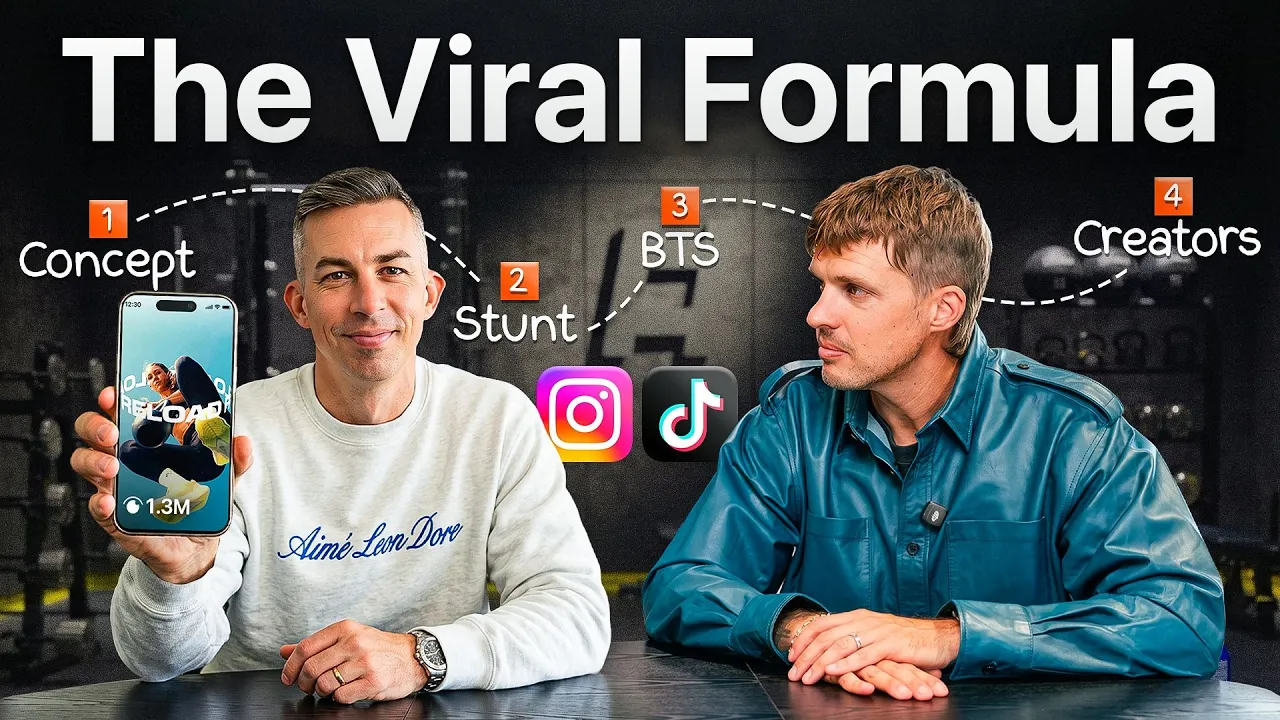
Description
Learn about Swap for your e-commerce store: https://www.swap-commerce.com/book-a-demo?utm_source=youtube&utm_medium=influencer&utm_campaign=evergreen-commerce-consolidation&utm_content=oren-john-youtube I went inside Ladder HQ in Austin to sit down with Edsel, VP of Brand & Creative at Ladder, the strength training app that grew on TikTok and Instagram through its coaches. We tour the content studio they rebuilt in their office, then break down two real campaigns side by side. The first is Sustain, a low-budget series they shot in Chicago with just the in-house team and coaches. The second is their biggest swing yet: Hilary Duff, from the pitch and the "Stronger, not smaller" New York Times back page to the TIME100 moment that went viral on its own. Along the way Edsel gets into why marketing is now an operator's job, why behind-the-scenes content is part of the campaign, the cheap plexiglass stage that beat their bigger stunts, when a celebrity deal is actually worth it, and why giving celebrity footage to creators for reaction videos worked almost as well as the campaign itself. 0:00 Intro 0:53 Becoming a Creative Director 4:21 Tour of the content studio 7:03 Swap for e-commerce 8:30 The low-budget campaign 17:07 The big swing: Hilary Duff 25:24 Lessons learned 27:15 What's next + advice Sign up for my weekly brand strategy newsletter: https://hyperstudios.us Join the next Cut30 short form bootcamp: https://cut30.co Grow your brand with our agency: https://www.darkroomagency.com/oren About Me: https://orenjohn.com/ For Brand Partnerships: oren@delucamediagroup.com
Summary
Generated by gpt-5.6-terraAt-a-Glance
- Verdict: Watch fully
- Core thesis: Marketing goes viral less through a single polished hero asset than through an operating system that pairs a sharp cultural idea with high-volume, multi-format distribution, behind-the-scenes proof, and creators who can reinterpret the campaign.
- Why it matters: Ladder offers a concrete blueprint for building an in-house content engine, designing campaigns for asset multiplication, and selectively using celebrity to break out of a niche audience into mainstream awareness.
- Best use: Use this as a GTM and creative-operations case study: extract its campaign-production model, creator-distribution loop, and celebrity-selection criteria rather than treating it as generic brand inspiration.
Executive Summary
Ladder's marketing lead, Ezal, argues that modern marketing leadership is fundamentally operational: creative leaders need enough hands-on production fluency to set standards, hire specialists better than themselves, and turn campaign ideas into repeatable output. Ladder built this capability in-house, including a flexible gym studio, a rotating coach-creator network, and a team that can make high-production-value work without agency-scale budgets.
The central campaign lesson is to treat production as content, not merely the process behind content. Ladder starts campaigns from either a script or a strong art direction, then deliberately creates physical, difficult-to-fake moments—such as a burning dumpster, an ice statue, or a plexiglass platform—because the resulting behind-the-scenes material signals reality and often has more viral potential than the polished final spot. Shot lists provide structure, while the team leaves room for unplanned visual opportunities on location.
For its lower-budget Sustain campaign, Ladder framed winter fitness around the real seasonal obstacle of cold, dark weather and holiday disruption. It concentrated content into the two-week pre-program "open season," when users can try teams before all cohorts begin together; it says performance falls sharply once the program is underway. The output model is an anchor hero film plus cutdowns, social formats, creator posts, vlogs, and BTS—not one campaign video.
Its Hilary Duff partnership illustrates when celebrity can work: not as a standalone paid endorsement, but when the person is an authentic product fit and already entering a broader cultural moment. Ladder launched the message "Stronger, Not Smaller," bought the New York Times back page, captured enough material in an unusually productive eight-hour shoot to generate hundreds of ad variants, and then gave the celebrity assets to its ordinary creators for reaction and green-screen content. The team reports spending $40–50 million in ad spend behind the partnership, making creative volume and reuse essential to the economics.
Key Takeaways
- Claim: Build an in-house production capability when content frequency and brand-specific quality standards are strategic advantages. | Evidence: Ladder brought videography, design, art direction, and content creation in-house, built a dedicated gym studio, and brings coaches together twice yearly for two days that yield roughly 100 content pieces. The studio is used weekly for brand explainers and in-app movement videos. | Implication: For a content-dependent business, evaluate the studio, talent bench, creator access, and production workflow as core growth infrastructure rather than discretionary brand overhead. | Caveat: The model depends on hiring unusually strong specialist talent; simply internalizing mediocre production would not create the same quality or cost advantage.
- Claim: Campaigns should be designed as an asset ecosystem, with BTS and creator reinterpretations planned from the outset rather than treated as leftovers. | Evidence: Ladder's coaches ask permission to post BTS, but the team explicitly encourages it because BTS creates awareness before launch. Its Sustain campaign consists of a hero asset plus social cutdowns, vlog content, and behind-the-scenes material; its Hilary Duff assets were also distributed to creators for reaction and green-screen videos. | Implication: A campaign brief should specify the hero idea, native derivatives, creator handoff package, and pre-launch BTS plan—not just the final deliverable.
- Claim: In an AI-saturated creative environment, physical effort and verifiable real-world production can be a differentiator because they make content feel more credible and give audiences something to talk about. | Evidence: Ladder deliberately makes concepts harder to execute—lighting a dumpster on fire, creating a nine-foot ice statue of David, or filming coaches on a plexiglass platform against the sky—because the BTS proves it happened and can outperform the campaign itself. The platform reportedly cost only roughly $1,000–2,000. | Implication: Prioritize a few visually legible, real production choices that generate both the creative and the proof-of-making, instead of using AI-generated novelty as the primary hook. | Caveat: Physical spectacle must still support a relevant campaign idea; expensive or difficult execution alone does not establish product fit or distribution.
- Claim: Lower-budget campaigns can be distinctive when they pair a timely audience tension with disciplined art direction and flexible field production. | Evidence: For Sustain, Ladder tied its fitness series to the "winter arc" problem: cold, dark weather and holiday schedules make this the weakest seasonal period for gym memberships. The team prepared scripts, locations, and shot lists for Chicago but retained latitude to capture unexpected light, locations, and moments. | Implication: Use seasonal or behavioral friction as the starting point for campaign messaging, then give the production team both a clear visual constraint and permission to adapt on the ground.
- Claim: Celebrity is usually a poor default strategy, but it can be high-leverage when authenticity, cultural momentum, and reusable content inventory align. | Evidence: Ezal estimates celebrity is not a good approach for 70–80% of brands. Ladder chose Hilary Duff because she was an authentic Ladder user with a public strength-training story and an anticipated cultural resurgence tied to an album; subsequent appearances on Call Her Daddy, Sports Illustrated, and a successful tour increased the ambient attention around her. | Implication: Before pursuing a celebrity, assess product credibility, current and upcoming cultural catalysts, likely on-set collaboration, and whether the planned content can sustain paid and creator distribution well beyond one announcement post. | Caveat: Celebrity managers and agents may optimize chiefly for the fee, and a celebrity may not engage creatively; the campaign idea can fail at that approval stage. Ladder describes its eight-hour, highly collaborative Duff shoot as atypical.
- Claim: A large brand bet needs creative variation at a scale sufficient for paid-media testing and sustained distribution. | Evidence: From an eight-hour Hilary Duff shoot, Ladder captured hero photos across two sets, a hero video, and a scripted 1990s-style training video, ultimately producing hundreds of ad creative pieces. It says it has put $40–50 million of ad spend behind the Duff partnership and views the content volume as a key reason the investment worked. | Implication: Match production planning to media scale: if spend will be substantial, secure enough time, modular scenes, formats, and creator usage rights to produce a deep testable creative library.
- Claim: Distribution-native formats can outperform the flagship campaign, especially when creators translate premium assets into familiar social behaviors. | Evidence: Ladder found that giving its celebrity assets to creators making iPhone-shot reaction and green-screen videos was one of the strongest unexpected outcomes; these formats nearly matched the views of the launch-day content. The speaker notes that he personally encountered the reaction content rather than the core campaign. | Implication: Do not protect hero assets so tightly that only brand channels can use them; package them for native commentary, reactions, explainers, and remixes that can enter audiences through multiple routes.
Detailed Brief
Creative direction and studio-design lessons
- Claims: Ladder uses art direction as a campaign origin when the program's emotional tone matters more than a verbal premise.; The team refreshes sets to avoid locking its content into a stale visual identity.
- Evidence: For its Max series, intended to drive users toward a one-rep max over six weeks, Ladder used black-and-white footage with crushed blacks, extreme whites, heavy grain, and hardcore music.; The studio originally used a large softbox that created a flat look; on redesign, the team added distinct shooting zones, textured materials, a posing/mirror room, and more nuanced lighting.; The brand reduced overt logo treatment and removed a colored LED treatment it considered dated, retaining a single spotlighted logo and using premium-looking materials instead.
- Caveats: The speaker's aesthetics are fitness-brand-specific, so the visual prescriptions should not be copied literally outside that category.
- Implications: Maintain a set and lighting system that supports multiple recognizable content worlds rather than one repeated backdrop.; Treat visual refreshes as a defense against creative fatigue, particularly when publishing continuously from an owned studio.
Launch timing and audience segmentation
- Claims: Campaign attention should concentrate at the point where the audience can still take the desired action.; Ladder's next growth challenge is not merely awareness among men but changing entrenched attitudes toward fitness guidance.
- Evidence: Ladder opens accounts for a two-week "open season" so prospective members can sample teams before every program cohort begins together on Monday; it reports a steep drop in content performance after the series starts.; The team believes many men reject fitness apps because they assume prior athletic experience means they already know how to train; it characterizes this as an education and habit-change problem.
- Caveats: The reported post-start performance cliff is Ladder's observation and may be shaped by its cohort-based product design rather than a universal campaign rule.
- Implications: Align launch cadence and content intensity to the actual conversion window, then move rapidly to the next message rather than continuing a campaign after the audience's decision point has passed.; For resistant segments, lead with an identity-compatible reframing rather than generic awareness messaging or overt instruction.
Notable Concepts & Terms
- Content as operational infrastructure: Ladder treats studios, specialist hires, coach rotations, and production systems as the machinery that enables sustained marketing output.
- BTS as campaign: Behind-the-scenes material is a planned awareness and credibility channel, not a post-production byproduct.
- Physical-production proof: Real, effortful stunts and builds are positioned as a response to AI-era skepticism because audiences can see that the event actually occurred.
- Open season: Ladder's two-week acquisition window in which users can unlock and try teams before a synchronized program start.
- Stronger, Not Smaller: The cultural positioning used for the Hilary Duff launch, shifting the fitness aspiration from shrinking one's body to gaining strength.
- Celebrity arbitrage: Selecting a celebrity whose authentic product use and independent cultural momentum can create returns beyond a paid endorsement.
- Creator content matching: Capturing many formats and variations in a premium shoot, then enabling paid media and creators to repurpose them into platform-native executions.
- Green-screen/reaction distribution: Giving creators campaign assets to comment on or remix, allowing the brand to enter feeds through social-native rather than branded delivery.
Operator Notes / Why Ken Should Care
- For any major launch, require a distribution matrix before greenlighting production: hero assets, paid variations, owned-social cutdowns, BTS, creator remix rights/files, and a defined conversion window.
- Audit whether the current content process has an in-house bottleneck worth solving with dedicated production capability; begin with a flexible multi-set environment rather than a single polished set.
- When evaluating a celebrity or high-profile partner, use a gating scorecard: authentic product narrative, cultural catalysts already scheduled, audience overlap, usable shoot hours, approval risk, and projected creative-volume yield.
- Run a small experiment in which creators receive approved campaign footage and explicit prompts for reactions, green screens, or commentary; compare it against polished brand-post reach and downstream conversion.
- Avoid measuring a high-production campaign solely by hero-film performance; evaluate the total asset portfolio's paid-media durability, creator uptake, and organic cultural spillover.
Source/Metadata
- Title: Why Your Marketing Never Goes Viral (and How to Fix It)
- Transcript words: 10815
- Duration seconds: 1768
- Timestamp note: No timestamps or chapter markers were provided. The transcript contains substantial repeated passages near the end.
Transcript
We're here in the belly of the proverbial brand strategy beast at Ladder HQ. And I love to talk about Ladder in terms of marketing because they do two things that I'm a huge fan of and talk a lot about in this channel. The first is content marketing and building a world. You guys have a ton of creators that actually help build Ladder out. They work with celebrities. And then they also do these campaigns multiple times a year. There are all kinds of interesting, dynamic ways to get their brand across in a saturated market. So today we're going to talk with Ezal who runs marketing there. Creative director, head of marketing, everything title. I'll accept all of it. Yeah, that's fine. And so we're actually going to take a look at the content facility they've built out here in the office. And we're going to tactically talk through two campaigns that they've done. One that's more lower budget and ad hoc. They were able to put together just with their internal team. And then one that's a bigger one. So you can see how actual marketing teams in the field are building these things out and thinking about it in a way that works in the modern era. Let's lock in. All right. So first off, how did you get here running modern marketing at an org like this? What does the background look like? I know you've worked with clients large and small. Give us some history. Yeah, I mean, I think pretty similarly we have a very circuitous route through the creative world. Circuitous is a great word. Yeah, I just flexed with that word a lot. Well, that brings me to I was a writing major in college and then was in a band for six, seven years. And then went into photography and directing. Was creative director for a menswear e-commerce brand. Came on as founding creative director for Austin FC, which is Austin's first professional sports team. And that's been a ride. I'm sure it's been crazy. And then was looking for the next role and found Ladder. And when I came on, it was less than a thousand members. I didn't really have a brand and had to figure out how do we build this thing? How do we grow? And you know, the CEO and I, Greg, basically took on short form video and TikTok as our channel, our bet on how are we going to grow this brand. And that's the backbone of how we got here. Yeah. And that's how I found the brand is they were dominating TikTok and Instagram, right? They had all these different coaches that were creating their own content. If you start to watch one, more would show up on your feed. And you'd be like, wow, they're all promoting this app, doing a great job. This is early on inside that era. And then seeing it emerge from there. And we started talking and then watching the campaigns become more and more interesting and dynamic and that world evolve and more coaches. And all the way to the facility that we've entered into here has been quite the journey. And I guess I'm curious for anyone that's hopping into those roles for the first time. Any words of wisdom as they start into that arc? I mean, I think such a big part of it, we were talking about this earlier. Being a marketer now is such an operational job. I think most people in our generation came up from the creative field. We did the work. We were the photographer, designer or whatever. Whereas traditional marketers, CMOs, they weren't actually operators necessarily. They could run a team. They were managers, but weren't necessarily the ones being creative. And so I just think the ability to get my hands dirty in a lot of stuff. And now that I have an incredible team that basically my whole goal with hiring my team was let me go find people that are way better at doing this stuff than I am. But at least I can speak their language and I've done it before. So I know how to get to the end result with people that are way better than I am at it. Yeah, it makes sense. Look, mastering any of those skills before you get into that I think is crucial. Having one or two of these, without, if I didn't have the graphic design background, I don't think I'd be able to do a fraction of what I did. I think the biggest thing that I think about is what I've tried to do with Ladder is we've brought everything in-house. It was super important to me to go find the best videographer. Shout out Ian who's behind the camera. Who I would put up against any other videographer in the world or designer or senior art director. Super talented. Everyone on our team is just insanely talented. I feel super grateful to work with all of them. And the ability to go shoot a budget or a campaign for almost no budget because we're just going to go mob around the city of Chicago and take our coaches who are insanely fit and talented and create something really, really incredible that we're proud of is amazing. And so just the ability to create in-house for a very low budget but also very high production value is super valuable. Yeah, that's such a radical shift from even what it would take to rent the camera packages ten years ago. All right, so I want to get a little tour around here and then we're going to double tap into some of those campaigns. Let's do it. All right, so you've actually put a massive space in your office to make content. Yeah, we actually created this space when we first moved in like three years ago but we basically only had this part as a set. And as you know, especially with a gym, there's a big difference between a set and an actual real world universe. Practically, we only shot in that direction. And it was like, all right, if we want to film a vlog and they're moving from one piece of machinery to another, it's like, well, we can't face that direction. So Ian, you can kind of do a little turn here and kind of show the rest of the studio. We've got right now we've got a podcast set in there. But yeah, we built out this whole custom studio. We've got coaches coming in town all the time, on rotation to create content. We've got a lead creator who's able to pop over here whenever we need. And all right, so if you were doing this again from scratch, what did you learn the hard way as you went through this process? Well, it's funny, we just finished this a week ago. Because you're still learning. It would be real bad if I was like, oh, we did it all wrong. No, honestly, the biggest thing we learned was on lighting. We had a giant softbox that looked really pretty, but it was super flat. And then we were basically committed to that look for content for three years. It was getting to the point where it was like, all right, we need to refresh the content a little bit. So when we thought about redesigning the space and building out the full thing, we were like, all right, how do we create different areas? I think you probably think about it as different backdrops that you might be shooting in front of. So it's like we've got a posing room with a mirror. We've got a different material over there. Yeah, that does. And that has texture behind it. It feels real. I'm surprised. Only one big logo. I guess there's logos on the individual weights. Yeah. How did you think about branding and making it have a unique feel for the brand? Yeah. We actually scaled back the logo. I mean, obviously it's a giant sign on the wall, but we used to have an LED light behind it. One of the things I've been thinking about is the colored LED feels a little dated. And so trying to pull back from that, you know, mid-2020 or early 2020 fitness studio look and more into elevated premium materials. So we just want it to feel elevated. We've got one spotlight that hits it. So it's pretty obvious, but it's not screaming in your face. And then how many pieces of content do you think you'll be shooting here roughly a month? What's the output that makes this worth it for the brand? Yeah. I mean, we shoot in here every single week, whether it's brand explainers or actual movement videos that go in the app. Because our coaches are all over the world. One of the things I've been thinking about is the colored LED feels a little dated too. And so trying to pull back from that mid-2020 or early 2020 fitness studio look and more into elevated premium materials. So we just want it to feel elevated. We've got one spotlight that hits it. So it's pretty obvious, but it's not screaming in your face. And then how many pieces of content do you think you'll be shooting here roughly a month? What's the output that makes this worth it for the brand? Yeah, I mean, we shoot in here every single week, whether it's brand explainers or actual movement videos that go in the app. Because our coaches are all over the world. We bring our coaches together for coach summits at least twice a year. They're on constant rotation, but we bring everyone together twice a year and we'll spend two days creating 100 pieces of content here. So it's definitely worth it. Appreciate you giving me the tour. Yeah, thanks, man. Ordered some Alibaba weights. Yeah, they fell apart real quick. And we got some premium Watson, but the knurling on that will cut up your hand. And speaking of the logistics of marketing, let's talk about what's actually behind your e-commerce store. When you start a brand, you have a product and a checkout and you grow and then every problem gets its own tool. One for returns, one for shipping labels, one for duties when you go international, that's separate from your local sales tax, one for customer support, and now one for finding out if AI is even recommending you. Every one of those is another fee, another partner to manage, and another set of data that doesn't talk to the rest. That's the exact problem my friends at Swapper are solving and I partnered with them to break it down in this video. Swap understands the whole journey. Let's break it down by the pieces it does. So first, getting found and helping people buy. Their discovery tool shows how visible your brand is in AI for shopping and search and what to fix to improve it. The Agentix storefront lets your shoppers ask for exactly what they're looking for, get real recommendations, and do virtual try-on. They handle selling across borders, duties, taxes, and landed costs. Sales tax handles your U.S. registration, plus filing and remittance. Swap ship connects carriers and rates and customs-ready labels in one workflow. Not everything after the purchase. Checkout Plus gives customers one optional add-on that funds free returns and package protection. Returns runs the branded returns experience where you can use exchanges and store credits to help keep the sale. Customer support is an AI agent that handles tracking returns and exchanges and passes exceptions to your team. My favorite part is you don't have to rip everything out on day one. You can start with one thing that hurts the most and add on as you grow. Over 50% of Swap merchants are already using three or more of their services. And the number that got my attention is that brands save over 30% on average moving to Swap. If you're a founder or an operator and managing these tools has turned into its own job, you can learn more by booking a demo with Swap below. And thank you so much to Swap for sponsoring this video. Now I want to transition to stuff I feel is really valuable for marketers and that's executing campaigns. And so you had mentioned before you guys have been to Chicago. You were mobbing around just with your internal team and then some of your coaches. And you were able to make some pretty awesome low-budget content. But let's start with that first shoot. How does something like that come to life? How do you start planning it? What does that first stage look like? Yeah, for me, everything gets built around a script. I guess depending on the shoot, sometimes it gets built around an art direction. So our previous series, we built that around this is the look that we want because the series was called Max. It felt very hardcore. The goal of the series is you're aiming for a one-rep max over six weeks. So that one feels a little bit more art-directed. And we kind of know the vibe we're setting. What was the art direction there? Yeah, so that one was a black and white. But the point of it was heavily crushing, almost color grading in a way that you wouldn't want to color grade it. Just crushing the blacks. The whites are extreme. So there's almost over-contrast. And then just add hella grain on top and it feels like a vibe. And then you throw some hardcore music in it and you've got yourself a campaign. Let's go. And for that one, we love being able to do that because that one's just on white cycle. We'll shoot here. We'll shoot on sets we build or in the city. But we also love doing some cycle stuff. And the cool thing about that is you've got all this heavily art-directed, graded footage. And then we've got the vlog footage because we're shooting behind the scenes of everything that's super lighthearted and fun and poppy and bright. And then you've got the really intense art- That's great. Actually, I love that contrast of, okay, we have this campaign, but we're going to show the personality stuff behind the scenes. We're going to play that totally straight. It's really fun. When you're planning something like that before you get into Chicago, you mentioned the behind the scenes. Are people shooting all the time and you pull out of it? Do you have a plan for BTS? How does that work? I mean, now BTS is actually driving the concept. This year we've lit a dumpster on fire. We had a nine-foot statue of David made of ice. And we've done a lot of crazy stuff this year. But the point of it is it makes it more real to go to extra lengths or extra effort that you wouldn't normally do for a campaign. Just because that's almost the content that is outperforming the actual- Yeah, I remember the- I actually, funnily enough, I've seen both the dumpster fire teaser and the result. No, I think because AI has made a lot of creative super attainable—whether or not that's good is a different discussion—it's made a lot of wild ideas attainable to a certain extent. For us, it's almost let's go out of our way to make it harder. Whether we're building a plexiglass platform and shooting up into the sky and it looks like their coaches are floating or whatever. Let's actually make it harder because it looks more real. The BTS is more interesting. All the content that we create around it feels like it has potential to be more viral. I feel like every time someone hears those ideas—oh, the dumpster on fire, there's a nine-foot statue, you have a big plexiglass board—they immediately think, oh, I don't have the budget for that. Was there any of those that was surprisingly cheap to execute? Yeah, I mean the plexiglass stage that we built was, I don't know, probably maybe a thousand, couple thousand dollars. Yeah. And literally we're just shooting it up against the sky. It looks so sick. We'll superimpose it all on here. Well, the thing about that too is that campaign is probably the most viral one we've done in a while. Even more viral than the dumpster on fire or the nine-foot statue out of ice because of color. But yeah, it is funny having art direction and almost effort now sort of lead the campaign concept is interesting. All right, so let's get into Chicago. So you mentioned everything starts with either a script or an art direction idea. What was the start here? This one was a script. And it's because the series that we were promoting is called Sustain. And it's this idea of obviously everyone in gym culture, gym algorithm is talking about the winter arc. It's the idea that no one wants to work out when it's cold and dark and when it's the holidays and we've all got holiday parties and whatever. That's not sort of the first thing on everyone's mind. It's the time seasonally when you look at gym memberships—it's the worst time of the whole year for obvious reasons. And then the rest of it was just I took my team that is crazy talented and let them loose on the city and was like, all right, let's buy Max. What was the start here? This one was a script. And it's because the series that we were promoting is called Sustain. And it's this idea of obviously everyone in gym culture, gym algorithm is talking about the winter arc. It's the idea that no one wants to work out when it's cold and when it's dark and when it's the holidays and we've all got holiday parties and whatever. That's not the first thing on everyone's mind. It's the time seasonally when you look at gym memberships, it's the worst time of the whole year for obvious reasons. And then the rest of it was just I took my team that is crazy talented and let them loose on the city and was like, all right, let's buy Max. I like tying that to Chicago. If you're working, if you're doing anything in Chicago, it hurts. And so, all right. So what did it look like on the ground? You guys had that concept is sick. You had a good idea there. Everyone gets on the ground. You have a certain amount of, hey, we're trying to get this many pieces or we're basically shooting ad hoc. What does that look like? Yeah, it's a mix of we do all the prep work. Jeremy, our director with Ian, built out all the shot lists with all the different locations and stuff. But then knowing that when you're running around the city and you're just run and gun, there's you'll see stuff. There will be magic that happens. So giving yourself structure and parameters, but then being open to creating if you just see the light hitting this wall in a way that feels really sick or whatever, just being open to film that stuff. And so then what was the kind of result that came out of it? Like what were you happy about? How did the campaign perform? What was the result? Yeah. So we just launched that campaign, I guess, last week. And so it's still very new. I think a big part of that motion for us is you have the hero piece, which is the anchor and then just disseminating all the social format and the BTS and the blog and the behind the scenes and all, whatever it is. I think some of the stuff I saw was, was it four by five ratio or how did you answer? Would you do all of it like that or some of it? I mean, the hero we launched as a 16 by nine and it's outperformed everything else we posted so far. But I will say, Instagram just launched features yesterday. So it feels like they're leaning into, even the fact that Adam posted that 16 by nine video of them doing it. It was like, all right, there's a little bit. I know. Yeah, there's a little bit more. In my head, I'm like, I got to be posting 16 by nine. I know. Yeah. There's a little more. It feels like there's a little more support now from the algorithm to maybe be a little bit more artistic. And so I see you mentioned those different pieces. It'd be great to call some of that out too. So you have, did you tease any of this before it went live or, I know you do that in some campaigns. Sometimes. Yeah. I mean, what's funny is all of our coaches are like, hey, is it cool if I post BTS? I'm like, no, BTS is literally part of the campaign. The more BTS you post, the more people will know about the campaign when it launches. And so. So it's a good thing. The production is part of the campaign now, versus that used to just be the thing that you. Yeah. Well, and that's what world's in. So context for that too. So you have a bunch of your team on social media. All of these people that are inside the videos are all social native. That plays into the dynamic, right? And that's a lot different, I assume, than a couple of years ago. Yeah. Yeah. We literally just brought on our lead creator who the way I was hiring for that role was essentially thinking about you're the TV host of Ladder. You are interviewing coaches. You are behind the scenes teeing up like, hey guys, today we're on set for sustain. You know, we're doing X, Y, Z. Great job. And she's also a creator in her own right and she's been killing it. And so it's been a huge addition to the team. Amazing. And so, okay, so you have the teaser content, you have this BTS world, you have the hero moment. And then you talked about, okay, now we have more BTS. We have the vlogs. Like what are all those kind of assets that come out of that? And how long does that campaign last for? Well, for us, we do basically a two week period called open season where we unlock everyone's account. You get to try all the different teams. And then we, the programming starts, every team starts together on Ladder. And so you're starting on a Monday. We found that once the series starts, the cliff for content performance just goes over the edge. So we sort of try to put as much as we can into that two week period. And then we move on to the next thing. And so when you're making content like this, this low, the kind of lower budget, you know, not a big production, but you have everyone out there. You have your personalities in it. What's the key to making that great or special? Obviously you have the art direction and the script and the idea. Anything else that helps make that work for the brand? I think everything I've said about building a really talented in-house team, our bar is very high regardless of budget. Whether it's free or not, what we're going to put out on social is we maintain a very high standard of quality. I hope. And what does that look like? What's some examples for you? You're like, I'm so stoked on this. Or a thing you did or the way it looks at. I mean, I think that's the biggest thing is, are we stoked about the piece? I think from brains, you can always tell when the creatives are stoked and when they had fun making it. If a creative didn't have fun making the campaign, you can kind of tell. I can assume the dumpster fire, assume it was the whole team was lit up. That was a good time. I had ladder employees popping on my feed. Yeah. So yeah, we're always trying to make it interesting for us, but also it makes it interesting for everyone else too. All right. So contrasting this with a big campaign, you know, you've had a few kind of comedians, celebrities, et cetera, but you had one big one. What does something like that look like? Want to give us a little, maybe just an overview of the campaign itself and then we'll break it down. Yeah. So this year we partnered with Hilary Duff and that was easily the biggest marketing swing we've ever made. Like that's not a small investment for us, especially as we still consider ourselves a startup. And so for us, that was a big, I would say risk, but you're putting yourself out there and especially because celebrity is a pretty, you know, it's not always the best strategy. Any celebrity will take your bag. And so you can pay a celebrity a ton of money and they can promote the product for a post. And then the next day they forget about it, they move on. And it feels like a really inauthentic partnership. We see a lot of that stuff. And so for us, it was like, who's actually the person that we feel like we can get extra mileage or leverage out of this partnership with not only because they're an authentic user, they use the product, they'll talk about it, but also because what do they have going on in culture? And obviously 2026 has felt like the year of Hilary Duff. Like she's had a bit of a year, a bit of a run. And so we were able to draft off a lot of that, I think too. And then the next day they forget about, they move on. And it feels like a really inauthentic partnership. We see a lot of that stuff. And so for us, it was, who's actually the person that we feel like we can get extra mileage or leverage out of this partnership with not only because they're an authentic user, they use the product, they'll talk about it, but also because what do they have going on in culture? And obviously 2026 has felt like the year of Hilary Duff. She's had a bit of a year, a bit of a run. And so we were able to draft off a lot of that, I think too. Something we've joked a lot about in the brandfathers is the On Zendaya collaborates. So where she, in the interview, she's just like, yeah, I don't really run, the whole, when you talk about the fit, do these, the product. And I'm sure it crushes for them just because she's a global megastar. But the goals might be different, but it was always funny thinking about fit. Whereas this was a very exact fit. So what made you make the bet on celebrity though? Knowing you guys have been grown off of TikTok creator worlds. I love the fact that you can do both. I think that's a great example of how a modern brand should be built. What made you make the jump into this here? Honestly, our success on short form made us incredibly successful for the brand and the brand has grown. The overwhelming realization last fall was, man, the business is killing it. But mainstream awareness, we're still pretty low. You go to the gym and somebody may have never heard of Ladder, which is insane to me. And so we thought, okay, we've got this short form engine that is working. It's hitting the right niche of people. But how do you hit the zeitgeist? The zeitgeist is very different than what's working in a niche algorithm. And so that was why when we went to our short list of who are the partners we'd work with, that list was really, really short. Because you can go get a big celebrity, but is culture talking about them for more than a day? Maybe, maybe not. So that's why Kevin Hart was already with Nike. Yeah, exactly. Well, what's crazy is we've almost now been in this celebrity social media partnership world for long enough to where you're seeing celebrities flip. Megan Thee Stallion literally has a training program on Nike. Last week did a great Gym Shark campaign. So you're seeing celebrities go from one brand and flip to the opposite. Which is a pretty interesting thing. Was there anyone who you were really trying to get, just didn't answer the phone? Honestly, yeah. Honestly, Hilary, it was Hilary and everyone else. In our list was very short. I mean, I love the millennial throwback. I was like, Lindsay Lohan, are you available? But no, it was Hilary and everyone else. Because Lindsay, how's the Pilates routine? Yeah, exactly. No, because Hilary has been really outspoken about strength training and her shift from cardio to strength training after she's had four kids now. After she went through her pregnancy, strength training was a big thing for her. So the authenticity was there. Yeah. I do remember, in my life, I'm a wife, your friends being, oh, it looks good. She posed basically nude on the cover of Women's Health. And I think everyone was, oh shit, Hilary's Hilary's back. Tapping into the zeitgeist like that is an amazing move. Amazing. You're able to pull it off. So what does that look like? You're like, okay, we want to get this celebrity involved in the campaign. We have this person on the list. They said yes. Did you have the campaign that you pitched to her prior? Did you start working on it after? How does that work? Yeah. I think the hard part with celebrity is I always think idea first and I'm like, all right, I've got this really sick creative direction. And it's going to be awesome. And then you pitch it to a celebrity. And to be honest, when you're going to a celebrity, their manager agent is, well, okay, we don't care about creative. We care about what's the number. And then you get to the celebrity and you hope that you have a good partner. Hilary was an incredible creative partner, but a lot of celebrities don't really care, aren't involved or whatever. Thankfully we didn't have that, but your idea could die the second you take it to the celebrities. So what was the idea with this campaign? How'd that come together? Yeah. So I mean, honestly what we were doing because we were going for just mainstream awareness, the tagline of the campaign when it started was literally just everyone's wearing Skims. Hilary Duff trains on Ladder, just very simple. The day we launched, we did a full page buyout of the back page of the New York Times. And when you're doing the New York Times, you can't just lead with a vanilla simple statement. You've got to take a little bit of a stance. And so you've got to write it in a way the liberal elites understand. Yeah, exactly. So we had to take a bit of a stance. And so our headline for the New York Times was "Stronger, Not Smaller." And the crazy thing about it is she was in New York for Time 100 and we launched the campaign the next day. She's on the red carpet of Time 100 and the journalist for Time is a Ladder user. And she saw the "Stronger, Not Smaller" headline and asked Hilary Duff on the red carpet, I love the Ladder campaign, tell me what "Stronger, Not Smaller" means to you. And she gave the most perfect answer. And that went mega viral. I think she did. And that was completely organic. Completely organic. And that's the power of having a brand. Well, and the thing too is we did our homework. We knew Hilary Duff had an album coming out. People are going to be talking about her. We didn't know she was going to be on Call Her Daddy. We didn't know she was going to be on the cover of Sports Illustrated. Didn't know that the tour was going to pop off in the way that it did. So we positioned ourselves in the right spot, but a lot of it is just making a bet and understanding culture. And that's going forward. And you get to kind of reap the benefits of it. So in the standpoint, you're still all your in-house team, you guys have support for that? Yeah. That one was massive. I brought in my buddy, John Raines, who owns a production company who, my Nike shoot, my Reebok shoot, all that stuff he's produced for me. So it gets very, very expensive, very fast. But that's why it was a huge bet for us. But I think if you can put yourself in a position like we're talking about where you feel like you can leverage that content. I mean, we've spent now 40, $50 million of ad spend on Hilary Duff and our partnership or whatever. So it's been well worth it. And so when you shot that, it was okay, one big hero creative, a bunch of smaller stuff. What did the kind of the, how many assets came out of that campaign? Dude, the craziest thing was we had eight hours with her and she was locked in for straight up eight hours. All that stuff he's produced for me. So it gets very, very expensive, very fast. But that's why it was a huge bet for us. But I think if you can put yourself in a position like we're talking about where you feel like you can leverage that content, we've spent now 40, $50 million of ad spend on Hillary Duff and our partnership or whatever. So it's been well worth it. And so when you shot that, it was like, okay, one big hero creative, a bunch of smaller stuff. What did the kind of the, how many assets came out of that campaign? Dude, the craziest thing was we had eight hours with her and she literally was locked in for straight up eight hours. And then we get to the end of it and she was doing a photo shoot. And I had hired an incredible photographer, Zoe, who is actually her friend. I think their kids may go to the same school or something. And so Hillary was bought in on that, like the creative partnership too. And they got to the end of the eight hours and Hillary was having such a good time. She was like, all right, let me get a couple more. And so she kept giving us more. And then she hung out to make all of our selects. And this is like never happens with celebrity. You work with celebrities, but you might get a couple hours. You might get maybe four. If you get a really great outside James Harden's house waiting for them to ring you up for an hour and a half. I'm just starting. Dude, a thousand percent. I've literally talked to somebody that showed up all day for a shoot with James Harden at the stadium. And he walked by them to go to practice and then walked by them to leave and never stopped by the other set. No, not alone. And so I think a lot of it has to do with having a great creative partner, but she gave us those eight hours. And we had hero photos on two sets. We had the hero video concept. We did a basic nineties training video with a script that she crushed. And so yeah, we just content matched. So you guys got a lot of assets out of that. Yeah. And then paid off. I assume that campaign has gone. Yeah. It's been incredible. Any learnings from that? Anything where you're like, hey, this is something I definitely would do again next time or something we forgot about or anything like that? Yeah. I think the biggest learning is two things. One, celebrity is not a great strategy for probably 70, 80% of brands that try to do that. But if you can find the arbitrage of a celebrity that has their own culture moment happening and you can draft off that and also create something that feels authentic, it's absolutely worth it. That's the reason that brands do it is they hope for that. So there is arbitrage there. The second one is the amount of content, the variation of content basically gives us that much more to be able to go spin behind. Yeah. Cause variations for ads, you're able to come on as a huge, so you mentioned the dollar figure, how much, but how many pieces of ad creative do you think? Yeah. Dude, who knows? Hundreds. Yeah. But it's good to say even just hundreds is like setting the stage of so many people. I've got, we audit brand accounts all the time, like a darkroom and you're like, oh, you're spending on, you have a hundred pieces of creative in the last year. And you're just like, you need so much more than that to really scale. You may get some success, you may get some return. One of the most powerful things that we honestly weren't expecting was we did this brand campaign and we have also a creator program and the creators are creating iPhone video in their living room or in their gym. And then we've got this celebrity that we spent tons of dollars on. And then the thing that was honestly one of the most powerful was we gave all that celebrity content to our creators to do reaction videos and green screen videos. Fire. Fire. Fire. That almost got as many views as the day one. Such an underlooked thing. Even though we're going into holiday now and one of the things I had briefed last year that worked really well was like, hey, you need green screen creators going through your sales. I was like, yeah. Green screen creators like taking any piece of asset that you have and just talking about it and reacting to it. Especially if it's cultural commentary, the way that that is is funny. I actually think I don't know if I actually got served the core campaign, but I got served reaction videos too. Yeah. You're in the funnel one way or another. Yeah. Which is a great way to think about it. All right. So going forward in the future and like new campaigns, things you're working on, any ideas you really want to try or anything you've seen out there and been like, man, we need to do that someday. Yeah. I mean, the algorithms are always changing. We're always trying to stay on top of what's working on social, which is a never ending game. For us, I think we want to speak to more males. Males is a really interesting challenge because it's less about awareness and more about trying to change habit and culture. Cause guys don't think they need fitness apps cause they all played high school football. And so it's like, all right, it's not really an awareness play. It's an education play of like, hey, totally get it. You know how to bench press. And they don't want to be educated. Yeah, exactly. And they don't want to be educated. Yeah. So that'll probably be next for us. Interesting. Well, look, I appreciate you breaking it down. I think it's really valuable for people that are setting up their first campaigns or trying to move up in their career to just know how this stuff works. Anything else, if you are a young art director, creative director, someone wants to be there someday and you're working in this modern era, you don't get a lot of advice. Anything you'd tell them or places they should look at or things to read or anything like that? And just get your hands dirty. You have to do it. And I think that's the biggest thing I recommend to, especially up and comers is that with AI being able to make so much content, or shorten the production scale or window or whatever it is, you have to find ways to get your hands dirty, to get experience. Cause otherwise in the future, when you're using AI for your tools, you won't be able to apply that taste or experience later. And I will say getting on set and shooting some BTS is an excellent way to start. One of the, I have an anecdote from last year. I was at another campaign where we're at the shoot and one of these girls had one of the nineties VHS cameras. And by the end of the shoot, the creative director was like, hey, can I get the footage? You're now our lead videographer. And just by her virtue of she had bought some $90 thing, she's there on the social media team. And it's just like, that's the kind of thinking that will now you're going to be credited on this thing. Yeah. Dude, it's funny. Obviously I have a background in photography and I had my Leica on me and I don't think I took a single photo on my Leica, but I bought a hundred dollar Fujifilm Polaroid. And I shot all day on that thing. And because that's a way more interesting asset than a pretty photo. Absolutely. And that's an amazing way to think about it and look through it. Appreciate you breaking it down for all of us and for everyone out there, especially for all my guys out there. I was just like, and I was like, and just by her virtue of she had bought some $90 thing, she's there on the social media team. And it's just that's the kind of thinking that will, okay, now you're going to be credited on this thing. Yeah. Dude, it's funny. Obviously I have a background in photography and I had my Leica on me and I don't think I took a single photo on my Leica, but I bought a hundred dollar Fujifilm Polaroid. And I shot all day on that thing. And because that's a way more interesting asset than a pretty photo. Absolutely. And that's an amazing way to think about it and look through it. Appreciate you breaking it down for all of us and for everyone out there, especially for all my guys out there. If you're trying to get fit, you gotta check out Ladder. Get on Ladder. And then, you know, we, the programming starts, every, every team starts together on Ladder. And so you're starting on a Monday. We found that like once the series starts, like the cliff for, you know, content, performance, it just goes over the edge. So we sort of try to like put as much as we can into that two week period. And then we move on to the next thing. And so when you're making content like this, this low, the kind of lower budget, you know, not like a big production, but you have everyone out there. You have your personalities in it. What's like the key to making that great or special? Obviously you have the art direction and the script and the idea. Anything else that like helps like make that, you know, work for the brand? I think everything I've said about like just building a really talented in-house team, like the, our bar is very high regardless of budget. Like whether it's free or not, like it's, you know, what we're going to put out on social is just like we maintain a very high standard of quality. I hope. And what does that look like? What's some examples for you? You're like, you're like, I'm so stoked on this. Like, or like a thing you did or like the way it looks at. I mean, I think that's the biggest thing is like, are we stoked about the piece? You know, I think like there's from, from brains, you can always tell when the creatives are stoked and when they had fun making it. Like if a creative didn't have fun making the campaign, like you can kind of tell. I can assume the dumpster fire, assume it was like the whole team was lit up. That was a good time. I had like ladder employees like popping on my feed. Yeah. So yeah, we're always trying to, trying to make it interesting for us, but also like it makes it interesting for everyone else too. All right. So contrasting this with a big campaign, you know, you've had a few kind of comedians, celebrities, et cetera, but you know, you had one, you had one big one. What does something like that look like? Want to give us a little, maybe just an overview of the campaign itself and then we'll break it down. Yeah. So this year we partnered with Hillary Duff and that was easily the biggest like marketing swing we've ever made. Like that's not a small investment for us, especially as like, you know, we, we still consider ourselves a startup. Um, and so for us, that was like a big, I would say risk, but like, you know, you're, you're putting yourself out there and especially because celebrity, um, is a pretty, you know, it's not always the best strategy. Like any celebrity will take your bag. And so, uh, you know, you can, you can pay a celebrity, uh, you know, a ton of money and they can promote the product for a post. And then the next day they forget about, they move on. And, you know, it feels like a really inauthentic partnership. We see a lot of that stuff. Uh, and so for us, it was like, who's actually the person that, uh, we feel like we can get extra mileage or leverage out of this partnership with not only because they're an authentic user, they use the product, they'll talk about it, but also because like, what do they have going on in culture? And, um, obviously like 2026 has felt like the year of Hillary Duff. Like she's had, she's had a bit of a year, a bit of a run. And so we were able to, uh, you know, draft off a lot of that, I think too. Something we've joked a lot about in the brandfathers is the Zon, the On Zendaya collaborates. So where she, in the interview, she's just like, yeah, I don't really run, you know, like the whole, like, when you talk about like the fit, do these, the product. And I'm also, I'm sure it crushes for them just because she's a like global megastar. But, uh, and so like the goals might be different, but it was, it's always funny thinking about fit. Whereas this was like a very exact fit. So what, what made you make the bet on celebrity though? Like knowing you guys have been a, Hey, you guys have grown off of TikTok creator worlds. I love the fact that you can do both. Uh, I think that's a like a great example for like of how a modern brand should be built. You know, what made you make the jump into this here? Honestly, like our success on, on short form made us, uh, like it has been unbelievably successful for the brand and the brand has grown. The overwhelming sort of like realization last fall was like, man, the business is killing it. But like mainstream awareness, we're still, we're still pretty low. Like you go to the gym and somebody may have never heard of ladder, which is insane to me. And so we thought like, okay, we've got this short form engine that like is working. It's hitting the right niche of people. But like, how do you hit the zeitgeist? Like the zeitgeist is very different than like what's working in, in a niche algorithm. And so that was why when we went to our, our sort of like short list of like, who are the partners we'd work with? It was like, that list was really, really short. Cause like you can go get a big celebrity, but like is culture talking about them for more than a day? Like maybe, maybe not. So that's why Kevin Hart was already with Nike. Yeah, exactly. Yeah. Well, no, and that, that what's on, what's crazy is like, we're, we've almost now been in this, uh, the celebrity social media partnership world for long enough to where you're seeing celebrities flip. Like Megan Thee Stallion literally has a training program on Nike. Last week did a gym shark, a great gym shark campaign. So it's like, you're seeing celebrities go from one brand and like flip to the opposite. Um, which is a pretty interesting thing. Uh, was there anyone who like you were really trying to get it, just didn't answer the phone? Like riffraff. Honestly, yeah. Yeah. Yeah. Uh, honestly, um, like Hillary, it was like Hillary and everyone else. Okay. Like in our list was very short. Uh, I mean, I, I love the sort of like millennial throwback. Like I was like, Lindsay Lohan, are you available? You know, but, uh, but no, it was Hillary and everyone else. Because like, Lindsay, how's the Pilates routine? Yeah, exactly. Um, no, because Hillary has been really outspoken about like strength training and her shift from cardio, uh, to strength training after she, she's had four kids now. So after she went through her pregnancy, um, like strength training was a big thing for her. So like the, the authenticity was there. Yeah. I do remember the, uh, there was, uh, in my life, I'm a wife, your friends being like, Oh, it looks good. You know, she, she posed basically nude on the cover of women's health. And, uh, I think everyone was like, Oh shit, Hillary's Hillary's back. You know, I wish it looked at tapping into the zeitgeist like that is a, like an amazing move. Amazing. You're able to pull it off. So what does that look like? You're like, okay, we want to get this celebrity involved in the campaign. We have this person on the list. They said, yes. Did you have the campaign that you pitched to her prior? Did you start working on it after was, how does that work? Yeah. I think the hard part with celebrity is, you know, I always think like idea first and I'm like, all right, I've got this really sick, you know, creative direction. And like, it's going to be awesome. And then you pitch it to a celebrity. And, uh, to be honest, like when you're going to a celebrity, their manager agent is like, well, okay, we don't care about creative. We care about like what, you know, what's the, what's the number. Um, and then you get to the, the, the celebrity and like, you hope that you have a good partner. Hillary was an incredible creative partner, but like, you know, a lot of celebrities don't, don't really care, aren't involved or whatever. Um, thankfully we didn't have that, but your idea could die the second you take it to the celebrities. So what was the idea with this campaign? How'd that come together? Yeah. So, I mean, honestly what we were doing because we were going for just mainstream awareness, the tagline of the campaign when it started was literally just the skims. Like everyone's wearing skims, like the Hillary Duff trains on ladder, like just very simple. Um, the day we launched, we did a, um, a full page buyout of the back page of the New York times. And when you're doing, you know, when you're doing the New York times, you can't just like lead with a, uh, you know, sort of vanilla simple statement. You got to like take a little bit of a, of a stance. And so. You've got to write it in a way the liberal elites understand. Yeah, exactly. So we, we had to take a, a bit of a stance. And so our headline for the New York times was stronger, not smaller. And it, what the crazy thing about it is she, we launched a campaign. She was in New York for, it was the time 100 and we launched the campaign the next day. She's on the red carpet of time 100 and the journalist for time is a ladder user. And she saw the stronger, not smaller headline and asked Hillary Duff on the red carpet. Like, I love the ladder campaign, which they cut out, but like, tell me what stronger, not smaller means to you. And she gave like the most perfect answer. And that went like mega viral. I think she did. And that was completely organic. Completely organic. And that's the power of having a brand. Well, and the thing too is like, we, we did our homework. We knew like Hillary Duff had an album coming out. Like it's, you know, people are going to be talking about her. We didn't know she was going to be on Call Her Daddy. We didn't know she was going to be on the cover of Sports Illustrated. Didn't know that the tour was going to pop off in the way that it did. So like we positioned ourselves in the right spot, but a lot of it is just like, Well, look, and that's making a bet and that's understanding culture. And that's like, that's going forward. And you get to kind of reap the benefits of it. So in the standpoint, you know, where you still all your in-house team, you guys have support for that. Yeah, that one was, it was massive. It was, I brought in my buddy, John Raines, who owns a production company who, you know, he, I, my Nike shoot, my Reebok shoot, like all that stuff he's, he's produced for me. So it gets very, very expensive, very fast. But you know, that's why it was like a huge bet for us. But I think if you can put yourself in a position like we're talking about where you feel like you can leverage that content. I mean, we've spent now 40, $50 million of ad spend on Hillary Duff and our partnership or whatever. So like it's been, been well worth it. And so when you shot that, it was like, okay, one big hero creative, a bunch of smaller stuff. What did the kind of like the, how many assets came out of that campaign? Dude, the craziest thing was we had eight hours with her and she like literally was locked in for straight up eight hours. And then we get to the end of it and she was, we were doing a photo shoot. And I had hired an incredible photographer, Zoe, who is like actually her friend. I think their kids may go to the same school or something. And so Hillary was like bought in on that, like the creative partnership too. And they got, we got to the end of the eight hours and like Hillary was like having such a good time. She was like, all right, let me like, let's get a couple more. And so I kept giving us more. And then she like hung out to like make all of our selects and like just, this is like never happens with celebrity. Like you, you know, you know, you, you work with celebrities, but like you might get a couple hours. You might get maybe four. If you get a really great outside James Harden's house waiting for them to ring you up for an hour and a half. I'm just starting. Dude, a thousand percent. I've literally talked to somebody that, that showed up all day for a shoot with James Harden at the stadium. And he walked by them to go to practice and then walked by them to leave and never stopped by the other set. No, not alone. And so, so I think a lot of it has to do with having a great creative partner, but she gave us those eight hours. And we had like, we had hero photos on two sets. We had the hero video concept. We did like a basic, a nineties training video with a script that like she crushed. And so, yeah, we, we just like, we content matched. So you guys are all looked a lot of assets out about that. Yeah. And, and then paid off. I assume that campaign has gone. Yeah. It's been, it's been incredible. Any, any learnings from that? Anything where you're like, uh, Hey, like this is something I definitely would like do again next time or, or something we like forgot about or anything like that? Yeah. I think the biggest learning is, um, well, it's kind of two things. One it's, um, celebrity is not a great strategy, you know, for probably 70, 80% of brands that like try to do that. Um, but if you can find, if you can find the arbitrage of like a celebrity that has their own sort of like culture moment happening and you can sort of like draft off that and also create something that feels authentic. Like it's absolutely worth it. Like that's the reason that brands do it is they hope for that. Um, and so there is arbitrage there. Uh, the second one is, uh, like, Oh, the second one is basically just like the amount of content, the variation of content basically gives us that much more to be able to go spin behind. Yeah. Cause variations for ads, you're able to come on as a huge, like, I mean, so you mentioned the dollar figure, how much, but how many like pieces of ad creative do you think? Yeah. Dude, who knows? Like hundreds. Yeah. But it's good to say, even just hundreds is like setting the stage of like so many people. I've got, we audit brand accounts all the time, like a darkroom and you're like, Oh, like you're spending on, you have a hundred pieces of creative in the last year. And you're like, you just need so much more than that to really scale. You may get some success, you may get some return. One of the most powerful things that we, we honestly weren't expecting was we did this brand campaign and we have also a creator program and the creators are creating iPhone video, uh, you know, in their living room or in their gym. And then we've got this celebrity that we spent, um, you know, tons of dollars on. And then the thing that was honestly one of the most powerful was we gave all that celebrity content to our creators to do reaction videos and green screen videos. Fire. Fire. Fire. That almost got as much, as many views as like the day one. Such an underlooked, uh, even though we're going into holiday now and like one of the, the, uh, things I had briefed last year that worked really well was like, Hey, you need a green screen creator's going through your sales. I was like, yeah. Green screen creator's like taking any piece of asset that you have and just like talking about it and reacting to it. Especially if it's cultural commentary, the way that that is, is a funny. I actually think, I don't know if I actually got served the core campaign, but I got served reaction videos too. Yeah. You're in the funnel one way or another. Yeah. Uh, which is a great way to think about it. All right. So, uh, going forward in the future and like new campaigns, things you're working on, any, any ideas you, you really want to try or anything you've seen out there and been like, man, we need to do that. That someday. Yeah. I mean, I think like the, the algorithms are always changing. We're always like trying to stay on top of what's working on social, which is like a never ending game. Um, for us, I think like we want to, we want to speak to more males. Males is a really interesting challenge because it's less about awareness and more about like, you're trying to change habit and like culture. Cause guys don't think they need fitness apps cause they all played high school football. And so it's like, all right, the, it's not really an awareness play. It's an education play of like, Hey, totally get it. You know how to bench press. And they don't want to be educated. Yeah, exactly. And they don't want to be educated. Yeah. So, uh, so that'll probably be next, next for us. Interesting. Well, look, I appreciate you breaking the down. I think it's really valuable for people that are kind of going, you know, going through their, setting up their first campaigns or trying to move up in their career to just know how, how this stuff works. Um, anything else, if you are like, if you're a young art director, creative director, someone wants to be there someday and you're kind of working in this modern era, you don't get a lot of advice. Uh, anything you either tell them or places they should look at or things to read or anything like that. And just get your hands dirty. Like you have to do it. And I think like, that's the biggest thing I recommend to, especially like up and comers is like with AI being, being able to, you know, make so much content, um, or like, you know, sort of shorten the production, uh, scale or window or whatever it is. Like you have to find ways to like get your hands dirty, to get experience. Cause otherwise in the future, when you're using AI for your tools and stuff, like you won't be able to apply that taste or experience later. And I will say like getting on set and like shooting some BTS is like an, is it an excellent way to start one of the, I had, I have an anecdote from, from last year. I was another campaign where we're at the shoot and like one of these girls had like one of the nineties VHS cameras. And like by the end of the shoot, the creative director was like, Hey, can I get the footage? You're now our lead, you know, our lead videographer. I was just like, and I was like, and just by her virtue of she had bought some $90 thing, she's there on the social media team. And it's just like, that's the kind of thinking that will like, okay, now you're going to like be credited on this thing. Yeah. Dude, it's funny. Uh, uh, obviously I have a background in photography and like I had my like Leica on me and I don't think I took a single photo on my Leica, but I bought like a hundred dollar Fujifilm Polaroid. And like I shot all day on that thing. And like, because that's a way more interesting asset than like a pretty photo. Absolutely. And that's an amazing way to kind of think about it and look through it. Appreciate you breaking it down for all of us and, uh, for everyone out there, especially for all my guys out there. Like if you're, if you're trying to get fit, you gotta check out ladder. Get on ladder.