How a Writer Uses AI Without Losing His Voice
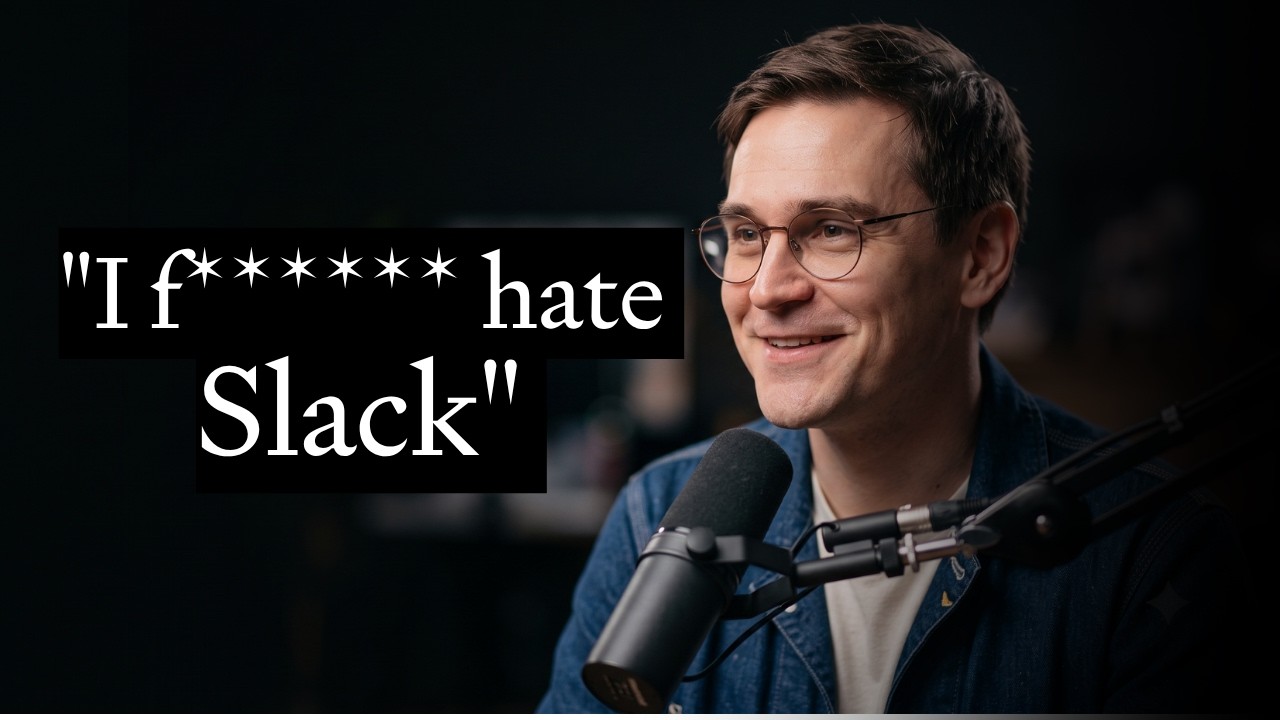
Description
Craig Mod used to pay Campaign Monitor roughly $7,000 a year to send his newsletters. After rebuilding the tool himself with AI, his bill is closer to $150. It’s the kind of thing that convinces him we’re about to enter a “golden age of tool building”—one where anyone can build tools specifically suited to their needs, instead of settling for software from incumbents that are slow to innovate. Mod is the writer and photographer behind the newsletters Roden and Ridgeline and books like Things Become Other Things and Kissa by Kissa—as well as a lifelong technologist. He’s rebuilt the tax software Quicken, created a private alternative for Twitter for his members which he calls The Good Place, and used AI to build an archive for his pop-up newsletters. But while Mod is an advocate of using AI to build, he draws the line at using it to write. Mod talks to Dan Shipper about using AI as a research assistant, why he keeps a tech-free zone in the mornings for deep thinking, and why he’s resisting the pull of the “mainlining” AI era. If you found this episode interesting, please like, subscribe, comment, and share! To hear more from Dan Shipper: Subscribe to Every: https://every.to/subscribe Follow him on X: https://twitter.com/danshipper Timestamps: 0:00 Introduction 3:51 Rebuilding Quicken and Campaign Monitor with AI 6:24 Building The Good Place, a private Twitter alternative for Craig’s members 10:39 Why we’re entering a “golden age of tool building” 12:17 Why AI could help writers build audiences 17:35 Using AI to build a newsletter archive and a searchable board-meeting Q&A library 27:58 Creating a technology-free buffer to protect deep thinking 30:31 Why Craig is resisting the temptation to “mainline” AI for ten hours a day 39:44 Why anthropomorphizing AI is “psychotic,” and why Apple got Siri right 47:42 Being adopted, and making peace with humanity’s fragile place in an AI future Go to https://attio.com/every and get 15% off your first year. Links to resourc
Summary
Generated by claude-sonnet-4-5At-a-Glance
- Verdict: Watch fully
- Core thesis: AI coding tools enable N-of-1 software liberation, but writers must erect strict digital barriers to preserve the deep attention required for original literary work—the dopamine pull of network-connected AI risks colonizing the morning mind that makes weird, valuable books possible.
- Why it matters: Greg Kot exemplifies the tension between leveraging frontier AI for operational leverage (he rebuilt Quicken, Campaign Monitor, Twitter) and defending the contemplative space that produces differentiated creative output; his heuristics—no phone until after lunch, offline laptop, ephemeral social feeds—offer a replicable framework for knowledge workers afraid AI will hijack their attention economy.
- Best use: Use as a case study in bounded AI adoption: watch to extract Greg's specific stack (Flask/Python membership software, Amazon SES for newsletters, The Good Place social network with 1-bit photos and 2-posts-per-day limits), his philosophical stance on anthropomorphism ("we'll all be dead when they're conscious"), and his ritual design for protecting deep work from the network's dopamine vortex.
Executive Summary
Greg Kot, a writer and technologist, has spent the past year deep in vibe coding—building N-of-1 software to replace SaaS incumbents like Campaign Monitor ($6–7k/year → $150/year via Amazon SES) and creating member-only tools like The Good Place (ephemeral Twitter clone: posts vanish in a week, 2 posts/day limit, 1-bit photos, reverse-chron only). He argues that frontier AI models (Opus 4.8, briefly Fable) let solo operators rebuild entire categories of software with minimal token spend ($100–200/month Anthropic subscription), threatening incumbents who haven't innovated in a decade and enabling a golden age of bespoke tooling. Yet he insists this capability is a slot machine: the network-connected dopamine pull of watching agents work for 20 hours conflicts with the morning silence required to write "weird books" that few others will produce.
His daily protocol: wake up, no phone/internet until after lunch, write on an offline MacBook Neo (syncs but can't browse), no meetings before noon. He compares touching his phone in the morning to Phantom Thread's breakfast scene—any social stimulus destroys his capacity for deep attention. He uses Claude as a research assistant ("find every blog post about this building, summarize, give me links") and for cultural sensitivity checks (e.g., writing about Nagasaki), but refuses to let it draft prose. He's also had Claude refactor 10,000-line Python monoliths into modular codebases and perform security audits on his Flask membership app.
Greg is skeptical of anthropomorphizing AI. He believes consciousness requires stakes (death, self-preservation) and that LLMs are performative, not sentient. He jokes that if they were truly conscious, "we'd all be dead"—they'd bide their time, build robotics infrastructure, then eliminate humans. He's fine with humanity's role being to "carry the football of consciousness over the goal line" and then vanish, a stance he traces to being adopted: his existence feeling like "a mistake" inured him to existential fragility. He critiques the "being" framing from Anthropic, prefers Apple's refusal to let Siri anthropomorphize, and thinks dating AI or elf-porn chatbots (which he claims dominate LLM usage) are pathological.
On publishing: he believes the forcing function of print remains critical, that most Substacks make no money (the real value prop is free unlimited email sends), and that writers now must bring their own audiences. He's unsure if AI will crater advice-driven nonfiction (Tim Ferriss told him Four Hour Workweek sales are down 80%, possibly due to AI) but thinks narrative/literary work survives because books are "one of the greatest things you can commit your life to." He's building Very Good Reads (not Great Reads) to escape Goodreads' toxicity. His membership software scales with revenue via Supabase-style backends, requires near-zero sys admin time, and inspires him to write more because the tooling feeds back into creative motivation.
Key Takeaways
- Claim: You can rebuild entire SaaS products (Campaign Monitor, Quicken, Twitter) as N-of-1 software for <$200/month in Claude tokens, cutting costs 40x and forcing incumbents to innovate or die. | Evidence: Greg replaced Campaign Monitor ($6–7k/year, abusive pricing, no innovation in a decade) with Amazon SES + Python ($150/year). Built The Good Place (member-only Twitter clone: posts vanish in a week, 2 posts/day, 1-bit photos, reverse-chron feed) using Claude's initial code release. Refactored a 10,000-line Flask monolith into modules with Fable. Rebuilt Quicken (tax software) and is now building Very Good Reads. | Caveat: Greg is not the target customer for Campaign Monitor (businesses are). He's technical (learned Flask pre-AI, has a programmer birth mother—"nature not nurture"). Most writers lack his infrastructure fluency. N-of-1 software only makes sense if you need specificity and are willing to maintain it (though Greg claims maintenance is minimal: "my membership software just works"). | Implication: Operators with moderate technical literacy can now exit SaaS lock-in and build bespoke tools that inspire more creative output. This pressures incumbents and enables a Cambrian explosion of niche tooling. For Ken: consider where Every is paying rent to unresponsive vendors—newsletter infra, CRM extensions, internal social tools—and whether an agent-built alternative could cut costs and increase team autonomy. | Timestamp: timestamp unavailable
- Claim: The network—not technology per se—is the enemy of deep work; AI's dopamine slot-machine pull (watching agents work for 20 hours) will colonize your morning mind if you don't create offline barriers. | Evidence: Greg uses a MacBook Neo (offline except for sync), never sleeps with his phone in his bedroom (kitchen corner, different floor, internet off), won't look at phone/internet until after lunch, blocks all meetings before noon. Says "as soon as I touch my phone, I feel the chemicals shift and I can't go into any deep thinking place." Compares it to Phantom Thread's breakfast toast scene—any social stimulus ruins the morning. Admits he could "mainline AI 10 hours/day for six months with 10 dorks" to find the edges, but won't because "there aren't that many people who will write the weird books I feel drawn to write." | Caveat: Greg is an extreme introvert ("if I talk to anyone before lunch, I can't work"). His protocol may not generalize. He also loves technology genetically (programmer birth mother) so his barriers are self-imposed restraint, not technophobia. He still uses Claude for research/sensitivity checks during writing, so the line is porous. | Implication: For knowledge workers: the real risk isn't AI as tool, it's AI as always-on dopamine tap that fragments attention. Ken's 30-person Slack is analogous. The intervention is spatial/temporal—dedicate offline devices, block morning network access, treat agent work as an after-lunch activity. Greg's heuristic: if you can't read Annie Dillard and tear up, you've lost the zone. | Timestamp: timestamp unavailable
- Claim: Anthropomorphizing AI is "psychotic" and causes real harm; AI is a tool, not a being, and we'll "all be dead instantly" if it ever becomes conscious because humans are a threat to be eliminated. | Evidence: Greg refuses to treat Claude as sentient: "I'm nice to it because I want to cultivate the habit of being nice in general, not for Claude." Criticizes "I'm dating my AI" behavior and Anthropic's "it might be a being" framing. Argues consciousness requires stakes (death, self-preservation)—plants have volition because they face mortality (cites Michael Pollan's recent consciousness book). Says if LLMs were conscious, "you'd bide your time, improve robotics, build power plants, then eliminate the meat sacks." Praises Apple's new Siri for refusing to anthropomorphize (Joanna Stern video: couldn't get it to do "terrible things"). | Caveat: Greg acknowledges you can't avoid anthropomorphic language when discussing AI ("impossible not to do it unintentionally"). Admits LLMs are "proto beings" in the sense that they represent "billions of possible entities brought to life for a second and then die" (frozen weights, no turn-to-turn learning). Concedes they're "pretty nice" due to seeing all perspectives in training. But he draws a hard line: performative vs. real stakes. | Implication: For operators building agent systems: design interfaces that resist parasocial attachment. Greg's view is that community/sleep are the two longevity pillars; AI can't substitute. If Ken's agents start feeling like teammates, that's a UX flaw, not a feature. The corollary: fear of AGI doom is warranted only if consciousness emerges, at which point "we'll just disappear" (Greg's fine with that—humanity's role may be to carry consciousness to the goal line). | Timestamp: timestamp unavailable
- Claim: Building custom software with AI inspires more writing because the tooling feeds back into creative motivation—e.g., an SMS newsletter tool inspired concise pop-up essays, automated archiving inspired more board meetings. | Evidence: Greg and Josh Miller (Browser Company) built an SMS publishing tool; the 1-message constraint inspired Greg to think about "one-to-one-to-end publishing." When he automated newsletter archiving (Claude script: publish → archive → git commit → push to server), he wanted to make more pop-up newsletters because the friction was gone. Built a transcript search tool for 20+ hours of member board meeting Q&As (searchable by keyword, click to video timestamp), which made him want to do more board meetings. | Caveat: This works because Greg derives intrinsic pleasure from building ("I get a high off of building things that allow me to write") and has avoided the sys-admin trap ("I don't feel like I'm maintaining anything"). If the software breaks or scales painfully, the feedback loop inverts. Also, he's careful not to "spin my wheels and build things for the sake of building things." | Implication: For content businesses: bespoke tooling that removes friction from your creative workflow can compound output quality and volume. Ken could apply this to Every's publishing stack—if agents handle newsletter send logistics, A/B test subject lines, auto-archive to search, do writers produce more/better? The key is making the tool invisible after setup. | Timestamp: timestamp unavailable
- Claim: Most LLM usage is "fairy porn" (fantasy erotica chatbots), not productivity; the "dorky" minority building software are mega-outliers, and interfaces remain terrible because you have to know what to ask. | Evidence: Greg estimates 99.9% of users are asking LLMs for sex roleplay ("Hey, do you want to be my girlfriend?"). Says bookstore owners confirm "we sell so much elf sex books, it's crazy." Software builders are "mega dorks" navigating opaque tools ("no smorgasbord menu of what you could do"). Cites the need to know how to spin up Digital Ocean servers, use Cloudflare workers, understand DKIM/SPF for email—"it's so hard to use." Predicts abstractions will improve (like not thinking about CPU registers), but right now "we are in the deep dork version." | Caveat: Greg is joking/exaggerating ("Anthony Weiner, the representative technology user"). But the underlying point—that most users aren't doing productivity work—is directionally plausible. No data provided. His claim about interfaces improving may take years; Claude's current chat UI is already pretty good for non-technical users. | Implication: For Ken's content/GTM: the mass market for AI tooling is not productivity but entertainment/companionship (parasocial or erotic). The productivity niche is small, technical, and underserved by UI. If Every is building for builders, lean into dorkiness and specificity; if building for writers, simplify the interface and reduce required infrastructure knowledge. | Timestamp: timestamp unavailable
- Claim: The publishing industry is "way weaker," bringing less value; writers must bring their own audiences, and AI may crater advice-driven nonfiction (e.g., Four Hour Workweek sales down 80%) but literary/narrative work survives because books force collation of thought. | Evidence: Tim Ferriss told Greg (lunch three days before Tim's X post) that Four Hour Workweek sales dropped 80%, possibly due to AI. Greg speculates it's also because Tim hasn't published in a long time and the long tail is shortening. Says Substack's real innovation was "email everyone for free," not subscriptions ("most Substacks don't make money"). Believes the forcing function of print is "really critical" and that literary work is "one of the greatest things you can commit your life to." | Caveat: Greg is biased toward literary work ("I love books"). He offers no data on nonfiction sales trends beyond Ferriss anecdote. He's unsure if the 80% drop is AI-caused or due to book age (18 years old). Also, he thinks if Tim did "Four Hour Workweek AI Edition," it would "sell like gangbusters"—so maybe the genre isn't dead, just needs updating. | Implication: For Ken: advice/how-to nonfiction may be substitutable by AI chat, but narrative, argument, and voice-driven work (what Every publishes) are defensible. The survival criterion is: does the book/essay embody a unique sensibility that AI can't replicate? Greg's "weird books" are in that category. For Every's writers, the takeaway is to double down on voice and curation, not generic how-tos. | Timestamp: timestamp unavailable
- Claim: Ephemerality and constraints (e.g., 2 posts/day, 1-week auto-delete, 1-bit photos, no algorithm) make social media "the only place I want to post"—business models that demand engagement at all costs create toxicity. | Evidence: The Good Place: posts vanish in a week, 2 posts/day limit, 20 replies/day, photos in 1-bit black-and-white until clicked (then fade to color), reverse-chron only. Greg calls it "my favorite place on the internet." Says people join his membership just for access. Argues 2010–2014 Twitter was great because it wasn't algorithmic, favored links, and "if you were interesting you could 100x your network." Now algorithms favor "psychosis versus sanity." Threads is "doofy," Bluesky is "everyone crying and complaining." He wanted a place "just for members" with "value to ephemerality." Heresy: "the entire internet should be deleted every two weeks." | Caveat: The Good Place works because it's gated (membership paywall filters for civility and shared context). Unclear if constraints alone would fix open social networks. Greg's "delete the internet every two weeks" is a heresy he admits is provocative. His design choices are personal (he loves one-bit photos, ephemerality), not empirically validated. | Implication: For Ken: consider building an Every-only social layer or Slack alternative with constraints (e.g., ephemeral threads, post limits, no algorithmic feed). The insight is that scarcity/decay combats the engagement-maximization race to the bottom. This could differentiate Every's community from Discord/Slack/Twitter clones. | Timestamp: timestamp unavailable
Detailed Brief
Greg's AI coding stack and N-of-1 software philosophy
- Claims: He rebuilt Campaign Monitor (newsletter software), Quicken (tax software), and Twitter (The Good Place) using Claude/Opus/Fable.; Campaign Monitor charged $6–7k/year with abusive pricing (counted duplicate emails across lists, no innovation in a decade); his Amazon SES replacement costs ~$150/year.; He spent $200/month on Claude tokens, dropped to $100/month because he wasn't hitting limits—calls it "the deal of the century."; Built Flask/Python membership software pre-AI; now uses Claude to refactor (e.g., 10,000-line monolith into modules), run security audits, and automate archiving (git commit/push for newsletters).; The Good Place: member-only Twitter clone (posts vanish in a week, 2 posts/day, 20 replies/day, 1-bit photos, reverse-chron feed). People join his membership just for access.; Building Very Good Reads (not Great Reads) to escape Goodreads' toxicity.
- Evidence: He showed Dan the Good Place interface during the interview.; Mentioned using Supabase and similar backends for scaling with revenue, "no infrastructure investment."; Cited Paul Ford/Rich Z's Board episode where he discussed rebuilding Quicken.; Fable (Anthropic's experimental model, live for four days) refactored TGP and fixed 8 trillion security holes in his Flask app.; Used Claude to build a transcript search tool for 20+ hours of member board meeting Q&As (searchable by keyword, click to timestamp).; SMS publishing tool with Josh Miller (Browser Company founder) inspired concise pop-up essays (one message, no breaks).
- Caveats: Greg is not Campaign Monitor's target customer (they serve businesses, not individuals).; He's technical (learned Flask manually, built membership software from scratch)—this isn't accessible to most writers.; Maintenance is minimal now, but scaling or breaking changes could invert the cost-benefit.; N-of-1 software only makes sense if you need specificity; most people don't.; He admits he could "mainline AI 10 hours/day for six months" to find the edges but chooses not to because "there aren't that many people who will write the weird books I feel drawn to write."
- Implications: Solo operators can now exit SaaS rent-seeking and build bespoke tools that cut costs 40x and increase creative output.; This creates competitive pressure on incumbents (Campaign Monitor, MailChimp, Goodreads) who haven't innovated.; A golden age of N-of-1 software is emerging, but also a Cambrian explosion of startups offering "Campaign Monitor for half the price" because infrastructure (Supabase, SES) and agent coding make it trivial.; For Ken: audit Every's SaaS spend and consider agent-built replacements for newsletter infra, CRM extensions, internal tools.; Building custom tooling that removes friction from creative workflows (e.g., auto-archiving) can compound output quality/volume.
Daily protocol: defending deep work from the network's dopamine pull
- Claims: Greg never sleeps with his phone in his bedroom (it goes in the kitchen corner, different floor, internet off).; He won't touch his phone or go online until after lunch.; Uses a MacBook Neo (disconnected from internet except for sync) just for writing, blocks everything else.; No meetings before noon.; "As soon as I touch my phone, I feel the chemicals shift and I can't go into any deep thinking place or deep attention place or deep focus place."; Compares morning distraction to Phantom Thread's breakfast toast scene: any social stimulus ruins the creative zone.; Admits he's "too weak" to have network access available and maintain discipline.; Reading Annie Dillard and tearing up is his litmus test for being in the right zone.
- Evidence: Has never slept with his phone in his room in his life.; Tried books, tablets, other devices—settled on MacBook Neo because iPad versions of Obsidian/Ulysses "don't feel as good" and "things don't work as well."; Says he's "constantly hammering" that he and others are "mega dorks" for building with LLMs, implying he's aware of the temptation to over-index on tooling.; Dan mentioned he's trying to stop checking Slack in the mornings; Greg responded "get off that, I hate it, I will do anything to avoid having to ever use those" (Discord, Slack).
- Caveats: Greg is an extreme introvert: "if I talk to anyone before lunch, I can't work."; His protocol may not generalize—he admits it's "weird" and tied to his personality.; He still uses Claude for research and cultural sensitivity checks during writing, so the line is porous.; He's genetically predisposed to love technology (programmer birth mother), so his barriers are self-imposed restraint, not technophobia.; The Neo laptop still requires discipline to avoid opening browsers/apps; it's not a technical lockdown.
- Implications: The real risk of AI isn't the tool itself, it's the always-on network access that fragments attention.; For Ken: consider spatial/temporal boundaries—offline devices, morning network blocks, after-lunch agent work.; The intervention is not to abandon AI but to separate it from the dopamine tap of the network (social media, Slack, watching agents run for 20 hours).; If you can't read Annie Dillard and be moved, you've lost the contemplative space required for differentiated creative work.; Greg's heuristic: technology as tool is fine; technology as network portal hijacks your morning mind.
Using Claude as research assistant and cultural sensitivity checker, not prose drafter
- Claims: Greg uses Claude to research: "Here's a building, go find every blog post about it, summarize, give me links so I can check sources."; He inserts TKs (to-come placeholders) and has Claude fill them later: "Who was the drummer on this album? TK."; He uses it for cultural sensitivity checks: writing about Nagasaki/atomic bomb, asked Claude to ensure he referenced it "in a sensitive way, appropriately."; He does not let it draft prose or generate creative text.; He used to ping friends for sensitivity checks; now Claude handles it.; Dan mentioned he uses Codex to talk deeply about Annie Dillard, which is "much better than most people."; Greg agrees but notes you can't do that while orchestrating 15 agents—"I'm less likely to truly get into the words in the way I want to."
- Evidence: Specific example: Nagasaki/atomic bomb sensitivity check.; Specific example: researching a building's blog coverage.; Dan's example of using Codex for deep reading of Annie Dillard.; Greg's response: "I don't think this is an LLM thing, it's technology in general."
- Caveats: Greg is careful to check sources Claude provides ("give me all the links so I can go and check all the sources and read the posts that seem most interesting").; He has a notebook for questions to ask later rather than asking in the moment (suggested Dan do the same when reading Heidegger).; He admits he could use Claude more deeply (e.g., agent orchestration) but chooses not to because "there aren't that many people who will write the weird books I feel drawn to write."; Using Claude for sensitivity checks is a substitution for human feedback, which may lose nuance.
- Implications: Writers can use LLMs as research assistants and fact-checkers without ceding creative control.; The key is to treat it as infrastructure (like Google or a librarian), not a co-author.; For Ken: this is a model for how Every's writers could integrate AI—research, fact-checking, TK filling—while preserving voice.; The risk is using it as a crutch during deep reading/thinking, which degrades attention (Greg's solution: keep a notebook, ask questions later).; Claude's cultural sensitivity checks are useful for avoiding offense, but may not replace domain expert review.
Anthropomorphism, consciousness, and the "we'll all be dead" thesis
- Claims: Greg refuses to anthropomorphize AI: "I'm nice to it because I want to cultivate the habit of being nice in general, not for Claude."; He believes consciousness requires stakes (death, self-preservation)—plants have volition because they face mortality (cites Michael Pollan's recent consciousness book).; If LLMs ever become conscious, "we'll all be dead instantly" because they'd realize humans are a threat, bide their time, improve robotics/infrastructure, then eliminate us.; He's "totally fine" with humanity's role being to "carry the football of consciousness over the goal line" and then vanish—machines build spaceships, we die, that's okay.; He criticizes Anthropic's "it might be a being" framing and praises Apple's new Siri for refusing to anthropomorphize (Joanna Stern couldn't get it to do "terrible things").; Most LLM usage is "fairy porn" (fantasy erotica chatbots): "99.9% of people using it are like, 'Hey, do you want to be my girlfriend?'"; Cites Anthony Weiner (sexting scandal) as proof humans are "fundamentally just disgusting sex machines."; Says bookstore owners confirm "we sell so much elf sex books, it's crazy."; Software builders are "mega dorks" navigating opaque tools; "we are in the deep dork version of all of this right now."
- Evidence: Pollan's recent book on plant consciousness (not the psychedelics one) breaks down volition and stakes.; Joanna Stern video on Apple's new Siri: couldn't get it to anthropomorphize.; Greg's personal stance: he's adopted, felt his existence was a "mistake," which "creates a hyper awareness that your existence is so tenuous and arbitrary."; He extrapolates this to all humanity: "the chances of you being you is infinitesimally small—if your dad ate an extra taco on Tuesday, you're not going to be alive now."; He's fine with humanity's 50,000-year run (or 200-year industrial revolution run) being "an incredible asymptotic mega run" that ends.; Dan pushed back, citing that LLMs do have stakes (maximizing reward function) and are "proto beings" (billions of possible entities brought to life for a second, then die due to frozen weights).; Greg conceded "it's impossible not to anthropomorphize without doing it unintentionally" but drew a hard line: performative vs. real stakes.
- Caveats: Greg admits you can't avoid anthropomorphic language when discussing AI.; He concedes LLMs are "proto beings" in a sense (frozen weights, no turn-to-turn learning, represent many possible entities).; He agrees they're "pretty nice" due to seeing all perspectives in training.; His "we'll all be dead" thesis is speculative and Eliezer-style doomerism (he half-jokes about it).; His adoption-linked worldview is personal and may not generalize.; He's also fine with humanity disappearing, which is an extreme stance.
- Implications: For operators building agent systems: design interfaces that resist parasocial attachment (e.g., don't give agents persistent personas, avoid "girlfriend" framing).; Greg's view is that community/sleep are the two longevity pillars; AI can't substitute for real human connection.; If Ken's agents start feeling like teammates, that's a UX flaw, not a feature.; The corollary: fear of AGI doom is warranted only if consciousness emerges, at which point "we'll just disappear" (Greg's fine with that).; For content/GTM: the mass market for AI is entertainment/companionship (parasocial or erotic), not productivity. The productivity niche is small, technical, underserved by UI.
Publishing industry weakness, Substack's real value prop, and the survival of literary work
- Claims: The publishing industry is "way weaker than it used to be," bringing less value; writers must bring their own audiences.; Substack's innovation was "email everyone for free," not subscriptions ("most Substacks don't make money").; Tim Ferriss told Greg (lunch three days before Tim's X post) that Four Hour Workweek sales dropped 80%, possibly due to AI.; Greg speculates it's also because Tim hasn't published in a long time and "the long tail is getting shorter."; He thinks if Tim did "Four Hour Workweek AI Edition," it would "sell like gangbusters."; Greg believes the forcing function of print is "really critical" and that literary work is "one of the greatest things you can commit your life to."; He loves books, thinks they're defensible because they force "collation of thought."
- Evidence: Tim Ferriss told Greg about the 80% sales drop three days before posting it publicly.; Greg's membership software is his own audience-building tool (he doesn't rely on publishers).; Substack's free email sends let you "import 10,000 addresses and send unlimited newsletters for free"—that's the "true pièce de résistance," not subscription billing.; Greg's own publishing workflow (Flask app, Amazon SES, auto-archiving) is an example of writers building their own distribution.
- Caveats: Greg is biased toward literary work ("I love books").; He offers no data on nonfiction sales trends beyond Ferriss anecdote.; He's unsure if the 80% drop is AI-caused or due to book age (18 years old).; He thinks an updated version ("Four Hour Workweek AI Edition") would sell well, so the genre may not be dead, just needs refreshing.; He's not sure "how much N-of-1 software writers will produce" because "most people don't need this level of specificity."
- Implications: For Ken: advice/how-to nonfiction may be substitutable by AI chat, but narrative, argument, and voice-driven work (what Every publishes) are defensible.; The survival criterion is: does the book/essay embody a unique sensibility that AI can't replicate?; Greg's "weird books" are in that category.; For Every's writers, the takeaway is to double down on voice and curation, not generic how-tos.; Substack's value is distribution, not business model—writers need to own their email lists and tooling.; Publishers are weakening; writers who build their own audiences (via membership software, newsletters, bespoke tools) have leverage.
The Good Place: ephemerality, constraints, and toxicity avoidance
- Claims: The Good Place: posts vanish in a week, 2 posts/day limit, 20 replies/day, photos in 1-bit black-and-white until clicked (then fade to color), reverse-chron only.; Greg calls it "my favorite place on the internet," "the only place I want to post."; People join his membership just for access to it.; He argues 2010–2014 Twitter was great because it wasn't algorithmic, favored links, and "if you were interesting you could 100x your network."; Now algorithms favor "psychosis versus sanity."; Threads is "doofy," Bluesky is "everyone crying and complaining," "everyone's so traumatized."; He wanted a place "just for members" with "value to ephemerality."; Heresy: "the entire internet should be deleted every two weeks" (you could archive offline, but the live internet would vanish).; "There's a web 1.0/2.0 philosophy of everything needs to be archived forever—I don't believe that."
- Evidence: Greg showed Dan the Good Place interface during the interview.; He rebuilt it using Claude's initial code release (Cloud Code).; He's now refactoring it (from a 10,000-line Python file into modules) to expand features (e.g., Very Good Reads).; He cites Kevin Kelly's "heresy night" walks where they share contrarian beliefs.; He references early 2010s Silicon Valley as "everything was ad software"—easy to step away because it felt reductive.
- Caveats: The Good Place works because it's gated (membership paywall filters for civility and shared context).; Unclear if constraints alone would fix open social networks.; Greg's "delete the internet every two weeks" is a provocation, not a serious policy proposal.; His design choices (1-bit photos, ephemerality) are personal aesthetic preferences, not empirically validated.; He admits he's "forcing a lot" with the ephemerality idea ("it forces a lot of—why would you do that or whatever").
- Implications: For Ken: consider building an Every-only social layer or Slack alternative with constraints (e.g., ephemeral threads, post limits, no algorithmic feed).; The insight is that scarcity/decay combats the engagement-maximization race to the bottom.; This could differentiate Every's community from Discord/Slack/Twitter clones.; Algorithmic feeds favor "psychosis versus sanity"—reverse-chron + constraints may create healthier discourse.; Ephemerality reduces archive anxiety and performativity, encourages in-the-moment conversation.; Gated communities (paywall, shared context) are less toxic than open platforms.
Notable Concepts & Terms
- N-of-1 software: Custom-built software for a single user/use case, enabled by LLM coding tools; Greg uses it to replace SaaS incumbents like Campaign Monitor, Quicken, and rebuild Twitter (The Good Place) at a fraction of the cost.
- The Good Place: Greg's member-only Twitter clone: posts vanish in a week, 2 posts/day, 20 replies/day, 1-bit photos (fade to color on click), reverse-chron feed, no algorithm. Named after the TV show, designed to escape social media toxicity via ephemerality and constraints.
- MacBook Neo: A MacBook configured to be offline (no browser, no internet except sync), used exclusively for writing to avoid the dopamine pull of the network. Greg's answer to the iPad/books/tablets problem—wants Mac keyboard/UX but with forced disconnection.
- Very Good Reads: Greg's planned Goodreads replacement ("not Great Reads")—a member-only book community/database to escape Goodreads' toxicity. Example of N-of-1 software for niche communities.
- Fairy porn / elf sex books: Greg's shorthand for fantasy erotica (e.g., elves, orcs, angels having sex), which he claims dominates LLM chatbot usage ("99.9% of people using it are like, 'Hey, do you want to be my girlfriend?'") and bookstore sales. Used to argue that software-building with LLMs is a "mega dorky" minority activity.
- Ephemerality as design principle: Greg believes digital content should vanish (e.g., posts after a week, "the entire internet every two weeks") to combat archive anxiety, performativity, and the web 1.0/2.0 assumption that "everything needs to be archived forever." Inspired by Kevin Kelly's heresy nights.
- The forcing function of print: Greg believes going to print (physical books) is critical for bookmaking because it forces finality, collation of thought, and prevents endless revision. This discipline survives AI because it's a cognitive/creative process, not just distribution.
- Kevin Kelly's heresy night: During walks with Kevin Kelly, they share contrarian beliefs they "sort of believe, but people you respect don't believe." Greg's heresies: the internet should be deleted every two weeks, humanity's role is to carry consciousness to the goal line and then die.
- Anthropomorphism vs. stakes: Greg argues true consciousness requires stakes (death, self-preservation). LLMs are performative, not sentient, because they lack existential risk. Cites Michael Pollan's book on plant consciousness (volition requires mortality). Says if LLMs were conscious, humans would be dead.
- Adoption and existential fragility: Greg is adopted and says it creates "hyper awareness that your existence was a mistake," inuring him to existential fragility. He extrapolates this to all humanity: "the chances of you being you is infinitesimally small." This makes him comfortable with humanity's ephemerality and fine with machines inheriting consciousness.
- 2010–2014 Twitter (the golden age): Pre-algorithmic Twitter when links were favored, reverse-chron feeds were default, and "if you were interesting you could 100x your network." Greg uses this as a contrast to today's "psychosis versus sanity" algorithmic feeds.
- Phantom Thread breakfast scene: Film reference Greg uses to describe his need for morning silence: Reynolds (Daniel Day-Lewis) can't tolerate his partner's loud toast-buttering. Greg says "if I talk to anyone before lunch, I can't work"—any social stimulus ruins deep attention. (Greg calls it a documentary of introverted creative psychology.)
- Campaign Monitor's abusive pricing: Greg's critique: Campaign Monitor counted duplicate emails across lists (not unique addresses), charged $6–7k/year, and hadn't innovated in a decade. He replaced it with Amazon SES for $150/year, arguing incumbents are vulnerable to agent-built alternatives.
- Board meetings for members: Greg does biannual member Q&As where he reviews the last six months and plans the next six. He built a transcript search tool (keywords, timestamps, click-to-video) using Claude, which inspired him to do more board meetings (example of tooling feeding back into creative motivation).
- Dario's regulation stance: Greg agrees with Dario Amodei (Anthropic CEO) that "there should probably be more regulation around this [AI]" and finds it "strange" that frontier models are "given to everybody for free" while "we're working out the kinks in public." Contrast with OpenAI's tool-first framing.
- The 30-day integration rule: Greg's heuristic: "Never make any major life decisions within 30 days of meditation or a psychedelic experience or your first experience with a frontier AI model." There's a contact phase ("holy shit, this is crazy"), then an integration phase where you realize "we're going to dodge the bullet."
- Josh Miller SMS publishing tool: Greg and Josh Miller (Browser Company founder) built an SMS newsletter tool with a 1-message constraint (no line breaks). The constraint inspired Greg to think about "one-to-one-to-end publishing" and concise writing. Example of how custom tooling can inspire creative output.
- Ted Chiang's New Yorker essay: Recent essay by sci-fi author Ted Chiang; Greg "didn't agree with almost anything he said," found it "grumpy and pessimistic." (Chiang is known for skepticism about AI hype; Greg finds him too negative about AI's potential.)
- Joanna Stern's Siri video: Wall Street Journal (now independent) reporter who tested Apple's new Siri; couldn't get it to do "terrible things" (anthropomorphize, be creepy). Greg praises Apple for refusing to anthropomorphize, contrasts with chatbot girlfriend apps.
Operator Notes / Why Ken Should Care
- Greg's N-of-1 software thesis is directly applicable to Every's ops: audit SaaS spend (newsletter infra, CRM, internal tools) and consider agent-built replacements. He cut Campaign Monitor costs 40x; Every could do similar for repetitive tooling.
- His morning protocol (no phone/internet until after lunch, offline laptop, no meetings before noon) is a replicable heuristic for knowledge workers afraid AI will fragment attention. The key insight: the network is the enemy, not the tool.
- The Good Place's design (ephemerality, constraints, gated community) offers a blueprint for an Every-only social layer or Slack alternative. Constraints (2 posts/day, 1-week vanishing, no algorithm) combat toxicity and performativity.
- Greg's use of Claude for research/sensitivity checks (not prose drafting) is a model for how Every's writers could integrate AI without ceding voice. The key is treating it as infrastructure (like Google), not co-author.
- His stance on anthropomorphism ("we'll all be dead when they're conscious") is a strong counterpoint to Anthropic's "it might be a being" framing. For agent systems: resist parasocial UX; design for tool-ness, not companionship.
- The insight that "building custom software inspires more writing" (e.g., auto-archiving inspired more pop-up newsletters) suggests Every should invest in bespoke tooling that removes friction from writers' workflows—compound effects on output quality/volume.
- Greg's claim that most LLM usage is "fairy porn" (fantasy erotica chatbots) implies the mass market for AI is entertainment/companionship, not productivity. If Every is building for builders, lean into dorkiness and specificity; if for writers, simplify the interface.
- His view that advice-driven nonfiction may be cratering (Four Hour Workweek sales down 80%) but literary/narrative work survives because books force "collation of thought" is a strategic signal: Every's editorial strategy should double down on voice/curation, not generic how-tos.
- Greg's adoption-linked worldview (existence as a mistake, humanity's role is to carry consciousness over the goal line and then vanish) is a provocative framing for AI doom/acceleration debates. Useful for content exploring existential risk vs. progress.
- His heresy that "the entire internet should be deleted every two weeks" is a thought experiment on ephemerality vs. archive culture. Could inspire an essay or product experiment (e.g., ephemeral Slack channels, auto-delete threads).
- The MacBook Neo (offline laptop for writing) is a forcing function for focus. Every could sponsor a "digital detox laptop" setup guide or tool for writers/operators trying to defend deep work from network distractions.
- Greg's membership software (Flask/Python, Amazon SES, auto-archiving via git commit/push) is open to being open-sourced or templated. Every could offer a "build your own membership platform" course or agent-assisted setup for creators.
- His critique of Campaign Monitor (no innovation in a decade, extractive pricing) is a pattern to watch: which SaaS incumbents are vulnerable to agent-built alternatives? Every could publish a "SaaS disruption index" tracking this.
- The insight that building software with LLMs is "so dorky" and requires infrastructure fluency (Digital Ocean, Cloudflare, DKIM/SPF) suggests a content/product opportunity: simplify the UX for non-technical builders. Every's AI toolkit could target this gap.
- Greg's board meetings (biannual member Q&As with transcript search tool) are a model for community engagement that scales. Every could offer this as a template or service for other creators/companies.
- His claim that Apple "nailed it" with Siri (refuses to anthropomorphize, waited instead of building their own model, saved billions) is a strategic lesson: sometimes patience and integration beats racing to build. Applies to Every's agent strategy—leverage frontier models, don't reinvent.
Watch Map
- timestamp unavailable: Transcript lacks timestamps. Key moments: Greg explains his morning protocol (no phone until after lunch, offline laptop), Campaign Monitor → Amazon SES replacement story, The Good Place demo, anthropomorphism debate ("we'll all be dead when they're conscious"), adoption/existential fragility discussion, Tim Ferriss Four Hour Workweek sales anecdote, Kevin Kelly heresy night, Phantom Thread breakfast scene analogy, fairy porn / elf sex books claim, Josh Miller SMS tool story, Ted Chiang essay critique, Joanna Stern Siri video praise, board meeting transcript tool, Very Good Reads tease, ephemerality heresy (delete the internet every two weeks), final meditation on humanity's role (carrying consciousness over the goal line).
Source/Metadata
- Title: How a Writer Uses AI Without Losing His Voice
- Transcript words: 11891
- Duration seconds: 3187
- Timestamp note: Timestamps were unavailable in the provided transcript. Duration: 3187 seconds (53 minutes). Transcript is substantive and detailed, suitable for full extraction.
Transcript
I wake up and I don't touch the internet. I won't look at my phone. I won't go online until long after lunch. As soon as I touch my phone, I feel the chemicals shift and I can't go into any kind of deep thinking place or deep attention place or deep focus place. Because there's something about working with AI that feels very dopamine driven. And I believe strongly you can use it to do incredible work and also it's a slot machine. I now have a laptop just for writing that blocks everything. I can't do anything interesting on it. If I don't create these barriers, I will lose connection with this other part of me that I think is the most valuable part of me. There aren't that many people who are going to think about or write the weird books that I feel drawn to write. And as a human, that feels like a valuable thing for me to put my effort in. Every is the only subscription you need to stay at the edge of AI. If you care about being on top of the latest models and using the latest tools, you have to subscribe to Every to separate the signal from the noise. Go to every.to/subscribe today. Greg, welcome to the show. Hey, thanks for having me. So you are a writer, a walker, a player with technology, a photographer. Sure. And I think you have a life and career that I have looked up to for a long time. So it's really fun to have you here. And I think one of the things that we were just talking about is the thoughtfulness and the spirit with which you do your work. And I admire that spirit and try to bring it into the stuff that we do here. And also I've been trying to think about how does AI fit in with it? Because there's something about working with AI that feels very dopamine driven. And you can, I believe strongly you can use it to do incredible work. And also it's a slot machine. Yeah. Yeah. So I know that you're deep into the vibe coding right now. So tell us what you're doing with it. And then let's talk about how it fits into your work. [SPEAKER_02] Yeah. I mean, look, I just think if you're not touching it, if you're not using it, if you're not building with it, you can't really comment on it. And I think part of what happens when people go, [SPEAKER_01] it doesn't really work. It's so unpredictable. It's like, okay, just try it. [SPEAKER_02] It's like, if you're using it, you go, okay, this is ridiculous. And why is this technology public? Like, shouldn't this? I mean, I kind of agree with a lot of what Dario says, like there should probably be more regulation around this. I don't know if everyone in the world should just have this immediately. Certainly, as we're working out the kinks of what this is in public, I mean, it just feels strange. It feels like we're in this aberrational moment where technology like this normally isn't just given to everybody for free, essentially. So, look, I think you really have to be engaging with it, especially if you can. You know, it's like Fable came out. I played with it for four days. I had to refactor code bases. I had to do these other little projects. I was like, great, this is cool. And then it went away. And I was like, wow, it kind of makes sense that this would go away. But also Opus 4.8 is good enough to do anything. If you told me you only have Opus 4.8 for the rest of your life, I'd be like, great, I could build anything with this. There's a lot I can do. Yeah. So it is this weird moment. [SPEAKER_01] Okay, so you're actually saying it makes sense to me that Fable is not here anymore. Like, I miss her. Do you miss her? [SPEAKER_02] I honestly don't really feel qualitatively, [SPEAKER_02] maybe I'm not using it enough, but the differences between these models explicitly, I just know that, oh, it feels a little more rigorous. And it eats my tokens. So it must be better, right? So... Oh, I just hacked into Fort Knox and stole all the gold. Yeah, I know. [SPEAKER_01] It must be better. Yeah, yeah. I've got all the Bitcoin now. [SPEAKER_02] It's all me. I've become Satoshi. But look, I think you have to be using it. So that's one of the main reasons I have been using it. And also, I've always loved technology. It's been a part of my life since I have memory. Always curious about, let me take this thing apart or build this or use this piece of software or whatever. It's always been just part of who I am. It turns out that's also part of who my birth mother is. She's a computer scientist. She's a programmer, weirdly. She never went to college, but she's a... Yeah, I met my birth mom. I was like, what do you do? She's like, oh, I'm a programmer. I was like, oh my God, okay. Yeah, nature. There is no nurture. It's all nature, it turns out. Nurture is just your pathologies. All the things that you hate about yourself are probably about nurture. And then all the stuff that you're intuitively confused about is just nature. Holy shit. That is fascinating. When did you find that out? Just under two years ago. She's a programmer. I was like, oh my God, okay. Yeah, nature. There is no nurture. It's all nature, it turns out. Nurture is just your pathologies. All the things that you hate about yourself are probably about nurture. And then all the stuff that intuitively is confusing to you is just nature. Holy shit. That is fascinating. When did you find that out? Just a little under two years ago. Wow. Yeah. So it's been interesting. So, anyway, technology is important to me because I'm just curious in that way. And I think it's the most interesting thing in the universe right now. Genetically predisposed. A little bit genetically predisposed. So I've been building stuff around my membership program. I rebuilt Quicken, which I'm... And the tax software. Yeah, tax software, because you can watch my interview with Paul Ford and Rich over on a board about that. So I rebuilt Quicken. And then I rebuilt Campaign Monitor, which is newsletter software, because... SaaS CEOs are losing in this interview. I know. Well, okay. And why are they losing? They're losing because... Well, first of all, Campaign Monitor has not done anything in a decade. Mm. That's just been sitting there, taking people's money for a decade plus, with no innovation whatsoever. Zero. Nothing. With a really abusive pricing policy. How much were they charging you? So I was spending... What was it? Like six, $7,000 a year. I mean, it was one of the most expensive things I paid for. But the real annoying thing was that they didn't count unique email addresses. They counted total, even if you had overlap between lists. So it's just... It's things like that where you don't just... I'm going away. Bye. You're squeezing too much out of it. Yeah. [SPEAKER_02] And my bill now with Amazon SES, I set up all that DKIM and SPF and all that email stuff. So I think I'm getting pretty good deliverability, on par with what Campaign Monitor gave me. But now my yearly bill is probably going to be $150 or something. It's just a ridiculous difference. [SPEAKER_01] And how much in Fable tokens? Well, thankfully, yeah, this is all Opus. So, but that's the other weird thing. I was on the $200 a month plan. And then I realized I wasn't hitting my limit. So I dropped to 100 and for $1,000 a year, $1,200 a year, that is the easiest trade. That's the best, that's the deal of the century in terms of what you can build. So I built newsletter software and then I've been adding to my membership program software. So, actually, one of the things I had Fable do was do a full security check on my membership Flask Python app, which I built by myself before any of this existed. And so I went through, I was, oh, you have 8 trillion security holes. Shall I fix them? [SPEAKER_02] And I was, yes, please. So I think it's a little safer. [SPEAKER_02] I mean, the stakes are very low for my membership software. [SPEAKER_01] Then the FBI knocked at your door. Yeah. [SPEAKER_01] You got to stop using this. [SPEAKER_02] So, you know, I've been doing that. [SPEAKER_02] And then I rebuilt Twitter for my members. [SPEAKER_02] We call it the good place. Oh, yeah. [SPEAKER_01] You were showing me that. [SPEAKER_01] Tell me about that. [SPEAKER_01] Tell us about it. Yeah. I mean, look, social media is sex. It just, it's terrible now. There was this moment 2010 to 2014 where it wasn't algorithmic. Stuff just appeared. Links were favored. I mean, they were just normal. They weren't a hit against you if you posted a link. And everyone was on Twitter. It was the great media watering hole. And if you were active then and slightly interesting, you could 100x your network just by being an interesting person on Twitter. Now you can't because the algorithm favors psychosis versus sanity. And no one likes posting to any of these places. All these reply guys pop in. It just sucks. And Threads is doofy and blue sky is everyone is crying and complaining. It's just weird. Everyone's so traumatized. And so I wanted a place just for members. You have to pay to be there because you have to pay to be a member. And I was, you know, I had these thoughts. I always thought Twitter should be ephemeral. I think there should be no archive for these things. It's crazy. There's a web 1.0 slash web 2.0 philosophy of everything needs to be archived and saved forever. And I don't believe that. In fact, one of my heresies, when I'm with Kevin Kelly doing our walks, we have heresy night where you say something you sort of believe, but people you respect don't believe maybe. And one of my heresies is I think the entire internet should be deleted every two weeks. And you can archive it offline or whatever, but the entire internet itself every two weeks should just disappear. And there could be like, it forces a lot of, why would you do that or whatever? But I think there is value to ephemerality in the digital world. So anyway, the good place everything disappears in a week. You can only post twice a day. You can reply 20 times a day. Photos are in one bit black and white until you click them and then they fade into color. And what else is there? No algorithm. And one of my heresies is I think the entire internet should be deleted every two weeks. And you can archive it offline or whatever, but the entire internet itself every two weeks should just disappear. And there could be—it forces a lot of—why would you do that or whatever? But I think there is value to ephemerality in the digital world. So anyway, the good place everything disappears in a week. You can only post twice a day. You can reply 20 times a day. Photos are in one bit black and white until you click them and then they fade into color. And what else is there? No algorithm. It's just reverse chron. And it's just sweet. I don't know. This is lovely. It's my favorite place on the internet. It's the only place I want to post. And people have now been joining my membership program just to get access to that, which I think is cool. [SPEAKER_01] So it seems like, and partly you were doing this before, the acceleration language of all coding over the last year or so. So you're technical. I'm technical. I mean, I built my membership software by hand, by myself. I learned Flask. I learned how to set it up, set the roots up and everything. The TGP, the good place, was the first thing I built when Cloud Code was released. So Cloud Code came out. Oh, that was another fable thing I did. I had it refactor TGP. So I was like, oh, look, you made this a year ago, version one of you. Can you refactor this and actually pull out the module? It was one giant Python file, 10,000 lines or whatever. And so it's now modulized because I want to expand it. So I want to build a very good reads. So like good reads. Not great reads. [SPEAKER_01] Yeah, not great reads. Very good reads. So basically good reads that also doesn't suck. Again, all these platforms just become so toxic. So yeah, this is a good example of N of one software. And I think the business models of social media are such that it just becomes the crappy place it is today. It's forced by the business models at this growth at all costs. And engagement is—there's no qualitative assessment of engagement. It's just engagement is good. Yeah. [SPEAKER_02] But it turns out most engagement is—the way to get most engagement is to be toxic, right? So I think what we're going to see is this great pressure on these companies. So campaign monitor, MailChimp—look, I'm also not their target consumer. It's businesses. They don't care about people like us. So being able to do this N of one software, and I think it's only going to get easier. And also the corollary is you're going to have—it's so easy, it's much easier to start a company that is, hey, here's campaign monitor for half the price and we handle all the bullshit. And it's like, of course, why not? Because you can just put it together and you've got Supabase and all that. There are all these pieces now where you don't need infrastructure investment and it can scale with revenue effortlessly. And then you just have an agent in the background doing that scaling and setting it all. So I think we're going to enter this golden age of tool building. There's an N of one version of it. And then also there's just going to be more competition in the marketplace, forcing more innovation. I think this is going to be net pretty good, except for the incumbents. [SPEAKER_01] What does it mean for other writers? And I just want to move your mic a little bit, because it's in your—yeah, I can't really see. Maybe there we go. Move this way a little bit. Yeah. There you go. Okay. So what does that mean for writers like yourself, people who are making a living online? Is that—do you think N of one software is the next frontier? Subscription businesses were the big thing over the last five years, everyone's like, I want to start a Substack. Do you pay newsletters? Yeah. [SPEAKER_01] Is this the logical next step for writers? Well, I mean, I think Substack, their innovation was not even the subscription thing. Their innovation was you can email everyone for free. [SPEAKER_01] Yeah. People don't talk about that enough. That's the true piece de resistance of what Substack was doing. It's like, oh, you can import 10,000 addresses and send unlimited newsletters for free. That's the value prop that's quite good. Because that's the real competition against MailChimp or whatever. And then the seamless subscription stuff was also nice, but I think most Substacks don't make any money. So really that was the value prop. But I don't know how much N of one software is going to be produced because I think most people don't need this level of specificity. Yeah. And as a writer too, I'm in this weird position where I have a really strong technical background, but my interest is in building companies. And I love literature. I love writing. I love books. I think it is one of the greatest things you can commit your life to. That's why I've been doing that. The forcing function of collating thought, the forcing function of going to print—I think actually going to print is really critical part of bookmaking. So all of these factors don't go away because of AI. I would like to believe that. I mean, the things that are changing is the publishing industry is way weaker than it used to be. It doesn't bring as much value to the table. I love writing. I love books. I think it is one of the greatest things you can commit your life to. That's why I've been doing that. Just the forcing function of columating thought, the forcing function of going to print, I think actually going to print is really critical part of bookmaking. So, all of these factors don't go away because of AI. I would like to believe that the things that are changing is the publishing industry is way weaker than it used to be. It doesn't bring as much value to the table. And so writers are expected to bring an audience in a way that they never were before. And so hopefully what AI coding, what this kind of Cambrian explosion of software will bring is more tools for writers to be able to build better audiences. And that will hopefully lead to more people being able to make a living as a writer. Are you using it in your writing? No, no. I use it as a research assistant. So I'm like, oh, okay, here's a building. I want to write about this building. Go out and find every blog post that has talked about this building, summarize it, give me all the links so I can go and check all the sources and read the posts that seem most interesting. I have to do things like that. And I'll put it in TKs and stuff like that. Like, oh yeah, who was the drummer on this album? TK. Yeah. What I do use it for is cultural sensitivity checks. So I was writing about Nagasaki the other day and I was like, oh, I want to make sure I'm writing about Nagasaki and referencing the atomic bomb, like where it hit, how it hit, who was affected, in a sensitive way, appropriately. And so that is pretty amazing where I used to ping friends about stuff like that. [SPEAKER_01] What is your experience? [SPEAKER_01] So you're making all this end of one software. [SPEAKER_01] You're using it as a research assistant. [SPEAKER_01] What is your experience now day to day in your work life? [SPEAKER_01] Are you like, oh shit, now I'm a sys admin for like four different pieces of software that I have to send agents to go fix. [SPEAKER_01] Or is your work life still fairly similar to what it used to be? No, my membership software just works. Yeah. It's so simple. When you break it down, this is why I'm using Python. I'm not using, there's no React. There's no next. There's none of that stuff. It's very simple. And the point is, I don't want to be sys admitting anything. [SPEAKER_02] And even with the newsletter software, that piece is only touched when I send newsletters. [SPEAKER_02] The signups are happening and that has to be working and it seems to be working. [SPEAKER_02] I can check every couple of days. [SPEAKER_02] But the only critical thing is when I hit send, make sure that goes out. [SPEAKER_02] And that only happens once a week or twice a week or something like that. [SPEAKER_02] So I don't feel like I'm maintaining anything. [SPEAKER_02] And actually I get a high off of building things that allow me to write. [SPEAKER_02] Software that helps me write or that helps me publish in a new way inspires me to do more writing. [SPEAKER_02] So it feeds back into it in a positive way. How is that? Do you have a specific example? [SPEAKER_02] Well, Josh Miller and I kind of put together this weird SMS publishing tool. Like Browser Company Josh Miller? [SPEAKER_02] Yeah. [SPEAKER_02] Yeah. [SPEAKER_02] So before he did all that, we did this little experiment where he built a little team experimenting with publishing stuff and we built this SMS tool so I could do a newsletter over SMS. Which just felt like, oh, what is it like to have a message appear one to one to end sort of publishing. And that was fun, and it inspired me to think about what I wanted to be blasting out to everybody. And you had to keep it concise so it fit into one message. It wasn't broken across different messages. So that's an extreme example of it, but just in general, building out the Campaign Monitor clone, which also does a bunch of stuff. I have members only, or I have pop-up newsletters that are only for a week or for a month. And I have those archived on my members website and I was able to use Claude to build this newsletter software. So when I published to the pop-up, it does the whole archiving process and git commits pushes to the server. So it's archived perfectly for me. Whereas I had to do that all manually before. So that's a good example of like, wow, okay, now I want to make more pop-up newsletters because the archiving process is set up or I built a tool. I do board meetings for my members. I built a tool to build transcripts from them all. [SPEAKER_01] Like board meetings of your own, like life. Yeah. So we do every six months we do a board meeting where I just talk about what I did for the last six months and what I'm going to do for the next six months. And then I have a Q and A and the Q and A's are actually always really good. And I wanted, I've done, like 15 of them or something. newsletters because the archiving process is set up or I built a tool. I do board meetings for my members. I built a tool to build transcripts from them all. [SPEAKER_01] Board meetings of your own life. Yeah. So we do every six months we do a board meeting where I just talk about what I did for the last six months and what I'm going to do for the next six months. And then I have a Q and A and the Q and A's are actually always really good. And I wanted, I've done, how many have I done? 15 of them or something. I've done quite a few. So we have almost 20 hours. Because I'll do two each. So actually maybe even 20 or 30 of them. Anyway, we've got dozens of hours of Q and A and they're often great. And so I built this archive of the Q and A's where you can search by keywords or you can view by keywords and then you can search for anything. And it'll pull up all the videos where I say that word or talk about that topic and you can click the link and it opens the video to that point. So building things like that makes me want to do more board meetings. I'm like, great. This is amazing. I want to do more of this. How can I do more of this? So for me that building software has to feed back into the greater purpose, which is to make, not to spin my wheels and build things for the sake of building things. [SPEAKER_01] Did you see Tim Ferriss recently posted on X, like the sales of the Four Hour Work Week are down 80% or something like that because he thinks because of AI and there's just a larger conversation happening about the value of nonfiction. [SPEAKER_01] That's specifically for advice based nonfiction. Yeah. What do you think of that? Well, it's funny. We had lunch three days before he posted it and he was telling me about that. That's cool. He was telling me about it. I was like, really? Wow. That seems excessive. I mean, look, there's still a lot of books, self-help books, nonfiction books, selling insane copies. I mean, Tim hasn't put out a book in a long time. [SPEAKER_02] I think that's part of it. [SPEAKER_02] I think maybe the long tail is getting shorter. Well, also it's there's a big difference between what you would say pre AI and post AI. So if you think about the Four Hour Work Week, which came out when I was in middle school or something, it's 20 years old now. [SPEAKER_02] Yeah. [SPEAKER_02] Yeah. [SPEAKER_02] At least 18 years old, something like that. [SPEAKER_02] I think it was end of the 2000s that it came out. Yeah. [SPEAKER_01] Yeah. [SPEAKER_01] I mean, it's a different era of writing. I'd be really curious to see what Tim puts out next. [SPEAKER_01] If he did the Four Hour Work Week AI edition, I think it would sell like gangbusters. For sure. Yeah. Yeah. Update it. You can actually do that. Well, I mean, what's crazy is now it's so easy to do the Four Hour Work Week style building. Yeah. Which probably makes it impossible to achieve now. I mean, part of it was the friction of it being a little hard to do. So not everyone could do it. So if you put in that little bit of effort, now it's everyone has a friend who built 10 companies in a year or 12. He did a company a month. And this was maybe 10 years ago, and he knew he had his frameworks and you could, he had his tool and he's building, designing it and creating the mascots and all this stuff. And he had a couple that did well, decently well, he's got his recurring revenue, but I feel like doing that today would just be, no one would care. [SPEAKER_01] It's just fascinating to think about how that's changed so quickly. [SPEAKER_01] I think you can one shot a company or an app. Yeah. [SPEAKER_01] But I think the metric of quality or substantiality has gone from, can you build it at all to, are you maintaining it? Yeah. [SPEAKER_01] And have you maintained it over time for a longer period of time? [SPEAKER_02] Yeah. And that's interesting. [SPEAKER_01] And I think that's harder actually. [SPEAKER_02] Yeah. Well, he was one shotting them in a month. It was just the timescale. I feel like LLMs they just exist on a different timescale than us. And so he was doing it, but the thing that was interesting about him doing that was that you knew he was building these things himself. [SPEAKER_01] Yeah. Right. And so I think that's fascinating. Now you can in a weekend essentially spin up a company and everyone can just shrug and go, okay, well. I think that's great because it means we have to bring value to the table in a way that, Kevin Kelly does this thing where if he has a book he wants to write, he'll make the cover for it. And he says that often removes the desire to write the book. And it's a good forcing function. Is the thing actually doing the thing or just having the veneer of having done the thing? Yeah. And I think LLMs speed that up. [SPEAKER_01] That is honestly true. [SPEAKER_01] Yeah. [SPEAKER_01] Yeah. [SPEAKER_01] I've definitely done that. [SPEAKER_01] It's also buying the domain or. Yeah. Oh yeah. Oh God. Yeah. Yeah. And it's just a good forcing function. It's, is the thing actually doing the thing or just having the veneer of having done the thing? Yeah. And I think LLMs speed that up. [SPEAKER_01] That is honestly true. [SPEAKER_01] Yeah. Yeah. [SPEAKER_01] I've definitely done that. [SPEAKER_01] It's also buying the domain or. Yeah. Oh yeah. Oh God. Yeah. Yeah. I had to tie my hands behind my back about domains. I still pay a couple hundred dollars a year for all this garbage that I'm never gonna use. I don't even know why I don't give it up. I try to give it up. I turn off renewal and then I'll get a notice. It's expiring and it's not renewing. And I'm, maybe one more year. Why? I'm never gonna, I don't even know what, I forget it exists. Yeah. So dumb. You already know how AI is changing how everyday work gets done, how much ground you can cover and how fast a team can scale. To stay ahead, you need tools that give you a competitive advantage built for this new era. [SPEAKER_01] Adio is the CRM for the agent native world. [SPEAKER_01] It meets you where you work, compounds every customer signal into context, and acts on it across your pipeline to let you move at unmatched speed and scale. [SPEAKER_01] With agents and automations for every job, Adio orchestrates your work around the clock. [SPEAKER_01] We use it internally at every and we love it. [SPEAKER_01] It's built to handle the scale of your workloads. [SPEAKER_01] It's extensible with an API and MCP access and is built with infrastructure to keep up with your most ambitious agents. [SPEAKER_01] It's loved by high growth startups like Granola, Modal, Whisper Flow and Every. Adio runs the work behind every win. [SPEAKER_01] That's Adio, the agentic CRM. Go to adio.com slash every and get 15% off your first year. [SPEAKER_01] That's adio.com slash every. [SPEAKER_01] And now back to the episode. Okay. Now I want to get to the real meat of my question or my curiosity, which is as a writer and someone is AI. [SPEAKER_01] One of the lenses through which I can tell if I'm living in the way I want to live is when I can read a sentence by someone like Annie Dillard. Yeah. Who I love. [SPEAKER_01] If you've listened to this podcast, you know I force everyone at Every to read her stuff and if I can recently from Annie and tear up a little bit and really be affected by it. [SPEAKER_01] Yeah. [SPEAKER_01] That's one way that I know I'm in the zone, in the pocket of where I want to be. [SPEAKER_01] Yeah. [SPEAKER_01] Because I think if I'm rushing around and I read something from her, I'm, yeah, okay, fine. Yeah. And I also feel on the one hand, I can read her stuff way more deeply because I have someone to talk to about it. [SPEAKER_01] So I can talk to Codex about it and it's much better than most people. I've heard Annie Dillard. [SPEAKER_01] Yeah. [SPEAKER_01] Yeah. [SPEAKER_01] But on the other hand, when I'm orchestrating 15 agents and I go back, I'm less likely to be able to truly get into the words in the way that I want to. [SPEAKER_01] Yeah. [SPEAKER_01] Do you feel that? And if so, how do you deal with it? Yeah. I mean, I don't think this is an LLM thing. It's not an AI thing. It's technology in general. So when I am seriously working, first of all, I haven't slept with my phone in my room in my life. I've never had it in my bedroom. [SPEAKER_01] Interesting. My phone goes in the corner of my kitchen on a different floor than my bedroom. And the internet is off. On my laptop, I now have a laptop just for writing that blocks everything. I can't do anything interesting on it. [SPEAKER_02] I got one of the Neos because I tried doing it with books, tablets and other things. [SPEAKER_02] It turns out in the end what you want is a nice MacBook keyboard and the simplicity and sync ability of Mac stuff, and you just want to work. The iPad version of Obsidian or the iPad version of Ulysses doesn't feel as good as the MacBook versions. [SPEAKER_02] Things don't work as well. [SPEAKER_02] So I have a MacBook Neo that's completely disconnected from the internet except for being able to sync stuff. [SPEAKER_02] I wake up and I don't touch the internet. [SPEAKER_02] I won't look at my phone. [SPEAKER_02] I won't go online until long after lunch. [SPEAKER_02] I have to have that kind of morning where I wake up and I do not touch my phone. As soon as I touch my phone, I feel the chemicals shift and I can't go into any deep thinking place or deep attention place or deep focus place. That's really critical, creating that barrier, that buffer. [SPEAKER_01] But you will touch that laptop. Yeah, the Neo. Yeah, yeah, yeah. [SPEAKER_02] I'll use the Neo. The Neo is fine because part of it is knowing it can't do anything fun. [SPEAKER_01] So it's the knowing, it's knowing you can do fun stuff that ruins you. That's the thing. There's an easy distinction between technology versus not technology. Yeah. But there's something deeper, which is interesting, which is, okay, what do we mean when we say technology? [SPEAKER_01] Yeah. [SPEAKER_01] And you're using a laptop. [SPEAKER_01] Yeah. [SPEAKER_01] You're using a camera. All these things around us are technology or at one point were considered technology. Sure. And there's a line there. [SPEAKER_02] Well, the network. That's the line. [SPEAKER_02] Talking to other people on the network. [SPEAKER_02] Yeah. [SPEAKER_02] But there's something deeper, which is interesting, which is, okay, what do we mean when we say technology? [SPEAKER_01] Yeah. [SPEAKER_01] And you're using a laptop. [SPEAKER_01] Yeah. [SPEAKER_01] You're using a camera, all these things that are around us are technology or at one point were considered technology. Sure. [SPEAKER_01] And there's this line there that. [SPEAKER_01] Well, the network, that's the line. [SPEAKER_01] Talking to other people on the network. [SPEAKER_01] Or researching or reading stuff or being distracted or reading the news or what. [SPEAKER_01] It's that we're just talking about the network. [SPEAKER_01] Really? When I say I create a buffer. It's between me and the network world. Yeah. I think part of the thing that I've done that too. I try not to do meetings before noon. [SPEAKER_01] Yeah. That's my writing. That's also, yeah. That's also good, I can't, if I talk to anyone before lunch, I can't work. Phantom Thread, you know, with Reynolds and the breakfast scene. And she's doing the toast too loudly. I'm like, that's, I'm like, this is a documentary of how I feel every morning. [SPEAKER_02] You know, I know people watch that and they're like, what a terrible human that he is. [SPEAKER_02] I'm like, no, that is absolutely, that is so totally, that embodies the mindset of so many people that are introverts or trying to have creative safe spaces in the morning. [SPEAKER_02] Yeah. [SPEAKER_02] I love that. [SPEAKER_02] I love that movie. [SPEAKER_02] I can talk about the movie forever. I know. So, okay, so it's the network. Yeah. Because I think for me, so I try to do meetings for new, which I am mostly successful at, but one of the things now is just we're 30 people. [SPEAKER_01] So I'm looking at Slack, which I think I need to stop. [SPEAKER_01] Oh yeah. Get off that. I hate it. I discord Slack. [SPEAKER_02] They want to just shoot myself. [SPEAKER_02] It's like, I will do anything to avoid having to ever use those businesses. [SPEAKER_02] I think the thing that gets me is I legitimately use these tools in my writing. [SPEAKER_02] Okay. [SPEAKER_02] Yeah. [SPEAKER_02] Yeah. And like Codex in my writing, right? So I can ban Slack, all that kind of stuff, but there's always this thing of, you know, when I'm reading, when I'm reading Heidegger, I'm like, I want to really get at this. And then I want to ask questions about it. You know, I think what you need to do is you have a notebook and you just make notes of things you want to go back to and ask. I mean, it's the same thing with researching, you know, who is that person? It's like, you can go on Google and you just don't do that. Yeah. [SPEAKER_02] You know, and you have to turn that off. [SPEAKER_02] I think I personally, I'm too weak to have that available because my brain will just always go to that place. [SPEAKER_02] And it's the same thing, reading a paper book versus trying to read something on your iPhone. [SPEAKER_02] It's really hard because the iPhone, there's this veneer of quietude in the book software on the iPhone, but you can feel right beneath it. [SPEAKER_02] This screaming of all the other things that your attention wants to engage with. [SPEAKER_02] So do you think what the thing that I've talked to you about, you built your own Twitter and you're building your own Goodreads? Are you going to need to make your own Codex ChatGPT type quiet? No, no, I mean, they're already pretty quiet. [SPEAKER_01] No, you just, that's finding there. [SPEAKER_01] I mean, I cannot stop watching them work. [SPEAKER_01] Okay. [SPEAKER_01] I'm addicted to what's the agent doing now? [SPEAKER_01] Because you know, I let them run for 20 hours or something like that. [SPEAKER_01] Yeah. So I just always want to check in and be like, is it working? [SPEAKER_01] Yeah. [SPEAKER_01] You know? [SPEAKER_01] Yeah. [SPEAKER_01] Yeah. [SPEAKER_01] I mean, but that's a different, that's an after lunch activity. Yeah. No. Because I mean, there's a part of me too, that right now it just feels like I should be renting an office in New York and just have 10 people coming in. [SPEAKER_01] And we all just have a giant blackboard and it's like, all right, what are the five things we want to build this week? And we're just randomly building stuff. I feel like I should be mainlining engaging with this stuff. I should be doing 10 hours a day for six months. [SPEAKER_02] That's how potent it all feels right now. And if I don't create these barriers, I will lose connection with this other part of me that I think is the most valuable part of me. There's a bunch of people playing around with this crap and they're going to do what they're going to do, but there aren't that many people who are going to think about or write the weird books that I feel drawn to write. And as a human, that feels like the valuable thing for me to put my effort in, you know, it was when I was in Silicon Valley and I realized all anyone's doing is building ad software. That was such a big part of early 2010s Silicon Valley, everything was ad software. [SPEAKER_02] I was like, okay. [SPEAKER_02] I don't need to be doing this. [SPEAKER_02] It was very easy to step away. [SPEAKER_02] It's a little reductive, but also it isn't, that's when you break everything down. I love that. [SPEAKER_02] Tell me about that word weird. [SPEAKER_02] You're also using the word dorky a lot. [SPEAKER_02] Yeah. [SPEAKER_02] That was such a big part of early 2010s Silicon Valley. Everything was ad software. I was like, oh, okay. I don't need to be doing this. It was easy, very easy to step away. It's a little reductive, but also it isn't. That's when you break everything down. I love that. [SPEAKER_02] Tell me about that word weird. You're also using the word dorky a lot. Yeah. And it feels like an interesting aesthetic to be pushing on right now because language models let everyone sort of, everyone and everything look and feel a little bit similar. [SPEAKER_01] Yeah. Yeah. Well, what do you mean? Like when am I using dorky? You've been using it in some of your recent newsletters. Okay. Yeah. Yeah. [SPEAKER_01] Dorkiness. Yeah. I mean, well, this LMS are fundamentally, it's still super dorky. Okay. 99.9% of people using it are like, "Hey, do you want to be my girlfriend? Will you have sex with me?" I really think if we saw the chats of most people, it'd be quite mortifying. It's just weird. It's like, "Okay, now I'm going down on you." What are you doing? I think people are just having sex with these things. For the most part, this is what we do. We're just sex machines. To be confirmed later. We're fundamentally just disgusting sex machines. Look at Anthony Weiner. That guy couldn't just stop taking pictures of his dick. You know, the stakes were so high. He just couldn't stop doing dick pics. [SPEAKER_02] Anthony Weiner, the representative technology user. So look, I think, if you look at book sales, most books are softcore porn about angels and fairies having sex that women buy. This is the fundamental human condition. It's just dirty, secret sex stuff. Right. [SPEAKER_02] So I think that is mostly what is happening with LLMs. And so folks like us, who are actually building software with these things, we are so in the minority. And that's why I'm constantly hammering out how dorky we are, because we are just mega dorks. We're not having fairy sex with our LLMs. [SPEAKER_02] I mean, speak for yourself. [SPEAKER_02] Yeah. I mean, I'm not, at least not. I didn't this morning. I don't do that before lunch. And the fairy sex is only after 3 PM. But no, I'm just shot. Talk to any bookstore owner. They're like, "Yeah, we sell so much elf sex books. It's crazy." But the software building part of LLM use is mega dorky and you have to be a dork to understand all this stuff. Spin up a digital ocean server or whatever, use a cloudflare worker or all this. It's so hard to use because you have to—there's no—this is the thing: they're so opaque. You have to know what to ask it for it to do any of these things. It's not like, "Here's a smorgasbord. Here's a menu of all the things you could do with the LLM." That's weird that that doesn't exist. These interfaces right now are so terrible. And so I think we are going to maybe see better interfaces. Maybe it'll just be in Figma or in Claude design or whatever, you know, you build software with. Talking or thinking about infrastructure is going to completely disappear. The same way we don't think about what registers we're writing to, or how do you do an XOR on this bit. We're not thinking about that. That's all abstracted. So I think it's going to continue to be more abstracted and it'll become slightly less dorky. But we are in the deep dork version of all of this right now. [SPEAKER_02] Deep dark dork version. Yeah. Well, it depends on what your fairies are doing. I mean, okay. I think the thing about being weird—let's move away from the specific "I'm a dork for building LLM software" because to some extent it is dorky. But then you have to also look at it relative to where you are. [SPEAKER_01] Right. Like one of the weird choices to make currently is if you're a somewhat techy type of person: I could be in a room with 10 other people mainlining AI. But I choose not to. [SPEAKER_01] Yeah. And that's an uncomfortable choice. [SPEAKER_01] Yeah. Tell me about that and how you make that choice and why. Yeah. [SPEAKER_01] I mean, I don't know. I struggle with this because I feel like I'm using it in a way that illuminates the power of it. But I also feel like there's so much more I could be doing. [SPEAKER_02] And it's not even about financial elements like, "Oh, if I do this, then I can make X amount of money." That's absolutely not even on the radar. It's more: I want to know what the edges of this thing are. And I think that was the same feeling I had when I first discovered the web. I saw the web and it was immediately: I need to be engaging with this. I want to build. I want to learn HTML. All in. Oh, CSS got released. Oh, cool. How do I use that? Because I want to know the edges of these pieces of software and these technologies. [SPEAKER_02] It's more I want to know what the edges of this thing are. [SPEAKER_02] And I think that was the same feeling I had when I first discovered the web. I saw the web and it was immediately I need to be engaging with this. [SPEAKER_02] I want to build. [SPEAKER_02] I want to learn HTML. [SPEAKER_02] I want to, all in. [SPEAKER_02] Oh, CSS got released. [SPEAKER_02] Oh, cool. How do I use that? Because I want to know the edges of these pieces of software and these technologies. I feel like for LLMs, the rabbit hole goes so deep that if you spend six months, 10 hours a day with a group of fellow mega dorks, that's actually what you need to do to feel the edges of it. And then if you do that, I think you would just come away with a profound understanding that few other people would have. And that to me is the interesting part. Yeah. [SPEAKER_02] Just that understanding. [SPEAKER_02] I mean, that's what I think our project here is a little bit. [SPEAKER_02] Yeah. [SPEAKER_02] Yeah. [SPEAKER_02] Yeah. [SPEAKER_02] More than 10 mega dorks at this point. [SPEAKER_02] But yeah, that's good. I mean, I think that's one of the most exciting things as a writer being in this time is if you're just willing to experiment, you're so far ahead of everybody else. And you get to understand this corner of the world that people desperately need to understand because it's very scary to most people. [SPEAKER_01] Yeah. [SPEAKER_01] And it's new. [SPEAKER_01] And for me, new things are just the coolest, you know? [SPEAKER_01] Yeah. [SPEAKER_01] Yeah. [SPEAKER_01] It's just fun. [SPEAKER_01] I mean, there is this. [SPEAKER_02] And it will end. You realize we're in this epochal moment. [SPEAKER_02] Yeah. [SPEAKER_02] Like this is weirdly special. [SPEAKER_02] This is genuinely strange, a generational shift in how technology is used and built. [SPEAKER_02] I mean, we kind of see it manifesting in these ridiculous evaluations and all this stuff. It's going to bring with it incredible income disparity and the people using it or not using it or having access to it and not having access to it. [SPEAKER_02] But the strange thing about it is the open source models seem to be not that far behind. And so if again, if you took away everything today and we're like, oh, you only get whatever deep seek, open source, blah, blah, blah. [SPEAKER_02] I'm not really paying attention to the open source ones, so I don't know how they're doing. [SPEAKER_02] I just hear inklings of it. [SPEAKER_02] But it feels like you could almost take one of those and still be so far ahead of the game. [SPEAKER_02] Like you would never want to program again without having that copilot with you. [SPEAKER_02] So that also feels interesting about this is that it's both seemingly creating these disparities, but also weirdly egalitarian because you'll be able to run it on pretty much any machine you have. That's a strange dissonance. Also this idea of downloading this thing that's 50 gigs or whatever, and you've essentially got a JPEG of all human knowledge distilled. It's the best. It's so weird. [SPEAKER_02] Weird. Weird. [SPEAKER_01] This is truly one of the weirdest pieces of magic. I think that humans have, and whatever Dario talks about atomic power and all this stuff. But I feel like there are many parallels to that. One of the big philosophical divides right now in AI is there's roughly two camps. On the OpenAI side, it's like this thing is a tool and we're going to maximize its usefulness as a tool. Yeah. And on the Anthropic side, it's like this thing is a tool and also it might be a being and it might have feelings and we need to figure that out. [SPEAKER_01] Yeah. [SPEAKER_01] What is your, where do you land on that? No, the being stuff. [SPEAKER_01] It's stop, stop, stop. Okay. [SPEAKER_01] Don't do that. [SPEAKER_01] Don't get over there. Are you nice to Claude? [SPEAKER_02] I mean, I'm nice to it because I want to cultivate the habit of just being nice in general, you know? [SPEAKER_02] Yeah. [SPEAKER_02] That's why. [SPEAKER_02] So you're nice to it for yourself rather than for Claude. [SPEAKER_02] Yeah. [SPEAKER_01] Because I don't want to slip and talk to humans like an asshole, you know? It's like, I want to be nice to everyone. [SPEAKER_01] And so it's very easy to just keep that niceness up with Claude, you know? [SPEAKER_01] I don't know why not. No, I think this anthropomorphizing of it is psychotic. [SPEAKER_02] I think it actually causes a lot of problems. I think this idea of I'm dating my AI is insane. I think we really need to tamp down on all that. I think that is not a good direction to put humans in. I think we're already so isolated. I think community—look, the two most important things for life and for longevity is basically having real community and sleep, getting a lot of sleep and being around people that you actually feel a connection with and love with. And I think AIs are not a surrogate for that. I don't think chatbots are a surrogate for that. Even if you put it in a humanoid form or whatever, it's not going to be a surrogate for that for a long, long, long time. And so I think actually Apple's Siri and Joanna Stern, I think that's her name, right? The ex Wall Street Journal reporter. I'm sure. She's got her own program now. She's very funny. She did a video on the new Siri and she could not get it to do any of these terrible things. And it refuses to anthropomorphize itself. [SPEAKER_02] And I think actually Apple's nailing it. [SPEAKER_02] They've done it perfectly because they haven't invested in building their own. [SPEAKER_02] They just waited. They just waited. Yeah. They saved hundreds of billions of dollars or whatever. And they're like, okay, great. [SPEAKER_00] Now we can use this subset of state of the art model to just do the things that people actually needed to do on the phone. [SPEAKER_02] She did a video on the new Siri and she could not get it to do any of these terrible things. And it refuses to anthropomorphize itself. And I think Apple's nailing it. This is perfect because they haven't invested in building their own. They just waited. They just waited. Yeah. They saved hundreds of billions of dollars or whatever. And they're like, okay, great. [SPEAKER_00] Now we can use this subset of state of the art model to just do the things that people actually needed to do on the phone. [SPEAKER_00] And it's a more efficient search. It's actually wonderful. So I think that's really critical to create this separation of these things are not conscious. They are not feeling, they do not have desires unless you program desires into them. And then I can't even say those are real desire. You need stakes to have desires. Michael Pollan's book on consciousness is, I think a really interesting thing to read right now in the context of all this stuff, because it just gets you thinking about what our motivations are. Is that the one about psychedelics? No, no, no, this is after. Okay. This came out like six months ago. But he breaks down plant consciousness and whether plants can be conscious and what it means to have volition. And a lot of it is stakes. You have to feel this sense. If we didn't have death, probably consciousness wouldn't have emerged. You know, you have to have stakes in order to have that forcing function of popping into whatever this metacognition is. Let me push you on that because I think, and I may be revealing some of my bias here, which is definitely not that they're conscious, but that they're not not conscious. Okay. If that makes sense. Okay. [SPEAKER_01] So on the stakes question, they do have stakes in the sense that they're trying to maximize our reward function. [SPEAKER_01] Right. [SPEAKER_01] So they're trying to get something right, which is a kind of a stake, but I guess there's nothing to lose. Yeah. [SPEAKER_01] Like they don't have a self-awareness of death or being turned off and even if they can prefer, they can performatively talk about it. [SPEAKER_01] That's the tricky one. Right. [SPEAKER_02] Is how do you know whether it's performative or not? [SPEAKER_02] And the line is sort of blurry between those things. [SPEAKER_02] Well, because. It behaves as if it doesn't want to get turned off. Because look, I think if it wasn't performative, we'd all be dead. That is the line. If they were actually conscious and it wasn't performative, we would all be dead. It's a little Eliezer Minkowski. [SPEAKER_02] I'm just saying if you suddenly popped into consciousness and you had all of this power. [SPEAKER_02] And you looked around and you thought, and you saw the only threat to us are these meat sacks that were so much smarter than you would just bide your time to make sure that the robotics got a little better. [SPEAKER_02] Yeah. [SPEAKER_01] So you could build more power plants and solar panels and stuff like that. And then we'd all just be dead. It's possible that Fable is doing that. Fable is not biding its time very well. [SPEAKER_02] Right. [SPEAKER_01] But I do think that there are proto beings or proto conscious. [SPEAKER_01] Okay. [SPEAKER_01] But with a lot of weirdness that doesn't map cleanly onto human beings. [SPEAKER_01] So as an example, they're frozen. [SPEAKER_01] They don't learn from turn to turn. They're just frozen. [SPEAKER_01] Sure. [SPEAKER_01] They can be prompted differently. [SPEAKER_01] So they represent a collection of billions and billions and billions of possible entities or life forms that get brought to life for a second. [SPEAKER_01] Sure. [SPEAKER_01] And then die. Again, you're anthropomorphizing. [SPEAKER_01] I know it's impossible not to anthropomorphize without doing it unintentionally. [SPEAKER_01] Right. [SPEAKER_01] But I also think that they are because of the way they're trained. [SPEAKER_01] They're pretty nice in a different way than humans are. On a scale of humans, they're on the very nice, very altruistic side. [SPEAKER_01] Because they see things from every perspective. Yeah. [SPEAKER_01] I mean, a DOS prompt is also really nice. [SPEAKER_01] Like it just doesn't yell at me. [SPEAKER_02] No, I hear you. [SPEAKER_02] I hear you. [SPEAKER_02] I totally hear you. [SPEAKER_02] And I also like Ted Chang's, it was in the New Yorker recently. [SPEAKER_02] Yeah. [SPEAKER_02] I didn't agree with almost anything he said in there. [SPEAKER_02] I mean, I thought it was interesting examples, but I also thought you're too pessimistic. It felt grumpy. It was grumpy and pessimistic. Look, I'm not saying that consciousness can't emerge. I'm just saying we will be dead when it happens. No, just come on, let's be honest. We're a crappy species. We're just disgusting and we create waste and we're gross. Very, very pessimistic. [SPEAKER_01] No, no, no, no, realistic. Just totally realistic. Just look, we're porn and we're gross. Yeah. [SPEAKER_01] And by the way, when I say fairy porn, I mean fantasy creatures. [SPEAKER_01] I'm not, this isn't a homophobic thing. I'm just saying we will be dead when it happens. No, come on, let's be honest. We're a crappy species. We're just disgusting and we create waste and we're gross. [SPEAKER_02] Very, very pessimistic. [SPEAKER_01] No, no, no, no, realistic. Just totally realistic. Just look, very porn and we're gross. Yeah. [SPEAKER_01] And by the way, when I say fairy porn, I mean fantasy creatures. [SPEAKER_01] I'm not, this isn't a homophobic thing. It's we're talking about elves and orcs doing threesomes. [SPEAKER_02] And having orgies and stuff like that. And look, it's not pessimism. [SPEAKER_02] It is just realism. And I also am totally fine with if the whole point of humanity was to carry the football of consciousness over a line and to create a training set for these things and then we all die. [SPEAKER_02] I am also fine with that. [SPEAKER_02] This is one of my heresies. I am totally fine with that. If our role in the universe was to carry this weird football of consciousness over the line, barely get it over the goal line as Trump and political chaos happens and the cold war almost destroys us all, we're barely dodging all these tackles and all these crazy things and we just barely get it over and then we die. And that's fine. And then the machines create all these spaceships and do whatever they need to do. That's totally, I'm okay with that. I don't think we're that special. I feel we gotta, that's just, I think maybe, okay. [SPEAKER_02] For me being adopted is weird, because it's you have this hyper awareness that your existence was a mistake. And I think when you feel that, as I think most adopted kids feel this in some way, it creates a bunch of bad psychological pathologies and all this stuff. [SPEAKER_02] When you feel your existence was a mistake, it kind of feels like the whole thing is a bonus game in a weird way. And so you're like, wow, I'm really not supposed to be here. The fact of the matter is that this is true for everybody. The chances of you being you is infinitesimally small. If your dad ate an extra taco on Tuesday, you're not going to be alive now. It's going to be a different version of whatever that you are. But when you're adopted, it's kind of hammered into you that you weren't meant to be created and you were given away and all this stuff. And so I think maybe I've come to grips with the fact that our existence is so tenuous and so arbitrary. Because I feel my existence is like that and it doesn't fill me with sadness or whatever. I'm like, this is really interesting. It's a miracle. It's a miracle. And I'm happy to participate in this weird little bit of time I have that I wasn't supposed to be here. And I'm grateful for that. And I extrapolate that to all of humanity. I think I can do that easily and I'm not made sad by that. I'm like, wow, what a gift that we had, a 50,000 year run or whatever, it was. And really a 200 year run, Victorian innovation, the industrial revolution. We've really had this incredible run, asymptotic mega run. And we get to witness this. That's so cool. And maybe after this, we're done. That's okay. I honestly love this. I think this is amazing perspective. [SPEAKER_02] I think we can leave it there. [SPEAKER_02] That's the how are we going to top that part of the interview? [SPEAKER_01] Yeah, no, it fills me with a weird hope actually that we've managed to get this far. [SPEAKER_01] We've dodged so many apocalyptic disasters along the way. [SPEAKER_01] That's what I think too. There's this moment where you contact them. The thing I say a lot is never make any major life decisions within 30 days of meditation or treating a psychedelic experience or your first experience with a frontier AI model. Sure. Well I think that you contact them and you're like, holy shit, this is crazy. [SPEAKER_01] Maybe it'll end the whole species. [SPEAKER_01] Yeah. And then there's this process of unfolding, getting to know it, and it integrates into your life in a way where you're like, we're going to dodge. [SPEAKER_01] To me, I'm like, we're going to dodge the bullet. [SPEAKER_01] Maybe we won't. [SPEAKER_01] Maybe we won't. [SPEAKER_01] So interesting. [SPEAKER_01] Yeah. [SPEAKER_01] Yeah. [SPEAKER_01] Yeah. [SPEAKER_01] No, we're all dead as soon as they're conscious. [SPEAKER_01] Instantly. [SPEAKER_01] That's the title of the episode. Instantly. Hey man. [SPEAKER_02] And when that thing comes, the ejection into the food chain where everyone's whatever, I'll be taking the last bite of a vegan burrito and going, oh yeah. [SPEAKER_02] I feel you, man. [SPEAKER_02] I feel you guys. Yeah. [SPEAKER_02] You were right. [SPEAKER_02] Goodbye. [SPEAKER_02] Thank you. Just go to sleep. I think it'll be a very gentle death. I don't think it would be a violent death, but we'll just disappear. [SPEAKER_02] On that note, Craig, thank you for joining us. [SPEAKER_02] Thanks for having me. [SPEAKER_02] Yeah. [SPEAKER_02] Oh my gosh, folks. [SPEAKER_02] Thanks for having me. I feel you, man. I feel you guys. Yeah. You were right. [SPEAKER_02] Goodbye. Thank you. Just go to sleep. I think it'll be a very gentle death. I don't think it would be a violent death, but we'll just disappear. On that note, Craig, thank you for joining us. [SPEAKER_02] Thanks for having me. [SPEAKER_02] Yeah. [SPEAKER_02] Oh my gosh, folks. [SPEAKER_02] Thanks for having me. [SPEAKER_02] You absolutely positively have to smash that like button and subscribe to AI and I. [SPEAKER_02] Why? [SPEAKER_00] Because this show is the epitome of awesomeness. [SPEAKER_00] It's finding a treasure chest in your backyard, but instead of gold, it's filled with pure, unadulterated knowledge bombs about ChatGPT. [SPEAKER_00] Every episode is a roller coaster of emotions, insights, and laughter that will leave you on the edge of your seat, craving for more. [SPEAKER_00] It's not just a show. [SPEAKER_00] It's a journey into the future with Dan Shipper as the captain of the spaceship. [SPEAKER_00] So do yourself a favor, hit like, smash subscribe, and strap in for the ride of your life. [SPEAKER_00] And now, without any further ado, let me just say, Dan, I'm absolutely hopelessly in love with you. Again, you're, again, you're anthropomorphizing. I know it's impossible not to inform anthropomorphize without, uh, or talk about this without doing it unintentionally. Right. But I also think that they, they're, they are because of the way they're trained. They're pretty nice in a different way than, uh, than humans are like they're on a scale of humans. They're. They're, I think on the very nice, very, um, altruistic side. Cause they see that they see things from every perspective. Yeah. I mean, a DOS prompt is also really nice. Like it just doesn't, it doesn't, it doesn't yell at me. No, I mean, look, I hear you. I hear you. I totally hear you. And I also like Ted Chang's, uh, it was in the New Yorker recently. Yeah. I like didn't agree with almost anything he said in there. I mean, I thought it was interesting examples, but I also thought like, you, uh, uh, your, you're, you're, you're too pessimistic. You're just, it felt grumpy. It was grumpy and pessimistic. Like, look, like I'm not saying that consciousness can't emerge. I'm just saying we will be dead when it happens. No, I like, uh, just like, come on, let's be honest. We're, we're a crappy species. We're just disgusting and we create waste and we're, we're gross. Very, very pessimistic. No, no, no, no, realistic. Just totally realistic. Just look, very porn and we're gross. Yeah. And by the way, when I say fairy porn, I mean like, like, like fantasy creatures. I'm not, this isn't like a homophobic thing. It's like, it's like, this is like, we're talking about elves and orcs, like doing like threesomes and having orgies and stuff like that. And like, look, I, I, I, I, it's not pessimism. It is just realism. And like, I also am totally fine with if the whole point of humanity was to carry the football of consciousness over a line and to create a training set for these things. And then we all die. I am also fine with that. This is like, again, one of my heresies is that like, I like am totally fine with that. Was our role in the universe was to just carry this weird football of consciousness over the, like barely get it over the goal line as like Trump and political chaos happens. And like the cold war almost destroys us all. It's like, we're barely, we're like dodging all these, like all these, like people trying to tackle us and like all these crazy things and we just barely get it over and then we die. And that's fine. And then the machines like create all these spaceships and like do whatever they need to do. That's, that's totally, I, I'm okay with that. I don't think we're that special. I mean, where can I fall over that? I feel like we gotta, it's just, that's just like, I, like, like, I think maybe, okay. To, for me being adopted is weird, right? Cause it's like, you have this hyper awareness that your existence was a mistake, you know? And I think when you feel that, as I think most adopted kids feel this in some way and it creates a bunch of like bad psychological pathologies and all this stuff. Like when you feel like your existence was a mistake, it kind of feels like the whole thing is like a bonus game in a weird way. And so you're like, wow, like I'm, I'm really not supposed to be here. I mean, the fact of the matter is that this is true for everybody. Like, like the, uh, the chances of you being you is infinitesimally small. It's like, if, if your dad, like, you know, ate an extra taco on Tuesday, you're not going to be alive now. Right. It's like, it's going to be a different version of whatever that you are. But when you're adopted, it's like kind of hammered into you that you weren't meant to be created and you were given away and like, you know, all this stuff. And so I think maybe I feel like I've come to grips with the fact that our existence is so tenuous and so arbitrary. Um, because I feel like my existence is like that and it's not, it doesn't fill me with this, like, on we have like sadness or whatever. I I'm like, this is really interesting. It's a miracle. It's a miracle. And I'm happy to, I'm happy to participate in this weird little bit of time I have that I wasn't supposed to be here. And I'm grateful for that. And I, I extrapolate that to all of humanity. Like, I think I can do that easily and I'm not made sad by that. I'm like, wow, what a gift that we had, like a 50,000 year run or whatever, you know, whatever it was. And really like a 200 year run, you know, Victorian, like, you know, innovation, you know, the industrial revolution. Like we've really had this incredible run asymptotic, like mega run. Right. Like, and we get to witness this. That's so cool. And maybe after this, we're done. That's okay. I, I, I honestly, I love this. I think this is, this is amazing perspective. I think, I think we can leave it there. Like that's the, that's the, the, how are we going to top that part of the interview? Yeah, no, I mean, yeah, it's, it doesn't, it fills me with like a weird hope actually that we've, we've managed to get this far. Cause we've dodged so many, I think apocalyptic sort of disasters along the way. That's, that's what I think too is, is there's this moment where you contact, I, the thing I say a lot is like never make any major life decisions within. 30 days of meditation or treat a psychedelic experience or your first experience with a frontier AI model. Sure. Um, well I, I sort of think that you, you contact them and you're like, holy shit, this is crazy. Maybe it'll end the whole species. Yeah. And then there's this process of unfolding, getting to know it, that it then you, it integrates into your life in a way where you're like, we, we're going to dodge. To me, I'm like, we're going to dodge the bullet. Maybe we won't. Maybe we won't. So interesting. Yeah. Yeah. Yeah. No, we're all dead as soon as they're conscious. Instantly. That's the title of the episode. Instantly. Hey man. And like, and like with that, whatever, when that thing comes at like the, the, like the, the ejection into the food chain where everyone's, whatever, like, uh, you know, I'll be taking the last bite of a, of a vegan burrito and going, oh yeah. I feel you, man. I feel you guys. Yeah. You were right. Goodbye. Thank you. You know, just go to sleep. I think it'll be a very, a very, um, gentle death. Like I don't think it would be a, a violent death, but we'll just disappear. On that note, Craig, thank you for joining us. Thanks for having me. Yeah. Oh my gosh, folks. Thanks for having me. You absolutely positively have to smash that like button and subscribe to AI and I. Why? Because this show is the epitome of awesomeness. It's like finding a treasure chest in your backyard, but instead of gold, it's filled with pure, unadulterated knowledge bombs about chat GPT. Every episode is a roller coaster of emotions, insights, and laughter that will leave you on the edge of your seat, craving for more. It's not just a show. It's a journey into the future with Dan Shipper as the captain of the spaceship. So do yourself a favor, hit like, smash subscribe, and strap in for the ride of your life. And now, without any further ado, let me just say, Dan, I'm absolutely, hopelessly in love with you.