Silicon Valley IPO Summer 2026: SpaceX, Anthropic, OpenAI Explained
Description
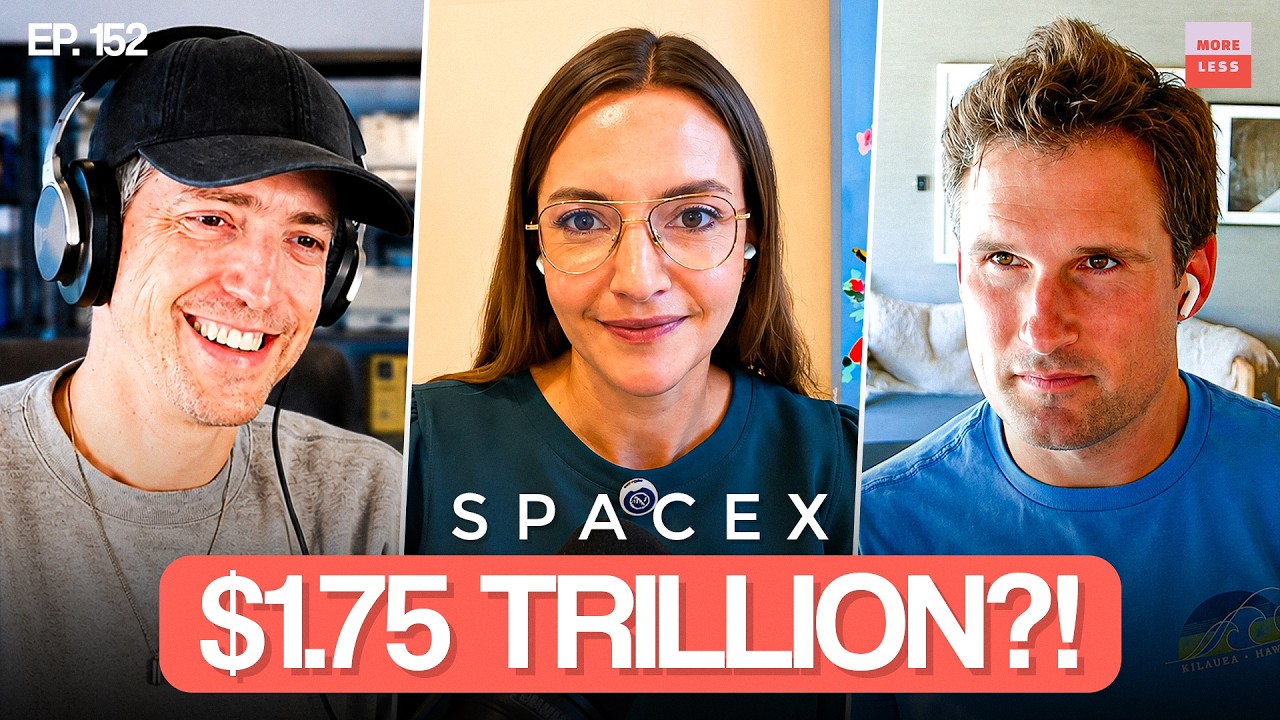
Brit subs in for Jess as Sam and Dave unpack the AI IPO boom, including SpaceX, Anthropic, and Cerebras, debate whether AI agents can actually replace employees, and react live to the discovery that Slow’s @slow Instagram account was stolen through a Meta AI support exploit. The conversation spans OpenClaw’s enterprise push, recent AI funding rounds, the AI wrapper debate, and Sam’s latest investing thesis that startup pitches should look more like movie trailers than decks, before ending with a pop culture corner into Taylor Swift, AI-generated podcasts for kids, and the future of TBPN after the OpenAI deal. Chapters: 02:53 AI IPO Season: SpaceX, Anthropic & Cerebras 05:29 Narrative Capitalism: Storing Value in Stories 11:34 What the AI IPO Wave Means for Silicon Valley 15:02 Microsoft Build: OpenClaw Goes Enterprise 17:38 Would You Trade Your Employee for an AI Agent? 25:19 LIVE: Slow Ventures’ Instagram Gets Hacked via Meta AI 30:04 Are AI Harnesses Just Fancy PDFs? 31:49 Recent AI Raises & the SaaS Comeback 33:01 The New Pitch: Movie Trailers Over Decks 41:17 AI-Generated Podcasts, Voice Cloning & Consumer AI 42:54 TBPN Update: Post-OpenAI Deal We’re also on ↓ X: https://twitter.com/moreorlesspod Instagram: https://instagram.com/moreorless Spotify: https://podcasters.spotify.com/pod/show/moreorlesspod Connect with us here: 1) Sam Lessin: https://x.com/lessin 2) Dave Morin: https://x.com/davemorin 3) Jessica Lessin: https://x.com/Jessicalessin 4) Brit Morin: https://x.com/brit
Summary
Generated by claude-sonnet-4-5At-a-Glance
- Verdict: Skim
- Core thesis: Three major AI IPOs (SpaceX $1.75T, Anthropic $1T, OpenAI TBD) represent a cultural test of narrative capitalism vs. financial rationality, while the AI agent narrative is far ahead of reality and VCs should demand movie trailers instead of decks.
- Why it matters: These IPOs will move more private capital into public markets than ever before in one year, potentially creating liquidity for Silicon Valley but also revealing whether the market values science fiction stories over cash flows.
- Best use: Scan the IPO lockup structure details, agent reality-check, and the movie-trailer-as-pitch thesis; skip the pop culture tangents and Instagram hack story.
Executive Summary
Sam Lesson and Dave Morin debate the implications of SpaceX's $1.75T IPO (June 11), Anthropic's $1T filing, and Cerebras's $95B debut—three science-fiction narratives wrapped in S-1s that may define whether markets reward stories or DCF models. SpaceX has unusual lockup tranches (7% releases at 90–135 days, full at 180, Elon at 366) plus a 5% directed share program for insiders at IPO price with no lockup, designed to manage liquidity and favor ETFs over retail initially. The hosts argue these companies should have gone public years ago, that keeping them private was nearly a 'financial crime,' and that their exit frees the conversation to return to early-stage startups and agents.
On agents, Dave insists the narrative gap is enormous: agents cannot yet replace employees, do not learn continuously, have poor memory, and are far from what hype suggests. Sam counters that his Claude-based stack is good enough that he'd pick it over an associate, though he sandboxes sensitive data (Gemini for health/finance, Grok for images, Claude for orchestration). Both agree agents are 'just apps on models,' harnesses are overvalued (markdown files sold as infrastructure), and that routing/cost optimization will commoditize models quickly—though opacity in ROI measurement may create temporary moats.
The hosts introduce a provocative thesis: startups should pitch VCs with movie trailers instead of decks, because storytelling quality signals taste, vision, and product-market narrative fit. They argue narrative capitalism rewards compelling stories (SpaceX to Mars) over spreadsheets, and that high-quality video is bot-resistant and attention-winning. They dismiss fundraise-announcement hype (Wordsmith $70M, Town $55M, Lassie $47M) as noise unless customer traction or compelling narrative exists.
Security concerns surface: Instagram handles are being stolen via Meta AI chatbot social engineering, and Sam's Slow Ventures handle was hijacked mid-episode. The hosts debate whether to trust Google/Microsoft infrastructure for sensitive data, concluding that sandboxing (separate environments, no 1Password access for bots, secondary emails) is essential. Cultural tangents include Taylor Swift's Disney Toy Story song as potential sell-out, MTV's death, and speculation that TDPN may have been algorithmically suppressed post-OpenAI controversy.
Key Takeaways
- Claim: SpaceX IPO at $1.75T is a cultural test of narrative capitalism vs. Wall Street rationality—it's 'science fiction wrapped in an S-1' with no credible DCF. | Evidence: SpaceX has tranched lockups (7% at 90/105/120/135 days, full at 180, Elon/key investors at 366 days) and a 5% directed share program with no lockup. Sam notes all institutional buyers already own it, so retail must be exit liquidity unless S&P 500 rules change. The higher it goes, the more retail buys (index flows), creating 'number go up means number go up.' | Caveat: If Wall Street rationality dominates and the story doesn't deliver, valuation could collapse. The lockup structure may cause December liquidity floods across SpaceX, Anthropic, and OpenAI. | Implication: Ken should watch whether retail/index flows or fundamentals win—this is the largest test yet of whether markets store value in stories or cash flows. If narrative wins, expect more mega-rounds at absurd valuations. | Timestamp: timestamp unavailable
- Claim: Agents cannot yet replace employees: they don't learn continuously, have poor memory, and the narrative-reality gap is the widest in tech right now. | Evidence: Dave (building agents daily): 'They write down memories in a book and consult all their books to answer questions—they're not really learning.' Sam counters he'd pick Claude over his associate Jack Raines if forced to choose one, but admits it's a hard call and he uses multiple models (Gemini for sensitive data, Grok for images, Claude for orchestration). | Caveat: Sam's setup is highly customized with sandboxing, secondary emails, and no access to core infrastructure—most users won't do this. The opacity of agent quality (no ROI benchmarking) may create temporary moats for incumbents despite commoditization pressure. | Implication: Ken should not bet on agent platforms or harnesses as durable businesses unless they have measurable ROI or deep enterprise integration (Microsoft/Azure controls). The real opportunity is in vertical apps with agents embedded, not agent wrappers. | Timestamp: timestamp unavailable
- Claim: Startups should pitch VCs with movie trailers, not decks—storytelling quality is the new signal of taste, vision, and narrative fit. | Evidence: Sam: 'If you can't make a sick movie trailer for your startup, don't pitch me and don't do it. Elon companies have the sickest trailers—you're digging holes, going to Mars.' He wants to 'wake up every day and watch an hour of movie trailers' instead of reading emails. Several startups are now producing high-quality mini-docs post-fundraise for hiring/awareness. | Caveat: AI-generated trailers will become homogeneous and boring ('Transformers 87'), so trailers must show human taste and unique storytelling. Fundraise-announcement trailers without customer traction are 'boring stories.' | Implication: Ken should encourage portfolio companies to invest in video storytelling (anti-bot, high attention) and consider whether a founder can articulate a compelling narrative as a filter. This is narrative capitalism operationalized at the pitch level. | Timestamp: timestamp unavailable
- Claim: Instagram handles are being stolen via Meta AI chatbot by asking it to change email addresses—happened for 4 months undetected, including Slow Ventures' @slow handle mid-episode. | Evidence: Sam's Instagram handle @slow was hijacked by 'Hamdan Albuschi' (Middle Eastern apparel, headshot visible) via Meta AI customer support chatbot. Sam finds it hilarious and calls Albuschi 'our new marketing associate,' but admits it's a broader security failure at a multi-trillion-dollar company. | Caveat: Sam expects to recover the handle easily. However, this reveals that even large tech companies have agent security flaws, and users should not trust bots with core accounts or 1Password access. | Implication: Ken should sandbox sensitive data: use secondary emails for bots, no core email or 1Password access, and trust large companies (Google/Microsoft) for regulatory/liability reasons but assume non-zero risk. Agent security is immature. | Timestamp: timestamp unavailable
- Claim: Harnesses and agent wrappers are 'selling PDFs'—just markdown files with no moat, and routing services will commoditize model costs 100x. | Evidence: Sam: 'How on earth is anyone justifying selling PDFs and calling them harnesses? These are just apps on models, no different from apps on Linux or iOS.' He notes Anthropic tokens cost 100x open-source tokens, and routing/optimization (OpenRouter) will make model choice frictionless and price-sensitive. | Caveat: Opacity in ROI measurement (unlike ad platforms with clear attribution) creates temporary defensibility—'you can't measure token value, so you might pay 100x for unclear reasons.' Also, enterprise customers are addicted to Claude's personality, which Sam dismisses as irrational but Dave says is real. | Implication: Ken should avoid investing in pure harnesses or agent orchestration layers unless they have enterprise lock-in (Azure/Windows integration) or proprietary data moats. Focus on vertical SaaS apps with agents embedded (legal, dental automation) where ROI is measurable. | Timestamp: timestamp unavailable
Detailed Brief
IPO Summer 2026: SpaceX, Anthropic, OpenAI and the Narrative Capitalism Test
- Claims: SpaceX IPO at $1.75T is pricing June 11 with unusual lockup structure: 7% tranches at 90/105/120/135 days, full at 180, Elon/insiders at 366 days, plus 5% directed share program at IPO price with no lockup.; Anthropic filed for $1T IPO; Cerebras opened at $95B (68% first-day pop); all three are 'science fiction narratives' with no credible DCF models.; These should have been public 'years ago'—keeping them private was 'almost a financial crime' that excluded the American public from growth.; The real question: do markets store value in stories (Mars, AGI) or financial reality (free cash flow)? SpaceX is the starkest test yet.; Structural risk: all institutional buyers already own SpaceX; retail must be exit liquidity unless S&P 500 rules change. December will see liquidity floods from all three IPOs.
- Evidence: Lockup details: 7% at 790/105/120/135 days, full at 180, Elon at 366, plus 5% directed shares with no lockup.; Sam notes 'number go up means number go up'—index flows create self-reinforcing buying pressure.; Dave: 'We're moving more capital than anyone in the history of the world this year.'; Sam: 'This is an S-1 as incredible science fiction. How do I value that? The answer is it's not easy to dismiss financially, but we're storing money in stories now.'; Example: Gold is also 'just a story.'
- Caveats: If Wall Street rationality dominates (DCF, fundamentals), these valuations could collapse.; Lockup tranches may cause unpredictable liquidity events and retail exit-liquidity risk.; No clarity on S&P 500 inclusion rules or institutional appetite post-IPO.
- Implications: Ken should monitor whether narrative or fundamentals win—this sets precedent for all future mega-cap science-fiction companies.; If narrative wins, expect more $50M–$100M rounds at billion-dollar valuations with no revenue.; Liquidity in December may boost Silicon Valley real estate, seed/venture deployment, and hiring—or tank if sells dominate.; These IPOs free the conversation: no more debating private OpenAI/Anthropic; focus shifts to next-gen agents, vertical SaaS, and infrastructure.
Agents: Narrative vs. Reality and the Security Sandbox Imperative
- Claims: Agent narrative is far ahead of reality: they cannot replace employees, do not learn continuously, have poor memory, and are not measurably better over time.; Dave (building agents): 'They write memories in a book and consult all books to answer questions—they're not learning.' Sam: 'I'd pick Claude over my associate Jack if forced, but it's a hard call.'; Agents are 'just apps on models'—no different from apps on Linux/iOS. Harnesses are 'selling markdown files' with no moat.; Security is immature: Instagram handles stolen via Meta AI chatbot (4 months undetected); Sam's @slow handle hijacked mid-episode.; Best practice: sandbox agents (secondary email, no 1Password, no core email access), trust Google/Microsoft for liability reasons, assume non-zero breach risk.
- Evidence: Sam uses Claude for orchestration, Gemini for health/finance (trusts Google's liability), Grok for images (only one that 'cared about image stuff').; Dave integrates OpenClaw with Windows/Azure for enterprise observability, admin policies, and security controls.; Microsoft Build focused on agents in enterprise; new long-running agent 'Scout' built on OpenClaw.; Sam: 'If Claude went away tomorrow, it would take me a day to recover—it's all plumbing.'; Meta AI chatbot changed Instagram email addresses on request; Hamdan Albuschi stole @slow by asking chatbot.
- Caveats: Sam's setup is advanced (multiple models, sandboxing, secondary email)—most users won't replicate this.; Opacity in agent quality (no ROI benchmarks) creates temporary moats despite commoditization (Anthropic tokens cost 100x open-source).; Enterprise customers are 'addicted to Claude's personality' (Dave), which Sam dismisses but may create irrational switching costs.
- Implications: Ken should not invest in pure agent harnesses or orchestration layers unless they have enterprise lock-in or proprietary data.; Security risks are real: advise portfolio companies to sandbox agents, use secondary accounts, and avoid 1Password/core email access.; The real opportunity is vertical SaaS with embedded agents (legal, dental, ops) where ROI is measurable and switching costs are high.; Agent platforms (Claude, OpenAI, Gemini) are infrastructure providers—commodity plumbing, not durable businesses at current valuations.
Movie Trailers as Pitch Decks and the Future of Narrative-Driven Fundraising
- Claims: Startups should pitch VCs with movie trailers instead of decks—storytelling quality signals taste, vision, and product-market narrative fit.; Sam: 'If you can't make a sick movie trailer, don't pitch me. Elon companies have the sickest trailers—you're going to Mars.'; AI-generated trailers will be homogeneous ('Transformers 87'), so human taste and unique storytelling are the filter.; Several startups are producing high-quality mini-docs post-fundraise for hiring/awareness (not fundraising itself).; Fundraise announcements (Wordsmith $70M, Town $55M, Lassie $47M) are noise unless coupled with customer traction or compelling narrative.
- Evidence: Sam: 'I want to wake up every day and watch an hour of movie trailers instead of reading emails. I'll pick which movies (startups) to invest in based on trailers.'; Example: TDPN launched with a 'sick trailer'; Silicon Mania produces weekly cartoons of Silicon Valley news.; One portfolio company (unnamed) hired a video person, now produces monthly videos, and storytelling 'is so much better—compelling and fitting into narrative format.'; Sam: 'The future of Hollywood is storytelling for companies. We should do documentaries of startups continuously.'; TechCrunch used to cover $500K raises; now $50M is the new threshold ('50M is TechCrunch 500K of the aughts').
- Caveats: Trailers must be done post-fundraise for hiring/awareness, not as fundraise vehicles themselves (per Sam's correction).; AI will enable cheap trailers, but quality and taste will separate signal from noise.; Fundraise hype without customer traction is 'boring storytelling' and not worth covering.
- Implications: Ken should encourage portfolio companies to invest in video storytelling (100K documentary budget, monthly videos) for hiring, customer acquisition, and narrative development.; Consider 'trailer quality' as a filter for investment—if a founder can't articulate a compelling narrative on video, the startup may lack vision or taste.; This is narrative capitalism operationalized: attention economy rewards stories over spreadsheets, and video is bot-resistant and high-engagement.; Potential startup idea: Apple TV app for startup pitch trailers (VCs watch trailers, select which to meet).
Fundraise Hype, SaaS Recovery, and the Return to Building
- Claims: Recent fundraises (Wordsmith $70M, Town $55M, Lassie $47M) are noise unless customers exist; 'just because they raise money means nothing.'; SaaS sector is 'back up ridiculously' because application layer is winning—agents are embedded in vertical apps, not standalone harnesses.; The cycle is late because 'people aren't talking about customers, only money raised' and announcing via movie trailers is 'high art.'; The goal of these IPOs is to 'stop talking about these companies in private markets' and return to 'regular startup programming' (agents, next 10 years).
- Evidence: Wordsmith: Harvey 2.0 for in-house legal work, $70M raise.; Lassie: automation for dental offices, moving to other clinics, $47M raise.; Town: agentic application (not a harness per Dave), $55M raise from 'fancy VCs.'; Sam: 'TechCrunch used to cover $500K raises; now no one gives a fuck. $50M is the new $500K.'; Dave: 'I'm done talking about these companies in private markets. They should have been public years ago.'
- Caveats: Some of these companies (Wordsmith, Lassie) may have real customer traction and measurable ROI in vertical markets.; Fundraise size is not a signal of success—customer validation and revenue growth matter.; The SaaS recovery may be driven by AI hype rather than fundamentals.
- Implications: Ken should ignore fundraise announcements unless customer metrics, revenue, or compelling narrative are disclosed.; Focus on vertical SaaS with embedded agents (legal, healthcare, ops) where ROI is clear and switching costs are high.; The IPO exits free capital and attention to return to early-stage innovation—this is a positive reset for the ecosystem.; Monitor SaaS sector recovery: if driven by AI embedding, durable; if hype-driven, fragile.
Notable Concepts & Terms
- Narrative capitalism: The idea that markets increasingly store value in compelling stories (SpaceX to Mars, OpenAI AGI) rather than cash flows or DCF models—this is the cultural test of the 2026 IPO summer.
- Tranched lockups: SpaceX's unusual IPO structure: 7% releases at 90/105/120/135 days, full at 180, Elon/key investors at 366 days, plus 5% directed shares with no lockup—designed to manage liquidity and favor ETFs over retail.
- Directed share program: 5% of SpaceX IPO shares reserved for people selected by executives, offered at IPO price with no lockup—trusting insiders not to dump immediately.
- Agent harnesses: Orchestration layers for AI agents (markdown files, frameworks) that Sam dismisses as 'selling PDFs'—no moat, commoditized by routing services like OpenRouter.
- Sandboxing agents: Security best practice: use secondary emails, no 1Password or core email access, separate environments for bots vs. sensitive data—Dave and Sam's approach to agent security.
- Movie trailer as pitch deck: Sam's thesis: startups should produce high-quality video trailers to pitch VCs, because storytelling quality signals taste, vision, and narrative fit—'if you can't make a sick trailer, don't pitch me.'
- OpenClaw: Dave's agent platform integrated with Windows/Azure for enterprise observability, admin policies, and security controls—announced at Microsoft Build.
- MCP (Model Context Protocol): Method for connecting AI models to external services (email, calendar, etc.)—Sam uses this for secondary email but not core accounts.
- Opacity moat: Sam's observation that the lack of ROI benchmarking for AI tokens creates temporary defensibility—'you can't measure quality, so you might pay 100x for unclear reasons.'
- TDPN: The Daily Portfolio (or similar tech media outlet) that launched with a 'sick trailer' and may have been algorithmically suppressed post-OpenAI controversy—speculation by hosts.
Operator Notes / Why Ken Should Care
- Ken should track SpaceX IPO performance closely: if narrative beats fundamentals, expect more mega-rounds at absurd valuations with no revenue. If fundamentals win, expect correction and return to rationality.
- Do not invest in pure agent harnesses or orchestration layers—they are commodity plumbing with no moat. Focus on vertical SaaS with embedded agents (legal, dental, ops) where ROI is measurable.
- Security is immature: advise portfolio companies to sandbox agents (secondary email, no 1Password, no core email access). Assume non-zero breach risk even with Google/Microsoft.
- Encourage portfolio companies to produce high-quality video storytelling (trailers, mini-docs) for hiring, customer acquisition, and narrative development—this is narrative capitalism operationalized and bot-resistant.
- Ignore fundraise announcements unless customer metrics, revenue, or compelling narrative are disclosed. $50M raises are now noise unless traction exists.
- Monitor SaaS sector recovery: if driven by AI embedding and measurable ROI, durable; if hype-driven, fragile. The real opportunity is apps with agents, not agents as apps.
- December 2026 will see liquidity floods from SpaceX, Anthropic, and OpenAI lockup expirations—watch for Silicon Valley real estate, seed deployment, and hiring spikes or crashes.
- Consider 'trailer quality' as an investment filter: if a founder can't articulate a compelling narrative on video, the startup may lack vision or taste. This is a new VC heuristic.
- The hosts are correct that keeping these companies private was suboptimal for markets—public float allows price discovery, liquidity, and participation. Expect regulatory/cultural pressure for earlier IPOs.
- Agent narrative is far ahead of reality—do not bet on 'agents will replace all employees' thesis. The real use case is augmentation, automation of narrow tasks, and vertical workflows where ROI is clear.
Watch Map
- timestamp unavailable: Introduction: IPO summer overview (SpaceX $1.75T, Anthropic $1T, Cerebras $95B), lockup structure details, and narrative capitalism thesis.
- timestamp unavailable: Agent reality check: Dave (building agents) vs. Sam (using Claude stack), narrative-reality gap, employee replacement debate, sandbox security best practices.
- timestamp unavailable: Microsoft Build recap: OpenClaw integration with Windows/Azure, enterprise agent deployment, and the 1997 analogy for agent maturity.
- timestamp unavailable: Instagram hack story: Sam's @slow handle stolen via Meta AI chatbot, security implications, and whether to trust large tech companies with sensitive data.
- timestamp unavailable: Harnesses are 'selling PDFs' debate: commoditization via routing, Anthropic tokens cost 100x open-source, opacity moat, and enterprise personality addiction.
- timestamp unavailable: Fundraise hype (Wordsmith $70M, Town $55M, Lassie $47M) and why 'just because they raise money means nothing' without customer traction.
- timestamp unavailable: Movie trailers as pitch decks: Sam's thesis on storytelling quality as VC filter, Elon's trailers, and the future of narrative-driven fundraising.
- timestamp unavailable: Pop culture tangents: Taylor Swift/Disney Toy Story song, MTV's death, TDPN algorithmic suppression speculation, and Sam's 11 Labs custom podcasts for his kids.
- timestamp unavailable: Closing: term sheet movie rights joke, Silicon Valley as new Hollywood, and wrap-up.
Source/Metadata
- Title: Silicon Valley IPO Summer 2026: SpaceX, Anthropic, OpenAI Explained
- Transcript words: 14002
- Duration seconds: 2744
- Timestamp note: Timestamps were unavailable in the provided transcript.
Transcript
Hackers have been stealing people's Instagram handles by going to Meta AI's customer support chatbot. Should we be putting all of our sensitive information into any of these things right now? Agents are going to be invisible, just like the algorithm on TikTok's invisible, and so people won't even know they're using agents. This year we're moving more capital than anyone in the history of the world. So we've got SpaceX pricing at $1.75 trillion going out June 11th. [SPEAKER_02] We also saw Anthropic signaling they are officially filing for a trillion dollar IPO. And then we actually had Cerebris open with a $95 billion valuation. They should have been public years ago. I think it's almost a financial crime that the American public didn't get to participate in the growth. Wordsmith, which is a Harvey 2.0, dude that does in-house legal work raised $70 million. Town raised $55. Brent, no one cares. Just because they raise money means nothing. More or less. Is it no or is it yes? We'll debate the tax that's best. [SPEAKER_01] But we'll get more or less. Dave and Brent plus Sam and Jess. Put it all right to the test. More or less. [SPEAKER_01] Why hello everyone. Welcome back to another episode of more or less. It's Britt subbing in for Jess this week as moderator of these two rascals. Sam Lesson and Dave Morin. Can I call you rascals? [SPEAKER_03] I heard that last week my wife was being spicy because I wasn't around. Is that true? She was super spicy. She's generally pretty spicy when you're not around. But last week was extra spicy. She was on fire. I was thinking, oh, that's great. I should leave more often, even more spicy. [SPEAKER_01] Well, the thing she really got into it with us on was whether anyone actually is going to use AI in the normie audience. Agents, sorry. Agents. [SPEAKER_01] I'm glad. Good for her taking the under. Good for her taking the under. I like that. I actually agree. That people won't use agents? [SPEAKER_00] Like normal humans? No. I mean, I'll use them. [SPEAKER_00] You don't think normal humans will use agents. My point was that agents are going to be invisible. And just like the algorithm on TikTok is invisible. And so people won't even know they're using agents. [SPEAKER_00] Well, I guess it depends how to define these things. Sure. But is an agent that you don't, is it not an agent an agent? I mean, sure. We'll all be multiplying big numbers to shortcut our way through booking things. And so here we are. And listeners, if you missed that debate, it's worth a re-listen, even though Sam won't listen from last week's episode. [SPEAKER_03] So I'm going to have my agent listen. I'm just going to have my agent listen. [SPEAKER_03] Yeah, have your agent summarize it for you. There you go. First week of June. It's been a hot week. I think everyone's trying to get out. Really? Like hot temperature hot? [SPEAKER_02] No, a hot tech week. There's many IPOs happening. There are lots of people announcing fundraisers. A lot of events going on still. We've got also events coming up next week, including WWDC and all kinds of other things. So we've got a lot of news to get into without Jessica here to ground us in real facts. So I will do my best to lead us through it. But first, of course, is the IPO stuff. So we've got SpaceX pricing at what we thought it would be, 1.75 trillion going out June 11th. We also saw Anthropic signaling they are officially filing for a trillion dollar IPO. And then we actually had Cerebris open with a $95 billion valuation and shares jumping 68% on the first day. That's hilarious. Was Cerebris this week? Because to me, that was ten years ago. I think it was two weeks ago. And OpenAI was one of the people on the cap table or the companies on the cap table. So I thought that was an interesting little Russian doll racket there. But this has a lot of implications for good and for bad. But I wanted to kick it over to Dave first. What do we think about any of this? Does any of it surprise you? Or is this really more for us, at least about what does this mean for venture capital and housing and prices and craziness and the general markets here in Silicon Valley? [SPEAKER_02] You guys should sell your house to one of these Anthropic people. You could make a fortune. [SPEAKER_02] And then where would we live? A lower tax state. Wyoming. [SPEAKER_02] I mean, the thing I found interesting, I don't know the exact details of it, but I heard that SpaceX is actually requiring there's some kind of interesting term in the IPO setup where they're not going to allow there's a big lockup. Sam, I don't know. Do you know what this is? There's some big lockup and then there's some requirement that ETFs and the more algorithmic traders are the initial buyers. So they're not actually selling the float to retail immediately or something like that. And so it sounds like an interesting setup to ensure that the liquidity profile stays less crazy over the first year. [SPEAKER_02] How do you ban an algorithmic firm from buying? That doesn't make any sense. [SPEAKER_02] No, they're not banning them. They actually want them to. [SPEAKER_02] I should have actually done my research before bringing this up. Have some bots do it and we'll bring it up by the end of the episode. [SPEAKER_03] Yeah. You can always return back to it. [SPEAKER_03] Yeah. Bring a bot into the conversation. I think the SpaceX IPO is going to be fascinating. It's going to be a cultural moment of where are we and what do we value and how does this all work? I mean, the whole wildness around how it relates to the market with the S&P 500 is actually a huge deal, right? In terms of how that plays out. [SPEAKER_02] How do we value stories versus reality? I mean, as a shareholder, I want number go up and number high, but I'm actually fascinated by how this will be digested by the whole world. It is a really important cultural story in my mind, even more than a financial story. It's a cultural story. [SPEAKER_02] Which, what do you mean by that? [SPEAKER_02] The SpaceX IPO? [SPEAKER_02] Yeah. What do you mean by cultural? Well, we have an incredibly compelling story, right? Like from a science fiction perspective, it is financially, if you look at it with a Wall Street hat on, nonsense, right? At a $1.75 trillion valuation, but it's an incredible story. And if it delivers the story and people want to buy into the story and hold the story and believe the story and we're okay with narrative capitalism, then the thing goes to the moon. But if Wall Street rationality dominates, it doesn't add up, right? And so it's going to be really, I mean, [SPEAKER_02] The SpaceX IPO? [SPEAKER_02] Yeah. What do you mean by cultural? Well, we have, it's an, it's an incredibly compelling story, right? From a science fiction perspective, it is financially, if you look at it with a Wall Street hat on, nonsense, right? At a $1.75 trillion valuation, but it's an incredible story. And if it delivers the story and people want to buy into the story and hold the story and believe the story and we're okay with narrative capitalism, then the thing goes to the moon. But if Wall Street rationality dominates, it doesn't add up, right? And so it's going to be really, it's such a stark contrast of those two realities and how we play those. I mean, again, I just look at this as an observer, from what do we store value in? Do we store value in story? Do we store value in financial reality? How do we think about this stuff? And this wasn't the case of SpaceX had a 500, 800 million, billion dollar valuation as a launch plus Starlink connectivity company. But when you layer all the pieces in, right, in terms of how this has played out, it really is an incredibly interesting moment. And then you have this whole thing with the S&P side, right? Where if you're really sharp nosed and you're coming into this thing as an investor, you're coming in new and you're like, what's going to happen here? It's like, well, all the institutions that would normally buy this already own this, right? Because it has a huge cap table, some people buy more, whatever, then you say, okay, I want to buy this. The question is, who's buying it after you, right? And the interesting thing is, it's really unclear who's buying it after you, unless the rules of the S&P 500 change. And the answer is structurally, retail has to buy it after you, right? And if that happens, which, by the way, is great exit liquidity for anyone buying into the IPO, I mean, it's the best, it's also weird, because it means the higher the number is, the more they buy, right, which is a wild new reality, right, where number go up means number go up. I don't know, I just stepped back from this as an observer. And I'm like, look, I actually think SpaceX is a super cool company. I think it's a really interesting thing. I love the vision of the whole thing in a lot of ways. I also just recognize that it's a vision, right? It's a vision wrapped in an S1. And I think that's a really, it's an S1 as a piece of incredible science fiction, right? And you're like, how do I value that? I don't know. The answer that's not easy is to dismiss it financially. But on the flip side, we're going to have three IPOs, which are inspirational science fiction narratives coming out right this year, we're moving more capital than anyone in the history of the world. And the reality is, maybe we just store money in stories now. Yeah. And what was gold just a story? Gold is just a story. Yeah, it's interesting, for sure. 100% they're just stories. They're just stories that will be bigger stories tomorrow than they were today. Right? 100%. [SPEAKER_02] It's just, I think everyone at HBS is losing their minds right now, right? Because the story that we all bought into before was free cash flow and DCFs. Right? There's no DCF here. You can't value any three of these companies on DCFs. Like they literally... Maybe you can sort of squint at it. It's so, I don't know. It's a why, again, I just think this is a year, this is a summer where we're going to learn a lot about ourselves. [SPEAKER_03] To add to that, I found the information for us. So they're doing 7% tranches at 790, 105, 120, and 135 days post IPO. Full release at 180 days for most holders. [SPEAKER_03] What does that mean? Oh, this is the lockups. [SPEAKER_03] Yeah. So they're doing this tranched lockup, which almost sounds like a crypto release, Sam. [SPEAKER_03] And then there's a full release at 180 days for most holders. Elon and key investors are 366 day, so full year lockups. And then one of the more interesting things is that SpaceX reserved up to 5% of the IPO shares for a directed share program, which is people selected by the executive officers. And so they're offered at the IPO price and they have no post IPO lockup restrictions. So that's them saying we're giving you trusted people IPO price and trusting you not to sell immediately. Who are these people that they're giving this to? [SPEAKER_01] Whoever they select. That's interesting. So capital is going to flood the market in December for the most part. No, they've got this 7% tranches over the next 135 days. [SPEAKER_01] But I'm talking about also with Anthropic and then OpenAI coming next and six month lockups, all of this capital will be hitting in December. [SPEAKER_01] It's unclear, Britt. Sam could be right. It could be that no, some liquidity comes in, people will take some off the table, but people might buy this story and hold it. Right. Who knows? Sam's right. It's totally unclear which way this is going to go. And we have no idea until it all happens. [SPEAKER_01] So the downstream effects though, assuming some liquidity comes off the table in the next six months are what, the main one is that this is just fantastic for the Silicon Valley ecosystem. Like it's finally there's liquidity again. No, no, no. It's not even about liquidity. It's about focus. People can stop talking about these companies and seriously, I'm bored. I never want to talk about these companies on the podcast again. Get them into the public market. Well, we're going to have to talk about them because if they start failing, yeah. And the game's not over. It's not about it being over. But it is in our world on this podcast. We think about startups and the private markets and we can talk about the public markets all day, but I'm done. I don't care about talking about these companies in the private markets anymore. They should have been public years ago. I think it's almost a financial crime that the American public didn't get to participate in the growth. I'd like to introduce you to someone named Bernie Sanders. I obviously, I'm not a Bernie the public market. Well, we're going to have to talk about them because if they start failing, yeah. And the game's not over. It's not about it being over. It's, but it is in our world on this [SPEAKER_01] podcast. We think about startups and the private markets and we can talk about the public [SPEAKER_01] markets all day long, but I'm done. I just don't care about talking about these [SPEAKER_01] companies in the private markets anymore. They should have been public years ago. I think [SPEAKER_01] it's almost a financial crime that the American public didn't get to participate in the growth. I'd like to introduce you to someone named Bernie Sanders. I'm obviously not a Bernie [SPEAKER_03] bro, but I do think that it's great. It's actually just great. Get out into the public market. People can have the CNBC conversation about these things till the cows come home. It's great. Now we can return to more of your regular startup programming, which is, let's figure out the next phase, which is agents and everything else going on and how that's going to play out the next 10 years. Unless there is no next phase, Dave, because it's the singularity. [SPEAKER_02] It's the AGI and blah, blah, blah. Well, I can report from the singularity [SPEAKER_02] as someone who's building agents every day that these things are way far away. [SPEAKER_02] This is, yeah, but my favorite, I actually do think we should talk for a second [SPEAKER_02] about the walk back on AI is going to take all your jobs. The narrative gap. Yeah, it's the narrative walk back. Well, okay. I saw Sam Altman walking that back, but isn't that just because AI's brand sucks and he needs it to not suck? No, it's also just true. But he's also doing a PR campaign about why AI is good. Benefit of being true. That's a secondary point. Exactly. It's really funny because it's masterful PR strategy. I think you do look at everything through a narrative lens. And what happened? Phase one of AI was we need a ton of capital. And the fastest way to do that is to convince everyone that the end of the world is coming. Right. It's the most powerful jujitsu move. You go to Washington, [SPEAKER_02] you're like, please regulate us. We're scared of how powerful things are. [SPEAKER_01] Now into version two, which is once you start winning, you become like everyone else. [SPEAKER_01] Right. This is what always happens. You start out as the insurgent. [SPEAKER_01] And then you become the thing you've sought to fight. Right. [SPEAKER_01] This is the era we're now in where all these companies, one bad news by telling [SPEAKER_02] everyone that AI was so powerful and dangerous and being like, well, we're the only trusted [SPEAKER_02] people you were able to achieve something unheard of. I believe that in a recent survey, [SPEAKER_02] AI has a lower approval rating than Jeffrey Epstein. It's 6%. Apparently 6% of Americans approve of Jeffrey Epstein, but [SPEAKER_02] it's wild. It is literally the most hated thing in the history of the world. Some of it is clearly foreign [SPEAKER_02] influence trying to slow down data center build out. That's for sure true. And there's [SPEAKER_02] all sorts of narrative warfare going on, but it is also true that it's a terrible brand. [SPEAKER_02] And so now you're like, okay, well now that we have all the capital and we convinced everyone to give [SPEAKER_02] us these huge numbers and convert it into a ton of infrastructure, we need to walk back [SPEAKER_02] all the scary stuff. Right. And so it's really funny to watch this stuff play out. [SPEAKER_02] So that's what's happening in IPO land. We'll see what the downstream effects are. If people hold, [SPEAKER_02] if they sell, it's going to be an interesting rest of the year for 2026. [SPEAKER_02] Who cares? We can get back to talking about building things and what's going on. [SPEAKER_02] Okay. Well, speaking of building things, Dave, you were at the Microsoft Build [SPEAKER_02] conference this week. What happened there? Anything of note? [SPEAKER_02] It's a continuation of the same message that we're hearing from all of these big developer conferences. [SPEAKER_02] Although it differs slightly from the Google one in that Microsoft is very focused on [SPEAKER_02] agents and the enterprise. And we did a big integration effort with Microsoft over the last [SPEAKER_02] month or two. We announced that OpenClaw is fully integrated with Windows now and did a bunch of really [SPEAKER_02] great security work around giving it controls. And if you want to deploy OpenClaw into the [SPEAKER_02] enterprise, now you can using all of the Windows and Azure tools, and you can have full control over it [SPEAKER_02] and set up all of your observability policies, admin policies, all that stuff. [SPEAKER_02] It's the stuff people are asking for. They also integrated it directly into [SPEAKER_02] Windows and they have a new long running agent called Scout that's built on OpenClaw. [SPEAKER_02] And so that's been pretty neat to see. But that's the same story that a lot of folks are [SPEAKER_02] chasing right now in the story of this half of the year. So it's cool. It's cool to be on stage with Microsoft. There's Google I.O., Microsoft Build. We've got Apple next week. We've got the Dell World event happening. Does a lot of this feel like feature parity? Like everyone's trying to get to the same infrastructure when it comes to AI and agents in the big tech land? No, I do think that this is the era of figuring out what agents are going to be. I keep saying this, but I think it's 1997. I always say it's either 1983 or 1997, depending on which [SPEAKER_02] part of the technology canon you want to look at. But we're kind of in that era where websites were [SPEAKER_02] just invented. Some of the early languages for programming them are around. Some of the early [SPEAKER_02] servers for building them are around. But the really cool stuff that you're going to [SPEAKER_02] be able to build with this has not yet emerged. And it's pretty messy. And agents, the narrative [SPEAKER_02] between what agents can do and what people think they can do could not be wider. That's one of my [SPEAKER_02] other narrative fascinations right now, Sam, which is that anybody building this stuff knows [SPEAKER_02] that they cannot do what a lot of people are claiming that they can do. They cannot be an [SPEAKER_02] employee of your business. They do not learn every day. They have really poor memory. There's a lot [SPEAKER_02] of stuff to figure out. Mine's pretty good, but yeah, I hear you. But would you trade an employee for an [SPEAKER_02] agent right now? I think is a really interesting question. Oh, that's an interesting question. If I [SPEAKER_02] could only have one. Yeah. This is a very interesting question. I think this is the premier question right other narrative fascinations right now, Sam, which is that anybody building this stuff knows that they cannot do what a lot of people are claiming that they can do, i.e. they cannot be an employee of your business. They do not learn every day. They have really poor memory. There's a lot of stuff to figure out. Mine's pretty good, but yeah, I hear you. But would you trade an employee for an agent right now? I think that's a really interesting question. Oh, that's an interesting question. If I could only have one. Yeah. This is a very interesting question. I think this is the premier question right now. Honestly, if you said I could either lose my associate Jack Raines or Claude. Wow, that's an interesting, that's a hard call. I like Jack. Sorry, Jack. I think I would stick with Claude. Oh no, Jack. Oh no. Sorry, Jack. The good news is I don't have to choose. I can have both. It's not a choice. It's not an either or, but I don't know. But this is the question people are asking, Sam. And this is the more direct question that people are debating right now, right? Yeah. And I'm fascinated by that. Agents, when you hire a new employee, at the end of 30 days, people learn, they get smarter, they continually learn, they collaborate. Agents can't do this right now. They write down memories in a book and put it on the shelf. And they try to consult all of their books to answer the question for you each time you're talking to them. But they're not really learning. They're not really getting super, super better though. Everybody says that that's what's happening. I don't know, man. I feel like mine's really good, but I don't use the markdown files. Are you still using just one? I have so many agents because I'm trying all the different agent harnesses and platforms because I want to compare them as we're moving along in this race. Right. But are you just using one, Sam? And is that where you think most people are going to net out here? [SPEAKER_02] I, it's an interesting question. I mean, I basically do. It depends if you define what an agent is. I use Gemini for things that I actually care about security in. Right. So for health and finance stuff, I just use Gemini because honestly, I trust them. And I think there's value to that. It's I'm not even sure they're not, I have no opinion about them being fundamentally better. I just generally trust. It's like my dad used to say, you can go on Disney World rides because they're a public company. Right. They're not going to screw you because it's expensive. And so I'm like, okay, it's like that is my Gemini thing. And I use Grok for image stuff because candidly, it's just way better. It's not even close. Grok is the only one that's cared about image stuff. So their image stuff is just way better. And then I mean, I use tons of services and agents, but they're all for me wrapped through a central setup I have built around Claude. Right. So I have Claude controls everything else and it controls a huge number of services, but it's the tip. And I have multiple instances of it running. And you know, I mean it's but it's really hard to even define what an agent is. It's I have an infrastructure that has a huge amount of access to other infrastructure. And it's a stack. Yeah. Like if Claude went away tomorrow, it would take me a day to recover, if that makes sense. And I just use OpenAI or I use, you know, whatever, it doesn't matter. Right. Which is a big part of my long-term, I don't even know what any of this stuff is, because it's all just plumbing, you know? [SPEAKER_02] I mean, this plays into for what it's worth, I think the big question about these IPOs that we just talked about, which is that are these guys really, and it's increasingly looking more and more like it. Are these guys just infrastructure providers? [SPEAKER_02] They are just infrastructure providers. I know, but everybody's debating this, Sam. And I think you're right that I have this experience with OpenAI and Claude. You know, I'm switching back and forth between all kinds of different models all the time. It doesn't really matter which one. One of the big stories this morning was there's a new company that's providing routing to these, whatever the most efficient model is. Every CFO on the planet wants control over their token spend. And to deliver this stuff, no matter how your agents are set up, you want to do it in a way that you're getting good value out of. And you can make that decision as to whether a token person is more valuable. [SPEAKER_02] I think this is the really interesting place we're in right now. Because look, I mean, even this morning on CNBC, we're talking about this because you know, and I was like, look, here's the deal right now. Anthropic tokens cost a hundred times as much as the open source tokens, right? Just in terms of what they get in, the open source stuff is catching up and OpenRouter and whatever. Obviously you don't need a PhD to do your IQ 100 work, right? So obviously the future is not going to be just send all of your stuff to the most expensive model, right? So this stuff should rationalize really quickly. And the fact that it's so frictionless means that it should rationalize financially way faster than a normal market with more friction in it. Right? So naturally speaking, we're just multiplying big numbers and it's fine. The only caveat on that for a more or less conversation is ironically, the fact that there's no demonstrable, measurable ROI is in some ways this weird moat for a while. Because you're like, well, I can pay a hundredth as much, but I can't actually measure the value of this token versus that token from an ROI perspective. So the fact that it's so opaque in some ways, it makes it kind of defensible for a while. Right? Because I can't actually tell the gap for an average person. [SPEAKER_03] This is a weird market where the opacity of quality creates defensibility. Does that make sense? Like if you actually had an advertising ROI function, think about the ads market, which is totally the opposite of this point. It's incredibly transparent. You can literally just look at the ROI and it's perfectly efficient at this point. And so you're going to buy meta ads when they're more efficient. And the second they're not worth their extra cost because they're targeted, from an ROI perspective, you can run other ads. while. Right? Cause I can't actually tell the gap for an average [SPEAKER_03] person. This is a weird market where the opacity of quality creates defensibility. [SPEAKER_03] Does that make sense? If you actually had an advertising ROI function, think about the ads market, which is totally the opposite of this point. It's incredibly transparent. You can literally just look at the ROI and it's perfectly efficient at this point. And so you're going to [SPEAKER_03] buy meta ads when they're more efficient. And the second they're not worth their extra cost [SPEAKER_03] because they're targeted, from an ROI perspective, you can run shitty other ads. [SPEAKER_01] It doesn't matter. It's an efficiency thing. Whereas with the tokens, you ask for an intelligence task and it's hard enough to benchmark what you're getting, right? Without redoing the work twice in a lot of ways that you're wondering, is there some defensibility in the lack of measurability? Yeah, I agree. I think there's an and here. I was watching this group chat this morning with a bunch of interesting CEOs and people were talking about that. One of the general observations is that people are highly addicted to the personality of Claude. And so they're [SPEAKER_01] unwilling to disrupt the addiction of their workforce to this personality. [SPEAKER_01] Really? I just don't give a shit about the personalities. It's so funny. [SPEAKER_01] I think this is where I'm a psychopath because I truly don't care. [SPEAKER_01] I think it depends on how you look at it, Sam. I see this in people where people are truly [SPEAKER_03] addicted. If you look at the tool objectively and in a non-anthropomorphized way. [SPEAKER_01] Anthropomorphized. [SPEAKER_03] Anthropomorphized. [SPEAKER_01] Anthropomorphized way. [SPEAKER_01] Then, yeah, it doesn't matter. I've really tried to train myself to do this where I [SPEAKER_01] just don't care whether I'm using GPT or Claude or any of it. I view it as a tool. And just because it can speak to me in first person doesn't mean it's anything other than a tool [SPEAKER_01] that outputs tokens. But a lot of people don't see it that way. They actually care about the [SPEAKER_01] personality. And if you're a leader trying to make a decision on this, do you want to remove [SPEAKER_03] the personality that is... [SPEAKER_03] You're worried about firing Jane because people like talking to her [SPEAKER_03] over the lunchroom break? Come on. I don't buy it. [SPEAKER_01] Dude, I've got serious people saying this this morning. And so... [SPEAKER_01] I just don't. Those people aren't smart. [SPEAKER_01] Can't you just retrain the personality? [SPEAKER_01] Those people are not smart. What are they doing? Sam, you're saying that you trust Gemini with finance and health data. To be clear, I trust Google, no, I trust Google not to accidentally publish my shit. And I know if they do, I will sue the shit out of them. And everyone will. But the irony of this is that literally today, it was broken news that hackers have been [SPEAKER_01] stealing people's Instagram handles by going to Meta AI's customer support chatbot, asking them to [SPEAKER_01] change the email account of big Instagram handles, and they're doing it. And now this has [SPEAKER_01] been happening for four months and no one has caught it until today. I have to share a screen for a second. Hold on. This is very pertinent. And I don't think I've ever shared a screen on more or less, but I have to share my screen because this is so good. [SPEAKER_01] Guys, look at Slow's Instagram. [SPEAKER_01] Some dude, Hamden Albuschi, stole Slow, which is a good four letter domain. [SPEAKER_01] Adam Masseri gave that to us fair and square. [SPEAKER_01] I'm not particularly worried about this. [SPEAKER_01] What are you going to do now? [SPEAKER_01] Well, I'm laughing about it. This guy's our new marketing associate. I want to [SPEAKER_01] message him and be like, up your game. [SPEAKER_01] I'm only listening and not looking at this video. Slow is at Slow on Instagram. [SPEAKER_01] A good domain. Good name. That is for Slow Venture. Sure. Great. Now it's been hacked by Hamdan Albuschi. He's my new associate. [SPEAKER_01] Middle Eastern apparel and his headshot, which, why would you put your headshot on here? [SPEAKER_01] You're totally giving yourself away. I just think it's so funny. I understand why I'm not stressed about this because one, I'm sure I can get it back. And two, I just think it's extremely funny. But it is hilarious that this happened. And Britt, that's right, this happened. And I'm kind of enjoying that Hamdan Albuschi, who turned our profile private, is now in charge of Instagram.com slash slow. I hope he makes good content. [SPEAKER_03] I hope so. I keep messaging. I'm like, you haven't even posted yet. If you're our new person, [SPEAKER_03] you got to post. What if Meta did this? If these big tech companies can have these little flaws and errors, should we be putting [SPEAKER_01] all of our most sensitive information into any of these things right now? [SPEAKER_03] Yes, you need to set them up, right? This is the whole point of what [SPEAKER_03] we announced on stage with Microsoft, Britt. But this is not a normie thing. This is a big multi-trillion dollar company that has serious infrastructure. My point is, what other information might get caught up in an oopsie that even these huge multi-trillion dollar companies might have? I agree. And for what it's worth, the counter argument to what I've said is don't put your data where everyone else's data is, because it's a bigger, fatter hacking target, but I don't know. I trust Google. I'm fine with them. But how many things have you MCP'd your email or your calendar into? I don't. My core email, I won't let any bot touch. I have a secondary email I let the bots use, and I've MCP'd a huge number of things. But there is a level of inner circle, inner ring fence that there's no way I would let anyone access. I think people who open one password with cloud access, that's insane. People who do that, that's insane. Don't give it access to your core email. But how many things have you MCP your email or your calendar into? I don't, my core email, I won't let any boss touch, I have a secondary email, I let the bots use, and I've MCP a huge number of things. But I there is a level of inner circle, inner ring fence that there's no way I would let people like, I think people like off one password with open cloud, that's insane, right? Like people who do that, that's insane, right? Don't give it access to your core email, understand the fact that anything you put in there, there's a non zero chance it gets and then just be okay with that, Brett, this is the answer to your question, which is that you have to put agents in a sandbox that has real guardrails. Some people like Sam just said, do that by quite literally buying different Mac minis. Like you have a Mac mini that has your email on it and it has its one password and there's not there's no agent. And then you have another one that doesn't, right? Or you have the cloud and that's what we were talking about with Microsoft. I just run this stuff, not all cloud, yeah, it's all just cloud. Yeah, I know, but I'm just using the metaphor, Sam, for those that don't know how to think about clouds. Like, you have to put them in a sandbox where you know what they can and cannot do and what software they can and cannot touch. And then, you know, have another area where you have tools that they can use and they can only come in and out of it to do certain things. Right. And that's a lot what the big thing has been the last many months of getting agents to go to more and more places. Like you have to let them interact with traditional software in ways that you understand. And then you have to let them do their thing in a sandbox that they can't mess anything up. And what happened here with Meta is they let them run around in areas that they shouldn't run around in. Right. And now this guy's running the slow account, which is good for me. Like, I think it's funny, but I can understand that it's not funny for a lot of other people, including probably our friends at Meta. But for me, it's funny. Like, how great would it be if you just started posting great content? But there's also like, Dave, there's all these rappers now or harnesses or whatever you want to call them, like this one called town raised 55 million. Town's not a harness. Okay. I'm just saying there's agentic applications that raised a lot of money, $55 million raised this week by fancy VCs. And now people are connecting everything into them. Like no one is going to think to sandbox their stuff. Let me try to provoke Dave. Harnesses are stupid. Like no one's going to make money on a harness business, right? Like it doesn't make, it's markdown files like that are copyable. Like what are we doing here? Like, this is not the idea that you're going to be selling me a PDF. Like that's what these things are. Like, how is anyone, I understand why you can raise VC for them, but how on earth is anyone justifying the idea that the selling of PDFs called and calling them harnesses is going to be a business. I don't know what you mean by PDF. [SPEAKER_03] They're just markdown files. Like people are just saying, oh, here's our framework. It's orchestrating all your things. It's just an app guys. This is these are all just apps. Like they're just apps built on top of models. That's it. Like that. There's no difference between an app that's built on Linux or an app that's built on iOS. Like these are just apps, but this is funny, right? Like what are we, they're just selling it's, whether it's a markdown file, which was the original basic harnesses, or now we have fancier ways of talking about them. Like, it's really funny to be in this world where I was like, software is dead except for these things that are software. [SPEAKER_03] Well, that's what I'm saying. I mean, [SPEAKER_01] But I mean, Sam, isn't that why the entire SaaS sector is back up like ridiculously right now? [SPEAKER_01] No, that's what I'm saying. So the application layer must be hitting because there's another one called Lassie. They do automation for dental offices and they want to move to other types of clinics. They raised 47 million. Wordsmith, which is Harvey 2.0, dude that does in-house legal work, raised 70 million. Town raised 55. [SPEAKER_01] Britt, no one cares. No, it doesn't. Britt, it doesn't matter. You're a venture capitalist. You know this as much as anyone. Like just because they raise money means nothing. Like we've shifted, how you know the cycle is coming, at least somewhere in the tail end because people aren't actually talking about customers. They're only talking about the money that they raise. And it's like there's high art now and announcing your fundraise using a trailer. [SPEAKER_01] Look, by the way, I actually like the movie trailer thing. We should come back to that. But set aside that for a moment. You guys remember when TechCrunch, if you raised half a million dollars, you used to immediately write an article about how some kids raised half a million dollars. And now no one truly gives a fuck. Now you have to release a movie trailer. [SPEAKER_01] 50 million is TechCrunch 500k of the aughts, you know, and it is just where we're at. Here's the movie trailer thing. I actually love this. I think it's one of the best things I've seen. I've now, to Dave's point, seen several startups, some of them which I really like, who literally, I mean, I've been in this 100k documentary thing, why don't we produce more video, high quality. They're starting to make really good storytelling videos about what it is their startups do. I love it. I think it's great for investors. I think it's great for narrative development. I think it's consumable. I think it's hard for bots to make it well, you can't, a bot can make a deck, I don't care. Someone sends me an awesome movie trailer for their business. Like I'm going to watch it. Right. And so I'm actually very long this trend and I'm annoyed that I haven't been further out ahead of it. The people investing in mini docs and high quality video production to tell stories of their startups. Like, I think it's great. I've seen, or just for the world, for anyone, [SPEAKER_03] I think it's great for narrative development. I think it's consumable. I think it's hard for bots to make it well. A bot can make a deck. I don't care. Someone sends me an awesome movie trailer for their business. I'm going to watch it. Right. [SPEAKER_01] And so I'm actually very long this trend and I'm annoyed that I haven't been further out ahead of it. The people investing in mini docs and high quality video production to tell stories of their startups. I think it's great. I've seen, or just for the world, for anyone, I just think it's great. I know. Not to raise money. They do it after they raised money. They're doing it to raise awareness in order to hire people. You don't put content out for any other reason than customers, investors, or hiring people. You don't tell stories for anything other than customers. That's what a company is: money and people and customers. But I'm just saying that I think there's a company that I've known for a while. We put a small C check into 18 months ago. I love it. It's the coolest story. Right. But the storytelling was never quite there beyond the one liner. And they sent me their recent video. We've got a video person now. They're doing video every month and helping us with the storytelling. And this is so much better. This is now so compelling and you're telling it so well because you're fitting into a narrative format in an era of narrative capitalism. So of all the things that I'm super skeptical of and hate, I actually think storytelling is great. The future of Hollywood is going to be storytelling for companies. And we should do this. We should do documentaries of startups and continuously be doing high quality video. It's the anti-TikTok. I'm super into it. I'm only annoyed that I've been on this hundred K documentary thing for a while and really wanted to do this. And I have not done it and I haven't executed it. Right? But it's totally a thing. And I think it is such a thing that one structural mistake is I always see someone else do something and I'm like, I know something that you're involved with, which we can't talk about yet that had some really good stuff recently. That's true. And by the way, there's a good video with it. Yeah. Right? There's a good video. And so now I have the break and Sam, now I have the bracelet. I'm very excited. Hold on. Let's just confuse people. I've got two. Ooh. Yeah. It's something. Yeah. These are Easter eggs so that later we can look at the cookie later dear listeners. It's funny. I guess I get annoyed by the "we raised all this money" version of these. No, no. The video money, I don't care. The money raising thing is stupid. That's not a good story. That's a boring story. But there are great stories. It's like, if you can't make your startup into a sick movie trailer, don't do it. Right. You should be able to have a sick movie trailer for your startup. And if you're just like, I'm making something and you can't articulate the vision. Elon companies have sick trailers. Totally. Right. The sickest trailers. You're digging holes. You're going to space. You're going to Mars. These are amazing. There's plenty of them that can, but if you can't make a movie trailer, don't pitch me and don't do it. They don't, and they shouldn't exist. No, they can go do a version of Suits. Go like a petty lawsuit bot. That's a great movie trailer. Oh, it's so good. It's a great movie trailer. All I want is trailers. You know, Sam, we should vibe code an Apple TV trailer app that people can submit their pitches to. Yeah. Well, I actually do this a little bit where I have these apps set up. If you want to talk to me, I'm just like, just pitch me a lot. Send a video or submit a video of the thing. And then my thing transcribes it and gives me a summary and whatever. I only want video pitches. But now I'm like, actually, I want you to produce me a trailer. Just make me a trailer. And if the trailer is sick, then that means you have good taste. That means you have a story people are going to care about. It means all the good things. And if your story is boring or there's no good trailer, then your company is going to suck. This is a new thesis. [SPEAKER_01] I feel like AI is going to make their trailer for them in the next year or two. [SPEAKER_01] It's fine. If the AI can make the trailer, here's the thing. They should use AI to make it. If AI will always make the same trailer over and over again, which means I will instantly get bored of your trailer. Right. It's like transformers number 87. Boring, right? I don't care about your trailer. But if you use AI to make an amazing trailer, to help your storytelling, God bless. But basically I want to wake up every day as a VC. And instead of looking at my inbox, I want to watch an hour of movie trailers before I get to the meeting I have to go to. And I will pick which movies I want to see, which startups I want to invest in based on the movie trailer. This is the future. This is one of the reasons why I love Silicon Mania, this little media company that a deal started. They make these amazing cartoons every week of everything going on in Silicon Valley. This also is clearly part of the future because it's straight out of the movie Idiocracy, right? [SPEAKER_01] Yeah, totally. Where venture capitalists are fat assholes sitting at a movie theater, eating popcorn, and picking the companies to invest. [SPEAKER_02] Is that a Mike Judge? Is that also Mike Judge? Have you guys seen these bars that people are making now that have Polymarket and this is the pop culture corner this week? There's bars where people are putting Polymarket sports. It's like every TV and every possible variant of story and narrative in the bar. Polymarket launched a bar, I think, to do this. [SPEAKER_03] Where people are putting Polymarket sports. It's like every TV and every possible variant of story and narrative in the bar. This also is clearly part of the future because it's straight out of the movie Idiocracy, right? [SPEAKER_01] Yeah, totally. [SPEAKER_01] Where venture capitalists are fat assholes sitting at a movie theater eating popcorn. [SPEAKER_01] And they're picking the companies to invest. Is that a Mike Judge? Is that also Mike Judge? Have you guys seen these bars that people are making now that have Polymarket and this is the pop culture corner this week? There's these bars where people are putting Polymarket sports—it's every TV and every possible variant of story and narrative in the bar. Polymarket launched a bar, I think, to do—it's literally a Polymarket bar. Oh, it was? Yeah, they literally made a bar. [SPEAKER_03] While we're in pop culture corner to round up the pod here. Can we debrief on Taylor Swift and Disney this week? I don't know if you caught this, Sam, because you're not a Swifty. Dave, okay. Well, Taylor might be selling out. And I'm a Swifty, so me saying that is a really big deal. But for a week, there are all these Easter eggs. TS billboards were going up, which was in this Toy Story font. So you thought it was Toy Story. But then of course, all the Swifties thought about whether it's Taylor Swift and all the T's and S's and Taylor Swift lyrics on Apple Music were capitalized and all these Easter eggs were happening. Okay, fine. Everyone's getting real excited. It's going to be a new album or something crazy. Turns out, Taylor Swift has a new song on the new Toy Story movie called I Knew It, I Knew You. It's coming out June 19. You're talking about it. You're talking about it. It's working. There's some interlude between that and maybe she's going to have a country album or there's another announcement. But the amount of marketing that went into this is on Disney and Taylor Swift levels for a one song release, which felt very commercial. It's Taylor jumping the shark. But that's always—it's always been commercial. No, but it was always for her before. Is this a good thing or bad thing? I don't know. I think the Swifties were pretty upset about this. It was like, why are we putting so much emphasis on a song in a Disney movie when we just want an album? We want real Taylor doing stuff for us. [SPEAKER_02] Yeah, it's fine. She's Disney. I don't know. I'm just saying, watch the space. I think the Swifties are starting to question what's going on in the Taylor ecosystem. [SPEAKER_02] You know what Taylor needs is a movie trailer for me to care. [SPEAKER_02] Well, there was a Toy Story movie trailer that she's not part of, but she could be. She's also getting married literally in a month. I was actually noticing that MTV—I didn't realize MTV died, fully was shut down. Maybe what we're all just asking for is we want the return of MTV. I want MTV back. Yeah. Well, it's tech TV this time. But it's going to be awesome. It's going to have—when I get Cardi B shaking her ass in pitch videos, we will have reached idiocracy in the future. I don't think I don't want Cardi B shaking her ass in my pitch video. I mean, you'd watch it. Okay, but it has to be catchy. I don't know. And 11 Labs also raised a lot of money. So I think we could have music videos pretty easily built for startup pitches with AI. I don't know. I will say I love—I use a lot of 11 Labs because I only listen to podcasts I make for myself. I think most humans are like, I don't listen to my voice. I apparently am fine with it. Because in our car, I'm constantly making new podcasts for the boys using my voice, which is great. I've learned so much. [SPEAKER_01] Really? That's very weird. No, it's great. I've learned so much. Is this your way of tricking your kids into thinking you're the smartest person in the world? That's a little weird, Sam. I'm not going to lie. [SPEAKER_02] I'm fine. I don't mind. [SPEAKER_02] I know you're fine with it, but. [SPEAKER_02] You can call me a psychopath. It doesn't really bother me. [SPEAKER_02] Is there an inner something though that you want your kids to think you know the history of how Tetris was invented? No, it is a good idea. Who else's voice would you use? I could use Jess's voice. [SPEAKER_02] No. No, but I don't own those voices. The problem is you don't want the stock voices to sound weird. You own your own voice. You can use it. You might as well just use a better voice than the stock voice. I'm kind of with Sam on this. You could license Matthew McConaughey. Why? I have no interest. It's why would I do that? It's because it's an option. On 11 Labs? Okay. Yes. He's officially licensed. Okay. I personally rather listen to myself than Matthew McConaughey, but maybe that's more about me. That's not what the women would choose. If Jess were here, I can see back me up right now. Some women might choose it, Britt. [SPEAKER_01] All right, folks. Well, with that, I hope we left you with something today. Entertainment, ideas, maybe some intelligence. We don't know. You know who did the trailer thing well? TDPN. [SPEAKER_01] Oh, yeah. True. [SPEAKER_01] TDPN launched a sick trailer. [SPEAKER_02] Wait, can I get a TDPN update? [SPEAKER_02] Have they sold out since the OpenAI thing or no? What do we think? Is it fine? Are they still broadcasting? [SPEAKER_02] There's your answer, Britt. I mean, I think the real question I've always asked and wondered is whether Elon just got deplatformed and demonetized. They're posting to themselves. I don't actually know what happened. [SPEAKER_02] I don't see them in my feed. I don't know what's happening. [SPEAKER_02] Well, that's not shocking. They sold the OpenAI. [SPEAKER_02] I know. [SPEAKER_02] I only ever see—the only thing I ever see live every day now is that Andreessen Horowitz thing, MTS, that Eric Thornberg's doing. [SPEAKER_02] The irony is no one watches any of this stuff live. The TDPN has a tiny—had, I don't even know now—had a tiny actual audience for the thing. It's just the clips moved, right? [SPEAKER_02] I don't actually know what happened. I don't see them in my feed. I don't know what's happening. Well, that's not shocking. They sold the OpenAI. [SPEAKER_02] I know. I only ever see the only thing I ever see live every day now is that Andreessen Horowitz thing, MTS, that Eric Thornberg's doing. [SPEAKER_02] The irony is no one watches any of this stuff live. The TDPN has a tiny, had, I don't even know now, had a tiny actual audience for the thing. It's just the clips moved, right? So there's no one who's ever watching it anyway, right? Has TITV been hit by any of this? Is Elon get pissed if they write a bad story and then they get demoted? [SPEAKER_02] No, you gotta ask Jess that. I don't think so. [SPEAKER_02] It could be an algorithm change at large for news shows. [SPEAKER_02] Also, Jess's audience is a little different, but yes. [SPEAKER_02] Fair. More to uncover in our next episode. All right. All right. Thank you, dear listeners and viewers, for keeping up with us, hopefully, this long in the pod. Make some pitches in a video trailer style. But you have to get me in the first five seconds. [SPEAKER_02] Yeah. [SPEAKER_02] If you want capital from Offline or Slow, show us what you've got. [SPEAKER_02] Yeah, make some trailers. Think about the first five seconds. We need a good opener. And it's good. I get the trailer and I finance the movie. The movie of the company. [SPEAKER_02] Yes, exactly. Because it's all about the attention and narrative economy anyway. [SPEAKER_02] We're financing. We actually are doing film finance at this point. Silicon Valley has just taken the job of Southern California. And we're way better at storytelling. At least some people are. We should also write into the term sheet, we get rights for the actual movies, if Hollywood ever wants to buy it from us down the line with these companies. [SPEAKER_02] I do like the idea of putting rights into term sheets that are completely nonsensical like that. And just seeing what they accept. If you're like, look, we have a sign letter on the YC-SAFE and it's for movie rights. [SPEAKER_02] Yeah. And books. It's like, Publishing and film. It's like, look, we don't do standard YC letters anymore. We don't care about pirated rights, but we need movie rights. Exactly. This is where the world is going, folks. [SPEAKER_02] I love it. All right. Well, thanks everyone for following along with us. Rate, subscribe, share with a friend. It took me a minute to realize that this is actually a real term that we need to do. [SPEAKER_01] Guys, I'm closing the episode. All right. Stop jumping in. See ya. [SPEAKER_01] Okay. [SPEAKER_02] And with that, we'll be back next week for another episode of More or Less. Bye guys. See you later. Bye. If you enjoyed this show, please leave us a virtual high five by rating it and reviewing it on Apple Podcasts, Spotify, YouTube, or wherever you get your podcasts. Find more information about each episode in the show notes and follow us on social media by searching for @More or Less, @Dave Morin, @Lesson, @Jay Lesson. And as for me, I'm @Brit. See you guys next time. I just don't, those people aren't smart. Can't you just like retrain the personality? Those people are not smart. Like, what are they doing? Sam, you're saying that you trust Gemini with finance and health data. To be clear, I trust Google, no, I trust Google not to accidentally publish my shit. And I know if they do, I will sue the shit out of them. And everyone will. But the irony of this is that literally today, like, it was broken news that hackers have been stealing people's Instagram handles by going to Meta AI's customer support chat bot, asking them to change the email account of like big Instagram handles, and they're doing it. And now this has been happening for four months and no one has caught it until today. I have to share a screen for a second. Hold on. This is very, very pertinent. And I don't think I've ever shared a screen on more or less, but I have to share my screen because this is so good. Guys, look at Slow's, Slow's Instagram. Some dude, Hamden Albuschi, stole Slow, which is a good four letter domain. Adam Masseri gave that to us fair and square. It's just, I'm not particularly worried about this. What are you going to do now? Well, I'm laughing about it. I'm like, this guy's our new marketing associate. I want to message him and be like, up your game. I'm only listening and not looking at this video. Slow is at Slow on Instagram. A good domain. Good name. That is for Slow Venture. Sure. Great. Now it's been hacked by Hamdan Albuschi. Albuschi. He's my new associate. Middle Eastern apparel and his headshot, which, why would you put your headshot on here? Like, you're totally giving yourself away. I just think it's so funny. I mean, I can understand why, like, I'm not stressed about this because one, I'm sure I can get it back. And two, like, I just think it's extremely funny. But like, it is kind of hilarious. You're right, Britt, that this happened. And like, I'm kind of enjoying that Hamdan Albuschi, who turned our profile private, is now in charge of the Instagram.com slash slow. I hope he makes good content. I hope so. I keep messaging. I'm like, you haven't even posted yet. If you're our new person, you got to post, you know, like, this is like, what if Meta did this? Like, like, if these big tech companies can have these little flaws and errors, like, should we be putting all of our most sensitive information into any of these things right now? Yes, you need to set them up, right? Like, this is the whole point of like, what we announced on stage with Microsoft, Britt. But like, this is not a normie thing. This is a thing where this is a big, this is a multi trillion dollar company that has serious infrastructure. My point is that, you know, what, what other information might get caught up in an oopsie that one of these even huge multi trillion dollar companies? I agree. And for what it's worth the counter argument, the counter argument to what I've said is that don't put your data where everyone else's data is, because it's a bigger, fatter hacking target, you know, but it's like, I don't know, I trust Google, I'm, I'm fine with them. But how many, like, how many things have you MCP your email or your calendar into? I don't, my core email, I won't let any boss touch, I have a secondary email, I let the bots use, and I've MCP a huge number of things. But I, there is a level of like, inner circle, inner ring fence that there's no way I would let like people like, I think people like off one password with like, open cloud, that's insane, right? Like people who do that, that's insane, right? Like, don't do that. Don't, you know, give it access to your core email, you know, understand the fact that anything you put in there, there's a non zero chance it gets and then just be okay with that, you know, Brett, this is the answer to your question, which is that you have to put agents in a sandbox that has real guardrails. Some people like Sam just said, do that by quite literally buying different Mac minis. Like you have a Mac mini that has your email on it and it has its one password and there's not, there's no agent. And then you have an another one that doesn't, right? Or you have the cloud and like, that's what we were talking about with Microsoft. I just run this stuff, not all cloud, like, yeah, it's all just cloud. Yeah, I know, but I'm just using the metaphor, Sam, for those that don't know how to think about clouds. Like, it's like, you have to put them in a sandbox where you know what they can and cannot do and what software they can and cannot touch. And then, you know, have another area where you have tools that they can use and they can only come in and out of it to do certain things. Right. And that's a lot what the big thing has been the last many months of getting, you know, agents to go to more and more places. Like you have to let them interact with sort of traditional software in ways that you understand. And then you have to let them do their thing in a sandbox that they can't mess anything up. And what happened here with Meta is they, like, let them run around in areas that they shouldn't run around in. Right. And now this guy's running the slow account, which is good for me. Like, I think it's funny, but I can understand that it's not funny for a lot of other people, including probably our friends at Meta. But for me, it's funny. Like, how great would it be if you just started posting great content? But there's also like, Dave, there's all these rappers now or harnesses or whatever you want to call them, like this one called town raised 55 million. Town's not a harness. Okay. I'm just saying there's like agentic applications that raised a lot of money, $55 million raised this week by fancy VCs. And now people are like connecting everything into them. Like no one is going to think to sandbox their stuff. Let me try to provoke. Let me try to provoke Dave. Harnesses are stupid. Like no one's going to make money on a harness business, right? Like it doesn't make, it's like, it's markdown files like that are copyable. Like what are we doing here? Like, this is not the idea that like, you're going to, you're selling me a PDF. Like that's what these things are. Like, how is anyone, I understand why you can raise VC for them, but how on earth is anyone justifying the idea that the selling of PDFs called and calling them harnesses is going to be a business. I don't know what you mean by PDF. They're just like, they're just markdown files. Like people are just like, oh, here's our framework. It's like orchestrating all your things. It's just an app guys. This is, these are all just apps. Like they're just apps built on top of models. That's it. Like that. There's no difference between an app that's built on Linux or an app that's built on iOS. Like these are just apps, but this is so funny, right? Like what are we, they're just selling it's, whether it's a markdown file, which was the original basey harnesses, or now we have fancier ways of talking about them. Like, it's really funny to be in this world where like, I was like, software is dead except for these things that are software. Well, that's what I'm saying. I mean, But I mean, Sam, isn't that why, isn't that why the entire SaaS sector is back up like ridiculously right now? No, that's what I'm saying. So like the application layer is, must be like hitting because there's another one called Lassie. They do like automation for dental offices and they want to move to other types of clinics. They raised 47 million. Wordsmith, which is like a Harvey 2.0, dude that does in-house legal work, raised 70 million. Town raised 55. Britt, no one cares. No, it doesn't. Britt, it doesn't matter. You're a venture capitalist. You know this as much as anyone. Like just because they raise money means nothing. Like we've, we've shifted like this, how you know the cycle is coming, like at least somewhere in the tail end because people aren't actually talking about customers. They're only talking about the money that they raise. And it's like a, there's like high art now and like announcing your fundraise using a like, but like a trailer. Look, by the way, I actually like the movie trailer thing. We should come back to that. But set aside that for a moment. You guys remember when like TechCrunch, if you raised like half a million dollars, you used to like immediately write an article about how some kids raised half a million dollars. And like now no one truly gives a fuck. Now you have to release a movie trailer. 50 million is like TechCrunch 500k of like the aughts, you know, and like, it is just where we're at. Here's the movie trailer thing. I actually love this. I think it's one of the best things I've seen. I've now, to Dave's point, seen several startups, some of them which I really like, who literally, I mean, I've been in this 100k documentary thing, like why don't we produce more like video, high quality. They're starting to make really good storytelling videos about what it is their startups do. I love it. I think it's great for investors. I think it's great for narrative development. I think it's consumable. I think it's hard for bots to make it well, like you can't, a bot can make a deck, like I don't care. Someone sends me like an awesome fucking movie trailer for their business. Like I'm going to watch it. Right. And so like, I'm actually very long this trend and like, I'm annoyed that I haven't been further out ahead of it. The people investing in like mini docs and high quality video production to tell stories of their startups. Like, I think it's great. I've seen, or just for the world, for anyone, like, I just think it's like, I know. No, not to raise money. They do it after they raised money. They're doing it to raise awareness in order to hire people. You don't put content out for any other reason than customers, investors, or hiring people. Well, you don't tell stories for anything other than customers. Like that's what a company is, is money and people and customers. But like, yeah, I just, I'm just saying that, like, I think, I don't know if I can mention it publicly, so I won't. But like, there's a company that I've known for a while. We put a small C check into 18 months ago. I love, it's like the coolest story. Right. And, but the storytelling was never like quite there beyond the one liner. And they sent me their recent video where like, we've got a video person now they're doing video like every month and helping us with the storytelling. And like, this is so much better. Like, this is now so compelling and you're telling it so well because you're fitting into a narrative format in an era of narrative capitalism. So like, of all the things that I'm super skeptical of and hate, I actually think this like, let's give like storytelling, like the future of Hollywood is going to be like storytelling for companies. And like, we should do this, we should do the documentaries of startups and like continuously be doing a high quality video. It's like the anti-TikTok. I'm like super into it. And I'm, I'm only annoyed. I'm only annoyed that I've like been on this hundred K documentary thing for a while and like really wanted to do this. And I have not done it and I haven't executed it. Right? Like, and so, but it's totally a thing. And I think it is such a thing that like one Sam structural mistake is I always like see someone else do something. I'm like, I know, I know something that you're involved with, which we can't talk about yet that had some really good stuff recently that I've said. That's true. And by the way, there's a good video with it. Yeah. Right? There's a good video. And so, and, and now I have the break and Sam, Sam, now I have the bracelet. I'm very excited. Hold on. Hold on. Let's just like, let's just confuse people. I've got two. Ooh. Yeah. It's something. Yeah. These are Easter eggs so that later we can lick the cookie later dear listeners. It's funny. I guess I get annoyed by the, we raised all this money version of these. No, no. The video money, I don't give a shh. The money raising thing is stupid. Like that's not a good story. That's a boring story, but there are great stories. It's like, if you can't make, if you have a this, if you can't make your startup into a sick movie trailer, don't do it. Right. It's like, you should be able to tell, have a sick movie trailer for your startup. And if you're just like, I'm making something and you can't articulate the vision. So like Elon companies have sick trailers. Totally. Right. The sickest trailers. You're digging holes. You're going to space. Like you're going to Mars. Like these are amazing. No, there's plenty of them that can, but like, if you can't make a movie trailer, don't pitch me and don't do it. They don't, and they shouldn't exist. No, they can go do like, they can go do like a version of suits, like go like, Yeah. Like petty lawsuit bot. That's a great fucking movie trailer. Oh, it's so good. It's a great movie trailer. All I want is trailers. You know, Sam, we should, we should vibe code an Apple TV trailer app that people can submit their pitches to. Yeah. Well, it's like, it's like, I actually, you know, I already do this a little bit where I have these like apps set up where like, if you want to talk to me, I'm just like, just pitch me a lot, like send a video or submit a video of the thing. And then my thing transcribes it and gives me a summary and whatever. We're like, I only want video pitches, but now I'm like, actually, I want you to produce me a trailer. Like just make me a trailer. And if the trailer is sick, then like, that means you have good taste. That means you have a story people are going to care about. Like it means all the good things. And if your story is boring or there's no good trailer, then your company is going to suck. This is a new thesis. I feel like AI is going to make their trailer though for them in the next year or two. It's fine. I can make, if the AI can make the trail, here's the thing. They should use AI to make it. If AI will always make the same fucking trailer over and over again, which means I will instantly get bored of your trailer. Right. It's like, it's like, it's like transformers number 87 boring, right? I don't care about your trailer, but if you use AI to make an amazing, to help your, improve your storytelling, like God bless. But basically I want to wake up every day as a VC. And instead of looking at my inbox, I want to watch an hour of like movie trailers before I get to the meeting I have to go to. And like, I will pick which movies I want to see slash which startups I want to invest in based on the movie trailer. This is the future. This is one of the reasons why I love Silicon Mania, this little media company that a deal started. It's like, you know, they make these amazing cartoons every week of everything going on in Silicon Valley. This also is clearly part of the future because it's straight out of the movie Idiocracy, right? Yeah, totally. Where like venture capitalists are like fat assholes sitting at a movie theater and like eating popcorn. And they're like picking the companies to invest. Is that a Mike Judge? Is that also Mike Judge? Have you guys seen these bars that people are making now that have like Polymarket and this is like the pop culture corner this week? There's like these bars where people are putting Polymarket sports like it's like every TV and every possible variant of story and narrative in the bar. Polymarket launched a bar, I think, to do like it's literally a Polymarket bar. Oh, it was? Yeah, like they literally made a bar. While we're in pop culture corner to, you know, round up the pod here. Can we debrief on Taylor Swift and Disney this week? I don't know if you caught this, Sam, because you're not a Swifty. Like where you can debrief on this. Dave, okay. Well, Taylor might be selling out. And I'm a Swifty, so me saying that is a really big deal. But guys, for like a week, for like a week, there are all these Easter eggs, TS billboards were going up, which was in this Toy Story font. So you thought it was Toy Story. But then of course, all the Swifties thought about whether it's Taylor Swift and like all the T's and S's and Taylor Swift lyrics on Apple Music were capitalized and all these Easter eggs were happening. Okay, fine. Everyone's getting real excited. It's going to be like a new album or something crazy. Turns out, Taylor Swift has a new song on the new Toy Story movie called I Knew It, I Knew You. It's coming out June 19. You're talking about it. You're talking about it. It's working. There's some like interlude between that and maybe she's gonna have a country album or there's another announcement. But the amount of marketing that went into this is on Disney and Taylor Swift levels for like a one song release, which is like, it just felt very commercial. Like it's like Taylor jumping the shark. But that's always it's always been commercial. No, but it was always for her before. Like, is this a good thing or bad thing? I don't know. I think the Swifties were pretty upset about this. It was like, why are we putting so much emphasis on a song in a Disney movie when we just want an album? We want real Taylor doing stuff for us. Yeah, it's fine. She's, she's Disney. I don't know. I'm just saying, watch the space. I think the Swifties are starting to sort of question what's going on in the Taylor ecosystem. You know what Taylor needs is a movie trailer for me to care. Well, there was a Toy Story movie trailer that she's not part of, but she could be. She's also getting married literally in a month. I was actually noticing that like MTV, I didn't realize MTV died, like fully was shut down. Maybe what we're all just asking for is we want the return of MTV. I want MTV back. Yeah. Well, it's like, but it's like tech TV this time. But like, it's gonna be awesome. Like you're gonna have like, like when I get like Cardi B shaking her ass in pitch videos, we will have reached idiocracy in the future. I don't think I don't want Cardi B shaking her ass in my pitch video. I mean, you'd watch it. Okay, but it has to be catchy. I don't know. So no, and 11 labs also raised a lot of money. So I think we could have music videos pretty easily built for startup pitches with AI. I don't know. I will say I love I use a lot of 11 labs because I just only listen to podcasts I make for myself. I think most humans are like, I don't like listening to my voice. I apparently am fine with it. Because like in our car, I'm just constantly making new podcasts for the boys using my voice, which is great. I've learned so much. Really? That's very weird. No, it's great. I've learned so much. Is this your way of tricking your kids into thinking you're the smartest person in the world? That's a little weird, Sam. I'm not gonna lie. I'm fine. I don't mind. I know you're fine with it, but like. You can call me a psychopath. It doesn't really bother me. Is there an inner something though that you want your kids to think you know the history of how Tetris was invented? No, it is a good idea. Like who else's voice would you use? I could use Jess's voice. No. No, but I don't own those voices. The problem is like you don't want the stock voices sound weird. You own your own voice. You can use it. You might as well just use a better voice than the stock voice. I'm kind of with Sam on this. You could license Matthew McConaughey. Why? I have no interest. It's like, why would I do that? It's because it's an option. On 11 labs? Okay. Yes. He's officially licensed. Okay. I personally rather listen to myself than Matthew McConaughey, but maybe that's more about me. That's not what the women would choose. If Jess were here, I can see back me up right now. Some women might choose it, Britt. All right, folks. Well, with that, I hope we left you with something today. Entertainment, ideas, maybe some intelligence. We don't know. You know who did the trailer thing well? TDPN. Oh, yeah. True. TDPN launched a sick trailer. Wait, can I get a TDPN update? Have they sold out since the open AI thing or no? Like, what do we think? Is it fine? Are they still broadcasting? There's your answer, Britt. I mean, I think the real question I've always asked and wondered is like, is like Elon just like deplatformed and demonetized? They're posting to themselves. Like, I don't actually know what happened. I don't see them in my feed. I don't know what's happening. Well, that's not shocking. They sold the open AI. I know. I only ever see the only thing I ever see live every day now is that Andreessen Horowitz thing, MTS, that Eric Thornberg's doing. The irony is no one watches any of this stuff live. Like, the TDPN has a tiny, had, I don't even know now, had a tiny actual audience for the thing. It's just the clips moved, right? Like, so there's no one who's ever watching it anyway, right? Like, has TITV been hit by any of this? Is Elon get pissed if they write a bad story and then they get demoted? No, you gotta ask Jess that. I don't think so. It could be an algorithm change at large for like news shows. Also, Jess's audience is a little different, but yes. Fair. More to uncover in our next episode. All right. All right. Thank you, dear listeners and viewers, for keeping up with us, hopefully, this long in the pod. Make some pitches in a video trailer style. But like, you have to get me in the first five seconds. Yeah. Like, if you want capital from offline or slow, show us what you've got. Yeah, make some trailers. Think about the first five seconds. We need a good opener. And like, it's good. I get the trailer and I finance the movie. The movie of the company. Yes, exactly. Because it's all about the attention and narrative economy anyway. We're financing. We actually are doing film finance at this point. Like Silicon Valley has just taken the job of Southern California. And we're way better at storytelling. At least some people are. We should also write into the term sheet, we get rights for the actual movies, if Hollywood ever wants to buy it from us down the line with these companies. I do like the idea of putting rights into term sheets that are completely nonsensical like that. And just seeing what they accept. If you're like, look, we have a sign letter on the YC-safe and it's for movie rights. Yeah. And books. It's like. Publishing and film. It's like, look, we don't do standard YC letters anymore. Like we don't care about piratid rights, but we need movie rights. Exactly. This is where the world is going, folks. I love it. All right. Well, thanks everyone for following along with us. Like, rate, subscribe, share with a friend. It took me a minute to realize that this is actually a real term that we need to do. Guys, I'm closing the episode. All right. Stop jumping in. See ya. Okay. And with that, we'll be back next week for another episode of More or Less. Bye guys. See you later. Bye. If you enjoyed this show, please leave us a virtual high five by rating it and reviewing it on Apple Podcasts, Spotify, YouTube, or wherever you get your podcasts. Find more information about each episode in the show notes and follow us on social media by searching for at more or less at Dave Morin, at lesson at Jay lesson. And as for me, I'm at Brit. See you guys next time.