$30M CEO: Your Social Following Could Disappear Tomorrow, This Can't
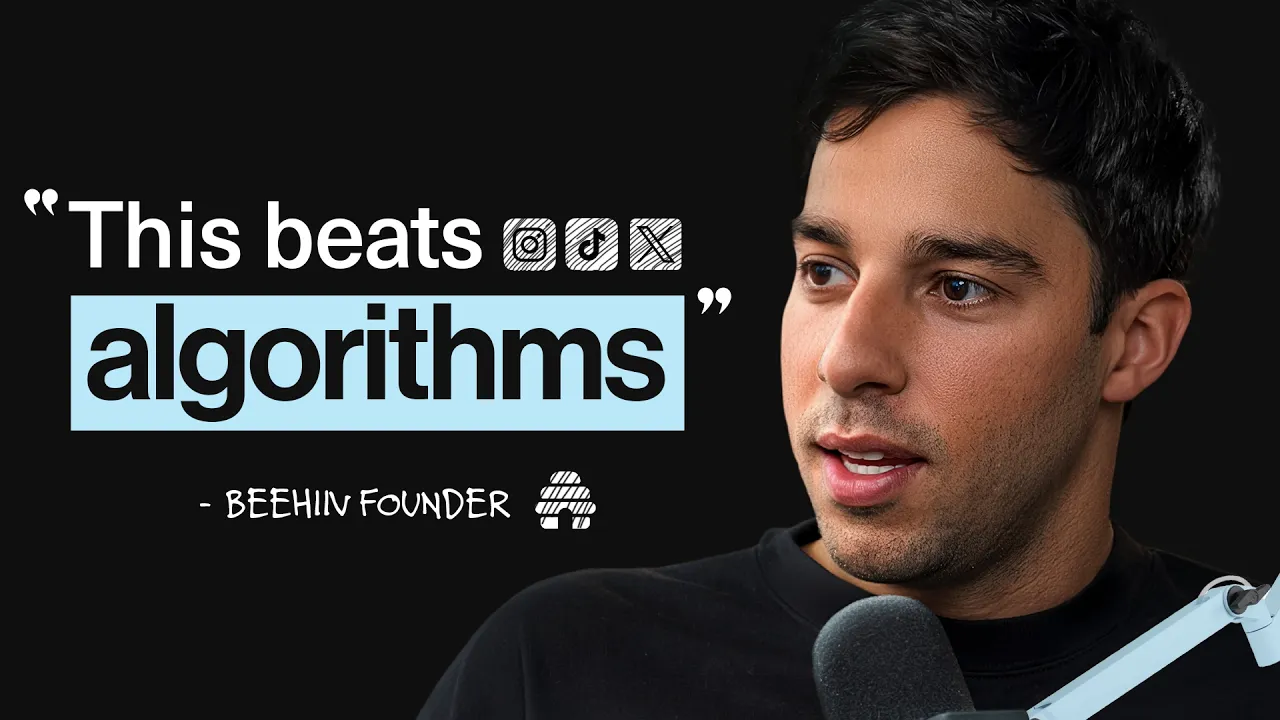
Description
If you want to build a $1M company as a creator then beehiiv is exactly what you need. This isn't sponsored but we asked Tyler and team to hook up Sweat Equity listeners with 30% off for 3 months using the code ALEX30: https://beehiiv.link/fddnzq And also, in this episode Tyler Denk (Co-Founder of Beehiiv) sits down with Alex Garcia and Brian Blum to talk about how to become a successful creator in 2026, world-building as a creator, when to monetize and how to monetize, and the future of content creation. Helluva episode and follow Tyler everywhere. He's a G! Instagram: https://www.instagram.com/tylerdenk_/ Twitter/X: https://x.com/denk_tweets Newsletter: https://www.bigdeskenergy.com/ CHAPTERS: 0:00 — Intro 0:55 — How Many Subscribers Do You Need to Make Money? 4:37 — How to Pick a Newsletter Niche That Wins 9:35 — Why Every Brand Needs a Face 13:11 — Email vs. The Algorithm 18:18 — Getting Your First 1,000 Subscribers 22:41 — Lead Magnets That Convert Like Crazy 25:54 — How Tyler Raised $12.5M in One Week 28:42 — Building a Personal Brand as a Founder 31:23 — $500K/Year from a 1,000 Person Newsletter 37:39 — You Don't Need to Be the Next Morning Brew 42:53 — Beehiiv's Plan to Own the Creator Economy 47:20 — Why You Don't Own Your Social Media Audience 53:07 — Creators Who Are Doing It Right 57:09 — Why Doing Things That Don't Scale Wins 59:05 — The Founders Who Shaped Tyler's Mindset 📱Follow Us On Social: -------------------- Instagram Alex https://www.instagram.com/alexgarcia_atx/ Brian: https://www.instagram.com/brian_blum/ Twitter www.twitter.com/@alexgarcia_atx www.twitter.com/@brian_blum1 -------------------- 🔥Want Free Game? Send us a picture of your Apple & Spotify reviews to podcast@marketingexamined.com and we'll make you a playbook in a future episode. -------------------- 📈Growth Playbooks, Directly To Your Inbox For growth playbooks, deep dives, and marketing case studies, get subscribed at https://www.marketingexamined.com -----------------
Summary
Generated by claude-haiku-4-5-20251001$30M CEO: Your Social Following Could Disappear Tomorrow, This Can't
Main Topics
- Email newsletters as owned audience assets - The unreliability of social media algorithms vs. the guaranteed reach of email
- Building $1M+ revenue newsletters - Monetization strategies beyond traditional sponsorships
- Content differentiation in an AI-saturated market - How personality and unique perspective protect against commoditization
- Story maxing and narrative-driven brands - The emerging trend of non-media companies investing in storytelling
- Creator economy infrastructure - Building diversified revenue streams and owned audience platforms
- Building in public as a competitive advantage - Transparency as trust-building mechanism for founders and investors
- TAM (Total Addressable Market) positioning - How niche audiences can be more valuable than mass-market reach
Key Points
Email Lists = Valuable Assets
- A list of 100 CMOs can command thousands of dollars in advertiser spend (vs. broad audiences)
- Email is owned distribution - independent of algorithm changes
- Newsletter monetization doesn't require 10K+ subscribers anymore; niche audiences (1-2 subscribers) can generate revenue
Minimum Viable Audience
- You can monetize "day one" with the right audience
- Depends on audience quality over quantity
- Example: Julia Knight (1K-2K subscribers) generates $250K-$500K/year from consulting gigs
The AI-Proof Newsletter
- News aggregation content is vulnerable to AI replacement
- Personality-driven content is AI-resistant (unique perspective, lived experience, thesis-driven analysis)
- Ben Thompson (Stratechery) example: Can't ask ChatGPT "what was Tyler's insights from SXSW?"
Newsletter Growth Strategies (0 to 1K)
- Friends and family, personal social networks
- Email gates on content with strong hooks
- Lead magnets (seed decks, playbooks, actionable resources)
- Referral programs (secondary growth strategy)
- Recommendation networks (creator pods)
- ManyChat automation for Instagram followers
- VA outreach on LinkedIn/X
Story Maxing & Brand Narrative
- Tech companies now hiring "Head of Storytelling" at $275K+ salaries
- With AI commoditizing features, narrative and brand vibe become differentiators
- Examples: Flamingo State (estate letters), Bandit Running (behind-the-scenes creative), Kava (Bowlmates dating show)
- Brands are becoming entertainment studios
Diversified Revenue Streams
- Paid sponsorships (CPM/CPC varies: $2-5 CPC, $3-10 CPM at scale)
- Paid subscriptions ($10-30/month for exclusive content)
- Digital products (eBooks, playbooks, 100% profit margin)
- Events and experiences (founder masterminds, surf camps)
- Consulting gigs
- Beehive doesn't take a cut - unlike Substack, Patreon, Gumroad
Building in Public
- Creates trust with audiences, employees, and investors
- Fundraising accelerant (Tyler raised Series A in 1 week after social momentum)
- Expands TAM - "build in public guy" reaches more people than "newsletter guy"
- Transparency about revenue/burn attracts mission-aligned employees
Owned Audience as Insurance
- Social algorithms are unreliable (78K followers = 8K views)
- "You're renting your audience, not owning it"
- Newsletter is the reliable counterbalance to algorithm changes
- Acts as "insulating layer" against cultural/algorithmic shifts
Content TAM Positioning
- Broad TAM (Morning Brew) = lower CPM, slower monetization
- Niche TAM (CMOs) = higher CPM, faster path to profitability
- You don't need to maximize TAM early; prioritize valuable TAM
- Example: Small TAM + excellent execution > Large TAM + poor execution
Trend-Following Strategy
- AI newsletters are thriving (companies raising millions pour budgets into ads)
- Emerging niches: Peptides (next wave after crypto → AI boom)
- Risk: Trends can shift (crypto winter, Peptide Sciences shutdown)
Multi-Channel Creator Strategy
- Colin & Samir model: YouTube → Podcast → Newsletter → Events → Merch
- Newsletter is guarantee delivery mechanism (bypasses YouTube/Podcast algorithms)
- Multiple touchpoints increase consumption time and brand affinity
- Events generate unexpected revenue (surfer YouTuber: $100K from $2K/person camp)
Beehive's Competitive Position
- Operating system for content economy (not just "creator economy")
- Features: Newsletter, website builder, paid subscriptions, digital products, community, podcast distribution
- Philosophy: Be infrastructure, not the aggregator (vs. Amazon model)
- White-label approach; don't brand it as Beehive
Non-Scaling Founder Actions
- Personal customer support (text-based problem solving)
- Twitter engagement (respond in 5 minutes to tags)
- Shipping product fixes within hours of feedback
- Builds brand affinity and user confidence
Notable Quotes
> "If you have an email list with 100 CMOs, the amount that a sales force or HubSpot would pay to get in front of those 100 CMOs is thousands of dollars."
> "You can start monetizing from day one. The answer is one or two."
> "The more personality driven you are, the more AI proof it is, the more that people resonate with you."
> "You're renting your audience. You don't own it." (Re: social media)
> "A wishy-washy investor is a no. It's so rarely ever going to turn the tide."
> "The platform is as immature today as it will ever be. A year from now, it should be 10 times better."
> "You can have level 10 execution and a level three opportunity. And it just doesn't matter." (Basketball rebounding machine example)
> "Everything in life and business is one big funnel."
> "If I could turn this newsletter into a $500K/year revenue thing when it's 1% of my time, if I actually had more time, I think I could double the revenue pretty easily."
> "The founder as a creator is actually probably more valuable than you even operating the business at times."
> "The biggest alpha as a founder is doing the things that don't scale."
Takeaways
For Creators/Builders
- Prioritize owned audience: Build email lists as your primary asset; don't rely on social algorithms
- Choose quality over quantity: A small, engaged, niche audience can be more profitable than millions of passive followers
- Add personality: Differentiate through unique perspective and authentic voice (AI-resistant)
- Diversify monetization: Don't rely only on sponsorships; layer in events, digital products, consulting, paid subscriptions
- Use lead magnets strategically: Playbooks, seed decks, or valuable resources convert better than generic CTAs
- Build in public: Share wins, losses, and transparency; it's a trust multiplier for fundraising and brand building
- Create narrative: Invest in storytelling; it becomes your competitive advantage as features normalize
For Newsletter Creators Specifically
- You don't need millions of subscribers: 1K-2K quality subscribers can generate 6-figure annual revenue
- Niche beats broad: A focused audience (founders, CMOs, etc.) can command 10x higher sponsorship rates
- Lazy newsletters fail: Don't just repackage your YouTube/podcast content; create original value in email format
- Referral programs and recommendation pods work: Viral growth comes from community loops, not algorithms
- Email gates convert well: If you have strong hooks, people will opt-in; gating doesn't necessarily hurt
- Event monetization is underutilized: 50 people at $2K = $100K; much higher margin than ads
For Platform Builders
- Become infrastructure, not the aggregator: White-label, don't force branding; creators want home bases for their businesses
- Remove revenue friction: Don't take cuts; let creators own their economics
- Multi-feature approach wins: Newsletter alone is insufficient; offer website builder, community, podcast distribution
- Respond to user feedback immediately: Fast shipping builds loyalty and competitive moat
- Support both creators and brands: Start niche (creators) but expand to enterprise (media companies, brands)
On Founder Mentality
- Obsession over work-life balance: Company-first mentality drives execution (Elon-style)
- Personal brand builds business: Founder transparency and visibility are highest-leverage activities
- Pattern matching from mentors: Study Brian Chesky (design-first founder) and Elon (visionary tenacity)
- Long-term platform thinking: Today's "immature" state will be 10x better in a year; invest in that future
Key Metrics & Numbers
- Beehive valuation: $30M
- Morning Brew acquisition price: $75M
- Tyler's newsletter subscribers: 120K
- Tyler's annual newsletter revenue: $300K-$400K (from 1% time investment)
- Tyler's Series A: $12.5M raised in 1 week
- Julia Knight's consulting revenue: $250K-$500K/year from 1K-2K newsletter subscribers
- Beehive ad network rates: $2-5 CPC, $3-10 CPM
- Tyler's founder mastermind: $10K/ticket, 8 people/quarter
- Surfer YouTuber event: 50 people × $2K = $100K revenue
- Beehive team size: 120 employees
Transcript
If you have an email list with 100 CMOs, the amount that a sales force or HubSpot would pay to get in front of those 100 CMOs is thousands of dollars, right? [SPEAKER_02] Most people think newsletters are dead. Tyler Dank thinks it's the most important asset you can build. So he took that idea and turned it into a $30 million company alongside the minds who built Morning Brew into a newsletter behemoth that was acquired for $75 million. So in this episode, Alex and Brian sit down with Tyler Dank to break down exactly how creators can build a $1 million newsletter, the creators building the best ecosystems around their brand, what the future of the creator economy and attention economy looks like, the importance of story maxing, and how to world build as a creator. [SPEAKER_01] What are some of the tools that someone could use to really rapidly build an email list? There are a few different things. So that's smart. Are you doing that? So the main thing that I want to start diving into is getting a newsletter to $1 million in revenue. I think there's a huge opportunity for creators. Obviously, you're a huge part of that. And what Beehive is doing is a huge part of that. But I don't think as many creators know the power of an email list because creators have a good understanding of building up followers and, hey, I have to have this social presence. And they don't understand the potential on the monetization side by having a newsletter. And with things like ManyChat, you could build a newsletter pretty fast. When you look at a creator and then you look at an audience size, what's the actual minimum viable audience size that you think a creator needs to have to be able to start generating revenue that's actually impactful? [SPEAKER_03] Yeah, the answer is one or two, right? You can start monetizing from day one. And there are a lot of different ways to do that. I think it's changed a lot recently from, I'd say maybe three to five years ago, pre-Beehive, pre a lot of the new tools and the ecosystem that we've built. The answer would be 10,000 because everyone was trying to be the next Morning Brew where you go for scale. And if you're doing primarily brand deals and sponsorships, which is how most people monetize, no brand is going to look at you with less than 10,000 subscribers. So 10,000 used to be that number. Now it's totally different. I think the way that you can think about it is think about the different niche that you're serving, right? If you have an email list with a hundred CMOs, the amount legit CMOs that are representing large, medium-sized brands, the amount that a Salesforce or HubSpot would pay to get in front of those hundred CMOs is thousands of dollars, right? And so I think if you're going for mass market, the number is higher. If you're going for more niche and you can understand how to monetize, whether it's founders, CEOs, CMOs, whatever, it really just depends on how you want to monetize. And that dictates pretty much how large you need to be. [SPEAKER_01] And how do those brands decide? Is there a CPM or is it more so, as you mentioned, it's audience quality? [SPEAKER_03] Kind of the wild west, right? So we have something called the Beehive Ad Network and we pay out everything from two to five dollars CPC to three to ten dollars CPM. And that's kind of at a mass scale. I have my own newsletter. My audience is 120,000 startup founders. And so if you are any of these AI, CRMs, all of these companies that are selling into startups, the decision maker is the founder, right? And if I have 120,000 founders, I can charge a lot more to get in front of that audience. I think the other thing that's interesting to think about is the type of content you're creating. There's the news aggregation content, which is here's what happened in business, finance, tech, politics. And that's something I'd say is maybe vulnerable for AI, right? You can get news from whoever. If you know Ben Thompson of Stratechery, he does deep analysis of tech. That's very different. It's something you can't get elsewhere. It's because it's his opinion. It's his lived experience, him following the tech ecosystem for the past 10, 15 years that he's been doing it. So I opened my newsletter to get his thesis on different things. Same way my newsletter, it's this week I'm writing a newsletter on South by Southwest. You can't ask ChatGPT what was Tyler's insights from South by Southwest? It's more personality driven. And so there's a through line there where the more personality driven you are, the more AI proof it is, the more that people resonate with you. And it's the thesis on the creator economy, right? People resonate with people. And the less you can be just spitting out news and facts and more a person that people resonate with, the more audience trust you have, which then also turns into CPM, CPCs, and brands wanting to work with you. How do you even go about that and thinking about the niche that somebody should build a newsletter around? Because I think there's a point now where you do have to have some personality or some twist on the newsletter that makes it extremely unique, right? Because of AI, anybody that's a creator talking about content or talking about cars, it's so easy for it to be duplicated by anybody else. How are you thinking? Because even with Big Desk Energy, there's a lot. [SPEAKER_01] Gotta be careful. I know. I was so close there. You were so close. [SPEAKER_02] No, it's because of the song. Too natural. [SPEAKER_02] Pause. [SPEAKER_02] Right? [SPEAKER_02] Because of AI, anybody that's a creator talking about content or talking about cars, it's so easy for it to be duplicated by anybody else. [SPEAKER_02] How are you thinking? Because even with big desk energy. [SPEAKER_01] Gotta be careful. I know. [SPEAKER_01] You were so close there. [SPEAKER_01] You wanted to too. I was so close. [SPEAKER_01] I saw it rolling off your tongue. No, it's because of the song. There's a lot. [SPEAKER_01] Too natural. Pause. Pause. But when you're thinking about picking the niche and finding a way to position it in the market where it's a mystery, how do you think about that? I think a lot of it is, who are you? Who are you? What is your—I guess I even take a step back. What are you trying to do with the newsletter? Right? I think if you go in with the mindset of I just want to make money, and it's a missionary type of thing, I want this to be a business. Careful. Yeah. I was thinking missionary mercenary, right? Literally four years old. That's an exception. Yeah. The way that I think about it is some people are just in it because they're asking, how can I back into building a successful newsletter that generates revenue? And from there you can think strategically about where tons of money is going. As an example, tons of money is going into AI. All of these companies are raising tens, hundreds of millions of dollars. So that's why we personally on Beehive have dozens of thriving AI newsletters because the demand is so high. And if you just raised a $100 million round or a $10 million round and you want people to adopt your software and AI, if you build an AI software or an AI newsletter that has 50, 100, 250,000 people reading, that's the place to allocate that capital as a brand. So I think there's a way to approach the newsletter from the lens of I just want this to be a business that makes money. Where's the money in the market? And if it's from the advertising lens, figure out where there's tons of activity, where it's very flush with cash, which AI is an example. [SPEAKER_03] The other example is, what are you passionate about? [SPEAKER_03] What do you have a unique perspective on? So just going back to the Ben Thompson example, right? He worked in tech, he's followed the industry for 10, 15 years. I don't think he would write a newsletter about TikTok creators because that's not a passion of his and that's not where he would provide the most value. And depending on what your niche is, I think there's enough ways to make money from subscription, advertising, events, consulting. There are so many diverse ways to generate revenue with a newsletter today that I think what I would stick with is what makes you unique to stand out? Because what we get all the time is how many—is it newsletter saturation, right? Are we at peak newsletter the same way people would say that about podcast or video or whatever? It's what makes your content unique? So there's some combination of where's the money and what's their business model? And I'm happy to go into the many different business models that are possible. And what are you uniquely positioned to serve the market better than anyone else? Because if your content is replicable or you can't differentiate, I think most of the other stuff that you do after that kind of falls through. [SPEAKER_02] Do you think there's any categories that are untapped or need to switch up in how the content is formatted? Good question. In terms of the actual specific niche of content or the medium, whether it's video, podcast, newsletter. We'll show the category, right? [SPEAKER_02] So an example, a lot of the marketing newsletters feel the same. [SPEAKER_02] A lot of the AI newsletters feel the same. [SPEAKER_02] Do you think there's any either A, categories that are ripe for somebody to come in and do X? [SPEAKER_02] Or B, if you went into the marketing category and you switched up the format of delivering a newsletter, are there any opportunities in that you see, any open gaps? Yeah, I mean, because you brought up the AI example, there's a lot of here's what happened in AI today or yesterday. And here's the weekly recap. What I think a lot of them are missing is the analysis, the personality behind it. So on one end, you have the creator economy of people who are big on YouTube and Instagram and have built a personality, but they're not doing the news aggregation. On the other end, you have Morning Brew, 1440, Superhuman AI, all of this is what happened. And it's very informative to the reader. But what they're missing is the face and the personality behind it. Colin Samir do an excellent job with this. Right. Funny enough, Arnold Schwarzenegger as well. He has a newsletter of a million plus subscribers on Beehive and it's news and trends and health and wellness. And then they'll have Arnold's take and you're getting Arnold's take on whatever, whether it's intermittent fasting or caffeine or red wine or whatever it is. And so I actually think the merging of a face with a personality that is opinionated and more the creator lens through the informative—this is what's happening in XYZ industry—very few people have done that really well. And I think there's a pretty big opportunity there. Some of my favorite brands actually operate like that. And I think there's such an opportunity for brands to have that individual that is the face of it. So there's Flamingo State, do you know that brand? They're from LA actually. Super expensive luxury soaps and body washes, probably $70, $80, something along those lines. But they have a newsletter that's letters from the garden. [SPEAKER_02] Every week, every Friday, the founder writes a long thing covering everything that happened that week at their estate. There's another brand called Bandit Running. [SPEAKER_03] Yeah, yeah. [SPEAKER_03] We're rocking their socks right now. There we go. [SPEAKER_02] So Bandit Running, they have what's called the B-mail. And the B-mail is an entire newsletter coming either from the creative director's perspective or from the art director's perspective. That's all behind the scenes, their mood boards, everything. [SPEAKER_02] But they have a newsletter that's letters from the garden. And every week, every Friday, the founder writes just a long thing covering everything that happened that week at their estate. There's another brand called Bandit Running. [SPEAKER_03] Yeah, yeah. We're rocking their socks right now. [SPEAKER_02] There we go. [SPEAKER_02] So Bandit Running, they have what's called the B-mail. [SPEAKER_02] And the B-mail is an entire newsletter that's coming either from the creative director's perspective or from the art director's perspective. [SPEAKER_02] That's all behind the scenes, their mood boards, everything. [SPEAKER_02] And it's such an angle that creates infinity with the brand and a completely different side. I literally just wrote a newsletter on this, very meta. It's called Story Maxing. But that exact trend of now that I think we're just at a point where, and we've seen all of these different companies that aren't media companies invest in content. And storytelling and editorial. So the Wall Street Journal wrote an article, I think in December, that all of these tech companies are hiring head of storytelling or head of narrative. And the example they gave was Vanta, which is an AI security company, a compliance company at a head of storytelling for $275,000. To which everyone on Twitter and X were mocking it. But I actually think we're at a place where there's so much, it's there's zero marginal cost to create content with AI. Now it used to be a thing where you'd actually have to put time and effort into creating content. And now AI makes that seamless. And if you assume with vibe coding and all of these other AI solutions that features will eventually normalize. The only real differentiator a lot of these brands have is the brand itself, the narrative and the vibe. And how do you do that? And it's storytelling and editorial. And so whether it's Kava who has this Instagram series called Bowlmates, where it's a dating show for Kava, people eating their Kava Bowl. Or what you just said with Bandit running and the creative director behind the scenes. I think we're going to see more brands invest in content in a very unique way. And I think newsletter could be a big part of that. [SPEAKER_02] Oh yeah, I'm fully tracking. [SPEAKER_02] So for context, I have a creative studio here and we act as an entertainment studio building shows like, we don't do Kava, but Kava Bowls or, the Roomies, etc. [SPEAKER_02] That is these shows that operate as different IP for the brand on a completely different account. I think that's the future, 100%. [SPEAKER_02] It's all making its way from it's the formats that worked on TV are now working on social. [SPEAKER_02] But then the other layers bring that same entertainment value into email. [SPEAKER_02] Right. [SPEAKER_02] And I think that's such a missed opportunity that brands don't take advantage of. [SPEAKER_01] I think the high compensation in that role also signals how important the final 10% for something to actually work really is. [SPEAKER_01] Because what we're really talking about is on X, TikTok, Instagram. [SPEAKER_01] Every unique piece of content has equal opportunity to go viral regardless of audience. [SPEAKER_01] Right. [SPEAKER_01] And so it's how is the quality of every single piece of content that you produce? [SPEAKER_01] And I feel is email similar where it's there's a lot of slop in the AI newsletter space. [SPEAKER_01] And then there's the top three creators have that last little 10% that makes them an expert, makes them super unique. [SPEAKER_01] What are some of the other niches, I guess, where you think there's more distribution opportunity for people to come in and be that last 10%? [SPEAKER_01] Top creator. [SPEAKER_03] Yeah, it's a good question. [SPEAKER_03] I think the other thing that you hit on there is the fact that we've shifted from this world with TikTok and Reels where you don't have to have a large audience, but the best content wins. Right. Right. I think it's happening. I think it's happening. I think it's happening. I think it's happening. I think it's happening. I think it's happening. I think it's happening. I think it's happening. I think it's happening. velocity with very little. But it's also frustrating when you are trying to build the repetitions and reliability of this is a brand that shows up and creates content, but I never see them because I never find them in my feed. And so email is the perfect counterbalance of you're not fighting the algorithm. It's a direct audience relationship. And we hear all the time from big creators on YouTube who were either de-platformed or they used to get consistently 10,000 views on every video. Now they're getting a fraction of that. Is it possible to reach escape velocity with email? What are some of the tools that someone could use to really rapidly build an email list? Yeah, there's a few different things. So what used to be very popular, five, 10 years ago was this referral program that worked really well. I helped build that at Morning Brew. [SPEAKER_01] SparkToro or whatever, or no? [SPEAKER_01] There's a few different platforms that help you do it. They all just copied what I built at Morning Brew actually. So screw them. But yeah, at Morning Brew, we built such a great brand affinity that we were, if you like this newsletter and you share it with friends, family, parents, whatever, you will, we'll send you gear. Or we gave you access to an exclusive community. We had an exclusive newsletter we'd send on Sundays just for people who had three referrals. We had coffee mugs, hats, t-shirts, more expensive stuff, but an incentive to share. [SPEAKER_03] Yeah, a loyalty program. [SPEAKER_03] So that worked really well. It's a little bit, I don't know, overplayed is the word. There's different strategies to it now, and it's not as popular as it was, eight years ago in peak Morning Brew. But referral programs work really well. We have something called a recommendation network where you can recommend other newsletters. We've seen a lot of success of newsletters basically building a pod of four other creators. It's a creator pod, essentially. [SPEAKER_03] And it's you recommend me and three others, I'll recommend you four. And everyone grows consistently through that. So if one of them goes viral, they all benefit from that. [SPEAKER_03] The recommendation network works really well. [SPEAKER_03] Do you have a feed, a discovery feed? [SPEAKER_03] different strategies to it now, and it's not as popular as it was, let's say eight years ago in peak Morning Brew. But referral programs work really well. We have something called a recommendation network where you can recommend other newsletters. We've seen a lot of success with newsletters building a pod of four other creators. It's a creator pod, essentially. And it's like, you recommend me and three others, I'll recommend you four. And everyone grows consistently through that. So if one of them goes viral, they all benefit from that. The recommendation network works really well. [SPEAKER_03] Do you have a feed, a discovery feed? We don't have one. Is that something you're thinking about? [SPEAKER_03] Yeah, for sure. There are other competitors that do have a discovery feed. You get into the algorithm game again, where you're building more of a consumer app. And we kind of become the aggregator and editorial of what is good content, what is bad content, what we're recommending. We've taken more of a Shopify approach where we are tools and infrastructure. You probably sign up to a dozen newsletters that are on the BI platform that you don't even know because we don't have our branding on it. And that's intentional. We really just want to be the tools and infrastructure that allows all of our creators and brands to grow and monetize. And we have a bunch of different monetization mechanisms built into the platform, and whether they white label and don't show that they're built on our platform at all is totally fine. And that's in comparison to a lot of other competitors in the space that are the opposite, where they're trying to be the discovery or they want to be the end all be all. We love, or I love saying the Amazon versus Shopify analogy. Some of our competitors are very Amazon—they have the discovery feed like you're mentioning, but you don't even know whose content it is. You're just going to their app. [SPEAKER_01] Yeah, there's so much less affinity. [SPEAKER_03] And for us, we want to empower the storefronts and the creators to build these businesses that stand alone by themselves. And so I'm bullish on that mechanism. There is a place for discoverability. I mean, Amazon is a great example too. If you're looking for an ice maker, even if you search the brand Shark Ninja Ice Maker, you're going to see six different Chinese copycats before you actually get to the Shark Ninja. It's a shitty consumer experience. And I'm sure Ninja can't do anything about it because Amazon has such a strong network effect, but ideally they would not let that happen. Right. And so that's why they have deep-sea retail. So there are pros and cons, right? But I'm also sure that Shark Ninja probably benefits a lot from people who weren't even looking for Shark Ninja that were looking for an ice maker and actually landed on their site. So there are pros and cons to each. And that's why I think even in the space that we operate in, the market is big enough for newsletter, website, and content creators to be on multiple different platforms, but we want to be the home base of where you build your business. We are the only one in the industry that doesn't take a cut of revenue, and we have the most diverse monetization options. So that's our thesis right now. [SPEAKER_03] For the creator that wants to start a newsletter and start monetizing it, but they first need to grow. How are you thinking about the best way to get your first thousand subs, first ten thousand subs, and then eventually a hundred thousand subs? [SPEAKER_03] Yeah. First thousand is gritty. There's no real shortcut. You could brute force it with paid spend, but typically you don't want to put money into paid acquisition until you have content market fit, which means people are replying to your email, they're sharing it organically, they're not unsubscribing. Otherwise, in the zero to a thousand stage, you're still getting your footing. You're figuring out if this is the right format, if this is the right content, if I'm getting the right audience in the door that retains them. So the first thousand is typically friends, family, using existing social networks, posting on LinkedIn and X. I didn't launch my newsletter until I had a thousand subscribers. [SPEAKER_01] Yeah, you had something to write. I would just tease it. I would just be like, hey, I'm working on something. It's going to be dope. I'm not dropping it until I get a thousand subscribers. And I'd post that on Instagram, LinkedIn, and X. So it's really just using your own distribution channels for the first thousand. There are also a bunch of other unglamorous things around small incremental things that compound over time. We have a feature where you can put an email gate or a popup gate on all of your content. So every post that you publish, you put up a popup gate, and people can't read until they put in their email. And if you promote from LinkedIn, you get a few hundred people to click through, and one in five will put in their email. [SPEAKER_01] Yeah. I was going to ask what the conversion rate is on that, because there's definitely a balance. I mean, in e-commerce, it's like, should I put up a popup? Will that impact my conversion rate of people actually going to the product page? But I want to get their email so I can market them long-term. I feel like it's similar for a creator. It's like, I want to capture the email. I need to gatekeep this, but at the same time, I want people to read this thing. I think it depends on the strategy and how good you are at driving traffic and how quality that traffic is. For me, all of my content is gated. So there are two different gates. There's one that's just a popup form, which is what everyone's used to. It's super annoying. You just exit and continue on. So it's a worse experience, but they can still read the content. Then one step further is the email gate where they can't read a word. So if you do a good job with the hook, for example, if I have a great hook next week, I'm like, yo, just spent the wildest week in Austin. We went to an All In live recording. It was super dope. Click to read the behind the scenes. I wore the same clothes the whole time. [SPEAKER_01] Are people paywalling that as well? Yeah. You can do paywalls. [SPEAKER_01] super annoying. You just exit and continue on. So it's a worse experience, but they can still read the content. Then one step further is the email gate where they can actually read a word. It's, so if you do a good job and for example, are people paywalling that as well? [SPEAKER_01] Yeah. You can do paywalls. Yeah. And so for example, if I have a great hook next week, I'm like, yo just spent the wildest week in Austin. We went to an all in live recording. It was super dope. Click to read the behind the scenes. I wore the same clothes the whole time. [SPEAKER_01] Yeah. I only had one. I only had one outfit. Yeah, exactly. And so if I do a good job of hyping it up and it's to an engaged audience and they click through and they hit the email gate, if I did a good job and the content seems appealing, conversion is typically pretty high there. [SPEAKER_01] Yeah. But there are a lot of things like that. The referral program that I mentioned is another thing you can implement. I'd probably recommend the referral program once you have content market fit a bit later. The recommendation network's free. You can find two to three other creators that are kind of not competitive, but tangentially related. And you all recommend each other. It's a great way to get your first thousand subscribers. But I think there are a lot of things that don't scale. You brought up many chat earlier. It's a great strategy right now. If you follow me on Instagram, you immediately get an automated message to sign up to my newsletter. I have a VA going through everyone that follows me, sending them a message on LinkedIn and X to sign up to my newsletter. So there's a lot of: Do you know how many subscribers drive in a month? Probably a couple thousand. [SPEAKER_01] Yeah. [SPEAKER_02] That's so smart. I mean, are you doing that now? What are we doing? Yeah. Yeah. [SPEAKER_02] There's so many, wait, it's a dumb thing. I mean, probably even with cloud code or co-work just have automate that or whatever. And you do that for everyone or are there certain people? [SPEAKER_02] I do it for everyone just cause I have a VA. I don't know how to train them to understand what's important. Honestly, that's my only worry. Cause I thought about the automatic DM, but there's been some people that hit me that I'm like, I wouldn't want that to happen. Yeah. I don't know. Why not? Make them get into that marketing exam in broader world. They got to support you. Yeah. There's definitely been a few girls where I've followed them on Instagram. And then I'm trying to be smooth and alert. And when they follow me back, they get hit with an automated sign up for my newsletter. Kind of riz though, being honest. [SPEAKER_03] Love you. Love you. [SPEAKER_03] You know, hit them with the sign up. I'll get back to you with the conversion rate on that. [SPEAKER_03] Yeah. Yeah. So I'll let you know. Hit them with the paywall on the other side too. It's diabolical. Get a date and a new paying subscriber. Kind of dope. It's a discount on the date. Yeah. Dude, one thing that worked really well for me when I was hyper-focused on growing the newsletter was I didn't put a paywall or a pop-up that gated the content, but I basically took every piece of content and turned it into a playbook and offered the downloadable version. Yeah. And that was, I feel it was two or three sections within the newsletter after you were scrolling, you're going to the meat of it. There was a button for the downloadable version and that converted crazy for me. And then it also was part of my flywheel for many chat and everything else on LinkedIn, on Instagram, on X, where it was everything that then I was able to use and put behind a Beehive Laney page. Cause for every playbook I would create a specific landing page as well. So just duplicate it. I was just getting warmed up. You're getting to advanced stuff. [SPEAKER_03] Yeah. I was getting into deep stuff. [SPEAKER_03] So lead magnets is the other thing that I'd highly recommend. And it kind of goes back to the first thing we talked about is what is the value prop of your newsletter? Who are you? And are you a trustworthy person that people want more content from? And if you can package that up well, technically you can turn your posts into lead magnets. The thing that I do is a lot of other founders aren't transparent about fundraising or numbers. And that's something that I've owned. The whole build in public thing is something that I've really owned. And so for example, I have a lead magnet of our seed deck that raised two and a half million dollars. A lot of founders aren't publicizing their actual seed deck with the real numbers. I have no shame and I'm totally transparent about all of that. And so if you are working backwards, my ideal reader is a startup founder. And so what do startup founders want? They probably want transparency and insights into what other startup founders are doing who are maybe a little bit further along in their startup journey than they are. And so I have our two and a half million dollar seed deck that I used to raise two and a half million. I built a landing page on BI for that. Every few weeks or days, I'll basically drive traffic to it and you can throw money behind that as well. And it converts crazy. Lead magnets are also super dope for that. [SPEAKER_01] Have you experienced any drawbacks to building in public? No. And then it's probably the number one question that I'm such a big advocate for it. I think it depends on the space that you're in. For certain companies that have more IP that's more sensitive, or they don't want their competitors to know how well something is working. I could see them being a little bit more close to the chest. Right. But for me, the benefits have far outweighed every potential downside. We, of our 120 employees, maybe 30 to 40 have been following me previously. And the trust that you can build with people just because they see exactly how much revenue we're driving, how I'm thinking about the business, how we're hiring. I'm very transparent about that, which then extends all the way to how I run the company. We, I share our investor updates, is working. I could see them being a little bit more close to the chest. Right. But for me, the benefits have far outweighed every potential downside. We've, I'd say of our 120 employees, maybe 30 to 40 have been following me previously. And the trust that you can build with people just because they see exactly how much revenue we're driving, how I'm thinking about the business, how we're hiring. I'm very transparent about that, which then extends all the way to how I run the company. We share our investor updates, our revenue, our burn, everything about the business transparently to the entire company. And so I think that gives, that's always come very naturally to me, but people come from other companies. They're like, Hey, our C-suite wouldn't tell us anything that's going on. We could have had a hundred million in the bank or a hundred dollars in the bank, and we would have no idea what we're doing and how it's contributing to that. [SPEAKER_03] And so it hasn't really caused any problems like pocket watching from employees or anything. No, it's also been amazing for fundraising. So the story that I always tell is we raised our Series A in one week, we raised 12 and a half million dollars. And that's because I did this two days ago. We had a killer February and I took a screenshot of our investor update. I put it on X and LinkedIn. I was like, yo, February kicked ass. Right. So that gets the eyes and attention of a lot of these other investors who are now following me and saying, yeah, they're like, well, this company seems like it's popping off. Let me follow this person. Then they'll start cold outreaching and doing some email and everyone wants to do like, Hey, let's do a 30 minute coffee chat. And times, by far the most valuable thing. For me, I don't want to spend 30 minutes meeting this investor who may or may not ever invest. I just rather they, my thesis is if you build a dope business, they will want to invest whether you built that relationship or not. They're totally incentivized to find the best company. I say that 20 times, because honestly, that's the number one thing that people trick themselves into when they're starting something is a wishy-washy investor is a no. It's so rarely ever going to turn the tide. And until you get those yeses, you don't really understand that where a yes is like they've been in since the get go and they're just more so doing the papering. [SPEAKER_02] Right. I'd even say beyond just the investor relationships, so many founders and people are like, Hey, let's go. There's a dope dinner with these big name people that I should be going to and waste my Wednesday evening at this dinner for three hours. And for me, I've done like, it's great being here in South by, I love going to events, but my focus spot and safe space is headphones in at my computer 14, 16 hours a day, just grinding with deep house and doing these like a big desk energy playlist. Yeah. And doing these 30 minute coffee chats just adds up and the context switching. And so in this whole building in public thing, these investors come to me and they're like, Hey, let's do this coffee chat. I go, rather than that, I'll add you to my investor email list, which is a monthly investor update. [SPEAKER_01] Your straight funnel. And it's really a funnel. It's investor funnel. Regardless, we're going to grow that email list. [SPEAKER_01] Yeah. And so Faraz from Lightspeed had been emailing me for six months. I'm like, and finally I was like, I'm just going to add you to this investor update. So now he gets a behind the scenes look at exactly how the business is operating and exactly how I think. It's a big deep dive. I spend five hours every month doing that. [SPEAKER_02] Crazy that you're building like a YouTuber parasocial relationship with investors. For sure. You know, that's an insane hack dude. And so after three to four months of him reading my investor update, when I finally decided that we did want to raise a Series A, he was already primed, right? He had already seen exactly how my brain works and how the company had been operating for the past four months. I hit him up. I'm like, Hey, I think we're exploring a Series A. We had a term sheet four days later, signed, wired a few days after that. And so I think that funnel is such a smarter funnel in terms of investor relations. But yeah, building in public has been amazing for us. Going back to the storytelling and narrative and story maxing and everything we were talking about earlier, that is a competitive advantage, right? [SPEAKER_03] Absolutely. You probably can't name any of the other founders of our competitor space. [SPEAKER_03] I have no idea who runs Substack. Right. And so we'll bleep that. Fuck those guys. [SPEAKER_03] Yeah. Fuck those guys. [SPEAKER_03] And the amount I get dozens of replies to my BDE newsletter being like, yo, you're so transparent and understanding who you are as a person and what you value and how you're building this business. I would never think about going to another platform. [SPEAKER_02] And again, I think that is, especially with AI, this new edge, it's personality driven, actually building. [SPEAKER_01] I mean, it's the creator economy. It's the creator economy being expanded into startups and tech. And I think there's a huge competitive advantage to that. [SPEAKER_01] Yeah. Especially, I mean, it's not just fundraising. It's customers. It's all of it. [SPEAKER_01] What you said is perfect. Everything in life and business is one big funnel. Right. And when I was thinking about what if I decided to get more active on X or LinkedIn, if I only talked about email newsletters, I could be the newsletter dude. And there's probably, back when Twitter was the email guy. Yeah. Yeah. Exactly. It still is, thank God we've moved on. But I could be the newsletter guy and I'd probably have 20,000 people that really gave a shit about that content. They would follow me. They would engage with everything because they want to be newsletter experts and follow that. But if I become the build in public guy, then it's every entrepreneur, founder, small business who's interested in hiring and raising money. The TAM and aperture of people that I can potentially entertain with my content is so much larger by doing this whole build in public thing. [SPEAKER_03] Yeah. Yeah. Exactly. It still is. Thank God we've moved on. [SPEAKER_03] But I could be like the newsletter guy and I'd probably have 20,000 people that really gave a shit about that content. They would follow me. They would engage with everything because they want to be the newsletter experts and follow that. But if I become like the build in public guy, then it's every entrepreneur, founder, small business who's interested in hiring and raising money. The TAM and aperture of people that I can potentially entertain with my content is so much larger by doing this whole build in public thing than just being a very niche newsletter person. And I do both. But I think that was very intentional because we have people that are founders of medium-sized brands that have nothing to do with newsletters, but they like learning about how I've been able to fundraise and do investor relations. So now they're in my funnel, right? They read my content. They sign up to my newsletter. I think what you're talking about is just the ability for someone in a completely adjacent space to take learnings from you. And that's the core principle of expanding your TAM. The newsletter would be one. I don't have a newsletter because I'm just stupid. I should have one. I would still get a tremendous amount of value from hearing what you just said, because if I'm building a course or if I'm building a CPG brand, I'm going to take those same principles and apply it to how I'm going to fundraise for my CPG brand, right? I'm going to tell them that I'm going to the factory, document the wins and losses, talk about my thesis for the future and all of those things apply. And so your personal brand has now taught me a bunch of things, even though I'm not in your customer base. I'm not going to raise money. You're not going to raise money for me unless you would take it, which I don't think you would anymore, right? The two big things that everyone says with AI is taste and trust. And I think in a world where everyone can vibe code this new platform over the weekend and compete in any industry, if you don't know them, you don't have the trust. It's very hard to be able to, you know. So I think actually just building that trust is really important. And then another example of something you just said, this girl works with us, Julia Knight. Her thing is a fractional CMO, but it's the perfect example of the power of a newsletter. I think she has anywhere between a thousand and 2,000 subscribers. By no means is this a massive newsletter at scale, but what she does is she writes once a week about her experiences doing marketing and influencer marketing, anything in the CMO marketing growth related space. And she's turned that into five or six consulting gigs that each pay her anywhere from $5,000 to $10,000 a month or $10,000 to $20,000 a month. So from a thousand person newsletter to booking five clients for consulting to making probably $250,000 to $500,000 a year from consulting. I think that's the perfect example of building your funnel, getting your ideas out there in the world, and the fact that she has this mechanism to showcase her learnings on a weekly basis and then turns that into clients. She doesn't need a hundred thousand readers. It's the power of content. [SPEAKER_01] I want to go back to something you mentioned. TAM. I want to go back to the idea of content TAM. That's something not enough people think about—there are topics and ways of positioning things that increase the TAM or lower your TAM as well. If you would have just spoken about newsletters, I worked with Matthew McGarry at the Hustle. He only talks about newsletters. That's going to be a much smaller TAM than talking about everything you're doing as a founder and walking through that and how it applies to newsletters. [SPEAKER_02] And Matthew McGarry is a great example because his revenue per user, per reader, is much higher, right? It's the same reason. Going back to the example of, if you had a hundred CMOs on your list, you could charge such a high CPM for brands to get in front of that audience, where Morning Brew, for example, is such a broad news-based newsletter. So many people read it—news varies from whether you are male, female, 15, 80. And what do you even sell to advertisers at that point when you have such a broad base and the only thing connecting them is they like current events and news? [SPEAKER_01] Yeah. It's like Amex will sponsor that because they just want to hit some internal reach number, right? [SPEAKER_02] For sure. With a CMO, it's like we need to hit 400 million people this quarter. So Morning Brew can guarantee us 2 million per day, right? Those are two totally different games. That's why I wanted to preface that with the TAM conversation because you can actually have a pretty small TAM and a dialed-in audience. Julia's example is perfect. The thousand people that are probably startup founders or early employees that she can then convert into consulting gigs. She doesn't need a massive TAM to build a million-dollar business through her newsletter. Same with Matthew McGarry. TAM is interesting, but I actually think we're at a point now where there are so many diverse ways to monetize your audience. You don't need to maximize TAM today. My newsletter probably does $300,000 to $400,000 a year. But with its current size now, if I took it more seriously and didn't have another full-time job that takes up all of my time, that could be a multimillion-dollar newsletter. Way more. Yeah. For sure. [SPEAKER_03] So TAM's interesting, but I actually don't know if you're starting a newsletter that you need to think critically about it. I think the problem area is if your TAM is small and it's not a valuable TAM. [SPEAKER_03] Yeah. Well, I also think if you have a small TAM and don't execute well, then you're super fucked. Because I mean, that was my first business with a basketball rebounding machine and our TAM was like 400,000 parents in the U.S. And then we also didn't execute that well. So it was just a really difficult business to build. And how many of those 400,000 parents actually had disposable income to invest in my game? The numbers were maybe 5 million total, and then 400,000 were wealthy enough. And then not only that, but out of those 400,000, how many Yeah. Well, I also think if you have a small TAM and don't execute well, then you're super fucked. Super fucked. Because I had a basketball rebounding machine and our TAM was like 400,000 parents in the US and then we also didn't execute that well. So it was just a really difficult business to build. And how many of those 400,000 parents actually had disposable income to invest in my game? That was maybe 5 million total and then 400,000 were wealthy enough. And then not only that, but out of those 400,000, how many of those parents have a kid that cares enough to actually get them this product? It was a cool product. It was a cool product. Yeah, for sure. It was a dope brand. Great experience. Taught me everything, but it was the most valuable lesson I've ever learned, which was that you can have level 10 execution and a level three opportunity. And it just doesn't matter. Right. And so I think what we're talking about is TAM is level 10 opportunity. If you go massive TAM and you 10 out of 10 execute, you turn into Morning Brew. It's a nine figure business, right? But you can also go small TAM and still execute. And I think it's really hard. I'm imagining this Julia lady is executing very, very well. Right. Because if you don't execute and you're in a 5,000 follower area, that's probably not going to be very lucrative. Yeah. Yeah. So TAM is something I think is not thought about as much, but I think there's ways to turn that knob, right? Based on opportunity. There's definitely content with tailwinds, right? Like AI is, if you assume that the AI market is going to continue to grow and these companies are going to continue to invest tens of millions or raise tens of millions of dollars. If you do anything tangential to AI, there's enough of a TAM there and you're riding a big trend. I'd also say following the trends is always the best strategy, right? Like crypto, when we first launched in 2021, almost all of our newsletters were crypto, just because that was the sign of the time. Now they're AI, right? Yeah. Now they all pivoted a hundred percent. That's the joke and it's so spot on. Next is peptides. They're all going to be peptide newsletters. Dude, we should jump on that early. I like that a lot. We'll get into it. Yeah. But that's also a great strategy too, of who's the trusted brand in peptides? Because it's still underground. Can you actually build that trust early? You sign up to these newsletters. Well, then the risk is this company, Peptide Sciences, ironically, just got shut down. They were the biggest player in the space. Did they? Yeah. Yeah. I did buy peptide from them. Breaking news on sweat equity. Yeah. Yeah. Peptide Sciences is cashed. That's crazy. Yeah. But that's the risk, right? Of being a trend follower and then things change, things swing. I mean, even right now, it seems like AI is obviously continuing to expand. It could be a bubble maybe. And if you bet the farm on that, just like Web3, you could get wiped out. Yeah. Yeah. The biggest learning that I've had recently is from Morning Brew being this north star of the newsletter ecosystem. I think everyone had this mental model that you have to have millions of readers and you need to get Apple as a sponsor that pays you $70,000 per newsletter, which is awesome to be able to pull off. But Morning Brew grinded for five years to get to that point. And how it reached scale is such a difficult thing to do. And they have a massive team. Anyone who's remotely interested in current events and business news. It always blows my mind that their daily podcast is the number one business podcast. [SPEAKER_03] Yeah. I was texting Brian about it a few weeks ago. I was like, I can't believe it. [SPEAKER_03] I think it's the number one business. It fluctuates. It fluctuates. Neil and Toby are great at what they do. And it serves a purpose of people commuting, going to work and wanting to listen to the latest events. It's a great production. I don't think that they would be number one if they didn't have a newsletter of 5 million people. Right? So I think that speaks to the dynamic of why I think a lot of people who are YouTube first or podcast first should diversify. It's just the newsletter on a different medium. Because the newsletter, rather than trying to fight the algorithm of YouTube or Instagram or the rankings of Apple Podcast, if you have a newsletter that reaches 100, 200,000 people, every time you drop a new episode, you can guarantee that 200,000 people are going to receive in their inbox that this episode just dropped. So I think there's a lot of people that are still somewhat dubious of whether they should be investing in a newsletter. And it's not either or. I don't think if you're a video native or audio native content creator that you have to drop everything for email, but it's such a complementary thing to have. Morning Brew and their podcast is a perfect example. Colin and Samir have done it incredibly well, right? Started on YouTube, have a podcast. Now they have a newsletter that probably several hundred thousand people and it prints money. It crushes. And now they just pivoted into events as well. So they did the press published in New York City. Now they're doing an LA event as well. It's so interesting you say that because I know Colin and Samir. I've consumed a lot of their podcasts in the past. I probably follow them on social media. [SPEAKER_01] I hear about the events through the newsletter. Yeah. [SPEAKER_01] I don't hear about the events through their socials. I've been aware of these events through their newsletter. And even though I'm in their ecosystem, I'm fully in, I'm as tapped in, but the algorithms just don't deliver that to me versus the email is going to hit me. And people are busy and there's so much content flying around at all times. They probably do include it in their I've consumed a lot of their podcasts in the past. I probably follow them on social media. [SPEAKER_01] I hear about the events through the newsletter. Yeah. [SPEAKER_01] I don't hear about the events through their socials. I've been aware of these events through their newsletter. And even though I'm in there, I'm fully in their ecosystem, I'm as tapped in, but the algorithms just don't deliver that to me versus the email is going to hit me. It's just people are busy and there's so much content flying around at all times. They probably do include it in their podcast and you just overlook it because you're on the go or you're cooking. That's what I'm saying is I think the algorithm just didn't serve it to me. Whereas the email is guaranteed. And it's the multiple touch points, right? I think if anything, going back to the funnel concept, you want to be able to have as many different touch points and email I think is one of the most effective for sure. What are some of the most lucrative niches in newsletters right now? Yeah. I've brought up AI a bunch. I think that's one of them. We have dozens of AI newsletters who are printing money because there's so much like 11 labs just raised an infinite amount of money. Right. Yeah. And if you are 11 labs and you're trying to reach more people who would use your product, you're probably maxing out meta, you're using Google ads, newsletters. And when there's all these super popular newsletters and because of the medium and newsletter ads work so well, they're pouring money into all of these newsletters. So AI for sure. Other niches that are doing well. Are there any unexpected niches that are printing? Yeah. There are small one-off examples. We have wine is a random one. I kind of want to just get educated on wine once a week. There's farmers like that. There's a newsletter that does the most niche one that I've seen recently is golf course equipment. They've built an entire newsletter around manicuring your lawn and the golf, whatever, all of the different equipment around that. But they're also a smart creator because they then started selling digital products and eBooks as lead magnets and everything else. Yeah. Which is one of the big value props is where we've been able to innovate a bit. I view newsletters like top of funnel. It's amazing to be able to promote your content and create content and reach people in their inbox. We have the ad network, which helps you monetize with sponsors. We have paid subscriptions. So you can charge 10, 20, $30 a month for exclusive content or whatever. But we've also diversified into digital products. So you have storefronts. We have storefronts and we don't take a cut of revenue, unlike almost everyone else in the creator economy. And so now that you have this active audience of maybe 5,000 people who really care about golf courses, he's now upselling those people into digital products, which took them an hour to create one. [SPEAKER_01] A hundred percent profit. And he's flipping them for hundreds of dollars. So I think that's the future of what we've seen early. And I believe what we are innovating and pushing on is we have these content creators and publishers who have a very engaged audience. And what are all the different ways that you can monetize that audience? What's the cause when I'm hearing that, it sounds like you're winning because you're developing best in class tools and the economic infrastructure as well for a creator to build an entire business on Beehive. Right. For sure. That's the basic. Is the next couple of phases, could we distribute our podcast into the different platforms and then have a community on Beehive? What are some of the roadmap features? Very funny that those are the two examples you gave, because those are the two things that we're working on right now. Logically that's exactly what I'm hearing. A hundred percent. I just want to host my entire creator business on Beehive. And so we've pivoted to our new tagline is operating system for the content economy. Yeah. You could say creator economy, but we also have Newsweek and Time and TechCrunch. Most preferred content. Yeah. Creator economy's played out. Agreed. And content also opens it up to brands. Right. Exactly. At a completely different level. Exactly. So that's the friction that we always run into. We have Sean Puri and Cody Sanchez and Colin Samir. So we have creators, but we also have TechCrunch and Time and Newsweek. And so our enterprise sales guys say you've got to stop saying creator because TechCrunch doesn't wake up and hear creator like, "Oh, I want Beehive." Right. So we've abstracted it to content economy, but then we can also speak to brands and everything we're talking about, the storytelling and the narrative fit in with that as well. [SPEAKER_03] But I think it fits because you started with creators and you landed and now you're expanding. [SPEAKER_03] Right. And we always talk about this idea of land and expand, start niche, do everything because brands are following what the creators do. And so if you're first figuring out how the creators are going to succeed, then the brands are going to follow everything that the creators done. Right. And I'm also thinking, okay, so Circle is a community hosting platform. And if we get back into what we were talking about earlier with personal brand, I don't have any idea who founded Circle. I've literally no idea. Right. I would have to actively look that up versus with your distribution that you've built in, you could just be like, we're launching communities on Beehive. And now all of a sudden that's much more attractive to a wider creator base. And I think you lay this out pretty eloquently in terms of now that are going to succeed, then the brands are going to follow everything that the creators done. [SPEAKER_01] Right. And I'm also just thinking, okay, so Circle is a community hosting platform. And if we get back into what we were talking about earlier with personal brand, I don't have any, I don't know who founded Circle. I've literally no idea. Right. I would have to actively look that up versus with your distribution that you've built in, you could just be like, we're launching communities on Beehive. And now all of a sudden that's much more attractive to a wider creator base. And I think you lay this out pretty eloquently in terms of now that you see the value of having the audience, what are the different tentacles of things you can get into to one, provide more value to your audience and extract more revenue from them. And I think you hit on a few of the big ones that we're looking at now. But we have a full website builder as well. And I think websites are making a huge comeback, especially with AI. So AEO and GEO is all the rage. And I know a few other website companies that are doing well because they position themselves as, we are the most AI friendly website. I've fallen for several AEO SaaS for sure. Yeah. I've gotten by those viral launch videos. Yeah. They all sucked. Yeah. None of them were good. So I actually don't even know which ones you're referring to. One of them was Meridian, not to shit on them in public, but it just didn't deliver value. But SEO is challenging because it's a long-term game too. It's like, Yeah. There's always been a problem with SEO and AEO. I'd say the broader point is, I think people were like, why do I need a website? A lot of these creators of the past ten years have been like, I'm Instagram native, I'm YouTube native. And I don't actually have a home base. And I think as these different social platforms have shown that they are unreliable for driving traffic to your business. You can post a video on YouTube and sometimes it's a hundred thousand views. Sometimes it's five thousand. Sometimes you have a hundred thousand subscribers and only half of them ever even see it in their feed. And so these algorithms and these big tech platforms, given they take, right? It's so unreliable. So interesting. The more that we're having this conversation, I'm like, you're almost going to start competing with Patreon. You're going to start competing with Gumroad. Like there's so many different adjacent platforms that you could come for through this roadmap. Because we kind of do compete with everyone. At first it was really just newsletters. It's like MailChimp, Substack, some of those. And then we launched a website builder. Now it's like Squarespace and Wix and WordPress. [SPEAKER_01] It's like a VC's wet dream is this product. [SPEAKER_01] And then we do paid subscriptions. So then it's Patreon. [SPEAKER_01] We do digital products now. So you can think of Gumroad and Gumroad and some of those. And then you mentioned podcasts and community and some of the other things that we're doing. And I think most content creators and brands don't want to manage seven different platforms. They don't want seven log ins, seven subscriptions. And even though AI makes it easier to be technical and connect things, you still don't want to be connecting your webpage to a totally different website or to a totally different newsletter platform to your digital products. [SPEAKER_01] Yeah. [SPEAKER_01] You just want something that works really well, that's best in class. And that is your home base for your business. And so I think the contrast from these social platforms to what we're describing in community website. [SPEAKER_01] Yeah. It's owned audience. [SPEAKER_01] It's owned, yeah. [SPEAKER_01] Yeah. Dude, that's like the third time you've said something a second before I was going to say it. Hire me, bro. I'm unemployed right now for what it's worth. I'm just a podcaster. But owned audiences is really interesting. And I think we've always beat the drum of newsletters are an owned audience, owned distribution. It's reliable, but there's so many other spaces. And now you're seeing this contrast of you can post on Instagram. I posted on Instagram yesterday, got very little engagement. It's a great picture. Right. But it's unreliable. And if someone wanted to engage with Tyler Dank's content, where do you actually go for that? And where's the home base? And I actually don't think there's a company that solves this is your home base, that can obviously link out to your Instagram and to your YouTube channel and to your podcast. But your owned audience space is something that we're very bullish on. Especially when we think about consumption time, if I can get someone to consume or spend more time with me and measure consumption time, that's an interesting place to play for affinity. And you can't do that because there is no home base, right? There is no place where all of my assets live. And you can link out to just about everything where then we can measure the amount of time that somebody is spending consuming my content is a powerful thing for creators and brands. I mean, just clicking through someone's own audience website, right? Where you could click into podcasts, click into newsletter, click into short form. That's a place, one stop shop where you could, and then you also have a digital storefront in there. Like there's so many opportunities. Where do people go if they want Alex content? Where's home base? There is no one. That's what I'm saying. If someone's asking where would you, if someone's like, yeah, IG YouTube, but I have to say go to IG, then go to YouTube. Mine's a link tree right now. It's just done. [SPEAKER_02] I don't use link tree because I always have a CTA in my bio and it converts way better if it's not a link tree. You know what I mean? But I don't have good alpha. That's good alpha. Yeah. [SPEAKER_02] My choose is dry. Yeah. I just don't have a home base. The newsletter, I aggregate the most links of my stuff in it. But at the same time, there's no home base. Yeah. And I I'll probably, where would you if someone's like, if someone's I got. Yeah, IG YouTube, but I [SPEAKER_02] have to say go to IG, then go to YouTube. Mine's a link tree right now. It's just done. [SPEAKER_02] I don't use link tree because I always have a CTA in my bio and it converts way better if it's not a link tree. You know what I mean? But I don't have good alpha. That's good alpha. Yeah. My, choose is dry. Yeah. You know, I just I don't have a home base. The newsletter, I aggregate the most links of my stuff in it. But at the same time, there's no home base. Yeah. And I think that's again, that's a huge opportunity. And one step further is where's the place where people who love your content? Where do they go to meet other people who love your content? I was also just, it's such an interesting thing when someone does want to deep dive you, I'm sure you've had this before, where you just see on your notifications, it's some random account will just like 17 of your posts. And you're like, wow, you just binged me for 30 minutes. I mean, yeah, you were just with me for 20, 30 minutes. Crazy. And it's like, you know, it would be so sick if they did that. And then they also could just get spun into a newsletter. And then they could read more about me and watch a podcast. And all of a sudden, they spent two hours with me and they're going to buy whatever you're selling, you know. It's like with all these AI solutions, there's the signal there that this is a very high intent person that's spending time on your Instagram where they just binge watch five different YouTube videos. But now going back to the funnel concept, where do you push them next? How do you identify that signal and get them to then sign up to your newsletter, then subscribe to your podcast. And then you have this new storefront drop where you're dropping a new product and you want them. It's essentially your own ecosystem. I also think it's, I mean, I'm curious if you've, we've both kind of been talking about you know, Instagram has been a little less fickle. It's been a little more fickle recently with [SPEAKER_01] like amplifying value based content and authority based content. [SPEAKER_01] By the way, my post yesterday got no likes. [SPEAKER_01] Yeah, bro. Instagram didn't want you to have motion. And so, but I think my personal opinion is I think the news is particularly loud right now. I think AI is absolutely gobbling so much attention. People are less inclined to spend time with value driven content rather than some AI tip and trick like Greg Eisenberg type of tip and trick where it's go vibe code your $5 million startup in two minutes. [SPEAKER_03] And it's interesting because it almost feels like an owned audience is the insulating layer against that, right? Where it's the culture has shifted. Then the algorithm's not favoring the style that we kind of built our audiences on, but we still have people that probably want to see us. I mean, there's just, it's insane that 78,000 followers and a post will get 8,000 views. Those 78,000 people followed me. They already volunteered that they wanted to see your content because they want to see the content. I had a comment recently that somebody was like, dude, I haven't seen your content forever. And it was, brother, I've been publishing every day. I'm posting. Yeah. I'm posting every single day. Right. But that doesn't happen. People just want to consume AI slop or a meme or whatever it is. And that's just a shifting algorithm decision that Zuckerberg has made. And I always, the rent don't own or the you're renting your audience. You don't own it thing. It's you always read that and you don't really appreciate it until it actually is throttling you. And you're like, damn, bro. I could have been accumulating this community in a much better way and be much better for me right now to have 15,000 in that diehard beehive community for sure. Then 80,000 on IG that aren't seeing my stuff. Which again, that is the thesis of email where you can keep doing the Instagram stuff and the YouTube stuff, but it's the email is actually a reliable channel. But I'm almost more excited about the creator command center piece. [SPEAKER_03] I am too. Personally, when I hear it, because I actually just don't consume email newsletters at the club. I used to, I was a big newsletter guy. I read the hustle for years and I read some morning brew. You know what I originally read? I got you. The skim was the first one. Yeah. They were kind of the OGs. Yeah. When I first joined Austin at morning brew, they were the inspiration. We'd have our little war room. He's like, yo, what are the, this is what the skim did and we would pull up the same newsletter and we could see what they were testing, what headlines they were doing, their referral program, all of this other stuff. And we were just kind of copy everything that they did. They were the ones who were the innovators before us. And I don't even know. I mean, dude, I must've subbed to them in 2014. I don't even know how I found it back then, but I mean, because discovery was just so much different. It's a different game. [SPEAKER_03] 12 years ago. Yeah, for sure. What are some of the, I want to end on, what are some of the creators or brands that are executing at extremely high level in beehive that people should study and reverse engineer? Yeah. There's quite a few. I think Colin's mirror is amazing, especially as they keep going into events. It's the perfect culmination of pod, YouTube to podcast, the newsletter to now events. And they have merch and stuff as well. So I think as far as being able, what they do differently too, is I think a lot of creators start off on the lazier side of, I've already put time into creating this YouTube video. My newsletter is just going to be a link to the YouTube video. And it's like, okay, dude, put in a little bit more effort than that. What they do really well is they know their audience is creators or aspiring creators. They have deep dives on YouTube and their podcasts, but they also, their newsletter is just not regurgitating the same stuff that they've done elsewhere. It's creator economy news and tools and stuff. So I think they found a really good balance. I'd also say what they do differently too is I think a lot of creators start off on the lazier side of, I've already put time into creating this YouTube video. My newsletter is just going to be a link to the YouTube video. And it's like, okay, dude, put in a little bit more effort than that. What they do really well is they know their audience is creators or aspiring creators. [SPEAKER_03] They have their deep dives on YouTube and their podcasts, but they also, their newsletters is just not regurgitating the same stuff that they've done elsewhere. It's creator economy news and tools and stuff. So I think they found a really good balance. I'd also say selfishly, my newsletter, because you don't have to put work so hard to reverse engineer. Because I just am transparent and tell you how exactly I did it. I met 120,000 subscribers. I have the paid sponsorships. So probably make maybe a quarter million off of paid sponsorships, just from different brands. I do events as well. So I host a quarterly founder mastermind in Costa Rica. It's a $10,000 ticket. I choose eight people that apply, which is another out of the box thing to do, right? Like I think most people in email and even just the creator economy, think paid subscriptions and ads. And those are the tried and true ways. But if you are writing, for example, there's a YouTuber, a surfer YouTuber, and he was trying to figure out how to monetize his content better. And the low hanging fruit is just throw ads or do a sponsorship. He ended up doing a surf camp with 50 people. It was $2,000, but a hundred thousand dollars in event revenue. And so I do think shared IRL experiences or just other outside of the box ways to monetize your audience is so undervalued. Because it feels like YouTube has almost made this whole creator ecosystem so lazy of just being able to monetize your content by flipping a switch to say, I want monetization on. But there are so many ways if you actually understand the value of your audience and why they're consuming your content that you can provide more value, whether it's events or webinars or digital products or anything. And so, yeah, I think there are a few examples. I'm very transparent about how I got from zero to a hundred thousand. I'm going to drop it in the links if you want. I have a lead magnet thing that walks through exactly how I've done it. And again, my full-time job, 99% of my time is all focusing on building Beehive. Right. So if I could turn this newsletter into a $500,000 a year revenue thing, when it's 1% of my time and focus, if I actually had more time and effort to put into this, I think I could double the revenue pretty easily. I also think it's the classic case of what is a founder's job? Right. If you're the founder and CEO of Beehive and your newsletter is literally the capstone case study of how you can monetize without a ton of effort. That's one of the highest leverage things you can be doing is building your personal brand. It's the very modern idea of a founder as a creator is actually probably more valuable than you even operating the business at times. Pretty good at operating the business. [SPEAKER_03] Yeah. Yeah. I'm sure. Not to take away from it, but think about what it did for your ability to fundraise, right? We just described that earlier. So when you combine the two, that's how you get a, and they kind of own a culture on, I feel like you lead a specific culture around newsletters and creators on Twitter. Yeah. I'm trying. I appreciate it. There's always the jokes about if you just post the emoji of the B, somebody will respond. Yeah. If you, the easiest way to get any engagement from anyone on my team or especially me is if you tag us in anything. We'll respond 100 percent. It's we'll respond in five minutes or something along those lines. That's a culture thing you kind of made sure. Yeah. Yeah. Early days, we grew a lot through Twitter. It was people in this little newsletter bubble on Twitter talking about growth strategies and design and whatever. And we were just in the cut, responding with everyone. And then for us, I'm very product obsessed. So people are like, hey, this feature sucks. I'm like, okay, I see that. I'm leading the product. I'll respond. I'll find more information. We'll fix it. Yeah. Also that's great for any, I mean, I think the gritty things that don't scale is really how you build a brand and stand out as a founder. And when people are complaining and I can be like, okay, I hear you. I'll fix this. And then three hours later, we're like, yo, we just shipped a fix for that. The brand affinity of that is yo, not, I was just bitching openly on X. Because that's what people do on X. But the founder actually heard me, fixed it in three hours, which is absurd. And now I have a better experience than the product and I was heard by their team. And I know that I have this lifeline for any other future problem that I have, I have a response. [SPEAKER_01] Yeah. Maybe I don't bitch on X, but I'll go direct to them and they'll hear me. That would be better. I'd prefer that for sure. But just to know that, and someone once told me like one investor I met with, it was like, you didn't just build a newsletter platform. You actually just built an engine to solve other people's problems because your product velocity is so high. People have a high degree of confidence that if you built XYZ feature that helped their creator business and they vented that and presented it to you that you would actually build it and solve problems for them. That was a pretty interesting way of how we've been able to approach building product. There was a time where I was dealing with, I forgot what it was specifically in Beehive, but I emailed you and you were just like, hey, let's get on the call. And then you gave me your number or like, hey, just hit me up. Like just send me a text anytime you're dealing with something, I'll fix it real quick. [SPEAKER_01] Yeah. I feel like the biggest alpha as a founder is doing the things that don't scale. I think presented it to you that you would actually build it and solve problems for them. That was a pretty interesting way of how we've been able to approach building product. There was a time where I was dealing with—I forgot what it was specifically in Beehive—but I emailed you and you were just like, "Hey, let's get on the call." And then you gave me your number or said, "Hey, just hit me up. Just send me a text anytime you're dealing with something, I'll fix it real quick." [SPEAKER_01] Yeah. I feel like the biggest alpha as a founder is doing the things that don't scale. I think most founders will jump into, "Oh, I can't—if we had 5 million users, I can never do that to everyone. So I'm just not going to do it at all." But I think it's gone such a long way. And I'm also a big believer in the thesis that the platform is as immature today as it will ever be. A year from now, it should be 10 times better than what it is. So I'm doing everything I possibly can now to go the extra mile, knowing that a future state will always be better than what it is today. I feel like if you take that mentality towards anything, it just keeps compounding. [SPEAKER_02] Who are some other founders that you looked up to? I feel like you have a lot of different—very modern ideologies that were probably shaped by different mentors and such. So who are some of the people that shaped the way you approach building a startup? [SPEAKER_00] Yeah, there's probably a few. I mean, Elon's kind of like the OG GOAT, right? As far as visionary and tenacity to go the extra mile—sleep on the factory floor—that's kind of like, no matter what, the reason why I've had quite a few failed relationships as well. It's like the company comes first before anything. If it's going to fuck up my sleep schedule or my relationship, but it's for the better of the company, I'll do whatever it takes to do that. And so I think obsessing over something and having that grit and passion towards something is really hard to teach. So Elon's been a pretty big inspiration there. I also love Brian Chesky from Airbnb. I just think from the design angle, he's a unique founder that has a design background and you can see it in how he's approached product. I think he's also very good at building in public and sharing updates from the platform. I think he's also incredibly transparent. So I've heard him on quite a few podcasts and almost everything he says totally resonates with me. So I think the product speaks for itself. [SPEAKER_03] Yeah. Well, I appreciate you coming on. And for anybody that doesn't know you, plug everything about Beehive, plug everything that they can do to follow you, consume all your content, et cetera. [SPEAKER_01] Yeah, for sure. So beehive.com is the platform that we've been talking about. So if you've made it this far, hopefully you're familiar with beehive.com. [SPEAKER_03] With no E. [SPEAKER_01] With no E. Yeah. We spell it like we don't know how to spell. So B E E H I I V.com. And then my personal newsletter is Big Desk Energy, not Big Dick Energy. Yeah. You gotta say they're one and the same, honestly. But Big Desk Energy.com is my newsletter. [SPEAKER_01] Cool. Thanks Tyler. That was fun. Appreciate it. Yeah. [SPEAKER_01] Appreciate you coming on, man. an automated, like sign up for my newsletter. Kind of riz though. For being honest. Love you. Love you. You know, hit them with the sign up. I'll get back to you with the conversion rate on that. Yeah. Yeah. So I'll let you know. Hit them with the paywall on the other side too. It's diabolical. Get a date and like a new paying subscriber. Like kind of dope. It's a discount on the date. You know? Yeah. Dude, one thing that worked really well for me when I was, when I was like hyper-focused on growing the newsletter was I didn't put a paywall or I didn't have a pop-up that like gated the content, but I basically took every piece of content and turned it into a playbook and offered like the downloadable version. Yeah. And like that, and that was, I feel it was like two or three sections within the newsletter after you were, you were scrolling, you're going to like really the meat of it. There was like, Hey, like a button for the downloadable version and that converted like crazy for me. And then it also was like part of my flywheel then for mini chat and everything else on like LinkedIn, on, on Instagram, on X, where it was everything that then I was able to use and put behind like basically a Beehive Laney page. Cause like for every, for every playbook I would create a specific landing page as well. So just like duplicate it. I was just getting warmed up. You're getting more to advanced stuff. Yeah. Like I was getting into like a deep shit. So lead magnets is like the other thing that I'd highly recommend. And it kind of goes back to even the first thing we talked about is like, what is the value prop of your newsletter? Who are you? And like, are you a trustworthy person that people want more content from? And if you can like package that up well, technically like you can turn your posts into lead magnets. Um, the thing that I do is like a lot of other founders don't aren't transparent about fundraising or numbers. And like, that's something that I've like the whole build in public thing is something that I've really owned. And so for example, I have a lead magnet of our seed deck that raised two and a half million dollars. Like a lot of founders like aren't publicizing like their actual seed deck with like the real numbers. I have like no shame and I'm totally transparent about all of that. And so if you are again working backwards, my ideal reader is a startup founder. And so what do startup founders want? You probably, they want like transparency and insights into like what other startup founders are doing who are maybe a little bit further along in their like startup journey than they are. And so I have our two and a half million dollars seed deck that I, or like the deck I use to raise two and a half million. I built a landing page on BI for that. Every few weeks or days, I'll like basically drive traffic to it and you can throw money behind that as well. Um, and it converts like crazy. It's like lead magnets are also super dope for that. Have you, have you experienced any drawbacks to building in public? No. And then it's probably like the number one question that I'm, I'm such a big advocate for it. I, I think it depends in like the space that you're in, um, for like certain companies that have like more IP that's like more sensitive, like, or they don't want their competitors to know how well something is working. I could see them being a little bit more close to the chest. Right. But, but for me, the benefits have like far outweighed every potential downside. We've, we, like I'd say of our 120 employees, maybe 30 to 40 have like just been following me previously. And the, the trust that you can build with people just because they see exactly how much revenue we're driving, how I'm thinking about the business, how we're hiring. Like I'm very transparent about that, which then extends all the way to like how I run the company. Um, we, I share our investor updates, our like revenue, our burn, like everything about the business transparently to like the entire company. And so I think that gives, that's always come very naturally to me, but people come from other companies. They're like, Hey, our C-suite wouldn't tell us anything that's going on. Like we could have had like a hundred million in the bank or a hundred dollars in the bank. And we would have no idea what, like what we're doing and how it's contributing to that. And so it hasn't really caused any problems like pocket watching from employees or kind of. No, it's also been amazing for like fundraising. So the story that I always tell is like, we raised our series a in one week, we raised 12 and a half million dollars. And that's because I, I, one, like I, I'm like, I did this two days ago. We had like a killer February and I took a screenshot of our investor update. I put it on X and LinkedIn. I was like, yo, February kicked ass. Right. So that gets the eyes and attention of a lot of these other investors who are now like following me and like saying, yeah, they're like, they're like, well, this company seems like it's popping off. Like, let me follow this person. Then they'll like start cold outreaching and like doing some email and everyone wants to do like, Hey, let's do a 30 minute coffee chat. And like times, like by far the most valuable thing. Like for me, I don't want to spend 30 minutes meeting this investor who may or may not ever invest. And like, I just rather they, my thesis is if you build a dope business, they will want to invest whether you built that relationship or not. They're, they're totally incentivized to find the best company. I say that 20 times, because I honestly, that's the number one thing that people trick themselves into when they're starting something is like a wishy-washy investor is a no. Like it's, it's so rarely ever going to turn the tide. Like, and until you get those yeses, you don't really understand that where a yes is like, they've been in since the get go and they're just more so like doing the papering. Right. I'd even say beyond just like the investor relationships, like so many founders and people are like, Hey, let's go. There's like a dope dinner with, uh, these big name people that I should be going and like waste my Wednesday evening at this dinner for three hours. And for me, I've do like, it's great being here in South by I love going to can like, but like my focus spot and like safe space is headphones in at my computer 14, 16 hours a day, just grinding just deep house and doing these like a big desk energy playlist. Yeah. Um, and, and doing these like 30 minute coffee chats, just like add up and like the context switching. And so in this whole building and public thing, these, these investors come to me and they're like, Hey, let's do this coffee chat. I go, rather than that, I'll add you to my investor email list, which is a monthly investor update. Your straight funnel. And it's really a funnel. It's investor funnel. Regardless of beehive, we're going to grow that email list. Yeah. And so I'll like, and so Faraz from Lightspeed had been like emailing me for, for six months. I'm like, and finally I was like, I'm just going to add you to this investor update. So now he gets a behind the scenes to look at exactly how the business is operating and exactly how I think it's like a big, deep dive. I spend five hours every month, basically doing kind of crazy that you're building like a YouTuber parasocial relationship with investors. For sure. You know, like that's a fucking insane hack dude. And so after three to four months of him reading my investor update, when I finally decided that we did want to raise a series A, he was already primed, right? He, he had already seen exactly how my brain works and how the company had been operating for the fast four months. I hit him up. I'm like, Hey, like, I think we're exploring a series A. We had a term sheet four days later, signed, wired a few days after that. And so I think that's like, that funnel is such a smarter funnel in terms of like investor relations. But yeah, the, the, the, the building public has been amazing for us. Going back to the like storytelling and narrative and story maxing and everything we were talking about earlier, like that is a competitive advantage, right? Absolutely. You probably can't name any of the other founders, like of our competitor space. I have no idea who runs Substack. Right. And so we'll bleep that. Fuck those guys. Yeah. Fuck those guys. Yeah. Fuck those guys. And, and they have, uh, I mean the, the amount I get dozens of replies to my BDE newsletter being like, yo, you're so transparent and like understanding like who you are as a person and what you value and how you're building this business. Like I would never think about going to another platform. And again, like I think that is, especially with AI, this new edge, it's like personality driven, actually building. I mean, it's the creator economy. It's the creator economy being expanded into startups and tech. Um, and I think there's like a huge competitive advantage to that. Yeah. Especially, I mean, it's not just fundraising. It's customers. It's all fun. What you said is perfect. Every, everything in life and business is one big funnel. Right. And when I was thinking about what, if I decided to get more active on X or LinkedIn, like if I only talked about email newsletters, like I could be the newsletter dude. And like, there's probably back when Twitter was like the email guy. Yeah. Yeah. Exactly. It still is kind of, thank God we've moved on. But, but, but I could be like the newsletter guy and I'd probably have 20,000 people that really gave a shit about that content. They would, they would, they would follow me. They would engage with everything because they want to be like the newsletter experts and follow that. But if I become like the build in public, then it's every, uh, entrepreneur, founder, small business, who's interested in hiring and raising money. Like the, the TAM and aperture of people that I can potentially, um, entertain with my content is so much larger by doing this whole build in public thing than just being like a very niche newsletter person. And I do both. Um, but I think that was very intentional because we have people that are, you know, they're a founder of like a medium sized brand has nothing to do with newsletter, but they like learning about how I've been able to fundraise and do like investor relations. So now they're like in my funnel, right? They read my content. They sign up to my newsletter. I think what you're talking about is just the ability for someone in a completely adjacent space to take learnings from you. And that's kind of the core principle of expanding your TAM is like the newsletter would be one. Like I don't have a newsletter because I'm just stupid. I should have one. Like, um, like I would still get a tremendous amount of value from hearing what you just said, because if I'm building a course or if I'm building a CPG brand, like I'm going to take those same principles and apply it to how I'm going to fundraise for my CPG brand, right? Like I'm going to tell them that I'm going to the factory, document the wins and losses, talk about my thesis for the future and all of those things apply. And so your personal brand is now kind of taught me a bunch of things, even though I'm not in your customer base, I'm not going to raise, you're not going to raise money for me unless you would take it. Which I don't think you would anymore. Right. Um, the, the, uh, like the, the two big things that everyone says with AI is like it's taste and it's trust. And I think in a world where everyone can vibe code this new platform over the weekend and like compete in any industry, like if you don't know them, you don't have the trust. It's like very hard to be able to like, you know, so I think actually just building that trust is, is really important. And then another example of like something you just said, um, this one girl works with us, Julia Knight. She was like, her thing is like a fractional CMO, but it's like the perfect example of the power of a newsletter. I think she has anywhere between a thousand and 2000 subscribers. So by no means is this like a massive newsletter at scale, but what she does is she writes once a week about her experiences doing like marketing and, uh, influencer mark, anything like the CMO marketing growth related space. And she's turned that into five or six consulting gigs that each pay her color 10 to 20 or five to $10,000 a month. So from a thousand person newsletter to booking five clients for consulting to making probably 250 to $500,000 a year from consulting. I think that's like the perfect case of like one building your funnel, getting your ideas out there in the world and just being like the fact that she has this mechanism to showcase her learnings on a weekly basis and then turns that into clients like she doesn't need a hundred thousand readers. Um, it's like the power of like content. I want to go back to, you mentioned TAM for a second. I want to go back to the idea of content TAM. That's something not enough people think about of like, there's topics, there's ways of positioning things that increase the TAM or lower your TAM as well. All right. If you would have just spoken about newsletters, like, you know, I worked with Matthew McGarry at the hustle. Like he only talks about newsletters. That's going to be as much smaller TAM than talking about, um, everything that you're doing as a founder can walk through that and how that applies for newsletters. Yeah. And, and Matthew McGarry is a great example because his revenue per user per readers by much higher, right? It's the same reason where going back to the example of, uh, if you had a hundred CMOs on your list, you could charge such a high CPM for brands to get in front of that audience where morning brew, the scam, like such a broad news based newsletter, like so many people like news varying from like whether you are male, female, 15, 80. And like, so what do you even sell advertisers at that point when you have such a broad base and the only thing that's connecting them is they like current events and news. Yeah. It's like an Amex will sponsor that because they just want to hit some sort of internal reach number, right? For sure. CMO is like, we need to hit 400 million people this quarter. So like morning brew can guarantee us, you know, 2 million per day. Right. Like that's two totally different games, right? So like 10, 10, that's why I wanted to preface that with like the TAM conversation because you can actually have a pretty small TAM and like dialed in audience. Julia's example is perfect. The thousand people that are somewhat that are probably startup founders or, uh, early employees that she can then convert into consulting gigs. And she doesn't need a massive TAM to build a million dollar business through her newsletter. Same with Matthew McGarry. Um, so TAM is interesting, but I actually think we're at a point now where there's so many diverse ways to monetize your audience. Like you don't need to maximize TAM today. Um, like my newsletter probably does three to $400,000 a year. Um, but like with its current size now, if I took it more seriously and like didn't have another like full-time job that takes up all of my time, like that could be a multimillion dollar newsletter. Way more. Yeah. For sure. So TAM's interesting, but I, but I actually don't know if you're like starting a newsletter, if you need to think that critic. I think I, the problem area is if your TAM is small, you're not a small TAM. And that's not a valuable TAM. Yeah. Well, I also think if you have a small TAM and don't execute well, then you're super fucked. Super fucked. Cause I mean, that was my first business with like, I had a basketball rebounding machine and our TAM was like 400,000 parents in the U S and then we also didn't execute that well. So like, it was just a really difficult business to build. And how many of those 400,000 parents actually had a disposable income to be able to invest in my game. That was the numbers like maybe 5 million total and then 400,000 were like wealthy enough. And then like, not only that, but out of those 400,000, how much, how many of those like raw numbers, parents, like their kid cares enough to actually get them this product. Like I'm kind of dope. I kind of want one. Yeah. It was a cool product. It's a cool product. Yeah, for sure. It was a dope brand. Great experience. Taught me everything, but it's, it was the most valuable lesson I've ever learned, which was like, you can have level 10 execution and a level three opportunity. And it just doesn't matter. Right. And so I think what we're talking about is TAM is level 10 opportunity. If you go massive TAM and you 10 out of 10 execute, you turn into morning brew. It's a, you know, nine figure business, right? Like, but you can also go small TAM and still execute. Okay. And I think it's really hard. Like I'm imagining this Julia lady is like executing very, very well. Right. Because if you don't execute and you're like in a 5,000 follower area, like that's probably not going to be very lucrative. Yeah. Yeah. So TAM is something I think is not thought about as much, but I think there's ways to, like a knob you turn, you know? Yeah. Like based on opportunity. There's definitely like content with like tailwinds, right? Like AI is, if you assume that the AI market is going to continue to grow and these companies are going to continue to invest tens of millions or in raise tens of millions of dollars. Like if you do anything tangential to AI, there's enough of a TAM there and you're riding a big trend. I'd also say like following the trends always in like the best strategy, right? Like crypto, when we first launched in 2021, almost all of our newsletters for crypto, just because like, it would like, that was the sign of the time. Now they're AI, right? Yeah. Now they all pivoted a hundred percent though. Like that's the joke and it's so spot on. Next is peptides. They're all going to be peptide newsletters. Dude, we should jump on that early. I like that a lot. I was a peptide. We'll get into it. Yeah. But that's also like a great strategy too of like, who's the trusted brand in like peptides? Because it's kind of like still underground. Like, can you actually build that trust early? You sign up to these newsletters. Well, then the risk is like, it used to be this company, peptide sciences, ironically, just did get shut down. They were the biggest player in the space. Did they? Yeah. Yeah. I did buy peptide from them. Breaking news on sweat equity. Yeah. Yeah. Peptide sciences is cashed. That's crazy. Yeah. But I mean, that's kind of the risk, right? Of like being a trend follower and then like, you know, things change, things swing. I mean, even right now, it seems like AI is obviously like, you know, continuing to expand. It could be a bubble maybe. And it's like, you bet the farm on that. Just like web three, you could get like wiped out. Yeah. Yeah. The biggest learning that I've had recently is from like morning brew being this like north star of the newsletter ecosystem. I think everyone had this mental model of you have to have millions of readers and you need to get apple as a sponsor that pays you $70,000 per newsletter, which granted is like dope and awesome to be able to pull off. But morning brew grinded for five years to get to that point. And like how it reached like scale is such a difficult thing to do. And they have a massive team. Anyone who's remotely interested in current events and business news. It always blows my mind that their daily podcast is like the number one business podcast. Yeah. I was texting Brian about it a few weeks ago. I was like, I can't believe like. I think it's the number one business. It fluctuates. It fluctuates. Neil and Toby are great at what they do. And like, it serves a purpose of people commuting, going to work and like wanting to listen to like the latest events. Like it's a great production. I don't, I don't think that they would be number one if they didn't have a newsletter of 5 million people. Right? Like, so I think that actually speaks to like the dynamic of why I think a lot of people who are either YouTube first or podcast first should diversify. It's just the newsletter on a different medium. Because the newsletter again, rather than trying to fight the algorithm of one, anything on YouTube or Instagram or two, the algorithm or like the rankings of like Apple podcast. If you have a newsletter that reaches a hundred, 200,000 people, every time you drop a new episode, you can guarantee that 200,000 people are going to receive in their inbox. Like, hey, this episode just dropped. So I think, I think there's a lot of people that are still like somewhat dubious of like, should I be investing in a newsletter? And it's not like an either or, like, I don't think if you're a video native or an audio native content creator that you have to drop everything for email, but it's such a complimentary thing to have. Morning Brew and their podcast is like a perfect example. Colin, Samir have done it incredibly well, right? Started on YouTube, have a podcast. Now they have a newsletter that probably several hundred thousand people, prints money. It crushes. And now they just pivoted into events as well. So they did the, the press published in New York city. Now they're doing an LA event as well. It's so, it's so interesting you say that because I feel like I, I know Colin and Samir. I've consumed a lot of their podcasts in the past. I probably follow them on social media. I hear about the events through the newsletter. Yeah. I don't hear about the events through their socials. You know, like I, I, I've been aware of these events through their newsletter. And even though like I'm in there, I'm fully in their ecosystem, like I'm as tapped in, but the algorithms just don't deliver that to me versus like, it's guaranteed that the email is going to hit me. And I mean, it's just like people are busy and there's so much content flying around at all times. Like they probably do include it in their podcast and you just overlook it because you're like on the go or you're cooking. Right. That's what I'm saying is I think the algorithm just didn't serve it to me. Whereas the email is like a guaranteed, like, and it's like the multiple touch points, right? Like I think if anything, again, going back to the funnel concept, you want to be able to have as many different touch points and, and email I think is like one of the most effective for sure. What, what are some of the most like lucrative niches in newsletters right now? Yeah. I've brought up AI a bunch. I think that's one of them. We, we have like dozens of AI newsletters who are just printing money because there's so much like 11 labs just raise an infinite amount of money. Right. Yeah. And like, if you are 11 labs and you're, and you're trying to reach more people who would use your product, like you're probably maxing out meta, you're using Google ads, like newsletters. And when there's all these like super popular newsletters and because of the medium and, and newsletter ads work so well, they're just pouring money into all of these newsletters. Um, so AI for sure, um, other niches that are doing well. Are there any kind of like unexpected niches that are printing? Yeah. There's, I mean, small, like one-off examples. Like we, we have like, uh, I feel like wine is just like a random one. Like I kind of want to just get educated on wine once a week. There's like farmers like that. Uh, there's a, there's a newsletter that does like the most niche one that I've seen recently is golf course equipment. And they've built an entire newsletter around like manicuring your, your lawn and like the, the golf, whatever, like all of the different equipment around that. But they're also a smart creator. Cause they then started selling, selling like digital products and eBooks as like lead magnets and everything else. Yeah. Uh, which is like one of the big value props is like where we've been able to innovate a bit is I view newsletters like top of funnel. It's amazing to be able to promote your content and create content and reach people in their inbox. We have the ad network, which helps you monetize with sponsors. We have paid subscriptions. So you can charge 10, 20, $30 a month for, for exclusive content or whatever. But we've also diversified into like digital products. So you have storefront. We have storefronts and we don't, and we don't take a cut of revenue, unlike almost like everyone else in the creator economy. And so now that you have this, like, so using this person who's writing about golf courses, now that you have this active, uh, audience of call it maybe 5,000 people who really care about golf courses, he's now upselling those people into digital products, which it took them an hour to create one. A hundred percent profit. And he's flipping them for hundreds of dollars. Um, so I think that's actually kind of like the future of what, what we've seen early. And I believe what we are innovating and pushing on is we have these content creators and publishers who have a very engaged audience. And what are all the different ways that you can monetize that audience? What's the, what's the, uh, cause when I'm hearing that, like, it sounds like you're kind of winning because you're just developing best in class tools and like kind of the economic infrastructure as well, for a creator to build like an entire business on Beehive. Right. For sure. That's the basic. Is the next couple of phases, like, could we distribute our podcast into the different platforms and then like have like kind of a community on Beehive? Like what are some of the roadmap features? Very funny that those are the two examples you gave, because those are the two things that we're working on right now. I mean, logically that that's exactly what I'm hearing. A hundred percent. I just want to host my entire creator business on Beehive. And, and so we've pivoted to like our new, like tagline is like operating system for the content economy. Yeah. You could say creator economy, but like we, we also have like, uh, Newsweek and Time and TechCrunch. Most preferred content. Yeah. Creator economy's kind of played out. Agreed. Just sort of, and content also now opens it up to brands. Right. Exactly. At a completely different level. Exactly. So that, cause like that's, that's the friction that we always run into. We have, uh, Sean Puri and Cody Sanchez and Colin Samir. So we have like creator creators, but we also have TechCrunch and Time and Newsweek. And so our enterprise sales guys, like, yeah, you've got to stop saying creator. Cause like TechCrunch doesn't wake up and hear creator like, Oh, I want Beehive. Right. So we've abstracted it a bit to content economy, but then we can also speak to brands and everything we're talking about, like the storytelling and the narrative kind of fits in with that as well. But I think it fits because like you, you started with creators and you landed and now you're expanding. Right. And we always talk about this idea of land and expand, like start niche, do everything because brands are just following what the creators do. And so if you're first figuring out how the creators are going to succeed, then the brands are going to follow everything that the creators done. Right. And I'm also just thinking like, you know, okay, so Circle is like a community hosting platform. And if we get back into what we were talking about earlier with personal brand, like I don't have any, I don't know who founded Circle. I've literally no idea. Right. I would have to actively look that up versus like with your distribution that you've built in, you could just be like, we're launching communities on Beehive. And now all of a sudden that's like much more attractive to a wider creator base. And I think you, and you, I mean, you lay this out pretty eloquently in terms of like, now that you see the value of like having the audience, like what are the different like tentacles of like things you can get into to one, provide more value to your audience and extract more revenue from them. And I think you hit on a few of the big ones that we're looking at now. But we have a full website builder as well. And I think websites are making a huge comeback, especially with AI. So like AEO and GEO is like all the rage. And I know a few other website companies that are doing well because they position themselves as like, we are the most AI friendly website. I've fallen for several AEO SASSes for sure. Yeah. I've gotten got by those viral launch videos. Yeah. They all sucked. Yeah. None of you were good. So I actually don't even know which ones you're referring to. Like one of them was like Meridian, not to like shit on them in public, but like, it just like didn't deliver value, you know? But SEO is challenging because it's a long-term game too. It's like, Yeah. There's always been a problem with SEO and AEO. I'd say like the, but the broader point is, I think people were like, why do I need a website? Like a lot of these creators of the past 10 years have been like, I'm Instagram native, I'm YouTube native. And like, I don't actually have a home base. And I think as these different social platforms have shown that they are unreliable for driving traffic to your business. Like you can post a video on YouTube and sometimes it's a hundred thousand views. Sometimes it's 5,000. Sometimes you have a hundred thousand subscribers and only half of them ever even see it in their feed. And so like these algorithms and these big tech platforms, like given they take, right? Like it's, it's, it's so unreliable. So interesting. You're kind of like the more that we're having this conversation, I'm like, so you're, you're almost are going to start competing with like a Patreon. You're going to start competing with a WAP. Like there's so many different adjacent platforms that you could come for, you know, through this roadmap. Because we kind of do compete with everyone. Like at first it was like really just newsletters. It's like kind of like MailChimp, Substack, like some of those. And then we launched a website builder. Now it's like Squarespace and Wix and WordPress. It's like a VC's wet dream is this product. And then we do paid subscriptions. And so then it's kind of Patreon. We do digital products now. So you can think of like Gumroad and WAP and some of those. And then you mentioned podcasts and community and some of the other things that we're doing. And I think most content creators and brands don't want to manage seven different platforms. They don't want seven log in, seven subscriptions. And even though AI makes it easier to like be technical and connect things, like you still don't want to be connecting like your webpage to like a totally different website or to a totally different newsletter platform to like your digital products. Yeah. You just want something that works really well, that's best in class. And that is like your home base for your business. And so I think the one like contrast from these social platforms to like what we're describing in like community website. Yeah. It's like owned audience. It's like owned, yeah. Yeah. Dude, dude, that's like the third time you've said something like a second before I was going to say it. Like hire me, bro. I'm unemployed right now for what it's worth. I'm just a podcaster. But owned audiences is like really interesting. And I think that like we've always like kind of like beat the drum of like newsletters are an owned audience, owned distribution. It's like reliable, but there's so many other spaces. And now you're seeing this contrast of like, you can post on Instagram, like I posted on Instagram yesterday, got very little engagement. It's a great picture. Right. But like, so like it's unreliable. And but like, if someone wanted to engage with like Tyler Dank's content, like where do you actually go for that? And like, where's the home base? And I actually don't think there's a company that solve like, this is your home base that can, it can obviously link out to your Instagram and to your YouTube channel and to your podcast. But like your owned audience space is something that we're very bullish on. Especially when we think like we talk about a lot about consumption time, if I can get someone to consume or spend more time with me and measure like consumption time, that's an interesting place to play for affinity. And you can't do that because there is no home base, right? There is no place where all of all of my assets live. And you can link out to just about everything where like, then we can measure the amount of time that somebody is spending consuming my content is a powerful thing for creators and brands. I mean, just clicking through someone's like, you know, call it, call your own audience website, right? Where it's like, because y'all have an interface, obviously, where it's like, you could click into podcasts, click into newsletter, click into short form, even. I mean, like that's a place, one stop shop where you could, and then you also have a digital storefront in there. Like there's just so many opportunities. Where do people go if they want Alex content? Like, where's like home base? There is no one. That's what I'm saying. Like, you know, I'll probably where would you if someone's like, if someone's I got Yeah, like, IG YouTube, but I have to say like, go to IG, then go to YouTube. Mine's like a link tree right now. It's just done. I don't use link tree because like, I always have a CTA in my in my bio and it converts way better if it's not a link tree. You know what I mean? But like, I don't have good alpha. That's good alpha. Yeah. My like, choose is dry. Yeah. You know, I just I don't have a home base. Like the newsletter, I aggregate the most links of my stuff in it. But at the same time, there's no home base. Yeah. And I think that's again, like, that's a huge opportunity. Like where and like, one step further is like, where's the place where people who love your content? Where do they go to like, meet other people who love your content? I was also just it's such a interesting thing when someone does, you know, want to deep dive you like, I'm sure you've had this before, where you just see like on your notifications, it's like some random account will just like 17 of your posts. And you're like, wow, you just binged me for 30 minutes. I mean, yeah, you were just with me for 20, 30 minutes. Crazy. And it's like, you know, it would be so sick if they did that. And then they also could just like get spun into like a newsletter. And then they could like, read more about me and like, watch a podcast. And all of a sudden, like they spent two hours with me and like, they're gonna buy whatever you're selling, you know, it's like with all these like AI solutions to like, there's the signal there that this is like a very high intent person that's spending time on your Instagram where you're, they just binge watch like five different YouTube videos. But like, now going back to the funnel concept, like where do you push them next? Like, how do you identify that signal and get them to then sign up to your newsletter, then subscribe to your podcast. And then like, oh, you have this new storefront drop where you're dropping like a new product and you want them. It's essentially like your own ecosystem. I also think it's, I mean, I'm curious if you've, we've both kind of been talking about like, you know, Instagram has been a little less fickle. It's been a little more fickle recently with like amplifying value based content and authority based content. By the way, my post yesterday got no likes. Yeah, bro. Instagram didn't want you to have motion. And so, but like, I think my personal opinion is I think the news is particularly loud right now. I think AI is like just absolutely gobbling so much attention. Like people are less inclined to spend time with, you know, value driven content rather than, you know, just some AI tip and trick like Greg Eisenberg, type of tip and trick where it's like go vibe code your $5 million startup in two minutes. And it's interesting because it almost feels like an owned audience is the insulating layer against that, right? Where it's like, well, you know, the culture has shifted. Then the algorithm's not favoring the style that we kind of built our audiences on, but we still have people that probably want to see us. I mean, there's just, it's insane that, you know, 78,000 followers and like a post will get like 8,000 views. Like those 78,000 people followed me. That already volunteered that they wanted to see your content because they want to see the content. I had a comment recently that somebody was like, dude, I haven't seen your content forever. And it was like, brother, I've been publishing every day. I'm posting. Yeah. I'm posting every single day. Right. But that doesn't happen. People just want to consume AI slop or like a meme or whatever it is. And like, that's just a shifting algorithm decision that Zuckerberg has made. And like, I always, you know, the like rent don't own or the you're renting your audience. You don't own it thing. It's like, you always read that and you don't really appreciate it until it actually is like throttling you. And you're like, damn, bro. Like I could have been like accumulating this community in a much better way and be much better for me right now to have 15,000 in that diehard beehive community for sure. Then 80,000 on IG that aren't seeing my shed. Which again, that is the thesis of email where like you can keep doing, keep doing the Instagram stuff and the YouTube stuff, but it's like the email is actually a reliable channel. But I'm almost more excited about the creator command center piece. I am too. Personally, just when I hear it, because like, I actually just don't consume email newsletters at the club. I used to, I was a big newsletter guy. I read the hustle for years and like I read some morning brew. You know, what I originally read? I got you. The skim was the first one. Yeah. They were kind of the OGs. Yeah. When I, when I first joined Austin at morning brew, like they were the inspiration. Like every morning we'd have like our little war room. He's like, yo, what are the, this is what the skim did and we would really pull up the same newsletter and we could see what they were testing, what headlines they were doing, their referral program, like all of this other shit. Um, and like we were just kind of copy everything that they did. They were the ones who were the innovators before us. And I don't even know. I mean, dude, I must've subbed to them in 2014. Like, I don't even know how I found it back then, but I mean, because discovery was just so much different. It's a different game. 12 years ago. Yeah, for sure. What are some of the, I want to end on, what are some of the creators or brands that are executing at extremely high level and beehive that people should study and reverse engineer? Yeah. There's like quite a few, I think Colin's mirror is amazing, especially as they keep going into events. It's like the perfect culmination of pod, like YouTube to podcast, the newsletter to now events. And they have like merch and stuff as well. So I think as far as like being able, what they do differently too, is like, I think a lot of creators start off on like the lazier side of, I've already put time into creating this YouTube video. My newsletter is just going to be a link to the YouTube video. And it's like, okay, dude, put in like a little bit more effort than that. What they do really well is they know their audience is like creators or aspiring creators. They have like their deep dives on YouTube and their podcasts, but they also, their newsletters is just not regurgitating the same shit that they've done elsewhere. It's like creator economy, news and tools and stuff. So like, I think they found like a really good balance. I'd also say selfishly, like my newsletter, cause you don't have to put work so hard to reverse engineer. Cause I just am transparent and tell you how exactly that I did it. Like I met 120,000 subscribers. I have the paid sponsorships. So probably make maybe a quarter million off of paid sponsorships, just from like different brands. I do events as well. So I host like a quarterly founder mastermind in Costa Rica. It's like a $10,000 ticket. I choose eight people that apply, which is another like out, out of the box thing to do, right? Like I think most people in email and even just like the creator economy, like paid subscriptions and ads. And like, those are the true and tried ways. But if you are writing, for example, like there's a YouTuber, like a surfer YouTuber, and he was trying to figure out how to monetize his content better. And like the low hanging fruits, like do just throw ads or do like a sponsorship. He ended up doing a surf camp with like 50 people. It was like $2,000, but a hundred thousand dollars in event. And so I do think like shared IRL experiences or just other outside of the box ways to monetize your audience is so undervalued. Cause it feels like YouTube has almost like made this whole creator ecosystem so lazy of just being able to monetize your content by flipping a switch to say, I want monetization on. But there are so many ways if you actually understand the value of your audience and why they're consuming your content that you can provide more value, whether it's events or webinars or digital products or anything. And so, yeah, I think there's like a few examples. I, I'm like very transparent about how I got from zero to a hundred thousand. I'm going to like drop it in the links. If you want, I have like a, like a lead magnet thing that walks through exactly how I've done it. Um, and like, again, like my, my full-time job, 99% of my time is all focusing on building Beehive. Right. So like, if I could turn, if there's ever a bull case for newsletter, if I could turn this newsletter into a $500,000 a year revenue thing, when it's 1% of my time and focus, like if I actually had more time and effort to put into this, like, I think I could double the revenue pretty easily. I also think, I mean, you know, it's kind of the classic case of like, what is a founder's job? Right. Like if you're the founder and CEO of Beehive and your newsletter is literally the capstone case study of, you know, how you can monetize without a ton of effort. Like that's one of the highest leverage things you can be doing is building your personal brand. It's like the very modern idea of like a founder as a creator is actually probably more about, it's like maybe more valuable than you even operating the business at times. Pretty damn good at operating the business. Yeah. Yeah. I'm sure. Not to take away from it, but like, you know, think about what it did for your ability to fundraise, right? Like we just described that earlier. So, um, when you combine the two, it's how you get a, you know, and they kind of like own a culture on, I feel like you lead a specific culture around newsletters and creators on Twitter. Yeah. I'm trying, I appreciate it. There's always like the, the jokes about if you, if you just like post the, what is it? The emoji of like the B like somebody will respond. Yeah. If you, the easiest way to get any engagement from anyone on my team or especially me is if you tag us in anything, like we'll a hundred percent respond. It's like we'll respond in five minutes or something along those lines. That's like a culture thing. You kind of like made sure. Yeah. Yeah. I mean, early days, like we grew a lot through Twitter. It was like people in this like little newsletter bubble on Twitter talking about growth strategies and design and whatever. And we were just like in the cut, kind of like responding with everyone. And then like for us, it's I'm very product obsessed. And so people are like, Hey, this feature sucks. I'm like, okay, I see that I'm leading the product. Like I'll respond. I'll find more information. We'll fix it. Yeah. Also like great for like any, I mean, I think the gritty things that don't scale is really how you build a brand and then stand out as a founder. And when people are complaining and I can be like, okay, I hear you, I'll fix this. And then like three hours later, we're like, yo, we just shipped a fix for that. The brand affinity of that is like, yo, not, I was just like, You're just never going to leave. I was just bitching openly on X. Cause that's like what people do on X. But like the founder actually heard me fixed it in like three hours, which is like absurd. And like, now I have a better experience than the product and I was heard by their team. And I know that I have this lifeline of for any other future problem that I have, I have a response. Yeah. Maybe I don't bitch on X, but I'll go direct to them and they'll hear me. That would be better. I'd prefer that for sure. But like, just to know that, and someone once told me like one of these investors I met with, it was like, you didn't just build like a newsletter platform. You actually just built an engine to solve other people's problems because like your product velocity is so high. People have a high degree of confidence that if you built XYZ feature that helped their creator business. And they vented that and presented it to you that you would actually build it and solve problems for them. That was like a pretty interesting way of how we've been able to approach building product. There was a time where I was dealing with, I forgot what it was specifically in Beehive, but I emailed you and you were just like, Hey, let's get on the call. And then you gave me your number or like, Hey, just hit me up. Like, just send me a text anytime you're dealing with something, I'll fix it real quick. Yeah. I feel like the biggest alpha is a founder is like doing the things that don't scale. I think most founders will jump into, Oh, I can't, if we had 5 million users, I can never do that to everyone. So I'm just not going to do it at all. But I think it's gone such a long way. And I, I'm also a big believer in the thesis. Like the platform is as immature today as it will ever be. Like a year from now, it should be 10 times better than what it is. So I'm doing everything I possibly can now to go the extra mile, knowing that like a future state will always be better than what it is today. I feel like if you take that mentality towards anything, it just keeps kind of compounding. Who, who are some other founders that you looked up to? Cause I feel like you have a lot of different, uh, you have a lot of different, like very modern ideologies that were probably shaped by different like mentors and stuff. So like, who are some of the people that shaped the way you approach building a startup? Yeah, there's probably a few. Um, I mean, Elon's kind of like the OG goat, right? Like, I mean, as far as like visionary and like tenacity to go the extra mile, like sleep on the factory floor, that's kind of like, no matter what, like reason why I've had quite a few failed relationships as well. It's like the company comes first before anything. And like, if, if it's going to fuck up my sleep schedule or my relationship, but it's for the better of the company, like I'll do whatever it takes to do that. And so I think like obsessing over something and having that grit and passion towards something is like really hard to teach. Um, so like Elon's been a pretty big inspiration there. I also love Brian Chesky from Airbnb. I just think like from like the design angle, he's like a unique founder that has like a design background and like you can see it in like how he's approached product. I think he's also very, he's been pretty good at like building in public and sharing like the updates from the platform. I think he's also incredibly transparent. Um, so like I've heard of him on quite a few podcasts and like almost everything he says, like totally resonates with me. So I think the product speaks for itself. Yeah. Yeah. Well, I appreciate you coming on. And for anybody that doesn't know you plug everything about Beehive, plug everything that they can do to follow you, consume all your content, et cetera. Yeah, for sure. So beehive.com is like the platform that we've been talking about. So if you've made it this far, hopefully you're familiar with beehive.com. With no E. With no E. Yeah. Yeah. We spell it like, uh, we don't know how to spell. So B E E H I I V.com. Um, and then my personal newsletter is big desk energy, not big dick energy. Yeah. You gotta say one in the same, honestly, but big, big, big desk energy.com is my newsletter. Cool. Thanks Tyler. That was fun. Appreciate it. Yeah. Appreciate you coming on, man.