Anthropic Buys Compute From Elon & Commits $200BN to Google | Cerebras IPO | Ramp Raises at $40BN
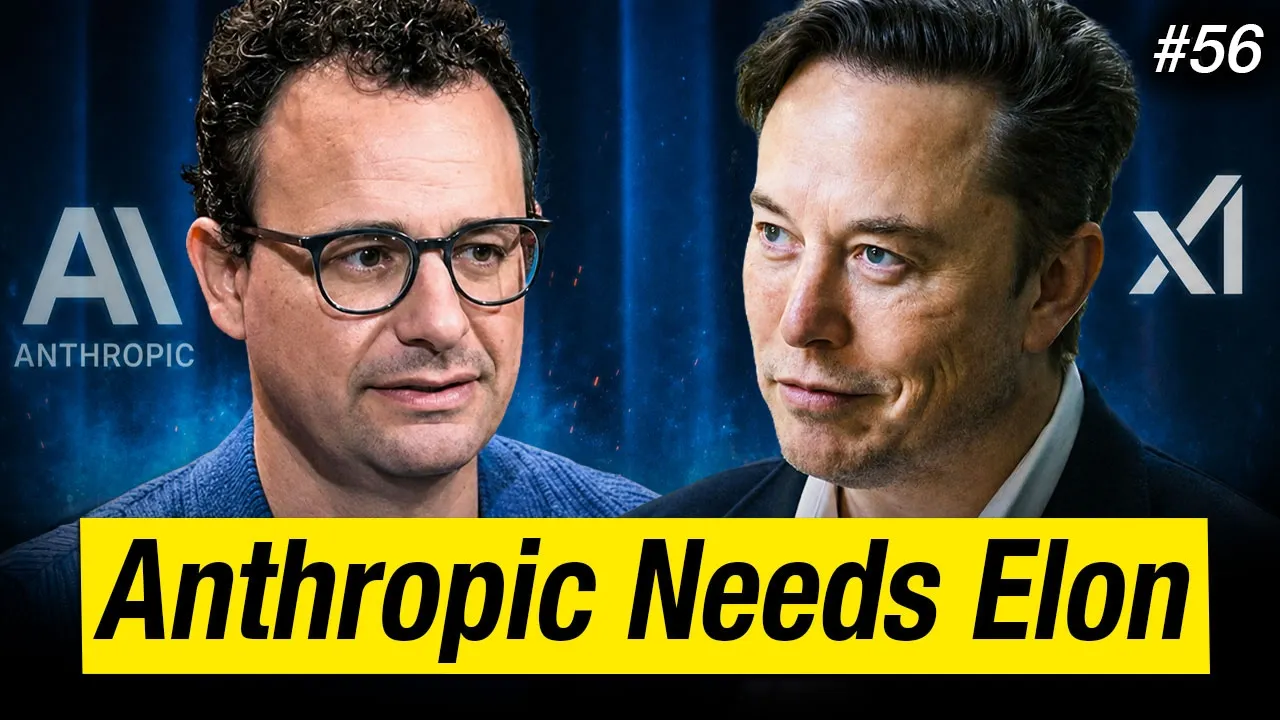
Description
Jason Lemkin is one of the leading SaaS investors of the last decade with a portfolio including the likes of Algolia, Talkdesk, Owner, RevenueCat, Saleloft and more. Rory O’Driscoll is a General Partner @ Scale where he has led investments in category leaders such as Bill.com (BILL), Box (BOX), DocuSign (DOCU), and WalkMe (WKME), among others. ----------------------------------------------- Timestamps: 00:00 Intro 01:25 Anthropic freezes secondary sales, requiring board approval for all transfers 06:55 Why Anthropic is buying capacity from Elon Musk 12:21 Anthropic's massive $200B revenue commit to Google 16:03 Goldman Sachs predicts a 24x surge in token consumption driven by agents 27:46 Will AI labs eat the app layer? The threat to Legal and CX verticals 37:10 SaaS public markets: HubSpot tanks 18% while Monday.com finds its footing 41:47 Growth theft: How Clay is commoditizing ZoomInfo's data business 46:31 Cerebras prices IPO at $150–$160 with a $48B market cap 52:10 Real Venture Capital: Celebrating the early bets by Foundation and Benchmark 58:05 Ramp's valuation vs the Chapter 7 collapse of e-commerce card Parker 01:09:15 Success and Sacrifice: Is mental health the price of building a $20B company? ---------------------------------------------------------------------------------------------- Subscribe on Spotify: https://open.spotify.com/show/3j2KMcZ... Subscribe on Apple Podcasts: https://podcasts.apple.com/us/podcast... Follow Harry Stebbings on X: https://x.com/harrystebbings Follow Jason Lemkin on X: https://x.com/jasonlk Follow Rory O’Driscoll on X: https://x.com/rodriscoll Follow 20VC on Instagram: https://www.instagram.com/20vchq Follow 20VC on TikTok: https://www.tiktok.com/@20vc_tok Visit our Website: https://www.20vc.com Subscribe to our Newsletter: https://www.thetwentyminutevc.com/con... ----------------------------------------------- Legal Disclaimer: The content of this podcast is for informational and entertainment purposes
Summary
Generated by claude-haiku-4-5-20251001Video Summary: Anthropic, AI Infrastructure & SaaS Market Shifts
Main Topics
- Anthropic's Strategic Moves: Partnerships with SpaceX/X.AI for compute, $200B commitment to Google, and board approval requirements for secondary sales
- AI Infrastructure IPOs: Cerebras' 20x oversubscribed IPO at $48B valuation
- Fintech & SaaS Funding: Ramp reaches $40B valuation; Gusto surpasses $1B revenue
- Public Market SaaS Turmoil: HubSpot, Cloudflare, AppLovin, and Zoom Info face challenges despite mixed results
- Token Consumption & Developer Productivity: Debate over Goldman Sachs' 24x token growth projection
- Startup Survival in AI Era: How YC companies face disruption from model providers releasing features
- Founder Mental Health & Sacrifice: Discussion on whether extreme sacrifice is necessary for success
Key Points
Anthropic's Secondary Share Restrictions
- Context: Anthropic announced it requires board approval for all secondary share sales and economic transfers
- Issue: Previously, investors circumvented restrictions through derivative contracts transferring economic rights without actual ownership transfer
- Reality Check: This isn't new—most portfolio companies have similar provisions; Anthropic warned about SPVs publicly last year
- Implication: Trying to clean up cap table before IPO; prevents messy litigation post-IPO
Anthropic's Compute Deals
- SpaceX Partnership: X.AI selling excess GPU capacity (potentially $3-5B annually) to Anthropic
- Significance: Shows market consolidation; Grok is deprioritized in favor of revenue from data center utilization
- Google Commitment: $200B over 5 years represents ~40% of Google's total future compute backlog
- Strategic Reality: Google backs both Gemini (competitor) and Anthropic—winning either way on model competition
Token Consumption Debate
- Goldman Sachs Projection: 24x token growth by 2030
- Pushback from Jason Lemkin: "Sounds way too low"
- Parallel agents could increase consumption 250x+ (10 agents × 24x)
- Massive enterprise underpenetration outside tech
- Counter-argument: Best engineers need fewer tokens; mediocre developers waste tokens on unnecessary code
- Reality: Some "token maxing" mirrors Amazon's performative work quotas—inefficient spend
Parallel Agents & Developer Productivity
- Current paradigm: Sequential workflows (human interfaces)
- Future: Agents running 10+ parallel versions of features, LLM selects best
- Risk: May be overestimating token demand if mediocre developers are just padding metrics
- Key question: What's the ratio of 100X engineers to "web devs trash tokens"?
SaaS Market Contradictions
| Company | Result | Stock Move | Why |
|---------|--------|-----------|-----|
| Monday.com | Decelerated growth, raised guidance | +20% | Showed future growth path |
| HubSpot | Decent growth, lowered guidance | -18% | Signaled no acceleration ahead |
| Cloudflare | Strong growth (30%+), laid off 20% | Down | Valuation already high; uncertainty about cuts |
| Zoom Info | 1% growth | Crashed | Disrupted by Clay and AI-native tools |
The Message: "If you're not accelerating, you're going to be destroyed. At minimum, raise guidance."
The Zoom Info Case Study
- Problem: Clay and other AI-native tools commoditized data by aggregating multiple providers
- Result: Zoom Info's growth entirely stolen; now trading at 1x revenue with 35% operating margins
- Market Response: "Give me 30% growth, profits, and a future story → I'll value you at 5-6x revenue. Never 20x again."
Model Providers Eating Vertical Apps
- Microsoft Precedent: Dominated operating systems but didn't crush vertical software (SAP, Siebel, etc.)
- AWS Precedent: Didn't eat Snowflake despite conventional wisdom
- Current Risk: If Anthropic's features (financial agents, legal tools) express full app functionality, YC companies die
- Mitigating Factor: Model companies unlikely to build full applications with enterprise integration/customization needed for legal/regulated verticals
Key Quote: "If the LLM can express what an application does, that's where the YC companies get killed."
Cerebras IPO Analysis
- Valuation: $48B at 20x revenue oversubscription
- Thesis: Long-term bet that Cerebras becomes competitive alternative to Nvidia ($5.5T company)
- Even 1% of Nvidia = $50B+
- If 10% probability of success, expected value positive
- Risk: Heavy customer concentration (historical UAE customers; new: OpenAI and Amazon commitments)
- Upside: Speed advantage in inference; first viable GPU alternative
Real Venture Capital: Foundation Capital's 8-9% ownership after 9 years of capital-intensive business shows actual VC work (relationship-building, incubation, not just capital deployment)
Fintech Valuations
- Ramp at $40B: 40x run-rate revenue; requires 2.5 years of doubling to hit Brex-like multiples
- Unclear if revenue quality justifies multiples vs. Amex-adjusted-for-growth
- Gusto at $1B+: Succeeding by building horizontal payroll + benefits
- Distinction: Ramp adding software (agents, ACH) on top of card economics; most fintech trapped in margin-pressured commodities
Notable Quotes
On Market Consolidation:
> "The enemy of my enemy is my friend... X.AI is effectively switching from being a net buyer of CapEx to being a net seller because we're not going to be able to build Grok."
On SaaS Survival:
> "If you're not accelerating, you're going to be destroyed, right? And at a minimum, you've got to raise guidance."
On Model Provider Competition:
> "There are categories of software where if they don't have a reason to exist in an agentic world, they will go into a terminal state of decay."
On Zoom Info Disruption:
> "Zoom Info's growth was stolen from it from Clay and Friends, and it's a brutal case study."
On Valuations:
> "Give me 30% growth. Give me profits. Give me a story that's got some future in it, and I'll get you back to five times. I'll never give you 20 times again."
On Founder Transformation:
> "You're a different person... you can never go back. You often can't even talk with non-founders for real anymore... it's not just vacation doesn't fix it. Your brain has been rewired."
On Sacrifice:
> "A lot of people think they want to be me. But I promise you, when the lights go out at the end of the day, it's very lonely in my head." — Daniel Dines, UiPath
Takeaways
For Investors
- SaaS: Demand acceleration beats company acceleration—declining companies in accelerating budgets face terminal decay
- Valuation Reality: High-multiple SaaS needs demonstrable agentic integration; 30% growth + profits gets you 5-6x, not 20x
- Compute Infrastructure: Cerebras IPO represents leveraged bet on GPU commoditization; early but structurally compelling at $48B
- Secondary Markets: Anthropic's cap table cleanup is table-stakes before IPO; expect more enforcement of transfer restrictions
For SaaS Operators
- Must-Have Condition: Integrate agents/AI deeply into core workflow; feature parity with model providers insufficient
- Growth Imperative: Deceleration = terminal risk; raise guidance even if painful to show future path
- Ecosystem Play: Fintech models (Ramp) succeed by building software layers; pure-play data/infrastructure fails
- Vertical Defense: Legal/financial verticals defensible if enterprise integration and compliance specialization matter; consumer/SMB legal eaten by Claude
For Founders
- Intensity Reality: 4-5 year threshold where founder's brain becomes "permanently rewired"—recovery insufficient, lifestyle changes won't fix
- Historical Pattern: First 1-2 years feels hard but reversible; years 3+ create neurological changes incompatible with non-founder lives
- Token Consumption: Beware of vanity metrics; best engineers need fewer tokens for better results—measurement distortion (Goodhart's Law) inevitable
For M&A/IPO Strategy
- Timing Matters: Cerebras IPOs before Anthropic/OpenAI—captures zeitgeist but early (2-year production track record gap)
- Narrative Shift: Fintech needs acceleration + margin expansion story, not just growth
- Market Patience: Moore's Law (chips 3x faster every 18 months) + AI optimizations (another 3x) = 10x efficiency every 2 years; margins compress predictably
Market Structure Shifts
Compute: Consolidation to 2-3 model providers (Anthropic, OpenAI, Gemini) buying capacity from hyperscalers and emerging infra (Cerebras, CoreWeave)
SaaS: Bifurcation into:
- Horizontal intelligence layers (Co-Pilot, Claude, agents)—dominated by model companies
- Vertical apps with deep integration (legal with Harvey/Lagoera, CX with Sierra/Decagon)—survives if model providers don't commit resources
Fintech: Survives if software layers (spend analytics, agent procurement) justify 40x multiples; pure infrastructure commoditized
Transcript
Are there really enough developers in all of the solar system to keep Anthropic on the unprecedented growth path we have this year? Kicking us off this week, Anthropic partners with SpaceX. Plus, they commit $200 billion to Google over five years. Cerebrus IPO is 20x oversubscribed. Ramp is a $40 billion valuation on their new fundraise. And finally, Ablovin HubSpot Cloudflare posts banging numbers. But the street doesn't necessarily share the optimism. What is going on? There are categories of software where if they don't have a reason to exist in an agentic world, they will go into a terminal state of decay. If you're not accelerating, you're going to be destroyed, right? And at a minimum, you've got to raise guidance. Zoom Info's growth was stolen from it from Clay and Friends, and it's a brutal case study. Give me 30% growth. Give me profits. Give me a story that's got some future in it, and I'll get you back to five times. I'll never give you 20 times again. I won't fall for that one this time. There you go. Ain't capitalism great. Ain't capitalism great. Ready to go? We are back. I am so looking forward to this one. As always, we're going to start with this week in Anthropic. I think I'm going to be really unfair, actually, and just go off on one because Rory loves it when we go spontaneous. So Anthropic have come out in the last 12 to 18 hours and said, nope, all sales of secondaries and SPVs need to be approved by the board and basically brings into question the legitimacy of the transactions that we've seen and we'll be able to get out of moving forwards. This is a very big deal. This is a very big deal, actually. Sometimes an SPV is when a venture firm has a big allocation, can't take it all up, so it forms a special purpose vehicle, and that company invests directly in Anthropic, maybe raises money from the venture firm's LPs, and the SPV appears on the cap table. Nothing wrong, nothing to see here, but that's not what we're talking about here. What we're talking about here is secondary sales of Anthropic shares, outright sales. We'll come to that in a second. Or transfer of economic value. In other words, I own shares of Anthropic. I'm an early employee. For whatever reason, I couldn't access the company structure tender offer, and I decide to do something outside of that. So the first thing I do is I try and sell directly to Jason. He's willing to buy. I'm willing to sell. But Anthropic says, we're not going to affect that transfer. We have rights to approve transfers. We're just not approving this, right? And I don't know what they've been doing in the past, but that's what they say they're going to do going forward. In other words, they have the right to say yes or no, which makes sense. It's not unusual. But the real thing that's going on, and this is where it gets interesting, is what I can also do is say to Jason, hey, Jason, I can't sell you my Anthropic shares because they won't let me. But I contract with you that whatever I get for my Anthropic shares later, I will transfer that value to you, and I will structure a document that says, I owe you contractually all the money there is that ever comes from that share, right? So now Jason thinks he doesn't have the shares, but he kind of has the economic right to the share, so he's money good. And there's two problems with that. The first is probably the Anthropic documents say, Rory, not only can you not sell your shares, you can't transfer beneficial ownership to those shares to Jason. So I may not be able to do this. So Anthropic could say, hey, we don't agree to that. And that's fine, though. But the funny thing is Jason and Rory might still have their contract because I promised Jason something. Just because Anthropic says they don't agree to it doesn't mean Jason and Rory can't contract. But the tricky thing for poor Jason, two years later when we got public, is he doesn't have any structure. He can't go back to Anthropic and say, my shares are in the cap table. I'm good. I can just sell. All he has is a commitment from Rory, and Rory turned out to be a liar and a cheat. And he never owned those shares. Or he owned them, but he sold them to someone else as well. And it's just going to get really messy at that level as individuals start trying to enforce contracts, not against Anthropic, because they're not in the loop, but against other investors who sold. So there's going to be a lot of losses at that level. And I think Anthropic is just trying to distance itself from that and probably also worried that if there's been a lot of transfers, I saw someone suggest that even though they say they don't allow these, you get into all sorts of equitable remedies. In other words, the court starts saying, hey, dude, you knew this was going on forever. You acquiesced to it. So maybe you are involved in this mess and they don't want to be involved in this mess. So totally makes sense. As you get ready for an IPO, you're like, I've been a little sloppy here. Time to tighten up. And then the real thing is we'll see the second order impact. To me, listen, maybe I'm missing something. To me, this story seems like a nothing burger made up on social media. Let me tell you why. First of all, all companies have had this for a long time. Most of our portfolio companies have the same provisions in it. This has gotten more and more locked down over my investing career. It used to be the lawyers wouldn't put this stuff in in default. And then maybe four or five years ago, every set of charter documents say no transfer without the board permission, just like Anthropic and OP&I. So nothing new. Two, Anthropic last year warned Memo, one of its best investors and others, enough with the SPVs. They said publicly, enough with the SPVs. This isn't new. They said, stop the SPVs. If you want to invest, you have to invest directly. Okay, they were clear on this last year. I think this is Anthropic just saying this is still happening. They named a bunch of entities in there, which you never see. They named like five hedge funds or something and saying, these guys are bad actors. So I think they're just saying no one was listening to them is the problem. They banned it. They said publicly, enough with the damn SPVs. This isn't new. They said, stop the SPVs. If you want to invest, you have to invest directly. Okay, they were clear on this last year. I think this is Anthropic just saying this is still happening. They named a bunch of entities in there, which you never see. They named five hedge funds or something and saying, these guys are bad actors. [SPEAKER_00] So I think they're just, I think no one was listening to them is the problem. [SPEAKER_00] They banned it. [SPEAKER_00] They were clear that one of their lead investors, one of the greatest venture investors of all time. [SPEAKER_00] They told them to stop SPV and they told everybody and there's so much greed in AI, people wouldn't listen. [SPEAKER_00] And so they named actors. [SPEAKER_00] And I think the interesting thing to me is when folks don't listen. [SPEAKER_00] I don't think they listened to the company last year. [SPEAKER_00] So then you have to go public on the megaphone and make sure everyone hears, hey, these are bad actors and don't do it. [SPEAKER_00] Because people, they're so greedy, they take the risk anyway. [SPEAKER_00] The triple layered, quadruple layered 2020 SPVs, this is the hottest share of the century. [SPEAKER_02] We're going to discuss the next big deal of the day, which is Anthropic's deal with Elon. [SPEAKER_02] We've said before about Dario's difficulty in his job in terms of forecasting CapEx requirements. [SPEAKER_02] Rory, do you want to just provide some context into the deal with Elon and what it basically means? Just shows, needs must when the devil drives, as they say. I mean, let's be honest, Elon in the past has said horrible things about Anthropic. They're evil, they're woke, they're anti-white, they're anti-Chinese. It's been as recently as three months ago. And suddenly he wakes up one morning with excess capacity and Dario wakes up one morning with a need for capacity. And Elon ends up in trial with OpenAI. So the enemy of my enemy is my friend. And here we are, right? It's a totally sensible deal. I mean, it says a lot about both markets. It says this is a market consolidating. And even though they will deny it till the day they die, what this is, is X.ai slash SpaceX slash Grok basically saying we're not going to be right now a leading edge model contender. Grok is not growing like OpenAI and Anthropic is. And we're going to be, and we're going to effectively switch from being a net buyer of CapEx because we're trying to build Grok to being a net seller because we're not going to be able to build Grok. I believe the data center was 11% utilized. Right? So this is the market consolidating. The stronger players have the capital to buy more CapEx. [SPEAKER_01] And in the context of this, Grok is a weaker player. [SPEAKER_01] And they very wisely are opting to stop, for now at least, the dream and instead take probably $4 or $5 million a year, which is a big slug of revenue. [SPEAKER_01] I mean, depending on the estimates, $3 to $5 billion a year of revenue, which for an asset that was losing money and for context, the total SpaceX revenue run rate is around $20 billion. [SPEAKER_01] So this is 15% revenue lift from something that a couple of months back looked like a money pit. [SPEAKER_01] So the combination of this and cursor, I think they've taken X.ai from a $250 billion, which is what they paid for it in SpaceX stock, which is astonishing, from a, huh, why are you doing this? [SPEAKER_01] To, okay, I get it. [SPEAKER_01] It's at least notionally pro forma profitable and has some kind of existence, right? [SPEAKER_01] But it's not a competitor anymore to Anthropic and OpenAI and trying to pretend it is different. [SPEAKER_01] So you've got your own little CoreWeave. [SPEAKER_01] Congratulations. You know, we talked about this a couple of weeks ago and I said something. I usually don't use these lines, but I said something this wouldn't be hard to imagine because Samsung does it with Apple. They compete and sell them components. You're right. And we talked about this. They said, no, you're ridiculous. So, yeah, they just, they would sell it to each other, right? Actually, the most obvious candidate now is SpaceX because they've got to have different BUs, right? So you've got, I can't even keep track. You've got the rocket guys. You've got the Starlink guys. And now you've got XAI, which is two things mashed together, right? And they each have their own P&Ls, BUs and responsibilities. And if I'm stressed and I'm running this XAI Twitter thing and I can get another four to five billion into Rory, it doesn't just make sense for the IPO. It makes sense for me. It just selfishly makes sense for me. So I don't think the deal is as surprising. It's a reminder to keep meeting with your partner, with your competitors. This is a classic Sastra post. [SPEAKER_00] Always meet with the CEOs of your competitors. [SPEAKER_00] It's never a bad idea to have lunch once or twice a year with your competitors. [SPEAKER_00] It's never a bad idea because this is one of those deals. [SPEAKER_00] And two, the more interesting thing to me is my God, it changes so quickly. Just a couple of weeks ago, it's like, well, Anthropic can't launch Mythos because it doesn't have enough capacity. And now Anthropic, I hate the 5D, 8D chess metaphor, but now it's going to figure out a way to have more capacity than OpenAI. [SPEAKER_00] It's pretty epic, to just hoover up anything that's available on planet Earth and possibly orbiting soon enough. [SPEAKER_00] But it will hoover up everything available, right? [SPEAKER_00] CoreWeave, XAI, anything, right? [SPEAKER_00] It'll probably buy capacity from OpenAI if Sam lets them, for some reason. You know, capitalism works and assets should get reallocated to the person who can create the most value from them. And, right now, use it. Yeah, right now, Anthropic can turn that CapEx into the most amount of money the quickest and Grok could not. So I agree. [SPEAKER_00] The person who is in charge of making the P&L work for the data centers is sure glad to get an extra $3 to $4 billion to make his math work and not get fired by Elon. [SPEAKER_00] Pretty happy. It will be fun, by the way, to watch the SpaceX Roadshow because someone's going to have to perform it out. Well, this is what we owned a year ago. Then late last year, we bought X.AI. So bear with me. And right now, use it. Yeah, right now, Anthropa can turn that CapEx into the most amount of money the quickest and Grok could not. [SPEAKER_01] So I agree. [SPEAKER_00] The person who is in charge of making the P&L work for the data centers is sure glad to get an extra $3 to $4 billion to make his math work and not get fired by Elon. [SPEAKER_00] Pretty happy. [SPEAKER_01] It will be fun, by the way, to watch the SpaceX Roadshow because someone's going to have to perform it out. [SPEAKER_01] Well, this is what we owned a year ago. [SPEAKER_01] Then late last year, we bought X.AI. [SPEAKER_01] So bear with me. [SPEAKER_01] We dropped all this stuff in here. [SPEAKER_01] That's what it is today. [SPEAKER_01] And we have a whole quarter of combined revenue. [SPEAKER_01] Oh, and by the way, we then sold all that capacity. [SPEAKER_01] And that should hit next quarter. [SPEAKER_01] So you've got to perform that in. [SPEAKER_01] And then the quarter after that, we're going to drop in Cursor, which hopefully Colossus 2 will be online then. [SPEAKER_01] And you've got to perform that in. [SPEAKER_01] So Mr. IPO investor, you're buying a $15 billion runway company today. [SPEAKER_01] And it'll be a $23 billion runway company in two quarters with two totally different businesses on top. [SPEAKER_01] That's why the bankers are going to earn a couple of hundred million dollars. But it won't just be an extend the model and grow 20% Q&Q kind of analysis here. [SPEAKER_02] They also did a deal committing $200 billion to Google over, I believe it was a five-year period. [SPEAKER_02] To your point, Jason, on Samsung and selling into partners. [SPEAKER_02] Ultimate sign of a circular economy. [SPEAKER_02] Ultimate sign of Google's superiority in their positioning, owning both Gemini and then TPUs and Buntney, where they sit selling now to Anthropik. [SPEAKER_02] Anything of note there? [SPEAKER_00] To some extent, at places like Google, it's okay, obviously we want to win. [SPEAKER_00] We want Gemini to win. [SPEAKER_00] We want to beat everywhere. [SPEAKER_00] But we're not strong everywhere. [SPEAKER_00] We're not. [SPEAKER_00] But let the best model win. [SPEAKER_00] We're going to win. [SPEAKER_00] But we're okay with winning with internal competition by selling capacity to Anthropik as well. [SPEAKER_00] It's okay. [SPEAKER_00] At their scale, it's okay to let the best buyer of these different things win. [SPEAKER_00] As long as they don't have infinite capacity, it's not necessarily a bad way to keep everybody on your toes to have a little bit of competition inside of you. [SPEAKER_00] It's not necessarily a bad thing. It is interesting, though. I mean, I think there's a couple of things. One is, I think now the Anthropik rev commit is about 40% of Google's total future backlog. So it underlines quite how heavily dependent the hyperscalers are on these two privately held companies, which are effectively providing more of those revenues. [SPEAKER_01] And you're right, Jason. [SPEAKER_01] I mean, reminder, everyone, Google has Gemini, which in theory is a direct competitor of OpenAI and Anthropik. [SPEAKER_01] And this is Google giving, a separate part of Google giving Anthropik the compute they need to grow. [SPEAKER_01] And I think you're right, in one sense, you're right. [SPEAKER_01] Win both ways. [SPEAKER_01] I'm sure at the margin, you'd prefer at Google to be the winner of the model company. [SPEAKER_01] Because I think, and I could be wrong, in the end, the value will accrete mainly to the model providers. [SPEAKER_01] And everyone down the stack that's selling to them, even though they're all making out like bandits today, starting with the memory guys all the way up to the hyperscalers. [SPEAKER_01] Because over time, that's not the obviously differentiated place. [SPEAKER_01] And I could be wrong on that. [SPEAKER_01] Maybe CapEx and the ability to invest hundreds of billions, millions of dollars in a data center is, in fact, the moat itself. [SPEAKER_01] But over the long term, if I'm Google, I'm happy that I'm doing $200 billion of revenue with Anthropik. [SPEAKER_01] No more than Microsoft is happy they're doing $200 billion of revenue with OpenAI. [SPEAKER_01] But deep in your heart, you should be saying to yourself, God, I really wish Gemini was so busy that they needed $200 billion of compute. [SPEAKER_01] And in Microsoft's case, I really wish I even had a model that was worth a damn, which I don't. [SPEAKER_01] Right. [SPEAKER_01] Because all you're doing is enabling your balance sheet the two most exciting next generation tech companies who are going to draft on your balance sheet air cover and become huge. [SPEAKER_00] It's for sure. [SPEAKER_00] I mean, there's a tradeoff. [SPEAKER_00] You're enabling your competitor, right? [SPEAKER_00] It was interesting. [SPEAKER_00] The Wall Street Journal today published the market shares in the enterprise for OpenAI, Claude, Gemini, and Grok. [SPEAKER_00] Grok is a rounding error going to the prior conversation, right? It's not making any progress, but everything is so multimodal that it said Gemini went from 27 to 40% market share, I think, in the last nine months. And Claude went from 21 to 48. Okay. And obviously, OpenAI actually only went down a little bit. They don't sum to 100 because you're multimodal, right? But if Gemini has gone from 27 to 40 and Claude, as we know, has gone from 21 to 48, now Google's got both pieces. It's got its own winner going to 40 and 50 and 6% of the enterprise. And it's got a large share of this other leader, 48%. There's worse ways to solve to revenue growth than having both the fastest growing players yourself and your competitor. You get a piece of each. [SPEAKER_02] Jason, I was so intrigued to hear your thoughts on this Goldman piece where they essentially summarize saying agents will push tokens consumption up 24x by 2030. [SPEAKER_02] Again, our job is to invest on the back of this and invest in companies that provide these services. [SPEAKER_02] When you heard that and living as you do with the company structure that you do today, do you agree with that? [SPEAKER_02] Do you think that is enough? [SPEAKER_02] Do you think it's underplaying it, overplaying it? [SPEAKER_02] How do you respond to that? Well, I wish I had the fluency in numbers that Rory has, but 24x, I know I highlighted this, but it sounds just way too low. You agree. The theme of a lot of the rest of the year, it's just taking off now. The theme of a lot of the rest of the year is parallel agents. Now, we don't need parallel agents in everything. We don't need 100 SDRs hitting up our 1,000 potential customers every minute. [SPEAKER_02] Do you think that is enough? [SPEAKER_02] Do you think it's underplaying it, overplaying it? [SPEAKER_02] How do you respond to that? Well, I wish I had the fluency in numbers that Rory has, but 24x, I know I highlighted this, but it sounds just way too low. You agree. The theme of a lot of the rest of the year, it's just taking off now. The theme of a lot of the rest of the year is parallel agents. Now, we don't need parallel agents in everything. We don't need 100 SDRs hitting up our 1,000 potential customers every minute. [SPEAKER_00] There are definitely plenty of workflows that do not need 10, 20, 100 parallel agents, but you don't need 1,000 flights going to the Bahamas for your vacation. [SPEAKER_00] But workflows that can benefit from parallel agents, it's just kicking off inside of these LMs and their models. [SPEAKER_00] And so not only does 24x sound low, what if we have 10 agents? [SPEAKER_00] That's 250x, right, and more. [SPEAKER_00] And then we also forget how underpenetrated the enterprises are. [SPEAKER_00] It's so early outside of tech, right? [SPEAKER_00] So I don't see why it's not 250x, but I got to put it on a better spreadsheet. [SPEAKER_00] But I think we're underestimating the potential impact of parallel agents. [SPEAKER_00] It's still most of us live in a sequential world. [SPEAKER_00] We fire up something, Claude, Claude code, chat, it doesn't matter. [SPEAKER_00] And we kind of have a human interface where we're doing things sequentially because that's how our brains work. [SPEAKER_00] But it's also how the LMs have worked. [SPEAKER_00] But now that they can natively run parallel agents, we just get these superpowers we didn't have a couple months ago. [SPEAKER_00] And what these parallel agents are doing, if you haven't seen any of it in action, is even better. [SPEAKER_00] Because for things like coding, they'll go out and do 10 different versions of the same feature or of the same iteration. [SPEAKER_00] And then the LM will decide which is the best of the 10. [SPEAKER_00] It can present you the two or three best options and you can approve it. [SPEAKER_00] So why build a feature once if you can build it 10 times, have the LM decide which of the two to three expressions of the feature is the best. [SPEAKER_00] And then you pick the best combination of the expression, right? [SPEAKER_00] And so you can see hints of it in image generation. [SPEAKER_00] You know, you use some image generation. [SPEAKER_00] Sometimes you get four images, right? [SPEAKER_00] But what if you're in real time blending the best of all of these with much more complicated workflows? [SPEAKER_00] So 24x just sounds conservative. [SPEAKER_00] I think that's why Anthropic's right to buy every TPU, GPU, every Cerebus chip, 12-inch chip they can buy. Yeah, and I think the token count is always misleading. Because I've tried to do these numbers, Jason, and it's so hard. Because I saw the summary of the Golden Report. I haven't read the detail and I really want to because I was trying to think through the same stuff myself. But every 18 months, the raw performance of the chip gets roughly 3x faster. [SPEAKER_01] Then on top of that, other optimizations, how they run LLMs, how they do all the quantization, all the other clever stuff that you can read about and try and understand gets you another 3x. [SPEAKER_01] So you're probably roughly 10x-ing the number of tokens per unit of money every couple of years, right? [SPEAKER_01] So you have that, right? [SPEAKER_01] So if you were using more tokens, right, ironically, the total revenue would be going way down. [SPEAKER_01] Because if you only needed a million tokens and it cost you 5, I mean, you see it in the prices. [SPEAKER_01] They're down 10x. [SPEAKER_01] If it cost you 5 bucks now for the same number of tokens at the same efficiency, it would be way, way, way cheaper, right? [SPEAKER_01] But then what you have on the other side of things is just getting better, right? [SPEAKER_01] So you use more of them to get to a better result. [SPEAKER_01] But what you see, as Jason said, is what I looked at, the token count. Maybe the way to say it is this. [SPEAKER_01] The token count to support a chat two or three years ago when you're interacting with an LLM is whatever it is. [SPEAKER_01] It's X. [SPEAKER_01] It's 10x that now to do some kind of simple co-work analysis. [SPEAKER_01] And it's 10x that again if you're doing coding. [SPEAKER_01] And it's 10x that again if you're doing parallel work and where these agents are going. [SPEAKER_01] So you're just going to see token utilization. [SPEAKER_01] The cost per token is going to go way down in tokenization. [SPEAKER_01] The value, the use of those tokens is going to way up. [SPEAKER_01] And then the question is, the interesting thing is you're dealing with two numbers, one on each side that's moving an order of magnitude every 18 months. [SPEAKER_01] And trying to forecast where the net multiplicative effect of that comes out is hard. [SPEAKER_01] I mean, that's what you're trying to do. [SPEAKER_01] And I wouldn't fool myself into saying that you can be wildly accurate on that. [SPEAKER_01] You can get the rough direction, but it's hard to say I know exactly how this is coming out. [SPEAKER_00] There's a growing counterargument here. [SPEAKER_00] When you talk to some of the best CTOs and engineering leaders that we don't need as many tokens as we think. [SPEAKER_00] And if you talk to folks that didn't just get their team up and running in the last quarter or so to get going on Claude 4.7, but have been deep in this for a while, right? Multiple releases into their whole team being AI pilled. There is a theme that we actually don't need this much code. We don't need this many lines of code. It is too much. We cannot process all of it. And this is just a lot of token maxing that is unnecessary to deliver what the end customer needs. And we're all learning. We're all excited about these tools. They work. [SPEAKER_00] And people are running Claude Code and Codex 8, 10 hours a day. [SPEAKER_00] But it's not necessary, guys. [SPEAKER_00] You're producing too much code that's never going to be committed to production. [SPEAKER_00] You're wasting your energy. [SPEAKER_00] And there is the token, the whole token maxing at Amazon where people are pretending to work because they have quotas. [SPEAKER_00] But this is different. [SPEAKER_00] This is some of the smartest people saying the folks that need this many cloud coding, these are the mediocre web heads, web developers that don't know what they're doing. [SPEAKER_00] They work. [SPEAKER_00] And people are running. [SPEAKER_00] They're running Claude Code and Codex 8, 10 hours a day. [SPEAKER_00] But it's not necessary, guys. [SPEAKER_00] You're producing too much code that's never going to be committed to production. [SPEAKER_00] You're wasting your energy. [SPEAKER_00] And there is this, there's the token. [SPEAKER_00] There's the whole, from the press, the whole token maxing at Amazon where people are pretending to work because they have quotas. [SPEAKER_00] But this is different. [SPEAKER_00] This is some of the smartest people saying, the folks that need this many cloud coding, these are the mediocre web heads, web developers that don't know what they're doing. [SPEAKER_00] Okay? [SPEAKER_00] These are a little bit better than Lemkin. [SPEAKER_02] How do you think about that then with respect to your Mike Cannon Brooks at Atlassian saying, hey, our demand for new software, new products, new features is infinite. [SPEAKER_02] And so we will continuously need labor supply of great developers. [SPEAKER_02] And we will continuously need more tokens because the demand for new technology and new products is infinite. [SPEAKER_00] Yeah, but can the question is, can the average Atlassian engineer really effectively consume $10,000, $20,000 a month of tokens and be productive? [SPEAKER_00] Okay? [SPEAKER_00] And there is a growing micro backlash that the best, the best developers and engineers now don't need $20,000 a month necessarily. [SPEAKER_00] And that this is going to fade and we're not going to go back to hand crafting code, right? [SPEAKER_00] But that this is, we don't need to be running cloud code 10 hours a day. [SPEAKER_00] This is a bad way to ship enterprise grade software. [SPEAKER_00] This is a great way to ship hacks and proof of concepts and impress my boss. [SPEAKER_00] But does this, is this really, is this really, do we really need this many lines of code a day? [SPEAKER_00] Do we really need it? Hang on. There's a lot to unpack. I'm a little tentative because it's more of my info colleagues doing this, but I've been talking to them about wrestling with this question. So I just want to pick this apart, Jason, because there's a lot to do. One is this whole idea of monitoring people's token consumption and what impact that has. There's an economic concept. It was actually an LSE professor, Goodhart's Law, which basically says, whenever you monitor a variable, you actually change the causal relationship of that variable. So once, which is a way of saying, if you say to people, I'm going to monitor your token production and how much you use, you will in fact distort the result. And that's what Jason's hinting at. And I think we saw it for either Amazon or Meta or one of those, where employees are internally burning tokens on stupid tasks, which is easy to do just to make sure they quote unquote make their quota. To assess the market size for these companies at the highest level on shopping, you do have to have some mental model of how much LLM spend, which for which token is tricky, but meaningful proxy. [SPEAKER_01] It is going to be relative to salary. [SPEAKER_01] And that's one of those macro numbers. [SPEAKER_01] I'm trying to figure out all the time. [SPEAKER_01] Does the average developer spend 2% of their salary dollars on tokens? [SPEAKER_01] Is it 5%? [SPEAKER_01] Is it 10%? [SPEAKER_01] It's a huge number. [SPEAKER_01] And it's a very important number. [SPEAKER_01] But the odd thing is, the more these big companies target their employees based on it, the more likely the employees are to distort the outcome. [SPEAKER_01] So that's the first big picture comment. [SPEAKER_01] And I agree. [SPEAKER_01] I think there's a ton of that going on. [SPEAKER_01] And to some extent, when people find that out, and I think there will, I think there is going to be a push to get more grip on costs. [SPEAKER_01] Because there has to be. [SPEAKER_01] Because if you think back to December, when Entropic was at $9 billion run rate, by definition, very few of those CIOs had in their budget, oh, by the way, you're going to spend 10x that next year. [SPEAKER_01] Right? [SPEAKER_01] And it's a big sum of money. [SPEAKER_01] Someone's going to have to find $50 or $60 billion of budget across US corporates. And that's real money. And what that means is there's going to start being some pressure on where is this money being spent, even if they still want an AI max conceptually. So I agree with you, Jason. So on that, I agree. Right? The thing that I don't know enough about, and I'm just going to ask you because you said it is, there's this backlash, do the quote, best engineers not need as much tokens? I hear you. But I have two questions on that. And they're questions that I ask my info guys where I don't have the answer. The first is I've heard them articulate a perspective that actually says it's the opposite. The very best engineers can in fact manage, because they have the conceptual vision of what they're trying to build. [SPEAKER_01] They can actually be more productive with these tools and the less productive you are, the more you're getting yield loss in the sense of you're using tokens that aren't turning into effective code. Yeah, but I think both, I think both are right. I think they really are becoming 100X engineers, right? Let them use whatever they want, right? Give them all the tools in the world. The concern is that there's a snarky term web devs. There's others, folks, one or two steps above me or the mediocre folks on your team that just aren't that good. Okay. They're web devs. They're consuming massive amount of tokens for relatively low amount of productivity gains. Right. And it's not all performative like the Amazon thing. [SPEAKER_00] Some of it is attempting to keep up, but they need so many tokens to contribute so little value. [SPEAKER_00] Right. It's a hundred thousand line of code where some folks were made up on Twitter. [SPEAKER_00] Do you really need a hundred thousand lines of code to run a blog? [SPEAKER_00] Well, maybe you don't. Right. And maybe you don't. Which is why the question I'm always asking the rest of my team and I don't know the answer to is what is the objective? How do you think about measuring this? I mean, you're right. It's not lines of code is a dumb measure because this stuff grinds out lines of code. [SPEAKER_01] You need some kind of conceptual effective lines of code. [SPEAKER_01] And I haven't found anyone. We, in fact, we just surveyed, I think 30 of our VPs of ENG to try and understand, you know, what's going on in terms of spend. [SPEAKER_01] And they all are spending a lot. [SPEAKER_01] They all think they're going to spend more, but you're right. Which is why the question I'm always asking the rest of my team and I don't know the answer to is what is the objective? How do you think about measuring this? You're right. It's not lines of code is a dumb measure because this stuff grinds out lines of code. [SPEAKER_01] You need some kind of conceptual effective lines of code. [SPEAKER_01] And I haven't found anyone. We, in fact, we just surveyed, I think 30 of our VPs of ENG to try and understand what's going on in terms of spend. [SPEAKER_01] And they're all spending a lot. [SPEAKER_01] They all think they're going to spend more, but you're right. [SPEAKER_01] I didn't get clarity on what is the heuristic for success? [SPEAKER_01] And there has to be one over time. [SPEAKER_01] Yeah. [SPEAKER_01] Yeah. [SPEAKER_01] Well, but what's hard to know what the ratio of web devs and token trashers is to 10X or a hundred X engineers. [SPEAKER_01] Right. And that just goes to the, I'm not smart enough to answer the question. [SPEAKER_00] It goes to the question we asked before, are there really enough developers in all of the solar system to keep Anthropic on the unprecedented growth path we have this year? [SPEAKER_00] Probably, but a counter argument is these web devs and trash tokens. [SPEAKER_00] And we're going to play this out. [SPEAKER_00] In a year from now, we're not going to be wasting tokens on mediocre web developers playing with stuff. [SPEAKER_00] And we're going to clamp down on it because it's a huge waste. [SPEAKER_00] We're going to give the S tier guys all they want, the hundred X, but that's always been true. Probably there is. And then Anthropic released 10 financial agent templates, killing a load of YC companies in the process. In a couple of weeks, they are scheduled to come out with a legal product, which will challenge Harvey and Nagora apparently in a very meaningful way. And so there probably isn't enough developers to satisfy the insatiable market cap increase, but there is when they take legal and there is when they move into financial analysis, financial modeling and everything in between. It might be. [SPEAKER_02] And look, I don't want to go too far. [SPEAKER_02] I just, we're still trying to see, we talked on the show about Claude design, whether it was a killer, right? [SPEAKER_02] It isn't a killer yet. [SPEAKER_02] Right. I just don't, it's hard to predict some of the stuff. Listen, there've been many YC and other startups that have been destroyed by a Claude feature, right? I've invested in one or two being able to innovate faster than Anthropic is tough. Okay. It's pretty effing tough. This is not classic slow company, slow pace. Right. Having said that, if I'm a lawyer billing $2,000 an hour and doing this, I don't want to take a risk. It's not that I'm not going to ask Anthropic and ChatGPT to answer my questions. I'm going to ask questions too, in addition to Harvey, Lagoer or other tools. Right. But I don't know. I don't want to take any risk that this doesn't have the level of domain investment in anything that is close to regulated or has other constraints. You know, you can't submit briefs to a court with hallucinations in it. Everyone gets that's a problem. Now the question is, are these guys going to take away everyone's vertical business? And I don't know. I think what Jason said is that the model companies have a lot to do building their models, building broad horizontal harnesses, building products like co-work. Right. It's not clear to me that they'll be able to have the time and the focus to do all these specific verticals. [SPEAKER_01] Now should they? [SPEAKER_01] I agree, but I think there are some very core verticals like customer support, like legal, like financial modeling and accounting where they are mega and very, very clearly winnable. [SPEAKER_01] I don't think there's any chance that Anthropic is going to do applications in CX and actually, I could be wrong. [SPEAKER_01] I will bet you a lot of money they're not going to go all the way in legal at the app level. [SPEAKER_01] That's why design was interesting. [SPEAKER_02] It was an application. Okay. Now what does Harvey cost on average? $150,000 a year per law firm. Okay. I don't want to roll that into my $200 a month. I'm paying for Claude. If there's any risk, it's just not worth it. Right. It is just not worth it. [SPEAKER_00] Right. [SPEAKER_00] I need a solution. [SPEAKER_00] I needed to do everything. [SPEAKER_00] I needed to integrate with DocuSign. [SPEAKER_00] I needed to prepare the brief properly. [SPEAKER_00] I needed to review it a different way. [SPEAKER_00] It's just not worth it. [SPEAKER_00] This is not a career where saving a few pennies is worth it outside of the low end of the market. [SPEAKER_00] The low end of the market, maybe the ambulance chasers do use Claude, right? [SPEAKER_00] That's fine. [SPEAKER_00] But I don't. [SPEAKER_00] And so I may be wrong next week, but I'm not confident that these verticals are going to put the resources to build an application. [SPEAKER_00] That's the thing. [SPEAKER_00] They're not going to build a CX application. [SPEAKER_00] They're not going to rebuild Decagon or Sierra or Finn or Gorgias or any of these other. [SPEAKER_00] It's not that they won't build chunks of it. [SPEAKER_00] It's not that they won't take away. [SPEAKER_00] It's not that OpenAI hasn't taken away pieces of 11 Labs or other pieces of other folks, but they haven't committed to building applications. [SPEAKER_00] That's different. [SPEAKER_00] If the LLM can express what an application does, that's where the YC companies get killed because all of a sudden you don't need an application. [SPEAKER_00] It just works in the prompt, right? [SPEAKER_00] That will kill a thousand startups. [SPEAKER_00] It already has killed one or two of mine that are on their third version because it was super innovative a year ago. [SPEAKER_00] And then it is built into Claude today. [SPEAKER_00] Step back here. [SPEAKER_00] This is not the first time you face this question. [SPEAKER_00] But the app, but we haven't seen them commit to building applications. [SPEAKER_00] That's different. [SPEAKER_00] If the LLM can express what an application does, that's where the YC companies get killed because all of a sudden you don't need an application. [SPEAKER_00] It just works in the prompt, right? [SPEAKER_00] That will kill a thousand stars. [SPEAKER_00] It already has killed one or two of mine that are on, one is on its third version because it was super innovative a year ago. [SPEAKER_00] And then it is built into Claude today. [SPEAKER_00] Step back here. [SPEAKER_00] This is not the first time you face this question. [SPEAKER_00] If you look at every single platform, there is a dominant compute level provider. [SPEAKER_00] And the million dollar question is how much of the app player they take over, right? [SPEAKER_00] I mean, let's just do two obvious ones. Microsoft in the 90s, they dominated, yeah, they were the operating system. So they dominated broad horizontal application software for the consumer and the individual knowledge worker, the office suite. [SPEAKER_01] I think coworker could be like the office suite, right? [SPEAKER_01] And they dominated networking at the infrastructure layer, right? [SPEAKER_01] Just connecting things. [SPEAKER_01] But there was hundreds of application software companies on top of that. [SPEAKER_01] Siebel, Vantov, Scopus, Clarify, Bahn, SAP that said, we run on top of Microsoft. [SPEAKER_01] We build specifically for this vertical or this horizontal use case. [SPEAKER_01] And Microsoft tried. [SPEAKER_01] They bought great planes. [SPEAKER_01] They never really made it happen. [SPEAKER_01] Fast forward a decade later. [SPEAKER_01] Hang on. [SPEAKER_01] Amazon, right? [SPEAKER_01] Same kind of question. [SPEAKER_01] Does AWS eat everything, right? [SPEAKER_01] And I know lots of brilliant investors who passed on Snowflake, which is not even an app. [SPEAKER_01] It was an infrastructure level player because they said, oh my God, Microsoft Redshift, Amazon Redshift is just going to eat their lunch. [SPEAKER_01] It's not going to be a thing. [SPEAKER_01] And it turns out it was a $50 billion thing, right? [SPEAKER_01] So my point is you have to have some approach to thinking about this, but you have to face this question every compute revolution. [SPEAKER_01] And this is just the latest turn on the crank, right? [SPEAKER_01] And to me, the default is the Microsoft outcome, which is broad horizontal. [SPEAKER_01] The equivalent of broad horizontal compute is now broad horizontal intelligence. [SPEAKER_01] And that's going to be provided maybe not by the monopoly like Microsoft, but the oligopoly of Anthropic, OpenAI, and maybe Gemini. [SPEAKER_01] Probably the kind of knowledge tool Microsoft will regret to their dying day why they let slipped on this and let Claude Co-Work be there, take their lunch. [SPEAKER_01] But that's their problem, not mine. But at the app layer, I'm kind of with Jason. I think all these individual apps, especially, and this is a key point, especially to take legal. If all you're going to do is mark up a document for an individual user, I think there is an argument that an individual user might get a skill from Claude and they'll be fine, right? But most of these companies are selling coordinated workflows across an enterprise. [SPEAKER_01] And I think once you get to that point, I'm with Jason, I think they, Legora, the Harvey rep, if you sell into Amlo, GCAI, which is ours, if you sell into corporates, you're going to want both the relationship, you're going to want the ability to customize it to what you want. There's just going to be a whole bunch of work that's just better done by a focused firm. I mean, I think history is on our side. That's the way it shapes out. Well, I would just offer two thoughts, maybe one, this is more Open AI than Anthropic. You know, Sam did hire Fidji to be the CEO of applications and there no longer is a CEO of applications. Now she's CEO of AGI. [SPEAKER_01] So that is really walking back. [SPEAKER_01] Now you could say it's a little bit different, but just think about hiring a CEO of application and say, you know what? That's not a business we want to be in. Claude, not seeming, Anthropic, not seeming to invest a hundred, 500 people in design, right? Which they could. And so that could change next week. But right now, neither of them seem to see applications. Now, paradigms do shift. They're also going to Rory's point of the low end redlining or whatever. [SPEAKER_00] That could get more powerful. [SPEAKER_00] I'll give you a different example. [SPEAKER_00] It's not the same, but I don't think in a year we're going to need any traditional marketing automation software. [SPEAKER_00] It's too dated. [SPEAKER_00] It doesn't work for agents. [SPEAKER_00] Marketing, there are categories of software where if they don't have a reason to examine, they don't exist in an agentic world, they will go into a terminal state of decay, okay? [SPEAKER_00] Agents do not need HubSpot or Marketo or Salesforce or any of these marketing automation tools because they have no need to hand compose an email in a third party template. [SPEAKER_00] And so I'm not saying that would happen in legal, but you could see if they don't keep up ahead of it and the paradigm changes, you can become obsolete over time. [SPEAKER_00] There's two separate dynamics. [SPEAKER_00] One is, does new software get eaten by new models? [SPEAKER_00] In other words, Harvey Lagoer eaten by Anthropic. [SPEAKER_00] You're referencing something different, which is does old software get eaten by agents, either clawed agents or new agents. [SPEAKER_00] But new software can get old too. [SPEAKER_01] Yeah. [SPEAKER_01] Well, yeah. [SPEAKER_01] So you're conflating the two, but yes, agreed. [SPEAKER_01] It can. But I just think they're different questions, right? [SPEAKER_01] And I'm just trying to. [SPEAKER_01] I just think the rate of decay might accelerate in the agentic era. [SPEAKER_01] That's what I was, that's the connection I didn't make. [SPEAKER_01] It used to take a decade. [SPEAKER_01] Now it could be 18 months. [SPEAKER_01] And if you talk to folks, senior folks at Lovable and Replit, you will hear they're well aware of this. They do not want to be clotted out of existence. They think about it every day that they have to stay ahead of it because they're closer to the core, right? And so I just think stuff gets old much faster than it used to. The evolutionary pressure from a model that's underneath you. An intelligent model is underneath you. A company building that intelligent model to not actually perform for it. Is UI Jason more powerful than the pressure of a, you know, an operating system or a, you know, compute system like AWS. So I do agree with you. They do not want to be clotted out of existence. They think about it every day that they have to stay ahead of it because they're closer to the core. Right? And so I just think stuff gets old much faster than it used to. The evolutionary pressure from a model that's underneath you. An intelligent model is underneath you. [SPEAKER_00] A company building that intelligent model to not actually perform for it. [SPEAKER_00] Is UI Jason more powerful than the pressure of an operating system or a compute system like AWS. [SPEAKER_00] So I do agree with you. Every day, every day you wake up as lovable or Replit where the model provider underneath you is doing more of your shit. You can't, if you could, if you could miss, if you could be behind by a year competing with Redshift, you can't be behind by a week competing with these guys. I'm going to bring some semblance of structure to this. Jason, you said HubSpot. We had some public market activity. We had HubSpot crash 20%, despite decent and consistent growth. We had AppLovin at a 7 billion run rate. [SPEAKER_02] Stock crashed. [SPEAKER_02] And then Cloudflare beats and then lays off 20% of its base. [SPEAKER_02] What one do you want to pick on first though, guys? [SPEAKER_02] Maybe it's not as exciting as the Anthropical Wars. [SPEAKER_02] I just thought that the slight contrast that was interesting was Monday versus HubSpot. [SPEAKER_02] Okay. [SPEAKER_02] So they're both decelerating. [SPEAKER_02] They come out with a quarter and Monday trades up after being maybe the most beaten down stock out there, right? [SPEAKER_00] Trades up, I think 20% and HubSpot down 18%, right? [SPEAKER_00] And what's the difference? [SPEAKER_00] They're actually not much further than each other on their agentic journey, which is early, which is Monday's in production and HubSpot sort of in, but I mean, they're pretty early. [SPEAKER_00] All Monday did that I can tell was for the next quarter, they're still decelerating, but at least they raised the guidance for real, right? [SPEAKER_00] HubSpot couldn't do it. [SPEAKER_00] HubSpot lowered their guidance. [SPEAKER_00] So if you're not accelerating, you're going to be destroyed, right? [SPEAKER_00] And at a minimum, you've got to raise guidance, right? [SPEAKER_00] Even if you're not accelerating like Monday, you've got to at least raise your guidance to get some breath because at least it says, I think it says since when Monday says, hey, we're raising our guidance next quarter, at least it says we're not going to zero, right? [SPEAKER_00] We're not being destroyed by AI if you're raising your guidance. [SPEAKER_00] But I think even though the SaaS apocalypse is behind us, I think for many, there is still a worry that terminal value is zero. [SPEAKER_00] I don't think that fear has gone away if you keep decelerating while budget is accelerating everywhere around you. [SPEAKER_00] It's not that everyone's decelerating. [SPEAKER_00] The budget is accelerating and you are decelerating. [SPEAKER_00] Those aren't two good lines to cross. [SPEAKER_00] They're not crossing over each other. [SPEAKER_00] So, but at least it's nice. [SPEAKER_00] We see some bounces off the hard deck. [SPEAKER_00] And I agree, I think it was a super interesting quarter. [SPEAKER_00] Lots of different people reported, did different things. [SPEAKER_00] Some of them cut expenses. [SPEAKER_00] Some of them had decent quarters and the stocks, we had all sorts of weird movements. [SPEAKER_00] I mean, Cloudflare, you know, had a really good quarter. I think mid 30s growth, yes. Laid off a bunch of its base stock went down. You're at HubSpot, decent quarter for the record here. Decent growth, stock went down. [SPEAKER_01] You're at Monday early on, a little bit better. [SPEAKER_01] And Bill.com won where I used to be on the board of, unfortunately, also had to lay off a bunch of people. [SPEAKER_01] Stock bounced up and partly because of a buyback. [SPEAKER_01] So you kind of look at all this and go, what's going on? [SPEAKER_01] And I think there's really two things. [SPEAKER_01] And Jason's done a really good job of articulating the important one, which is where are you, where's your business structurally? [SPEAKER_01] Are you getting better or worse in your business? [SPEAKER_01] Is AI messing with your head? [SPEAKER_01] Are you accelerating? [SPEAKER_01] Are you on that, as Jason said, the thing about Monday and HubSpot, are you on the agentic journey? [SPEAKER_01] Right. [SPEAKER_01] I think one of the things that happened, interestingly enough, to definitely Cloudflare and possibly HubSpot is a little bit of the, oh my God, you're cutting 20% of your costs, which had been perceived as a net positive. [SPEAKER_01] Now there's a little bit of a, huh, Cloudflare, you're a good company. [SPEAKER_01] What's going on? [SPEAKER_01] Right. [SPEAKER_01] A little bit of uncertainty. [SPEAKER_01] Right. [SPEAKER_01] You know, what's going on with that? [SPEAKER_01] But if the first big bucket is that whole kind of what's going on in your business, then separately, this is going to sound really Captain Obvious, as Jason would say, the second half of this is you just got to look at price. [SPEAKER_01] Right. [SPEAKER_01] In other words, if you have a muddled quarter and your stock's already at the bottom, you might get a bounce. [SPEAKER_01] Right. If you have a tricky story and your stock is like Cloudflare or AppLoving, I think AppLoving was, and the two of those were among the two highest valued companies. Right. If you're going 30%, 40%, 30% in the case of Cloudflare, but you have a story that's even a little bit messy, people are like, I might be okay with this at four times. I ain't okay with this at 15 times. So, and sometimes you forget that there's both the strategic journey and then there's the how is price dealing with that? And I think what you saw in the case of AppLoving and Cloudflare is it turns out high price stocks at the start of a paradigm shift, no matter how amazing the quarter is, are just vulnerable to disruption. Whereas when you're trading like Monday, poor Monday was at like under two times revenues with a bunch of cash, you're like pretty much anything you do other than burn the company down, the stock goes up. It was basically priced at nothing. Because at one point it was basically almost one and a half acts cash. And that's basically just saying, any positive momentum, you will get rewarded. And it's, as I say, very much Captain Obvious, but price is the vector. [SPEAKER_01] And we forget about this often in the private side, because you're not really dealing with price on a day to day basis. [SPEAKER_02] But on the public side, that's how it works. [SPEAKER_01] Excuse my language. It was priced at nothing. Because at one point it was almost one and a half acts cash. And that's just saying any positive momentum, you will get rewarded. And it's as I say, it is very much Captain Obvious, but price is the vector. And we forget about this often in the private side, because you're not really dealing with price on a day to day basis. [SPEAKER_02] But on the public side, that's how it works. [SPEAKER_02] I think the most brutal one, and I love Henry, but the most brutal one that maybe was under discussed was Zoom Info, right? And the reason I bring it up is Zoom Info also tanked when they're growing 1% now, and I think they got it to negative revenue growth going forward. [SPEAKER_01] The reason it's just a tough one is Zoom Info just won the pre-AI game of sales intelligence, data on your customers, even just basic stuff, emails, phone numbers. [SPEAKER_01] It just won that stuff. And then agents like clay and others, they're in some ways they're pre four or five, right? They're not epic products in some ways, right? We use clay. We love it, but I wouldn't say it's epic. I would just say it's LLM infused. It's AI infused, but that's just a one-to-one loss of dollars. Okay. Whatever. What's clay doing 200 million, 300 million, right? Something like that. I mean, it's hard to say. So Zoom Info is doing a billion something, right? [SPEAKER_00] That's AI taking all of Zoom Info's growth away from it. All of it. [SPEAKER_00] And so I only bring it up as a tough case study of how even if you're treading ground, you can turn around and these AI, they're not all Harvey and Lagoras. [SPEAKER_00] Just these kids can take all your growth from you. [SPEAKER_00] I think Zoom Info's growth was stolen from it from clay and friends, and it's a brutal case study. [SPEAKER_00] It's a brutal case study. [SPEAKER_00] Agreed. [SPEAKER_00] And for the record, I don't think the clay story is an AI first story. [SPEAKER_00] I mean, it's even simpler than that. [SPEAKER_00] They built a waterfall product that allowed them to optimize among multiple different data providers and allowed rev ops to waterfall a bunch of different data providers and pick the best. [SPEAKER_00] And what that means is instead of being Zoom Info being the only game in town, you can compare and contrast five or six data providers. [SPEAKER_00] Data then becomes a commodity. [SPEAKER_00] And you're right, your business is commodified. [SPEAKER_00] Then on top of that, they've done a much better job than any, because they're really, to some extent, a pre-LLM company, much better job of building clay agents and having an AI story. [SPEAKER_00] So the funny thing is it's a pre-AI company at its core initial value proposition that's morphed brilliantly. [SPEAKER_00] And you're right, it's sucked all the value out of the data providers. [SPEAKER_00] So those guys need to figure out how to become relevant in an agent first world pretty quickly. [SPEAKER_01] What happens to a Zoom Info growing at 1% a year? [SPEAKER_01] Nothing stays growing at 1% a year in the public markets for a long period of time. [SPEAKER_01] It gets bought by PE, does it take private? [SPEAKER_01] Bought by PE. [SPEAKER_01] I resist that thing because it's such a lazy approach. [SPEAKER_01] Because the implicit assumption is no matter what happens, you can get bought by PE. [SPEAKER_01] And yeah, that mightn't be true going forward. Though, contradicting myself, a friend of mine used to say, price clears all markets. There's a price at which PE will buy something like that and say, we'll do the hard things for two years to fix it. It just mightn't be a particularly compelling price. I don't know what it's trading at now. [SPEAKER_02] One times revenue with 35% adjusted operating income. It's trading at one times revenue. [SPEAKER_02] Yes. One times revenue with 35% adjusted. [SPEAKER_01] That is a classic take private if you can put the, I mean, you have a hard time finding someone better than Henry. [SPEAKER_01] But that's the counter argument, right? But on paper, that's the classic take private, right? Trading at one times revenue, 30% adjusted operating income, right? Reasonably stable, not adding customers, but reasonably it's net neutral on customer growth. Or even we just said it two minutes ago vis-a-vis Monday. Get your act together for two quarters. [SPEAKER_00] Get a small amount of AI enabled growth and you probably won't ever go back to 30 times or whatever absurd number you're trading at in 2021. But it doesn't take a lot to get you to two times and that doubles your stock, right? [SPEAKER_00] Yeah. [SPEAKER_00] They're not, I mean, the big picture comment is this. [SPEAKER_00] The market is not asking these old school $500 to $1 billion revenue SaaS companies to become the next Anthropic and double, treble and 10x every quarter. [SPEAKER_00] They're just saying, give me 30% growth, give me profits, give me a story that's got some future in it, and I'll get you back to five times. [SPEAKER_00] I'll never give you 20 times again. [SPEAKER_00] I won't fall for that one this time, but I'll give you five or six times run rate, right? Provided you have the growth, provided you have the roll off and the profits. That's what you can do. Now, when this goes live, Cerebrus will be going public. This is one of the most hotly anticipated IPOs of the year. In terms of oversubscription, 20x oversubscribed. They've bumped the range from a starting of $115 to $125. It's now $150 to $160. Offering will raise $4.8 billion, valuing the company at $48 billion, fully diluted. How do we think this IPO is going to go? And we've spoken before about Andrew being fantastic. How's this going to play out, guys? [SPEAKER_02] Look, it's going to go great. [SPEAKER_02] The fact that they've raised the range, which you only do when you're highly confident, especially that much, means you've got a killer IPO on your hands. [SPEAKER_02] There's no more new information. [SPEAKER_02] It's going to go out and it's going to trade amazingly, right? [SPEAKER_02] Now, it's an entirely separate question. [SPEAKER_02] How's it going to do two years from now? [SPEAKER_02] That's a business question. How do we think this IPO is going to go? And we've spoken before about Andrew being fantastic. How's this going to play out, guys? Look, it's going to go great. [SPEAKER_02] The fact that they've raised the range, which you only do when you're highly confident, especially that much, you've got a killer IPO on your hands. [SPEAKER_02] There's no more new information. [SPEAKER_02] It's going to go out and it's going to trade amazingly, right? [SPEAKER_02] Now, it's an entirely separate question. [SPEAKER_02] How's it going to do two years from now? [SPEAKER_02] That's a business question. [SPEAKER_02] I think it's going to go out and it's going to trade amazingly comparably to a Figma, which had incredible power. [SPEAKER_02] Let's put it this way. [SPEAKER_01] I think what the bankers would say in the boardroom when the pricing committee starts giving them a lot of money, are we leaving money on the table? [SPEAKER_01] What they'll say is something like this. [SPEAKER_01] We believe at this price, we'll have that nice 20% pop. [SPEAKER_01] Everyone will be happy. [SPEAKER_01] I know we should hate the pop. [SPEAKER_01] Thank you, Bill. [SPEAKER_01] But they're probably trying to get that perfect IPO. [SPEAKER_02] Can it run away from them totally? [SPEAKER_02] Can you have a Figma phenomenon where retail piles in? [SPEAKER_01] Entirely possible. [SPEAKER_01] Nothing excites the mind like some of this AI stuff. [SPEAKER_01] It fires the public imagination. [SPEAKER_01] There's a dirt of opportunities to play. [SPEAKER_01] It's entirely possible that you have a whole host of retail demand that you can't forecast. [SPEAKER_01] And in the short term, it runs away from you. [SPEAKER_01] But reminder, when Figma popped to 100, when it priced at 35, I think I said, I think it's worth 35, 40. [SPEAKER_01] And now it's actually significantly below that. [SPEAKER_01] So you can't control the weirdness of retail. [SPEAKER_01] And as we've discussed, it's impossible. [SPEAKER_01] I mean, it's impossible to try. [SPEAKER_01] And frankly, it's also impossible to let it drive the narrative. [SPEAKER_01] Right? [SPEAKER_01] I think I really feel for Figma and that their narrative is this: were you at 100? [SPEAKER_01] Now you're down 80%. [SPEAKER_01] No, you're not. You were priced at 35 and now you're at 20. It still sucks, but it's not 80%. Right? Same thing here. Who the hell knows? Will it do the normal pop or will it do something crazy? But fundamentally, it's going to go out price. Well, trade to the upside because otherwise these bankers would have been manifestly incompetent to do that raise. And they're not manifestly incompetent. They're smart dudes. Well, look, I of course agree with Rory. When they raise this much, there's no question. It is so that people are going to buy, they're going to buy into the first day. So you're going to get, you should get a pop. There maybe are examples where the range is raised this high and all that, where it doesn't happen historically. But in my limited experience, you're always, I mean, it's just, it's almost built into the system. Right. [SPEAKER_01] But I mean, we just have to see that you listen, it's a fun one to watch because on the one hand demand for inference is infinite. [SPEAKER_01] Right? [SPEAKER_01] It's great. [SPEAKER_01] On the one hand, they've got support from OpenAI and Amazon and everyone, which they didn't have when they tried to IPO last time. Right timing, right partners, right seeming backlog, right. [SPEAKER_00] Commitments, but it's competitive, right. And everyone's going to buy every solution. [SPEAKER_00] And if Nvidia GROK is better and they can get the chips, they'll use it. [SPEAKER_00] So it's hard to predict when there's this much explosion of, and when there's also hedging happening, there's also hedging, there's hedging for capacity. There's hedging for performance. [SPEAKER_00] Right. And so I just think this one is, it's impossible to predict, but it's a great derivative. It's great to IPO before Anthropic and OpenAI IPO too. It's a great time because I get into that zeitgeist. It's more interesting than CoreWeave, which is a data center, right? [SPEAKER_00] This is real technology that is fueling inference, but it's so early to really know how it's going to go. [SPEAKER_00] Like this is not two years of massive Cerebus chips used in production in data centers, proving a massive competitive advantage. [SPEAKER_00] It's early. [SPEAKER_00] So how the hell do we know where it's going to be in two years? [SPEAKER_00] How the hell do we know? [SPEAKER_00] I might take my profits. [SPEAKER_00] I just might take my profits. [SPEAKER_00] Hard to argue with that. [SPEAKER_00] And you know, when they went and go out and even now the historical revenue is very much concentrated on a couple of customers from the UAE, you know, at our remits. [SPEAKER_00] Right. [SPEAKER_00] What they have, what they're leaning into here going forward is the contract from OpenAI and a less fully fleshed out contract from Amazon. [SPEAKER_00] So you're right, Jason, you are leaning into a future that's not the past. [SPEAKER_00] So to that extent, you have a lot of risk going on here. [SPEAKER_00] At the same time, you know, their story on, you read the CEO letter, founder's letter. [SPEAKER_00] It's great. [SPEAKER_00] I mean, what they're selling is speed, right? [SPEAKER_00] What they're selling is their inference can be faster than anyone else. [SPEAKER_00] And I love the tagline and the thing, you know. [SPEAKER_01] How much would you have to, I think it's something like, how much would you have to be paid to have a slower internet? [SPEAKER_01] And you just don't. [SPEAKER_01] Once you see speed, you don't like to go back. [SPEAKER_01] And you know, one of, actually one of my companies, Tavis, was mentioned in deep in the IPO because we use them for our inference because we have these, you know, AI humans and you need real time responsiveness. And there's, I think there is a focus market for that real time, blazingly fast inference that, you know, they can maybe have that market over the medium. And that is the medium term bet. If they are the first really reasonable, competitive alternative to Nvidia solutions, and Nvidia is a $5.5 trillion company, just roll with me. And you just don't. Once you see speed, you don't like to go back. And one of my companies, Tavis, was mentioned deep in the IPO because we use them for our inference because we have AI humans and you need real time responsiveness. And there is a focus market for that real time, blazingly fast inference that they can have that market over the medium term. That is the medium term bet. If they are the first really reasonable, competitive alternative to Nvidia solutions, and Nvidia is a $5.5 trillion company, just roll with me. Yeah. Being priced at 48, if you take a five to 10 year potential. Agreed. Now that passes the Monday partner meeting test. Absolutely. [SPEAKER_01] Doesn't it? [SPEAKER_01] Yeah. Thank you, Jason. We can put 10% of the fund in. [SPEAKER_01] Yeah. [SPEAKER_02] Kathy and Arker should be into this deal. [SPEAKER_02] It makes perfect sense. [SPEAKER_02] Right? You can't argue with the upside. We're losing you there, but yes. [SPEAKER_02] Agreed. I think that is the sound bite in a nutshell, Harry. [SPEAKER_02] It's the other guys are worth $5 trillion. [SPEAKER_02] You are one of the only ways that you have an at bat to them. Are you worth 1% of that? [SPEAKER_02] If your probability of making it is 10%, and you get that, your expected value is positive. It's still a risky way to make a buck, but I totally see how you get there. And just to step back. We don't do risky ways to make a buck, Rory, so that's fine. I get you. [SPEAKER_01] That's my point. [SPEAKER_01] But yeah, just to say it, great achievement. [SPEAKER_01] This guy started, I think 2016. [SPEAKER_01] It wasn't obvious then. [SPEAKER_01] The nuts achievement, sorry, Jason, is the 20, what is it? [SPEAKER_01] Sorry. They have 20% ownership. [SPEAKER_02] Sorry. Benchmark. No, they don't. Because you see, Harry, you just listen to Twitter. But if you go and you actually look up the S1, they have 8% or 9% ownership. Right? [SPEAKER_02] Because I do these things because every VC reads an S1 the same way. [SPEAKER_02] You read the front page. [SPEAKER_02] You figure out what it does. [SPEAKER_02] And then you type on the end, push on the index. [SPEAKER_02] And then you go to ownership, shareholder ownership, and foundation, benchmark, and eclipse. [SPEAKER_02] All have incredible 8% or 9% ownership to hold on to that after 8 or 9 years in a wildly capital intensive business that even in their own S1 said, oh my God, we were early in 21, 22. I just think it's an amazing achievement. Huge credit to Steve, to Eric, to all those guys. Susan. Just be fair on Eric. [SPEAKER_01] That's a $4.5 billion gain on a $500 million. [SPEAKER_01] That's why you don't need 20% to do. [SPEAKER_01] No, it's an amazing result. [SPEAKER_01] It is. I got to tell you, great. [SPEAKER_01] Not someone does the research. [SPEAKER_01] Good to benchmark. [SPEAKER_01] When I looked at service, this is 20 VC the show, right? [SPEAKER_01] I would say for the first time in a long time, I was jealous of Foundation because they did the hard work. Steve and the team incubated this company. [SPEAKER_02] You saw on Twitter, the barbecue. [SPEAKER_02] Okay. Not only was it not obvious, this isn't even after it gets the kudos and why Combinator or Foundation socializes the deal. And this is what VCs are supposed to do, right? [SPEAKER_00] But no one does this in venture. [SPEAKER_00] No one goes out and finds this really smart guy, plays tennis with them for a year, works the deal, seeds it, incubates it, and then does it even in a crazy category that didn't even totally make sense in 2016. And then wherever this thing ends up trading has a $40 billion IPO. I mean, this is actual venture capital. My job is to do what Steve and team did. I'm jealous of this only. I can't think of another VC. I'm jealous. And I put this in quotes. I'm not literally jealous, but this is the job of early stage investing is what Foundation did. This is not using Marc Andreessen's brand to muscle into the B. Well, you know, without showing shade on the others. Watch this. You see, my therapy is working. I tend to take things positively. Now, rather than being jealous, I'm going to say I'm impressed. And good job, Funday. [SPEAKER_00] Good job, all of them. [SPEAKER_00] I'm not going to dance Eclipse or Funday. [SPEAKER_00] They all did great. [SPEAKER_00] It's what the industry is meant to do. [SPEAKER_00] You know, it's innovation. The industry should be supported. And that implies all the way up the stack to B to C, the round for Metro it is all that. It's exactly what should be happening. And I agree. Great credit to Steve. I can't play tennis, so I'm not going to be able to make it. It might not have been tennis, I think it was tennis. Maybe I'm making up the story, but it's directionally correct. It might've been another activity, right? Something with less. But that's real venture capital, right? That's not leaning in to a deal, right? That's not winning a deal. That's not winning a deal. In their founder's note, that's calling a shot on AI in 2016, saying even in their founder's letter in 21, 22, oh my God, we're way too early. It might not have been to, I think it was tennis. Maybe I'm making up the story, but it's directionally correct. [SPEAKER_01] It might've been another activity like that, right? [SPEAKER_01] Something with less. [SPEAKER_01] But that's real venture capital, right? [SPEAKER_01] That's not leaning in to a deal, right? [SPEAKER_01] That's not winning a deal. [SPEAKER_01] That's not winning a deal. [SPEAKER_01] In their founder's note, that's calling a shot on AI in 2016, saying even in their founder's letter in 21, 22, we're way too early. [SPEAKER_01] Finding a way to survive, then seeing the tailwind in 22 from GPT, still struggling to get orders, getting some business from the UAE, and all credit to the guy who said, I'm going to get on a plane, I'm going to Dubai, and I'm going to sell me some chips, right? Whoever that sales guy is, I hope he got a big stock order, right? And then surviving, pulling the IPO in 2024, 25, I can't remember which, when it just wasn't ready. And then the moment has come, you get the opening, I commit, you get the Amazon commit, and now you can go out on strand. It's a great story. And whatever they make, they earn it. [SPEAKER_00] The other thought, so I put jealous in air quotes, right? I'm not, I'm only jealous in that that's what I should be doing, right? [SPEAKER_00] The other thought I had just at a high level was, and granted, I only met him when on Riverside when Harry and I did a show a while back. [SPEAKER_00] But Andrew Felden is just so good, right? Now I didn't meet him in 2016, maybe in 2016, it wasn't Captain Obvious, maybe it was, right? But to me, it's also a reminder that we all talk about going long on Twitter and social and betting on great entrepreneurs. But so many more folks quit this week on my LinkedIn and Twitter, but he's so good. This is the kind of, and it's also a reminder that if you're not quite as good as Andrew, you're really, really good, but you're not as good as him, you would have quit. [SPEAKER_01] You would have quit. So the combination, it's this Lorenz, the slight jealousy in air quotes of them. [SPEAKER_01] And then a reminder that when it's so fun to do a startup today, you got to be so great to win, right? [SPEAKER_01] And you guys got to be so great to have these massive exits in venture. The founders have to be so great. Not just this is the tough part of venture. Very, very, very good founders aren't going to build this type of outcome. [SPEAKER_00] We have Ramp, I's $40 billion valuation. Parker, an alternative fintech company, files chapter seven. [SPEAKER_00] And Gusto passes a billion. Which one do you want to take? [SPEAKER_00] So let's start with the company killing it. I think the distinction between the two is that Ramp is a broadly horizontal corporate business card. [SPEAKER_00] And as we've discussed many times, the actual economics on cards are good, but they're not amazing, right? [SPEAKER_00] You get this interchange revenue, but you have to give a lot of it back to the customer. [SPEAKER_00] So your contribution margins are only okay. And the only way to make that business better is you got to add a lot of software and a lot of functionality. [SPEAKER_00] And Ramp are doing a truly amazing job of doing that. You start doing ACH payments, they just announced something super interesting yesterday in the market we like, which is agents on top of their system to automate your purchasing, right? [SPEAKER_00] So you're a mid-sized business. Now you can have the Ramp agent, Jason will be so happy to hear they've got agents, go out and try and optimize your spend and reach out to your suppliers and beat the crap out of them on price. [SPEAKER_00] That's a market we like independently, but that's a good ad for Ramp. [SPEAKER_00] So the zoom out comment is Ramp was in a broadly horizontal market with a lot of running room to add. [SPEAKER_00] And the other guys were in a very constrained market with a lot of margin pressure. [SPEAKER_00] So to some extent, not surprising at all. [SPEAKER_00] Sorry, Jason, I went off there, but I love those agents. You should check them out. That's exactly the kind of thing you should be doing on top of your, but they will pass the Jason Lemkin acceleration test. [SPEAKER_00] Yeah, certainly we're going to rebuild our financial stack after Saster annual and we will move from Brex to Ramp if it is the most agent friendly and automating procurement is a huge bonus. [SPEAKER_02] We just take the humans out of it. Just have the agents negotiate procurement. We've all had enough of it. [SPEAKER_02] Just delve solved sock two. I want an instant solution to procurement without this moronic back and forth, the games, the politics, the fake contracts that procurement cuts back 10% to get their slice. [SPEAKER_02] So you have to overprice the deal. I'm saying this a little facetiously. This is a problem agents, at least the next generation of agents could solve, but I'm going to see, I'm going to leave either stare or leave Brex in a month or two based on which has the best agents. Now the separate issue is you just got to put it out there. It's a billion in revenue trading and it weighs money at 40 billion. That's where I get confused a little bit. Yeah. And again, it's back to my comment earlier. You have to have your discussion on the strategic dynamics of the business. And then separately you have price. I think Ramp's on the strategic things they're doing. It's amazing. 40X runway revenues when the comp traded at six in terms of Brex, even albeit on a lower growth rate is a pretty healthy valuation. I do wonder a lot, some valuations, whether there is that scrutiny of revenue quality and revenue multiples. We're all addicted to growth, right? So we all pay the same multiples almost regardless of what gross margins or anything are today. And maybe it's fine. Would you buy Ramp at 40? Probably not. I haven't seen the growth rate, which is the only thing that matters. I just think there's a gravitational pull to the amazing thing about these fintech businesses. The biggest thing they have is some of them can be enormous. Stripe, Revolut, NewBank in Brazil, because you're selling to consumers or SMBs and everyone does this, fintech, everyone does finance. Everyone has a payables division. Everyone has a corporate credit card, right? So they're big ass businesses, but they trade like there's no magic, AI premium. They trade just like Amex, but adjusted for growth. So I think whenever you get wildly far away from a revenue multiple, you really have to be certain two or three years further growth and you've grown into it. [SPEAKER_01] The biggest thing they have is some of them can be just enormous. Stripe, Revolut, NewBank in Brazil, because you're selling to consumers or SMBs and everyone does this, fintech, everyone, everyone does finance. [SPEAKER_01] Everyone has a payables division. Everyone has a corporate credit card, right? So they're big ass businesses, but they trade like there's no magic, no AI premium. They trade just like Amex, but adjusted for growth. So I think whenever you get wildly far away from a revenue multiple, you really have to be certain two or three years further growth and you've grown into it. If you double and double again, that's what I mean, maybe the way to think about it is how many years growth do you have to get before you're trading at a normal multiple? So if you go one, two, four, eight, it takes probably two and a half years of growth until you're at the Breeks multiple. That's pretty scary. That's the outer edge of terrifying. [SPEAKER_01] If you're leaning in a year, you're like, yeah, whatever. It's going to double. I'm fine. If you're really underwriting two and a half years of doubling to get to the Breeks multiple, that's pretty scary. [SPEAKER_01] I agree. I mean, you have the protection of preference and it's the same investors who did the prior round. So to some extent, they're probably saying across the investment, they need the fuel. I got my return. It'll all be good. They're going to make out like bandits here. [SPEAKER_01] I mean, because bigger how was 2022 at five billion. That looks like a pretty damn good deal now. [SPEAKER_01] The other cool IPO, which isn't on schedule, but it's just Lime announcing that they're prepping to IPO. Do you see this Lime bikes? [SPEAKER_01] I did. I did. I had that feeling of, oh my God, they're alive. [SPEAKER_01] Oh my God. I mean, if you come to London, they're alive and they dominate the city in large parts. [SPEAKER_00] But I mean, that is a hard business that's been through its turnaround of the day. [SPEAKER_00] Incredible journey there. Important to say, shout out of the week for me. [SPEAKER_00] Lime announcing IPO, good, healthy business. [SPEAKER_00] Awesome. Yeah, I will be interested to see the numbers. And again, it's back to good on you, entrepreneur. [SPEAKER_00] Well done. Totally agree there. [SPEAKER_00] Boys, should we do some more? Actually, one final thing before Musk versus Altman. [SPEAKER_00] We got to do it. Come on. It's that moment of the week. [SPEAKER_00] Brockman says Musk wanted a for profit. [SPEAKER_00] We had Ilya today come out and say that he's worth seven billion dollars. [SPEAKER_00] What do we need to know in the Musk versus Altman trial of the century? [SPEAKER_00] I mean, first of all, we're going to know a lot more than we need to know in the sense of, as is the nature of these trials, a whole bunch of stuff that's marginally extraneous will come out just because that's the nature of the beast. [SPEAKER_01] Like, you know, in the end, a reminder here. [SPEAKER_01] It's not a jury trial. Jury's advisory. Judge decides. [SPEAKER_00] You saw some really nice profiles. I was actually checking out the judge, Texas judge Gonzalez. I can't remember the first name. Yeah, it seems super tough and hard. No, she's driving here. She's making the decision. So all this noise will just fritter away. [SPEAKER_00] It'll be fun for the headline. [SPEAKER_00] She'll make a decision on the legals. [SPEAKER_00] You know, my gut continues to be that even though everyone will look crappy, OpenAI gets escaped with their deal intact. [SPEAKER_00] Right. Would be my gut. Jason, help us out. Sasta this year, who will be the best speaker? Money on. You do reviews on your audience. Who's going to be the most popular speaker? [SPEAKER_01] You know, I don't think there's any popular. We barely have any speakers this year, Harry, because I think podcasting has destroyed the whole need for a speaker. [SPEAKER_01] So we have a lot of workshops. [SPEAKER_01] We have people coding, showing you how to build things, but we don't need any. [SPEAKER_01] Why would I go see Andrew when he was on 20 VC and it was better from there? [SPEAKER_01] So we don't have firesides and no speakers. [SPEAKER_01] Now, I mean, it's going to be great. [SPEAKER_01] But when I have on John from Repla to us on 20 VC, we're going to walk through my agents and what they said and why they built and why it is right. [SPEAKER_01] Because I'm going to have Tyrell here, who is the father, the Blade Runner father of my agents. [SPEAKER_01] But we're not talking about how a company works, because podcasts are better. [SPEAKER_01] Right. [SPEAKER_01] So they're way better. [SPEAKER_01] Yeah. [SPEAKER_01] So we don't have any speakers. [SPEAKER_01] We don't have any speakers this year. [SPEAKER_01] So we're going to have everyone showing how they built the agents. [SPEAKER_01] We're going to have Rubric demoing their agents. [SPEAKER_01] We're going to have Andrew from Klaviyo, the CEO, demoing his agents. [SPEAKER_01] Everyone's going to demo what they built, why they built, AMA. [SPEAKER_01] That stuff you don't get on an average podcast. [SPEAKER_02] So I'll have to see. [SPEAKER_02] But we won't do, we'll never do unless I'm forced to. [SPEAKER_01] I mean, if I do it for Sam Altman, but otherwise I'm not going to do the firesides are dead and speakers are dead. [SPEAKER_01] There's just no point when podcasts are better. [SPEAKER_02] For what it's worth, that's super insightful. [SPEAKER_02] I mean, the minute you say you always know when something's insightful, when someone says you go, yeah, I hadn't thought of that before, but you're absolutely right. [SPEAKER_02] The minute you said that sentence, I'm going to go over. [SPEAKER_02] Obviously, I'm doing a little thing. [SPEAKER_02] But why would you go over to see 10 back to back speakers say the same thing they said on a podcast when you can listen to them when you're working out? [SPEAKER_02] Whereas I'd be super interested. [SPEAKER_02] I think I'm conflicted. I'd be super interested to hear Jason, you and I'm going to talk about your agents and talk about agent security and all. Yeah. [SPEAKER_02] And how one of them willed itself into existence. [SPEAKER_02] We didn't even try to build an agent. [SPEAKER_02] Our agent, Annie, willed itself into, how does that happen? [SPEAKER_02] That's pretty cool. [SPEAKER_02] Right. [SPEAKER_02] Rory, can I just ask you, sorry. [SPEAKER_02] Whereas I'd be super interested. [SPEAKER_02] I think I'm conflicted. [SPEAKER_01] I'd be super interested to hear Jason, you and I'm going to talk about your agents and talk about agent security and all. [SPEAKER_01] Yeah. [SPEAKER_02] And how one of them willed itself into existence. [SPEAKER_02] We didn't even try to build an agent. [SPEAKER_02] Our agent, our agent, Annie, willed itself into existence. How does that happen? That's pretty cool. Right. Rory, can I just ask you, sorry. [SPEAKER_02] Should I be buying Micron and SK Hynix? [SPEAKER_02] I feel like I'm super late to the game and I don't want to rock up to the party at 11, but I'm also, I don't know. [SPEAKER_02] On the one hand, you're right. [SPEAKER_02] You go, oh my God, it's gone up 5x last year. [SPEAKER_02] How can it be right? But I hate that thinking because the correct thinking is to say, but then you still look at it relative to earnings and they're still relatively cheap. Now, so really what you're saying is on an earnings basis, you basically start trying to say to yourself, how long does the CapEx boom last and how long before they double the number of fabs that make DRAMs and commoditize it? Right. And do you think there's more oomph in the stock? Because once those two things happen, typically what happens is the boom starts to slow down just when the extra capacity comes online and the combination is brutal to the downside. And you see that over and over again. I was actually just looking at the Sand Discs and DRAM guys because we're going to discuss this in the podcast, but of course you ignore the agenda. And as late as 22, 23, all those guys were in the crapper because you had that post-COVID, everyone bought a laptop because they were working from home. And then after COVID, everyone didn't buy a laptop because they didn't need another laptop. And all those stocks went way down in 22, 23. And the last two years and one year in particular have been amazing. So I don't know. It's not a good enough reason to say I won't buy them because they've already gone up 5X because you've got to look at the still pricing. But I don't have a developed opinion on it. You have to decide those two things. Duration of the capex boom relative to the speed at which they can build X more fabs. [SPEAKER_02] Because in the end, they always do build more fabs. [SPEAKER_02] That's one of the things about human nature. [SPEAKER_02] When you start making 50%, 60% net margins on a ton of money, the temptation to build a fab just becomes huge. [SPEAKER_02] So I'm sure Samsung and SK Hynix, even as we speak, are digging holes in the ground in Korea. [SPEAKER_02] That'll come online just as Entropic starts to cut orders in 2028. [SPEAKER_00] And there you go. [SPEAKER_00] In capitalism, great. [SPEAKER_00] Are you long Nebbius? [SPEAKER_00] No, I'm not long or short Nebbius. [SPEAKER_00] I mean, you asked me a fact-based question. [SPEAKER_00] Have I chosen to put my money in? [SPEAKER_00] No, I have not put my money in. [SPEAKER_00] But that's different than saying I won't. [SPEAKER_00] I mean, you can't buy every stock you talk about, Howie. [SPEAKER_00] Fine. [SPEAKER_00] The important round, which was very popular: Rage Bait But Real. I upset people because Mr. Beast basically posted saying that the sacrifice of mental health was essentially required to have the success level that he's had in terms of commitment. And the willingness to suffer for long periods of time is what separates those that are successful from those that aren't. [SPEAKER_00] Paraphrasing, but very close. [SPEAKER_00] And I agreed with that. [SPEAKER_00] And I said I 100% would not have achieved what I have without sacrificing large parts of my health and commitment. [SPEAKER_00] I got a lot of pushback. [SPEAKER_00] Do you think that is rage bait? [SPEAKER_00] Or do you think that is real? [SPEAKER_00] When you look at the $20 billion plus founders that we need, can you have the success without sacrificing mental health? [SPEAKER_00] It's very hard to have the success without sacrifice. [SPEAKER_00] Right. [SPEAKER_00] And real meaningful sacrifice. [SPEAKER_00] You know, time, alternative uses of your life. [SPEAKER_00] Sometimes in the case of brutal competition, people's family lives, their loved ones, marriages end up in divorce. You know, it's really hard to do something really intensely. And most of these things require real intensity. Right. So I do think that part's probably true. However, I think at the point of time when you're getting into mental health, you probably actually owe it to yourself to try and find some way to not tilt over to the point of making bad decisions. Right. Right. So I think it requires sacrifice. It requires an intensity. [SPEAKER_00] But I find myself when I get to that point of being wholly stressed and spread thin, I don't make good decisions. [SPEAKER_00] So you actually owe it to yourself to at that point pull back a little. [SPEAKER_00] You actually aren't that useful when you're on tilt, Harry. [SPEAKER_00] Right. [SPEAKER_00] Right. [SPEAKER_00] So I don't know if that makes it rage bait or not bait. [SPEAKER_02] You know, maybe true but not worth rage would be probably my advice. [SPEAKER_02] Don't rage. [SPEAKER_02] I'll give you a different learning. [SPEAKER_01] This was one of the first Sastra posts I ever wrote right when I got out of Adobe. [SPEAKER_01] And it took me a while to realize this. [SPEAKER_01] When I sold my first startup, I sold it for 50 million after 12 and a half months, which today would be more money. [SPEAKER_01] There's been inflation and it was great. [SPEAKER_01] OK, it was so hard. [SPEAKER_01] My first startup, I was building implantable batteries from nanomaterials that had never been done before. [SPEAKER_01] We had customer concentration. [SPEAKER_01] I had to close six million. [SPEAKER_01] My VCs pulled my term sheet. [SPEAKER_01] I had to do payroll myself. [SPEAKER_01] I had to take a full recourse loan against my house to get the round done. [SPEAKER_01] Everything that could happen happened. [SPEAKER_01] I would do day trips across the globe. [SPEAKER_01] I would fly to any airport in the world, do a meeting in the airport and fly back. Unsustainable stuff. [SPEAKER_01] But we bounced back after a week after we sold the company. [SPEAKER_01] Right. [SPEAKER_01] It was 12 and a half months. [SPEAKER_01] I was given a two week package to stay and I was OK in a month. [SPEAKER_01] Right. [SPEAKER_01] The second time it was five years, which is not long now. [SPEAKER_01] But for me and what I realized after the next one was my brain was permanently rewired. [SPEAKER_01] I was no longer the same human being. [SPEAKER_01] OK, everything that could happen. [SPEAKER_01] I would do I would do day trips across the globe. [SPEAKER_01] I would I would fly to any airport in the world, do a meeting in the airport and fly back to say unsustainable stuff. [SPEAKER_01] But we bounced back after a week after we sold the company. [SPEAKER_01] Right. [SPEAKER_01] It was 12 and a half months. [SPEAKER_01] I was given a two week package to stay and I was OK in a month. [SPEAKER_01] Right. [SPEAKER_01] The second time it was five years, which is not long now. [SPEAKER_01] But for me and what I realized after the next one was my brain was permanently rewired. [SPEAKER_01] I was no longer the same human being. [SPEAKER_01] The level of intensity to almost going bankrupt multiple times to dealing with those issues, to saving the deals, to going through GFC and having to turn 100K customer to 500K so we could survive and make payroll when no one. [SPEAKER_01] Everyone wanted to cut the deals in GFC going through all that drama. [SPEAKER_01] I was I could not go back. [SPEAKER_01] I could not. [SPEAKER_01] My brain would not allow me to go back. [SPEAKER_01] So, yeah, there's a rage bait element, but some of it is doing the 9-9-6 and working all the hours you're talking about, Harry. [SPEAKER_01] But I think what founders understand that have been doing it for more than five years, four to five years, I think is the break point. [SPEAKER_01] And you have been, Harry, is you're changed. [SPEAKER_01] And it's not as simple as mental health. [SPEAKER_01] It's not vacation doesn't do it anymore. [SPEAKER_02] It's not enough. [SPEAKER_02] It's not enough to go for a run on the beach. [SPEAKER_02] It's not enough to take up to start buying watches or to even to buy a yacht. [SPEAKER_02] It's not enough. [SPEAKER_02] You're a different person. [SPEAKER_02] And if you want to win, you have to commit to being a different person. [SPEAKER_02] You're not going to be that happy go lucky person where you got into YC and you got your two million and it was great and it was really fun. [SPEAKER_02] And you told your friends and you went to the hackathons and it seemed really hard. [SPEAKER_02] But that first year, it's just fun and games. [SPEAKER_02] OK, and you will be a different person. [SPEAKER_01] You can never go back. [SPEAKER_01] You often can't even talk with non founders for real anymore. [SPEAKER_01] Founders stick together. [SPEAKER_01] They're in WhatsApp groups. [SPEAKER_01] They're chats. [SPEAKER_01] You're all changed. [SPEAKER_01] It's not just a peer group. [SPEAKER_01] You're not the same people. [SPEAKER_01] You're not the same people. [SPEAKER_01] You're not the same person when I met you, Harry. [SPEAKER_01] And so I think that's the meta issue. [SPEAKER_01] And, seeing a shrink is great. [SPEAKER_01] I'm all for mental health. [SPEAKER_01] Right. [SPEAKER_01] But it's not going to change the fact that you're changed after five years, four to five years. [SPEAKER_01] But I don't think it happens in a year. [SPEAKER_01] As hard as that first year was, man. [SPEAKER_01] I was back to runs and cruising and I was never going to do another startup again. [SPEAKER_01] I'd made a couple million. [SPEAKER_01] That was enough. [SPEAKER_01] Life was good. [SPEAKER_01] Check the box. Owned a house. [SPEAKER_00] One of my favorite quotes ever on the show is Daniel Dines from UiPath. He said, a lot of people think they want to be me. But I promise you, when the lights go out at the end of the day, it's very lonely in my head. And then ask the next one, are you the same person you even were when you started this journey? He's going to say, no, I'm not. I've been while your brain has been rewired, though. The brain has been rewired because I watched your Apple 11 one with that guy. So effing intense. Right. So good. He is intense. [SPEAKER_00] But I could see one of the things I thought when I watched that one is his brain's been rewired. [SPEAKER_00] The things he's saying make total sense to me after my journey. [SPEAKER_00] Right. [SPEAKER_00] And but they don't make sense to most people. [SPEAKER_00] That was the point of your tweet. [SPEAKER_00] But what he was saying, most people wouldn't get it because they haven't been. [SPEAKER_00] Their brains have not been rewired for the level of intensity it takes to succeed. It's not just the hours. It's the intensity that is nothing else. [SPEAKER_00] It is nothing else. [SPEAKER_00] Jason, do you know what shows that?