Why Founder Led Brands are Replacing Traditional Marketing w/ Devon Levesque
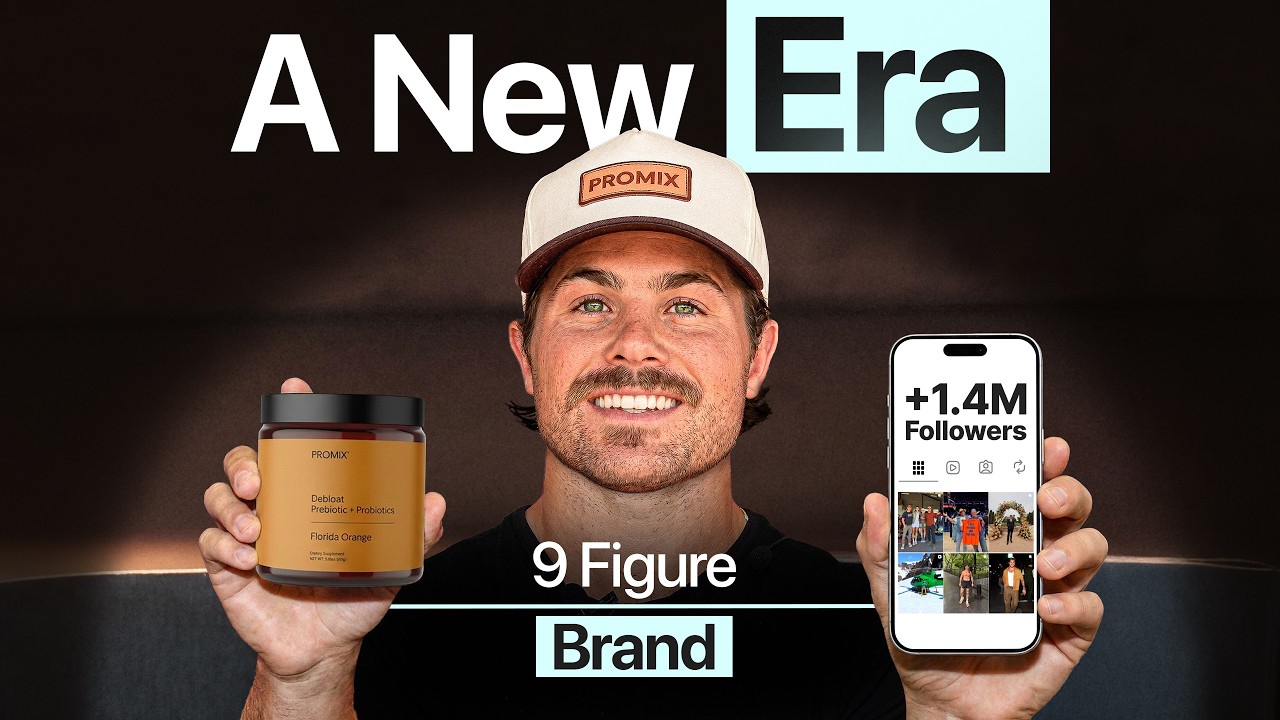
Description
How do you build a successful business? By playing to your strengths and knowing your weaknesses. Devon Levesque and Albert Matheny break down the exact decisions, mistakes and strategies behind building multiple successful brands in the wellness space. From their experience creating Promix, Monroe and Rythm Health, they share impactful insights on how to turn your idea into something profitable. If you're an entrepreneur wondering how they made it, this one's for you. Enjoy the episode! -------------------- Make ads that win (without getting lucky): https://motionapp.com Turn your customer support into a revenue engine: https://www.richpanel.com/ -------------------- 📱Follow Us On Social: -------------------- Instagram Alex https://www.instagram.com/alexgarcia_atx/ Brian: https://www.instagram.com/brian_blum/ Twitter www.twitter.com/@alexgarcia_atx www.twitter.com/@brian_blum1 -------------------- 🔥Want Free Game? Send us a picture of your Apple & Spotify reviews to podcast@marketingexamined.com and we'll make you a playbook in a future episode. -------------------- 🎥 If you’re a creator that wants to make $10k/mo https://hitmakers.biz -------------------- 📈Growth Playbooks, Directly To Your Inbox For growth playbooks, deep dives, and marketing case studies, get subscribed at https://www.marketingexamined.com -------------------- CHAPTERS: 00:00 - Intro 00:45 - The Beginning of the Promix Partnership 08:55 - Personal Brand & Marketing Strategy 15:30 - Turning Your Ideas Into a Business 19:02 - The Success Behind Rythm Health 23:05 - Are Creator Armies Worth It? 32:00 - How to Position Wellness Brands 38:00 - Step-by-Step Process to Create a Good Product 44:00 - The New Age of Credibility 48:30 - The Next Phase for Devon & Albert 55:10 - Relevant Selling Channels for Promix 59:20 - Monroe: Premium Wellness Experience 01:10:20 - Executing at a High Level 01:20:39 - Mistakes to Avoid When Creating a Business
Summary
Generated by gpt-5.6-solAt-a-Glance
- Verdict: Skim
- Core thesis: Founder-led brands can outperform traditional paid-first marketing by converting lived credibility, direct audience feedback, community, and performance-aligned creators into a portfolio of mutually reinforcing businesses.
- Why it matters: The discussion provides a practical model for turning an audience into market research, distribution, product storytelling, and eventually a holding company, while showing why community and creator economics should precede indiscriminate ad spend.
- Best use: Use it as a GTM and portfolio-design case study; focus on the community-first launch process, creator compensation model, channel sequencing, and complementary-founder operating structure rather than watching the full interview.
Executive Summary
Devin Levesque and Albert Matheny describe Promix as the product of complementary founder strengths rather than a conventional influencer launch: Matheny supplies food science, formulation, and operational depth, while Levesque supplies cultural awareness, storytelling, relationships, and distribution. Their original personal-training clients provided an existing customer base and a stream of repeated questions about protein, nutrition, and daily health routines, so the founders entered with customer knowledge rather than a speculative product thesis.
Their central GTM argument is to build community before buying reach. Promix reportedly used no paid advertising for its first three or four years, relying on events, boutique fitness relationships, product seeding, scarcity, word of mouth, and founders visibly living the behavior they promoted. Paid media was added after the brand had product-market signal and a vocabulary derived from customers. Levesque recommends formalizing this approach by recruiting 100 testers, running multiple private product iterations over roughly 120 days, and turning their repeated language into the product's marketing playbook.
The modern extension is a creator system based on performance rather than follower count. Creators receive product education, editing support, talking points, and potentially commission or equity; one creator with approximately 500 followers reportedly generated $150,000 in orders from one video and received $15,000 under a 10% commission model. The founders argue that creators increasingly want partnership and upside, not a one-time posting fee.
The broader portfolio—Promix supplements, Rhythm at-home diagnostics, and Monroe Earth physical wellness—illustrates a personal-brand holding company in which the same trust, audience, relationships, and health philosophy support several products and experiences. However, the interview is long, promotional, repetitive, and contains duplicated transcript sections. Revenue, growth, clinical, and attribution claims are founder-reported and not independently substantiated in the discussion.
Key Takeaways
- Claim: The founders believe a durable consumer brand should begin with a real community and observed customer demand, not a product followed by an attempt to manufacture an audience. | Evidence: Before Promix, both founders trained clients in New York City and repeatedly heard questions about protein, nutrition, drinks, and daily health routines. Levesque recommends that a new founder recruit 100 prospective users, give them free product through a hidden website, collect feedback for 60 days, and repeat two more iterations of roughly 30 days each. | Implication: Ken should treat owned communities and repeated user questions as pre-launch research infrastructure, capturing their exact language before committing significant capital to product development or paid acquisition. | Caveat: This approach is easiest for founders who already possess an audience, client base, or access to a concentrated community; acquiring the first 100 engaged testers may itself be the main challenge for an unknown founder.
- Claim: A founder's personal brand works best as a trust and market-signal asset rather than as a stream of explicit advertisements. | Evidence: Levesque's workout videos were reposted by Barstool, ESPN, and SportsCenter, taking him from roughly 5,000–7,000 followers to tens of thousands and generating direct messages asking for training and nutrition advice. He says Promix then operated for its first three or four years with zero paid ads, using events, runs, sauna sessions, seeding, scarcity, and word of mouth. | Implication: The defensible asset is not follower count by itself but a feedback loop in which content exposes problems, audience responses reveal demand, and the founder's demonstrated behavior makes the eventual solution credible. | Caveat: The transcript does not quantify the relative contribution of Levesque's audience, Amazon discovery, events, or other channels to revenue, so it cannot establish that founder-led organic distribution alone caused the reported growth.
- Claim: A differentiated product needs both a functional mechanism and a memorable origin story that makes an otherwise crowded category feel new. | Evidence: Promix's reported inflection point was its baobab-based gut-health product, combining natural prebiotics from baobab with three probiotic strains, turmeric, and fruit ingredients. Levesque discovered baobab after climbing Kilimanjaro and visiting his guide's village; the founders say the ingredient is wild-harvested through villages supporting approximately 2,500 jobs. They also report that a three-week triple-blind trial found digestive relief and comfort in 83% of participants. | Implication: For GTM or investment diligence, Ken should look for products where scientific differentiation, customer-perceptible benefit, and a narratively ownable sourcing or discovery story reinforce one another—and independently verify any clinical claims. | Caveat: The speakers provide no sample size, protocol, publication, statistical analysis, adverse-event data, or independent source for the 83% result. Several broad gut-health claims are presented conversationally and should not be treated as established medical conclusions.
- Claim: Creator marketing is shifting from flat-fee endorsements toward an operating system that combines education, creative support, performance compensation, and selective equity. | Evidence: The founders describe an evolution from free-product posts, to affiliate codes, to deeper creator partnerships. Their cited structure includes approximately 10% commission on attributable sales and a 5%–7% equity pool reserved for executives, celebrities, or unusually strong converters. A creator with about 500 followers allegedly produced $150,000 in orders from one video and received $15,000. | Implication: Creator selection should be based on conversion and content quality rather than reach alone, with compensation tied to measurable outcomes and equity reserved for partners who create durable enterprise value. | Caveat: The example is an exceptional outcome rather than evidence of typical creator performance, and the transcript does not explain attribution windows, media spend behind the video, returns, gross margin, or whether the sales were incremental.
- Claim: The personal-brand holding company works when portfolio businesses share an audience and worldview but are anchored by complementary operators and distinct customer value. | Evidence: Levesque contributes awareness, relationships, events, and cultural sensing; Matheny is a registered dietitian and food scientist focused on formulation and studies. Promix supplies products, Rhythm supplies at-home blood testing and an AI concierge, and Monroe Earth supplies a physical fitness and hospitality environment. The founders describe boutique gyms, events, and Monroe as physical manifestations of a predominantly digital brand. | Implication: Ken should evaluate founder-led portfolios as systems of shared trust and distribution, but require independent operating capability, clear boundaries, and value propositions that remain viable without constant founder promotion. | Caveat: Shared distribution can also create key-person and reputation concentration: the interview does not address succession, governance, conflicts between portfolio companies, or what happens if the founder's audience loses trust.
- Claim: Broad brand positioning can expand total addressable market, but it requires persona-specific messaging beneath a neutral master brand. | Evidence: Promix is described as approximately 50/50 male and female, with neutral visual positioning and roughly five personas. The founders contrast universal needs such as protein and gut health with running gels, which Levesque estimates are relevant to only about 3% of people. They nevertheless build different funnels for users such as a 25-year-old yoga participant dealing with acne. | Implication: The useful pattern is not generic mass-market messaging: maintain an inclusive platform at the brand level while deploying sharply segmented offers, creatives, and funnels at the campaign level. | Caveat: Matheny acknowledges that a tightly defined brand can communicate more sharply and grow faster because it knows exactly whom it is addressing; a broad platform cannot rely on one message and may initially lack the depth of a niche competitor.
- Claim: Channel expansion should follow demonstrated strength rather than serve as a rescue mechanism for slowing growth. | Evidence: After partnering with private-equity firm Payne Schwartz Partners, the founders say Promix retained autonomy and did not rush into mass retail. They argue retail is nearly a separate business with less messaging control and slower iteration. Their current opportunities remain DTC, Amazon, TikTok, boutique gyms, Barry's Bootcamp, Soho House, One Hotels, and hundreds of smaller fitness locations. | Implication: Ken should resist treating every available channel as mandatory; expansion should occur only when the organization has the economics, operational capability, and message consistency to support it without weakening the core engine. | Caveat: The interview offers no channel-level economics, concentration data, retail readiness metrics, or evidence that postponing mass retail is optimal beyond Promix's circumstances.
Detailed Brief
Product selection and credibility architecture
- Claims: The founders screen opportunities for the possibility of lasting 50–100 years rather than following short-lived wellness trends.; Their product-development process combines Levesque's cultural sensing with Matheny's review of scientific evidence and ingredient efficacy.; Credibility should match founder strengths and category requirements: some brands can lead with culture and identity, while others need clinical or professional authority.
- Evidence: Levesque says they pass on most of the thousands of annual pitches and may invest in only one company per year.; He names tallow lotion, cryotherapy, and colostrum as opportunities that might produce quick revenue but may not meet his durability standard.; Matheny identifies ingredient quality and efficacy as the recurring product criteria and says they avoid products that do not move the market forward.; They compare Lemme's celebrity- and branded-ingredient approach with Thorne's physician and retail credibility, positioning Promix as a younger, more culturally relevant version of Thorne.; Liposomal products are mentioned as an area of interest because they combine supporting research with a convenient form factor.
- Caveats: The 100-year screen is a philosophy, not a demonstrated forecasting method; avoiding trends can also mean entering valid emerging categories too late.; The discussion does not explain regulatory review, formulation timelines, manufacturing constraints, or formal portfolio hurdle rates.
- Implications: A differentiated founding team can pair cultural sensing with technical validation instead of expecting one founder to embody every form of credibility.; Investment diligence should distinguish a genuinely improved product from a familiar formula wrapped in a compelling founder story.
Founder operating model and organizational leverage
- Claims: The founders operate effectively through contrasting work styles and explicit role specialization rather than identical routines.; Delegation becomes valuable when founders stop performing tasks they can do adequately but that are not their highest-leverage contribution.; Calendar constraints are used to preserve strategic and personal capacity.
- Evidence: Levesque accepts external calls only between 11 a.m. and 3 p.m., defaults most calls to 15 minutes, and questions whether a call can be replaced by email or delegated.; Matheny reports waking around 4 a.m., working before his family gets up, returning to concentrated work from approximately 9 a.m. to 5 or 6 p.m., and reserving evenings for family.; Matheny says the company accelerated when he stepped away from tasks such as email copy and hired specialists.; Their role-design questions are: what does a person hate doing, what do they like doing, and what are they good at—with the goal of aligning the latter two.; They view founders editing minor social posts or emails as a sign that attention has drifted away from higher-value work.
- Caveats: Both founders acknowledge that their energy, appetite for pressure, and routines are personal rather than universally applicable.; A constantly full schedule can create motion without strategic progress; the interview celebrates busyness more than it measures decision quality.
- Implications: Complementary founder roles can function as an organizational design advantage when responsibilities are clear and supported by specialists.; Founder attention should be audited for tasks that signal boredom, control issues, or insufficient delegation.
Physical community as a trust and retention layer
- Claims: Monroe Earth is intended less as a maximalist longevity clinic and more as a simple, understandable wellness environment.; The quality of a membership business is defined primarily by the people and values inside it, not by exotic equipment or aggressive upsells.; Physical locations can deepen a digitally acquired customer's relationship with the broader brand ecosystem.
- Evidence: Monroe's described offer includes conventional weights, sauna, steam room, cold plunge, outdoor space, bone broth, steaks, and a place to sit rather than peptides or expensive concierge medicine.; The founders say thousands are on the waitlist and that approximately 500 personally connected guests attended the opening without a public social-media launch.; Membership is described as selected by values and quality of character rather than industry or income.; Matheny emphasizes honest materials such as real wood and metal as part of making the experience feel straightforward and authentic.
- Caveats: No membership price, capacity, unit economics, churn, or selection criteria are supplied, so the sustainability and scalability of the model cannot be assessed.; A founder-network-based launch may produce exclusivity and strong initial culture but can be difficult to reproduce across locations.
- Implications: Physical environments can serve as high-trust product discovery and retention channels, but their value should be measured across the full customer ecosystem rather than only on site-level revenue.; Community curation is an operating process that will need explicit systems before expansion beyond the founders' personal network.
Notable Concepts & Terms
- Personal brand holding company: A portfolio in which a founder's audience, credibility, relationships, and worldview provide shared distribution across several complementary businesses.
- Community before brand: The founders' launch principle that an engaged group and its observed needs should exist before building and advertising a product.
- Unique mechanism: A distinct explanation for why a product solves a familiar problem differently; baobab is positioned as the mechanism and story behind Promix's gut-health product.
- Marketing Bible: The collection of customer language, objections, motivations, and repeated product descriptors obtained through structured pre-launch testing.
- Creator army: A large, educated base of creators supported with product knowledge and editing, then compensated according to attributable performance rather than audience size alone.
- Marketing levers: The founders' framing of events, community, word of mouth, guerrilla marketing, email, SMS, paid ads, and creators as adjustable channels rather than a fixed paid-first plan.
- Data layer without an opinion: Rhythm's positioning as a provider of at-home biomarker results and AI-assisted interpretation without steering customers toward a specific diet, therapy, or supplement company.
- 100-year test: Levesque's heuristic for rejecting short-lived trends and favoring products or businesses that could remain relevant for decades.
Operator Notes / Why Ken Should Care
- Run a private 100-user design-partner cohort for the next relevant product or workflow, using three structured iterations and tagging repeated phrases, objections, and unexpected benefits.
- Create a creator-compensation ladder separating flat-fee production, attributable commission, recurring partnership, and equity; require margin-adjusted incrementality before escalating tiers.
- Instrument audience questions across social replies, DMs, sales calls, support tickets, and community events so recurring demand signals feed a searchable product-research repository.
- Establish a quarterly channel-lever review that explicitly decides which of community, events, partnerships, lifecycle messaging, paid acquisition, and creators should be increased, held, or reduced.
- For founder-led portfolio investments, diligence key-person dependency, reputation contagion, governance, and whether each company has an operator and distribution path independent of the founder.
- Independently verify Promix's clinical-trial design and Rhythm's regulatory, privacy, HIPAA, CLIA, lab-ownership, turnaround-time, and AI-recommendation claims before using either as an investment benchmark.
- Define objective retail-entry gates—repeat purchase, contribution margin, inventory reliability, retailer terms, packaging readiness, and internal ownership—rather than expanding to retail for topline optics.
- Audit executive calendars for low-leverage editing, status calls, and approvals that indicate missing delegation or unclear decision rights.
Source/Metadata
- Title: Why Founder Led Brands are Replacing Traditional Marketing w/ Devon Levesque
- Transcript words: 23145
- Duration seconds: 5197
- Timestamp note: No timestamps or chapters were provided. The transcript contains extensive duplicated passages, speaker-label inconsistencies, a repeated closing segment, and a long low-information laughter artifact.
Transcript
A new business model has been quietly exploding over the last three years, and I call it the personal brand holding company. It's when a large creator aligns their interests and their audience and launches a suite of businesses to serve the two. The reason this is exploding is because trust in mainstream institutions is at an all-time low. And so when you have a strong personal brand, people are naturally drawn to it because it feels more authentic. [SPEAKER_02] And in turn, they're going to choose the products and the experiences that that person is going to promote. One of the most prominent examples of this is Devin Levesque and Albert Matheny, the founders of Promix and Monroe Earth. Promix is a multi-nine-figure supplement brand, while Monroe Earth is a premium fitness experience. Now, their partnership is the blueprint for the personal holding company, but you won't believe how it got started. [SPEAKER_01] First thing I want to get into is how did you and Albert's partnership come together? From inception all the way to where it is now. [SPEAKER_02] For sure, Albert and I were both personal trainers in New York City. He had a gym, I had a gym. He was working on supplements. He ran track at University of Florida. And then for Team USA, I played college football and baseball. And so we both had this sports background. I went more of the training route, hospitality route after college. He went more mixing these ingredients together. And so back in 2020, end of 2019, we got linked up from our friend, Chris, our mutual friend. And Albert's amazing at putting products together and putting raw ingredients together and mixing formulas. Food scientist, registered dietitian. He has all the background to do that. And then I really enjoy marketing and bringing awareness to good products. [SPEAKER_02] People feeling good. A product that delivers an outcome. Yeah. [SPEAKER_02] I used to work in hospitality, in nightclubs and restaurants, and I just love when people come in and you put a smile on their face and they eat a really good dish or they have a great cocktail and they're just having a good time. And I think that's always made me feel really good. I love hosting dinners at my house. I just bring people together and our products make people feel good. You know what I mean? And that's the ultimate feeling for me is when people feel good off of something you're doing. What stage was the business at when you guys came together? Was it starting to take off? Very, very early. [SPEAKER_02] Sub-million in revenue, sub maybe probably half a million in revenue. It wasn't big. It was very small. Definitely a hobby. [SPEAKER_02] Right. Definitely not a real business. Not to what it's grown into today. [SPEAKER_01] No. [SPEAKER_01] Where, because you guys recently sold a chunk of the business to a private equity group. [SPEAKER_01] Correct. [SPEAKER_01] Scaling well into the mid. [SPEAKER_01] Yeah. [SPEAKER_01] I mean, I don't know if you're at nine figures yet, but you're getting. [SPEAKER_01] Oh yeah. Very much past nine figures. [SPEAKER_01] Yeah. [SPEAKER_01] So the business has exploded, particularly in the last few years. What do you feel was the major inflection point? Yeah. You know, we started off with grass fed whey protein. That was the first main ingredient, put it on Amazon. Right. [SPEAKER_01] It did really well. [SPEAKER_01] And it was the cleanest. Cleanest. It was one ingredient. And so that took off decently well. We tried a couple other products. We tried puff bars. We tried a chocolate bar. We tried pre-workout stuff like that. But really four years ago, five years ago, I think it was 2021. I went to Africa to climb Kilimanjaro. Nice. And after Kilimanjaro, I went back to this village that my Kilimanjaro guide was a part of. And I got them a goat as a thank you for helping me reach the summit. [SPEAKER_02] Yeah. [SPEAKER_02] And so that's what they requested. [SPEAKER_02] Yeah, it's great. And so I gave them a goat. And so I go and do this cookout with them in their village. [SPEAKER_01] Full third world country. Were you cooking the goat? Well, yeah. So we harvested the goat and ate the goat. And as we're doing this cookout, these kids were running up to me and they were trying to sell me this fruit. And it was this hard seed and I bought the seed and the guy I was with was like, "Oh, that's high in vitamin C, high in potassium." And so I opened the seed and I tried this powder, this white powder on the inside. And it didn't really taste like anything. I was so fascinated by it because everyone in the village was just talking about, "Oh, that's the baobab seed. It's so nutrient dense. We've been eating it for centuries in our whole lives. And it's good for gut health." And I've always wanted to do a gut health product. Gut health as a whole, I think is the most important health you need to focus on in the human body. Not just biceps, not just brain health, not just blood health. Gut health. I was so fascinated by it because everyone in the village was just talking about it. "Oh, that's the baobab seed. That's so nutrient dense. We've been eating it for centuries in our whole lives. And it's good for gut health." And I've always wanted to do a gut health product. Gut health as a whole, I think is the most important health you need to focus on in the human body. Not just biceps, not just brain health, not just blood health. Gut health. Everything's formed from the gut—diseases, mood, acne, everything starts in the gut. And so if you can have a good microbiome, that's a great base for someone to start off at if you're on a health journey. And so we took the baobab seed, brought it to Albert. He tested it out and yes, it has high amounts of vitamin C, potassium, about 65% fiber, vitamin B12, all these different vitamins are in this seed. And I'm like, we should do a gut health product. Now with the gut, you need pre and probiotics. And so we have natural prebiotics from the baobab seed. We have three strains of probiotics. We had turmeric in it. And then we have organic oranges, organic peaches, hibiscus, et cetera, that flavor it. And that was our hero product. That's D-Blow. That is a great inflection point for the business because it's an easy product. Everyone finds it easy to consume. You can take it every day. It tastes really good. You can feel it immediately. It literally flushes you out. You take it and you're probably going to have to go to the bathroom within the next 20 to 30 minutes. Over a 20 to 30 day period, you start to feel a little bit more clear. Your food digests better. Your stools are better. And so that was a great product to introduce people to ProMix. And that quickly became our hero skill. [SPEAKER_01] It's really interesting. We talk about something called the unique mechanism on this podcast a lot where people have tried probiotics. People have tried deep loading products for years. Right. There's a million of those, but your story about this gathering in Africa, that's a very unique discovery. You have a great story accompanying this ingredient. There's this non-Western medicine angle to it as well. It's like, why isn't this in our system? And so that builds intrigue for the product, builds trust. Right? [SPEAKER_02] It's like, oh, they've been using it for centuries. Of course. It's the oldest superfood on the planet. I mean, these baobab trees are a thousand, two thousand years old. Right. Literally. Yeah. [SPEAKER_02] And what's even more cool about the whole thing is it's wild harvested. And so the fruits sprout in January and they normally drop around April. Once they drop, that means the powder's dried up at the perfect amount on the inside for you to take it. [SPEAKER_02] And so they drop in say April, May, and then the locals—there's about 2,500 of them. So it's a straight village. There's many villages because it's all across South Africa. And so all these villages collect the seeds and then they sell them. And that's how we do it. It's all wild harvested. And so we just created 2,500 jobs with just these seeds. Were you guys first to market with this ingredient? [SPEAKER_02] No, I mean, there's definitely other companies that sell baobab. Right. But no one else does the baobab pre-probiotics, turmeric like for gut health specifically that I think tastes that good. And we just put it through a three-week triple-blind clinical trial. Which went amazing. 83% of people found digestive relief and comfort. Which is a great result. [SPEAKER_01] It's incredible. Yeah. No placebo. Full triple-blind, which is the highest of the highest. [SPEAKER_01] What were some of the things—can we back up a second? So you have a very large personal brand and you've accumulated that over time on Instagram and all these different channels. And were you making a lot of the initial ads from your personal brand for D-Blow, for ProMix? Like, how did that structure work initially? [SPEAKER_01] Yeah. The interplay of your personal brand and ProMix. Yeah, you know, we never really did ads for the first three or four years in the business. Wow. Zero ads. We didn't. That's not how we launched it. We took an all organic, more natural approach where I would do events at my farm or at the One Hotels or random cities around the world where we're doing runs or sauna sessions or whatever it is. Word of mouth is big. Just people talking about it, feeling it, et cetera. A little FOMO. I think when you look at a P and L sheet, word of mouth and FOMO are never listed. But I think they're the two strongest ways you can market. [SPEAKER_01] Absolutely. You know? Yeah. [SPEAKER_02] We took an all organic, more natural approach where I would do events at my farm or at one hotels or random cities around the world where we're doing runs or sauna sessions or whatever it is. [SPEAKER_02] Word of mouth is big. Just people talking about it, feeling it, et cetera. Little FOMO. I think we, FOMO, when you look at a P and L sheet, word of mouth and FOMO are never listed. But I think they're the two strongest ways you can market. [SPEAKER_02] Absolutely. [SPEAKER_02] FOMO meaning we just had limited runs because it's raw ingredients. So we don't have unlimited, which also builds that narrative about quality. Right. Like we're not going to compromise and scale this thing too much because we just can't, we would lose the integrity of the product. [SPEAKER_02] Correct. And so FOMO and word of mouth, we're our best friends from the beginning. And then it's hard though. It's hard. [SPEAKER_01] It's delayed gratification. [SPEAKER_02] It's hard to trust that, but you have to. I think when you're building a brand, I think there's too many people or founders that go in and say, okay, I'm going to launch a business and I think people are going to jump into this community versus starting a community first and then building a brand off of your community. [SPEAKER_02] Meaning start a run club, start a dinner club, start a book club, start bringing people together in person, 10, 15, 20, a hundred people. Start building that up and then see what would work with them. [SPEAKER_02] Right. And I think with Albert and I, we both had clients that we were personal training. Right. And everyone was asking, what do I take? What should I drink every morning? What protein should I have? What cup should I use? What should I be eating? What's my nutrition? And so we had this base. I had hundreds of clients in New York City. And we're like, let's give them a product. And that's why ProMix worked from the beginning. It wasn't because we did it opposite. We already had the clientele base. We were training 10 hours a day. [SPEAKER_01] Well, I mean, you launched with the customer. [SPEAKER_01] Right. You had all of your customers right there. [SPEAKER_02] Exactly. And not necessarily saying they were immediately buying from you, but you knew, okay, we knew what they wanted. This is what they want. [SPEAKER_02] We had the market research sitting right in front of us. [SPEAKER_01] Yeah. We weren't guessing. We're like, this is what they want. This is what we like. Let's mesh those. From my personal brand side, you know, in college, we didn't even know what social media was. I remember a girl came up to me in college and she's like, Hey, look at this new app. It was Instagram. I was like, oh cool, what is it? She's like, you can just share photos. I'm like, cool. And I remember I was in art class at the time and you were in art class. I was in art class. Were you like, what were you doing? No, it was an elective or whatever. [SPEAKER_01] Yeah. I was taking it for college. And I remember we were painting something and I painted my hand green and I put it on a brick wall and I took a photo and I posted it. That's my first Instagram. [SPEAKER_01] That's your first gram? Yeah. That was the first gram. I'm like, oh, you can share photos. Here you go. I remember she was like, it's for artists. It's for musicians. Creatives. Instagram's for creative people. I'm like, all right, let me get artsy real quick. [SPEAKER_01] Right. And so I did that. Slapped the green hand. And then I didn't really think about Instagram. When I was running nightclubs and restaurants, it wasn't something I thought about. [SPEAKER_01] So was it not a part of you building your initial businesses? You were doing hospitality and personal training. Instagram wasn't a place for you sourcing clients. Not really. No. I mean, I would post like our flyers or things we were doing at the restaurant or food photos, but I never really thought of it until my friend came up to me at a bar one day and was like, Hey, you do crazy workouts in the gym. You should post these workouts. And I'm like, these are just my normal workouts. No one's going to care. What do you mean? He's like, Instagram just launched videos. So you should post these videos. And I might have had like 5, 6, 7,000 followers at that time, just from being in the hospitality world. People knew me. [SPEAKER_00] Yeah. And I remember I posted one and it did okay. And then I posted another one and Barstool reposted it. And then ESPN reposted it. And then SportsCenter reposted it. And overnight it was like 20, 30, 40, 50,000 followers quick. And I was like, Whoa, that's crazy. [SPEAKER_02] Yeah. And so you should post these videos. And I might've had five, six, 7,000 followers at that time, just from being in the hospitality world. People knew me, whatever. [SPEAKER_00] Yeah. And I remember I posted one and it did okay. And then I posted another one and Barstool reposted it. And then ESPN reposted it. And then SportsCenter reposted it. And overnight it was 20, 30, 40, 50,000 followers quick. And I was thinking, that's crazy. Yeah. But then I had a real business going on. I was training people. Right. And we were doing meal preps. And so I saw the impact from when I posted and all the DMs started to come in. I'm like, can you train me? Wait, what food should I eat? Wait, you're in really good shape. What should I do for a workout? I'm like, oh my God, there's a direct correlation of social media to a business. That's the only reason I have social. Because it is an asset for the business. It's insane leverage. [SPEAKER_01] I mean, you're getting all of this market signal inbound, right? [SPEAKER_01] Where people are telling you exactly what to build, exactly what their problems are, what they're struggling with when they experienced that problem. Exactly right. [SPEAKER_01] Cause I think that's where a lot of entrepreneurs don't take the next step is they understand that people are having a problem. [SPEAKER_01] But what's that unique mechanism? [SPEAKER_01] Because they've tried to solve bloating, you know? [SPEAKER_01] Someone has tried to solve it before, but they never tried to bow about it. [SPEAKER_01] Right. [SPEAKER_01] And a base product. [SPEAKER_01] And so now it's you have a new solution for them. Yeah. It's really hard to get someone to change their habits. You wake up, whatever your morning routine is, you go to the bathroom, you brush your teeth, you have your coffee, whatever. Switching someone's habits is one of the hardest things to do. And I think the way we were able to switch people's habits is showing, not telling, you know? And so Albert and I live this, you know, both him and I put our health first. We eat real whole foods. We work out pretty much daily, sonic cold plunged it. We live this lifestyle. So we're showing it versus just telling you to do it. Yeah. We're not trying to snake oil you in. It's like, look, we're doing this. It works for us. [SPEAKER_02] If you want to do it, cool. And I think we've led by example and that's what's helped us quite a bit. [SPEAKER_01] I mean, I think that's a really cool thing when you examine what you guys are doing is you've basically turned your personal brands and a lot of these things that you stand for that you do in your real life into almost a wellness empire, a holding company, if you will. Right? There are so many different things. There's Pro Mix. There's Monroe Earth, which I mean, we haven't talked to the audience about yet. There's Rhythm. These are things that, as you said, you had those hundred personal training high-end clients. Every single one of them would want one of your several different businesses. Right. And your content has built this world overall. Would you say that was a super intentional thing with the way that you were creating content over time? Or was it just you living out your passions and doing the things you would have already been doing? [SPEAKER_02] No, it was not planned. [SPEAKER_02] I always put me living and my adventures and my fun first. That's my top priority, my family, my friends, my adventures. That's first and foremost. And I'm able to when I do that and have real connections with people and physically be in the gym and do these meetings and travel and I'm in the trenches. I'm not sitting in a boardroom. I'm not on a computer. [SPEAKER_02] I'm physically there seeing how humans are interacting. I think human psychology is fascinating. People watching, but on 10x is what I do. [SPEAKER_02] I really just watch how consumers work and how they look at things and what they're thinking about. [SPEAKER_02] Is this a trend or is this just something that's going to be quick? Will this product work? Will it not? How are they buying the product? How are they even seeing it? Who are they seeing it from? All these things are constantly going through my brain of what's the human psychology when you're thinking about health? [SPEAKER_01] Yeah. [SPEAKER_02] And there are thousands of companies that pitch Albert and I annually. I pick maybe one to invest in, max. Or him and I will start something. Right. It's a lot of sitting back and watching and not being the first to market. You know, let someone else be first to market. See if it even works. See if it's just a trend, a fad. [SPEAKER_02] Is there studies behind it? [SPEAKER_02] Is this something, is it too early? Is it too late? I think how I vet, and I'll speak for me because Al is not here, is: Is this something that will last for a hundred years? That's what I think about when starting, investing in businesses. If it's not, then I probably won't get involved. I'm not looking for a quick win. See if it even works. See if it's just a trend, a fad. Is there studies behind it? Is it too early? Is it too late? I think how I vet, and I'll speak for me because Al is not here, but is this something that will last for a hundred years is what I think about when doing companies, when starting, investing in businesses. If it's not, then I probably won't get involved. I'm not looking for a quick win. [SPEAKER_02] I'm looking for a legacy. And that's the truth. [SPEAKER_02] Could I launch a Tala lotion right now and probably make 10 million bucks? [SPEAKER_02] Probably. [SPEAKER_02] Could I pop on the cryotherapy trend? Probably. Could I jump on this whole colostrum trend? Probably. [SPEAKER_02] Do I think these things are going to be around for another hundred years? [SPEAKER_02] Probably not. [SPEAKER_02] I think they're quick five year wins that people are trying to do, a quick money grab, which is whatever, do what you need to do. [SPEAKER_02] But I think when I look at businesses, I want to be a long lasting, 50 to 100 year biz. One thing I think across, I'm personally a huge believer in Rhythm. When I saw that business, I was like, that just is going to explode. At home diagnostic, painless blood work. And then obviously there's going to be pride. [SPEAKER_01] You get your blood work done and then you can go buy Promix. [SPEAKER_01] You could 100% or buy whatever you need. Right. And I think the thing at Rhythm, I have one partner, Robbie. He started the biz. [SPEAKER_01] Did he come to you as an invest? He wanted me to be his co-founder. He had the whole backend infrastructure set up. HIPAA compliant, CLIA certified, the whole logistics. We own the lab, everything from A to Z. He just needed awareness, growth, a microphone. And so he came to me to be the co-founder. How's that business going right now? Exploded. Rocket ship. It's crazy. [SPEAKER_01] Yeah. It's the fastest growing business I've ever been a part of. [SPEAKER_02] I've ever seen. [SPEAKER_02] I was an early investor in Olipop. [SPEAKER_02] This is growing faster. [SPEAKER_02] This is insanely fast. It's insane. [SPEAKER_02] How many people are using Rhythm and why do you think that is? There's many reasons. I think when I was a kid and I thought of the future, I thought of flying cars. [SPEAKER_02] Now I think of the future of knowing every little tiny thing that's happening inside your body and being able to live to 150. [SPEAKER_02] I think we're living in it right now. And I think this is bridging that gap. [SPEAKER_02] Whoop is bridging that gap. Oura ring is bridging that gap. These personalized health devices are bridging that gap to people understanding what's going on inside their body, making adjustments and taking what they need to take. Rhythm, we don't have an opinion on health. If you're doing keto, if you're doing paleo, if you're taking peptides, if you're taking vitamins, we don't care. We just want to give you the data of what's happening inside your body in the most simple, easiest possible way. And that's why you put it in your arm, you click a button, fill up a vial, you send it into our lab. You get the results in 24 hours. It's quick. It's easy. There's no needle in your arm. It's so simple. I think the reason it's exploded is because people are competitive with themselves. They want to know, okay, if my testosterone is at 500, how can I get it up to 900 by next month? I got it up to 800. How can I get it up a little bit more? [SPEAKER_01] Are you guys layering in the recommendations? [SPEAKER_01] Yeah. [SPEAKER_01] There's AI. [SPEAKER_01] There is an AI concierge. Nice. But we don't tell them what companies to buy. [SPEAKER_01] I thought that was really interesting. [SPEAKER_01] You said that we don't have an opinion. [SPEAKER_01] We're just the data layer. Yeah. We're just going to give you the facts. When you go into Quest or LabCorp, they're not trying to upsell you peptides when you walk in or they're just like, here's your blood. These are the results. The problem is, yeah. [SPEAKER_02] Correct. Quest peptides coming soon. [SPEAKER_02] Yeah, definitely. [SPEAKER_02] I wouldn't be surprised. [SPEAKER_02] Yeah. [SPEAKER_02] But you go in and you trust the data. The problem is the customer experience at those places are brutal. It's terrible. [SPEAKER_01] It's the most sterile thing of all time. [SPEAKER_01] Yeah. [SPEAKER_01] You feel like you're in trouble. [SPEAKER_01] Just for being in there. Is this a drug test or am I trying to do something? Right. And so they're taking six vials of blood and it might take an hour. I wouldn't be surprised. Yeah. But you go in and you trust the data. The problem is the customer experience at those places are brutal. Oh, it's terrible. [SPEAKER_01] It's the most sterile thing of all time. [SPEAKER_01] Yeah. [SPEAKER_01] You feel like you're in trouble. [SPEAKER_01] Just for being in there. [SPEAKER_01] Yeah. Is this a drug test or am I trying to? [SPEAKER_02] Right. [SPEAKER_02] And so they're taking six vials of blood and it might take an hour. [SPEAKER_01] You're passing out. [SPEAKER_01] Yeah. You're taking time to go there, come back. So we just simplified that process for people. And so I think the simplified process, people are competitive with themselves. [SPEAKER_01] Is that business growing purely organic right now? [SPEAKER_01] Are you layering in paid and influencer and stuff like that? Yeah. We have paid. Quite a bit of paid. Full entire marketing stack. [SPEAKER_01] Hundreds of thousands of creators on. Nice. That wanted to come up. I bet the inbound interest was. Yeah. Talk about, I mean, I'd love to hear more about how Pro Mix has a great ambassador program. Yeah. It sounds like Rhythm is building that. [SPEAKER_01] How do you go about building a creator army promoting your products? [SPEAKER_01] Yeah. [SPEAKER_02] Ten years ago, the way that you brought on influencers was you'd send them product and they'd just post. [SPEAKER_02] Right. [SPEAKER_02] They didn't really know their worth. [SPEAKER_02] Five years ago, you give them a code, they get commission. [SPEAKER_02] They have to post their channel. Now you can somewhat help assist creators and how their content is going out, whether you're helping with the editing, whether you're helping with giving them talking points and educating them on what the product is. And so they get more in depth with you at the company and then giving sweat equity, no pun intended. [SPEAKER_00] For real. Yeah. I think the evolution of creators has gone much deeper than just posting to their channel. It's now these creators want to be partners. They want to be a part of something. They want to grow something. They don't want. [SPEAKER_01] When they're sharing their trust. Yeah. [SPEAKER_02] They don't. [SPEAKER_01] Yeah. [SPEAKER_01] Correct. [SPEAKER_01] Yeah. They don't want to just post and get a bunch of likes and views and whatever. They want to help build. So we give everyone that opportunity. The better that they do, the better we do with their content, the better they do. [SPEAKER_01] I think a lot of our listeners would actually be super curious about some of those deal structures. Everyone's different. Yeah. Everyone's different. [SPEAKER_01] Is that based on the tier of influencer? [SPEAKER_00] Yeah. [SPEAKER_01] Yeah. So if you're signing an A list or B list, or you might be tapping into your equity pool. Normally it's five to seven percent you have on the side for C suite execs or celebs you're bringing onto the brand or high converting influencers. And so there might be a little sweat equity deal there. Then right now you can get ten percent commission on whatever your ad spends. So if a creator. And you guys are using Tribe for that, right? Tribe. Yeah. [SPEAKER_02] So if you're submitting content and you're a user of our product and we approve that content and it goes out and it generates a hundred thousand dollars of sales, you're making ten thousand dollars. [SPEAKER_02] It's the craziest opportunity that's ever existed. It's unbelievable. [SPEAKER_02] We have creators that have 500 followers. [SPEAKER_02] We just paid someone last month. [SPEAKER_02] She created $150,000 worth of orders with her one video. [SPEAKER_02] She has 500 followers, literally 500 followers. [SPEAKER_02] And we just gave her fifteen grand. [SPEAKER_02] It's insane. [SPEAKER_02] That's life changing for people. [SPEAKER_02] So you don't have to be an A lister or a macro influencer or whatever. These are just regular people that are using our product that want to talk about it. And we're going to talk about it. And for the creators, that video can keep going. [SPEAKER_01] Oh yeah, for sure. [SPEAKER_01] It might run it up to 300K next month. [SPEAKER_01] It's an ad. [SPEAKER_01] So it's this unbelievable moment in time. [SPEAKER_01] Correct. And we want to support the creators in the edits and making sure they have the product and educating them. We have calls with the creators all the time. The lab industry is confusing. Right. Right. So we have to educate. They're interested. It's ongoing education on what biomarkers do we have? How does the process work? What is this even doing? What do you do if your B12 is low? [SPEAKER_02] What do you do if your testosterone is high and you're a female? [SPEAKER_02] What do you do in these cases? [SPEAKER_02] It's constant educating. [SPEAKER_02] I think that's probably one of the more fun parts of the business. Your brain is just expanding into understanding what personalized health really means. [SPEAKER_02] So it's educating the creators, but the creators that we bring on have unlimited upside. [SPEAKER_02] Yeah. [SPEAKER_02] How does the process work? [SPEAKER_02] What is this even doing? [SPEAKER_02] What do you do if your B12 is low? [SPEAKER_02] What do you do if your testosterone is high and you're a female? [SPEAKER_02] What do you do in these cases? [SPEAKER_02] And so it's constant educating. [SPEAKER_02] And I think that's probably one of the more fun parts of the business. Your brain is just expanding into understanding what personalized health really means. [SPEAKER_02] And so it's just educating the creators, but the creators that we bring on have unlimited upside. [SPEAKER_02] Yeah. [SPEAKER_02] The more, of course, the better the content they create, the more content, the more that they're invested into the company. Yeah. I mean, it just gives them the proper incentive to try and produce that banger. [SPEAKER_01] Correct. [SPEAKER_01] Right. [SPEAKER_01] Because if they don't have that and you're like, "Hey, I'll give you $300 flat fee for your video." [SPEAKER_01] Right. [SPEAKER_01] Okay, cool. [SPEAKER_01] I'll just submit it to you as soon as I can. [SPEAKER_01] We're done. [SPEAKER_01] Right. [SPEAKER_01] And that worked two years ago. [SPEAKER_01] Yeah. [SPEAKER_01] Three years ago. You're saying, "Oh, I'll give you a thousand bucks for a video." Yeah. Right. You're a user. Cool. You want to make a video. Great. Here's a thousand bucks. Now there's unlimited upside. And by the way, it's probably going to change in a couple of years. You have to, I think the key to marketing that's worked for ProMix and Rhythm is staying relevant and staying ahead of what's happening on Meta, on Google, on within AI, ChatGPT, Cloud. Ads, marketing is our billboards working as email marketing working as SMS. When I look at marketing as a whole, there are seven main marketing avenues: email marketing, text, guerrilla marketing, word of mouth, ads that breaks out into multiple different avenues, events. [SPEAKER_02] There's multiple. It's understanding what levers to pull at what time based on what's happening in culture, what's happening in Meta updates, what's happening in, is the world getting saturated with all these brands? Is there trends going on? And so you just have to stay relevant on what levers to go up and down. And I think we did that really well with ProMix. We literally did not do any ads at the beginning. Zero. It was all organic. [SPEAKER_02] The event lever was up. The word of mouth lever was up. The community lever was up. We just started emails. [SPEAKER_01] So that lever was up. [SPEAKER_01] It's interesting you say that because I think a lot of people, especially in the last decade, rush to paid as the first lever. [SPEAKER_01] Yeah. [SPEAKER_01] Because it's the quickest dopamine hits, quickest ROAS that you can get out of anything. [SPEAKER_01] Yeah. [SPEAKER_01] You made a good point. [SPEAKER_01] You're not not advertising just because you're not spending on paid. [SPEAKER_01] Right. [SPEAKER_01] There's all these other things that you can do at the beginning. [SPEAKER_01] I agree. [SPEAKER_01] Yeah. [SPEAKER_01] And which build trust long term and actually probably increase your LTV to those customers. [SPEAKER_01] Yeah. [SPEAKER_01] Right. [SPEAKER_01] Because retention is the name of the game in the supplement space, really anything. [SPEAKER_01] Yeah. [SPEAKER_01] And if you're going to build trust upfront, those guerrilla marketing, those community building initiatives, that's a lot more trustworthy stuff to invest in. [SPEAKER_01] And then those customers are going to stick around with you a much longer time. All right. [SPEAKER_01] So over the last two years of building Nibble, shipping nearly 8,000 UGC ads and getting performance data on every single one of them, it became super clear. [SPEAKER_01] There are two types of brands, those that understand creative volume and those that don't. [SPEAKER_01] The core difference was what they focused on. [SPEAKER_01] Brands that focused on volume plus hit rate were never complaining that Meta changed the algorithm. [SPEAKER_01] Their stuff just worked. [SPEAKER_01] And anytime we did work with one of those savvy brands, it was always on the same platform: Motion. [SPEAKER_01] Motion is by far the best tool to optimize your creative pipeline. [SPEAKER_01] Provide structure, visibility, and insights that your creative team needs to make better decisions. [SPEAKER_01] I like to think of it as what Meta would actually show you if they cared about your success. All the key metrics like three second stop rate, winning angles, formats, competitor research, it's all built into their platform so you can make quicker and better decisions. [SPEAKER_00] They even just launched our new AI agent Runneth, which functions as a 24 seven creative strategist providing recommendations to your ad account. Y'all make sure to go check them out at motionapp.com. All right, let's get back to the episode. [SPEAKER_02] If I started a new company right now, a random company, if you and I are like, "All right, let's start a t-shirt company." [SPEAKER_02] I'm going to post on social or send an email out and say, "I need a hundred people who want to be a part of my new business. I'd love feedback. You're going to get free merch or free product. I just want you to test it out for 60 days before I even launch it." [SPEAKER_02] Right. [SPEAKER_02] I'd have a hidden website. I'd help them go through the process, order the stuff. [SPEAKER_02] They get all free stuff. [SPEAKER_02] They try it out and then I'd get their feedback. [SPEAKER_02] Right. [SPEAKER_02] And then I'd do another iteration and I'd do it again for another 30 days with the same hundred people. [SPEAKER_02] And then I'd probably do it one more time. And at that point now, I understand what the product is. I understand what people are saying, why they were enticed by it. Now I have it's a marketing Bible. Yeah. [SPEAKER_02] I'd have a hidden website. [SPEAKER_02] I'd help them go through the process, order the stuff. They get all free stuff. They try it out and then they, I'd get their feedback. Right. And then I'd do another iteration and I'd do it again for another 30 days with the same hundred people. And then I'd probably do it one more time. And at that point, I understand what the product is. I understand what people are saying, why they were enticed by it. Now I have it's like a marketing Bible. Yeah. Yeah. [SPEAKER_02] Now I know what type of marketing material we need, why people are coming into the product, what people are saying about it. If I'm doing a t-shirt company and they're like, man, I love the shirt. It's a cool looking shirt, but damn, it's so soft. It's such a soft shirt. Boom. That there's the marketing, there's the ads, there's the emails. It's the world's softest shirt, right? Now I'm leaning into soft because a hundred people, 80 of those people just said soft, soft, soft, soft, soft, soft. And so I think it doesn't have to be zero to a million. It needs to be zero to like 1% and understanding who your audience is and what your product is. And then you can spend effectively and efficiently versus just going to spend a million bucks on ads and you don't even know if they're going to work or not. [SPEAKER_01] Yeah. [SPEAKER_01] So one thing that you guys have done really well across all these brands, Monroe, Promix, Rhythm is you have a gender neutral positioning. [SPEAKER_01] And I'm super curious, is that intentional? [SPEAKER_01] Did you want to be scientific, trustworthy, or how did you go about positioning these brands from the get go? Yeah. Always gender neutral. Always. I never wanted to launch just a male focused brand or just a female focused brand. Same with the gym. I enjoy having females and males in the sauna and in the steam. [SPEAKER_01] More so that I think a lot of people will say you want to go hyper niche these days. [SPEAKER_01] Everyone's kind of like, oh, you want to lock in on a target customer. I want to sell to moms in the Midwest. [SPEAKER_01] Right. [SPEAKER_01] Or I want to sell to young fathers or something like that. [SPEAKER_01] But y'all have purposefully gone the other direction. Yeah. I think sex sells. [SPEAKER_01] Mm-hmm. It's the most common marketing term. Of course. Sex sells. Sex doesn't happen without a male and a female. [SPEAKER_01] Right. You need to approach it from both sides. And especially in health and wellness. [SPEAKER_02] Equinox does an amazing job with it. [SPEAKER_02] Within ProMix, we don't want people to just think this is a male focused brand or female. [SPEAKER_02] No, this is everyone can take this. [SPEAKER_02] Your whole family can take it. [SPEAKER_02] Your friends, your mom, your dad, everyone. Neutral colors. It also, from a marketing or copy perspective, gives you two different alleyways to go down. [SPEAKER_02] D-bloat impacts women maybe a little differently than men. [SPEAKER_02] They use it in different ways. Are you creating different funnels for different personas in that way? [SPEAKER_02] For sure. [SPEAKER_02] Yeah. [SPEAKER_02] There's probably five personas that we have with ProMix, probably five personas we have with Rhythm. You target out each one. The female that lives in Kansas City, that's 25 that goes to yoga each morning. She makes a hundred thousand a year. [SPEAKER_02] She's maybe dealing with a little acne and boom, that's a real persona. [SPEAKER_02] From a male and female perspective and why we've kept it neutral, I think that's just our vibe. [SPEAKER_02] I've never wanted just a male focused brand or just a female focused brand. [SPEAKER_02] There's 8 billion people in the world. Why would you cut your audience in half? [SPEAKER_01] Totally. That doesn't make sense to me. [SPEAKER_01] Right. I get getting niche, but it's the same thing with people asking why haven't you launched ProMix running gels? It's just a very small addressable market. [SPEAKER_02] Obviously if you're a runner, you see gels everywhere, but that's a super small market. [SPEAKER_02] Right. [SPEAKER_02] I bet 3% of people actually take gels. [SPEAKER_02] How many people take protein? [SPEAKER_02] How many people have a gut and focus on gut health? Probably 97% of people. [SPEAKER_01] Right. You have to understand the addressable market. Male and female, you immediately open the addressable market and you make it approachable, not too feminine, not too masculine. [SPEAKER_02] I'd say both brands, Rhythm's a little bit more male heavy right now, but ProMix is 50, 50. Do you think that's an indication of the broader blood testing market? [SPEAKER_01] No. [SPEAKER_01] Or do you think it's more of Rhythm's positioning? No. [SPEAKER_02] It's when we first launched, I brought more males onto the business, from an ads perspective. [SPEAKER_02] So you have to understand the addressable market, male and female. You just immediately open the addressable market and you make it approachable, not too feminine, not too masculine. I'd say both brands rhythms a little bit more male heavy right now, but ProMix is 50/50. [SPEAKER_01] Do you think that's an indication of the broader blood testing market? Or do you think it's more of the rhythms positioning? It's when we first launched, I brought more males onto the biz from an ads perspective. And we did quite a bit of Iron Man's at the beginning. We sponsored Iron Man. And so that was just a more male heavy audience. And so naturally it was more male, but women's is now skewing quite up. [SPEAKER_01] And then, so with Monroe, that's hospitality. It's your bread and butter. And we have the other guy. Albert just got here. [SPEAKER_01] Behind Monroe earth right here. How you doing? Welcome. Welcome. A little bit of traffic today in New York city. [SPEAKER_00] It was nice. Six hour travel. Al, let's talk on Monroe. We were talking on why we're so gender neutral. [SPEAKER_00] I don't even see gender. You're right. I said sex sells. And you can't have sex without male and female really. I just think of Mars men, right? They're hyper masculine. And then you contrast that with some other ones that'll be hyper feminine, like a happy mammoth. So I was more so saying, I think what's cool about you guys is you went scientific trust, gender neutral positioning, and that's allowed you to win on, well, we're just the cleanest and we have this unique mechanism. Right? I was curious if that was something you did intentionally or just materialized over time. [SPEAKER_00] I'm sure Devin probably said some variation of this, but when we think about the products we want to make, the places we want to create, and how it all feeds together, there's not a specific thing. We're pretty open to everybody. That's been our point of view. The stuff that we work on represents how him and I are in general. So we're just happy with everyone. And we don't feel like it needs to be really specific. It just needs to be to our standards of quality and benefit to the world and all that. So I think that inherently just doesn't have a specific niche in it and we think it can reach a lot of people with whatever we're working on. And that's across anything that we do, I think. And is that your product ideation framework? Like how many total people, size of the problem? [SPEAKER_00] 100%. The addressable market. Yeah. And that's not even from a business side. It's what we like to work on. I think you've come up with a great product suite. And I think our audience can really benefit from hearing what is your step-by-step process for arriving at what's a good product to sell? [SPEAKER_00] I'll touch on that one thing. I'm friendly and I think Ben from Marsman is great. I know his co-founder is a killer. I think a lot of times there's not a harder or easier, but if you have a more defined product, it's easier to say, this is what we do. And it's very specific and you know who you're marketing to. I think they have a very clear customer focus. And I think that can lead to extremely fast growth, which they've had. A lot of times with ProMix and other projects, it's a platform and we know that we can build upon that. And so there's this big base, but because it appeals to a wide range of people, you can't just have one message necessarily, or it doesn't cut as deep. With ProMix, it's no artificial anything. That represents a lot of aspects of the company, but it's not like, Hey, this is Marsman, where it's very targeted and you know exactly who you're talking to. When we think about products, a big part of it is ingredient quality and efficacy. Those are the two words that always pop into my head. Devon's told the story with the Baobab and him finding that as an ingredient and then building a product around that, which is cool. One goat donation. And all of a sudden you got a hundred billion dollar business. Go find a goat. [SPEAKER_00] That's the base framework: how can we never want to make something that already exists in the market that we don't think moves the market forward and helps people so that it's easy for us. I'm not good at telling you that you need something if you don't really need it or don't think it's actually the best. And so for us, we don't feel good about a product unless we know that it's the best version of what you can get from that product. [SPEAKER_01] Go find a goat. [SPEAKER_01] Yeah. [SPEAKER_00] That's the base framework—how can we never make something that already exists in the market that we don't think moves the market forward and helps people so that it's easy for us. We're not good at, I have an inability to tell you that you need something if you don't really need it or don't think it's actually the best. And so for us, we don't feel good about a product unless we know that it's the best version of what you can get from that product. [SPEAKER_01] And as far as sourcing the problems, because I think one thing you said earlier was you guys both had this data set, almost real world clientele. You know, my gut's messed up. I need something to fix it. Okay, well we have the right product. Do you have any other ways of researching trending problems right now? Because you guys have a lot of hero SKUs right now, but I'm sure the next tranche of growth could come from getting into, I don't know, stretches or calm or something like that. How are you looking at that roadmap? [SPEAKER_00] Yeah, I think Dev and I have a really good dynamic and we look at different things and they often come to the same answer from different points of view. Devon's got his pulse on a lot of stuff and he's really aware of that. And I kind of look at science things. I see what other people are interested in. People ask me health questions all the time. So I think both of us get early signals about people asking about things more. We kind of get general health questions all the time. [SPEAKER_01] Is there anything you all are excited about right now about tackling? [SPEAKER_00] I think one of them is a new category for us, which is liposomal, because we've seen that as an interest for people and that's rooted in customers not necessarily choosing things based on what's best for them. It's often just form factor and ease. We live in America, and convenience is number one. People like things that taste good. I think greens is a great example of a product that tastes good. It's a snack first, that's how people position it. Fiber in a gummy bear. [SPEAKER_01] Yeah. 1.2 billion. [SPEAKER_00] Yeah. I was getting—I was just going to say because you're asking the pulse of how we, I think I'm pretty saturated in culture and I'm seeing, I use the analogy earlier. I'm in the trenches. I'm showing up to these events. I'm meeting new people. I'm showing up to the private equity get-togethers with 20 billionaires. And they're all talking about what's next, what they want to buy, what they're doing. And then I'm also at Diplo's event or some other influencer event or a lot of taste makers. But then I'm just at a coffee shop and I'm overhearing some things. I'm just in it. I'm hearing it. And so I have that real life in the trenches pulse. And then he has a scientific pulse. And so when you combine those two things and then our backgrounds—we both play college sports, we both come from a very healthy background. We both believe in getting sunshine, eating whole foods first and foremost, moving every day, taking care of your body, taking care of your skin, a very holistic approach to health. And so we have the same approach to health, but I'm seeing the culture side—what people are talking about. He's seeing the scientific side—he's always reading real studies on what works and what doesn't. So I could call him and say, what do you think of this whole colostrum thing? Should we do a colostrum? And he might say, I think it's just a fad. I don't know if that's scalable. I don't know if this is actually impacting X, Y, Z. I say we put that on pause. But what I am seeing, Dev, is the liposomal—there's real studies behind this. This can actually impact people. Dev, what do you like? Go do your thing for a couple of weeks and see what you find as well. And then we come back together and we're like, okay, cool. Let's do these three products in this space from what we, and it's literally just, we're not Harvard grads. We're not going back to the boardroom and I don't think we've ever written on it. [SPEAKER_01] But weirdly enough, I think the fact that you're not necessarily Harvard grads does actually work better in today's day and age. I think your credibility stack is more so lived experience. Instead of, you know, I was in a lab for seven years, so trust me. It's like, no, we're two bros who are in crazy health. And this is exactly what we do to get there. Yeah. And weirdly enough, I do think that's the new age credibility. I think that's really where it comes from—lived experience. Did you guys ever, I'm sure there's been a lot—you just ran a clinical trial, for example. Yeah. And I'm curious, if you're a brand starting out, would you recommend they go more your credibility route? It's like, I'm this person, I've lived this experience. Or should they launch with more scientific proof, maybe more doctors? I think it depends on the product that they're launching and what category you're launching in. [SPEAKER_01] Yeah. [SPEAKER_01] And weirdly enough, I do think that's the new age credibility. [SPEAKER_01] I think that's really where it comes from is lived experience. [SPEAKER_01] Did you guys ever, I'm sure there's been a lot, like you just ran a clinical trial for example. [SPEAKER_01] Yeah. [SPEAKER_01] And I'm curious, if you're a brand starting out, would you recommend they go more your credibility route? Or it's like, I'm this person, I've lived this experience. [SPEAKER_01] Or should they launch with maybe more scientific proof, maybe more doctors? I think it depends on the product that they're launching, you know, and what category you're launching in. Say it's like, I think, you know, Lemmy has obviously done a very good job of Lemmy Curb, right? It's a GLP-1 memetic, right? There's a lot of these memetics coming out right now because the peptide space is so hot. [SPEAKER_01] I don't know if Lemmy is really referencing a lot of clinical trials. [SPEAKER_01] I think they're just saying, this is going to reduce your appetite. [SPEAKER_01] And I'm, you know, is it Chloe or Courtney? I don't even know. But she's like, look at me, I look hot. Right. [SPEAKER_01] You want to look hot? [SPEAKER_01] Yeah. [SPEAKER_01] Yeah. [SPEAKER_02] I think you can take a couple approaches to it. [SPEAKER_02] One is a much more brand, let me throw up the brand on your face and you'll see it everywhere. [SPEAKER_02] It's like cool colors, cool logos, cool people on brand. They create a little FOMO. They create a little like, this is the fucking coolest thing since sliced bread. You got to do it. And then there's the other side, which is like, no, this works. [SPEAKER_01] This is the clinical. [SPEAKER_01] It's almost like a Thorne versus a Lemmy. [SPEAKER_01] Right. [SPEAKER_01] Thorne is just like, hey, we are physicians. By the way, both brands are doing great. [SPEAKER_02] For sure. So I genuinely think it just depends on what direction those founders want to go. [SPEAKER_01] Yeah. I think we've taken that approach of both. [SPEAKER_01] Yeah. You know, we kind of know what's culturally relevant, cool, what we would take. Yeah. And then we also take the science approach. So that's us. But we're just, you know, uniquely, we were uniquely given those cards, meeting, you know, obviously meeting each other and building ProMix, and that's just the cards we currently have. But if him and I both came from an agency background, and I was a graphic designer, and he creates logos or is a photographer, or whatever, we'd probably have a much more brand-centric approach. Yeah. That by the way, could probably work extremely well. Yeah. But I think with my background, his background, this is just the mixture that works for us. And I think, you know, as a founder, you just have to understand what your strengths and weaknesses are. I'm not trying to be a graphic designer. [SPEAKER_02] I'm also not trying to be a scientist. [SPEAKER_02] I like to adventure. [SPEAKER_02] I like to climb mountains. [SPEAKER_02] I like to run marathons. [SPEAKER_02] I like to feel good and healthy and then use the products that we create for all that. And that's my unique approach to it. He has his unique approach to it, you know, running track for Team USA, Florida, being a dietitian, reading all these studies. He fucking likes, he likes to read the studies. I'm not reading the studies. He gives me the spark notes on the studies. He likes doing that. So he's playing into that strength. I play into my strength. And then we combine. I don't think there's a right or wrong way to go about it. Yeah. I mean. [SPEAKER_00] Yeah, I think. [SPEAKER_00] Yeah, to your original question, that made me think of what worked with ProMix and why did it work? [SPEAKER_00] And it's always a combination of that stuff. [SPEAKER_00] I think the Lemmy example is really great just to note on their stuff. [SPEAKER_00] They use, they can bypass doing clinicals if you're using branded ingredients. [SPEAKER_00] And that's their play. [SPEAKER_00] Correct. [SPEAKER_00] So they use branded ingredients. [SPEAKER_01] Yeah. [SPEAKER_01] Yeah. [SPEAKER_00] But with Thorne, you know, they built up their brand through a different channel because it was a different time that they built their brand. [SPEAKER_00] And then they're trading off that brand equity that they have. [SPEAKER_00] And we always view ourselves as the next generation of Thorne. [SPEAKER_00] Really? [SPEAKER_00] Interesting. [SPEAKER_00] Because that has been in our heads for a while because. I totally agree. You're a sexier version. [SPEAKER_00] Right. [SPEAKER_00] Because it's more marketing. [SPEAKER_00] They built themselves through, you know, doctor channels, retail. [SPEAKER_00] Especially retailers, all that type of thing. [SPEAKER_00] And they kept this kind of high bar of, it's almost through a doctor. [SPEAKER_00] And then they were able to build that into a brand that they're able to trade off now. [SPEAKER_00] But their consumer demographic is older. [SPEAKER_00] People still trust it. [SPEAKER_00] But the younger people want a brand that also relates to them and sells to them. [SPEAKER_00] But more Thorne doesn't really sell. [SPEAKER_00] They're not in touch with that. [SPEAKER_01] They would just sell Baobab extract. [SPEAKER_00] Right. [SPEAKER_00] There's not a story. [SPEAKER_01] Yeah. [SPEAKER_01] There's no story to it. [SPEAKER_01] So one thing that I think, I mean, you guys have gone through an acquisition recently. [SPEAKER_01] That information's public. [SPEAKER_01] We don't, I don't really want to get into the numbers. [SPEAKER_01] I'm actually much more curious about how that's changed how you operate the company and the vision for it. [SPEAKER_01] Because once a company comes in, takes a big chunk, we're going to get you into retail. [SPEAKER_01] We're going to scale this thing across all these doors, and so forth. [SPEAKER_00] Right. [SPEAKER_00] There's not a story. [SPEAKER_01] Yeah. [SPEAKER_01] There's no story to it. [SPEAKER_01] So one thing that I think you guys have gone through an acquisition recently. [SPEAKER_01] That information's public. [SPEAKER_01] We don't, I don't really want to get into the numbers. [SPEAKER_01] I'm actually much more curious about how that's changed how you operate the company and the vision for it. [SPEAKER_01] Because once a company comes in, takes a big chunk, we're going to get you into retail. [SPEAKER_01] We're going to scale this thing across all these doors, et cetera, et cetera. [SPEAKER_01] The goals kind of change. [SPEAKER_01] What is the next phase of growth for you guys? [SPEAKER_01] Is it retail? [SPEAKER_01] Is it new products? [SPEAKER_01] What's the priority? Well, I'll also say with that, with the partners we brought in, Payne Schwartz, Kevin Schwartz, the main partner at PSP. [SPEAKER_02] I used to train him. [SPEAKER_02] Oh, wow. [SPEAKER_02] Eight years ago. [SPEAKER_02] Yeah. [SPEAKER_02] And so he was a client of mine. [SPEAKER_02] That's full circle. [SPEAKER_02] And then James, who helped put the deal together, is also a friend. [SPEAKER_02] So there was them and then there was a couple other people looking to come in and partner with us. [SPEAKER_02] But I think when Albert and I looked at it, we weren't necessarily looking just to sell a big chunk of the business. [SPEAKER_02] We were just looking for people that we could vibe with and grow this with. [SPEAKER_02] And we have the same vision and they're not going to try to make us fix what's not broken, change the formulations. [SPEAKER_02] And so they're just good partners. [SPEAKER_02] They're not, obviously if the business was doing bad, they'd come in and try to adjust. [SPEAKER_02] But it's business as usual. [SPEAKER_02] And that, I think, was our goal with it. [SPEAKER_02] It's like, let's continue to run it together and grow this thing and continue to help people and come out with products that we want to come out with. [SPEAKER_02] And that's the autonomy they really give. [SPEAKER_02] Right. [SPEAKER_02] And so I think I just wanted to say that because a lot of the times you sell or you sell your company and you do have to switch things up. [SPEAKER_02] There's different titles. [SPEAKER_02] A new CEO comes in, a new CMO. They try to switch up the whole profitability projections. [SPEAKER_02] Everything switches up. [SPEAKER_02] They still give us full autonomy. [SPEAKER_02] Right. [SPEAKER_02] And that's why we chose them as partners. [SPEAKER_02] And we've been partners with them for almost two years, a year and a half. [SPEAKER_02] Yeah. [SPEAKER_02] And so I think that was just a really positive outcome. Yeah. No, it's amazing. But the next phase. Well, and then you guys, correct me if I'm wrong, but it's aligned incentives, right? Like, they obviously took a part of the business, but there's a lot more once you guys continue to smash it. Of course. So that's why it's so important to have that type of partner. Yeah. [SPEAKER_01] Where, because everyone thinks, oh, you sell a business and that's just it, right? [SPEAKER_01] Right. It's no, most of these deals, particularly, obviously, what's going on with Nutribolt and Bloom, it's like, yeah, there's upfront cash. But if you smash it, there's a big, big, big upside. [SPEAKER_01] For sure. [SPEAKER_01] I think that's what happened with you guys, right? [SPEAKER_01] Yeah. Same thing. [SPEAKER_01] Yeah, there's always upside, for sure. [SPEAKER_01] Yeah, big upside. [SPEAKER_01] And we're always going to have that aligned. Right. And who's going to know the business more than us? You know what I mean? We've been doing it for years. And so yeah, we're just trying to continue to grow it and reach as many people as possible and continue to come out with good products that we enjoy that are going to be around for decades to come, not just quick money grabs. Real, legit products are going to help people. So I think that's a big one. Continue to grow the team, build a strong infrastructure behind the team, everything in-house, everything just flowing. And then I think continue to tell the story of where we're getting all of our ingredients from. I think that's a big core of who we are, whether it's going out to the Unimak Islands of Alaska to get our fish oil or to Africa to get the baobab or New Zealand to get our beef liver or protein or we enjoy telling the stories. I like to travel. I like to be out there in the field and just tell that story. And I know he likes formulating products. To be honest, if we sold the business or not, we'd probably still be doing this. It's just fun. And so that's my perspective on where it's all going. Yeah. I don't know your thoughts. [SPEAKER_00] No. [SPEAKER_00] Yeah, Payne Sports has been great. [SPEAKER_00] But they are focused on, as Dev said, Kevin is someone who used our products and they like it because it's good quality. [SPEAKER_00] So that was a big thing where it was like, they're not going to change the quality. [SPEAKER_00] And then they saw what our vision was and just are there to support it, basically. [SPEAKER_00] So it's, as Dev said, business as usual. [SPEAKER_00] And that doesn't mean retail right now. [SPEAKER_00] Like, we get to a certain scale. I don't know your thoughts. [SPEAKER_00] No. [SPEAKER_00] Yeah, Pain Sports has been great. [SPEAKER_00] But they are focused on, as Dev said, like Kevin is someone who used our products and they like it because it's good quality. [SPEAKER_00] So that was a big thing where it was like they're not going to change the quality. [SPEAKER_00] And then they saw what our vision was and just are there to support it. [SPEAKER_00] So it's, as Dev said, business as usual. [SPEAKER_00] And that doesn't mean retail right now. [SPEAKER_00] We get to a certain scale. [SPEAKER_00] I think it makes sense. [SPEAKER_00] But we know the channels that we know now. [SPEAKER_00] And I think that focus is really important. [SPEAKER_00] And I think a lot of times you see brands push the retail button if things are not going well on other channels. [SPEAKER_00] And you need to keep the numbers going up. [SPEAKER_00] Yeah. [SPEAKER_00] So we know our channels and there's a lot of green pasture left in those. [SPEAKER_00] And you can continue to educate people digitally and it's a lot easier to pivot, change things, control the messaging and all that versus going through retailers where you're moving through their systems and things, which are pretty complicated. [SPEAKER_00] It's almost like a new business entirely. [SPEAKER_00] It really is. Y'all already know we are super skeptical on this show about most AI tools promising the world. They have flashy demos, huge promises, and ultimately underdeliver. But I do have to tell you about one that has blown me away and saved my team countless hours of time, and that's Rich Panel. Imagine a 24-7 customer support engine that handles all of your tickets seamlessly, escalates anything requiring human intervention, and here's the best part, upsells your customers in the process. Their onboarding process is frankly one of the craziest things I've ever seen. [SPEAKER_01] You input your brand and within 15 minutes it has full context on the latest drops, product information, and plugs into all of your apps. [SPEAKER_01] That's not even to mention the cost savings. They're three times more affordable than their competitors. [SPEAKER_01] I couldn't recommend this enough, so if you're a brand looking to turn support into an asset, go check out richpanel.com and tell them we sent you. [SPEAKER_01] And we had Ryan from NeuroGum on, and they just went through a massive packaging rebrand. [SPEAKER_01] Changed the packaging that they had done their first several hundred million in revenue on just because people in retail were saying they want this to catch a little more on the top. [SPEAKER_01] It's like, wow. [SPEAKER_01] It just completely changed the entire nature of the product, right? Right. [SPEAKER_01] And it's definitely a different beast for sure. [SPEAKER_01] I mean, that's cool. [SPEAKER_01] So what channels are you still super excited about? [SPEAKER_01] Where do you see white space for you guys? [SPEAKER_01] Is it TikTok Shop? [SPEAKER_01] Is it Amazon business? [SPEAKER_01] Is it just continuing to grow the D2C subscription side of things? Yeah. Yeah. I'm bullish on TikTok. Yeah. Yeah. Amazon, D2C. I mean, those are all three different channels. [SPEAKER_02] TikTok overflows into Amazon, but Amazon and D2C are, there's still so much growth to be had. Yeah. And people to reach. [SPEAKER_00] Of course. Boutique shops. We like small gyms. We're in Barry's Boot Camp, Soho House, One Hotels. We're in hundreds of these small gyms around the nation, which we love working with. Right. I think that's just more of a— [SPEAKER_01] How do you scale that? [SPEAKER_01] How'd you get into those? Inbounds. [SPEAKER_01] A lot of inbounds. [SPEAKER_01] People want to carry the product. [SPEAKER_01] Yeah. [SPEAKER_01] Yeah. Yeah. Those are real customers that own gyms or recommendations or I'll post and I'll say, hey, we're going into boutique spots and we'll put our retail manager on it. Right. [SPEAKER_02] And she'll help give you those deals. But yeah, I think those channels. [SPEAKER_00] Yeah. [SPEAKER_00] I think what Devin said about the boutique things or cool partnerships, like we talked about New York and our backgrounds. [SPEAKER_00] Having been in fitness and health and wellness for a very long time, we have a lot of random connections to people and different things that it's cool to see all that come together. [SPEAKER_00] So a lot of it's, oh, this, my buddy's opening a gym. [SPEAKER_00] This guy knows a gym. [SPEAKER_00] And that's where we feel like anything we're working on is all aiding back to each other, which is cool because it's just stuff that we like to do. [SPEAKER_01] Yeah. [SPEAKER_01] When you view a gym, is it a really good opportunity to drive trial? [SPEAKER_01] Yeah. [SPEAKER_00] And then ultimately recapture that customer? [SPEAKER_00] Think about, I mean, the retail side is kind of a physical representation of how we have a very digital brand. [SPEAKER_00] Yeah. [SPEAKER_00] And most people, almost everyone sees ProMix from digital first and then they experience it and Devin talks about different touch points. [SPEAKER_00] You got to see it. [SPEAKER_00] You got to have someone refer it. [SPEAKER_00] Yeah. [SPEAKER_00] But yeah, I think the gym type thing is a really cool place to show how that brand is embodied in a different way, and to get people, it's immersive. [SPEAKER_00] We try to keep that really high quality bar against anything that we're doing. [SPEAKER_00] And so it all makes sense and it all tracks because this is how the ProMix customer would enjoy a gym. [SPEAKER_00] Yeah. [SPEAKER_00] Of course. And it's also the lever I was talking about, going into a boutique gym or an event or an event pop up is a lever. Yeah. Guerrilla marketing is a lever. Email is a lever. Ads is a lever, and I think at the beginning I was saying we didn't do ads for the first many years. It was more just pop ups. [SPEAKER_00] Yeah. [SPEAKER_00] Yeah. [SPEAKER_00] Of course. [SPEAKER_02] And it's also the lever, the levers I was talking about. Read, going into a boutique gym is a, or an event or an event pop up is a lever. [SPEAKER_02] Yeah. Guerrilla marketing is a lever. [SPEAKER_02] Email is a lever. [SPEAKER_02] Ads is a lever, and I think at the beginning I was saying we didn't do ads for the first many years. Zero ads. [SPEAKER_02] It was more just pop ups. [SPEAKER_02] It was word of mouth. [SPEAKER_02] It was seeding product. [SPEAKER_02] It was bringing some influencers on that use the product already. [SPEAKER_00] Yeah. And it was through us both being in gyms and meeting so many people. And that's part of why we did Monroe. It's not just going to be a great numbers business. It's a great community builder. And Austin is now one of those hubs where, at least for health and wellness, I would put it very close to New York or LA or something like that. And the number of people that come through there, they arrest you if you're not jacked. [SPEAKER_01] Yeah. [SPEAKER_01] On Lady Bird Trail. [SPEAKER_01] No, they do. [SPEAKER_01] It's crazy. [SPEAKER_01] You don't have that problem. [SPEAKER_01] It's unbelievable. [SPEAKER_01] You haven't got arrested yet. [SPEAKER_01] Seeing this guy in the collective locker room every day is the best motivation of my life. So let's talk a little bit more about Monroe. I think it's interesting, this whole new premium wellness experience space. We're in the K-shaped economy, right? People either want way better stuff or they want the cheap stuff. And my personal theory, obviously we're friends with the guys at K, I think a gym like Collective could have charged, I don't know, a thousand bucks and most of its members probably wouldn't have batted an eye. Right? And that would have unlocked a lot of new revenue for them to continue to invest in that business. I think you see this with Soho House. It's charging 5K a year. Could they charge 12K and deliver a way better experience to their customers? How are you guys going about building Monroe as a premium wellness experience, physical space? [SPEAKER_00] Yeah, I think Devin has a great background. We both were in hospitality as well. We like hosting people. He's a super host. I like running some of the ops and different things like that, but it starts with the people. That's the main thing. I think that's probably where the line is. The quality of a space, that's about the community, is defined by the people that are in it. That's probably the most important thing. [SPEAKER_01] Yeah. [SPEAKER_01] How do you service those people though? Are there some specific hospitality insights? [SPEAKER_02] I'll give my quick rant because I think it's really important. It's how I've always thought about businesses and consumer psychology. If you go into a restaurant and you order a grilled cheese, you want that grilled cheese that your mom made you growing up. That's what you're thinking in your brain. You don't want a grilled cheese with 10 random ingredients in it. You're going to taste them and think, all right, that's good, but that's not my mom's grilled cheese. You want simple. You want what you're used to. I think for hospitality and health, it gets really complicated. You're throwing all these things at you. Peptides, colostrum, tallow, this, that. What should I be drinking this in the morning? Should I be taking this at night? This gym has 50,000 pieces of equipment. Should I be on this more? It's so confusing. The whole health industry is confusing. So there's confusion and then there's a price barrier. Then it's like, wait, should I be paying 20,000 a year to have access? Is this actually going to help my lifespan? Is this going to help me as a whole? Is this going to help people? I think both of those are barriers. So there's the barrier to entry with money, right? Cost. And then there's the confusion. I think when you strip those away and you're like, look, we're going to make it really simple. It's equipment that you understand. It's, for Monroe, ingredients that you understand. For ProMix, right? It's just simple. You know it. You can read the turmeric. You can read the baobab. You can read the organic oranges. You know what those are. You ate those growing up. You're like, oh, cool. That's where ProMix is winning. You just understand it. It's not too confusing. Monroe is winning. And the reason we have thousands of people on the wait list to come in is because it's simple. It's a sauna. It's a steam room. It's a gym. It's not crazy equipment. It's just equipment you expect. There's a nice open outdoor area, bone broth, steaks in the restaurant and a place you can sit down. We're not upselling peptides. We're not upselling this crazy concierge doctor that's going to try to upsell you a 10,000 dollar membership for some blood transfusion. It's just simple. It's like for him and me. I want to wake up. I want to have my deep breathing. I'm going to have my cold brew. I'm going to go in, do some weights like I did this morning. Maybe a little bench, some squats, maybe some lunges, hit the sauna, jump in the cold plunge, take a shower and I start my day. It's very simple. It's not like I'm injecting myself with anything. I'm not overcomplicating. [SPEAKER_02] to upsell you a $10,000 membership for some blood transfusion bullshit. [SPEAKER_02] It's just simple. [SPEAKER_02] It's for him and I, I want to wake up. [SPEAKER_02] I want to have my deep blow. [SPEAKER_02] I'm going to have my cold brew. [SPEAKER_02] I'm going to go in, do some weights like I did this morning. [SPEAKER_02] Maybe a little bench, had a little squats, maybe some lunges, hit the sauna, jump in the cold plunge, take a shower and I start my day. [SPEAKER_02] It's very simple. [SPEAKER_02] It's not like I'm injecting myself with shit. [SPEAKER_02] I'm not over complicating. [SPEAKER_02] I need to take these 50,000 vitamins. [SPEAKER_02] It's very simple. [SPEAKER_02] Get some sunshine. [SPEAKER_02] Maybe call my mom, feel good. [SPEAKER_02] It's very simple. [SPEAKER_02] And I think this whole health industry is making shit so complicated and we're just trying to pull it back. [SPEAKER_02] With the ingredients that we sell through ProMix, it's very simple. [SPEAKER_02] You can read them all on the ingredient list. [SPEAKER_02] And with Monroe, you know what you're going to get. [SPEAKER_02] Could we make the price of entry a couple thousand bucks a month and divide out people? Yes. [SPEAKER_02] But we're not judging people based on their income. [SPEAKER_02] We're judging people based on the quality of human they are. [SPEAKER_02] What values they have. [SPEAKER_02] There shouldn't be a price barrier to the health industry. [SPEAKER_01] So with Monroe, you're evaluating a lot of the members, but on a vibe check almost. [SPEAKER_02] Yeah. [SPEAKER_02] I think it's like the book, The Secret. It's what you put out in the world is what you attract back. [SPEAKER_02] We didn't do a social post for the grand opening. [SPEAKER_02] We sent some messages out to our friends and all of a sudden we have 500 people there that we know personally. [SPEAKER_02] We didn't post about it, we don't even have posts up on social right now. [SPEAKER_01] Yeah. [SPEAKER_02] Because we don't want to. We're building the community from within of people that we've known for 15, 20 years. [SPEAKER_02] These are our homies. [SPEAKER_02] When you've built that reputation, it's really easy to fill a space with good quality people. [SPEAKER_02] What we put out in the world is who we attract back. [SPEAKER_02] We attract good people that we like into the space and that creates the environment. [SPEAKER_02] I was saying at the opening speech that we just had, we're launching with artists and musicians or real estate people. [SPEAKER_02] We're good. [SPEAKER_02] We're not launching based on the industry. [SPEAKER_02] We're launching based on the values and the quality of the people in the space. [SPEAKER_02] Try not to overcomplicate it. [SPEAKER_02] You go into a gym, what are you going to do? [SPEAKER_02] You probably want a sauna, a cold plunge, some weights. [SPEAKER_02] You go in, you put your music in, you leave. Maybe you want a shake at the end. [SPEAKER_02] It's very simple. [SPEAKER_02] It doesn't have to be complicated and there shouldn't be a price barrier to entry for your health. [SPEAKER_01] I totally agree. [SPEAKER_01] I think what I meant by the price thing was more so that functionally that would allow them to invest more in the quality of the experience. [SPEAKER_01] Have you guys gone to Urban Golf Performance in Austin? [SPEAKER_01] UGP. Sick. I would assume. [SPEAKER_01] You should honestly check it out because it's probably the best hospitality experience I've ever gone to. Wow. [SPEAKER_01] They cater exclusively to people working out, doing some plyo, athletes. [SPEAKER_01] Someone athletic. [SPEAKER_01] And the guy next to me is the founder of Solana. Right. [SPEAKER_01] A crypto billionaire or whatever. [SPEAKER_01] They really market to that high clientele, which I'm not necessarily qualified, but I love golf. [SPEAKER_01] What was crazy about it is, dude, you roll up, they come get your clubs out of your car. [SPEAKER_01] They get your clubs out of their trunk. [SPEAKER_01] There's four bros that meet you at the door. They dap you up. They're like, dude, you're looking good today. [SPEAKER_01] The flow's looking nice. Hell yeah, bro. You're the man. [SPEAKER_01] You walk in and there's seven more dudes at the front and they're like, welcome in, Brian. [SPEAKER_01] You're going to have a great day today. [SPEAKER_01] Super excited for you. [SPEAKER_01] It's so high touch. [SPEAKER_01] You feel included. [SPEAKER_01] You feel very prioritized. [SPEAKER_01] To the point where I'm laughing at these guys. [SPEAKER_02] Yeah. This is ridiculous. [SPEAKER_01] You're just gassing me. That's what Buck Mason does. Buck Mason loves doing that. They just gas you up immediately. Yeah. I think they're able to do that because it's all about the people. They hire a very specific person. They hire someone who's excited to do that. But they also charge to a level where they can pay those people. [SPEAKER_01] You hire a specific person because they're getting paid a good amount to work that job. [SPEAKER_01] I think a lot of gyms try to hire people for 40K, 50K. [SPEAKER_01] A hundred percent. [SPEAKER_01] They just gas you up immediately. [SPEAKER_01] Yeah. [SPEAKER_01] And I think they're able to do that because, as you guys said, it's all about the people. [SPEAKER_01] They hire a very specific person. [SPEAKER_01] They hire someone who's excited to do that. [SPEAKER_01] But they also charge to a level where they can pay those people. You hire a specific person because they're getting paid a good amount to work that job. [SPEAKER_01] And I think a lot of gyms try to hire people for 40K, 50K. [SPEAKER_01] And it's like, well, if this was an 80K hire, would it make your members like it that much more? [SPEAKER_01] And would this in turn become that much better of an experience? [SPEAKER_01] That's more so the pricing thing. [SPEAKER_01] Got it. [SPEAKER_01] Not necessarily to exclude people who can't afford it. [SPEAKER_01] More so the business is healthier and can then invest in the experience. [SPEAKER_02] Yeah. [SPEAKER_02] We've brought in amazing hires that we just attract good people. [SPEAKER_02] And they're just good. [SPEAKER_02] Right. [SPEAKER_02] And that's the leverage of being great operators. [SPEAKER_01] Like building something people believe in. [SPEAKER_01] There's a vision that you guys are portraying, which is like you said earlier. [SPEAKER_01] Live to 150, total control of your health. [SPEAKER_01] Monroe is absolutely a stack in that overall vision. [SPEAKER_01] 100%. [SPEAKER_01] Right? Yeah. I just think life's already complicated. We're just trying to simplify it. Right. Life's already complicated. Right. Just keep it simple. In front of you, there should be an easy checkout process. There should be an easy way to get in and out of the gym. There should be an easy way to go about when you're introducing a new habit into someone's life. It needs to be easy because it's nearly impossible to switch someone's habits. So how are you going to switch someone's habit? Okay, they normally wake up, do their stuff, go for a run, go into another gym on the other side of town. How are you going to switch them to come over here? Well, you're going to make it simple for them. That's it. You need to make it simple. [SPEAKER_00] Right. [SPEAKER_00] The only thing I'd add on what he says simple, I think to me that also means honest and straightforward. [SPEAKER_00] That's how we are. [SPEAKER_00] So I think that's what it's about. I think about materials a lot. Is it real wood or real metal? Things like that. [SPEAKER_00] Straight from Hogwarts right here. [SPEAKER_00] Yeah. [SPEAKER_00] That's nice. [SPEAKER_00] So there's a lot of that. [SPEAKER_00] And I think that's refreshing for people. [SPEAKER_00] And that's what makes people stick around. [SPEAKER_00] When you go to Europe or something, it's not necessarily the flashiness. [SPEAKER_00] It's like, oh, it actually tastes better or it actually has some realness to it. [SPEAKER_00] So doing the things that are true to us, you end up attracting people that are excited about things. [SPEAKER_00] You're working on something positive that brings more people in. [SPEAKER_00] Being honest and clear about things is kind of it. [SPEAKER_00] There's a lot of brands and companies in different worlds that can hype it up a ton. [SPEAKER_00] I think IM8 or something right now is doing crazy numbers. [SPEAKER_00] They've got full gas marketing. [SPEAKER_00] They've got Messy. [SPEAKER_00] It's unbelievable. [SPEAKER_00] The claims are out of this world. [SPEAKER_00] But I don't know. I'm pretty jaded to that stuff since I'm deep in the space. [SPEAKER_00] It's a lot of smoke and mirrors. [SPEAKER_00] As long as you keep the gas on, it kind of works. [SPEAKER_00] But we like to run businesses that are profitable and self-sustaining. In a few years from now, I think they'll probably experience some of the after effects of outrageous claims. Right. If it doesn't change my life, I'm kind of disappointed. Yeah, totally. [SPEAKER_00] Yeah. [SPEAKER_00] That's the expectation. Yeah. If I don't become Giannis, then I'm going to blame IM8. [SPEAKER_01] Exactly. You said it. So you guys are running multiple businesses. I mean, several between the two of you. How are you blocking off your time? How are you actually showing up to your team members in the way that you want? How are you executing at such a high level? [SPEAKER_02] Yeah. [SPEAKER_02] For me personally, I don't take external calls before 11 or after 3. [SPEAKER_02] Before 11, I'll do calls with Albert or my other partner at Rhythm. [SPEAKER_02] But that's it. [SPEAKER_02] I leave that time for internal stuff I need to do, personal things I need to do. [SPEAKER_02] And after 3, I prefer to handle things I need to do. Then it's just delegating and finding the best possible people for the roles that you're not necessarily the greatest at. Yeah. You want to build a team around you. Everyone should really be much smarter than you in certain categories. What are you doing between 11 and 3? 15 minute calls. I use Calendly and I send a link to whoever is trying to book. [SPEAKER_02] I give a max 15 minutes, unless I have a board meeting or unless it's something where we actually need an hour or more. [SPEAKER_02] And after three, I prefer things I need to do. [SPEAKER_02] And then it's just delegating and finding the best possible people for the roles that you're not necessarily the greatest at. [SPEAKER_02] Yeah. You want to build a team around you that everyone should really be much smarter than you in certain categories. What are you doing between 11 and 3? 15 minute calls. [SPEAKER_02] I use Calendly and I send a link to whoever is trying to book. And I give a max 15 minutes, unless I have a board meeting or unless it's something where we actually need an hour or more. [SPEAKER_02] But I'm a big believer that 90 plus percent of the time you can probably get what you need to get done in 15 minutes or less. [SPEAKER_01] If it's concentrated. [SPEAKER_01] Yeah. Yeah. I mean, some of these dragged out calls to have a call, to have a call, to have an email is just wasted time. And it's not realistic when you're building businesses. Time, you're not getting time back. And so you have to maximize. Why are you getting a call? What's the reasoning? Do we really need to be in person or on a call for this? Or can we get it done via email? Can someone else on the team handle it? Why do I actually have to be on this 15 minute call? I think about that quite often. I look at my calendar and I'm like, this, someone else can handle this. Or I do not need to be on this call. Or why is it booked in for 30 minutes? We can probably get this done in 10. Or if I see something on my calendar and I'm like, wait, I can literally call this person right now and just sort it out. I'll do that. And so I'm pretty efficient with that. I also don't use a laptop, really. I'm a cell phone guy. I'm always moving and shaking. I'm traveling a ton. I mean, this year alone I've been on 53 flights. Okay. [SPEAKER_01] You know, three months into the year, approximately 10 a month. [SPEAKER_01] Yeah. More. [SPEAKER_01] Yeah. [SPEAKER_01] I mean, yeah. [SPEAKER_02] Yeah. And so I'm always moving. [SPEAKER_02] And that's what works for me. [SPEAKER_02] Not everyone has high energy or has that opportunity to do that. [SPEAKER_02] But that's what works for me. Al's different. Yeah. I prefer to be in the same spot. I just am extremely routine. I don't even think about it like that. [SPEAKER_00] It's just what I naturally gravitate to. Yeah. [SPEAKER_00] What's the routine? Like at 4am, have a coffee, work until—I don't want to bore you with all the details. [SPEAKER_01] No, no, please. [SPEAKER_01] I mean, people need to learn. [SPEAKER_01] I mean, CEOs that are executing at an extremely high level, I think more people should learn from their routine so they can at least judge what they're doing. Right. Yeah. [SPEAKER_00] I'll give the quick note. [SPEAKER_00] I caught up with Ben from Marsman the other day. And I go, yeah, you're having a good time. You know, he does a good job putting out what's fun on social. And then I know he's a complete degenerate on work too, where literally any time that photo and that where he's at is not happening, he's sitting on his computer. [SPEAKER_01] Right. And that's how I am with, so I wake up, my schedule shifted to accommodate my family. And so I would naturally like to work later at night and maybe sleep in. They don't, that doesn't work. So I have to wake up at four. I basically just try to work until they get up at 630 or something and make them breakfast and that kind of stuff. Dog walk. I'm often doing emails or taking some calls. [SPEAKER_00] And then I try to get in a spot and try to be unbothered and just work. And there's always stuff to do. But I basically just sit on the computer the whole day. That's like 11 to. [SPEAKER_00] No, it's like, so it's four to six and then walk the dogs, do all that. [SPEAKER_00] I'm back on, I'm doing calls and things during the dog walks and stuff. [SPEAKER_00] And then I'm physically sitting at the computer nine to five or six. [SPEAKER_00] And then it's all family time at night. [SPEAKER_00] And I go to bed at 930 or 10. Yeah. [SPEAKER_00] But your ability to concentrate evolves over time. [SPEAKER_00] The more things that happen, I think the stuff that's helped me has been, one, if you have a lot to do, you start to get better at prioritizing. [SPEAKER_00] You know, I used to think me spending 10 more minutes trying to figure out the copy on the email mattered. [SPEAKER_00] It doesn't typically. You know, I think depending on how your brain's built, some people are like throw everything at the wall and they iterate very quickly. [SPEAKER_00] A lot of people who like to build things maybe get too specific on stuff that doesn't matter. [SPEAKER_00] You don't have enough real world feedback from customers. [SPEAKER_00] But you get older, you get better at locking in. [SPEAKER_00] And we both, Devin loves, we both are excited by pressure too. [SPEAKER_00] You know, if we don't have a full schedule, it's not good. [SPEAKER_00] Devin especially. [SPEAKER_00] Devin can't be alone. [SPEAKER_00] I'll make it full. [SPEAKER_00] He'll make problems to then solve them. [SPEAKER_00] You know, so it's like, that's the real thing is you got to find that flow. [SPEAKER_00] For me, we both like things to do. [SPEAKER_00] I know I need that. [SPEAKER_00] Like there's some legitimate fear around not having things to do that we both have. [SPEAKER_00] Where it's like, it's bad. [SPEAKER_01] Doing things feels like momentum. [SPEAKER_00] Yeah, it's good to keep positive momentum. [SPEAKER_00] Devin especially. [SPEAKER_00] Devin can't be alone. [SPEAKER_00] I'll make it full. [SPEAKER_00] He'll make problems to then solve them. [SPEAKER_00] So that's the real thing—you got to find that flow. [SPEAKER_00] For me, we both like things to do. [SPEAKER_00] I know I need that. [SPEAKER_00] There's some legitimate fear around not having things to do that we both have. [SPEAKER_00] It's bad. [SPEAKER_01] Doing things feels like momentum. [SPEAKER_00] Yeah, it's just good to keep positive momentum. [SPEAKER_00] But you just start—I think delegation is extremely important. [SPEAKER_00] We know what's important. [SPEAKER_00] We do that. [SPEAKER_00] With the businesses, for me, we put ProMix first. [SPEAKER_00] And just make sure that works and we get really great people. [SPEAKER_00] And then we niche down farther and farther into what we're really good at. [SPEAKER_00] Devin's connecting people, he's doing all this stuff, he's going on trips, creating a story. [SPEAKER_01] It's lining up your prioritization with your capabilities. [SPEAKER_00] Yeah, 100%. [SPEAKER_01] Maybe you write 8 out of 10 email copy and your email marketer writes 7.5. [SPEAKER_00] Yeah, the more you can get away from that. [SPEAKER_00] The more I stepped out of that because it's not what I'm—I can do it, it's just not what I'm best at. [SPEAKER_00] And that's where the company's really taken off. [SPEAKER_00] You get people who are the best at doing that and they just start doing it. [SPEAKER_00] And everyone's also happy. [SPEAKER_00] If we're working with people, I always want to know: what do you hate doing? [SPEAKER_00] What do you like to do? [SPEAKER_00] What are you good at? [SPEAKER_00] And hopefully the good at and like to do are the same. [SPEAKER_00] And then you end up working those roles. [SPEAKER_02] Yeah, I'd say our common theme with both of us is we do make ourselves busy. [SPEAKER_02] Productive. [SPEAKER_02] It's just a cut. [SPEAKER_00] Yeah. [SPEAKER_00] I'll give other anecdotes that people are trying to think about. [SPEAKER_00] I don't enjoy a lot of stuff. [SPEAKER_00] I don't watch sports anymore. [SPEAKER_00] I don't watch movies. [SPEAKER_00] I haven't legitimately. Vanilla Sky in a movie theater was the last movie I saw. Was that like 20 years ago? [SPEAKER_00] Yeah. [SPEAKER_02] I also don't watch sports. [SPEAKER_02] I watched the Super Bowl for like a quarter. [SPEAKER_00] But you're talking with people. [SPEAKER_00] Yeah. [SPEAKER_00] You're there because of the people. [SPEAKER_02] I don't watch any games and I don't play video games. [SPEAKER_00] There's so much time that when I was younger in college, I would play Halo. [SPEAKER_00] Bro, how many hours did I spend playing Halo? [SPEAKER_00] So you actually have the time. [SPEAKER_01] It's kind of fun to mob online though. [SPEAKER_00] Yeah. [SPEAKER_00] Halo with the fellas. [SPEAKER_00] Yeah. [SPEAKER_00] That's super fun. [SPEAKER_00] Pretty good. [SPEAKER_00] Yeah. [SPEAKER_00] If you're focused on something, just look at how many different things you do that don't matter. [SPEAKER_00] For me having a wife, you spend a lot of time, a lot of headspace thinking about how to meet girls and all that. [SPEAKER_00] Massive headspace. [SPEAKER_00] Be a good dad, be a good husband, all that stuff. [SPEAKER_01] You just genuinely don't have time for these outside distractions or other interests, right? [SPEAKER_00] Yeah. [SPEAKER_01] So you got to make sure that you're happy, right? [SPEAKER_01] You got to take care of yourself and work out and a lot of things that are other activities. [SPEAKER_00] Consistency is super important. [SPEAKER_00] Dev and I both do that. [SPEAKER_00] I think a lot of people don't have that and we both need fitness and health for mental health. [SPEAKER_00] Right. [SPEAKER_00] It's chemicals. [SPEAKER_00] It's really simple. [SPEAKER_00] It's literally just chemicals. [SPEAKER_00] It's neurochemistry. [SPEAKER_00] So having that consistency every day keeps your energy up, keeps everything going. [SPEAKER_00] Yeah, keeping in motion, you're meant to be in motion. So we keep that as a big pillar of it. I think it's hard if people go really spiky, just like your sleep, just like anything—your body gets used to rhythm. So if you're in fourth and fifth gear the whole time and sometimes we go into sixth gear and it's a little too much and then we got to back it off a little bit, but you got to stay moving. For sure. Yeah. [SPEAKER_01] A hundred percent. [SPEAKER_02] Just fill it up. [SPEAKER_02] You got to fit. [SPEAKER_02] There literally is always something to do. [SPEAKER_02] I always find myself if I'm critiquing a social media story or something that's just—I probably should let the team handle that, but it's not that it's minuscule. [SPEAKER_02] Everyone has their job and it's important. [SPEAKER_02] But I find myself if I'm critiquing something on our story or feed, I'm too bored. I need to fill my time with something. Yeah. [SPEAKER_02] I got to refocus and go find something else to do. If I start tooling around with emails, it's not doing the right stuff. This is the problem. [SPEAKER_01] Okay. [SPEAKER_01] Before we jump, one thing we have a lot of young entrepreneurs that watch this podcast. A lot of people are super established operators as well. I always like to ask our guests: what are some mistakes that you would say [SPEAKER_02] or feed, I'm too bored. [SPEAKER_00] I need to fill my time with something. [SPEAKER_00] Yeah. [SPEAKER_02] I got to refocus and go find something else to do. [SPEAKER_00] If I start tooling around with emails, it's not doing the right stuff. [SPEAKER_00] This is the problem. Okay. Before we jump, one thing we have a lot of young entrepreneurs that watch this podcast. A lot of people are super established operators as well. I always like to ask our guests, what are some mistakes that you would say you made along the way that people should look to avoid? [SPEAKER_01] You can take some time to think about it. [SPEAKER_00] I mean, let me pull out my notes. [SPEAKER_00] One that immediately comes up is just make sure you're doing something you really like to do. [SPEAKER_00] Because it's going to take a lot of your time and effort. [SPEAKER_00] And it's hard to do things that I don't like. [SPEAKER_00] My brain just shuts off. [SPEAKER_00] Right. [SPEAKER_00] And that's why I do a pretty narrow set of things because it's what I like to do. [SPEAKER_00] I think a real world reference, if you're ever in class and you would get sleepy, I just get tired when I'm bored. [SPEAKER_00] Right. [SPEAKER_00] Devin's super high energy. [SPEAKER_00] If he's bored, then he's not. [SPEAKER_00] And then I think the other one is just knowing what you're good at and just finding people that are complementary. [SPEAKER_00] I found that work in relationships. [SPEAKER_00] Devin and I are complementary where it's a Venn diagram where you overlap in some core areas, but we're very different. [SPEAKER_01] Yeah. [SPEAKER_00] And that means you all have clear running lanes that you're working in and that you're good at and that you can do more because you've got a wider brush where if the marketing is going great, we can do that. [SPEAKER_00] But that's got to have a product that anchors it. [SPEAKER_00] So I think that's hard because most entrepreneurs are good at one thing. [SPEAKER_00] And sometimes it's the right time in the market and everything where it hits. [SPEAKER_00] But often if you find someone else, a lot of guys that I think we know can really get the eyeballs, but then they're terrible at operations. It's you can't keep the product in stock. [SPEAKER_00] You're out of stock. [SPEAKER_00] You have all these issues. [SPEAKER_00] It's well, you need someone who doesn't know anything about marketing and is just good at Excel tables and stuff. [SPEAKER_00] Exactly. [SPEAKER_00] Yeah. [SPEAKER_00] Yeah. [SPEAKER_00] So that's what I've learned from as things grow and at every stage. [SPEAKER_00] And obviously when you're younger and you have one or two people, they have to wear a lot of hats. [SPEAKER_00] But as soon as you can get to that point, bring in more people. [SPEAKER_00] Yeah. [SPEAKER_02] Yeah. [SPEAKER_02] I think those are what I was going to say as well, but on top of that, man, don't take it that serious. [SPEAKER_02] Yeah. [SPEAKER_02] We're all dying at some point. And I think I see some of these founders put all their eggs in one basket for ten years, all of them. [SPEAKER_01] Or they don't travel. They miss time with their family. Maybe they become unhealthy. They really go all in on this business. And then maybe they do sell it and maybe they do make a hundred million or whatever it is. But then they're out of shape. [SPEAKER_02] They're unhealthy. [SPEAKER_02] They ruined relationships that they've had. [SPEAKER_02] They missed ten years of their life. [SPEAKER_02] Their mother, their father, don't lose your values and who you are when building a company. [SPEAKER_02] I love Jesse Itzler's big ass calendar because it does give you a good way to visualize what your year is. [SPEAKER_02] And I always suggest putting adventures and travel and family time and birthdays on it first and don't miss them. [SPEAKER_02] Because it really does go by quick and you're going to look back and be like, man. [SPEAKER_02] Yeah, I have this business and I have a hundred million, but I ruined this relationship or I messed this up. [SPEAKER_02] Yeah. [SPEAKER_02] That's life. [SPEAKER_02] And the second thing I'll say is make sure your intentions are right. [SPEAKER_02] Everyone wants a business, not everyone, but founders, whoever's listening. [SPEAKER_02] I want a big business. [SPEAKER_02] Well, a big business means bigger problems, more money, more problems, more employees, more problems. [SPEAKER_02] Build a business that makes a million bucks a year cash profit. [SPEAKER_02] What else do you need? [SPEAKER_01] You know what I mean? [SPEAKER_01] Build that. [SPEAKER_02] You don't need to make a business that's making a hundred million a year profit. [SPEAKER_02] It's okay if you know what do you need? [SPEAKER_02] What's your intention? Why do you want to make money? What's a real intention? I know I genuinely want financial freedom to host my friends and host my family more. [SPEAKER_02] That's genuinely the only reason why I'm not after something big. That's just my why. Yeah. [SPEAKER_02] I love that stuff. I love hosting people. So that'll happen, and I just love building stuff with him. I love health. My dad was a pro weight lifter. My mom was a pro weight lifter. [SPEAKER_02] I've been doing this my whole life. [SPEAKER_02] And so I would be doing this whether I was making money or not. [SPEAKER_02] You know what I mean? [SPEAKER_02] It's just fun. [SPEAKER_02] That's genuinely the only reason why I'm not a big, I don't know. That's just my why. Yeah. I love that stuff. I love hosting people. So that'll, and I just love building stuff with him. I love health. My dad was a pro weight lifter. My mom was a pro weight lifter. I've been doing this my whole life. And so I would be doing this whether I was making money or not. It's just fun. I host a weekly call with founders and we talk and I make no money from it. I just think it's super fun. [SPEAKER_01] Yeah. [SPEAKER_02] And so I think it's understanding your intention and don't forget to have a little fun along the way because it does go by. I know a buddy that just sold his company. He made 300 million and I'm like, how are you doing? He's like, I'm good, but my back hurts. And I'm like, damn. [SPEAKER_02] I have a slip disk or something. And I'm like, damn, that's real. That's real. Yeah. Like no amount of money is going to fix the fact that you woke up and couldn't get out of bed. Right. [SPEAKER_02] None of that's going to be your first thing on your mind. So I don't know, fun intention. [SPEAKER_02] Yeah. Amazing. Well guys, that was awesome. That was really great. Where, I mean, I guess Devin Levesque on Instagram. Yeah. Devin Levesque on Instagram. [SPEAKER_02] Levesque, whatever you want. Probably Albert too. [SPEAKER_02] Yeah. [SPEAKER_00] I do a lot of reposting of stuff. [SPEAKER_00] Yeah. From the pro mix rhythm and row. Sweet honey farms. We are. Check us out. We'll link everything in the description, but I appreciate you having us. Yeah, absolutely. Appreciate you. I'll see you later. [SPEAKER_02] That was great. Like could they charge 12 and like deliver a way better experience to their customers? Like how are you guys kind of going about building Monroe as like a premium wellness, you know, experience, physical space? Yeah, I think Devin has a great background. We both were in hospitality as well. We like hosting people. He's a super host. I like running some of the ops and different things like that, but it starts with the people. That's like the main thing. Like I think that's probably where a line that the quality of a space is, that's about the community is defined by the people that are in it. That's probably the most thing. Yeah. How do you service those people though? Are there some specific kind of hospitality insights? I'll give my quick little rant because I think it's really important. It's how I've always thought about businesses and like consumer psychology. If you go into a restaurant and you order a grilled cheese, you want that, you want the grilled cheese that your mom made you growing up. Like that's what you're thinking in your brain. You don't want a grilled cheese with like 10 random ingredients in it. You're going to taste them like, fuck, like, all right, that's good, but like that's not my mom's grilled cheese. You know what I mean? You want simple. You want what you're used to. I think for hospitality and health, it gets really complicated. You're throwing all these things at you. You're like peptides, colostrum, tallow, this, that. What the, should I be drinking this in the morning? Should I be taking this at night? Like what this gym, it has 50,000 pieces of equipment. Should I be on this more? Like, it's so confusing. The whole health industry is confusing. So there's confusion and then there's a price barrier. Then it's like, wait, should I be paying 20,000 a year to have access? Is this actually going to help my lifespan? Is this going to help me as a whole? Is this going to help people? I think both those. So there's the barrier to entry with money, right? Cost. And then there's the confusion. I think when you strip those away and you're like, look, we're going to make it really simple. It's equipment that you understand. It's, you know, for Monroe or it's ingredients that you understand for ProMix, right? It's just simple. You know it. You can read the turmeric. You can read the baobab. You can read the organic oranges. Like, you know what those are. You ate those growing up. You're like, oh, cool. That's, I think, where ProMix is winning is you just understand it. It's not too confusing. Monroe is winning. And the reason that we have thousands of people on the wait list to come in is because it's simple. It's a sauna. It's a steam room. It's a gym. That's not like crazy equipment. It's just like equipment you expect. There's a nice open outdoor area, bone broth, steaks in the restaurant and a place you can sit down. It's not like we're not upselling peptides. We're not upselling like, you know, this crazy concierge doctor that's going to try to upsell you a $10,000 membership for like some blood transfusion bullshit. It's just simple. It's like for him and I, I want to wake up. I want to have my deep blow. I'm going to have my cold brew. I'm going to go in, do some weights like I did this morning. Maybe a little bench, had a little squats, maybe some lunges, hit the sauna, you know, jump in the cold plunge, take a shower and I start my day. It's very simple. It's not like I'm not injecting myself a shit. I'm not like over complicating. Like I need to take these 50,000 vitamins. It's very simple. Get some sunshine. Make it maybe, maybe call my mom, feel good. Like it's very simple. And, and I think this whole health industry is making shit so complicated and we're just trying to pull it back. You know, with the ingredients that we sell through ProMix, very simple. It's, you can read them all on the, on the ingredient list. And with Monroe, it's like, you know what you're going to get. And we're not making the, could, you know, could we make the price of entry a couple thousand bucks a month and like really divvy out people? Yes. But we're not judging people based on their income. We're judging people based on the quality of human they are. Yeah. What values they have. You know, there shouldn't be a price barrier to the health industry. So with Monroe, you're kind of, you're saying like you're evaluating a lot of the members, but like on a vibe check almost. Yeah. I mean, yeah. And like, I think it, you know, it's, it's like the book, the secret it's what you put out in the world is what you attract back. Of course. Yeah. We didn't do a social post for the grand opening. We didn't like, we sent some messages out to our friends and all of a sudden we have 500 people there that we know personally. We didn't post about, we don't even have post up on social right now. Yeah. Cause we don't want to like, we're, we're building the community from within of people that we've known for 15, 20 years. You know what I mean? Like these are our, this is our, these are our homies. And so like when you've built that reputation, then it's, it's really easy to fill a space with good quality people. Cause what, what we put out in the world is who we attract back in. And so for, you know, you can take it how you want with, you know, that, but like, I think we, we, we attract good people that we like into the space and that creates the environment. I was saying at the opening speech that we just had, like, it's not like, you know, we're launching with artists and, you know, musicians or, you know, real estate people. Like it's, it's, you good? Yeah. We're good. We're, we're, we're not launching based on the industry. We're launching based on the, just the values and the quality of the people in the space, you know, and try not to overcomplicate it. Like you go into a gym, what are you going to do? You just, you probably want a sauna, a cold lunch, some weights. You go in, you put your music in, you leave, you know, maybe you want to shake at the end. It's very simple. You know, it doesn't, it doesn't have to be complicated and there doesn't have to be a, there shouldn't be a price barrier to entry for your health. I totally agree. I think what I meant by the price thing was more so that like functionally that would allow them to invest more in the quality of the experience. Like, have you guys gone to urban golf performance in Austin? UGP. Sick. I would assume. You should honestly like check it out because like, it's probably the best hospitality experience I've ever gone to. Wow. And they just, they cater exclusively to like, you know, I'm working out. Doing like some plyo, you know, someone athletic. And the guy next to me is like the founder of Solana. Right. Right. Like this, you know, crypto billionaire or whatever. And like, they really market to that high in clientele, which I'm not necessarily qualified, but I love golf. And so what was crazy about it though, is like, dude, you, you, you roll up, they come get your clubs out of your car. They get your clubs out of their trunk. There's like four bros that meet you at the door. They dap you up. They're like, dude, you're looking good today. The flow's looking nice. Like, hell yeah, bro. You're the man. Like you walk in and there's like seven more dudes like at the front and they're like, welcome in, Brian. Like, you're going to have a great day today. Like super excited for you. And it's so high touch. You know, it's very, very, very like you, you feel included. You feel very prioritized. And to the point where I'm like laughing at these guys. Yeah. This is ridiculous. You're just gassing me. That's what Buck Mason does. Yes. Buck Mason loves doing that. A hundred percent. Like they just gas you up immediately. Yeah. And, you know, I think they're able to do that because like you guys said, it's all about the people. They hire a very specific person. You know, they hire someone who's excited to do that. But they also charge to a level where they can pay those. You know, you hire a specific person because they're getting paid a good amount to work that job. And I think a lot of gyms necessarily, let me skip that part. Like they try and, you know, hire people who for like 40K, 50K. And it's like, well, if this was an 80K hire, would it make your members like it that much more? And would this in turn become that much better of an experience? That's more so like the pricing thing. Got it. Not necessarily like let's exclude people who can't afford it. More so the business is healthier and can then invest in the experience. Yeah. We've brought in amazing hires that we just attract good people. And, you know, they're just good. Right. And that's the leverage of being great operators. Like building something people believe in. You know, there's a vision that you guys are kind of portraying, I would say, which is like you said it earlier. Like live to 150, like total control of your health. Like Monroe is absolutely like a stack in that overall vision. 100%. Right? It's like. Yeah. I just think like, man, life's already complicated. Yeah. We're just trying to simplify it. Yeah. Like, I don't know. Right? Like it's. Yeah. We're, you know, we don't. It's just, shit's already complicated. Right. Just like simple. In front of you, there should be an easy checkout process. There should be an easy, you know, easy way to get in and out of the gym. There should be an easy way to just go about when you're, when you want to introduce a new habit into someone's life. It needs to be easy because it's nearly impossible to switch someone's habits. And so how the hell are you going to do, how the hell are you going to switch someone's habit to, okay, they're nor, they normally wake up. They do their stuff. They go for a run. They go into another gym on the other side of the town. How are you going to switch them to come over here? Well, you're going to make it simple for them. You know what I mean? That's it. You're just, you need to make it simple. Right. The only thing I'd add on what, when he says simple, I think to me that also means just like honest and straightforward. That's kind of how we are. So I think that's what it's about where I think about materials a lot like that. Like, you know, is it like a real piece of wood or a real piece of metal and then things like. Straight from Hogwarts right here. Yeah. Yeah. That's nice. So I think there's a lot of that. And I think that's refreshing for people. And that's what makes people stick around. It's you think about, go to Europe or something. And it's not necessarily the flashiness. It's like, oh, like it actually tastes better or it actually has some realness to it. So I think doing the things that are true to us, you end up attracting people that are excited about things. You're working on something positive that brings more people in. But being honest and clear about things, I guess, is kind of it. Because there's a lot of brands and companies in all different worlds that can hype it up a ton. Right. I think, you know, IM8 or something right now is like doing crazy numbers. They're fucking full gas marketing. They've got messy. They've got. It's unbelievable. The claims are out of this world. But it's like, I don't know. Like I'm just like, I think most people are not as deep in the space where I'm so kind of jaded to that stuff. I'm like, yeah. A lot of smoke and mirrors. But yeah, I think it's, you can, as long as you keep the gas on, it kind of works. But like, we like to run businesses that are profitable and, you know, self-sustaining. I mean, a few years from now, I think that they'll probably experience some of the after effects of, you know, outrageous claims. Right. Like if it doesn't change my life, I'm kind of disappointed. Yeah, totally. Yeah. That's the expectation. Yeah. If I don't become Giannis, then yes, I'm going to blame IM8. Exactly. You said it. So you guys are running like multiple businesses. I mean, several between the two of you. Like, how are you blocking off your time? Like, how are you actually showing up to your team members in the way that you want? Like, how are you executing at such a high level? Yeah. Yeah. For me personally, I don't take external calls before 11 or after three. And before 11, I'll do calls with Albert or my other partner at Rhythm. But that's it. You know, I leave that time for internal stuff I need to do, like things I personally need to do. And after three, I prefer things I need to do. And then it's just delegating and finding the best possible people for, you know, the roles that you're not necessarily the greatest at. Yeah. You know, you want to build a team around you. That's, everyone should really be much smarter than you in certain categories. What are you doing between 11 and 3? 15 minute calls. I use Calendly and I send a link, you know, to, you know, whoever is trying to book. And I give a max 15 minutes, unless I have a board meeting or unless like it's something, you know, where we actually need an hour or more. But I'm a big believer in like 90 plus percent of the time you can probably get what you need to get done in 15 minutes or less. If it's concentrated. Yeah. Yeah. I mean, some of these dragged out calls to have a call, to have a call, to have an email is just fucking wasted time. And it's just not, it's not realistic when you're building businesses. Time, you're not getting time back. And so you have to maximize, you know, why are you getting a call? What's the reasoning? Like, do we really need to be, you know, in person or on a call for this? Or can we get it done via email? Like, can someone else on the team handle it? Like, why do I actually have to be on this 15 minute call? I think about that quite often. I look at my calendar and I'm like, oh, this, someone else can handle this. Or I do not need to be on this call. Or why is it booked in for 30 minutes? We can probably get this done in 10. Or if I see something on my calendar and I'm like, wait, I can literally call this person right now and just sort it out. I'll do that. And so I'm pretty efficient with that. I also don't use a laptop, really. I'm a cell phone guy. I'm always moving and shaking. I'm traveling a ton. I mean, it's just this year alone. I've been on 53 flights. Okay. You know, like three months into the year. Approximately 10 a month. Yeah. More, more. Yeah. I mean, yeah. Yeah. And so I'm always moving. And that's just that's what works for me. Not everyone has high energy or has that opportunity to do that. But that's what works for me. Al's different. Yeah. I prefer to be in the same spot. I just am extremely routine. I don't even think about it like that. It's just what I naturally gravitate to. Yeah. What's the routine? Like at 4am, have a coffee, work until I don't want to bore you with all the details. No, no. Please, please. I mean, people need to learn. I mean, CEOs that are like executing at an extremely high level, I think more people should learn from their routine so they can at least judge what they're doing. Right. Yeah. I'll give like the quick note. I caught up with, again, Ben from Marsman the other day. And I go, yeah, you're having a good time. You know, he does a good job putting out what's fun on social. And then I know he's a complete, like I'll say, like degenerate on work too, where like literally any time that that photo and that where he's at is not happening, he's sitting on his computer. Right. And that's kind of how I am with, so I wake up, basically, you know, my schedule shifted to accommodate my family. And so I would naturally like to work later at night and maybe sleep in. They don't, that doesn't work. So I have to wake up at four. I basically just try to work until they get up at 630 or something and make them breakfast and that kind of stuff. Dog walk. I'm often doing emails or taking some calls. And then I try to get in a spot and try to be unbothered and just work. And there's always stuff to do. But I basically just sit on the computer the whole day. That's like 11 to. No, it's like, so it's four to six and then walk the dogs, do all that. I'm back on, I'm doing calls and things during the dog walks and stuff. And then I'm physically sitting at the computer nine to five or six. And then it's all like family time at night. And I go to bed at 930 or 10. Yeah. But your, you know, your ability to concentrate evolves over time. The more things that happen, I think the stuff that's helped me has been, one, if you have a lot to do, you start to get better at prioritizing. You know, I used to think me spending 10 more minutes trying to figure out the copy on the email mattered. It doesn't typically, you know, I think depending on how your brain's built, some people are like throw everything at the wall and they very quick iteration. A lot of people who like to build things maybe get too specific on stuff that doesn't matter. You don't have enough like real world feedback from customers. But you get older, you get better at kind of like locking in. And, you know, we both Devin loves, we both like are excited by like pressure too. You know, like if we don't have a full schedule, it's not good. Devin especially. Like Devin can't be alone. I'll make it full. He'll make problems to then solve them. You know, so it's like, that's the real thing is like you got to find that flow. For me, like we both like things to do. I know I need that. Like there's some, I would say, legitimate fear around not having things to do that we both have. Where it's like, it's bad. Like, you know. Doing things feels like momentum. Yeah, it's just good to, we like to keep positive momentum. But you just start, I think delegation is extremely important. Like we know what's important. We do that. Yeah, with the businesses like for me, like we put ProMix first. And just make sure that works and we get really great people. And then we get to niche down farther and farther and what we're really good at. Devin's connecting people, he's doing all this stuff, he's going on trips, creating a story. It's like lining up your prioritization with your capabilities. Yeah, 100%. It's like, you know, yeah, maybe you write eight out of 10 email copy and your email marketer writes 7.5. Yeah, the more you can get away from that. Because like, the more that I just stepped out of that, because it's not what I'm, I can do it, it's just not what I'm best at. And that's where the company's really taken off. You get people who are the best at doing that and they just start doing it. And everyone's also happy. So always like, if we're working with people, I always want to know like, what do you hate doing? What do you like to do? What are you good at? And hopefully the good at and like to do are the same. And then you end up working those roles. But. Yeah, I'd say our common theme with both of us is, yeah, we do make ourselves busy. Productive. We make ourselves like we have to like, like it's just a cut. You know? Yeah. I'll give like just other anecdotes that people are trying to think about. I don't enjoy a lot of stuff. Like I don't watch sports anymore. I don't watch movies. Like legitimately haven't. Vanilla Sky in a movie theater was the last movie I saw a couple and that came out. Was that like 20 years ago? Yeah. I also don't. By the way, I also don't watch sports. I watched the Super Bowl for like a quarter. But you're like talking with people. Yeah. You're there because of the people. Maybe I don't watch any games and I don't play video games. Like, I don't know. Like there's so much time that when I was younger in college, I would like play Halo and like, I'm like, bro, how many hours did I spend playing Halo? And like, so you actually have the time. It's kind of fun to mob on online though. Yeah. Halo with the fellas. Yeah. That's super fun. Pretty good. Yeah. Like, yeah. If you're focused on something like, just look at how many different things you do that don't matter. I know for like me having a wife, like you spent a lot of time, a lot of headspace thinking about how do I, you know, meet girls and all that. Like massive headspace. Be a good dad, be a good husband, all that stuff. Like you just genuinely don't have time for like these kind of outside distractions or other interests, right? Yeah. Yeah. So you got to like, well, and then there's the other piece. You got to make sure that you're happy, right? I mean, you got to take care of yourself and like work out and like, you know, a lot of things that are other activities. Consistency is super important. Dev and I both do that. I think a lot of people don't have that and we both need fitness and health for mental health. Right. Like a hundred percent. It's like chemicals. It's really simple. Yeah. It's literally just chemicals. Yeah. Like it's neurochemistry. So having that consistency every day keeps your energy up, keeps everything going. So just kind of like, yeah, keeping, keeping in motion, you're meant to be in motion. So we keep that as like a big pillar of it. I think it's hard if people go really spiky, just like your sleep, just like anything, like your body gets used to rhythm. And so if you're just kind of in like fourth and fifth gear the whole time and sometimes we go, you know, into sixth gear and it's like a little too much and then we got to back it off a little bit, but like, you got to stay like moving. For sure. Yeah. A hundred percent. Just fill it up. You got to fit. Like there's, there literally is always something to do. I always find myself if I'm, if I'm like critiquing a like social media story or like something that's just like, I probably should like the team is handling that, but it's not that it's minuscule. Everyone has, everyone has their job and it's important. But like, I find myself if I'm critiquing like a social, like a something on our story or feed, I'm like, I'm too bored. I need to fill my time with something. Yeah. I'm like, I got to, I got to refocus and like go find something else to do. If I start tooling around with emails, it's like, yeah, not doing the right stuff. Like this is the problem. Okay. Before we jump, like one thing we have a lot of young entrepreneurs that watch this podcast. A lot of people are super established operators as well. Like I always like to ask our guests, like, what are some mistakes that you would say like you made along the way that people should look to avoid? You can take some time to think about it. I got, I mean, um, let me pull out my notes. I mean, the, like one that immediately comes up is just make sure you're doing something you really like to do. Cause it's going to take a lot of your time and like effort. And it's hard to, I'm not good at doing things that I don't like. Like my brain just kind of shuts off. Right. And that's why I do a pretty narrow set of things. Cause it's what I like to do. Um, I think just like a real world reference, if you're ever in class and you would get sleepy, like I just get tired when I'm bored. Right. Like Devin's super high energy. If he's bored, then he's like, not, you know, it's like that. Um, and then I think the other one is just knowing what you're good at and just finding people that are complimentary. I found that work in relationships. Devin and I are complimentary where it's like a Venn diagram where you overlap in some core areas, but we're very different. Yeah. And that means that you all have clear running lanes that you're working in and that you're good at and that you also are, you know, you can, you can do more because you've got a wider brush where if like the marketing is going great, great, we can do that. But that's gotta have a product that anchors it. And like, so I think that's hard because most entrepreneurs are good at like one thing. And sometimes it's the right time in the market and everything where it kind of hits. But like often if you find someone else, like a lot of guys that I think we know can really get the eyeballs, but then they're dog shit at operations. It's like, you can't keep the product in stock. You're out of stock. You have all these issues. It's like, well, you need someone who's like, doesn't know anything about marketing and just like, is good at like Excel tables and stuff. Exactly. Yeah. Yeah. Like, so that's what I've learned from as things grow and, but at every stage. And obviously when you're younger and you have one person or two people, they have to wear a lot of hats. But as soon as you can get to that point, bring in more people. Yeah. Yeah. I think those are, I was going to say those as well, but on top of that, man, don't take it that serious. Yeah. Like it's, we're all dying at some point. And I think I see some of these founders put all their eggs in one basket for 10 years, like all of them. Or they don't, they don't travel. They miss time with their family. Maybe they become a little unhealthy. They, they really go all in on this biz. Um, and then maybe they do sell it and, you know, maybe they do make a hundred million or whatever it is. Um, but then they're out of shape. They, you know, they, they're, their hairlines receding. They feel unhealthy. They ruined relationships that they've had. They, they just missed 10 years of their life. Um, their mother, their father, like they, like don't lose your values and who you are when building a company, you know, I, I love Jesse Itzler's big ass calendar. Cause it does give you a good, um, way to visualize what your year is. And I always suggest putting adventures and travel and family time and birthdays on it first and don't fucking miss them. Cause it, it really does go by quick and you're going to look back and be like, shoot, man. Like, yeah, I have this business and I have a hundred million, but like, damn, like, I, I ruined this relationship or I, I, I just moment this up. Yeah. Like we're life. Like you're, you know, and, and also the second thing I'll say is like, make sure your intentions are right. You know, everyone wants a business, not everyone, but founders, whoever's listening. Like I want a big business. Well, a big business means bigger problems, more money, more problems, more employees, more problems, like build a business that makes a million bucks a year. Cash profit. Like what else do you need? You know what I mean? Like build that. You don't, you don't need to make a business that's making a hundred million a year, you know, profit. Like it's, it's okay if you know, what, what do you need? What's your intention? Why do you want to make money? Like, you know, like what's, what's a real intention? I know I genuinely, I want, I want financial freedom, um, to host my friends and like host my family more. Like that's genuinely the only reason why I'm not like a big, I don't know. That's just, that's my why. Yeah. I love that stuff. I love hosting people. So like that'll, and I just love building stuff with him. I love health. My dad was a pro weight lifter. My mom was a pro weight lifter. Like I just, I've been doing this shit my whole life. And so I just, I would be doing this whether I was making money or not. You know what I mean? It's just fun. Um, I host a weekly call with founders and like we talk and I make no money from it. I just think it's super fun. Yeah. You know? And so I think it's, it's understanding your, your intention and like, don't forget to have a little fun along the way. Cause it does go by. I mean, I know a buddy that just sold this company. He made 300 million and I'm like, how are you doing? He's like, I'm good, but my fucking back hurts. And I'm like, damn. I'm like, I'm like, I have like a slip something. And I'm like, damn, like that's, that's real. That's real as fuck. Yeah. Like no amount of money is going to fix the fact that like you kind of woke up and couldn't get out of bed. Right. And lip none, you know, that that's going to be your first, you know, first thing on your mind. So I don't know, fun intention. Yeah. You know, amazing. Well guys, that was awesome. That was really great. Where, uh, I mean, I guess Devin Levesque on Instagram. Yeah. Yeah. Devin Levesque on Instagram. Levesque, Levesque, whatever you want. Probably Albert too. Yeah. I do a lot of reposting of stuff. Yeah. Yeah. Yeah. I like from the pro mix rhythm and row. Um, sweet honey farms. We are. Check us out. We'll link everything in the description, but I mean, I appreciate you having us. Yeah, absolutely. Appreciate you. I'm gonna see you late. That was great. Haha Haha Haha Haha Haha Haha Haha Haha Haha Haha Haha Haha Haha Haha Haha Haha Haha Haha Haha Haha Haha Haha Haha Haha Haha Haha Haha Haha Haha Haha Haha Haha Haha Haha Haha Haha Haha Haha Haha Haha Haha Haha Haha Haha Haha Haha Haha Haha Haha Haha Haha Haha Haha Haha Haha Haha Haha Haha Haha Haha Haha Haha Haha Haha Haha Haha Haha Haha Haha Haha Haha Haha Haha Haha Haha Haha Haha Haha Haha Haha Haha Haha Haha Haha Haha Haha Haha Haha Haha Haha Haha Haha Haha Haha Haha Haha Haha Haha Haha Haha Haha Haha Haha Haha Haha Haha Haha Haha Haha Haha Haha Haha Haha Haha Haha Haha Haha Haha Haha Haha Haha Haha Haha Haha Haha Haha Haha Haha Haha Haha Haha Haha Haha Haha Haha Haha Haha Haha Haha Haha Haha Haha Haha Haha Haha Haha Haha Haha Haha Haha Haha Haha Haha Haha Haha Haha Haha Haha Haha Haha Haha Haha Haha Haha Haha Haha Haha Haha Haha Haha Haha Haha Haha Haha Haha Haha Haha Haha Haha Haha Haha Haha Haha Haha Haha Haha Haha Haha Haha Haha Haha Haha Haha Haha Haha Haha Haha Haha Haha Haha Haha Haha Haha Haha Haha Haha Haha Haha Haha Haha Haha Haha Haha Haha Haha Haha Haha Haha Haha Haha Haha Thank you.