$500M of Brand Building Advice in 65 Minutes w/ Greg Lavecchia
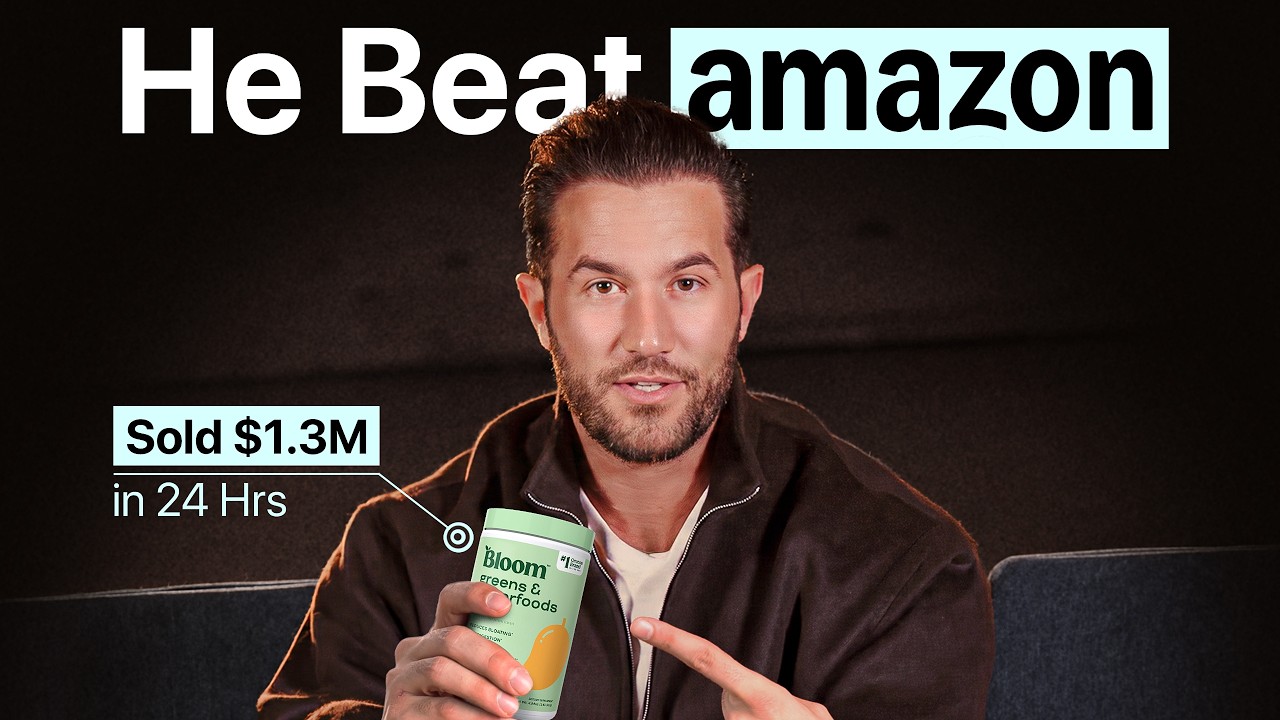
Description
In this episode of Sweat Equity, Alex and Brian sit down with Greg LaVecchia, the co-founder of Bloom which is the fastest growing wellness brand in the US. In this episode, he dives into how to win in a saturated market, the difference between selling a product and building a brand, how to build a cult-like brand, how to get early traction, how to hire and build a killer internal team. He also just started his Youtube channel @GregLaVecchia and you should 100% follow to see everything he's doing to continue to take over the wellness world. Chapters: 0:00 - Intro 01:07 - Building a Brand vs. Just Selling a Product 08:15 - The Origin Story: Fitness Guides & Early Community 14:30 - Why Greens? Launching into a Saturated Market 22:10 - The "Micro-Influencer" Strategy Explained 31:45 - How Bloom Went Viral on TikTok 40:20 - Scaling Operations & Inventory Management 48:50 - The Move to Retail: Winning at Target & Walmart 56:30 - Hiring & Culture: Building a Team for Scale 01:00:15 - Personal Wealth: Luxury Goods, Watches & Investing 📱Follow Us On Social: -------------------- Instagram Alex https://www.instagram.com/alexgarcia_atx/ Brian: https://www.instagram.com/brian_blum/ Twitter www.twitter.com/@alexgarcia_atx www.twitter.com/@brian_blum1 -------------------- 🔥Want Free Game? Send us a picture of your Apple & Spotify reviews to podcast@marketingexamined.com and we'll make you a playbook in a future episode. --------------------
Summary
Generated by gpt-5.6-terraAt-a-Glance
- Verdict: Watch fully
- Core thesis: Bloom scaled from a bootstrapped influencer-led supplement startup into an omnichannel wellness brand by turning community and creator distribution into repeatable demand engines for Amazon, retail, and adjacent high-TAM product categories.
- Why it matters: This is a concrete operating case study in building a control plane for creator relationships, using digital demand to win retail distribution, and expanding a brand without relying on conventional paid-performance attribution.
- Best use: Use it as a GTM and distribution playbook: study how Bloom built its creator network, translated online attention into retailer leverage, and selected products and partners that extended rather than diluted its brand.
Executive Summary
Greg LaVecchia frames Bloom's success as the difference between extracting a transaction and building durable trust. Bloom began by using performance marketing to grow Mari Llewellyn's fitness-transformation audience, then monetized with low-cost digital workout guides, ongoing free updates, private communities, exercise content, and direct coaching. That accumulated proof, trust, and consumer demand before Bloom launched products in 2019.
The central operating insight is that Bloom built an in-house creator-distribution machine rather than treating influencers as a set of affiliate purchases. Its team recruits culturally fluent people, scouts emerging creators, manages relationships directly, avoids tightly scripted content and coupon-code-heavy posts, and asks creators to integrate products naturally. Macro names create campaign authority and set trends; thousands of micro-creators provide trust, repetition, and cultural spread.
Bloom then applied the same community-demand engine across channels. It pushed its audience to Amazon rather than trying to outbid incumbents inside Amazon's ad marketplace, used Amazon sales data to persuade Target, and sent creators into retail stores to turn displays into content studios. This created measurable sell-through for retailers while retaining a digital-first marketing model even as the company became approximately 95% retail.
For expansion, LaVecchia argues against category creation unless necessary. Bloom looks for large, already-understood markets—such as energy drinks—where consumer awareness exists, then makes the familiar product more wellness-oriented, attractive, accessible, and taste-forward. He also presents its NutriBolt/Keurig Dr Pepper relationship as a template for strategic partnerships: retain control over the customer, brand, and product while bringing in proven infrastructure for manufacturing and distribution.
Key Takeaways
- Claim: A brand is built by repeatedly delivering free value and trust before and after a purchase, not by optimizing isolated acquisition transactions. | Evidence: Before launching Bloom, Mari and Greg sold $9.99 workout and nutrition guides through Instagram DMs and PayPal, gave buyers free guide updates, access to a private Facebook community that peaked around 100,000 members, private exercise-content pages, and in some cases Mari's direct coaching. They accumulated hundreds of documented customer transformations, including reported 20-100 pound weight loss stories. | Implication: For a new brand, treat content, education, community access, and customer outcomes as product-adjacent assets that establish credibility before scaling paid media or adding SKUs. | Caveat: The model depended on an authentic founder-led transformation story and unusually high-touch early community work; it is not a shortcut that can be reproduced solely through polished brand content.
- Claim: Creator marketing works best as an in-house relationship and cultural-intelligence function, not as a purely attributable affiliate channel. | Evidence: Bloom recruited Greg's Wall Street salesperson friend to adapt high-volume outbound sales and relationship management into influencer outreach, then built what he describes as the largest in-house influencer program within a CPG company. The team is based across LA, Austin, and Dallas and at times drives billions of views per month. | Implication: If creators are strategic distribution rather than an experiment, build owned workflow, relationship memory, talent scouting, and content feedback loops instead of outsourcing the strategic layer to agencies. | Caveat: LaVecchia offers no cost, conversion, retention, or profitability benchmarks for the creator program, so its scale should not be assumed to imply efficient unit economics for every brand.
- Claim: Bloom deliberately minimizes scripts, affiliate links, and coupon codes because natural product placement preserves trust and works across retail-heavy distribution. | Evidence: LaVecchia says Bloom generally does not issue tight briefs or scripts, chooses creators because it already likes their content and message, and asks them to integrate Bloom in the way their audience will value. He says coupon-code attribution is especially irrelevant when Bloom's own website is only about 5% of sales and consumers can buy in roughly 80,000 U.S. doors. | Implication: For omnichannel brands, optimize creator work for cultural credibility and store demand, then establish measurement systems that capture incrementality and channel lift rather than forcing every creator interaction into DTC attribution. | Caveat: This reduces direct conversion attribution and requires management to accept broader signals—velocity, share of conversation, retail pull-through, and creator quality—rather than last-click reporting.
- Claim: Social proof should be made explicit because it counteracts skepticism toward influencer brands and provides leverage with consumers and retailers. | Evidence: Bloom publicized milestones such as sold-out inventory, number-one Amazon rankings, Target rankings, and TikTok-view volume. LaVecchia says statements such as 'sold out,' '100,000 bottles sold,' and category rank were among the most powerful credibility messages. Bloom's greens ultimately helped bootstrap the company to a stated $180 million in annual revenue with no outside investors. | Implication: Turn independently defensible demand signals—sell-through, rankings, waitlists, repeat purchase, retailer velocity, and creator adoption—into recurring creative inputs rather than hiding commercial success behind generic lifestyle messaging. | Caveat: Claims of rank, scarcity, and sell-outs must be truthful and contextually clear; otherwise, the same mechanism becomes reputationally dangerous.
- Claim: Digital community demand can be used to win algorithmic marketplaces and physical retail, making social marketing an omnichannel control lever rather than a DTC-only acquisition channel. | Evidence: Bloom redirected its existing email, SMS, influencer, and organic community to buy on Amazon, eventually reaching a stated nine-figure Amazon run rate for greens and $16 million Amazon months. It then used its Amazon demand evidence to convince Target to launch the product after Target initially dismissed the superfoods trend; Bloom says the product became Target OTC's fastest-selling product, including against major OTC brands. | Implication: Build channel launches around coordinated demand transfer: establish proof in one channel, use it to secure the next channel, then direct the community to that channel to accelerate its first-party sales signals. | Caveat: This requires genuine existing demand and retail execution capacity; sending demand to a retailer without availability, shelf visibility, replenishment, and retailer cooperation can waste the audience's attention.
- Claim: Retail merchandising should be designed as creator media infrastructure, not merely shelf placement. | Evidence: For Target, Walgreens, and other launches, Bloom sent creators into stores to film shopping trips, hauls, and displays. LaVecchia calls prominent displays 'studios' for creators and treats premium display placement as part of the commercial exchange: Bloom brings its in-house influencer engine in return for a compelling physical setting. The company designed packaging to be recognizable from roughly 50 feet away and to match what consumers saw in short-form video. | Implication: When negotiating retail, value content-ready displays and visual recognizability as performance assets; connect field marketing, merchandising, packaging, and creator briefs into one launch system. | Caveat: This strategy is highly dependent on retailer-approved merchandising, field execution, and a package distinctive enough to survive crowded shelves.
- Claim: Expansion should target large, familiar, saturated categories where consumers already understand the product, then win on improved positioning, taste, and design. | Evidence: Bloom's greens launch reportedly generated $1.36 million within 24 hours of a restock after an initial $1 million product order took three months to manufacture. Later, Bloom entered energy drinks with NutriBolt and launched in Target in mid-2024; after Keurig Dr Pepper put the product on its trucks in January 2025, it scaled to 70,000 doors and had reportedly surpassed a quarter-billion cans by January 2026. LaVecchia contrasts this with greens and novel functional products, which require expensive category education. | Implication: Prioritize markets with broad consumer awareness and large TAM, then ensure the offering can be described in one familiar phrase—such as a better-for-you energy drink—rather than requiring a new category explanation. | Caveat: Saturated markets lower education costs but intensify competition, retailer demands, and the need for genuinely differentiated taste, packaging, distribution, and cultural relevance.
Detailed Brief
Founder-led early execution and brand identity lessons
- Claims: The original founder audience was built through targeted Meta lookalike ads that promoted Mari's content rather than immediately pushing a physical product.; Bloom avoided naming the business after Mari to reduce key-person risk and enable the product brand to acquire its own cultural meaning.; A strong product can survive early branding mistakes, but discoverability failures compound quickly as organic awareness grows.
- Evidence: Greg says he initially spent $100 on Facebook ads asking people to follow Mari; Meta's lookalike targeting enabled the team to find women similar to Mari's early audience.; Bloom's initial pre-workout packaging used only a large 'B' logo. As product videos spread, consumers searched for 'the B brand' because the full Bloom name was not sufficiently visible, forcing a packaging/logo adjustment.; When Amazon launched its own supplements line, which LaVecchia recalls as 'Own,' he feared Bloom could not compete; he says Amazon's product brand later flopped while Bloom became a top-five Amazon seller in several categories.
- Caveats: The Amazon private-label example supports the importance of category-specific brand meaning, not a general conclusion that large platforms cannot succeed with owned brands.; LaVecchia's advice not to spend over $5,000 on a domain or social handle reflects Bloom's experience; it should not override legal, trademark, phishing, or mission-critical discoverability considerations.
- Implications: Separate the founder's credibility from the enduring product identity early enough that the brand can travel beyond the founder's audience.; Design packaging and naming for recognition in user-generated video, search behavior, and physical shelf contexts—not only for a controlled website environment.
Talent, partnerships, and first-party market learning
- Claims: Bloom's early hiring favored digital-cultural fluency, learning velocity, and belief in the mission over prior corporate credentials; later it added experienced specialists when scale demanded it.; The company used internships as a live trial funnel, moving high-performing scouts into relationship-manager roles and giving early employees meaningful career and ownership upside.; LaVecchia views an equity partnership as the most expensive business transaction because it permanently transfers part of the enterprise; the primary criterion should be strategic capability, not simply valuation.; In-person events can produce better product intelligence than abstract surveys because people can taste products, react in context, and speak more candidly.
- Evidence: Early interviews reportedly tested candidates' understanding of digital culture through questions about favorite Instagram accounts, brands performing in Target, and where Bloom's consumer shops; fit was often evident within 30 days.; LaVecchia says some former interns are now senior leaders with healthy six-figure compensation and company options.; Bloom partnered with NutriBolt, owner of C4, because founder Doss Cunningham brought experience transforming a pre-workout company into an energy-drink company and had Keurig Dr Pepper relationships. Bloom retained focus on community, brand, and product while NutriBolt handled much of manufacturing and supply-chain complexity.; At a two-day Soho event with more than 1,000 attendees, Bloom conducted blind tastings across six options and collected feedback. LaVecchia argues that survey respondents often select theoretically optimal nutrition numbers, while live reactions reveal what they actually want.
- Caveats: Rapid hiring based on cultural fit can create blind spots if not balanced with structured evaluation, diverse expertise, and professional operating controls.; Event feedback is richer but can be skewed by the most engaged community members and should be triangulated with sales, retention, and broader-market data.
- Implications: Use early-stage trial projects and apprenticeship pathways to find high-agency operators, but deliberately add domain experts in supply chain, finance, and retail before operational complexity becomes a constraint.; For partnerships, map the exact capability gap that cannot be built fast enough internally, quantify the economic cost of equity, and preserve ownership of the differentiating customer relationship.; Replace or supplement stated-preference surveys with behavioral and experiential tests when making product decisions.
Notable Concepts & Terms
- Performance marketing: The Meta/Facebook/TikTok acquisition model LaVecchia contrasts with brand building; useful early, but constrained when sales shift to channels outside a trackable DTC pixel.
- Social proof: Bloom's repeated use of sold-outs, ranking, sales velocity, and creator adoption to signal that the brand is established and trusted.
- In-house influencer marketing program: Bloom's core distribution capability: a directly managed system for sourcing emerging creators, maintaining relationships, and generating large volumes of culturally native content.
- Macro-to-micro creator model: Use a high-authority creator to anchor a campaign and set a trend, then use many smaller creators to create trust, repetition, and wider cultural penetration.
- Omnichannel demand transfer: Directing an existing online community to buy in a target channel—Amazon or physical retail—to accelerate ranking, sell-through, and retailer confidence.
- Retail display as a studio: The practice of treating retail displays as camera-ready creator backdrops that convert physical merchandising into digital media and retailer traffic.
- Saturated-category strategy: Entering a well-understood, large market rather than creating a novel category, thereby benefiting from existing consumer awareness and category-level marketing.
- Strategic partnership as expensive capital: LaVecchia's framing that equity sold to a partner is permanently costly, so a partner must add operational leverage—such as manufacturing or distribution—that justifies dilution.
Operator Notes / Why Ken Should Care
- Audit whether creator marketing is owned as a strategic relationship system or fragmented across agencies, affiliate links, and one-off sponsorships; centralize creator history, cultural scouting, briefs, output, and downstream commercial signals.
- For any retail or marketplace launch, build a coordinated demand-transfer plan before the launch date: inventory availability, creator activations, email/SMS/community messaging, retail-ready display design, and measurement of local sell-through.
- Add a retail-content review to packaging and merchandising decisions: require assets to be recognizable in short-form video, searchable by name, and legible from a distance on shelf.
- Separate stated preferences from actual behavior in product research; run blind-use, live-tasting, or prototype-choice tests and compare findings with repeat purchase and velocity data.
- When evaluating strategic capital or partnerships, create a capability-gap memo that compares dilution against the time, cost, and execution risk of building manufacturing, logistics, or distribution internally.
- Avoid overinvesting in vanity infrastructure such as premium domains or social handles unless it resolves a verified trademark, trust, security, or conversion constraint.
Source/Metadata
- Title: $500M of Brand Building Advice in 65 Minutes w/ Greg Lavecchia
- Transcript words: 17195
- Duration seconds: 3964
- Timestamp note: No usable timestamps or chapter markers were present in the provided transcript; the transcript also contains repeated passages near the end.
Transcript
Please do not spend more than $5,000 on your domain or your handle. Yeah. I don't give a f*** about your domain. There's no amount that's worth it. Greg LaVecchia is the CEO and co-founder of Bloom Nutrition, one of the fastest-growing D2C brands of all time. But what's insane about Bloom is that they didn't scale on just Meta. They're one of the most innovative influencer marketing companies, pioneering the micro-influencer wave, and have now evolved into a dominant retail force. Within 24 hours, we did 1.36 million in sales. Wow. I am tripling down on a few things for 2026. I am... That's really what put us on the map. That's what really helped us bootstrap Bloom to $180 million with no investors whatsoever. One of the most impressive things Bloom has done is they've consistently gone into saturated categories, and every single time, they win. All right, we got Greg LaVecchia here, CEO of the fastest-growing wellness brand in the U.S. right now. Greg, I just want to ask you one question to start off the episode, because you have this piece of content where you talk about the difference between selling a product and building a brand. Yeah. Can you just wrap on that for a little bit? All right. So I come up from the generation of entrepreneurs where it was all performance marketing-based, which is very much... So for context of what performance marketing is, it's just using Meta ads or Facebook ads, shown on Instagram, Facebook, TikTok, to get someone to make an acquisition, and then you have all this data around your customer of how to make sense of those dollars, right? And that was how every brand, and still a ton of brands, are getting launched and scaled through the last decade of e-commerce business. Mari and I recognized early on, because she was growing her platform and therefore her community, and Mari's my wife and co-founder of Bloom, how we can create something more special, more generational, a longer lifeline, a real culture and community around a product, which was more than just an acquisition, impulsive purchase done through a performance ad. So when you're building a brand, the difference is you are over-delivering so much value for free to your consumer. They're clicking follow on the Instagram page, whether it's figuratively or literally joining your community, to where you are building a trust with them where every time they either buy your product or listen to some of the value that you're trying to contribute to their life, they know that it's something that they can trust time and time again, right? And so it goes back to, should it even be a brand on an animal? If you think of a cow, you gave them a brand and then you knew to treat that cow differently because it was somebody else's cow. And I think about that all the time because if you go to the logo on Bloom cans, someone's walking through a Target store today and you're seeing all of these logos. But if you see this Bloom logo, you have a good idea that you're going to get a better-for-you version or a reimagined version of what a wellness product could be. And I really didn't want to launch a quick cash-grab, product-selling Facebook ad company. I wanted to create, or we, my wife and I, wanted to create a brand that could live through shifts in culture and now, coming up on almost over a decade. Right. So that's what I would say is the difference between selling a product and building a brand. Well, and you guys were one of the original super hot influencer-led brands. So Mari launched her page after a fitness transformation that she went through when we first started dating in 2017. And people definitely started to click follow and started to really resonate with the lifestyle transformation content that she was putting out. And it was incredible content. She's a 10 out of 10 content creator. And what happened is we realized pretty early on, wow, this type of content is starting to get some traction. And maybe that just meant a couple thousand followers at the time. But I said, okay, let's just run a little test. And this is me sitting in my dorm room in college in Philadelphia. Let's put $100 in Facebook ads and just go say, please go follow Mari Llewellyn. You'll really love the content. And it worked. Tons of people started to follow Mari off of this Facebook ad. And what's really cool about a Facebook ad is you can literally tell it exactly who you want to see that ad. So I can say, especially back then. Especially back then. And then the targeting was crazy. So it's literally called a lookalike audience. So I could say, let's say the 10,000 people that already followed Mari, go find people that look like this, who is probably a female in America, interested in changing their life, and go find people who look like this. And there's millions of people like that. And then we were able to deploy these ads to them. Now, how do we pay for those ads? Eventually, as people were watching some of Mari's amazing content about transforming her life, they said, how can I also transform my life in a similar way? So Mari and I ran to Barnes & Noble, which was a bookstore. I don't even know if it's around anymore. We had our student laptops and we cranked out a quick and really cool and accurate-to-her-life transformation guide using a nutrition guide, a workout-with-weights-at-the-gym guide, and a workout-at-home-with-weights guide. And we would sell that for $9.99. The way they bought that was not through a Shopify store. They would DM us and say, hey, I'd love the guides. We would say, okay, you have to PayPal us $9.99. They'd send the PayPal, and then I would email, or we would email them the product. We were cranking out these DMs at such a high velocity that we had keyboards attached to our iPhones. We'd get computer keyboards that were Bluetooth and attach them to our iPhones. And we were just cranking out the DMs all day. And then, going back to the over-delivering on value, if there were updates to the guides, they'd get them for free. And they would get access to a free Facebook group that was private access if you bought the product. There was a crazy community of 100,000 people at its peak, just like-minded women. And we had moderators. It was incredible. And then they also had access to Instagram pages that were private that we'd have to check if they actually bought the product to get videos of each exercise. On top of that, if someone put in any energy or real commitment to buying the workout guide, because obviously, you don't just get in shape buying a fucking diet guide. Yeah. Mari would literally train them, one-on-one, on an intimate level, and help them get to their goal. And so what ended up happening is we had hundreds of people, hundreds of women, who had lost anywhere from 20 to 100 pounds on top of real-life achievements. But that was cosmetically something that we could show and give real validity to. Yeah, real transformations. You understand a weight loss transformation within one second, how impressive that is, right? And we were able to show that as credibility of these products. And so we ended up building this massive community of what had become over a million followers. And people kept saying, what supplements should I take with these guides? And this is an era where every, especially female influencer or content creator at the time, was just signing with supplement companies and using their affiliate codes. But Mari and I were both very adamant that we will not go that route. We will build something that we can take along with us for decades: a brand. And so when everyone was saying, what supplements should I take with these guides? Mari didn't feel comfortable suggesting any supplements because she would walk into a GNC or Vitamin Shoppe or whatever it may be. And let's just say pre-workout, every pre-workout was way too much caffeine for her anxiety, had all these ingredients she couldn't pronounce. It was red and black and yellow and black and highly matte and chrome. I love chrome, but she doesn't like chrome. It was like Fear Factor. What was that one? Force Factor. Force Factor. Jack3d, SuperPump. Yeah, very masculine stuff. Hyper-masculine. All the shit that was on T Nation. T Nation. That's crazy. And it's funny, I'm not used to making content with guys. Yeah. Like Testosterone Nation. Yeah, that's what it's saying. And I'm not a forum member over there. Yeah, yeah, yeah. And so, we launched Bloom. So in July 2018, we started to really test out had all these ingredients she couldn't pronounce. It was red and black and yellow and black and highly matte and chrome. I love chrome, but she doesn't like chrome. It was Fear Factor. What was that one? Force Factor. Force Factor. Jack 3D, super pump. Yeah, very masculine stuff. Hyper masculine. All the shit that was on T Nation. T Nation. That's crazy. And it's funny, I'm not used to making content with guys. Yeah. Testosterone nation. Yeah, that's what it's saying. And I'm not, I'm not a forum member over there. Yeah, yeah, yeah. And, but, but the, still the exact URL. Lit loads of my goons. It's not Greg Lab from New York. Yeah, yeah. And so, and so, we launched, we launched Bloom in July 2018. We started to really test out some pre-workout formulas. They were killer formulas. They had beetroot powder for blood flow, natural caffeine, natural ingredients, everything for focus. It was very much nootropic-based and a way lower amount of caffeine than everything else on the market. But what was crazy is, just reflecting back on the original versions of this product, what looks so silly now, is the flavor image on the front of the pre-workout was, let's say it was the piña colada flavor. Mari and I went and bought all the ingredients, put the ingredients in a photo box, and took, we didn't know about Shuddersen. We didn't know anything. Yeah. And trying to find a fucking coconut in Boulder, Colorado, in November to get a coconut photo, it was crazy. Yeah. And so, in Colorado, snow on the ground. And that's what an entire day would be in the early stages of this business. Now that would be, one second, air, whatever. But anyway, so then we designed, we launched in 2019, January resolution season, with three pre-workouts, and they sold pretty damn well out of the gate. I'm not going to say they sold out in one day, but they sold pretty well out of the gate. We felt like we had a proof of concept. And then what really started to happen is people tried it. So people tried it. They started to post about it, and it started to get its own, its own virality moment of Bloom as its own brand outside of just Mari. And first of all, thank God we realized not to call it Mari supplement line and have that key man risk of having it attached to Mari. Yeah. But we called it Bloom, which was very much around women transforming their life and blooming into their best self. And what's also funny is the Bloom logo at the time was just this B. So literally just the B was the logo, which is still on the top of the bottle of a lot of our greens and whatnot. And obviously now, for people not watching, it's a full, it's a full word mark that says Bloom. But we started to see Google traffic, Instagram traffic, Amazon traffic, the B brand. Really? We're like, yo, you're kidding me, right? So we had to very quickly pivot the brand and make, or pivot the logo and make sure I have a, because they would show it in the videos, right? When it was going viral, and it's several like, oh, people are discovering this brand without discovering it from Mari, and they just see this B, and our idiot asses didn't put the whole word Bloom anywhere on the bottle. Yeah. So just those early stages of obvious mistakes that, looking back now, I would have never made. It's kind of like the founder story. It's the founder story. I think this thing was so silly, but the product was good inside of the bottle, and that ended up becoming full recovery powder line, full protein powder line. And then eventually we launched this greens powder, and the greens powder was really what put us on the map. That's what really helped us bootstrap Bloom to 180 million with no investors whatsoever. Right. And, or scale Bloom, sorry, to 180 million, but it was bootstrapped. And the greens powder was, we launched this greens powder. Mari was looking for an easier way to get our fruits and vegetables in and get some gut health going. That was very much on our minds then. And we fly to Puerto Rico for one of our first vacations together, and it was the vacation I was going to propose to her on. And I did. But she wasn't on her phone much, but she was posting a lot. So I wasn't even really checking Shopify, and I proposed to Mari. She posts that. That photo was the most viral photo we've ever posted. And she's posting all throughout the trip about how we're eating good, we're drinking good, and she's waking up the next day feeling fine. And this greens powder is leading the way of helping her digest everything and feeling great. And then we come back from the trip, and we check everything, and the greens are sold out. And we're like, oh shit. And was this early on for the greens powder? Or what happened? It's like the initial, initial order of greens. Interesting. The initial order of greens, but it wasn't that hot out of the gate. So it wasn't, you guys weren't coming into it thinking this was going to be a hero SKU. It was just an addition. Anything we've ever done thinking this will be the hero SKU. Okay, cool. Yeah, for sure. In fact, every time I think something's going to be the hero SKU, it is the worst-selling version of whatever we make. Totally goes. So yeah, the piña colada that we spent the whole day on, it got discontinued in three months. Or the cherry lime energy drink I thought was going to be the ultra, face of the brand, the worst seller. Or juicy orange. No one wants juicy orange. And I'm like, what the hell, yo, who doesn't want orange juice? So, so the Bloom green started to really take off, and then we basically, we ordered, call it, a million dollars' worth of product sold. When we got back to New York, that took three months to make. And when we restocked that, we're headed to our office in Brooklyn. It's the first time we had a co-working space. We finally had one or two part-time consultants working with us. But Mari and I were the only full-time employees of Bloom at the time. What year is this? This is late 2019, probably. And we restocked the greens with everything we have. We deploy the email, we deploy the text message, marketing, whatever it may be. And within 24 hours, we did 1.36 million in sales. So that was our first million-dollar day, which was just ridiculous. That's insane. It was a moment for us that I don't think I realized what, even then I didn't know that we had something here. I mean, that's just crazy. Yeah. I couldn't really fathom what was going on. And we were just in a small apartment in Brooklyn at the time. We weren't really living like that. And what I did with that money, or what we did with that money, was we just bought 1.36 million dollars in more green. Yes. Immediately threw it back. Yes. We just kept on doubling down until Bloom became what it is today. But just another fun brand story, going back to the inception of Bloom: I remember we were about to launch the product. We're in Q4 2018, and everything was made. All the POs were placed. All the invoices were paid. And Amazon launched their supplement line. It was called OWN, own nutrition or something. Yeah. And I came from a town in Westchester, New York, where they were a little anti-Big Corp, right? Starbucks is closing all the cafes. Farmers markets. Amazon's ruining every small business. Walmart's ruining every small business. And so when Amazon launched this supplement line, and we had already put all of our money into the company, we were about to launch in two months, I was like, Mari, we're fucked. Yeah. How are we going to compete with Amazon? With Jeff, bro. With Jeff. Jeff's about to do. With Bezos. Yeah. It's over. That was a fun attempt. The piña colada shoot was really great. And so. Fucking sending people to space next week. You send people to space, right? But that brand is not around anymore. It completely flopped. Long story short, Amazon's now one of our best friends, and we're a top five seller in several categories on Amazon. But that was the day that I really understood the difference between brand and how brands can represent different strengths. Yeah. It's not a general quilt And so when Amazon launched this supplement line and we had already put all of our money into the company, we were about to launch in two months. I was like, Mari, we're fucked. Yeah. This, how are we going to compete with Amazon? With Jeff, bro. With Jeff. Jeff's about to do. With Bezos. Yeah. It's over. That was a fun attempt. The Pina Colada shoot was really great. And so. Fucking sending people to space next week. You send people to space, right? But that brand is not around anymore. It completely flopped. Long story short, Amazon's now one of our best friends, and we're a top five seller in several categories on Amazon. But that was the day that I really understood the difference between brand and how brands can represent different strengths. Yeah. It's not a general quilt over the world of, this is a reputable brand. If Bloom released an electric car tomorrow, it wouldn't sell. But if we released a different version of an energy drink tomorrow, it would sell. You get what I'm saying? So when Amazon released this nutrition company and I just assumed I didn't know the power of brand because Amazon was fucking Amazon, I realized after it flopped and we actually beat it that that was the day I really started to understand how brands can mean different things in different categories. And I think that's so key, going back to that viral video that you made about selling a product versus building a brand, because especially now with how much content we're able to put out and you guys were putting out then, we attach our values and our identities to the brands, right? Me carrying this around or a female carrying this around is telling the world things about me without having to say it. For sure. Me taking whatever, I don't even remember the name of the Amazon brand, Own, right? There's no visual, there's no representation, there's no attachment to that brand. Yeah. And so if the price, if they're only competing on price difference of maybe a dollar or two, Yeah. I'm going with the one that I've been, that I feel attached to. I feel like I'm part of their community. No, there's a reason private labels are half the price when you go into even a Target or- And yet they're still not the dominant seller in the category. And so Amazon has a brand as a marketplace, not as a product creator. Correct. Right? Yeah. Although I have heard the story that when Amazon Basics batteries came out, Dorisell got fucked. Yeah. Certain categories probably lend themselves a little bit. But certain categories have no attachment. Right. Yeah. I don't feel loyal to Dorisell. Exactly. Sorry, Dorisell. I think what you're describing, if I were to have a takeaway from it, is just a great story, right? At the end of the day, you had a great story, you and Mari's relationship, the transformation, and then everything that led to these products that you now have live or your best sellers. But something you also did really effectively was amplify that story. And you've talked about bringing your influencer marketing in-house. And I think you guys were definitely one of the first and most successful TikTok influencer brands. I'd love to just hear your framework for how you built that, brought it in-house. So in the early days of Bloom, we would, again, with over-delivering value, there was a ton of buy one, get one type of in your checkout. If you were buying two bottles of greens, you could get electric mixers, you could get mixer bottles. And I loved products that people would leave on their kitchen counter. Yeah. Because they put our greens in the pantry, but the mixer, they'd use in their cappuccino. Yeah. They'd use it, all these things. And we'd have our Bloom logo on there. So I just thought that was the best thing to give away was someone's giving away a quality tote bag, right? You walk around with it and you use it all the time, even if it's not associated with your brand. So one day, one of these influencers that I'm looking through, someone sent me the video. An influencer was mixing another supplement with our Bloom mixer. And they were like, I don't know what this mixer is. It's from some random influencer supplement company. Yeah. And I was like, random influencer supplement company, because at the time, dude, every content creator or influencer who launched their own brand. It was empty. They'd have a little launch and then it would never actually be. It was this and then fuck. Yeah. It wasn't like they were operators. I mean, that's still happening too, right? A lot of these electrolyte beverage. I mean, everyone's starting something. Everyone's definitely starting something. It's funny because that one was with Nestle. Yeah. I think that they'd be able to pull it off. But, but, but yeah, so it was this era of content creators launching brands that took off and then quickly crash-landed. And so there was a reputation of influencer brands aren't real brands, or really just buying the Mari brand in this scenario. And so I got hyper-obsessed with proving our validity. And I don't know if that also comes from me always trying to prove myself on a toxic level, but I wanted to do it with Bloom. And so I realized early on, even when we ran one of our first ads that just said a hundred thousand bottles sold or sold out four times or restocked for the fifth time, these words of validity are so powerful in influence and create so much credibility, more credibility than you create with any other single word, right? Because if you say sold out, you can assume some mass group of people has bought every version of that product, right? But that also ended up becoming we are the number one on Amazon. Even today, I am constantly screaming from the rooftops what our ranking is at Target, what our ranking is at Amazon, at Walmart, whatever it is. We're the number five energy drink in 18 months at Walmart. And people know, oh, Walmart's the biggest marketplace ever. Social proof. That's real social proof. And so I got very obsessed with using social proof as one of our main forms of brand building to let people know, oh no, they're a real company. They're a real brand. They're actually reputable. And that was the same. I mean, I even sold into retailers using that tactic. And I think too many companies that have launched in the last decade are too afraid to publicly admit that they're a business. Yeah. And that they are competing. And that you don't need to be afraid to do that. You're not some psycho angry capitalist if you just admit that your business is using money or is selling a certain number of units. And you should be proud of that. And it was funny because especially Mari, coming from British culture that is way more reserved. But we have always yelled from the rooftops when things sold out, how many units we sold, how many views on TikTok we're getting every month. We're very proud of those things. And then how did you go about building that influencer army? So the year was late 2019, maybe early 2020. And one of our main designers, who lived in Boston at the time, probably wasn't a full-time employee, but he was the one guy that I went to for all of our design stuff. He was in Boston. He wouldn't move from New York. I was like, well then you're not a team player. You're off the fucking team. And then I was like, wait, now we have no team. So now it's me and my wife. And I needed somebody who could join the team that I could give bank account passwords to, that I trusted with my life from day one. And I didn't know anybody. We had no network in business whatsoever. Everyone we knew had normal nine to fives, which is great. And so I called my best friend from high school, who was my neighbor growing up. We carpooled to school every day. We were on the same bus. We were still best friends today, and I'll get into that. But I called him. He was on Wall Street doing crazy biotech sales at like, were you telling me, thousands of phone calls a day. They're all, you've seen Wolf of Wall Street, this type of shit. And I don't know anything about that finance stuff, but he does. And I said, that boiler room of sales calls and relationship management that finance and Wall Street has completely mastered, can we, and we came up with this idea together, can we create that as an influencer outreach, almost in-house outbound agency, to build an influencer network which is great. And so I called my best friend from high school, who was my neighbor growing up. We carpooled to school every day. We were on the same bus. We were still best friends today, and I'll get into that. But I called him. He was on Wall Street doing crazy biotech sales at, were you telling me, thousands of phone calls a day. They're all, you've seen Wolf of Wall Street, this type of shit. And I don't know anything about that finance stuff, but he does. And I said, that boiler room of sales calls and relationship management that finance and Wall Street has completely mastered, can we, and we came up with this idea together, can we create that as an influencer outreach, almost in-house, outbound agency to build an influencer network for Bloom? And obviously we understood and respected influencer marketing because the nucleus of the whole brand was Mari, and she was an influencer in herself or a content creator in herself. And then we could see, as people started, even micros started to make content of the product, how powerful that was. And that seems so obvious in 2026, but not back then. No, back then. TikTok wasn't even really a thing. People weren't even taking content seriously back then. Exactly. Definitely not. You were a total black sheep unicorn if you were doing that stuff. Yeah. And so that's what he did. He ended up quitting Wall Street, which was huge, on a path to a seven-figure salary, golden handcuffs, the whole thing. He quit Wall Street and ended up moving to LA very quickly with us once COVID hit to go after the influencer dream, and we built what, without a doubt, I don't have a stat for this, but without a doubt, the largest in-house influencer marketing program that exists inside of a CPG company. Yeah. So we're talking sometimes billions of views a month, like several Super Bowl ads' worth of views a month. It's all nourished or nurtured and communicated. The relationships are all managed in-house with our team in LA and Austin, Texas, and some in Dallas. I think one of the things I read in an article that you discussed is you don't always work with the big celebrity or influencer, but you will if you need to gain awareness around something. But then you go back to the micro influencers if you want to then build, like if they're driving the awareness, now you're going to build the trust with the micro influencers. I mean, I'll break that down in a few ways. I think one of my favorite tactics, and anyone can respect this, is pretty logical, is find someone on their come up. Yeah. Right? Don't find someone when they're already at the peak of their fame and they're charging way too much. Borderline sold out at that point. They're kind of sold out. They've already monetized their page so much, and they're probably just looking for that grand check. Find someone who's on the come up who, we're blessed because most people know what Bloom is now. We can easily find people who already love the product. People want to represent it. So, we just worked with Jenna and Val from Dancing with the Stars, who are the hottest dancers on the scene right now and main players on this Dancing with the Stars show, and we made them the face of our Valentine's Day energy shoot. And so that would be an example of taking a macro influencer, making them the face of the campaign, and then getting thousands of micro influencers to kind of ride that wave. What also happens when you get that super authoritative, powerful influencer is they're an influencer of the influencers. Yes. So they set the trend, and then medium influencers and micro influencers want to just be posting about what they're posting about, right? Like the amount of free content that Skims gets just because people want to be Kim, right? That's the same idea. I guess that also boils down to how you have probably almost never seen a Bloom coupon code. I've never seen an affiliate link, and there's two reasons for that. One is most of our business is retail now. Yeah. So for me to have attribution with a coupon code to a website that, my website is 5% of our business now, it's a joke. So there's not really attribution like that. But I also was like, I don't want this to become some commercial. I want to be integrated in your content. I want to almost be like product placement and just use it how you would use it. So we'd never deliver an actual, or at least a tight brief or script on exactly what we want you to say. We've found you and chose to work with you or asked to work with you because we fuck with what you're making and what your message is, and we want you to help us rep, or help. We want you to represent Bloom, if you're willing to, and just integrate in your content with what you think will get the most views or with what you think your community will want to see. Yeah, that trust is huge. Yeah. That's really huge. Going back to finding people on the come up, was there some criteria you would run through to be like, they have the potential to be X? This is why so much of our team, when we first launched in LA, were under-25-year-old women who also just love Bloom and were so in the influencer scene. I am not at all involved in that program. I have no idea who's hot on the come up. If they show me, I'm like, I've never heard of this person, but I trust you. And so there's so much of entrepreneurship that people want to put a formula attached to or expose how the engine inside, but it's like, you just need to find people who are so plugged into the culture and so plugged into social media that just have that gut. Yeah. And they're like, I've been personally watching this person for a few months. They're on brand for Bloom, and their following is going crazy. We need to work with them. It's incredibly important to have chronically online individuals. Totally, man. Dude, if you walked into the Bloom headquarters at our peak five years of the initial growth, everyone was on their iPhone. Yeah. He would have been like, is anyone working? Scouting. Yeah, they're scouting. They're scouting. Let me see your screen time. Fire. Yeah, yeah, yeah. Crazy. And then it's Bloom phones, and then again with the keyboards on the phone. It's a whole operation. Did y'all have any super growth-hacky things during that time frame, that really rocket ship growth? What were some of the unique things you did? I would say that when something was working, we didn't sit around and clap that it worked, right? We quadrupled down on something as fast as we could if we found that it worked. If a content creator had a video that did well, we didn't go around and high-five. We called that person right away and said, can you make five more videos as soon as possible? Got it. Some fun growth hacks that won't totally move the needle, but might spark some ideas: scouting with a VPN is always a fun idea, right? If you're in LA in Venice Beach, your algorithm will be the Venice Beach girl, or whatever your content is, right? And I mean, shit, even when I lived in LA, all the cars that I would look at at my 4UPH were all LA-style cars. Right. And so if you have one room in one region of the country doing your scouting for influencers, put a VPN on there. Maybe that'll be your nice sponsor for the show, guys. I won't say the brand. And put a VPN on there and be like, yo, I'm in Miami. I'm in Arkansas, whatever it is, and try to find some people that you normally wouldn't find because, dude, that phone knows you. It knows where you are, and you need to kind of fool that algorithm to give you a fresh group of people because there are so many people that are creating content that you will never find. I don't care what software you have or what, your algorithm is actually tighter than you think. Yeah. Much. Much tighter than you think. One thing that is drawing me to this, though, is you're probably very good at recruiting, right? If you have full trust and you influence your team and that's where the majority of the money's going, then there's probably some best practices that you have around recruiting or even bringing someone on and then firing them really quick, potentially. and be like, yo, I'm in Miami. Yeah. I'm in, I'm in Arkansas, whatever it is, and try to find some, some people that you normally wouldn't find because dude, that phone knows you. It knows where you are and you need to fool that algorithm to give you a fresh group of people because there's so many people that are creating content that you will never find. I don't care what software you have or what, your algorithm is, is, is actually tighter than you think. Yeah. Much. Much tighter than you think. One thing that is drawing me to this, though, is you're probably very good at recruiting, right? If you, if you have full trust and you influence your team and that's where the majority of the money's going, then there's probably some best practices that you have around recruiting or even bringing someone on and then firing them really quick potentially, or bringing them on and saying, hey, I'm going to promote you extremely fast. Walk me through how you recruit talent so that you maintain the culture that is honestly probably the same culture that you had when it was, it was scrappy and smaller, et cetera. Early on, I was adamant that I didn't want anyone brainwashed by corporate America, and that's why the team was so young. I wanted people who were just fresh, understood social media, and just, and just wanted to really work hard on this cult little movement that we were trying to do, which was Bloom, and that was a very easy, within 30 days, we really knew if you fell into that category. What also ended up happening was people who were an intern five years ago are now very high up, making healthy six figures at Bloom, and they're, they're, they have options in the company. Essentially, they're Bloom shareholders, and so we took very good care of everyone. We still do, and we treated it as a partnership and we wanted them to feel like they were entrepreneurs within this business, right? So they were building their own operations within Bloom. I would say definitely most of the people coming in did not have existing skill sets, but they had the willingness and ability to learn and had the passion to go learn and truly believed in the brand that we were building. So the interview was very much more about do they get what the fuck's going on in digital culture, right? What are your favorite Instagram pages and why? What are your favorites on a personality and a brand level? What products do you think are ripping in Target right now and why? Where do you think the Bloom consumer is shopping and why? Do they get the landscape? And then we'd put them into trial. We would take a lot of interns who were on a three-month internship and renew them into a full-time job if they were good. So we had 10 interns, who was generally our scouting team for finding influencers. We could take the two best performers and make them a relationship manager, influencer. You get what I'm saying? Yeah, of course. Dude, this is a sales room 101, but every new hire, at least in the beginning, I would try to be intimately involved in their onboarding and try to own that project with them. Keep in mind, when you're a startup growing that fast, it wasn't like anyone was getting replaced. They were the first person to ever have that role. So I didn't have anything to base it off of. And then as the business grew and we just required to hire people who had done this before on a supply chain level, on a finance level, on a retail relationship management level, that's when we could bring people in who were at the CPG goats and say all of the mistakes that you've already made, let's bring you over here so that we have the wisdom of a 15-year career, right? Which is now what my org chart has become, is everyone who reports to me and the president of Blue Moose Leo is better than me. At what they do. At what they do. I am the worst person on the team. I am, without a doubt, worse at what each person does at their job. They are experts in their vertical, and that is the dream org chart, right? And so now, if they need to grow their team, they're in charge of what that team should look like, and I go to them for advice. Right. And that's what a partnership looks like, that's what real talent acquisition looks like, and that's what the dream org chart looks like. That's awesome. I think what's been really cool is there's two stages of this company, right? There was the scrappy influencer-led brand and now retail behemoth, right? I mean, those are completely different identities. Yeah. And so I'd love to switch gears a little bit into how y'all have, I mean, A, launched several new products that have just smashed it, right? And get into your product selection philosophy as well as, I mean, I know that every design on this can is very intentional. And so get into that a little bit, and then also just what it's like to be 95% retail when you started as a D2C brand. So, we launched on Shopify. Yeah. Then after a year, we said, I see the search traffic for the B brand on Amazon. Some people are looking for us, and we're missing that, and we're not there for them. And we have always said that wellness needs to be accessible for everybody, whether that's the price point or it's literally they can find the product. And if people are shopping on Amazon, I want to be on Amazon. So, we launched on Amazon, and we said, if we're going to play this whole algorithm SEO game of what winning on algorithm is or what winning on Amazon is, I'm not just going to win by paying the most so that we show up as the top search. We're going to win by using our existing community. So, we used all of the direct consumer marketing tactics, whether that was influencer, email, text message, or Instagram organic following, and we said, now go buy us on Amazon. And what ended up happening is we quickly became, at least on a growth level, percentage-wise, the fastest-growing brand on Amazon, and it made our algorithm power on Amazon just bulletproof. We had a nine-figure Amazon operation with just the greens powder at one point, at least on a run-rate level. And we had $16 million Amazon months. So, that's when we first said, okay, that's when I really recognized performance marketing had its limits, because performance marketing, at least if you're talking meta and paid TikTok, needs a pixel on Shopify to optimize for. And the second you have leakage on that pixel, your ads are going to slowly get worse. So whenever I see a brand today launch on Amazon, or a 100% D2C brand launch on Amazon and go launch at Target, they might have success out of the gate. But if the DNA of that brand's success is performance marketing, they're not going to be able to bring that over to an omni-channel operation. What Bloom has done is we have mastered digital marketing for an omni-channel community or an omni-channel customer. And that's why we've had to do it with ways where there's not a pixel, there's not, there's not an affiliate link, there's not a coupon. Because they're able to buy it in now 80,000 doors in the United States. So, we launched on Amazon, we run all of our normal marketing playbook, but we said, if we're going to play on Amazon, we're going to try to win Amazon. And we did. We ran a hell of a run for 18 to 24 months as Amazon being our number one channel. And then we took that data and we said, hey Target, if you look at Amazon as a barometer for US demand, which everyone should, and we're number one on Amazon, you should really take this greens powder. We think it will crush for you. And they said, oh no, the superfoods trend is over. We just tried all these superfoods, they're all on half off, the superfood trend is over. I was like, this is not a superfood, it's a gut health product. You don't understand digital, it's all over TikTok, please just trust us. And again, we get the launch in Target, and we ran the same exact playbook. We told our whole community to go now buy at Target, and we became the highest velocity or the fastest-selling product in the history of OTC or over-the-counter Target stores, which includes the Flonases of the world, the protein powders of the world. And I'm sure we still hold that record of the fastest-selling supplement in the history of OTC. And yeah, we basically ran that whole playbook through 2023 for our nutrition line. And then now is bootstrapped the superfoods trend is over. We just tried all these superfoods. They're all on half off. The superfood trend is over. I was like, this is not a superfood, it's a gut health product. You don't understand digital. It's all over TikTok. Please just trust us. And again, we get the launch in Target, and we ran the same exact playbook. We told our whole community to go now buy at Target, and we became the highest velocity or the fastest selling product in the history of OTC or over-the-counter Target stores, which includes the Flonases of the world, the protein powders of the world. And I'm sure we still hold that record of the fastest selling supplement in the history of OTC. And yeah, we ran that whole playbook through 2023 for our nutrition line. And then now it's bootstrapped to 180 million a year. We decided it was time to diversify our portfolio out of just OTC wellness products, or I should say OTC supplement products. We really wanted to enter beverage. And I had no experience in beverage. We had a real brand at this point that customers expected the best from. And I started to call around for strategic partners to make a beverage with. And the issue with traditional strategic partners, which really just means private equity companies, is private equity companies are partnering with you to sell you later for a higher multiple. It's a little bit of misaligned incentives. It's a misaligned incentive. And at the time, there was no market of acquisitions happening for beverage companies. So the idea of Alani selling to Celsius or Poppy selling to Pepsi, that was not happening five years ago or even three years ago. So they were like, no, we don't invest in beverage companies, and no one's going to want this very diverse platform brand of products. People will want a greens company, a colostrum company, an energy drink company, but they don't want one that does it all because they don't have the efficiencies for that whole platform, right? And so everyone was basically like, kick rocks, except two people. And one of those people was Das Cunningham, who owns NutriBolt, which owns C4 pre-workout, which if you go back to the Bloom story, was yellow and black pre-workout that we intentionally became the antithesis of, right? Which was funny. And this is how he pitched it. He was like, listen, I took this pre-workout company and I was able to make it an energy drink company. And we had a partnership for Keurig Dr Pepper. He was a family man. He was the CEO of NutriBolt for 23 years. Frankly, a mentor of what I was looking to work with as a 28-year-old at the time. And he said, I'd love to be your strategic partner in this beverage game. And the thing about a partnership or an investment is it is the most expensive transaction that you will ever do in your career. Because even though you're not going to notice it in your bank account, you are literally taking a slice, or sometimes chopping half of your business off, and giving it to somebody. So all of that enterprise value and network that you ever associated with yourself, it's just gone. So it is the most expensive transaction that you will ever do in business, and you have to take it very seriously. And in this scenario, it was less about the enterprise value of the transaction and more about the actual partnership that was going to happen to eventually, it only took us six months to create an energy drink together. Yeah. And we launched this energy drink together in June, July 2024 in Target, exclusively in Target. It ripped off the shelves, and then Dr Pepper called, the Dr Pepper, and was like, we want this on our trucks. So we launched on their trucks in January 2025, exactly a year ago or 13 months ago, and we've quickly scaled into 70,000 doors. How many cans? Oh. In 25? In 25. I mean, today, January 30th, 2026, we got to be over a quarter billion. It's a disgusting number. It's disgusting. Yeah, man. I think it's possible. It will definitely be over half a million cans a day in 2026. Wow. And so the manufacturing supply chain is just a total fucking masterclass. These guys over at NutriBolt handle all of that supply chain and manufacturing, thank God, which again, going to partnerships, I think the best way to give yourself a strategic edge in the competitive landscape that is CPG today is focus on what you love and what you're passionate about and try to talent acquire or outsource internally to the things that you suck at or that you don't enjoy. Because if you enjoy something and you're passionate about it, you will be a better competitor always. So with this partnership, we were basically able to outsource all of the crazy, stressful headache of logistics to NutriBolt and Keurig Dr Pepper and focus on what we're really fucking good at, which is building community and brand and the product itself. Yeah. And then when you launch this, I'm guessing it's the same playbook again, right? Go into the community and say, hey, we're on shelves. And what is that playbook, though? What is it tactically, going to the influencers or creators and getting them to say or do or create? So with a retail-specific launch, I would think that we're one of the first ones to do this on the market. We very much send influencers, or sent influencers, into the retail doors. And we said, either go do your full day of shopping or go shopping with me, or your hauls. Go to your halls of Target and show other products. I don't care if you show another energy drink. If anything, show a hotter energy drink and make that association with that hot brand, right? So go to a hall at Target, go show our beautiful display that we made sure was part of the partnership with Target, that our product would be on a beautiful display, which if you've been to a Target in the last four years, you've probably seen a beautiful Bloom display because we would call those displays a studio for our content creators. And so they could go in and make their Instagram Reel, Instagram Story, TikTok, Snapchat, whatever it is, with that as the background. And then everyone can recognize a Target store's aisles, right? Or they would say where they were. And yeah, we would basically use the digital influencer content creator playbook to funnel digital traffic into the Target stores, whether they were already going to Target and just wanted to pick it up on their Saturday run, or whether they made a special trip or Instacarted, whatever it may be, because they saw that TikTok. Other ways to bring that credible validity into the Target or mass retail shelves: a lot of our supplements still had a photo of Mari on the label, right? To bring that, like, oh, a human made this. And not only did a human make this, this product for women is made by women. Right. So it's not made by Procter & Gamble or something like that, and they're telling you it's for women. This is made by women for women. It's from a team here in America. It's made in America. It's a 95% female company. It's made for you. So yeah, that's pretty much the retail playbook. I've never heard somebody talk about the actual space within the retail spot being seen as a studio for people to then make their content. Yeah. And so if other retailers called and they realized, because what happens is if our content gets somebody to enter any retailer, let's call it a Walgreens, it's a mutual win. It's a mutual win because they're going in there and they're going to buy other stuff. Yeah. And so if we can create a compromise where, and normally this is a transaction, right, where you are going to put our product on a premier red carpet display, then you will get the unlock to our in-house influencer marketing agency that is a proprietary system only we have. Yeah. And yeah, we would send all the, I mean, if you go to a lot of retailers, especially at Walgreens right now, they have a hell of a display for us. If you send an influencer into that store or ask them to go make content in that store, it's a giant billboard. Yeah. It's a giant billboard. And I think that the toughest part, again, for a digital entrepreneur going into retail is you normally have all this real estate on your landing page, on your website, even on your Amazon listing. But once you get into a normal, a 7-Eleven fridge, this is all you have. Yeah. And so all of this needs to make the sale, which means it needs to be recognizable from the TikToks. We made sure that this was like then you will get the unlock to our in-house influencer marketing agency that is a proprietary system only we have. Yeah. And yeah, we would send all the, if you go to a lot of retailers, especially at Walgreens right now, they have a hell of a display for us. If you send an influencer into that store or ask them to go make content in that store, it's a giant billboard. Yeah. It's a giant billboard. And I think that the toughest part, again, for a digital entrepreneur is you have, going into retail, you normally have all this real estate on your landing page, on your website, even on your Amazon listing. But once you get into a normal, a 7-Eleven fridge, this is all you have. Yeah. And so all of this needs to make the sale, which means it needs to be recognizable from the TikToks. We made sure that this was the perfect digital brand that would work in retail. It's recognizable from 50 feet away. All of the cans look similar enough, but you can still recognize when a new one comes out. And as you were saying before, it's that status symbol, it's that accessory that they can leave the 7-Eleven with and have that brand association with when they leave the store. I think something to note about your packaging, though, if you look at most, and this isn't to knock C4, but I'm not walking into a public, I wouldn't be here with a C4 because of how bold it is and the colors, et cetera. And fitness is kind of going into a more luxury world. Cleaner aesthetic. Yeah. A cleaner aesthetic, more minimalistic. And you guys nailed that. Where I'm like, I'll walk down the street with this. It doesn't matter if, I know it's made, but you love aura farming, obviously. But I saw you taking your pics outside of the Fair Market. I saw it all. We see the bag right next to you. Dude, dude, no, this is, it's an accessory. But you get what I'm saying? Yeah, you really did it in a way where I'm going to walk around with this. I'm not just going to chug this in my car and then go do the thing. It's walking with me. I have so many assumptions in my head because you're wearing a whoop band right now. You know what I'm saying? Yeah. I can tell so much about you or your watch that you're wearing or whatever it is. That's all that style is. You're just expressing yourself. Yeah, exactly. And I would like to think that someone can feel like they're projecting something positive and that they appreciate wellness. And it's also an if you know, you know. Yeah, I think so. I think that's really huge in just overall the CBG landscape right now. People want to be early, want to have cool status. They want to signal properly that they get it. And then obviously a year ago, we also launched our Better For You Soda. Right. So that was the same exact playbook. So when I say we've rinsed and repeated and slightly refined the same exact playbook for six years, to a T. I mean, that's kind of the leverage of building a brand. Yeah. You have this ability to product expand. Yeah. Where every single time you're going to roll out the same playbook, get all these eyeballs on it, and then immediately pretty much sell out, have built in. Yeah. And then an example of a fine-tuning of that community collaboration would be when we launched the energy drink, it was because people asked us to make an energy drink. When we launched the soda, they said, please make a soda. And then we would launch in-real-life events in Soho, New York, let's say, or for the Valentine's Day SKU that just launched, all new products coming out. We have tested samples in in-real-life events, blind taste-tested six different shots, and they rank their favorite one. We don't even tell them what the flavor is. I saw that in the article where you were doing it with a thousand people, and then it was email surveys to then get this. So our, again, in-house events team, obviously they outsource some of the work, but our in-house events team is totally out of control. We have doubled down on doing fewer bigger events, or sorry, fewer bigger events and less small events all the time. You know what I'm saying? So more tentpole moments throughout the year, and we throw huge fucking parties. We invite the whole community. The one in Soho had over a thousand people attend. It was over 48 hours, and we got so much data. And the cool thing about in-real-life data is there's something called Suzy Studies and all these... Suzy Studies? Yeah. And all these weird data that stage-gate and product development teams like to look at, which is like, if I were to make a protein powder, do you want it to have 20 grams of protein, 25 grams of protein, or 30 grams of protein? Dude, most people are going to see that and just pick the highest number. Yeah. Right? But they need to go taste that product, and you need to ask them in a casual setting, maybe even tequila, and they're telling you actually how they feel. Does this matter to you? Yeah. And they might be like, nah, 30 is going to bulk me up. That's actually kind of weird. Yeah. Or all I care is that it has protein. Right. I don't care how much is actually in there. So you've got to be really careful when you're doing these consumer post-purchase surveys. Where did you hear of us? I don't know, fucking Google. Yeah. Or it was actually the homie next door. Yeah. And so I'm a big fan of collecting data at these in-real-life events, and our team has, the last couple events, I mean, we make so much content about it. We're not holding back any secrets. Go check out that content and see what we've been up to. The in-real-life events have been huge. And I used to be super anti the cans-in-hands method. But I realized if you incorporate that into data collection and giving value to your community for free, aka a fun time, it's a win-win-win. So after scaling almost 500 million a year in sales, power-rank these things that you think are most important for marketing in a big business like that. For a big omnichannel business, I am tripling down on a few things for 2026. I am not a fan of TV at all. I've never been a fan. I've spent millions on it. I'm not a fan of it. This is brought to you by Tartari. Yeah, yeah. I'm not too empty. I'll just give three hot takes. Yeah, go ahead. What do you think? So, three hot takes I'm going into 2026 with that I'm committing to for all of 2026. And I'm basing this off of experience and millions of dollars lost or won. I am not doing any TV marketing. Unless a Super Bowl ad comes up real quick, I might jump on that. But I'm not doing any TV marketing. I'm not going to try to win Amazon on Amazon. You win Amazon on Instagram, on Facebook, on TikTok, with your field marketing, whatever it is, but it's not on Amazon. You're not going to outspend Nestle on Amazon. I hate to break this to everybody. Then, third would be these big corporate megalodon beasts of the Walmarts, Targets, 7-Elevens of the world. They need you just as much as you need them. And there is a very synergistic relationship that the anti-capitalists of America, I don't have any political views, do not want to embrace. But when you walk in there as a young, digital-forward entrepreneur, you are embraced, and they will roll out the red carpet for brands that many of us watching this are probably trying to incept. And they are not things to be afraid of. And there's a lot more to building a business than just direct-to-consumer. Yeah. That's three hot takes. Right? It's good. Yeah, it's good. She's trying to tee up a clip. Yeah. So tell me the story about not being able to get bloom.com. First of all, another hot take. I don't give a fuck about your domain. Because wasn't the owner non-cooperative or something? We don't have the handle @bloom. Yeah. We don't have the domain bloom.com. First of all, I don't know where you got this take from. I thought I read that somewhere. No, that's definitely something that I was passionate about at one point. The bloom handle, I think they just wanted some ridiculous amount and they will roll out the red carpets for brands that many of us watching this are probably trying to incept. And they are not things to be afraid of. And there's a lot more to building a business than just direct-to-consumer. Yeah. That's three hot takes. Right? It's good. Yeah, it's good. She's trying to tee up a clip. Yeah. So, tell me the story about not being able to get bloom.com. First of all, another hot take. I don't give a fuck about your domain. Because wasn't the owner non-cooperative or something? We don't have the handle at bloom. Yeah. We don't have the domain bloom.com. First of all, I don't know where you got this take from. I thought I read that somewhere. No, that's definitely something that I was passionate about at one point. The bloom handle, I think they just wanted some ridiculous amount of money, which, it's all relative, I guess. And then, for the domain, I don't remember, but damn, if you're launching a business in 2026, please do not spend more than $5,000 on your domain or your handle. Yeah. It doesn't matter. Nothing would be worth it. There's no amount that's worth it. I thought there was a juicy story about the owner of it being like, you can't have it. And you were like, fuck that. I mean, I definitely reached out to the owners of these things and tried to get it. Yeah. But, for some reason, failed. Yeah. Yeah. That's a story of books. I don't know. Yeah. I don't remember that one. The one I'm curious about is when you think about product expansion, why did you want to get in from Powder to then Energy Drink and then even launching Bloom Pop? When do you think is the right moment to say, okay, we're going to enter this category and start executing? One of the Genesis inspirations of us entering Amazon from Shopify and then to retail was us just trying to take on a net larger challenge. Right? And the supplement business, or in our case, it was really mostly the greens business at the time, it could only get so big. Right? And we felt like we got it to almost as big as it could be. Yeah. And I feel confident now that that was actually the right decision. And we wanted to go after, we felt like we really had a handle on digital culture and how to scale a brand, and our biggest bottleneck to getting to, let's say, a half a billion number was actually just the size of market that we were going after. And so, when we asked our community what types of products they would want from us or would they be interested in these types of products from us, it narrowed, we asked that question in a way where they were only able to tell us large TAMs, large total addressable markets that we could go after. So, obviously, energy drink is an 11 figure, maybe, I don't know, over 10 billion market size. Now, has it always been that way? Or has it grown in the last, it has not stopped, man. Caffeine is crazy. Yeah. America loves their caffeine. It's definitely become more and more a mainstream product every year. We're definitely seeing the prebiotic soda market. We'll see how much past 2 billion it gets as a total market. Poppy, Olipop, us. No one else is playing in it. And when you think about product packaging, the idea that I see an energy drink go into a soda can or a soda go into a slim can like this, and I'm just like, why are you fixing what's not broken? There is DNA that we inherited when we were born that a soda goes into a soda and a beer is drinking out of a Corona bottle. You know what I mean? When I drink a rainwater out of a Corona bottle, the glass bottle, it throws me off, dude. I'm like, am I drinking a beer right now? This is a vibe. Catch a buzz for something. No, wait. But, the vessel that you put the product in is like, don't try to recreate the wheel. And I'm obsessed with that with Bloom. Bloom's job is not to reinvent a totally new beverage. Bloom's job is to take an energy drink and make it more wellness. Take a soda and make it more wellness. Take greens and make it more wellness. And to me, what wellness is is accessible, whether it's price and actually available. But also, accessible means taste. It needs to taste really fucking good because no one wants to take a product that tastes like shit. And if you try, I don't want to have to educate somebody on what this product is. That is just a marketing forest fire. Right? If I'm creating some, insert totally new type of beverage with all of these functionalities, I don't want to have to spend money explaining to them what this product is. I am second to the race, or in this case, 50th to the race, energy drinks. And it's been a pleasure. Yeah. Because greens, we were like, it was just us and Athletic Greens. And we had to create the demand. We had to almost create the market and educate the market. And so even if a female or a male, because we get both now, maybe they know what Red Bull is. Maybe they've never had one, but they see people drinking Red Bull and they know exactly that. Everyone knows what an energy drink is. Exactly. They've got 100% awareness. So when people were like, you're crazy going to the saturated market, I was like, I'm only looking for saturated markets. Yeah. I want people to know what product I made. I'm not trying to, You don't have to explain it. It's not really complex. Yeah. I don't need to explain to anyone that this is just a better-for-you energy. You could almost look at Ketone IQ right now. They're creating a category. They're creating a category, and therefore they have to spend so much money on educating people on that category and why it works, how it works, etc. That was the Greens game I played for quite a while, and it's an expensive game. And so, it was cheaper when you played it then. Now it's even more expensive. You know what I'm saying? He has to compete with everybody that now is going to make content. Yeah. It's a different game. I am a huge fan of entering saturated spaces. I'm a huge fan. And because what also happens is rising tide lifts all ships. Yeah. So, if someone is not an energy drink drinker but they become one because of Celsius and then they try a Bloom, and I know they'll convert to Bloom, then I just won. What were some of those places that you wanted to win in the saturated market? Was it Taste? Was it Brands? Taste has always been non-negotiable. Yeah. Taste has always been a non-negotiable. If you ask the designers on my team, if I ask them why do you think we're winning, they go, because we take lame shit and make it cute. Yeah. If you take, that generic-looking energy drink that we've all seen even our parents drink at this point, it's like, how can we make that fun, cute, and fruity or whatever it may be? How do you think someone like Celsius got so big without being cute? I think because there's something really crazy about the fat loss. Yeah. Appetite suppression. Yeah. I think that they just rode that wave and then slowly stopped talking about Celsius burned fat. Yeah. You know what I mean? And so, I think they just rode that. They did. Moon stop. That was the hydroxycut wave. Yeah. You know what I'm saying? Piggyback off of, I'm drinking Celsius, I'm getting energy, but I'm also burning, toning up my midsection. Yeah. Which is funny, because we have LigoNol and green tea extract and lychee extract in here, which is all metabolism boosting and stuff, but I don't think people even really associate energy drinks with metabolism increases. No, definitely not. Yeah. I didn't even know coffee was an appetite suppressant until someone was like. Dude, it's funny, there's a couple problems that everyone feels like they can be better at. Yeah. Right. I feel like I could sleep better. I feel like I could be happier. I feel like I could have more energy. the hydroxy cut wave. Yeah. What I'm saying? Piggyback off of, I'm drinking Celsius, I'm getting energy, but I'm also burning, toning up my midsection. Yeah. Which is funny, because we have a ligonol and green tea extract and lychee extract in here, which is all metabolism-boosting and stuff, but I don't think, I don't think people even really associate energy drinks with metabolism increases. No, definitely not. Yeah. I didn't even know coffee was an appetite suppressant until someone was like. Dude, it's funny, there's a couple problems that everyone feels like they can be better at. Yeah. Right. I feel like I could sleep better. I feel like I could be happier. I feel like I could have more energy. What I mean? Of course. I could get in a little better shape. Yeah. The universal truth. I like that. There's a few universal truths that, I mean, a greens powder does not address a lot of universal truths, but an energy drink. You have to, you almost have to trick people into it, addressing their universal truth. It's like, fix your gut health, you will become healthier. It's like second-order benefits versus that immediate more energy. Yeah. More energy. No, that's that. Super simple. Simplicity scales. Yeah. All day long. It does, yeah. You had him with a hard-hitting question. Oh, what do we got? You got a tough question? What's the hard-hitting question? He wants to know what the PJ budget is. Oh, no. So, this is what's fucked up because... I want to talk about that and then also, we need to talk a little about this. We can talk some, some, some, some, some luxuries. We're super blessed to be able to... Nah, we're, we're in minute 67. You don't got to be humble. Yeah. This is literally just for the U.S. This is for the real OGs. All right, this is for the real OGs. I don't take any of this for granted. I, when I had the son, or when my wife first got pregnant, I was like, I can't be leaving. If I can turn a four-day work trip into a two-day work trip, I'm going to pay any amount of money to do that. And it's also like, with the size that Bloom is today, let's just say hypothetically we're doing a million a day. If I miss a day in the office, I'm doing a disservice to our entire team. So, and then the best-case scenario is like, a lot of our team members who I do travel with, I can have a meeting with them on the plane. Super cool. Transparently, I pay for that personally. Wow. I don't put that through the business. We're a profitable business and we hold our, our business P&L to a very high precedent or standard. Yeah. And yeah, I pay for that personally for now. Taking that off the purse, though, is crazy. That's crazy. That's crazy. But, it's definitely a six-figure budget. Yeah. A week. I'm just kidding. Or is it like, no, no, no, low-key? It is. It is. It is. When people say they're kidding right after that, it means it's true. No, it's, yeah, it's been a hell of a, a hell of a run. I'm 30. And so, I think most of the transactions are public, but the, the net, the personal burn rate can become something that you can't even fathom. Right. Once you're trying to optimize for efficiency and having an actual life. For sure. Being a savage entrepreneur and all the biohacking shit and you want to go travel and stay inspired and keep all those fires burning. So, yeah, the burn rate can get atrocious. Yeah, yeah. Do you ever worry about lifestyle creep or? Like money-wise, dude, I just don't give a fuck. I don't want to say I don't respect money. Yeah. But I didn't get into this business for money. It's just a byproduct. It's a byproduct of what we've built here, and it's, I'm just playing this game and I love this game. If you look at the Greg who was 21 and try to compare him to the Greg now who's 30, and I was obviously broke when I was 21. Dude, I still am just obsessed with Mari, obsessed with my best friend, Leo, obsessed with my dog, and obsessed with food. And then all these things are just sprinkled fun things on top. So, if they went away, the things that I care about would still be there. Yeah. It's also like, dude, growing up in New York, you'd go to a car show and it'd be like the 75-year-old homie with the Corvette, and he'd be, I'd be like, so you had to wait till you were 75. This whole concept of delayed gratification really fucked me up. My dad, who had a, had a, had a killer, he's a huge inspiration of mine, killer finance run, he retired during COVID. And so he retired at home, didn't have an at-office farewell. And he was such a proponent, at least how he led through example, of delayed gratification. And I don't know if he meant to rub this off on me, but I have not been inspired to embrace Yeah, yeah, delayed gratification. Well, it's often you see your parents do something and you realize that's not something you want. Yeah, man, I want to have a refund now. I want to drive the lame car when I'm 80. I currently daily a Rari. All the cars are over 800 horsepower. All the fucking, so, Now, I think we're going to show up for sure. You got to enjoy, you got to enjoy. That's awesome, dude. That's so sick. What's your favorite piece right now on the wrist? So, it's funny, my favorite piece, my favorite timepiece is probably my Patek Aquanaut. The green one that you had on? Yeah. The issue with that is the internet doesn't love it. They don't, no one really knows what it is. So, I daily that all the time. Mari and I have a date night tomorrow night, I'll 100% rock that. I wear that to the office most days because people don't know what it is in the best way, in the best way. I mean, I would even wear that in New York City streets type of vibe. The subway. Yeah. Because no one knows what it is. But, yeah, this is kind of like my... That's the AP. This is the AP. It's yellow gold. Most APs are rose gold. I don't wear rose gold. It just looks weird on me. And this is obviously the skeleton, or not obviously, but it's the skeleton too. So, pretty special-edition yellow-gold AP. I've got the homies at Time Peace Trading. Shout out to Sean. He's working on a green-faced Patek Nautilus for me right now, which is like, Greg, there's like fucking five of these. And I'm like, but it's green, bro. Everything green. All my cars are green. Everything's got to be green. So, but I probably won't ever... If I had a watch that I never traded in, it'd be my John Mayer. John Mayer, which is the green face. I've seen the John Mayer AP too with the blue face. Dude, with the blue face. Oh, like his edition. Time Peace had that. That's just crazy. Time Peace had that one. That would probably be the watch that I give my son type vibe. Yeah. I'll keep that forever. Real casual. Yeah, but I'm not going to... He's going to have to buy one first. He's not going to know that he's getting that. Once he gets his first Rolex that he buys, I'll be like, all right, here's all your fucking... Yeah. So, he's got to get the first one. That's awesome, bro. Yeah. Oh yeah, dude. But, this shit's fun. And dude, honestly, I've made money on all of them. that I never traded in, it'd be my John Mayer. John Mayer, which is the green face. I've seen the John Mayer AP too with the blue face. Dude, with the blue face. Oh, his edition. Time Peace had that. That's just crazy. Time Peace had that one. That would probably be the watch that I give my son type vibe. Yeah. I'll keep that forever. Real casual. Yeah, but I'm not going to... He's going to have to buy one first. He's not going to know that he's getting that. Once he gets his first Rolex that he buys, I'll be like, all right, here's all your fucking... Yeah. So, he's got to get the first one. That's awesome, bro. Yeah. Oh, yeah, dude. But, this shit's fun. And dude, honestly, I've made money on all of them. Of course. That's the most fucked up part of all this. That's an appreciating asset. Dude, if you play you or your girl's handbag game right, your watch game right, your car game right, Mari will always have a 2025 Range Rover or whatever the fuck the year is. That will always lose money like nothing you've ever seen. But, if you buy your sports cars right, if you buy your watch game right, if she wants a Birkin bag or whatever it is, what she buys. She's richer than me. But, dude, they all go up in value. It's fucking crazy. Yeah, the luxury market is only going to continue to appreciate it. But it's not, it's going to appreciate, but people don't appreciate that. Yeah. They're like, okay, this Chanel bag is $8,000. This Gucci bag is $2,000. The Gucci bag is going to be worth $500 in a year. Yeah. The Chanel bag is going to be worth $9,000 in a year. Yeah. So, you gotta, you gotta play right. 100%. And, shout out to my wealth management team just throwing their computer right now. Yeah. But, yeah. Oh, yeah. Oh, yeah. Cool, guys. That was incredible, man. You riff? Yeah, you riff. That was awesome. Tell them where to find you. Dude, I'm Greg Labs Life. Damn, I need to, I try to get the Greg handle. There's a homie on Instagram. You gotta get the Greg handle. Bro, let's transact. But, Greg Labs Life on Instagram. Hopefully, we'll launch this YouTube soon, but, yeah, I just love participating in the culture, so thanks for having me. Yeah, of course, man. Of course. Well, all right. We'll catch you all next week. Peace. Dope. Dope. Dope. Dope. Dope. Dope. Thank you. They need you just as much as you need them. And there is a very synergistic relationship that the anti-capitalists of America, not, I don't have any political views, do not want to embrace. But, when you walk in there as a young, digital forward entrepreneur, you are embraced and they will roll out the red carpets for brands that many of us watching this are probably trying to incept. And, they are not things to be afraid of. And there's a lot more to building a business than just direct-to-consumer. Yeah. That's three hot takes. Right? It's good. Yeah, it's good. She's trying to tee up a clip. Yeah. So, tell me the story about not being able to get bloom.com. First of all, another hot take. I don't give a fuck about your domain. Because wasn't the owner like non-cooperative or something? We don't have the handle at bloom. Yeah. We don't have the domain bloom.com. First of all, I don't know where you got this take from. I thought I read that somewhere. No, that's definitely something that I was passionate about at one point. The bloom handle, I think they just wanted some ridiculous amount of money, which, you know, it's all relative, I guess. And then, for the domain, I don't remember, but like, damn, if you're launching a business in 2026, please do not spend more than $5,000 on your domain or your handle. Yeah. It doesn't matter. Nothing would be worth it. There's no amount that's worth it. I thought there was like a juicy story about the owner of it being like, you can't have it. And you were like, fuck that. I mean, I definitely like reached out to the owners of these things and tried to get it. Yeah. But, and for some reason, failed. Yeah. Yeah. You know, that's a story of books. I don't know. Yeah. I don't remember that one. The one I'm curious about is when you think about product expansion, like why did you want to get in from Powder to then Energy Drink and then even launching Bloom Pop? Like, when do you think is the right moment to say, okay, we're going to enter this category and start executing? One of the Genesis inspirations of us entering Amazon from Shopify and then to retail was us just trying to take on a net larger challenge. Right? And the supplement business, or in our case, it was really mostly the grains business at the time, it could only get so big. Right? And we felt like we basically got it to almost as big as it could be. Yeah. And I feel confident now that that was actually the right decision. And we wanted to go after, we felt like we really had a handle on digital culture and how to scale a brand and our biggest bottleneck to getting to, let's say, a half a billion number was actually just the size of market that we were going after. And so, when we asked our community what types of products they would want from us or would they be interested in these types of products from us, it narrowed, we asked that question in a way where they were only able to tell us large TAMs, large total addressable markets that we could go after. So, obviously, energy drink is an 11 figure, maybe, I don't know, like, you know, over 10 billion market size. Now, has it always been that way? Or is it like explicitly grown in the last, like, it has not stopped, man. Caffeine is crazy. Yeah. Like, America loves their caffeine. It's definitely, it's definitely become more and more a mainstream product every year. you know, we're definitely seeing the prebiotic soda market. We'll see how much past 2 billion it gets as a total market. You know, Poppy, Ollie, Pop us. Basically, no one else is playing in it. And when you think about product packaging, like, the idea that I see an energy drink go into a soda can or a soda go into a slim can like this and I'm just like, why are you fixing what's not broken? Like, there is like DNA that we inherited when we were born that a soda goes into a soda and a beer is drinking out of a Corona bottle. Like, you know what I mean? Like, when I drink a rainwater out of a Corona bottle, like, the glass bottle. It throws me over, dude. I'm like, am I drinking a beer right now? Like, this is a vibe. Catch a buzz for something. No, wait. But like, so, the vessel that you put the product in is like, don't try to recreate the wheel and I'm obsessed with that with Bloom is Bloom's job is not to reinvent a totally new beverage. Bloom's job is to take an energy drink and make it more wellness. Take a soda and make it more wellness. Make it greens and make it more wellness. And to me, what wellness is, is accessible, whether it's price and actually available. But also accessible means taste. It needs to taste really fucking good because no one wants to take a product that tastes like shit. And, and if you, if you try, like, I don't want to have to educate somebody on what this product is. That is just a marketing forest fire. Right? If I need to, if I'm creating some, I mean, you know, insert totally new type of beverage with all of these functionalities, I don't want to have to spend money explaining to them what this product is. I am second to the race or in this case, like, you know, 50th to the race energy trips. And it's been a pleasure. Yeah. Because greens, we were like, it was just us and athletic greens. And we had to create the demand. We had to, it's almost create the market and educate the market. And so even if a female or a male, because we get both now, maybe they know what Red Bull is. Maybe they've never had one, but they see people drinking Red Bull and they know exactly that. Everyone knows that an energy drink is. Exactly. They've got like 100% awareness. So when people were like, you're crazy going to the saturated market, I was like, I'm only looking for saturated markets. Yeah. Like, I want people to know what product I made. Like, I'm not trying to, like, you know. You don't have to explain it. It's not really complex. Yeah. I don't need to explain to anyone that this is just a better for you energy. You could almost look at like Ketone IQ right now. They're creating a category. They're creating a category and therefore they have to spend so much money on educating people on that category and why it works, how it works, etc. That was kind of the Greens game I played for quite a while and it's an expensive game. And so, it was cheaper when you played it then. Now it's even more expensive. You know what I'm saying? Like, he has to compete with everybody that now is going to make content. Yeah. It's a different game. I am a huge fan of entering saturated spaces. I'm a huge fan and because what also happens is rising tide lifts all ships. Yeah. So, if someone is not an energy drink drinker but they become one because of Celsius and then they try a Bloom and I know they'll convert to Bloom, then I just won. What were some of those places that you wanted to win in the saturated market? Like, was it Taste? Was it Brands? Taste has always been non-negotiable. Yeah. Taste has always been a non-negotiable. If you ask the designers on my team, if I ask them why do you think we're winning, they go, because we take lame shit and make it cute. Yeah. Like, if you take, like, you know, that generic looking energy drink that we've all seen even our parents drink at this point, it's like, how can we make that fun, cute, and, you know, and fruity or whatever it may be. How do you think someone like Celsius got so big while, with not being cute? I think because they, you know, there's something really crazy about the fat loss. Yeah. Appetite suppression. Yeah. I think that they just rode that wave and then, like, slowly stopped talking about, like, Celsius is, like, burned fat. Yeah. You know what I mean? And so, I think they just rode that. They did. Moon stop. That was like, like, the hydroxy cut wave. Yeah. You know what I'm saying? Like, kind of piggyback off of, I'm drinking Celsius, I'm getting energy, but I'm also burning, toning up my midsection. Yeah. Which is funny, because, like, we have a ligonol and green tea extract and lychee extract in here, which is, like, all, like, metabolism boosting and stuff, but I don't think, I don't think people even, like, really associate energy drinks with metabolism increases. No, definitely not. Yeah. I didn't even know coffee was, like, an appetite suppressant until someone was like. Dude, it's funny, like, there's a couple problems that basically everyone feels like they can be better at. Yeah. Right. I feel like I could sleep better. I feel like I could be happier. I feel like I could have more energy. You know what I mean? Of course. I get in a little better shape. Yeah. Like, the universal truth. I like that. There's a few universal truths that, I mean, a greens powder does not address a lot of universal truths, but an energy you're in. You have to, you almost have to, like, trick people into it, addressing their universal truth. It's like, fix your gut health, you will become healthier. It's like second order benefits versus, like, that just immediate, like, more energy. Yeah. More energy. No, that's what's that. Super simple. Simplicity scales. Yeah. All day long. It does, yeah. You had a him with a hard-hitting question. Oh, what do we got? You got a tough question? What's the hard-hitting question? He wants to know what the PJ budget is. Oh, no. So, this is what's fucked up because... I want to talk about that and then, also, we need to talk a little about this. We can talk some, some, some, some, some luxuries. We're super blessed to be able to... Nah, we're, we're in, like, minute, like, 67. You don't got to be Hubble. Yeah. This is literally just for the U.S. This is for the real OGs. All right, this is for the real OGs. Like, I don't take any of this for granted. I, you know, when I had the son or when my wife first got pregnant, I was like, I can't be leaving. If I can turn a four-day work trip into a two-day work trip, I'm going to basically pay any amount of money to do that and it's also like, with the size that Bloom is today, let's, let's just say hypothetically we're doing a million a day. If I miss a day in the office, I'm doing a disservice to our entire team. So, and then the best case scenario is like, a lot of our team members who I do travel with, I can have a meeting with them on the plane. Super cool. Transparently, I pay for that personally. Wow. I don't put that through the business. Like, we're a profitable business and we hold our, our business P&L to like a very high, you know, precedent or standard. Yeah. And yeah, I pay for that personally for now. Taking that off the purse though is crazy. That's crazy. That's crazy. But, you know, it's definitely a six-figure budget. Yeah. A week. I'm just kidding. Or is it like, no, no, no, like low-key? It is. It is. It is. When people say they're kidding right after like that, it means it's true. No, it's, yeah, it's been, it's been a, it's been a hell of a, a hell of a run. I, I'm 30. And so, you know, I think most of the transactions are public, but the, the net, the, the, the personal burn rate can become something that you can't even fathom. Right. Once you're trying to optimize for efficiency and having an actual life. For sure. Being a savage entrepreneur and, you know, all the biohacking shit and like, you know, you want to go travel and stay inspired and, and keep all those, uh, fires burning. So, yeah, the burn rate can get atrocious. Yeah, yeah. Do you ever worry about lifestyle creep or? Uh, like money wise, dude, I don't, just don't give a fuck. I don't want to say I don't respect money. Yeah. But I didn't get into this business for money. It's just a byproduct. It's, it's a byproduct of what we've built here and it's, I'm just playing this game and I love this game. If you look at the Greg who is 21 and try to compare into the Greg now who's 30 and I was, obviously broke when I was 21. Um, dude, I still am just obsessed with Mari, obsessed with my best friend, Leo, obsessed with my dog and obsessed with food and then like, all these things are just kind of sprinkled fun things on top. So, if they went away, like, the things that I care about would, would still be there. Yeah. It's also like, dude, I used to, growing up in New York, you'd go to a car show and it'd be like the 75 year old homie with the Corvette and he'd be, you know, I'd be like, so you had to wait till you were 75. Like, this whole concept of delayed gratification like, kind of like, really fucked me up. My dad, who, who had a, had a, had a killer, you know, he's a huge inspiration of mine, killer finance run, he retired during COVID and so he retired at home, like, didn't have a, you know, an at office kind of farewell and he was like, such a proponent, at least how he led through example of delayed gratification and I don't know if he meant to rub this off on me but I have not been inspired to embrace Yeah, yeah, into gratification. Well, it's often you see your parents do something and you realize that's not something you want. Yeah, man, I want to have a refund now, I want to drive the lame car when I'm 80, I currently daily a Rari, like, like, all the cars are over 800 horsepower, all the fucking, so, Now, I think we're going to show up for sure. You got to enjoy, you got to enjoy. That's awesome, dude. That's so sick. What's, what's your favorite piece right now on the wrist? So, it's funny, my favorite piece, my favorite time piece is probably my Patek Aquanaut. The green one that you had on? Yeah. The issue with that is the internet doesn't love it. Like, they don't, no one really knows what it is. So, I daily that all the time, like, Mari and I have a date night tomorrow night, I'll 100% rock that. I wear that to the office most days because, like, people don't know what it is in the best way, in the best way. I mean, I would even wear that, like, in New York City streets type of vibe. The subway. Yeah. Because no one knows what it is. But, yeah, this is kind of like, you know, my... That's the AP. This is the AP. It's yellow gold. Most APs are rose gold. I don't wear rose gold. It just looks weird on me. And this is obviously the skeleton, or not obviously, but it's the skeleton too. So, pretty special edition yellow gold AP. I've got the homies at Time Peace Trading. Shout out to Sean. He's working on a green face protect Nautilus for me right now, which is like, Greg, there's like fucking five of these. And I'm like, but it's green, bro. Like, everything green. All my cars are green. Like, everything's got to be green. So, but I probably won't ever... If I had a watch that I never traded in, it'd be my John Mayer. John Mayer, which is the green face. I've seen the John Mayer AP too with the blue face. Dude, with the blue face. Oh, like his edition. Time Peace had that. That's just crazy. Time Peace had that one. Like, that would probably be like the watch that I give my son type vibe. Yeah. Like, I'll keep that forever. Real casual. Yeah, but I'm not going to... He's going to have to buy one first. He's not going to know that he's getting that. Once he gets his first Rolex that he buys, I'll be like, all right, here's all your fucking... Yeah. So, he's got to get the first one. That's awesome, bro. Yeah. Oh, yeah, dude. But, this shit's fun. And dude, honestly, I've made money on all of them. Of course. That's the most fucked up part of all this. That's an appreciating asset. Dude, if you play you or your girl's handbag game right, your watch game right, your car game right, you know, like, you know, Mari will always have a 2025 Range Rover or whatever the fuck the year is. That will always lose money like nothing you've ever seen. But, you know, if you buy your sports cars right, if you buy, you know, your watch game right, if, you know, she wants a Birkin bag or whatever it is, what she buys. She's richer than me. But, the, dude, they all go up in value. It's fucking crazy. Yeah, the luxury market is only going to continue to appreciate it. But it's not, it's going to appreciate, but people don't appreciate that. Yeah. Like, they're like, okay, this Chanel bag is $8,000. This Gucci bag is $2,000. The Gucci bag is going to be worth $500 in a year. Yeah. The Chanel bag is going to be worth $9,000 in a year. Yeah. So, like, you gotta, you gotta play right. 100%. And, shout out to my wealth management team just throwing their computer right now. Yeah. But, yeah. Oh, yeah. Oh, yeah. Cool, guys. That was incredible, man. I mean. You rift? Yeah, you rift. That was awesome. Tell them where to find you. Dude, I'm Greg Labs Life. Damn, I need to, you know, I try to get the Greg handle. There's a homie on Instagram. You gotta get the Greg handle. Bro, let's transact. But, Greg Labs Life on Instagram. Hopefully, we'll launch this YouTube soon, but, yeah, I just love participating in the culture, so thanks for having me. Yeah, of course, man. Of course. Well, all right. We'll catch you all next week. Peace. Dope. Dope. Dope. Dope. Dope. Dope. Thank you.